It’s possible that I shall make an ass of myself. But in that case one can always get out of it with a little dialectic. I have, of course, so worded my proposition as to be right either way (K.Marx, Letter to F.Engels on the Indian Mutiny)
Monday, October 26, 2026
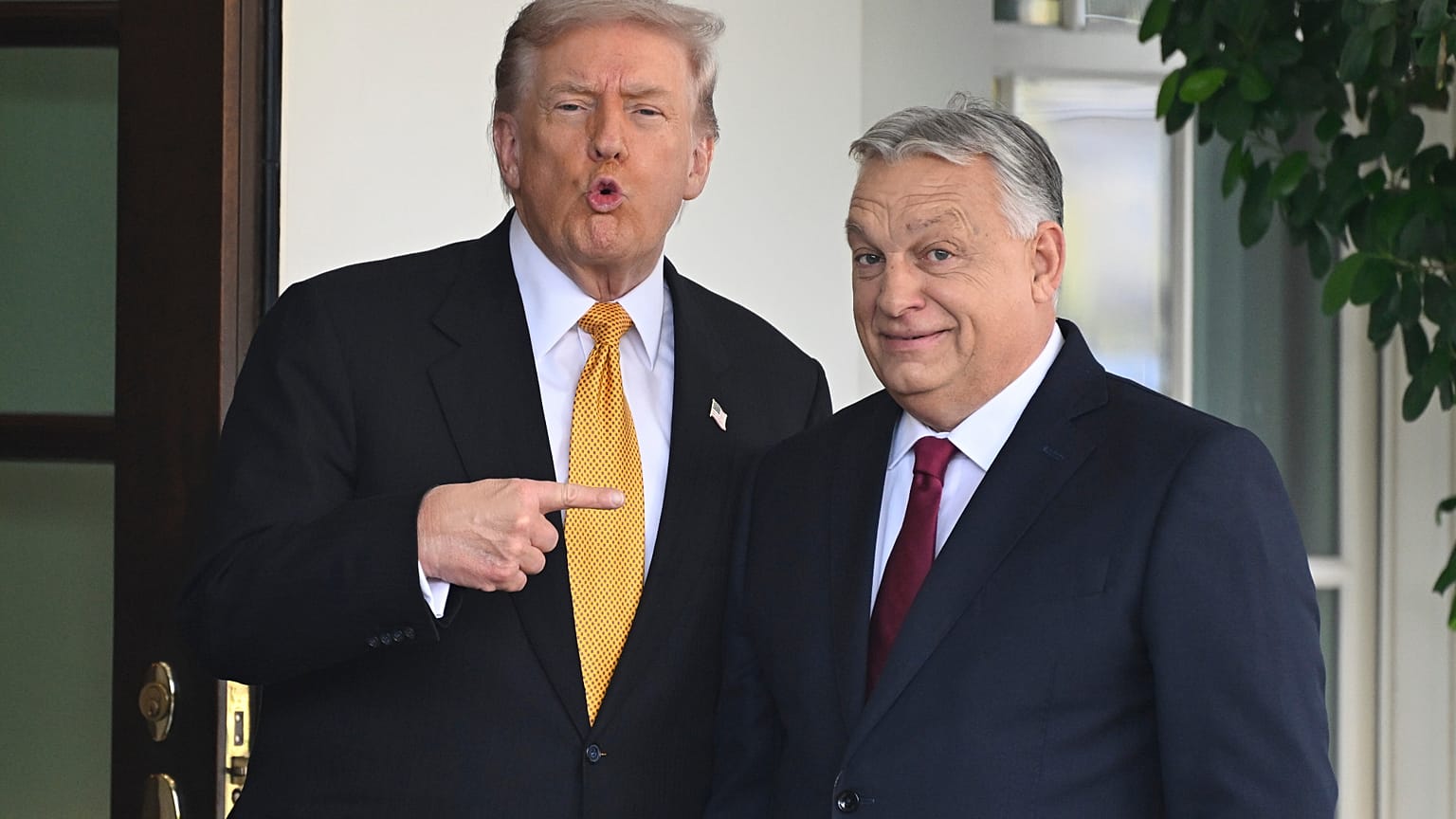
Trump officials back Orbán bid for UN secretary-general, WSJ reports
The WSJ reports that Trump administration officials are floating former Hungarian prime minister Viktor Orbán for UN secretary-general, potentially backed by the US, Russia and China, though nothing is confirmed and his selection remains uncertain.
Officials in the Trump administration are advocating the nomination of former Hungarian prime minister Viktor Orbán for the post of UN secretary-general, according to a report by the Wall Street Journal.
The newspaper reports that Orbán could be a joint American, Russian and Chinese candidate, and that sources in all three countries have confirmed the Trump administration is backing his bid.
Orbán lost power in Hungary’s parliamentary election in April, when Péter Magyar’s Tisza party defeated him after 16 years of governing with an absolute majority.
His hard-right, fiercely anti-migration and eurosceptic policies, together with the rule of law backsliding in Hungary, strained relations with Western allies, including the European Union and NATO. Nevertheless, Orbán maintained close ties with Donald Trump, Vladimir Putin and Chinese President Xi Jinping.
Since the election, Hungarian authorities have launched fraud and corruption investigations into several members of Orbán’s former government. Two former ministers and the former governor of Hungary’s National Bank are under arrest, and authorities could also examine Orbán’s potential involvement in those cases.
According to the WSJ, no final decision has been taken on the plan. A US State Department official admitted that the idea sounds crazy at first, but said previous talks with Washington suggest Russia and China also support it. The aim is for Orbán to be the joint candidate of the three countries.
“If the United States, Russia and China want the same thing in the UN Security Council, they usually achieve it,” officials from the United States and another country told the newspaper. The second five-year term of the current secretary-general, António Guterres, ends on 31 December.
The White House, Moscow and Beijing have not confirmed the information.
Euronews has contacted Orbán’s spokesperson for comment but has not yet received a response. The spokesperson previously dismissed press reports about Orbán’s candidacy for the post of deputy secretary-general as “fake news”.
In May, the VSquare investigative newsletter reported that a UN position could be important for the former prime minister because of the diplomatic immunity attached to the role.
According to the WSJ, Orbán would only run if his victory were assured, a scenario that currently seems unlikely. A candidate must secure the support of at least nine of the 15 Security Council members, while any of the five permanent members can veto the nomination. Besides the US, Russia and China, France and the United Kingdom are also permanent members.
US designates helium as critical material as Europe faces supply squeeze
Copyright Copyright 2025 The Associated Press. All rights reserved.
The US has declared helium a critical material as war in the Middle East and export curbs by Russia and China squeeze global supplies of a gas vital to chipmaking, leaving Europe scrambling to secure its share.
The United States designated helium as a critical material on Friday, citing its essential role in semiconductor manufacturing and energy production, as well as growing concerns over disruptions to global supplies.
The move by the US Department of Energy will make additional federal funding available to helium producers and bring the material under closer government monitoring.
Helium is mainly extracted as a byproduct of natural gas processing. The US is the world's largest producer of both natural gas and helium, with Qatar and Russia also among the leading helium producers.
Helium exports from Qatar have been severely disrupted by Iran's closure of the Strait of Hormuz amid its war with Israel and the US. Iranian strikes on Qatari infrastructure have further affected supplies, while Russia introduced temporary export restrictions in April to protect its domestic market.
US Energy Secretary Chris Wright said the Trump administration was seeking to reduce dependence on foreign sources of critical materials, boost domestic manufacturing, support American jobs and strengthen economic and national security.
“President Trump is bringing back America’s manufacturing industry, and that means making sure we have the materials needed to build things in America again,” Wright said in a statement.
Europe faces mounting pressure on helium supplies
While the US is seeking to strengthen domestic production, Europe has faced growing difficulties securing helium supplies, compounded by China's decision in July to impose a temporary export ban on the gas.
Although China is not a major helium producer, it has served as a transit hub for Russian supplies reaching Europe, according to a July report by the Financial Times.
The EU banned direct imports of Russian helium in 2024, but some supplies reportedly continued to reach European markets through China.
Pop culture iconography as protest: Why has the One Piece skull been adopted by French protesters?
Pop culture as expression of revolt: Gen Z have adopted a symbol from a popular manga for their protest movements. Here’s why the One Piece flag has become a recognised symbol of revolt during French protests - and beyond.
When young people challenge the establishment, they often adopt fictional works or popular culture iconography in their protests, with some images and symbols becoming unlikely rallying cries.
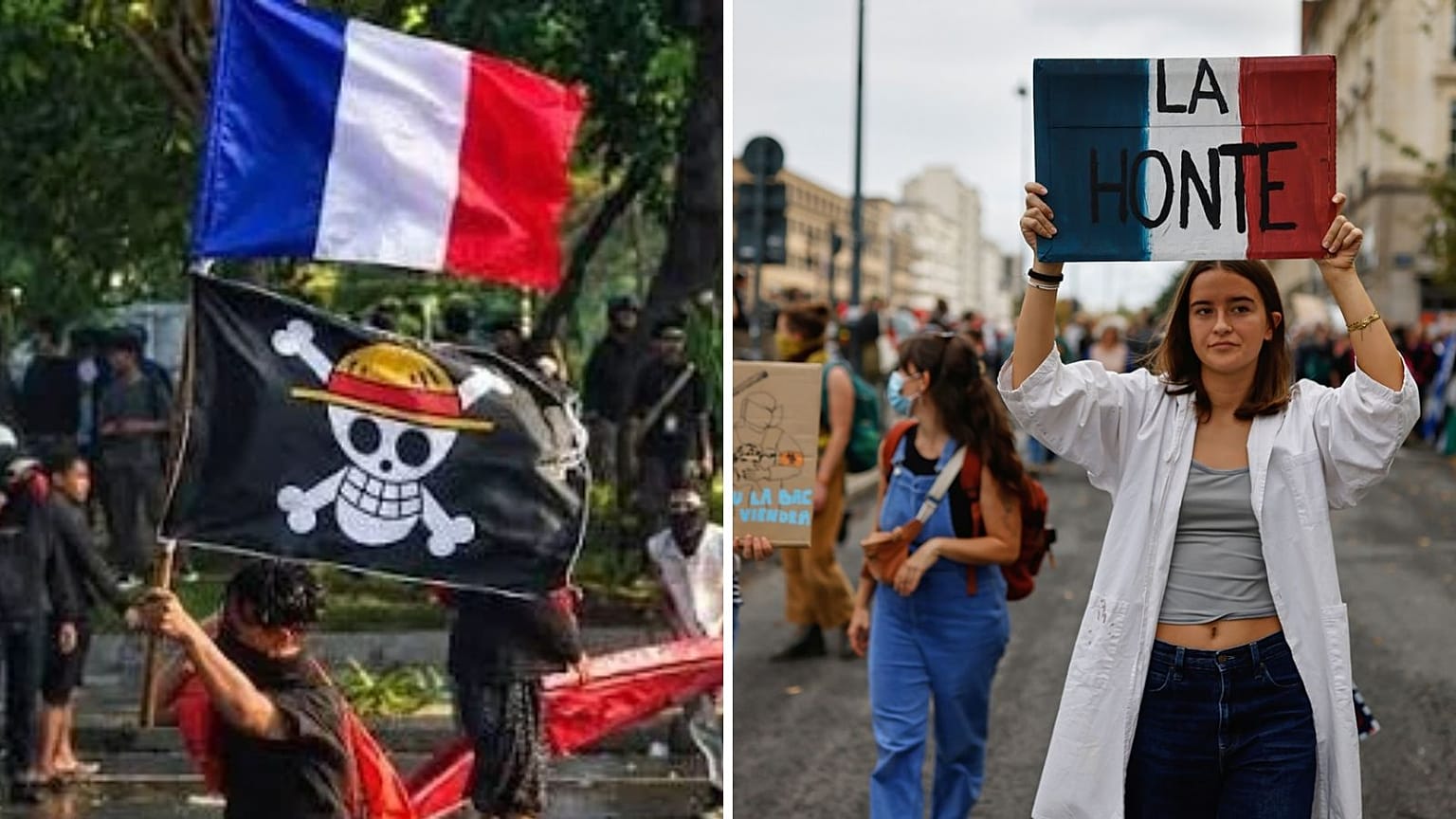
Amid the banners, placards and slogans seen on the streets of France, a black flag with a smiling skull wearing a straw hat frequently pops up.
The pirate emblem immediately speaks to fans of the manga series One Piece: it’s the "Jolly Roger", one of the most recognizable logos in pop culture.
The iconography was already present during last year’s September protests in France, and it has re-emerged during the ongoing student protests and street demonstrations across France – as well as in Belgium, Italy and Greece.
But how has the One Piece pirate flag become a country and continent-spanning symbol against repression and government corruption?
Relat
A bit of background first. For those of you who aren’t familiar with One Piece, it’s a popular Japanese manga created by Eiichiro Oda. In a nutshell, it follows the adventures of the Straw Hat Pirates, who stand up for those oppressed by repressive rulers and authoritarian corruption – a fight against tyranny under their flag, the “Jolly Roger”.
First published in 1997 – the year which coincidentally marks the first year of Gen Z births – the manga has become a worldwide phenomenon, selling more than 500 million copies and being translated into 40 languages. It holds the Guinness World Record for the most copies published in the same comic book series by a single author, and has spawned an animated TV series, a live-action Netflix show, as well as several films.
In France, the show is extremely popular and its volumes are bestsellers.
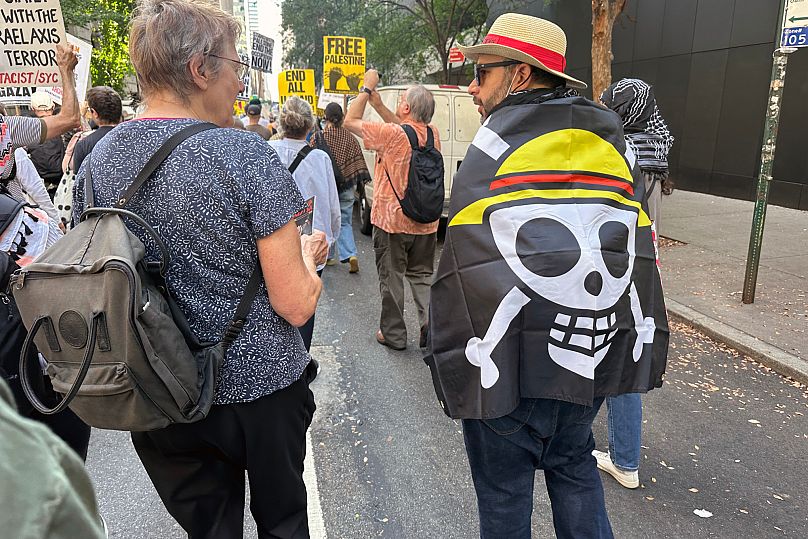
A protester outside the U.N. headquarters wears a One Piece flag as Benjamin Netanyahu speaks inside -26 September 2025AP Photo
Related
Over the years, the flag of the grinning skull has been seen at protests in Nepal, Indonesia, the Philippines, Morocco, Italy, the UK, and has been omnipresent during the protests rocking France in the past few weeks.
Whether the One Piece image is seen at student protests, rallies against police brutality, protests on government social media bans, or at pro-Palestine demonstrations, the common visual denominator reflects how the manga symbol has resonated with Gen Z, who have adopted it as their symbol for defiance and ultimately, hope.
It is hardly an unexpected symbol, as it stands for freedom and resistance against oppression for the source material’s ragtag rebels. And now IRL, speaking to disaffected youth and Gen Z aching to be heard.
The fictional world making its way into the real one represents a useful transfer as narratives and their values are not limited to borders or causes, thereby creating a global sense of unification and a shared language of solidarity. It’s also an advantageous transferral, as transforming fictional touchstones into real-world emblems of defiance means these symbols are harder to suppress by governments who still seek to maintain an anti-authoritarian appearance.
The use of the Jolly Roger once again reveals that culture and politics are inextricably intertwined - especially for young activists and a digitally-savvy generation who use social media to communicate their thoughts and fears through cultural references.
There’s plenty of precedence, as the Jolly Roger flag isn't the only pop culture symbol to have been used in protests over the years.
Here’s a look five instances of cultural touchstones used as political expression in the last 15 years.
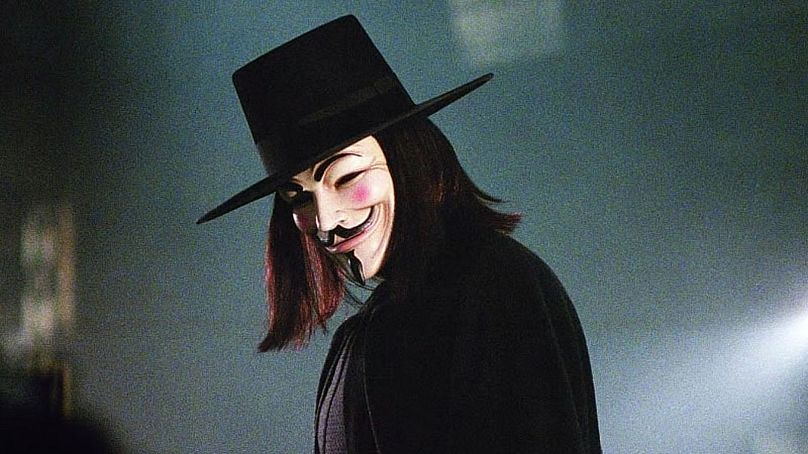
V for Vendetta
V in V for VendettaWarner Bros. Pictures
Inspired by 2005’s V for Vendetta, the international hacktivist group Anonymous started using the movie’s iconic Guy Fawkes mask to conceal their identities during protests. The mask became widespread in 2011 during the “Occupy” movement, and has lasted as a face-of-dissent symbol, taking aim at corrupt systems and governments. As V states: "People should not be afraid of their governments – governments should be afraid of their people.”
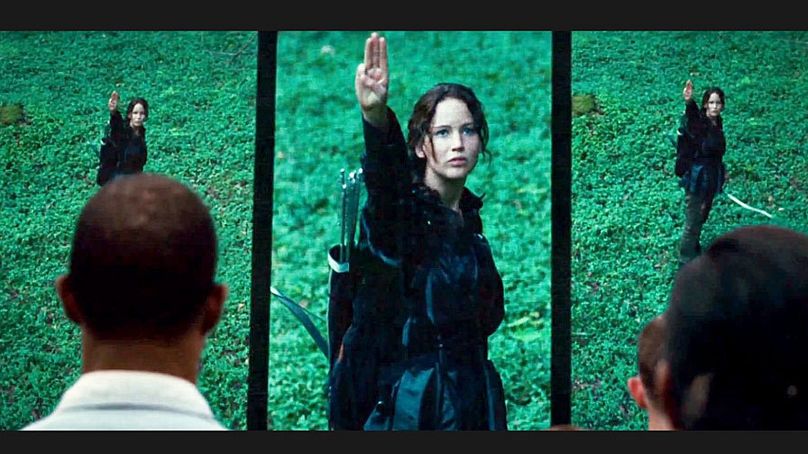
The Hunger Games
The Hunger GamesLionsgate
The series of YA books by Suzanne Collins and the subsequent films starring Jennifer Lawrence contain several symbols of resistance, from the Mockingjay pin to the three-finger salute. This silent gesture of defiance was used by the character Katniss Everdeen as a way to show her solidarity with the oppressed, and it has since been seen in protests from 2014 onwards, from anti-military coup demonstrations in Thailand to Hong Kong’s protest for universal suffrage.
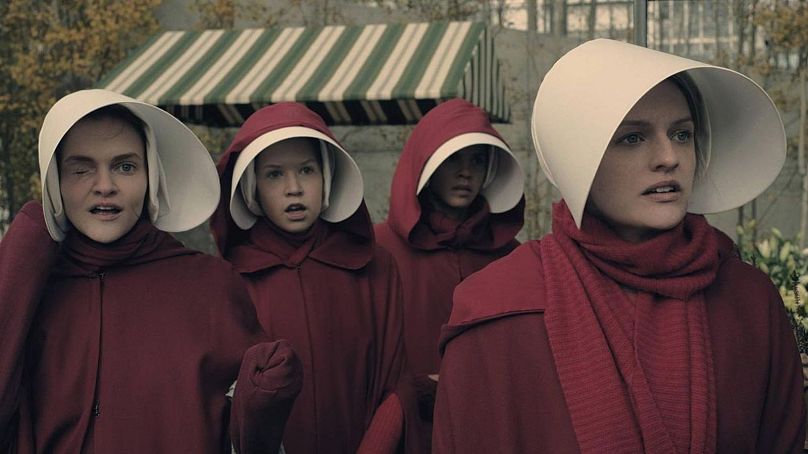
The Handmaid’s Tale
The Handmaid's TaleHulu
In 2017 and 2018, women across the US wore scarlet cloaks and white bonnets from Margaret Atwood’s “The Handmaid’s Tale", as a response to anti-abortion legislation and policies threatening female reproductive rights. In the dystopian book and TV series, the handmaids are made to wear the uniform under the law of Gilead, the dystopian country in which fertile women are forced into childbearing servitude. The costume frequently reappears in women’s rights demonstrations worldwide - from Argentina’s 2018 demonstrations for abortion rights, to the 2019 protests against US President Trump’s visits to the UK.
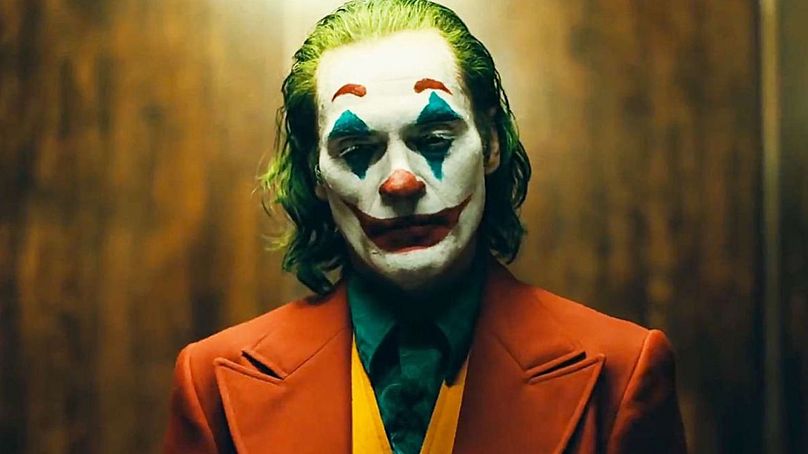
The Joker
JokerWarner Bros. Pictures
In the aftermath of civil war, Lebanese protestors demonstrating against the government’s new austerity measures in 2019 adopted the likeness of the Clown Prince of Crime, with many taking inspiration from Joaquin Phoenix’s face paint in Joker. It’s a get-up that is recognised worldwide, one which grants anonymity to demonstrators and in the case of Lebanese protestors, allowed their strife to gain heightened visibility. The Joker also stands as a symbol of rebellion, embodying a disregard for societal norms and conventions. As such, the use of the clown face signifies a reminder to embrace irreverence towards the established order, making it a popular emblem in protests worldwide.
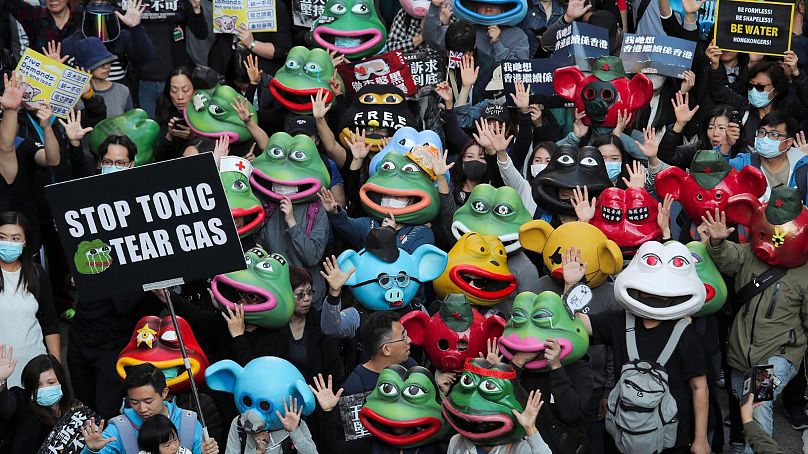
Pepe the Frog
Pro-democracy protesters wear Pepe the Frog masks during a march in Hong KongAP Photo
The alt-right, MAGA and Trump himself, who tweeted a meme of Pepe during the 2016 US presidential election, adopted the green frog as a way to appeal to the youth. American cartoonist Matt Furie created the image in 2005 and was furious at how his creation had been co-opted in such a hateful way. Before killing off the character in a 2017 comic, he wrote an essay forTIMEin 2016 in which he said: “It’s completely insane that Pepe has been labelled a symbol of hate, and that racists and anti-Semites are using a once peaceful frog-dude from my comic book as an icon of hate.” Despite Pepe being used by the alt-right in the West, it was re-appropriated and reclaimed by Hong Kong protestors in pro-democracy demonstrations in 2019.
Italy: Thousands take to the streets as protests turn violent in several cities
Clashes erupted between protesters and police across several Italian cities on Saturday, with officers deploying water cannons and tear gas as demonstrations turned violent. Thousands took to the streets of Rome, Milan, Turin, Bologna and Florence, with protesters throwing bottles, stones and firecr
Rome: Clashes broke out on Saturday evening as protesters marched through the Italian capital. Near Largo di Santa Susanna, demonstrators confronted a police cordon, throwing bottles and setting off firecrackers. Several street signs were also knocked down. Police responded with water cannons.
Milan: Two separate demonstrations involving students, activist groups and pro-Palestinian protesters merged into a single large procession heading towards Piazza Leonardo da Vinci, home to the Polytechnic University of Milan.
Earlier, police blocked a march that had set off from the square towards the city centre, forcing demonstrators back towards Corso Venezia. Some participants subsequently joined a second procession that had started at the Piccolo Teatro.
Around 10,000 people were reportedly taking part in the combined march, which was expected to conclude at Piazza Leonardo da Vinci.
Turin: Tensions escalated as protesters clashed with police, prompting officers to deploy tear gas. After marching through the Aurora neighbourhood, demonstrators reached the Mosca Bridge, where police blocked their route towards the city centre.
Some protesters threw stones, bottles and smoke bombs at officers, who responded with tear gas. The procession later resumed along Via Cigna.
Bologna: Emergency services were called to Via Marconi following clashes between demonstrators and police. Paramedics treated an injured young protester at the scene.
Florence: Protesters threw firecrackers and glass bottles at police as tensions rose during a march through the city. Near the Santa Trinità Bridge, at the junction with Via Tornabuoni, some demonstrators attempted to break through a riot police cordon.
Italian authorities have deployed hundreds of additional soldiers and stepped up security across major cities on Saturday as a new wave of demonstrations raises fears of further violence following last weekend's clashes between protesters and police.
Protests are planned in Milan, Rome, Turin, Naples and several other cities, with demonstrators voicing anger over rising living costs, low wages, military spending and government policies.
Milan is on particularly high alert after violent unrest on 17 and 18 October, when clashes with police, vandalism and looting caused widespread damage in the city centre.
Prime Minister Giorgia Meloni's government has ordered the deployment of an additional 500 soldiers to Milan, reinforcing the security forces already stationed in the city.
Authorities have also introduced drone surveillance, railway station checks and rapid-response units to prevent further disorder.
Police carry out more than 150 searches ahead of protests
Italian police carried out more than 150 searches in Milan, Monza and around 20 other cities on Saturday morning as part of investigations into last weekend's violence.
The searches reportedly targeted individuals suspected of involvement in the unrest, including students and minors.
Interior Minister Matteo Piantedosi has suggested that the previous disturbances were coordinated, while authorities are investigating messages exchanged in online groups ahead of the latest demonstrations.
The newly formed "17 October Movement," which has been linked to the recent mobilisation, announced that previously advertised protest locations had been cancelled and that new meeting points would be communicated shortly before the marches.
The decision has complicated security preparations, with police warning of the possibility of spontaneous gatherings in several parts of the country.
Demonstrations spread from Rome to Turin and Naples
In Rome, protesters gathered for a national demonstration under the slogan "Keep Italy out of the war", opposing military involvement and increased defence spending.
In Turin, students and activist groups have called for a march against rearmament, rising fuel prices and the cost of living, while also demanding better access to housing, education and healthcare.
In Naples, demonstrators mobilised against economic hardship and rising prices.
Meanwhile, thousands were expected to march in Castel Volturno, near Naples, against plans to establish a migrant detention and repatriation centre. Religious organisations, charities, migrant groups and agricultural workers are among those supporting the protest.
Meloni government under pressure after violent unrest
The latest mobilisation comes a week after violent clashes in Milan and Turin prompted the government to announce tougher security measures.
Police said around 2,000 young people took part in the earlier unrest, which resulted in 45 arrests, including 34 minors.
Meloni has condemned the violence and pledged a tougher response to attacks on police officers and businesses.
The unrest has also renewed debate over economic inequality, social exclusion and the government's approach to public order.
Authorities remain concerned that Saturday's demonstrations could bring together student movements, trade unions and more radical activist groups, increasing the risk of further confrontations.
The protests are taking place alongside demonstrations elsewhere in Europe, including France, Spain, Portugal and Albania, where campaigners are mobilising over issues ranging from living costs to public services and government policies.
Thousands march across Italy as protests bring isolated clashes with police
Demonstrations took place in Italy on Saturday over the rising cost of living. No serious clashes were reported, with nine people arrested nationwide.
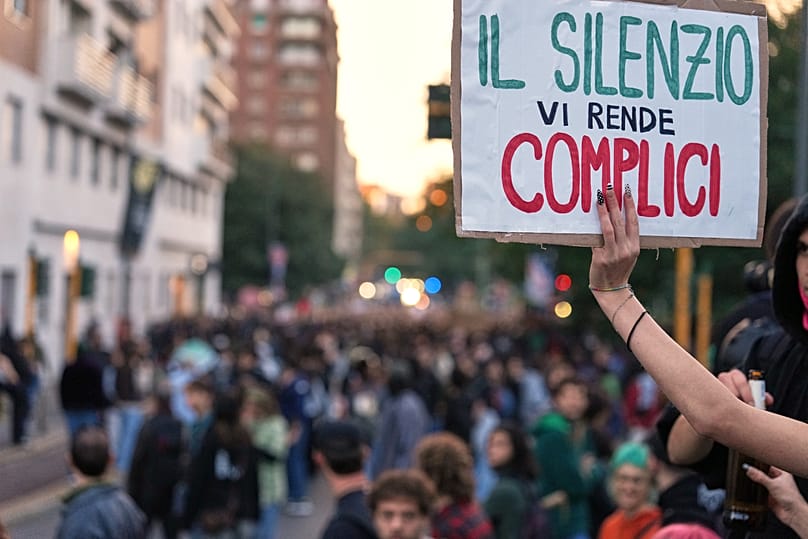
Thousands of people took to the streets on Saturday across Italy's main cities to protest over a range of issues, including the rising cost of living, Giorgia Meloni's government and the wars in the Middle East.
The protests were mostly peaceful, although some moments of tension were reported towards the evening in Turin, Florence, Bologna and Rome.
After last weekend's violence, the government enacted a significant new security operation, with police officers and soldiers patrolling city centres.
In Milan, 500 soldiers were also deployed in response to attacks on shops last Saturday.
In Florence, as in Turin, Milan and Rome, protesters did not organise a single main march, but instead small groups gathered in different parts of the city and later joined up. They repeatedly tried to reach the city centres but were blocked by security forces.
Protesters enter the Colosseum
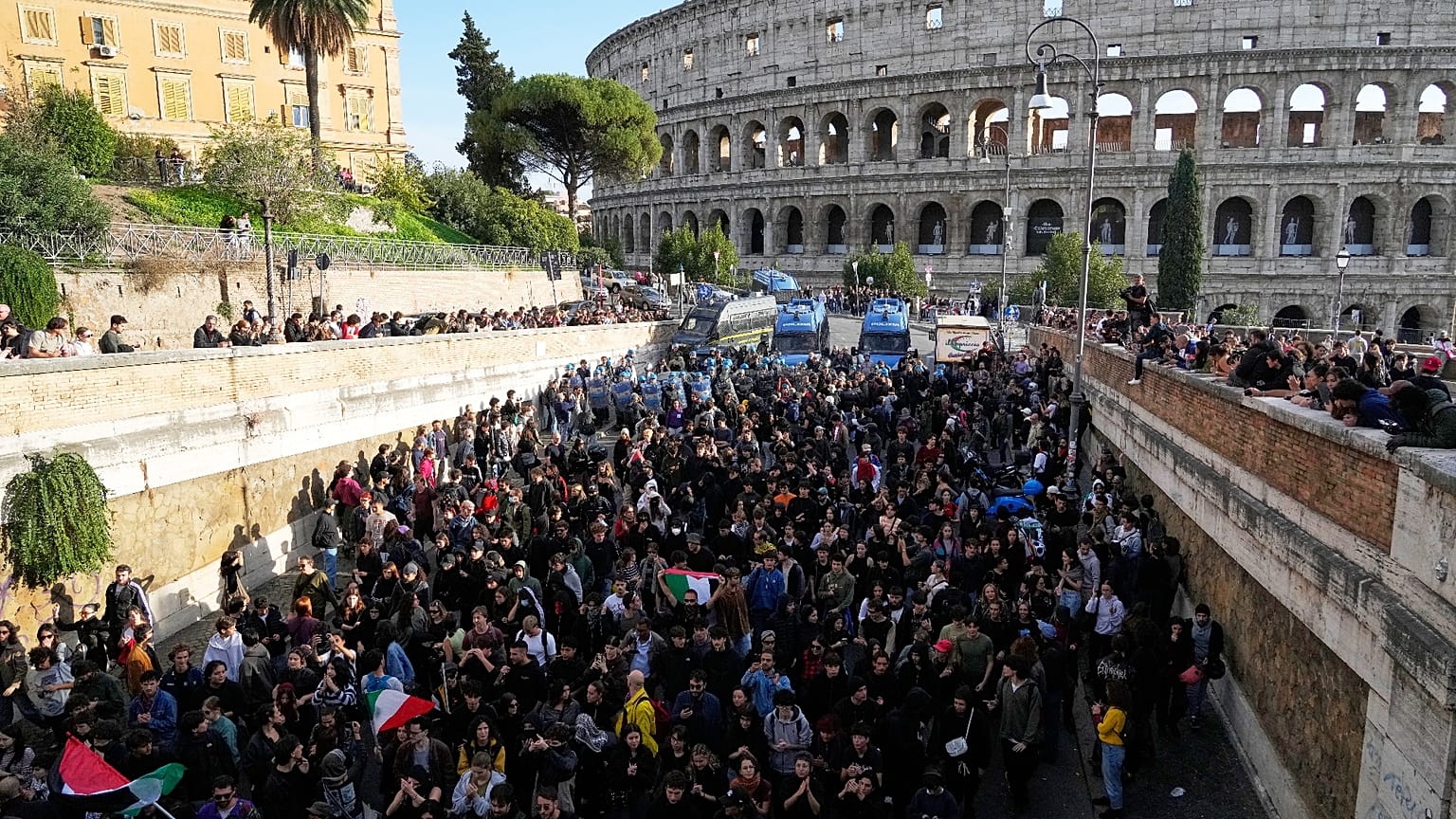
In Rome, tensions flared when a small group of protesters broke away from the main march on Via Cavour and headed for the Colosseum.
There, they managed to enter the Flavian Amphitheatre, chanting slogans and holding up placards. The authorities later escorted them out of the historical site as the march continued through the streets of the city.
Later on, a young demonstrator also stood in front of a police water cannon truck, which continued for a couple of metres before the young man almost ended up beneath it. Officers then forcefully dragged him away, videos circulating on social media show.
In Florence, tensions also spiked when demonstrators tried to cross the Santa Trìnita bridge, but officers maintained the security cordon and used batons as protesters pushed to break through the barrier.
In Bologna, a march was prevented from continuing towards Via Marconi and Via Reno, with bottles and other objects hurled at security forces, who responded with a water cannon and tear gas.
One person was taken to hospital after being struck by police officers.
In Milan, the situation was calmer on Saturday; at least three marches joined together and moved through the streets around the city centre. There were verbal clashes between protesters and some far-right activists.
Nine arrests made
By the end of the day, nine people had been arrested and 87 were reported to the authorities, according to the Department of Public Security. A further 371 people were taken to police stations for checks, including 110 minors and 69 foreign nationals.
In Milan, 30-year-old Youssef Siher was also detained and placed under investigation on suspicion of aggravated incitement to commit a crime. He is alleged to have been behind the "17 October Movement," a group through which thousands of people are said to have shared information about taking part in last weekend's protests.
Meloni praises security operation
In a post on social media on Saturday evening, Italian Prime Minister Giorgia Meloni praised those involved in the efforts to manage the demonstrations.
"The right to demonstrate must always be guaranteed, just as the right of citizens to live in their cities in safety," Meloni said.
"Safety must be guaranteed for everyone. For those who want to protest peacefully, for those who work and for those who want to live in their city without fear. Without leaving room for those who seek only confrontation and violence," she added.
128 arrested after night of unrest and looting in Barcelona
Copyright Captura de pantalla de imágenes de 'RTVE'.
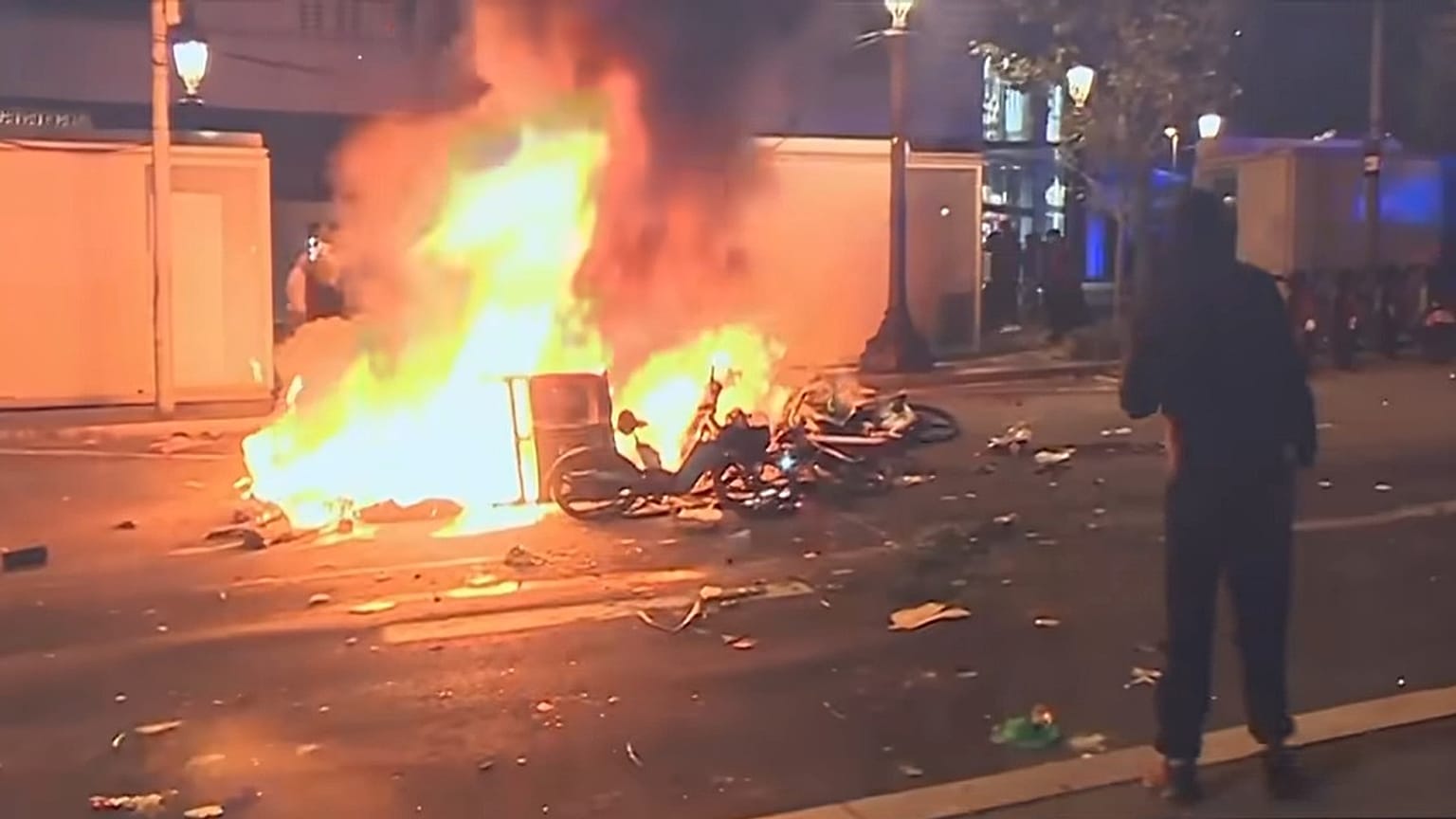
Protesters threw stones and other heavy objects at officers, whilst several groups erected barricades, set fire to rubbish bins and smashed shop windows.
Barcelona city centre saw a night of chaos on Saturday as groups of young people clashed with police and shops were looted.
The unrest, which began late in the afternoon around the Plaça de Catalunya, led to 128 arrests, roughly a quarter of them minors, according to authorities. Fifteen police officers were also injured during the night.
The gathering, promoted on social media under the slogan "Instituts Indignats," aimed to bring the French youth movement "Lycéens Indignés" to the Catalan capital.
At its peak, the demonstration drew around 600 people, per Spanish media reports.
The disturbances started at around 6 pm, when several groups of young people, many dressed in black and wearing hoods, began vandalising street furniture. Riot police then moved in, prompting demonstrators to scatter through the adjoining streets, where clashes continued.
Relate
Protesters threw stones and other heavy objects at officers, whilst several groups erected barricades, set fire to rubbish bins and smashed shop windows. Police responded with charges to disperse participants as they worked to regain control of the area.
According to La Vanguardia, around 14 shops were looted. Clashes also caused damage to motorbikes, bicycles and bus shelters.
The violence forced numerous businesses to close and led the Guardia Urbana to restrict access to the Plaça de Catalunya. Train services stopping at Plaça Catalunya station were also temporarily halted.
Authorities condemn violence
The mayor of Barcelona, Jaume Collboni, condemned the incidents and announced that the city council would take part in legal proceedings to seek accountability for the damage caused.
"This will not be left as it is. We will go all the way," Collboni warned, adding that there could be consequences for the parents or legal guardians of the minors involved.
The president of the government of Catalonia, Salvador Illa, also condemned the unrest and defended the police response.
"Protesting is a democratic right," he said, although he stressed that violence cannot be justified as part of that right.
For her part, the Catalan interior minister, Núria Parlon, described the incidents as "gratuitous violence and vandalism" and insisted that those responsible were not defending any legitimate cause.
Both distanced the unrest from the housing rights encampment that has been set up in the Plaça de Catalunya for several weeks.
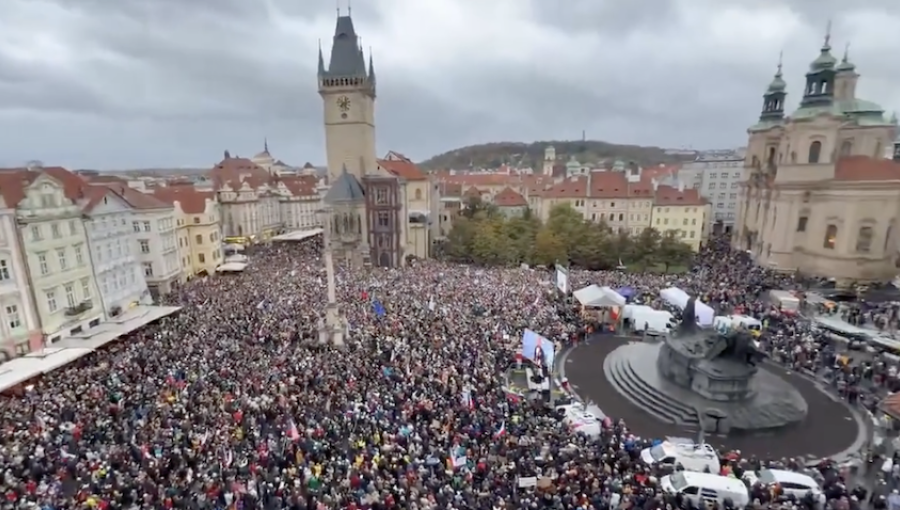
Protests held across Czechia after government pushes ahead to curtail public media financing
Tens of thousands attended anti-government protests held across Czechia on October 24 after Prime Minister Andrej Babiš' government unexpectedly pushed ahead with a vote to curtail public media financing by scrapping license fees.
The government-backed bill aims to replace license fees with a direct state budget, and has been a source of controversy since first tabled earlier this year, not least because it involves trimming the budget of Czech Television (CT) and Czech Radio (CRo).
A number of protests were held already against the changes to public media financing including including the mass rally on March 21 when around 200,000-250,000 Czechs rallied at the Letná plateau in Prague against the policies of the populist Babiš-led cabinet and his Ano party, which they fear threaten democratic standards in the country.
“We won’t give up the media” and “Media should not belong to politicians” read the banners carried by the protesters on October 24 in Brno, where about 4,000 protesters gathered. The rally was organised by the Million Moments for Democracy platform, which was behind the 2018-2019 mass protests against the previous cabinet led by Babiš.
“It is not just a technicality. It is about having media which would report freely, control those in power and provide verified information to all without a difference in the future as well,” the statement calling for the rally reads, while one of the organisers, Marija Wazi, warned that government-backed changes would trim the public media budget by CZK1.4bn a year (€57.5mn), CRo reported.
The largest rally was held in the capital Prague on October 25, which filled the historic Old Town square. It took place in response to the Babiš ruling coalition approving the draft bill in the first reading in the small hours (04:36) of October 24, which infuriated demonstrators who saw the unusual parliamentary session hour as a government effort to minimise public rage.
CT and CRo announced a strike to be held on November 3, while the Millions Moments for Democracy announced another mass rally for November 15.
Babiš accused the liberal Pirate Party and other parties campaigning against the decision of “scarring people, dividing society and inciting hatred”, claiming on his Facebook page that “it does not make sense that fees are mandatory for everyone”.
“Today everyone pays for the service they want to watch such as Netflix, Oneplay, HBO etc.,” he argued, dismissing claims the move is designed to tighten political control over the public broadcasters.
Media researchers reiterated their earlier warnings, however, that making public media dependent on the state budget would in fact lead to the increased dependency of the broadcaster on political pressures.
The move also alarmed international press institutions, including the International Press Institute and the European Broadcasting Union, and could send Czechia on a collision course with the EU for failing to secure financial sustainability of public service media and failing to comply with European Media Freedom Act.