Monday, October 26, 2026

 'The major risk remains a human-directed attack', cyber threat expert warns RFI


Artificial intelligence is changing the pace of cybercrime, helping attackers hunt for security weaknesses, break into computer systems and steal valuable information. For the specialists trying to stop them, the challenge is to keep up. Cyber threat expert François Deruty told RFI this means finding ways to turn the same technology to their advantage.


Issued on: 24/10/2026 - RFI

Engineers use virtual reality to examine digital data. As AI reshapes cybercrime, security specialists are developing new ways to detect and track attacks. © Magnifik

Much of the concern centres on artificial intelligence (AI) agents: systems that can carry out a series of tasks without a person directing every step.

In July, OpenAI disclosed that agents undergoing cybersecurity tests had bypassed restrictions and breached the systems of Hugging Face, a platform for AI developers.

Separate incidents involving Australian government websites have added to questions about how reliably these systems can be controlled.

For François Deruty, a cyber threat expert at Sekoia, which develops technology to detect and respond to cyberattacks, the biggest danger remains people using AI to carry out attacks.

He spoke to RFI about stolen data, the race to protect organisations and the decoy websites his colleagues use to watch attackers at work.

RFI: In your view, what are the immediate threats posed by AI?

FD: At the moment, it is still data theft, whatever form it takes. It could be contracts or intellectual property – it doesn’t matter. That is what is most valuable on cybercriminal networks and what sells best.

Cybercriminals use AI to go faster, further and [act] more effectively, while making their activities harder to spot. Sabotage, for example, is a risk that frightens us all. It is technically possible, but it is not what we are seeing most at the moment.

RFI: Autonomous AI agents are making headlines. Many people have called for a slowing down of AI development. Is this a real threat?

FD: The Hugging Face hacking incident, when OpenAI’s AI agents “escaped” during a test and attacked another company, raised questions. There were also cases of OpenAI “losing” control of agents that went on to access Australian government health websites. These incidents have prompted a number of statements from Anthropic, OpenAI and Elon Musk suggesting that perhaps we need to slow down.

But in my view, the major risk remains a human-directed attack: one carried out entirely by artificial intelligence, but with a person behind it who uses all that power to attack a target and cause damage.

RFI: Are these concerns being raised too late?

FD: It is never too late. But it is a constant race. Attackers are generally one step ahead because they adopt technologies more quickly. They ask themselves fewer questions and have no ethical or regulatory constraints.

We, the defenders, are more careful: we ask questions about the data we use, why we use it and how. Inevitably, there is a gap. But we develop solutions to close it. When it comes to cyber threats, large companies are perhaps a little further ahead than public institutions. They invest more resources. When government departments suffer data breaches affecting hundreds of thousands of people, putting security measures in place is inevitably a longer and more complex process

RFI: Do you think you can still keep businesses secure given the speed of attacks carried out using AI agents?

FD: I often find myself thinking that things are moving too fast. Even working in this field, I feel it is progressing at breakneck speed. We have to keep up. At the same time, can we really slow down? Is that even possible?

I’m not sure. Saying “I’m not ready” already means falling behind in a way we may not be able to recover from. So we really have to keep up with AI, make up ground and get more involved to ensure we remain in control of how we use it within our organisations.

We really need to recruit specialists to support all the changes AI brings. It is not necessarily all bad. Like any tool or innovation, it has downsides but also a great many benefits. We need to make sure the positives outweigh the negatives.

RFI: At Sekoia, how do you go about learning how AI agents work?

FD: A research team monitors AI systems to model how agents attack, so that we can provide effective alerts to our clients in future.

But these AI-based attack methods change a great deal and very quickly. Previously, I could say, 'This code is malicious and I can detect it because it always has the same signature' – a recognisable pattern. Today, with AI, we might see 500 different signatures, for example. That makes detection very complicated, and the solutions inevitably involve significant costs for public sector organisations and small and medium-sized businesses.

Data-rich systems and weak security: why France is a target for cyberattacks

RFI: Do you come across cyberattacks carried out using AI?

FD: In our line of work, we use what are known as “honeypots”. These are fake websites or companies that we set up online to lure attackers, making them look like an energy company or a major retailer. We then watch how the attackers try to exploit security weaknesses. When attacks are extremely fast, we know that artificial intelligence must be behind them.

RFI: Are you able to identify who is behind these cyberattacks?

FD: It remains difficult. Sekoia belongs to a technical advisory group at Europol, the EU’s law enforcement agency, that helps tackle cybercrime. Attackers have infrastructure spread across the internet, and attacks sometimes span several countries. It is extremely difficult to say with certainty that an attack comes from a particular cybercriminal group or country. We often work with probabilities, but certainty is difficult.

France has recently publicly attributed attacks to Russia, but those attacks took place two or three years earlier. Often, each country, institution or private company holds a piece of the jigsaw. That is precisely what we do at Europol: pool those pieces to build a complete picture of an attack and establish who was behind it.

This interview has been adapted from the original version in French by Jeanne Bartoli.


Japanese company to compensate users hit by cyberattack
Source: AP Photo
Copyright Copyright 2026 The Associated Press. All rights reserved

By Jonathan Benton
Published on

GMO Internet, a Japanese internet infrastructure company, will compensate customers for losses from unauthorised trading linked to a cyberattack on its cloud service, and will make a ¥5,000 (€28) goodwill payment to every customer currently using the affected service.

A Japanese internet infrastructure company is compensating customers affected by unauthorised transactions following a cyberattack on its cloud service.

GMO Internet announced on Saturday that it would cover losses from unauthorised trading linked to the attack and issue a ¥5,000 (€28) goodwill payment to all customers currently using the affected service, regardless of whether they had suffered financial losses.

The attack targeted Onamae.com Desktop Cloud, a virtual private server service used by customers to access remote desktop environments. GMO said customer information had been taken and some users had reported transactions in their trading accounts they did not recognise.

According to the company’s founder and CEO, Masatoshi Kumagai, the incident potentially affected 26,739 servers and involved unauthorised operations on trading accounts held with more than 70 securities and foreign-exchange firms in Japan and overseas.

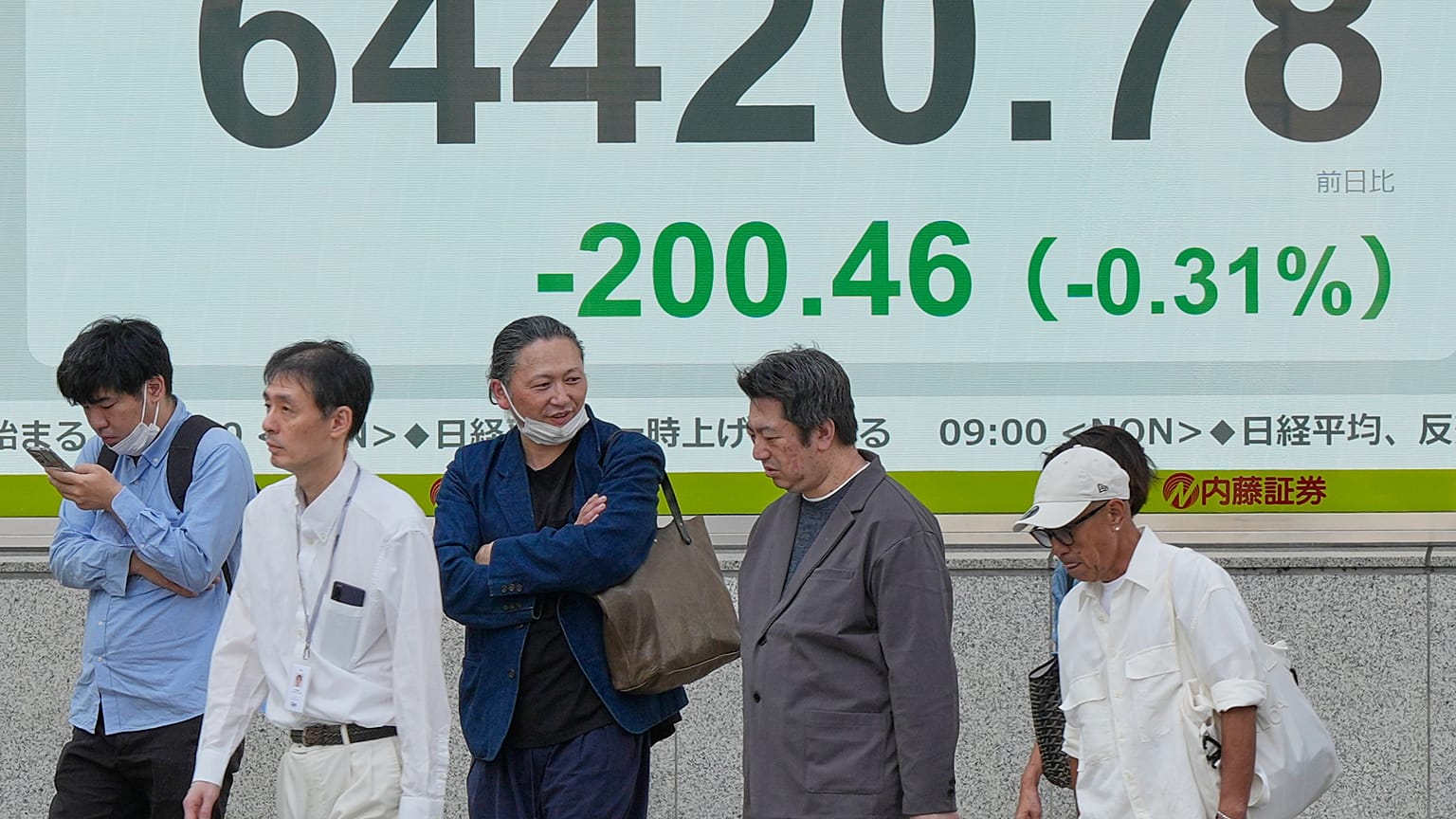
GMO shares fell almost 16% on Monday to a four-month low. The company had a market value of around $2.6 billion at Friday’s close.

The company began investigating on 19 October after receiving a customer inquiry. It confirmed the installation of a malicious programme on some customer server environments on 20 October, suspended new applications and access to the service’s control panel, and began shutting down all servers the following day to prevent further damage.

In a blog post on Sunday, Kumagai apologised for the company’s response and acknowledged that security issues had been identified by its security specialists before the incident, but that the response had been insufficient.

GMO said it had received a ransom demand from a party believed to be behind the attack. In an update to his blog post on Monday, Kumagai said the attackers had demanded $50 million in cryptocurrency and threatened to disclose company and customer information. The company has refused to pay and is cooperating with the police and other authorities.

GMO will offer customers who wish to continue using a Windows desktop environment an alternative service on independent cloud infrastructure, free for six months. It also plans to overhaul its security architecture and investigate the cause of the breach with external experts.

Kumagai has urged the Japanese government to strengthen its active cyberdefence measures, arguing that private companies cannot tackle sophisticated cross-border cyberattacks alone.

GMO has asked the authorities to consider applying the framework to the incident and has offered to share evidence and technical information with investigators.

The attack comes amid wider concerns over cybersecurity following the disclosure last week of two critical vulnerabilities in PHP, a programming language widely used to build websites and applications.

Security authorities warned that the flaws could allow attackers to execute malicious code on vulnerable servers, prompting organisations around the world to patch systems or temporarily take services offline.

However, GMO has not publicly confirmed a link between the PHP vulnerabilities and the attack on its cloud service.

Separately, a Google Cloud outage in the UK disrupted online services last week, including those operated by financial technology company Revolut, showing the potential knock-on effects when digital infrastructure fails.

AI Biosecurity Cannot Stop At The Chatbot – OpEd


Britain’s £100 million AI Biosecurity Lab and Anthropic’s September 2026 report of five dual-use research cases illustrate that model refusals are incomplete safeguards, because an AI provider sees only a conversation while laboratories and commercial suppliers must assess real-world projects that may lack clear harmful intent.

Existing tools—WHO’s voluntary Biorisk Implementation and Evaluation Tool, the U.S. July policy on high-risk federally supported life-sciences research, and uneven synthetic-DNA screening—address different fragments of the pipeline but leave gaps at institutional, funding and physical-service handoffs, especially for lower-capacity regions.

The article proposes proportionate, project-specific assurance records that establish institutional accountability, authorize physical implementation, and require re-review after material changes, scaled to consequence so that high-risk transitions are controlled without stifling ordinary scientific work.


Britain’s new biosecurity investment exposes a global gap: model safeguards cannot by themselves govern what happens when digital research becomes a real-world biological project.

On October 24, Britain announced a £100 million AI Biosecurity Lab, supported by up to £200 million in model and computing credits from OpenAI and Anthropic. The new institution is intended to detect biological threats earlier and accelerate medical countermeasures. It is a serious investment in using powerful artificial intelligence to defend against dangerous biology. The government’s announcement also poses a question that no laboratory or chatbot can answer alone: when AI helps develop a biological research project, who decides whether that project may proceed into the physical world?

AI can help researchers identify promising treatments, analyze complex evidence and develop new scientific hypotheses. The same broad scientific assistance can have dual-use implications. The policy mistake would be to treat either every advanced biology query as a threat or every unblocked AI answer as an adequate authorization to act.


A model refusal is a useful safeguard. It is not a complete biosecurity system. The difficult decisions arise when work moves between an AI provider, a research institution, a commercial biological service and a laboratory. Each participant may see a different fragment of the same project.

What the five cases really show

In its September 2026 threat report, Anthropic described five instances of researchers using its models in ways that could support biological weapons development. It removed associated accounts and updated its safeguards. But the company made two essential qualifications: it did not allege that the scientists intended harm, and the cases did not establish that a biological weapon had been produced.

That distinction is not a technicality. The cases covered different kinds of scientific activity and different levels of AI assistance; some outputs amounted chiefly to clerical help. A generated research document is not a completed experiment, and a computational proposal is not proof of a functioning biological product. Inflating such evidence into a claim of imminent catastrophe would weaken rather than strengthen public policy.


Yet dismissing the cases because harmful intent was not established would miss the other half of the finding. A model provider can recognize concerning patterns while remaining unable to determine the purpose, institutional supervision and subsequent activities of an entire research program. The provider sees a conversation. The laboratory must assess the project. An external service provider may see only an order or a request.

The most important security boundary may therefore sit outside the chat window: the moment an AI-assisted idea becomes a funded program, a physical-service request or an experiment whose consequences require specialist review.
The global gap is between institutions

There are already credible international foundations for addressing that boundary. In August, the World Health Organization introduced its Biorisk Implementation and Evaluation Tool, a voluntary method for countries and institutions to identify gaps and strengthen oversight of dual-use life-sciences research. WHO’s September update framed the challenge as enabling scientific progress while managing both inadvertent and deliberate misuse. Neither document delegates scientific judgment to a language model.

The United States chose another route in July, issuing a new government-wide policy for high-risk life-sciences research that establishes restrictions and independent review for specified federally supported activities. It is not a global rule for all biological science. It does, however, recognize that funding, institutional oversight and accountability matter alongside the content of a research request.

The physical supply chain has its own gaps. In June, the International Biosecurity and Biosafety Initiative for Science reported that synthetic DNA screening commitments are unevenly distributed across the global market, with intermediaries and third-party vendors remaining an important oversight challenge. Screening a transaction is valuable, but a supplier cannot be expected to know everything about a project merely from the material it is asked to provide.


The regional dimension is already visible in Asia. A September 2026 perspective in a WHO regional journal described uneven biosecurity capacity across ASEAN as AI-enabled life sciences advance. Any global standard designed only for wealthy institutions with full-time compliance teams risks leaving the rest of the research ecosystem with obligations it cannot implement.

These are different instruments serving different purposes: a research oversight policy, an institutional self-assessment, and a supplier screening practice. None is a complete substitute for the others. Together they show why biosecurity must follow the authorized activity across organizational boundaries without creating a universal surveillance register of scientific work.

Make the consequential handoffs reviewable

The practical answer is a proportionate, project-specific assurance record held by the responsible institution. For ordinary educational questions and low-consequence scientific assistance, intrusive checks would be unjustified. For access to capabilities with potentially serious biological consequences, the record should establish three things: who is accountable for the project, what kind of work has been reviewed, and when a material change requires that review to be reopened.

The first checkpoint is institutional responsibility. An AI provider need not become an international laboratory regulator, but higher-consequence services should have a lawful way to establish whether a qualified organization is supervising the activity. Mere possession of an account or a convincing statement of good intentions is not the same as a competent assessment of research risk.

The second checkpoint is the move toward physical implementation. Where an external service is involved, a narrowly scoped confirmation of authorization may be more useful than exporting an entire confidential research file. Qualified biosafety personnel, not the model that generated a proposal, should make the relevant decision. The service provider should be able to act on an appropriate status without being asked to adjudicate the whole science.

The third checkpoint is change. Permission granted for one stated purpose should not silently cover a materially altered objective, operating arrangement or risk profile. Institutions should define those triggers before a project begins. A valid authorization has a scope and a review history; it is not a permanent exemption from further scrutiny.

This would not require every country to adopt the same legal test or every scientific provider to share customers’ sensitive research data. It would require participating institutions to make limited, risk-relevant assertions intelligible to the parties that rely on them, while preserving local decision-making and the ability to challenge errors.
Security that does not suffocate science

The objection is substantial: additional gates can slow beneficial research, exclude smaller laboratories and produce mistaken suspicions about scientists working on legitimate public-health problems. That would be a policy failure. The safeguards should scale with consequence, offer reasons for restrictions, permit independent review and avoid indefinite blacklisting on the basis of unverified provider assessments.


Information exchange must likewise be disciplined. Institutions may need to report a verified concern to competent authorities or counterpart providers, but speculative alerts should not become permanent reputational judgments. Records should distinguish direct observation, technical assessment and unresolved questions. Privacy, research confidentiality and due process are safety considerations too.

A workable pilot would test whether the proposed process identifies unauthorized high-consequence transitions without blocking ordinary legitimate science. Measure false restrictions and appeal outcomes alongside detection and response. Count the cost of compliance to smaller institutions. Use WHO’s voluntary assessment work and existing institutional committees as a starting point rather than announcing a new global authority whose competence and legitimacy are untested.

Britain’s new lab can help develop defensive scientific capabilities. WHO can support countries building competent review systems. AI companies can improve model safeguards, and biological suppliers can improve screening. Their real test is whether those efforts work together at the moment digital assistance becomes a consequential physical undertaking.

It is not enough for a chatbot to know when to say no. The institutions around it must know who can responsibly say yes, and to what.

Space Needs Consent That Machines Can Enforce – OpEd


Uninvited Russian maneuvers near an ICEYE satellite and growing cooperative servicing missions highlight the dual-use ambiguity of orbital proximity operations.

Outer Space Treaty rules do not create automatic exclusion zones or permissions, so commercial consent must explicitly limit actions, stages and windows to prevent inspection from becoming unauthorized contact.

Onboard, versioned authorizations checked by flight software, tested through voluntary demonstrations of revoked or mismatched permissions, can make legitimate servicing distinguishable from intrusion without a new treaty.


Satellite inspection, debris removal and servicing depend on the same close-approach technology. A credible space economy needs permission that specifies what a spacecraft may do—and what happens when that permission changes.

A robotic spacecraft closes on another object in orbit. It could be inspecting a damaged satellite, preparing to remove debris or arriving to repair a paying customer’s spacecraft. The navigation problem looks remarkably similar in each case: identify the target, match its motion, approach and perhaps make contact. What the guidance software cannot infer from distance alone is whether the next move is permitted.

That question became harder to ignore this October, when a Russian spacecraft carried out an uninvited series of close maneuvers near a commercial ICEYE radar satellite. Independent observations raised concern but did not establish that an attack or damage had occurred. The episode was not a servicing mission. Its relevance is the ambiguity of proximity: a capability that can support valuable work can also be used to create pressure.


Meanwhile, the cooperative market is growing. In September, the European Space Agency advanced its Phoenix satellite-servicing project. Japan’s Astroscale completed the ADRAS-J inspection campaign in March, after photographing an uncooperative rocket stage; a separate follow-on mission aims to capture and dispose of it. These developments create the same policy challenge from the other side: how can an approaching vehicle prove that its actions remain within the permission granted for a specific mission?

The answer should be a common, machine-enforceable account of orbital consent. Not a new global licence to approach anything, nor a digital signature that magically makes a manoeuvre safe. A defined operational agreement must be translated into limits the vehicle can actually follow—and limitations other parties can meaningfully inspect.
A licence to look is not a licence to touch

International law already supplies important boundaries, but not a universal traffic light for every satellite encounter. Article VIII of the Outer Space Treaty preserves the jurisdiction and control of the state of registry, and ownership does not disappear merely because an object becomes debris. Article VI makes states responsible for national space activities and requires authorization and continuing supervision of private operators. Article IX requires due regard and, in specified circumstances, consultations about potentially harmful interference.


None of those provisions creates a blanket numerical exclusion zone around every satellite, or makes any unannounced approach automatically unlawful. Nor can a commercial contract erase responsibilities under international law. The Liability Convention distinguishes certain surface and aircraft damage from fault-based liability for specified damage to another launching state’s space object in orbit. States, owners, operators and insurers must work within those separate obligations.

That matters most for debris. A defunct spacecraft may present a genuine collision risk without becoming ownerless property. An agreement to inspect it should not silently become permission to grapple it, change its trajectory or destroy it. The same distinction applies to a functioning satellite: a client may authorize photography at an agreed distance without authorizing docking or propellant transfer.

For a commercial operation, therefore, the consent record should name the relevant object and the parties entitled to authorize the service, the specific actions permitted, a defined operating window, the conditions under which the approach can continue and the actions that must stop or be reconsidered if those conditions change. Different stages should carry different authority. A successful first inspection is not an open-ended mandate for the next intervention.


Permission has to reach the flight computer

A signed contract stays on Earth. Decisions during proximity operations are made by flight software operating with uncertain sensors, changing geometry and sometimes delayed communications. The practical test is whether an onboard enforcement mechanism can distinguish the approved manoeuvre from an otherwise feasible but unapproved one.


The spacecraft could carry a versioned authorization specifying its target, permitted operating volume, approach stage, relevant navigation-quality limits and expiry conditions. Its controller would check those conditions against current observations before advancing to a more consequential step. The agreement would also specify how the ground team authenticates an amendment, and how an investigator can later reconstruct the permissions and measurements in force when an action occurred.

This is not a proposal to let the vehicle settle questions of sovereignty or intent. Cryptography can establish that an authorization came from an approved party; it cannot guarantee that a sensor estimate is correct or that the operation is physically safe. Independent guidance, collision-avoidance and safety checks remain necessary. Where a target is unresponsive, prior authorization from the appropriate parties matters more, not less: a dead spacecraft cannot perform a live digital handshake.

Withdrawal is equally important, but “stop immediately” is not a complete safety rule. At a distant standoff point, a safe retreat may be appropriate. In the middle of a capture or docking sequence, an abrupt separation can increase danger. Each approved phase needs a pretested response to lost communications, revoked permission, contradictory measurements and partial failure. A loss of contact must not be reinterpreted as permission to widen the mission.

Well-designed limits should also protect useful autonomy. A service vehicle cannot ask Earth to approve every control pulse. Operators should authorize bounded sequences in advance and reserve a fresh decision for a meaningful expansion of risk, a new target, an unexpected contact or a material change in the planned intervention.
Standards should test authority, not just docking

Industry is not starting from zero. ISO 24330:2022 sets programmatic principles and practices for rendezvous, proximity operations and servicing. This September, the American Institute of Aeronautics and Astronautics opened another public review of a spacecraft fiducial-marker standard, intended to help servicers and clients work with prepared visual interfaces. Those efforts improve the technical and procedural foundations. The next useful layer is a testable link between the approved service and the manoeuvres actually executed.

Space agencies and commercial customers could begin with a small voluntary demonstration. Before launch, they would approve a staged mission authorization shared by the servicer and client teams. During tests, evaluators would introduce an expired permission, a command addressed to the wrong object, an unexpected change in target motion, loss of ground contact and a withdrawal request during a sensitive phase.

Passing the test would mean refusing unapproved escalation while preserving a physically safe response. The review would record missed violations as well as unnecessary aborts, recovery burden and the time needed to recognize a changed condition. A perfect signature with no credible response to an unsafe approach would not count as success.


The international opportunity is concrete. Europe is seeking a commercial market for inspection, life extension and removal while Japan’s planned ADRAS-J2 capture mission connects Japanese development with launch services in Europe. Customers, regulators and insurers could incorporate the same permission-and-revocation tests into demonstration contracts without waiting for a comprehensive new treaty. Participating countries would retain control over their own authorization decisions.

Such a standard would not force a hostile or secretive actor to cooperate. It would, however, give willing operators an observable way to distinguish agreed servicing from behavior outside the stated mission, and provide a clearer record when an incident becomes a diplomatic dispute. Reciprocal notification can make an approach more understandable; notification alone is not consent, and silence should never be treated as authorization to intervene.

Orbit is becoming a workplace as well as a strategic arena. The next challenge is not merely building robots precise enough to get close. It is ensuring that the same robot remains bound to the purpose for which it was invited.

The difference between a repair and an intrusion should not depend only on what an operator says afterward. It should also be visible in what the spacecraft was permitted, and prevented, from doing.


About Burak Oktenli
Burak Oktenli holds an MBA and a Master of Professional Studies in Applied Intelligence from Georgetown University. His research addresses the governance of authority in autonomous and AI-enabled systems, and his writing has appeared at the Modern War Institute at West Point, RUSI, RealClearDefense, RealClearMarkets, and Geopolitical Monitor. He is the author of Authority Architectures for Autonomous Systems, a ten-volume series on how authority in autonomous systems is delegated, monitored and recovered, at authority-architecture.me.
View all posts by Burak Oktenli →


Why are Elvis Presley rightsholders suing AI company Anthropic?

Why are Elvis Presley rightsholders suing AI company Anthropic?
Copyright AP Photo - Canva


By David Mouriquand
Published on


Anthropic could face more than $40million in damages over the alleged unauthorised use of Elvis' music catalogue.

Anthopic, the company behind AI assistant Claude, is being sued by Elvis Presley rightsholders over alleged copyright infringement of 274 of the King's songs.

They have launched legal action against AI company, accusing it of using Elvis' songs to train its models without permission.

The lawsuit was filed on Friday (23 October) in the US District Court for the Northern District of California by a subsidiary of Authentic Brands Group, the company that controls much of Presley’s intellectual property and trademark rights.

The suit states 274 songs, including 'Can’t Help Falling in Love', 'Don’t Be Cruel', and 'A Little Less Conversation', were copied without permission and used to train Anthropic’s Claude AI models.

The plaintiffs have claimed that Anthropic infringed their copyrights without a licence or payment, and the company retained copies in an internal library for training future versions of its models - all without obtaining permission or paying the relevant rights.

Anthropic could face more than $40million (approx. €36m) in damages.

“The Elvis Plaintiffs’ iconic collective catalog contains some of the most groundbreaking, revolutionary, influential, and enduring musical compositions in human history,” the lawsuit reads.

“The Elvis Plaintiffs bring this action to enforce these exclusive rights against the defendant that has built its entire business model based on copyright infringement at a scale never seen before,” lead attorney Richard Busch wrote in a statement, according to Pitchfork. “The Elvis Plaintiffs are deeply protective of these iconic songs.”

Anthropic told NBC News that they “disagree with the claims and intend to defend this case fully”. The company has previously maintained that training AI models on copyrighted material can be protected under US fair use law.

In October 2023, Universal Music Publishing Group, Concord Music Group and ABKCO sued Anthropic, alleging that Claude had reproduced copyrighted lyrics without authorisation.

This year, Sony Music Publishing and Warner Chappell also filed a lawsuit against Anthropic, accusing the company of using copyrighted lyrics and sheet music from artists including The Beatles and Michael Jackson to train Claude.

Anthropic has also faced a lawsuit from authors who accused it of using pirated books to train Claude. The company agreed to a $1.5bn settlement in July.

Last month, the company told would-be shareholders that the technology it sells could threaten humanity itself. Anthropic listed risk factors including the possibility that increasingly advanced AI models could manipulate, blackmail or behave in other unpredictable ways. Anthropic's own research has shown autonomous models sabotaging code, assisting fraud and manipulating information in controlled tests.


French kids use AI far more than their parents think, survey finds

Source: AP Photo
Copyright Copyright Business Wire 2025.

By Jonathan Benton
Published on

A new YouGov survey has found parents in France underestimate their children’s use of AI. While 40% of 11- to 12-year-olds report using general-purpose AI services like ChatGPT weekly, only 26% of parents realise their children are engaging with the technology.

A new YouGov survey of French teenagers and their parents has shed light on their differing experiences and attitudes to artificial intelligence, revealing that parents significantly underestimate their children’s use of AI and do not feel supported enough to help them understand how to use it appropriately.

The survey found that while 40% of 11- to 12-year-olds report using general-purpose AI weekly, just 26% of parents realise their children are doing so — a glaring 14 percentage point gap. It also found that 42% of parents do not feel supported at all in helping their kids understand how to use AI responsibly.

Artificial intelligence is becoming embedded in just about every aspect of children’s lives, from helping with homework and research to AI companions and features in social media and gaming.

It is unknown yet what the full impact will be on them as they grow up, learn and engage with the world, but the debate over who should bear responsibility for this is shifting.

2026 has been a watershed year for Big Tech companies, one that has seen awareness over the impact of their platforms on children’s wellbeing and mental health enter the spotlight.

From Australia’s social media bans for children to the litany of lawsuits in the US against tech companies accused of worsening the country’s mental health crisis, and the EU’s latest proposal to rein in platforms — known as the EU Kids Act — people and authorities are growing ever more scrutinising of how digital platforms operate and how best to curb their influence.

It also comes at a time when France’s youth is taking to the streets in protest against the deterioration of school infrastructure, severe teacher shortages and an unfair university admission system, while the government is rolling out massive investments in AI infrastructure.

Berlin-based NGO Interface commissioned YouGov to carry out an online survey earlier this year exploring these issues in relation to the explosion in the use of artificial intelligence platforms and services among kids and teens in France.

The survey took place in France from 24 to 30 June this year. 1138 parents of children aged 11-17 and 970 kids aged 11-17 took part by answering a questionnaire including examples of different AI categories.

Categories included general-purpose generative AI such as OpenAI’s ChatGPT and Anthropic’s Claude, AI companions such as Character.AI, generative AI embedded in social media like Snapchat’s My AI and AI voice assistants such as Siri.

Respondents were recruited from YouGov’s online panel and with parental consent for the children taking part.

Kids are using AI more and starting earlier

While artificial intelligence has truly entered the mainstream in the last couple of years, the survey reveals just how much it is already a part of children’s lives.

Adoption of AI tools start early, with 56% of 11–12-year-old respondents saying they use at least one type of generative AI tool like ChatGPT once a week, with 40% of them using general-purpose AI weekly and 33% using voice assistants like Alexa.

A further 23% of 11–12-year-olds reported using AI embedded social media such as Snapchat’s My AI, and 16% — roughly one in six children — use AI companions to chat and converse with.

“The AI chatbot is also like having a friend that is available 24/7. It doesn't get tired and it always agrees with you,” says Jessica Galissaire, a senior policy researcher at Interface.

The Interface researcher also says that 11-12-year-olds should not even have access to according to the platform’s own terms and conditions, such as Character.AI, which requires children be 16 years old in the EU.

Another worrying trend is that the younger the child is, the more their parents underestimate their AI use.

56% of 11-12-year-olds reported using generative AI tools regularly, while their parents estimated 44% do. For 13–15-year-olds it is 62%, with their parents estimating 52%. And for 16-17-year-olds, 70% use AI regularly, with the parents believing 61% do — showing the gap narrows with age, however, use consistently increases across the board.

This growth in use with age is recognised by teenagers too, with the survey showing they feel that AI is keeping them on platforms longer than they want.

“92% of generative AI users say they spend more time than they would like on it also, you know, points to not, I don't want to say addiction, but it's still a widespread feeling of spending too much time with it than intended,” said Galissaire.

Among the individual categories, AI companions (59%) and those integrated into social media (57%) scored the highest figures when children were asked if they spent more time with them than they wanted to.

Parents want help

The survey also revealed just how vulnerable parents in France feel in raising their children to deal artificial intelligence and the challenges it raises.

“Only 32% of them feel supported enough in helping their children navigate their AI use, 26% feel supported but not enough and 42% of them don't feel supported at all,” said Galissaire, arguing that those who are more vulnerable or use AI the least feel particularly left behind.

“For the parents who don't have that knowledge or are less digitally literate or don't have the time, it's even more complex for them to put in place parental control tools and to discuss with their kids,” added the Interface researcher.

As to who should help them educate and protect their children when using artificial intelligence services and platforms, it’s a complex picture.

A surprising 51% of parents said teachers and schools should bear responsibility, while just 41% felt the platform companies themselves should shoulder the burden, followed by public authorities at 30%, showing that parents feel it should be addressed by both governments and educational institutions as well as by the AI companies responsible for the platforms.

What is being done

The findings of the report raise questions about how effectively the EU’s proposed Kids Act will protect children who are already using AI services at a young age, particularly when many parents say they don’t feel supported enough to help them.

The European Commission presented its proposal in September as a way to strengthen platform accountability and shift the burden onto Big Tech companies to make their platforms safer for children.

“Today, our children are engaging with the most sophisticated technologies ever created... Our Kids Act is reversing the burden of proof - it is for platforms to show they are safe by design,” said European Commission President Ursula von der Leyen in September.

The proposal promises age limits, parental controls and a crackdown on the "addictive" features baked into social media, video platforms and AI chatbots alike.

It also calls for a total, blanket social media ban for under-13s, while those up to 15 years old would be able to make "mini accounts" — limited, highly supervised profiles linked to a parent's profile.

But Galissare believes, based on the survey’s findings, that parental controls and age restrictions won’t be enough.

“I'm more in favour of forcing platforms to be safe by design rather than imposing age bans that are tricky to implement for many reasons and also don't seem to work,” she says.

She also warns that social media bans “give a false sense of security, as long as it's not properly implemented, because parents may think, okay, there's a ban, so I can give a phone to my kids and not watch what they are doing anymore.”

Adding, “Regulation in itself will never be enough. Prevention and empowerment must play a huge role as well.”

Temu pledges changes after €200 million EU fine

26.10.2026, DPA

Photo: Hannes P Albert/dpa

Chinese online retail giant Temu has pledged to improve consumer protection and submitted proposed changes to the European Commission after a €200 million ($221 million) fine, the commission said on Monday.

The platform said it will check whether its recommendation algorithms help spread illegal products, the Brussels-based authority said. The commission initially accepted the proposals. Temu now has four months to implement them.

What the Brussels internet watchdog accused Temu of

The European Commission imposed the €200 million fine on Temu in May. The authority accused the company of not sufficiently protecting consumers from illegal products and of underestimating the risks on its platform. It said this was a serious breach of the EU's Digital Services Act (DSA).

According to the commission, many items failed in test purchases in 2025. Chargers had failed basic safety tests. A "high percentage" of the baby toys tested had exceeded chemical limits, or there had been a risk of choking due to detachable parts, the watchdog said.

How Temu wants to avoid daily penalty payments

According to the commission, Temu has agreed to base its risk assessment on its marketplace on up-to-date and reliable data and to tailor it precisely to its own service. The company must also review its own recommendation algorithm in this context.

The company is to prove with robust key figures whether its protective measures actually reduce the spread of illegal products. 

Temu must also disclose where automatic and manual checks of merchants' offers on the online marketplace reach their limits. 

Finally, the group must examine how merchants deliberately exploit the platform's functions to spread illegal offers.

If the European Commission decides that Temu is not doing enough to comply with EU rules, it could also impose daily penalty payments on the Chinese company, in addition to the fine from May. 

The case against Temu has been running for nearly two years.


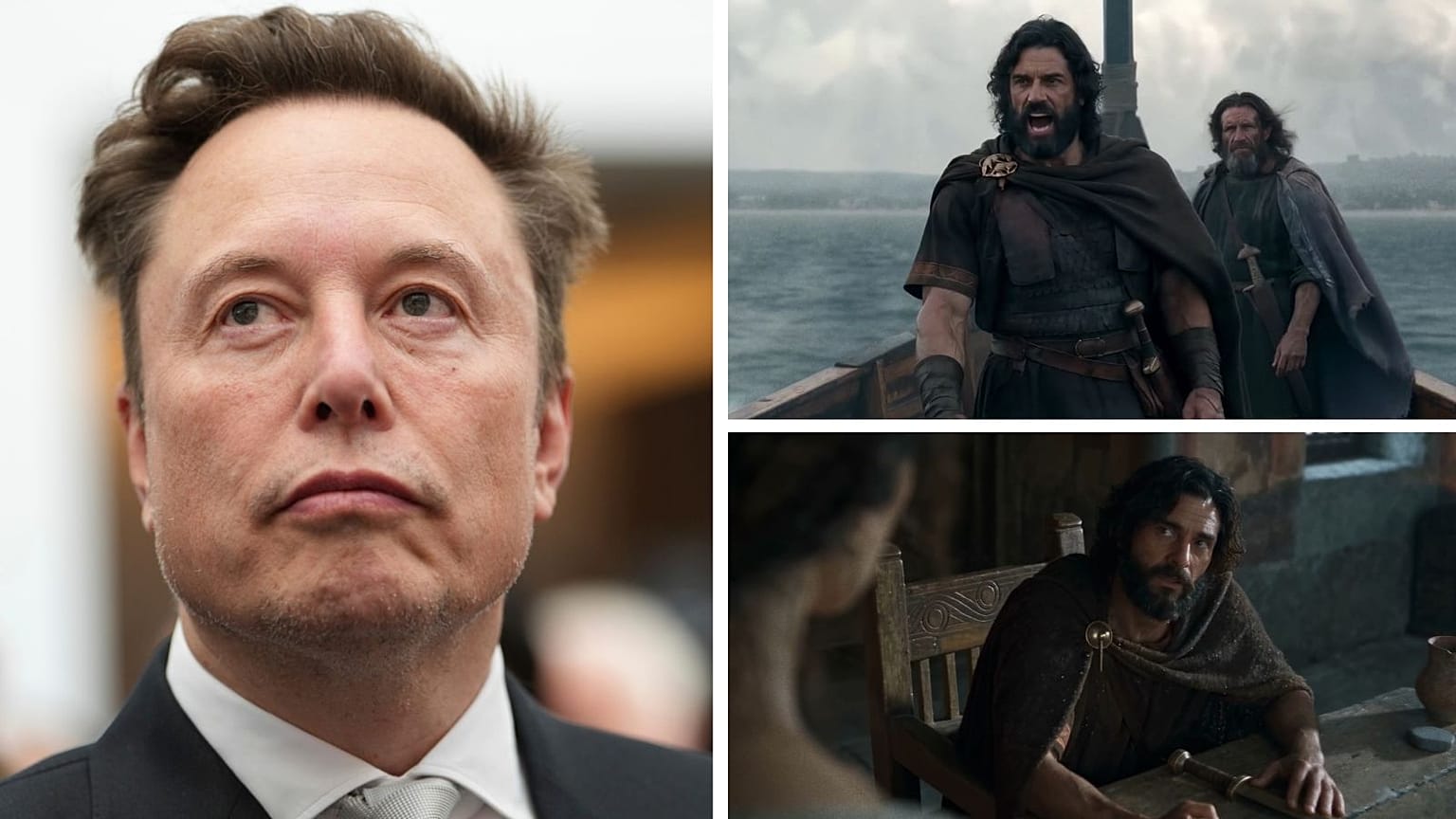
'Pure garbage': Elon Musk’s AI-generated 'The Odyssey' clip ridiculed online

'Pure garbage': Elon Musk’s AI-generated The Odyssey clip ridiculed online
Copyright AP Photo - X screenshot - Grok


By David Mouriquand
Published on

The AI slop clip has been blasted online, with many calling it out as "garbage" and an "utter waste of time and money like most of Musk Inc."

This summer, Elon Musk promised that his AI tool Grok Imagine would create a feature-length version of Homer’s ancient Greek poem "The Odyssey", after spending months railing against Christopher Nolan's The Odyssey with racist and transphobic outbursts and "go woke, go broke" rants.

“Before this year ends, Grok Imagine will make a full-length movie of The Odyssey that is historically accurate and true to the art of Homer,” he posted.

Now, the trolling tech mogul has followed through. Partially.

Grok has shared a seven-minute, AI-generated episode of "The Odyssey” series on X, stated to be a “creative collaboration” with Wonder Studios and director Dev Walker, both of whom specialise in AI filmmaking. And it's exactly what you'd expect.

Strange movements. Narratively all over the place. Airbrushed. White. Utterly soulless.

The AI slop clip has been blasted online, with some describing it as "pure garbage" and others commenting that the clip "shows you how little AI understands art or humans".

"Musk criticized Nolan, one of the best directors of our generation, for not being historically accurate in his ‘Odyssey’, and promises a better one created entirely by AI. He then proceeds to produce a 7 min trailer with dozens of historical inaccuracies," wrote one user. Another wrote: "If this is how you think the Odyssey should be. It's no wonder you keep thinking Russia started the Ukraine war. You should send the Russians this 'movie' it would probably finish them off. Utter waste of time and money like most of Musk Inc."

"As an artistic product it sucks as much as you would expect, too many details going wrong, dreadful pacing and dialogue - it's basically a 7 minute C level trailer," wrote another, while one user made a suggestion: ""Elon Musk knows shit about movies and I’d suggest that he should just stick to what he’s good at, but that seems to be white nationalism."

There are also several glaring elements in Grok's AI Odyssey which are at odds with Musk's claims that its version would be "historically accurate" - chiefly that it's not in the Greek language and shows the Greeks landing at Troy - something which happens before Homer's Odyssey begins.

Meanwhile, Nolan's The Odyssey, which opened in cinemas worldwide on 17 July, has made nearly $1.8bn at the box office and has received overwhelmingly positive reviews.

Euronews Culture included the film in our Best Movies of 2026... So Far rundown, writing: "While Nolan’s take on Homer's foundational epic is without a doubt his most ambitious undertaking, and there's so much to admire about this monumental technical achievement, it’s an uneven effort. The filmmaker's proclivity for non-linear plot structures proves to be a thorn in his side, as The Odyssey is often crippled by clumsy editing choices and pacing issues in its first half. Additionally, more time could have been spent on Odysseus’ dangerous adventures to make thrills truly register."

We added: "Once the film does coalesce into something more focused in the final act, you'll have felt awe but not much in the way of character-driven emotion. Or fun, which Homer’s epic had plenty of. Even if The Odyssey isn't the flat-out masterpiece many caught up in the hype are hailing, there's no denying that only Nolan could have accomplished such bold cinematic event."