Monday, October 26, 2026

Scientists turned art detectives date van Gogh's 'Starry Night' to actual night sky in 1889

A team of South Korean researchers has put forward a new date for the night sky depicted in Dutch painter Vincent van Gogh's famed masterpiece "The Starry Night". Art historians have long assumed the stars were a product of the artist's fantasy or dated the scene to June 1889 based on the artist's known location and other factors, but astronomical details like the sliver crescent moon didn't line up.


Issued on: 22/10/2026 - 
By: FRANCE 24


File photo: Visitors look at Vincent Van Gogh's painting "Starry Night" (1888) by Vincent van Gogh during the preview for the upcoming Van Gogh and Britain exhibition at Tate Britain in London on Monday, March 25, 2019. © Victoria Jones, AP

Scientists doubling as art detectives have traced Vincent van Gogh’s painting “The Starry Night” to a celestial scene that suggests a new date for one of the world’s most famous paintings.

Their findings indicate that rather than being a product of van Gogh’s imagination, “The Starry Night” may have been inspired by what he saw as he gazed heavenward from his French asylum 137 years ago.

A South Korean team reported Thursday that after years of forensic astronomy and research into the Dutch artist, they have matched his masterpiece to a predawn sky over France’s Saint-Remy de Provence right around July 22, 1889.

That’s a month later than the long-accepted time frame for the postimpressionist painting depicting a crescent moon and Venus surrounded by a sky of swirling stars with a village nestled below and cypress trees looming on one side.

Art historians have long dated the painting to June 1889, soon after Van Gogh checked into the asylum. He’d cut off his left ear several months earlier during an argument with painter Paul Gauguin.

A team led by Elijah Jeong-hyun Kim, the CEO of a Seoul telescope maker, is now disputing that date in a study appearing in the journal Scientific Reports.

The sky that is most similar to the painting occurred around July 22, 1889, said Kim, who is also a doctoral candidate at Kyung Hee University. He noted that the few days before and after could have inspired van Gogh as well.

“No two skies are the same. Something always changes. I believe Vincent noticed those changes and put them into the painting,” Kim said in an email.

He added: “I am confident that July 22 is the better date. I will bet on this date.”

The latest study addresses “a real puzzle” that in mid-June 1889, the moon was not the thin crescent painted by van Gogh, said Jose Luis Aragon at the National Autonomous University of Mexico. He has studied “The Starry Night” as a physicist, but did not take part in the new research.

“Still, I would see the July date as an intriguing hypothesis rather than a settled answer,” Aragon said in an email.

Long fascinated by van Gogh’s art, Kim traveled to France in 2019, the first time in mid-June and the second around July 22. He found brilliant stars rising in July’s predawn sky, unlike June.

Kim and his team discovered through further celestial sleuthing that around July 22, 1889, the shape of the moon before dawn appeared like the one in the painting, with the Hyades star cluster in the constellation Taurus rising in the east alongside Venus. The sky should have been clear enough for van Gogh to see all this, based on their weather analyses.

Van Gogh is thought to have suffered a seizure around that time in July. But Kim and his team contend that the seizure occurred later in July, based on their analyses of letters between the painter and one of his brothers. Some of those letters refer to cicadas, another clue that points toward the hotter July, according to Kim.

The researchers tested and verified their methods on night skies in other paintings, making for what Aragon considers “a careful and genuinely interdisciplinary study”.


Since van Gogh painted in a studio at the asylum from sketches and memory, “the sky is likely a composite of many nights as the authors themselves acknowledge", Aragon said.

“What I find most convincing is the broader message: The painting is not pure fantasy. Van Gogh watched the real sky very closely," Aragon said.

Despite all his research, Kim has never seen “The Starry Night” at the Museum of Modern Art in New York.

“Now that the paper is out, I really have to go and see ‘The Starry Night’ in person, don’t I?” he said.

(FRANCE 24 with AP)
West Bank: Families forcibly displaced in Hebron


Issued on: 25/10/2026 - FRANCE24


More Palestinian families have been displaced in the occupied West Bank as Israeli forces continue operations in Hebron, following a deadly shooting that killed two Israeli soldiers on Friday. With elections scheduled for Tuesday, Prime Minister Benjamin Netanyahu has vowed a heavy response to the attack. Morgaene Ayre has the latest.

NAKBA II

How Israeli settlers wearing keffiyehs are attacking West Bank olive groves

The olive harvest officially began in the West Bank on October 15, 2026, and it has coincided with an uptick in violence towards Palestinians carried out by both Israeli settlers and soldiers. Meanwhile, the settlers and soldiers have been using social media to promote an aesthetic, Instagram-friendly and nationalistic view of these harvests.


Issued on: 23/10/2026 
By: Marguerite Ipek LACROIX/
The FRANCE 24 Observers

Israeli settlers have been posting images of their olive harvests on social media. \© The Observers


At first glance, it is an Instagram video like any other. There’s rousing music, sunshine, smiles, coffee and three people harvesting olives. But the video's caption situates these charming scenes in a different, much more violent reality: "That took us a good four hours. We are asking you to come and showcase the land of Israel and harvest olives.”

This footage was captured in the occupied West Bank. David Kela, an illegal Israeli settlement, is identified as the scene's location in the post.


This video, posted on September 28, 2026, shows three people gathering olives in the occupied West Bank and having a merry time doing it. It turns out, however, that an illegal settlement is identified in the video and the caption calls on people to come and "showcase the land of Israel".

The olive harvest officially began on October 15, 2026 and lasts until the end of November. In recent years, however, this period has become synonymous with an uptick in violence towards Palestinians, carried out by the Israeli army and settlers. Because of this, many Palestinians began their harvest two weeks early this year to reduce the risk of violence.

However, the violent reality hasn’t prevented some Israelis from taking to social media to present an image of a pleasant and convivial harvest, often with a message to social media users to come and join them. There are dozens of these posts on social media.


In this video, posted by @nehoraichushinski on October 11, 2026, a man gathers olives and watches gazelles as calm music plays. The person who runs this account often appears wearing a military uniform. The caption says: "We are harvesting olives before someone from the village overtakes us… And the gazelles have already come to see what’s left over for them."

Some settlements even have their own oil mills. Settler Elisha Yered shared a post inviting social media users to come and gather olives to make oil in Itamar, an illegal settlement, and Avihai, an illegal farm. In his caption, he calls on viewers to go and harvest olives "in the nearest orchard, located just behind the gate to your town” and calls on them to “reinforce the Jewish presence on our country’s land”, both nationalistic messages.


Settler Elisha Yered shared this post on September 30, 2026, which says "Go and discover wide open spaces, gather olives, reconquer the land and live Zionism! Come learn how to produce pure olive oil in our olive mill".

On October 15, the United Nations Office for the Coordination of Humanitarian Affairs (OCHA) counted nearly 200 attacks linked to the olive harvest that resulted in bodily injury or material damage affecting the harvest season.

OCHA also confirmed that the number of attacks affecting the olive harvest carried out by settlers in the West Bank this year has already surpassed the 185 incidents recorded in 2025.

'They banned us from going to our own olive grove'


Omar (not his real name) lives in the Hebron Governorate in the occupied West Bank. The Israeli army has blocked his access to his olive grove since June 16, 2026.


On Tuesday, June 16, we discovered that a dozen Israeli settlers had come into our olive grove. I inherited this land from my father and my grandfather.

They were hitting the olive trees with bats.

We called the Israeli police, who came to the site, but they didn’t come close enough to make them leave. They just stayed on the main road. Then, the army came and the soldiers went towards the settlers and some left, but not all.

The settlers who remained started to ransack the olive trees. They beat them with bats and specifically targeted the most beautiful trees. The settlers took some of the olives and then stamped on the rest.

Then, they brought over about 200 sheep, led them into the olive orchard and let them graze all over. The settlers stayed there with their sheep from the morning to sunset.


They banned us from going into our orchard, claiming that this land was now part of a military zone. We don’t know what to do.

Olives are an incredibly important source of income for tens of thousands of Palestinians in the West Bank. According to OCHA, in 2019, more than 10 million olive trees were a source of primary or secondary income for between 80,000 and 100,000 families. In its report "The Elimination Project", the Israeli human rights NGO B’Tselem reported that, on average, the olive sector brought in $170 million per year (more than €151 million) to the economy of the occupied West Bank.

The various restrictions and violence around the 2025 harvest – including designating olive groves as military zones or national parks, acts of violence or intimidation, and military orders preventing Palestinians from harvesting their olives – resulted in the Palestinian economy losing more than $46 million in revenue, or nearly €40 million, according to OCHA.


'The whole system supports settlers'


Yair Dvir is the spokesperson for B’Tselem. He highlighted the close links between settlers and the army as well as a system created to restrict Palestinian access to their land.


Every year, for decades, we see an uptick in violence during this time of year. But each year, the violence continues to intensify. The violence perpetrated by settlers and soldiers leads to injuries or even deaths.

The violence also includes theft carried out by settlers. There are a number of eyewitness accounts and videos showing settlers stealing olives directly from the trees or waiting for Palestinians to finish their harvest and then just taking their olives from them.
Palestinian Human Rights NGO Yesh Din published a video on X documenting the theft of olives by settlers in the occupied West Bank.

In many of the cases, we’ve found that the Israeli army is actively participating in these acts: they are there while it is happening and are letting the settlers attack and steal. Often, they even participate in the attacks, arresting Palestinians, firing on them and using tear gas.

One thing that we’ve observed recently – as well as throughout the years, though it is particularly striking now – is that we’ve seen more and more clearing of olive groves, carried out not just by settlers but also by the army.


In a video posted on October 9, 2026 by the NGO Rabbis for Human Rights, settlers - including one wearing a keffiyeh, a traditional scarf often worn by Palestinians - attack activists from the NGO who came to protect Palestinians during their harvest.
'We saw settlers wearing keffiyeh come and attack us'

Mohammed (not his real name) is the president of an agricultural committee in a Palestinian village. He spoke to us about the role that olive trees play in Palestinian culture.

Growing olives is a historic, cultural and religious act for us.

Most of the Palestinians in the West Bank have not been refugees. That means that there are people who have never been separated from their land, who have plots where they gather olives each year and produce their oil. However, suddenly, they are no longer able to do that.

Culturally, the Palestinian keffiyeh (a traditional scarf) often features embroidery that represents olive branches. Women’s traditional dresses, or thobes, also have special patterns that represent olive trees. Olive oil is essential to the food we make.

In the Quran, olive and fig trees – which have a symbiotic relationship and which, historically, were planted together in Palestine – are often jointly mentioned. Olive trees play an integral role in the Quran’s sacred texts.

I don’t think it is possible to explain what these olive trees mean for us. It goes beyond symbolism. Grave stones of martyrs are inscribed with the words: “We die standing up, like Palestine’s olive trees.”

This photo was taken by our Observer in Birzeit on the night of October 12, 2026. Fearing attacks by settlers or the army, Palestinians have begun harvesting at night. In this image, our Observer shows an olive tree that has been destroyed. © The Observers


It’s revolting to see the settlers pretend to be locals and that their relationship with the olive tree is natural when it is them who have literally been destroying and cutting down olive trees for the past decade.

We see our culture being stolen from us. Soon, they are going to try to steal the thobe (traditional garment), too. We even saw colonists wearing keffiyeh come to attack us."


Our Observer took this photo of a hacked-up olive tree with only the trunk remaining in Birzeit during the night of October 12, 2026. © The Observers

The FRANCE 24 Observers team contacted the Israeli army, who said that in the case of “disturbances affecting the harvest”, they took the “necessary measures for prosecution or, if needed, to disperse those present, all while attempting to avoid any injury”. The army added: “Most instances of friction that occur in the areas where olive harvesting doesn’t require coordination [Editor’s note: Palestinian farmers must obtain so-called prior coordination permits to access land that has been blocked by the army] or where security forces are not present. Most coordinated harvests are taking place as planned.”

OCHA reported that attacks linked to the olive harvest this year have so far resulted in the death of one person and more than 120 people injured. More than 2,500 olive trees or young plants have been damaged or destroyed. Since 2023, at least 100,000 olive trees have been destroyed, ripped out or burned in the occupied West Bank, according to the Palestinian Ministry of Agriculture.
Israel's Ben-Gvir shares AI videos mocking Gazans as 'donkeys' and sending them to Paris

Cover image: Truth or Fake © France 24


Issued on: 22/10/2026 -

Israel's far-right minister Itamar Ben-Gvir is using AI-generated videos to mock Palestinians and push political messages ahead of the Israeli general election, including videos magically transporting Gazans to Paris or calling them "donkeys" for choosing to stay. One video has sparked an online spat with France. Artificial intelligence is playing a growing role in the campaign, with parties using deepfakes, bots and AI-generated content, raising concerns about disinformation and the technology's influence on voters.


With Israel's general election looming, several Israeli politicians have been using AI-generated content as campaign videos. Among them is far-right National Security Minister Itamar Ben-Gvir, who has recently shared AI-generated videos mocking Palestinians in Gaza and depicting a fictional journey transporting a Gazan to Paris.

One video portrays Gaza in 2030 as a ghost town, with homes, schools and infrastructure destroyed. A donkey then appears alongside a message from Ben-Gvir's party: "You'd have to be a donkey to stay in Gaza."

The video appears to reference Ben-Gvir's so-called "voluntary emigration" plan, which advocates encouraging Palestinians to leave the enclave and move abroad.

Another AI-generated video shows an elderly Palestinian man sitting amid rubble, wearing a traditional keffiyeh. After rubbing a magic lamp, he summons Ben-Gvir and asks for help leaving Gaza. The man is then transported to Paris, where Ben-Gvir tells him: "Here, you'll feel right at home.


The video comes amid comments by Israeli Prime Minister Benjamin Netanyahu about protests in France. Netanyahu claimed that Muslim migrants were responsible for unrest in the country and warned that, if Israel did not stop Hamas in Gaza, "you'll see them on the streets of Paris".

The claims linking the French protests to Muslim migrants have no substantiated evidence, and have previously been examined by Truth or Fake on FRANCE 24.
A public spat with France

Ben-Gvir's Paris video prompted a response from the French foreign ministry, which addressed him through its official "French Response" account on X.

"Imagine having a magic lamp and wasting your wish on Ben-Gvir. Even magic can't lift his ban from entering France," the ministry wrote. The message referred to France's decision to bar Ben-Gvir from entering the country back in May, following his treatment of activists aboard a Gaza-bound aid flotilla.

Ben-Gvir responded with another AI-generated video, in which he speaks French and accuses France of welcoming the consequences of its support for a Palestinian state. The video includes an AI-generated image of a devastated Paris, with Palestinian flags across the city and a keffiyeh draped over the Eiffel Tower.

The exchange comes amid a wider wave of misleading and AI-generated imagery attempting to connect unrest in France with immigration, Muslims and Palestine, despite the protests having domestic political and social causes.
AI reshapes Israel's election campaign

Ben-Gvir's videos are part of a broader trend in Israeli politics, where AI-generated content is playing an increasingly prominent role ahead of the election.

Political analysts have described the upcoming vote as the first "AI-driven election", with major parties using the technology in a variety of ways.

An analysis by Deutsche Welle's fact-checking team found that leading Israeli political parties had incorporated AI into their campaigns. Posts by Prime Minister Benjamin Netanyahu's Likud party used AI in a quarter of the content analysed.

Israel's Election Commission requires AI-generated or AI-modified campaign content to be labelled, though aside from that, little regulation exists regarding AI's use in the election race.

However, concerns extend beyond the use of synthetic images and videos. AI-powered robocalls have also been used to contact voters and ask about their voting preferences, offering a cheaper and more conversational alternative to traditional automated messages. Meanwhile, networks of bots and fake accounts have been found amplifying the campaigns of Netanyahu and Ben-Gvir.

The technology could also influence how voters make their decisions. According to figures cited in DW's reporting, around a quarter of Israelis say they intend to turn to AI for help in deciding how to vote, raising questions about how chatbots generate political responses and whether online campaigning can influence their answers. DW's analysis found that Israeli government promotional material was already being published online with the stated aim of influencing how AI chatbots respond.


BY:  Vedika BAHL

Thousands take to Tel Aviv's streets for protests against Netanyahu


Thousands marched against Prime Minister Benjamin Netanyahu's government in Tel Aviv on Saturday – just three days before Israel's general election – demanding accountability for the failure to prevent a Hamas-led attack on October 7, 2023, which led to the war in Gaza.


Issued on: 25/10/2026 
By: FRANCE 24


Protesters gather with signs depicting victims during an anti-government demonstration demanding the formation of a state commission of enquiry into Hamas' 2023 October attacks at the Hostages Square in Tel Aviv on October 24, 2026, ahead of Israel's legislative election. © Jack Guez, AFP


Thousands gathered in Tel Aviv on Saturday for a large anti-government demonstration, three days ahead of a general election that is widely viewed as a referendum on Prime Minister Benjamin Netanyahu.

The protest was organised by the October Council, a group founded by the families of victims and hostages taken by Palestinian militants on October 7, 2023, to demand accountability for the failure to prevent that day's Hamas attack that sparked the Gaza war.

"Three days before the election, we will hold the culminating event marking three years of struggle to uncover the truth, demand accountability, and establish a state commission of inquiry," the October Council wrote on X ahead of the rally.


Israel ex-security chief sues Netanyahu over October 7 claims

Cover image: © France 24
07:28


The protest is also expected to see the participation of leading figures from opposition parties.

Opinion polls have shown a tight race, with Netanyahu's right-wing bloc, in power since late 2022, neck and neck with that of his main centre-right rival Gadi Eisenkot.

The latest polls published before a gag period entered into force on Friday night showed that neither bloc would obtain a majority of seats in Israel's parliament.

An AFP reporter said thousands were marching from the central Rabin Square towards Hostages Square, the location of the rally, a focal point for past anti-government protests to demand the release of those held captive in Gaza.

"Whoever has been leading us for the past four years has done such a terrible job," Hadas Feuershtein, 68, told AFP shortly before the start of the rally.

"Israel has never been in a situation as it is now," she added.

The October Council alerted law enforcement of possible "provocations" from pro-government agitators.

"We have sent an urgent letter to the Police Commissioner following alerts about attempts by entities linked to the coalition to disrupt tonight's rally," the October Council wrote on X.

The rally comes after years of campaigning by Israeli civil society and opposition parties to establish an independent commission of inquiry on the security failures that led to October 7.

Netanyahu's government has refused to establish such an independent body, the likes of which Israel has commonly set up in the past to investigate major state-level failings.

It has instead offered to create a "political" commission, half of whose members would be appointed by the ruling coalition and half by opposition lawmakers.

Opposition leaders have said they would boycott a commission appointed by politicians.

(FRANCE 24 with AFP)

ZOONOSIS


First human case of cattle virus Shamonda: How worried should Europe be? EU agency explains

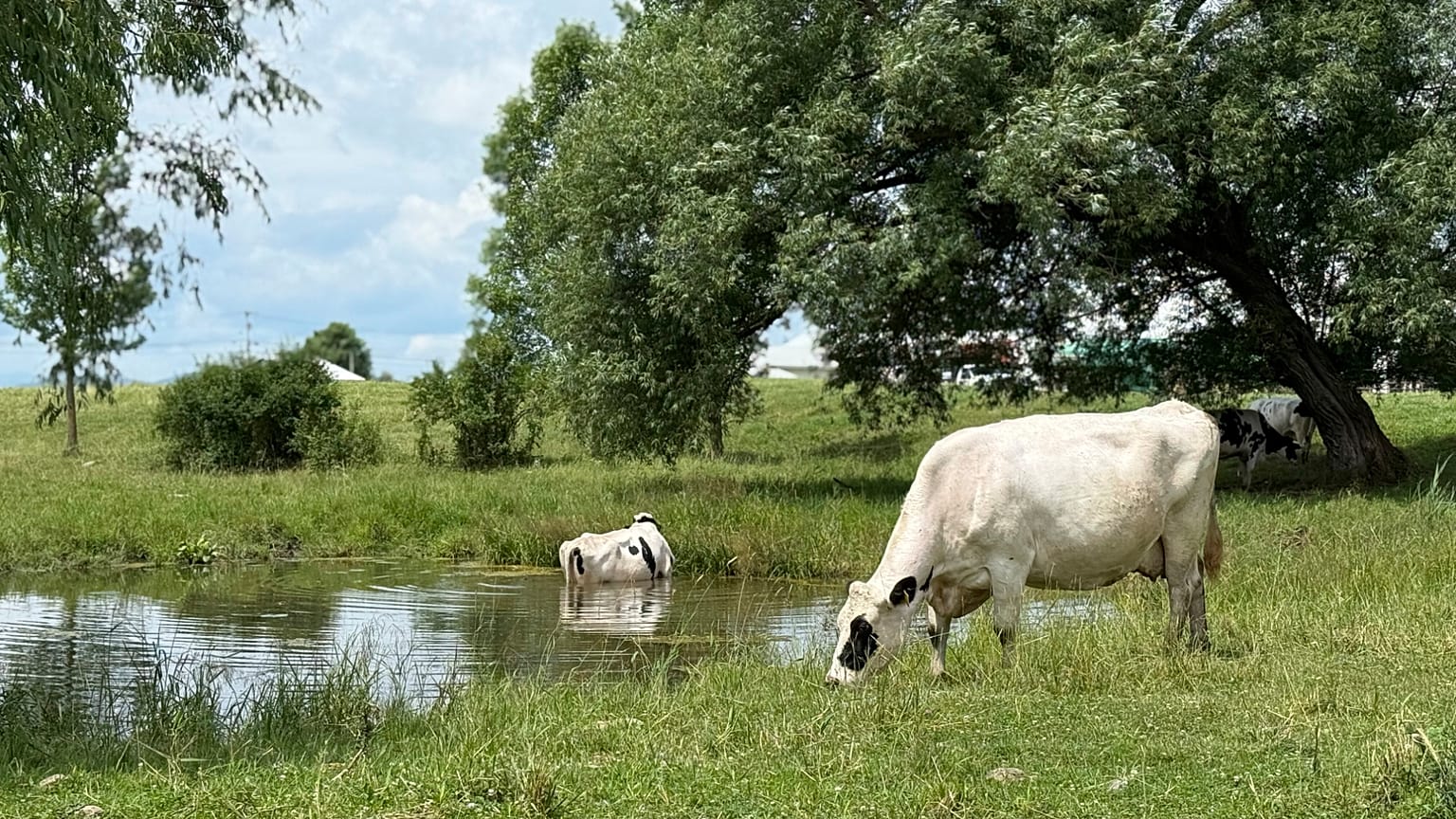
Cows graze on a dairy farm.
Copyright AP Photo/Amanda Swinhart


By Marta Iraola Iribarren
Published on


The first human case of Shamonda virus, confirmed in France, poses no wider threat to Europeans, the European Centre for Disease Prevention and Control (ECDC) told Euronews.

Europe’s public health authorities need to be aware of the first human case of Shamonda virus confirmed in France, but not “panic,” the ECDC told Euronews, as investigations into the patient’s death continue.

French authorities confirmed on Thursday a Shamonda virus infection in a patient in Lyon who died in early October, marking the first time the virus, previously seen only in animals, mainly cattle, has been reported in a human.

“This is a very special case,” TamĆ”s Bakonyi, principal expert on vector-borne and zoonotic diseases and one health-related issues at the ECDC, told Euronews.

The affected patient had leukaemia and was “severely immunocompromised,” making it easier for the virus to infect the person. “The whole process of viral infections or other kinds of infections are behaving differently in those [immunocompromised] individuals than in healthy people,” Bakonyi said.

While it cannot be excluded that the virus can spread to other humans, “it does not mean that now we should be concerned, that we should be in panic,” he said, adding that there is limited evidence of a broader threat.

“The studies [in France] indicated that it was a quite long period that the patient had already been carrying the virus and then developed encephalitis and died,” Bakonyi said.

The Shamonda virus belongs to a group of viruses transmitted by biting insects called midges.

The virus was first detected in Nigeria in the mid-1960s and has since been reported sporadically in cattle in West, East and southern Africa and in Japan.

This summer it was also detected in Western Europe. Cases were reported in Austria, Belgium, France, Germany, Ireland, Italy, Liechtenstein, Luxembourg, the Netherlands, Portugal, Spain and Switzerland, as well as the island of Jersey.

Investigations are ongoing

Although it had never been reported in humans before, Bakonyi said that experts and public health institutes in European countries had already been looking into whether the virus can cause infections in humans.

“This is an alert, but we have seen this,” Bakonyi said, adding that millions of people have lived in an environment where the virus is present and it has never been reported as a problem.

“It cannot be excluded that it also propagates in other humans, so that is the alerting part and that is why now there are ongoing investigations to clarify every aspect,” he said.

Those include clinical, laboratory and epidemiological investigations to determine whether the virus caused or contributed to the patient’s death and how the infection was acquired.

Some of these studies include testing for antibodies in people who may have been exposed to the virus, such as veterinarians and farmers, to see if they have been infected even without developing symptoms.

The case underlines how closely animal and human health are linked. That’s why ECDC together with European Food Safety Authority (EFSA) are taking one health approach — working together in the fields of animal and human health they have begun gathering scientific data and other relevant information, including input from experts across different countries, to inform its risk assessment.

Booking an electric flight in Europe is only 10 years away, says influential Dutch researcher

One of the world’s first battery-powered passenger planes is being built by Dutch start-up Elysian Aircraft.
Copyright Elysian Aircraft


By Ruth Wright & Hans von der Brelie
Published on

Aeroplane manufacturers should be forced to pivot to electric as car companies have, says influential Dutch researcher Maarten Steinbuch.

The Netherlands is pushing the world towards electric flight faster than most European countries.

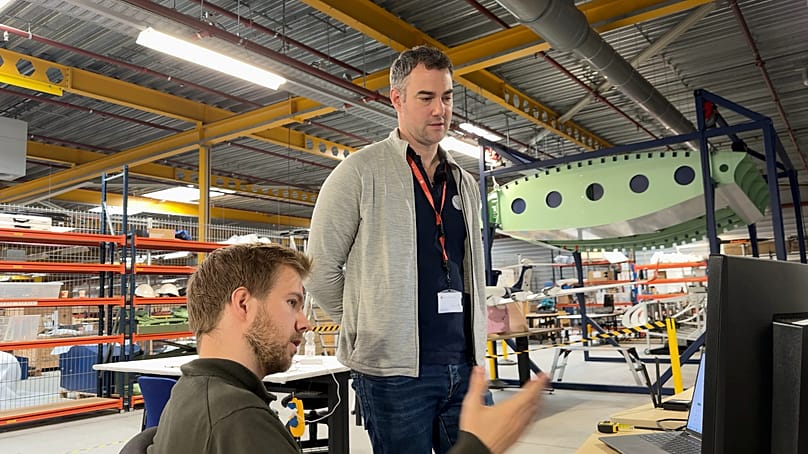
One of the world’s first battery-powered passenger planes is being built by Dutch start-up Elysian Aircraft. Development is well underway: “There will be six engines. And we have folding wingtips, so that we fit into the current gates’ infrastructure of the airports, because the wings are very large,” explains co-founder Daniel Jacobson.

Cutting fossil fuel emissions is the most pressing challenge facing the world, and aviation is a big contributor. “By being able to transport 90 passengers for initially 800 kilometres and eventually 1,000 kilometres you can reduce emissions to zero, from half the world’s flights,” Jacobson says. “That is a very large amount of flight activity in the world. And you reduce total emissions from aerospace by 20 per cent.”

Development is well underway, confirms Elysian Aircraft co-founder Daniel Jacobson (at the right). Hans von der Brelie

Should the European Union be backing electric air travel? What can e-planes learn from EVs? When will ordinary passengers be able to fly in an electric plane?

Euronews Earth sat down with Maarten Steinbuch, a renowned Professor of Mechanical Engineering at Eindhoven University of Technology, to get his expert view of the future of electric flight.

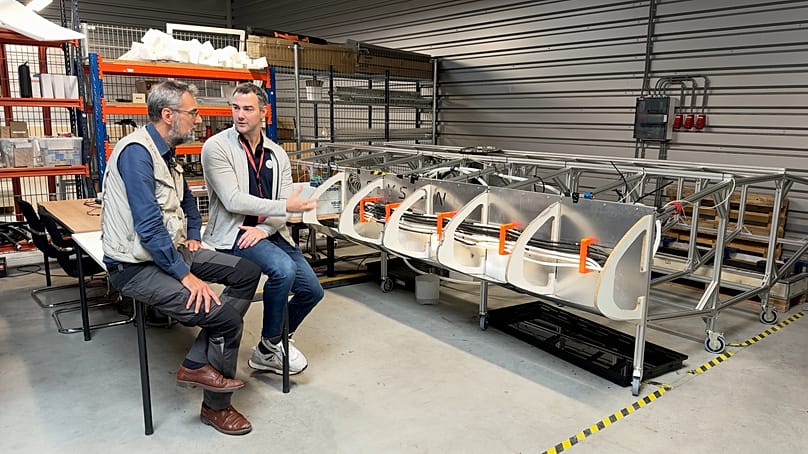
Euronews Earth met with Maarten Steinbuch (at the left), a renowned Professor of Mechanical Engineering at Eindhoven University of Technology. Hans von der Brelie

We can’t leave it to the airlines to cut their own emissions

Aviation contributes six per cent to global heating, when CO2 as well as other emissions are taken into account. In wealthy countries, aviation is responsible for a much larger share, according to data seen by campaign group Stay Grounded.

The aviation industry is, of course, aware of its impact and has made promises to cut emissions. The International Civil Aviation Organization (ICAO), the UN agency responsible for regulating international aviation, adopted the goal of “carbon neutral growth from 2020”. However, CO2 emissions from international aviation have increased since 2020, as the goal focuses on offsetting the sector’s CO2 emissions rather than committing to real emissions reductions.

Climate Action Tracker rates the ICAO’s goal of carbon neutral growth from 2020 levels as “Highly insufficient”.

The European Commission, Professor Steinbuch says, is focused on helping “current aviation” to “become as sustainable as possible”. But rather than helping current planes to reduce the emissions they create, the Commission should be supporting a pivot to zero emissions planes – electric ones. “There is not enough attention yet to have a revolution in airspace electrification. So, it’s more an evolution and not yet a revolution.”

“There is not enough attention yet to have a revolution in airspace electrification. So, it’s more an evolution and not yet a revolution”, says Maarten Steinbuch. Hans von der Brelie

Could electric planes become as common as EVs?

Electric vehicles have been adopted across Europe, faster than many people predicted. Sales grew year-on-year from 2020 to 2025, with one in four cars sold worldwide in 2025 being electric, according to the International Energy Agency. As a result, about five per cent of the global car stock is now electrified, displacing 1.2 million barrels of oil per day in 2025.

This shift did not happen by magic but because car companies were put under pressure through government policy. “I have seen, in the electrification of passenger cars, that being strict on dates when manufacturers of cars effectively should have a sufficient number of models of electric cars available really helped,” says Professor Steinbuch.

He believes that if similar requirements were made of aeroplane manufacturers, we could see real change. “We need legislation saying that part of a fleet could be electrified in this or that year. Push that also with legislation.”

The European Commission also needs to speed up how quickly new aeroplane designs are certified. Safety must be the “first, second and third” priority, of course, but “it could help if the European Commission would put a little bit more effort in, so that those processes could be accelerated and giving space for scale-ups to build up both on the infrastructure for electrification of airflights, but also for the manufacturing and the startups who make new planes.”

In the workshop of the Dutch start-up Elysian Aircraft: the wings will be fully packed with batteries. Hans von der Brelie

When will electric flights be available to us all?

Seeing the owners of low-cost airlines become influential millionaires, it can be difficult to imagine aviation losing its grip on the market.

But Professor Steinbuch says there are plenty of reasons to be optimistic that electric flights will be common in the not too distant future – and there’s one key component.

“It’s not a dream, it is very real and the most important part of development is the batteries. Batteries are the key thing. All over the world billions of euros and dollars are spent in development. Why? Because everybody knows that batteries are the Holy Grail for the transition both in mobility as well as in energy.”

Batteries are so crucial because they power electric planes, and how long they last determines how far they can fly. “If solid-state batteries with double the capacity – up to 500 watt-hours per kilogram – come onto the market, electric flying will attract the interest of far more people. And this point will come soon.”

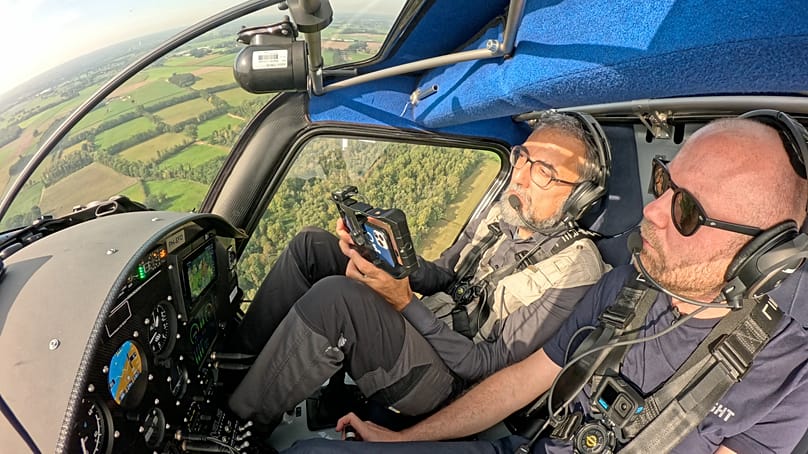
Euronews Earth takes a ride in an electric 2-seater: Start-ups such as E-Flight Academy already started to train pilots in electrical airplanes. Hans von der Brelie

How soon? “I think in 2032 or so, within six years, we might see the first 500 km range airplanes for cargo and for passengers, at five seats, so that's a very small scale – but still it will be a start for specialised purposes.” Three years later, in 2035, “we could see nine-seaters, maybe 20-seaters, flying with a range of 500 kilometres. 80- or 90-seaters will be more close to 2040, even maybe beyond.”


Should Europe ban meat advertisements? We asked a climate psychologist to find out what would happen

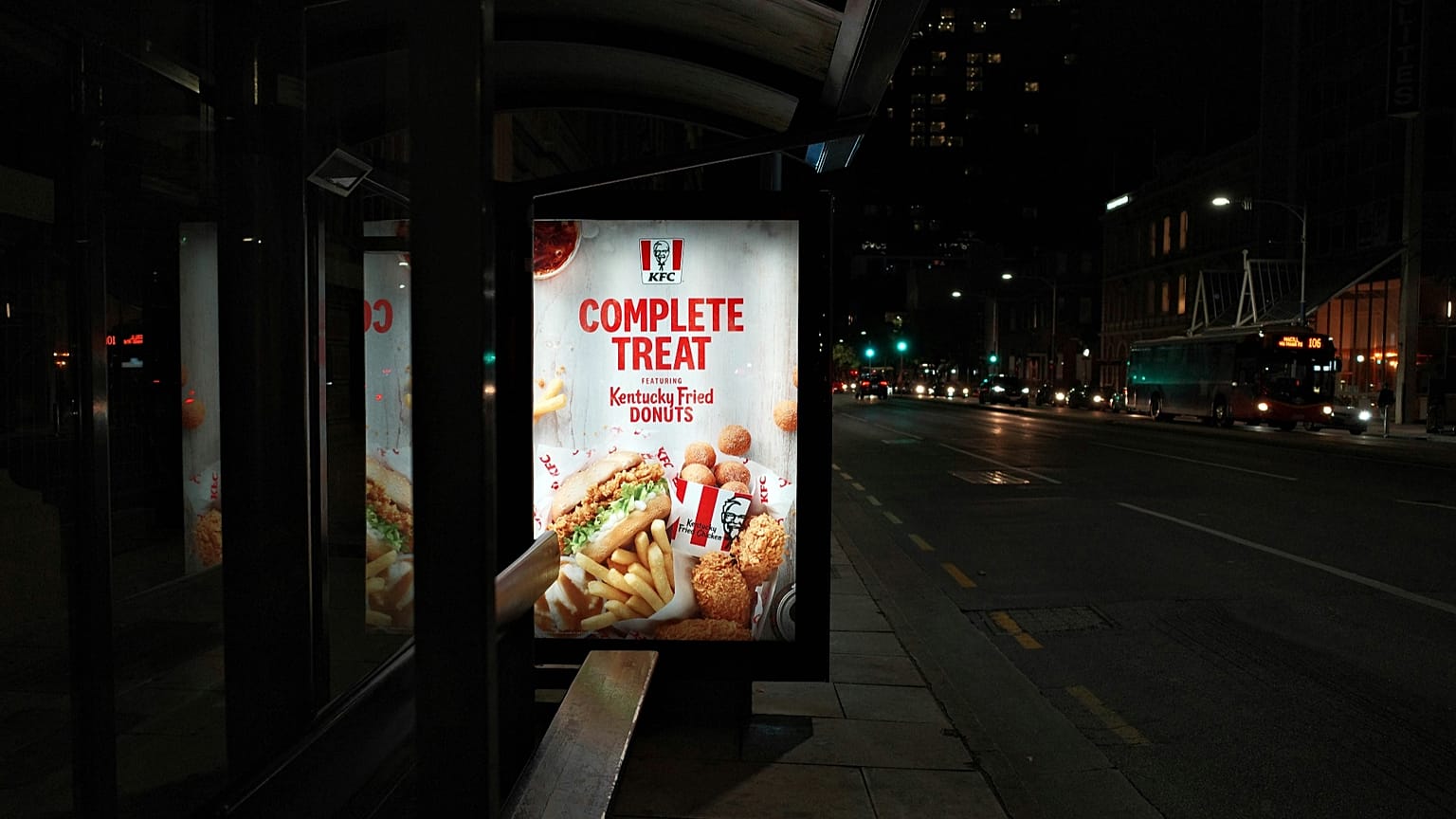
An image of a KFC billboard at a bus shelter.
Copyright 0xk via Unsplash

By Liam Gilliver
Published on

As climate scientists call for a transition to plant-rich diets, could Europe’s streets lose their juicy burger billboards?

Europe is entering a “new era of green marketing” as more cities turn their backs on climate-damaging advertising.

It all started with Amsterdam, which became the first capital city in the world this year to ban billboards promoting fossil fuels and meat on 1 May – five years after the law was first proposed.

The ban is part of the city’s targets to reach carbon neutrality by 2050 and to halve meat consumption during the same period. Other Dutch cities, such as Utrecht, the Hague, Zwolle, Delft and Nijmegen already have similar bans in place.

Many other cities including Helsinki, Stockholm and Bristol have introduced bans on promoting fossil fuels or other carbon-intensive products such as aviation, shipping, fast-fashion and construction. However, many of these don’t include meat.

Why are European cities banning meat adverts?

While the climate impacts of burning fossil fuels are widely understood, the environmental effects of animal agriculture get less attention.

A recent report from European non-profit Changing Markets found mounting evidence that departments within the UN Food and Agriculture Organisation (FAO) have a “bias in favour of the livestock sector” – as lobbyists seek to undermine climate action.

This includes high-ranking members of the FAO delivering speeches at the World Meat Congress and affiliated scientists from the animal agriculture industry attempting to discredit studies that promote plant-rich diets.

But there is no hiding that food and agriculture contribute one-third of global greenhouse gas (GHG) emissions, second only to burning coal, oil and gas.

Animal-sourced foods in the EU are also believed to make up between 81 and 86 per cent of total GHG emissions of food production. However, they only supply an estimated 21 per cent of calories and 64 per cent of protein.

Over recent years, scientists have called for countries – particularly those in the West with access to plant-based alternatives – to reduce their meat consumption to tackle this.

Most notably, the 2025 EAT-Lancet Commission report – compiled by 70 leading experts from 35 countries – found that around 15 million deaths could be avoided each year if the world shifted to predominantly plant-based diets.

Experts say this could also cut non-CO2 GHG emissions from agriculture – such as methane from livestock and nitrous oxide from fertilisers – by 15 per cent by 2050.

When factoring in the entire food lifecycle – such as reducing deforestation, transportation and refrigeration, and restoring nature – the total drop in emissions would be much higher.

How advertising shapes Europeans’ behaviour

Amsterdam’s meat ban proved controversial, with many people on social media branding the ruling “ridiculous” – or arguing that their meat consumption isn’t linked to what they see on billboards.

“I can’t honestly remember the last time I actually purchased something directly because of an advertisement,” one Reddit user wrote. “Probably [when I was] a teenager.”

But Linda Aspey, a climate psychology specialist and board member of Climate Psychology Alliance, tells Euronews Earth that much of advertising’s influencing power comes from “repetition and cueing”.

“One study found that seeing meat imagery (in this case, a Big Mac) increased people’s desire to eat it, and its everyday presence likely reinforces meat as an ordinary choice,” she says.

“This may be reinforced by someone’s identity, culture of livelihood where eating meat is simply a part of that, and carries little conscious tension.”

Meat consumption in the Netherlands, for example, has been on the decline. In 2024, the Dutch ate less meat (including meat products) than at any time in the past 20 years, according to Wageningen Social and Economic Research’s ‘Meat Report’.

“For others, there's an uncomfortable pull between valuing animal welfare or the environment and still eating meat, and advertising may make that pull easier to set aside,” Aspey explains.

“What the evidence does show is that advertising typically shapes what feels normal for most of us, to varying degrees, which in turn can shape behaviours.”

Would banning meat advertisements actually make a difference?

Amsterdam is yet to announce any data on how the ban has impacted meat consumption in the country – but experts predict there will be a correlation.

When Transport for London (TFL) in the UK removed junk food advertising from its network, weekly household purchases were estimated to fall by nearly seven per cent, confectionery by almost a fifth.

This was measured through actual shopping data, not consumer surveys.

“The effect wasn't dramatic as a ban changes the constant prompts that people see around them day to day, without necessarily changing why people eat what they eat, whether that's habit, taste, livelihood or budget,” Aspey explains.

“As with tobacco control, such restrictions tend to work best combined with other measures, not alone.”

Should climate-damaging foods be restricted?

Despite the known climate-link, the EU has historically propped up foods like red meat with generous subsidies.

A recent report from charity Foodrise found that the EU’s common agricultural policy (CAP) directed more subsidies to the production of high-emitting animal-sourced foods than plant foods in 2020.

That year, animal-sourced foods received around 77 per cent of total CAP subsidies, accounting for €39 billion out of the total €51 billion spent.

The study found that beef and lamb, which are consistently identified as the biggest culprits of climate damage, were given around 580 times more in subsidies compared to legumes such as lentils and beans in 2020.

Going from funding these foods to actively stripping them from public advertising may feel too drastic – but experts say it could become part of a “mix of strategies” to tackle climate change.

Agriculture drives deforestation and biodiversity loss; livestock uses most of that land, despite converting only a fraction of feed calories into meat.
Linda Aspey
Climate psychology specialist

“Most research points to sustainable diets needing meaningfully less meat than the UK eats now, for both planetary and personal health, and marketing that is weighted heavily towards meat – especially mass produced and cheaper – makes that shift harder," Aspey says.