Europe weighs €10bn plan to launch its own astronauts ahead of Rome space summit
 Copyright AP Photo
Europe is seeking to boost its presence in space and cut technological dependence on other states. The 15 December ESA summit in Rome will shape choices on astronauts, cargo and investment.
Europe wants to stop depending on others to send its own astronauts into space. The next key date for deciding how to do that is 15 December in Rome, when the member countries of the European Space Agency (ESA) will meet to discuss the future of space exploration. On the table are multi-billion-euro investments, new technologies and one strategic issue: ensuring that Europe can reach Earth orbit with its own means, without relying exclusively on services provided by foreign companies.
The summit, officially the Intermediate Ministerial Meeting 2026, comes at a time of transformation in the sector. Member states will have to assess proposals to strengthen Europe’s role in low Earth orbit, prepare for the post-International Space Station era and build the continent’s presence on the Moon, while also looking towards Mars. The aim is not to abandon international cooperation, but to take part in it with greater autonomy.
Ten billion euros to send European astronauts into space
The most ambitious challenge concerns human spaceflight. Today, Europe does not have a fully autonomous system to launch astronauts and bring them back to Earth: for crewed missions to the International Space Station it depends on capabilities developed outside the continent, in particular in the United States.
ESA’s director general, Josef Aschbacher, has proposed investing around €10 billion over ten years to develop a European system capable of carrying astronauts into space and returning them safely. According to the estimates he presented, continuing to buy services from foreign providers could cost European taxpayers about €5 billion over the same period.
These are projections, not funds already allocated: the political and financial decision rests with the member states. The choice, as Aschbacher frames it, is between building up Europe’s own industrial capabilities or continuing to buy services from other operators, with costs and availability that also depend on the commercial decisions of those suppliers.
What is at stake goes beyond transporting astronauts. An autonomous capability would keep a larger share of investment within Europe’s space industry, drive the development of reusable technologies and strengthen the continent’s bargaining power in international programmes.
Ariane 6 and Vega-C: Europe’s renewed access to space begins with its launchers
Autonomy also depends on having reliable rockets that can be launched frequently enough to meet demand. In this field Europe can count on Ariane 6, the heavy launcher developed for institutional and commercial missions, and on Vega-C, designed to place lighter satellites into orbit.
The two launchers are key components of independent access to space. Vega-C, for example, put the FLEX and Sentinel-3C satellites into orbit in September 2026 as part of Europe’s Earth observation activities. The goal is to consolidate launch capabilities and widen opportunities for both public and private customers.
Competition, however, is global. SpaceX has built a model based on frequent launches and reusable rockets, securing a central role in the international market. For Europe, therefore, it is not enough simply to have its own launchers: they must also be competitive in terms of cost, availability and turnaround times.
The challenge also involves new commercial operators. German company Isar Aerospace took a step forward on 5 September 2026, when its Spectrum rocket reached space for the first time, placing five small satellites and an experiment into orbit. The first test flight in March 2025, by contrast, ended after about 30 seconds. The 2026 outcome shows the progress of a European sector in which start-ups are seeking to stand alongside established operators.
Cargo capsules and reusable technologies: the race among European companies
Another piece of the puzzle is the transport of goods to space stations and their possible return to Earth. On 10 September 2026 ESA awarded The Exploration Company a contract worth a total of €760 million for the next phase of the ALADDIN programme, dedicated to developing the Nyx capsule.
The agreement provides €310 million for a demonstration mission and includes a further €450 million for two additional missions, which still have to be confirmed. The aim is to prove Europe’s ability to carry cargo to low Earth orbit and bring it back, starting with a mission to the International Space Station.
The programme marks an important step towards a European commercial service: ESA is not only funding technological development, it is also becoming a key customer for a private company.
At the same time, industry is working on reusable rockets, a technology that can help cut the cost of access to space. This is the context for programmes run by European companies such as France’s MaiaSpace and Italy’s Avio. For the latter, the development of new propulsion and launcher-recovery solutions remains an area to watch, but the results of individual demonstrators and their timelines must be assessed on the basis of official updates.
Italy, the States General to organise the Space Economy
For Italy, the Rome summit comes as the country seeks to strengthen coordination between businesses, research and institutions. The space sector involves major industrial groups, specialist firms, start-ups, universities, research centres and financial operators: a complex value chain in which the ability to work together can make the difference in accessing European programmes and international markets.
In June 2026**,** the cross-party parliamentary group on space chaired by Andrea Mascaretti, launched the States General of the Space Economy. The programme includes twenty events in sixteen Italian regions, with the aim of showcasing aerospace clusters and gathering input from the national production system.
The initiative aims to help define strategic guidelines for the sector. The issue is not only the ability to build satellites or launchers, but also to connect industrial expertise, attract investment and turn innovation into services and economic opportunities.
Life after the International Space Station and the challenge of the Moon
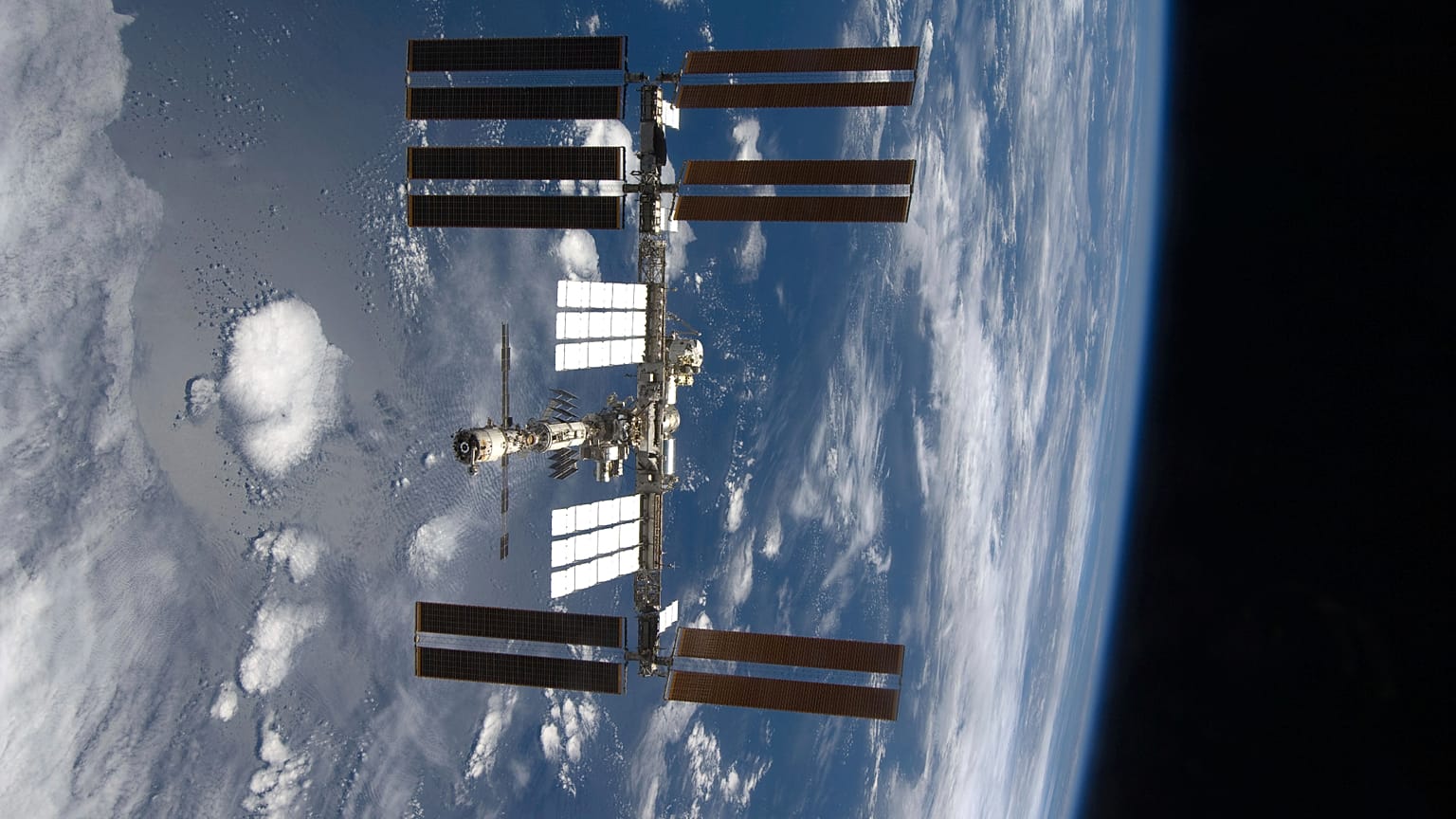
The timetable for European decisions is also linked to changes in human exploration. Under current plans, the International Space Station is due to end operations by 2030, while commercial projects for new low-orbit infrastructure are taking shape. For Europe, securing a role in this scenario means being able to continue carrying out scientific experiments, developing technologies and taking part in future missions without depending entirely on the choices of external partners.
The Moon is the other major objective. The ESA wants to strengthen Europe’s presence through international cooperation and the development of targeted capabilities, viewing Earth orbit and lunar missions as stepping stones towards the exploration of Mars.
On 15 December in Rome, European governments will be asked to discuss the options prepared by the space agency. No single summit is expected to resolve all the sector’s vulnerabilities, but it will be an important step towards understanding which goals states are willing to fund, and on what timescale.