Tuesday, October 27, 2026


Australian Fund Manager Buys Majority Stake in UK’s Largest Port Operator
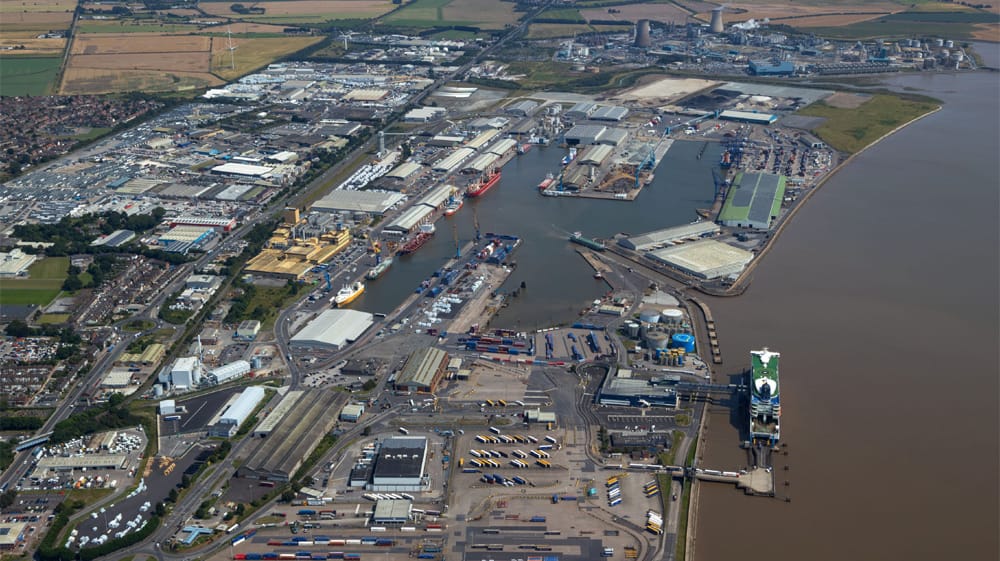
Hull UK British port
ABP operates 19 ports including in the industrial area in the east at Hull (ABP)

IFM Investors, an Australia-based global fund manager with a focus on UK infrastructure, emerged as the winning bidder in the sale of Associated British Ports (ABP). The company, which was formed through a government privatization effort in the early 1980s, reportedly handles approximately a quarter of the UK’s seaborne trade.

The Financial Times had first reported in February that the Canada Pension Plan Investment Board and OMERS (Ontario Municipal Employees Retirement System) were planning to sell their stakes, which collectively represent approximately 64 percent ownership of ABP. In August, Bloomberg reported the final round of bidding had been narrowed to three investment fund managers, Apollo Global Management, KKR, and IFM Investors. India’s Adani Group had reportedly also expressed interest but was not identified as one of the finalists.

Terms of the deal were not reported, but Bloomberg cites sources saying ABP was valued at approximately £10 billion ($13.4 billion). Bloomberg calls the deal one of the largest in the UK this year.

“This transaction represents an attractive opportunity to realize the value of our long-term investment and recycle capital into new opportunities,” said James Bryce, Managing Director, Head of Infrastructure, CPP Investments.

ABP currently operates 19 ports around the UK, including in England, Scotland, and Wales. Its locations include Southampton, the UK’s third-largest container port, Humber, which is a major industrial area in the east around Hull and Immingham, and South Wales. In announcing the sale, OMERS also highlighted that ABP has continued to invest in its ports, support UK trade and develop new opportunities linked to the energy transition, including through major projects such as the Immingham Renewable Fuels Terminal, Green Port Hull, and Southampton's Horizon cruise terminal.

The company was formed to take over the British Transport Docks Board during the wave of privatizations during the era of UK Prime Minister Margaret Thatcher in the early 1980s. It remained a public company until 2006, when a group of investors, including Goldman Sachs and OMERS, acquired the company for £2.8 billion. The Canadian Pension Plan acquired its stake in 2015. CPP held 33.9 percent while OMERS held 30 percent. Other investors include Singapore’s sovereign wealth fund and Kuwait Investment Authority’s Wren House Infrastructure.

IFM is reported to manage more than US$100 billion in infrastructure equity and debt. It says it has a “longstanding commitment to mobilizing pension capital into UK infrastructure.” It manages assets from Australian pension funds along with Britain’s NEST (National Employment Savings Trust). Other investments are reported to include Manchester Airports Group and Anglian Water.

“Attracting investment from a fund managed by IFM Investors is a powerful endorsement of our business, our people, and our strategy. We are excited to unlock further growth opportunities, together with IFM Investors and our other shareholders, continuing ABP's long-term investment benefitting our customers, our local communities, and the UK,” said Henrik L. Pedersen, CEO of Associated British Ports.

IFM cited ABP’s position serving some of the country’s most important trade and industrial regions. It said it would support continued development of ABP’s infrastructure and operations. 
Ports and logistics infrastructure has become a sought-after investment. In addition to the shipping lines, which are working to increase their shore operations and protect routes, investors have been competing for the investments. A.P. Moller Capital recently announced several large investments, including a Singapore-based port operator and an agreement to acquire a majority stake in Euroports Group, which has operations in Europe and China. 


In Singapore, Improper Drone Use Can Mean Fines or Prison for Seafarers

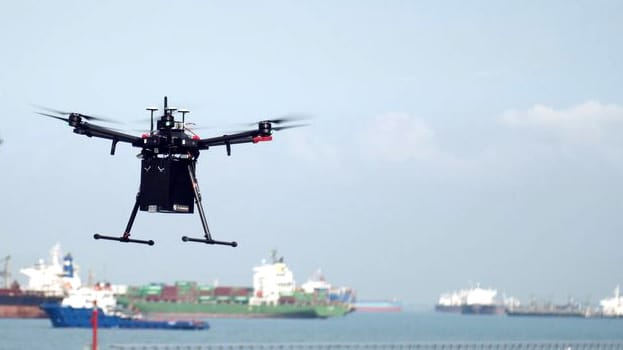
An authorized drone over Singapore's harbor (file image)
An authorized cargo drone over Singapore's harbor (file image)

The Port of Singapore has been at the forefront of harbor drone services since at least 2018, when it welcomed the first trials of a cargo-drone commercial delivery system for ships at anchor. While a friendly environment for R&D and commerce, it is also a leader in drone security regulation - a prudent step given the real-world risk of UAV-based sabotage or espionage. Seafarers who decide to launch a personal drone in Singapore's harbor - especially if they're close to Changi Airport - are at risk of hefty fines, and potentially a jail term for egregious offenses. 

The Civil Aviation Authority of Singapore (CAAS) has strict rules for UAV use over land and water. Flights are not allowed over crowds, near roads, or near first-responders. Flights above 200 feet are prohibited, as are drone movements within five kilometers of an airport (without prior permission and a permit). The maximum penalty is a fine of up to US$39,000 or up to two years in prison.  

The five-kilometer exclusion zone around Changi Airport happens to cover multiple anchorage areas at the eastern end of Singapore's waterfront. Several seafarers have unwittingly found themselves on the wrong side of this regulation, according to a circular distributed to shipping interests by CAAS and the MPA last week. 

According to CAAS, two seafarers were caught operating recreational drones in the wrong areas over the summer. In June, a crewmember aboard a local bunker tanker decided to operate a drone at a height of about 140 feet, some three kilometers away from the airport at Eastern Petroleum Bravo Anchorage. The 46-year-old mariner lacked a permit, and was fined about US$4,000 - instead of a 10-day prison term. 

In July, a crewmember on a foreign-flagged tanker was caught running a recreational drone at an altitude of 240 feet - well above the statutory limit - in the Eastern Petroleum Charlie Anchorage, less than two kilometers from Changi Airport. The individual received a fine of US$2,300.  

On shore, tourists and members of the public get caught in drone-use violations at a rate of about 300 reported cases per year, according to the Straits Times. A small number of these cases are prosecuted, but for those that are, the court process can take weeks and real-world fines can be as high as US$10,000 or more.

While Singapore's general-use rules are strict, MPA remains highly supportive of drone technology for commercial purposes. It operates designated "testbed" safe anchorages for shipboard drone R&D, which have been used by some of the biggest names in maritime services to trial new technology in a real-world setting. The MPA also has set up a formal launchpad and preparation area for UAV testing, complete with covered space for setup and operations - one of the world's only port-sponsored drone R&D zones.


China’s Argentina mining footprint smaller than it looks


Zijin controls Tres Quebradas in Catamarca. (Image courtesy of Neo Lithium.)

Chinese companies account for just 9.2% of investment approved for Argentina’s mining projects under its Large Investment Incentive Regime (RIGI), challenging estimates that link Beijing to 70% of the country’s planned lithium production, according to an analysis by Chilean consultancy Plusmining.

Argentina had approved 23 projects worth $49.8 billion under RIGI as of Oct. 1, including 12 mining developments valued at $21.2 billion, according to the Ministry of Economy. Weighting those mining investments by Chinese shareholders’ direct and indirect equity interests produces an attributable value of approximately $1.95 billion, said Antonia Godoy Arias, a policy and regulatory affairs analyst at Plusmining.

The discrepancy reflects two different measures of participation, Godoy Arias said. The 70% estimate concerns announced lithium production capacity at projects with Chinese shareholders, including developments awaiting approval, while the 9.2% figure measures ownership-weighted investment in projects already approved under RIGI.

The distinction matters as Argentina seeks foreign capital to expand its critical minerals industry while navigating competition between Washington and Beijing. Chinese companies have established a significant position in lithium, but their financial exposure, operational control and rights to future production differ substantially across projects.

Measuring ownership

Six of the 12 approved mining projects have identifiable Chinese equity exposure, although only three have direct Chinese shareholders.

Zijin Mining (SHA: 601899; HKG: 2899) controls Tres Quebradas in Catamarca through Neo Lithium, while Ganfeng Lithium (SHE: 002460; HKG: 1772) holds 46.7% of the Cauchari-Olaroz expansion in Jujuy through Minera Exar. Shandong Gold (SHA: 600547; HKG: 1787) owns 50% of phases eight and nine of the Veladero gold mine in San Juan.

The remaining three projects have indirect Chinese exposure through corporate ownership structures, without Chinese shareholders at the project level.

Chinalco’s approximately 11.23% holding in Rio Tinto (ASX, LON, NYSE: RIO) creates attributable exposure to the Rincón and Fénix lithium projects. At Los Azules, that interest falls to roughly 1.8% because Rio Tinto’s Nuton holds a stake in McEwen Copper, a subsidiary of McEwen Inc. (NYSE: MUX; TSX: MUX).

These indirect holdings do not establish Chinese operational control.

Plusmining calculated the ownership-weighted figures by multiplying each project’s approved investment by the Chinese equity interest attributable through its ownership structure. For indirect holdings, the consultancy multiplied successive ownership percentages through corporate entities to estimate China’s ultimate economic exposure.

The analysis also considered a broader, binary approach that attributes the entire investment value of a project to China whenever qualifying Chinese participation exists, regardless of the shareholder’s actual stake. Including indirect interests in Rincón, Fénix and Los Azules increases the measured footprint, but even this broadest calculation produces a share well below 70%.

The methodology distinguishes investment exposure from project association, but equity ownership does not capture every form of strategic influence. Chinese companies can also secure future mineral supply through offtake agreements, processing arrangements and integration into battery supply chains without controlling mining operations.

Lithium pipeline

Chinese participation could rise substantially as Argentina considers another $4.9 billion in RIGI applications involving Chinese shareholders.

Three pending lithium developments represent approximately 222,000 tonnes of proposed annual production capacity. The largest, Pozuelos-Pastos Grandes, involves $3 billion in planned investment and is 67% owned by Ganfeng. CNGR Advanced Material (SHE: 300919) backs Salar de Jama, while Tibet Summit Resources (SHA: 600338) is involved in Litio Ángeles.

Approval of Pozuelos-Pastos Grandes alone would raise China’s ownership-weighted share of RIGI mining investment to 16.3%, according to Plusmining. Approving all three applications would lift it to 22.3%.

Those scenarios apply the same equity-weighting method to the proposed investments and add them to the approved mining portfolio. They exclude spending outside RIGI, including the $1 billion Ganfeng paid to acquire Pozuelos-Pastos Grandes in 2022 and approximately $1.8 billion it had deployed alongside Lithium Argentina (TSX: LAR; NYSE: LAR) as of 2025.

China’s direct equity participation remains concentrated in lithium. Argentina’s emerging copper developments, backed by companies including BHP (ASX, LON, NYSE: BHP), Lundin Mining (TSX: LUN; STO: LUMI) and Glencore (LON: GLEN), have no direct Chinese shareholders among the projects examined.

Chinese-backed lithium developments represent approximately 307,000 tonnes of announced annual capacity, comprising 85,000 tonnes in approved projects and 222,000 tonnes awaiting approval.

For that volume to represent 70% of the total, the relevant project universe would need to contain approximately 439,000 tonnes of annual capacity. Available disclosures omit production figures for several approved developments, including Rincón and Fénix, preventing independent confirmation of the widely cited proportion from the sources reviewed.

The investment outlook also carries geopolitical implications.

US President Donald Trump characterized dependence on imported processed critical minerals as a national security threat in January and reiterated that position in July. Argentina and the US signed a critical materials agreement in February, although Argentine Foreign Minister Pablo Quirno said the arrangement does not exclude Chinese investment.

Economic ties complicate any rapid shift away from Beijing. The countries’ central banks extended their currency swap arrangement for five years, with its value equivalent to approximately 40% of Argentina’s international reserves.

Argentina’s mining exports reached $4.7 billion in the first half of 2026, rising 74.4% year over year. Shipments to China increased 205%, compared with 90% growth in exports to the US.

Jorge Mora of the International Lithium Association has observed that China’s position as a leading lithium producer and consumer limits the direct influence US trade policy can exert on Argentina’s industry.

Plusmining research shows the next RIGI approvals could materially change China’s measured participation. Their longer-term significance will depend on whether Chinese companies hold minority financial interests, control mining operations or secure future mineral supply through commercial agreements.


Argentina Seeks UNCLOS Ruling on UK-Backed Oil Project off the Falklands

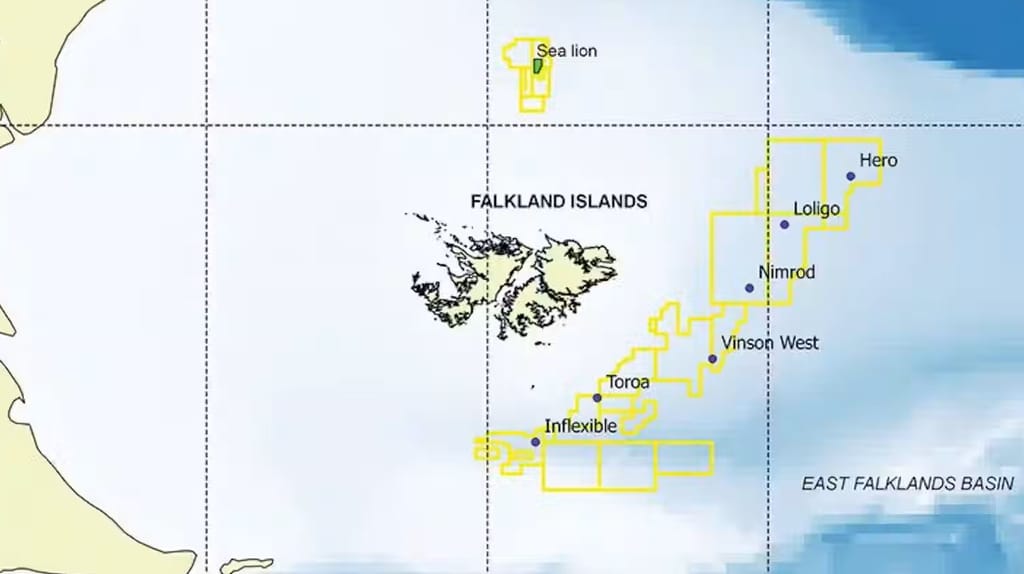
Map showing exploratory oil field (Sea Lion) in North Falklands Basin and exploratory oil wells in East Falklands Basin. Pensoft/Researchgate, CC BY-ND

[By Vicky Kapogianni]


Argentina is trying to stop a planned oil project near the Falkland Islands. On October 13, the government asked the International Tribunal for the Law of the Seas (Itlos), a court in Hamburg that deals with disputes over the sea, to halt the project. Argentina says the UK approved the drilling without its agreement and in breach of Argentina’s rights to the seabed.

The project, called Sea Lion, is a joint venture between UK and Israeli companies, and has been licensed to produce oil by the Falkland Islands government. The Sea Lion field holds an estimated 1.7 billion barrels of oil, 500 million barrels of which is assessed as recoverable.

Argentina began arbitration proceedings against the UK on September 28 and gave London 14 days to stop the project. That deadline expired on October 12. The Argentinian government has now called on Itlos to issue “provisional measures” – emergency orders to protect each side’s rights, or prevent serious harm to the marine environment.

The UK’s foreign secretary, Ed Miliband, has rejected Argentina’s claims, insisting the UK will “vigorously” contest jurisdiction.

Itlos applies the UN Convention on the Law of the Sea, which governs the sea – not land. Yet rights at sea flow from owning the coast, which means that whoever holds the Falklands holds the seabed – and the oil – around the islands. Tribunals under the convention have no power to decide who owns land, and can’t settle sovereignty disputes.

Because rights at sea flow from land, every question about the oil in the dispute between Argentina and the UK has been dragged back into a near two-century argument over who owns the islands, as my colleague and I previously argued.

We proposed settling boundaries, resources and environmental protection on the basis of fairness, as Australia and Timor-Leste agreed in 2018 to share revenue from oil and gas in the Timor Sea.

What Argentina is asking for

Argentina’s request asks Itlos to order the UK to prevent Sea Lion from starting production while the arbitration is under way. The Argentinian government warns that commencing extraction would create “an irreversible fait accompli”.

To back its argument, Argentina is relying on a 2015 order in a sea-border dispute between Ghana and Ivory Coast. There, the tribunal allowed Ghana’s existing oil operations to continue but banned new drilling. So the question is whether – with Sea Lion’s development due to begin in early 2027 – the project could be halted in the same way.

The tribunal must also accept that the rights at stake are “plausible” – meaning there is a credible legal basis for them, even though the full case has yet to be heard. For Ivory Coast, this was simple. Nobody disputed that both countries had coastlines over which they had sovereignty. The only argument was over where the sea border between them should run.

For Argentina, it is an uphill battle. It insists it is not seeking a ruling on sovereignty, yet its request rests on “sovereign rights” over the continental shelf. It is hard to judge that this is a plausible claim without asking who owns the islands.

A bridge from Crimea?

In April, a tribunal hearing a dispute between Ukraine and Russian over coastal rights in the Black Sea close to the occupied Ukrainian province of Crimea found that Russia had breached the convention over the Kerch Strait bridge, which connects Russia with Crimea along with associated power cables and gas pipelines. Ukraine had brought the case in 2016, two years after Russia annexed Crimea, accusing it of usurping Ukraine’s rights in the surrounding waters – from drilling rigs to shipping lanes – and seeking compensation.

The tribunal found that Russia’s environmental assessments were inadequate and unpublished, and that it failed to cooperate in protecting the marine environment.

How could the tribunal say all this without deciding who owns Crimea? Because duties such as assessing environmental impact apply to activities under a state’s “jurisdiction or control”. What mattered was that Russia controlled the bridge, cables and gas pipelines. Who owns Crimea could be left for another day.

Could the same reasoning apply to Sea Lion? The UK answers for the islands internationally, and the convention requires states to ensure that activities under their jurisdiction or control do not cause pollution damage to other states. Argentina’s request cites a spill contingency plan by Premier Oil, Sea Lion’s former operator, which put the chance that oil from a blowout would cross into Argentine waters after 30 days at 30%. A tribunal could, without having to determine who owns the oil, consider whether the UK has assessed and shared such risks.

Should Argentina keep its hopes up?

The tribunal relating to Crimea held that the award was “appropriate declaratory relief”. This meant its formal, binding finding that Russia had broken the law was the sole remedy. Russia was not ordered to change its conduct or pay reparation for its environmental breaches.

So what are Argentina’s chances of success if it pursues an argument about the project’s environmental risk? Real, but the victory, if it comes, may not stop Sea Lion going ahead, and it won’t determine Argentina’s ownership of the Falkland Islands.

Even an interim order requiring the UK to assess and share the project’s environmental risks with Argentina would represent a win of sorts.

And with an election next year in which the incumbent president, Javier Milei, is struggling, and given how strongly most Argentinians feel about the issue, even a modest win could help the president.

Any order for Argentina and the UK to cooperate would bring London and Buenos Aires back to the same table over Sea Lion. A conversation about shared risks could be the first step towards sharing the resources.

Vicky Kapogianni is Associate Professor of International and Environmental Law, University of Reading.


This article appears courtesy of The Conversation and may be found in its original form here. 

The Conversation

The opinions expressed herein are the author's and not necessarily those of The Maritime Executive.


Port Fees for Chinese-Built Ships and Shipping to be Delayed by USTR

Chinese containerships docked in California
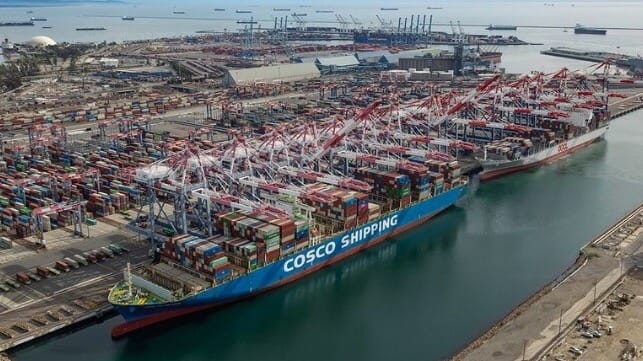
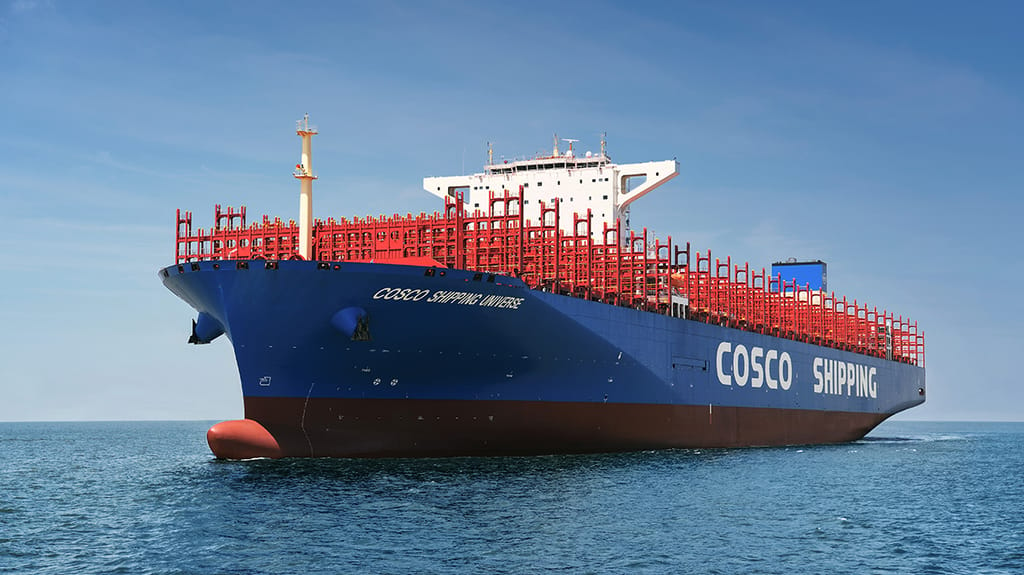
Chinese shipping companies COSCO and its subsidiary OOCL predicted significant impacts from the fees (Port of Long Beach file photo)

With just two weeks left until the one-year suspension of U.S.-imposed fees on Chinese-built ships and ships operated by Chinese companies is due to end, the U.S. Trade Representative has filed to extend the deadline. While little has changed in the situation over the past year, the USTR writes that a two-month extension would provide further time for trade negotiations with China.

The U.S. imposed the fees in October 2025 on all Chinese-built ships calling in U.S. ports as well as additional fees for all Chinese operators. It was presented as a remedial action to compensate for China’s unfair trade policies subsidizing and promoting its shipbuilding industry. There were fees for containers landed at U.S. ports as well as for cars being transported on car carriers, but it also impacted a broad range of companies with Chinese investors. Other portions included Chinese-built container cranes and equipment of ports and chassis and other parts and equipment.

China had angrily responded, saying the U.S. was trying to blame it for its systemic failures over many years of failing to support the U.S. shipbuilding industry. Chinese officials called the policy protectionist and responded by imposing reciprocal fees designed to punish the U.S. shipping companies.

The agreement to pause the fees for one year was the result of a November meeting between China’s President Xi Jinping and Donald Trump, which outlined broad trade agreements between the two countries. China reportedly made a suspension of the fees on shipping a condition of its agreement to buy U.S. agricultural imports.

The situation, however, has little changed over the past year, with Chinese shipbuilders further increasing their market share. China’s Ministry of Industry and Information Technology (MIIT) reported last week that Chinese shipbuilders accounted for 81.8 percent of the global new orders in the first nine months of this year. They took in orders representing more than 175 million DWT, an increase of 163 percent year on year, while output reached 58 million DWT so far this year. Chinese shipbuilders reported a total backlog of over 399 million DWT.

At the same time, Chinese exports have also surged. Shanghai reported it moved more than 5.1 million TEU during September. On the U.S. West Coast, the ports of Los Angeles and Long Beach, the main ports for landing Chinese goods, also reported record volumes.

The USTR says that the U.S. and China are continuing to engage in trade talks, “with the goal of obtaining the elimination of the acts, policies, and practices at issue in its investigation.”

The USTR opened a one-week comment period starting today, October 26, for its proposal to extend the pause on the fees. Comments are due by October 30. The current suspension runs through November 9, but the USTR plans to extend it for two months until January 9, 2027.

Market observers have said shippers appeared to be front-loading shipments this year, creating an early peak season due to the uncertainties over issues including these fees and tariffs. Predictions have called for an expected slowing in Chinese imports to the United States for the remainder of the year.


China to Build Self-Propelled Floating Marine Research Island

China concept floating island for marine research
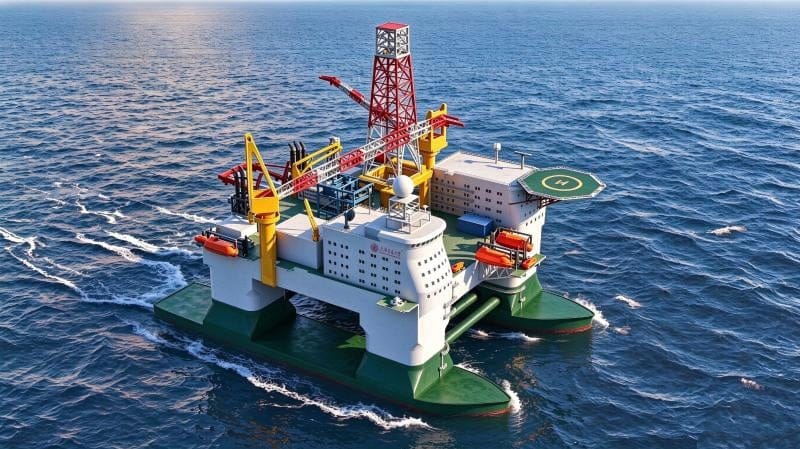
China concept for a first deep-sea floating island to be self-propelled and used for marine research (CSSC)

The construction order was signed this week in China for what is being called the world’s first floating deep-sea island. Designed for ocean research, it will be a self-propelled vessel, a catamaran designed for long-term residence at sea with the ability to change positions.

The ship will be built by Shanghai Waigaoqiao, which highlights that it will leverage its experience building the world’s largest sixth-generation 3,000-meter-deep-water semi-submersible drilling platform. The yard also highlights that China is the first shipbuilding nation to build aircraft carriers, LNG carriers, and large passenger vessels, as well as specialized vessels such as this research ship.

Shanghai Waigaoqiao won the bidding for the research vessel, which is being built at a cost of $413 million. It will be operated by Shanghai Jiao Tong University and is scheduled for delivery in June 2030. Construction is scheduled to begin in 2028.

The shipyard will be responsible for the design and construction using a catamaran base, which is known for good seakeeping capabilities. The main platform will have a semi-submersible twin hull.

China’s research vessel will measure 138 meters by 85 meters (453 feet by 279 feet) and have a main deck height of 45 meters (148 feet). It will have a displacement of 74,000 tons and a speed of 11 knots. It is designed to sustain a sea state of 7 (20- to 30-foot waves) and survive a category 17 typhoon (maximum sustained winds exceeding 165 mph).

The main facility will include six shipborne laboratories for marine heavy equipment and systems technology. It will also make observations and conduct research on marine disaster meteorology and long-term marine ecosystem observations. The ship will accommodate 238 crew and researchers.

The reports describe it as a pioneering concept that combines long-term residence with the ability to rapidly move to new locations. 


BIMCO: Container Ship Orders are Driving China's Shipyard Surge

But as in past boom-bust cycles, the rush to deliver now could be followed by yard underutilization later

File image courtesy CSSC / press handout

More than any other sector, ocean freight has driven the surge in shipyard activity over the past year, according to BIMCO, and it has boosted the fortunes of Chinese shipbuilding in particular. 

“Container ships dominate both the order book and its growth over the past 12 months. They account for 30% of CGT on order and 68% of the increase during the past year,” says Niels Rasmussen, the chief shipping analyst at BIMCO. 

The vast majority of those orders are going to Chinese yards. Fully 81 percent of the container ship orderbook is held by Chinese shipbuilders, BIMCO assesses. 

All of the other major sectors are dominated by China too - tankers, gas tankers, bulkers, and ro/ros - with Chinese yards holding 72 percent or more of the orderbook in each category. 

China holds a bigger share of a bigger pie. The total global orderbook's size is up 13 percent year on year and currently sits at 203 million CGT, slightly down from the record-setting 210 million CTG record set in May. China's overall share (across all vessel classes) is 64 percent of the orderbook. 

BIMCO assesses that China's massive backlogs would take its yards four years to work through, at current capacity. But many of the vessels are due to deliver in 2027-8, which means that Chinese yards will need to increase their throughput quickly to meet the timeline. Large-scale investments are well under way in China's shipbuilding sector, including the reopening of entire dockyards. 

"Chinese yards are scheduled to deliver a record 44.0 million CGT in 2028, nearly twice the 22.7 million CGT delivered in 2025. The capacity expansion needed to achieve this could increase the risk of underutilisation if contracting weakens in the future,” said Rasmussen.


Sierra Leone Launches National Shipping Carrier with Chinese Support

bulker in Sierra Leone port
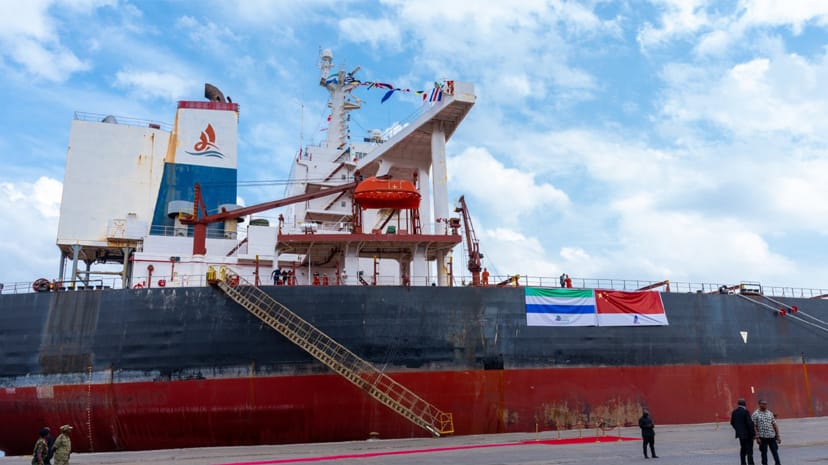
Chinese-owned bulker as the backdrop to the ceremonies in Sierra Leone (President Julius Maada Bio)

With governments across Africa planning to grow domestic fleets, Sierra Leone has moved ahead by establishing a national shipping company. President Julius Maada Bio presided last week over the launch at the Queen Elizabeth II Quay in the country’s port city and capital, Freetown. The establishment of the national carrier is part of the wider maritime sector reforms being undertaken by the government.

The backdrop to the ceremony was the Chinese-owned bulker XH Explorer (176,298 dwt). The vessel, built in 2003, and registered in Liberia, is managed from Singapore and has been running between Sierra Leone and Asia.

In recent months, key legislative instruments have been passed, including the Revised Merchant Shipping Act 2026 and the Maritime Pollution Bill. Among these new laws was also the Sierra Leone National Shipping Agency (SLNSA) Act 2025. The law effectively transformed the old Sierra Leone National Shipping Company (SLNSC) into the Sierra Leone National Shipping Agency (SLNSA).

SLNSC was established back in 1972, and according to the Minister of Transport, Alhaji Fanday Turay, the company needed a renewed vision for “greater efficiency, flexibility, and authority.” While SLNSC has helped the country export timber, minerals, and agricultural produce over time, a more dynamic and responsive structure was required, added the Minister.

Under SLNSA’s new mandate, the parliament in August approved its joint venture agreement with China’s Zhejiang Xiehai Group to form Sierra Leone Ocean Shipping Company (SLOSCo). Zhejiang Xiehai owns the majority stake of 70 percent, while the remaining 30 percent is held by SLNSA. SLOSCo plans to build a fleet of 50 vessels, with the first phase of this acquisition targeting 30 vessels.

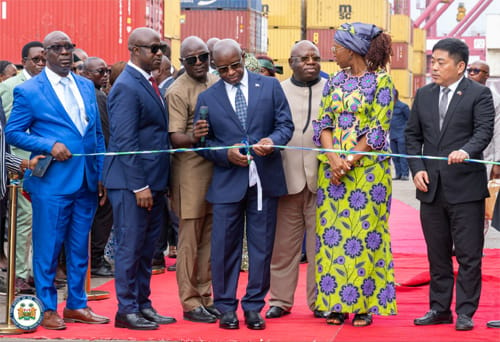
President Julius Maada Bio at the dedication for the new port facility 

“For far too long, we have relied on international carriers to export and import our products. We are now taking a bold step forward, giving Sierra Leone a greater stake in transporting the goods we trade with the world,” said President Maada Bio.

Following SLOSCo’s launch, Zhejiang Xiehai representatives met with the leadership of Sierra Leone Ports and Harbors Authority (SLPHA) to discuss ease in cargo movement. The discussion centered on potential investment in cargo haulage trucks to ease congestion at the Port of Freetown. In addition, SLOSCo will leverage the existing direct shipping route between Taizhou Port in China and the Queen Elizabeth II Quay in Freetown, which was launched in December 2025.

Meanwhile, the Maritime Organization for Eastern, Southern and Northern Africa (MOESNA) has approved in principle the establishment of a Regional Shipping Lines Network and a Regional Maritime Cabotage Protocol. The decision was taken last week during the 10th Assembly of Ministers responsible for Shipping and Maritime Affairs and Trade and Commerce.

With an expanding membership of states across Eastern, Southern and Northern Africa (ESNA), MOESNA is rallying the countries in the region to develop indigenous shipping capacity through a coordinated regional initiative.

Despite its extensive coastline, major seaports, and significant trade potential, ESNA region continues to face limited direct shipping connections between member states. This has seen ESNA continue to rely on transshipment services from outside the region, driving up freight and logistics costs. The proposed Regional Shipping Lines Network is therefore expected to provide a coordinated framework for developing shipping services that respond to the cargo volumes, trade patterns, and existing connectivity needs in the ESNA region. 


Bulgaria Recovers Drone Fragments from Ship Attack While Second Ship Sinks

vessel damaged in attack towed to port
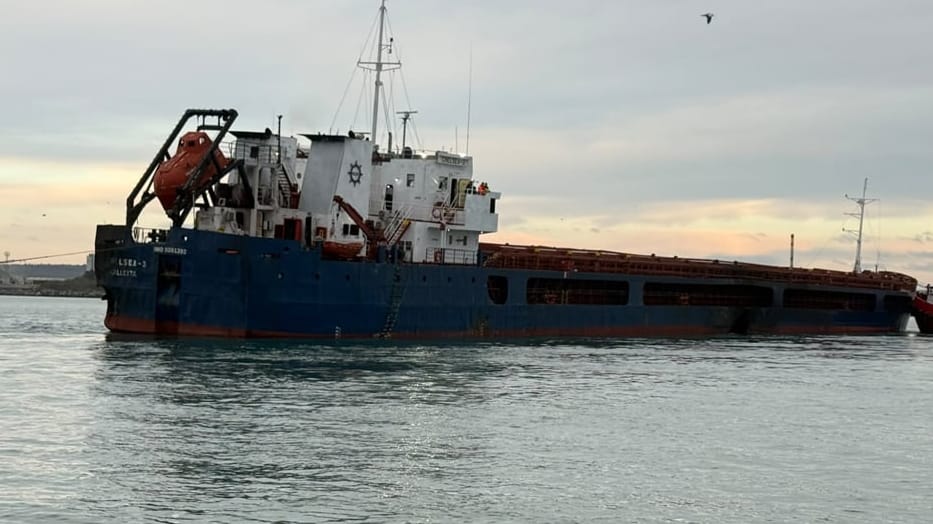
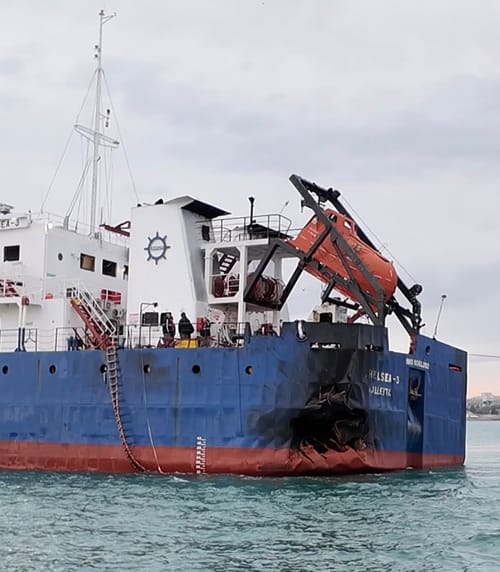
Chelsea-3 was towed into port on Saturday (Bulgarian Transport Ministry)

Salvage efforts are continuing after the series of vessel attacks off the coast of Bulgaria in the Black Sea. Officials are now reporting that drone fragments have been recovered from one of the vessels, which should confirm the origins of the attack, but a second one of the vessels that was attacked is believed to have sunk overnight.

Bulgarian forces mounted a salvage operation, which they estimate cost the country as much as €200,000, but they were able to secure one of the attacked vessels, Chelsea-3 (5,827 dwt), and tow it to an anchorage in Burgas. Teams inspecting the vessel located the fragments, which are currently undergoing chemical analyses that will tell them the type of explosives that were used and identify the drone. 

The vessel, which is owned by Ukrainian interests and registered in Malta, was attacked approximately 17 miles east of Byala on October 13. It was sailing only with ballast, and the 15 crewmembers were evacuated. Bulgarian officials refused to speculate on the origins of the attack but noted it was not likely that Ukraine would attack one of its own ships.

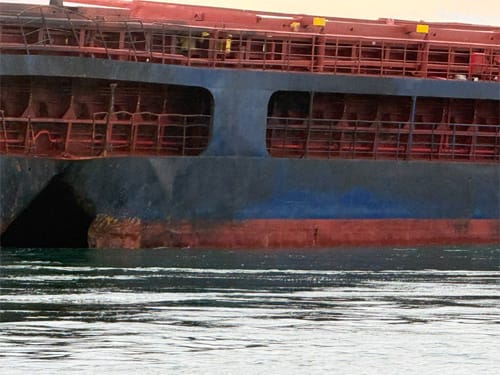
Damage from the drone impacts (Ministry of Transport)

Bulgarian forces conducted the first visual inspection on October 15, reporting the vessel was drifting southward, but bad weather and heavy seas prevented efforts to secure the vessel. By October 16, the vessel was 10.7 nautical miles east of Lozenets, but it appeared that its anchor was holding the ship. Teams were able to tow the vessel to Burgas on October 17.

The inspection revealed three large holes, including one in the portside stern and another midships. No ammunition or military supplies were found on the vessel. Officials said that international assistance was available if needed to identify the drone fragments and the explosive.

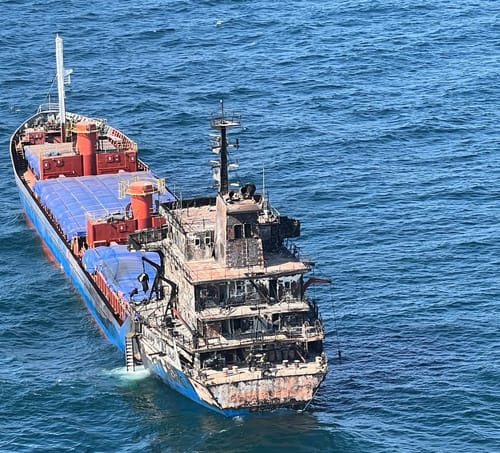
Overnight between October 19 and 20, officials also reported another one of the attacked vessels, the Palau-registered Able disappeared from radar, and they believe it has finally sunk. The ship was attacked on October 6 in Bulgaria’s EEZ about 70 nautical miles from Byala. Air Force and Navy teams inspected the ship on October 9 and reported extensive damage from a fire and that the engine room was flooded. The ship, which was 5,985 tons, was loaded with barley from Romania bound for Turkey. The inspection failed to find any drone fragments.

Damaged cargo ship Able drifted for more than a week before sinking (Bulgarian MOD)

Despite being down at the stern and listing, the Able continued to drift in the Black Sea. As of October 12, Bulgaria said it had exited its EEZ, but it was still being monitored. 

Bulgaria’s Minister of Defense, Dimitar Stoyanov, said in the wake of the attacks, two unmanned systems have been deployed to monitor the country’s Black Sea waters. A third, more technically advanced system is expected to join the patrols by the end of the week.


Prime Minister Rumen Radev added that a US Poseidon aircraft was already patrolling the Black Sea. He said it was increasing its reconnaissance and would also provide early warnings to Bulgaria.

Bulgaria and Romania also asked NATO last week to increase its assistance in the Black Sea to aid in protecting shipping.