Tuesday, October 27, 2026


U.S. Navy Awards $300M Contract to Robotic-Inspection Startup Gecko

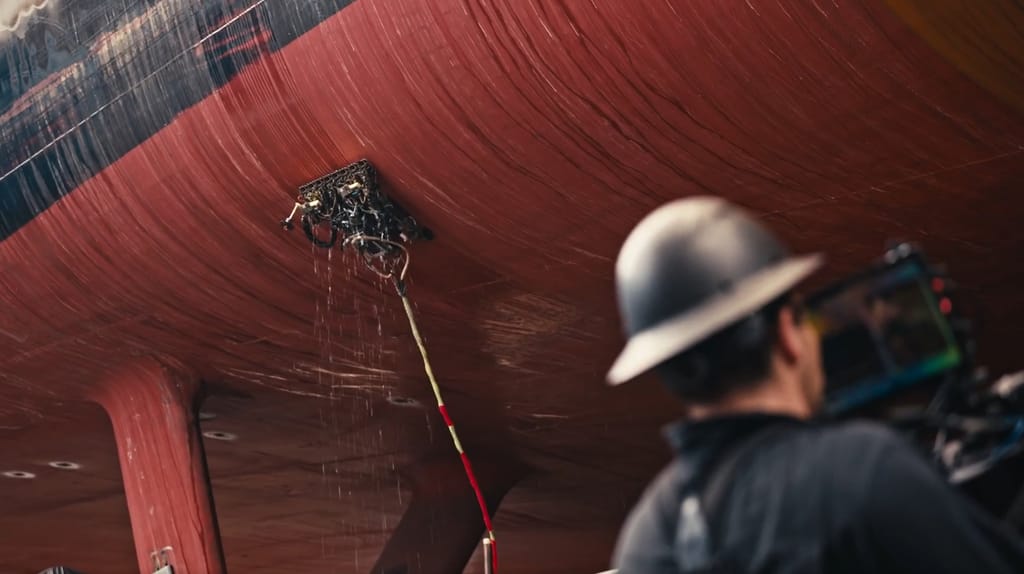
A team of Gecko engineers inspects the hull of a frigate with a robotic ultrasonic scanning device (file image courtesy Gecko)

Pittsburgh-based automated inspection company Gecko Robotics has won a $300 million IDIQ contract with the U.S. Navy to help fight the age-old enemy of corrosion with new high-tech tools. Gecko's robotic inspectors can crawl on steel structures of all kinds and detect flaws in minute detail, helping customers to plan maintenance in advance and build a digital record of asset health.

For the Navy, the most valuable metric in sustainment is yard time: an understanding of the vessel's needs means better preparation for a yard period, which means more efficient utilization of both the yard capacity and the vessel. Tech tools can help get more vessels out of shipyard faster, a requirement to achieve the Navy's goal of maintaining 80% combat surge readiness at any given time.

In a statement, Gecko said that its systems can help the Navy identify structural issues with its vessels up to 50 times faster than human methods can produce, and can complete digital inspections in mere days. Its proprietary technology can crawl along a flight deck and scan through thick nonskid coating. Combined with AI analysis, the technique generates a comprehensive map of corrosion. 

“With savings of millions of dollars per ship, months of inspections turning into days and warships returning to sea faster, the U.S. Navy is demonstrating to the world how to deploy technology at scale," said Gecko Robotics co-founder and CEO Jake Loosararian. 

The contract expands upon a previous $71 million award covering work on 18 ships in U.S. Pacific Fleet, announced in March. 

Gecko will also be involved in nondestructive testing of submarine components at Anduril's future manufacturing plants at Sparrows Point, Baltimore and Orange County, California, the firm says. The new Sparrows Point yard is expected to launch in 2030 and work at the OC site is already in progress. 


Defense Arm of US Investment Manager Buys Fraser Industries

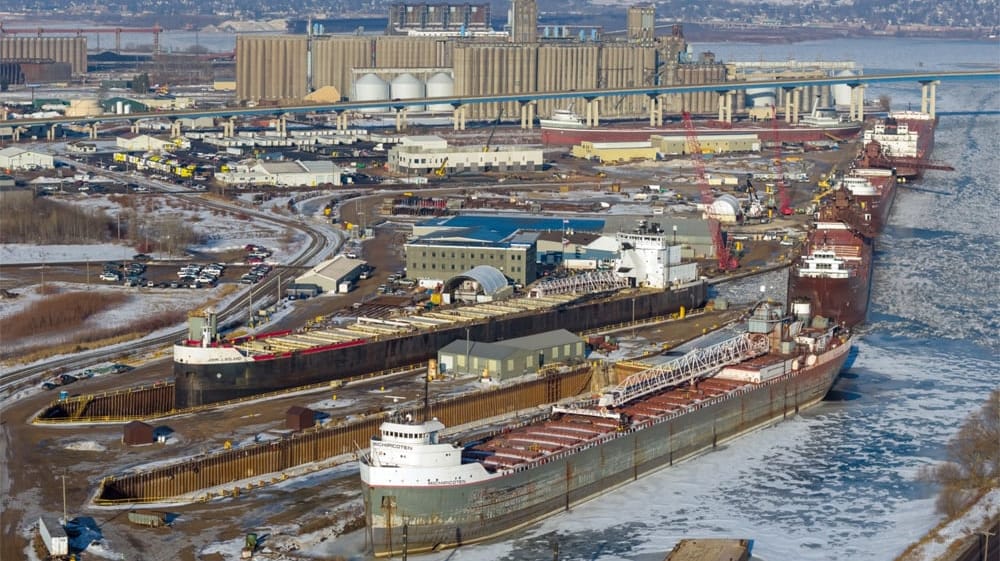
Fraser Shipyard Wisconsin
Wisconsin's Fraser Shipyard was sold to the defense investment arm of a Florida-based family office invetment manager (Fraser)

A group focused on investments in the U.S. defense sector, recently launched by a Florida-based investment manager, has agreed to acquire the Wisconsin-based Fraser Shipyards as part of a planned move into shipbuilding and defense sector investments. Wildcat Defense, part of Wildcat Equity Partners, reports it plans to make investments in the operations after closing the acquisition of Fraser Industries, while it is also exploring other investments, including an offer it made to acquire Austal’s U.S. operations.

The operations of Fraser Industries include Fraser Shipyard, based in Superior, Wisconsin, which has been building and maintaining ships on the Great Lakes and for the military since 1888. The company also consists of Lake Assault Boats, Northern Engineering, and Fraser Terminal. Wildcat reports the company will continue under existing management and that it expects to invest $350 million into the yard to grow the Faster workforce and expand the manufacturing footprint in support of the plans already in the planning stages at the shipyard.

The investment manager points to the emerging opportunities as the United States looks to modernize infrastructure at U.S. shipyards. The group had recently formed Wildcat Defense and earlier in the week formally announced the new segment, saying it was focusing on acquiring, investing in, and operating strategically important companies across the U.S. defense industrial base.

"The United States cannot rebuild its defense industrial base without rebuilding the companies and workforce that underpin it. That requires more than capital. It requires American ownership with the operational expertise and willingness to invest for decades, not just until the next exit,” commented Eric Nicolaides, Group Chairman and CEO of Wildcat Equity Partners.

Announcing the agreement to acquire Fraser, Nicolaides said, “We believe this modernization and expansion should be done by U.S. firms improving and expanding U.S. shipyards.”

Fraser reports that under Wildcat’s ownership it will remain committed to its existing partnerships, including with Fincantieri and Donjon shipyard to compete for the Coast Guard’s seven light icebreakers. At the same time, Wildcat said it will act as an accelerator related to Fraser’s ongoing efforts to seek partnering opportunities with best-in-class technology providers.

“We stand ready to take the turnaround steps successfully employed at Fraser to a wider Wildcat platform that advances U.S. shipbuilding and repair,” commented Patrick Kelly, the current co-owner and CEO of Fraser.

Wildcat in September submitted a non-binding proposal to acquire the U.S. operations of Austal. It proposed an enterprise valuation of $1.25 to $1.35 billion for Austal USA, setting it up for a potential bidding war with Hanwha USA, which is also pursuing Austal USA, while Wildcat also called for a due diligence. 

The defense investment company is being led by Glenn Vogel, a former U.S. Marine Corps officer who has been appointed Chief Executive Officer of Wildcat Defense. 

They highlighted an investment strategy that they said will not be constrained by fixed investment periods or predetermined exit timelines. It plans to acquire controlling or significant ownership positions in strategically important businesses. It highlights targets in shipbuilding, ship repair and maritime infrastructure, advanced defense manufacturing, critical materials, and defense technology. It looks to provide capital and operational expertise to expand production, invest in innovation, and support government customers.

Croatia Completes Sale of Uljanik Shipyard to Turkey’s Kuzey Star

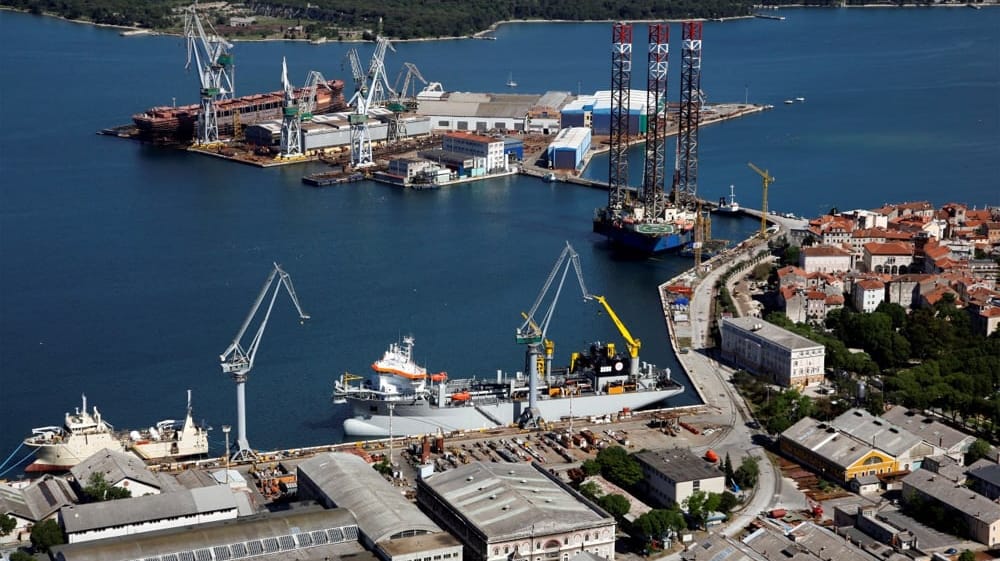
Uljanik shipyard Croatia
The Turkish buyer has committed to the retention of the shipbuilding activities at the Uljanik shipyard operations (CERP)

The court-appointed government administrator reports that it signed the final documents to conclude the sale of the Pula area shipbuilding facilities of Uljanik Brodogradnja 1856 to the Turkish-owned shipbuilder Kuzey Star. With a commitment from the buyer to retain the core shipbuilding activities at the facilities, including construction, repair, and overhaul, the Croatian officials said the deal marks a new chapter in the region’s long heritage in shipbuilding and restores a key industry.

Uljanik had been a major employer and economic driver for the region before the yard fell on hard financial times starting in 2019. It had declined to about 250 employees with an equal number of subcontractors but went into bankruptcy proceedings. The creditors had attempted to sell, in 2023 and 2024, the approximately 55 percent stake of the company held privately before the government stepped in to take control of the company. The plan called for stabilizing and restructuring the operation while getting employees their back pay.

Coratia’s Center for Restructuring and Sale (CERP) announced in June its plan to auction the shipbuilding company with a minimum price of €11.08 million. It said the four combined interests, which represented more than 97 percent ownership, had a combined value of more than €34 million. It was offering for sale the existing shipbuilding infrastructure and concession rights for the operation, but the government retains ownership of the land in the Bay of Pula.

CERP reported that nine companies had requested the bidding packet, but only two proposals were received when the tender window closed in September. One offer, from Luxembourg-based Mira Finance Holding, was deemed invalid because CERP said it had not completed the bond requirements.

Kuzey Star bid €12.05 million ($13.9 million) for the operations of Uljanik Brodogradnja 1856. CERP said it accepted the offer but noted that because the company was not within the European Union, it would be required to carry out a foreign investment screening procedure before the deal could be completed.

“By signing this contract, Croatia is approaching the completion of the process of revitalizing the shipbuilding industry in the Pula area,” commented the Minister of the Economy, Ante Susnjar.

CERP reports that the agreement of sale and the transfer of business shares were completed on October 14. It highlighted the completion of the restructuring and stabilization procedure, saying the long-term stability of the company and its employees had been achieved while protecting the interests of the state. It also noted the readiness and ability of foreign and domestic investors to proceed with the deal.

Noted that Kuzey Star had existing relationships with the yard after having worked on joint projects. It noted that the buyer has yards in Tuzla and Yalova, with an understanding of the business.  They look forward to developing the business relationships.

It is the second major deal to revitalize shipbuilding in Eastern Europe. Romania recently selected Germany’s Rheinmetall to acquire the bankrupt Mangalia shipyard, located south of Constanta. Rheinmetall announced that it is sharing the yard with MSC Mediterranean Shipping Company, and the operations would be divided into its naval shipbuilding and commercial operations for MSC. It looks to use the yard to expand naval shipbuilding opportunities in Eastern Europe.


Seven Panicked Crew Jump From Listing Cargo Ship Off Lebanon

listing cargo ship
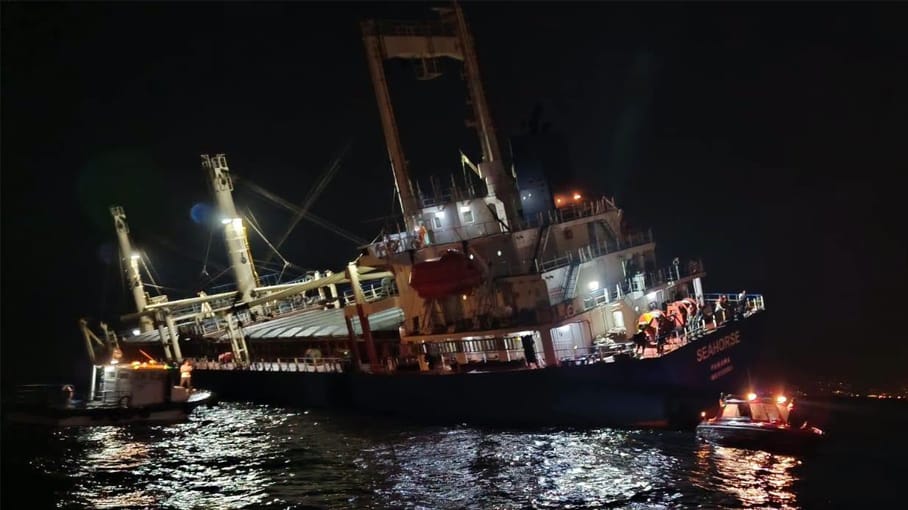
Seahorse listing off the coast of Lebanon (Civil Defense)

A chaotic situation aboard a cargo ship off the coast of Lebanon led to seven crewmembers jumping into the ocean and requiring a rescue overnight. Lebanese authorities are saying the ship has now been stabilized, reducing the risk of the ship capsizing.

The cargo ship Seahorse (9,483 dwt) was traveling from Turkey with a load of timber when it began listing on Sunday, October 25, as it approached the port of Sidon, Lebanon. Built in 1997, the cargo ship is 100 meters (328 feet) in length and registered in Panama. It is managed by a Lebanese company.

Initial reports said the cargo had shifted on the vessel, causing the list. When the authorities contacted the captain, he said the situation was under control and that they did not require assistance. However, later reports said the ship had possibly grounded as it was approaching Sidon. The port has a maximum draft of 8 meters, but the ship was reported to be at 9 meters due to water ingress and the shifting cargo.

When the list became severe, seven of the crewmembers chose to jump into the water, panicking and fearing the ship was in imminent danger of capsizing. The authorities report the captain called for assistance, and they rescued the seven crewmembers from the water. Nine other crewmembers, including the captain, remained aboard the vessel.

The authorities are now saying the vessel had malfunctioned and the crew failed to detect water ingress, primarily in the number 5 cargo hold. When they boarded the vessel, they reported it was nearly impossible to walk due to the angles, and they detected 3.5 to 4 meters (11.5 to 13 feet) of water in the hold. An emergency pumping operation commenced, and they were able to lower the water level to between 50 and 60 centimeters (1.6 to 2 feet).

While the vessel was still listing, the report said it was determined to be stable enough to move the vessel to the Port of Beirut. The ship is now anchored at Beirut, and the plan was calling for offloading the cargo to further stabilize the ship.

The authorities did not indicate what had malfunctioned on the vessel. Databases indicate the ship has a long history of deficiencies reported during port state inspections going back to 2013. It had listed deficiencies on its last six inspections dating back to December 2025.


Fire Reported on Tanker off the Coast of Iraq

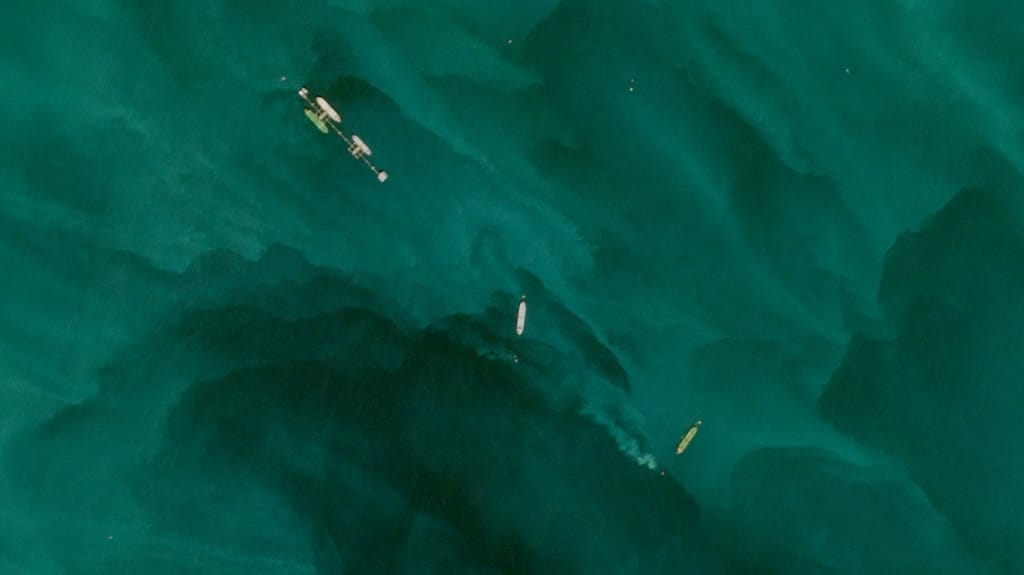
Tankers at the loading terminal southeast of Al-Faw, October 25 (Copernicus / Sentinel-2)

UK Maritime Trade Operations (UKMTO) has reported a fire aboard a vessel in the Iraqi exclusive economic zone of the Arabian Gulf, the latest incident believed to be linked to the U.S.-Iran war - and further evidence that the effects of the conflict are spreading outwards from the Strait of Hormuz. 

UKMTO said that it had received multiple reports of a ship on fire at a position about 60 nautical miles to the southeast of Al-Faw. The organization had no further details on the vessel's status. 

Security consultant Brett Erickson of Obsidian Risk Advisors noted that this was the 10th suspected Iranian strike on a ship since the start of this month, and interpreted the pattern as a sign of escalation. In September, Iranian ship strikes were concentrated in and around Hormuz, but Al-Faw is hundreds of miles away to the northwest - and outside of the umbrella of U.S. air protection in the strait. 

Erickson also noted that the strikes are growing more serious in nature, and the hits are now heavy enough that they are often disabling ships rather than simply damaging them. One container ship was even sunk last week, a rare occurrence in a war with lots of damage and relatively few total losses. 

Striking at Iraq-linked tankers would serve Iran's objective of discouraging GCC oil exports through the Strait of Hormuz - a policy which has come under pressure because of an effective, below-the-radar U.S. military protection mission. Even if Iran has to work hard to hit targets in the Strait, it can still strike at tankers when they are elsewhere - off Iraq, Qatar, Oman and the UAE

The strategy has proven effective in keeping war risk insurance pricing and tanker day rates sky-high, which in turn helps sustain the high price of crude oil, a key part of Iran's negotiating strategy. Brent crude futures are hovering in the range of $115 per barrel, just days ahead of a U.S. election that has been defined by the price of energy. 


Amidst Tensions With Iran, Diego Garcia Fills Up With Support Aircraft

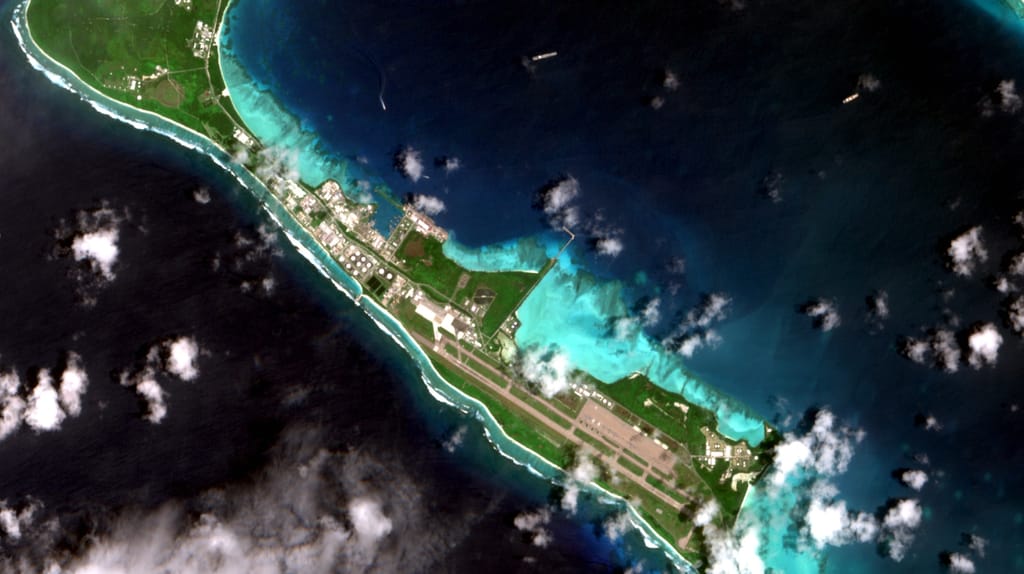
The South Pan on Diego Garcia on October 24 (Sentinel-2 / CJRC)

At a time of increased risk of renewed high-end conflict with Iran, there appears to be an influx of US support aircraft into the Naval Support Facility airfield on Diego Garcia.

On October 2 the South Pan appeared to be almost empty of aircraft. But on October 24 there were at least at least 10 aircraft on the apron, which from the resolution of the imagery available in open sources appear to include a C-5 heavy transport, a C-40 VIP transport, at least two P-8 maritime patrol aircraft and at least four KC-135 refueling aircraft.

In previous times of tension, the airfield has been protected by F-16 fighter aircraft: although hard to spot, none appear currently to be present. There are no B-2 or B-52 long-range bombers present.

Nor is there an armada of warships moored in the lagoon; those present are part of the permanently-stationed Maritime Prepositioning Ship Squadron 2 (MPSRON-2).

In normal times, there can be as few as a single P-8 maritime patrol aircraft present on Diego Garcia. The arrival of additional aircraft from the continental United States has historically been indicative of either an increase in readiness or of impending operations.

In the past 12 months, the range of Iranian IRGC drones and missiles has increased, and the accuracy of their targeting has improved significantly, aided by Russian and Chinese imagery intelligence now being passed to the Iranians in near real time. There is no evidence yet that the Iranians have yet achieved the ability to target Diego Garcia effectively; the last attempt to do so, involving the firing of two Khorramshahr-4 medium range ballistic missiles on March 20, was a failure. One missile landed well short of the target and the other was intercepted shortly after launch by an SM-3 interceptor fired from a US warship.

There is now a greater risk that the Iranians will be successful if another attempt is made, given their ability to improve the performance of their missile and drone arsenal. So with this increased threat risk, even if the UK government gave permission for offensive operations to be mounted from British-held Diego Garcia, it is likely that strike assets would be hidden and protected. An attack might be launched by aircraft based further afield, with Diego Garcia used for supporting activity and possibly as a recovery airfield.


Kpler and Airbus Link Up with New Ship Surveillance System

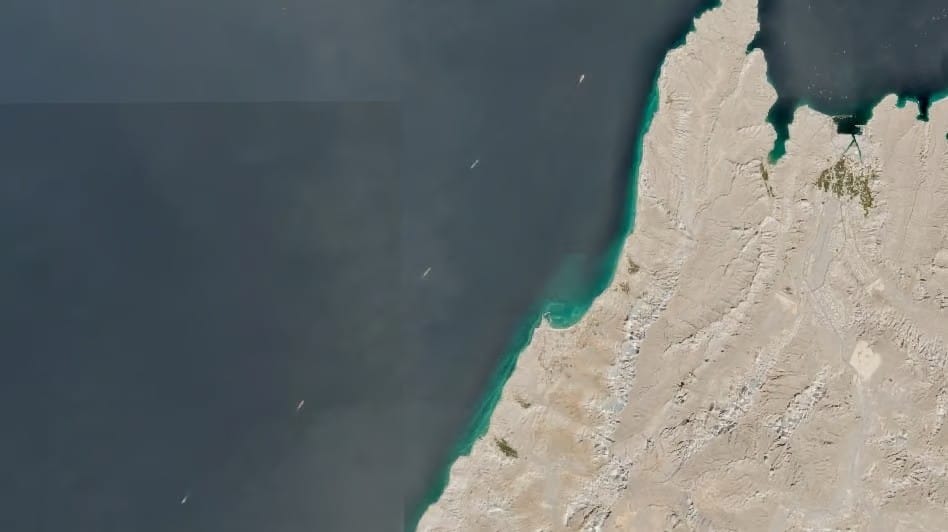
Covert vessel traffic heading to and from the Strait of Hormuz (Copernicus / Sentinel-2)

For many months now the industry has been aware of how merchant vessels are transiting the Strait of Hormuz ‘dark’, usually but not always avoiding detection and attack by Iran’s Islamic Revolutionary Guard Corps (IRGC). Publicity given to the procedures and methods employed risk further compromising the safety of merchant mariners, who are already facing risk enough from the IRGC. Estimates are that about 25 sailors have been killed by IRGC strikes on their vessels in the Strait since the war began on February 28. Five seafarers have been killed in the last 30 days in over 30 incidents, the toll paid for the steady flow of ships making the transit in both directions along the southern Omani Coastal route, notwithstanding an intensification of IRGC attacks over the period.

Ships are marshalled, protected and given course advice before navigating the Strait, but an essential part of the procedure is the guidance given to masters on how best to maintain operational security. Vessels from state-owned shipping companies making the transits will have some advantages. But all will try to hide their identity, flag, course and laden status. This has a knock-on effect, because commodity brokers and O&G traders do not necessarily get to know the volumes which are being shipped, and their ability to fix bid and offer prices is impacted accordingly.

The Omani naval control authorities also suffer, because with Channel 16 hailing disabled they too do not necessarily know what ships are making passage through the Strait. Filling the information void are maritime security and intelligence companies, who do not necessarily have access to the full picture, and whose reports are based on sometimes incomplete knowledge and unreliable, GNSS-disrupted AIS signaling. But in the absence of something better, this reporting is often taken as the best maritime intelligence picture available by both the trading community and media covering the situation.

To resolve this dilemma, the trading intelligence company Kpler announced on October 20 that it is teaming up with the satellite provider Airbus to develop a reliable system for tracking movements, with the Strait of Hormuz being the area where it will deliver the earliest and greatest dividend. With active systems such as AIS compromising the location of targets which the IRGC might wish to engage, a passive system using satellite imagery can detect and identify individual ship movements, particularly when analysts can use artificial intelligence-aided tools to speed the identification and tracking process. The complete picture which such a system can generate and keep up to date has considerable commercial value to traders, so Airbus and Kpler are not likely to make the correlated product a free handout – indeed, like most intelligence products, the fewer people who have access to the finished product, the more valuable it is likely to be. Nevertheless, national maritime security centers will be knocking on the door to get real-time access.

Kpler acknowledges that the International Maritime Organization mandates the use of AIS systems, and the universal adoption of AIS has produced huge benefits for maritime safety. But with actors such as the IRGC intent on ignoring UNCLOS and attacking innocent merchant shipping, a revision of the protocols on how ships identify themselves while moving on the high seas may now be necessary – unless of course the IRGC and its proxies give up sometime soon attacking merchant shipping and start respecting UNCLOS.

The opinions expressed herein are the author's and not necessarily those of The Maritime Executive.


A Year of Offshore Oil Spills Prompts Growing Concern in Mexico

Spills by the state oil company Pemex lead to complaints over compensation, oversight and transparency

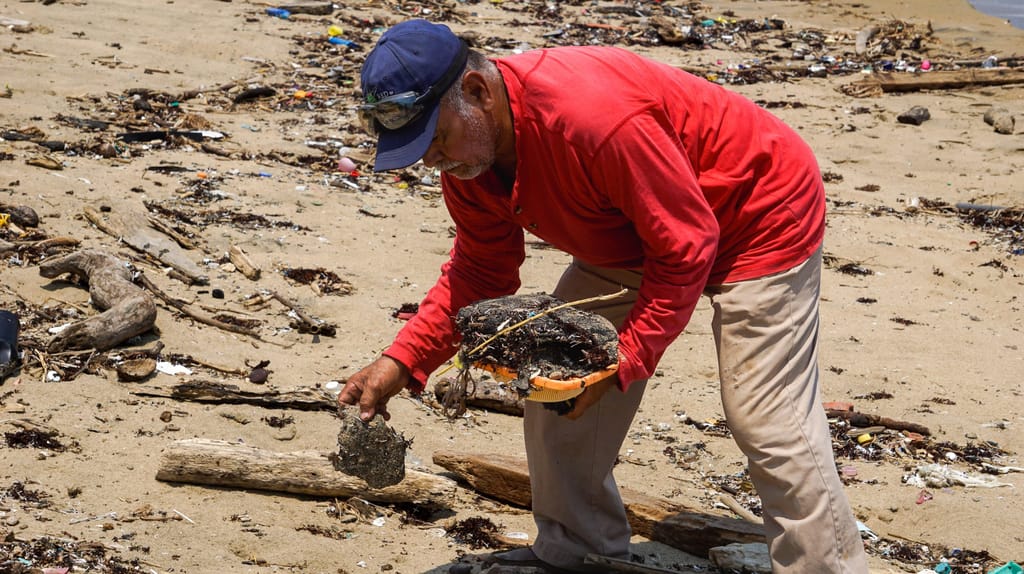
Locals clean Agua Dulce beach in the municipality of Lerdo de Tejada, Veracruz state, Mexico. The state oil company Pemex reported 798 pipeline spills and leaks to its financial regulators during 2014-2025 (Image: Rodrigo Soberanes)

[By Rodrigo Soberanes]

In early March, Andrés Palma was watching his children build a sandcastle on the beach in El Bosque, south-east Mexico. The fisher soon noticed that something was not quite right: his children were playing in sand laced with crude oil residue.

Palma was witnessing the consequences of a huge oil spill that happened in February, which triggered a 30-day fishing ban and has contaminated fishing grounds along the Gulf coast. Its source was initially disputed but in mid-April, the government said the source was a leaking pipeline in the offshore Abkatun oil field, in the Gulf’s south-eastern corner. In the months since the ban has been lifted, fishers like Palma continue to deal with a crashed local market and fish contamination fears.

“Here, if you don’t go out fishing, you don’t eat,” explains the 31-year-old.

The government initially denied any link to the state oil company, Petróleos Mexicanos (Pemex). In its April announcement, however, the government confirmed that three state officials had been removed in relation to alleged failures to contain the spill and communicate with the public.

Palma’s is just one Mexican community to be hit by an oil spill in 2026. Data obtained by Dialogue Earth through public information requests shows Pemex has reported nearly 100 spills a year over the past four years, a sudden and sharp increase. It also reveals a large discrepancy between spills reported to financial regulators and the data in its own sustainability reports.

In the affected communities, residents tell Dialogue Earth of fouled beaches, dead wildlife and devastated livelihoods.

“This data makes us question the viability of continuing with this fossil fuel model that endangers people and the environment,” says Viridiana Lázaro, a senior climate change and oceans campaigner for Greenpeace Mexico.

Inconsistent numbers

Tracking Pemex’s spills is not straightforward, as different numbers are reported to different regulators.

As Pemex has bonds issued in the US, it is required to file reports with the US Securities and Exchange Commission, as well as the National Banking and Securities Commission in Mexico. From the start of 2014 to the end of 2025, Pemex reported 798 pipeline spills and leaks to these financial regulators.

This number is significantly lower than the spill and leak events documented by Pemex in its annual sustainability reports, which amount to 5,517 between 2020 and 2024.

It is also significantly different from the data collected by the Mexican agency for environmental protection in the hydrocarbon sector, which counted 274 events for the period March 2020-May 2026. The agency excluded February’s Gulf spill from this count. The company has been approached for comment.

Different regulators have different reporting, and there is no suggestion the company has failed to comply with reporting requirements. But some feel the company should be doing more monitoring of leaks and spills.

“Pemex is not doing its job [of adequately collecting data on spills],” claims Diana Papoulias, a retired researcher for the US government’s Geological Survey agency. In April she released her report, “The environmental debt of Pemex”, supported by a coalition of environmental NGOs. A long-term series of oil spills in the same areas are also compounding the environmental damage. The Gulf of Mexico Observatory created a group in April to monitor the spill, which then reported another, new spill in the Gulf on 10 September.

“There are leaks every day; there are spills every day of varying sizes,” claims Papoulias. “Pemex has failed to invest money in environmental protection or system improvements.”

Dialogue Earth requested an interview with Pemex to address the differences in data reported in different places and the status of February’s oil spill but has not received a response.

No fishing, no support

Like many of those impacted by the spill earlier this year, Palma continued fishing after the ban was lifted. But due to fears the fish are contaminated with oil, fishmongers now pay him MXN 10 per kg for the sierra fish he brings. Before the spill, he could make MXN 60 per kg.

The spill has been particularly destabilising for the Palma family, whose lives have already been upended in recent years. In November 2023, after years of encroachment, they were one of at least 60 families moved out of El Bosque, where rising sea levels linked to climate change have washed away the coastline, homes and public infrastructure.

The family now lives 10 km from the coast in a new community for displaced inhabitants, also named El Bosque. Palma goes out fishing at four in the afternoon and does not return until the following morning. As well as bringing back fish, these days there is oil, too.

Fishing has been practically paralysed in the affected areas since March. Fishers say the oil has clogged their engines, ruined their boats and destroyed their ability to make a living.

“The pollution is massive,” says Palma. “The fishing nets come back stained, and dirt gets on your clothes.” In March, Pemex announced a fund of MXN 35 million (USD 1.9 million) to support fishers affected by the spill. The company said it had given 3,379 fishers MXN 15,000 each in economic support, which amounts to MXN 50,685,000.

According to fishermen interviewed by Greenpeace Mexico, this has been difficult to access because it has been earmarked for fishers’ cooperatives, which excludes many of them.

Palma asserts that “no fisher receives any resources from the government” in his community.

Luis Alberto Romero Reyes, a 33-year-old fisherman from the municipality of Ángel R Cavada in Veracruz state, does not belong to any cooperatives and has not received compensation from the government. “For most local fishermen, there has been no fishing since the spill,” he says, confirming that “only the cooperatives get help.”

In July, a group of more than 500 fishers from Indigenous Nahua communities in Veracruz announced legal action to force Pemex to recognise them as spill victims. These fishers are not registered under any cooperative or fishing organisation. “We demand fair compensations for the spill’s impacts, health care, restoration of damaged ecosystems and punishment for those [authorities] responsible,” said the fisher Oved Hernández at a press conference on 10 July.

Controversy surrounding government support for fishers and other workers affected by oil spills is common in communities across the country.

Along Oaxaca’s Pacific coast, eight oil spills were registered during June and July of 2026 by that state’s Salina Cruz municipal authorities. These have spurred protests by fishers and salt workers, who demand compensation and temporary employment through beach clean-ups and oil pipeline repairs until their regular work can resume.

Greenpeace’s Lázaro says this type of temporary government support should be minimised, because “it will not serve them in the long run.” The focus should instead be on the remediation of affected areas, he adds.

A dark future

By mid-April, as endangered green and Kemp’s ridley turtles arrived for their nesting season, the oil had reached Agua Dulce – a turtle sanctuary in Veracruz.

Fisherman Romero tells Dialogue Earth he happened upon a washed-up adult green turtle in the area that vultures were feeding on. “[It] was decomposing, covered in tar.”

According to Guadalupe Reyes, Romero’s mother and a volunteer at the sanctuary, the number of turtles arriving on the beaches is lower than previous years. She blames the oil. They have collected the eggs from a single nest for safekeeping; in previous seasons, she says, volunteers would have collected eggs from more than 10 nests over the same period.

“It hurts us a lot,” says Reyes. “We have affection and care for everything that lives in the sea.”

The Gulf of Mexico Reef Corridor Network (RCAGM), comprising 25 community organisations and turtle conservation camps, is behind a civic monitoring map. The map has pinpointed more than 100 oil contamination sites spread across approximately 1,200 km of coastline since March.

The RCAGM fears this oil may be damaging a network of deep reefs. Discovered in 2013, the network stretches for 650 km from northern Veracruz to El Bosque’s state, Tabasco. One of the reefs is located directly underneath an area of water where some of the spill has been spotted.

To date, however, there is no government data on the extent of harm caused to the ocean’s ecosystem. Between the start of the spill and 27 April, the RCAGM recorded the deaths of 22 sea turtles, four dolphins, two pelicans and a manatee. The survey has not been updated since, but some are worried these numbers underplay the likely damage caused.

That damage is complex and will continue to unfurl for more than a decade according to Omar Arellano, an environmental researcher at the National Autonomous University of Mexico (UNAM).

Based on past spills, such as the catastrophe that followed the Deepwater Horizon rig explosion in US waters in the Gulf in 2010, Arellano foresees disruption to the distribution of fish as they avoid contaminated waters. This will add to fishers’ problems, forcing them to seek out new fishing locations potentially further away.

Arellano also anticipates oil compounds accumulating in small organisms, which will then build up in their predators – a process known as biomagnification. “This has probably already begun to happen but it will not be observed until some time has passed.”

Dialogue Earth has contacted the government to request data on the number of litres spilled into the Gulf in February, a description of the actions taken under Mexico’s National Spill Contingency Plan, and the details of its repair, restoration and compensation plans. The request was refused due to ongoing criminal investigations.

The Gulf of Mexico Observatory group is yet to present an in-depth assessment of the harms from the oil spill, nor any updates on its research.

In April, the Mexican government said it had collected 915 tonnes of hydrocarbon residue, from the sea and 48 beaches. It also said “most corals” in the area it had assessed did not display any evidence of residues. No further cleanup or mitigation updates have been shared.

Pemex tells Dialogue Earth it continues to respond to the spill, through activities covering containment, cleanup, environmental monitoring and social assistance; the company did not respond to any direct questions.

Papoulias says she is not clear how Pemex and the government have been identifying, characterising and remediating contaminated sites and this creates “significant uncertainty” for local people and fishers. She fears that, without stricter environmental supervision, there will continue to be a large number of spills and leaks along Mexico’s coast.

“We must avoid spills at sea as much as possible because they are the worst. Any onshore spill can be cleaned up to a certain extent – quite effectively, in fact – but a spill at sea […] has to be dealt with very quickly because it spreads extremely rapidly and reaches the coast,” says Papoulias.

In Tabasco, Palma remains at sea until dawn. He hopes to no longer find the black stains on his net, and to return home to oil-free coastline. He wants his children to be able to play there safely, “because they are used to a life spent going to the beach”. He wants their sandcastles to be free of oil.

Rodrigo Soberanes is a Mexican journalist specialising in the environment, communities and human mobility. He has reported from various Latin American countries and written for media outlets including CIPER Chile, Anfibia and El Faro. He is the founder of La Marea Veracruz.
The opinions expressed herein are the author's and not necessarily those of The Maritime Executive.


Smuggler Tactics Make a Mass Casualty in English Channel "Inevitable"

Life ring
File image

The commander of the United Kingdom’s Border Security Command has warned the House of Commons Home Affairs Committee that it is only a matter of time before there is a mass casualty disaster in the English Channel – and it will probably occur this winter once sea conditions in the Channel worsen. Major General Duncan Capps was speaking to the committee on October 21.

General Capps’ concern has arisen because of new tactics being employed by the smuggler gangs who organize the illegal immigrant crossings. In recent months the smugglers have employed much bigger rubber boats, and are now using much longer crossing routes, tactics designed to lessen the risk of interception by French National Gendarmerie forces. 

Whereas before a typical crossing was made between Dunkirk and Dover, a distance of about 25 nautical, with about 60 illegals on board, the smugglers are now cramming in over 200 illegals and taking a course between Normandy beaches and the English South Coast, a distance of over 80 nautical miles. One of these fragile boats has been recorded as having 230 migrants on board.

The smugglers when they used shorter routes were able to forecast when conditions might be favorable for the duration of the passage. But over the much longer route, it is much harder for smuggling bosses, let alone national weather forecasters, to accurately predict how long a window of calm weather might prevail. This was the same problem faced by General Eisenhower when he had to determine when to launch D-Day – over exactly the same stretch of water, though in reverse.

Foul weather coming up quickly can easily swamp rubber boats which are designed for short range and calm waters. The boats are dangerously overloaded, and the illegals are over-dressed and generally cannot swim; even if they are lucky enough to have life jackets, these are typically of inferior quality and might provide buoyancy for mere minutes in an emergency. The boats usually contain vulnerable women, children and babies who have no hope of survival if thrown into the water in winter.

The rubber boats are often tracked across the Channel by vessels from the French National Gendarmerie, who contend that it would be more dangerous to attempt interceptions just off the beach than to allow the rubber boats to set off through these dangerous waters on voyages which can take up to 24 hours. 

As General Capps has highlighted, the more aggressive action taken by the National Gendarmerie while the migrants are still on the beaches and are attempting to board, paid for and encouraged by British government subsidies, has merely encouraged the smuggler gangs to find alternative beaches from which to operate - making the Channel crossing all the more dangerous.  A backlog of about 3,800 migrant hopefuls has built up in camps in the Dunkirk and Calais areas where they collect, about twice as many as the backlog which prevailed at the same time last year.


Injured Master and Officer Evacuated During North Sea Storm

Dutch rescue boat
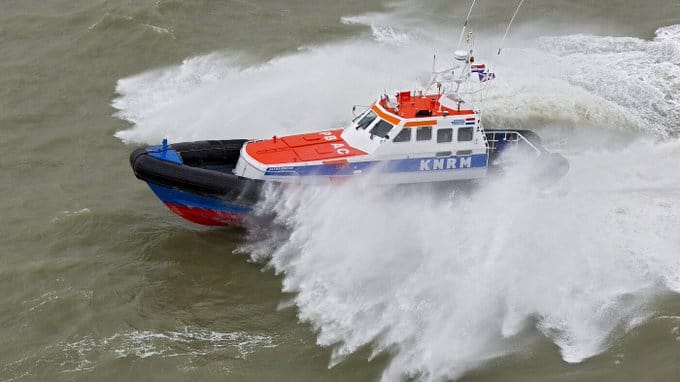
Dutch rescue boats were dispatched into the 16-foot seas before a helicopter was able to evacuate the two injured seafarers (KNRM)

The Dutch and German rescue agencies are reporting they responded to a Mayday call from a heavy-lift vessel operating in the North Sea during last weekend’s heavy storms. Some areas were reporting sustained winds of 50 to 60 mph and gusts of 70 to 80 mph, causing widespread damage, including likely contributing to the cruise ship hitting two containerships in the port of Bremerhaven.

The heavy lift vessel UHL Freedom (14,000 dwt), measuring 150 meters (492 feet), was operating in the North Sea, reportedly loaded with material for offshore wind farms. The ship is registered in Portugal and has a crew of 25.

The vessel’s owners, United Heavy Lift, say the ship was attempting to weigh anchor and turn into the seas on Sunday afternoon, October 25. It was approximately 18 miles off the Dutch coast near Schiermonnikoog. According to the company’s version of the incident, the vessel swung beam-on to the seas and experienced severe rolling and consequently high acceleration forces.

It said the master and the second officer lost their footing during the rolling and sustained injuries. It disputes a statement by the Dutch rescue service, which said the vessel was also experiencing engine problems. “At no time did the vessel experience any engine failure or machinery damage,” the company writes in its statement.

The chief officer issued the Mayday with reports that the ship was experiencing 5-meter (16-plus foot) waves. Dutch lifeboats and a rescue tug were dispatched, and a German rescue tug was also sailing toward the vessel. A Dutch rescue helicopter was able to remove the master and second officer and transport them to a hospital. The master is being treated for unspecified injuries, while the second officer was treated and released. The Dutch authorities originally said that five crewmembers were reported injured but later revised it to three, and the third individual did not require evacuation.

The crew managed to bring the vessel’s bow back into the seas and then completed the anchor-weighing. The ship proceeded to the port of Emden while the Dutch rescue tug Guardian remained in the vicinity. The ship has now docked in Germany.