Saturday, October 31, 2026

Zelenskyy thanks US over deal for 500 Patriot missiles but warns delivery could take years

THIS IS BIDEN'S FAULT

Ukrainian Air Force's F-16 fighter jets fly over a Patriot Air and Missile Defense System in an undisclosed location in Ukraine, on Aug. 4, 2024.
Copyright Copyright 2024 The Associated Press. All rights reserved

By Nathan Rennolds
Published on

Kyiv has long called for more interceptors to help its forces fend off Russian missile and drone attacks. The rapidly approaching winter is pressing home that need.

Ukrainian President Volodymyr Zelenskyy has praised the US for its "strong decision" to approve the sale of 500 much-coveted Patriot missiles to Ukraine - but he has warned that delivery could take years.

The US State Department announced on Friday that Washington had green-lit a package of Patriot PAC-3 interceptors worth $2.1 billion as Kyiv continues to defend against Russian missile and drone attacks.

"Five hundred PAC-3 interceptors is a substantial number, and very soon – this winter – they COULD make for a highly effective defence package," Zelenskyy wrote in a post on social media in response.

"However, it has been stipulated that deliveries may begin ONLY IN A FEW YEARS," he continued. "We are asking our American partners to find a solution for the time when there is a real danger and a real need to use PAC-3 interceptors."

Earlier this week, Zelenskyy said Kyiv had been waiting for almost a month for US Defence Secretary Pete Hegseth to sign off on a batch of missiles for both the Patriot and NASAMS systems.

Kyiv has long called for more interceptors to help its forces fend off Russian attacks, and the rapidly approaching winter is pressing home that need. Russia has repeatedly sought to target Ukraine's power grid over wartime winter periods as Moscow has looked to break the country's resolve.

Dwindling stocks of interceptors have already encouraged Russia to ramp up missile attacks in recent months, and there are fears this trend could lead to an especially brutal winter for Ukrainians.

"The United States, our European partners, and other partners around the world have sufficient stocks of PAC-3 interceptors in their warehouses," Zelenskyy said overnight. "Providing them to Ukraine right now – in the winter of 2026–2027 – and replenishing our partners’ arsenals LATER, in THE FOLLOWING YEARS, through this production already contracted and paid for by Ukraine and our partners would be the right approach."

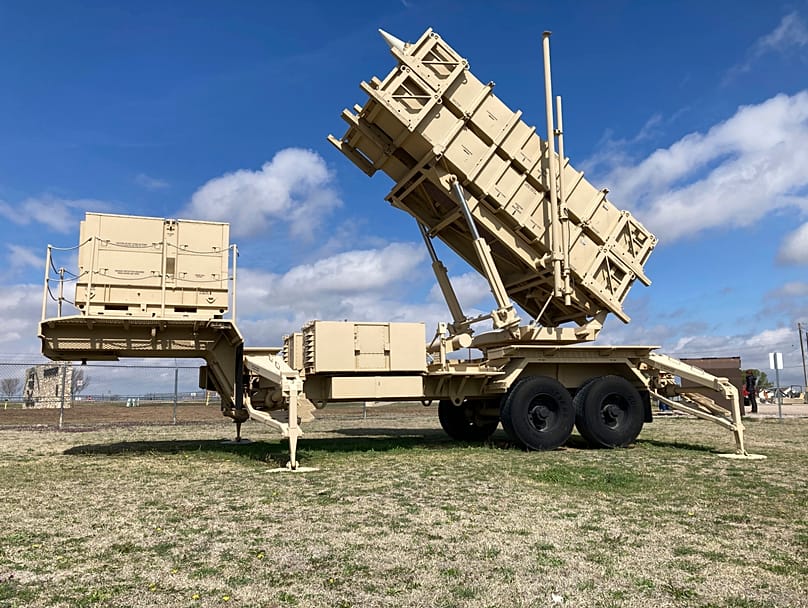
A Patriot missile mobile launcher is displayed outside the Fort Sill Army Post near Lawton, Okla., on March 21, 2023.
A Patriot missile mobile launcher is displayed outside the Fort Sill Army Post near Lawton, Okla., on March 21, 2023. Copyright 2023 The Associated Press. All rights reserved.

The Patriot missile platform is one of the world's most advanced air defence systems and can be used to defend against a variety of threats, including incoming aircraft and ballistic missiles.

Ukraine receives the majority of its Patriots through NATO’s Prioritised Ukraine Requirements List (PURL) initiative, which facilitates the purchase of military equipment and munitions from the US by allies and partners.

As of June 2026, allies had committed to funding more than $6 billion of defence equipment for Ukraine through the scheme, per NATO.


Ukraine hits Moscow with record 600 drones during Africa summit

Ukraine hits Moscow with record 600 drones during Africa summit
Ukraine sent more than 600 drones at Moscow as African leaders met in the Kremlin; Russian officials said the war must continue. / bne IntelliNews
By Ben Aris in Berlin October 30, 2026

Ukraine flew more than 600 drones at Moscow, a record wave of attacks that  was designed to embarrass Russian President Vladimir Putin, who is currently hosting almost all of Africa’s leaders at the Kremlin.

Moscow Mayor Sergei Sobyanin said 613 drones flew at the Moscow region between the evening of October 28 and the morning of October 29, the night before the second day of the Russia-Africa summit at the Grand Kremlin Palace, which brought delegations from 48 African countries to the capital.

Russia's defence ministry said it downed a total of 1,214 drones over 19 regions that night, its highest overnight figure since the start of the war, The Bell reported.

The following night was heavier over the capital: Sobyanin said 862 drones flew at Moscow between the evening of October 29 and the morning of October 30, while the ministry put its nationwide tally at 1,043. Flights were restricted at Domodedovo, Vnukovo, Zhukovsky and Sheremetyevo. No damage or casualties were reported in Moscow on either night.

Summit in focus

The ferocity of the drone swarm attack was designed to embarrass the Kremlin and make Russia feel unsafe for its visiting friends. This is not the first time Bankova, Ukraine’s presidential administration, has employed this tactic.The raids coincided with a high-profile diplomatic gathering. The summit closed on October 29 with more than 60 agreements signed.

Kremlin spokesperson Dmitry Peskov called it "strange" that Kyiv had organised "such a massive drone attack" on the capital while a "global-scale" event was taking place there, the Kyiv Independent reported on October 29.

"Our air defense systems are working effectively. But this shows once again that the situation continues, and the (war) must continue so that we are protected from threats," Peskov told reporters. 

Ukraine hits Russia with heavy drone attacks everytime it hosts a high level meeting.
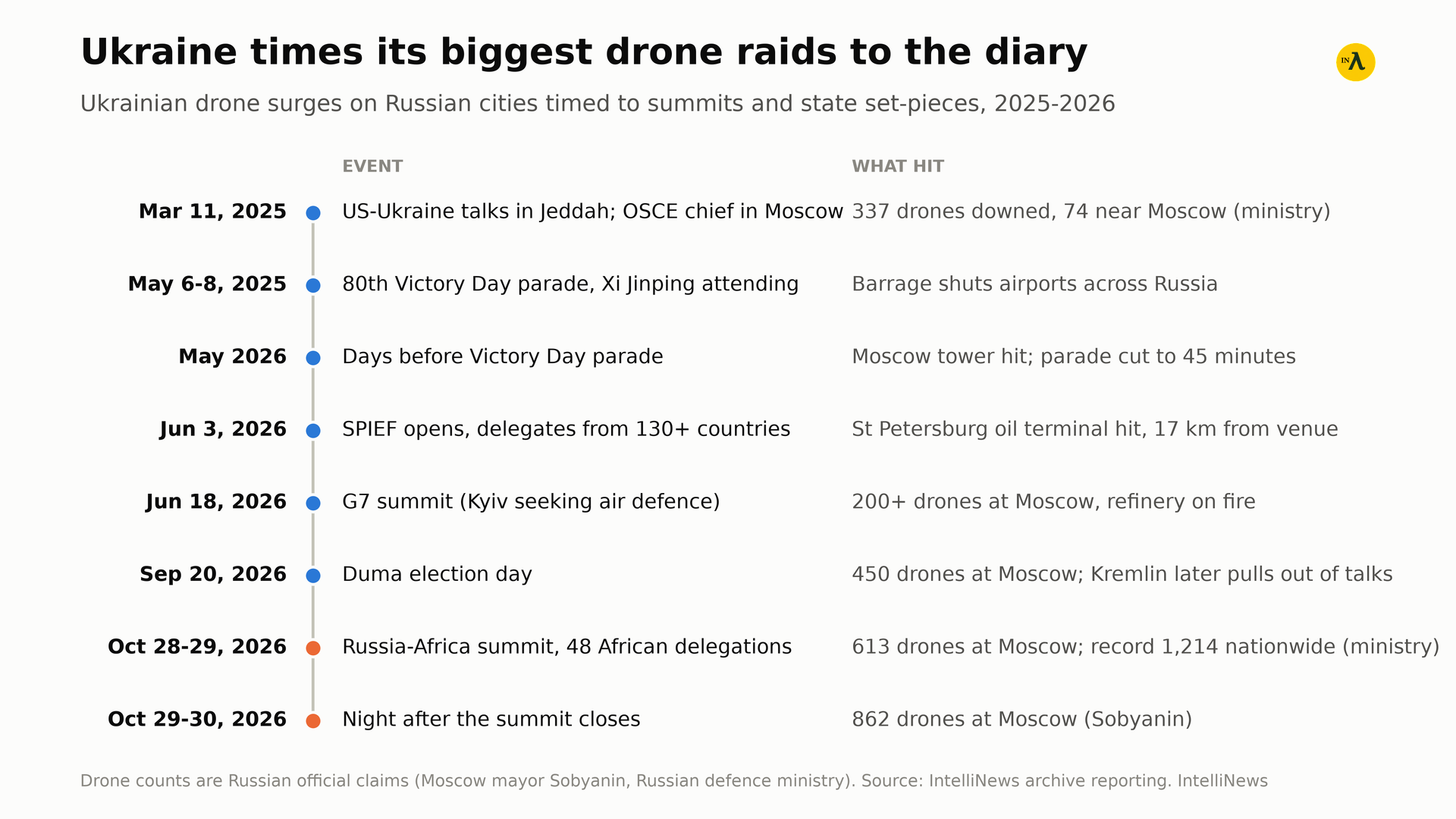
Ukrainian drone surges on Russian cities that coincided with summits, talks and state set-pieces, 2025-2026. Drone counts are Russian official claims. Source: IntelliNews archive reporting. IntelliNews


SPIEF: Ukrainian drones set fire to the St Petersburg Oil Terminal on June 3 this year, 17 km from the venue, just as the St Petersburg International Economic Forum (SPIEF) opened with dignitaries from more than 130 countries in attendance. The authorities closed the airspace over the city, stranding delegates who had not yet arrived.

Victory Day: In May 2025, ahead of the 80th anniversary Victory Day parade attended by Chinese President Xi Jinping and Brazil's president, a Ukrainian drone barrage caused civil aviation chaos across Russia, and President Volodymyr Zelenskiy warned that Ukraine "cannot guarantee the safety of anyone that attends the parade". This year a drone hit a luxury tower on Mosfilmovskaya Street days before May 9, and the parade was over in 45 minutes, with few guests and no armour, after Zelenskiy issued a mocking decree giving Putin "permission" to hold it, complete with Red Square's GPS coordinates.

Jeddah talks: Events aimed at Western audiences get the same treatment. A raid of 337 drones, 74 of them near Moscow, on March 11, 2025, coincided with US-Ukraine talks in Jeddah, and Russian officials took the visiting OSCE Secretary General Feridun Sinirlioglu to see the damage.

G7 summit: More than 200 drones were downed over Moscow on June 18 as the G7 summit met, where Kyiv was asking for more air defence, and the Moscow refinery was set on fire.

Duma elections: Some 450 drones flew at Moscow on September 20, the last day of the Duma elections, which Putin later said showed the enemy's attempts to disrupt the vote.

The March 2025 attack was the largest on Moscow of the war at the time, and the raids have grown since. Sobyanin reported 637 drones flying at the capital on the night of August 17-18, nearly 500 were reported on the night of October 13-14 and more than 600 on October 21-22, before the 613 and 862 of this week. That is despite an air defence network around the city that open-source analysts count at roughly 79 Pantsir towers within 50 km and some 25 S-300 and S-400 batteries, which still lets drones through.

Using force to strengthen a diplomatic hand is an old habit in Kyiv. Under former President Petro Poroshenko, fighting in Donbas habitually escalated before Normandy Four meetings, as it did around Debaltseve on the eve of the Minsk summit of February 2015, and Poroshenko used the tension to press the leaders of France and Germany to be tough on Russia.

Putin answers provocations differently, punishing Ukraine with mass bombardment rather than making targeted gestures. After Ukrainian drones destroyed a Wildberries warehouse outside Moscow in July, killing seven night-shift workers, the war turned into Operation Wildberries, and by the end of August Russian strikes had destroyed about 90% of the storage facilities of Ukraine's retail chains, Agriculture Minister Taras Vysotskyi said.

Strikes undermine the peace process

This week's raids have also undercut what little progress had been made towards ongoing talks to end the conflict. US envoys Steve Witkoff and Jared Kushner secured an agreement in principle on trilateral negotiations after visiting Kyiv and Moscow, but the Kremlin pulled out, accusing Kyiv of strikes on the September 20 election day. Kremlin aide Yuri Ushakov said on October 28 that the start of talks would depend on the battlefield situation, and Zelenskiy said the same day that he expected a meeting in mid-November, with no date confirmed by Washington.

Taking Ushakov at his word means as the scale of the drone strikes goes up, the progress at the talks will go down. Bankova is talking about peace, but its actions are those of war. Peskov's answer to the summit raid was that the war must continue, which gives Moscow a ready reason to keep the talks on hold.

The strikes on Moscow have grown as the attacks on refineries have fallen away. Following pressure from US President Donald Trump, Ukraine's strikes on Russian oil refineries have dropped sharply in recent weeks. IntelliNews' Missile War Monitor's refinery damage ledger records 22 dated strikes on refineries in August, 16 in September and six in October, with none found between October 16 and October 29.
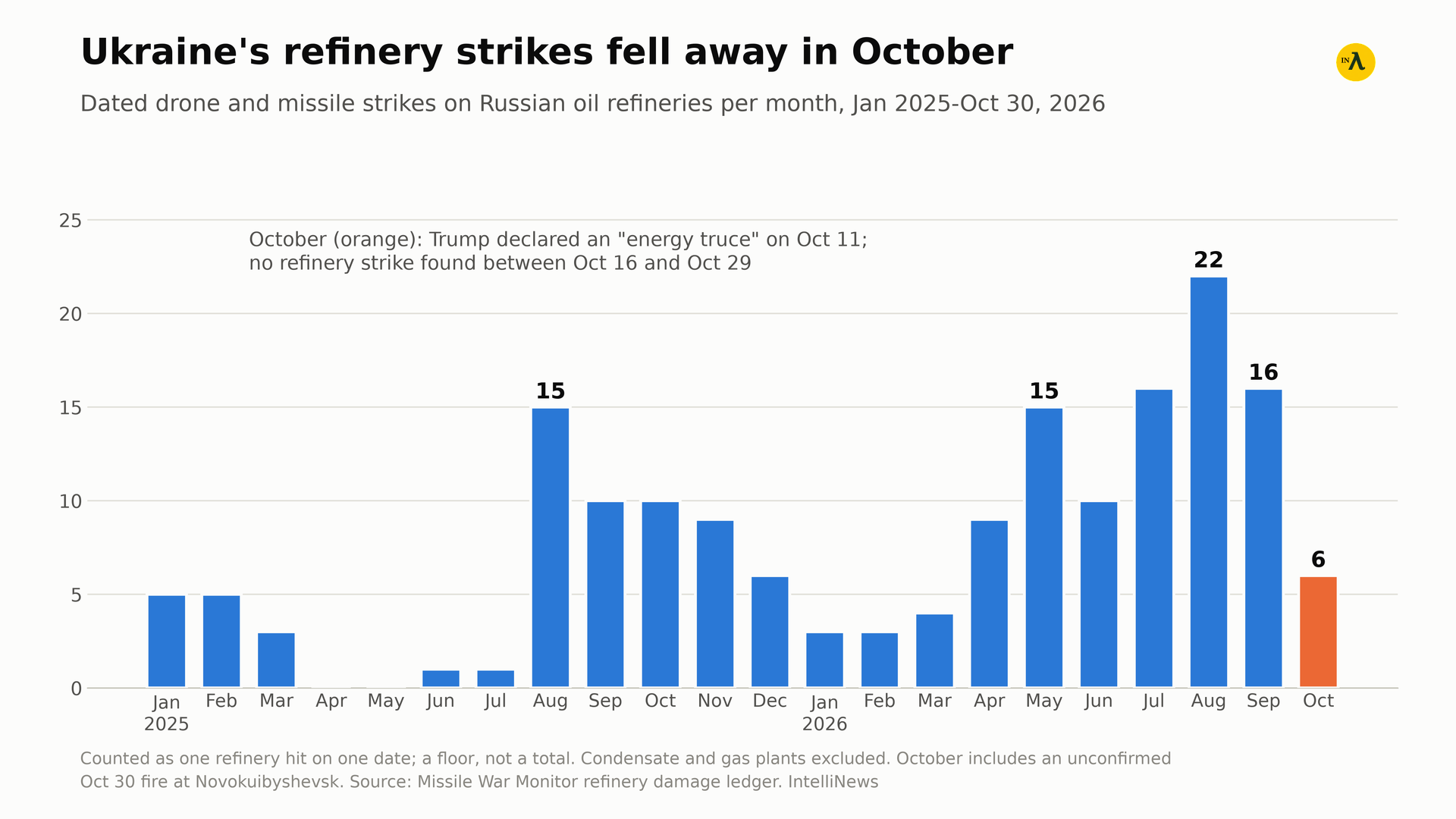
Dated Ukrainian strikes on Russian oil refineries per month, January 2025-October 30, 2026. One strike is one refinery hit on one date; the counts are floors. Condensate and gas plants excluded; October includes an unconfirmed fire at Novokuibyshevsk on October 30. Source: Missile War Monitor refinery damage ledger. IntelliNews

Zelenskiy said Ukraine halted refinery attacks for three days after Trump declared an energy truce on October 11, and the strikes resumed with a hit on Ryazan on October 15. A fire was reported at the Novokuibyshevsk refinery in the Samara region on the night of October 29-30, which has not been officially confirmed. The campaign had made Russia's refining sector a liability for Moscow, and Putin put its cost at 1% of GDP on October 1.

There are reports that Ukraine is switching to metallurgical and chemical plants. Steelmaker Severstal (MOEX: CHMF) said a substation at its Yakovlevsky iron ore mine in the Belgorod region was damaged on October 7, while Telegram channels claimed hits on the Balakovo steel works on October 14 and Novolipetsk Steel (MOEX: NLMK) in Lipetsk on October 27-28. The Lipetsk governor called the reports of an industrial fire "not true", and the Saratov governor said Balakovo's infrastructure was working normally.

Russia seeks to raise the cost of Europe's support for Ukraine through sabotage

Russia seeks to raise the cost of Europe's support for Ukraine through sabotage
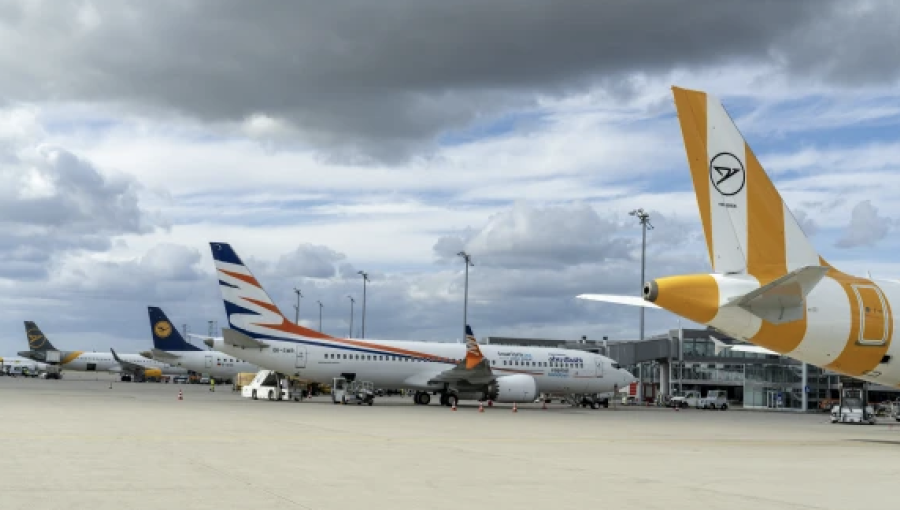
An explosive-laden drone was found in the secure cargo area of Leipzig/Halle airport in August, next to a parked Ukrainian Antonov Airlines freighter. / Leipzig/Halle airport
By Clare Nuttall in Glasgow October 30, 2026

Russia is concentrating its sabotage campaign in Europe on the rear of Ukraine's war effort, from drone factories to Starlink stations, BMI analyst Cassia Scott-Jones told a webinar on October 27.

"We've seen attacks on drone production facilities, Starlink infrastructure, and essentially Russia is increasingly targeting the European rear of the war in Ukraine: communications, defence production, logistics," said Scott-Jones, a senior analyst for Europe country risk who leads Russia and Ukraine analysis at BMI, the research arm of Fitch Solutions.

Scott-Jones described a shift from a wider, sometimes apparently random set of targets towards the communications, defence production and logistics supporting Ukraine. Each attack can disrupt suppliers, relay stations or cargo hubs and force European governments to spend more defending targets far from the front. "Before, there was a wider set of targets, which sometimes seemed random," she said.

The targets since the summer bear that out. Fire gutted the assembly section of WB Electronics' drone components plant in Skarzysko-Kamienna on August 31, and Estonia blamed Russian intelligence for an arson attack on Milrem Robotics, the Tallinn-based maker of unmanned ground vehicles for Ukraine. Slovak police said they had foiled a planned arson attack on the Slovak-Ukrainian drone maker Skyeton, and incendiary devices were thrown at a site outside Rohde & Schwarz's Munich headquarters in September.

Communications have been hit too. Polish officials called a September 23 fire at a Starlink ground station south of Warsaw, which supports internet links into Ukraine, sabotage; Russian intelligence may have hired a Turkish criminal gang known as the Daltons to start it, Der Spiegel reported. On October 28 Polish police detained a Ukrainian suspected of organising a Russian-directed arson attack beside the CARFIL arms factory in Brasov, Romania.

Harder to pin on Moscow

BMI's analysis of incidents shows a fairly continuous intensification from 2022 to 2024 and an apparent decline in 2025. Scott-Jones warned against reading that as a let-up, because the number of incidents in which Russia's role cannot be established has risen at the same time.

"I think Europe is moving into a more difficult phase where activity is widespread but attribution is becoming harder," she said.

How much of the campaign can be laid at Moscow's door is disputed. Published counts of Russian hybrid attacks in Europe since February 2022 range from 52 to 255 depending on the source, the writer Thomas Fazi argued in Responsible Statecraft, because there is no agreed definition of what counts. Germany's federal criminal police alone recorded 321 acts of sabotage against critical infrastructure in 2025.

The escalation in 2026, in both the number of incidents and the risks they carry, has been sharper. "The attempted attack in Leipzig was probably the most significant case," Scott-Jones said.

In early August an explosive-laden drone was found in the secure cargo area of Leipzig/Halle airport, next to a parked Ukrainian Antonov Airlines freighter. Investigators later traced a DNA link to the 2024 incendiary parcels sent through the DHL hub at the same airport. On September 1, Berlin formally blamed Russia and ordered Moscow's last career consulate in Germany, in Bonn, to close. Russia's SVR foreign intelligence service answered with a claim that Nato spies had linked Ukraine to the plot.

A Kremlin official then contacted a counterpart in the German government and warned that Leipzig would not be Moscow's last target, the Wall Street Journal reported in October, citing unnamed sources. The paper also reported that people familiar with US intelligence said Russian President Vladimir Putin had personally ordered the stepped-up sabotage campaign against Nato countries.

"If accurate, that tells us something really important about Russia's risk appetite," Scott-Jones said of the warning. "We would normally think about plausible deniability as one of the main advantages of sabotage activity, but here Russia wanted to warn Germany, to understand there could be further attacks."

She added: "One of the reasons is it's so cheap for Moscow to generate these threats and so expensive for Europe to comprehensively defend against them. And Russia wants Europe to know that." 

Germany before the Baltics

The geography of the attacks does not follow the map of Europe's invasion fears. The Baltic states, most often discussed as the likeliest target of a Russian military attack, are not the most frequently hit. Germany was the most frequently affected country in the incident data, followed by Poland and France.

"I think that tells us vulnerability follows strategic value as well as geography," Scott-Jones said. "Poland is the principal logistical corridor into Ukraine, while Germany, France and the UK matter because they are the military-industrial complex of Europe, and politically."

Poland has had the most violent cases. In November 2025 an explosion damaged the Warsaw-Lublin rail line, a route for supplies to Ukraine, and Warsaw blamed two Ukrainians working for Russian intelligence and shut Russia's last consulate in the country. Prime Minister Donald Tusk said in September that the latest incidents were "certainly not the last".

Raising the price of helping Ukraine

Scott-Jones separated the immediate goal of the operations, disrupting Ukraine's defence production and logistics, from their longer-term effect on European politics.

"Every incident imposes additional costs: governments have to protect more infrastructure, intelligence services have to investigate and companies have to spend more on security," she said. "Most importantly, European governments have to explain to voters why supporting Ukraine is producing security risks at home."

She cautioned against a narrow reading of what Moscow wants. "I wouldn't frame the Russian objective as simply trying to elect pro-Russian parties or parties that are more negative toward Ukraine," she said. The aim is rather to shape the political environment in which decisions about Ukraine are made, and to feed concern about escalation and security, "potentially to influence calculations of mainstream governments as well as parties on the political fringes."

That fits a debate already running in European capitals, where Europe has gone from paymaster to participant in Moscow's rhetoric as it builds weapons for Kyiv. Czech counterintelligence chief Michal Koudelka warned in October that Russia could move on to sabotage strikes against logistical hubs used to supply Ukraine.

Nothing Europe has done yet appears to have changed Moscow's calculation. "So far at least, Russia seems to judge that the European response has not imposed significant enough costs to make it change," Scott-Jones said.

BMI expects more of the same. "I would expect these operations to intensify further into 2027, and while it's unlikely to be a defining issue in Europe's elections, it will be interesting to see how parties respond to that pressure," she said.

Putin’s ‘Big Lie’: The Self-Fulfilling Threat – Analysis


October 31, 2026

By Ben Poulin


Key Takeaways:

The article argues Putin’s “big lie”—that Russia must confront the West or lose independence—helped produce NATO enlargement, doubled eastern-flank forces and a permanent U.S. garrison in Poland.

CSIS estimates roughly 1.4 million Russian casualties (up to 450,000 deaths) by mid-2026, while 2025 military spending reached $190 billion or 7.5 percent of GDP, locking the economy into a defense-dependent cycle.

The piece concludes the war has weakened Russia and that sovereignty does not require continued confrontation, though escaping the trap remains unlikely under Putin.


How Russia’s confrontation with the West is undermining the country he claims to defend

Vladimir Putin has spent years warning Russians that the West is a threat to their country’s survival. However, the war he launched against Ukraine in the name of security has only made Russia less secure. The “special military operation” that was supposed to overrun Ukraine in a matter of weeks, rages into its fifth year. Since then, two more countries have joined NATO and Russian lives have been consumed on an extraordinary scale while vast resources are continually poured into the confrontation. The Kremlin tries to spin these sacrifices as the price of their independence, but the deadly results raise a different question. How much Russian national power is being sacrificed because of this “Big Lie”?

The term “Big Lie” can be traced to Adolf Hitler’s Mein Kampf, where he argued that an audacious falsehood could be believed because ordinary people would never imagine anyone inventing something of its magnitude. Using this method, his regime portrayed aggression as national self-defense and subsequently staged a “Polish” attack on the Gleiwitz radio station in August 1939 to help justify an invasion of Germany’s neighboring nation.

The big lie strategy outlived its infamous creator. In 1956, Britain and France clandestinely coordinated with Israel to attack Egypt. When they intervened in response, they presented their involvement as necessary to protect the Suez Canal from the fighting they had stagemanaged. In 1964, the Johnson administration used the Gulf of Tonkin incident to secure congressional authorization for broader military action in Vietnam. A later NSA history concluded that one of the alleged attacks never occurred and that officials handling signals intelligence withheld contradictory evidence. These episodes differ in scale, motivation and responsibility, but they each illustrate a recurring pattern. A false threat of danger can cloak military action in the guise of necessity. The current big lie being spread is the Kremlin’s insistence that confrontation with NATO is the unavoidable price of Russian survival.


The familiar falsehood peddled by Putin is that Ukraine required “denazification.” The United States Holocaust Memorial Museum has condemned this irrational rationale as an exploitation of Holocaust history. Putin’s deeper deception is the false choice offered beneath the bogus claim. The big lie underpinning the entire conflict is the notion that Russia must either confront the West or submit to it. Once that choice is accepted by a duped populace, almost any cost can be presented as necessary, and almost any setback can be spun as another reason to advance.

Russia’s big lie is more than one discredited excuse for invasion. It is a sinisterly effective narrative that makes the confrontation appear unavoidable even though the lie itself has actually helped produce stronger opposing forces. An undeterred Kremlin can then double down and invoke that response to justify further militarization as their economy becomes increasingly organized around military demand. And thus begins a runaway cycle of self fulfilling rhetoric.
A choice disguised as necessity

In his September 2022 mobilization address, Putin claimed that part of the West sought to “weaken, divide and ultimately destroy our country.” As intended, this played on his people’s concerns for Russia’s existence, far beyond a dispute over Ukraine’s military alignment. Never one to let the truth get in the way of a good story, he offered a powerful justification for asking Russians to accept risks and losses that would otherwise demand a much more specific explanation: the big lie.


Russia’s own experience complicates the Kremlin’s logic. The NATO–Russia Council, established in 2002, provided a forum in which Russia and individual NATO members worked as equal partners on shared security issues. Cooperation did not resolve their disagreements, but it proved that engagement with the alliance was compatible with Russia retaining its independence.

That inconsistent history does not prove that Putin’s anti-Western beliefs are insincere. His ideological suspicion can coexist with pragmatic cooperation. It does, however, undermine the big lie’s claim that confrontation is Russia’s only sovereign option. The unresolved question is whether Moscow can accept cooperation that also respects the sovereignty of its neighbors and the truth that Russia does not need to dictate Ukraine’s future to remain independent.
The threat that Moscow helped create

Finland and Sweden both applied to join NATO after Russia’s full-scale invasion of Ukraine. Finland became a member on April 4, 2023 and Sweden followed on March 7, 2024. These decisions were prompted by the threat of Russia. Putin’s war which was partly justified by opposition to NATO enlargement helped accelerate precisely the outcome it was trying to prevent.

The allied response extended well beyond two new members. NATO doubled its eastern-flank battlegroups from four to eight in 2022, adding formations in Bulgaria, Hungary, Romania and Slovakia. This move accelerated a reinforcement process already underway after Russia’s 2014 aggression. The United States also established its first permanent Army garrison in Poland in March 2023, creating a more durable American position on the alliance’s eastern flank.

At Vilnius in 2023, NATO adopted new regional defense plans directly linking the defense of allied territory to assigned forces and reinforcement requirements. The alliance’s 2024 Industrial Capacity Expansion Pledge sought to boost production capacity and multiyear procurement, explicitly citing Russia’s invasion and war economy as motivating factors behind the decision. NATO’s strategic goal is the effort to organize a sustained response, rather than a temporary deployment, proving that Russia’s big lie brought about exactly the opposite of what Putin wanted.


Whether based on a lie or not, implementation of these measures has nevertheless advanced. A June 2024 CSIS assessment by Sean Monaghan and colleagues found “substantial progress on defense spending, forward defense, high-readiness forces, command and control, collective defense exercises, and integrating Finland and Sweden.”

Moscow then seized the opportunity to use those preparations as evidence to explain further reinforcement of its own. In March 2024, Defense Minister Sergei Shoigu cited NATO’s military buildup, Finland’s NATO accession, and Sweden’s impending membership when announcing steps to strengthen Russian forces in the northwest and west. In a reversal of the chicken and the egg logic, the defensive reaction to Russian aggression had become part of Russia’s stated rationale for additional military measures.

In this self-fulfilling threat, aggression encourages stronger deterrence, and that deterrence supplies a fresh justification for militarization in a predictable cycle. Discussing how the invasion had created an enduring Ukrainian adversary, Carnegie Russia specialist Eugene Rumer described “a self-fulfilling prophecy of Putin” in an April 2026 discussion proving that once again, Moscow has helped produce the hostile strategic environment it claimed to be preventing.

Putin’s big lie is becoming harder to buy. Stronger NATO defenses constrain Moscow’s military options but they don’t establish an intention to invade or destroy Russia. If Moscow really considers control over Ukrainian territory worth the resulting NATO reinforcement, then the Kremlin should defend that trade-off, rather than untruthfully presenting it as an unavoidable requirement of national survival.

Blood is a loss of national power

The rationale for Russia’s invasion of Ukraine might be a lie, but the human cost of this deliberate deception is horrifyingly real. In a July 2026 assessment, the Center for Strategic and International Studies estimated approximately 1.4 million Russian military casualties between February 2022 and June 2026, including as many as 450,000 deaths.

The fallout of Putin’s big lie extends far beyond the frontlines. Battlefield deaths take an emotional toll on the families of fallen soldiers. Serious wounds endured on behalf of bogus claims result in real pain and suffering. Russians are forced to bear these burdens long after the unnecessary battle ends.

If Putin’s goal in employing a big lie was to bolster Russia’s national strength, these tremendous losses have done nothing but weaken it. No country can indefinitely treat its people as an expendable resource. Consuming a nation’s population to secure territory is a strategic trade-off with dire consequences. Eventually, Russians will have to see past Putin’s lies and seize the reins of their own survival.
The economic and political trap

The war’s economic price is another loss to national power, even if some Russians benefit from it in the short term. SIPRI estimated Russian military expenditure at $190 billion in 2025, or 7.5 percent of GDP. Its analysis of the 2025 federal budget put military spending at nearly 16 trillion rubles, roughly 38 percent of planned federal outlays. Defense orders have kept jobs and wages alive, but churning out equipment destined for Ukraine does little to expand civilian productive capacity. Russia’s central bank reported in September 2026 that wage growth still outpaced productivity and inflation expectations remained elevated. With so many of Russia’s economic eggs in the military-industrial complex basket, it’s fair to wonder whether this system could survive a cessation of hostilities without making some fundamental changes.


Those constraints also make it harder for Russia to alter course away from the big lie that got them into this quagmire. Carnegie economist Alexandra Prokopenko warns that cutting military spending could shock towns and regions dependent on defense spending. Her separate analysis describes the difficulty of balancing sustained military spending with price stability and growth. As seen during the Cold War, reliance on military demand is not an economic requirement for actual combat. Russia could stop fighting while still rebuilding stockpiles and retaining defense jobs.

The political trap is harder to wriggle out of. NATO’s reinforcement gives Moscow a continuing justification for high expenditure, while businesses and communities tied to defense spending naturally resist cuts to ensure their own continued survival. These factors continue to feed the incessant mechanism of militarization. As the war continues, it will be harder for Russia to extricate itself from this faustian fiction.

The political obstacle facing Russia is more than just pulling aside the curtain and exposing Putin’s big lie. Prokopenko’s June 2026 study, describes a Russian elite increasingly conditioned to implement decisions rather than challenge them. She recounts Putin offering businesses state support in return for loyalty at the start of the invasion, while sanctions simultaneously narrowed alternatives abroad. This helps explain why the few people in Russia capable of managing the big lie’s effects may be unwilling to argue against the power producing them. In short, to preserve the farce of his big lie, Putin has hobbled the very people who might have helped him and his country escape from it.

The Russian public’s choices are likewise restricted by the Kremlin. Human Rights Watch’s 2026 Russia report documents continued censorship of accounts of the war that diverge from the official big lie narrative and prosecutions over alleged “false information” and “discreditation” of the army. Such Orwellian restrictions insulate the government from the truth it forces society to bear.

Neither the carrot nor the stick can force all Russians to buy into the big lie. In Levada’s March 2026 survey, 72 percent supported the actions of Russian armed forces in Ukraine, while 64 percent favored moving to peace negotiations. Among those supporting negotiation, 43 percent cited heavy casualties and losses.
Russia’s future is larger than Putin’s big lie

Even if somehow, Putin finally abandoned his destructive deception, peaceful cooperation would not eliminate rivalry or guarantee prosperity. Restoring trust between Russia and NATO would require serious policy changes, respect for Ukraine’s sovereignty as well as difficult decisions by Western governments. The cumulative wounds from years of unnecessary war cannot be healed by words alone. The scars from this conflict will remain visible on both sides of the Russia-Ukraine border for many years to come.

The United States and its NATO allies must perform a delicate balancing act where credible deterrence and support for Ukraine are supplied alongside channels for reducing escalation risks. Removing allied defenses alone would not be enough to resolve Russian ambitions that made them necessary. However, treating confrontation as permanent or inevitable would only support the big lie’s original defensive premise.

Even after years of losses, Putin’s big lie still remains capable of inflicting immense harm. The endurance of the Russian war machine does not establish that the war serves the country, or that a militarized standoff is its best possible future. The strategic alternative is a Russia that preserves its sovereignty while rebuilding economic links, managing disputes through diplomacy and investing more in its people. Reaching that alternative would require difficult policy changes, and is unfortunately difficult to imagine while Putin holds the reins of power.


Putin’s big lie asks Russians to believe that sacrifice is essential because the West threatens their future. This self-fulfilling threat has brought about exactly the insecurity it was meant to counter. His unnecessary war creates new national security threats, while the system sustaining it makes an alternative increasingly harder to pursue. The central deception is the insistence that Russians have no choice. The truth is that Russia’s sovereignty does not require this war, and its future need not remain hostage to it.


About Ben Poulin
Ben Poulin is an independent defense and geopolitical writer and the founder of Victarra Strategic. He served 13 years in the U.S. Army and holds a bachelor's degree in English Teaching and a master's degree in Education. His work focuses on military strategy, international security, and geopolitical affairs. His analysis has appeared in RealClearDefense.
View all posts by Ben Poulin →

Melting Himalayan Glaciers With Western Greed – OpEd

Buildings are submerged in mud following flash floods in Rasuwa district in central-northern Nepal. Photo Credit: UNICEF

By Graham Peebles

Key Takeaways:

The article argues that Nepal’s 26 August glacial collapse and flash floods, which killed 1,455 people and left about 5,300 missing, are the end result of Western consumerism, corporate greed and fossil-fuel dependence rather than a purely natural event.

Nepal emits only 0.025% of global greenhouse gases yet faces $4–5 billion in reconstruction costs (roughly 2% of GDP), with more than 250 unidentifiable bodies washed downstream in Chitwan and families such as Nabin’s still searching for missing relatives.

It concludes that climate justice requires wealthy nations to cut emissions, dismantle the fossil-fuel economy and internalise environmental costs in the price of goods, or continue imposing the heaviest burdens on the poorest countries.


“My nephew [32-year-old Nabin] was swept away in that devastating flood…he may have been carried away by the raging waters, buried beneath the earth, or perhaps he somehow survived…the hardest part is not knowing whether we have lost him forever or whether, somewhere out there, he is still alive…” Nabin’s uncle told me.

On 26 August, northern Nepal was hit by massive flash floods. A large section of a glacier had detached, triggering an ice-rock avalanche that crashed down the valley, temporarily damming the Trishuli River before releasing a massive wall of water and mud. Communities living along the river in Rasuwa, Nuwakot, Dhading, and Gorkha regions were devastated: homes swept away, schools destroyed, villages decimated. To date 1,455 people are reported dead, and an estimated 5,300 are still missing.

Around 100km further downstream, in Chitwan, The Guardian reports that “more than 250 bodies have washed up along the riverbanks. But they are in such a disfigured state that only nine have been successfully identified.” Unimaginable anguish. Anguish caused by a disaster that rocked Nepal, and beyond.


This ‘natural’ disaster (like most climate-change disasters) was the final act within a chain of events triggered by a particular way of life: a materialistic, consumer-based approach born and nurtured in the West.

A selfish, shallow ideology of greed and division, built to generate huge profits for the few while creating discontent and misery for the many. An approach rooted in desire and discontent, pleasure and division. One that believes in separation—the false notion that we are separate from one another, from the natural world, and from that underlying reality: the silent screen upon which the time-bound movement of living is played out.

These are the pillars of destruction: they have created violent, unhealthy, divided societies, in which the good is often suffocated under the weight of competition, fear and distrust, and have led to the catastrophe we call the environmental emergency.
Foreign Poisons

Nepal is a country of 30 million people; 70% live in rural areas, most are poor. Between a quarter and a third somehow survive on an annual income below $544.73 (the national poverty line). Communities living in remote mountain areas suffer the most: work is scarce and poor roads make travel to food markets, schools and health facilities difficult, sometimes impossible. Public transport is non-existent in some areas, forcing children to walk hours to attend overcrowded, under-resourced schools.


There is no heavy industry in Nepal, and this small, ancient country produces very few GHG emissions—just 0.025% of global emissions—the poisons that are clogging the lower atmosphere, resulting in global warming and climate chaos.

The Nepalese government estimates costs for reconstruction (80 bridges and 40 kilometres of highway have been destroyed) to be between $4 and $5 billion—around 2 per cent of Nepal’s Gross Domestic Product. This is a staggering amount for a very poor nation that bears virtually no responsibility for climate change, which, in this case, led to the flash floods.

Nepal has applied to the UN Loss and Damage Fund for financial assistance. But it may need to take loans from international bodies, incurring interest, to repair damage caused by a disaster resulting from the GHG emissions of wealthy nations and its industrialised neighbours, China and India, where many of the goods bought in the Global North are now manufactured. If climate justice is ever to become a reality, the environmental costs currently incurred by producing nations should be reflected in the price of goods imported by the Global North.
Causal Chain

The glacial collapse that triggered the devastation in northern Nepal is a consequence of the warming climate—this is widely understood. What is not spoken about enough, and bears repeating, is that rising global temperatures are driven by the materialistic lifestyles and irresponsible consumption patterns of wealthy nations.


It is western greed, corporate avarice, and state-led complacency that caused the deaths of 1,455 Nepalese people. And if such tragedies are to be avoided, GHG emissions must be cut and the fossil fuel economy dismantled. This requires a major shift in attitudes and behaviour—not in Nepal, but in the US, the home of rabid consumerism, in Europe/UK, Australia, Japan, and elsewhere.

This common-sense statement is not new; how many times have such words been spoken? And yet, because profit is the god of the hour to the men and women in suits—corporate and political—very little changes. While the impact of climate change is felt in every country, the beneficiaries of the fossil fuel economy are not the ones bearing the heaviest cost. Instead, it is mostly poor nations in the Global South, nations like Nepal, that emit virtually nothing yet now count their dead by the thousands.

Where climate change is concerned, the source of emissions is of little relevance: the natural world is one whole, completely interconnected, beyond man-made borders. So too is humanity—one family. Hard to believe, given the level of division currently on display.

Nepal’s suffering is not an isolated tragedy; it is a symptom of a global system in which those who contribute least to the problem bear the heaviest costs. We live in a world where social injustice has become normalised, where extreme inequality is accepted as inevitable. Now, to this ever-deepening schism of indifference, we must add climate injustice—or climate racism. And in both areas, connected and intertwined, we are reaching tipping points.

“Nabin was the only son of his parents. Even today, his father and mother keep looking toward the gate, hoping against hope that their son might somehow return…When a family loses its only child, it is not just a life that is lost. Dreams are lost, hopes are shattered, and an entire future is changed forever…Everyone’s family has something like this.”

They are not concerned about the underlying causes—GHG emissions, Western greed, and endless consumerism. They just want their son back.

For how long must families like Nabin’s, in countries like Nepal, be expected to simply accept the gross social and climate injustice that flows from a corrupt and cruel socio-economic order? It is complacency—”the root of all evil”—that lies at the core of social and climate injustice: an attitude of indifference that allows the status quo to continue, even as lives are destroyed.


About Graham Peebles
Graham Peebles is an independent writer and charity worker. He set upThe Create Trustin 2005 and has run education projects in India, Sri Lanka and Ethiopia where he lived for two years working with acutely disadvantaged children and conducting teacher training programmes. Website:https://grahampeebles.org/

View all posts by Graham Peebles →
Has A Mysterious Gamma-Ray Powerhouse Revealed Its Smoking Gun?

Composite optical and X-ray image showing the location of LMC P3 (circled dot) within the DEM L241 supernova remnant. Credit By Chandra X-ray Observatory Center/NASA's Goddard Space Flight Center - This image or video was catalogued by Goddard Space Flight Center of the United States National Aeronautics and Space Administration (NASA) under Photo ID: deml241_lmc_p3_circled., 
Public Domain, https://commons.wikimedia.org/w/index.php?curid=175790940


October 31, 2026

By Eurasia Review

Key Takeaways:

Astronomers using ALMA have detected a straight, 26-light-year-long trail of heated molecular gas in the Large Magellanic Cloud that points to jets from the microquasar LMC P3 as the source of its unusually strong gamma-ray emission.

The jet signature, warmer (35–60 K) than the surrounding gas, strengthens the microquasar interpretation over the competing pulsar-wind model and suggests the compact object is more likely a stellar-mass black hole than a neutron star.

The finding, published in The Astrophysical Journal Letters, provides one of the clearest extragalactic examples of a microquasar powering high-energy emission.


In 2016, a binary star system emitting unusually strong gamma-rays was discovered in our galactic neighborhood. Now, astronomers have found the smoking gun, or rather, a smoking trail of cool molecular gas that suggests the source responsible are jets emanating from a microquasar — one of the few known outside the Milky Way.

Unlike the Milky Way which shrouds objects behind dust when looking towards the galactic core, the Large Magellanic Cloud (LMC), a dwarf satellite galaxy to our own, offers unhindered views to interesting and relatively nearby astrophysical phenomenon.

LMC P3 is one such stellar puzzle. It is the most luminous gamma-ray binary star system, composed of a compact object — either a black hole or a neutron star — alongside a massive star that is more than 30 times heavier than the Sun. The two stars take roughly 10 days to orbit each other.


It lies within the ashes left behind by the supernova that created its compact object. This optically attractive cloud of molecular gas, also known as a supernova remnant, is called DEM L241.
A smoking radio trail

Ever since its discovery, unusually strong gamma ray emission from LMC P3 has puzzled astronomers. Gamma rays lie at the highest energy limit of the electromagnetic spectrum. But an important clue to LMC P3’s mystery was hidden in the other end of the spectrum: radio waves.

Starting in 2022, a team led by astronomers from Nagoya University and Gifu University in Japan recorded observations of DEM L241/LMC P3 using the ALMA observatory in Chile, one of the largest radio telescopes in the world.

Specifically, they used ALMA bands 6 and 7 to measure carbon monoxide (CO) emission from the surrounding cold molecular gas, at wavelengths around 1.3 mm and 0.87 mm. This helped researchers measure the gas’s structure and motion and estimate its temperature.

What they saw was revealing. “We discovered a gigantic molecular jet,” said Yasuo Fukui, professor emeritus at Nagoya University and lead author of this new discovery, which has been published in The Astrophysical Journal Letters.


The newly discovered jet signature is a strikingly straight and narrow trail of “heated” molecular gas about 26 light-years long and three light-years wide. Even though very cold compared to room temperature, this gas trail stands out because it is considerably hotter, at a temperature of 35 to 60 Kelvin, compared to 15 Kelvin for the surrounding gas.

Fukui said the relatively high temperature observed over a large fraction of the molecular cloud makes it “a very strong case” that the gas is interacting with a high energy jet coming from the compact object — precisely the kind of jet that can also power LMC P3’s gamma rays.
Microquasar mechanism

The new study, which was co-led by Bhuvana Gadikere Rajendra, a researcher, and Kisetsu Tsuge, a designated assistant professor, both at the Institute for Advanced Study at Gifu University, together with Hidetoshi Sano, an associate professor at the Graduate School of Natural Science and Technology at Gifu University, strengthens support for one of two competing theories of gamma-ray binary emission for LMC P3: Microquasar jets.

Previously, pulsar winds were thought to be a possible mechanism. This scenario requires the LMC P3’s compact object to be a pulsar or a rapidly spinning neutron star that sends out a wind of energetic particles that in turn collides with its companion star’s own stellar wind. This creates a shock wave that accelerate particles to produce gamma rays.

But the newly found jet signature indicates quasar-like mechanism is the driving process. Quasars are some of the universe’s most luminous objects found in distant galaxies, powered by supermassive black holes at galactic cores accreting material and unleashing powerful jets of matter.

In LMC P3’s case, the compact object could be a stellar mass black hole or neutron star that draws in material from its companion to form an accretion disk. This is a small-scale version of a quasar, hence termed microquasar, that can power jets of high-speed particles that can similarly produce gamma rays.

Since black holes drive more powerful jets than neutron stars, the fact that LMC P3’s gamma ray emission is particularly high “provides a very strong support for the possibility that its central object is a black hole” instead of a neutron star, Fukui said.


Raising A Healthy Child: Family Life And Surroundings Provide Holistic Care

Ateneo de Manila University School of Medicine and Public Health professor and Ateneo Center for Research and Innovation director Dr. Lourdes Sumpaico-Tanchanco underscored the interrelated importance of familial, social, cultural, and genetic factors in children’s upbringing in her Ateneo Breakthroughs Lecture.

 PHOTO: Ateneo de Manila University


October 31, 2026

By Eurasia Review

Key Takeaways:

Ateneo professor Dr. Lourdes Sumpaico-Tanchanco argued that a child’s health is shaped by family routines, cultural practices, school schedules and environmental conditions as much as by genes, with early experiences able to influence gene activity without altering DNA.

In her October 21 lecture she stressed that clinicians should assess sleep, nutrition, stress and family context when addressing attention or behavior issues, using functional medicine as a complementary framework rather than a substitute for diagnosis.

She advised families to start with one or two realistic changes such as consistent bedtimes and noted that supportive communities, affordable food and appropriate school arrangements are essential for healthier outcomes.


A child’s health is shaped by more than inherited genes or the food on the table. Family routines, relationships, cultural practices, and everyday conditions—from early school schedules to long commutes—also influence how children grow and thrive, according to an Ateneo de Manila University medical professor and clinician.

Dr. Lourdes Sumpaico-Tanchanco urged families, schools, and communities to consider these interconnected influences during her Ateneo Breakthroughs lecture, “Raising a Healthy Child: A Functional Medicine Lens on the Family as an Ecosystem of Health,” on October 21, 2026.

Sumpaico-Tanchanco is a professor at the Ateneo School of Medicine and Public Health and director of its Center for Research and Innovation. She is a developmental-behavioral pediatrician by training and holds a master’s degree in clinical epidemiology. She is certified in functional medicine by the Institute of Functional Medicine.


“Our genes do not determine everything about our health,” she said. But the conditions and experiences at the very earliest stages of life can influence gene activity without changing the underlying DNA sequence. Nutrition, stress, and other circumstances during pregnancy and childhood may help shape health risks later in life, but these early influences do not dictate a child’s future.

As children grow up, they acquire habits around food, sleep, physical activity, coping, and seeking help. Cultural expectations and upbringing shape these patterns, while household resources affect what caregivers can realistically provide.

Children learn from what adults do, she noted. Encouraging kids to eat their vegetables is harder when parents avoid them too; setting screen limits becomes more complicated when adults remain absorbed in their own devices. In Filipino households, grandparents, relatives, and other caregivers also help shape these routines—including those supporting children of overseas workers.

The wider environment matters just as much. Sumpaico-Tanchanco questioned school schedules that require children to wake up at 4 or 5 a.m. and noted that bedrooms are not dark enough for good sleep. Screen use can further crowd out rest, active play, and family interaction.

The interconnections of multiple factors matter when assessing a child’s attention or behavior difficulties. Clinicians should consider sleep, nutrition, physical discomfort, development, and stress alongside the child’s family and school experiences.

“The benefit of seeing the whole child is that a valid diagnosis becomes the beginning of an individualized plan and not just the end of our curiosity,” she said.


She described functional medicine as a framework for organizing these influences, emphasizing that it complements appropriate diagnosis and treatment. Suspected connections require assessment and do not justify broad testing or restrictive diets without a clinical basis.

Her practical advice is to begin with one or two achievable changes, such as a consistent bedtime, gradual introduction of unfamiliar foods, or intentional activities to foster play with other children in a condominium setting.

Families cannot carry the responsibility alone. Affordable food, accessible healthcare, safe neighborhoods, and supportive school and work arrangements help make healthier routines possible.

“A healthier future begins in the everyday life of a child nurtured by a family and supported by a community,” she said.