Saturday, October 31, 2026

Trump’s ‘Election Denial Must Stop’: Progressive Lawmakers Demand US Recognize Lula’s Brazil Victory

“In the two largest democracies in the hemisphere, we cannot tolerate authoritarian efforts to deny election results, overturn the will of hundreds of millions of voters, or violently interrupt the peaceful transfer of power.”


Brazilian President Luiz Inácio Lula da Silva waves to supporters in São Paulo on October 25, 2026 after winning the presidential runoff election.
(Photo by Juan Barreto/AFP via Getty Images)


Brett Wilkins
Oct 30, 2026
COMMON DREAMS

Progressive leaders in the US House of Representatives on Friday demanded that President Donald Trump recognize Brazilian President Luiz Inácio Lula da Silva’s reelection victory, accusing the Republican of joining defeated far-right candidate Flávio Bolsonaro’s bid to undermine democracy in Latin America’s largest country.

“Trump continues to ramp up his election denialism,” Congressional Progressive Caucus Chair Greg Casar (D-Texas), CPC Deputy Chair Ilhan Omar (D-Minn.), and CPC Whip Jesús G. “Chuy” García (D-Ill.) said in a statement, adding that Lula won by “more than 4 million votes. Yet Trump called it ‘rigged’ and ‘corrupt’ and refused to recognize the outcome.”

Turning to loser Bolsonaro’s flight from Brazil to the United States, where senior Trump officials said he and his family would be granted visas, the progressives continued, “As soon as Flávio Bolsonaro touched down in Florida, he thanked Donald Trump for his support and claimed that Brazil’s election was stolen, outrageously declaring himself the rightful ‘president-elect.’”

“Trump’s and Bolsonaro’s partnership in election denial must stop immediately,” they stressed. “We demand that the United States join the rest of the world in accepting the results of Brazil’s election. In the two largest democracies in the hemisphere, we cannot tolerate authoritarian efforts to deny election results, overturn the will of hundreds of millions of voters, or violently interrupt the peaceful transfer of power.”


“As November approaches, we are committed to using every congressional tool at our disposal to defend election integrity at home and stop Trump’s election interference and denialism abroad,” the lawmakers added, alluding to next week’s US midterm elections.

The Trump administration’s response to the results of the Brazilian runoff has angered many in Brazil, especially those on the left.

According to Folha de São Paulo, the US State Department had prepared a customary statement congratulating Brazil on its election but was ordered to withhold its release after Bolsonaro challenged the results. The US Embassy in Brasília subsequently offered no indication of when the statement would be issued.

Lula’s leftist Workers’ Party addressed Trump’s behavior in a resolution saying that “Brazil will not accept foreign interests interfering in its democracy, nor will it accept political disputes serving as a pretext to disrespect the sovereign will of the Brazilian people, in elections that were widely monitored and recognized for their integrity.”

“The position of US President Donald Trump regarding the election results and [Bolsonaro’s] presence on US territory also requires attention,” the resolution added.

Dan Beeton, communications director at the Center for Economic and Policy Research, told Common Dreams on Friday that “the CPC leaders are right.”

“Trump should join the rest of the world and recognize Lula’s historic electoral victory and, hopefully, turn a new page in US-Brazil relations, which have deteriorated significantly during Trump’s second term, with Trump’s unprovoked and unnecessary tariffs, sanctions against officials responsible for holding former President Jair Bolsonaro accountable for his 2023 coup attempt, and other hostile actions,” Beeton added. “Trump will risk further isolating the US on the world stage as long as he doesn’t.”
Flavio Bolsonaro’s great escape: Is this the beginning of the end for ‘Bolsonarism’?

The Brazilian election results had barely been announced before the defeated presidential candidate, Flavio Bolsonaro, packed his bags and fled with his family to the United States. The move may have dealt a serious blow to the already tarnished family brand, but does it spell the end for “Bolsonarism”?


Issued on: 29/10/2026 
FRANCE24
By: Sébastian SEIBT


Flavio Bolsonaro steps down from the private jet that brought him and his family to the United States on October 28, 2026. © Eva Marie Uzcategui, Reuters


A few hours after touching down in Miami on Wednesday, Flavio Bolsonaro issued a statement declaring he was the “true president” of Brazil. He claimed he had been the victim of an electoral coup staged by Brazil’s Supreme Court and President-elect Luiz Inacio Lula da Silva, who won last weekend’s election by more than 4 million votes.

That, in Bolsonaro’s view, left him with no other choice but to flee.


According to several news outlets, the Bolsonaro family had already left Brazil on Tuesday. Their journey took them through both Argentina and Ecuador before they got on the private jet that would eventually fly them across the continent and keep the embattled far-right politician at arm’s length from Brazilian justice.


A family tradition

Although Bolsonaro’s whereabouts, and the destination for his escape, were initially shrouded in mystery, his ally US President Donald Trump appeared to almost have been waiting for him, greeting him with a US visa more or less the moment he arrived.

Bolsonaro currently faces a string of investigations in his homeland for suspected money laundering, corruption, and for having illegal accepted campaign funding from a donor network connected to US Vice President JD Vance.

By choosing the US exile route, however, Bolsonaro could deal a devastating blow to “Bolsonarism” – the macho ideology championed by his father, ex-president Jair Bolsonaro, and which glorifies the strong man who stops at nothing when the going gets tough.

But Bolsonaro junior is hardly the first in the family to have sought refuge in the US as soon as his political fortunes start to fade. His father did so in 2022 – just two days before Lula was inaugurated for a third presidential mandate – after facing a number of criminal probes. And last year, his brother Eduardo went into “voluntary” US exile after accusations he had sought to convince Washington to impose sanctions on Lula’s Brazil.

Fiona Macauley, a Brazil expert at the University of Bradford, labelled the escapes, and especially the latest one, as “very negative” for the Bolsonaro family brand.

“It’s an incredible admission of guilt,” she said, adding that many of the people who voted for him are likely to be disappointed.

“If you were one of the nearly 60 million people who voted for Bolsonaro, you would now be feeling very bitter about the lack of courage.”

In other words, the values defining Bolsonarism become hard to defend when the Bolsonaros’ systematically run to Trump for help every time they face any kind of legal woes.

Larissa Peixoto Gomes, a specialist in Brazilian politics at the University of Edinburgh, said it looks “really bad”, especially to undecided voters “who were key” in the elections.
Shadow government in the works?

Indeed the Bolsonaro family's multiple escapes make president-elect Lula, who has himself been subject to investigations and even served time in prison before finally being acquitted, look even stronger.

“It makes him look good,” Chris Lyon, a Brazil expert at the University of Birmingham, said. “Because when he faced corruption charges, he stayed, he didn't run away.”

With the elder Bolsonaro currently under house arrest (where he is serving a 27-year sentence), and two of his sons risking lengthy prison terms if they return to Brazil, it has become increasingly difficult for the family to exercise its political influence.

But experts say they could potentially set up a parallel or shadow government in the US, mimicking the Cuban or Venezuelan opposition in exile models.

However, Janaina Maldonado, a Brazilian politics expert with the German Institute for Global and Area Studies (GIGA), said that “the Brazilian scenario is completely different from what we had in Venezuela and what we have in Cuba”, making both her and her peers very sceptical that such plans would actually work. Not least because much of the international community – save Trump who suggested the election was “rigged” – has already recognised Lula as the legitimate winner.

Another potential hurdle is the Brazilian diaspora.

Macauley said that in contrast to the Cubans and Venezuelans in the US, most Brazilians living there are economic migrants and are not looking for a leader to rally behind.
The Bolsonaro reserves

This week's escape hardly spells the end for Bolsonaro politics being played out in Brazil. The Bolsonaro family is big and still very influential. “You've still got four Bolsonaros in the national elected office,” Lyon said.

The most prominent of them is Michelle Bolsonaro, Jair Bolsonaro’s wife who was recently handed a senator seat in Brasilia, as well as the couple’s second oldest son Carlos – also known as the family’s social media mastermind – who is a senator in Santa Catarina.

But there are more. The youngest son, Renan, is a federal deputy, and so is Bolsonaro senior's brother, Renato.

Corneel Weyers, a Brazil expert at Sciences Po’s Centre for International Studies (CERI) in Paris, said that while Carlos is expected to “carry on the Bolsonaro legacy”, Michelle has equally become a “major player”.

“She has a lot of influence and visibility with parts of the ‘Bolsonarista’ electoral coalition, especially among women and evangelicals.”

The day after the Brazilian election, the president of Bolsonaro’s party even had a meeting with her to discuss the party’s future.

Maldonado said the Bolsonaros who have just entered the political arena are likely to play the “political persecution” card going forward, hoping to galvanise the radicalised supporters who already subscribe to that idea even more.

“This part of the electorate is not minor,” she said. Flavio Bolsonaro “got 59 million votes, and these people have a lot to say still”.

This article was adapted from the original in French by Louise Nordstrom.


Protesters clash with police near Colosseum as Italy stages nationwide strike


By Gabriele Barbati & Greta Ruffino
Published on

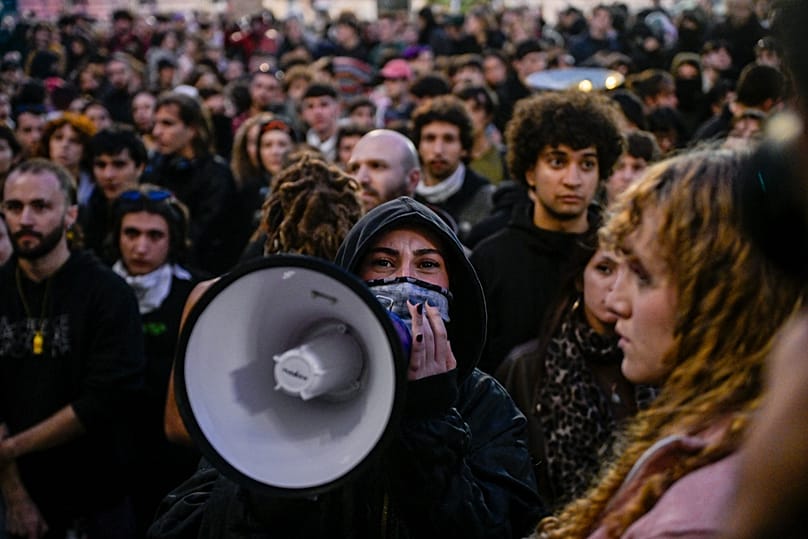
People have taken to the streets again in dozens of Italian cities to protest against the rising cost of living, as part of a general strike called by grassroots unions.

Tensions escalated during protests across Italy on Friday, with clashes breaking out between demonstrators and police.

Near the Colosseum in Rome, a small group broke away from the main march, erected barricades, tore down road signs and set rubbish bins on fire. Protesters also hurled bottles at police officers, while eight demonstrators were detained.

Authorities closed Piazza Montecitorio and Piazza Colonna, near Prime Minister Giorgia Meloni's office, as a precaution, deploying riot police to secure the area.

The nationwide demonstrations were organised by grassroots union USB against the rising cost of living and rearmament in Europe.

The protest, under the slogan "Shut everything down", involves workers and students, as well as pensioners, housing rights activists and port workers, who are also striking in around 20 countries against the transport of weapons.

Italian authorities are closely monitoring security, after the recent violence in Milan. The Interior Ministry has been put on alert over the possible infiltration of violent groups into the various marches, amid fears of unrest that could continue throughout the weekend, described as "problematic" by Interior Minister Matteo Piantedosi.

"There are alarms, because there is this very insidious way of activating the squares, but nothing different from what we have dealt with so far", Piantedosi said on Thursday.

In this context, the police plan to step up checks and potentially carry out preventive detentions allowed under the latest security decree. As for transport, reports indicate that services are operating only partially as normal.

A march passes in front of the Ministry of Education at Piazza dell'Emporio. Friday, 30 Oct., 2026. LaPresse

Where demonstrations are taking place in Italy

In Rome, the march is set to begin mid-morning near Termini station, heading towards the Imperial Forums, with at least 20,000 people expected to take part. Authorities are on high alert along the route, which passes through the historic centre, close to government buildings, the Defence Village at Circus Maximus and the Colosseum area, which was targeted during previous demonstrations.

Hundreds of students gathered nearby, in Piazzale Ostiense, under a slogan referencing the movement that paralysed France, "Le monde est à nous" (The world is ours).

Two marches are taking place in Milan, one organised by students and the other by trade unions and pro-Palestinian activists. They are expected to converge in the morning along Corso Buenos Aires, heading away from the city centre, which was the scene of unrest on 17 and 18 October. There are concerns that demonstrators could try to reach the city's eastern ring road and block traffic, as happened a year ago.

In Turin, a mobilisation organised by USB is taking place, with school and university students, as well as autonomous collectives, joining the march towards the city centre and city hall. The situation is similar in Bologna, while in Naples the demonstration is being led mainly by student movements, which have occupied university buildings and secondary schools in recent days.

In Genoa, dockworkers blocked part of the port area early in the morning using tyres and smoke flares, calling on colleagues from "all over Italy" who "do not want to work for war" to join them. Hundreds of demonstrators also gathered at the entrance to the port of Trieste.


'Let's reclaim our future': Thousands protest in Italy over rising living costs


Thousands of protesters marched across Italy on Friday over the rising cost of living, education funding cuts and government spending on defence. Minor clashes were reported in the northwestern Italian city of Turin, while police maintained a heavy presence across the country.


Issued on: 30/10/2026
By: FRANCE 24

Young people in Italy are calling for more funding for education and housing and cuts to defence spending. © Alberto PIZZOLI / AFP


Thousands of students and workers took to the streets across Italy on Friday, calling for more school funding and relief from the soaring cost of living, amid a high police presence to avert possible clashes.

Friday's Italy-wide protests came after weeks of demonstrations led by students who set up tent camps and occupied schools to make their demands heard – fuelled by similar movements in nearby France and Spain.

A general strike called by Italy's USB trade union attracted thousands of workers to Friday's protests, including truck drivers, taxi drivers and farmers, each of whom have rallied in recent weeks over the spike in fuel prices and to oppose rising defence spending.

Marches were held in dozens of cities up and down the country, including in Bologna, Genoa, Naples, and Turin – where a few minor skirmishes between protesters and riot police occurred at the start of the demonstrations.

In Rome, university student Beatrice Chilelli told AFP students were "at a breaking point".

"They can't afford to pay exorbitant tuition fees, and rent... which weighs heavily on their parents' shoulders," said the 21-year-old, citing student housing in Rome that could reach 1,200 euros per month for a single room.

Police have deployed in large numbers to prevent outbreaks of violence like those earlier this month in Milan. © Andreas Solaro, AFP

Thousands of people left Rome's central Termini train station, accompanied by two tractors and a taxi, making their way past the Colosseum as they waved flags, unfurled banners and shouted into megaphones.

An AFP photographer witnessed a heavy police presence outside the Economy Ministry, which the procession passed by.

"We need more houses, not bombs!" sang one group in the crowd, as a troupe of protesters gave a brief performance imitating terrified civilians in a Gaza bombing raid.


Cover image: Demonstrators light flares during an anti-government protest organized by the Italia in Piazza movement, at Piazza Duomo in Milan, on October 17, 2026. © Piero Cruciatti, AFP
03:08


The Milan protest also began at the central train station, but then headed outside the city – far from the centre where young vandals had looted stores, destroyed property and clashed with police two weeks ago after another sanctioned cost-of-living demonstration.

"Let's reclaim our future" read one banner unfurled by students in Milan.

Police in riot gear blocked off streets, but no major clashes had been reported as of midday.

Besides students, the demonstrators at Friday's protest included teachers, workers and retired people, with one man in Rome bearing a sign that read "Pensioners – Pissed Off and Furious".

Many pro-Palestine flags were seen in the crowds in major cities.

Ahead of the demonstration, a spokesperson for the OSA student movement, 18-year-old Laura Teresi, told AFP she expected a "massive" mobilisation that would empty out schools.

"We will take to the streets to denounce the rearmament policies of (Prime Minister Giorgia) Meloni's government and the rising cost of living, which is weighing ever more heavily on families, workers and students," she added.

The students will also protest against the "endless budget cuts to teaching", Teresi said.
Law and order

Following the October 17-18 weekend of clashes between youth and police in Milan, Meloni's hard-right government toughened laws on public gatherings while easing rules on detaining minors.
The main protest by young people and workers in Rome on Friday will take place near the Colosseum. © Andreas Solaro, AFP

The government also last week agreed on a 175.2-million-euro ($195 million) aid package for truck drivers, farmers and fishermen hit by soaring fuel prices linked to the war in the Middle East.

Measures in favour of young people and families are also planned in the draft 2027 budget currently being discussed among the various governing parties, such as an annual bonus of 2,500 euros for workers under 30.

"I hope this can provide answers for young people in general... who feel that the state doesn't care about them," Meloni said at a press conference on Wednesday, stressing that these measures were "not for those who smash windows".

(FRANCE 24 with AFP)
With ‘Largest Coordinated Port Action Ever,’ Dockworkers in 22 Countries Strike Against Gaza Genocide

“We, the workers in the ports, know very well that without us nothing moves. Without our hands, containers remain still, ships are not loaded, the war machines are blocked.”


Seafarers and dockworkers chant slogans as they take part in a march from the port of Piraeus, near Athens, towards Greece’s Ministry of Maritime Affairs on October 30, 2026.
(Photo by Aris Messinis/AFP via Getty Images)

Jake Johnson
Oct 30, 2026
COMMON DREAMS

Dockworkers in more than 20 countries—from France to India to Greece—are withholding their labor on Friday to demand an end to Israel’s genocidal assault on Gaza and highlight the role that commercial ports play in fueling deadly militarism worldwide.

Organizers said the work stoppages, led by dockworkers’ unions at 113 ports across 22 countries, would be the “largest coordinated port action ever,” easily surpassing the international day of action held in February. No Harbour for Genocide, a collective of trade unions and others supporting the day of action, said $2.8 billion worth of cargo will be halted at Mediterranean ports, where workers are planning to strike for 24 hours.

“A cargo refused in one port sails on to the next,” said No Harbour for Genocide. “Refused in every port, it stops, and the workers have enforced the embargo that governments announced and did not.”

In a joint statement last month announcing the day of action, dockworkers’ unions from Türkiye, Morocco, Italy, France, Greece, Italy, and Basque Country laid out their demands:An immediate end to the genocide of the Palestinian people and the opening of safe corridor for humanitarian aid.. An end of colonization, occupation and apartheid imposed to Palestinian People and the recognition of an independent Palestinian state recognized by the international community on the 1967 borders, with East Jerusalem as its capital.

An end to the war in the Middle East. No support, no facilitation, no participation in the US-Israeli war against Iran, Lebanon or any other imperialist intervention. Military fleets and bases out of the region. We express our full solidarity to the people of Cuba and Venezuela and Sudan menaced by US imperialism and we call for defend people’s sovereignty, resources, territorial integrity, peace with justice, and the right for resistance for self-determination.

Ports must not be used for the transport of weapons, ammunition, military equipment and troops. We call on unions to strengthen vigilance, to inform workers, to expose the cargoes of war, and to organize mass collective resistance with all our rightful available means and our struggle.

An end to the militarization of ports and critical infrastructure. Ports belong to the peoples and the workers. They are not bases for NATO, the USA or the EU, nor tools of shipowners and monopoly groups.

No to the war economy and armaments. The money must go to wages, collective agreements, health, education, social needs, and the protection of life and safety at work.
Health and safety measures in the workplaces. Not one worker dead for profits. An end to intensification, subcontracting, dangerous conditions, and employer arbitrariness.

Collective agreements with real wage increases, stable jobs with rights, a retirement policy with better pensions, and a reduction of working time. Technological developments, mechanization, automation, the use of AI and the development of ports must serve the needs of workers, and not lead to the intensification of work or the disappearance of their jobs.

“Our strength lies in organization. It lies in our unions, in general assemblies, in collective decisions, in solidarity among workers from different countries,” the unions said. “We, the workers in the ports, know very well that without us nothing moves. Without our hands, containers remain still, ships are not loaded, the war machines are blocked.”


This is urgent

With less than 36 hours left, our Fall Campaign is falling short. We have no billionaire owner. We take no corporate advertising, and we don’t have a paywall. Only readers like you fund our work. If you're able, please support our independent journalism today.


Al Jazeera noted that of the ports participating in Friday’s actions, “Genoa, Livorno, and Gioia Tauro in Italy, Marseille in France, Piraeus in Greece, and Tangier in Morocco all have proven links to weapons shipments to Israel.”

The strikes come as Israel’s genocide in Gaza continues despite a ceasefire agreement that putatively took effect last October. A United Nations report published earlier this week noted that “Israeli authorities and forces continue to commit genocidal acts” in Gaza “even after the so-called ceasefire agreement, with the intent to destroy the Palestinian people, in whole or in part.”

The report found that Israel—which is armed and supported diplomatically by Western governments, principally the United States—has “committed war crimes and the crimes against humanity of extermination, persecution, torture, rape, and other forms of sexual violence” in the illegally occupied Palestinian territories.

Port Workers and Communities for Palestine said in a statement Friday that will be demonstrating at the Port of Elizabeth in New Jersey. The coalition said the New Jersey port is the only port on the East Coast of the US where a protest is expected. Demonstrations are also expected in Oakland and San Francisco, California.

“We know that, regardless of what union leadership may decide, workers everywhere stand in solidarity with Palestine,” said Port Workers and Communities for Palestine. “We will be out there on Friday to show them that they are part of this movement too. Workers have the power to stop the war machine.”

Zelenskyy thanks US over deal for 500 Patriot missiles but warns delivery could take years

THIS IS BIDEN'S FAULT

Ukrainian Air Force's F-16 fighter jets fly over a Patriot Air and Missile Defense System in an undisclosed location in Ukraine, on Aug. 4, 2024.
Copyright Copyright 2024 The Associated Press. All rights reserved

By Nathan Rennolds
Published on

Kyiv has long called for more interceptors to help its forces fend off Russian missile and drone attacks. The rapidly approaching winter is pressing home that need.

Ukrainian President Volodymyr Zelenskyy has praised the US for its "strong decision" to approve the sale of 500 much-coveted Patriot missiles to Ukraine - but he has warned that delivery could take years.

The US State Department announced on Friday that Washington had green-lit a package of Patriot PAC-3 interceptors worth $2.1 billion as Kyiv continues to defend against Russian missile and drone attacks.

"Five hundred PAC-3 interceptors is a substantial number, and very soon – this winter – they COULD make for a highly effective defence package," Zelenskyy wrote in a post on social media in response.

"However, it has been stipulated that deliveries may begin ONLY IN A FEW YEARS," he continued. "We are asking our American partners to find a solution for the time when there is a real danger and a real need to use PAC-3 interceptors."

Earlier this week, Zelenskyy said Kyiv had been waiting for almost a month for US Defence Secretary Pete Hegseth to sign off on a batch of missiles for both the Patriot and NASAMS systems.

Kyiv has long called for more interceptors to help its forces fend off Russian attacks, and the rapidly approaching winter is pressing home that need. Russia has repeatedly sought to target Ukraine's power grid over wartime winter periods as Moscow has looked to break the country's resolve.

Dwindling stocks of interceptors have already encouraged Russia to ramp up missile attacks in recent months, and there are fears this trend could lead to an especially brutal winter for Ukrainians.

"The United States, our European partners, and other partners around the world have sufficient stocks of PAC-3 interceptors in their warehouses," Zelenskyy said overnight. "Providing them to Ukraine right now – in the winter of 2026–2027 – and replenishing our partners’ arsenals LATER, in THE FOLLOWING YEARS, through this production already contracted and paid for by Ukraine and our partners would be the right approach."

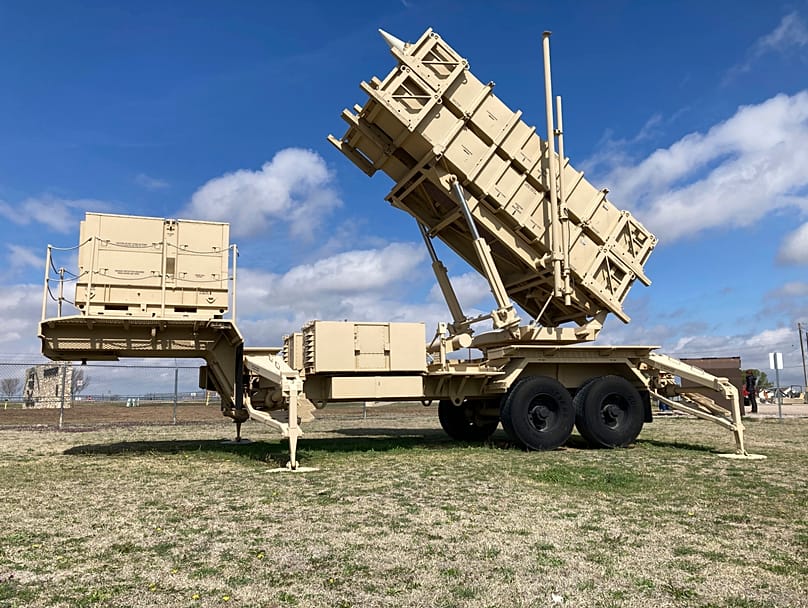
A Patriot missile mobile launcher is displayed outside the Fort Sill Army Post near Lawton, Okla., on March 21, 2023.
A Patriot missile mobile launcher is displayed outside the Fort Sill Army Post near Lawton, Okla., on March 21, 2023. Copyright 2023 The Associated Press. All rights reserved.

The Patriot missile platform is one of the world's most advanced air defence systems and can be used to defend against a variety of threats, including incoming aircraft and ballistic missiles.

Ukraine receives the majority of its Patriots through NATO’s Prioritised Ukraine Requirements List (PURL) initiative, which facilitates the purchase of military equipment and munitions from the US by allies and partners.

As of June 2026, allies had committed to funding more than $6 billion of defence equipment for Ukraine through the scheme, per NATO.


Ukraine hits Moscow with record 600 drones during Africa summit

Ukraine hits Moscow with record 600 drones during Africa summit
Ukraine sent more than 600 drones at Moscow as African leaders met in the Kremlin; Russian officials said the war must continue. / bne IntelliNews
By Ben Aris in Berlin October 30, 2026

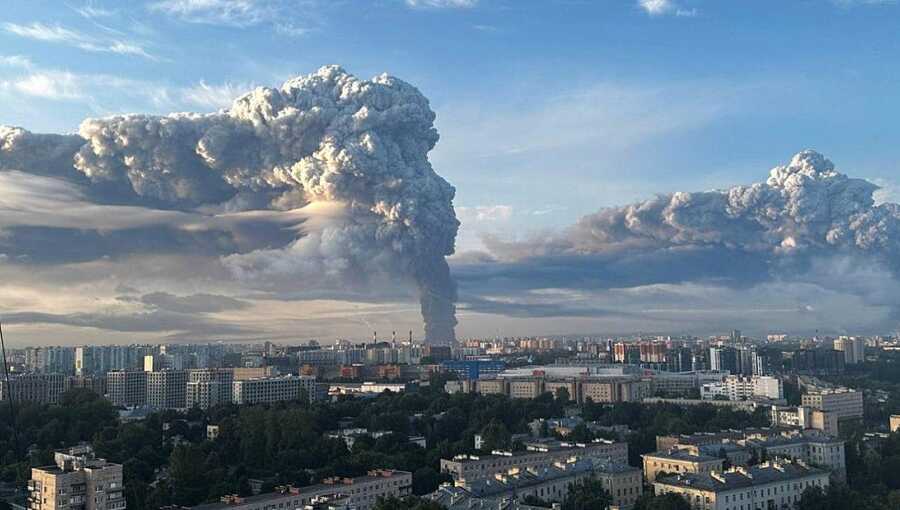
Ukraine flew more than 600 drones at Moscow, a record wave of attacks that  was designed to embarrass Russian President Vladimir Putin, who is currently hosting almost all of Africa’s leaders at the Kremlin.

Moscow Mayor Sergei Sobyanin said 613 drones flew at the Moscow region between the evening of October 28 and the morning of October 29, the night before the second day of the Russia-Africa summit at the Grand Kremlin Palace, which brought delegations from 48 African countries to the capital.

Russia's defence ministry said it downed a total of 1,214 drones over 19 regions that night, its highest overnight figure since the start of the war, The Bell reported.

The following night was heavier over the capital: Sobyanin said 862 drones flew at Moscow between the evening of October 29 and the morning of October 30, while the ministry put its nationwide tally at 1,043. Flights were restricted at Domodedovo, Vnukovo, Zhukovsky and Sheremetyevo. No damage or casualties were reported in Moscow on either night.

Summit in focus

The ferocity of the drone swarm attack was designed to embarrass the Kremlin and make Russia feel unsafe for its visiting friends. This is not the first time Bankova, Ukraine’s presidential administration, has employed this tactic.The raids coincided with a high-profile diplomatic gathering. The summit closed on October 29 with more than 60 agreements signed.

Kremlin spokesperson Dmitry Peskov called it "strange" that Kyiv had organised "such a massive drone attack" on the capital while a "global-scale" event was taking place there, the Kyiv Independent reported on October 29.

"Our air defense systems are working effectively. But this shows once again that the situation continues, and the (war) must continue so that we are protected from threats," Peskov told reporters. 

Ukraine hits Russia with heavy drone attacks everytime it hosts a high level meeting.

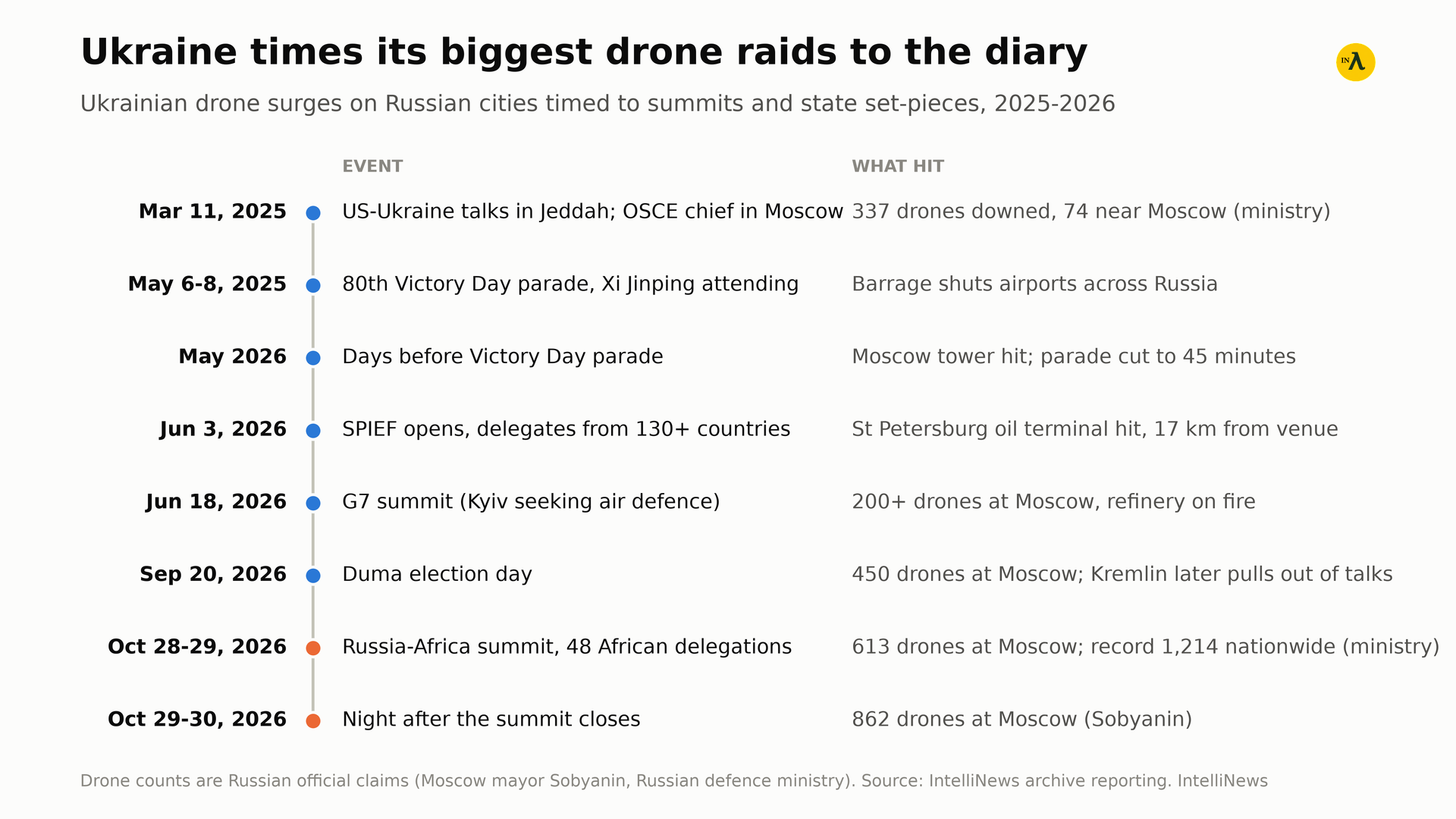
Ukrainian drone surges on Russian cities that coincided with summits, talks and state set-pieces, 2025-2026. Drone counts are Russian official claims. Source: IntelliNews archive reporting. IntelliNews


SPIEF: Ukrainian drones set fire to the St Petersburg Oil Terminal on June 3 this year, 17 km from the venue, just as the St Petersburg International Economic Forum (SPIEF) opened with dignitaries from more than 130 countries in attendance. The authorities closed the airspace over the city, stranding delegates who had not yet arrived.

Victory Day: In May 2025, ahead of the 80th anniversary Victory Day parade attended by Chinese President Xi Jinping and Brazil's president, a Ukrainian drone barrage caused civil aviation chaos across Russia, and President Volodymyr Zelenskiy warned that Ukraine "cannot guarantee the safety of anyone that attends the parade". This year a drone hit a luxury tower on Mosfilmovskaya Street days before May 9, and the parade was over in 45 minutes, with few guests and no armour, after Zelenskiy issued a mocking decree giving Putin "permission" to hold it, complete with Red Square's GPS coordinates.

Jeddah talks: Events aimed at Western audiences get the same treatment. A raid of 337 drones, 74 of them near Moscow, on March 11, 2025, coincided with US-Ukraine talks in Jeddah, and Russian officials took the visiting OSCE Secretary General Feridun Sinirlioglu to see the damage.

G7 summit: More than 200 drones were downed over Moscow on June 18 as the G7 summit met, where Kyiv was asking for more air defence, and the Moscow refinery was set on fire.

Duma elections: Some 450 drones flew at Moscow on September 20, the last day of the Duma elections, which Putin later said showed the enemy's attempts to disrupt the vote.

The March 2025 attack was the largest on Moscow of the war at the time, and the raids have grown since. Sobyanin reported 637 drones flying at the capital on the night of August 17-18, nearly 500 were reported on the night of October 13-14 and more than 600 on October 21-22, before the 613 and 862 of this week. That is despite an air defence network around the city that open-source analysts count at roughly 79 Pantsir towers within 50 km and some 25 S-300 and S-400 batteries, which still lets drones through.

Using force to strengthen a diplomatic hand is an old habit in Kyiv. Under former President Petro Poroshenko, fighting in Donbas habitually escalated before Normandy Four meetings, as it did around Debaltseve on the eve of the Minsk summit of February 2015, and Poroshenko used the tension to press the leaders of France and Germany to be tough on Russia.

Putin answers provocations differently, punishing Ukraine with mass bombardment rather than making targeted gestures. After Ukrainian drones destroyed a Wildberries warehouse outside Moscow in July, killing seven night-shift workers, the war turned into Operation Wildberries, and by the end of August Russian strikes had destroyed about 90% of the storage facilities of Ukraine's retail chains, Agriculture Minister Taras Vysotskyi said.

Strikes undermine the peace process

This week's raids have also undercut what little progress had been made towards ongoing talks to end the conflict. US envoys Steve Witkoff and Jared Kushner secured an agreement in principle on trilateral negotiations after visiting Kyiv and Moscow, but the Kremlin pulled out, accusing Kyiv of strikes on the September 20 election day. Kremlin aide Yuri Ushakov said on October 28 that the start of talks would depend on the battlefield situation, and Zelenskiy said the same day that he expected a meeting in mid-November, with no date confirmed by Washington.

Taking Ushakov at his word means as the scale of the drone strikes goes up, the progress at the talks will go down. Bankova is talking about peace, but its actions are those of war. Peskov's answer to the summit raid was that the war must continue, which gives Moscow a ready reason to keep the talks on hold.

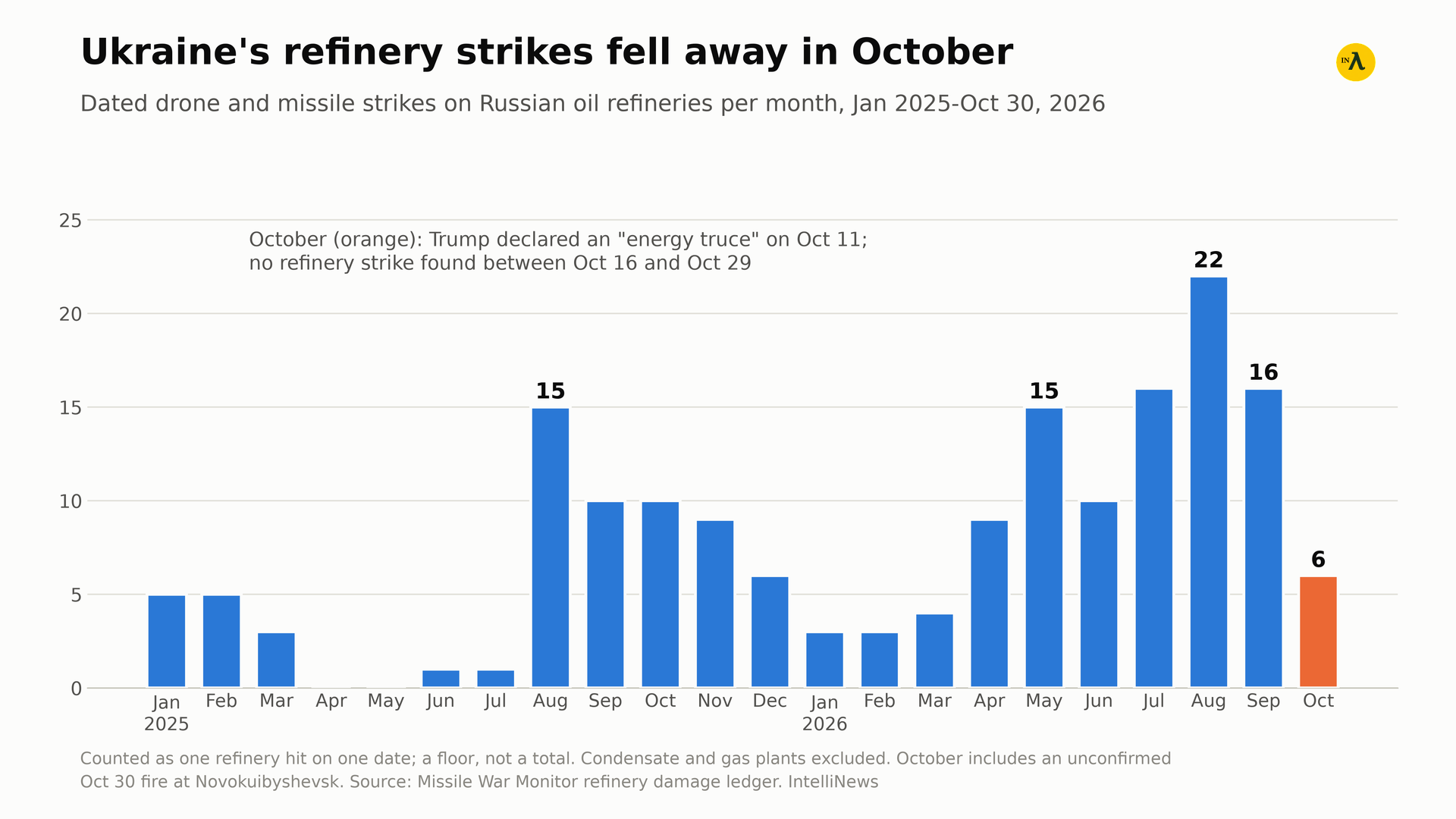
The strikes on Moscow have grown as the attacks on refineries have fallen away. Following pressure from US President Donald Trump, Ukraine's strikes on Russian oil refineries have dropped sharply in recent weeks. IntelliNews' Missile War Monitor's refinery damage ledger records 22 dated strikes on refineries in August, 16 in September and six in October, with none found between October 16 and October 29.

Dated Ukrainian strikes on Russian oil refineries per month, January 2025-October 30, 2026. One strike is one refinery hit on one date; the counts are floors. Condensate and gas plants excluded; October includes an unconfirmed fire at Novokuibyshevsk on October 30. Source: Missile War Monitor refinery damage ledger. IntelliNews

Zelenskiy said Ukraine halted refinery attacks for three days after Trump declared an energy truce on October 11, and the strikes resumed with a hit on Ryazan on October 15. A fire was reported at the Novokuibyshevsk refinery in the Samara region on the night of October 29-30, which has not been officially confirmed. The campaign had made Russia's refining sector a liability for Moscow, and Putin put its cost at 1% of GDP on October 1.

There are reports that Ukraine is switching to metallurgical and chemical plants. Steelmaker Severstal (MOEX: CHMF) said a substation at its Yakovlevsky iron ore mine in the Belgorod region was damaged on October 7, while Telegram channels claimed hits on the Balakovo steel works on October 14 and Novolipetsk Steel (MOEX: NLMK) in Lipetsk on October 27-28. The Lipetsk governor called the reports of an industrial fire "not true", and the Saratov governor said Balakovo's infrastructure was working normally.

Russia seeks to raise the cost of Europe's support for Ukraine through sabotage

Russia seeks to raise the cost of Europe's support for Ukraine through sabotage
An explosive-laden drone was found in the secure cargo area of Leipzig/Halle airport in August, next to a parked Ukrainian Antonov Airlines freighter. / Leipzig/Halle airport
By Clare Nuttall in Glasgow October 30, 2026

Russia is concentrating its sabotage campaign in Europe on the rear of Ukraine's war effort, from drone factories to Starlink stations, BMI analyst Cassia Scott-Jones told a webinar on October 27.

"We've seen attacks on drone production facilities, Starlink infrastructure, and essentially Russia is increasingly targeting the European rear of the war in Ukraine: communications, defence production, logistics," said Scott-Jones, a senior analyst for Europe country risk who leads Russia and Ukraine analysis at BMI, the research arm of Fitch Solutions.

Scott-Jones described a shift from a wider, sometimes apparently random set of targets towards the communications, defence production and logistics supporting Ukraine. Each attack can disrupt suppliers, relay stations or cargo hubs and force European governments to spend more defending targets far from the front. "Before, there was a wider set of targets, which sometimes seemed random," she said.

The targets since the summer bear that out. Fire gutted the assembly section of WB Electronics' drone components plant in Skarzysko-Kamienna on August 31, and Estonia blamed Russian intelligence for an arson attack on Milrem Robotics, the Tallinn-based maker of unmanned ground vehicles for Ukraine. Slovak police said they had foiled a planned arson attack on the Slovak-Ukrainian drone maker Skyeton, and incendiary devices were thrown at a site outside Rohde & Schwarz's Munich headquarters in September.

Communications have been hit too. Polish officials called a September 23 fire at a Starlink ground station south of Warsaw, which supports internet links into Ukraine, sabotage; Russian intelligence may have hired a Turkish criminal gang known as the Daltons to start it, Der Spiegel reported. On October 28 Polish police detained a Ukrainian suspected of organising a Russian-directed arson attack beside the CARFIL arms factory in Brasov, Romania.

Harder to pin on Moscow

BMI's analysis of incidents shows a fairly continuous intensification from 2022 to 2024 and an apparent decline in 2025. Scott-Jones warned against reading that as a let-up, because the number of incidents in which Russia's role cannot be established has risen at the same time.

"I think Europe is moving into a more difficult phase where activity is widespread but attribution is becoming harder," she said.

How much of the campaign can be laid at Moscow's door is disputed. Published counts of Russian hybrid attacks in Europe since February 2022 range from 52 to 255 depending on the source, the writer Thomas Fazi argued in Responsible Statecraft, because there is no agreed definition of what counts. Germany's federal criminal police alone recorded 321 acts of sabotage against critical infrastructure in 2025.

The escalation in 2026, in both the number of incidents and the risks they carry, has been sharper. "The attempted attack in Leipzig was probably the most significant case," Scott-Jones said.

In early August an explosive-laden drone was found in the secure cargo area of Leipzig/Halle airport, next to a parked Ukrainian Antonov Airlines freighter. Investigators later traced a DNA link to the 2024 incendiary parcels sent through the DHL hub at the same airport. On September 1, Berlin formally blamed Russia and ordered Moscow's last career consulate in Germany, in Bonn, to close. Russia's SVR foreign intelligence service answered with a claim that Nato spies had linked Ukraine to the plot.

A Kremlin official then contacted a counterpart in the German government and warned that Leipzig would not be Moscow's last target, the Wall Street Journal reported in October, citing unnamed sources. The paper also reported that people familiar with US intelligence said Russian President Vladimir Putin had personally ordered the stepped-up sabotage campaign against Nato countries.

"If accurate, that tells us something really important about Russia's risk appetite," Scott-Jones said of the warning. "We would normally think about plausible deniability as one of the main advantages of sabotage activity, but here Russia wanted to warn Germany, to understand there could be further attacks."

She added: "One of the reasons is it's so cheap for Moscow to generate these threats and so expensive for Europe to comprehensively defend against them. And Russia wants Europe to know that." 

Germany before the Baltics

The geography of the attacks does not follow the map of Europe's invasion fears. The Baltic states, most often discussed as the likeliest target of a Russian military attack, are not the most frequently hit. Germany was the most frequently affected country in the incident data, followed by Poland and France.

"I think that tells us vulnerability follows strategic value as well as geography," Scott-Jones said. "Poland is the principal logistical corridor into Ukraine, while Germany, France and the UK matter because they are the military-industrial complex of Europe, and politically."

Poland has had the most violent cases. In November 2025 an explosion damaged the Warsaw-Lublin rail line, a route for supplies to Ukraine, and Warsaw blamed two Ukrainians working for Russian intelligence and shut Russia's last consulate in the country. Prime Minister Donald Tusk said in September that the latest incidents were "certainly not the last".

Raising the price of helping Ukraine

Scott-Jones separated the immediate goal of the operations, disrupting Ukraine's defence production and logistics, from their longer-term effect on European politics.

"Every incident imposes additional costs: governments have to protect more infrastructure, intelligence services have to investigate and companies have to spend more on security," she said. "Most importantly, European governments have to explain to voters why supporting Ukraine is producing security risks at home."

She cautioned against a narrow reading of what Moscow wants. "I wouldn't frame the Russian objective as simply trying to elect pro-Russian parties or parties that are more negative toward Ukraine," she said. The aim is rather to shape the political environment in which decisions about Ukraine are made, and to feed concern about escalation and security, "potentially to influence calculations of mainstream governments as well as parties on the political fringes."

That fits a debate already running in European capitals, where Europe has gone from paymaster to participant in Moscow's rhetoric as it builds weapons for Kyiv. Czech counterintelligence chief Michal Koudelka warned in October that Russia could move on to sabotage strikes against logistical hubs used to supply Ukraine.

Nothing Europe has done yet appears to have changed Moscow's calculation. "So far at least, Russia seems to judge that the European response has not imposed significant enough costs to make it change," Scott-Jones said.

BMI expects more of the same. "I would expect these operations to intensify further into 2027, and while it's unlikely to be a defining issue in Europe's elections, it will be interesting to see how parties respond to that pressure," she said.