Tuesday, November 17, 2026

Long read

'I never imagined my father was a Nazi': Born in a German-run 'baby factory'


Two trainloads of children, some of them born in Nazi-run "Lebensborn" maternity homes, were brought from Germany to Commercy in eastern France in 1946. One of those on board was Édith Pagot.


Issued on: 14/11/2026 -
FRANCE24

By: Stéphanie TROUILLARD
Video by: Claire PACCALIN/


Adopted as a child, Édith Pagot had no idea she had been born in a Nazi-run Lebensborn (“fount of life”) maternity home until earlier this year, when her daughter began looking into their past.

“This photo is of a baby about 18 months old. It has my first name and surname on it,” says Édith, holding a black-and-white photo between her fingertips.

Until a few months ago, Édith had never seen a picture of herself as a baby.

A photograph of Édith Pagot - when she was still known as de Vicar - in Indersdorf, Germany, at a former monastery and girls' boarding school that was converted in July 1945 into a children's centre following World War II. © United States Holocaust Memorial Museum, courtesy of Lilo, Jack and Micha Plaschkes

“I look nice. I look very well-behaved,” she says, a little wistfully.


However, behind the image of the chubby-cheeked infant lies a dark story.

“It was taken at the Indersdorf orphanage in Germany in 1945. They photographed us holding a sign with our first names and surnames on it, to try to find our families," Édith says. "It’s a bit difficult to see that sign,” she adds.

At the time, the baby girl in the picture was still called Édith de Vicar. It was the name under which she was born on April 11, 1944, in a Lebensborn home in France's Oise department, before a journey that would take her to Germany and then back to France.


Photograph showing a child's baptism ceremony conducted by members of the SS at a Rhineland Lebensborn facility from between 1936 and 1944. © Bundesarchiv

The Lebensborn project was created in 1935 with the aim of producing “perfect Aryan children”, according to the criteria of Adolf Hitler’s regime.

“They were Nazi maternity facilities, and the man behind them was Heinrich Himmler. He wanted a ‘pure race’,” the 82-year-old explains. “There were French women who had affairs with Germans. That’s how these babies came to be born.”
'I was never told anything else'

All her life, Édith was unaware of this painful chapter of her past. Placed with a couple in France's northeastern Lorraine region in 1948, she knew nothing of her origins.

“My adoptive parents told me right away that I’d been adopted, but nothing more. I asked several times, but I was never told anything else.”

With no answers, she simply imagined “a mother who had abandoned her”, without necessarily thinking of any connection with the war. She built her life around what was left unsaid, becoming a healthcare manager and the mother of two children herself, a boy and a girl.

Years later, her daughter decided to investigate.

“Ever since I learned she’d been adopted, I always wondered where she came from. So I asked Mum for permission to do some research,” says Émilie Ruffra, Édith's daughter, who also works in healthcare.

Watch more

The Lebensborn programme: When Nazi Germany sought to create an Aryan elite

One day, a friend told her about a book she had read. "Le Fardeau" (The Burden), by Matthieu Niango recounts his investigation into the past of his mother Gisèle, who was born in a Lebensborn home in Belgium. Émilie came across her own mother’s birth name – the only information she had up until then – several times in the book.

“Through Matthieu’s and his mother’s stories, I discovered there were similarities with my own mother’s story. So I contacted him in the spring of 2026, and he was the one who confirmed that Mum had also been born in a Lebensborn home.”

For Émilie, the discovery was a bombshell.

“It was difficult. It took me a little while to take it in, and certainly to accept it,” Émilie admits. “When I told Mum, I was afraid she’d hold it against me,” she adds.

For Édith, learning about the long-buried secret also came as a shock: “I’d never imagined my father was a Nazi.”


Édith Pagot and her daughter Émilie at their home in Nancy on October 2, 2006. © Stéphanie Trouillard, FRANCE 24


From archive to archive

Despite the upheaval the discovery brought to the family, Émilie kept digging. She contacted the German archives and the local branch of the National Office for Veterans in the region where her mother had been placed with her adoptive parents. Little by little, piece by piece, she retraced her mother’s path.

Édith was born in a manor house in the Lamorlaye commune of France, near Chantilly. It was there that the Nazis opened Westwald in February 1944, the only Lebensborn home on French soil. Around 10 such homes were set up in Germany, as well as in Norway, Poland, Denmark, Belgium, Luxembourg and the Netherlands.


The Lamorlaye Manor in the Oise department, where Édith Pagot was born on April 11, 1944. © Wikimedia

The racial origins of mothers who had relationships with SS officers were subjected to close scrutiny at these facilities, including genealogy and physical appearance. According to a report from French services in Germany and cited by journalist Boris Thiolay in his book, "Lebensborn, la fabrique des enfants parfaits" (Lebensborn: The Making of Perfect Children), “young women were admitted, at the father’s request, six weeks before the due date and had to remain [at Lamorlaye] for six weeks after the birth to breastfeed their child. After that, they either had to sign a deed of abandonment in favour of the German authorities, or they agreed to leave for Germany.”

Twenty-three children were born at the facility in France. Nothing is known about Édith's mother, apart from the surname “de Vicar” and the fact that she was French. Her father’s identity is a complete mystery, as is whether her mother had a romantic relationship with a German soldier.


An identification card in the name of Édith de Vicar, issued in Indersdorf, stating that there is no information regarding her parents and that all documents have been destroyed. © Archives Arolsen

“There are no documents. Everything was burned,” Émilie says.


A long journey home

As the Allies advanced and the Germans sensed the tide turning in the summer of 1944, the children at the Lamorlaye manor were taken to Germany. After a long journey, Édith arrived in April 1945 in Steinhöring, Bavaria, at the very first Lebensborn home the Nazis had created. After the war in Europe ended later that year, she was transferred in August to the refugee centre at Indersdorf, near Munich.

It was there that the photo of her was taken, along with footage shot by the United Nations Relief and Rehabilitation Administration, which provided aid in Europe after the Liberation. The little French orphan appears to be mischievous among other children her age, squabbling over a cake or a cuddly toy.

Edith Pagot (on the right) with other children at the orphanage in Indersdorf, Germany. © United States Holocaust Memorial Museum

But Édith's journey was not over. A year later, on August 5, 1946, she was finally repatriated to France, arriving in Commercy with about 10 other children. She has only a vague memory of that time: “I can see myself getting off a train, that’s all.”

She and the other children were in poor health and were hospitalised for several weeks. They were also given new first names to erase their origins. Édith was now to be called Georgette. The French state also decided to change their places of birth: all of them were now recorded as having been born in Bar-le-Duc.

Two years later, after a stay with a foster family “where she felt happy”, the little girl was suddenly handed over to a childless couple. “I saw them once, and a month later they came back. My suitcase was packed and I left with them. It was hard.”

They formally adopted her in 1951 and decided to keep her original first name, Édith – a decision, she says, that continues to cause issues with routine administrative appointments in France.

“When I went to renew my identity card not long ago, they asked me whether I was actually Georgette.”

'Knowing where I come from'

By going through her mother’s adoption file at the departmental archives, Émilie has been able to uncover new details and flesh out her timeline, but she has learned nothing more about the identity of her biological grandparents. With no other options, she has turned to DNA testing through a genealogy website.

“They confirmed that we have German ancestry. There are also matches with potential cousins. Will this reveal our origins and connect us with family? I don’t know yet.”

Édith has let her daughter carry on the search. She understands her wish to know more but feels no “emotional need” to find her biological family. “What I mostly want is to understand what happened when my mother fled," she says. "Why was I abandoned?”

After months of intense investigation, Édith is still shaken, but she also feels freed of a burden.

“It was hard to hear, but I’m not responsible for it, and I’d rather know where I come from,” she says.


'The story isn’t complete'

Thanks to her daughter’s research, Édith was able to meet Gisèle Niango, who arrived in Commercy on the same convoy in 1946. In an unlikely coincidene, both women live in Nancy.

“She’s a year older than me. We’ve had the same life story. It’s extraordinary. She now thinks of me as her sister.”

The two women speak on the phone regularly. They took part in commemorations in Commercy last October to mark the 80th anniversary of their return to France.

The experience has also brought Édith and Émilie closer.

“Mum has always been a strong, determined and courageous person. She amazes me. I really admire what she is still overcoming to this day,” Émilie says proudly.

In the meantime, mother and daughter continue to face the past together.

“The story isn’t complete, because we’re still missing a lot of pieces. But telling her story is already helping her a great deal, to accept the past and move on with her life.”

This article was translated from the original in French.

Eisenkot says Netanyahu ‘cannot remain’ after alleged election interference by aide

Israeli prime ministerial hopeful Gadi Eisenkot said on Sunday caretaker premier Benjamin Netanyahu must leave office immediately following reports of alleged electoral interference by a Netanyahu aide. The former army chief called Netanyahu and his entourage an immediate threat to democracy, hours after representatives discussed forming a national unity government.


Issued on: 16/11/2026 
By: FRANCE 24

Israeli Prime Minister Benjamin Netanyahu, and lawmaker Gadi Eisenkot at the Knesset on November 10, 2026 © Ohad Zwigenberg, AP


Israeli prime ministerial hopeful Gadi Eisenkot on Sunday said caretaker premier Benjamin Netanyahu "cannot remain at the head of the government for a minute longer", following reports indicating alleged electoral interference by a Netanyahu aide.

A few hours after representatives of the two men met to discuss the possible formation of a national unity government, Eisenkot launched a scathing attack on his rival.

"The behaviour of the outgoing prime minister, Benjamin Netanyahu, and his entourage constitutes a concrete, direct and immediate threat to Israeli democracy," said Eisenkot, a former army chief.

Israel's Channel 12 had earlier reported that on the eve of the election, Netanyahu's chief of staff Ido Norden had phoned in a complaint to the police commissioner's office about members of the Arab-Israeli Raam party.

During this exchange, Norden reportedly directed police officers to a purported intelligence source who was a former employee of Netanyahu's office, according to Channel 12.

Based on information from this source, three Raam members were arrested. Netanyahu subsequently launched an offensive against the Arab-Israeli parties, accusing them of electoral fraud after they gained a record number of seats.

The three men were later released when the police determined that the information provided by this source was unfounded.

"I call for the immediate opening of an investigation into this affair," Eisenkot said on Sunday, according to a statement from his party.

Netanyahu's office responded by stating that Channel 12's report was "false", maintaining that Norden had "fulfilled his civic duty".

Netanyahu's Likud party accused Eisenkot of "outrageous incitement".

"While the prime minister is extending a hand in the spirit of unity, Eisenkot and his associates issue daily statements filled with venomous, inflammatory attacks," the party said in a statement.

The opposition has accused the caretaker premier of seeking to delegitimise Arab parties and the election in an attempt to cling to power.

Neither Netanyahu's bloc nor Eisenkot's opposition secured the 61 seats required to form a government following last month's election.

The two main Arab parties, the Joint List and Raam, have indicated support for Eisenkot, who was tapped to form a government last week.

On Saturday, Netanyahu appealed to Eisenkot to join him in a unity government, but the former army chief accused him of playing "tricks" and sowing tensions.
Pope Leo urges stop to Amazon deforestation, demands justice for slain Indigenous leaders

Pope Leo XIV travelled across Peru on Sunday to visit communities high in the Andes mountains and deep in the Amazon rainforest, testing his recovery from lung cancer surgery a month ago. The pontiff condemned the exploitation of the Amazon and urged Catholics to oppose "with perseverance" the deforestation and pollution caused by gold and oil production in the world's largest rainforest.


Issued on: 15/11/2026 
FRANCE 24

Pope Leo meets with missionaries and representatives of Indigenous Amazonian peoples at the Puerto Callao waterfront on Lake Yarinacocha, Peru, on November 15, 2026. © Yara Nardi, Reuters


Pope Leo XIV crossed Sunday from the high Andes to the Amazon, where he warned that that environmental destruction was threatening both the rainforest and the people who depend on it.

Hours after visiting the ancient Incan capital of Cusco, more than 3,400 metres (11,000 feet) above sea level, the 71-year-old pontiff arrived in the jungle, where he said "the cry of the earth and the cry of the poor are inseparable."

He demanded justice for Indigenous leaders killed defending their territories, telling missionaries and representatives of Amazonian peoples that "the blood of these brothers cries out to God and demands justice."

He came to Pucallpa, which lies on the Ucayali River in a region that has become one of Peru's deforestation hotspots.

According to government figures, Peru lost 3.2 million hectares of forest between 2001 and 2024, an area roughly the size of Belgium.

Pope Leo XIV is welcomed by people wearing traditional Andean attire in Cusco. © Tiziana Fabi, AFP

Some in the crowd mixed traditional tunics and red-and-black face paint with baseball caps to shield themselves from the Amazon heat.

When a voice over the loudspeaker asked, "Where is the pope?" the crowd roared back: "In the Amazon!"

As they waited for his arrival, flutes echoed across the waterfront while dancers in sky-blue, red and yellow scarves and black skirts performed for the crowd.

The stop in Pucallpa capped one of the most physically demanding of a 12-day tour of Uruguay, Argentina and Peru that has been closely watched since Leo underwent cancer surgery last month.

The US-born pope, who spent nearly two decades as a missionary in Peru before becoming head of the Catholic Church, has maintained a packed schedule despite having part of a lung removed.

Earlier Sunday, children in brightly woven ponchos and embroidered skirts greeted him in Cusco, where hundreds of thousands lined the streets.

A worshipper wearing devotional images of the Virgin of Carmen and holding a rosary waits ahead of Pope Leo XIV's meeting with faithful and representatives of popular devotion at the Saqsaywaman archaeological park in Cusco, on November 15, 2026. © Luis Acosta, AFP

At the vast stone fortress of Saqsaywaman, musicians and ritual dancers from across the Andes gathered for a prayer service.

"The beauty of this place that welcomes us this morning is undeniable," Leo said. "Saqsaywaman rises toward the Andean sky like a stone altar, where the ancients climbed in search of the divine." Under light drizzle, crowds cheered as he moved through the city.

"To be honest, I thought it might be cancelled," said Valentin Cruz Turpo, 29. "But I still had hope, because God is powerful and can do anything."

Watch morePeruvians flock to see Pope Leo XIV in city he served as bishop

The pope's recent surgery had cast doubt on whether the trip could proceed.

But Leo kept the demanding itinerary, thanking Peruvians on Friday for their prayers and support, "in particular for my health."

His visit to the Amazon shifted attention to a region where Indigenous communities have long warned about deforestation, illegal mining, pollution and encroachment on ancestral lands.

One banner carried by Indigenous communities read: "The world watches, our rainforest disappears."

The pope denounced what he called the unacceptable neglect suffered by many Indigenous communities.

He said it was unacceptable that many communities lacked access to healthcare and education because of geographical isolation and institutional neglect.

The Amazon visit formed part of a homecoming tour that has included emotional reunions in Chiclayo, where Leo served as bishop, and repeated references to Peru as his adopted homeland.

In South America, home to the world's largest Catholic population, he has used the trip to champion the poor and marginalised while trying to reinvigorate a Church that has lost followers in parts of the region.

Later Sunday, Leo was due to return to Lima and bringing his South American tour to a close.
Hundreds of thousands of Czechs protest in Prague over public media funding plan

Hundreds of thousands of Czechs rallied in Prague on Sunday against government plans to replace public media fees with direct state funding, which critics say threatens broadcasters’ independence. Organisers said turnout exceeded a March protest of more than 200,000, potentially making it the largest demonstration since the 1989 Velvet Revolution.


Issued on: 16/11/2026 
By: FRANCE 24

Thousands turned out in Prague's Old Town Square © Michal Cizek, AFP

Hundreds of thousands of Czechs rallied in Prague on Sunday against a government plan to cut a public media fee and move funding to the state budget — a policy critics say would dent the broadcasters' independence and viability.

Organisers said Sunday's turnout exceeded an anti-government protest ​of more than ‌200,000 people in March and predicted it could end up as the largest demonstration since ⁠the Velvet Revolution in 1989 that swept away Communist rule and propelled dissident playwright Vaclav Havel to power.

Critics have compared the government's media bill to changes in Hungary under former Prime Minister ‌Viktor Orban, who built an array of pro-government media.

Opposition parties and civic groups also slammed the government for ⁠rushing through the initial bill in the middle of the night in October, calling for the ruling coalition to rescind the law.

"An elected government has the right to govern but it does not have the right to ​do whatever it wants and to dismantle democratic institutions," said Mikulas Minar, chairman of the civic group ‌Milion Chvilek (A Million Moments) that organised Sunday's protest and estimated some 400,000 attended.

"Show that your aim is not to take control of them and let experts propose genuine safeguards for their independence from political power."

Czech author Ondracka: Velvet Revolution an ‘uprising of people who said enough’

Government accuses media of bias

The populist government of billionaire Prime Minister Andrej Babis, ‌backed by the far-right SPD and the eurosceptic Motorists parties, accuses Czech private and public media of bias.

Its draft bill would cancel a 205-crown ($9.26) monthly household broadcasting fee currently ​used for funding. The bill has passed a preliminary vote and awaits further debate.

Protesters, carrying signs that read "Hands off the media" and "Let media deal with politicians", clogged nearby metro stations and filled Letna park overlooking the Czech capital. Speakers included students, soldiers ​and former dissidents who signed the Charter 77 initiative.

Many at the protest, staged days before a public holiday on November 17 ​that commemorates the start of the Velvet Revolution, wore pointed hats folded out of newspapers ​as a tribute to an animated character who has introduced Czech Television's nightly children's bedtime stories for decades.

"I know that our entire Czech Television is a guarantee of truth and objectivity," ​pensioner Milana Rudolfova, 72, told Reuters. "If we do not have public television and radio then unfortunately we will not be able to believe anything anymore."

Earlier this month, Czech public television and radio workers escalated the fight with a one-day strike that led to broadcast curbs and protests backed by artists and students.

Critics say shifting funding to the state budget would undercut the media's relationship with paying viewers ⁠and make the sector susceptible to political pressure.

A 15% financing cut proposed as part of the change would reduce television's nominal budget to the level of ⁠2008 and that of radio ​to 2005. Media say that is unworkable.

Babis says the government is merely meeting a promise to lighten the financial burden on people.

Prague's fight for public TV: Why a high-profile presenter is prepared to walk away

Cover image: A participant dressed as a TV set protests during a rally against the nationalist government's plan to overhaul public-media in Prague. AFP - MICHAL CIZEK


Issued on: 16/11/2026 - FRANCE24
09:02 min SPOTLIGHT

Daniel Stach, one of the Czech Republic’s best-known television presenters and science journalists, tells Gavin Lee on France 24 why he is prepared to walk away from his career rather than work under changes he believes threaten the independence of public broadcasting.

As hundreds of thousands take to the streets of Prague, Stach explains why he is joining protests against the government's proposed overhaul of public media funding – and what is at stake for Czech television, journalism and democracy.

“Hands off the media,” read the banners as demonstrators gathered in the Czech capital to protest against plans by the right-wing government to overhaul funding for public broadcasters. Protesters say the proposals, driven by populist billionaire Prime Minister Andrej Babiš, risk undermining media independence and democracy.

Opposition parties have compared the proposals, set out in an October bill, to changes introduced in Hungary under former Prime Minister Viktor Orbán, who oversaw the expansion of pro-government media. Babiš has vowed to press ahead despite the protests and denies that the plans will threaten media freedom.

Stach was among those joining the demonstrations on Sunday, 15 November, alongside colleagues from Czech public television.


Our guests

Daniel STACHPresenter and science jourstnalist in Czech Republic
Interview

'A futuristic debate now very real': Why the world is struggling to regulate killer robots


Representatives from 128 nations are meeting in Geneva on Monday to decide whether to move ahead with negotiating legally binding rules around the use of AI-powered weapons that can kill without human involvement. FRANCE 24 spoke with artificial intelligence researcher Vincent Boulanin to find out just what is at stake.


Issued on: 16/11/2026 
FRANCE24
By: Paul MILLAR


A visitor speaks on his mobile phone in front of an ad for military AI displaying a drone at the Berlin Security Conference, on November 3, 2026 in Berlin. © John MacDougall, AFP

“A computer can never be held accountable,” IBM wrote in a 1979 internal training manual. “Therefore, a computer must never make a management decision.” The world has come an awful long way since.

Government envoys from 128 nations met in Geneva Monday to decide whether to start talks around setting down legally binding rules for autonomous weapon systems that can kill without human input.

The question is not an academic one. In the skies over Ukraine, Moscow and Kyiv have both unleashed lethal unmanned drones equipped with AI-powered guidance systems that allow them to identify and strike pre-programmed targets even if they lose contact with their human operator.

These advances – if the word applies – have been born of the relentless logic of escalation that drives all wars: if one side builds signal jammers to drive attack drones off course before they hit their target, the other will build drones that have no further use of a signal.

Both Russia and Ukraine are believed to be testing out attack drones that go a step further – not just independently locking onto the targets chosen for them by human operators, but choosing the targets themselves.

New York Times reporting suggests that the first fully autonomous drone to take human life has already been launched. Ukrainian forensic investigators believe half a dozen Russian drones that killed three people when they hit a petrol station in Ukraine’s city of Zaporizhzhia in September were entirely guided by AI systems.

This week’s talks, which are taking place under the unlikely name of the Review Conference for the UN’s Convention on Certain Conventional Weapons (CCW), are likely to be tense. While a majority of member states support binding regulation around autonomous weapon systems in principle, major arms-producing countries including the US and Russia have consistently opposed such a pact. Under the convention, all decisions must be reached by consensus.

FRANCE 24 spoke with Vincent Boulanin, a senior researcher and director of the Governance and Artificial Intelligence Programme at the Swedish International Peace Research Institute, to find out just what is at stake at this week’s conference.
FRANCE 24: What is it about autonomous weapon systems that you believe justifies or necessitates further regulation – or even prohibition – beyond what is already covered under international humanitarian law?

Autonomous weapons have been discussed in the context of the UN Convention on Certain Conventional Weapons for more than 10 years, and it's a topic that the states concerned have considered important for a few reasons.

The main reason relates to whether it can be used in compliance with existing international humanitarian law. The core concern is that it forces us to kind of reflect on who is making decisions around the use of force.

In the context of autonomous weapons, the key feature is that the decisions, the way targets are being identified, selected, prioritised, and engaged is basically done through the weapon itself – through an algorithmic process where the systems automatically detect the target and use an algorithm to prioritise and then attack the target.

And that’s basically a core debate. States eventually agree on the fact that, ultimately, humans, or the commanders, are the ones responsible for making decisions under international law, but the question is, how do the autonomous features affect their ability to see that their usage will be lawful.

So that's why states have been discussing for 10 years now the legalistic technicalities of this in terms of to what extent they can rely on autonomous weapons, and to what extent do they need to constrain how these systems may or may not be used.
FRANCE 24: Those discussions seem to have taken on a fresh urgency following Russia’s full-scale invasion of Ukraine and the proliferation of partially and potentially even fully autonomous unmanned drones that are being tested and possibly even deployed in Ukraine. How have these debates been affected by what we’ve seen in Ukraine since 2022?

Depending on how you define autonomous weapons, these systems have been around for quite a long time where states have been developing autonomous weapon systems for defensive purposes for decades.

And the idea was that in some contexts where time is critical, and you don't really have enough time to react to, for instance, an incoming missile, then you rely on automated processes to identify and engage targets. And it was broadly recognised that these types of use cases were generally fine because they were constrained to very specific use cases and defensive purposes where you could know how the systems would operate and what type of target you will engage – and in most cases, that would be incoming projectiles or large military objects.

And what is unsettling in the context of the war in Ukraine is that we can see now more offensive use cases, combinations of drones and missiles where autonomy is enabling these systems to automatically identify or engage targets in areas where remote control is not technically feasible because communication is denied – “last-mile” targeting.

Firefighters work at the site of an apartment building, which was damaged following a Russian drone strike in Kyiv, Ukraine, November 12, 2026. © Gleb Garanich, Reuters

Surprisingly, drones in Ukraine from both the Ukrainian side or Russian side are still to a large extent remotely piloted and controlled. But due to this communication denial, they're increasingly relying on automated targeting capabilities to finish the mission. And there have been reports that they have been used against human targets.

So that’s the novel element – where suddenly something that for a long time would be seen as futuristic is increasingly taking place today, where we see increasing use cases where the weapon is being used in autonomous mode to finish an attack.

What has changed is that what used to be considered a futuristic debate is now something that is very tangible and real.

FRANCE 24: What precedents do you see for ways in which states have submitted themselves to binding regulations that have pulled them back from this logic of mutual escalation that we’re seeing in Ukraine?

There's been a few cases where states eventually agreed that the weapon that they had deployed was considered problematic from a legal or ethical standpoint.

One famous case that was meant to be the blueprint when the conversation on autonomous weapon systems started was the protocol on blinding lasers [Editor's note: The 1995 Protocol on Blinding Laser Weapons prohibits the use in war of laser-based weapons that could permanently damage people's vision – a kind of weapon that had not, and still hasn't, been used on the battlefield]. That was one of the first times that states agreed to ban a technology that had not yet been properly deployed, and they could eventually agree on the fact that it would be problematic to use blinding lasers that have a permanent effect.

That was considered to be a success, and the NGOs that were at the origin of the debate on autonomous weapons and were pushing for a ban from the beginning were hoping to replicate the model.

Unfortunately that did not happen, in large part because the case of autonomous weapons and AI is much less specific in terms of use case, and that makes the debate look more complicated.

We're not just talking about a very specific use case with a very specific set of effects, like you might have in the case of anti-personnel landmines.

Servicemen of the National Police Special Purpose Battalion Zaporizhzhia region prepare a Gara reconnaissance and strike drone for a flight while they work at a position near a front line in Donetsk region, Ukraine, October 16, 2026 © Reuters

Autonomous weapons can take so many shapes and forms and be used in so many different types of conflict scenarios – asymmetric warfare, where you’re chasing terrorist groups in tunnels versus high-intensity conflicts involving the US and China fighting at sea, and so on.

But to go back to your question, I think the case of landmines is a useful example, because we all know they have been used, and eventually states agreed that these were weapons that were leading to unnecessary suffering and superfluous injury and at least some of them agreed that it would make sense to ban those.

So it's possible, but at the end of the day I think it depends on a number of factors. Historically, major progress was linked to actual evidence of humanitarian harm, where there are actually documented cases that technology is leading to unnecessary harm to civilians.

But more importantly, I think it's also the equation of the political context and the appetite of states to work towards a consensus. And the challenge that I see today is that the political conditions are very difficult for states to agree on a new regulation. At least a legally binding regulation.

FRANCE 24: Going into this week’s discussions in Geneva, it does seem like there is resistance from major weapons-manufacturing states such as the US, Russia and Israel. How do you account for this resistance?

First of all, I think it's important to underline that Russia, the US and to some extent Israel have been opposed to the idea of a legally binding treaty or a legally binding prohibition of autonomous weapons since the very beginning, since the convention started.

What was different is that at the time when the convention started, the US at least was still willing and proactive in having discussions on the substance and was open to possibly agreeing on an outcome document that could provide new guidance as to, for instance, how the use of autonomous weapons can be used in compliance with international law, and could add further details as to what would be responsible behaviour when it comes to the development and use of such capabilities.

But that shifted with the Trump administration. Now, the US has a much harder line and is now in a way opposing any substantial progress that would go beyond existing international law.

And part of that opposition is also linked to the prominence of the idea that the US is engaged in a high-stakes competition with China, and they need to plan for the possibility that there could be a major conflict between the US and China in the future, and therefore, they should not be limiting their ability to fight.

That's the strategic rationale for opposing the regulations. That’s not something that they articulate in a very open and explicit way, but I think that's often the bottom line of why they are resistant to the idea of any regulation – because they don't trust their potential adversaries to abide by this new regulation, and they want to keep as much room to manoeuvre as possible as to how they may be leveraging new technologies in warfighting.

And I think that's the same rationale for Israel – they want to keep the ability to leverage that technology in their war against Hamas, and they are not willing to see restrictions on their offensive capabilities.

This interview has been edited for length and clarity.


France Cricket federation faces collapse after funding scandal exposed by FRANCE 24

France's national cricket organisation is on the verge of collapse, a top administrator says, three years after an explosive FRANCE 24 investigation revealed accusations that the body was faking matches to claim funds from the International Cricket Council.


Issued on: 17/11/2026 - 
By: FRANCE 24


France Cricket president Prebou Balane, pictured second from right in 2016, has been accused of treating the federation like his personal property. © Miguel Medina, AFP

Cricket in France is at risk of disappearing altogether, less than two years before the sport makes its long-awaited Olympic return.

The last, and only time that cricket was played at the Olympics was in Paris in 1900, where England beat France by 158 runs to win the gold medal.

France will not be at the Twenty20 tournament at the 2028 Los Angeles Olympics, and cricket in the country is on the verge of "dying" due to a crisis within the country's federation, Miriam Romero, a player and administrator, told AFP.

Clubs suspended the national league this year as they try to force president Prebagarane "Prebou" Balane to resign following a series of scandals.

The organisation lost its recognition by France's sports ministry early this year, while the International Cricket Council (ICC) in June suspended development funding and placed France Cricket on notice for "non-compliance with membership criteria".

This came after scandals such as "ghost" women's matches and development funding that was unaccounted for.

Read moreAllegations of fake matches, murky finances plague cricket in France

"We must not let cricket die in France, it's a shame," Romero, who is president of the Paris regional cricket committee, told AFP.

"If we don't do anything (it will die)."

Romero, who at 65 still plays, was previously on France Cricket's finance committee and is also a director at Paris Universitaire Club (PUC), one of the main cricket clubs in France.

She says PUC and other clubs have left France Cricket and are trying to set up a new national association to replace the existing structure.

Others, though, simply want Balane to resign so they can resolve the governance issues that saw them lose recognition from the ICC and the sports ministry.

Read moreUnsanctioned France cricket team plays international tournament amid 'high' legal risks

According to the minutes of a board meeting in June, seen by FRANCE 24 before it was deleted from the France Cricket website, Balane said he would resign on July 17.

But board member Jubaid Ahamed said Balane had not fulfilled his promise.

Despite repeated attempts by AFP to contact Balane and France Cricket, neither replied.

The chaos led the main clubs in France Cricket's domestic championship to suspend the competition in mid-August, meaning the season was never completed.


They have had enough and their demands are simple: "Firstly, to change the president. Then, to restructure France Cricket by implementing more flexible rules to develop youth and women's cricket," Djega Sankaran, the former president of the Morangis club south of Paris said.

He said he had resigned so he could speak freely without repercussions for his club.

AFP spoke to the president of the France Gymkhana club, Rizwan Babri, the president of another club and the team manager from a third club who all confirmed they wanted Balane to resign and for France Cricket to be restructured.

One person described Balane as acting like "God Almighty", another accused him of treating the federation as "his private affair".

In November, 34 clubs – more than enough to reach the necessary one-third threshold – asked France Cricket for an extraordinary general meeting to submit a motion of no confidence in Balane and the executive committee, but the president refused, in email responses seen by AFP.

'Cry-babies'

The crisis had been brewing for some time.

It began when FRANCE 24 broke an explosive story in 2023 about clubs in the country faking women's matches, apparently so France Cricket could benefit from hundreds of thousands of dollars of ICC funding.

The national women's cricket team wrote an open letter demanding an investigation and accountability, but instead, France Cricket suspended them.


"What was sad for us was that the men, the other clubs, did not support us," Sabine Lieury, a former French women's international and ex-president of Nantes Cricket Club, told AFP.

"The cricket world didn't want to rebel with the French girls to say that this was unacceptable."

Worst of all, the men's national team accused the women of being "cry-babies" and disloyal.

"No one did anything, they kept playing to protect themselves."

But they changed their tune after France Cricket lost its ICC development funding and French government recognition.

France Cricket have always denied that women's ghost matches took place -- Balane told the BBC in June that it had "never" happened.

But that was not true. In fact, it was still happening last year.

The problem was that the federation obliged clubs to set up a women's team and threatened them with fines or even demotion if they did not fulfil fixtures.

Some clubs tried, but there was not the necessary interest to do so in such a tight timeframe.

"Everyone brought women's teams one way or another, with cousins, but it was just to avoid Prebou's sanctions," said Sankaran, who was heavily involved in trying to develop cricket in the Ile de France region around Paris.

"There were six people here, four people there. There were no (real) matches."

In the end, it was easier not to have a women's team.

"There were agreements between clubs: 'You won't get a fine and I won't get a fine'. They made up the scores," said Sankaran. "All the clubs made mistakes, me included.

Cricket is a minor sport in France but the country remains the reigning Olympic runners-up - from 1900. © Francois Lo Presti, AFP


'Not surprised'

But those who were playing had always been suspicious.

There were four teams in the French women's first division at that time: Nantes, PUC, Lille and Lisses. But there were nine teams in the second division, and none were ever promoted.

"How is it that every year, we never see someone coming from these second division teams?" said Lieury.

"When the scandal broke, we were shocked, but at the same time, we said: 'we're not surprised, we've never seen these girls'."

Even in 2024 and 2025, only two clubs – PUC and AC Stains – could muster a full women's team and genuinely fulfil fixtures.

Tara Britton, a former Lisses and France player who subsequently joined PUC, said the only genuine match her new team played was against Stains.

The other teams either did not turn up, did so without enough players, or wanted to play with a tennis ball rather than a cricket ball.

The France Cricket website lists the results from 2024 and 2025 with PUC as the champions and Stains as the beaten "finalists".

But Britton said those seasons essentially amounted to a single match.

And then there is the question of the ICC development funding.

Numerous clubs told AFP that they never received any help from France Cricket. Sankaran said the organisation even refused to contribute to the purchase of a plastic wicket or cricket nets, offering only a loan instead.

(FRANCE 24 with AFP)
HORRIBLE IDEA

Five EU nations set to announce migrant deportation centre deal with Rwanda

Five EU countries on Monday are set to announce a deal to establish a migrant deportation centre in Rwanda – the first such facility outside the bloc. The move comes after the EU toughened its migration rules in late 2025.


Issued on: 16/11/2026 
By: FRANCE 24

Kigali has confirmed holding talks with several European states about setting up migrant return hubs. © Anne-Christine Poujoulat, AFP

Five EU countries including Germany and Denmark are set to announce Monday a deal to establish a migrant deportation centre in Rwanda -- the first such facility outside the bloc.

The group, also comprising Austria, Greece and the Netherlands, has been gunning to open a so-called "return-hub" despite rights groups' concerns, after the European Union cleared the way with a recent toughening of migration rules.


The five have kept the location under wraps as they negotiated with potential hosts, but European diplomats and other people briefed on the talks have indicated Rwanda as the chosen country.

The African Great Lakes nation had confirmed in August it had begun "preliminary discussions" with several European states.

And it is sending a delegation to a migration conference in Vienna, where several sources said the agreement would be unveiled at a press conference on Monday.

"We shall see next week in Vienna," Austrian Chancellor Christian Stocker told reporters Friday, when asked about the matter.

'Suffering and harm'

The announcement is to mark the culmination of an EU push to boost deportations launched in 2024, on the back of a souring of public opinion on migration.


EU's new rules on migration and asylum come into effect
Cover image: © France 24
01:32


Migrant arrivals have steadily declined over the past three years, as the bloc struck deals to stem departures with a host of countries in Africa and the Middle East.

But migration has remained a hot-button issue, fuelling far-right electoral gains across the bloc.

Policymakers' focus has thus turned to improving the repatriation system, which currently sees less than 30 percent of people who are ordered to leave the bloc actually returned to their country of origin.

An EU reform granting authorities broader detention powers and allowing for the creation of return hubs was approved earlier this year.


Proponents say such centres -- which would serve either as the final destination or as transfer centres for those expelled – could facilitate repatriations and act as a deterrent for would-be irregular migrants.

But critics have questioned their effectiveness, pointing to the hurdles faced by similar projects and likening them to "legal black holes" that could see migrants stranded in limbo with little oversight.

The choice of Rwanda has also caused concern, with Human Rights Watch pointing to its "well-established record of repression of dissent, arbitrary detention, ill-treatment in detention" and support for armed rebels in neighbouring Democratic Republic of Congo.

"Paying Kigali to host a deportation program would not only cause suffering and harm to those deported, it would finance and provide political leverage to a government responsible for serious human rights abuses at home and abroad," said the group's senior Africa researcher, Clementine de Montjoye.

'Welcome centre'

Rwanda had in 2022 reached a similar deal with Britain to take irregular migrants before their asylum claims were heard in the island nation. The accord was later scrapped by London.

It is among a number of African countries to have received migrants from the United States under a similar, contested US immigration scheme championed by US President Donald Trump.

Unlike the discarded British plan, the EU's scheme would see rejected asylum-seekers sent to the African nation.

UK Prime Minister Andy Burnham said last week that Britain was following "with interest" the European push on return hubs, as it weighs its own "next steps" to curb illegal migration.

The five EU countries have expressed hope to have a centre up and running in 2027.

Diplomatic sources say the hub in Rwanda will be initially run as a pilot, hosting about 100 people, with each of the five nations possibly sending around 20 migrants.

It would not be a detention facility, with Kigali inclined to name it a "welcome centre" to underscore the possibility for some migrants to stay and work in the country, a source said.

And the United Nations' International Organization for Migration (IOM) could play an ancillary role.

"IOM has a long history of providing assistance to migrants in situations of transit, including in complex contexts," an IOM spokesperson said, adding the agency was in discussions with some EU countries "on plans for the establishment of return hubs or similar mechanisms".

Yemen's Houthis advance on Aden as government forces retreat to defend their capital

Houthi forces in Yemen have advanced to within 60 kilometres of Aden, the seat of the country's internationally recognised government, military and government sources said Sunday. The embattled government earlier announced it was pulling back its last forces from the Bab el-Mandeb Strait to defend its temporary capital on the southern coast of Yemen.


Issued on: 15/11/2026 
By: FRANCE 24

Houthi security forces stand guard as hundreds detained during Yemen's ongoing conflict wait for their release in Sanaa, on November 15, 2026. © Khaled Abdullah, Reuters

Yemen's Houthis have advanced to about 60 kilometres (40 miles) away from Aden city, the interim seat of the internationally recognised government, military and government sources told AFP on Sunday.

Four military sources within government forces and two government sources told AFP the Houthis had seized control of the Al-Maqatirah and Al-Madaribah districts and were advancing towards Aden.

They said the Houthis were positioned at the Al-Kharaz camp in Al-Madaribah, 60 kilometres from the city.

Earlier on Sunday, the government – which is backed by a Saudi-led military coalition – announced a redeployment of its forces from areas near the Bab el-Mandeb strait, completing their withdrawal from there.

The troops were instead redeployed to reinforce forces "where current circumstances require", with securing Aden and nearby provinces the priority.

Military officials told AFP on Friday that government forces had begun erecting sandbag defences and digging tunnels around Aden as the Houthis pressed southwards.


The Houthis have made gains on the ground by taking control of strategic positions in the Maqatera district and large parts of Al-Madhariba and Al-Arah, the largest districts in Lahj province in southwestern Yemen, officials told AFP.

The Houthis have repeatedly attacked the city of Aden in recent weeks, including an assault on October 15 that targeted the presidential palace and left four people dead, according to government military sources.

They previously launched an unsuccessful bid to seize Aden early in the war in 2015.

Along the road between Aden and Lahj, dozens of buildings lie destroyed following fierce battles between the Houthis and local resistance groups, with air support from the Saudi-led coalition.


Former Nvidia chief Huang agrees to face questioning by US lawmakers

17.11.2026

Photo: Jonathan Brady/PA Wire/dpa

Former Nvidia chief executive Jensen Huang will face questioning by US lawmakers, as reported by the committee chair in a statement on Tuesday.

Members of three committees of the House of Representatives will attend the session on December 1, 2026. According to the announcement by the committee chairs, Huang agreed to a "transcribed interview." Such interviews are not public, but a transcript can be published later.

Huang stepped down as Nvidia chief executive last week. Before that, two extramarital affairs had become known. 

Huang has acknowledged an affair with a woman - Alice Huang, an executive at Nvidia customer Megaspeed - who is suspected by US intelligence of being a Chinese spy. The other was reportedly a top Nvidia executive who reported to Huang. 

Meanwhile, there are more questions about what Nvidia knew about shipments of AI chips to China.

Nvidia's chief legal officer Tim Teter is due to answer questions on December 2, 2026. In both cases, there are to be joint sessions of the foreign affairs and intelligence committees, as well as a separate committee that deals with Chinese influence.

Nvidia board not considering bringing Jensen Huang back as CEO as Trump backs return, reports

Nvidia CEO Jensen Huang, speaks during the opening ceremony of the "Invest in Germany Summit" in Berlin, Monday, Oct. 19, 2026.
Copyright Fabian Sommer/dpa via AP

By Pascale Davies
Published on

It comes as US President Donald Trump said he “wouldn’t mind” seeing Jensen Huang reinstated as Nvidia CEO.

Nvidia’s board of directors is not considering bringing back Jensen Huang as CEO, according to sources familiar with the matter who spoke to multiple media outlets.

The board is focusing on the investigation into Huang, not discussions about reinstating him, the person told CNBC.

Huang resigned last week as CEO of Nvidia, the company he founded 33 years ago, following his admission to an affair with Alice Huang, who worked for an Nvidia customer and is alleged to have been a spy for China. Two other affairs with Nvidia employees were also reported.

Nvidia has hired law firm Wachtell Lipton to investigate Huang's conduct and whether it compromised national security or company secrets.]

The Financial Times had earlier reported that Huang discussed with confidants the possibility of returning to his post. A Huang ally also told the publication they were putting together a “war room” of Silicon Valley executives to lobby for his return.

Meanwhile, tech executives, including Elon Musk, have called for Huang's reinstatement in an online petition, which has gained more than 180,000 signatures.

US President Trump said on Monday he "wouldn't mind" Huang returning as CEO.

Huang and Trump had formed a close relationship, with Huang becoming a key voice for the US on artificial intelligence while he also lobbied for allowing chip exports to China.

Nvidia's vice president and chief financial officer, Colette Kress, is serving as interim CEO until a permanent successor has been named, the company said on Thursday.


Elon Musk, Uber co-founder join calls to reinstate Jensen Huang as Nvidia chief


Elon Musk and an Uber co-founder were among more than 158,000 signatories by Sunday demanding Jensen Huang’s reinstatement as Nvidia chief pending an independent investigation. Huang resigned Thursday after revelations of two extramarital affairs, one with a subordinate and another with a woman accused of spying for China, ending his 33-year tenure.


Issued on: 16/11/2026 - 

By: FRANCE 24


SpaceX CEO Elon Musk has voiced support for Nvidia ex-CEO Jensen Huang © Kent NISHIMURA, AFP

Tech tycoon Elon Musk and an Uber co-founder are, as of Sunday, among more than 158,000 signatories of an open letter calling for Jensen Huang's reinstatement as Nvidia chief.

The letter demands that the company's board members "bring Jensen back while an independent investigation establishes the facts."

Huang resigned Thursday, ending a 33-year run at the helm of the AI giant he co-founded after revelations he had two extramarital affairs, with a woman accused of spying for China and another with a subordinate.

Alongside the SpaceX chief, the tech heavyweight signatories include Tim Sweeney, founder and CEO of video game publisher Epic Games, and Garry Tan, president of Y Combinator, San Francisco's most renowned business incubator.


Another signatory, Uber co-founder Travis Kalanick, wrote that Huang had "erred, yes -- to err is to be human -- but I do not believe anything he has done rises to the bar of separating him from his company."

More than 7,500 signatories identify themselves as Nvidia employees, equivalent to 18 percent of the company's workforce.

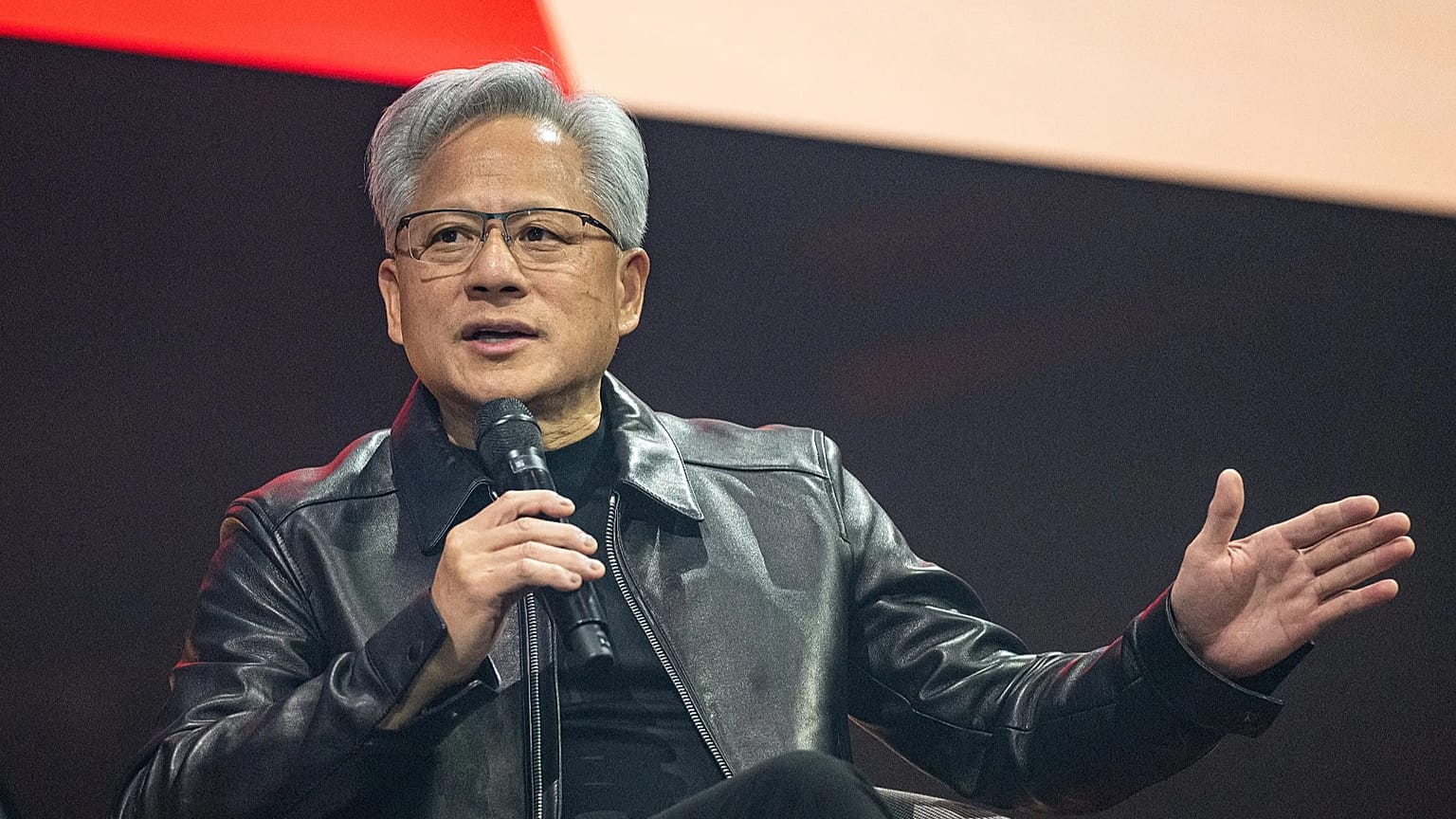
The support illustrates the unique standing of the leather-jacketed executive, who is seen as a godfather of AI within the industry.

Under his leadership, Nvidia became a pivotal Silicon Valley investor, financing data centers and startups, earning it the nickname "the central bank of AI."

But the company has also faced criticism that it has fueled a speculative investment bubble.

Huang championed open AI models, including Chinese ones, and fought any constraints on the AI race, clashing on these issues with Claude creator Anthropic and its chief Dario Amodei.

According to the Financial Times, Huang has discussed a possible return with people close to him, and one of his allies says he is assembling a crisis team of executives to seek White House support.

On Friday, two major shareholders, investors Brad Gerstner and Gavin Baker, urged the board to keep "all options" open.

In Washington, however, US Treasury Secretary Scott Bessent argued Sunday that Nvidia should look "outside" the company for its next chief.

"They need a dramatic shake-up," Bessent said on Fox News, demanding that the company explain whether it had knowingly turned a blind eye to the smuggling of its chips to China.

(FRANCE 24 with AFP)


Portugal plans support for vulnerable families and microenterprises to buy electric cars


Copyright AP Photo

By Joana Mourão Carvalho
Published on 17 November 2026 - EURONEWS


Will subsidies for buying electric cars make mobility more sustainable in Portugal? The measure aims to help vulnerable families but raises doubts about running costs, reliance on private cars and EU policy towards Chinese competition.

The most vulnerable families and microenterprises in Portugal will be entitled to support for the purchase of electric cars. The announcement came at the beginning of November, during the debate on the State Budget for 2027, when the environment minister, Maria da Graça Carvalho, said that the government would support the purchase of more than 20,000 vehicles, intending to cover up to 80% of the value of the vehicle, up to a maximum of 15,000 euros.


The announcement raised questions from the outset. The details of the measure are still not fully known, also because final approval by the European Commission is still needed, since this support is included in the Social Climate Plan, with an estimated allocation of 104.5 million euros to subsidise the purchase of around 5,500 vehicles by the poorest families in a first phase, a target that could grow by about another thousand units during the negotiations still under way in Brussels.

The aim of the programme, and of this measure in particular, is "to combat energy poverty and promote more accessible and sustainable mobility", focusing on vulnerable families, "more exposed to the impacts of rising fossil fuel prices".

Thus, the government expects "to support the electrification of mobility of 5,500 vulnerable families" and "around 9,000 microenterprises".

According to the environment minister, the government chose to focus on vulnerable families because Portugal is one of the European countries where lower income households have more vehicles of their own. The average is around 20%, Maria da Graça Carvalho said, rising to 24% in rural areas. In the outskirts of large cities it is around 23%. These are generally older cars, with high carbon emissions, which the government wants to see replaced.

With regard to rural areas in particular, the minister stressed that people have a car "because they need one" and because "public transport does not solve problems in low-density regions".

Who is the support for?

According to the government, in total, 1.5 million households may be covered by this measure. First of all, it is aimed at beneficiaries of the social electricity tariff. There are about 750,000 families and they will have priority when applications are assessed. Then there are households with incomes below 80% of the national median income, that is up to 11,572 euros a year.

How much is the support worth?


The amount of funding has not yet been finalised and may range between 70% and 90%, but the Environment Ministry indicates that it should be 80% of the value of the vehicle. The amount of support can be increased by 1,000 euros if an old vehicle is handed in to be scrapped. There will also be support for buying chargers.

In addition, in the case of vulnerable families, VAT will not be borne by them, said (source in Portuguese) the environment minister in an interview with Rádio Observador. According to Maria da Graça Carvalho, VAT will be covered by other funding.

"It is not the programme that covers it, but we have other funding for VAT. And we do not require scrappage [of an old combustion car]. It is the only case in which we do not require scrappage. Why? Because in that way they [low-income families] can sell the car. So in this model between 2,000 and 3,000 euros are left for the family to pay. And therefore, if the family manages to sell the old car for 2,000, 3,000 euros, it can swap it for an electric car without having to put in its own funding [to make up the 20%]," she explained.


Environment minister announced last week a VAT exemption for low-income families when buying electric cars Maria da Graça Carvalho/Facebook

Families will be able to receive a maximum of 15,000 euros per vehicle. There will also be a cap on the price of vehicles that can be bought with the support. The programme will accept applications to buy electric vehicles costing up to 37,500 euros, new or used and less than five years old, because of battery life, as long as they are bought from a dealership, that is they cannot be bought from private sellers.

Payment will be made through a voucher system, as happens with the E-Lar scheme created by the government to replace gas cookers and water heaters, and there will be no need to pay money up front when buying the vehicle.

After buying the car with the support, can it be sold straight away?

Vehicles bought under this support scheme cannot be sold before three years have passed.

And what is planned for companies?

Maria da Graça Carvalho also said that the government will support, with 228 million euros, around 9,000 microenterprises, with a turnover of up to two million euros and fewer than 10 workers, in buying 13,700 electric vehicles, and companies will be able to apply for one or two cars. In this case the subsidy will cover up to 100%, excluding VAT.

Microenterprises will also be required to hand in one vehicle to be scrapped for each electric vehicle they buy. In addition, to qualify for support to buy electric cars they must also prove that fuel accounts for at least 5% of their expenditure.

And for public transport?

Electrification will also reach public transport. Co-financing worth 125.5 million euros is also planned for the purchase of 700 electric buses for low-density areas, intended for example for the mobility of workers and students and for transporting patients in these territories.

This funding includes buying charging infrastructure and shelters by the transport authorities.

Is electrifying private cars the best way to solve the problem?

Despite the environmental and social objectives of the measure, there are questions about how effective it will be and about the impact it may have on mobility patterns in Portugal.

António Alvarenga, a professor at Nova School of Business and Economics (Nova SBE), speaking to Euronews, believes that the incentive to buy electric vehicles may represent a positive step towards decarbonisation, but warns of some contradictory effects that need to be taken into account.

From an environmental point of view, the professor draws attention to the risk that the measure will encourage behaviour that produces a result opposite to what is intended. He gives as an example a family that until then used public transport or soft mobility options such as bicycles every day but, encouraged by state support, starts to use a private car. In that scenario, instead of reducing emissions, the incentive could help to increase them by replacing more sustainable ways of travel with a more polluting individual solution.

However the issue is not limited to vehicle emissions. Alvarenga believes that it is also necessary to assess the impact of the measure on road traffic volumes. By encouraging the purchase of electric cars, the government is promoting a change in the technology used, but not necessarily a reduction in the number of cars on the road.

On the contrary, by making it easier to buy a private car, the support may help to maintain or even increase dependence on individual transport, without resolving structural problems such as congestion, the use of public space and pressure on infrastructure.

For the professor, the energy transition should not focus exclusively on replacing combustion cars with electric vehicles. Reducing dependence on private cars remains one of the key challenges for a truly sustainable mobility policy.

Should the priority be buying cars or strengthening public transport?

Using public funds to subsidise the purchase of private cars also raises the question of investment priorities. In particular when there are other structural needs still to be addressed, such as strengthening public transport, rail and mobility solutions in suburban and rural areas.

Even so, António Alvarenga believes that, despite the limitations identified, "it is better to go ahead with this measure than not to go ahead with any".

The professor acknowledges that the incentive to buy electric vehicles does not solve Portugal's structural mobility problems, but believes that it can represent a positive step towards decarbonisation. In his view, the search for an ideal solution should not prevent the implementation of measures which, even if insufficient, may produce results.
How can the government ensure that the support leads to a real improvement in these families' mobility conditions?

Another challenge relates to the conditions needed to use an electric vehicle on a daily basis, especially for lower income families.
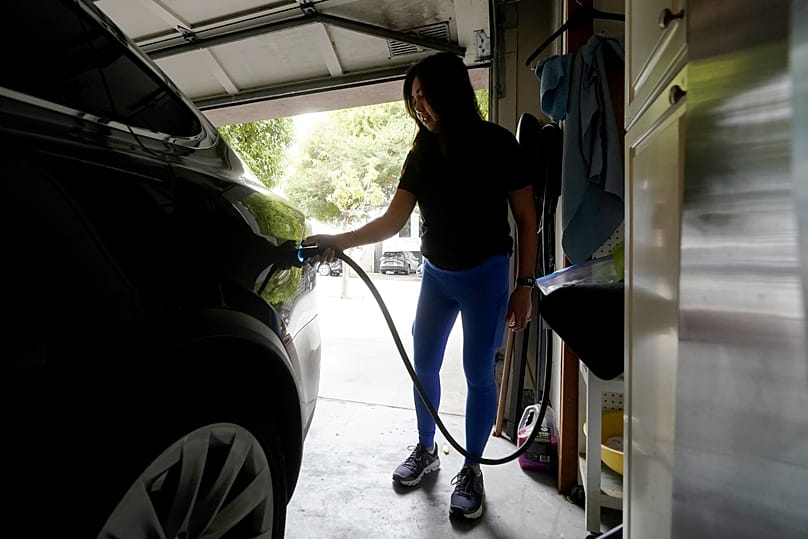
Even if they receive significant support when they buy the car, not all families have a garage or access to a private charging point, leaving them dependent on the public network.

On this point, Alvarenga draws attention to weaknesses in the current public charging system, which he considers not very transparent in terms of costs, with high prices and not very intuitive to use. The multiplicity of operators and the need to use different cards and apps make the network particularly complex for users.

Thus, although access to a car may be made easier by the subsidy, using it still represents a financial and logistical burden that may penalise precisely the families the measure is intended to support.

Not all families have a garage or access to a private charging point AP Photo


The risk that dealerships will absorb part of the subsidy

There are also questions about how public incentives may influence the sale price of electric vehicles.

António Alvarenga warns of the possibility that dealerships will adjust prices according to the amount made available by the state, absorbing part of the benefit that should reach consumers.

In that scenario, the subsidy may not translate into a real reduction in the financial effort required from families, instead benefiting sellers and manufacturers. This is therefore a risk that raises questions about how effective the measure is and about the monitoring mechanisms needed to ensure that public support really reaches its target groups.

Can electric cars made in China also benefit from the support?

Another issue raised by the Nova SBE professor concerns the origin of the vehicles that may benefit from Portuguese incentives.

Based on the criteria published by the government, only six electric cars are eligible for support for purchase by lower income families, and with the exception of the Citroën ë-C3 and the Renault Twingo they are all made in China.

The choice is even more limited when the 15,000 euro threshold is taken into account. Only three cars sold in Portugal fit within the price limit. Only the most affordable version of the Dacia Spring, priced at 13,740 euros, meets the threshold.

With the supplement associated with scrappage, which raises the threshold to 16,000 euros, the Leapmotor T03 at 15.284,5 euros and the Renault Twingo E-Tech at 15.845,3 euros may be added.

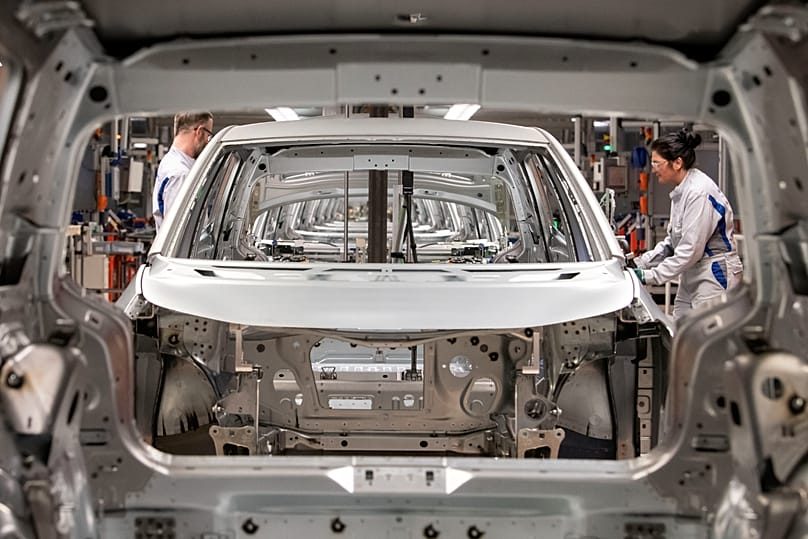
Of these three models, at least one is made in China, while the new Dacia Spring has recently started to be produced in Novo Mesto in Slovenia, on the same line as the Renault Twingo E-Tech. The first generation was made in China.


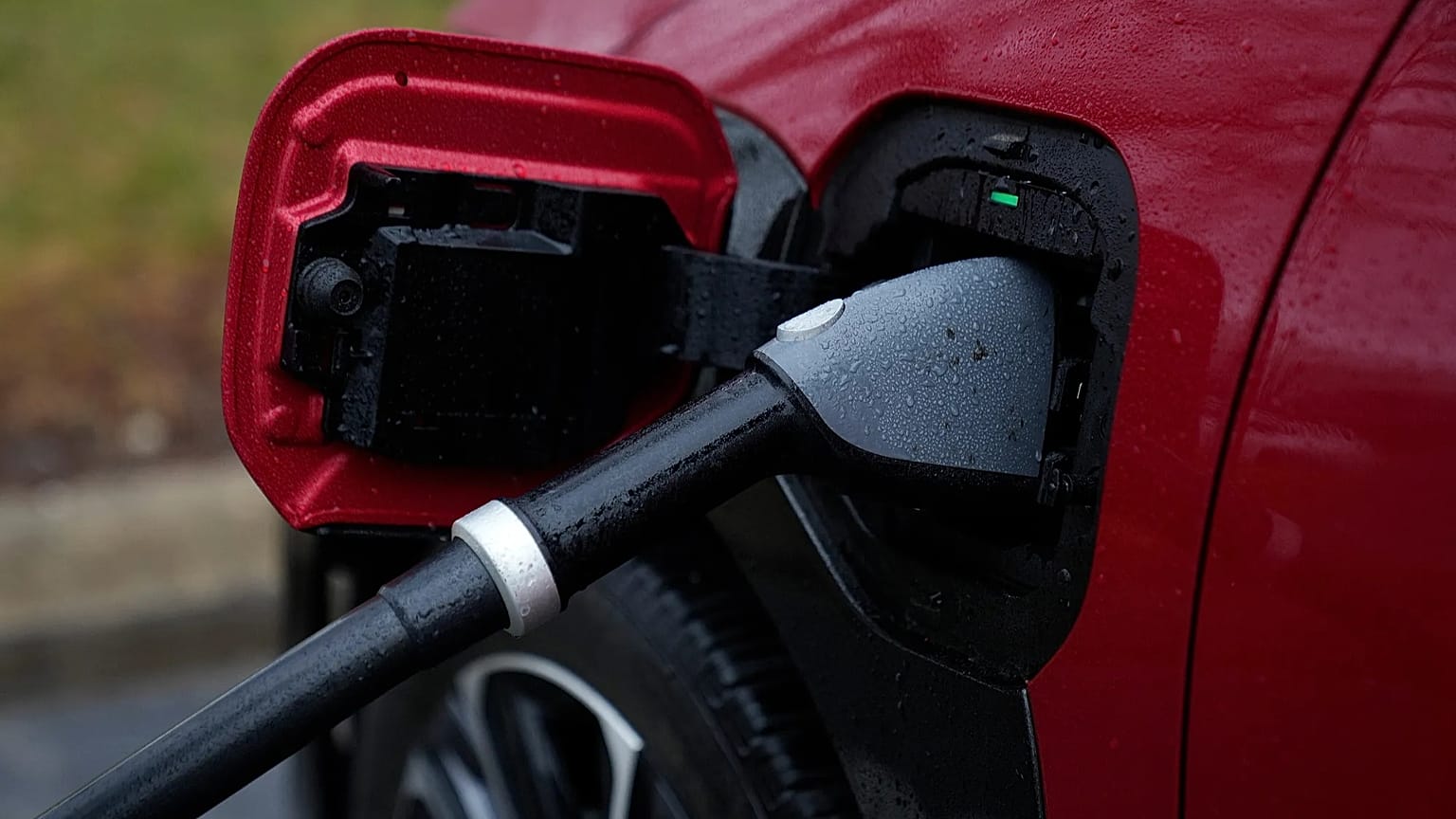
Most of the models eligible for the support scheme are made in China AP Photo

António Alvarenga accepts that public support may end up indirectly financing the purchase of cars made in China. This raises questions about the consistency between the environmental objectives of the measure and the European industrial policy, especially in a context of growing competition between European and Chinese manufacturers.

In this context the professor points to the example of France, which has adopted a different model for granting incentives to buy electric cars.

Since January 2024, the awarding of incentives for buying electric cars in France has excluded models made in China, even if they are from non-Chinese brands, because of environmental criteria and the carbon footprint associated with the manufacturing process and the energy used to make the vehicles.

The change came after the French authorities identified that around one third of the public incentives awarded were benefiting consumers who bought vehicles made in China.

The French programme represented an annual cost of around one billion euros and offered incentives of between 5,000 and 7,000 euros for buyers of electric cars. According to the French Finance Ministry, channelling a significant share of this support to cars made in China helped to increase imports and intensify competitive pressure on domestic manufacturers.

This text was translated with the help of artificial intelligence and originally published in Portuguese