yesterday
Rudaw
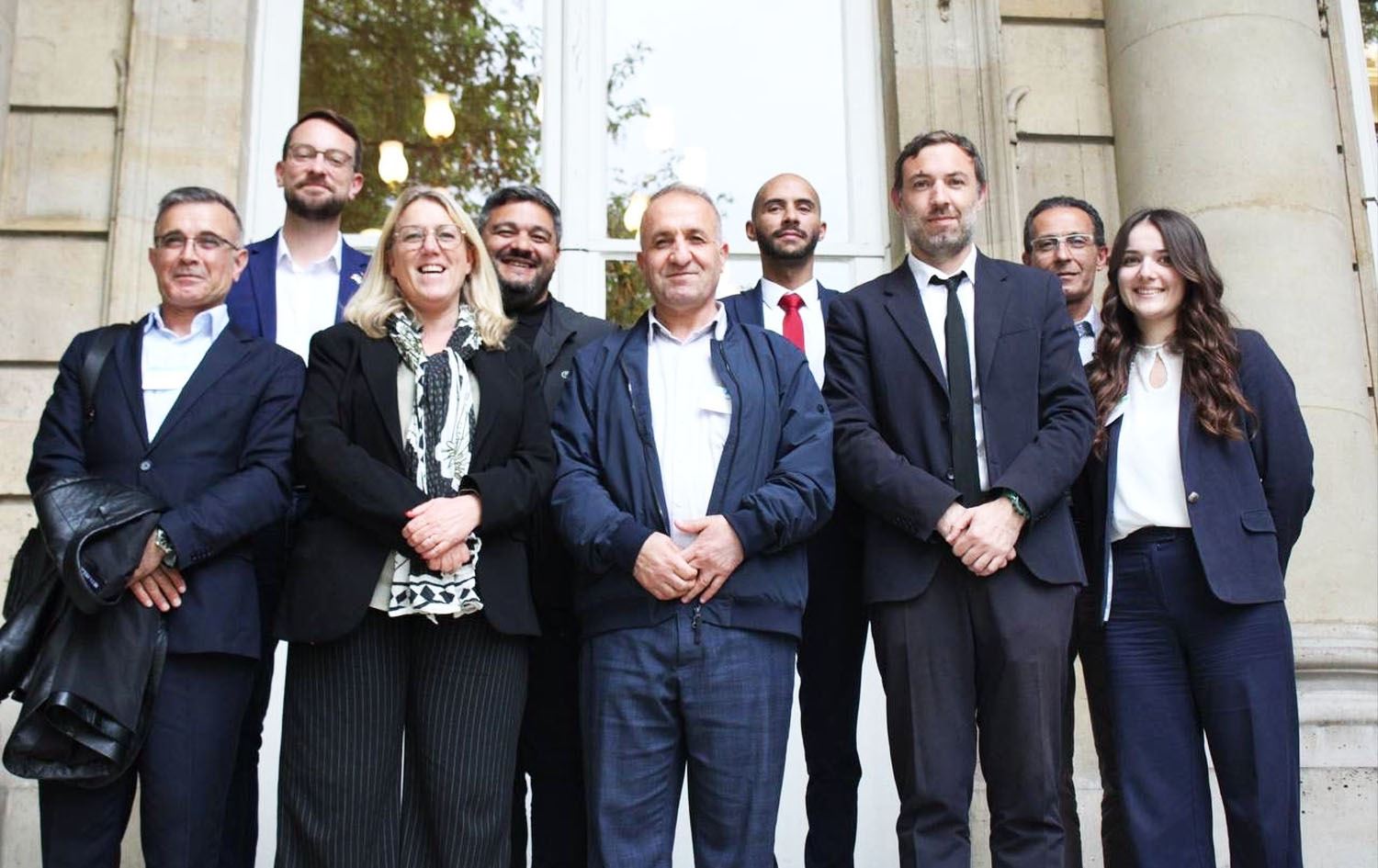
A delegation from the Kurdish administration in northeast Syria (Rojava) after a meeting with French lawmakers in Paris on May 21, 2025. Photo: Danielle Simonnet/X
ERBIL, Kurdistan Region - A delegation from the Kurdish administration in northeast Syria (Rojava) met with French lawmakers in Paris this week to strengthen support for negotiations with Damascus, according to Rojava-affiliated media.
The delegation included Bedran Ciya Kurd, an advisor to the Democratic Autonomous Administration of North and East Syria (DAANES), Karim Qamar, DAANES representative in France, and Faner Jajan, a member of the administration’s representation office in Europe, according to Hawar News Agency (ANHA).
Kurd said the meeting was part of the Rojava administration’s broader efforts to “mobilize international support to bring Syria to safety through decentralized, pluralistic democracy,” according to ANHA.
French lawmaker Danielle Simonnet, who attended the meeting, said in a post on X that Ahmad al-Omar, co-chair of the Tabqa provincial council under DAANES, told them that any lifting of sanctions against Syria “must be conditional on: the integration of all communities into the new Syria and in pursuit of all crimes recently committed against the Alawite and Druze minorities.”
The French parliamentarians called on their government to support the dialogue efforts, according to ANHA.
The Kurdish authorities have been engaged in negotiations with the interim Syrian government about their future in the country.
In late April, Kurdish political groups in Syria, in a rare unified statement, called for a decentralized, democratic system that guarantees Kurdish rights and paves the way for national dialogue.
The Syrian presidency condemned the declaration, arguing it contradicted a March 10 agreement signed by interim President Ahmed al-Sharaa and Mazloum Abdi, commander of Rojava’s de facto army the Syrian Democratic Forces (SDF), that recognizes the Kurds as an integral part of Syria, includes a nationwide ceasefire, and outlines steps to integrate the SDF into Syria’s official military and administrative structures.
Ongoing French engagement with Rojava and Syria
France has taken an active role in supporting Syria’s transition following the fall of the former regime in December.
In April, French Foreign Minister Jean-Noel Barrot met with Abdi and Elham Ahmed, co-chair of DAANES’s foreign relations office. Discussions reportedly focused on regional stability and support for dialogue between the Kurdish administration and the Syrian government.
Earlier in May, French President Emmanuel Macron received Sharaa in Paris on his first visit to Europe since taking office. The meeting reaffirmed France’s support for Syria’s political transition and respect for its territorial integrity.
Macron also said that the European Union would begin gradually lifting sanctions on Syria, contingent on progress in forming an inclusive government and safeguarding minority rights.
While maintaining cautious optimism, Paris has emphasized the need for inclusive governance and accountability for recent violence targeting minority groups.
In April, France condemned sectarian clashes south of Damascus that left over 100 dead, mostly from the Druze community.
Several Western countries, including France and Germany, have warned that the easing of sanctions must be tied to political reforms and power-sharing agreements that ensure equal representation for all ethnic and religious groups in Syria.

No comments:
Post a Comment