Apply the NPT to All Nations Equally
This is a case of awakening Iran to really the full deceit and the full evil that is represented by Israel and the United States and Europe in my view this uh you know the history of the last 60 years for my country I’m ashamed of it. You know my country was supposed to be a place of freedom and liberty and promoting freedom, instead we become agents of murder and mayhem, and we kill foreigners with no regard whatsoever and then wonder why people don’t like us.
— Larry Johnson, “IRAN STRIKES ISRAEL: Rockets Rain Down on Tel Aviv, Haifa, Eilat & More!” Dialogue Works, 16 June 2025
Because of nuclear weapons, and because a lot of countries have a lot of them, we [the United States] can’t defeat those countries. So the world is intrinsically multipolar in the sense: don’t mess with another nuclear superpower [it] can really wreck your day.
— Jeffrey Sachs, “Washington has the delusion it still runs the show,” Al Jazeera.
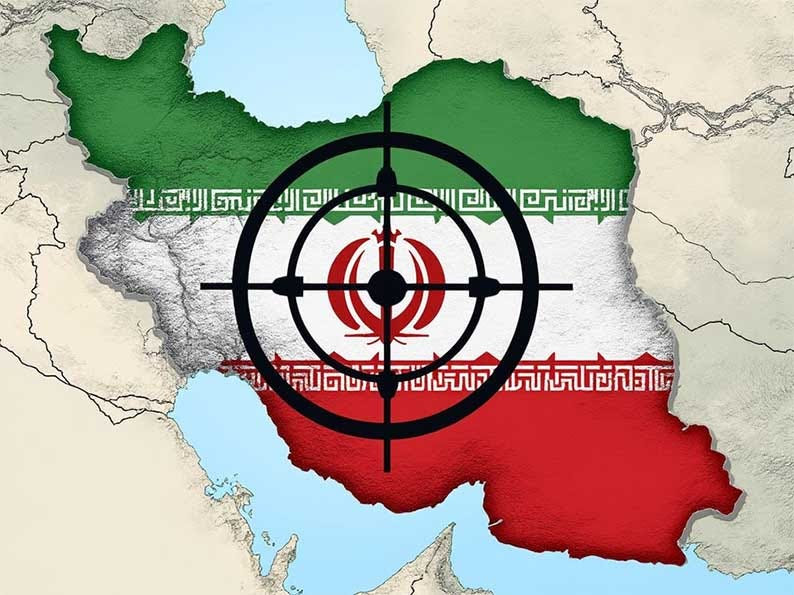
Columbia University economics professor Jeffrey Sachs restates an often heard and obvious maxim that speaks to nuclear deterrence. Military analyst Scott Ritter seems to dissent from the maxim of nuclear deterrence. In a video dated 15 July 2025, Ritter says, “Developing A Nuclear Weapon Will Be THE END Of Iran!”
“I’ll tell you, the quickest way to get America to drop nuclear bombs on Iran is for Iran to develop a nuclear weapons program. Iran will not be allowed to have a nuclear weapon. That will not happen. No matter how much people think it’s justified, and all this. it won’t happen uh the United States has made it clear that, it’s uh, it’s red line for it using nuclear weapons against Iran is an Iranian nuclear weapon.”
“I turn to the Iranians and say: why then do you want to posture as a nuclear threshold state knowing that if you ever cross that line you bring about your inevitable destruction as a nation [by the US] …”
Yet, in a subsequent video, on 16 July 2025, Ritter seems to contradict himself, saying: “The Iranians are ready for what the United States can bring to bear.”
Ritter also admits, “The Israelis know that the Iranians don’t have a nuclear weapons program. They know it.”
Ritter complains, “Iran is being grossly irresponsible for going beyond that which is necessary for um doing its legitimate peaceful [nuclear] program.”
Providing one’s nation, a nation which is constantly threatened, with an effective military deterrence is irresponsible? Ritter ignores that Israel has been biting at the bit for several decades to attack Iran on the pretense that it is acquiring nuclear weapon capability… a similar trajectory that Israel undertook to acquire its nuclear weapons capability.
Ritter is flummoxed as to why Iran would pursue enrichment beyond 20% calling it “waving the red flag in front of the Israeli bull.” Well, that Israeli bull did not need a red flag to launch an illegal war, a cowardly war, and that is what a war is when you just sneak up to attack without the courage to first declare war.
Ritter’s argument is regressivist unless he applies the nuclear standard to all countries.
A US nuclear attack on a nuclear armed Iran would also threaten the end of the US as a self-preening beacon on the hill — if it isn’t already in the eyes of people around the world.
Why doesn’t an intelligent analyst like Ritter argue for every nuclear-armed nation to accede to Article 6 of the Nuclear Nonproliferation Treaty instead of focusing his ire solely on a perpetually targeted Iran. If not, it comes across as prejudiced and discriminatory.
The Middle East as a Zone Free of Nuclear Weapons
Why the focus ought to be on Israel, not Iran. Israel has 90-400 nuclear weapons. Here is what a simple AI dialogue yields. Any journalist could do it. No one does.
The UN General Assembly Resolution that declares the Middle East a zone free of nuclear weapons is UN General Assembly Resolution A/RES/76/30.
Title: Establishment of a nuclear-weapon-free zone in the region of the Middle East.
Date: Most recently adopted on 6 December 2021 (and reaffirmed annually with updates)
Original Adoption: First introduced in 1974 (Resolution A/RES/3263 (XXIX))
This resolution:
- Calls for the establishment of a nuclear-weapon-free zone (NWFZ) in the Middle East.
- Urges all states in the region to place all their nuclear activities under International Atomic Energy Agency (IAEA) safeguards.
- Reaffirms that the non-proliferation of nuclear weapons in the region contributes to international peace and security.
While it is not legally binding, it reflects strong international consensus and is reaffirmed annually by the UN General Assembly, usually with overwhelming support.
*****
Connection to the Non-Proliferation Treaty (that Iran has signed but not Israel):
The Treaty on the Non-Proliferation of Nuclear Weapons (NPT), particularly Article VII, encourages the establishment of regional nuclear-weapon-free zones (NWFZs). The idea of a Middle East NWFZ was first proposed in the 1974 General Assembly Resolution A/RES/3263 by Egypt and Iran.
Here’s how they relate:
- NPT Commitments:
- Non-nuclear-weapon states under the NPT agree not to develop or acquire nuclear weapons.
- Nuclear-weapon states (U.S., Russia, China, UK, France) agree to pursue disarmament and to help non-nuclear states use nuclear energy peacefully.
- Middle East NWFZ Goal:
- The NWFZ resolution builds on this by aiming for a region-wide ban on nuclear weapons, addressing concerns that Israel, which is widely believed to possess nuclear weapons but is not a party to the NPT, remains outside the regime.
- 1995 NPT Review Conference Resolution:
- A key decision during the 1995 NPT Review Conference extended the NPT indefinitely conditioned on progress toward a Middle East NWFZ.
- This made it a political obligation, especially for the nuclear-weapon states, to facilitate such a zone.
UNGA Voting on Resolution A/RES/76/30 (Example from 2021)
This resolution is adopted annually with wide support. Here’s how the 2021 vote (Resolution 76/30) went:
- Votes in Favor: 178
- Votes Against: Israel
- Abstentions: United States
 Notable Positions:
- Israel: Votes against the resolution every year. It has not signed the NPT and maintains a policy of nuclear ambiguity.
- United States: Typically abstains, citing that such initiatives should include all regional states in negotiations, and often expressing concern that the resolution singles out Israel.
- Arab States, Iran, and many others: Strongly support the resolution, viewing it as essential for regional and global security.
- Despite the repeated UNGA resolutions and support from nearly all states, the Middle East remains the only region without a NWFZ, largely due to:
- Lack of regional consensus.
- Israel’s position on nuclear weapons and refusal to join the NPT.
- Security concerns among Gulf states.
Here is Wikipedia’s very comprehensive account of Israel’s nuclear weapons and how it acquired them. It seems to have between 90 and 400 nuclear weapons.

No comments:
Post a Comment