50° “edge of survival” heat hits Turkey for first time in recorded history

Turkey was hit by a scorching temperature of 50° Celsius for the first time in recorded history on July 25.
“This is climate change, and it’s accelerating,” was the response from weather site Met4Cast.
“This isn’t just a heatwave, It’s the edge of human survival. In low humidity just 30 minutes of exposure risks heat stroke. Increasing humidity shortens that time,” it added.
The record-shattering temperature was measured at 50.5° Celsius (122.9 degrees Fahrenheit) in Silopi, Sirnak province, near the border with Syria, by the Turkish State Meteorological Service. The highest ever temperature recorded in Europe is the 48.8° Celsius experienced by Sicily, Italy, in August 2021.
As the Turkish government declared disaster zones in two western provinces ravaged by devastating wildfires fanned by strong winds that have already taken the lives of at least 13 people, the country’s president, Recep Tayyip Erdogan said the country faced “a truly great disaster”.
Tens of thousands of Turks were voluntarily working with hoses and buckets alongside firefighters to contain hundreds of fires as evacuations of residents from threatened localities continued.
The Turkish meteorological service said that on July 25 temperatures exceeded 40° Celsius in 31 provinces. Nationwide temperatures were running six to 12 degrees above seasonal averages.
Bianet reported that two conscripts of the Iskenderun Naval Infantry Training Battalion in the southern province of Hatay died from dehydration during basic training, while five others were hospitalised.
The tragedy followed the July 23 announcement that 10 forestry and rescue workers had perished while battling wildfires in Turkey's central Eskisehir province. A change in the direction of the wind left 24 forest workers and volunteer rescue personnel "trapped inside a fire", Turkey's Agriculture and Forestry Minister Ibrahim Yumakli said.
Ahead of July 23, resident’s of Istanbul, a city of more than 16mn, were advised to stay indoors due to forecast extreme record heat.
New wildfires broke out on Turkey’s Mediterranean coast. Images showed flames and smoke billowing into the sky close to high-rise apartment buildings in Antalya, a top tourist draw for local and foreign visitors during the summer months. Homes were evacuated in the city centre and the outlying district of Aksu, DHA reported.
Antalya Governor Hulusi Sahin said that the fires were under control except for one in Aksu, which was “showing a tendency to grow,” and another in Gazipasa, east of Manavgat, the Associated Press reported.
“The fires were truly disturbing and dangerous, because they occurred in city centres, among houses,” he was reported as saying. “We evacuated some of our homes ... There are no deaths or injuries.”
At 46.1° Celsius, the July temperatures in the city of Antalya were the highest registered for the month since records began in 1930.
If such heatwaves and wildfires become the norm in Turkey in years ahead, the future of the country’s tourism industry, vital to the economy in terms of raising FX revenues, could start to look precarious.
Interior Minister Ali Yerlikaya said that western province Izmir and northwestern province Bilecik were declared “disaster zones affecting public life”. The classification is one step below the most serious level of “emergency zone”.
In a social media post, he said 311 homes had been destroyed or seriously damaged during the month-long outbreak of wildfires.
Officials said that across the country 27 planes, 105 helicopters and 6,000 ground vehicles were in service fighting the wildfire disaster.
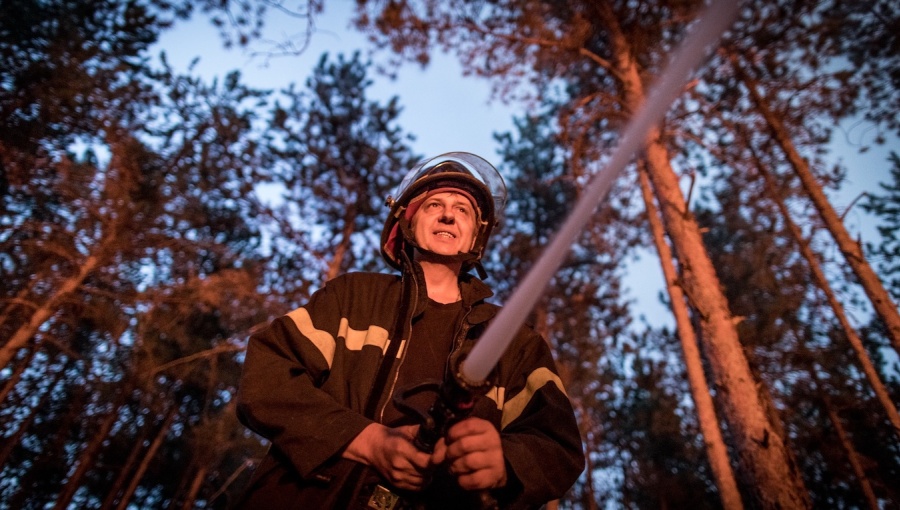
Bulgaria has requested air assistance from the European Union to tackle raging fires caused by the heatwave that is spreading over the country, the Ministry of Interior said on July 26.
The country has asked for four planes under the European mechanism for civil protection as it is unable to put under control the fires in the areas of Strumyani and Trun, Deputy Interior Minister Toni Todorov said.
He added that the situation was most severe in these two areas. In the Strumyani municipality, a fire above the village of Ilindentsi is growing and has been spreading on over 600 hectcares of forest, Mediapool news outlet reported.
Although hundreds of firefighters and volunteers, as well as two helicopters have been trying to put that fire under control, a stronger wind in the afternoon of July 26 worsened significantly the situation.
Five people were evacuated from Ilindentsi as two houses were under fire.
In Trun, the fire is spreading over three villages, which are being evacuated. According to Mediapool’s unofficial information, the fire started from agricultural equipment but grew fast because of the heat and the strong wind. There is a risk for that fire to spread to neighbouring Serbia.
Another fire broke out on the road between the city of Burgas at the Black Sea coast and the city of Malko Tarnovo. The road was closed but there is no risk for citizens living in the area for the moment.
Several other smaller fires broke in Bulgaria on July 26.
Greece gets EU help to battle disastrous wildfires
Issued on: 27/07/2025 -
Greece battled wildfires that have ravaged homes and sparked evacuations for a second day on Sunday, with the help of Czech firefighters and Italian aircraft expected to arrive later. Story by Eliza Herbert.
Video by: Eliza HERBERT
Greece: Wildfires continue to burn with danger mounting

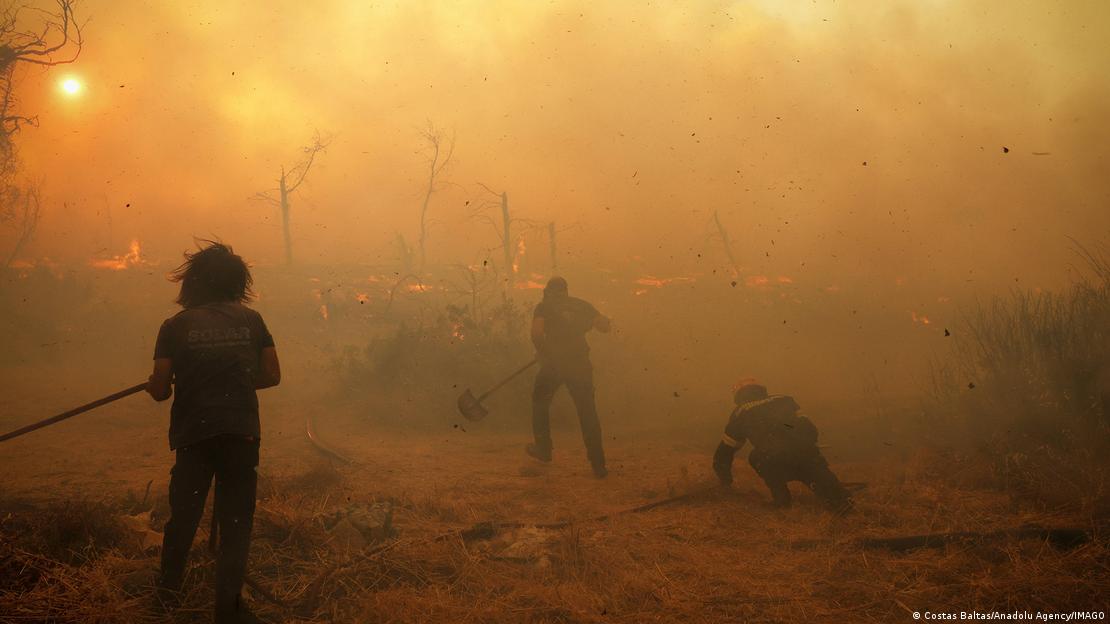
Greece is continuing to battle wildfires that have destroyed homes and sparked evacuations for a second day.
Fires were still raging Sunday morning in the Peloponnese area west of the capital, as well as on the islands of Evia and Kythera, with aircraft and helicopters resuming their work in several parts of the country at dawn.
"Today is expected to be a difficult day with a very high risk of fire, almost throughout the territory", fire brigade spokesman Vassilis Vathrakogiannis said, though he added that the situation was improving.
Tourist island Kythera 'half burned'
Forecasters predicted the strong winds that have fanned the flames would die down later on Sunday in most areas but warned that Kythera, an popular tourist island with 3,600 inhabitants, continued to face "worrying" windy conditions.
When the blaze began on Saturday morning it forced the evacuation of a popular tourist beach.
On Sunday morning evacuation messages were sent to people on the island, which lies off the south-eastern tip of the Peloponnese, with half of the island having been burnt according to the deputy mayor of Kythera, Giorgos Komninos.
"Houses, beehives, olive trees have been burnt," Komninos told state-run ERT News channel. "A monastery is in direct danger right now."
Dozens of firefighters, including units frim the Czech Republic, were supported by three helicopters and two aircraft. Two Italian aircraft are expected to assist later on Sunday.
Multiple regions at high risk of fires
According to officials, eleven regions of Greece still face a very high fire risk. There were numerous flare-ups overnight on the island of Evia, near Athens, where the flames have laid waste to swathes of forest and killed thousands of farm animals.
Workers have been trying since dawn to repair serious damage to Evia's electricity network and some villages were facing problems with water supply.
Further south on Crete, reports said fires that broke out on Saturday afternoon and destroyed four houses and a church but had now largely been contained.
Meanwhile, police were reportedly bolstering forces in Kryoneri, north of Athens, with fears looters could target houses abandoned by their owners fleeing a fire that erupted on Saturday afternoon but that was mostly contained on Sunday.
Consistent extreme weather across country
Greece has endured heatwave conditions for almost a week, with temperatures passing 40 degrees Celsius (104 degrees Fahrenheit) in many areas.
On Saturday, the temperature reached 45.2C in Amfilohia but the extreme heat is expected to lessen from Monday.
Last month, fires on Greece's fifth-biggest island Chios, in the northern Aegean, destroyed 4,700 hectares (11,600 acres) of land, while earlier in July a wildfire on Crete forced the evacuation of 5,000 people.
The most destructive year for wildfires was 2023, when nearly 175,000 hectares were lost and there were 20 deaths.
Edited by: Saim Dušan Inayatullah
France registers a record 480 excess deaths during early summer heatwave
The early summer heatwave that affected 60 French departments between 19 June and 6 July led to a record 480 excess deaths, a rise of 5.5 percent compared to normal mortality levels, the country's public health agency has announced.
Issued on: 27/07/2025 - 
People aged 75 and over accounted for almost all the excess deaths during the heatwave – 410 of those recorded in the affected areas, Public Health France said.
It added that the "notably long and unusually early heatwave" had impacted nearly three-quarters of the population.
This initial count will later be supplemented by an estimate of deaths specifically attributable to heat, to be included in a broader report due after 15 September, the agency noted.
The calculation of excess mortality is based on all-cause death data collected from civil registry offices and transmitted by France's national statistics bureau Insee, compared with the expected number of deaths based on figures from the previous six years.
What does 50C feel like? Touring ‘heat chamber’ allows French people to find out
The region with the highest number of excess deaths was Provence-Alpes-Côte d’Azur (PACA), which covers the south east of the country. It saw at least 140 additional fatalities (representing a rise of 9.2 percent).
Public Health France published a map of excess deaths by department but cautioned during a press briefing that a significant percentage increase in areas with small populations – and thus small absolute numbers – may not always be statistically meaningful.
Three regions – Corsica, Hauts-de-France in the north of the country and Île-de-France, the region surrounding Paris – recorded no excess deaths during the heatwave period.
The agency said that the figures underscore "the importance of implementing preventative measures to reduce the impact of heat, not only during heatwaves but throughout the summer". It stressed “the need for a reinforced climate adaptation strategy at both national and local levels”.
The agency also added that, according to its 2014-2023 data, 70 percent of heat-related deaths during the summer occurred outside officially declared heatwave days.
Climate change pushed temperatures in latest European heatwave up by 4C
(with AFP)

No comments:
Post a Comment