Marine heatwaves may have driven the world’s oceans to a critical tipping point, scientists warn
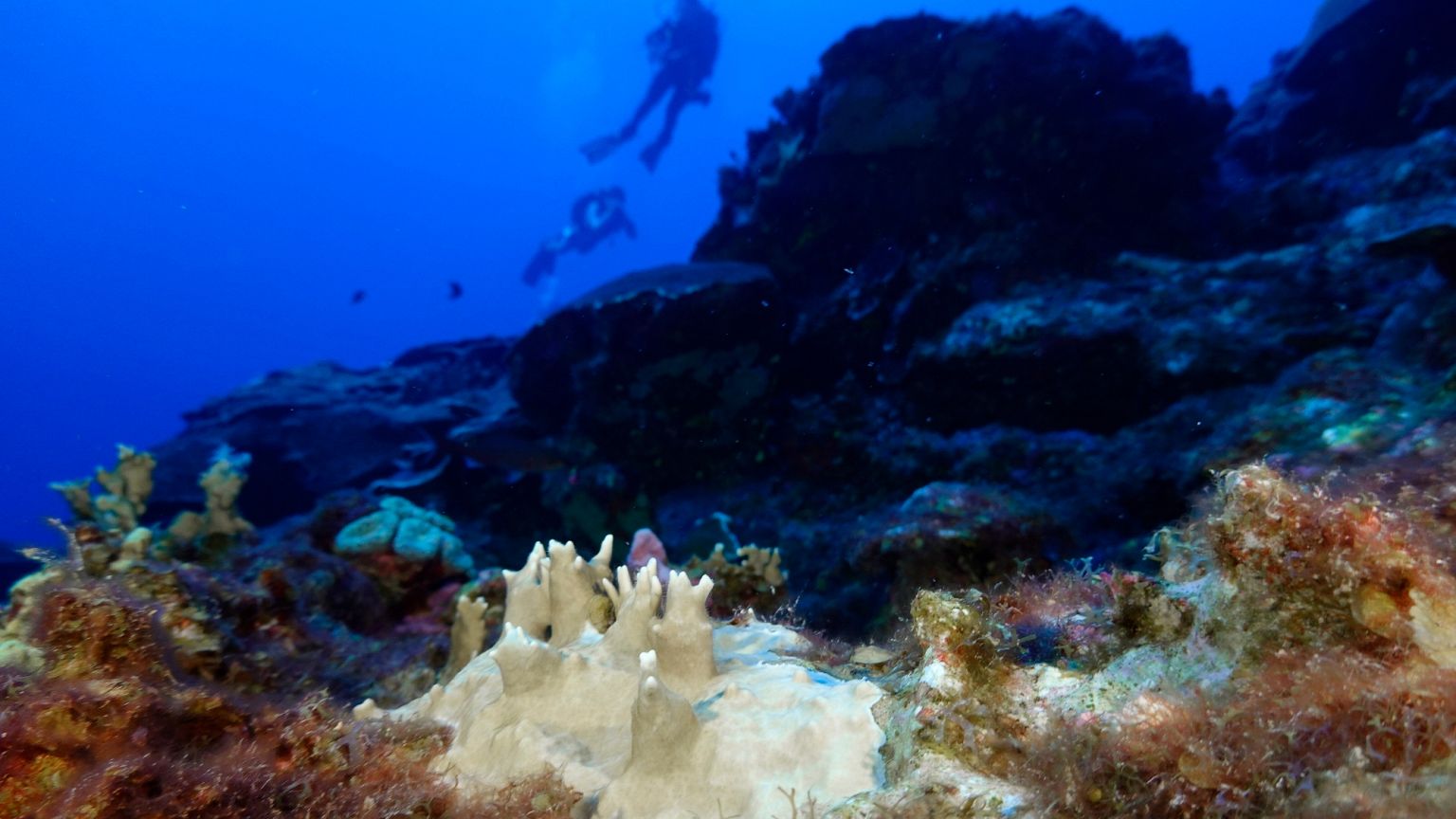
Scientists fear the oceans’ prolonged hotter state is now the ‘new normal’.
In 2023, the Earth experienced an unprecedented surge in marine heatwaves across its oceans.
They set new records in intensity, geographic extent, and duration, with many lasting well over a year and 96 per cent of the ocean surface affected.
Following new research, scientists now warn that these prolonged temperature spikes might herald a tipping point for the world’s oceans with grave consequences for the planet.
Earth’s oceans may have undergone a fundamental shift
In 2023, heatwaves resulted in both the North Atlantic and Southwest Pacific oceans experiencing record-breaking sea surface temperatures.
“We know that marine heatwaves have become increasingly common and more intense over time because of global warming. We also know that the El Niño that kicked off in 2023 allowed more heat to enter the ocean,” says climate research scientist Alex Sen Gupta from the University of New South Wales.
“But these factors alone can't explain the incredible scale of the jump that began in 2023.”
Scientists from China, the USA and Thailand decided to investigate what was behind the extreme warming and what ramifications it has and could have in the future.
The research found that reduced cloud cover, whih allows more solar radiation to reach the water, was a key driver, alongside weaker winds that diminish cooling from evaporation, and changing ocean currents.
While the paper doesn’t explain why these influences coincided to smash temperature records, it highlights why it is critical to dedicate more research to the mechanics of ocean warming.
The study voices scientists’ fears that the Earth’s oceans have undergone a fundamental shift, transitioning to a new, hotter state that they say is now the ‘new normal’.
Author Zhenzhong Zeng, from the Southern University of Science and Technology in China, said figures suggest heat in the world’s oceans is accumulating exponentially.
If this is indeed the case, it is a trend that would go against what current climate models have projected.
Ocean warming has devastating effects on marine ecosystems and life on land
The study also warns that the oceans’ shift to a permanently warmer state could have devastating effects for life on Earth.
This is because they play a central role in regulating global temperatures by storing and slowly releasing large amounts of heat.
Because the oceans take more time to react to changes than the atmosphere, the effects of heatwaves can be both delayed and dramatic.
This includes hampering the ability to predict short-term extreme weather events, such as hurricanes, and longer-term climatic changes.
Prolonged increased water temperatures would also be catastrophic for marine ecosystems, triggering mass die-offs or migrations of species.
It also increases the chances of coral reef collapse - a concern not least because the loss of coral hinders the ocean’s ability to sequester carbon, leading to more heating.
On land, it would mean accelerated warming, as sea breezes carry hot air inland. This can cause more intense and widespread droughts, heatwaves, wildfires and storms.
This was already evidenced by Storm Daniel in 2023, which killed nearly 6,000 people. Attribution studies found that it was made 50 times more likely and 50 per cent more intense by high sea surface temperatures in the Mediterranean.
Are marine heatwaves becoming the new normal?
The findings are particularly worrying given the subsequent heatwaves in 2024 and 2025 that boiled oceans around the world.
This year, sea surface temperatures in the Mediterranean reached their highest level ever recorded for June.
On 29 June, sea surface temperatures hit 26.01°C, according to data collected by Copernicus and analysed by Météo-France. Overall temperatures were 3-4°C higher than average.
It sparked fresh warnings from marine scientists of the devastating impacts on biodiversity, fisheries, aquaculture, and weather patterns across southern Europe and North Africa.
In May, a marine heatwave hit the UK, a place where surges in sea surface temperatures are still a relatively new phenomenon.
Parts of the North Sea, English Channel and Irish coast were as much as 4°C warmer than average.
Scientists say an exceptionally warm, dry spring coupled with weak winds allowed heat to build on the ocean’s surface.
They warned the flare-up could disrupt marine ecosystems, altering breeding cycles, enabling blooms of harmful algae or attracting jellyfish that thrive in warmer waters.
‘It is critical that we continue to measure, monitor and model the future of our Earth’
A fundamental shift in ocean dynamics that defies current climate models is an alarming prospect.
Some researchers have responded that the warning is premature.
“We don’t know what’s going to happen next year, and it [ocean temperatures] might just come back to something that’s much more, let’s say, normal,” Neil Holbrook, climate scientist at the University of Tasmania in Australia, told the New Scientist, adding that current research can only draw on a few years of data.
But even so, scientists back the paper’s exhortation to study the drivers of ocean warming.
“While we urgently need to reduce our GHG emissions, it is critical that we also continue to measure, monitor and model what our future Earth is going to be like,” says Jaci Brown, Climate Lead at Australia’s Commonwealth Scientific and Industrial Research Organisation (CSIRO).
“If we don’t, we can’t prepare, and we are walking into the unknown with dire consequences for our future food, health and security.”
Invasion of Asian seaweed in Cádiz: An environmental catastrophe on the beaches of southern Spain
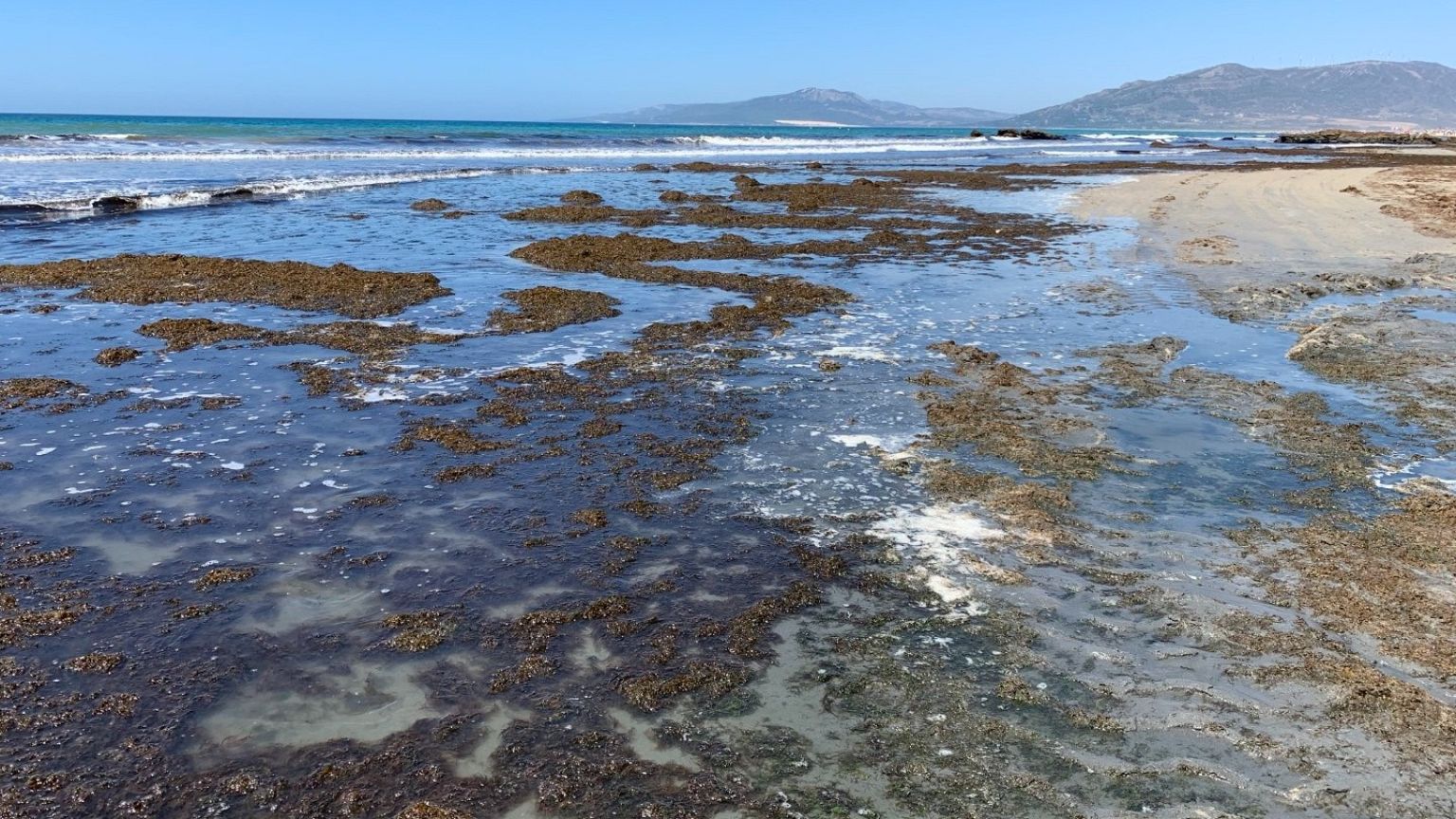
Thousands of tonnes of 'Rugulopteryx okamurae', an invasive seaweed from Southeast Asia, are accumulating on the beaches of the Strait of Gibraltar and the southern coast of Spain, constituting what local ecologists describe as a serious threat to regional biodiversity.
Since May 2025, local authorities in Cádiz have removed 1,200 tonnes of this algae from La Caleta, the city's most popular beach, including a maximum of 78 tonnes in a single day. "We are completely overwhelmed. This is an environmental catastrophe," declared José Carlos Teruel, head of beaches for the Cadiz city council, who added that every time a westerly wind blows, they know they are in for another wave of seaweed.
The species, 'Rugulopteryx okamurae', which is believed to have arrived in the ballast tanks of ships passing through the Suez Canal and unloading in the Mediterranean, has colonised the Strait of Gibraltar, much of the southern Spanish coast, the Canary Islands, the Azores and, further north, the Cantabrian Sea and the Basque Country in little more than a decade. It was first detected ten years ago in Ceuta by a researcher from the University of Malaga.
Devastating economic and ecological impact
The algae is having a significant negative impact on multiple sectors of the local economy. Tourism in Cadiz and Tarifa, a popular destination for windsurfers, is affected by the massive presence of this algae on the beaches, which also produces a very unpleasant smell. Fishing activity also suffers the consequences, as the algae trap the fishermen's nets and lines, as well as depleting the oxygen in the seawater.
The most worrying impact is on biodiversity. At La Caleta beach, the algae has displaced many native plants, and it is not yet clear whether this damage is temporary or irreversible. 'Rugulopteryx okamurae' attaches itself to rocks and other surfaces, eliminating native algal species. Its lack of natural predators in the region, combined with its ability to reproduce both sexually and asexually and to absorb toxins, makes it virtually impossible to eradicate, according to experts.
Juan José Vergara, professor of biology at the University of Cadiz, explains that in the first phase of such an invasion it can be controlled, "it's like detecting a cancer in time before it spreads". However, the current scale makes control impossible, and what reaches the beaches is only a fraction of what exists underwater.
From problem to energy resource
Currently, seaweed is dumped in landfills, which is an additional cost to taxpayers. A local company that recycles seaweed to make beverage containers or use it as fuel and fertiliser has applied for permission to use 'Rugulopteryx okamurae' as biomass for energy production.
However, Spanish legislation on invasive species prohibits their commercial exploitation unless they pose a threat to health and safety or to facilitate their eradication, conditions that would appear to apply in this case. This week, the Andalusian regional government launched a four-party plan to tackle the crisis, based on research, monitoring and education, which includes options for recycling the algae.
Although the regional government will have to negotiate with the environment ministry to use the algae as biomass, Vergara warns that even if an agreement is reached, this measure can only be part of the solution. "It is an interesting idea, but I doubt it can eradicate or even significantly decrease the intensity of the invasion when hundreds of thousands of tonnes can reach a single beach," he concludes.
France: Green algea threatens the oyster
industry in Brittany
Issued on: 27/07/2025 - FRANCE24
In France, green algae is proliferating in Brittany's Morlaix Bay, fed by farm waste and nitrogen fertilizers. Among the numerous consequences, oysters farmed in the bay are threatened. The phenomenon - undoubtedly exacerbated by global warming, threatens the livelihoods of France's oyster farmers. Story by Catherine Viette.
Video by: Catherine VIETTE
]

No comments:
Post a Comment