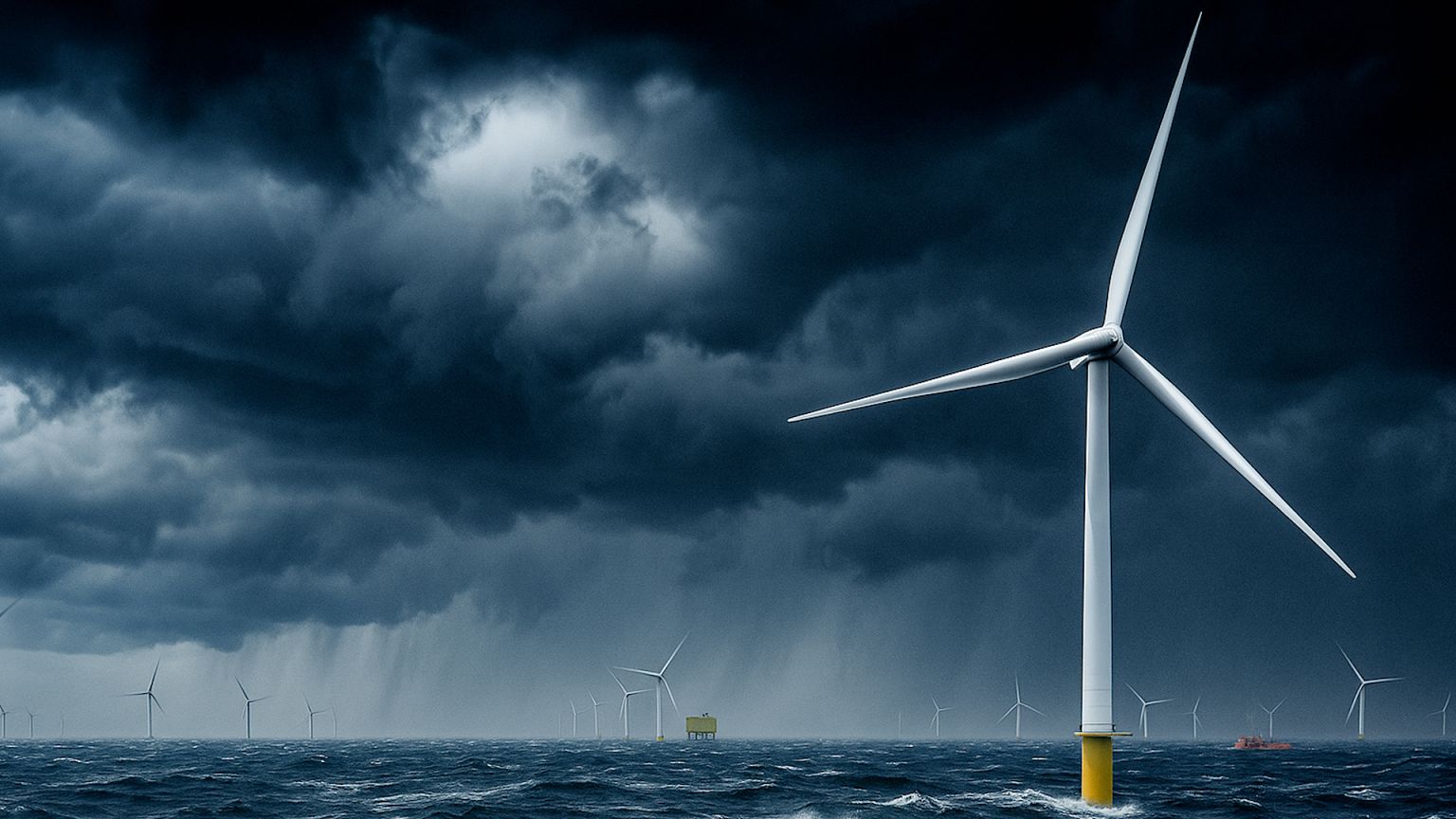
Copyright Pawel Glogowski
By Pawel Glogowski
Published on 05/08/2025
The energy transition is one of the most important challenges the European Union is facing. While the goal is clear – to achieve climate neutrality by 2050 – the road to get there is sometimes bumpy.
The struggles of the energy transition are particularly evident in the wind energy sector, which, despite its dynamic development, still faces numerous barriers.
Poland, being one of the largest CO₂ emitters in the EU, is an example of both the opportunities and the difficulties of this transition.
Coal is losing its dominance in Poland
For the first time in history, renewable energy sources (RES) in Poland trumped coal in the national energy mix. This is not a one-off incident, experts say, but a sign of a lasting shift in the country's energy landscape.
"Every day, during daylight hours, we have much more energy from RES than from coal," comments Piotr Czopek, vice president at the Polish Wind Energy Association, emphasising that the country is just entering a new chapter in its energy transition.
Renewable energy, as the cheapest source available today, can become the foundation for the future competitiveness of Polish industry in the European and global arena. Offshore wind energy plays a special role as a sector that is just coming to life.
Poland has significant wind energy potential, especially in Pomerania and the central part of the country. According to the Polish Wind Energy Association (PWEA), the installed capacity of wind farms in Poland exceeded 9 GW at the beginning of 2025.
However, the development of onshore wind turbines has been blocked for years by the '10H rule' - a regulation requiring wind turbines to be built no closer than ten times their height from the nearest buildings.
Although a 2023 amendment softened these restrictions and gave the sector a much-needed investment boost, experts warn that further reforms are still necessary to unlock the full potential of wind energy.
Wind from the Baltic is a stable source of energy
"Offshore wind energy? From the point of view of these renewables, it's the most stable source," says Czopek.
"Anyone who has been to the Baltic Sea knows that it always blows properly there."
"This makes this power industry very stable, it produces a lot of energy, on top of that, it is far away from human settlements, so no one is bothered by it. Secondly, the Baltic Sea is a relatively shallow sea, which facilitates investment," he adds.
Although no offshore wind farm in Poland is yet fully operational, the first turbines are already standing in the Baltic Sea. Construction by the Baltic Power consortium (Orlen and Canada's Northland Power) aims to create a 1200 MW farm.
Further projects will start next year, and by 2030, Poland plans to reach 6,000 MW of energy from offshore wind farms.
As experts emphasise, this is not only an energy investment – it is also an opportunity for the industry.
"We are at the initial, ascending stage. Already today, many large factories are being built in Poland – in Szczecin, in Gdansk and in other cities," Czopek says. Baltic Towers in Gdansk is just one example of a growing manufacturing base.
Importantly, Poland is attracting not only domestic companies but also global players who are opening production facilities here.
"No one will invest hundreds of millions of euros in Poland if they don't see that they can make money from this business," he emphasises.
Offshore wind energy is also an export opportunity, as turbine components, infrastructure, or design services can go to markets all over the world.
Europe: A race against time and rising costs
At the European level, wind energy is also growing in strength. According to WindEurope, EU countries installed a total of 18 GW of new wind capacity in 2024, mainly in Germany, Spain and the Netherlands.
However, the EU faces rising component costs, inflation and global competition, above all from China, which dominates turbine production.
Brussels plans to counter these trends through the European Act on Carbon Neutral Industries and strategic raw material partnerships. The aim is to increase Europe's technological and energy independence, especially given the ongoing geopolitical crisis.

Wind turbines have become a symbol of a green future and the fight against CO₂ emissions. However, questions are increasingly being asked about how much it really costs to build wind farms and whether their carbon footprint contradicts the idea of 'green energy'?
Millions of euros for clean energy
The construction of a wind farm – whether onshore or offshore – is a financially intensive undertaking. According to WindEurope, the cost of installing one wind turbine on land ranges from €1.2 to €1.6 million for each megawatt of energy-producing capacity.
For offshore or marine farms, the costs are even higher, as much as €3 to €5 million per megawatt.
The total cost includes manufacturing and transporting the turbines, the construction of the foundations, network connections (often tens of kilometres of cables), engineering and maintenance work.
Experts point out that, although wind energy is 'free', the infrastructure needed to generate it involves huge investment and technical costs.
A typical wind turbine requires around 200-300 litres of specialised oil every 1.5-2 years. For offshore farms, the logistics and labour costs can far exceed the price of the lubricant itself.
The industry is now looking for ways to reduce oil consumption or change lubrication technology altogether. Ideas are also emerging for the use of greener bio-liquids.
Poland is at a turning point
On 18-19 November, the largest offshore wind energy conference in Poland, and also the largest in Central and Eastern Europe, will be held in Warsaw.
As the organisers, the Polish Wind Energy Association, point out, the event is intended to bring together investors and supply chain companies.
"It's a space to discuss investments and to do business – because that's what it's all about, to be able to meet and talk about what we can do together," it says.
Poland is at a turning point today. Although only a few years ago coal dominated the domestic energy sector indivisibly, today it is wind, both literally and figuratively, that is blowing in the sails of the transformation.
Renewable energy is not only changing the way we produce electricity. It is also changing the way we think about the future – greener, more competitive and more independent.

German Tender for Offshore Wind Without Subsidy Attracts No Bids
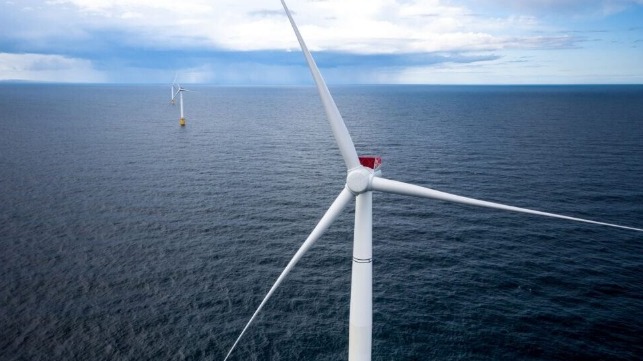
The German agency that oversees the country’s offshore wind energy development confirmed that there were no bids in the most recent auction. It was Germany’s second auction of the year, but unlike the first, which TotalEngeries won the site, this one failed to receive interest from investors.
Germany was offering two North Sea sites, which combined would have a capacity of 2.5 GW. The country currently has 9.2 GW of offshore wind capacity operational in the North Sea and Baltic Sea, according to BNetzA, with ambitious goals to reach 30 GW by 2030, 40 GW by 2035, and 70 GW by 2045. It added just .7 GW in 2024.
“The auction result must be a wake-up call for the German government,” said Viktoriya Kerelska, Director of Advocacy & Messaging at the trade group WindEurope. “It’s time to amend the auction model so Germany can deliver on its offshore wind targets and industrial competitiveness.”
Analysts note that investors’ mood changed as they face rising costs and challenging supply chains. A few years ago, investors were driving down the level of subsidies, and countries such as Germany and the Netherlands celebrated the first subsidy-free agreements. Now, the major developers are citing the increased risks they face and costs, saying they must have protection. Even in some cases, such as the UK’s Hornsea 4 project, developer Ørsted said the economics had changed to the point that it would not proceed in the current form, even with its government contract.
WindEurope highlights that most countries in Europe have introduced two-sided Contracts for Difference (CfDs) as a revenue stabilization mechanism for offshore wind development. Countries that have not moved forward with this model experienced the same challenges. Denmark in December 2024 also received no bids, and even the UK, which offered CfDs, had an unsuccessful round in September 2023, with the companies saying the support was too low. The current UK government has moved to increase the CfD levels and improve the structure, and it has been receiving stronger interest.
Germany’s Federal Minister for Economic Affairs and Energy, Katherina Reiche, admitted during a press conference that the results were sending a message. She said it would be “beneficial” for the regulator to look at adjusting the tender going forward.
The German Offshore Wind Energy Association (BWO) noted that it has repeatedly called for the introduction of the CfD approach. It says that Germany must also provide long-term power purchase agreements.
“The result sends a clear message,” said BWO’s managing director, Stefan Thimm. “The German offshore wind market is currently not attractive to investors. The federal government is thus missing the opportunity for significant value creation and employment in Germany and Europe.”
The authorities reported that under the terms of the tender, the two sites will be re-tendered with a new bid deadline of June 1, 2026.
UK Opens First Step of Seventh Offshore Wind Solicitation
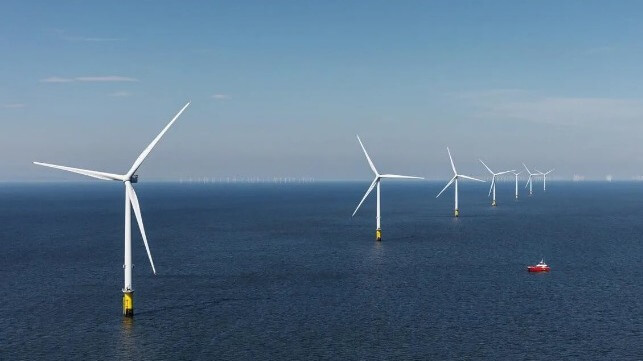
The window officially opened today, August 7, for the first phase of AR7, the UK’s next solicitation for renewable energy. This round is viewed as the most consequential in the UK’s energy goals, and the government has taken key steps to support the industry and to create strong interest.
Round 7 begins with a 20-day period for eligible developers to submit their initial applications, which will be assessed in September against the qualifications. The final timing for submitting bids may change based on the current consultation process and potential challenges, but the program anticipates bidding may conclude at the end of October or the latest, by early January 2026. Results will be announced approximately a month after the close of bidding.
The UK highlights that through its Contracts for Difference (CfD) scheme, it has already delivered more than 10 GW of capacity, which is in operation – the UK has a total of 14.7 GW of offshore wind capacity currently installed, making it the largest in Europe and second only to China. In July, the government highlighted that for the first time, more than 50 percent of the country’s electricity was coming from renewable energy. An additional 23 GW from offshore wind is contracted to become operational by 2030 as the UK moves toward a goal of 50 GW.
Analysts have warned that this round is critical in the UK’s efforts to meet its goals for renewable energy. The UK stumbled in 2023 when round 5 attracted no bidders, and the industry warned that the support mechanisms did not balance the risk. The government of Sir Keir Starmer responded in 2024 and again in 2025, taking steps to increase the support as part of its efforts to accelerate the transition.
The Government has committed a budget of over £544 million ($730 million) to the program to provide long-term support. Among the key steps is lengthening the span of the CfD contracts from 15 to 20 years. They said the longer contracts would provide greater financial certainty for developers. The strike price for both fixed-bottom and floating wind projects was also increased to reflect current market conditions.
“It’s good that the UK is adjusting its AR7 auction parameters to reflect current market conditions,” said Viktoriya Kerelska, Director of Advocacy and Messaging at the trade group WindEurope. “Fit-for-purpose auction design that allows for viable projects is what gets wind farms built. And this is for the benefit of national and European energy security, employment, and competitiveness.”
The results of this round will be closely watched by the industry, especially following yesterday’s news that a German solicitation received no bids. The UK has also faced setbacks despite its efforts to support the industry. Ørsted in May said it had decided to discontinue the Hornsea 4 project in its current form. The company reported that since the Contract for Difference (CfD) award in allocation round 6 (AR6) in September 2024, the 2,400 MW Hornsea 4 project has seen several adverse developments relating to continued increase of supply chain costs, higher interest rates, and an increase in the risk to construct and operate Hornsea 4 on the planned timeline for a project of its scale.
WindEurope has called for the UK to set a long-term schedule for future auctions. It says this would help developers plan and allocate capital. They said it would also increase the confidence of the supply chain companies. Problems in the supply chain and increasing costs have been some of the biggest challenges to the industry’s development.

No comments:
Post a Comment