Smart ships of the future: how advanced battery tech is revolutionizing maritime travel
image:
State estimation of lithium-ion battery for shipboard applications: Key challenges and future trends
view moreCredit: GREEN ENERGY AND INTELLIGENT TRANSPORTATION
The shipping industry has long relied on fossil fuels, contributing significantly to global pollution. With stricter environmental regulations like the International Maritime Organization’s (IMO) greenhouse gas reduction strategy, the shift toward electric ships powered by lithium-ion batteries (LIBs) is now unstoppable. These battery-powered vessels promise cleaner, more efficient maritime transport—but there’s a catch: the harsh marine environment poses unique challenges for battery performance and safety.
A groundbreaking study, "State Estimation of Lithium-Ion Battery for Shipboard Applications: Key Challenges and Future Trends," dives into these challenges, exploring how temperature swings, constant vibrations, humidity, and salt spray affect battery life and efficiency. Unlike land-based batteries, shipboard LIBs face extreme conditions that accelerate aging and reduce accuracy in state monitoring—critical factors for safe and reliable voyages.
The study reveals key insights that could transform electric ship design: (1) Environmental Impact on Batteries: Temperature and vibration mainly affect cycle aging, while humidity and salt spray speed up calendar aging, reducing overall battery lifespan. (2)Advanced State Estimation Methods: The paper reviews cutting-edge techniques for monitoring State of Charge (SOC), State of Power (SOP), State of Health (SOH), and more—essential for optimizing battery performance in real-time. (3) Multi-State Joint Estimation: A hybrid approach combining data-driven and electrochemical models proves most effective in unpredictable marine conditions.
These findings aren’t just theoretical—they’re already making waves. For example, China’s all-electric "Pulong" ship, equipped with a 472.5 kWh LIB system, demonstrates the real-world potential of this research. By improving battery management systems (BMS), ships can achieve longer lifespans, better efficiency, and lower emissions.
The implications stretch far beyond today’s electric vessels:
(1) Safer, Smarter Ships: Enhanced state estimation could lead to AI-powered BMS that predict failures before they happen, preventing accidents at sea.
(2) Global Green Shipping: As battery tech improves, electric ships could replace diesel fleets, slashing maritime carbon emissions.
(3) Next-Gen Research: The study highlights three urgent challenges: improving battery pack visibility, assessing safety risks, and refining multi-state algorithms.
This research isn’t just about better batteries—it’s about reimagining the future of shipping. By tackling the unique hurdles of marine environments, scientists are paving the way for cleaner oceans and smarter ships. As the world races toward sustainability, innovations like these could make electric vessels the gold standard for global trade.
Reference
Author: Laiqiang Kong, Yingbing Luo, Sidun Fang, Tao Niu, Guanhong Chen, Lijun Yang, Ruijin Liao
Title of original paper: State estimation of lithium-ion battery for shipboard applications: Key challenges and future trends
Article link: https://www.sciencedirect.com/science/article/pii/S2773153724000446
Journal:
DOI: 10.1016/j.geits.2024.100192
Affiliations: School of Electrical Engineering, Chongqing University, Chongqing 400030, China
Journal
Green Energy and Intelligent Transportation
Method of Research
Experimental study
Subject of Research
Not applicable
Article Title
State estimation of lithium-ion battery for shipboard applications: Key challenges and future trends
Fleetzero & Glosten to Develop World’s Longest-Range Hybrid Electric Vessel
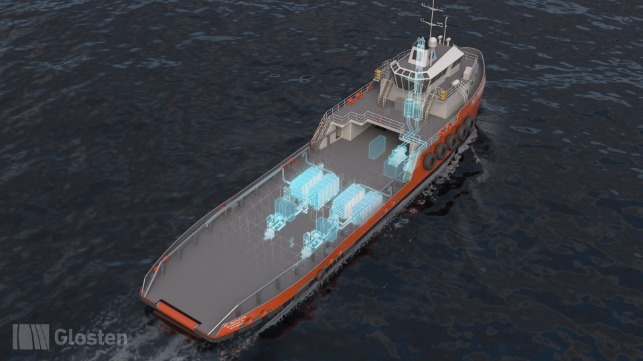
[By: Glosten]
Fleetzero, a leading developer and manufacturer of modular propulsion platforms for hybrid and electric ships, has selected Glosten, a leading naval architecture and marine engineering firm, to design what is expected to be the world’s longest- range hybrid electric vessel. This collaboration marks a major step forward in the effort to offer zero-emission global shipping and expand the reach of electric propulsion in commercial maritime applications.
Glosten has been working with Fleetzero on the retrofit of a Lightering Support Vessel owned and operated by AET. This vessel is being outfitted with a plug-in hybrid-electric propulsion system and will transit primarily on battery power once the conversion is complete.
“This vessel will be a major milestone—not just for us, but for the entire industry,” said Steven Henderson, CEO of Fleetzero. “Partnering with Glosten allows us to showcase how our propulsion technology can enable economical, cleaner, and more efficient operations, while pushing the boundaries of what’s possible in shipping.”
“We’re excited to support Fleetzero in transforming this vessel,” added Morgan Fanberg, CEO & President of Glosten. “It’s a bold move toward the next generation of marine technology, and exactly the kind of advancement we’re proud to support.”
With the vessel design already underway, Fleetzero and Glosten will transition into detailed engineering in the coming months, with construction expected to begin in mid-2026. Once operational, the vessel will serve as a model for long-range hybrid-electric propulsion worldwide.
The products and services herein described in this press release are not endorsed by The Maritime Executive.

No comments:
Post a Comment