Top UN Gaza investigator hopeful Israeli leaders will be prosecuted
Geneva (AFP) – The UN investigator who this week accused Israel of committing genocide in Gaza said she sees parallels with the butchery in Rwanda, and that she hopes one day Israeli leaders will be put behind bars.
Issued on: 18/09/2025 - FRANCE24

Geneva (AFP) – The UN investigator who this week accused Israel of committing genocide in Gaza said she sees parallels with the butchery in Rwanda, and that she hopes one day Israeli leaders will be put behind bars.
Issued on: 18/09/2025 - FRANCE24
Independent UN investigator Navi Pillay says she does not think it 'impossible' that Israeli leaders could end up behind bars for what her commission says is a genocide occurring in Gaza © Fabrice COFFRINI / AFP
Navi Pillay, a South African former judge who headed the international tribunal for the 1994 Rwanda genocide and also served as UN human rights chief, acknowledged that justice "is a slow process".
But as late South African anti-apartheid icon Nelson "Mandela said, it always seems impossible until it's done", she told AFP in an interview.
"I consider it not impossible that there will be arrests and trials" in the future.
Pillay's Independent International Commission of Inquiry (COI), which does not speak on behalf of the United Nations, issued a bombshell report on Tuesday concluding that "genocide is occurring in Gaza" -- something Israel vehemently denies.
The investigators also concluded that Israeli President Isaac Herzog, Prime Minister Benjamin Netanyahu and former defence minister Yoav Gallant have "incited the commission of genocide".
Israel categorically rejected the findings and slammed the report as "distorted and false".
But for Pillay, the parallels to Rwanda -- where some 800,000 people, mostly ethnic Tutsis and moderate Hutus, were slaughtered -- are clear.
As head of the International Criminal Tribunal for Rwanda, she says watching footage of civilians being killed and tortured had marked her "for life".
"I see similarities" to what is happening in Gaza, she said, pointing to "the same kind of methods".
'Traumatic'
The International Criminal Court has already issued arrest warrants for Netanyahu and Gallant for suspected war crimes.
Navi Pillay, a South African former judge who headed the international tribunal for the 1994 Rwanda genocide and also served as UN human rights chief, acknowledged that justice "is a slow process".
But as late South African anti-apartheid icon Nelson "Mandela said, it always seems impossible until it's done", she told AFP in an interview.
"I consider it not impossible that there will be arrests and trials" in the future.
Pillay's Independent International Commission of Inquiry (COI), which does not speak on behalf of the United Nations, issued a bombshell report on Tuesday concluding that "genocide is occurring in Gaza" -- something Israel vehemently denies.
The investigators also concluded that Israeli President Isaac Herzog, Prime Minister Benjamin Netanyahu and former defence minister Yoav Gallant have "incited the commission of genocide".
Israel categorically rejected the findings and slammed the report as "distorted and false".
But for Pillay, the parallels to Rwanda -- where some 800,000 people, mostly ethnic Tutsis and moderate Hutus, were slaughtered -- are clear.
As head of the International Criminal Tribunal for Rwanda, she says watching footage of civilians being killed and tortured had marked her "for life".
"I see similarities" to what is happening in Gaza, she said, pointing to "the same kind of methods".
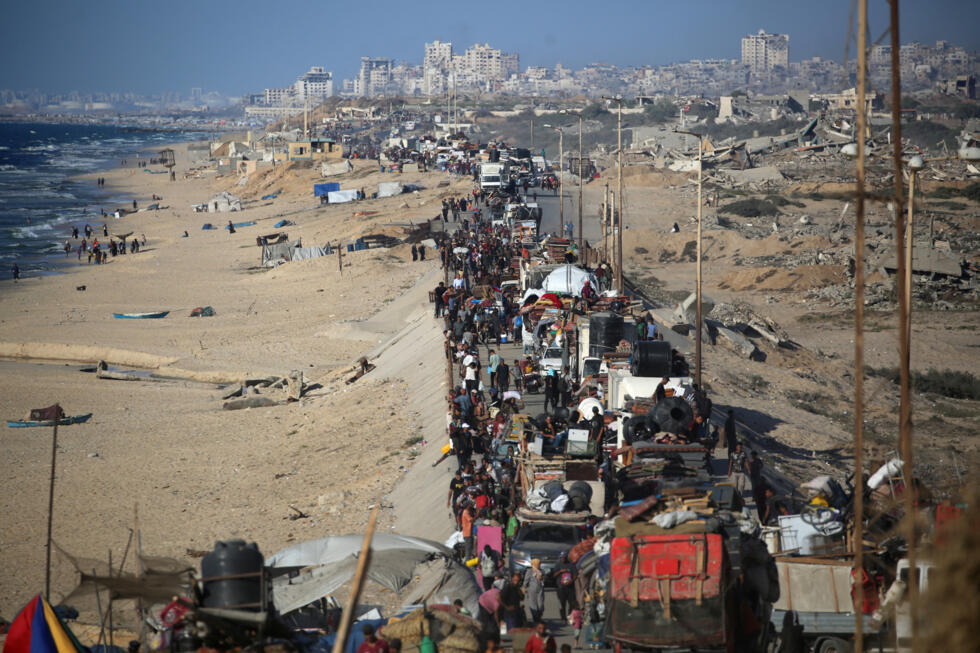
Displaced Palestinians flee the following renewed Israeli evacuation orders for Gaza City on September 16, 2025 © Eyad BABA / AFP
While Tutsis were targeted in Rwanda's genocide, she said "all the evidence (indicates) it is Palestinians as a group that is being targeted" in Gaza.
Israeli leaders, she said, had made statements, including calling Palestinians "animals", which recalled the demonising rhetoric used during the Rwanda genocide, when Tutsis were labelled as "cockroaches".
In both cases, she said the target population is "dehumanised", signalling that "it's ok to kill them".
While Tutsis were targeted in Rwanda's genocide, she said "all the evidence (indicates) it is Palestinians as a group that is being targeted" in Gaza.
Israeli leaders, she said, had made statements, including calling Palestinians "animals", which recalled the demonising rhetoric used during the Rwanda genocide, when Tutsis were labelled as "cockroaches".
In both cases, she said the target population is "dehumanised", signalling that "it's ok to kill them".
'Traumatic'
The International Criminal Court has already issued arrest warrants for Netanyahu and Gallant for suspected war crimes.
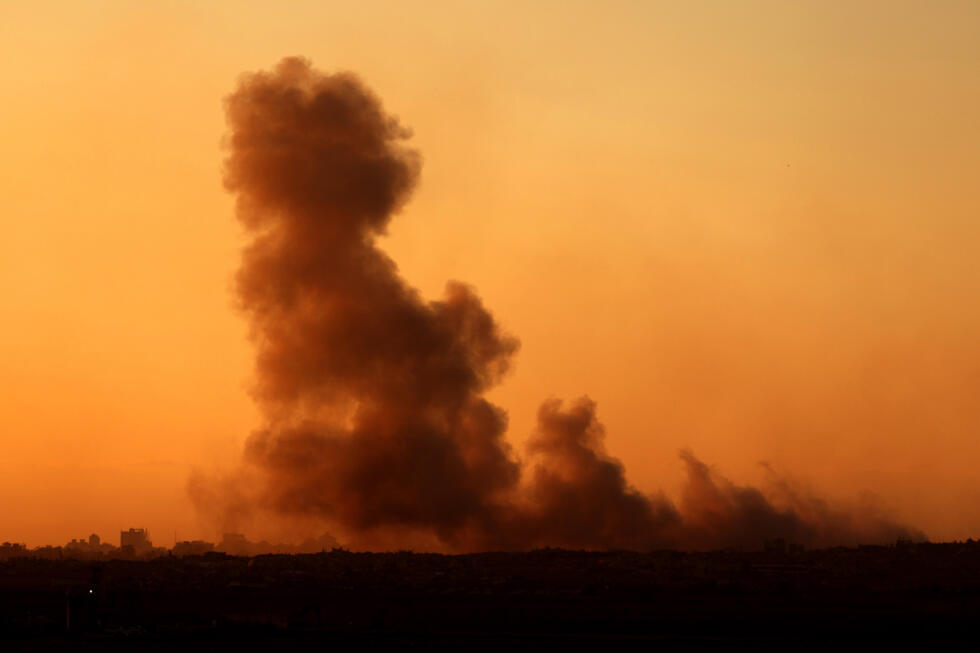
Smoke billows during an Israeli strike on Gaza as the country carries out a new assault on the besieged Palestinian territory © Jack GUEZ / AFP
Pillay said securing accountability would not be easy, highlighting that the ICC "does not have its own sheriff or police force to do the arrests".
But she stressed that popular demand could bring about sudden change, as it had in her home country.
"I never thought apartheid will end in my lifetime," she said.
Pillay, who rose through the ranks to become a judge in apartheid South Africa despite her Indian heritage, has a knack for handling difficult cases.
Her career has taken her from defending anti-apartheid activists and political prisoners in South Africa to the Rwanda tribunal, the ICC and on to serving as the UN's top human rights official from 2008 to 2014.
The 83-year-old took on a particularly daunting mission four years ago when she agreed to chair the freshly-created COI tasked with investigating rights abuses in the occupied Palestinian territories and Israel.
Since than, she and her two co-commissioners have faced a barrage of accusations of bias and antisemitism, which they deny, and a recent social media campaign urging Washington to sanction them, as it has ICC judges, Palestinian NGOs and a UN expert focused on the situation in Gaza.
The pressure has been intense, but Pillay says the hardest thing for her team has been viewing video evidence from the ground.
"Watching those videos is just traumatic," she said, pointing to images of "sexual violence of women (and abuse of) doctors who were stripped naked by the military."
Pillay said securing accountability would not be easy, highlighting that the ICC "does not have its own sheriff or police force to do the arrests".
But she stressed that popular demand could bring about sudden change, as it had in her home country.
"I never thought apartheid will end in my lifetime," she said.
Pillay, who rose through the ranks to become a judge in apartheid South Africa despite her Indian heritage, has a knack for handling difficult cases.
Her career has taken her from defending anti-apartheid activists and political prisoners in South Africa to the Rwanda tribunal, the ICC and on to serving as the UN's top human rights official from 2008 to 2014.
The 83-year-old took on a particularly daunting mission four years ago when she agreed to chair the freshly-created COI tasked with investigating rights abuses in the occupied Palestinian territories and Israel.
Since than, she and her two co-commissioners have faced a barrage of accusations of bias and antisemitism, which they deny, and a recent social media campaign urging Washington to sanction them, as it has ICC judges, Palestinian NGOs and a UN expert focused on the situation in Gaza.
The pressure has been intense, but Pillay says the hardest thing for her team has been viewing video evidence from the ground.
"Watching those videos is just traumatic," she said, pointing to images of "sexual violence of women (and abuse of) doctors who were stripped naked by the military."
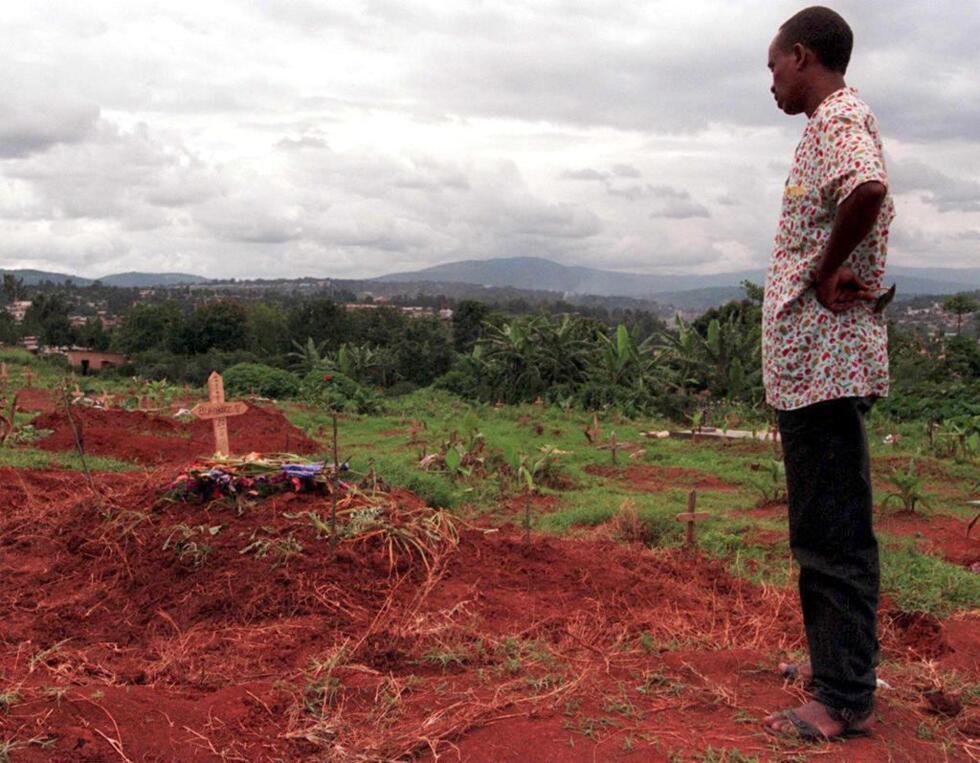
Pillay says she sees parallels in Gaza with the Rwandan genocide, where some 800,000 people were slaughtered in 1994 - including the person buried in this grave in a Kigali cemetery © ALESSANDRO ABBONIZIO / AFP
"It's so painful" to watch.
Pillay said that going forward, the commission aims to draft a list of suspected perpetrators of abuses in Gaza, and also explore the suspected "complicity" of countries supporting Israel.
That work will meanwhile be left to her successor, since Pillay will be leaving the commission in November, citing her age and health concerns.
Before that, she said she had her visa ready to travel to New York to present her report to the UN General Assembly.
So far, she said, "I have heard nothing about that visa being withdrawn".
© 2025 AFP
"It's so painful" to watch.
Pillay said that going forward, the commission aims to draft a list of suspected perpetrators of abuses in Gaza, and also explore the suspected "complicity" of countries supporting Israel.
That work will meanwhile be left to her successor, since Pillay will be leaving the commission in November, citing her age and health concerns.
Before that, she said she had her visa ready to travel to New York to present her report to the UN General Assembly.
So far, she said, "I have heard nothing about that visa being withdrawn".
© 2025 AFP
Eurovision: Countries to boycott if Israel competes
The Eurovision Song Contest is supposed to be apolitical. But Israel is now at the center of calls for boycott and protests, due to the ongoing war in the Gaza Strip.
Following announcements from Ireland, Slovenia, the Netherlands and Iceland, Spain became on Wednesday the first country among the "Big Five," the five largest contributors to the Eurovision Song Contest, to officially declare its decision to boycott the 2026 event to be held in Vienna from May 12-16, if Israel's participation goes ahead as planned. The "Big Five" countries are Spain, Germany, the UK, France and Italy.
The country's withdrawal was approved by a majority of the board of directors of Spanish state broadcaster RTVE, with 10 votes in favour, four against, and one abstention. The vote came after Spanish Minister for Culture, Ernest Urtasun, stated last week that Spain should withdraw from the event if Israel remained on the list of participating countries.
Dutch public broadcaster, AVROTROS, also stated that it could "no longer justify Israel's participation in the current situation, given the ongoing and severe human suffering in Gaza."
A decision on Israel's participation is expected in December.

Israel is not the only non-European participant in the contest. There's also Armenia and Azerbaijan — and since 2015, Australia has become the "most exotic" Eurovision competitor. The show has a huge fan base there, and Australia was accepted into the EBU as an associate member.
The inclusion of broadcasters and countries beyond the borders of Europe is also the reason why the event is called the "Eurovision Song Contest" and not the "European Song Contest."
With four first places, Israel is one of the most successful participants. But the Israel-Palestine conflict has impacted the contest several times over the past five decades.
Security for Israeli contestants
In 1973, Ilanit was the first artist to compete for Israel. Strict security measures were implemented because, only a few months earlier, Palestinian terrorists had killed 11 Israeli athletes in the Olympic Village in Munich. Ilanit was supposedly wearing a bulletproof vest, and the audience had to remain seated throughout her performance. Photographers had to take a picture pointing at the ceiling to prove that their cameras were not disguised firearms.
In 2024, Israeli contestant Eden Golan also performed under special protection. Several participating countries had called on the EBU to exclude Israel from the contest. The EBU considered it, but not because of the Gaza war itself. EBU officials feared the original title of Israel's entry, "October Rain," was too explicit a reference to the event that triggered the Gaza war: the Hamas terrorist attack on Israel on October 7, 2023, in which around 1,200 Israelis were killed and 240 were taken hostage in Gaza. Once the lyrics of the song were changed, Golan's participation was allowed to go ahead.

Fines for pro-Palestinian protests
The repeated use of protest symbols and slogans by the audience or by artists has not gone unpunished. This became particularly clear in Tel Aviv in 2019.
On the evening of the Eurovision final, the Icelandic band Hatari held up scarves with Palestinian flags to the camera, causing controversy. The EBU fined the Icelandic broadcaster RUV €5,000.
During a performance by global superstar Madonna that same evening a male dancer and a female dancer — one carrying the Israeli flag and the other carrying the Palestinian flag — walked up the stairs arm in arm. The US singer later said that this was a "message of peace and unity." But the EBU was less enthusiastic about it. Though there was no fine in this case, the contest organizers released a statement saying the act was not cleared with them and that Madonna was aware the contest was non-political.
The competitions in Malmö in 2024 and Basel in 2025 also witnessed protests critical of Israel. In the hall, audience members whistled and booed the Israeli performers.
This article was originally written in German.

Silke Wünsch Reporter and editor at DW's culture desk
DW
September 17, 2025
The Eurovision Song Contest is supposed to be apolitical. But Israel is now at the center of calls for boycott and protests, due to the ongoing war in the Gaza Strip.
Following announcements from Ireland, Slovenia, the Netherlands and Iceland, Spain became on Wednesday the first country among the "Big Five," the five largest contributors to the Eurovision Song Contest, to officially declare its decision to boycott the 2026 event to be held in Vienna from May 12-16, if Israel's participation goes ahead as planned. The "Big Five" countries are Spain, Germany, the UK, France and Italy.
The country's withdrawal was approved by a majority of the board of directors of Spanish state broadcaster RTVE, with 10 votes in favour, four against, and one abstention. The vote came after Spanish Minister for Culture, Ernest Urtasun, stated last week that Spain should withdraw from the event if Israel remained on the list of participating countries.
Dutch public broadcaster, AVROTROS, also stated that it could "no longer justify Israel's participation in the current situation, given the ongoing and severe human suffering in Gaza."
A decision on Israel's participation is expected in December.
JJ from Austria won the contest in 2025, which is why the next event will be held in ViennaImage: Baden Roth/IMAGO/ZUMA Press Wire
Why is Israel in the Eurovision Song Contest?
Israel made its debut at Eurovision in 1973, when it was still called the "Grand Prix d'Eurovision de la Chanson." That was when the country became a member of the European Broadcasting Union (EBU), an association including 73 active members of broadcasters from 56 countries and 35 associate members from 21 countries in Europe, North Africa and the Middle East.
Israel made its debut at Eurovision in 1973, when it was still called the "Grand Prix d'Eurovision de la Chanson." That was when the country became a member of the European Broadcasting Union (EBU), an association including 73 active members of broadcasters from 56 countries and 35 associate members from 21 countries in Europe, North Africa and the Middle East.
Israel is not the only non-European participant in the contest. There's also Armenia and Azerbaijan — and since 2015, Australia has become the "most exotic" Eurovision competitor. The show has a huge fan base there, and Australia was accepted into the EBU as an associate member.
The inclusion of broadcasters and countries beyond the borders of Europe is also the reason why the event is called the "Eurovision Song Contest" and not the "European Song Contest."
With four first places, Israel is one of the most successful participants. But the Israel-Palestine conflict has impacted the contest several times over the past five decades.
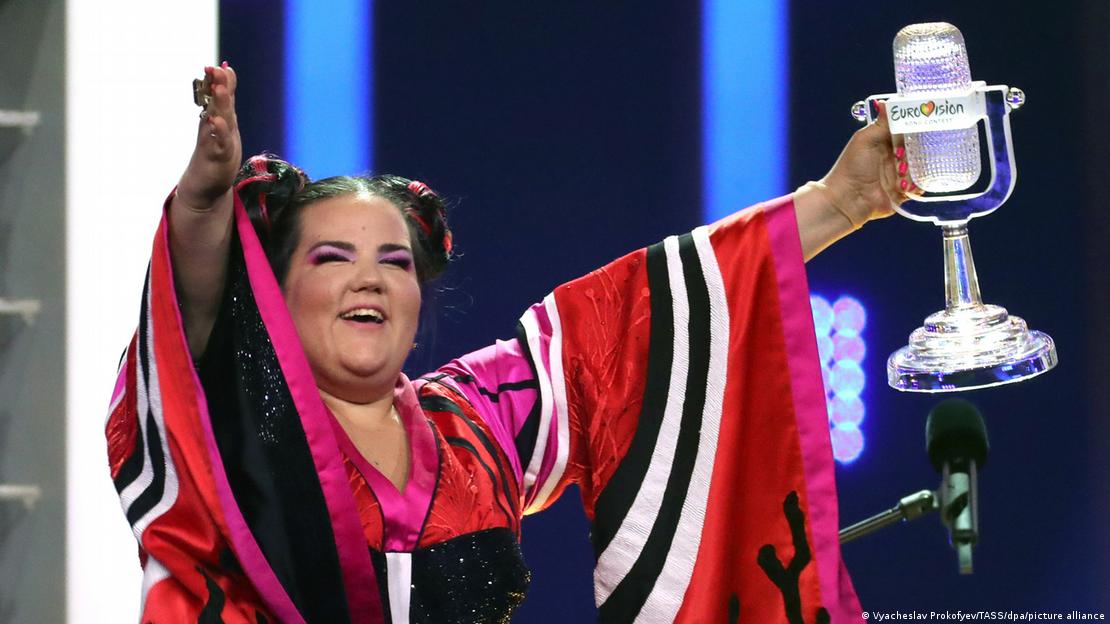
Israeli Netta Barzilai won the 2018 Eurovision Song Contest, bringing the event to Tel Aviv a year laterI
mage: Vyacheslav Prokofyev/TASS/dpa/picture alliance
Security for Israeli contestants
In 1973, Ilanit was the first artist to compete for Israel. Strict security measures were implemented because, only a few months earlier, Palestinian terrorists had killed 11 Israeli athletes in the Olympic Village in Munich. Ilanit was supposedly wearing a bulletproof vest, and the audience had to remain seated throughout her performance. Photographers had to take a picture pointing at the ceiling to prove that their cameras were not disguised firearms.
In 2024, Israeli contestant Eden Golan also performed under special protection. Several participating countries had called on the EBU to exclude Israel from the contest. The EBU considered it, but not because of the Gaza war itself. EBU officials feared the original title of Israel's entry, "October Rain," was too explicit a reference to the event that triggered the Gaza war: the Hamas terrorist attack on Israel on October 7, 2023, in which around 1,200 Israelis were killed and 240 were taken hostage in Gaza. Once the lyrics of the song were changed, Golan's participation was allowed to go ahead.
There were already calls for Israel's withdrawal in 2024, the year Eden Golan (center) represented the country
Image: Jessica Gow/TT News Agency/AP/picture alliance
Fines for pro-Palestinian protests
The repeated use of protest symbols and slogans by the audience or by artists has not gone unpunished. This became particularly clear in Tel Aviv in 2019.
On the evening of the Eurovision final, the Icelandic band Hatari held up scarves with Palestinian flags to the camera, causing controversy. The EBU fined the Icelandic broadcaster RUV €5,000.
During a performance by global superstar Madonna that same evening a male dancer and a female dancer — one carrying the Israeli flag and the other carrying the Palestinian flag — walked up the stairs arm in arm. The US singer later said that this was a "message of peace and unity." But the EBU was less enthusiastic about it. Though there was no fine in this case, the contest organizers released a statement saying the act was not cleared with them and that Madonna was aware the contest was non-political.
The competitions in Malmö in 2024 and Basel in 2025 also witnessed protests critical of Israel. In the hall, audience members whistled and booed the Israeli performers.
This article was originally written in German.
Silke Wünsch Reporter and editor at DW's culture desk
Interview
In their new book, “Tomorrow Is Yesterday”, veteran Middle East negotiators Robert Malley and Hussein Agha examine how and why the stubborn adherence to the two-state solution narrative to end the Israeli-Palestinian conflict failed. FRANCE 24 spoke to Malley about the diplomatic mistakes of the past and its implications for the future of Israelis and Palestinians.
Issued on: 17/09/2025 - FRANCE24
By: Leela JACINTO
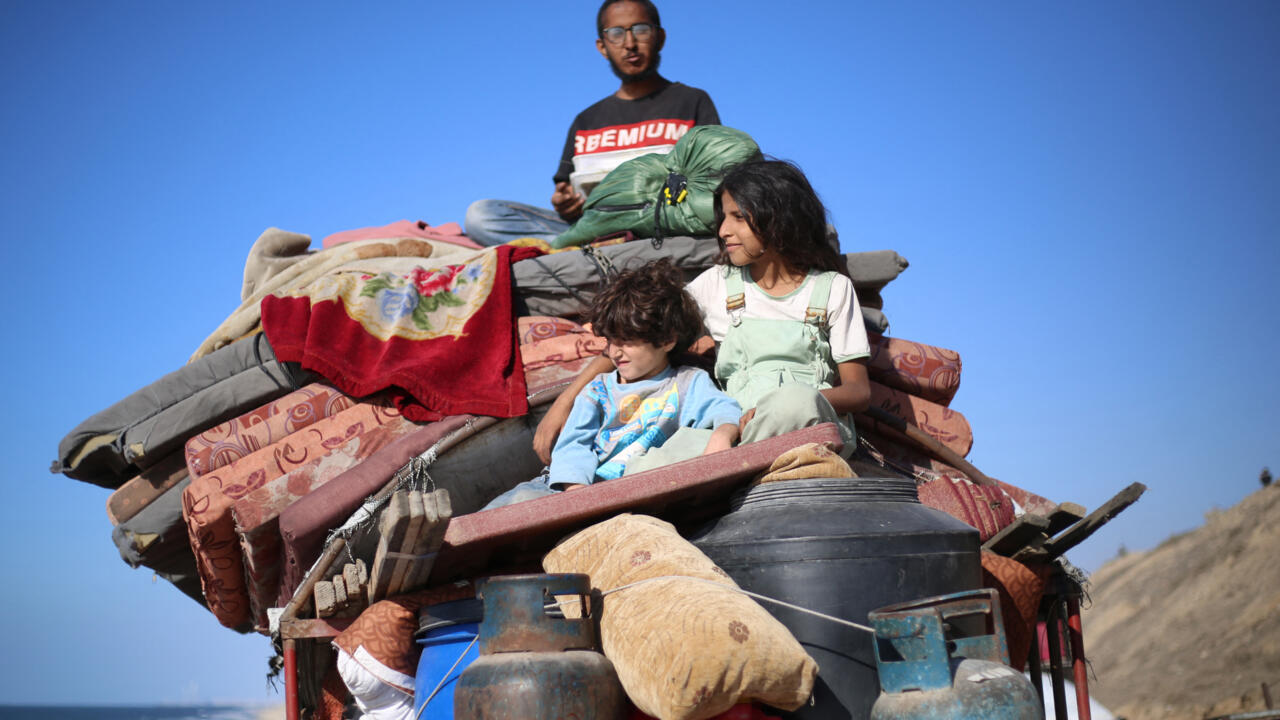
Displaced Palestinians move southwards in the central Gaza Strip on September 16, 2025. © Eyad Baba, AFP
In September 1999, just months after Israel’s Labour party candidate Ehud Barak beat Likud’s Benjamin Netanyahu in a snap election, then US president Bill Clinton’s special Middle East envoy hosted a small dinner gathering.
The mood at the dinner table was hopeful. The Oslo Accords, signed six years earlier with much fanfare on the White House lawn, had been in tatters after Netanyahu came to power following the 1995 assassination of Yitzhak Rabin. With an Israeli Labour leader now back in power, the Americans were giving Middle East peace a chance – again.
That’s where a young Robert Malley and even younger Hussein Agha met for the first time. Malley at that time was Clinton’s special assistant for Arab-Israeli affairs. The Oxford-educated Agha had been sent by Palestinian leader Yasser Arafat on the Palestinian delegation.
More than a quarter-century later, Malley and Agha have co-authored a book, “Tomorrow Is Yesterday: Life, Death and the Pursuit of Peace in Israel/Palestine”, which hit the US bookshelves on Tuesday, grabbed headlines in top policy publications, and delivered a gut punch to pundits and envoys who have built careers negotiating the Israeli-Palestinian conflict.
Read more The demolition of Gaza City: Can Israel ignore growing outrage?
Both Malley and Agha have spent several years as Middle East negotiators. Malley has served under former US presidents Clinton, Barack Obama – when he was lead negotiator of the 2015 Iran nuclear accord – and Joe Biden. Agha is a senior associate member of Oxford’s St. Anthony’s College and has been involved in Israel-Palestinian affairs for more than 30 years.
Their book, a brutally honest insider account of the US-led Mideast peace process, examines the centrality of the two-state solution as the guiding – or more accurately, misguiding – philosophy underpinning diplomatic efforts to resolve the Israeli-Palestinian crisis.
As the title suggests, “Tomorrow Is Yesterday” seeks to examine the lessons of the past in a bid to try to address the future for Palestinians and Israelis.
It comes as France is leading a global diplomatic initiative calling for an independent Palestinian state and the effective implementation of the two-state solution at the UN General Assembly (UNGA 2025) in New York next week.
FRANCE 24 spoke with Robert Malley about his latest book and its implications amid mounting international calls for an end to Israel’s brutal Gaza war.
FRANCE 24: Your new book comes just as France, along with Saudi Arabia, is spearheading a drive to recognise a Palestinian state at the 2025 UN General Assembly. What's your take on this effort?
Robert Malley: Well, let me start with the main theme of the book because it’s a way to answer your question. One of the questions we're trying to answer is, where are the Israelis and Palestinians today and why? And our basic answer hints to the title of the book, “Tomorrow Is Yesterday”: it’s that we're back to a time decades ago, perhaps as long as eight decades ago, when Palestinians once again are being forced to flee, and flee from a place they had to flee to, attacked, and attacked in the place they were told to take refuge, dispossessed, having lost everything and being the victims of an unspeakable ordeal.
On the Israeli side, the feeling, again from decades past, was that they, on October 7 [2023], were facing the worst attack against Jews since the Holocaust. They felt that their very existence on the land of Israel was being threatened by that attack.
So, we really are back to where both sides were some time ago in the raw expression of violence and brutality.
And why are we there? Because of what's happened over the years of the peace process that was supposed to end in a final settlement between Israelis and Palestinians. That peace process turns out to have been for naught. It turns out to have been just a bunch of hot air, a meaningless distraction from what was really happening on the ground and what was really animating Israelis and Palestinians.

In September 1999, just months after Israel’s Labour party candidate Ehud Barak beat Likud’s Benjamin Netanyahu in a snap election, then US president Bill Clinton’s special Middle East envoy hosted a small dinner gathering.
The mood at the dinner table was hopeful. The Oslo Accords, signed six years earlier with much fanfare on the White House lawn, had been in tatters after Netanyahu came to power following the 1995 assassination of Yitzhak Rabin. With an Israeli Labour leader now back in power, the Americans were giving Middle East peace a chance – again.
That’s where a young Robert Malley and even younger Hussein Agha met for the first time. Malley at that time was Clinton’s special assistant for Arab-Israeli affairs. The Oxford-educated Agha had been sent by Palestinian leader Yasser Arafat on the Palestinian delegation.
More than a quarter-century later, Malley and Agha have co-authored a book, “Tomorrow Is Yesterday: Life, Death and the Pursuit of Peace in Israel/Palestine”, which hit the US bookshelves on Tuesday, grabbed headlines in top policy publications, and delivered a gut punch to pundits and envoys who have built careers negotiating the Israeli-Palestinian conflict.
Read more The demolition of Gaza City: Can Israel ignore growing outrage?
Both Malley and Agha have spent several years as Middle East negotiators. Malley has served under former US presidents Clinton, Barack Obama – when he was lead negotiator of the 2015 Iran nuclear accord – and Joe Biden. Agha is a senior associate member of Oxford’s St. Anthony’s College and has been involved in Israel-Palestinian affairs for more than 30 years.
Their book, a brutally honest insider account of the US-led Mideast peace process, examines the centrality of the two-state solution as the guiding – or more accurately, misguiding – philosophy underpinning diplomatic efforts to resolve the Israeli-Palestinian crisis.
As the title suggests, “Tomorrow Is Yesterday” seeks to examine the lessons of the past in a bid to try to address the future for Palestinians and Israelis.
It comes as France is leading a global diplomatic initiative calling for an independent Palestinian state and the effective implementation of the two-state solution at the UN General Assembly (UNGA 2025) in New York next week.
FRANCE 24 spoke with Robert Malley about his latest book and its implications amid mounting international calls for an end to Israel’s brutal Gaza war.
FRANCE 24: Your new book comes just as France, along with Saudi Arabia, is spearheading a drive to recognise a Palestinian state at the 2025 UN General Assembly. What's your take on this effort?
Robert Malley: Well, let me start with the main theme of the book because it’s a way to answer your question. One of the questions we're trying to answer is, where are the Israelis and Palestinians today and why? And our basic answer hints to the title of the book, “Tomorrow Is Yesterday”: it’s that we're back to a time decades ago, perhaps as long as eight decades ago, when Palestinians once again are being forced to flee, and flee from a place they had to flee to, attacked, and attacked in the place they were told to take refuge, dispossessed, having lost everything and being the victims of an unspeakable ordeal.
On the Israeli side, the feeling, again from decades past, was that they, on October 7 [2023], were facing the worst attack against Jews since the Holocaust. They felt that their very existence on the land of Israel was being threatened by that attack.
So, we really are back to where both sides were some time ago in the raw expression of violence and brutality.
And why are we there? Because of what's happened over the years of the peace process that was supposed to end in a final settlement between Israelis and Palestinians. That peace process turns out to have been for naught. It turns out to have been just a bunch of hot air, a meaningless distraction from what was really happening on the ground and what was really animating Israelis and Palestinians.
Israeli Foreign Minister Shimon Peres signs the Mideast peace agreement with the help of an unidentified aide on the South Lawn of the White House in Washington, DC on Monday, September 13, 1993. Looking on, left to right are Israeli Prime Minister Yitzhak Rabin, US President Bill Clinton, Palestine Liberation Organization Chairman Yasser Arafat and Secretary of State Warren Christopher. © Dennis Cook, AP
You asked about recognition of a Palestinian state. I could understand why some Palestinians may feel like this is a success. I think for most Palestinians, they view this as a distraction, as part of that same old pattern of symbolic politics that didn't change anything on the ground. And they're being done for reasons that have little to do with the betterment of the situation between Israelis and Palestinians. Recognition of a state that doesn't exist, that's not about to exist, that Israelis are not going to allow to come into existence, won't change the life of a single Israeli or Palestinian certainly. It's not going to make the life of any Palestinian suffering what they're suffering today in Gaza, in the West Bank, any different.
It might make some politicians feel better. It might make them look good. But it won't make them do the thing that can make a difference to stop what's happening today in Gaza, which more and more experts are calling a genocide. If Europeans and others wanted to do something that could really change the situation, there are a set of tools that they have at their disposal which wouldn't change things dramatically, but could make some difference. But rather than make a difference, they're making something that they believe makes them look good.
I think for some of them, this is an effort in good faith. And some countries are taking genuine steps – and I'm thinking of Spain in particular. Other countries are doing this for less noble reasons. For some of them, distraction is the point. It's because they're doing this in lieu of doing what could really make a difference. Hussein and I have actually written about this and we’re saying this is exactly what has been wrong with the peace process. It's symbolic politics, performative politics that doesn't have any resonance on the ground. I don't think Palestinians who are suffering what they're suffering today, are clamouring for recognition of a state that doesn't exist and is not about to be brought into existence.
One of the main points in your book is that the two-state solution was never an Israeli or a Palestinian solution. It was imposed on them by the outsider, the US.
It wasn't even imposed on them because there has been no solution. But yes, it's an idea that had external origins, an external impulse.
Right. So the fact that France has chosen to co-chair this UN initiative with Saudi Arabia, does this pave a path for the involvement of regional, Arab states?
There's an opportunity, there's more reason than ever for Arab countries to step in because of what’s happening in Gaza and the West Bank every day, and because the Palestinian movement today is utterly leaderless. There is no Palestinian national movement. There is no leadership. There hasn't been for some time, but it has never been in greater evidence than today, when the Palestinian leadership is incapable of doing anything in response to what's happening to their people. So there's every reason, every opportunity for the Arab world to step in.
Whether they will, that's a different question. They have not yet. They have not taken some of the basic steps they could have taken to try to exert some of the leverage they possess vis-a-vis Israel. Those countries that have entered into the Abraham Accords have not used that as leverage to try to pressure Israel. Whether they do it in the future, that's one of the questions we raise in the book. We say that, because tomorrow is yesterday, in the past, this was an Arab-Israeli conflict, it wasn't an Israeli-Palestinian conflict. In the past, the Arab world was, for better or for worse, in charge of Palestinian politics if you think of the period after 1948.
 Displaced Palestinians walk through a makeshift tent camp along the shore of Deir al-Balah in the Gaza Strip Tuesday, September 16, 2025. © Jehad Alshrafi, AP
There's an echo of that period now, when the Arab world may need to step in. We don't know whether they'll be up to that task to step in and provide real succour to the Palestinians, and use the prospect of normalisation with Israel, not for bilateral benefits, for their own benefits, but also for the benefit of the Palestinian people and the Palestinian cause.
We're not in the business of prediction. We want to describe, in as stark and brutal a way as possible, the reality that we face and try to do away with some of the illusions that have clouded judgments and perspective and policy. But that is really up to the Arab world and its leadership and its people to do what it might take to provide real support to the Palestinian people.
So what are these basic steps that the Arab world must take?
I don't think the goal of the book is to have a menu of steps. I think those are pretty self-evident for countries that really want to help. There are things that Israel cares about. There are things that the supporters of Israel, the United States in particular, care about. I don't think these leaders are sitting in a room wondering what steps, what tools do we possess. They know what tools they possess. The question is whether they're prepared to use them because they always come with risks: risk of blowback, risk of endangering relations with the United States, of whatever it may be. If countries really want to help, the first step is to stop what's happening in Gaza. There are tools at their disposal to maybe not achieve it, but at least move in that direction and try to flex their muscles. But we'll have to see whether they're prepared to do that.
We’ll have to see about that. What would you say is the purpose of your latest book and why is it important?
The core of the book is really to try to describe where are we today and why. Where we are today is, as I said, the echoes of the past from both sides. Palestinians feel like they're going through another Nakba. Israeli Jews feel that they were victims of a pogrom and that this was the worst massacre of Jews since the Second World War. We're seeing a revival of an old vocabulary, which people of my generation and Hussein's generation are very familiar with, whether it’s ethnic cleansing, whether it's genocide, whether it's Zionism, racism, pogrom, the Holocaust … [it’s] a vocabulary, modes of thinking that are echoes of the past.
The question at the core of the book is: what was the meaning of years that were spent supposedly seeking a solution between Israelis and Palestinians. Our diagnosis is that there was a fundamental disconnect between what diplomats, the peace process led by the US, said they were trying to do, claimed they were trying to do, and what was actually the lived experience, the emotions, the feelings, the yearnings of Israelis and Palestinians. It was a dialogue of the deaf. What was being discussed was fundamentally fleeting, evanescent. And that's why so little has changed, and we’re back to yesterday, where tomorrow is yesterday. We are back to where the parties were, as if nothing really had happened at the diplomatic level, because nothing of real consequence, nothing that had real impact with the Israeli and Palestinian people occurred.
 Relatives of Israeli hostages and demonstrators take part in an anti-government protest calling for action to secure the release of Israeli hostages held by Palestinian militants in the Gaza Strip since October 7, 2023, near the prime minister's residence in Jerusalem, on September 16, 2025. © Ahmad Gharabli, AFP
That's our diagnosis. The question is, is this an opportunity now to shatter those myths and have some form of more unconventional thinking, to think, how are Israelis and Palestinians going to coexist. If it's not going to be this two-state solution, which has failed and failed and failed repeatedly. The hard partition between Israelis and Palestinians, if that was the objective that was stated in the past, we know for sure that it was tried for decades under far better circumstances than exists today – and it failed.
When I hear Western leaders say the only path is a two-state solution … It's not because you repeat a mantra that it's going to be achieved. And that mantra was repeated under circumstances that were much more promising than today, when you had a real Palestinian leadership with authority, when Israel was not as traumatised and as right-wing as it is today, when the settlement enterprise was a fraction of what it was today. On almost every level, the circumstances were better. And yet the outcome was the same. So, to think that today we're going to suddenly go back to that route that led to an impasse, and this time it's going to succeed, I think it's either an exercise in self-delusion, or of utter ignorance, or of deceit.
And as we say in the book, there's sometimes a very fine line between self-delusion, illusion, deceit and lie. And it's unclear in which realm we are today. But at some level we're in all of them. All of the above.
On a personal level, how do you feel now after all these years of trying to diplomatically engage on this issue?
It’s not necessarily in the book, although it is alluded to in the book. This is also a confession of personal failures.
Since the inception of the concept of the two-state solution – which Hussein at first fought, but then endorsed – up to the convalescence room, the deathbed of the two-state solution, Hussein was there in almost every chapter. I was there as a US official. And it's a failure.
Part of the book emerges from that, even though it's not in any way a personal memoir, but our own experience suffuses the book.
It's partly because of those failures, and the humility it must attach, that we’re not in the business of saying: ‘here’s the solution’. We don't know. What we do is try to shatter conventional thought, the dogmas of the past, which are still the dogmas of the present.
 An Israeli soldier detains a Palestinian man during a raid on Ramallah city in the occupied West Bank on September 16, 2025. © Zain Jaafar, AFP
Whether we like it or not, the most likely alternative is a continuation, a perpetuation of the status quo. This so-called unsustainable status quo that has been sustained for decades is just being further entrenched every day. That is the most likely outcome: some form of Israeli domination of the land between the river and the sea, with differing levels of unequal rights for the Palestinians who are living in that land.
Then you have other alternatives, some better, some worse, some more ethically palatable, some ethically repellent: whether it's ethnic cleansing, whether it's some form of confederation, coexistence in a loose confederation between Israelis and Palestinians, we speak about some confederation between Palestine and Jordan, some people have spoken about a binational state.
Our objective is not to say this is either the best or the preferred outcome. We say, stop putting your head in the sand and saying there's only one solution. It's not even clear whether the people who say it believe it. But it sounds good. It makes them look good to say two-state solution, we’re heading there. We're not heading there. We're heading in the opposite direction. Let's hit the pause button and try to think of other possibilities. It will be up to Israelis and Palestinians with others, Arab countries, perhaps others as well, to try to get us on a different path. But there has to be a different path because the path that Israelis and Palestinians are on right now is a path of more death, destruction and tragedy.
Finally, are you optimistic or pessimistic on the Israeli-Palestinian issue?
I think anyone today who claims they're optimistic would be either deluded or lying. But I will say this, because I get this question a lot about optimism, pessimism.
Our view is there's real optimism and false optimism. The optimism that consists of saying we are going to get there because we believe the two-state solution is inevitable, that's not real optimism. That is actual pessimism, because we know that it's not going to lead to anywhere good. That sort of optimism is lethal. It leads to death and destruction because it creates illusions. And when those illusions are frustrated, it leads to violence.
So the optimism, if that's the word, lies in trying to recognise the failures of the past and trying to think of something different for the future. Does that mean that I think it's going to happen? I have no idea. I do think, deep down, that Israelis and Palestinians are bound to coexist and need to find a way to coexist peacefully. We have been on the wrong track now for decades upon decades.
 This picture taken from a position at Israel's border with the Gaza Strip shows Israeli troops deployed near the border fence with the besieged Palestinian territory on September 17, 2025. © Jack Guez, AFP
But if Israelis want to achieve what they claim is their aspiration, their yearning, which is to live as a normal, fully accepted, fully secure people, they're going to have to find a way to address their Palestinian problem. Because as long as the Palestinian problem exists – and the Palestinian people are not going anywhere, they're not going to leave, they're not going to disappear – Israeli Jews will not find that tranquility, that security, that normalcy, that regular life that they aspire to.
By the same token, of course, Palestinians are not going to get the freedom, the fulfillment of their aspirations if they haven't found a way to come to terms with the existence of the Jewish population and their rights and their needs and their yearnings. Ultimately, we don't have the solution. But we do believe that Israelis and Palestinians are capable of finding a way to peacefully coexist. It probably won't be my generation, probably another generation, or maybe the one after that, that will find the key to that riddle.
This interview has been edited for length and clarity.
You asked about recognition of a Palestinian state. I could understand why some Palestinians may feel like this is a success. I think for most Palestinians, they view this as a distraction, as part of that same old pattern of symbolic politics that didn't change anything on the ground. And they're being done for reasons that have little to do with the betterment of the situation between Israelis and Palestinians. Recognition of a state that doesn't exist, that's not about to exist, that Israelis are not going to allow to come into existence, won't change the life of a single Israeli or Palestinian certainly. It's not going to make the life of any Palestinian suffering what they're suffering today in Gaza, in the West Bank, any different.
It might make some politicians feel better. It might make them look good. But it won't make them do the thing that can make a difference to stop what's happening today in Gaza, which more and more experts are calling a genocide. If Europeans and others wanted to do something that could really change the situation, there are a set of tools that they have at their disposal which wouldn't change things dramatically, but could make some difference. But rather than make a difference, they're making something that they believe makes them look good.
I think for some of them, this is an effort in good faith. And some countries are taking genuine steps – and I'm thinking of Spain in particular. Other countries are doing this for less noble reasons. For some of them, distraction is the point. It's because they're doing this in lieu of doing what could really make a difference. Hussein and I have actually written about this and we’re saying this is exactly what has been wrong with the peace process. It's symbolic politics, performative politics that doesn't have any resonance on the ground. I don't think Palestinians who are suffering what they're suffering today, are clamouring for recognition of a state that doesn't exist and is not about to be brought into existence.
One of the main points in your book is that the two-state solution was never an Israeli or a Palestinian solution. It was imposed on them by the outsider, the US.
It wasn't even imposed on them because there has been no solution. But yes, it's an idea that had external origins, an external impulse.
Right. So the fact that France has chosen to co-chair this UN initiative with Saudi Arabia, does this pave a path for the involvement of regional, Arab states?
There's an opportunity, there's more reason than ever for Arab countries to step in because of what’s happening in Gaza and the West Bank every day, and because the Palestinian movement today is utterly leaderless. There is no Palestinian national movement. There is no leadership. There hasn't been for some time, but it has never been in greater evidence than today, when the Palestinian leadership is incapable of doing anything in response to what's happening to their people. So there's every reason, every opportunity for the Arab world to step in.
Whether they will, that's a different question. They have not yet. They have not taken some of the basic steps they could have taken to try to exert some of the leverage they possess vis-a-vis Israel. Those countries that have entered into the Abraham Accords have not used that as leverage to try to pressure Israel. Whether they do it in the future, that's one of the questions we raise in the book. We say that, because tomorrow is yesterday, in the past, this was an Arab-Israeli conflict, it wasn't an Israeli-Palestinian conflict. In the past, the Arab world was, for better or for worse, in charge of Palestinian politics if you think of the period after 1948.
Displaced Palestinians walk through a makeshift tent camp along the shore of Deir al-Balah in the Gaza Strip Tuesday, September 16, 2025. © Jehad Alshrafi, APThere's an echo of that period now, when the Arab world may need to step in. We don't know whether they'll be up to that task to step in and provide real succour to the Palestinians, and use the prospect of normalisation with Israel, not for bilateral benefits, for their own benefits, but also for the benefit of the Palestinian people and the Palestinian cause.
We're not in the business of prediction. We want to describe, in as stark and brutal a way as possible, the reality that we face and try to do away with some of the illusions that have clouded judgments and perspective and policy. But that is really up to the Arab world and its leadership and its people to do what it might take to provide real support to the Palestinian people.
So what are these basic steps that the Arab world must take?
I don't think the goal of the book is to have a menu of steps. I think those are pretty self-evident for countries that really want to help. There are things that Israel cares about. There are things that the supporters of Israel, the United States in particular, care about. I don't think these leaders are sitting in a room wondering what steps, what tools do we possess. They know what tools they possess. The question is whether they're prepared to use them because they always come with risks: risk of blowback, risk of endangering relations with the United States, of whatever it may be. If countries really want to help, the first step is to stop what's happening in Gaza. There are tools at their disposal to maybe not achieve it, but at least move in that direction and try to flex their muscles. But we'll have to see whether they're prepared to do that.
We’ll have to see about that. What would you say is the purpose of your latest book and why is it important?
The core of the book is really to try to describe where are we today and why. Where we are today is, as I said, the echoes of the past from both sides. Palestinians feel like they're going through another Nakba. Israeli Jews feel that they were victims of a pogrom and that this was the worst massacre of Jews since the Second World War. We're seeing a revival of an old vocabulary, which people of my generation and Hussein's generation are very familiar with, whether it’s ethnic cleansing, whether it's genocide, whether it's Zionism, racism, pogrom, the Holocaust … [it’s] a vocabulary, modes of thinking that are echoes of the past.
The question at the core of the book is: what was the meaning of years that were spent supposedly seeking a solution between Israelis and Palestinians. Our diagnosis is that there was a fundamental disconnect between what diplomats, the peace process led by the US, said they were trying to do, claimed they were trying to do, and what was actually the lived experience, the emotions, the feelings, the yearnings of Israelis and Palestinians. It was a dialogue of the deaf. What was being discussed was fundamentally fleeting, evanescent. And that's why so little has changed, and we’re back to yesterday, where tomorrow is yesterday. We are back to where the parties were, as if nothing really had happened at the diplomatic level, because nothing of real consequence, nothing that had real impact with the Israeli and Palestinian people occurred.
Relatives of Israeli hostages and demonstrators take part in an anti-government protest calling for action to secure the release of Israeli hostages held by Palestinian militants in the Gaza Strip since October 7, 2023, near the prime minister's residence in Jerusalem, on September 16, 2025. © Ahmad Gharabli, AFPThat's our diagnosis. The question is, is this an opportunity now to shatter those myths and have some form of more unconventional thinking, to think, how are Israelis and Palestinians going to coexist. If it's not going to be this two-state solution, which has failed and failed and failed repeatedly. The hard partition between Israelis and Palestinians, if that was the objective that was stated in the past, we know for sure that it was tried for decades under far better circumstances than exists today – and it failed.
When I hear Western leaders say the only path is a two-state solution … It's not because you repeat a mantra that it's going to be achieved. And that mantra was repeated under circumstances that were much more promising than today, when you had a real Palestinian leadership with authority, when Israel was not as traumatised and as right-wing as it is today, when the settlement enterprise was a fraction of what it was today. On almost every level, the circumstances were better. And yet the outcome was the same. So, to think that today we're going to suddenly go back to that route that led to an impasse, and this time it's going to succeed, I think it's either an exercise in self-delusion, or of utter ignorance, or of deceit.
And as we say in the book, there's sometimes a very fine line between self-delusion, illusion, deceit and lie. And it's unclear in which realm we are today. But at some level we're in all of them. All of the above.
On a personal level, how do you feel now after all these years of trying to diplomatically engage on this issue?
It’s not necessarily in the book, although it is alluded to in the book. This is also a confession of personal failures.
Since the inception of the concept of the two-state solution – which Hussein at first fought, but then endorsed – up to the convalescence room, the deathbed of the two-state solution, Hussein was there in almost every chapter. I was there as a US official. And it's a failure.
Part of the book emerges from that, even though it's not in any way a personal memoir, but our own experience suffuses the book.
It's partly because of those failures, and the humility it must attach, that we’re not in the business of saying: ‘here’s the solution’. We don't know. What we do is try to shatter conventional thought, the dogmas of the past, which are still the dogmas of the present.
An Israeli soldier detains a Palestinian man during a raid on Ramallah city in the occupied West Bank on September 16, 2025. © Zain Jaafar, AFPWhether we like it or not, the most likely alternative is a continuation, a perpetuation of the status quo. This so-called unsustainable status quo that has been sustained for decades is just being further entrenched every day. That is the most likely outcome: some form of Israeli domination of the land between the river and the sea, with differing levels of unequal rights for the Palestinians who are living in that land.
Then you have other alternatives, some better, some worse, some more ethically palatable, some ethically repellent: whether it's ethnic cleansing, whether it's some form of confederation, coexistence in a loose confederation between Israelis and Palestinians, we speak about some confederation between Palestine and Jordan, some people have spoken about a binational state.
Our objective is not to say this is either the best or the preferred outcome. We say, stop putting your head in the sand and saying there's only one solution. It's not even clear whether the people who say it believe it. But it sounds good. It makes them look good to say two-state solution, we’re heading there. We're not heading there. We're heading in the opposite direction. Let's hit the pause button and try to think of other possibilities. It will be up to Israelis and Palestinians with others, Arab countries, perhaps others as well, to try to get us on a different path. But there has to be a different path because the path that Israelis and Palestinians are on right now is a path of more death, destruction and tragedy.
Finally, are you optimistic or pessimistic on the Israeli-Palestinian issue?
I think anyone today who claims they're optimistic would be either deluded or lying. But I will say this, because I get this question a lot about optimism, pessimism.
Our view is there's real optimism and false optimism. The optimism that consists of saying we are going to get there because we believe the two-state solution is inevitable, that's not real optimism. That is actual pessimism, because we know that it's not going to lead to anywhere good. That sort of optimism is lethal. It leads to death and destruction because it creates illusions. And when those illusions are frustrated, it leads to violence.
So the optimism, if that's the word, lies in trying to recognise the failures of the past and trying to think of something different for the future. Does that mean that I think it's going to happen? I have no idea. I do think, deep down, that Israelis and Palestinians are bound to coexist and need to find a way to coexist peacefully. We have been on the wrong track now for decades upon decades.
This picture taken from a position at Israel's border with the Gaza Strip shows Israeli troops deployed near the border fence with the besieged Palestinian territory on September 17, 2025. © Jack Guez, AFPBut if Israelis want to achieve what they claim is their aspiration, their yearning, which is to live as a normal, fully accepted, fully secure people, they're going to have to find a way to address their Palestinian problem. Because as long as the Palestinian problem exists – and the Palestinian people are not going anywhere, they're not going to leave, they're not going to disappear – Israeli Jews will not find that tranquility, that security, that normalcy, that regular life that they aspire to.
By the same token, of course, Palestinians are not going to get the freedom, the fulfillment of their aspirations if they haven't found a way to come to terms with the existence of the Jewish population and their rights and their needs and their yearnings. Ultimately, we don't have the solution. But we do believe that Israelis and Palestinians are capable of finding a way to peacefully coexist. It probably won't be my generation, probably another generation, or maybe the one after that, that will find the key to that riddle.
This interview has been edited for length and clarity.

No comments:
Post a Comment