
Citing senior Venezuelan official, New York Times reports number could rise further
Diyar Guldogan |04.01.2026 - TRT WORLD

WASHINGTON
The death toll from Saturday’s US military operation in Venezuela has risen to 80, the New York Times reported on Sunday.
Citing a senior Venezuelan official, the Times said the number could rise further.
Earlier, Venezuela's Defense Minister Vladimir Padrino said a large part of Venezuelan President Nicolas Maduro's security team had been killed during the US operation, without giving exact numbers.
President Donald Trump said US military action on Venezuela resulted in the capture of Maduro and his wife Cilia Flores, also pledging to assert American control over the country for the time being, with US troops if necessary.
The pair landed in New York late Saturday and are being held at the Metropolitan Detention Center in Brooklyn. They face US federal charges tied to drug trafficking and alleged cooperation with gangs designated as terrorist organizations.
Maduro has denied the accusations, and officials in Venezuela’s capital Caracas have called for the couple’s release.
Havana declares two days of mourning for Cuban combatants killed in a US operation that led to Venezuelan President Maduro’s capture.
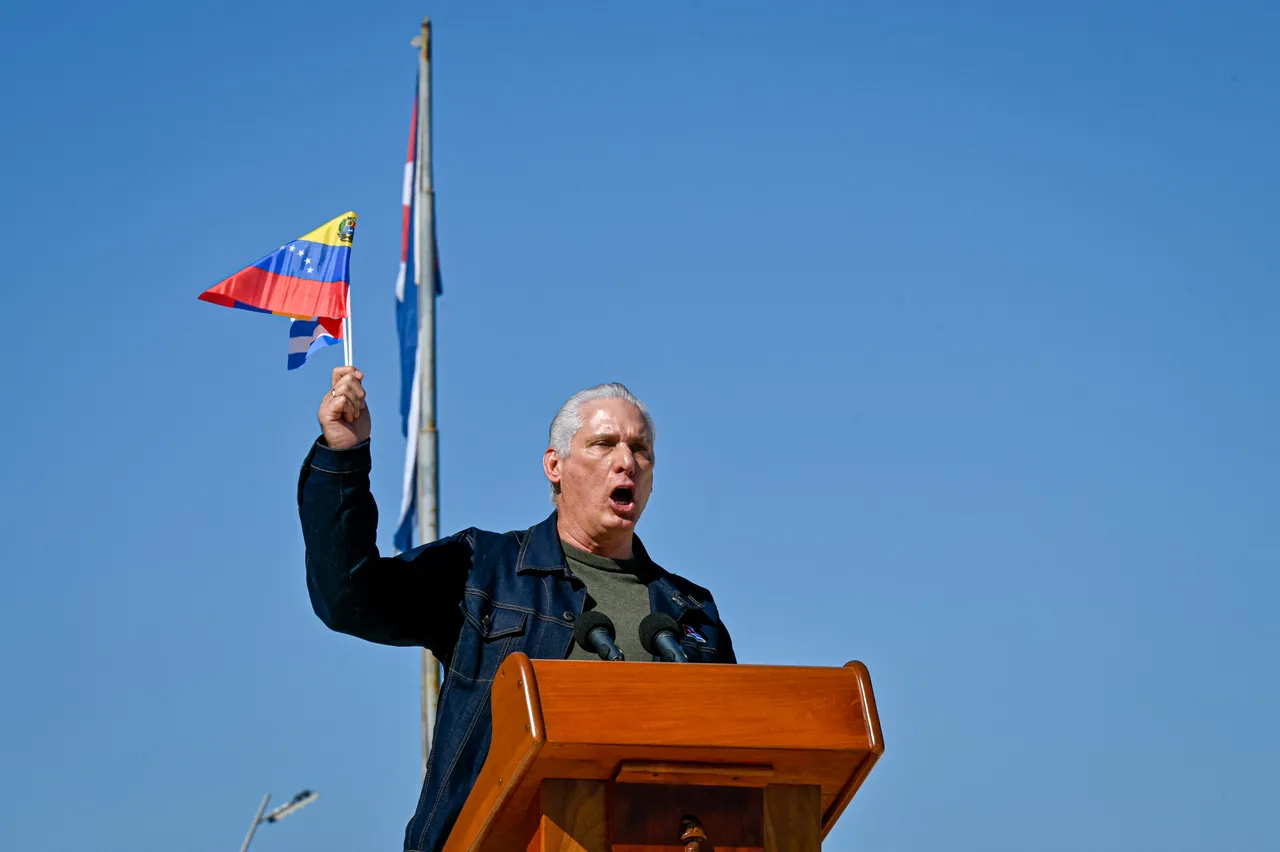
Cuba's President delivers a speech as he flutters a Venezuelan national flag in support of Nicolas Maduro in Havana on January 3 2026 [FILE]. / AFP
Cuba said that 32 of its combatants were killed during a US military operation that Washington described as a “large-scale strike,” which resulted in the capture of Venezuela’s President Nicolas Maduro.
Cuban President Miguel Diaz-Canel announced on Sunday that January 5 and 6 were declared national days of mourning, honouring the combatants who, he said, carried out their duties with honour and demonstrated “fierce resistance” reflecting Cuba’s long-standing spirit of international solidarity.
The Cuban government said those killed were serving on official missions representing the Revolutionary Armed Forces and the Ministry of the Interior, deployed at the request of Venezuelan authorities as part of bilateral cooperation.
Venezuela also paid tribute to the fallen combatants, with the government in Caracas saying it “honours the 32 Cuban combatants who gave their lives in the fulfilment of their duty, in the context of cooperation and defence missions.”
US President Donald Trump said earlier that a significant number of Cuban security personnel assigned to protect Maduro were killed during Saturday’s raid.
Maduro and his wife, Cilia Flores, arrived in New York late on Saturday and are currently being held at the Metropolitan Detention Center in Brooklyn.
US authorities say the couple faces federal charges related to drug trafficking and alleged cooperation with gangs designated as terrorist organisations.
Maduro has rejected the allegations, while Venezuelan officials have called for the immediate release of the couple, describing the operation as illegal and a violation of Venezuela’s sovereignty.
Cuba said that 32 of its combatants were killed during a US military operation that Washington described as a “large-scale strike,” which resulted in the capture of Venezuela’s President Nicolas Maduro.
Cuban President Miguel Diaz-Canel announced on Sunday that January 5 and 6 were declared national days of mourning, honouring the combatants who, he said, carried out their duties with honour and demonstrated “fierce resistance” reflecting Cuba’s long-standing spirit of international solidarity.
The Cuban government said those killed were serving on official missions representing the Revolutionary Armed Forces and the Ministry of the Interior, deployed at the request of Venezuelan authorities as part of bilateral cooperation.
Venezuela also paid tribute to the fallen combatants, with the government in Caracas saying it “honours the 32 Cuban combatants who gave their lives in the fulfilment of their duty, in the context of cooperation and defence missions.”
US President Donald Trump said earlier that a significant number of Cuban security personnel assigned to protect Maduro were killed during Saturday’s raid.
Maduro and his wife, Cilia Flores, arrived in New York late on Saturday and are currently being held at the Metropolitan Detention Center in Brooklyn.
US authorities say the couple faces federal charges related to drug trafficking and alleged cooperation with gangs designated as terrorist organisations.
Maduro has rejected the allegations, while Venezuelan officials have called for the immediate release of the couple, describing the operation as illegal and a violation of Venezuela’s sovereignty.
Who is Cilia Flores, Venezuela’s ‘first combatant’?
First Lady Cilia Flores was abducted with her husband, President Nicolas Maduro, on Saturday. Who is she?

Published On 5 Jan 2026
In the early hours of January 3, the United States’ Delta Force abducted Venezuelan President Nicolas Maduro and his wife, Cilia Flores, from the presidential residence in the capital, Caracas.
The operation, which was paired with attacks on the Venezuelan capital that killed at least 40 people, according to Venezuelan officials, extracted the country’s first couple to New York in the US, where they are expected to be put on trial as early as Monday.
But who is Cilia Flores, Venezuela’s so-called “first combatant”?
Early life
Flores, 69, was born on October 15, 1956, in Tinaquillo in central Venezuela. She grew up in areas of western Caracas that CNN has described as “working-class neighbourhoods”.
She graduated from Universidad Santa Maria in Caracas as a lawyer specialising in labour and criminal law. Her rise to prominence came when she led the team that provided legal assistance to military leader Hugo Chavez in 1992, after he attempted to overthrow then-Venezuelan President Carlos Andres Perez.
Flores reportedly helped secure Chavez’s release from prison in 1994, setting up his eventual successful run for president in 1999.
She would become an important member of the Chavismo movement, named for Chavez. It was through the Chavismo movement that she met her future husband, Maduro, who is 63 and calls her “Cilita”. The two have been partners for more than three decades.
She has three children from a previous marriage.
Political career
Flores’s rise to fame came not solely through her position as Maduro’s partner. In fact, she built her own political standing before becoming Venezuela’s “first combatant”, the Chavismo term used instead of “first lady”.
In 1999, Chavez was elected president. A year later, in 2000, Flores was elected to Venezuela’s National Assembly, the federal legislature, representing Cojedes, her home state.
She was re-elected in 2005, and in 2006, she succeeded Maduro to become the first woman to preside over Venezuela’s parliament.
In 2009, Flores became the second vice president of Chavez’s United Socialist Party of Venezuela, and in 2012, Chavez appointed her attorney general.
After the death of Chavez in 2013, Maduro succeeded him by winning an election against opposition candidate Henrique Capriles. In July 2013, Maduro and Flores married after more than two decades together.
Her new position as “first combatant” saw Flores remove herself from the limelight and begin to work behind the scenes.
However, in 2017, she returned to politics after she was elected to the Constituent Assembly, a group that was elected to draft a new Venezuelan constitution. In 2021, she was elected once again to the National Assembly.
At the time of her abduction, she was still serving as a deputy in the National Assembly.
Inside Venezuela, she has been accused of nepotism by appointing close family members to important political positions.
Capture and charges
Flores’s role as part of Maduro’s inner circle has brought international repercussions as well. She was sanctioned by the US and Canadian authorities in 2018 after the Organization of American States said the Maduro government had committed crimes against humanity.
After her abduction on Saturday, she is expected to appear with Maduro in a New York court, possibly as early as Monday. While Maduro was seen exiting a plane in the US, Flores was not.
She has been indicted in New York’s Southern District, with US Attorney General Pam Bondi issuing her charges that mirror those against Maduro, including “Narco-Terrorism Conspiracy, Cocaine Importation Conspiracy, Possession of Machineguns and Destructive Devices, and Conspiracy to Possess Machineguns and Destructive Devices against the United States”, according to a post on X by Bondi.
As for Flores, she is “accused of accepting hundreds of thousands of dollars in bribes in 2007 to arrange a meeting between ‘a large-scale drug trafficker’ and the director of Venezuela’s National Anti-Drug Office”, according to the newspaper The Guardian.
Flores’s nephews were previously arrested in the US and, in 2017, were sentenced to 18 years in prison for conspiring to traffic cocaine into the US. They were released in 2022 as part of a prison swap with Venezuela for seven imprisoned US citizens.
The US claims that Flores’s nephews were caught on recordings that prove they intended to send hundreds of kilograms of cocaine to the US from Maduro’s presidential hangar in Venezuela.
The US has attacked boats carrying Venezuelan nationals at least 30 times in recent months, killing more than 100 people.
It claims the boats were carrying drug smugglers, even though the Trump administration has not provided public evidence that there were drugs on board the boats, that they were US-bound, or that the victims of the attacks belonged to banned organisations, despite US claims.
First Lady Cilia Flores was abducted with her husband, President Nicolas Maduro, on Saturday. Who is she?
Venezuela's First Lady Cilia Flores stands behind her husband President Nicolas Maduro at a press conference, at the Miraflores Presidential Palace, in Caracas, Venezuela, June 21, 2019 [Ariana Cubillos/AP Photo]
Published On 5 Jan 2026
In the early hours of January 3, the United States’ Delta Force abducted Venezuelan President Nicolas Maduro and his wife, Cilia Flores, from the presidential residence in the capital, Caracas.
The operation, which was paired with attacks on the Venezuelan capital that killed at least 40 people, according to Venezuelan officials, extracted the country’s first couple to New York in the US, where they are expected to be put on trial as early as Monday.
But who is Cilia Flores, Venezuela’s so-called “first combatant”?
Early life
Flores, 69, was born on October 15, 1956, in Tinaquillo in central Venezuela. She grew up in areas of western Caracas that CNN has described as “working-class neighbourhoods”.
She graduated from Universidad Santa Maria in Caracas as a lawyer specialising in labour and criminal law. Her rise to prominence came when she led the team that provided legal assistance to military leader Hugo Chavez in 1992, after he attempted to overthrow then-Venezuelan President Carlos Andres Perez.
Flores reportedly helped secure Chavez’s release from prison in 1994, setting up his eventual successful run for president in 1999.
She would become an important member of the Chavismo movement, named for Chavez. It was through the Chavismo movement that she met her future husband, Maduro, who is 63 and calls her “Cilita”. The two have been partners for more than three decades.
She has three children from a previous marriage.
Political career
Flores’s rise to fame came not solely through her position as Maduro’s partner. In fact, she built her own political standing before becoming Venezuela’s “first combatant”, the Chavismo term used instead of “first lady”.
In 1999, Chavez was elected president. A year later, in 2000, Flores was elected to Venezuela’s National Assembly, the federal legislature, representing Cojedes, her home state.
She was re-elected in 2005, and in 2006, she succeeded Maduro to become the first woman to preside over Venezuela’s parliament.
In 2009, Flores became the second vice president of Chavez’s United Socialist Party of Venezuela, and in 2012, Chavez appointed her attorney general.
After the death of Chavez in 2013, Maduro succeeded him by winning an election against opposition candidate Henrique Capriles. In July 2013, Maduro and Flores married after more than two decades together.
Her new position as “first combatant” saw Flores remove herself from the limelight and begin to work behind the scenes.
However, in 2017, she returned to politics after she was elected to the Constituent Assembly, a group that was elected to draft a new Venezuelan constitution. In 2021, she was elected once again to the National Assembly.
At the time of her abduction, she was still serving as a deputy in the National Assembly.
Inside Venezuela, she has been accused of nepotism by appointing close family members to important political positions.
Capture and charges
Flores’s role as part of Maduro’s inner circle has brought international repercussions as well. She was sanctioned by the US and Canadian authorities in 2018 after the Organization of American States said the Maduro government had committed crimes against humanity.
After her abduction on Saturday, she is expected to appear with Maduro in a New York court, possibly as early as Monday. While Maduro was seen exiting a plane in the US, Flores was not.
She has been indicted in New York’s Southern District, with US Attorney General Pam Bondi issuing her charges that mirror those against Maduro, including “Narco-Terrorism Conspiracy, Cocaine Importation Conspiracy, Possession of Machineguns and Destructive Devices, and Conspiracy to Possess Machineguns and Destructive Devices against the United States”, according to a post on X by Bondi.
As for Flores, she is “accused of accepting hundreds of thousands of dollars in bribes in 2007 to arrange a meeting between ‘a large-scale drug trafficker’ and the director of Venezuela’s National Anti-Drug Office”, according to the newspaper The Guardian.
Flores’s nephews were previously arrested in the US and, in 2017, were sentenced to 18 years in prison for conspiring to traffic cocaine into the US. They were released in 2022 as part of a prison swap with Venezuela for seven imprisoned US citizens.
The US claims that Flores’s nephews were caught on recordings that prove they intended to send hundreds of kilograms of cocaine to the US from Maduro’s presidential hangar in Venezuela.
The US has attacked boats carrying Venezuelan nationals at least 30 times in recent months, killing more than 100 people.
It claims the boats were carrying drug smugglers, even though the Trump administration has not provided public evidence that there were drugs on board the boats, that they were US-bound, or that the victims of the attacks belonged to banned organisations, despite US claims.

No comments:
Post a Comment