
COMMENT: Europe will pay for its weak Venezuela response
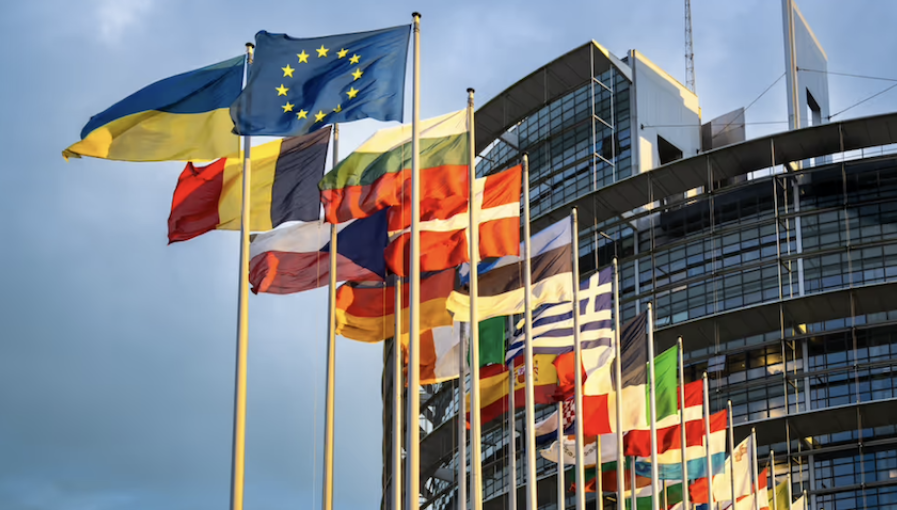
The US clearly violated both international and its domestic law with the abduction of Venezuela’s authoritarian leader Nicolás Maduro on January 3, but after lambasting Russia for doing the same to Ukraine, European leaders were surprisingly reluctant to criticise the White House for the operation, let alone take any strong measures like imposing sanctions on the US.
“International law has always been fragile, selectively applied, and reflective of power and interests, not just norms and ideals. Even an imperfect application of these principles requires the support of democratic states and international institutions. Yet most European responses to US action have failed to offer that necessary defence,” political analyst Rosa Balfour said in a paper for Carnegie Endowment for International Peace.
Apart from some explicit statements from France, Norway and Spain, most European leaders offered only a muted response to the US’ military intervention in Venezuela. It marks a telling moment that may now mark the end of the aspiration to set up a rules-based international order.
The uneasy accommodation with President Donald Trump’s second term was underscored as the EU tries to stick to the principles that underwrite the four-year long support for Ukraine, but at the same time the attempts to rescue what little remains of the “special relations” between Europe and the US that have dominated security and trade since the end of WWII.
“The end result is a now-familiar compromise between trying to avoid the US president’s ire and repeating the usual checklist of principles,” said Balfour, a foreign policy analyst and commentator on European diplomacy. “It is the story in a nutshell of European handling of Trump’s second administration.”
The operation in Venezuela, launched under the pretext of counter-narcotics efforts, has been defended by US Secretary of State Marco Rubio, who didn’t bother to conceal that the operation was the implementation of the so-called Monroe Doctrine where the US claims supremacy in the Western hemisphere. It marks a return to the Cold War era of realpolitik where “might-makes-right” to divide the world up into a series of “spheres of influence.”
Rubio went out of his way to warn Russia and China off interfering in what he called the “US’ backyard” but by doing so gives Russian President Vladimir Putin legitimacy for invading Ukraine in Russia’s backyard.
At the same time, the US has handed China the perfect pretext for invading Taiwan and in the process to return what Beijing sees as a rebel region to the centre’s control.
“The muted European responses reflect the overbearing shadow of Washington’s influence on the continent,” Balfour noted. “Triggered by fears that Greenland will be the next stop for Trump’s adventurism or of the dire consequences of US abandonment of Ukraine.”
The strategic dilemma for Europe is profound. Some critics argue that defending the rules-based order is now naïve in a world increasingly defined by hard power. Others counter that Trump’s Venezuela intervention is merely another chapter in a long pattern of US disregard for international law—from Iraq to Iran and beyond. According to Balfour, this logic falsely equates American actions with those of authoritarian regimes.
“Clinging to the dusty principles of international law is not a denial of reality. It is essential for protecting Europe’s own interests,” she said.
Balfour also warned that abandoning those principles could unleash dangerous consequences across Europe’s own periphery. “Territorial revisionism in Europe without international principles and a rules-based playing field for negotiation could unleash potentially disastrous consequences,” she said, citing fragile regions such as the Balkans, the South Caucasus, and unresolved issues in Cyprus and Spain.
At the same time Europe’s impotent reaction underscores the growing weakness of the EU, which has failed to counter Putin’s “special military operation” in Ukraine, despite its vastly superior economic power and marshal Trump’s support for the Ukrainian cause. During the recent rounds of ceasefire talks, all of Europe’s amendments to the originally 28-point peace plan (28PPP) were simply ignored by the US envoys at a Moscow meeting on December 3 with Putin, and Brussels has been excluded from all subsequent negotiations.
Beyond Europe’s borders, the erosion of credibility is already having global effects. “Europe’s rhetorical messaging toward the Global South is steeped in UN Charter-derived language but the practical application of those principles leaves much to be desired, to put it kindly,” Balfour said. Trump’s military operation in Venezuela blatantly ignores the UN Charters demand to respect sovereign integrity and is obviously illegal under international law.
Balfour added that the EU’s credibility has been “long eroded,” undermining efforts to build partnerships on Ukraine or secure new trade deals amid Washington’s protectionist turn.
Europe’s challenge, she argued, is to resist being shaped by US ideological frameworks or technological dominance, and instead to uphold a rules-based international order that secures both its neighbourhood and its global standing.
“A further reason to uphold the principles of the rules-based order is to reclaim the language of rights and democracy from those who now misuse it,” Balfour said, warning that phrases like “freedom” and “peace” are increasingly employed to justify repression or surrender.
“The consequences of the erosion of democratic norms at home and abroad will outlast the present European fear of—or attraction to—sphere-of-influence geopolitics,” she added.
Euroviews. Venezuela's sovereignty is not negotiable — and France should rearm
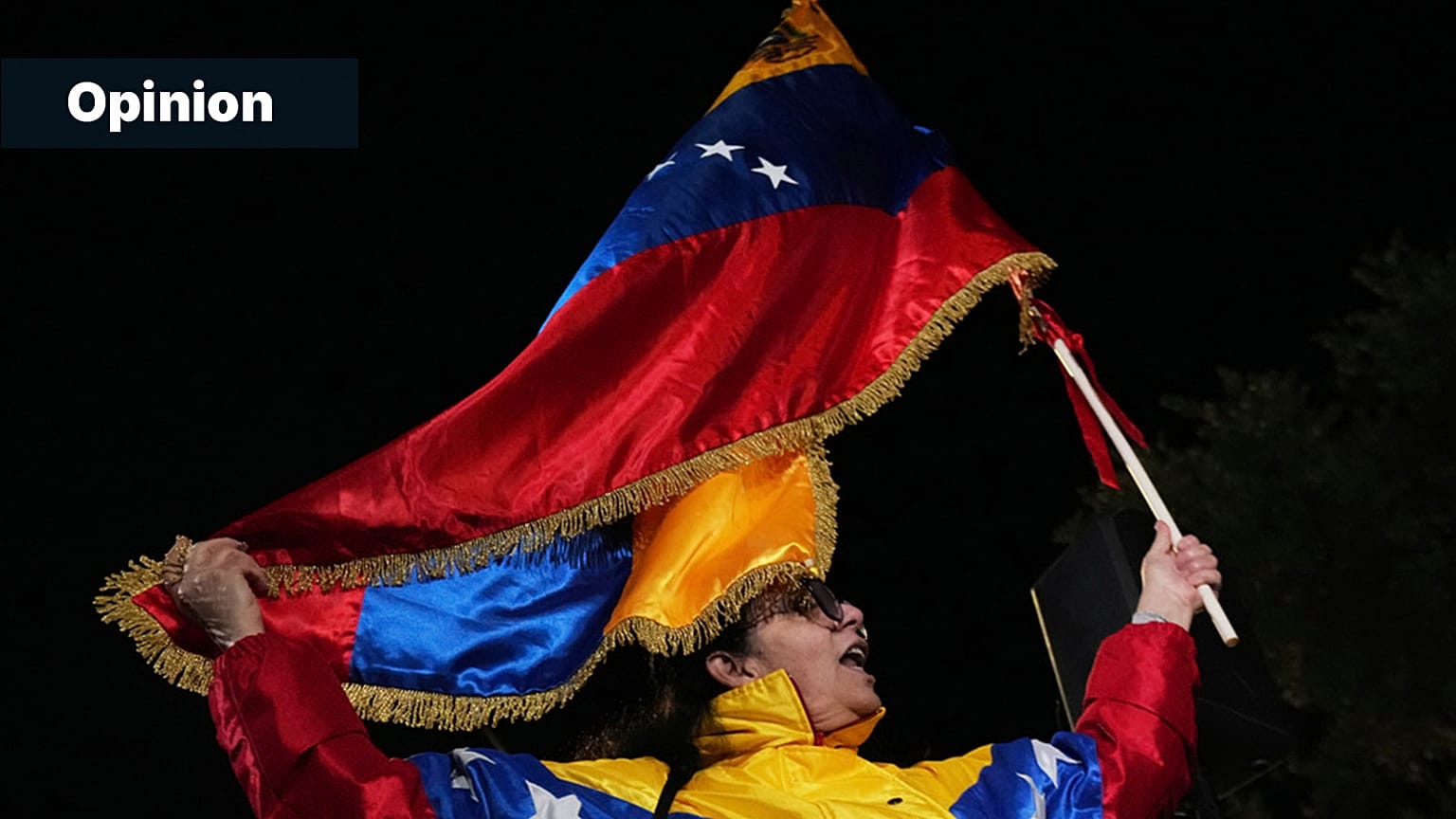
The arrest of Venezuelan leader Nicolás Maduro raises serious concerns because sovereignty is non-negotiable, and therefore it is urgent for countries like France to rearm and focus on security, French National Rally MP Sébastien Chenu writes in an opinion article for Euronews.
French poet Jean de La Fontaine wrote in The Wolf and the Lamb that “the reason of the strongest is always the best.”
We should harbour no illusions: Nicolás Maduro is nothing like a lamb. And accusing Donald Trump of being a wolf, as the left does, is a bit too easy.
The most serious crises arise when the legality and the legitimacy of an action do not align.
From the standpoint of international law, the action undertaken by the United States is illegal. Nevertheless, its legitimacy can be questioned.
More than the drug trafficking for which Maduro and his wife have just been indicted —and for which they will have to answer before US courts — the Venezuelan president was above all a tyrant whose downfall delighted millions of people
The National Rally has never refrained from denouncing the dictator idolised by a segment of the French left.
But the arrest of Maduro, in violation of Venezuela’s territorial integrity, cannot fail to raise serious concerns. Concerns, because sovereignty is not negotiable!
Focus on our own interests
Without sovereignty, there is no state. France knows this well, as its sovereignty has been trampled for decades by a European Union ever more distant from peoples and nations. "Europe means peace," we are told ad nauseam by the euro-enthusiasts.
But when the sword, more than peace, makes our age tremble, France can rely only on itself. It is urgent to rearm and, first and foremost, to think about our own security.
Security and sovereignty can only be ensured through an ambitious defence policy. The increase in our budget in this area — more than €6.5 billion in 2026 — is far too small.
By way of reminder, in 1960 the share of GDP devoted to defence was 6.1%. This year it is estimated at 2.06%.
What do those few billion and those few percentage points amount to in an age as violent as ours, when the whole world is rearming?
But France is not only familiar with the sword. It also knows the pen. Alongside great captains, it has also produced brilliant diplomats — men who, throughout history, have succeeded in making France’s singular voice heard on the international stage.
Our seat on the UN Security Council, as well as our nuclear deterrent, must enable us to chart our own course. We must take back the initiative in diplomacy and focus solely on our national interests.
To paraphrase Charles de Gaulle: France has no friends, it has only interests.
Sébastien Chenu is a deputy of the French National Assembly for the National Rally party (RN).
Trump Riding High On Venezuela: A
Challenge To Global Stability – OpEd
January 7, 2026
By Patial RC
2025 was a bloody year of wars and 2026 promises no better with the US commencing its biggest military buildup in the southern Caribbean in decades to remove Venezuelan President Nicolás Maduro from power. In December, the US coast guard began seizing tankers exporting sanctioned Venezuelan crude in what President Trump called a blockade.
On January 3, 2026, the United States launched a dramatic and unprecedented military ‘Operation Absolute Resolve’ in Venezuela that resulted in the capture of President Nicolás Maduro and his wife Cilia Flores by US Special forces to face federal charges in the US. The operation, codenamed Operation Absolute Resolve, marked the most direct intervention by the US military in Latin America in decades and sent shockwaves through global diplomacy and international law.
This event has not only reshaped the geopolitical landscape of the Western Hemisphere but has reignited intense debate over the nature of American power, the role of militarism in US foreign policy, and the prospects for international stability in a world where hard power increasingly overshadows diplomacy.
From Military Buildup to Open Intervention
Long before the raid, the Trump administration had initiated a significant military buildup in and around Venezuelan territory under the banner of counter-drug operations and national security. The operation involved months of naval and aerial deployments—including warships, aircraft carriers, surveillance drones, and special forces—through what the U.S. termed ‘Operation Southern Spear’. This campaign combined anti-narcotics interdictions with escalating military pressure on the Maduro government.
These deployments took place against a backdrop of deteriorating relations between Washington and Caracas. The Trump administration had repeatedly labeled Maduro; “A Narco-Terrorist”, accused his government of trafficking fentanyl and cocaine into the United States, and doubled the bounty on his capture—setting the stage for a confrontation that ultimately became kinetic.
Operation Absolute Resolve: A Turning Point
In the pre-dawn hours of January 3, US military forces moved directly on Venezuelan soil. Special operations units, backed by air and naval firepower, struck key targets in Caracas, ultimately capturing Maduro and his wife and transporting them to New York City. The US government swiftly announced indictments against both drug- and terrorism-related offenses.
According to official figures, at least 57 individuals were killed during the operation—including Venezuelan and Cuban military personnel—with several US soldiers wounded. Venezuelan authorities reported the deaths of dozens of their security officers and Cuban allies, prompting mourning declarations in both Caracas and Havana.
Acting swiftly, Delcy Rodríguez, Venezuela’s vice president, was sworn in as interim president. She emphatically rejected claims that Venezuela was under US control and asserted Caracas would resist foreign domination—even as she declared a seven-day period of national mourning for the dead.
A Shift Toward “Armed Democracy”
The forceful removal of the Venezuelan leader by US troops represents a stark departure from the rhetorical ideal of America as a peaceful, law-based democracy. Instead, critics argue, the United States has unveiled an “Armed Democracy”—a polity that resolves foreign policy challenges less through diplomacy and multilateral engagement than through overwhelming military might.
Under President Trump’s leadership, US foreign policy has increasingly relied on direct coercion and unilateral actions rather than negotiation and alliance-based approaches. What was once framed as support for democratic values has, in Venezuela’s case, morphed into assertive regime change—executed without authorization from the United Nations Security Council and without broad international consent.
Militarism has become central to US posture in Latin America, with policymakers explicitly embracing hard power tactics to achieve strategic objectives. As one commentator notes, the US now appears prepared to use “a huge naval deployment” and military force even when traditional law enforcement or diplomatic tools might have served instead. Unilateral strikes and regime change—far from stabilizing the region—have injected new uncertainty into Latin American geopolitics, with far-reaching implications for migration, trade, and security cooperation.
Militarism is the US national religion; “We believe in wars. We may no longer believe in formal declarations of war…We believe in weaponry, the more expensive the better”.
Oil, Petrodollars, and Strategic Interests
While US officials justified the intervention primarily on counter-narcotics grounds, the geopolitical and economic stakes were unmistakably tied to Venezuela’s vast Oil Reserves—the largest proven in the world—and its efforts to bypass the US dominated petrodollar system through sales in Yuan and alternative currencies. Venezuela’s proximity to the United States and key maritime routes added to its strategic importance.
In the wake of Maduro’s capture, Trump announced Venezuela would supply the US with 30 – 50 million barrels of oil at market price, ostensibly benefiting both nations. The administration also signaled plans to integrate American energy companies into Venezuelan production—a move that critics call economic opportunism cloaked in legal pretext.
Global Outrage? – The UN?
The unilateral nature of the US military action and its blatant violation of Venezuelan sovereignty have drawn widespread mild international condemnation.
At a UN Security Council emergency meeting on 5 January, multiple member states and the UN secretary-general emphasized the need to uphold the UN Charter, which prohibits the use of force against sovereign states without Security Council authorization or an act of self-defense. Unilateral military aggression, they warned, sets a dangerous precedent that could weaken the international legal framework that has prevented large-scale interstate conflicts.
Most scholars and experts have underscored that forcibly capturing a sitting head of state and transporting him abroad for trial has “No Basis under International Law” and represents a clear breach of Venezuela’s territorial sovereignty.
Across Latin America, the response has been overwhelmingly critical: Colombia’s President warned the “intervention could destabilize the entire region and spark a humanitarian crisis”. Brazil’s President condemned the action as “crossing a dangerous threshold in international conduct”. Mexico and Spain labeled the “intervention as jeopardizing regional stability and violating international norms”.
China and Russia described the “raid as a violation of sovereignty and a dangerous precedent, with China demanding Maduro’s immediate release”. Iran’s foreign ministry “strongly condemned the US military buildup and its unilateral actions, framing them as belligerent and unlawful”.
This multi-polar backlash signals a broader erosion of US influence within global institutions and rising resistance to American unilateralism.
The Future of American Hegemony
The US operation in Venezuela exposes a profound transformation in how American foreign policy is conducted under the banner of national security. The shift toward Military Assertiveness over Diplomacy, particularly in neighboring regions historically considered within the US sphere of influence, challenges the traditional international World order.
This model of an “armed democracy” that relies on force rather than consensus—undermines the institutions and norms that once upheld global peace and collective security. Without adherence to international law and multilateral frameworks, the risk of unilateral power projection escalates, inviting rival powers to challenge US influence and further destabilize world politics.
A Dangerous Precedent
The US action in Venezuela is more than a single geopolitical flashpoint: it is a symbol of a systemic shift in the exercise of American power. By elevating military force above diplomacy and international law, the US has signaled a willingness to reshape sovereign states and extract geostrategic gains through unilateral action.
This approach may yield short-term tactical victories, but it erodes the normative foundations of the international order, risks alienating allies, and invites counter-responses from other great powers. In a world increasingly divided between competing spheres of influence, the legacy of Operation Absolute Resolve will likely be debated for years to come—raising uncomfortable questions about the future of global stability, justice, and the rule of law.
Trump Peacemaker Vs “Peace through Strength”
In his second inaugural address in January 2025, Trump stated, “My proudest legacy will be that of a peacemaker and unifier”. Trump has consistently expressed a desire to be known as a “Peacemaker,” but his foreign policy approach has been “Peace through war” strategy that relies heavily on military strength and decisive force.
He points to his use of diplomacy and a willingness to engage with rival leaders as evidence of his dealmaking abilities, which he argues have fostered peace and improved international relations. His supporters also highlight his efforts to mediate the Israel-Hamas conflict and the Russia-Ukraine war as part of this legacy.
Ultimately, while Trump aims to achieve peace, the methods often involve the application or threat of military power, leading to an interpretation of his policy as “Peace through War” or “Peace through Strength” rather than purely diplomatic peacemaking. “Might is Right” – The “Trump Art of Dealing.”
Patial RC
Patial RC is a retired Infantry officer of the Indian Army and possesses unique experience of serving in active CI Ops across the country and in Sri Lanka. Patial RC is a regular writer on military and travel matters in military professional journals. The veteran is a keen mountaineer and a trekker.

No comments:
Post a Comment