
Britain Continues to Withhold $4.8 Billion of Venezuelan Gold
- Britain’s refusal to recognize Venezuela’s new leadership means the Bank of England is likely to continue holding the country’s gold reserves.
- The gold has been tied up in legal disputes since 2020, centered on questions of political legitimacy and recognition.
- The U.K.’s position diverges from the U.S., which has signaled openness to working with Venezuela’s new government.
The foreign secretary has signalled the Bank of England will continue to withhold $4.8bn of Venezuelan gold being held in its vaults, despite the dramatic toppling of the country’s autocratic ruler potentially paving the way to the reserves being returned.
Addressing lawmakers late on Monday, Yvette Cooper suggested the government would continue its refusal to recognise the new leadership in Caracas, acknowledging this would likely mean the Bank would continue to withhold the country’s reserves.
Britain’s central bank has stored 31 metric tons of Venezuelan gold in its vaults since 2008. And since 2020, the holdings have been the subject of a bitter legal dispute between toppled President Nicolas Maduro and the Bank of England, over whether the reserves should be returned to Venezuela’s central bank.
The Bank of England has so far refused a string of requests from Maduro for the gold on the grounds that his administration was not recognised by the UK government and those of several other developed economies.
Maduro is accused of rigging two of his country’s national elections, which eventually led to an alternative government being assembled by the country’s opposition leader Juan Guaido between 2018 and 2022. When Guaido was in post, the UK officially recognised him as the country’s head of state, prompting the Bank of England to refuse Maduro’s request, despite the country’s central bank being under his control.
The impasse led to a bitter – and long-running – legal dispute between Maduro and the Bank, with the High Court originally siding with the Bank of England in 2020. That decision was overturned by the Court of Appeal before the Supreme Court overruled that ruling in turn, blocking the return of the gold in 2021.
Maduro arrest reignites Venezuelan gold questions
The capture and arrest of Maduro on Saturday by US special forces had reignited questions over the gold’s fate. Trump’s White House has implicitly approved the appointment of Delcy Rodriguez as the Latin American country’s new leader, despite her playing an integral role in Maduro’s government as the former President’s deputy.
But asked about the future of the reserves in Parliament, Cooper said the government would continue not to recognise the new regime’s authority, which was the primary basis for the Bank of England refusal to Maduro’s requests for his country’s country’s gold reserves to be returned.
“It is important that we have the pressure in place to have a transition to a democracy which is also about the will of the Venezuelan people,” she told MPs late on Monday. “Obviously there are independent decisions for the Bank of England to take but our principles are about maintaining and pursuing the stability and the transition to a democracy and that is what is guiding our approach to recognition.”
The position puts the UK at odds with Donald Trump’s US administration, which has suggested it is open to working closely with Rodriguez providing she heeds American officials’ key demands.
Venezuela’s incoming President has so far struck a conciliatory tone since being sworn in as head of state, telling her first cabinet meeting on Sunday: “We invite the US government to collaborate with us on an agenda of cooperation oriented towards shared development within the framework of international law.”
Rodriguez has not made any specific demands for the reserves in the short time she has been in post. The US State Department has also not publicly confirmed its preference for the ultimate destination of the reserves.
The Bank of England is home to one of the largest gold vaults in the world, and is a popular destination for the reserves of developing economies. Its decision not to release Venezuela’s holdings was fraught and sparked a string of protests outside the country’s embassy.
The Bank of England declined to comment. The US State Department and UK Foreign Office did not respond to a request for comment.
By CityAM
Flight of the bullions: Why did Maduro move gold to Switzerland?
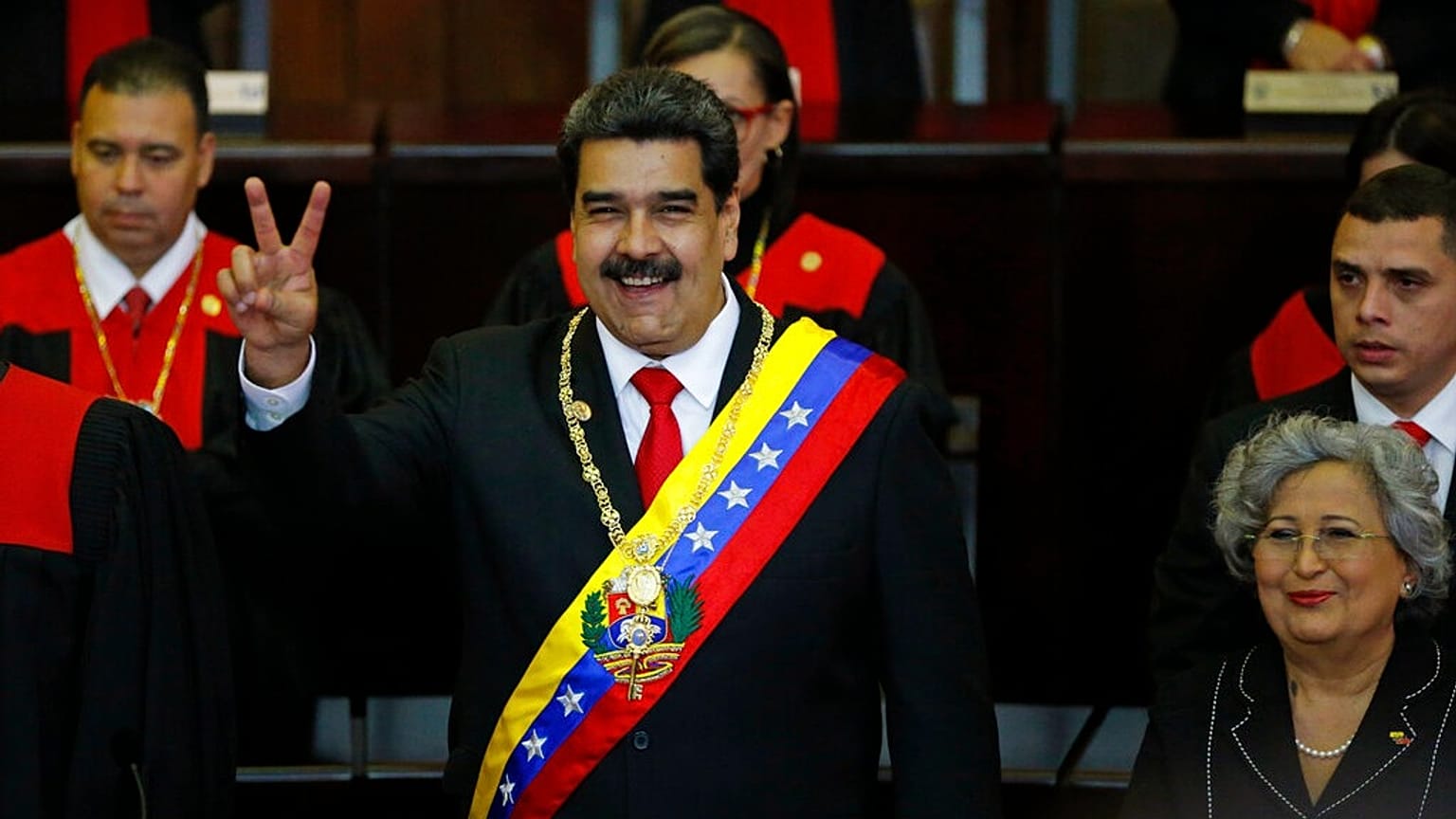
Caracas shipped 127 tonnes of central-bank gold to Swiss refineries over a period of five years, seeking cash and collateral as the Venezuelan debt crisis deepened.
Ten years ago, Venezuela secretly shipped gold worth almost 4.7 billion Swiss francs (€5.05bn) from the South American country's reserves with the intention of melting it down and selling it internationally.
Over a period of five years, Venezuela airlifted 127 tonnes of gold to Switzerland, which was later traced by Swiss customs who register and report all imports and exports to the country.
Switzerland is a leading international hub for gold and by value, has been the largest importer and exporter of gold in the world, with Swiss customs data showing huge inflows and outflows in recent years.
Crucially for a country like Venezuela trying to monetise bullion from its Central Bank gold reserves, Switzerland hosts some of the world’s biggest refineries. These include Valcambi, PAMP, and Argor-Heraeus, largely clustered in the canton of Ticino.
Refineries can melt and recast metals into the highest standard of internationally tradable formats or “Good Delivery” bars and provide the paperwork and certification that makes the gold easier to move and sell across global markets
The Swiss government did not previously publish data on Venezuela's gold transfer, in line with the federation's legacy of maximum financial discretion, which continues to make it appealing to both leading businessmen as well as autocratically inclined leaders looking for somewhere to store or liquidate their assets.
Swiss public broadcaster SRF said Maduro’s government shipped gold abroad as an “act of desperation” to avert state bankruptcy, selling part of the bullion and using some as collateral for loans and the refinancing of its debt.
By the time Venezuela slid into default in 2017, the country was already effectively shut out of normal refinancing and running out of usable hard currency.
A 2017 policy paper by the Center for International Governance Innovation (CIGI) estimated a financing gap of more than $15bn (€12.84bn) that year, with bonded debt service around $12bn (€10.27bn), rising to nearly $20bn (€17.1bn) if payments linked to China are included.
Venezuela had a "substantial financing gap" and "little in the way of assets or policy options to close it", according to the CIGI reports published around the time Maduro was airlifting gold to Switzerland.
Oil export receipts, which were and continue to be the state’s main source of dollars, had collapsed, with CIGI stating that "export revenue is woefully inadequate to meet this year’s bonded debt service".
According to SRF, after remelting, some of the Venezuelan gold was likely transported to other countries such as Great Britain, also a key international gold trading hub, and Venezuela sold a large amount of the gold to Turkey.
At the time, the imports to Switzerland did not violate any sanctions. However, such transactions would now be highly unlikely since the Federal Council tightened regulations on financial transactions in 2018 after the major sanctions against Venezuela came into place, aligning itself with EU measures.
So the attempt to prevent sovereign default by transferring gold reserves abroad largely failed. As early as 2017, Venezuela was unable to meet its obligations and could neither repay the debts nor pay the corresponding interest.
The country's current foreign debt is estimated at up to $170 billion (€145.4bn), which equals twice the country's annual economic output, making it effectively bankrupt.
Gold Reserve aims to retake Venezuela assets after Maduro’s fall
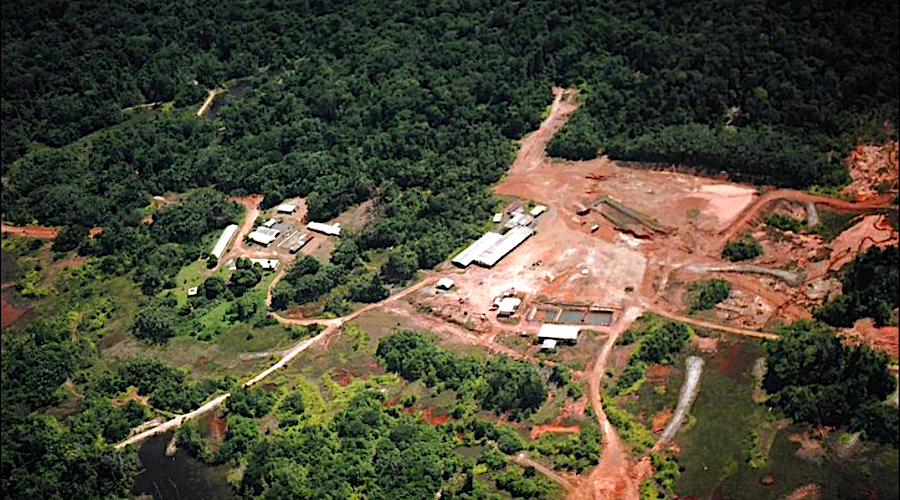
Gold Reserve Ltd. has spent years fighting with Nicolas Maduro’s government over two gold deposits seized by Venezuela. Now, after the US captured the country’s leader on Saturday, the tiny mining company sees a path to regain those prized assets.

The company operated two gold and copper deposits — Brisas and Siembra Minera — before they were seized by Venezuela’s government in the 2000s and 2010s. The Brisas deposit, which was confiscated under the Hugo Chavez regime, holds about 10 million bullion ounces — worth about $44.4 billion based on Monday’s gold price.
Paul Rivett, the company’s vice-chair, says he fielded numerous calls from mining companies over the weekend expressing interest in the deposits. Already, Rivett said he’s exploring deals that could help develop them under a new Venezuelan government.
“We will be doing some form of a transaction, whether it involves an investment into us or a partnership,” he said in a Monday interview. “Thankfully we’ve been able to hold on to all the mining professionals and geologists who found this deposit and proved it out years ago, but they’re all in their late 60s and 70s. What we need now is operational expertise.”
The company’s early moves show how miners and resource investors are already probing Venezuela’s rich mineral frontier after a dramatic shift in the country’s political landscape over the weekend.
Venezuela sits atop some of the Western Hemisphere’s largest gold deposits, but the Maduro administration struggled to develop them. Most of the country’s operating mines are dominated by criminal cartels and Chinese firms. Gold Reserve’s two former projects are presently run by the Cartel de los Soles — a US-designated narco-terrorist organization — using Chinese technology, according to the company.

Shares of the company surged 103% in Toronto on Monday.
The company is one of two North American miners that filed arbitration suits against Venezuela after their assets were seized. The other firm, Rusoro Mining, said Monday that its chances of collecting more than $2 billion in compensation from the Venezuelan government have improved, following the US removal of Maduro.
Beyond Venezuela’s crumbling oil infrastructure — which the Trump administration has pledged to rebuild — the White House has touted the country’s access to minerals.
“They have a great mining history that’s gone rusty,” Commerce Secretary Howard Lutnick told reporters Sunday. “It was once upon a time one of the great economies and cultures of the world, and it was destroyed, and now President Trump is going to fix it and bring it back.”
The regime change has also renewed Gold Reserve’s hopes that it can secure the release of its legal counsel, José Ignacio Moreno Suarez, who was imprisoned in 2023 amid the arbitration dispute.
“We’ve got a colleague who’s still stuck in jail, who sleeps on concrete, who has broken fingers, bruises up and down his body,” Rivett said. “This is real. These are really bad people.”
(By Jacob Lorinc)

No comments:
Post a Comment