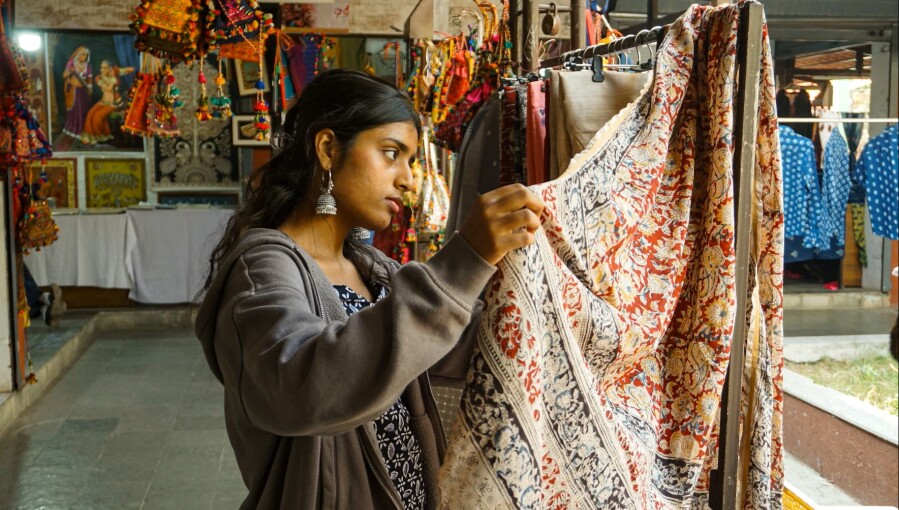
India’s free trade agreement with the European Union is expected to generate close to 7mn jobs in the textile sector alone, while sharply expanding the country’s footprint in one of the world’s largest apparel and fabric markets, PTI reported.
Following the signing of the agreement on January 27, the Indian commerce minister Piyush Goyal said the deal would give Indian textile and garment exporters preferential access to the EU’s textile market, estimated at around $250bn. At present, India accounts for only about $7bn of textile and clothing exports to the bloc, despite the sector being one of the country’s largest employers. With duty barriers removed under the FTA, exports to the EU are projected to rise to as much as $40bn over the coming years.
The EU market is currently dominated by Bangladesh, which exports roughly $30bn worth of textiles and garments annually, benefiting from zero-duty access as a least developed country. Indian exporters, by contrast, have faced tariffs of up to 12%, limiting their competitiveness. The removal of these duties is expected to significantly narrow the gap and improve India’s standing against other major suppliers such as Turkey, Vietnam and China.
Textiles remain India’s second-largest source of employment after agriculture, supporting around 40mn jobs across spinning, weaving, processing and garment manufacturing. The anticipated export expansion under the FTA is expected to drive fresh hiring across the value chain, particularly in labour-intensive segments such as ready-made garments and home textiles.
Industry bodies have welcomed the agreement as a turning point for the sector. The Southern India Mills’ Association described the India–EU FTA as a landmark achievement that could fundamentally alter the growth trajectory of Indian textiles and clothing, ANI reported.
The agreement is also expected to address long-standing structural challenges in the sector. Industry representatives have pointed to parallel government measures aimed at improving competitiveness, including changes in duties and taxes on man-made fibres and filaments, streamlined export incentive schemes, interest subvention and faster conclusion of trade agreements with key markets. Together, these steps are expected to support capacity utilisation and stabilise an industry that has faced prolonged pressure in recent years, ANI added.
Southern India, and Tamil Nadu in particular, is seen as a major beneficiary. The state accounts for nearly 29% of India’s textile exports to the EU, valued at around $2.3bn. Key clusters such as Tiruppur and Karur, which supply knitted garments and home textiles to global brands, are expected to see strong growth, supported by both the India–EU and India–UK trade agreements.
Beyond exports, the FTA is also expected to support technology upgrades and value addition. Indian manufacturers import between $2.6bn and $3bn worth of textile machinery annually from EU countries, and easier trade terms could improve access to advanced weaving, processing and technical textile equipment, strengthening long-term competitiveness.
Industry bodies have urged swift implementation of the agreement, stressing that early operationalisation will be critical to reviving investment, restoring capacity utilisation and generating employment across the textile value chain. The FTA is also seen as central to India’s broader ambition of expanding the textile industry to $250bn in size and lifting exports to $100bn by 2030, while creating millions of new jobs, particularly in rural areas and among women.

No comments:
Post a Comment