EU Moves Closer to a Full Ban on Russian Oil Shipping Services
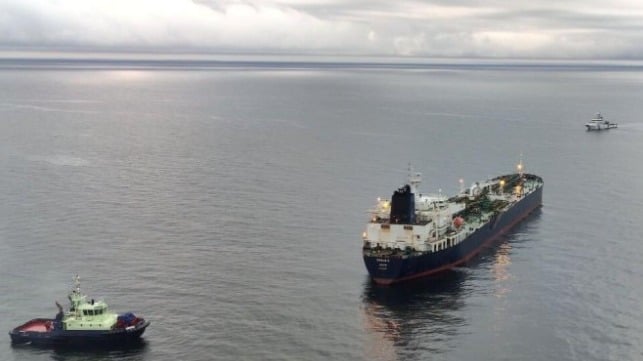
The European Commission's latest proposal for sanctions on Russia includes a full ban on European maritime services for the shipping of Russian crude oil, driven by the EU's need to generate leverage at the negotiating table on the war in Ukraine. It is a retreat from the incrementalism of the G7 "price cap" policy, which was promoted by former U.S. Treasury Secretary Janet Yellen in 2022 as substitute for a full maritime services ban.
The price cap system created a window for EU-domiciled commodity traders, shipowners, insurers and service providers to engage in the Russian oil trade, without fear of sanctions - so long as the cargo is priced below the cap level, currently $47.60 per barrel in Europe. This window is wide enough that more than a third of Russian oil exports in the Baltic are loaded aboard "legitimate" tankers, per Brookings, with the balance carried by the non-EU shadow fleet.
"Until now, with a price cap, you'd still have exports of oil [with European participation]. With this ban, any export of oil from Russia will be made even more difficult," EC spokesperson Paula Pinho explained Monday. "So that's the logic underpinning this proposal."
In addition, the plan includes sanctions on two specific oil terminals in Georgia and Indonesia that handle Russian crude, sending a message that overseas stakeholders will also be targeted.
Negotiating leverage
The proposal comes against the backdrop of negotiations between the U.S. and Russia over the fate of Ukraine, which has so far offered only a diminished role for the EU. To regain influence and offset a perceived U.S. receptiveness to Russian persuasion, top EU diplomat Kaja Kallas thinks that Moscow must be pushed "from pretending to negotiate to actually negotiate" with Europe. Economic leverage in the form of oil sanctions, if actualized, could move that forward.
"If the Russians think they are getting their maximum goals from the Americans, why should they want to talk to the Europeans?" she told Euronews on Monday. "We will only make demands for them."
In the broader geopolitical context, some analysts are becoming confident that a full EU maritime services ban for Russian oil shipping is coming.
"It now looks increasingly certain that the EU (and likely the UK) will move to a comprehensive maritime service ban on the carriage of Russian crude oil to third countries," said Alexander Brandt, sanctions partner at global law firm Reed Smith, in a statement Monday. "Instead of gradually lowering the oil price cap, EU leaders have concluded that controlling Russia’s oil revenues through comprehensive restrictions on maritime services is necessary to squeeze state profits. Such steps build on measures taken by the UK and U.S. last year, to target the four largest producers of Russian oil."
There is one foreseeable risk, however. G7 price cap policy led Russian exporters (and their enablers) to build out a giant shadow fleet of under-regulated, under-insured tanker tonnage, bypassing Europe's near-monopoly on financial services for shipping. The safety and security risks of the shadow fleet are well-understood - and could get worse if every drop of Russian oil has to ship aboard a gray-market tanker, Brandt said.
"The impact of these measures, if introduced, remains to be seen and a key danger associated with a full-service ban, is that it might lead to further proliferation of the parallel [shadow] fleet, that has become a source of considerable international concern," he said in a statement.
Norway Flags Russian Cyber Espionage Campaign on Maritime Infrastructure

Norwegian security agencies have warned of increased Chinese and Russian intelligence operations in 2026, with maritime infrastructure a major target. This was revealed by the Norwegian Police Security Service (PST) in its 2026 national threat assessment, which was released last week. The report claims Norway is facing its most serious security situation since World War II.
In addition, PST noted that China and Russia have enhanced their abilities to conduct intelligence operations in Norway, primarily through the cyber domain. Iran has also infiltrated Swedish criminal networks with a presence in Norway for covert operations.
But Russia remains a major threat actor to Norway. The relations between the two countries have deteriorated in the past three years, especially due to Norway’s continued support for Ukraine. Norway is aligned with economic sanctions being implemented by the EU and the U.S against Russia. Other countermeasures by Norway include enforcing strict entry for Russian nationals and restricting access of Russian vessels to Norwegian ports. There is an exemption for Russian fishing vessels to access ports in Båtsfjord, Kirkenes and Tromsø.
PST sees Russian crews on civilian vessels registered in third countries representing a significant threat in 2026. There is a growing trend by Russia to use civilian vessels to perform reconnaissance on coastal and subsea infrastructure in Norway and other allied countries in Europe.
The assessment further highlighted the Chinese state-sponsored cyber espionage campaign, code-named Salt Typhoon, focused on breaching Norwegian critical infrastructure and telecommunication networks. PST said that Salt Typhoon has already targeted vulnerable network devices in Norway, although it did not name the organizations affected. China has also used Salt Typhoon to infiltrate telecom providers in Canada and the U.S.
The PST report coincided with a warning from Ukrainian computer emergency response team, CERT-UA, which flagged cyber breaches by a Kremlin-backed hacker group called Fancy Bear or APT28. The group is targeting public sector and logistics bodies in Romania, Slovakia and Ukraine. In a report last week, cyber security firm Trellix explained that APT28 is exploiting a vulnerability in Microsoft Office, which Microsoft revealed in late January. The vulnerability tracked as CVE-2026-21509 allows attackers to bypass critical security mitigations built into Microsoft Office and Microsoft 365.
Since the flaw was revealed, Trellix confirmed that it has observed an attack campaign by APT28, targeting maritime and transportation entities spread across Poland, Slovenia, Turkey, Greece and United Arab Emirates. These attacks were part of a concentrated 72-hour spear phishing campaign that sent around 29 distinct emails across nine Eastern European countries. The emails sent between January 28 and January 30, contained malicious Office documents, which triggered malware automatically without requiring user interaction.
Russian Military Cargo Ship Draws Attention Lingering for Days off Sardinia
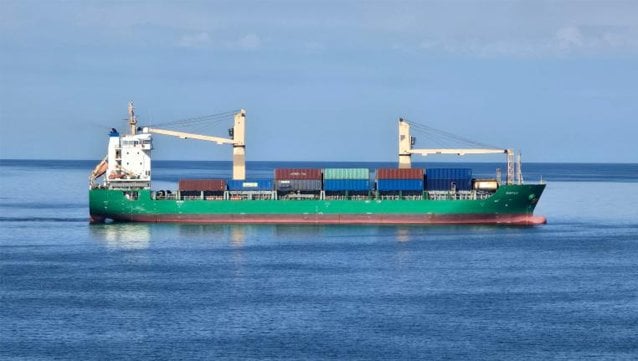
A Russian-flagged cargo ship, well-known for its military support operations, was lingering off the coast of Sardinia for nearly a week. While the ship has not violated any regulations, its unusual pattern of behavior has drawn attention, including it appears from the Italian Navy.
The Sparta IV (8,870 dwt) is one of a series of Russian cargo ships frequently linked to the movement of military equipment. The ship was spotted making numerous trips to Syria and, along with other ships of the series, was believed to have supported the withdrawal of Russian troops and material after the fall of the Asad government in Syria. The United States sanctioned the Sparta IV in May 2022, along with its owners SK-Yug, which is part of the Russian company Oboronlogistika.
The vessel’s apparent diversion in the Mediterranean on February 4 into the Tyrrhenian Sea drew immediate attention. More so when the vessel was then spotted sailing back and forth in a close loop in the area south of Olbia, a coastal city in northeast Sardinia, Italy. The vessel’s AIS signal has consistently shown it heading for Kaliningrad, Russia.
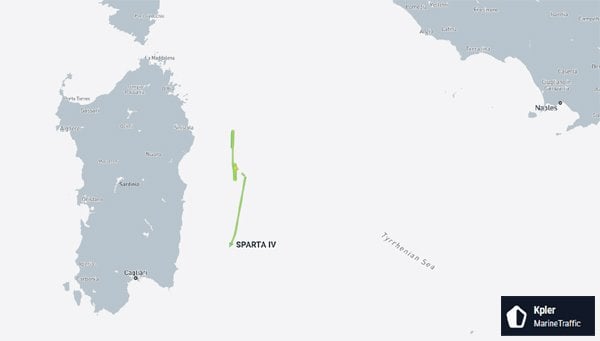
Sparta IV was going back and forth for days off the coast (MarineTraffic)
Open source media quickly said the ship appeared to be sailing with the Russian destroyer RFS Severomorsk and the tanker Kama, which also supports the Russian military. Some speculation was that there was also a Russian submarine in the area.
Some of the media reports also speculated that the ship was near critical subsea infrastructure. They said there were cables for power and communications, while others said the area did not have critical assets.
Reporting quickly ruled out local weather as the cause of the vessel’s delay and apparent holding pattern.
The Italian Navy did not directly confirm the media reports and its interest in the vessel but did take the unusual step of making a social media posting stressing that its Safe Mediterranean Operation “continues without interruption with close-range surveillance activities of Russian Federation military vessels and merchant units.” One of the pictures included showed an Italian warship sailing in close proximity to the Severomorsk. Unconfirmed reports said Italy's Guardia di Finanza had a surveillance airplane circling over the region off Sardinia for about one hour.
The Italian Navy highlighted that Operate Safe Mediterranean had been underway to monitor the region since 2022. They said it was built on and expanded an effort that had been started in 2015.
The mystery of what was going on with the Russian vessel persisted through the weekend, drawing increased attention from the Italian media.
Late on Monday, February 9, the vessel appears to have gotten back underway. The AIS signal shows it sailing at better than 11 knots, and as of the evening, it appeared to be rounding Cagliari on the southern tip of Sardinia. What the vessel was doing while it was holding in the Tyrrhenian Sea remains unclear.
Top photo courtesy of VesselFinder by Wanderer.

No comments:
Post a Comment