Think before you ink: Research suggests tattoos could cause cancer, but how concerned should we be?
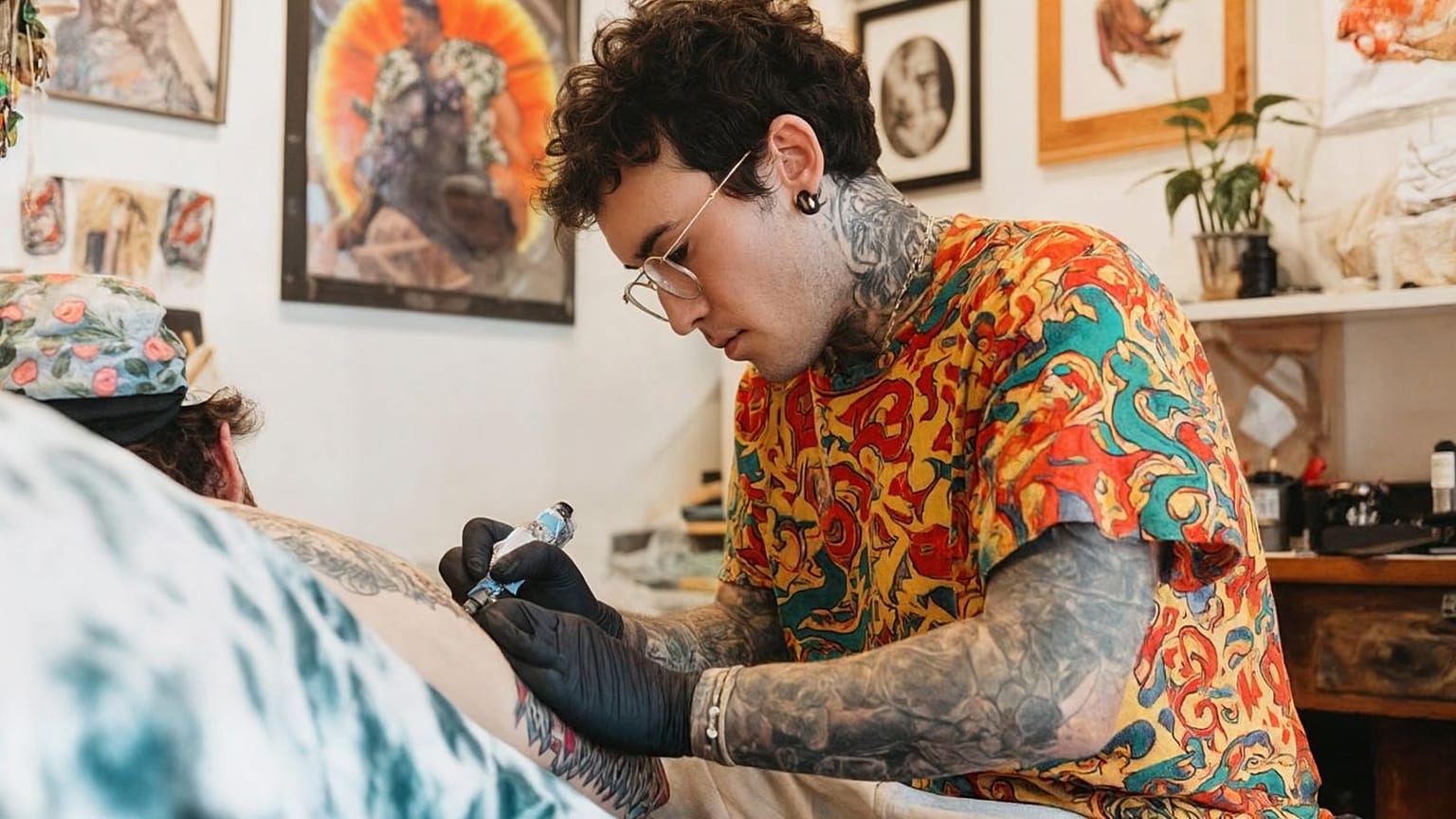
Tattoos are more popular than ever, but a growing body of research suggests a link between permanent ink and the development of certain types of cancer. How concerned should people be?
From tribal sleeves to lower-back butterflies, humans have been inking their skin for thousands of years.
For most people, the fear of future regrets is the main concern. But a growing body of research suggests tattoos could also carry more serious health risks.
Tattoos have increased in popularity over recent years, with around 13 to 21 percent of Western Europe now brandishing one, according to a study in the European Journal of Public Health.
Despite their prevalence, surprisingly little is known about the potential long-term health effects.
Previous research has found evidence that tattoo ink accumulates in human lymph nodes, which can lead to inflammation and - in rare cases - lymphoma (a type of blood cancer).
More recently, a 2025 study by the University of Southern Denmark (SDU) reported that those with tattoos have an increased risk of developing skin cancer and lymphoma.
Using a cohort of randomly selected twins, the researchers compared those who had a form of cancer with those who didn’t. The tattooed twins had nearly four times the risk of skin cancer, according to the study, which was published in the journal BMC Public Health.
It also noted that tattoo size could play a part, with anything larger than palm-sized potentially heightening risk.
“We have evidence that there is an association [between the amount of ink and risk] for lymphoma and for skin cancer,” Signe Bedsted Clemmensen, the study’s co-author and assistant professor of biostatistics at SDU, told Euronews Health.
“For lymphoma, the hazard rate is 2.7 times higher, so this is quite a lot. And for skin cancers, before it was 1.6 and now it's 2.4. This indicates that the more ink you have, the higher the risk, the higher the hazard rate,” she added.
It’s important to note, however, that these findings are still in their earliest stages - and limited due to the vast amount of contributing variables. For example, ink types, tattoo placements, cancer subtypes, and other genetic and environmental factors all need to be taken into account for a more accurate analysis.
“The bottom line is, more research is needed,” Clemmensen said, noting that future investigations require larger cohort studies across longer spans of time.
“But also, the next step I think is studying the biological mechanisms [of getting tattooed] and trying to understand what happens there.”
How concerned should we be about tattoos?
There’s no concrete evidence that tattoos cause cancer, but there are still other risks to be aware of.
These include ensuring the equipment being used is sterile to avoid infection and that the inks themselves are safe.
All tattoo inks are made up of a pigment (to add colour) and a carrier fluid (to implant colour into the middle layer of the skin, known as the dermis).
Due to most tattoo inks being imported from around the world, their ingredients can be hard to keep track of - and sometimes contain harmful substances.
“Some inks contain trace amounts of heavy metals, including nickel, chromium, cobalt and occasionally lead,” Manal Mohammed, a professor in medical microbiology at the University of Westminster, wrote in a piece for The Conversation. “Heavy metals can be toxic at certain levels and are well known for triggering allergic reactions and immune sensitivity.”
In 2022, the European Union restricted more than 4,000 hazardous substances in tattoo ink and permanent make-up under its REACH (Registration, Evaluation, Authorisation and Restriction of Chemicals) regulations. This includes anything classified as carcinogenic or mutagenic, with all tattoo inks requiring clear labelling.
Regulation is less strict in other countries - something the United Kingdom is currently tackling, having recently published plans to implement its own set of restrictions under UK REACH.
Ultimately, tattoos are considered safe if carried out hygienically, with the caveat that - as with most things in life - there could be a risk of long-term harm.
But we just don’t know enough yet to answer for sure, according to Clemmensen.
“It’s up to each of us how we choose to live our lives, right? But as a researcher, it’s also my job to inform people of these risks,” she said.
“Or, when it comes to tattooing, right now it's more about informing people about how little we know.”

No comments:
Post a Comment