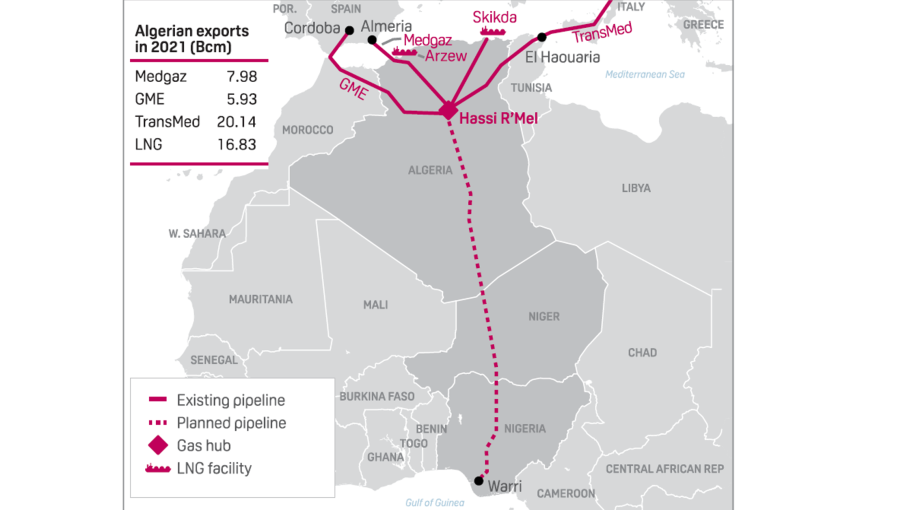
The Trans-Saharan Gas Pipeline (TSGP) project is making steady progress after Algeria, Nigeria and Niger reaffirmed their commitment to the 2024 agreements and are accelerating construction.
The three countries endorsed updates to the project’s feasibility study by UK engineering consultancy Penspen, alongside a new compensation agreement and a confidentiality pact at a recent meeting in Algiers. The agreements mark a renewed push to complete the 4,128 km pipeline, which is designed to transport up to 30bn cubic metres of natural gas annually from Nigeria to Algeria’s Mediterranean coast for export to European and global markets.
“The Trans-Saharan Gas Pipeline project is moving forward steadily,” officials from the Algerian Ministry of Energy and Mines said in a joint statement after the meeting.
The TSGP, first conceived in the early 2000s, is aimed at replacing some of the Russian gas which is no longer being sold to Europe. It will bolster energy cooperation in West and North Africa and provide an alternative supply route to Europe, which intends to ban Russian gas imports next year as part of the nineteenth sanctions package.
Once completed, the pipeline will connect Nigeria’s vast gas reserves to Algeria’s pipeline network, enabling onward delivery through the Trans-Mediterranean and Medgaz pipelines.
According to project backers, about 60% of the TSGP’s route has already been completed, with approximately 2,400 km of pipeline laid, primarily in Algeria and Nigeria. The remaining 1,800 km will be constructed across all three partner countries, traversing difficult terrain including the Sahara Desert and regions with security challenges.
The pipeline’s projected capacity of 30bn cubic metres per year represents a significant addition to regional and international supply, at a time when European demand for diversified gas sources remains high following the sharp reduction of Russian pipeline imports. At the same time, the EU has woken up to is dependency on American LNG and is seeking to diversify away from and increasingly unpredictable White House.
Algeria’s national energy company Sonatrach, the Nigerian National Petroleum Company (NNPC), and Niger’s Ministry of Petroleum are jointly managing the development phase. Technical, financial and environmental updates are ongoing as part of a revised roadmap.
Industry analysts say the project, if realised, could transform West Africa’s gas export profile. However, the TSGP has faced repeated delays due to financing hurdles, regional instability, and shifting global gas market dynamics.

No comments:
Post a Comment