Monday, June 07, 2021

Colombia president announces policing changes after protest criticism

The government has announced an effort to "modernize" the nation's police force after accusations of police brutality during recent anti-government protests.


Protesters want Duque to denounce excessive use of force by police

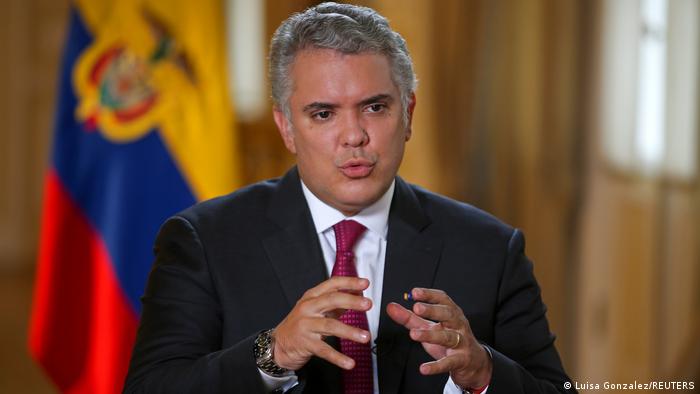
Colombian President Ivan Duque on Sunday announced plans to "modernize" the country's police, who have been widely criticized forviolently curbing recent anti-government protests.

Calling for a "transformation" of the national police, Duque announced "a decree that will modernize the structure of the national police, especially to strengthen the policy... on human rights."

Changes to police force


Duque said a human rights directorate headed by an outside expert would be created as part of the changes. The Defense Ministry said in a statement that there would be a training review, use of ID badges and bodycams, and better follow-up of citizen complaints.

Congress is expected to approve the creation of the directorate this month, which will seek international help for the creation of policies.

Colombian troops tighten grip on Cali following more protests


Defense Minister Diego Molano told AFP news agency that there would be "professionalization so that all police officers are trained in (human) rights and use of force."

The announcement came as a delegation from the Washington-based Inter-American Commission on Human Rights (IACHR) arrived in Colombia for a four-day visit to the country to evaluate the clashes in the cities of Bogota and Cali. The delegation was greeted by hundreds of supporters on the streets of Bogota.


Watch video 02:12BProtesters in Colombia condemn police crackdown

Protests continue


Demonstrations that started on April 28 against proposed tax hikes have turned into widespread protests against the government's social and economic policies. The police has been accused of using excessive force to quell the protests.

At least 61 people, mostly civilians, have died in the clashes.

The government has blamed blockades by protesters for crippling the nation's economy.

Watch video 02:27 Colombia calls in army to quash anti-government protests

Government delegates and protest leaders have held talks aimed at defusing the crisis, so far without success. Protesters want Duque to denounce excessive force by police and act to address yawning inequities in the country.

tg/sri (AFP, Reuters)
German church officials face charges for helping refugees

The number of legal cases against members of the Catholic Church is on the rise, as the German government takes a harder stance against asylum seekers taking refuge in churches.

 "It must not be that this act of Christian charity is made impossible by the threat of punishment from the state."


German churches have taken in hundreds of refugees over several decades


Juliana Seelmann, a nun from the Franciscan nunnery at the Oberzell monastery in southern Germany, was found guilty this week of aiding the unauthorized residence in Germany of two Nigerian women. She was fined several hundred euros.

She had aided two women from Nigeria who said they were trying to escape forced prostitution in Italy, where they had first fled to. After German officials sent them back to Italy, where forced prostitution again awaited them, they were able to find their way into the church's protection, under a practice often referred to in Germany as "church asylum." 


Juliana Seelmann was found guilty of aiding the unauthorized residence in Germany of Nigerian refugees

Church asylum means the temporary admission of refugees by a parish in order to avert deportation. The aim is the resumption or reexamination of the asylum or immigration procedure for the individual refugee. The practice has a long history in Germany.

After the influx of refugees to Germany in 2015 and 2016, several asylum-seekers saw their applications rejected.

Churches prevented 498 deportations in the first quarter of 2018, but in 2019 authorities rejected almost all church asylum cases. The nuns and priests point to article 4 of the German constitution, which guarantees the freedom of faith and conscience.

That is also what nun Seelmann cited in her defense


No legal exception for the churches


But German prosecutors argue that church premises do not enjoy any legal exception or special status. And police and the public prosecutor's office must have access to the people staying there to conduct deportations if these have been ordered.

So several priests or nuns who gave refugees refuge on church premises have been prosecuted for violating German law. Seelmann's case is the third within the span of only a few years.

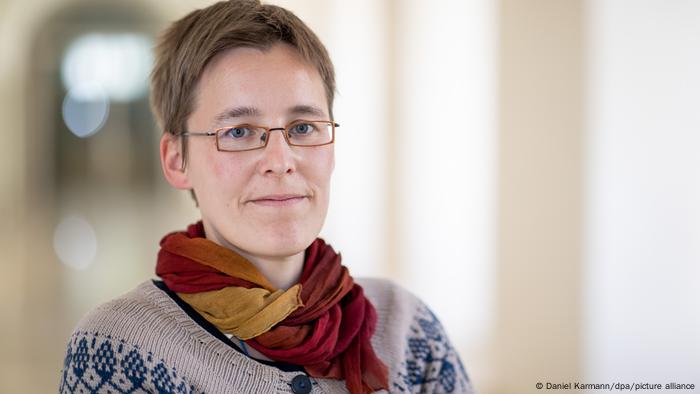
Mechthild Thürmer, the abbess of a Bavarian monastery, grabbed the headlines of German newspapers in 2020.

Over several decades she has given refuge to dozens of refugees. In 2020, she was charged with illegally aiding individuals to avoid deportation and was found guilty. She said she received several offers from others to pay her fine of €2,500 ($3,051), but she declined. She is refusing to pay.

"People in such a terrible situation need help," she told DW. 


Mechthild Thürmer


Thürmer argues that in the end, no German court would find someone guilty for trying to help — it is a Christian's "highest duty." A guilty verdict would be simply "inhumane," she said.

"Every person's dignity is equal," she added, paraphrasing the German constitution. "It says, ‘every person.' Not 'every German.'"

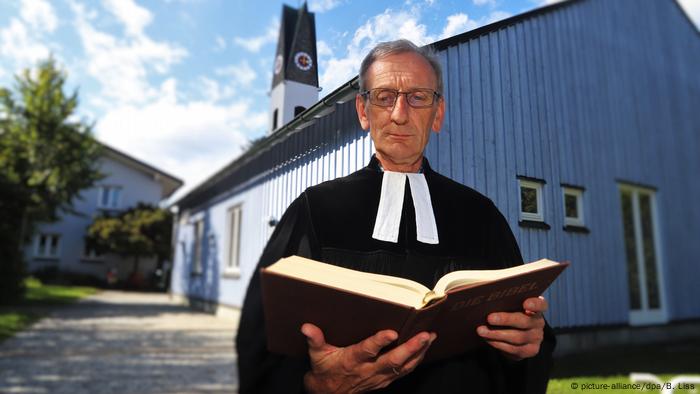
In 2019, Protestant pastor Ulrich Gampert was sentenced by a court in southern Germany to pay a fine of €3,000 for taking in an Afghan refugee who had been scheduled for deportation.
Making church asylum 'more difficult'

The latest round of cases does not come as a surprise to Dieter Müller, a Jesuit and deputy chairman of the nonprofit Asylum in the Church. Müller told DW that there has been a "steep rise" in investigations into church asylum in Bavaria since 2017. The southern state's public prosecutor confirmed this. Many of the hundreds of cases against church officials and other members have been dismissed.

"I've had four cases against me, all dismissed," Müller said, though criminal charges are now afoot.

"We're witnessing an escalation," he said. "The case won't be dismissed. Instead, it'll be fully prosecuted in court because three people have so far refused to pay fines."

The state's legal action is an "effort to make church asylum more difficult," Müller said.


Protestant Pastor Ulrich Gampert was sentenced to a fine of €3,000 for taking in an Afghan refugee

Germany introduced a hardship commission in 2005, which re-examines individual cases of rejected asylum seekers. This offers an alternative to church asylum and offers individuals a legal possibility for having their cases revisited.

German politicians rarely comment on the issue of church asylum. But in what is termed a "major election year," activists took the opportunity of an Ecumenical Church Congress in Frankfurt in May to write to the three leading politicians who were present.

Recently, a group of church officials and laypeople put the question of church asylum to top politicians in a letter-writing campaign. Armin Laschet of the Christian Democrats, Olaf Scholz of the Social Democrats, and Annalena Baerbock of the Green party are running to replace Angela Merkel as chancellor in September's general election.

All three were asked whether church asylum can be legally justified. So far only Baerbock replied, writing: "It must not be that this act of Christian charity is made impossible by the threat of punishment from the state."

The Green party politician, who has been riding high in the polls, went on to say that church asylum is often the last "lifeline" for t
hose affected. A constitutional state that wants to prevent this "shows weakness, not strength," she said.

This text has been translated from German.
CRIMINAL CAPITALI$M
Wirecard: German Parliament slams Scholz and Merkel

A committee of lawmakers in the Bundestag has published its inquiry into the Wirecard fraud affair. The damaging report comes months before Germany's general election.


The committee report has mirrored what lawmakers have long said about the Wirecard affair

The public inquiry into the Wirecard scandal published its concluding report on Monday, criticizing Germany's Finance Minister Olaf Scholz and Chancellor Angela Merkel.

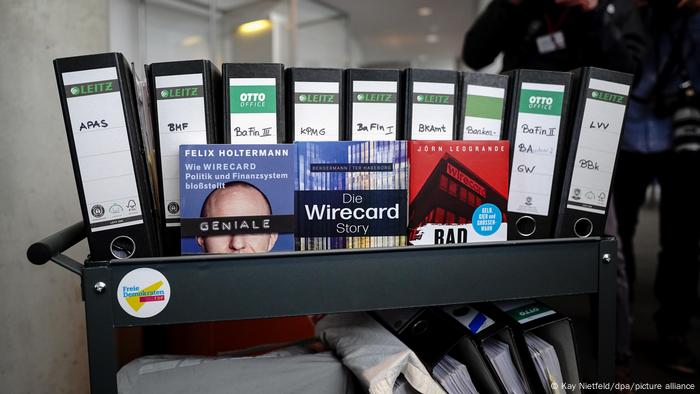
The parliamentary committee consisting of opposition lawmakers ended a monthslong investigation into the scandal with the publication of a 675-page draft report.

The report called out Scholz, who is also the chancellor candidate for the Social Democrats, for his oversight and mishandling of the biggest fraud scandal in post-war Germany.

"Olaf Scholz as finance minister bears political responsibility for the failure of BaFin," the report said. BaFin is Germany's financial regulator and part of Scholz's ministry.

The committee also said that Merkel had been naive about the lobbying efforts by Wirecard.


VIDEO Left Party member of Bundestag: Merkel bears 'personal responsibility' for Wirecard scandal

What was the Wirecard scandal?

Wirecard was once the poster-child for Germany's financial technology sector. Set up in 1999, it processed online payments for gambling and pornography sites. It eventually grew into a top financial services provider with huge growth potential that many people had been encouraged to invest in.

Even Chancellor Merkel herself lobbied on behalf of the company during a trip to China in 2019.

However, in June 2020 the company filed for insolvency after admitting that €1.9 billion ($2.3 billion) supposedly held in trust accounts didn't exist. It was also found to be massively in debt and faced accusations of having falsified balance sheets for years.
What was the outcome of the scandal?

Following the revelations, Wirecard's CEO Markus Braun was detained and its COO Jan Marsalek went into hiding, landing on Europol's wanted list.

Scholz was grilled by the inquiry committee, but rejected the accusation that he was responsible. He argued that most of Wirecard's criminal activity happened before he took office in 2018.

Merkel was also questioned by the committee. However, of the two only Scholz is standing in this year's general election.


#KASHMIR IS #INDIA'S #GAZA
Kashmir: India tightens grip on government-critical state employees


A series of dismissals of public servants in Kashmir has triggered fears that India is clamping down on state workers in the region. The dismissals were issued under the pretext of protecting "state security."
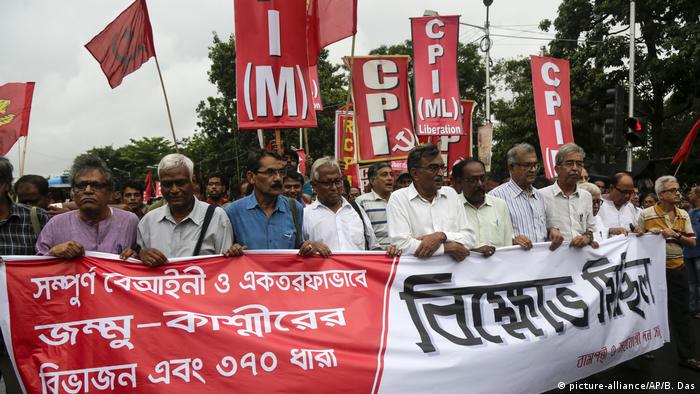


Six public employees have been dismissed under the pretext of protecting state security

Muhammad Yusuf Ganaie, a schoolteacher in Indian-administered Kashmir, found out that he was fired from his job through a Facebook post last month.

He was the sixth employee in the region to be sacked under the pretext of protecting the "security of the state," and the series of dismissals has sparked fears of a widespread effort to tighten the political reins on public servants in the region.

The General Administration Department issued the order on May 20, shocking Ganaie's family members.

Zahid Ahmad, Ganaie's younger brother, told DW the dismissal was an "injustice."

No specific reasons were given for the sackings, and the six employees affected so far include three teachers, an assistant professor, a police officer and a revenue official.

Critics have called the latest dismissals an effort to intimidate public servants and those who have participated in anti-India protests.

Watch video 09:43 India-Pakistan conflict: A ticking time bomb

'A harsh punishment'


"This order is a harsh punishment," Ahmad said. "This is harming the future of my brother's children," he added.

Ahmad said that his brother, a 42-year-old math teacher at a boys' school, was suspended after being accused of throwing stones during mass uprisings in 2016 against the killing of young insurgent commander Burhan Wani.

After spending a year in jail, Ganaie was again arrested in 2019 when the region's government launched a massive clampdown on leaders, traders and young people.

"He spent two years in jail, and he was hopeful that he would be reinstated. But now his dismissal comes as a shock to the whole family," Ganaie said.

On the day that he was sacked, a similar order of dismissal was issued for two more people, including a teacher from the same district and Devinder Singh, a police officer who was suspended after being caught last year with a Hizbul Mujahideen militant while traveling in a car in south Kashmir.

"Dismissing them without mentioning the reason is not justifiable," Ahmad added.

Watch video03:07 Delhi: Hundreds rally against India's Kashmir policy

Scrutinizing 'anti-national activities'


On April 27, the regional government, which underwent many political changes after being stripped of its limited autonomy in August 2019, ordered the formation of a special task force to scrutinize the cases of employees suspected of being involved in "anti-national activities."

The six employees were fired under an article of the constitution that gives the government authority to remove a public servant from their role without any inquiry.

Critics say the article, which was implemented in 2019, is meant to "instill fear and silence among Muslims in the region."

Muhammad, 43, a government employee from the southern district of Shopian, also feels that the dismissals are discriminatory.

"They can fire anyone, and it's an attack on us because of our religious identity,” Muhammad said.

"At some point in time, everyone, including small children or even women, have been part of the anti-India protests," he said.

The Jammu and Kashmir government is the largest employer in the region, with nearly 450,000 employees.

New hires must undergo 'verification'


On March 3, the regional government passed an order saying that no new employee would be paid their salary or allowances until they had undergone a verification process by the top investigative agency, the Criminal Investigation Department (CID).

The new hires were asked to submit details about their social media accounts like Twitter, Facebook and Instagram, which many experts said "targets freedom of expression."

The government made a change to the Jammu and Kashmir civil service regulations, allowing the authorities to forcibly retire any public servant over 48 years old or who has completed 22 years of service. Many have said the change was politically motivated.

An official involved with the development told DW that the changes are, however, not religiously or regionally motivated.

"Some elements are trying to present it as religiously motivated, but it is not," the official said, adding that all of the employees dismissed so far have been "involved in anti-national activities."

Another official said the sackings took place after finding "proper evidence" of such activities.

"Some people are prone to misconduct that leads to violence in society, and they continue to enjoy the privileges of being public servants," the official said.

Watch video 02:43 Will Kashmir's young politicians bring hope to the region?

Political parties slam sackings

Political parties in the region have condemned the random firings as "inhuman and cruel."

The National Conference, the pro-Indian political party that has ruled for most of the last seven decades in the region, said the measures would "alienate" people.

"The government should have focused on boosting coronavirus care rather than firing employees in an elusive manner in which they cannot even resort to legal recourse to protect their rights," the party said in a statement.

The pro-freedom political parties led by Mirwaiz Umar Farooq called the actions a form of "harassment of government employees."

"To render people jobless in such a manner by invoking a draconian law is intimidation," said Farooq, who heads the All Parties Hurriyat Conference (APHC), a coalition of separatist leaders in the region.

Meanwhile, Habeel Iqbal, a lawyer based in Kashmir, told DW that dismissing an employee from service "without hearing him is against the basic principles of natural justice.”

"It (dismissal) shall be used in exceptional circumstances, to maintain the larger public good," he said, adding that it's "difficult to imagine how a teacher or an assistant professor could be a threat to the national security of a powerful country like India.

"These decisions are subject to judicial review, and I am hopeful that the courts will quash these dismissal orders," he said.
Living Planet: First Nations alternatives to industrial farming in Iowa

Iowa's industrial agricultural system suffered massive damages after a storm tore through the area in August 2020. But between the vast monocultures of soy and ethanol corn, the Indigenous Meskwaki Nation grows food using different techniques that may provide key lessons for farmers wanting a more resilient and sustainable agricultural system in the face of increasingly severe climatic changes.


Climate inaction will cost G7 countries 'billions'

Oxfam has called on the leaders of the G7 countries to pursue greater cuts to emissions or face economic consequences worse than those caused by coronavirus.


Oxfam has warned the G7 countries of the economic impacts of not taking measures to keep global temperature rises to below 1.5 degrees

The world's richest countries face billions of dollars in economic losses if they fail to take stringent measures to curb climate change, Oxfam said on Monday, citing research by the Swiss Re Institute.

According to the report, the G7 (Group of Seven) economies — Germany, France, Italy, Japan, Canada, the UK and the US — could see annual average losses of up to 8.5% by 2050 if CO2 emissions continue unabated.

Total losses could amount to $4.8 trillion (€3.95 trillion) a year, double the GDP losses caused by the coronavirus pandemic.

What did the report reveal?

The Swiss Re report looked out how different aspects of changing climate, including heatwaves, rising sea levels and degradation of agricultural land, may impact economic activities in 48 countries.

Although the report concluded that the richest countries would be badly hit by the consequences of runaway climate change, poorer countries would fare much worse.

It predicted that up to 35% of the Philippines' economy could be wiped away while India, home to over 1.3 billion people, may see its economic activity shrink by 27%.

Oxfam added that between 32 and 132 billion people could be pushed into extreme poverty by 2030 due to climate change, citing a recent report by the World Bank.


What is Oxfam's message for the G7?

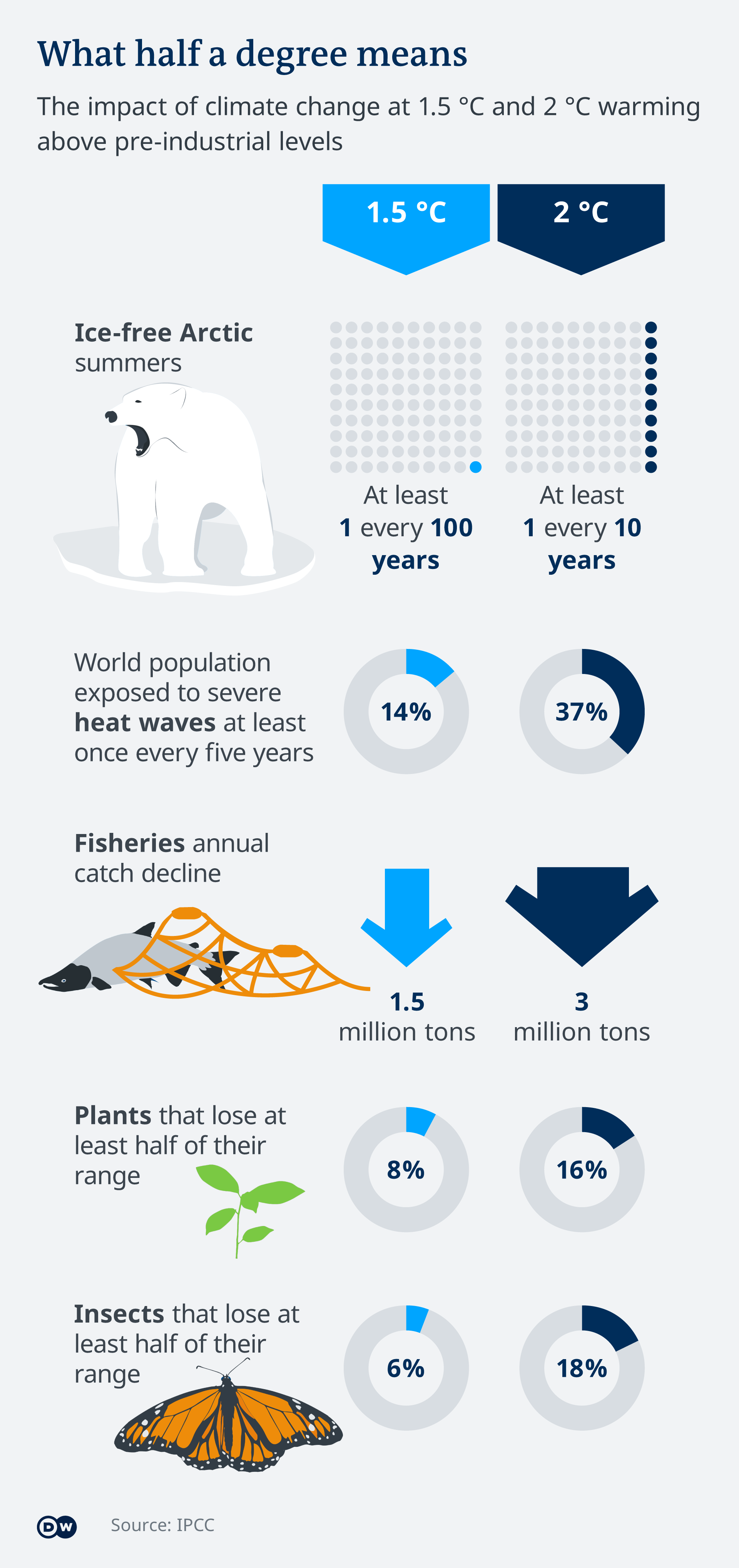
Oxfam called on the leaders of the G7 countries to immediately increase the pledges to cut carbon emissions, pointing out that most were falling short of necessary reductions to keep global warming below 1.5 degrees.

The charity also demanded that the G7 countries — who represent some of the world's worst emitters of CO2 historically — stick to their pledge to provide $100 billion annually to help poorer countries deal with the impacts of climate change.

"The economic turmoil projected in wealthy G7 countries is only the tip of the iceberg: many poorer parts of the world will see increasing deaths, hunger and poverty as a result of extreme weather. This year could be a turning point if governments grasp the challenge to create a safer, more liveable planet for all," Oxfam expert Mark Lawson said.


6 CITIES AT RISK OF CHRONIC FLOODING
Shanghai (China)
Ninety-three million people currently live on land in China that could be inundated by 2050 due to the localized coastal flooding, according to research by independent US-based science organization Climate Central. Shanghai, which is China's most populous city, is expected to be particularly vulnerable to ocean flooding as it lacks coastal defenses.   PHOTOS 123456

The leaders from the G7 countries are meeting in the UK later this week.

"The economic case for climate action is clear ― now we need G7 governments to take dramatic action in the next nine years to cut emissions and increase climate finance," Lawson said.
Malala Yousafzai features on Vogue UK's July cover

The youngest woman to receive the Nobel Peace Prize joins a list of activists and cultural celebrities to grace the cover of the fashion and lifestyle magazine.


Malala Yousafzai: The outspoken survivor

As a 15-year-old, Malala was shot by the Taliban in Pakistan because she spoke up for girls' education. In 2014, she received the Nobel Peace Prize. The now 23-year-old features on the cover of Vogue UK's July edition, in which she discusses the limits of online activism: "Right now... we have associated activism with tweets. That needs to change, because Twitter is a completely different world."


PHOTOS 12345678910

Opinion: US voting rights restrictions are a warning to all democracies

New restrictive voting laws in many Republican-ruled US states are hollowing out citizens’ basic civil rights, especially those of African Americans. DW’s Ines Pohl says an existential attack on democracy is underway.


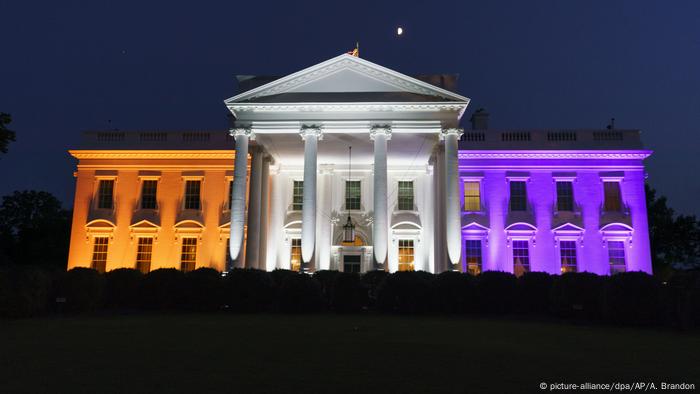
The person who resides here should represent all Americans, irrespective of gender, skin color, religion or origin


On the surface, it all seems to be nothing more than a classic US power struggle of the kind presented to the rest of the world in many a Netflix series. In this two-party country, it is often a dubious political custom to thwart the other party by any means and to prevent the ruling party from scoring any political successes in order to win back a majority in at least one, if not both, houses in the midterm elections. And it should not be forgotten: These are tactics that Democratic politicians have also used in the past.

But what is currently happening in the US is something more fundamental, more existential. After four years of Donald Trump and a Republican Party that remains firmly caught in his web of lies, it is nothing less than the entire political system that is at stake. That may sound exaggerated, but it is not.
Preventing Black Americans from voting

A true democracy is characterized by the fact that all citizens have the right to vote freely and secretly, regardless of origin, sexual orientation, religion, age or income. But it is precisely this right that is currently being undermined in parts of the US. Republican governments in 14 states have already changed election laws, and several more are set to do so. The goal is to minimize the ability of Blacks and other minorities to influence the outcome of elections and to bolster the Republican Party's hold on power. This is how the party is trying to secure its future in a country where the white majority will be a thing of the past in a few years' time.

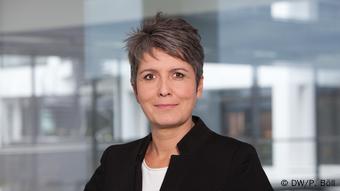
Ines Pohl heads the DW studio in Washington, DC

To this end, boundaries of congressional districts are being redrawn, it is being made mandatory to present proof of identity to vote, non-recent signatures are being declared invalid and absentee voting is being abolished or made more difficult. The state of Texas is even going so far as to prohibit voting on Sunday mornings — the time many Black Americans tend to head for polling stations, combining their democratic rights with their churchgoing.

What's most dangerous, however, are the legal reforms making it much easier for election commission chairs to simply declare elections invalid. To put this in context: A broad majority of Republicans claim to this day — without any evidence and despite all recounts to the contrary — that Donald Trump actually won the presidential election last November.
What's at stake

These are extremely grim developments with hardly foreseeable consequences — not only for the upcoming midterm elections at the end of 2022, but also for the next presidential election in 2024. That's because ultimately, both chambers, the Senate and Congress, must certify the results of the vote by the so-called Electoral College so that the president elected by the people can actually take office.

It was precisely this process that Donald Trump's supporters tried to stop on January 6 by storming the Capitol. Since then, democratic forces within the United States have been in a state of alarm and realize just what is at stake.
All democracies should pay close attention

All democracies around the world should watch the situation in the US closely and draw lessons from it:

1. There is no such thing as being a bit anti-democratic. Forging coalitions with anti-democratic persons and parties as a strategy to gain or retain power is a bad idea. The Republicans are discovering they can no longer restrain the populist spirit unleashed by Donald Trump.

2. No one has found an answer to the question of how to break up social media echo chambers. The US is a disturbing example of how quickly facts can be replaced by lies when the latter support people's own worldview.

3. Politicians' credibility starts with respect for voters. The presidency of Donald Trump was made possible partly by the arrogance of the liberal political elite, which simply ignored the concerns of many Americans.

4. Democracies can survive only with an independent, critical media that is capable of dialogue and reaching a broad public.

5. And the most important thing of all is educating young people in media literacy and encouraging them to think for themselves. It all starts at school. But that is also where everything can end.

This article has been translated from German

Opinion: Spying among friends? Sadly, it's the norm

Denmark is believed to have helped the US National Security Agency spy on German politicians. Anyone who's surprised by this is being naive, writes Marcel Fürstenau


I spy with my little eye: Intelligence services remain largely uncontrolled by their respective governments


Denmark has now been added to the unofficial list of states who are believed to have treated supposedly friendly countries as if they were enemies. From 2012 to 2014, Germany's northern neighbor is said to have assisted the National Security Agency (NSA) in spying on the electronic communications of prominent German politicians: Chancellor Angela Merkel, Frank-Walter Steinmeier — then foreign minister, now German president — and Peer Steinbrück, the Social Democrats' chancellor candidate in the 2013 election.

Thanks to Edward Snowden, it has been common knowledge for some time that the NSA had targeted Merkel and Steinmeier. His 2013 revelations sent shockwaves around the world. It was always obvious that secret service agencies, even those of democratic states, are not simply harmless associations. But the degree of ruthlessness and lack of scruple astonished even political heavyweights like Angela Merkel, a victim of the NSA's surveillance. Her comment at the time — "Spying among friends is unacceptable" — has become a familiar bon mot. Because, in reality, anything goes. Spying knows no limits, either moral or geographical.
Secret services must be subject to stricter control

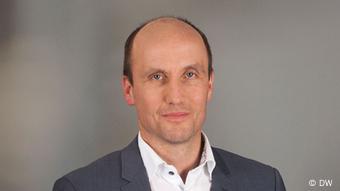
DW's Marcel Fürstenau


We can and should continue to be outraged at the way the NSA, Germany's Federal Intelligence Service (BND), and others of their ilk effectively write their own rules. However, since the Snowden revelations at the very latest, this reaction — while all too understandable — seems downright naive. It would be much more important for the political leaders in Germany, Denmark and all other countries that practice the separation of powers to finally exercise better control over their intelligence services. Unfortunately, this looks as unlikely as ever.

In Germany, a parliamentary investigative committee spent years looking into the NSA/BND scandal, but the outcome was scandalous and shameful. The reform led to the legalization of the illegal wiretapping practice, which had only became common knowledge as a result of Snowden's information. Fortunately, Germany's Federal Constitutional Court proved it could be relied on: It quashed this shameless and false relabeling in 2020.
A scandal: Snowden in Russian exile

Anyone who wants to understand how the United States, Germany and democratic Europe tick with regard to intelligence services need only look at Snowdon's fate. Since making his unprecedented revelations, he has been living in exile in Russia. The fact that Vladimir Putin, the strongman in the Kremlin and a former Soviet secret service (KGB) officer, has to hold his protective hand over Snowden is and remains an indictment of the West.

And unfortunately, there is nothing whatsoever to indicate this might change. Because the 37-year-old American's opponents on both sides of the Atlantic are in agreement: In their eyes, he is a traitor. This was the opinion of former US President Barack Obama, who was in office when Snowden made his revelations; and the current president, Joe Biden, shares the same view.
A culture change is needed

There have been no reports of Merkel, Steinmeier, or other German victims of the NSA insulting the whistle-blower in the same way — but the controversial former president of Germany's domestic intelligence service, Hans-Georg Maassen, has done so. It is people like him, and their ideal of the intelligence services remaining largely uncontrolled, that stand in the way of a radical culture change in this area. This will remain the case for as long as they still have enough support from legislators and governments — and it will have to change before Snowden can hope to leave his dubious exile in Russia.

This article was translated from German.

Germany warns: AI arms race already underway

The world is entering a new era of warfare, with artificial intelligence taking center stage. AI is making militaries faster, smarter and more efficient. But if left unchecked, it threatens to destabilize the world.


'Loitering munitions' with a high degree of autonomy are already seeing action in conflict


An AI arms race is already underway. That's the blunt warning from Germany's foreign minister, Heiko Maas.

"We're right in the middle of it. That's the reality we have to deal with," Maas told DW, speaking in a new DW documentary, "Future Wars — and How to Prevent Them."

It's a reality at the heart of the struggle for supremacy between the world's greatest powers.

"This is a race that cuts across the military and the civilian fields," said Amandeep Singh Gill, former chair of the United Nations group of governmental experts on lethal autonomous weapons. "This is a multi-trillion dollar question."


Great powers pile in


This is apparent in a recent report from the United States' National Security Commission on Artificial Intelligence. It speaks of a "new warfighting paradigm" pitting "algorithms against algorithms," and urges massive investments "to continuously out-innovate potential adversaries."

And you can see it in China's latest five-year plan, which places AI at the center of a relentless ramp-up in research and development, while the People's Liberation Army girds for a future of what it calls "intelligentized warfare."

As Russian President Vladimir Putin put it as early as 2017, "whoever becomes the leader in this sphere will become the ruler of the world."

But it's not only great powers piling in.

Much further down the pecking order of global power, this new era is a battle-tested reality.


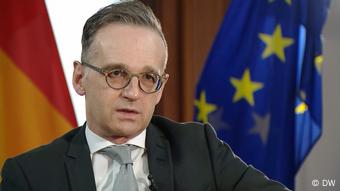
German Foreign Minister Heiko Maas: 'We have to forge international treaties on new weapons technologies'


Watershed war

In late 2020, as the world was consumed by the pandemic, festering tensions in the Caucasus erupted into war.

It looked like a textbook regional conflict, with Azerbaijan and Armenia fighting over the disputed region of Nagorno-Karabakh. But for those paying attention, this was a watershed in warfare.

"The really important aspect of the conflict in Nagorno-Karabakh, in my view, was the use of these loitering munitions, so-called 'kamikaze drones' — these pretty autonomous systems," said Ulrike Franke, an expert on drone warfare at the European Council on Foreign Relations.


'Loitering munitions' saw action in the 2020 Nagorno-Karabakh war


Bombs that loiter in the air

Advanced loitering munitions models are capable of a high degree of autonomy. Once launched, they fly to a defined target area, where they "loiter," scanning for targets — typically air defense systems.

Once they detect a target, they fly into it, destroying it on impact with an onboard payload of explosives; hence the nickname "kamikaze drones."

"They also had been used in some way or form before — but here, they really showed their usefulness," Franke explained. "It was shown how difficult it is to fight against these systems."

Research by the Center for Strategic and International Studies showed that Azerbaijan had a massive edge in loitering munitions, with more than 200 units of four sophisticated Israeli designs. Armenia had a single domestic model at its disposal.

Other militaries took note.

"Since the conflict, you could definitely see a certain uptick in interest in loitering munitions," said Franke. "We have seen more armed forces around the world acquiring or wanting to acquire these loitering munitions."

AI-driven swarm technology will soon hit the battlefield


Drone swarms and 'flash wars'


This is just the beginning. Looking ahead, AI-driven technologies such as swarming will come into military use — enabling many drones to operate together as a lethal whole.

"You could take out an air defense system, for example," said Martijn Rasser of the Center for a New American Security, a think tank based in Washington, D.C.

"You throw so much mass at it and so many numbers that the system is overwhelmed. This, of course, has a lot of tactical benefits on a battlefield," he told DW. "No surprise, a lot of countries are very interested in pursuing these types of capabilities."

The scale and speed of swarming open up the prospect of military clashes so rapid and complex that humans cannot follow them, further fueling an arms race dynamic.

As Ulrike Franke explained: "Some actors may be forced to adopt a certain level of autonomy, at least defensively, because human beings would not be able to deal with autonomous attacks as fast."

This critical factor of speed could even lead to wars that erupt out of nowhere, with autonomous systems reacting to each other in a spiral of escalation. "In the literature we call these 'flash wars'," Franke said, "an accidental military conflict that you didn't want."

Experts warn that AI-driven systems could lead to 'flash wars' erupting beyond human control


A move to 'stop killer robots'

Bonnie Docherty has made it her mission to prevent such a future. A Harvard Law School lecturer, she is an architect of the Campaign to Stop Killer Robots, an alliance of nongovernmental organizations demanding a global treaty to ban lethal autonomous weapons.

"The overarching obligation of the treaty should be to maintain meaningful human control over the use of force," Docherty told DW. "It should be a treaty that governs all weapons operating with autonomy that choose targets and fire on them based on sensor's inputs rather than human inputs."

The campaign has been focused on talks in Geneva under the umbrella of the UN Convention on Certain Conventional Weapons, which seeks to control weapons deemed to cause unjustifiable suffering.

It has been slow going. The process has yielded a set of "guiding principles," including that autonomous weapons be subject to human rights law, and that humans have ultimate responsibility for their use. But these simply form a basis for more discussions.

Docherty fears that the consensus-bound Geneva process may be thwarted by powers that have no interest in a treaty.

"Russia has been particularly vehement in its objections," Docherty said.

But it's not alone. "Some of the other states developing autonomous weapon systems such as Israel, the US, the United Kingdom and others have certainly been unsupportive of a new treaty."

TECHNOLOGIES THAT REVOLUTIONIZED WARFARE
AI: 'Third revolution in warfare'
Over 100 AI experts have written to the UN asking them to ban lethal autonomous weapons — those that use AI to act independently. No so-called "killer robots" currently exist, but advances in artificial intelligence have made them a real possibility. Experts said these weapons could be "the third revolution in warfare," after gunpowder and nuclear arms. PHOTOS 12345678910


Time for a rethink?


Docherty is calling for a new approach if the next round of Geneva talks due later this year makes no progress. She has proposed "an independent process, guided by states that actually are serious about this issue and willing to develop strong standards to regulate these weapon systems."

But many are wary of this idea. Germany's foreign minister has been a vocal proponent of a ban, but he does not support the Campaign to Stop Killer Robots.

"We don't reject it in substance — we're just saying that we want others to be included," Heiko Maas told DW. "Military powers that are technologically in a position not just to develop autonomous weapons but also to use them."

Maas does agree that a treaty must be the ultimate goal. "Just like we managed to do with nuclear weapons over many decades, we have to forge international treaties on new weapons technologies," he said. "They need to make clear that we agree that some developments that are technically possible are not acceptable and must be prohibited globally."

Germany's Heiko Maas: 'We're moving toward a situation with cyber or autonomous weapons where everyone can do as they please'

What next?

But for now, there is no consensus. For Franke, the best the world can hope for may be norms around how technologies are used. "You agree, for example, to use certain capabilities only in a defensive way, or only against machines rather than humans, or only in certain contexts," she said.

Even this will be a challenge. "Agreeing to that and then implementing that is just much harder than some of the old arms control agreements," she said.

And while diplomats tiptoe around these hurdles, the technology marches on.

"The world must take an interest in the fact that we're moving toward a situation with cyber or autonomous weapons where everyone can do as they please," said Maas. "We don't want that."


SEE KILLER ROBOTS IN MY GOTHIC CAPITALI$M
 The Horror Of Accumulation And The Commodification Of Humanity 

For more, watch the full documentary Future Wars on YouTube.