Tuesday, December 21, 2021

Opinion: Erdogan is pulling the wool over voters' eyes

Turkish President Recep Tayyip Erdogan appears to have pulled a financial rabbit out of the hat to stop the lira's free fall. But that will not help him secure another presidential term, writes Banu Güven.
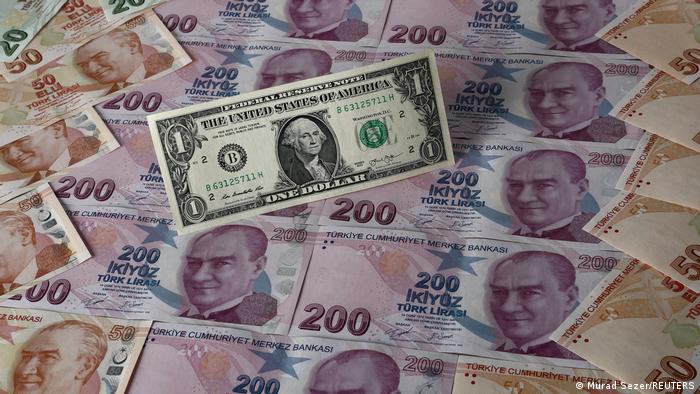

Money for nothing? Observers say Erdogan's new scheme could backfire

At the end of a long day, as the Turkish lira had plunged to another record low against the euro and the US dollar, the Turkish president announced a spate of measures to prop up the lira and guaranteed that the government would cover losses by lira deposit holders in cases where the lira's depreciation against foreign currencies exceeds banks' interest rates.

On Tuesday, the lira managed to rebound against foreign currencies and regained its losses of the last month. Erdogan supporters started celebrating the return of the lira on Twitter with the hashtag #HeWasRightAgain. 

The president appears to have saved the day, but can he really save the country and his future in politics through his new deposit scheme? I very much doubt it. 

Ordinary households will miss out

First, in this model, there is no justice. It is the treasury that will compensate for possible losses of depositors in lira. That means households who do not have any savings in the banks will have to share the burden of a further depreciation of the lira

And what about those people who sold their dollars early enough, to buy dollars at a much lower rate the next day and made enormous gains — there's speculation that some investors close to the government received hints prior to Erdogan's announcement.


Banu Güven

Second, it is not a sustainable model. In case of a further depreciation, the new scheme could raise public debt to record levels and drive up inflation even further.

According to the state-owned Turkish Statistical Institute, inflation was hovering just above 21% last month. Independent researchers put it at 60%.

The 'Turkish Dollar Scheme'

Third, this move prioritizes the US dollar over the lira. Prior to the announcement of the new deposit scheme, 64% of bank deposits were in a foreign currency. We do not know how much of these deposits was transferred into lira. Not that it matters, if your lira are essentially being treated as if they were US dollars. Some observers have already coined it the "Turkish Dollar scheme" on social media.

Critics also argue that Erdogan's move is essentially a "hidden" interest rate hike, a measure he had refused to entertain — arguing that Islam demands lower rates — despite warnings that sticking to interest rate cuts to control inflation would backfire.  

Nobody, except his loyal voters, trusts him anymore. Investors may be cautiously optimistic about the financial impact, however they know very well that he is stubborn, illogical and also unpredictable. 

Erdogan for president again?

We know that Erdogan sees himself as the master in all walks of life. These days he's an economist who wants to control the economy and will stop at nothing to reach his short-term political goals. 

He is fixated on securing a third presidential term in the 2023 election that coincides with the 100th anniversary of the Turkish Republic. His campaign will focus on driving home the message to voters that he has preserved the country from foreign interference that would ruin Turkey financially. 

He will point to the increase in exports, positive GDP growth, and the success of his megaprojects. However, people, who have become poorer in recent years through his economic incompetence will never forgive him. 

Pulling a rabbit out of the hat may have saved the day, but whether that will be enough to secure another presidential term is another matter. 

Banu Güven is a Turkish journalist and television presenter. She writes for various German and Turkish media outlets. She has been living and working in Germany since 2018.

Edited by: Rob Mudge

Talks planned to end 100-year Guatemala indigenous dispute


The coffins of seven victims of a massacre in western Guatemala linked to a decades-old land dispute are laid out before their burial (AFP/Johan ORDONEZ)

Tue, December 21, 2021, 9:41 AM·2 min read

Hundreds of indigenous people lifted their blockage of a major road in Guatemala on Tuesday after an agreement was reached for talks to resolve a bloody century-old land dispute.

On Monday, members of the Mayan K'iche group had blocked the Interamericana highway with the caskets of 11 of the 13 victims of a weekend massacre in which four children aged between five and 16 were alleged killed with machetes.

The roadblock was lifted after an agreement among residents who had traveled to Guatemala City to meet government officials to try to start talks over a legal border between two rival communities.

"A dialogue will begin in the first half of January, where the issue of the border will be discussed," said Mateo Tzep, 42, a community leader from Santa Catarina Ixtahuacan municipality that is in conflict with the neighboring Nahuala.

Although both communities are K'iche, they have been fighting over land -- at times violently -- for more than 100 years.

On Friday night, armed men with "high caliber" weapons ambushed a group of people from Santa Catarina Ixtahuacan who went to the village of Chiquix in Nahuala to pick corn.

The children were cut into pieces and the victims were then burnt inside the truck they were traveling in. A police vehicle was also attacked, leaving one officer dead and two injured.

The Santa Catarina Ixtahuacan community claims those in Nahuala have stolen some of their land.

On Monday, President Alejandro Giammattei declared a month-long state of siege in the two communities, which means demonstrations and the right to carry weapons are banned.

"These events are no longer the product of an ancestral land conflict. They are the direct consequence of an illegal armed and organized group that acted against civilians and security forces through an ambush," said Giammattei.

He vowed to bring the perpetrators to justice.

Three men carrying M16 rifles were arrested on Sunday. Authorities said they would carry out forensic tests on the weapons to see if they were used in the massacre.

Protesters had blocked the Interamaericana -- one of Guatemala's main highways, which links the capital to the west -- with tires, tree trunks, rocks and concrete blocks.

"We don't want any more deaths, we don't want any more violence. We are looking for peace and justice," said a man at the roadblock who identified himself only as Diego.

Indigenous people, many living in poverty, make up more than 40 percent of Guatemala's almost 17 million population, according to official statistics.

hma/jjr/bc/bgs


Guatemala massacre victims’ community rally, defy state of siege

Hundreds of Indigenous people defied a state of siege on Tuesday and blocked a major road in Guatemala’s west for the second successive day, demanding the government resolve a bloody century-old land dispute.

On Monday, members of the Mayan K’iche group blocked the Interamericana highway with the caskets of 11 of the 13 victims of a weekend massacre in which four children aged between five and 16 “were chopped up with machetes”.

“The people want peace and tranquillity and an immediate solution, because all that we’re asking for is a border,” said Francisco Tambriz, 51, a community leader from the Santa Catarina Ixtahuacan municipality that is in conflict with the neighbouring Nahuala.

“Santa Catarina is crying blood,” said Tambriz.

Although both communities are K’iche, they have been fighting over land – at times violently – for more than 100 years.

On Friday night, armed men with “high-calibre” weapons ambushed a group of people from Santa Catarina Ixtahuacan who went to the village of Chiquix in Nahuala to pick corn.

The children were cut into pieces and the victims were then burned inside the truck they were travelling in.

A police vehicle was also attacked, leaving one officer dead and two injured.

The Santa Catarina Ixtahuacan community claims those in Nahuala have stolen some of their land.

Late on Monday, President Alejandro Giammattei declared a month-long state of siege in the two communities, which means demonstrations and the right to carry weapons are banned.

“These events are no longer the product of an ancestral land conflict. They are the direct consequence of an illegal armed and organised group that acted against civilians and security forces through an ambush,” said Giammattei.

He pledged to bring the perpetrators to justice.

Three men carrying M16 rifles were arrested on Sunday. Authorities said they would carry out forensic tests on the weapons to see if they were used in the massacre.

Protesters blocked the Interamaericana – one of Guatemala’s main highways, which links the capital to the west – with tyres, tree trunks, rocks and concrete blocks.

A committee of residents has travelled to Guatemala City to meet officials to try to set a legal border between the two communities.

In May 2020, Giammattei also declared a state of siege and installed a roundtable to negotiate a solution, but the Santa Catarina Ixtahuacan community said the initiative failed.

“We don’t want any more deaths, we don’t want any more violence. We are looking for peace and justice,” said a man at the roadblock who identified himself only as Diego.

Indigenous people, many living in poverty, make up more than 40 percent of Guatemala’s almost 17 million population, according to official statistics.
'Fed up' Latin American voters demand change


Chile was rocked by violent protests against economic hardship and deep-rooted social inequality (AFP/Martin BERNETTI)

Mariëtte Le Roux
Tue, December 21, 2021

When Latin American voters went to the polls in 2021, they had an unambiguous message for the ruling elite: we've had enough.

In Chile, the most recent example, none of the traditional centrist parties in government since the end of dictatorship 31 years ago made it to the presidential runoff election.

Instead millennial, leftist outsider Gabriel Boric thumped a far-right rival on Sunday.


Ecuador elected its first rightwing president in 14 years in April; Peru opted in June to make an unknown socialist rural schoolteacher its president; and Honduras ended 12 years of conservative National Party rule in November, electing its first woman leader.


In legislative elections last month, Argentina voters dealt a blow to the centrist Peronist movement that had dominated Congress for decades but lost control of the senate for the first time.


"People are just fed up with the status quo and traditional economic and political elites," analyst Michael Shifter of the Inter-American Dialogue think tank told AFP.

"And so there is a kind of rejectionist trend in many countries... If governments fail, people look for alternatives."

The result has been an explosion of new political parties, a fragmentation of the vote, and outsider leaders perceived as being closer to the people bursting onto the scene from seemingly nowhere.

Peru had 18 first-round presidential candidates, a 15-year record.

- It's the economy, stupid -


There has also been a trend of close runoff races between polar opposite candidates as moderate voters split their support between centrist candidates to leave only two antipodes standing, as happened in Chile, Peru and Ecuador.

With a rise in apathy and alienation, more voters are casting protest ballots.

Many voters in Chile -- a country with a high abstention rate -- told AFP, for example, that they opted Sunday for the "lesser evil."

"I don't think it has much to do with ideology," analyst Patricio Navia of New York University told AFP of the voting trend.

"We've seen this since 2020, since the pandemic began, all incumbents -- governments or parties or coalitions -- have lost elections in Latin America."

The reasons are manifold.

Economic hardship, already a growing burden in many Latin American countries, has worsened since 2020 due to the pandemic and business lost as a result of lockdowns in the most unequal region of the world.

"When the economic conditions were positive, all presidents in Latin America were popular, left-wing presidents and right-wing presidents," said Navia.

During a commodities boom from about 2003 to 2013, the middle class in Latin America grew rapidly, and there were expectations the trend would continue.

The opposite turned out to be true.

- 'More of the same' -

"People are tired of traditional political parties for the perception that they do not honor electoral promises and are 'more of the same'," Maria Jaraquemada of the Institute for Democracy and Electoral Assistance told AFP.

And they are susceptible to increasingly populist messages that "offer something against the elite, different from what has been done before," she said.

"In modern politics in every country it's the most extremist voices that drive the debate and social media amplifies those voices," added Shifter.

"There used to be a time when people voted for somebody because they believed in them," he said.

Now, "you have more and more elections that are (determined) in terms of the lesser of two evils, and more negative votes, and that's a big shift."

This mix of voter polarization and dissatisfaction bodes for a volatile future, according to analysts.

"The economic situation will probably worsen in the next few years, not improve, so the discontent will continue. The best predictor of discontent is bad economic conditions," said Navia.

"I guess the warning for Latin American leaders is that unless the economic conditions improve, they are going to remain largely unpopular."

For Shifter, the next few years will likely be "quite rocky."

"Partly, the leaders are not of the caliber that are really able to address these problems but it's also because the problems are a lot worse, more difficult to deal with."

Next year, new presidents will be elected in Colombia and Brazil, where the trend looks set to continue.

Colombia's conservative Ivan Duque became his country's most unpopular president ever in a year marked by social unrest and a violent police crackdown that drew international condemnation.

Leftist former guerilla Gustavo Petro is leading in the polls.

In Brazil, far-right Jair Bolsonaro is also massively unpopular amid a recession and missteps in his government's Covid-19 response, with leftist ex-president Luiz Inacio Lula da Silva set to make a return, according to polls.

"That doesn't mean enthusiasm for Lula as much as just a rejection of Bolsonaro," said Shifter.

"So it's part of the rejectionist trend."

mlr/st
'It's no more': Philippine surfing paradise wiped out by typhoon


The strongest storm to hit the archipelago this year cut a swathe through Siargao, a tropical paradise known for its sandy beaches, big waves and relaxed vibe (AFP/Ferdinandh CABRERA)

Ferdinandh Cabrera
Tue, December 21, 2021, 7:53 PM·3 min read

Resort and bar owners on a Philippine island popular with surfers and tourists were expecting a bumper Christmas holiday after Covid-19 restrictions finally eased. Then Super Typhoon Rai wiped them out.

The strongest storm to hit the archipelago this year cut a swathe through Siargao, a tropical paradise known for its sandy beaches, big waves and relaxed vibe.

Packing wind speeds of 195 kilometres (120 miles) per hour as it made landfall on the island last Thursday, Rai uprooted palm trees, shredded thatched roofs, smashed wooden buildings, and toppled power poles.

The widespread destruction left the island -- voted the best in Asia by Conde Nast Traveler readers this year -- unrecognisable.

"The day after the storm, we went outside and we were like 'wow, this is Siargao now, it's no more'," Claudine Mendoza, 27, a sous chef at a beachfront resort, told AFP.

"Even Cloud Nine is no more, it was really devastated," Mendoza said, referring to the island's surf break where a wooden boardwalk -- a favoured selfie spot for tourists -- was swept away by the typhoon.

The storm is a bitter blow for tourism operators, hitting them a week before the Christmas holidays when many Filipino families typically head to the country's famed beaches and dive spots.

Pandemic travel restrictions decimated visitor numbers to the island in the past two years, leaving many resorts, cafes, souvenir shops and tour guides struggling to survive.

But domestic tourism began to pick up in recent months as the government relaxed rules to boost economic activity -- though it kept a ban on foreign travellers entering the country.

"Everyone was so happy, the island was lively again," Mendoza said. "Then suddenly the storm came."

Now, business owners face expensive repairs or having to start from scratch, and their employees an uncertain future.

Some are wondering if it is even worth trying to begin again.

"This typhoon is much worse for us than the pandemic -- the pandemic didn't cause any (structural) damage," said resort owner Anton Alvarez.

"We think we have the capacity to rebuild but there's no point in rebuilding if it's just us -- we need the whole of Siargao to rebuild."


It could take months for power to be fully restored to the island, making it difficult for business owners to talk to their partners and investors about the future (AFP/Roel CATOTO)

- 'What will happen now?' -

With electricity across the island knocked out, there is no signal or internet, which has hampered efforts of disaster agencies to assess the full extent of the death and destruction caused by the storm.

A least 375 people were killed on the islands hit by Rai, national police have reported -- including 167 in the region that includes Siargao.

Farmers and fisherfolk have also seen their livelihoods destroyed, and thousands of families left homeless.

Elka Requinta, a marketing coordinator on Siargao, said the strength of the typhoon caught everyone by surprise.

"We didn't expect it to be this bad," said Requinta, 36.

"You have locals who were hit because I don't think there was a call for any evacuation from the government."

It could take months for power to be fully restored to the island, making it difficult for business owners to talk to their partners and investors about the future.

Alvarez said he would like to reopen his resort within 12 months, but admitted that was "pretty optimistic".

"What will happen now?" asked Mendoza.

"We don't know."

str-cgm-amj/jah

Philippine supertyphoon Rai 'exceeded all predictions' - forecaster


Typhoon Rai aftermath in Surigao city

Tue, December 21, 2021
By Kanupriya Kapoor

SINGAPORE (Reuters) - The rapid intensification that turned this week's Typhoon Rai into the strongest storm to hit the Philippines this year surpassed all predictions, forecasters said, leaving nearly 400 people dead and almost a million displaced.

While it's unclear exactly how global warming is affecting the intensification of such storms, the UN's climate change agency has found it is "likely that the frequency of rapid intensification events have increased over the past four decades" as temperatures rise.

Before Rai underwent a process of rapid intensification, forecasters at first warned of a storm that could bring "considerable damage", with winds of up to 165 kilometres (103 miles) per hour.

"But the situation evolved very fast," said Nikos Peñaranda, a forecaster who studies thunderstorms at the Philippines' national weather bureau, speaking on Tuesday. "Our models weren't able to predict the way the storm intensified, and it exceeded all our predictions."

In rapid intensification of storms, warm ocean water and differing wind speeds near the eye of the storm act as fuel to whip it up into a more severe event. In the case of Rai, the storm turned into a category 5 supertyphoon, with speeds similar to when a passenger airplane starts to lift off the ground.

When it made landfall, winds of up to 210 km/hr were uprooting coconut trees, ripping down electricity poles, and hurling slabs of corrugated tin and wood through the air.

A lack of real-time data and case studies of similar storms in the region made it difficult for forecasters to predict just how much Rai, or Odette as the storm is known locally, would intensify, said Peñaranda.

"The challenge in forecasting rapidly intensifying events is just that the speed with which this occurs, often in a matter of hours, leaves less time for disaster risk reduction mobilisation and evacuations," said Clare Nullis, media officer specializing in climate change at the World Meteorological Organisation (WMO).

Hurricane Ida, a category 4 storm, experienced a similar intensification in the Gulf of Mexico hours before it slammed into the U.S. state of Louisiana in August.

Ocean temperatures near the surface and at depths of up to 200 metres are rising around three times faster in this region than the global average, according to the WMO, making it fertile ground for more intense, less predictable storms.

In the past three decades, the Philippines has recorded at least 205 tropical cyclones, the highest of any Asian country, according to EM-DAT, a publicly available database on disasters run by the University of Louvain. Nearly each one of has taken lives and caused millions of dollars worth of damage.

By comparison, China, the second-most affected country, has seen 139, and Bangladesh, also prone to storms, has seen 42.

($1 = 49.9300 Philippine pesos)

(Additional reporting by Neil Jerome Morales in Manila; Editing by Kenneth Maxwell)

Loggers threaten Papua New Guinea's unique forest creatures


In Papua New Guinea's isolated Star Mountains, Indigenous people say the tree kangaroo is king and the bird of paradise is queen. But both have a price on their heads
 (AFP/Chris McCALL)

Chris McCall
Tue, December 21, 2021

In Papua New Guinea's isolated Star Mountains, Indigenous people say the tree kangaroo is king and the bird of paradise is queen. But both have a price on their heads.

These extraordinary species have long been prized by traditional hunters, but conservationists now fear the forests they live in, one of Earth's last great wilderness areas, could soon fall to axe and bulldozer.

"Old people say tree kangaroo is the king," said Lloyd Leo, a young resident of Golgubip, a mountain community where most people are still subsistence farmers -- their ancestors lived a neolithic lifestyle until only decades ago.


"He lives high in the forest. Certain fruits he doesn't eat. He only takes the fresh ones," he explained.

The marsupial, which looks like a mix of a kangaroo and a lemur, was once a form of currency, used to pay bride prices. Its tail is still worn as an emblem.

Already the creature is listed among the planet's most threatened species, deemed critically endangered on the International Union for Conservation of Nature's Red List.

Two species of birds of paradise also live in the area, and one, called 'karom' in the local Faiwol language, they call the queen of birds.

People hunt them on a small scale, despite it being illegal. The feathers and stuffed birds are prized, kept in homes and brought out for festivals.

- 'People will become desperate' -

But the trees around Golgubip are also valuable, as are others like them across Papua New Guinea -- and the dual threat of deforestation and hunting may seal the fate of the nation's unique creatures.

"In the villages, there is a general expectation of economic development which is by and large not happening," said Vojtech Novotny, a biologist working with the New Guinea Binatang Research Centre.

"People will become desperate and go for development at any cost."

The country's population has roughly tripled since independence in 1975, and now stands at more than nine million.

With fewer forests left in Southeast Asia, and much of the land there converted to palm oil plantations, some logging firms are now turning attention to Papua New Guinea, said Novotny, who has worked in the country for 25 years.

In the past, authorities mainly allowed "selective" logging, which enables forests to quickly recover. But that may be changing, he said.

"There is now pressure for large agriculture projects. The big issue here is oil palm. Once you have the first cut, you come for the second and third. Very soon you destroy the forest structure. That happened basically in Borneo," Novotny said.

According to the monitoring website Global Forest Watch, Papua New Guinea's forests covered 93 percent of its land surface in 2010.

But the country has seen a 3.7 percent decrease in tree cover since 2000, according to the website.

At this year's global UN climate summit, COP 26, Papua New Guinea was among around 100 countries to pledge to end deforestation by 2030.

But illegal logging has become such a problem that NGOs and some local politicians have demanded authorities take urgent action now.

- Tribal conflicts -

The Raggiana bird of paradise is featured on the country's flag and although officially only one related species, the blue bird of paradise, is listed as "vulnerable" by the IUCN, biologists say no one really knows their status for sure.

There are also concerns about another bird, Pesquet's parrot, which has distinctive red and black feathers that are worn in traditional dress for Indigenous ceremonies.

"These bright red feathers are very highly prized for headdresses," said Brett Smith, curator of the Port Moresby Nature Park, adding that it appeared there were more Pesquet's parrot feathers now in tribal dress than on living birds.

Biologists say they want to involve more Papua New Guineans in conservation.

But it has proved hard, in the face of poverty, a lack of education and low awareness of the impact humans can have on the environment.

But there have been success stories.

As headhunting declined in the pig-nosed turtles' habitat, more people moved in and the rare creature became part of the local diet, according to Yolarnie Amepou, director of the Piku Biodiversity Network.

But by involving local children in the preservation of key species, they created a generation -- now adults -- invested in the pig-nosed turtles' survival. Hunting has now eased off.

She said: "This environment is what they depend on every day. If we want to save the turtle we have to fix the people."


str/djw/arb
Tongans warned of acid rain after volcanic eruption


White gaseous clouds rise from the Hunga Ha'apai eruption, 
seen from near Tonga's capital Nuku'alofa (AFP/Mary Lyn FONUA)

Tue, December 21, 2021

A toxic cloud spewing from an erupting volcano in Tonga could dump acid rainfall across the Pacific kingdom, potentially poisoning drinking water and damaging people's skin and eyes, emergency services have warned.

The remote Hunga Tonga-Hunga Ha'apai volcano erupted Monday, sending plumes 18 kilometres (11 miles) into the air, Tonga Geological Services (TGS) said.

Police reported no injuries from the eruption but TGS said late Tuesday that the dust and gas could result in acidic rainfall if mixed with water in the atmosphere.

It advised residents to remove guttering systems from their rainwater storage systems until the all-clear was given.

"Symptoms of exposure to acid rain are itchiness and skin irritation, blurry and discolouration of vision if exposed to the eye," it said.

"If eyes or skin are exposed to acidic rain, please see a medical doctor or physician for appropriate treatment."

The volcano sits on an uninhabited island about 65 kilometres (41 miles) north of the Tongan capital Nuku'alofa.

The volcano last came to life in 2015, creating a new island structure on its caldera.

An aviation code red was issued after the eruption, advising airlines to avoid the area, resulting in Air New Zealand cancelling a flight from Auckland to Nuku'alofa on Tuesday.

ns/arb/jah
ONTARIO VS SIX NATIONS
Appeal court rules with Land Back Lane activist, saying he was denied a chance to be heard

Dan Taekema 

Ontario's highest court has ruled a judge denied Land Back Lane spokesperson Skyler Williams fairness and an opportunity to be heard, and has set aside injunctions around a housing development in Caledonia. Ont.

The Ontario Court of Appeal decision released Tuesday allows Williams's appeal, and says Ontario Superior Court Justice R.J. Harper conflated contempt and abuse of process when he dismissed Williams's arguments for staying on the disputed territory.

Appeal Court Justice Lorne Sossin, writing for the panel of three judges who heard the case, said more than $100,000 in costs imposed against Williams must be set aside.

The ruling also states that the developers involved in the project must pay Williams $20,000, a figure the parties involved in the case agreed would be paid to whichever of them was successful.

Barry Yellin, a partner with Hamilton-based Ross & McBride LLP, argued in October that the legal process that led to permanent injunctions around the development was "procedurally unfair" and a new hearing should be ordered.

Yellin said Harper's decision last year to dismiss arguments Williams had for staying on the disputed territory meant questions around the history of the land and Indigenous rights were silenced.

Doing so "left no room for reconciliation," according to the lawyer.

The land in question is a housing project in Caledonia, Ont. Foxgate Developments — a joint venture between Losani Homes and Ballantry Homes — planned to build more than 200 homes on the site it called McKenzie Meadows.

© CBC A rally was held outside the court of appeal in late October. Demonstrators showed a map of the Haldimand Tract, which was granted to Six Nations of the Grand River in 1784. The land ran roughly 10 km on each side of the Grand River. Six Nations now has less than five per cent of its original land base.

Williams and other Six Nations land defenders began occupying the site in July 2020. The demonstrators say it is unceded Haudenosaunee territory and have dubbed it 1492 Land Back Lane.

Paul DeMelo, a lawyer with Kagan Shastri LLP, represented the developers at the court of appeal and said Harper's decision should stand.

He argued Williams continuing to visit the site in defiance of the judge's order lessened the status of the court in the eyes of the public.

"Simply because one disagrees with a court order doesn't give one the right to disobey that court order," said DeMelo.

He said at the time that if someone wants to argue before the court, then they should follow its process.

"If one does not accept the decision of the court … your remedy is to appeal," DeMelo said.
Development on disputed land

The development sits on the Haldimand Tract, which was land granted to Six Nations of the Grand River in 1784 for allying with the British during the American Revolution. It covers roughly 384,451 hectares along Ontario's Grand River, and includes parts of municipalities such as Waterloo, Brantford and Caledonia.

The months that followed saw blockades go up across area roads, OPP raids and dozens of arrests.

In October, Harper ruled two injunctions, one to stop blocking roads and the other requiring the demonstrators to leave the development, would be made permanent.

But the demonstrators did not leave, and in July, roughly a year after the occupation began, the developers announced the project had been cancelled.

The Court of Appeal found Williams was denied fairness in the following ways:

Harper did not take appropriate steps to notify Williams about the exact nature of the proceeding against him — whether it was contempt, abuse of process or both.

Harper did not provide particulars of the exact conduct that was an issue.

Harper did not set out the potential consequences Williams could face, including costs.

Harper did not give Williams an opportunity to consult or arrange for a lawyer before the order was made.

Harper did not give Williams an opportunity to respond to the specific allegations against him before making the order.
One dead, at least 70 missing after landslide at Myanmar jade mine: rescue team

A landslide at a jade mine in northern Myanmar Wednesday killed at least one person and left dozens missing, a member of the rescue team told AFP.

© Ye Aung THU
 Hpakant is at the heart of Myanmar's jade trade in northern Kachin state and frequently sees deadly accidents

Scores die each year working in the country's lucrative but poorly regulated jade trade, which uses low-paid migrant workers to scrape out a gem highly coveted in neighbouring China.

The disaster struck at the Hpakant mine close to the Chinese border in Kachin state, where billions of dollars of jade is believed to be scoured each year from bare hillsides.

"About 70-100 people are missing" following the landslide that struck around 4:00 am (2130 GMT Tuesday), said rescue team member Ko Nyi.

"We've sent 25 injured people to hospital while we've found one dead."

Around 200 rescuers were searching to recover bodies, with some using boats to search for the dead in a nearby lake, he added.

A photo posted on social media by a local journalist who said he was at the scene showed dozens of people standing on the edge of the lake, with some launching boats into the water.

Local outlet Kachin News Group said 20 miners had been killed in the landslide.

Myanmar's fire services said its personnel from Hpakant and nearby town of Lone Khin were involved in the rescue effort but gave no figures of dead or missing.

- Deadly industry -

Civilians are frequently trapped in the middle of the fight for control of Myanmar's mines and their lucrative revenues, with a rampant drug and arms trade further curdling the conflict.

Last year heavy rainfall triggered a massive landslide in Hpakant that entombed nearly 300 miners.

A February military coup also effectively extinguished any chance of reforms to the dangerous and unregulated industry initiated by ousted leader Aung San Suu Kyi's government, watchdog Global Witness said in a report this year.

The coup has also sparked fighting in Kachin state between the Kachin Independence Army, which has waged a decades-long insurgency, and the Myanmar military, Global Witness added.

In May, the military launched air strikes against the group, which later told AFP it had downed a helicopter gunship during fierce clashes in the country's far north.

bur-rma/oho
AHS SETS UP NDP CRITIC
Alberta NDP politician steps aside while RCMP investigate computer privacy breach


EDMONTON — A member of the Alberta Opposition has left the NDP caucus after reporting he is involved in a criminal investigation.

© Provided by The Canadian Press

Thomas Dang, the member of the legislature for Edmonton-South, said he was notified Tuesday by a family member that the RCMP had executed a search warrant on his home.

He said he believes the search warrant is connected to his efforts to check vulnerabilities with COVID-19 vaccination records on an Alberta government website.

"In September, a concern was raised to me as a member of the legislative assembly about the security of the vaccination system, " he said late Tuesday on Twitter.

"I tested these concerns and found that a security flaw did exist."

Dang said he immediately notified Alberta Health with the information so the vulnerability could be corrected. He said the problem was resolved shortly after.

"I have offered my resignation from the NDP Opposition caucus to our leader while the investigation is ongoing and she has accepted it."

Earlier Tuesday, NDP Leader Rachel Notley said Dang had stepped down as per caucus policy.

“Our caucus has a long-standing policy that members under active police investigation will not sit in the caucus, and Thomas understands this,” she said.

Notley said she believed the investigation is related to anecdotal reports that surfaced in September about Albertans being able to get access to the private health information of others through glitches on the province’s COVID-19 website.

She said Dang visited the government’s website at the time and called Alberta Health about his concerns.

RCMP said in a release that its cybercrime team executed a warrant at an Edmonton home on Tuesday but did not name Dang, noting that no arrests or charges have been laid.

The release said a criminal investigation started in November after it received information about suspicious activity related to the access of private information of vaccination records.

It described the investigation as a priority and involved a significant volume of digital evidence that will take time to complete.

Notley said she wasn't sure of the specifics of the investigation.

This report by The Canadian Press was first published Dec. 21, 2021.

The Canadian Press
Fish show quick improvement when mercury releases into lakes cut off: study

Mercury contamination in freshwater fish populations falls quickly once new sources of the toxic chemical are cut off, says new research.


Paul Blanchfield, lead author of the study published in the journal Nature, said the finding that lakes can rebound quickly from mercury pollution is good news.

"I think it's a very good news story," said Blanchfield, an aquatic ecologist for the federal government. "Response to reductions was very quick in the fish populations."

Mercury is a potent neurotoxin often emitted into the atmosphere by burning coal. Once it enters a lake and changes to a form that organisms can absorb, it accumulates in the tissues of fish and other animals.

The Portable Heater That Has Taken The World By StormSEE MORESponsored by ALPHA HEATER

As less coal gets burned, Blanchfield and his colleagues wanted to find out if that would affect fish. Would existing amounts of mercury in the ecosystem work to keep levels in fish high, or would the lack of fresh input reduce the population's contaminant load?

It sounds like a simple question. But it took 15 years to answer it.

"Human activities have increased the amount of mercury coming into lakes for years, so there's a large amount that's stored in the lakes," Blanchfield said. "It comes down to the question of whether new mercury or old mercury is important."

The researchers used one of the watersheds in the Experimental Lakes Area, a unique series of Ontario lakes that have been used for decades in real-world, whole-ecosystem studies.

For seven years, from 2000 to 2007, they added carefully calibrated doses of mercury to the lake and the surrounding wetlands and uplands. Each type of environment got a different isotope of mercury, so the scientists were able to track where they all wound up.

Eventually, mercury levels in the lake were up 60 per cent, almost entirely from mercury added directly to the lake. Levels of the mercury added to the lake in insects and small fish increased between 45 and 57 per cent and in large fish such as northern pike by 40 per cent.

Then the team stopped adding mercury.

Not only did levels in the lake fall, fish stopped accumulating mercury in their tissues. Within eight years, lake mercury concentrations declined by 76 per cent in the northern pike population and by 38 per cent in the lake whitefish population.

Older fish still had high levels of mercury, but levels in younger fish were getting lower and lower, bringing overall concentrations down.

"There was the potential that that mercury that we'd added to the food web for seven years could also have continued to contribute for quite a while," Blanchfield said. "But we saw it reduced very quickly — especially in the lower food web."

Where did the mercury go? Blanchfield suspects it wound up in lake sediments, transformed into forms that aren't absorbed by plants or animals, and gradually getting buried.

"It's still all there. It's just getting less and less bioavailable all the time."

Blanchfield said the study shows that environmental regulations can work to reduce contaminant loads — even for pollutants that have been widespread for many years.

"The positive message in there is that policies that lower the amount of mercury coming into lakes will indeed be effective," he said.

"That's a pretty clear demonstration from our study — these policies will work and they are effective."

This report by The Canadian Press was first published Dec. 21, 2021.

Bob Weber, The Canadian Press