It’s possible that I shall make an ass of myself. But in that case one can always get out of it with a little dialectic. I have, of course, so worded my proposition as to be right either way (K.Marx, Letter to F.Engels on the Indian Mutiny)
Saturday, March 12, 2022
India: Why are female community health workers on strike?
Community medical workers, who are the backbone of India's health care system, have been on strike, demanding better recognition of their work, increased wages and improved working conditions.
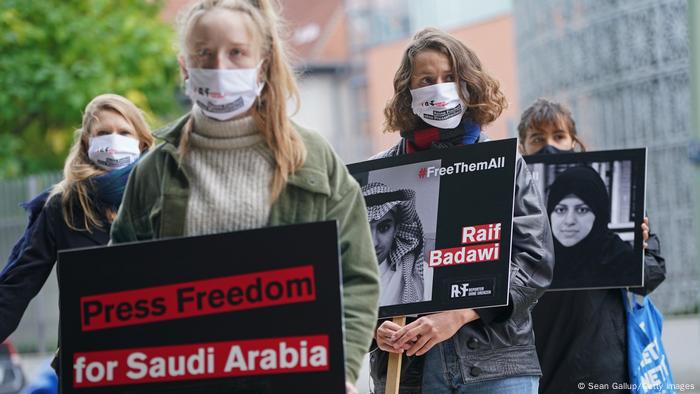
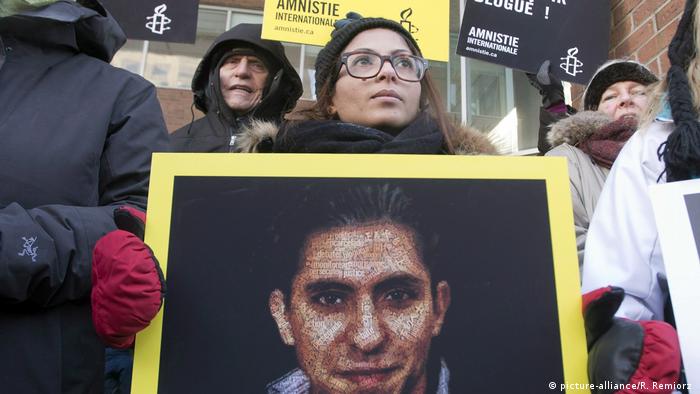
Opinion: Raif Badawi is free, but world must speak out for other jailed journalists
Blogger Raif Badawi has been released from Saudi prison after completing his sentence. But ongoing restrictions on his freedom and a crackdown on free press means the world can't afford to be silent, says Justin Shilad.
Governments around the world should raise their voices on behalf of all imprisoned journalists, says Justin Shilad
After nearly a decade behind bars, Saudi authorities have finally released Raif Badawi from prison. Badawi, a blogger who used his writings and online forums to advocate for secularism and liberal values, was arrested in June 2012 and sentenced a year later to 10 years in prison and 1,000 lashes. He endured 50 lashes as part of his sentence, but global pressure may have saved him from even more.
While Badawi was in prison, Saudi Arabia witnessed two seemingly contradictory trends. Under the de facto reign of Crown Prince Mohammed bin Salman, Saudi Arabia has turned into one of the top jailers of journalists worldwide and an epicenter of surveillance and spyware technology. The crown prince himself has gained notoriety in 2018 for likely ordering the brutal murder of Jamal Khashoggi, a columnist for The Washington Post.
Yet at the same time, the crown prince escaped any direct penalty from the US government and the international community, and the world has accepted Saudi Arabia under Mohammed bin Salman as an increasingly important actor on the global stage. Badawi reflected changing views on religion, liberalism
But Badawi's arrest and sentencing came years before bin Salman's ascent to power, and his writing is an example of how independent journalism continues in one of the world's most censored states.
Badawi started an online discussion forum in 2006 where Saudis could discuss politics and religion. By 2008, he had already been detained at least once, yet he continued to develop the forum until it became the Free Saudi Liberals network, with thousands of registered users. Over the next few years, he continued to help run the forum while publishing columns advocating secularism and liberalism in local and regional outlets.
Ensaf Haidar, Badawi's wife, has consistently called for her husband's release
Badawi's writing and work moderating the forums reflected Saudis' changing views on the role of religion and liberalism in Saudi society — a dynamic that Saudi authorities have alternately denied and attempted to take credit for.
A Saudi court responded to Badawi's writings by sentencing him to seven years in prison and 600 lashes — a sentence that was increased on appeal in May 2014 to 10 years in prison, 1,000 lashes, a fine of 1 million Saudi riyal ($267,000/€244,000) and a 10-year travel ban after his prison sentence. Saudi authorities publicly lashed Badawi 50 times in January 2015, but repeatedly postponed the remaining sessions, ostensibly out of concern for his health.
Saudi government sensitive to criticism
But the international outcry after the first round of lashes suggests Saudi authorities are indeed concerned about worldwide public opinion and their global standing. After Khashoggi's murder, the Saudi government responded with ferocity when Canada's Foreign Ministry criticized the arrest of Badawi's sister, Samar Badawi, in 2019.
If the Saudi government's expulsion of the Canadian ambassador in response was meant as a warning to other countries who would criticize the country's rights record, it should also indicate how sensitive they are to criticism.
Raif Badawi may be free, but Saudi authorities continue to impose a travel ban on him and others, subjecting him to another unbearable decade of separation from his family. Meanwhile, the Saudi government continues to enjoy the military support of the US and EU member states, even as other journalists languish in prison in deplorable circumstances. The international condemnation that followed the first round of Badawi's lashings has subsided, as Saudi authorities' violations against journalists multiplied.
Need for continued international pressure
The international community must keep the pressure on Saudi authorities to release all other detained journalists, stop imposing onerous restrictions on those who have been released from jail, end their regime of censorship and surveillance and meaningfully pursue justice for Khashoggi's murder. As horrifying as it was for Badawi to have to endure 50 lashes, there's reason to believe that international pressure kept him from a grimmer fate.
Badawi's release from prison should not signal a return to business as usual with the kingdom — instead, it should be a reminder of the stakes of silence, and the need for continued international pressure.
Over the past three years, the ongoing imprisonment of Saudi journalists and lack of accountability for Khashoggi's murder has drawn an uncomfortable silence from the international community. With Badawi out of jail, governments around the world should raise their voices once again on behalf of all other imprisoned journalists. If he wasn't afraid to speak out, then countries that claim to value free expression shouldn't be afraid to either. Justin Shilad is a senior researcher on Middle East and North Africa at the Committee to Protect Journalists.
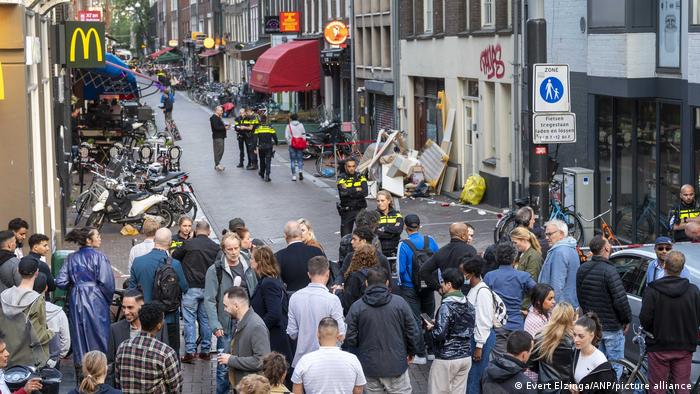
VIOLENCE AGAINST JOURNALISTS 'IN THE HEART OF EUROPE' Amsterdam in shock Tuesday evening in the middle of the Dutch capital, Amsterdam. Well-known crime reporter Peter R. de Vries leaves a television studio and is shot by unknown assailants. Various indications point to an organized crime syndicate being behind the attack. Two men were taken into custody several hours after the shooting. 12345678910
At a press conference held at a secret location in Kyiv on Saturday, Ukraine's President Volodymyr Zelensky said people around the world are taking to the streets because they want their governments to do more for his country. He said the world cannot afford to abandon Ukraine, warning: "What's happening here is what will happen in Europe tomorrow."
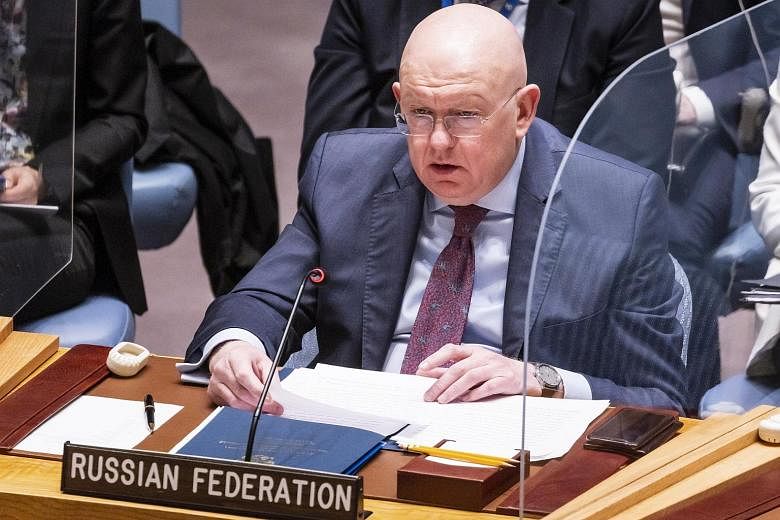
The lonely envoy: Moscow's man at the UN finds himself on the defensive
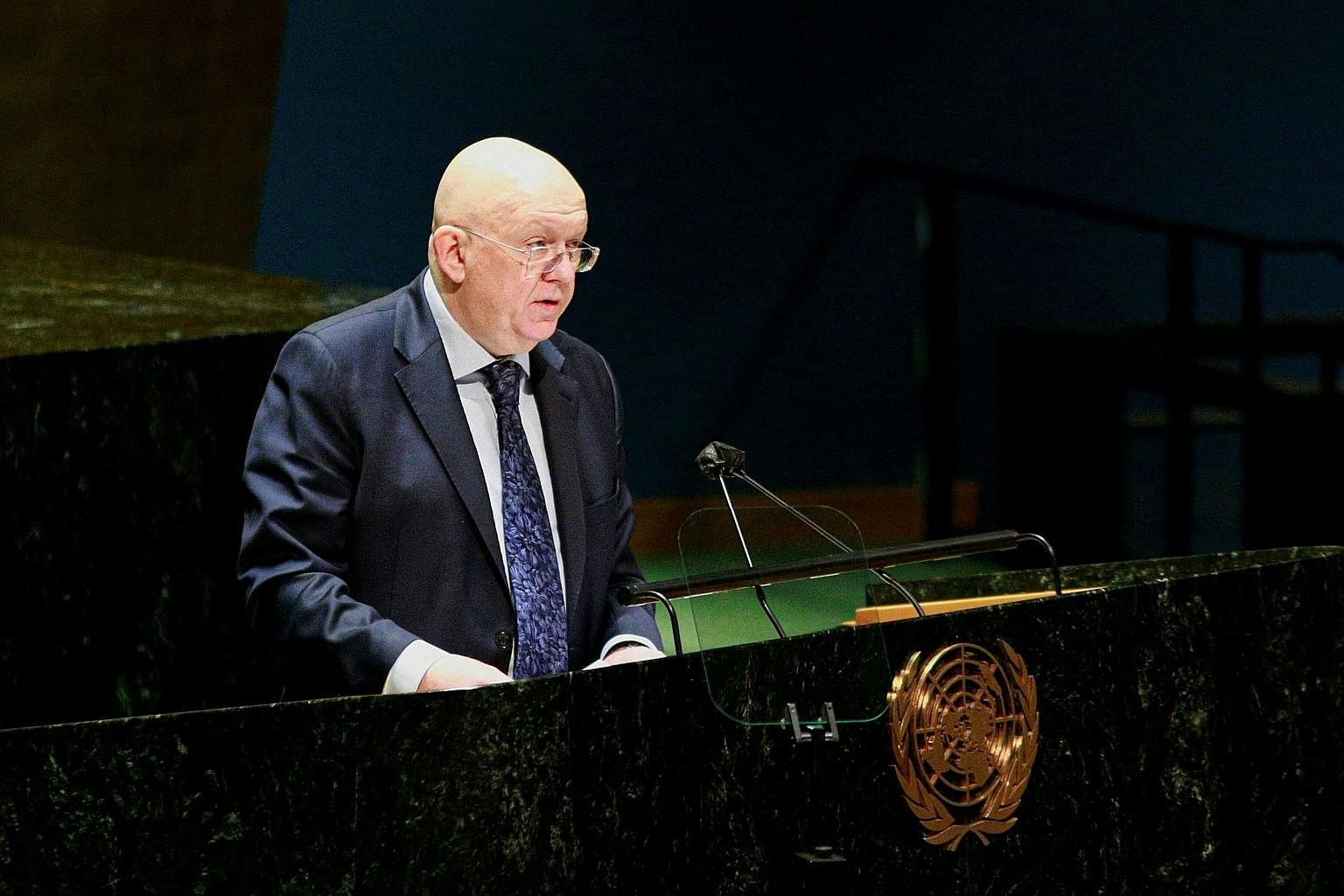
Ambassador Vassily Nebenzia has followed Moscow's line at emergency meetings of the UN Security Council since Russia's attack on Ukraine.
PHOTO: EPA-EFE
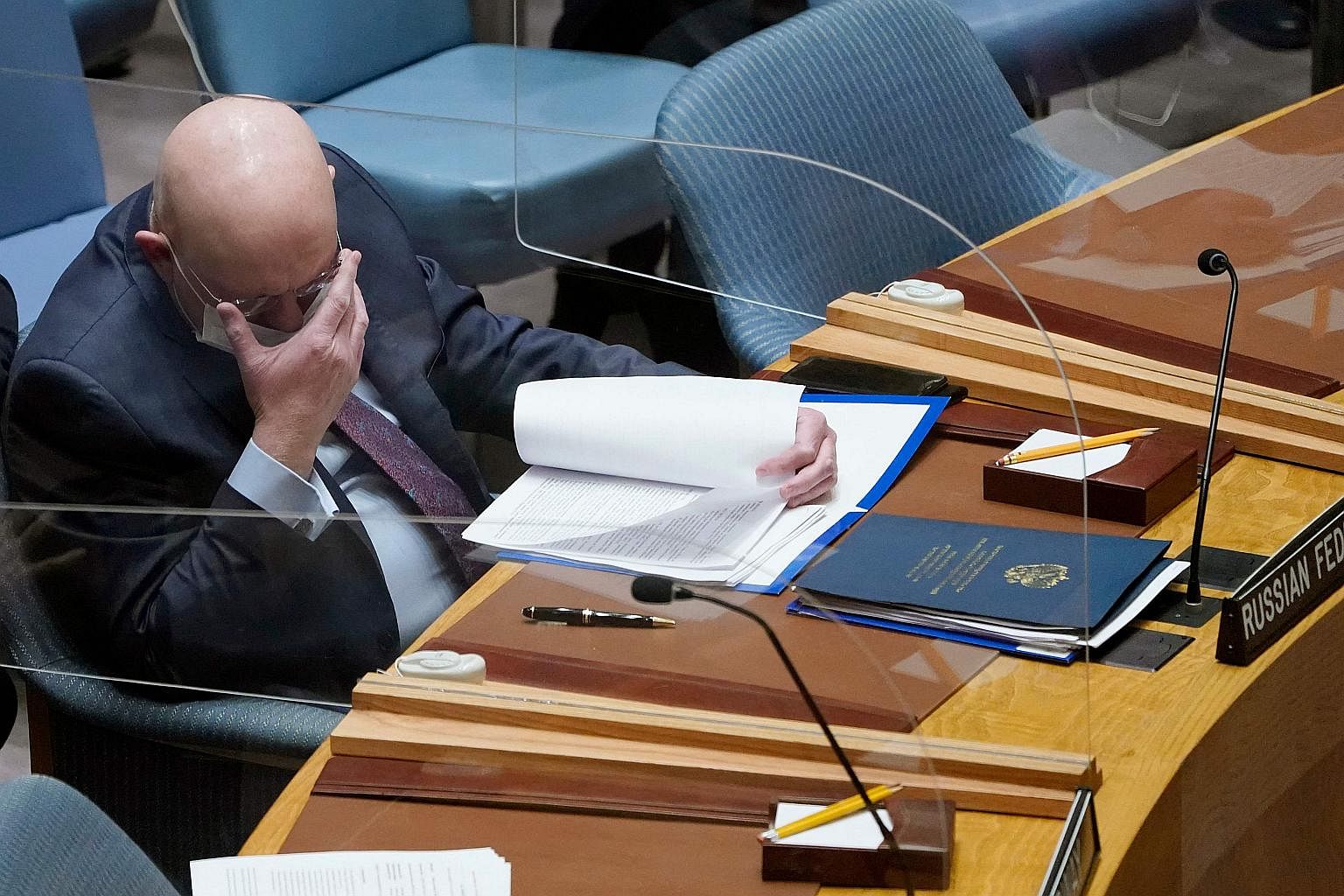
UNITED NATIONS, UNITED STATES (AFP) - It was the middle of an emergency session of the UN Security Council, late on the evening of Feb 23, and Mr Vassily Nebenzia looked shaken - his face pale, his shoulders sagging.
Russia, the country he represents at the United Nations, had just invaded Ukraine, sending shock waves around the world that continue to reverberate today.
At nearly 60, Mr Nebenzia - a bald man, massively built, who wears thin-framed glasses and often fiddles with his watch - was chairing the Security Council.
It was a shocking first for the UN: The man presiding over the august body dedicated to defending global peace was also the representative of a nuclear power now waging war against a democracy.
Did he know, when he opened the session and sat listening as his colleagues delivered impassioned pleas for Moscow to pull back the armed forces surrounding much of Ukraine - that they had already invaded?
More generally, does he believe the words in the speeches he reads?
"I don't know, but I believe not," one UN official told Agence France-Presse, speaking on grounds of anonymity.
Several ambassadors said they shared that impression.
Several UN ambassadors think Mr Nebenzia does not believe the statements he reads from Moscow. PHOTO: AFP
Ukrainian Ambassador Sergiy Kyslytsya regularly asks Mr Nebenzia if he is actually in touch with Moscow.
British envoy Barbara Woodward, a specialist in Russian and Chinese affairs, reminded Mr Nebenzia that the great Russian writer Alexander Solzhenitsyn wrote: "Man is given not only one life, but also one conscience."
She said: "I know that you've spoken under instructions today, but I ask you to report faithfully back to Moscow what you have heard today - the urgency of this Council's calls for peace."
Mr Nebenzia did not respond to an AFP request for an interview.
He has, in resigned tones, followed his government's line at emergency meetings of the council since war broke out, and further sessions are expected this week.
Under the exasperated eyes of his foreign colleagues, he has read speeches denying media reports of the destruction of civilian sites.
In impromptu replies, he has on occasion used the word "war" - a word banned by Moscow in regard to Ukraine. But each time, he has been careful to note that the word was first used by his boss, Foreign Secretary Sergei Lavrov.
"The Russian system has never been as centralised," said one Western ambassador, speaking anonymously.
Russian diplomats "are excellent professionals, but they are not in a position to interact with power. They are simply there to execute government dictates, whether involved in preparing them or not - and usually not". Two things at once
At the UN, Mr Nebenzia is known for his deep mastery of the issues. His career has taken him to Bangkok and Geneva, with a speciality in international organisations. He is fluent in the arcana of multilateral manoeuvring and uses his deep understanding of procedure to his country's benefit.
Mr Nebenzia is known for his mastery of issues, with a speciality in international organisations. PHOTO: AFP
Outside the sometimes theatrical jousting in the hallowed halls of the Security Council, his relations with colleagues are cordial and polite - and have remained so since the invasion, according to several sources.
The ambassador is a man of culture with a sense of humour.
"I can do two things at the same time," he told AFP with a smile, after displaying the surprising ability to deliver a speech in Russian while listening to its English translation simultaneously on his headphones.
Russians are trained in this multitasking, his aides say, which allows them to ensure that their addresses are rendered as precisely as possible in the language in which most will hear them - and to correct any errors on the spot, diplomats say.
At diplomatic receptions, Mr Nebenzia shows a convivial side. His favourite cocktail? "Half vodka, half champagne," he once told two French journalists.
Married and father of a son, the ambassador likes to take off on weekends on his European motorbike - a solitary hobby that goes well with the newly solitary status thrust on him by the Ukraine crisis.
But he is never far from the drama these days.
On Feb 28, during a news conference marking the end of his month leading Russia's rotating presidency of the Security Council, he abruptly interrupted the proceedings to answer his cellphone.
Sources in Washington have said the 12 are spies - with no connection to the war.
Diplomats later told AFP that the 12 are members of the military.
Colombians vote for Congress, short-list presidential contenders Héctor Velasco Thu, 10 March 2022 Colombians will vote to renew their 296-member Congress
(AFP/Raul ARBOLEDA)
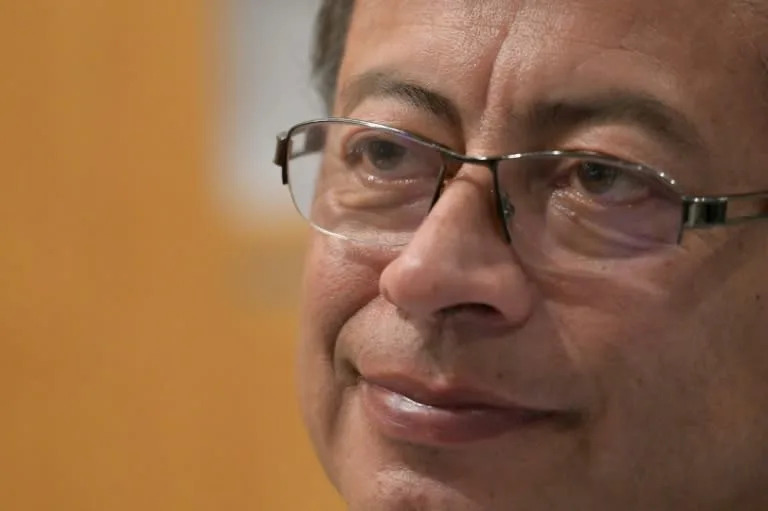
Polls show Gustavo Petro in the lead ahead of the first round of presidential voting in Colombia on May 29
(AFP/Luis ROBAYO)
French-Colombian Ingrid Betancourt was captured by the FARC guerrilla group in 2002 while campaigning for the presidency, and was rescued in a military operation six-and-a-half years later, in 2008
(AFP/DANIEL MUNOZ)
A couple walks past a banner with information on the election in Bogota
(AFP/Juan BARRETO)
Colombians vote Sunday to draw up a shortlist of presidential candidates for elections in May while also electing the 296 members of its Congress.
Nearly 39 million of Colombia's 50 million inhabitants are eligible to vote in a complex but critical election that comes with the president and legislature both at rock-bottom levels of public opinion.
In a country with a history of political violence and voter turnout traditionally below 50 percent, outgoing President Ivan Duque has promised safety "guarantees" for the non-compulsory vote.
On one part of the ballot, voters will determine the composition of the Senate and House of Representatives, currently in the hands of right-wing parties.
But all eyes will really be on the outcome of the presidential primary -- called inter-party "consultations" -- happening alongside the legislative vote.
In a country that has always been ruled by the political right, polls show that former guerrilla, ex-Bogota mayor and senator Gustavo Petro, 61, stands a real chance of becoming Colombia's first-ever leftist leader.
Also in the running is former FARC hostage Ingrid Betancourt, who said in January she would vie to represent centrist parties as an alternative to both the ruling right and Petro.
The process must yield three presidential contenders from 15 candidates vying to represent groups of politically-aligned parties -- one each for the left, right and center.
Three others have already been chosen by their respective groupings.
Six finalists will face off in a first round of presidential elections on May 29, which will be followed by a runoff on June 19 if no one wins am outright majority. - First leftist president? - Petro enjoys polled support of about 45 percent -- more than any other candidate in a country traditionally distrustful of the left.
That distrust is widely associated with the now defunct Revolutionary Armed Forces of Colombia (FARC) and other rebel groups that fought the government in a near six-decade civil conflict.
"When the government is unpopular, there is alternation and the opposition wins, but in Colombia, this is new: the left has never really been in a position to win an election," said analyst Yann Basset of the Rosario University in Bogota.
In 2018, Petro lost the presidential race to Duque, who is leaving office as his country's most unpopular president in history following a year marked by social unrest and a violent police crackdown that drew international condemnation.
The political right he represents is divided and weakened by the absence of popular former president Alvaro Uribe, who had to resign from the senate under a cloud of alleged bribery and witness tampering. It has no clear frontrunner.
For Betancourt, it is her second presidential run: she was abducted 20 years ago while campaigning and held captive in the jungle for more than six years.
Colombian presidents serve only one four-year term. - Economy dominates -
Duque's successor faces a multitude of challenges, not least of which is a new cycle of murders and kidnappings as violence has surged despite a 2016 peace deal that disarmed the FARC and officially ended the civil war.
The new president will also contend with an economy hard hit by the fallout from the coronavirus pandemic.
"What dominates the agenda today is how we will get out of the economic and social crisis," said Basset.
Congress, for its part, enters Sunday's election with an 86 percent disapproval rating, according to the Invamer polling agency, due to multiple corruption scandals.
Despite the peace pact, fighters of the leftist National Liberation Army (ELN) still battle dissidents of the disbanded FARC, paramilitary forces and drug cartels for territory, resources and smuggling routes.
Colombia is the world's largest cocaine exporter.
The right-wing government in Bogota accuses its populist socialist counterparts in Venezuela of supporting and providing refuge for far left guerrillas.
vel/mlr/jh/sst
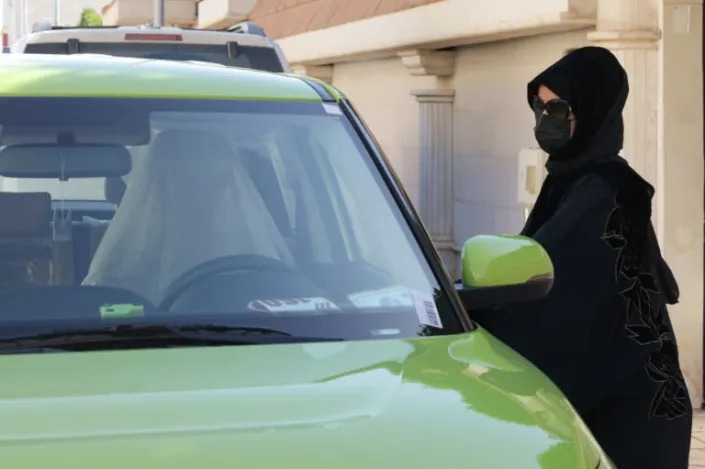
Saudi women drive for extra cash as costs climb Fahda Fahd picks up fares in the Saudi capital Riyadh from a ride-hailing app exclusively for women, as a way of earning extra cash amid rising living costs in the kingdom
(AFP/Fayez Nureldine)
Haitham El-Tabei Sat, March 12, 2022
Like other Saudi women, Fahda Fahd couldn't legally drive until 2018, but her lime-green Kia is now a route to extra cash as living costs rise in the conservative kingdom.
When she's not working full time at a healthcare call centre, the 54-year-old picks up fares in the capital Riyadh from a ride-hailing app exclusively for women.
Fahd said her family was supportive of her second job, on two conditions: no long trips or men as passengers.
"I decided to work as a taxi driver to earn extra income," said Fahd, wearing a black head covering and an anti-coronavirus face mask.
"My salary is not enough for my three children, and especially for my daughter who has special needs," she told AFP.
Sweeping social reforms, including lifting the infamous ban on women driving, have transformed life for many Saudis, but rising costs are increasingly problematic.
Fahd says her salary of 4,000 Saudi riyals ($1,066) a month from her regular job is not enough -- but driving brings in another 2,500 riyals.
She usually hits the road before her shift starts at 2 pm, sometimes accepting passengers on her way home at 10 pm, and says she appreciates the flexible hours.
"It has allowed me to help my retired husband pay monthly bills and for my children's school needs," she said, checking her phone for the latest fare.
- 'New chance at life' -
Costs are creeping up in Saudi Arabia, which is on a drive to reduce its economic reliance on oil and in July 2020 hiked value added tax to 15 percent.
Last December, transport costs were up 7.2 percent year-on-year, part of a 1.2 percent rise in consumer prices. At the same time, millions of Saudi women are finding jobs as female employment gains acceptance in the deeply patriarchal society.
Women made up more than a third of the workforce last year for the first time, government figures showed.
They are among the Saudis now commonly seen serving customers in restaurants, cafes and shoe stores, filling jobs formerly done by foreigners as the government pursues its "Saudisation" plan for the economy.
Traditionally, Saudi women were forbidden from mixing with men outside their extended family.
Insaf, a 30-year-old mother of three, said she turned to driving after her husband died suddenly.
"He didn't leave us a fortune, so I had to work to support my children," she told AFP, preferring to use a pseudonym for privacy reasons.
"I am using my late husband's car to drive women and children in the neighbourhood to schools or shopping centres.
"My work as a driver has given me a new chance at life."
Since 2018, more than 200,000 women have obtained driving licences, with car sales rising five percent last year, according to media reports.
Egyptian passenger Aya Diab, 29, said she was "more comfortable dealing with women", and a Saudi customer who spoke on condition of anonymity expressed a similar sentiment.
"I feel like I'm with my sister," she said, sitting in the front seat next to Fahd as they drove off.
ht/dm/th/lg
WAR IS FAMINE & PROFITEERING Rising food prices shake North Africa as Ukraine war rages Tunisia imports almost half of its soft wheat, which is used to make bread, from Ukraine. Authorities say the North African country has enough supplies to last three months (AFP/Anis MILI)
Francoise Kadri with AFP bureaus Sat, March 12, 2022,
Households across North Africa are rushing to stock up on flour, semolina and other staples as food prices rise following Russia's invasion of Ukraine, both key wheat exporters to the region.
The scramble is worse coming just weeks before the start of the holy month of Ramadan, when Muslims traditionally break a dawn-to-dusk fast with lavish family meals.
Tunisia, Morocco and Libya, along with several other Arab countries, import much of their wheat from Ukraine and Russia.
Some fear the Russian invasion could lead to hunger and unrest, with memories of how rising food prices played a role in several Arab uprisings last decade.
In one supermarket in the Tunisian capital, the shelves were bare of flour or semolina, and only three packs of sugar sat on a shelf near a sign that read: "One kilo per customer, please".
Store managers said the problem was "panic buying", not shortages.
Shopper Houda Hjeij, who said she hadn't been able to find rice or flour for two weeks, blamed the authorities.
"With the war in Ukraine, they did not think ahead," the 52-year-old housewife in Tunis said.
Bulk-buying ahead of Ramadan, which is expected to start in early April this year, is common in Muslim countries.
But some say the war in Ukraine has sparked a shopping frenzy.
- Fear of war -
Hedi Baccour, of Tunisia's union of supermarket owners, said daily sales of semolina -- a staple across North Africa used in dishes of couscous -- have jumped by "700 percent" in recent days.
Sugar sales are up threefold as Tunisians stockpile basic foodstuffs, said Baccour, who insisted there were no food shortages.
Each day pensioner Hedi Bouallegue, 66, makes the round of grocery shops in his Tunis neighbourhood to stock up on products like cooking oil and semolina.
"I am even ready to pay double the price," he told AFP.
Baker Slim Talbi said he had been paying three times as much for flour than in the past, "although the real effects of the (Russia-Ukraine) war have not hit us yet".
"I am worried" about the future, Talbi added, citing Tunisia's dependence on Ukrainian wheat.
Tunisia imports almost half of the soft wheat used to make bread from Ukraine. Authorities say the North African country has enough supplies to last three months.
Oil-rich Libya gets about 75 percent of its wheat from Russia and Ukraine. Morocco also relies heavily on the same source for supplies.
Algeria -- Africa's second-largest wheat consumer after Egypt -- does not import any from the two warring eastern European countries, instead sourcing it from Argentina or France, according to the bureau of cereals.
"There won't be any shortages -- wheat shipments regularly arrive at Algiers port," said harbour official Mustapha, who declined to give his full name.
"War in Ukraine and all the semolina warehouses have been stormed," Mouh Benameur, who lives in the area, posted on Facebook.
- Recession, pandemic, recovery -
Food prices were on the rise in North Africa before Russia invaded Ukraine more than two weeks ago.
Moroccan official Fouzi Lekjaa pointed to a global economic pick-up following a pandemic-induced slump.
"With the recovery, the market price of cereals and oil products rose," he said.
Mourad, 37, a shopper in the Moroccan capital Rabat, said climate change and drought -- the worst in his country in decades -- were also to blame.
To keep prices affordable and avoid a repeat of bread riots that erupted in the 1980s, Tunisia subsidises staples like sugar, semolina and pasta.
For the past decade, it has set the price of a baguette loaf of bread at six US cents.
Algeria plans to scrap subsidies on basic goods, but has not yet done so.
After a truck drivers' strike this week, Morocco said it was mulling fuel subsidies for the sector "to protect citizens' purchasing power and keep prices at a reasonable level," according to government spokesman Mustapha Baitas.
In Libya, which found itself with two rival prime ministers this month, sparking fears of renewed violence, food prices are also hitting the roof.
At a Tripoli wholesale market, shopper Saleh Mosbah blamed "unscrupulous merchants".
"They always want to take advantage when there is a conflict," he said.
Summaya, a shopper in her 30s who declined to give her full name, blamed the government.
"They reassure people by saying there is enough wheat," she said, carrying two five-kilo (11-pound) bags of flour. "I don't believe them."
bur-fka/hkb/lg/pjm
Roman Abramovich has been disqualified as a director of Chelsea
Charlotte Mclaughlin and Martin Robinson Chief Reporter and Sami Mokbel and Matt Hughes and Mike Keegan For Mailonline
South Korean car giant Hyundai has become the latest high profile sponsor to pull the plug on their existing deal with Chelsea after the club's oligarch owner Roman Abramovich was today disqualified as a director by the Premier League.
Chelsea's current sleeve sponsors, who were in the final year of their £50million deal, released a statement on Saturday in which they confirmed they had suspended 'marketing and communications activities' with the west London club.
A Hyundai spokesperson said in a statement: 'In the current circumstances, we have taken the decision to suspend our marketing and communication activities with the Club until further notice.
The news broke just days after mobile phone company Three demanded their name was removed from the team's first team kits and stadium. Delivery start-up Zapp also confirmed it had temporarily paused activities with the Blues on Saturday.
The developments come as the Premier League today disqualified Mr Abramovich from running Chelsea after the Russian was sanctioned by the British government over Vladimir Putin's illegal invasion of Ukraine.
'The board's decision does not impact on the club's ability to train and play its fixtures, as set out under the terms of a licence issued by the Government which expires on 31 May 2022,' the league said.
The Government claims the Russian oligarch, who has owned Chelsea since 2003, received financial benefits from the Kremlin - including tax breaks for his companies, the buying and selling of shares from and to the state at favourable rates and contracts in the run up to the 2018 World Cup in Russia, it was claimed.
The New York Merchant Bank the Raine Group has also agreed to Chelsea's sale proceeding with Government approval, it's understood.
Chelsea's current sleeve sponsors, who were in the final year of their £50million deal, released a statement on Saturday in which they confirmed they had suspended 'marketing and communications activities' with the west London clubNext Slide Full Screen
Chelsea's current sleeve sponsors, who were in the final year of their £50million deal, released a statement on Saturday in which they confirmed they had suspended 'marketing and communications activities' with the west London club
What Chelsea now can and can't do following sanctions on Abramovich
CAN
CAN'T
On Friday, Chelsea asked the Government to ease sanctions to save them from going bust in 17 days as ministers consider forcing through the club's £3billion sale without Roman Abramovich giving permission or getting any of the cash.
The premier league club have now been handed a new licence to continue operations and the European champions are still locked in negotiations with the Government to ease restrictions.
Under the new agreement, Chelsea spend of £500,000 increases to £900,000 on costs for home games, the BBC reported.
Costs of travel, allowable, remain at £20,000 per game.
The Digital, Culture, Media and Sport (DCMS) welcomed his disqualification.
The body said: 'The government has made clear that we need to hold to account those who have enabled the Putin regime.'
In light of the news BBC sports commentator, Gary Lineker, said a 'fit and proper person test' is long overdue in football.
He added: 'An independent regulator is probably the only way to do this.'
New York merchant bank the Raine Group has now assessed the terms of the licence, the PA news agency understands, and agreed a route forward for the Chelsea sale with the Government.
The Premier League board's decision to disqualify Mr Abramovich is unlikely to have any real impact given the sale process was already under way.
It also does not affect Chelsea's ability to play matches.
Technology minister Chris Philp told Times Radio on Friday that anyone who wants to buy the club can 'approach the Government'.
He said: 'No proposal would be accepted which saw the money, the proceeds of any sale, ending up in an unrestricted bank account owned by Abramovich. He can't benefit from the proceeds of any sale.'
EXCLUSIVE: Chelsea fan and British tycoon Nick Candy confirms he is still interested in making a bid to takeover the Blues with the sanctioning of owner Roman Abramovich expected to quicken the sale process of the club
British billionaire Nick Candy has confirmed he is still pursuing a bid for Chelsea, with the sanctioning of owner Roman Abramovich expected to quicken the sale process once the confusion created by the extraordinary events has been clarified.
The 49-year-old property developer is a Chelsea fan, who is planning to attend Sunday's Premier League home match against Newcastle and has pledged to put supporters at the centre of his plans for the club that will be jointly-funded with American investors.
'We are examining the details of the announcement and we are still interested in making a bid,' a spokesperson for Candy told Sportsmail. 'Clearly this is a time of great uncertainty for all Chelsea fans.'
Candy is in talks with several potential investors over a joint venture, with the fact that the sale now has to be officially approved by the government doing little to dampen interest.
The Russian-born oligarch owner was told he can no longer press ahead with getting rid of the club for £3billion after 20 years in charge after he had £3.2billion of UK assets frozen.
Money from the club's sale could go instead to benefit Ukrainians and Russians, ministers think, through the Disasters Emergency Committee but not the charity the 55-year-old wanted to set up.
The Raine Group's progression of the sale means Chelsea's suitors can again push forward with their bids to take control of the European and world champions of the club game.
Mr Abramovich was understood to have been ready to work with Government oversight on the sale and, now the Raine Group has completed suitable checks, the interested parties can press on.
LA Dodgers part-owner Todd Boehly remains well-placed for a purchase, with Chicago Cubs owner Tom Ricketts also understood to be in the running.
British property tycoon Nick Candy has also confirmed his strong interest in buying the Blues and is in the process of building a consortium.
Chelsea saw several credit cards temporarily frozen on Friday amid a frenzied day of negotiations with the Government over the terms of their new operating licence.
The Premier League club also cannot sell any new tickets, leaving fans who have not got season tickets or pre-purchased tickets unable to attend future matches.
The Blues also cannot sell any merchandise, including new match programmes, meaning vendors will not be able to work their shifts in Sunday's Premier League clash against Newcastle at Stamford Bridge.
Mr Abramovich also moved his £430m superyacht to Montenegro after hurriedly leaving Barcelona on Tuesday – two days before he was sanctioned by the UK government.
Its believed he docked it in the eastern European country, which is not yet part of the European Union, over fears that the EU bloc would sanction him.
The luxury 460ft vessel, called the Solaris, which boasts its own helipad and missile detection system, arrived just before 8am UK-time in the port of Tivat.
Mr Abramovich is worth £10.4bn ($12.5bn), according to Forbes, and owns a £150m Kensington mansion, a £22m penthouse, and more than £1.2bn of yachts, private jets, helicopters and supercars based in Britain and around the world had wanted to sell his assets.
However, the oligarch no longer will be able sell any of them in Britain.
Abramovich's superyacht cruises in to Montenegro marina
Roman Abramovich's 140-metre-long (460-feet-long) Solaris cruised into the Porto Montenegro marina on the Balkan country's Adriatic coastline on Saturday
(AFP/SAVO PRELEVIC)
Sat, March 12, 2022
A superyacht belonging to the Russian billionaire owner of Chelsea football club sanctioned over Russia's invasion of Ukraine anchored off Montenegro Saturday, an AFP photographer said.
Roman Abramovich's 140-metre-long (460-feet-long) Solaris cruised into the Porto Montenegro marina on the Balkan country's Adriatic coastline.
Local media who have been monitoring the ship's movements over recent days on maritime tracking websites said the boat left the Spanish Mediterranean port of Barcelona on March 8.
The United Kingdom on Thursday hit Abramovich with an assets freeze and travel ban as part of new sanctions against seven Russian oligarchs it described as part of Russian President Vladimir Putin's inner circle. The football club owner has denied any association. Canada followed suit the next day, saying he and four other individuals would "be prevented from dealings in Canada and their assets will be frozen".
HE OWNS A STEEL COMPANY OPERATING IN SASKATCHEWAN
The 55-year-old businessman, who has often been reported to be cruising off Montenegro and neighbouring Croatia, is rumoured to own half a dozen yachts.
The UK sanctions also targeted Russian tycoon Oleg Deripaska.
Montenegro media have reported that one of Deripaska's boats, Sputnik, was spotted leaving Porto Montenegro on Friday. The vessel is often seen accompanying his own superyacht, Clio.
Abramovich had already announced his intention to sell Chelsea before the UK sanctions, with a host of potential buyers declaring their interest in a club that have won 19 major trophies since he bought it in 2003.
The UK government is still open to a sale but would have to approve a new licence, on the condition no profit would go to the Russian.
str-rus/blb/ah/har
WAR IS RAPE Russia-Ukraine conflict: Concerns grow over traffickers targeting Ukrainian refugees
Concerns are growing over how to protect the most vulnerable refugees from being targeted
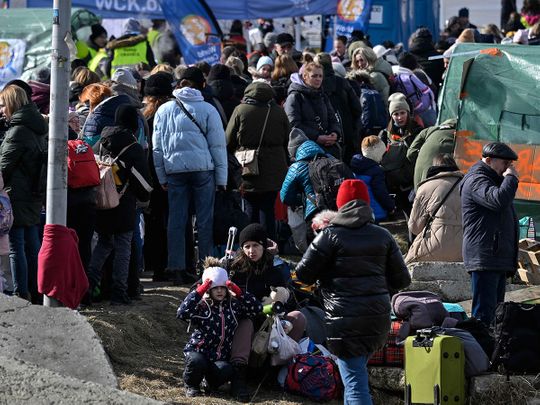
Refugees wait for further transport at the Medyka border crossing at the Polish-Ukrainian border, southeastern Poland on March 12, 2022.Image Credit: AFP
Siret, Romania: One man was detained in Poland suspected of raping a 19-year-old refugee he'd lured with offers of shelter after she fled war-torn Ukraine. Another was overheard promising work and a room to a 16-year-old girl before authorities intervened.
Another case inside a refugee camp at Poland's Medyka border, raised suspicions when a man was offering help only to women and children. When questioned by police, he changed his story.
As millions of women and children flee across Ukraine's borders in the face of Russian aggression, concerns are growing over how to protect the most vulnerable refugees from being targeted by human traffickers or becoming victims of other forms of exploitation.
"Obviously all the refugees are women and children," said Joung-ah Ghedini-Williams, the UNHCR's head of global communications, who has visited borders in Romania, Poland and Moldova.
"You have to worry about any potential risks for trafficking - but also exploitation, and sexual exploitation and abuse. These are the kinds of situations that people like traffickers . look to take advantage of," she said.
Unprecedented humanitarian crisis FOR EUROPE
The UN refugee agency says more than 2.5 million people, including more than a million children, have already fled war-torn Ukraine in what has become an unprecedented humanitarian crisis in Europe and its fastest exodus since World War II.
In countries throughout Europe, including the border nations of Romania, Poland, Hungary, Moldova and Slovakia, private citizens and volunteers have been greeting and offering help to those whose lives have been affected by war. From free shelter to free transport to work opportunities and other forms of assistance - help isn't far away.
But neither are the risks.
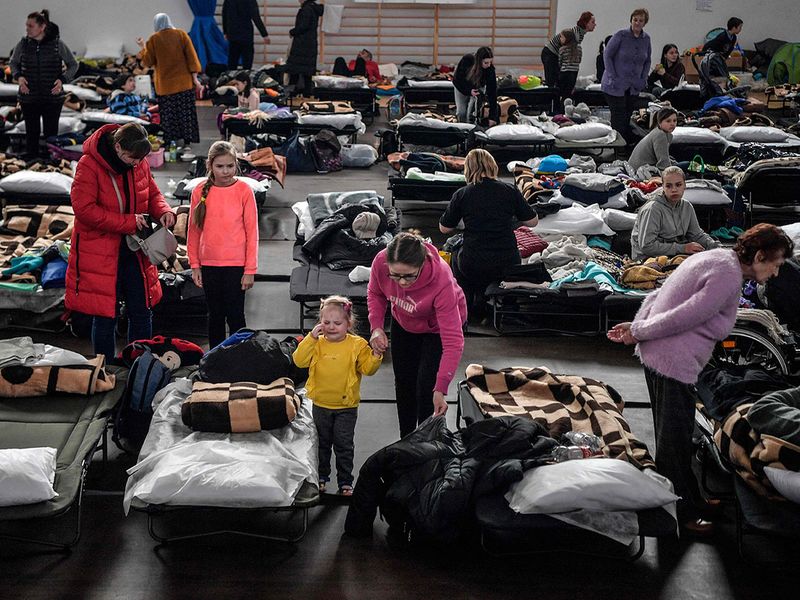
A child reacts as refugees rest in a temporary shelter at a gym of a primary school in Przemysl, near the Polish-Ukrainian border on March 12, 2022
.Image Credit: AFP
Police in Wroclaw, Poland, said Thursday they detained a 49-year-old suspect on rape charges after he allegedly assaulted a 19-year-old Ukrainian refugee he lured with offers of help over the internet. The suspect could face up to 12 years in prison for the "brutal crime," authorities said.
"He met the girl by offering his help via an internet portal," police said in a statement. "She escaped from war-torn Ukraine, did not speak Polish. She trusted a man who promised to help and shelter her. Unfortunately, all this turned out to be deceitful manipulation."
Police warn women and children
Police in Berlin warned women and children in a post on social media in Ukrainian and Russian against accepting offers of overnight stays, and urged them to report anything suspicious.
Tamara Barnett, director of operations at the Human Trafficking Foundation, a U.K.-based charity which grew out of the All Party Parliamentary Group on Human Trafficking, said that such a rapid, mass displacement of people could be a "recipe for disaster."
"When you've suddenly got a huge cohort of really vulnerable people who need money and assistance immediately," she said, "it's sort of a breeding ground for exploitative situations and sexual exploitation. When I saw all these volunteers offering their houses . that flagged a worry in my head."
The Migration Data Portal notes that humanitarian crises such as those associated with conflicts "can exacerbate pre-existing trafficking trends and give rise to new ones" and that traffickers can thrive on "the inability of families and communities to protect themselves and their children." A grave human rights violation
Security officials in Romania and Poland told The Associated Press that plain-clothed intelligence officers were on the lookout for criminal elements. In the Romanian border town of Siret, authorities said men offering free rides to women have been sent away.
Human trafficking is a grave human rights violation and can involve a wide range of exploitative roles. From sexual exploitation - such as prostitution - to forced labor, from domestic slavery to organ removal, and forced criminality, it is often inflicted by traffickers through coercion and abuse of power.
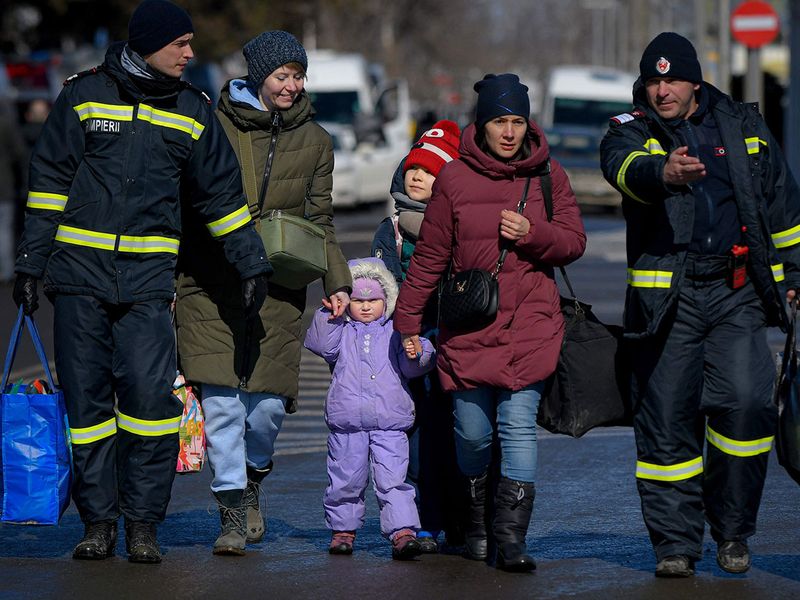
Romanian firefighters help refugees fleeing the conflict from neighbouring Ukraine after crossing the border, at the Romanian-Ukrainian border, in Siret, Romania.
Image Credit: AP
A 2020 human trafficking report by the European Commission, the EU's executive branch, estimates the annual global profit from the crime is 29.4 billion euros ($32 billion). It says that sexual exploitation is the most common form of human trafficking in the 27-nation bloc and that nearly three-quarters of all victims are female, with almost every fourth victim a child.
Madalina Mocan, committee director at ProTECT, an organization that brings together 21 anti-trafficking groups, said there are "already worrying signs," with some refugees being offered shelter in exchange for services such as cleaning and babysitting, which could lead to exploitation.
"There will be attempts of traffickers trying to take victims from Ukraine across the border. Women and children are vulnerable, especially those that do not have connections - family, friends, other networks of support," she said, adding that continued conflict will mean "more and more vulnerable people" reaching the borders.
At the train station in the Hungarian border town of Zahony, 25-year-old Dayrina Kneziva arrived from Kyiv with her childhood friend. Fleeing a war zone, Kneziva said, left them little time to consider other potential dangers.
"When you compare ... you just choose what will be less dangerous," said Kneziva, who hopes to make it to Slovakia's capital of Bratislava with her friend. "When you leave in a hurry, you just don't think about other things."
Risk of abduction and rape
A large proportion of the refugees arriving in the border countries want to move on to friends or family elsewhere in Europe and many are relying on strangers to reach their destinations.
"The people who are leaving Ukraine are under emotional stress, trauma, fear, confusion," said Cristina Minculescu, a psychologist at Next Steps Romania who provides support to trafficking victims. "It's not just human trafficking, there is a risk of abduction, rape ... their vulnerabilities being exploited in different forms."
At Romania's Siret border after a five-day car journey from the bombed historical city of Chernihiv, 44-year-old Iryna Pypypenko waited inside a tent with her two children, sheltering from the cold. She said a friend in Berlin who is looking for accommodation for her has warned her to beware of possibly nefarious offers.
"She told me there are many, very dangerous propositions," said Pypypenko, whose husband and parents stayed behind in Ukraine. "She told me that I have to communicate only with official people and believe only the information they give me."
Ionut Epureanu, the chief police commissioner of Suceava county, told the AP at the Siret border that police are working closely with the country's national agency against human trafficking and other law enforcement to try to prevent crimes.
"We are trying to make a control for every vehicle leaving the area," he said. "A hundred people making transport have good intentions, but it's enough to be one that isn't . and tragedy can come."
Vlad Gheorghe, a Romanian member of the European Parliament who launched a Facebook group called United for Ukraine that has more than 250,000 members and pools resources to help refugees, including accommodation, says he is working closely with the authorities to prevent any abuses.
"No offer for volunteering or stay or anything goes unchecked, we check every offer," he said. "We call back, we ask some questions, we have a minimal check before any offer for help is accepted."
At Poland's Medyka border, seven former members of the French Foreign Legion, an elite military force, are voluntarily providing their own security to refugees and are on the lookout for traffickers.
"This morning we found three men who were trying to get a bunch of women into a van," said one of the former legionnaires, a South African who gave only his first name, Mornay. "I can't 100% say they were trying to recruit them for sex trafficking, but when we started talking to them and approached them - they got nervous and just left immediately."
"We just want to try and get women and kids to safety," he added. "The risk is very high because there are so many people you just don't know who is doing what."
Back at her tent on the Siret border, Pypypenko said people were offering help - but she wasn't sure who she could trust.
"People just enter and tell us that they can take us for free to France," she said. "Today we are for three hours here . and we had two or three propositions like that. I couldn't even imagine such a situation, that such a big tragedy could be the field of crime."
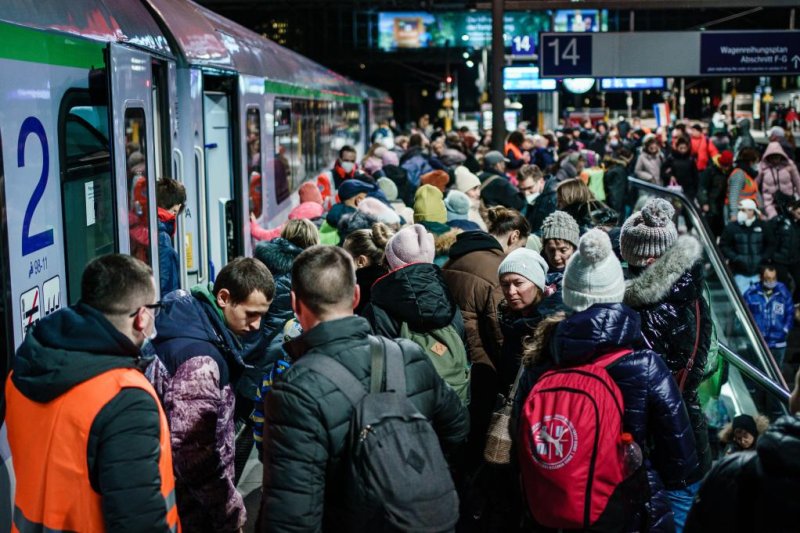
Police warn female Ukrainian refugees about harassment, luring at Berlin train station By Calley Hair Passengers move on a platform after the arrival of a train from Przemysl carrying refugees of the Ukrainian-Polish border at Berlin central station Hauptbahnhof in Berlin, Germany on Friday.
Photo by Clemens Bilan/EPA-EFE
March 12 (UPI) -- German police are warning female refugees arriving from Ukraine via train to stay vigilant after receiving several reports of men harassing or luring young women upon arrival at Berlin Central Station.
Women arriving at Hauptbahnhof station alone or with young children have been approached by men offering rides or a place to stay, According to German public news outlet Deutsche Welle.
Some men reportedly posed as volunteers, capitalizing on the chaos of thousands of refugees arriving at once.
The men tend to be "conspicuous" and legitimate volunteers have been instructed to keep an eye out, a federal police spokesman told the outlet.
He added that the department had seen no evidence that kidnapping, sexual assault or human trafficking had actually been carried out.
In one complaint, a woman said a man tried to lure her with aid upon arrival at the train station, police said.
"We currently have a huge number of people who want to help with honest intentions and, on the other hand, people who want to use this situation for their own purposes," the spokesman told DW.
Berlin's Federal Police confirmed in a post to Twitter that it had been receiving reports of suspicious behavior at the station.
"Please contact the police immediately if you are offered money for accommodation or observe people doing so," the tweet said in German.
Monika Cissek-Evans, a woman who runs a counseling center for victims of human trafficking, told DW that her organization is working on a flyer to post at Berlin Central Station and other train stations across the country.
"Don't let go of your passport. Keep your phone with you at all times. Take a picture of the license plate before you get into a car. Ask to see an ID when you are offered an apartment or room. Write down the name and address. Be wary if someone promises you a lot of money quickly," the flyer states.
The German government has offered to provide free short-term living arrangements for up to 300,000 Ukrainian refugees, including accommodations for 100,000 people through a partnership with vacation rental company AirBnb.
Data from the U.N. High Commissioner for Refugees shows that nearly 2.6 million refugees have fled the country since the invasion began Feb. 24. More than 1.5 million have fled to Poland alone.
German Chancellor Olaf Scholz and French President Emmanuel Macron spoke with Russian President Vladimir Putin on Saturday for more than an hour to call for a cease-fire in Ukraine and a diplomatic end to the invasion.
One of the key ideas underlying Putin’s annexation of Crimea in 2014 and his recognition of the break-away regions of Donetsk and Luhansk in eastern Ukraine has been the need to protect ethnic Russians on post-Soviet lands that Russia is reclaiming as essentially, historically and culturally, Russian. Unsurprisingly, the argument has now partly fed into a wider political narrative involving not only the rebel areas of the Donbas region, but the whole of Ukraine.
As in the case of Crimea, Putin’s latest justification of military intervention remains unsupported by evidence of a genuine pattern of abuse, or even ‘genocide’, against ethnic Russians in the Donbas region or Ukrainians themselves in Ukraine as a whole. For its part, Ukraine is seeking a pronouncement by the International Court of Justice on what it considers to be a false claim of genocide made by Russia in the context of the 1948 Genocide Convention, to which both states are signatories.
However, Putin’s ‘genocide’ claim doesn’t raise merely an issue of evidence. It speaks to deeper views of secession and ethnicity
Multi-ethnic coexistence at home, ethnic chauvinism abroad?
On the one hand, Putin’s ‘ethnic’ card, the same card that he played in earlier crises to fuel secessionism in post-Soviet states (e.g., in Abkhazia and South Ossetia in 2008), seems to contradict the tightly guarded no-secession-friendly policy upheld by Russian institutions at home. Reflecting a model of ethnic federalism inherited by the Soviet Union, the Russian Constitution nevertheless does not recognise a right of secession for the (largely ethnically defined) federal republics. Article 3(1) of the Russian Constitution states that sovereignty in the Federation resides in its ‘multinational people’, not a distinct ethnic segment of Russian society. Both the Russian Constitutional Court and the Russian government itself have repeatedly affirmed (directly or indirectly) their commitment to preserving the territorial integrity of the country. Instead of secession, they have openly endorsed the concept of self-determination within the institutional and territorial framework of Russia through autonomy and federalism.
On the other hand, when stepping back from matters of legal and institutional detail, this clash between ethnic and territorial paradigms appears to project an equally contradictory role of Russia, one that pursues multi-ethnic coexistence at home while actively fuelling ethnic chauvinism within the post-Soviet space.
On closer inspection, Putin’s line of thinking effectively ties up with Russia’s view of the parameters of secession and his own view of the role of Russian ethnicity in the former Russian empire. Though opposing Kosovo’s independence from Serbia and ruling out a freestanding right to secession in international law, Russia has upheld the notion of ‘remedial secession’ on human rights grounds, including forms of oppression by the central government against a particular ethnic group. In Donbas and elsewhere, the Russian thesis manifestly fails on account of evidence, but more than that, it remains legally inconclusive from the point of view of positive international law.
Legal technicalities aside, why is Putin appealing to ethnic Russians abroad to fuel unilateral ethnic secessionism and irredentism, the very things Russia is opposed to within its own borders?
As clearly suggested by the Russian Constitution, the breakup of the Soviet Union did not change the civic idea of a multi-ethnic people who identify with the state and its institutions – the ‘Soviet people’ was replaced by a similarly diverse conception of Russian national identity within the borders of the new state. Putin has never renounced that civic vision but has increasingly recognised an ethnically/culturally Russian core at the heart of his state-centred understanding of national identity, one that still respects (nominally at least) the rights of non-ethnic Russians within.
It is this blend of civic (non-ethnic) and ethnic nationalism that over time has enabled Putin to cast himself as protector of what he believes is an ethnically Russian core within the former Soviet space. Unrealistic and blatantly illegal under international law as they are, his expansionist territorial claims across the region can be explained by Putin’s attempt to recreate a wider and quasi-imperial civic space (in the image of past imperial set-ups) in which ethnic Russians – all Russians of historic Russia (as he understands it) – play a culturally dominant role across the wider range of nationalities. In this sense, Putin’s war in Ukraine is as much a ‘cultural’ war as it is one built around specific military and geopolitical objectives. As a viral post erroneously published and subsequently removed by Russian state-owned news agency RIA Novosti so clearly reveals, Putin’s hybrid brand of nationalism ultimately speaks to deep resentments towards the West and a world order that Russia largely perceives to be the offshoot of ‘Anglo-Saxon globalization’.
Russia should stick to the facts, withdraw its forces from Ukrainian territory, return to the Minsk agreements and enable a process of constructive multi-ethnic coexistence to take roots in the post- Soviet space just as Russia claims to be doing at home. For its part, the international community has the responsibility to respond to Russia’s gross illegalities by staunchly defending the right of the people of Ukraine to self-determination free of any external coercive interference. More than that, states need collectively to double down on containing Russia’s aggressive expansionism in the name of a credible rule-based international system, as resoundingly voiced this week by the United Nations General Assembly.
Gaetano Pentassuglia is Professor of International Law, Liverpool John Moores University, Centre for the Study of Law in Theory and Practice, School of Law, UK; Honorary Senior Fellow, University of Liverpool, UK. He sits on the Steering Committee of the OSCE Network of Think Tanks and Academic Institutions.
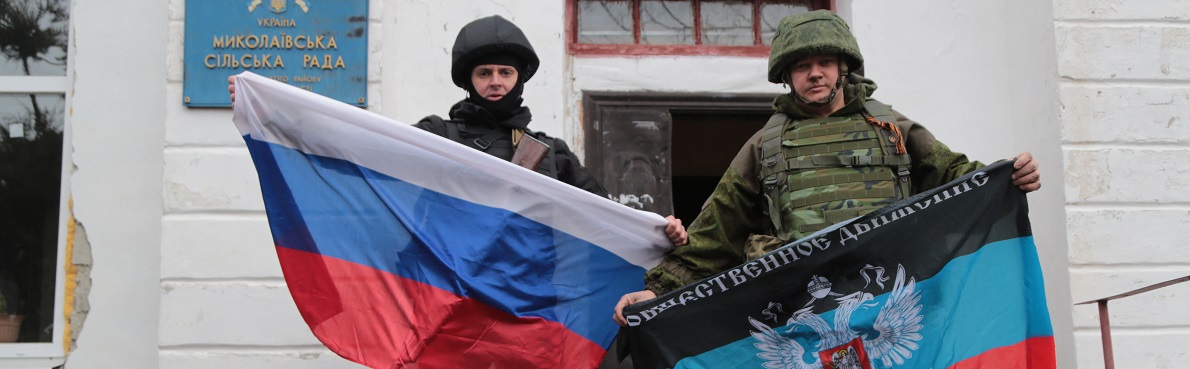
Cover Photo: Servicemen of the People’s Militia of the Donetsk People’s Republic hold flags in Nikolaevka, Donetsk, February 27, 2022 (Sergey Averin / Sputnik / Sputnik via AFP)
*WORD OF THE DAY irredentism [ˌi(r)rəˈdenˌtizəm]
NOUN a policy of advocating the restoration to a country of any territory formerly belonging to it.
historical (in 19th-century Italian politics) a policy of advocating the return to Italy of all Italian-speaking districts subject to other countries.