Sunday, March 13, 2022

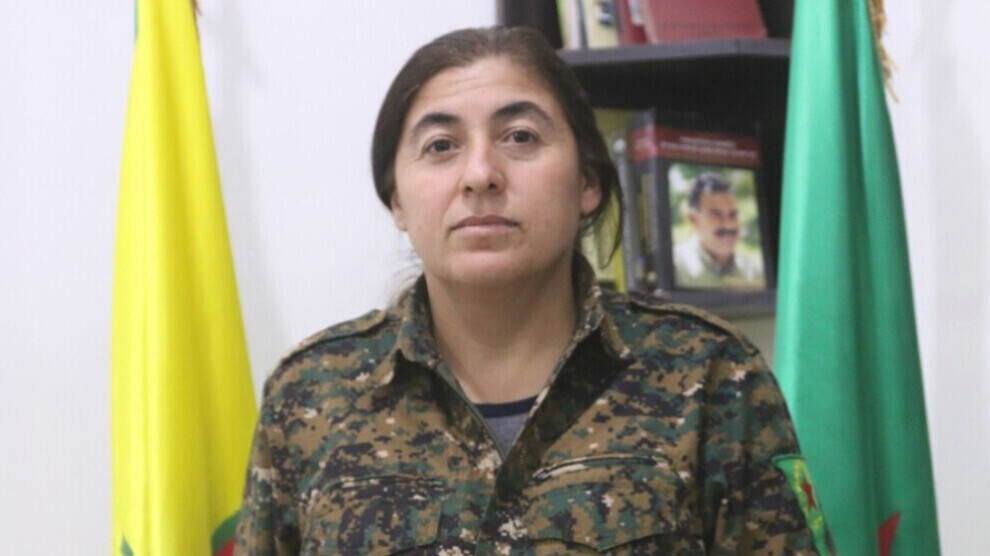
Newroz Ehmed: "The YPJ are a defense force for all women"

Newroz Ehmed from the SDF General Command said: 
“The YPJ are a defense force for all women. No woman should feel alone, we stand by her side.


DÎLAN DÎLOK
QAMISHLO
Wednesday, 9 Mar 2022

Newroz Ehmed is a member of the General Command of the Syrian Democratic Forces (SDF). In this ANF interview, she talked about the importance of the Women's Defense Units (YPJ) and the need for self-defense tools. At the same time, she took a look at developments in 2021.

How has the position of women in the military developed over the past year?

2021 was an important year for us in many ways. The fight against ISIS took place primarily with the participation and leadership of the YPJ. There was a joint operation with internal security forces against ISIS cells in Camp Hol, where thousands of family members of ISIS jihadists are located. Our forces from the YPJ were primarily involved in this operation because the majority of those affected were women and children. It was an important operation to counter the organization of ISIS. During the year there were attacks on our forces and the population of the region by the Turkish state and its mercenaries from the areas occupied by them. The YPJ have been on the front line to protect our people and the region and repel these attacks.

Throughout the year, the Turkish state carried out attacks on our territories. Along with these attacks, ISIS became active. To break these attacks, our commander, Sosin Bîrhat, and her friends fought at the forefront and fell as martyrs. In addition to the operations, this year was an important time for the further development of training in technology and tactics. In the last attacks, we saw it clearly: if you don't train and organize yourself well and if you don't master war, then it's hard to resist. For this reason, we have started training for restructuring as a military force and new combat tactics. At the same time, our social self-defense forces have launched a new education system, both to educate and raise awareness among the population and to build and strengthen their own systems. Organizing without society is difficult and cannot succeed, but together we can repel the attacks on our country and win. It was important that this work took place this year.

Restructuring

Military institutions, councils and organizations held meetings to assess both the past year and the new year. There were also closer meetings of the leadership. All of our meetings were conducted from the lowest level of management to the top. Topics such as organization, education and the technology needed to establish a new system were discussed. At the same time, the new system and the training of intelligence and special forces were discussed. Accordingly, we have developed a new system. As a result of our preparations, we repelled the attacks that took place this year. Our military branch participated in it with great morale and passion on the basis of the new knowledge acquired. In the recent attacks on the prison in Hesekê, our commandos and the intelligence and special forces of the SDF, YPG and YPJ were at the forefront. Later, our forces professionally participated in operations against ISIS sleeper cells.

"The New Way to Victory"

As YPJ we did our part in all tasks. In the person of Şehîd Awaz, the resistance of the women became clear once again. Of course, that also made a big impression on people. We followed the path of women like Arîn Mirkan, Barin and Avesta with great determination. The Islamic State wanted to restart its caliphate in Hesekê and implement a new plan against the whole world. It was no small or ordinary attack, and the resistance was no small either. We commemorate all our fallen friends in the person of Heval Awaz. Thanks to them, we were able to present a new victory to our people.

What is the role and importance of women in the Rojava revolution?

The resistance fighters in the Rojava revolution became the common symbol of all peoples living in northern and eastern Syria. Under this roof, people came together and became one. Over the past year, many women have joined the revolution. They became a role model for the whole society. Since women are involved in all levels of life, the prejudice against women has been broken. Women have gained their place in life through their greater participation and organization. For us as YPJ, this resistance and this organizing is a source of morale, which is at the same time a reason to reorganize ourselves even more.

Women are the first to be targeted in all wars. What is the reason for this and how do you think women can protect themselves?

It is not easy to oppose the patriarchal state system that has existed for centuries. That requires a lot of resistance and we have to do our job as best we can. Both ISIS and the occupying Turkish state want to break this resistance. In the person of self-sacrificing revolutionary women, the women who lead society have been targeted. ISIS and the Turkish state are pursuing major goals with this. They wanted to create women who were not present anywhere in life, apart from revolution and politics, but today women are at the forefront. The organized, socially leading woman is always the target of those in power. Sometimes they use rape and assault, sometimes airstrikes and other forms of assault. In many ways, attempts are being made to destroy the women who lead society and thereby destroy society. Last year this happened openly. Every time women stand up for their rights and equality, they are targeted. That's why it's important for women to get organized.

"Create awareness of unity and legitimate self-defense"

Xwebûn [Kurdish for "to be oneself"] is an important term. We have tried to understand this concept by focusing on and discussing why we took up arms in the YPJ. It's not about using weapons, it's about standing up for one's rights, one's identity, for everything that belongs to being human. We try to create this awareness. An attack on a woman is an attack on all women, so this needs to be looked at. With this in mind, women need to organize themselves. When unity, togetherness, is created, we all become stronger. There has to be a confrontation with that, because as the women get stronger, so do the attacks.

That is why there must always be legitimate self-defense forces. If women achieve this awareness, they can create their own self-defence in all areas of life and protect themselves on this basis in every respect. The ways and methods for this are evolving. Women should participate in all areas of life such as education, economy, justice etc. by organizing on this basis. It is important to engage in a sense of unity and self-defense. With the YPJ there is now a distinct female force, there is unity and collectivity, but that is not enough. A greater struggle and resistance is required. As a society, we need to identify with the YPJ.

Some countries have tried to classify the SDF, YPG and YPJ as terrorist organizations. How do you rate this approach?

Women who are themselves and protect themselves can also stand up for and protect society. The YPJ is in a war zone. It is important to strengthen the YPJ in every area of ​​life. As YPJ, we have not attacked any territory or state. We only exercised our right to self-defense. Our approach moves within this framework. We will protect our people and exercise our right to self-defense against any attack on our society or territory. They say we attacked Turkey or other forces, but we didn't attack anyone, we just used our right to self-defense.

So what are our acts of terrorism? Where have we committed them? We just defended our rights. Every day people are displaced, they become targets of attacks, every day women are murdered. Everyone may be silent about these actions, but we are there to stand up for women and for society. We haven't violated a single right.

We call on all people, all freedom and human rights defenders, those who defend and fight for women's freedom; we call on the international powers: Come and investigate what we have done. We are absolutely transparent.

Not only Kurdish women fight in the YPJ, but also women from the Arab and Assyrian populations and other ethnic identities of the region. What do the YPJ promise women?

Women’s demand for freedom, organization and self-defense corresponds to our demand. The YPJ are setting a good example here. This applies to all of Syria, but also to Yemen and Sudan. All women deal with the question of organizing and self-defense and try to find examples of it. The YPJ is a very living, dynamic example in this sense. Indeed, the fact that the experiences of the YPJ are being shared and adopted by other women is a bit what terrifies those in power. If the YPJ were just a region-bound force, no one would have made such an agenda. But the YPJ has become more and more a role model for North and East Syria, Syria, the Middle East, indeed for all of humanity.

"Defending Power of All Women"

The organizing of the YPJ really happened faster than we expected. They were built up quickly and became a very effective force. So there was a need for it. This wave, which started with Kurdish women, has also affected all other women. Various forces joined us and we became what we are today. Women from all over the world come and join the YPJ. The organized self-defense forces are leading to serious changes in our region. They change society. When society changes, the region changes. When the region changes, it has a global impact. But that also places a great deal of responsibility on us. We feel responsibility for all women in the world.

There are heavy attacks. We are able to improve the mechanism of self-defense despite being in an atmosphere of attacks. We know that we have the strength to answer the attacks because behind us stands an even greater force on which to lean, the army of the fallen. The power is the will of the mothers who witnessed the brutal slaughter of their children and had to bury their children with their own hands. The power is the presence of hundreds of daughters of the fallen, the legacy of women who have come from all over the world and joined us at every stage of this struggle. All of this is the source of our strength, our resistance.

On the occasion of World Working Women's Day, we remind all women that it is time for women's freedom. We call for sharing our pains and achievements and fighting together. We can defeat the mentality that kills women, kills love, that forces the colour black on women, and we are ready for it. No one is alone, we are by their side.
PKK/YPG SYRIAN KURDISTAN
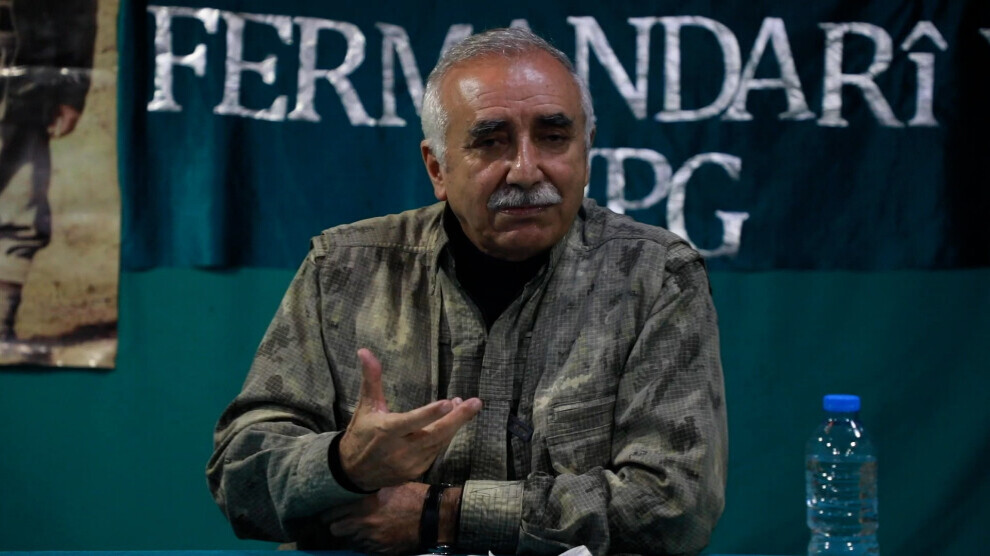
HPG Command Council: Öcalan’s freedom is the yardstick

After the annual meeting, the HPG Command Council said: "The only measure of success is victory over the international conspiracy and the physical freedom of Rêber Apo (Abdullah Öcalan)."


ANF
BEHDINAN
Friday, 11 Mar 2022,

The People's Defense Forces (HPG) Command Council has concluded its annual meeting. In a statement after the end of the meeting, the Council said, "As the HPG Command Council, we held our regular annual meeting in these first days of spring, a time when we are entering a new period of struggle. The freedom struggle of our people is going through a very important phase. Therefore, our meeting was held with an expanded participation of 50 comrades representing all areas of struggle. Intensive discussions were held and important decisions were taken on the line of struggle based on the Apoist perspective. A political and military analysis of 2021 was conducted at our nine-day meeting. The current situation of the HPG in the areas of struggle was assessed and the necessary perspective was developed to make 2022 the year of victory in the freedom struggle of our people. For this purpose, the struggle for the year ahead was planned and the military tactics for this period were determined."

"The collapse of the fascist regime is only a matter of time"


The statement by the Command Council continued: "As is known, the Kurdistan freedom struggle, which developed under the leadership of our party, the PKK, experienced a peak in 2021 and manoeuvred Turkish colonial fascism into one of the most hopeless situations in its history. The Gare resistance at the beginning of the year and the subsequent upsurge of resistance that culminated with the Bazên Zagrosê, Cenga Xabûrê and Egîdê Botanê offensives destroyed the enemy's plans and deepened the crisis of the colonial fascist system.

We underline that this crisis situation of the system is not only a military one, but also includes deep political, social and economic problems. At our assembly, it was stated that the AKP/MHP regime has used up all the reserves of the country to get out of this situation. Especially in the military field, it concealed its situation and carried out intensive special war and discourse influencing operations towards the public. In contrast, it was stated that the collapse of the fascist regime is only a matter of time if we carry out the necessary tasks of the struggle.

Our assembly dealt intensively with the ideological, political and tactical problems that have arisen in the struggle against the borderless fascism that the AKP/MHP regime has been engaged in and the oppression that the regime is carrying out, as well as those that have arisen in the struggle against the attacks of the hegemonic powers of capitalist modernity, and has achieved very important results in this regard. Facing the reality of a war in the scientific and technological era, the Kurdish People's Defense Forces have defined their role and mission and clarified the war and struggle line of the guerrilla of democratic modernity. Our assembly took place in a strong attitude of criticism and self-criticism and was thus able to reach the level to take serious decisions. Thus, it forms the basis for the creation of a freedom guerrilla that will be victorious in 2022 in the struggle on the basis of commitment to our martyrs and their experiences and of Rêber Apo [Abdullah Öcalan]. In this sense, the determination to answer any attack on our people, our forces and Rêber Apo, from whomsoever it may come, in the sacrificial Apoist spirit, to take action and to succeed became clear once again.

Another important issue that came to light through the 2021 struggle was the Turkish special war tactic of using the line of Kurdish collaboration more actively to bring about an internal Kurdish war. At our meeting, the KDP’s collaboration with AKP/MHP fascism, which is waging a war of extermination in Kurdistan, and the resulting casualties were assessed as the most serious issue. The importance of thwarting these special war plans of the enemy was underlined. Stopping fighting among Kurds and preventing it must be considered as a national responsibility. It must be prepared together for any positive or negative eventuality. Success in this is absolutely necessary under any condition. On this basis, it was determined to take effective measures and use the national and democratic line of Rêber Apo as a basis for this.

"We will guarantee the freedom of Rêber Apo"

The decisions of our assembly, which was successfully concluded at this important and critical stage of our struggle, are an important step towards success in 2022. The results of our resistance against the attacks of the Turkish invading forces in 2021, especially in Gare-Siyanê, Zendûra, Mamreşo, Girê Sor and Werxelê, have set the course for the year of struggle 2022. We underline that if we act creatively as a movement and people on the basis of these experiences and the perspective of the people's revolutionary war, we will undoubtedly achieve even greater victories. It was decided that the only yardstick is the victory over the international conspiracy and the physical freedom of Rêber Apo and the tasks of the time are based on this.

As the defense forces of all Kurdistan, we declare our determination, in the spirit of the commanders who fell last year, including Cumali Çorum, Şoreş Beytüşşebap, Rêber Zana, Hewram Avyer, Nûjîn Amed, Zerdeşt Navdar, Şîlan Goyî, Egîd Bismil, Diljîn Marya, Nûjîn Koçer, Hêjar Urfa, Serhat Giravî, Botan Özgür, Munzur Dersim and Çavrê Kamuran, and with their courage to continue on the way for the freedom of our people and Rêber Apo and to achieve success. We wish all comrades, our dear people, the friends of our people and all fighting forces outstanding success in this historic phase of the struggle."


IRAQI KURDISTAN

Iran says missile attack on Iraq's
 Abril (Ebril) targeted Israeli site

Author: AFP|Update: 13.03.2022 


Twelve ballistic missiles were fired on the northern Iraqi city of Arbil (Erbil)causing material damage and wounding two civilians. Iran claimed responsibility for the assault saying it targeted a 'strategic' Israeli facility / © AFP
Iran claimed responsibility for a missile strike Sunday on the northern Iraqi city of Arbil, saying it targeted an Israeli "strategic centre".

Authorities in Iraq's autonomous Kurdish region had earlier said 12 ballistic missiles rained down on Arbil in a pre-dawn attack targeting US interests that slightly wounded two civilians and caused material damage.

The missiles came from beyond Iraq's eastern border, Kurdistan's counter-terrorism unit announced -- in effect saying they were fired from Iran, a nation which wields considerable political and economic influence over Baghdad.

Iran's Revolutionary Guards later confirmed they fired the projectiles, claiming they were targeting sites used by Israel, a top ally of the US.

A "strategic centre for conspiracy and mischiefs of the Zionists was targeted by powerful precision missiles fired by the Islamic Revolutionary Guards Corps", the Guards said in a statement.

Sunday's assault comes nearly a week after the Guards -- Iran's ideological army -- vowed to avenge the death of two of their officers killed in a rocket attack in Syria they blamed on Israel. Iran backs the government in Syria's civil war.

Israel, the Guards said at the time, "will pay for this crime".

There was no immediate reaction from Israel to Sunday's missile attack and Kurdish authorities insisted that the Jewish state has no sites in or anywhere near Arbil.


The pre-dawn strike caused damage at the studio of local television channel Kurdistan24 / © AFP

Kurdish authorities said the target of the attack was the Arbil consulate of the United States.

- 'Baseless allegations' -

Arbil governor Oumid Khouchnaw told a news conference that two people, a taxi driver and a the custodian of a farm, were injured.


Arbil, Iraq / © AFP

Speaking before Iran claimed the attack, he dismissed however as "baseless allegations" the presence of Israeli sites in and around Arbil.

"We've been hearing for sometime that Israeli sites are present. These are baseless allegations. There are no Israeli sites in the region," Khouchnaw said.

He said the missiles fell into vacant lots but that buildings and homes were damaged.

The interior ministry in Arbil said a "new building" housing the US consulate in a residential suburb of the city was the target of the attack.

Washington, a foe of Iran with troops on the ground in Iraq, said there was "no damage or casualties at any US government facility".

"We condemn this outrageous attack and display of violence," a State Department spokesperson said.

Taxi driver Ziryan Wazir said he was in his car when the missiles struck.

"I saw a lot of dust, then I heard a very loud noise. The windows of my car exploded and I was injured in the face," he said, his head swathed in white gauze and a bloodied scar running the length of his cheek.

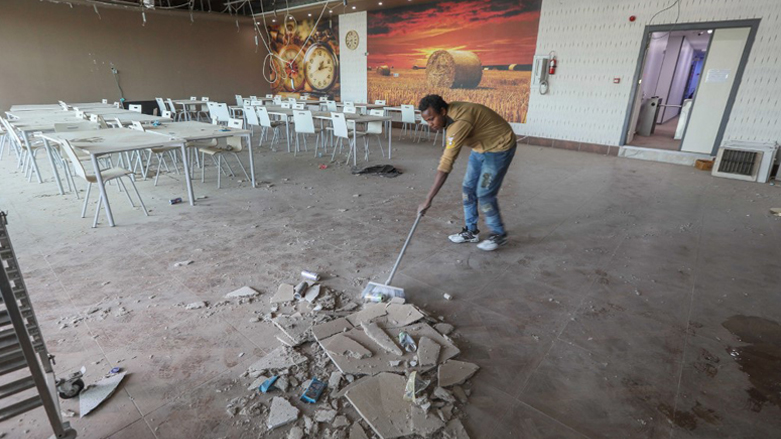
Local television channel Kurdistan24, located near the US consulate, posted images on social networks of its damaged offices, with collapsed sections of false ceiling and broken glass.

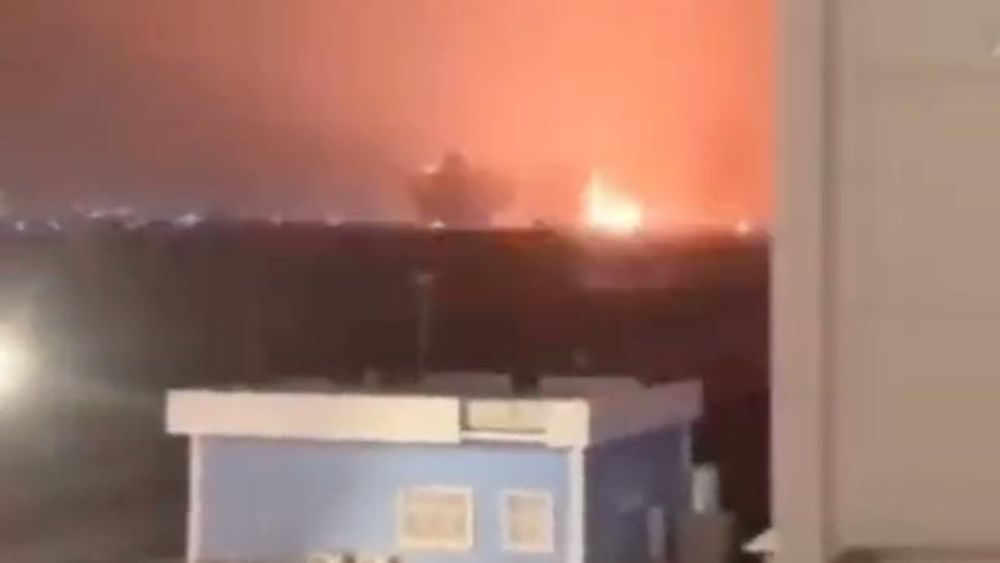
An AFP correspondent in Arbil said he heard three explosions before dawn.

- Regional tensions -


Iraqi taxi driver Ziryan Wazir said the windows of his car exploded and he was injured in the face / © AFP


Iraq, including the Kurdistan region, is home to a dwindling number of US troops who led a coalition fighting the Islamic State jihadist group.

Washington has routinely blamed rocket and drone attacks against its interests in Iraq on pro-Iran groups who demand the departure of the remaining troops.

But cross-border missile fire is rare.

Masrour Barzani, prime minister of Iraqi Kurdistan, decried the "terrorist attack" in Arbil, and appealed for calm.

Iraq saw a surge in rocket and armed-drone attacks at the beginning of the year.

It coincided with the second anniversary of the killing of Iranian General Qassem Soleimani in a US drone srike near Baghdad airport.

Soleimani, killed alongside his Iraqi lieutenant Abu Mahdi al-Muhandis, headed the Quds Force, the Revolutionary Guards' foreign operations arm.

In late January, six rockets were fired at Baghdad International Airport, causing no casualties.

Iran itself responded to the January 2020 killing of Soleimani by firing missiles at military bases in Iraq housing US forces.

Sunday's assault also comes amid a pause in negotiations between Iran and world powers to revive its 2015 nuclear deal.

Negotiators in Vienna said Friday they halted the talks despite having almost sealed a deal to revive that accord.

The setback came after Russia said it was demanding guarantees that the Western sanctions imposed on its own economy amid the conflict in Ukraine would not affect its trade with Iran.

burs-tgg/hkb/dwo


ITS NOT ALL ABOUT USA
US blames Iran for attack near its compound in Irbil, Tehran denies involvement

By AP with Euronews • Updated: 13/03/2022 - 

The launch of the Fateh-110 short-range surface-to-surface missile by Iranian armed forces, at an undisclosed location in August 2010 - Copyright AP Photo


As many as 12 missiles struck near a sprawling US consulate complex in the northern Iraqi city of Irbil on Sunday, in what the US and Iraqi officials said was a strike launched from neighbouring Iran.

No injuries were reported in the attack, which marked a significant escalation between the US and Iran. Hostility between the longtime foes has often played out in Iraq, whose government is allied with both countries.

An Iraqi official in Baghdad initially said several missiles had hit the US consulate in Irbil and that it was the target of the attack.

Later, Lawk Ghafari, the head of Kurdistan's foreign media office, said none of the missiles had struck the US facility but that areas around the compound had been hit.

The US defence official said it was still uncertain exactly how many missiles were fired and where they landed. A second official said there was no damage at any US government facility and that there was no indication the target was the consulate building, which is new and currently unoccupied. Both officials spoke on the condition of anonymity.

Iran rejects accusations for attack

The attack came several days after Iran said it would retaliate for an Israeli strike near Damascus that killed two members of its Revolutionary Guard.

On Sunday, Iran's state-run IRNA news agency quoted Iraqi media acknowledging the attacks in Irbil, without saying where they originated.

An Iranian spokesperson rejected the accusation that Iran was behind the Irbil attack. Mahmoud Abbaszadeh, Iran's parliamentary committee on national security and foreign policy spokesman, said the allegation could not be confirmed so far.

"If Iran decides to take revenge […] it will be very, very serious, strong, obvious," he said in an interview with a local news website.

The missile barrage coincided with regional tensions. Negotiations in Vienna over Tehran's tattered nuclear deal hit a "pause" over Russian demands about sanctions targeting Moscow for its war on Ukraine.

Meanwhile, Iran suspended its secret Baghdad-brokered talks to defuse yearslong tensions with regional rival Saudi Arabia after it carried out the largest known mass execution in its modern history with over three dozen Shiites killed.

The Iraqi security officials said there were no casualties from the Irbil attack, which occurred after midnight and caused material damage in the area. They spoke on the condition of anonymity in line with regulations.

One Iraqi official said the ballistic missiles were fired from Iran without elaborating. He said the projectiles were the Iranian-made Fateh-110, likely fired in retaliation for the two Revolutionary Guards killed in Syria.

US presence in Iraq aggravates Tehran

US forces stationed at Irbil's airport compound have come under fire from rocket and drone attacks in the past.

Tensions spiked after a January 2020 US drone strike near the Baghdad airport killed a top Iranian general.

In retaliation, Iran launched a barrage of missiles at the al-Asad airbase, where US troops were stationed. More than 100 service members suffered traumatic brain injuries in the blasts.

More recently, Iranian proxies are believed responsible for an assassination attempt late last year on Iraq's Prime Minister Mustafa al-Kadhimi.

And officials have said they believe Iran was behind the October drone attack at the military outpost in southern Syria where American troops are based. No US personnel were killed or injured in the attack.

Al-Kadhimi tweeted: "The aggression which targeted the dear city of Irbil and spread fear amongst its inhabitants is an attack on the security of our people."

Masrour Barzani, prime minister of the semi-autonomous Kurdish-controlled region, condemned the attack. In a Facebook post, he said Irbil "will not bow to the cowards who carried out the terrorist attack."


US officials: Missile attack on Erbil came from Iran

It is not entirely clear what triggered Sunday’s attack, but it seems part of a broader hardening of Iran’s posture toward the US
A man cleans debris in the damaged studios of the Kurdistan 24 TV building after a dozen ballistic missiles fell nearby in Kurdistan Region Erbil, March 13, 2022. (Photo: Safin Hamed/AFP)

WASHINGTON DC, United States (Kurdistan24)–“A missile strike early Sunday that landed in the vicinity of a new American consulate under construction in northern Iraq originated from Iran, according to US officials,” The Wall Street Journal reported.

The missiles fell in Erbil, capital of the Kurdistan Region, east of the new US consulate there.

“There is no damage or casualties at any US Government facility,” a State Department Spokesperson told Kurdistan 24, adding, “We condemn this outrageous attack and display of violence.”

The attack, which occurred at 1:20 AM local time, involved a dozen ballistic missiles and did cause damage to the headquarters of Kurdistan 24, however.

Background and Context of Missile Attack


The assault marked the first time since Jan. 8, 2020, that Iran has fired missiles from its own territory into Iraq. Then, the target was Iraq’s Ayn al-Asad Air Base in the west of the al-Anbar province, where US forces are based.

That attack was retaliation for the US assassination of Qasim Soleimani five days before, the head of the Qods Force of Iran’s Islamic Revolutionary Guard Corps.

It is not entirely clear what triggered Sunday’s attack, but it seems part of a broader hardening of Iran’s posture toward the US.

Notably, Tehran’s position on the revival of the 2015 Iranian nuclear accord stiffened significantly last Thursday.

At that time, Supreme Leader Ali Khamenei pronounced, ”It's a big error to bow to the pressure from America or other powers to secure protection against sanctions, which will deal a blow to the nation's political power.”

Russia has also imposed new conditions on reviving the deal, and the result has been the temporary suspension of the talks, even as the negotiators believed that they were on the verge of reaching a new agreement.

Quite possibly, Sunday’s missile strike is related to the crisis in Ukraine and the confrontation between Russia, on the one hand, and the US, Europe, and much of the rest of the world, on the other.

Russia needs all the political support it can muster. The Kurds, in both the Kurdistan Region of Iraq and in northeast Syria, are aligned with the US. Their adversaries are aligned with Russia.

Present circumstances give Russia’s allies, like Iran, enhanced leverage with Moscow. In fact, Moscow may well welcome the pressure that its allies can put on America’s allies.

In late January, while Russian forces stood mobilized on Ukraine’s borders, there was another unprecedented assault on the Kurds: an attack on the Kurdish-led Syrian Democratic Forces (SDF) in northeast Syria.

With Moscow’s backing, Syria, it seems, supported ISIS in an assault on a prison in Hasakah. ISIS’s initial success took the SDF and the US-led Coalition by surprise. They had not thought the terrorist group possessed such capabilities.

Ten days of hard fighting followed, as the SDF slowly regained control of the prison. ISIS aimed to liberate its fighters held in jail. Damascus, it seems, sought to pressure the Kurdish-led administration in northeast Syria to enter into negotiations with it.

Rep. Adam Kinzinger (R, Illinois), who served in the US Air Force in Afghanistan and Iraq and sits on the House Foreign Affairs Committee, retweeted a video of a missile purportedly being fired from Khasabad military base in Iran’s Azerbaijan province.

Kinzinger presumably had good reason to believe the video is authentic. In any event, US and UK media do cite the claim of US officials that the missile strike was launched from Iranian territory.

KRG Council of Ministers calls on international community to investigate ‘baseless attacks’

“Iran has repeated these attacks many times, and the silence of the international community in the face of these cowardly attacks will pave the way for their continuation.”

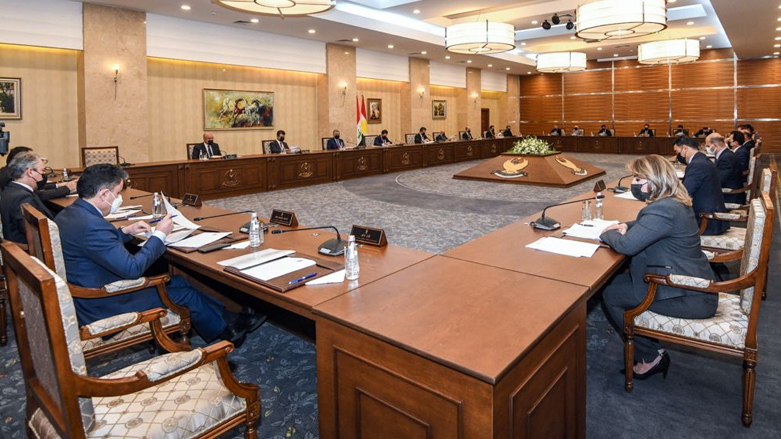
Kurdistan region’s Council of Ministers during their session. (Photo: KRG)

ERBIL (Kurdistan 24) – The Council of Ministers of the Kurdistan Regional Government (KRG) called on the international community to investigate ‘baseless attacks’ on Erbil in a statement on Sunday.

“The cowardly attack on Erbil on March 13, 2022, allegedly under the pretext of hitting an Israeli base near the US Consulate in Erbil, targeted civilian locations and its justification is only to hide the disgracefulness of such offense.”

“We reiterate that the propaganda of the perpetrators of this attack is far from true,” the statement from the Presidency of the Council of Ministers of the Kurdistan Region said, after Islamic Revolutionary Guard Corps (IRGC) claimed responsibility for the attack, claiming that they hit ‘Zionist’ targets.

“Iran has repeated these attacks many times, and the silence of the international community in the face of these cowardly attacks will pave the way for their continuation.”

“We call on the United Nations, the United States, the European Union, the Arab League, the federal government, the Iraqi parliament, and the Iranian government to urgently investigate these baseless attacks, visit targeted locations, reveal the facts to the public, and take a true and strong stance on these attacks.”

The Kurdish security forces announced that the missiles were fired from beyond the eastern frontiers of Iraq, without specifying any country.

Some light injuries were sustained by civilians close to the impact sites, according to public health authorities.

The Kurdistan24’s main Headquarters building in Erbil was impacted by the shockwaves of the missiles, causing structural damage.

Several foreign diplomatic missions in Iraq and the Kurdistan Region condemned Saturday night’s missile attacks on Erbil.

Top Kurdish and Iraqi leaders have also condemned the attack.

Read More: Diplomatic missions condemn missile attacks on Erbil

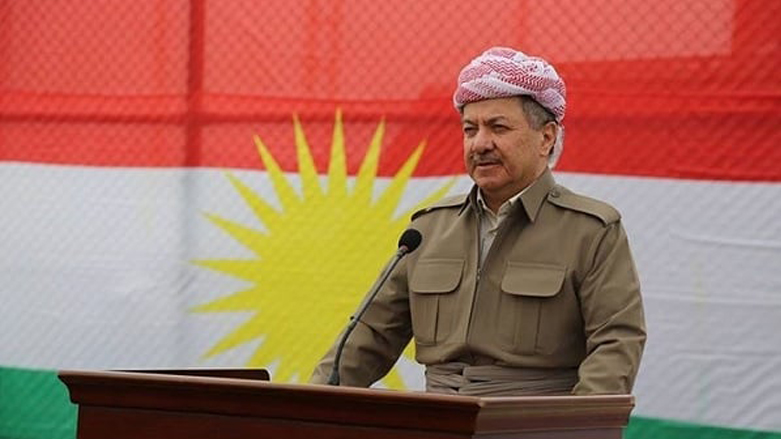
“We strongly condemn last night’s cowardly attack on Erbil,” President Masoud Barzani, head of the Kurdistan Democratic Party (KDP), wrote in a statement on Sunday, describing the attack as “a crime against humanity.”


Erbil will stand firmly against ‘neo-Hulagus’, President Masoud Barzani says following missile attacks

 “We strongly condemn last night’s cowardly attack on Erbil,” President Masoud Barzani wrote in a statement, describing the attack as “a crime against humanity.”
 

President of the Kurdistan Democratic Party (KDP) Masoud Barzani. 
(Photo: KDP)

Kurdistan

ERBIL (
 Kurdistan 24) – President Masoud Barzani, head of the Kurdistan Democratic Party (KDP), said the Kurdistan Region’s capital Erbil would stand firmly against the “new Hulagus,” after a dozen ballistic missiles struck the Kurdish city on Saturday night.

Hulagu Khan was a Mongol ruler who led an assault on Baghdad, leading to the demise of the Islamic civilization of the Abbasid Caliphate.

A barrage of missiles fell on the city, causing extensive material damages to several buildings, including Kurdistan24’s main headquarters in Erbil.

“We strongly condemn last night’s cowardly attack on Erbil,” President Masoud Barzani wrote in a statement, describing the attack as “a crime against humanity.”

The Kurdish security forces announced that the missiles were fired from beyond the eastern frontiers of Iraq, without specifying any country.

Some light injuries were sustained by civilians close to the impact sites, according to public health authorities.

Barzani indicated Erbil would stand just as firmly against contemporary “neo-Hulagus” as it did in the past, referring to the historical defeat of the Mongol ruler in 1250 at the city’s citadel.

Diplomatic missions based in the Kurdish Region, as well as top Iraqi officials, have strongly condemned the attacks


Missiles Fired from Iran Hit near US Consulate in Iraq
 | March 13, 2022, Sunday 


As many as 12 missiles struck near a sprawling U.S. consulate complex in the northern Iraqi city of Irbil on Sunday, in what a U.S. defense official and an Iraqi official said was a strike launched from neighboring Iran.

No injuries were reported in the attack, which marked a significant escalation between the U.S. and Iran. Hostility between the longtime foes has often played out in Iraq, whose government is allied with both countries.


The Iraqi official in Baghdad initially said several missiles had hit the U.S. consulate in Irbil and that it was the target of the attack. Later, Lawk Ghafari, the head of Kurdistan’s foreign media office, said none of the missiles had struck the U.S. facility but that areas around the compound had been hit.

The U.S. defense official said it was still uncertain exactly how many missiles were fired and exactly where they landed. A second U.S. official said there was no damage at any U.S. government facility and that there was no indication the target was the consulate building, which is new and currently unoccupied.

Neither the Iraqi official nor the U.S. officials were authorized to discuss the event with the media and spoke to The Associated Press on condition of anonymity.

Satellite broadcast channel Kurdistan24, which is located near the U.S. consulate, went on air from their studio shortly after the attack, showing shattered glass and debris on their studio floor.

The attack came several days after Iran said it would retaliate for an Israeli strike near Damascus, Syria, that killed two members of its Revolutionary Guard. On Sunday, Iran’s state-run IRNA news agency quoted Iraqi media acknowledging the attacks in Irbil, without saying where they originated.

An Iranian spokesperson rejected the accusation that Iran was behind the Irbil attack. Mahmoud Abbaszadeh, spokesman for Iran's parliamentary committee on national security and foreign policy, said the allegation could not be confirmed so far.

“If Iran decides to take revenge … it will be very, very serious, strong, obvious,” he said in an interview with a local news website.

Bloomberg

Ballistic missiles fired from Iran strike near US forces in Iraq: report
Bob Brigham
March 12, 2022

Screengrab.

Tensions in the Middle East rose with a major attack by Iran inside Iraq.

"A dozen ballistic missiles launched from outside Iraq struck the country's northern Kurdish regional capital Erbil on Sunday, Kurdish officials said, adding there were no casualties. There was no immediate claim of responsibility or further details available. A U.S. State Department spokesperson called it an 'outrageous attack' but said no Americans were hurt and there was no damage to U.S. government facilities in Erbil," Reuters reported.

Fox News Pentagon correspondent Jennifer Griffing reported, "According to a senior US official, the missiles fired toward the US Consulate in Erbil emanated from Iran. Multiple missiles were fired. None hit the Consulate. No Americans were injured."


Iran alleges 'secret Israeli bases' targeted in Erbil strike

Iranian TV says 'secret Israeli bases' were the real target of an attempted attack on U.S. consulate in Iraq Saturday night.

Israel National News
13.03.22
I
raniStock

An American source speaking to the Reuters news agency said 12 missiles were launched from the direction of the Kermanshah district in Iran towards the American consulate in Erbil in northern Iraq on Saturday night.

There were no casualties or damage to U.S.-owned facilities in the area. A State Department spokesman called it a "scandalous provocation."

Rocket attacks have regularly targeted Iraqi bases as well as the fortified Green Zone in Baghdad, where the US embassy is located, since the U.S. elimination of top Iranian General Qassem Soleimani in January of 2020.

The Saudi channel Al-Hadath said the attack was launched in retaliation for the killing of two Revolutionary Guards officers in an air strike in Syria widely attributed to Israel.

The attack follows reports that Israel's defense establishment has raised the alert level in the north of the country, fearing Iranian retaliation.

A report on official Iranian TV alleged that the attempted strike was intended to target "secret Israeli bases" in Iraq.

Tehran also released a statement that security forced have uncovered an Israeli "spy network" in the west of the country.

Volley of missiles hits Iraq’s Kurdish capital Erbil, no casualties reported

A dozen ballistic missiles launched from outside Iraq struck the country’s northern Kurdish regional capital Erbil on Sunday, Kurdish officials said, adding there were no casualties.
© Safin Hamed, AFP

There was no immediate claim of responsibility or further details available. A U.S. State Department spokesperson called it an “outrageous attack” but said no Americans were hurt and there was no damage to U.S. government facilities in Erbil.

Iraqi state TV quoted the Kurdistan region’s counter-terrorism force as saying 12 missiles launched from outside Iraq hit Erbil. It was not immediately clear where they landed.

U.S. forces stationed at Erbil’s international airport complex have in the past come under fire from rocket and drone attacks that U.S. officials blame on Iran-aligned militia groups, but no such attacks have occurred for several months.

The last time ballistic missiles were directed at U.S. forces was in January 2020 – an Iranian retaliation for the U.S. killing earlier that month of its military commander Qassem Soleimani at Baghdad airport.

No U.S. personnel were killed in the 2020 attack but many suffered head injuries.

Iraq and neighbouring Syria are regularly the scene of violence between the United States and Iran. Iran-backed Shi’ite Islamist militias have attacked U.S. forces in both countries and Washington has on occasion retaliated with air strikes.

An Israeli air strike in Syria on Monday killed two members of Iran’s Revolutionary Guards Corps (IRGC), Iranian state media said this week. The IRGC vowed to retaliate, it said.

Kurdish officials did not immediately say where the missiles struck. A spokesperson for the regional authorities said there were no flight interruptions at Erbil airport.

Residents of Erbil posted videos online showing several large explosions, and some said the blasts shook their homes. Reuters could not independently verify those videos.

Iraq has been rocked by chronic instability since the defeat of the Sunni Islamist group Islamic State in 2017 by a loose coalition of Iraqi, U.S.-led and Iran-backed forces.

Since then, Iran-aligned militias have regularly attacked U.S. military and diplomatic sites in Iraq, U.S. and many Iraqi officials say. Iran denies involvement in those attacks.

Domestic politics has also fuelled violence.

Iraqi political parties, most of which have armed wings, are currently in tense talks over forming a government after an election in October. Shi’ite militia groups close to Iran warn in private that they will resort to violence if they are left out of any ruling coalition.

The chief political foes of those groups include their powerful Shi’ite rival, the populist cleric Moqtada al-Sadr, who has vowed to form a government that leaves out Iran’s allies and includes Kurds and Sunnis.

(REUTERS)
Russian oil giant Lukoil had big dreams for its U.S. gas stations. The invasion of Ukraine could spell the end.

The private company, which observers said had maintained some independence from Putin, is now caught in a high-stakes economic battle.


By Todd C. Frankel andYeganeh Torbati
The Washington Post
Today

An attendant pumps gas at a Lukoil gas station in Morristown, N.J.
 (Bryan Anselm/For The Washington Post)

The cash price for unleaded gas posted outside Michael Tusinac’s window at his gas station in Morristown, N.J.: $4.49 a gallon. The price would rise another 10 cents within two days. But the bigger problem was the station’s red and white Lukoil sign.

“It’s killing me,” Tusinac said.

He was on the phone with his landlord, Kashmir Gill, who also runs a different Lukoil gas station just up the road in Whippany.

The two men shared their laments at being tied to a Russian oil giant that was now a target for American protests over Russia’s invasion of Ukraine. Lukoil was a corporate pariah. Two decades ago, it had entered the U.S. market harboring big dreams, with even Vladimir Putin flying in for the opening of one Lukoil station. Now, its gas stations faced boycotts and calls to shut down.

Tusinac had picketers some days. Forty minutes away in Newark, local leaders voted to force that city’s two Lukoil stations to close. And New Jersey’s governor was just on TV talking about taking action against all Lukoil stations in the state.

“Did your volume go down in the last couple of days?” Gill asked.

“Hell, yeah,” Tusinac said. “Forty percent.”

Gill laughed. His station had been hit, too. The news was so bad it was funny.

“I have no idea what to do,” Tusinac said.


Michael Tusinac uses a scanner to examine a car at a Lukoil gas station in Morristown, N.J. (Bryan Anselm/For The Washington Post)

Lukoil, one of the world’s largest energy producers and the second-biggest oil company in Russia, is caught in the middle of an economic war with the West, as previously welcomed Russian companies are cut out from the international system.

The broad and swift unwinding of Russia’s ties to the global economy — spurred by public backlash to Russia’s invasion and the pressure on Western governments to respond — has led to confusion and chaos, resulting in collateral damage for people including American franchise owners Tusinac and Gill, whose stations don’t even sell Russian gasoline, as well as for Lukoil, which former executives and experts described as maintaining a degree of independence from Putin during his decades in power

Lukoil CEO Vagit Alekperov, they said, had managed to toe a narrow line during Putin’s reign, protecting the company from takeover by Putin allies. Last week, Lukoil’s board called for “the soonest termination of the armed conflict” in Ukraine and expressed support for negotiations. The statement stopped short of condemning the invasion, but still represented a distancing from Putin, observers said.

“[Alekperov’s] whole philosophy has been, Lukoil is better as a global company and Russia is better as part of the global system. Both of those are inoperative now,” said Toby Gati, a former National Security Council official who joined Lukoil’s board as an independent director in 2016 and resigned in response to the Ukraine invasion. “It is not possible to isolate Russia forever. When this is over, you’re going to want to engage with Russians who understand that Russia needs to be involved in the global system, and Lukoil would be a good place to start. But not now.”

Lukoil executives both in the United States and in Russia did not respond to requests for comment or an interview request for Alekperov.

In 2000, Lukoil became the first Russian company to buy a public U.S. company when it paid $71 million for Getty Petroleum Marketing Inc. and its 1,300 gas stations along the East Coast. Getty’s red, white and gold signs eventually became red and white Lukoil ones.


Lukoil marked its American arrival with a 2003 celebration at a former Getty gas station on 10th Avenue in Manhattan. Sen. Charles E. Schumer (D-N.Y.) was there. So was Putin. He shook hands with employees, sipped gas station coffee and even bit into a Krispy Kreme doughnut, according to press reports. (The gas station was eventually replaced by a luxury condo tower.)

At the time, Putin and Russia were heralded. Schumer said Russian oil could help the U.S. break free from dependence on OPEC nations.

“I hope it does cause problems for OPEC,” Schumer was quoted as saying.

Lukoil soon snapped up hundreds more gas stations, mostly Mobil stations in Pennsylvania and New Jersey, thanks to antitrust concerns following the $74 billion merger in 1998 between two other oil giants, Exxon and Mobil.


One of those Mobil stations was run by Tusinac. He’d run his station in Morristown since the early ‘80s. He saw problems right away with Lukoil.

“They didn’t understand American business, American law, the amount of red tape it takes to get things done,” Tusinac said.

Lukoil told sttion operators they planned to build an oil refinery in the U.S. and ship oil straight from Russia — which would give them a pricing advantage, said Tusinac and Gill.

“That fizzled,” Tusinac recalled.

Instead, Lukoil buys gasoline from the Phillips 66 refinery in Linden, N.J., according to three station operators. Phillips 66 declined to comment on its Linden plant. But multiple refinery customers who spoke on the anonymity to discuss refinery operations said the crude oil mostly came from North America, South America and sometimes West Africa.

In more recent years, the United States had not played a large role in Lukoil’s international expansion. In 2014, after Russia invaded the Crimea region of Ukraine, new, relatively mild U.S. sanctions barred the provision of certain services and advanced technologies to Lukoil and several other Russian energy companies.

Several former executives said that Lukoil had largely declined to pursue energy exploration in the United States.


Michael Tusinac fills out paperwork for an auto parts delivery at a Lukoil gas station in Morristown, N.J. (Bryan Anselm/For The Washington Post)

“Looking at stuff in the U.S. at the time I was there was never really on the table,” said Robin Winkle, a former Lukoil executive in Houston who left in 2017. “I suspect there was a concern that, yes, with the sanctions in place already, it would be difficult for the company to own assets in the U.S.”

One exception was an investment Lukoil made via a private equity fund into a shale energy project in Texas, said Kevin Black, a former managing director at Lukoil based in Houston who oversaw the investment. The investment, which Lukoil has since exited, was massively profitable for the company, Black said.

Alekperov, a Soviet-era oil ministry official and energy executive who was born in Azerbaijan and helped form Lukoil after the Soviet Union collapsed, is seen as a clever operator who has managed to keep Lukoil independent during Putin’s reign, even as companies owned by other oligarchs have been taken over by Kremlin insiders.

One former American Lukoil employee said there was a feeling within the company that “Lukoil was the last independent major oil company in Russia,” and that oligarchs close to Putin were perpetually eyeing Lukoil for any missteps that would give them an opening to take over its assets.

Black said that at the high-level company meetings he attended, some of which included Alekperov, executives stayed far away from politics.

“Politics never came up in meetings, even in Moscow,” he said. “They said, ‘We’re businessmen. Politics is somebody else’s job. All we’re here to do is get oil out of the ground.’”

Anders Aslund, a leading expert on Russia who has written about crony capitalism under Putin, said Alekperov’s strategy to make Lukoil a global oil company, with projects in Mexico, Iraq, Eastern Europe and Africa, has given it a complicated corporate structure that would be more difficult for a Russian state company such as Rosneft, headed by close Putin ally Igor Sechin, to take over.

Rosneft said in an emailed statement that it “has great respect” for Alekperov.

“We have repeatedly stated that Rosneft has no interest and no relevant plans for a possible acquisition of Lukoil, with which we are working on a number of projects,” the statement said. “We have always maintained a competitive environment and have not sought to monopolize the market.”

Though Alekperov is firmly within the Russian establishment, he has consistently held himself out as at least somewhat independent of the Kremlin, Aslund said.

“He’s not very close to Putin. He doesn’t do favors for Putin,” he said. “Alekperov wants to say, ‘I’m not Putin’s servant, I’m an independent businessman,’ which is of course an exaggeration. But he’s trying to be as independent as he can.”

But that degree of independence may not mean much now, given the broad appetite in the West for measures that would punish Russia and the shunning of Russia-linked companies by investors. The company’s stock price stood at less than $7 in early March when the London Stock Exchange suspended trading on a string of Russian companies, a 92 percent drop from the prior month.


A sign at a Lukoil gas station in Morristown, N.J. (Bryan Anselm/For The Washington Post)

Mexico, where Lukoil has oil exploration projects, has said it will not pursue sanctions on Russia in response to the Ukraine invasion. In Iraq, where Lukoil is developing one of the world’s largest oil fields, the central bank has advised the government against signing new contracts with Russian companies, though current deals are unlikely to be affected. Earlier this month, JP Morgan strategists recommended purchasing Lukoil corporate debt, citing in part the company’s international presence.

In an interview, Gati attributed her decision to resign as an independent director to Putin’s “horrendous” invasion of Ukraine. A new law that threatens a 15-year prison sentence against anyone who contradicts the official line on Ukraine also was a factor, Gati said, because she knew she would not be able to keep from speaking out and doing so would put the company in an impossible position.

“I would look forward to a day when Russia would be open again, when it would be possible to get back to the place we were, but we’re not there and I just could not be a part of it,” Gati said.

Another independent director, former Austrian chancellor Wolfgang Schuessel, also resigned after the invasion, Reuters reported. Schuessel did not respond to a request for comment.

In recent weeks, as U.S. companies pulled out of Russia and American airspace was closed to Russian planes, the hunt began for other ways — both big and small — to show disapproval of Russia’s invasion. Some U.S. liquor stores stopping selling Russian vodka. Bar owners made a show of pouring Russian liquor into the street. Some high-end restaurants stopped selling Russian caviar.

Protesters gathered outside some Lukoil stations in Pennsylvania and New Jersey. And in Newark, the city council voted unanimously earlier this month to instruct the city’s business administrator to shut down the city’s two Lukoil stations.

Anibal Ramos, the council member who introduced the resolution, did not respond to requests for comment. But he said on Facebook he wanted to “suspend the license of Russian-owned LUKOIL gas stations in Newark to show our solidarity with the people of Ukraine.”

“It doesn’t make sense,” said Sal Risalvato, head of the New Jersey Gasoline, Convenience Store and Automotive Association. “It’s nothing more than a publicity stunt.”

The Lukoil gas stations are not owned by Lukoil N.A. Local residents own the gas stations and operate them, he said. Closing the stations hurts American workers, Risalvato said, including the people who pump the gas — New Jersey is the only state that still bans self-serve gas pumps.

Newark has yet to actually close the Lukoil stations. It was unclear if the city business administrator had the authority to do so.

Now, Gill is looking forward to 2024 when his contract with Lukoil expires. He said he’ll turn to a different brand. But he is powerless before that.

He told Tusinac on the phone that he, too, should look forward to the day when he can get out of his Lukoil contract.

“After that, your misery will be over,” Gill told him.

Tusinac didn’t think it would take that long.

“Lukoil is going to have to sell,” he said. “I can’t never see them coming back from this.”

This felt different to him than the 1989 Exxon Valdez oil spill or the 2010 BP Deepwater Horizon oil spill. Those led to outrage and protests, too. But at least they were accidents, Tusinac said.

What Russia was doing now was different.

“The only way out for Lukoil right now,” he said, “is to replace the signs as soon as they can.”

Putin's war is damaging the developing world

Russia's invasion of Ukraine has caused increases in oil and food prices, harming developing countries struggling to recover from the pandemic. Multilateral organisations should provide financing to help these economies cope, writes Jayati Ghosh.


As oil and wheat prices soar as a result of the Russian invasion of Ukraine, disruptions to global supply are likely to hit developing nations, still struggling to economically recover from the pandemic, hardest [Getty]

It is difficult to see any winners in the ongoing war caused by Russia’s irrational and devastating invasion of Ukraine. But the losers extend far beyond the people of Ukraine, who are being attacked, and the people of Russia, who did not choose this war but now must endure an economy being dismantled by trade and financial sanctions.

The economic impact of the conflict will be felt around the world, including in many developing countries that are already struggling to recover from the COVID-19 pandemic.

One immediate concern is the effect of rising oil prices. The price of benchmark Brent crude recently jumped by 20% to more than $139 per barrel, its highest level since 2008 – probably in response to news that the United States and its European allies were discussing a possible ban on imports of Russian oil, which had so far been exempt from Western sanctions. (On March 8, the US announced a ban on imports of Russian energy products, while the United Kingdom pledged to phase out imports of Russian oil and oil products by the end of 2022.)

"This latest oil-price spike is a blow they can ill afford, as it is likely to generate balance-of-payments problems and domestic inflationary pressures that will be tough to combat in the current uncertain context"

But global energy prices had already been soaring, following a period of dramatic volatility during the pandemic. The price of Brent crude, which had fallen to as low as $9 per barrel in April 2020 at the height of the pandemic’s first wave, rose above $90 per barrel in January 2022. Since then, the Ukraine war has put further upward pressure on oil and gas prices.

Western media have focused on the impact of rising energy prices in Europe, which relies heavily on natural gas imports from Russia. But most of the world’s oil and gas importers are much poorer. Many of these countries were unable to mount fiscal responses to the pandemic on the scale of those in the US and other advanced economies, and have since experienced much weaker recoveries in output and employment.

This latest oil-price spike is a blow they can ill afford, as it is likely to generate balance-of-payments problems and domestic inflationary pressures that will be tough to combat in the current uncertain context.
Of course, the additional inflationary pressures from the Ukraine war are also complicating the challenge that policymakers in rich Western economies face in tackling rising prices without causing a hard economic landing. Oil is a universal intermediary good, which influences the costs of commodities and services, as well as transport costs, in multiple ways.

Oil-price increases can thus be a significant driver of cost-push inflation even at the best of times. But inflation in rich countries was already at levels they had almost forgotten. Policymakers also appear to consider only the most simplistic weapons against inflation, like raising interest rates and tightening liquidity, which do little to address cost-push pressure and could cause a real economic downturn.

But the challenges are greater still in the developing world, leaving policymakers with even less wiggle room. The dramatic recent increase in oil prices obviously affects oil-importing countries directly, and will feed into all other prices through rising input and transport costs.

RELATED
The invasion of Ukraine and MENA's looming bread crisis
In-depth
James Snell

The tragedy playing out in Ukraine is also increasing global food prices, creating even more pain in developing countries where hunger had already increased dramatically during the pandemic. Before the war, Ukraine was the world’s fifth-largest wheat exporter, and also a major exporter of barley, corn, rapeseed, and sunflower oil. The prices of these commodities in global trade have risen significantly, adding to recent increases in crop prices generally.

Now there is a further danger: Financial investors who had been betting on speculative asset markets will need to find other places to park their money, and food futures could emerge as a favoured destination. In the first five days of March, the price of wheat futures at the Chicago Board of Trade increased by 40%, putting it on track for its largest weekly increase since 1959.

Crop production in developing countries could also be hit by fertiliser shortages. Russia, the world’s largest wheat exporter, is also a major fertiliser producer, and disruptions to these exports will push global food prices even higher.

We previously saw parts of this movie in otherwise peaceful times, just before the global financial crisis, and it was a dark and depressing story even then. The food crisis that resulted from financial-market speculation in 2007-08 led to massive increases in hunger and devastated the lives of hundreds of millions of people in developing countries.

"Without such efforts, Russia’s war against Ukraine will wreak much more damage on the global economy – and poorer countries will be among the hardest hit"

That crisis occurred even though global supply and demand of food items did not change much. But now, with real reductions in global food supply almost inevitable, the price rises could be greater and longer-lasting. If speculative pressure increases, already fragile economies will be damaged even more.

It may not be surprising that the G7 (whose recent track record as a self-appointed leader of the global economy is hardly distinguished) is not expressing much concern about these real and pressing dangers. But multilateral organisations surely need to step up in this time of crisis, at the very least by providing compensatory financing to help the developing world cope with multiple price shocks, and suggesting and enabling regulations to prevent speculation in essential markets.

Without such efforts, Russia’s war against Ukraine will wreak much more damage on the global economy – and poorer countries will be among the hardest hit.


Jayati Ghosh, Executive Secretary of International Development Economics Associates, is Professor of Economics at the University of Massachusetts Amherst and a member of the Independent Commission for the Reform of International Corporate Taxation.

This article originally appeared on Project Syndicate.


Ukraine crisis feeds fears of another food


crisis


Author: Peter Timmer, Harvard University

The Russian invasion of Ukraine and the widespread devastation of the country raise the spectre of another world food crisis. Asia suffered badly during the last food crisis in 2007–08, mostly because of panicked behaviour in the region’s rice markets.

Ears of wheat are seen in a field near the village of Hrebeni in Kyiv region, Ukraine, 17 July 2020 (Photo: Reuters/Valentyn Ogirenko).

It is too soon to know the full impact on Ukrainian grain supplies and infrastructure from the Russian onslaught, on the prospects for a reasonably normal winter wheat harvest, and then spring planting of wheat, corn, sunflowers and other commodity staples for which Ukraine is a significant exporter. The country is known as ‘the breadbasket of Europe’ for a reason.

But what is clear is that the world food economy is on the verge of another major crisis, perhaps as disruptive as the one in 2007–08. Important lessons were learned from the last food crisis, and avoiding those mistakes will be critical to keeping the region’s food economies reasonably stable this time. How the developing countries of Asia will fare as food supplies tighten is a special interest to Australia.

World grain markets are seeking direction. Africa is already suffering from losing access to Ukrainian wheat. Maize and barley exports to China have been disrupted. An already tight oilseeds market is now threatened by the loss of Ukrainian sunflower seed oil. India has asked Indonesia to ease its restrictions on palm oil exports.

Prices for wheat on futures markets had risen in anticipation of the Russian invasion of Ukraine, and prices were already high because of supply chain disruptions caused by COVID-19. But there has been no sustained spike since the war started on 24 February 2022. Prices are high and volatile, with wheat futures prices trading both up and down the daily limits since the war erupted.

If a crisis actually materialises, there will be serious short and long-term repercussions in developing Asia Pacific countries.

Some of the short-term consequences are already in play. Modern agriculture is heavily dependent on energy inputs, both directly as fuel for farm equipment, and also to power the supply chains for farm inputs and output. Just as important is the dependence of high-yield cereal production on synthetic nitrogen fertilisers — natural gas plus electricity plus capital-intensive machinery equals urea. Vaclav Smil calculates that a third of the world’s population depends directly on the cereals produced with this urea and other synthetic nitrogen fertilisers.

High energy prices mean high fertiliser prices, lower applications and yields, and higher grain prices. In the short-term that means more hunger in poor countries. Even if rice prices from Asian exporters remain at their current elevated levels, there will be more hunger in Timor Leste, Laos, Cambodia, Myanmar and possibly Indonesia. Papua New Guinea and most Pacific island nations will be hit the hardest because they are highly dependent on food imports.

The longer-term consequences are possibly more troubling, but are much harder to analyse with the war still in its early stages. Historically, structural transformation in developing economies leads agriculture to decline in relative importance as the modern industrial and service sectors, mainly in urban areas, grow much faster. It has been the only sustainable pathway out of poverty. Any forces that slow this process, or even bring it to a halt, also slow or halt the reduction of poverty and hunger. These forces can be internal, such as hostile political environments, or external shocks, such as wars and food crises.

The sharply higher rural–urban terms of trade brought about by food crises significantly slow structural transformation. More agricultural workers remain on the farm, with fewer moving to more productive jobs off the farm or in urban areas. Rural poverty increases, agricultural productivity stagnates, and the country remains mired in poverty. Much of sub-Saharan Africa is caught in this trap, and a number of Asia Pacific countries remain vulnerable if the food crisis drags on.

Can anything be done now to prevent this dismal scenario from playing out? If there is anything the Western allies, or China, can do to prevent Russia from pursuing a ‘scorched earth’ campaign in Ukraine, they should try.

The most important thing is not to panic. There is enough wheat, rice and other foodstuffs in warehouses around the world or awaiting harvest in the northern hemisphere to ensure that no one need starve. But ‘don’t panic’ implies a level of trust in world grain markets to deliver the needed supplies in a timely manner. Such trust will depend on some degree of cooperation among participants in world rice and wheat markets.

The rice crisis in 2007–08 was caused by panicked importers, exporters and hoarding by small-scale participants along the rice supply chain. Prices spiked. Once the reality of adequate supplies was made apparent after Japan announced that two million tons of US long grain rice would be available for re-export from Japanese storage silos on 2 June 2008, rice prices fell very quickly. The world rice market stabilised in a matter of weeks, remaining fairly stable ever since. Trust in the world rice market has been re-established, at least among most Asian participants. ASEAN has played a surprising role in establishing and maintaining this trust.

Full and detailed accounting of current grain supplies by major exporters would go a long way toward preventing a repeat of the 2007–08 price panic. A pledge from these exporters to allocate supplies to customers most in need would eliminate importers’ fears, build trust, and stabilise the world grain economy. If the Ukraine war ends reasonably soon without destroying its farms and grain marketing infrastructure, a world food crisis can be avoided.

Dr Peter Timmer is Thomas D. Cabot Emeritus Professor of Development Studies at Harvard University.