Thursday, June 09, 2022

China, U.S. winning in global arms industry shakeup spurred by Ukraine war

By Terrence Guay, Penn State
THE CONVERSATION
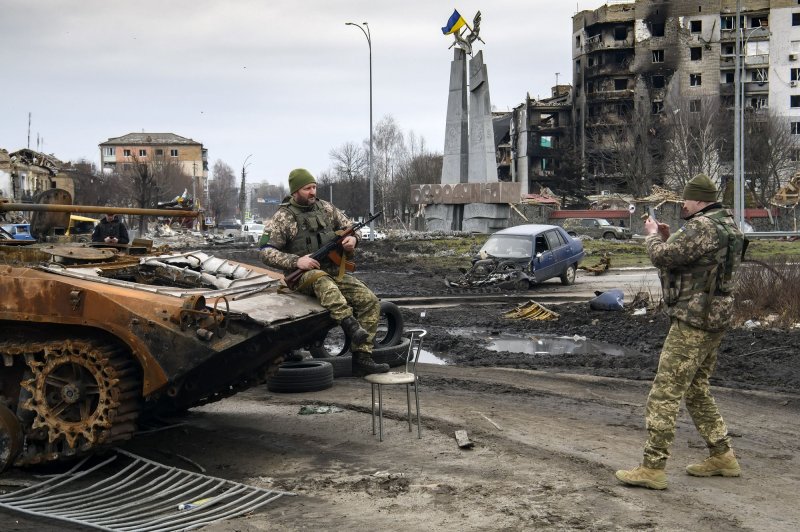
Ukrainian soldiers take pictures with destroyed Russian tanks
 and armored vehicles in Borodianka, Ukraine. 
Vladyslav Musienko/UPI | License Photo

June 9 (UPI) -- Russia's war in Ukraine is upending the global arms industry.

As the United States and its allies pour significant sums of money into arming Ukraine and Russia bleeds tanks and personnel, countries across the world are rethinking defense budgets, materiel needs and military relationships. Countries that historically have had low levels of defense spending such as Japan and Germany are bulking up, while nations that purchase most of their weapons from Russia are questioning their reliability and future delivery.

My research in this area suggests that, however this war eventually ends, the repercussions for the global defense industry, and for the countries whose companies dominate this sector, will be enormous. Here are four takeaways.

Russia will be the biggest loser

Russia's general sales pitch for its weapons has been they're "cheaper and easier to maintain than Western alternatives." This is why Russia accounted for 19% of the world's arms exports from 2017 to 2021, second only to the United States, which had 39% of the market.

However, this pitch may no longer be effective for many countries that have seen Russian equipment losses and failures in Ukraine.

To date, the U.S. estimates Russia has lost almost a thousand tanks, at least 50 helicopters, 36 fighter-bombers and 350 artillery pieces, according to Business Insider. Thousands of Russian soldiers have been killed, with estimates ranging from about 15,000 to as high as 30,000, and Russia is still unable to control Ukraine's airspace.

The situation has become so dire that there are reports that commanders are trying to preserve equipment by forbidding troops from using them to evacuate wounded soldiers or to support units that have advanced too far.

Russia's offensive weapons have also proved disappointing. Its missile failure rate -- the share that either failed to launch, malfunctioned midflight or missed their target -- may be as high as 50% to 60% due to design flaws and outdated or inferior equipment.

These problems, along with the Russian military's slow progress achieving any of President Vladimir Putin's stated objectives, have raised serious doubts among the country's traditional customers for weapons exports. Russia sells almost 90% of its weapons to just 10 countries, including India, Egypt and China.

What's more, Russia's ability to replace these equipment losses has been hampered by economic sanctions, which bars key foreign components like circuit boards. And Russia will likely need to replace its own military hardware before it exports anything abroad.

That means that even countries that want to keep buying Russian tanks and fighter jets will have to wait in line or turn elsewhere to fulfill their defense needs.

Russia's loss is China's gain

The country that will likely see the greatest gains from Russia's displacement as a major arms supplier is China.

In recent years, the country has taken a 4.6% share of the global arms trade, putting it in fourth place behind France's 11%. At the same time, seven of the top 20 global defense companies in terms of revenues earned from defense sales are Chinese, signaling the sector's big ambitions.

The Chinese government buys most of its weapons and vehicles from these domestic arms makers, but China has the capacity to export more military products abroad.

For example, China is the world's largest shipbuilder, so exporting more naval ships is a natural next step. The country is expanding its niche role in drone technology and attempting to leverage modernizing its air force with domestically built aircraft to increase exports.

At the moment, only three of the world's 40 biggest arms importers -- Pakistan, Bangladesh and Myanmar -- buy a majority of their weapons from China. That could change if China takes advantage of Russian weakness to position itself as a reliable national security, economic and political partner -- a core feature of its Belt and Road Initiative.

China is not capable of supplanting U.S. and European weapons, which are considered "top shelf" because of their high quality and price. But China may well fill the market niche that Russian arms makers dominated, thereby increasing Beijing's role as a major weapons exporter -- and gaining the political and economic benefits that accompany that.

One of China's biggest challenges will involve proving that its weapons work well in live combat situations.

U.S. weapons manufactures dominate the global arms industry. The Ukraine war will likely ensure this stays that way for some time.

The world's five largest arms companies are all American: Lockheed Martin, Raytheon, Boeing, Northrop Grumman and General Dynamics. In fact, half of the top 100 producers of arms are based in the United States. Twenty are European. Only two are Russian -- despite the country being the world's second-largest source of arms.

The massive amounts of weapons being transferred from the United States to Ukraine will keep American arms makers busy for some time to come. For example, the United States has transferred about one-third of its stock of Javelin anti-tank missiles to Ukraine, and it will take three to four years for the Raytheon-Lockheed Martin joint venture to replace them. The $40 billion aid package recently signed by President Joe Biden includes $8.7 billion to replenish U.S. weapons stocks.

The companies' soaring stock prices are a sign investors believe profitable days are ahead. Lockheed Martin's stock price is up over 12% since the invasion began -- with most of the gains occurring in its immediate aftermath. Northrop Grumman has jumped 20%. At the same time, the broader stock market as measured by the S&P 500 has slumped about 4%.

More countries will become arms makers

The flipside to this is that some countries that relied on others for their defense needs may seek to become more self-sufficient.

India, which relied on Russia for almost half of its weapons imports in recent years, is realizing that Russia will need most or all of its production capacity to replace tanks, missiles, aircraft and other weapons used or lost in Ukraine, with less leftover for export.

That means India will need to either source spare parts for vehicles and weapons from other former Russia arms customers such as Bulgaria, Georgia and Poland, or build up its own defense industry. In April, India announced it would ramp up production of helicopters, tank engines, missiles and early airborne warning systems to offset any potential reduction in Russian exports.

Concerns about Russian reliability are also growing. In May, India canceled a $520 million helicopter deal with Russia. While there are reports U.S. pressure played a role, it also seems to be part of the government's strategy over the past few years to build its own domestic defense industrial base.

Brazil, Turkey and other emerging market countries have also been developing their own defense industries over the past two decades to reduce their reliance on arms imports. The Ukraine war will accelerate this process.

Putin likely didn't expect to shake up the global arms market with his effort to annex Ukraine -- or cause the decline of his country's weapons sector. But that's just one more way his war is causing a geopolitical earthquake.

Terrence Guay is a clinical professor of international business and director of the Center for Global Business Studies at Penn State.

This article is republished from The Conversation under a Creative Commons license. Read the original article.


Brazil leader complains to Biden about pressure over Amazon

Thu, June 9, 2022


Brazil's right-wing leader on Thursday complained to US President Joe Biden about international pressure over the Amazon amid calls for more action on climate change.

"We have a wealth in the heart of Brazil -- our Amazon, which is bigger than Western Europe, with incalculable riches, biodiversity, mineral wealth, drinking water and oxygen sources," Bolsonaro said, as he met Biden on the sidelines of an Americas summit in Los Angeles.

"Sometimes we feel that our sovereignty is threatened in that area but Brazil preserves its territory well," he said.


"On the environmental issue we have our difficulties but we do our best to defend our interests."

Bolsonaro, a champion of agribusiness, has angered environmentalists with his attitude over the Amazon, a crucial "sink" for the planet's carbon emissions.

Biden kept a positive tone in his public remarks, saying that Brazil has made "real sacrifices" to protect the Amazon.

"I think the rest of the world should be able to help you preserve as much as you can," Biden said.

It was the first meeting between Biden and Bolsonaro, an ally of former US president Donald Trump, who has questioned the legitimacy both of US and Brazilian elections.

Speaking to reporters afterward, Bolsonaro said that he was pleasantly surprised by Biden.

"I think we'll have more meetings soon," he said.

During the meeting, Bolsonaro told Biden that Brazil wants "clean, auditable elections" in October.

Biden did not address the elections with reporters present but his national security advisor, Jake Sullivan, earlier said that the US leader would not shy away from pressing on the need for free elections.

Bolsonaro is trailing in polls to former president Luiz Inacio Lula da Silva, a leftist icon who was jailed on controversial corruption charges.

pr-aue-sct/st

Biden sidelines Venezuela’s pro-democracy CAPITALI$M leader from summit

By CHRIS MEGERIAN and JOSHUA GOODMAN
June 8, 2022

FILE - Opposition leader Juan Guaido speaks during an interview with the Associated Press in Caracas, Venezuela, Thursday, Feb. 10, 2022. A little more than two years ago Guaido was showered with bipartisan applause during President Donald Trump´s state of the union speech, but now he has not been invited to the Summit of the Americas that is taking place on the second week of June in the United States. (AP Photo/Ariana Cubillos, File)

LOS ANGELES (AP) — A little more than two years ago, Juan Guaidó was showered with bipartisan applause when President Donald Trump during his State of the Union speech praised the Venezuelan opposition leader as a “very brave man” who carries on his shoulders the democratic hopes of an entire nation.

But in a sign of how far his political fate has fallen, and how quickly U.S. geopolitical calculations can shift, the 38-year-old wasn’t even invited to this week’s Summit of the Americas — despite the Biden administration’s persistent promotion of democracy and insistence it recognizes Guaidó as Venezuela’s interim president.

Meanwhile, the man Guaidó has been trying to unseat, Nicolás Maduro, is taking something of a victory lap. On a rare foreign trip to Turkey this week, Maduro, who is the target of U.S. sanctions and a federal narcotics indictment, denounced the decision to exclude him and leftist allies from Cuba and Nicaragua from the gathering as a “stab” in the back of regional cooperation.

“This is a clear win for Maduro,” Eric Farnsworth, vice president of the Council of Americas, said from Los Angeles, where he was attending the summit. “He’s seen allies take up his cause at the summit while preventing his primary rival, whom Washington recognizes as president, from attending.”

In what may be an attempt at damage control, Biden on Wednesday spoke with Guaidó. It was the first time the two leaders have spoken and during the call, which lasted around 17 minutes, Biden reiterated his support for Guaidó, whose claim to the presidency stems from his role as head of the National Assembly elected in 2015.

“President Biden expressed his support for Venezuelan-led negotiations as the best path toward a peaceful restoration of democratic institutions, free and fair elections, and respect for the human rights and fundamental freedoms of all Venezuelans,” according to a White House readout of the call. “They discussed the role the United States and other international partners can play to support a negotiated solution to Venezuela’s crisis. President Biden reaffirmed the United States is willing to calibrate sanctions policy as informed by the outcomes of negotiations that empower the Venezuelan people to determine the future of their country.”

But coming on the heels of weeks of silence from the White House about whether Guaidó would be invited or not, the call provided little comfort to Venezuela’s pro-democracy movement.

“We don’t want to be seen as party crashers going where we aren’t wanted,” said one Guaidó envoy on the condition of anonymity to discuss sensitive diplomatic dealings.

National Security Adviser Jake Sullivan downplayed suggestions the U.S. was snubbing a staunch ally.

Speaking aboard Air Force One on its way to Los Angeles, Sullivan insisted the decision to not invite anyone from the Guaidó camp, and instead involve civil society activists from Venezuela, was a tactical one to encourage negotiations between Maduro and his opponents that leads to “ultimately a better future for the Venezuelan people.”

Guaido’s possible presence at the summit also appears to have irritated many of the Venezuelan government’s allies, including Mexican President Andrés Manuel López Obrador, who decided to skip the summit over the exclusion of Maduro and the leaders of Cuba and Nicaragua.

A Mexican official confirmed that his government asked the U.S. to exclude Guaidó as part of its back-and-forth with the Biden administration on the guest list, an effort that ultimately failed to persuade López Obrador to partake in the summit. The official, who requested anonymity to discuss diplomatic dealings, said that other countries had done the same.

Joining the Mexican leader’s boycott were fellow leftist leaders of Bolivia, Grenada, Honduras, St. Kitts & Nevis, and St. Vincent and the Grenadines. Also staying home in protest, although not in solidarity with Maduro, were the leaders of El Salvador and Guatemala, as well as the president Uruguay, who was exposed to COVID.

But it’s not just foreign pressure that has Biden wary of inviting Guaidó.

Since Russia’s invasion of Ukraine triggered a spike in energy prices, the U.S. has started to re-evaluate its policy on Venezuela, a country that sits atop the world’s largest petroleum reserves but whose decades-long decline in oil production has been made worse by U.S. sanctions.

In March, U.S. officials led by Juan Gonzalez, the National Security Council’s senior director for the western hemisphere, traveled to Caracas to meet with Maduro. Then, as now, Guaidó was kept on the sidelines, with U.S. officials not meeting with him during the several day trip. The goal of the talks was to dangle before Maduro the possibility of sanctions relief in exchange for a return to negotiations in Mexico with his opponents, something that so far hasn’t happened.

Meanwhile, Guaidó continues to fight for change, although his street appearances are less frequent, and crowds greatly diminished from when he launched his challenge to Maduro in 2019.

On Saturday, his supporters were met in the western city of Maracaibo, a short distance from Colombia and a flight onward to the U.S., with a barrage of flying plastic chairs and fisticuffs from allies of Maduro.

“The violent ones were left empty handed,” Guaidó told a small group of supporters to shouts of “Freedom, Freedom, Freedom” after the raucous brawl. “Let’s be clear: we are not going to take a single step backward.”

— Goodman reported from Miami. AP Writer Claudia Torrens from New York and Jorge Rueda in Caracas, Venezuela contributed to this report.
Lebanon's Hezbollah can stop Israeli
gas extraction from disputed field, chief says


This file photo taken on June 3, 2022 and obtained from Egypt's Suez Canal Authority shows a tugboat pulling an Energean floating production storage and offloading ship along the Suez Canal - SUEZ CANAL AUTHORITY/AFP/File

Thu, June 9, 2022

(Reuters) - The head of Lebanon's Hezbollah said on Thursday that his group could stop Israel from extracting gas from a maritime field that Beirut says lies in disputed waters, adding Hezbollah is "not afraid of war."

Lebanon warned Israel on Sunday against any "aggressive action" in disputed waters where both states hope to develop offshore energy, after a vessel operated by London-based Energean arrived off the coast to produce gas for Israel.

Hezbollah "has the capacity to prevent the enemy from beginning to extract from Karish, and all the enemy's actions will not be able to protect this ship," Hezbollah chief Sayyed Hassan Nasrallah said in a televised speech.

Nasrallah said that "the Greek company," referring to Energean, "is a partner in this attack on Lebanon," for which it will face "consequences."

Energean was not immediately available for comment.

 Vehicles drive past billboards depicting Lebanon's 
Hezbollah leader Sayyed Hassan Nasrallah

Energean has said that its floating production storage and offloading vessel is due to start production at Karish in the third quarter.

Israel says that the field in question, which is about 80 km (50 miles) west of the city of Haifa, is within its exclusive economic zone, not in disputed waters.

The United States began mediating indirect talks between the sides in 2000 to settle a long-running dispute that has obstructed energy exploration in the eastern Mediterranean.

Lebanon has yet to respond to an undisclosed proposal a U.S. envoy made early this year to revive the stalled talks.

Lebanese parliament speaker Nabih Berri said on Tuesday that U.S. mediator Amos Hochstein will visit Beirut early next week but Washington has said there are no travel plans to announce yet.

(Reporting by Laila Bassam; Writing by Maya Gebeily and Lina Najem; Editing by Chris Reese and Grant McCool)

Lebanon should block Israel gas extraction move: Hezbollah chief


AFP , Thursday 9 Jun 2022

Lebanon should block Israel from extracting gas from a disputed offshore field, Hezbollah chief Hassan Nasrallah said Thursday, warning a hydrocarbon exploration company hired by Israel against proceeding with its activities.

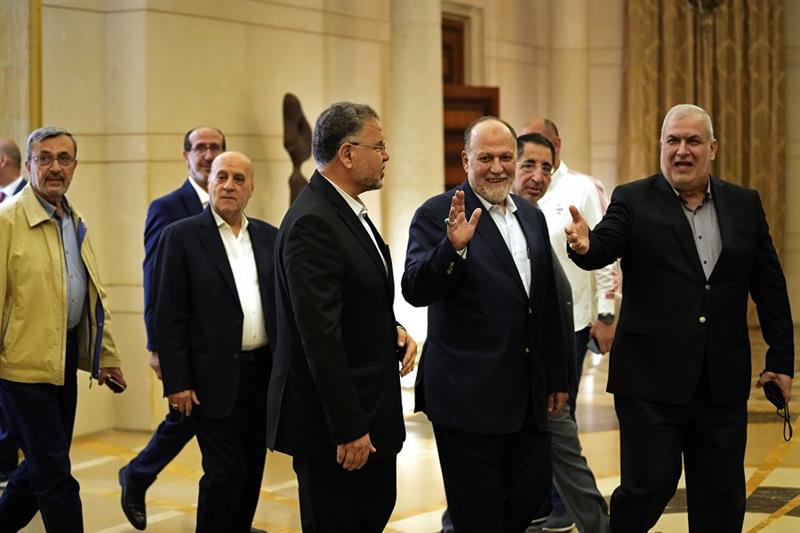
Lawmakers from the Hezbollah parliamentary block headed by Mohammed Raad, right, arrive to attend the election of the house speaker, at the parliament building, in Beirut, Lebanon, Tuesday, May 31, 2022. AP

"The immediate objective should be to prevent the enemy from extracting oil and gas from the Karish gas field," part of which is claimed by Lebanon, Nasrallah said in a televised speech.

Hezbollah will not "stand by and do nothing in the face of (Israel's) looting of Lebanon's natural wealth... which is the only hope for the salvation of the Lebanese people", he warned.

Nasrallah's remarks are his first since a gas production vessel operated by London-listed Energean Plc arrived in the Karish gas field on Sunday.

He said extraction should halt pending the completion of maritime border negotiations between Lebanon and Israel, and warned Energean against proceeding.

The company "should pull out its ship immediately and avoid getting involved in this aggression and provocation against Lebanon", the head of the powerful Iran-backed Shiite movement said, adding that Energean must assume "full responsibility" for its involvement.

Following the ship's arrival, Lebanese authorities on Monday called for US envoy Amos Hochstein to visit Beirut to relaunch maritime border negotiations.

Parliamentary speaker Nabih Berri said Hochstein was due to arrive in the coming days but there has been no official confirmation from Washington.

On Thursday, President Michel Aoun said that Lebanon would ask Hochstein to "resume efforts to relaunch indirect negotiations" with Israel.

Lebanon wants a deal that would allow it to "invest in its offshore oil and gas resources and safeguard security and stability in the border area," Aoun said in a statement.

His comments came a day after Israel restated its view that Karish "is a strategic asset of the state of Israel" and stressed it was "prepared to defend" the site.

Lebanon and Israel last fought a war in 2006, have no diplomatic relations and are separated by a UN-patrolled border.

They had resumed negotiations over their maritime frontier in 2020 but the process was stalled by Beirut's claim that the map used by the United Nations in the talks needed modifying.

Lebanon initially demanded 860 square kilometres (330 square miles) of territory in the disputed maritime area but then asked for an additional 1,430 square kilometres, including part of Karish.

Vaccine skepticism and conspiracy theories drive up Pakistan's polio rates

Polio cases are on the rise in Pakistan although it's an illness eradicated almost everywhere else in the world. Part of the problem is widespread vaccine skepticism and outlandish conspiracy theories.


Experts say fake markings are behind a new wave of polio cases


Pakistan's polio eradication campaign is in disarray, as a high number of cases emerge in the northwestern tribal district of North Waziristan.

A total of eight polio cases were recorded in the span of just one month, raising concerns that the disease could be on the rise again in the South Asian country of 220 million. The most recent case of child paralysis as a result of polio in Pakistan was reported in January 2021.

Experts say that vaccine skepticism is one of the biggest contributors to the spread of the illness, as people increasingly use fake vaccination markings.

"The outbreak in North Waziristan appears to be following the same pattern as that witnessed in 2014 and 2019, when there was a surge in cases in the same area. We are working tirelessly to ensure that we break this pattern," Federal Health Minister Abdul Qadir Patel told DW.

"Over 99% of the world is now polio-free. Our children also deserve a life free from this incurable disease," Patel added.

The disease, which mainly affects children under the age of five, can infect the spinal cord, causing paralysis.

Widespread vaccine skepticism

"Fake markings and refusals absolutely are two factors in the recent jump in the cases. The polio inoculation teams conspire with parents to miss the vaccination of the children," an official with the Pakistan Polio Eradication Program told DW, on the condition of anonymity.

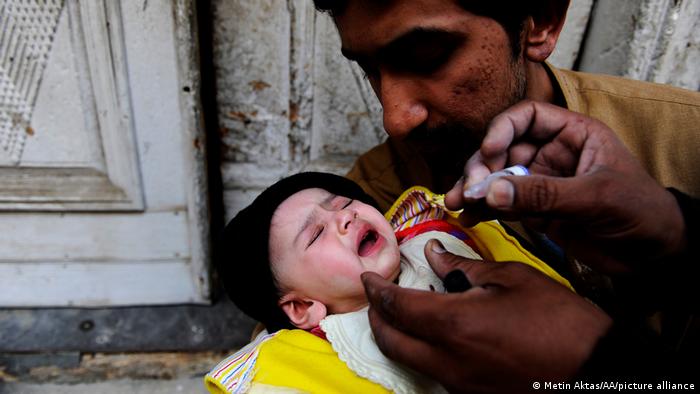
When polio vaccine administrators go through communities vaccinating children, they mark a finger of children to show they've been vaccinated. However, parents who are opposed to the vaccine have been falsely marking their children's fingers to skip the jab.

The government has launched an investigation into the recent outbreak in North Waziristan — formerly a stronghold of the Taliban in the country's northwest, bordering Afghanistan.

"The new cases are really dangerous, primarily when we were heading towards a polio-free country. I fear more cases will emerge in the future," Dr. Qaiser Sajjad, secretary-general of the Pakistan Medical Association, told DW.

"The program will terminate the staff involved in producing the fake markings," said Sajjad.

Conspiracy theories are also a problem. Some skeptics, like Hajira Wazir, for instance wrongly believe the polio vaccine is a practice used by Western countries to sterilize Muslim children. "The West is using the vaccine as a cover … and our government is supporting their agenda," the 27-year-old mother of three from North Waziristan told DW.

Calls to prosecute false data

It is also illegal to provide fake information and data to government vaccination teams.

"People involved in fake information are never prosecuted or fined. That is why many vaccine skeptics feel they can get away with not vaccinating their toddlers," Osama Malik, a senior legal expert, told DW.

"If the government is serious about making Pakistan a polio-free country, then they should hunt down and introduce strict punishments for those faking data ," said Malik.

Polio still remains an imminent global threat as long as a single case exists, as the virus can spread into polio-free countries and affect the population.

A significant portion of the Pakistani population opposed the polio vaccination drives and polio workers teams often came under attack across Pakistan, where vaccinations are widely seen with suspicion.

Some Islamists claim that the polio vaccination is being used by the West as a cover for spying on Muslims and allege these drives are suspicious, referring to the imprisoned Pakistani doctor Shakeel Afridi who allegedly helped Americans in their hunt of Al Qaeda's chief Osama bin Laden. Bin Laden was killed in an operation by the US special forces at his hideout in Abbottabad in May, 2011.

"The anti-vax myths should be broken by convincing masses through targeted campaigns about the seriousness of this disease through media awareness, clerics and impact of polio via real life story telling," said Sajjad.

For the past 25 years, Pakistan has carried out a countrywide polio vaccination drive through door-to-door campaigns to inoculate children. The teams are mostly made up of women health workers escorted by security guards.

Pakistan has carried out three nationwide polio vaccination campaigns in January, March and May of this year. During the March campaign in northwestern Pakistan, gunmen shot and killed a female polio worker. In January, also in the northwest, gunmen shot and killed a police official providing security to the polio workers.

In total, Islamist militant groups in Pakistan have killed more than 100 health care workers and their security guards since 2012.


Legal expert Malik added that "federal and provincial governments have made very little attempt to apprehend and convict the killers."

One of two countries to carry the disease


For decades polio remained the most feared disease in the world and was leading to millions of disabilities. According to the WHO, Pakistan is among one of the only two countries, along with neighboring Afghanistan, still suffering from the crippling polio virus.

Anti-vaccination beliefs in Pakistan are so widespread that a husband divorced his wife for vaccinating their children against polio. In April 2019, more than 25,000 children were rushed to the hospital as a result of panic after the spread of unfounded rumors that a polio vaccine was leading to fainting and vomiting.

"These cases are happening in the same part of the country but parents and caregivers around Pakistan must remain extremely vigilant and give their children repeated doses of the polio vaccine," said Patel.

Edited by: Leah Carter
THIRD WORLD USA
4 in 10 American adults in need of mental health services lack access

By Cara Murez, HealthDay News

Respondents to a recent survey said barriers to mental health services 
included cost, availability, wait times, lack of diversity and proximity to care
Photo by tiyowprasetyo/Pixabay

There is a "staggering" gap between the number of Americans who need care for anxiety, depression and other mental health conditions and those who can actually get it, a new survey shows.

In all, 42% of U.S. adults who needed care in the previous 12 months did not get it because of costs and other barriers, according to the online survey from the National Council for Mental Wellbeing. Nearly one-quarter said they needed help for substance use.

"Unfortunately, I think the data around the challenges to accessing care are not surprising," said CEO Chuck Ingoglia. "We're in an environment where there is increased attention to these issues at the federal level and state level, there have been efforts to require insurance companies to provide adequate coverage for behavioral health conditions, and yet it still is a challenge for individuals, and that's a real shame."

The nationwide Access to Care Survey, conducted by The Harris Poll in May, included 2,053 U.S. adults. Respondents said barriers included cost, availability, wait times, lack of diversity and proximity to care. The U.S. Surgeon General sounded a similar warning late last year for younger Americans.

RELATED Many communities aren't ready to handle 988 mental health hotline

In the new survey, about 21% said they had trouble accessing primary healthcare when they needed it, but more than twice as many had difficulty getting needed mental health or substance use treatment.

Ingoglia warned that the problem would worsen without intervention.

About 37% of respondents who said they needed mental healthcare in the survey said the expense had prevented them from getting it - be it out-of-pocket costs or lack of insurance. That was also true of 31% of those needing substance use care.

Twenty-eight percent of respondents said they were unable to find a conveniently located provider, as did 22% of those needing substance use care, the survey found.

Respondents also struggled to find a provider who offered care in a way they were comfortable with - be it in person or virtually.

"What we are seeing consistently in many surveys, our own surveys, and what we're hearing is that Americans are concerned about their mental health and are struggling to get access to high-quality mental health treatment," said Dr. Rebecca Brendel, president of American Psychiatric Association (APA), which was not involved in the survey.

She noted that even before the COVID-19 pandemic upended "all the stabilizing institutions, connections and things that we all depend on for our wellness," there was a shortage of providers. The mental health needs facing Americans with long COVID have only added to the issue.

"We know that Americans are struggling," Brendel said. "We saw an unprecedented number of opiate overdoses last year, in excess of a hundred thousand, higher rates of suicide, kids reporting distress, parents concerned about their kids and Americans in general reporting distress."

It's something, she said, that "we need to act on and we need to act on quickly."

The U.S. Centers for Disease Control and Prevention recently reported that deaths from drug overdoses set a new record last year.

In ways large and small, the fallout from the lack of mental healthcare reverberates throughout people's lives, the experts noted.

About 50% of respondents said the lack of care had led to personal relationship issues. About 45% reported work issues and 44% noted a decline in their mental well-being.

For those who needed but were unable to get substance use care, 49% reported work issues as a result, 43% cited relationship issues and 37% a decline in their mental well-being.


"As the survey showed, people then report challenges in significant areas of their life, whether that's related to their relationships or their work, their general functioning," Ingoglia said. "These are illnesses that end up causing disruption in many areas of a person's life."

Men were more likely than women to need substance use care, the survey found. People between 18 and 41 years of age were more likely than older people to need both mental health and substance use care.

Cultural issues were a key concern. Roughly six in 10 adults agreed that there are too few mental health providers trained to address issues specific to race, ethnicity, sexual orientation or economic status.

"An ongoing question that our country needs to think about is how do we not just increase the number of behavioral health professionals, but to continue to ensure that the people who are entering the field look like and can relate to the people who need treatment?" Ingoglia said.

Even respondents who said they did access care had trouble getting what they needed, including 67% of those who received mental healthcare and 81% of those treated for substance use, the survey found.

Citing insurance-related issues, about three in five said they thought it would be easier and faster to get help if they paid for mental healthcare out-of-pocket.

Brendel, the APA leader, said it's important that people know what resources are available to them. For those who are employed, resources may be available in the workplace, for example.

She said many insurers are not complying with mental health parity legislation passed a decade ago.

"The cost of mental health and substance use care should not be any higher or less affordable to access than general medical care," Brendel said. "We have had nationwide parity legislation for over a decade, and the biggest problem is that we're struggling on enforcement."

Certified community behavioral health clinics could be a solution, according to Ingoglia. They're required to offer appointments rapidly and serve everyone regardless of their ability to pay.

But there's a catch: These are only available through a federally mandated Medicaid demonstration in 10 states. Another 30 states have grant-funded programs but those will only become sustainable if they become part of Medicaid, Ingoglia said.

"There is some hope that Congress this year will expand this program and make it available in every state in the country," he said.

More information

The U.S. Centers for Disease Control and Prevention has more on mental health.

Copyright © 2022 HealthDay. All rights reserved.
RIGHT WING WHINING WORKED
Research shows local GOP content was amplified after Facebook algorithm change


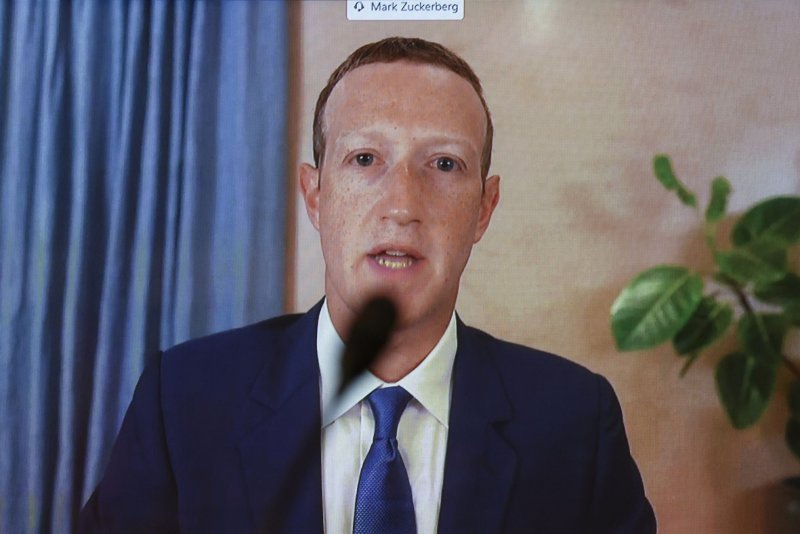
Meta CEO Mark Zuckerberg is seen testifying remotely during a U.S. Senate hearing into how Facebook and Twitter moderated content during the 2020 presidential election, in Washington, D.C., on November 17, 2020. Research published Wednesday showed local Republican Party posts were amplified after a Facebook algorithm change in 2018. 
Pool Photo by Hannah McKay/UPI | License Photo

June 9 (UPI) -- After a Facebook algorithm change, local Republican Party posts in 2019 were shared twice as much as local Democratic posts, according to new research published Wednesday. That happened even though local Democratic parties posted more often on Facebook.

The research paper was published in the journal Research & Politics.

"Regardless of Facebook's motivations, their decision to change the algorithm might have given local Republican parties greater reach to connect with citizens and shape political realities for Americans," the research paper said. "The fact that private companies can so easily control the political information flow for millions of Americans raises clear questions for the state of democracy."

The research showed that from Jan. 1 to June 30, 2019, posts by local Republican parties were shared 1,684,586 times. Content from local Democratic parties was shared 800,659 times.

Over the same six months in 2018, content from local Democratic parties was shared nearly 50% more than that of Republican parties.

The report said, "We conclude that it seems possible that changes in how Facebook rated content led to a doubling of the total shares of local Republican party posts compared to local Democratic party posts in the first half of 2019 even though Democratic parties posted more often during this period."

Researchers wrote that if changes in Facebook's algorithm fundamentally change the reach of political parties on Facebook there is the potential for Facebook to accidentally, or purposefully, shape political realities for Americans.

The report said this increase in engagement for Republican parties was unique to Facebook and happened across over a thousand local parties.

Using an original data set of Facebook and Twitter posts from local Republican and Democratic parties, researchers found that local GOP Facebook content started getting higher engagement in the fall of 2018 when the algorithm was changed.
UPDATE
Archaeology sensation: An ancient city reemerges in Iraq reservoir

Extreme drought in Iraq have given German and Kurdish archaeologists the unique chance to examine an ancient Bronze Age city, Zachiku. It was a race against the clock.


The ruined ancient city was exposed for only about six weeks


Southern Iraq has been suffering from extreme drought for months. Since December, large amounts of water have been diverted from the Mosul Dam, Iraq's most important water reservoir, to prevent harvests from drying out.

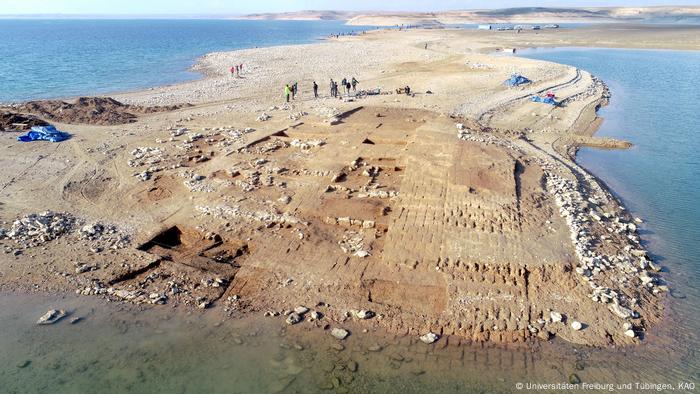
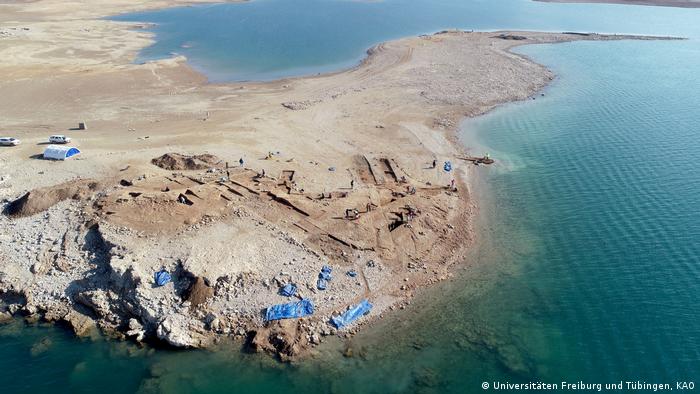
Due to the low water level, the remains of a 3,400-year-old city that disappeared decades ago emerged on the edge of the reservoir.

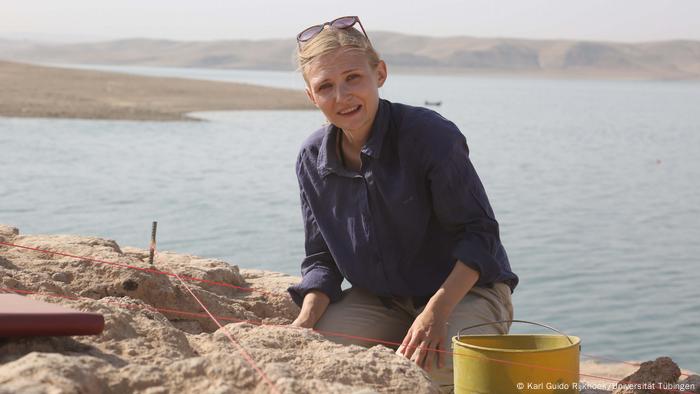
"I saw on satellite images that the water level was falling but it wasn't clear when the water would rise again. So, we had an unknown window of time," says German archaeologist Ivana Puljiz, a junior professor at the University of Freiburg.

But archaeologists knew that the site — known as Kemune — was interesting. They had been there before.


Archeologists had little time to uncover and document the site

So, Puljiz got together with Hasan Ahmed Qasim, a Kurdish archaeologist and director of the Kurdistan Archeology Organization, and Peter Pfälzner, a German archeology professor at the University of Tübingen, to carry out a spontaneous rescue excavation.

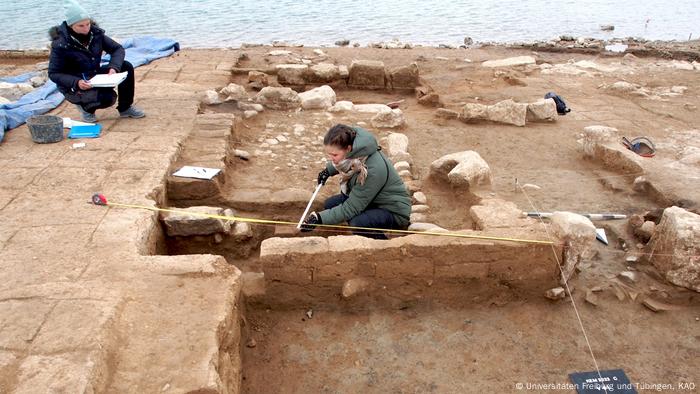
They quickly put together a team of German and Kurdish archaeologists to uncover and document as much of the large site as they could.

The team surveyed the Bronze Age city for seven weeks in January and February 2022 before it was completely flooded again.
Emergency excavation reveals large buildings

During a similar dry phase in 2018, the researchers had discovered a fortress-like palace located nearby on a small hill. It was bordered by a large terrace wall.


'We had an unknown window of time," archaeologist Puljiz told DW

At the time, Ivana Puljiz's team found the remains of wall paintings in bright red and blue tones, thought to be a typical feature of such palaces.

The fact that the pigments were preserved despite the flooding was "an archaeological sensation," Puljiz told DW after their 2022 visit to the site.

"Of course we had high hopes. Based on the things we had found in 2018, we knew that this site could bring interesting findings. But we didn't know what exactly we would find [this time]," said Puljiz.

The team was not disappointed: During this year's excavation, the archeologist said they were able to uncover other large buildings, such as a massive fortification with a wall and towers that surrounded the city.
A mighty city that dominated the area

The researchers' discovery of a large, multi-story warehouse full of supplies was particularly exciting.


The extent of what was once possibly a mighty city can only truly be viewed from above

"The sheer size of this building alone shows that it had to have housed an enormous amount of goods. And these goods had to be produced and brought there first," said Puljiz. It suggests the city obtained its supplies from a surrounding area it controlled.

Puljiz said their initial findings suggested the extensive city complex could be ancient Zachiku, an important center in the Mitanni empire (circa 1550 to 1350 BC). Zachiku controlled large parts of northern Mesopotamia and Syria.

However, not much is known about ancient Zachiku. "There are very, very few mentions of this city name in other sources, so we are only now bringing new knowledge to light about it," Puljiz said.

Ceramic vessels with over 100 inscriptions

The walls and foundations of the building appear to be in surprisingly good condition, said Puljiz, despite their being made of unfired adobe bricks that have been under water for decades.


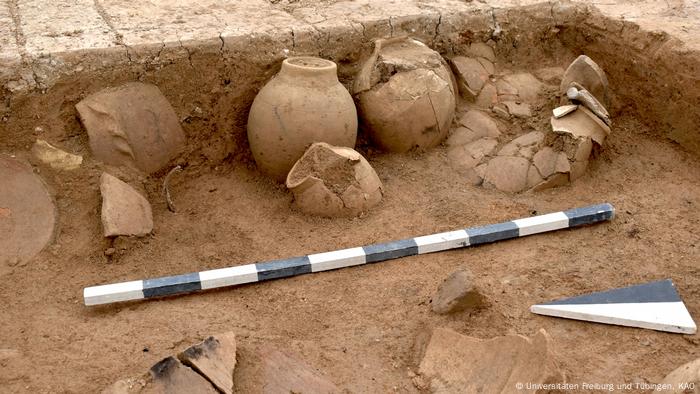
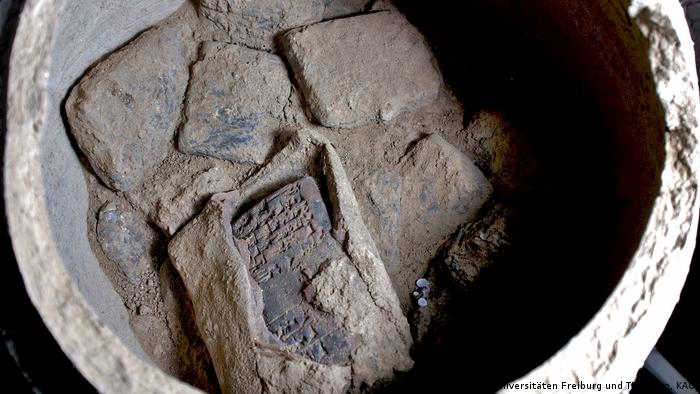
The researchers discovered clay vessels containing numerous cuneiform tablets

It's possible that a massive earthquake that struck the city around 1350 BC helped preserve those walls — when the building was destroyed and the rubble fell, it may have covered the lower parts of the wall, thereby preserving them.

One of the most fascinating finds, said the researcher, was the discovery of five ceramic vessels, containing over 100 cuneiform tablets, as if in a kind of archive.

Cuneiform is one of the oldest forms of writing. Some of the clay tablets were even found in clay "envelopes."

"When you think that these clay tablets — which aren't fired, they're just solid clay — were underwater for so long and survived and hopefully can soon be read by a philologist, then that's really a sensation," said Puljiz.
Unknown empire of the Mitanni

Those clay tablets were created in the Middle Assyrian period, shortly after that devastating earthquake, when people may have started to settle on the ruins of the ancient city again.


The archeologists says it's a "sensation" that unfired clay tablets found at the site weren't destroyed

The cuneiform texts may now provide information about the end of the Mitanni-period and the beginning of Assyrian rule in the region. The kingdom of Mitanni is still considered one of the least explored states of antiquity.

During its heyday in the middle of the second millennium BC, the kingdom stretched from the Mediterranean coast across modern-day Syria to northern, modern-day Iraq.
Heartland of the Mitanni lies in darkness

Mitanni royalty are said to have maintained a lively exchange with Egyptian pharaohs and Babylonian rulers. Around 1350 BC, however, the Mitanni empire was conquered by neighboring Hittites and Assyrians.


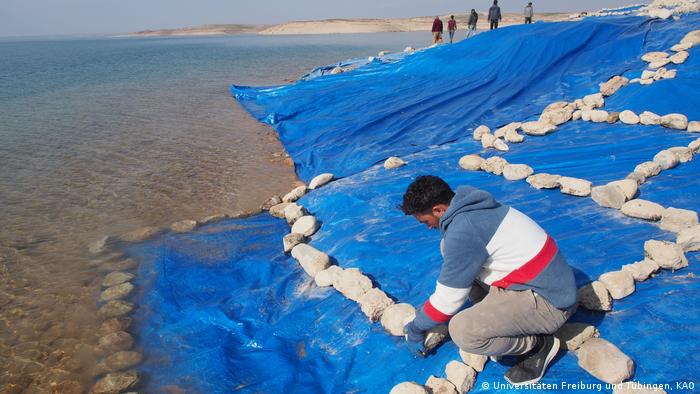
Archeologists hope plastic sheeting will protect the site until the next time the water is low

The events that led to the city's fall remain unclear. To learn more about the Mitanni empire, researchers would need to investigate the center of the former empire — which was probably located in what is now northern Syria — said archaeologist Puljiz.

But the many years of war in the region have made such archaeological digs impossible.

"Without finding notable texts from the center of the empire, it is very difficult to get a picture of how it functioned, what held it together or what landowners did. So far we only have single, spotlight sources from peripheral areas, like now from what is probably ancient Zachiku," said Puljiz. "But the core area remains in the dark."

Before the ruined city was submerged again by the reservoir, the archeologists covered the excavated buildings with a tight-fitting plastic film and gravel to protect them from further damage. With luck, the lost city of the Mitanni will reappear another time.


ARCHAEOLOGISTS DISCOVER 'LOST GOLDEN CITY OF LUXOR'
Largest ancienct city unearthed in Egypt
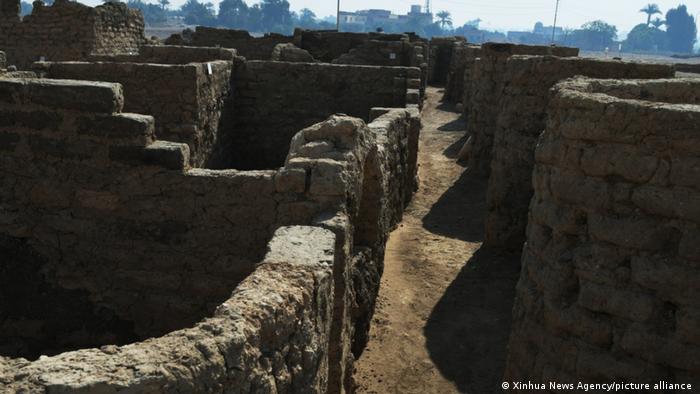
The ancient city, reported to be the largest ever found in Egypt, dates back to the era of king Amenhotep III, who ruled the ancient kingdom from 1391 to 1353 BC. That's according to Zahi Hawass, the Egyptian archaeologist who led the expedition. "Many foreign missions searched for this city and never found it," Hawass, a former antiquities affairs minister, said in an online statement.
123456


CRYPTID ALERT
Texas city shares photo of unidentified 'object' outside zoo

The City of Amarillo, Texas, is asking for the public's help to identify this "Unidentified Amarillo Object" caught on a security camera outside the Amarillo Zoo. Photo courtesy of the City of Amarillo/Facebook

June 9 (UPI) -- Officials in a Texas city are asking for the public's help identifying an unidentified "object" caught on security cameras outside the city's zoo.

The City of Amarillo posted a photo to Facebook on Wednesday showing what appears to be an oddly-dressed person wandering outside the gates of the Amarillo Zoo about 1:25 a.m. May 21.

"Is it a person with a strange hat who likes to walk at night? A chupacabra? Do you have any ideas of what this UAO -- Unidentified Amarillo Object could be?" the post said.

Michael Kashuba, City of Amarillo's director of Parks and Recreation, said city officials want members of the public to submit their theories.

"It is definitely a strange and interesting image," Kashuba told KXAS-TV. "Maybe Amarillo can help solve the mystery of our UAO."

He said local authorities do not believe any crime was committed.

"It is [also] important to note that this entity was outside of the Amarillo Zoo," Kashuba said. "There were no signs of attempted entry into the zoo. No animals or individuals were harmed. There we no signs of criminal activity or vandalism."
PUBLIC LOBBYING SINCE 1948
NASA launches UFO study as mainstream interest grows
© via AFP

The space agency on Thursday announced a new study that will recruit leading scientists to examine unidentified aerial phenomena—a subject that has long fascinated the public and recently gained high-level attention from Congress.

The project will begin early this fall and last around nine months, focusing on identifying available data, how to gather more data in future, and how NASA can analyze the findings to try to move the needle on scientific understanding.

“Over the decades, NASA has answered the call to tackle some of the most perplexing mysteries we know of, and this is no different,” Daniel Evans, the NASA scientist responsible for coordinating the study, told reporters on a call.

While NASA probes and rovers scour the solar system for the fossils of ancient microbes, and its astronomers look for so-called “technosignatures” on distant planets for signs of intelligent civilizations, this is the first time the agency will investigate unexplained phenomena in Earth’s skies.

With its access to a broad range of scientific tools, NASA is well placed not just to demystify UFOs and deepen scientific understanding, but also to find ways to mitigate the phenomena, a key part of its mission to ensure the safety of aircraft, said the agency’s chief scientist, Thomas Zurbuchen.

Zurbuchen acknowledged the traditional scientific community may see NASA as “kind of selling out” by venturing into the controversial topic, but he strongly disagrees.

“We are not shying away from reputational risk,” Zurbuchen said during a National Academy of Sciences webcast. “Our strong belief is that the biggest challenge of these phenomena is that it’s a data-poor field.”

The announcement comes as the field of UFO study, once a poorly-regarded research backwater, is gaining more mainstream traction.

Last month, Congress held a public hearing into UFOs, while a US intelligence report last year cataloged 144 sightings that it said could not be explained. It did not rule out alien origin.


NASA’s study will be independent of the Pentagon’s Airborne Object Identification and Management Synchronization Group, but the space agency “has coordinated widely across the government regarding how to apply the tools of science,” it said in a statement.

A paucity in the number of UFO observations make it difficult at present for the scientific community to draw conclusions.

Therefore, said astrophysicist David Spergel, who will lead the research, the first task of the group would be identifying the extent of data out there from sources including civilians, government, nonprofits and companies.

Another overarching goal of NASA is to deepen credibility in this field of study.

“There is a great deal of stigma associated with UAP among our naval aviators and aviation community,” said Evans.

“One of the things we tangentially hope to do as part of this study, simply by talking about it in the open, is to help to remove some of the stigma associated with it, and that will yield obviously, increased access to data, more reports, more sightings.”

(FRANCE 24 with AFP and AP)
US Survey: For many, wages up almost 5% this year and more hikes are coming

Most American workers need pay raises of more than 70% before earning a living wage


A survey this month found that about two-thirds of U.S. employers said they made wage and salary boosts above 4% this year, while a quarter increased pay by more than 6%. File Photo by FotograFFF/Shutterstock/UPI

June 9 (UPI) -- As inflation hovers at a 40-year high and with many wages already up by almost 5% this year, some U.S. employers are looking to raise worker pay again this year, according to a survey.

The Pearl Meyer compensation planning survey this month says that base wage and salary hikes this year were 4.8% for all employee groups combined, and found that about a third of employers are planning mid-year hikes.


"Based on participant responses collected during the third quarter of 2021, Pear Meyer's annual, in-depth compensation planning survey projected that 2022 salary increase budgets would be consistent with previous years. However, after that survey was conducted, inflation continued to rise through the fall and the labor market became even more competitive," the survey states.

Pearl Meyer said total base salary increases hovered in the low 3% range for the past two decades.


Two-thirds of employers surveyed made wage and salary boosts above 4% this year, while a quarter of them increased pay by more than 6%.

"Most companies are giving thoughtful consideration to mid-year increases and are providing them to key employees, targeted job families, and top performers rather than granting increases across the board," the survey said, noting that most of the organizations surveyed, 64%, said they're not planning a mid-year pay increase.

As some employers raise wages, a report by the University of Wisconsin Population Health Institute found this year that worker compensation is still way behind what workers need to earn living wages.


The Wisconsin report found that most American workers need pay raises of more than 70% before earning a living wage -- and the average living wage across all U.S. counties for one adult and three children is roughly $36 per hour.