Friday, June 10, 2022

Nearly half of Americans share their bed with a pet

By HealthDay News
JUNE 9,2022

Among Gen Z respondents, 53% said they almost always or sometimes sleep with a pet, compared with 36% of baby boomers.
Photo by Adrian Grover/Pixabay

If you sleep with Fido or Fluffy, you're in good company, a new survey shows.

Nearly half of respondents to the American Academy of Sleep Medicine (AASM) poll said they share their bed with a pet, and 46% of those people said they sleep better with their pet in the same bed. Only 19% said they sleep worse when their pet sleeps with them.

Younger Americans are more likely to sleep with a pet. For example, 53% of Gen Z respondents said they almost always or sometimes sleep with a pet, compared with 36% of baby boomers, according to the survey released during Pet Appreciation Week, June 5 to 11.

"Healthy sleep looks different from person to person. Many pet owners take comfort in having pets nearby and sleep better with their companion by their sides," said Dr. Andrea Matsumura. She is a sleep specialist in Portland, Ore., and a member of the AASM's Public Awareness Advisory Committee.

"For most adults, whether you sleep with a pet or not, it is important that you get seven or more hours of restful sleep each night for optimal health," Matsumura added in an AASM news release

If sleeping with your pet interferes with your sleep because they hog the bed, sprawl on your pillow or cause other problems, the AASM offers some tips to improve your sleep:Set up a separate, comfortable sleeping space nearby for your pet as an alternative.

Keep a consistent sleep schedule. Get up at the same time every day, even on weekends or during vacations. Consider your pet's routines as well, including their walking and eating schedule.

Make your bedroom quiet and relaxing, and keep it at a comfortable, cool temperature.
Limit exposure to bright light in the evenings and turn off electronic devices at least 30 minutes before bedtime.

Don't eat a large meal before bedtime. If you are hungry in the evening, eat a light, healthy snack.

Get regular exercise and follow a healthy diet.

More information

The American Sleep Association has advice about sleeping with your pet.

Copyright © 2022 HealthDay. All rights reserved.


Read More


A harrowing American moment, repackaged for prime time

By TED ANTHONY

1 of 4

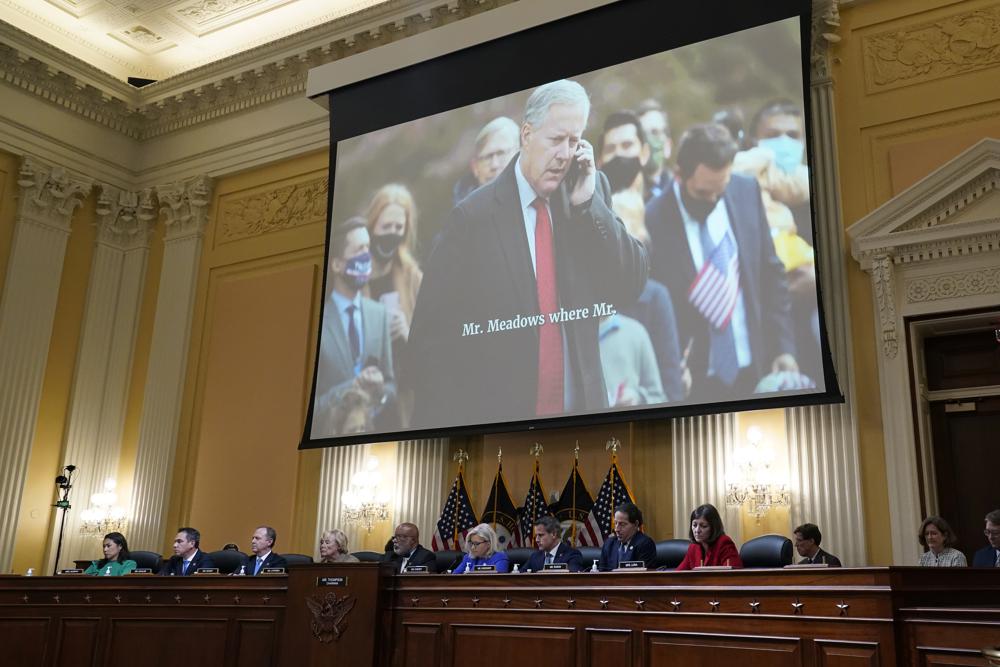
An image of former White House Chief of Staff Mark Meadows is shown as committee members from left to right, Rep. Stephanie Murphy, D-Fla., Rep. Pete Aguilar, D-Calif., Rep. Adam Schiff, D-Calif., Rep. Zoe Lofgren, D-Calif., Chairman Bennie Thompson, D-Miss., Vice Chair Liz Cheney, R-Wyo., Rep. Adam Kinzinger, R-Ill., Rep. Jamie Raskin, D-Md., and Rep. Elaine Luria, D-Va., look on, as the House select committee investigating the Jan. 6 attack on the U.S. Capitol holds its first public hearing to reveal the findings of a year-long investigation, at the Capitol in Washington, Thursday, June 9, 2022. 
(AP Photo/J. Scott Applewhite)


NEW YORK (AP) — Promised: New footage. New testimony. New and damning revelations designed to eliminate all doubt. Hired to package it all for the airwaves: A former network news president. The time slot: 8 p.m. on the East Coast, once a plum spot for the most significant television programming in the land.

Presented in prime time and carefully calibrated for a TV-viewing audience (itself increasingly an anachronism), the debut of the Jan. 6 hearings was, in essence, a summer rerun. Designed as a riveting legislative docudrama about an event that most of the country saw live 18 months ago, it tried mightily to break new narrative ground in a nation of short attention spans and endless distractions.

But did it? Can it? Even with gripping, violent video and the integrity of American democracy potentially at stake, can a shiny, weeks-long production that prosecutes with yesterday’s news — news that has been watched, processed and argued over ad nauseam — punch through the static and make a difference today?

“The idea of a televised investigative proceeding maybe feels a little obsolete when so many people already had so much access to what happened,” said Rebecca Adelman, professor and chair of media and communication studies at the University of Maryland, Baltimore County. “This is a population that by all evidence is fatigued by a lot of things. I’m not sure how much sustained attention anyone has left at this point.”

That’s why the hearings needed one key thing most legislative committees lack: a professional TV executive — someone who could arrange and curate violent amateur and surveillance video, 3D motion graphics, eyewitness testimony and depositions into a storyline built to echo.

Enter James Goldston, the former president of ABC News. The language Axios used in reporting his involvement was instructive. Goldston, it said, would approach Thursday night’s hearing “as if it were a blockbuster investigative special” with “the makings of a national event.”

Those are not often words you hear about a committee hearing. They’re the words of showmanship — something politics has always had, actual governance less so.

During the media-savvy (for its era) Kennedy administration, the historian Daniel J. Boorstin famously coined the term “pseudo-event” — an event conducted expressly for the purpose of being noticed. While that isn’t the case with the Jan. 6 hearings — actual governance is taking place — the buildup and presentation makes it easy to conclude otherwise.

Could it be that this is the only way to grab the public’s attention? After all, since Jan. 6, 2021, much of America has moved on to fresh worries.

Rep. Jim Jordan, R-Ohio, seized on some of those in a series of tweets attacking the committee. “When’s the prime-time hearing,” he asked in six tweets, followed by “on $5 per gallon gas,” “on baby formula shortages,” “on record crime in Democrat-run cities,” “on the left’s 2020 riots,” “on record high grocery prices,” “on Democrats attacking parental rights at school board meetings” and “on threats against Supreme Court Justices and their families.”

By many appearances, the country is operating as it was before the insurrection. Joe Biden was inaugurated as scheduled 14 days after the insurrection. No evidence of election fraud surfaced. The pandemic ebbed. People are talking about guns and gas prices and Russia — not its interference in U.S. elections, but its invasion of Ukraine.

All of this, of course, belies the fact that the Capitol riot undermined the sanctity and security of the democratic process. After more than 200 years in which the peaceful transfer of power was taken for granted in America, it suddenly and very violently wasn’t.

And yet, in this meme-soaked era when loud events fade from the consciousness and are replaced by other loud events within days, it apparently takes what is essentially a Very Special Episode of Congress, packaged up like a documentary brimming with video clips and text-message screengrabs, to get the public’s attention.

And that public is ... who, exactly?

The masses of Donald Trump supporters and opponents who have dug in their heels on both sides — those who think this is ridiculous political posturing and those who insist that day represented an existential threat to democracy — may not be the target audience. More likely, it is Americans who retain an open mind and have kind of moved on; who could use a reminder in the most American way possible: by being presented with an on-screen drama to consume. (Unless you watch Fox, which vociferously refused to air it.)

High-profile public legislative hearings about the workings of government — from the Army-McCarthy hearings in 1954 to the Watergate hearings in 1973 to the Iran-Contra hearings in 1987 — have a history of drawing the nation’s attention and being their era’s version of must-see government TV.

But all those came in the days when a “phone” was something that made calls and was plugged into the wall — well before the era of media fragmentation produced by the internet and, a decade later, the rise of social media and content creation in your pocket.

The raw material presented Thursday night was at times banal and procedural (depositions, speeches). But at times (the violent and profane video montage, the eyewitness testimony of Capitol police officer Caroline Edwards), it felt compelling, terrifying and immediate.

“We’ve lost the line! We’ve lost the line!” viewers heard one Capitol police officer shout as he was being attacked by rioters. Yelled another, terror in his voice: “Officer down!” And this chilling shout, from the background of one scene of chaos: “We’re coming!

Then the production values took center stage — a perfectly timed voiceover of Trump saying, “They were peaceful people” and ”the love in the air, I’ve never seen anything like it” before the sequence fades out.

These are surely the moments that will be cannibalized on social in coming hours and days. So much of political discourse happens online these days, and what was once must-see TV is now on your phone, on demand. Content producers on TikTok and Twitter and Instagram are driving the moments to remember. And if this was a produced TV show, those will be its tiny offspring.

“People will be making their own spinoffs, a few seconds at a time,” said Robert Thompson, director of the Bleier Center for Television and Popular Culture at Syracuse University. “Now ... we’re in the age of developing stories as an interactive video game, where you take the coverage of that day and you turn it into a meme and get 30 million viewers. I think that’s how a lot of people are going to experience these hearings.”

So check out your social media feeds, 2022-style, for the next phase of this drama — political and entertaining and unsettling all at once, and aggressively, messily American.

“We watched the preseason. We watched the season. And now this is behind the scenes in `American Politics: The Sport,’” said John Baick, a historian at Western New England University. “I don’t think anyone’s going to remember where they were when they watched the Capitol investigations.”

___

Ted Anthony, director of new storytelling and newsroom innovation at The Associated Press, has written about American culture since 1990. Follow him on Twitter at http://twitter.com/anthonyted
FTC Chair Khan plans key work on kids’ data privacy online

By MARCY GORDON
yesterday

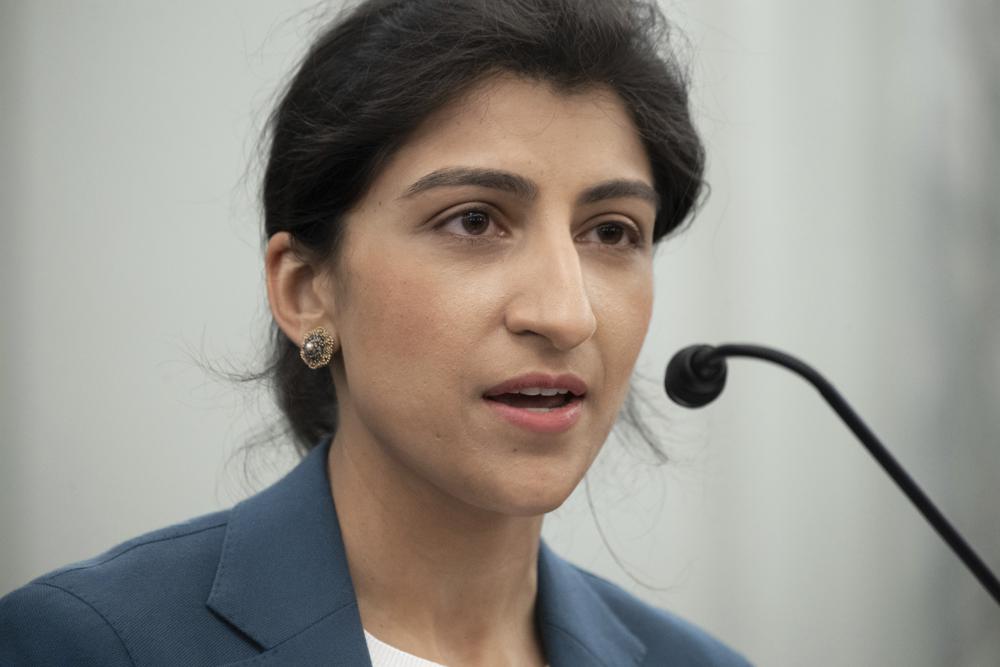
Lina Khan, nominee for Commissioner of the Federal Trade Commission (FTC), speaks during a Senate Committee on Commerce, Science, and Transportation confirmation hearing, April 21, 2021 on Capitol Hill in Washington. Khan, the head of the Federal Trade Commission says she’ll continue to lead a robust agenda of actions and policies to help safeguard the data privacy of children online. The work will include toughened enforcement of protections under a long-standing law governing kids’ online privacy and paying attention to the algorithms used by social media platforms that target young people. (Saul Loeb/Pool via AP, File)

WASHINGTON (AP) — The head of the Federal Trade Commission says the agency is pushing a robust agenda of actions and policies to help safeguard children’s privacy online.

The ongoing work will include toughened enforcement of a long-standing law governing kids’ online privacy and eyeing the algorithms used by social media platforms targeting young people.

“Children’s privacy is enormously important and we want to make sure we’re doing everything we can ... to vigorously protect children’s privacy and protect them from data abuses,” said Lina Khan, who has led the consumer-protection agency for a year. She spoke in an interview over Zoom with The Associated Press on Wednesday.

Around the country, parents’ concern has deepened over the impact of social media on kids. Frances Haugen, a former Facebook data scientist, stunned Congress and the public last fall when she brought to light internal company research showing apparent serious harm to some teens from Facebook’s Instagram platform.

Those revelations were followed by senators grilling executives from YouTube, TikTok and Snapchat about what they’re doing to ensure young users’ safety in the wake of suicides and other harms to teens attributed by their parents to their usage of the platforms.

The recent tide of mass shootings has also highlighted the power of social media and its influence on young people.

The FTC recently warned that it will crack down on education-technology companies if they illegally surveil children when they go online to learn. The agency noted that it is against the law for companies to force parents “to surrender their childrens’ privacy rights in order to do schoolwork online or attend class remotely.”

Khan said Wednesday the FTC had heard complaints from parents who, when the pandemic struck in 2020, had to suddenly make that choice.

The so-called edtech companies have apps and websites that are used by hundreds of thousands of students in school districts around the country. The children’s online privacy law prohibits companies from requiring that children provide more information than is needed, and restricts using students’ personal data for marketing purposes.

Among a host of other enforcement actions, the FTC in March required WW International, formerly known as Weight Watchers, in a settlement to delete information illegally collected from children under 13 as well as algorithms developed by the company’s weight-loss app for children as young as eight. The company also paid a $1.5 million penalty.

President Joe Biden stunned official Washington about a year ago when he installed Khan, an energetic critic of Big Tech then teaching law, as head of the FTC. That signaled a tough government stance toward giants Facebook (its parent now is called Meta Platforms), Google, Amazon and Apple, which already have been under pressure from Congress, state attorneys general and European regulators.

At 33, Khan is the youngest chair in the 107-year history of the FTC, an independent agency with five commissioners and around 1,200 employees. The agency’s mandate is broad — it polices competition and consumer protection as well as digital privacy — and under Khan it has been active on every front. Khan was an unorthodox choice for Biden, with no administrative experience or knowledge of the agency other than a stint for part of 2018 as legal adviser to one of the five commissioners.

She carried intellectual heft, though, that translated into political traction. Khan burst onto the antitrust scene in 2017 with her massive scholarly work as a Yale law student, “Amazon’s Antitrust Paradox.” She helped lay the foundation for a new way of looking at antitrust law beyond the impact of big-company market dominance on consumer prices. That school of thought appears to have had a heavy influence on Biden.

During Khan’s tenure, the FTC has sharpened its antitrust attack against Facebook in federal court, accusing the social network giant of abusing its market dominance to quash competition, and is widely believed to be pursuing a competition investigation into e-commerce giant Amazon. Possible areas of focus, according to experts, are Amazon’s cloud-computing business and its recent $8.4 billion acquisition of movie studio MGM. Last year Amazon asked Khan to step aside from antitrust investigations into the company because of her past public criticism of its market power. The probe is reportedly being led by the agency’s deputy director of competition, John Newman.

In the interview, Khan addressed the importance of Big Tech antitrust cases in general since she is neither confirming nor denying an investigation into Amazon.

“These are products and services that Americans use and rely on in their day-to-day lives, and we want to be sure that incumbents are not stifling and crowding out competitors,” she said.

When the companies grow by buying up competitors and abuse their market position, she said, “They can in some ways become too big to care — and start imposing all kinds of terms and contractual conditions on consumers.”

___

Follow Marcy Gordon at https://twitter.com/mgordonap

Thursday, June 09, 2022

Vermont botanists find threatened orchid not seen in state since 1902


It was believed that the small whorled pogonia went extinct in Vermont a 120 years ago. Photo courtesy of Vermont Fish and Wildlife Department/Website

June 9 (UPI) -- Botanists in Vermont have found a federally protected orchid believed to have gone extinct in the state in 1902, officials said.

The Vermont Fish and Wildlife Department announced in a statement Wednesday that its botanists have confirmed a population of small whorled pogonia, which is protected as threatened under the Federal Endangered Species Act and has not been seen in Vermont in 120 years.

The plant was discovered on conservation land within Chittenden County's Winooski Valley Park District, it said.

"Discovering a viable population of a federally threatened species unknown in our state for over a century is astounding," said Vermont Fish and Wildlife Department Botanists Bob Popp.

According to the U.S. Fish and Wildlife Service, the species is listed as threatened wherever it is found within the United States, and has a historical range that includes 20 eastern states and the Distric of Colombia.

However, the federal department states the plant is only known to occur or believed to occur in 17 of them, not including Vermont.

The discovery was first made by John Gange and Tom Doubleday, two community scientists, who contacted the state agency, which confirmed the presence of small whorled pogonia within the conservation area this past spring, its typical blooming season.

"These kinds of discoveries are only possible because of the vibrant communities of enthusiasts and professional botanists who work together to understand and document Vermont's plant diversity," said Aaron Marcus, an assistant botanist with the department.

According to the department, previous searches for the plant proved unsuccessful. Habitat requirements for the orchid are little known, it said, adding that populations in Maine and New Hampshire are found in areas of partial sun, such as the edge of forests.

The state will now work with Winooski Valley to search for further clusters of the plant in its conservation region and monitor the population to aid its growth, it said.

"We're incredibly fortunate that this small whorled pogonia population is on land protected by Winooski Valley Park District," Popp said. "It speaks to the importance of habitat conservation."

There are currently 942 plant species protected as either threatened or endangered by the federal government, according to the U.S. Fish and Wildlife Service.
Researchers name new alga species after inaugural poet Amanda Gorman


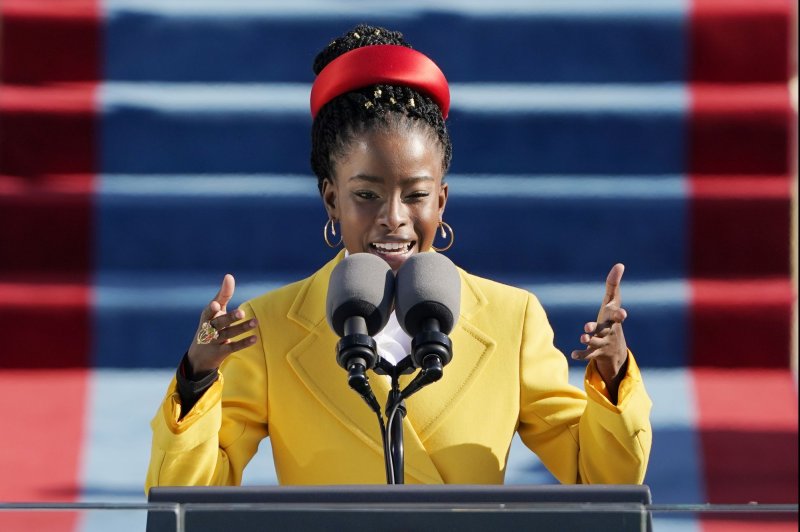
Researchers at the Boyce Thompson Institute named a newly discovered species of green alga Gormaniella terricola after Amanda Gorman, the poet for President Joe Biden's inauguration in 2021. File Pool Photo by Patrick Semansky/UPI | License Photo

June 9 (UPI) -- A group of researchers named a new species of alga after Amanda Gorman, the poet for President Joe Biden's inauguration in 2021.

The researchers at the Boyce Thompson Institute discovered the green alga -- Gormaniella terricola -- from central New York in 2020 and were experiencing a "dark time" amid a year of the COVID-19 pandemic and the Jan. 6, 2021, riots at the U.S. Capitol as they sought to come up with the name, researcher Fay-Wei Li said in a press release.

Li, an adjunct assistant professor at the School of Integrative Plant Science at Cornell University, said the group then found inspiration when Gorman, delivered her poem, "The Hill We Climb" during Biden's inauguration on Jan. 20, ultimately deciding to name the genus after her.

"At a point when it was sometimes difficult to find meaning in our research, Amanda Gorman gifted us with this incredibly uplifting poem that gave us a renewed sense of hope in the lab," he said.

Gorman became the youngest inaugural poet in U.S. history at age 22 when she delivered the poem that carried on the theme of unity at the center of the inauguration.

"And so we lift our gazes not to what stands between us, but what stands before us. We've closed the divide because we know to put our future first we must first put our differences aside," she read.

Li said Tanner Robinson, a graduate student working in the lab, was responsible for deciding to name the alga after Gorman.

"It wasn't a political thing, it was just a really great poem," Robinson said. "It was about rising above challenges, and we had had a very challenging year."

The researchers said they discovered Gormaniella terricola by accident, with Jessica Nelson, a former researcher at Li's lab, saying the green alga turned up in her petri dishes while collecting hornwort plants in Potato Hill State Forest.

"We discovered a new species by accident, basically by just paying attention to what we were looking at," Robinson said. "I think we could learn a lot more things by just paying more attention."

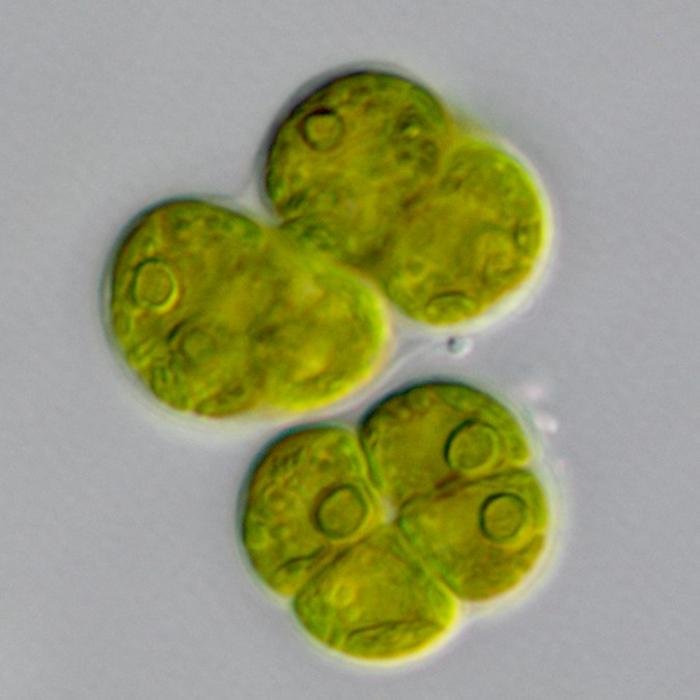
Gormaniella terricola was discovered by accident, with Jessica Nelson, a former researcher at Li's lab, saying the green alga turned up in her petri dishes while collecting hornwort plants in Potato Hill State Forest. 
Photo by Louise Lewis/University of Connecticut

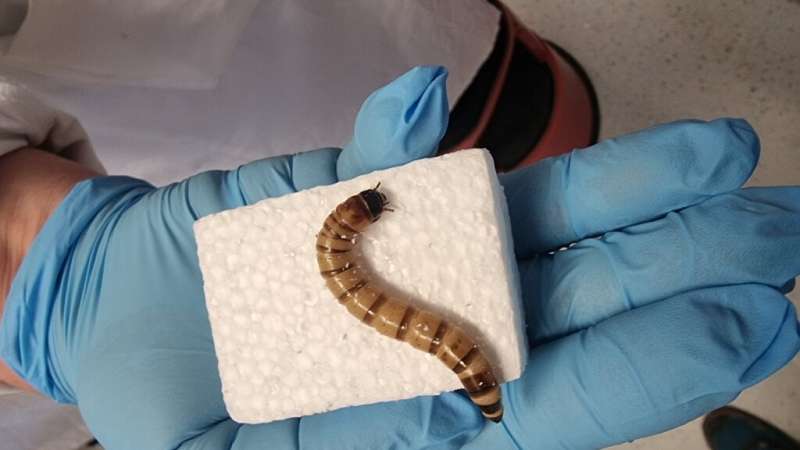
Styrofoam-munching superworms could hold key to plastic upcycling

Scientists at Australia's University of Queensland have now discovered Zophobas morio darkling beetles -- whose larvae are known
Scientists at Australia's University of Queensland have now discovered Zophobas morio
 darkling beetles -- whose larvae are known as 'superworms' -- are eager to dine on
 stryofoam, and their gut enzymes could hold the key to higher recycling rates.

Packing material, disposable cutlery, CD cases: Polystyrene is among the most common forms of plastic, but recycling it isn't easy and the vast majority ends up in landfills or finds its way to the oceans where it threatens marine life.

Scientists at Australia's University of Queensland have now discovered that superworms—the larvae of Zophobas morio darkling beetles—are eager to dine on the substance, and their gut enzymes could hold the key to higher recycling rates.

Chris Rinke, who led a study that was published in the journal Microbial Genomics on Thursday, told AFP previous reports had shown that tiny waxworms and mealworms (which are also beetle larvae) had a good track record when it came to eating plastic, "so we hypothesized that the much larger superworms can eat even more."

Superworms grow up to two inches (five centimeters) and are bred as a food source for reptiles and birds, or even for humans in countries such as Thailand and Mexico.

Rinke and his team fed superworms different diets over a three week period, with some given polystyrene foam, commonly known as styrofoam, some bran, and others not fed at all.

"We confirmed that superworms can survive on a sole polystyrene diet, and even gain a small amount of weight—compared to a starvation control group—which suggests that the worms can gain energy from eating polystyrene," he said.

Although the polystyrene-reared superworms completed their life cycle, becoming pupae and then fully developed adult beetles, tests revealed a loss of microbial diversity in their guts and potential pathogens.

These findings suggested that while the bugs can survive on polystyrene, it is not a nutritious diet and impacts their health.

Next, the team used a technique called metagenomics to analyze the microbial gut community and find which gene-encoded enzymes were involved in degrading the plastic.

This handout from from the University of Queensland received on June 9, 2022 shows a Zophobas morio 'superworm'
This handout from from the University of Queensland received on June 9, 2022 shows a
 Zophobas morio 'superworm'

Bio-upcycling

One way to put the findings to use would be to provide superworms with food waste or agricultural bioproducts to consume alongside polystyrene.

"This could be a way to improve the health of the worms and to deal with the large amount of food waste in Western countries," said Rinke.

But while breeding more worms for this purpose is possible, he envisages another route: creating recycling plants that mimic what the larvae do, which is to first shred the plastic in their mouths then digest it through bacterial enzymes.

"Ultimately, we want to take the superworms out of the equation," he said, and he now plans more research aimed at finding the most efficient enzymes, then enhancing them further through enzyme engineering.

The breakdown products from that reaction could then be fed to other microbes to create high-value compounds, such as bioplastics, in what he hopes would become an economically viable "upcycling" approach.Superworms digest plastic, with help from their bacterial sidekicks

More information: Jiarui Sun et al, Insights into plastic biodegradation: community composition and functional capabilities of the superworm (Zophobas morio) microbiome in styrofoam feeding trials, Microbial Genomics (2022). DOI: 10.1099/mgen.0.000842

© 2022 AFP

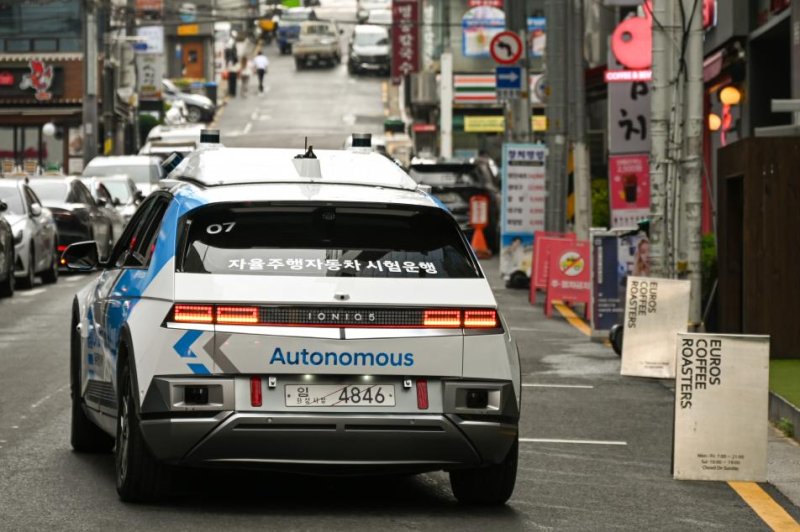
Hyundai's self-driving taxis roll out on the streets of South Korea

Automaker Hyundai brought its Level 4 autonomous RoboRide service to the bustling streets of Gangnam in Seoul on Thursday. Photo by Thomas Maresca/UPI

SEOUL, June 9 (UPI) -- Automaker Hyundai and South Korean officials launched a trial service of self-driving taxis in the busy Seoul neighborhood of Gangnam on Thursday, the latest step forward in the country's efforts to make autonomous vehicles an everyday reality.

The new service, called RoboRide, features Hyundai Ioniq 5 electric cars equipped with Level 4 autonomous driving capabilities. The technology allows the taxis to move independently in real-life traffic without the need for human control, although a safety driver will remain in the car

"A RoboRide vehicle will perceive, make decisions and control its own driving status, while its safety driver will only intervene under limited conditions," Hyundai said in a statement. The carmaker developed the Level 4 technology in-house and partnered with local startup Jin Mobility on a ride-hailing app for the service.

Seoul Mayor Oh Se-hoon and South Korean Minister of Land, Infrastructure and Transport Won Hee-ryong took the inaugural rides Thursday, driving around 2.1 miles on the streets of the business and commercial hub of Gangnam.

Oh told reporters afterward that the experience was "so natural that it is almost impossible to distinguish the difference between humans driving and self-driving."

He said the trial will provide crucial real-world data for the cutting-edge self-driving technology.

"In complex transportation environments like Gangnam, there are many people who drive unpredictably, such as taxis and delivery motorcycles," Oh said. "After data accumulates about how self-driving cars respond and avoid accidents, we can compare pros and cons accurately and scientifically. So today is the beginning."


Won said Level 4 driving will be fully commercialized in South Korea in 2027 and that autonomous vehicles "will become part of ordinary life everywhere in the country by 2030."

"Gangnam is one of the most congested areas in the world," the minister said during the launch event. "This trial will demonstrate South Korea is on the way to being a leader in autonomous driving."

The RoboRide pilot test will initially run with two cars carrying pre-registered passengers on 30 miles of roads in Gangnam. In August, it will begin full service with four cars, allowing users to hail a ride with a mobile app. Officials said more vehicles will be added to the fleet and the service area will extend to 47 miles of roads over the course of the year.


Seoul launched a commercial driverless shuttle service that runs along a designated route in the western part of the city last November, and plans to start rolling out self-driving buses next year.


The government is investing about $875 million to build out smart infrastructure to help support the development of Level 4 autonomous driving, Won said Thursday.

The country's private sector also is spending big on future mobility. Hyundai announced last month it would invest $50 billion domestically by 2025 on a wide range of new technologies and businesses from electric chargers and vehicles to self-driving cars to urban air mobility.
UK
Why single out energy companies for windfall tax?


Energy companies are having to pay a one-off tax on their war-fueled profits in many countries. But what about tech firms like Apple and Amazon that benefited massively from pandemic-induced lockdowns not so long ago?


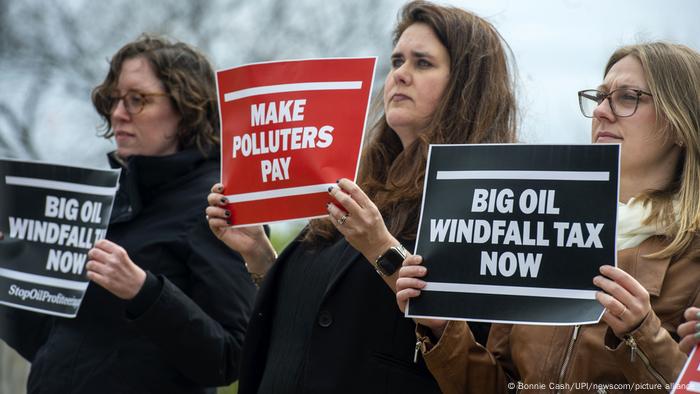
There is a growing clamor to levy windfall taxes on energy firms that are benefiting from higher oil and gas prices

In May, the United Kingdom announced a windfall tax on energy companies that have been pocketing extraordinary profits as Russia's invasion of Ukraine drives up oil and gas prices.

The decision followed similar moves by countries like Italy and Romania on power generators to ensure the industry shared the moolah it's been raking in as a result of the war. Others like the United States and the European Union are also contemplating a tax on the "war-fueled profits" of major energy firms.

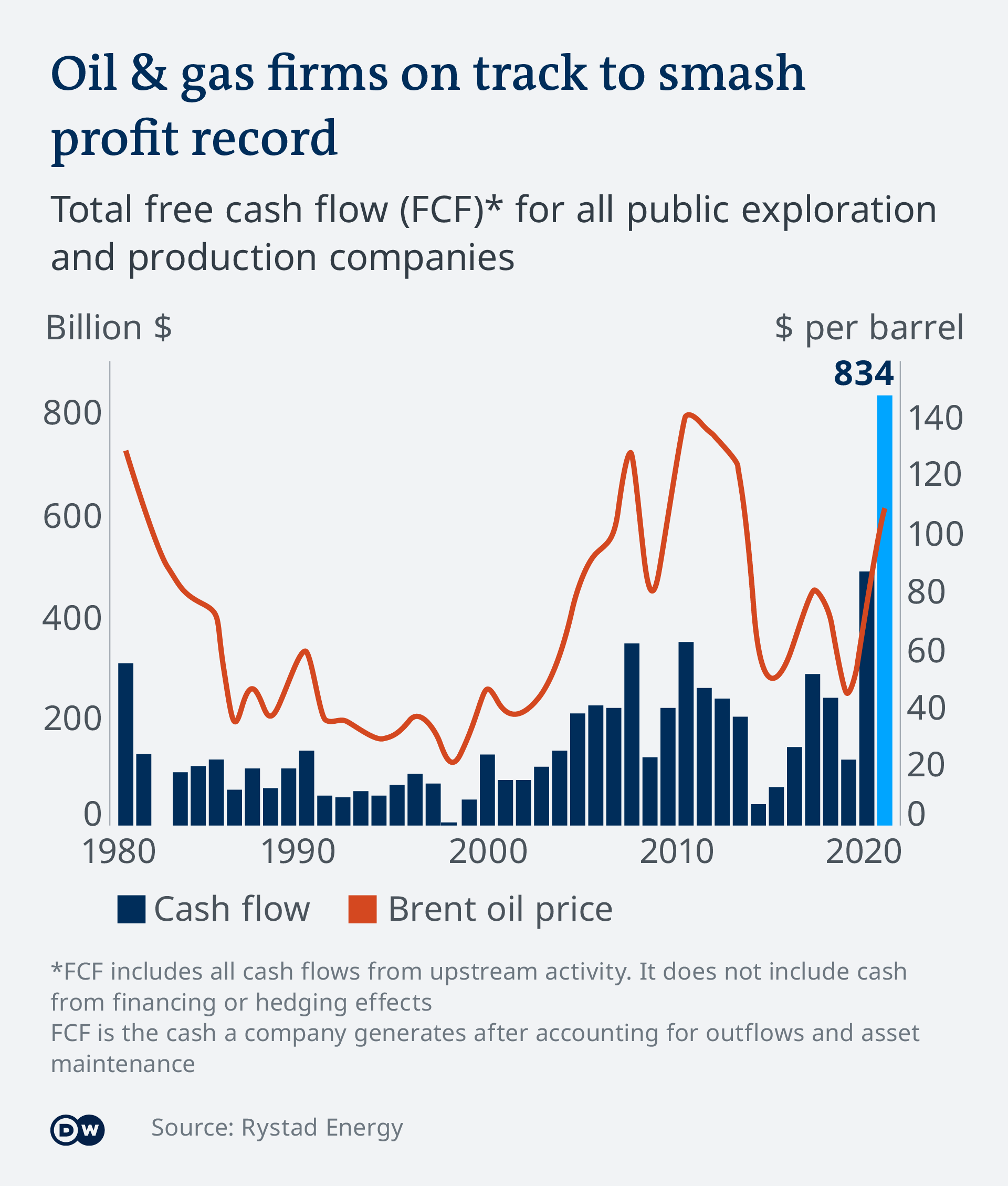
Major oil and gas firms such as BP, Exxon and Shell have found themselves in the dock for reporting massive earnings amid the war that has caused food and energy prices to spiral,compounding consumer misery globally. There is a growing clamor that energy companies part with some of those profits to support efforts by governments, most of them saddled with pandemic-era debt, to help ease the burden on poor consumers.

"This is a very obvious moment for a windfall tax because you have an industry which is making what are clearly supernormal profits at a time when the ordinary people who are the consumers of that industry are facing very high costs," said Alex Cobham, chief executive of the Tax Justice Network. "So, doing a one-off redistribution of some of that excess profit in order to reduce the human costs of the price changes makes absolute sense."


What is windfall tax?

A windfall tax is a one-off tax on companies that have seen their profits surge extraordinarily not because of any clever investment decision they've taken or an increase in efficiency or innovation, but simply because of favorable market conditions.

While an economically efficient way to tax companies that have fortuitously struck gold, windfall taxes are despised by the industry. The one-off taxes, which by definition are imposed retrospectively, are seen as arbitrary, fueling uncertainty among businesses about future taxes.

"I'm not a big fan of windfall taxes. It's better to say in advance how much tax you are going to levy in different circumstances and then do it rather than creating sudden one-off surprises in the tax system," Stuart Adam, senior economist at the Institute for Fiscal Studies in London, told DW.

Adam says windfall taxes are 'arguably' unfair to companies that have made investment decisions based on the existing tax system and are then retrospectively told to pay up more, creating an impression of ambiguity and randomness that can discourage investment.

"If you ask people in business or tax professionals what they look for in the tax system, usually at the top of that list is stability and certainty and predictability and windfall taxes move away from that," he said.

"Having said that, I can see the case for doing it. When something like the Russian invasion of Ukraine happens, you can argue that this isn't something we could legislate for in advance. So, it's fair to tax companies retrospectively because they've benefited from a windfall that they did nothing to earn," Adam said.

The German government struggling to wean itself off Russian energy while looking to ease the impact of high energy prices on consumers is also toying with the idea of windfall taxes on energy firms but so far remains split on the issue.

"Such concepts were already being discussed in the 1970s, but have never been implemented," Finance Minister Christian Lindner, who is also the chairman of the pro-business Free Democrats, said in May. "It cannot be clearly identified what an excess profit is and what impact would be associated with it."
Big Tech off the hook

The dash to grab a large pie of the profits of energy firms contrasts with the seeming largesse shown to major technology firms that made a windfall during COVID-19 lockdowns, in other words, they benefited from something they were not responsible for.

E-commerce behemoth Amazon saw its net profit soar more than 80% in 2020 when lockdowns shuttered its small, local brick-and-mortar rivals for months. The iPhone maker Apple benefited from the so-called stay-at-home stocks and posted record sales during the pandemic as people forced indoors used its devices and services to stay connected during the pandemic.

"They [Big Tech companies] have experienced unusual economic success during a period when the state has had to incur large extra costs to support the vulnerable," said Rob Harrison from UK-based Ethical Consumer, which launched a campaign last year calling for a windfall tax on major technology companies.

Cobham from the Tax Justice Network says the failure of governments to tax technology firms' pandemic riches could lead to a public policy headache in the years to come.

"Because we allowed them to capture those huge excess profits and didn't tax them, we've contributed to much less competition in the market. It was pretty hard to challenge Amazon in 2019, in 2022, it's basically impossible," he told DW.

CORONAVIRUS' TOP WINNERS: FROM NETFLIX TO TESLA
In top gear
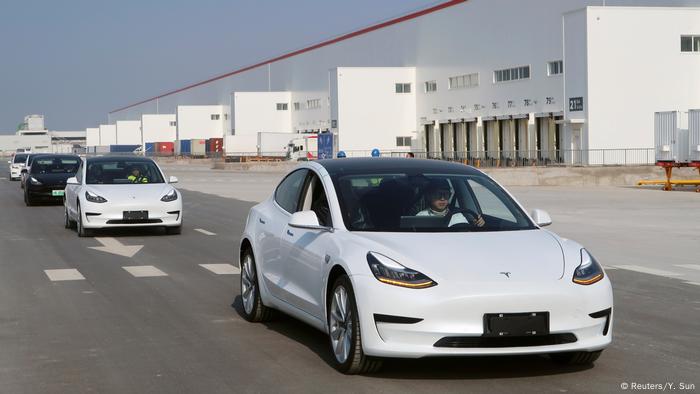
Tesla has emerged as the most valuable automaker amid the pandemic, eclipsing Toyota and Volkswagen, despite selling only a fraction of cars sold by the traditional behemoths. Tesla shares rose more than 100% in the second quarter during which the carmaker's sales topped estimates thanks to a rapid ramp-up in production at its Shanghai plant, which remained largely unaffected by the pandemic.


Big Tech vs. Big Oil

So, how did the technology firms get away without paying any windfall taxes?

Cobham puts it down to effective lobbying by large technology firms as well as different priorities during the pandemic and now. Back then, people were more worried about their safety, vaccines and lockdowns than how much profit tech firms were making, he said.

"The link is genuinely much clearer now. These energy companies are making enormous profits and I can't pay my energy bill to keep my house warm. It's just much more tangible than I am suffering a lockdown and Amazon is making a lot of money. So, the pressure on politicians to act now is just much greater."

Adam from the Institute for Fiscal Studies said levying windfall taxes on technology firms wouldn't have been as simple as it's in the case of energy firms.

"With the oil and gas producers, it's relatively straightforward to identify which companies you're talking about, profits from which activities and associate that with a specific event in the world that's given rise to these windfall profits," he said. "During the pandemic, it's much harder to pin down exactly which profits of which companies you would want to tax for what period and why."

However, Adam stressed it would have been unfair to target only tech firms for their profits during the pandemic as there were plenty of other companies, including vaccine makers like Pfizer and BioNTech and medical equipment producers, that made loads of money.

"I might have just increased the general corporate tax rate on profits made during that period on the basis that profits made during the pandemic were less likely to reflect investment, innovation, or customer service and more likely to reflect brute luck," Adam said.

Edited by: Hardy Graupner
30,000 People Have Died Each Day WTO Dragged Its Feet on Vaccine Patents: Oxfam

"If the world had acted immediately then many of these people could still be alive today."


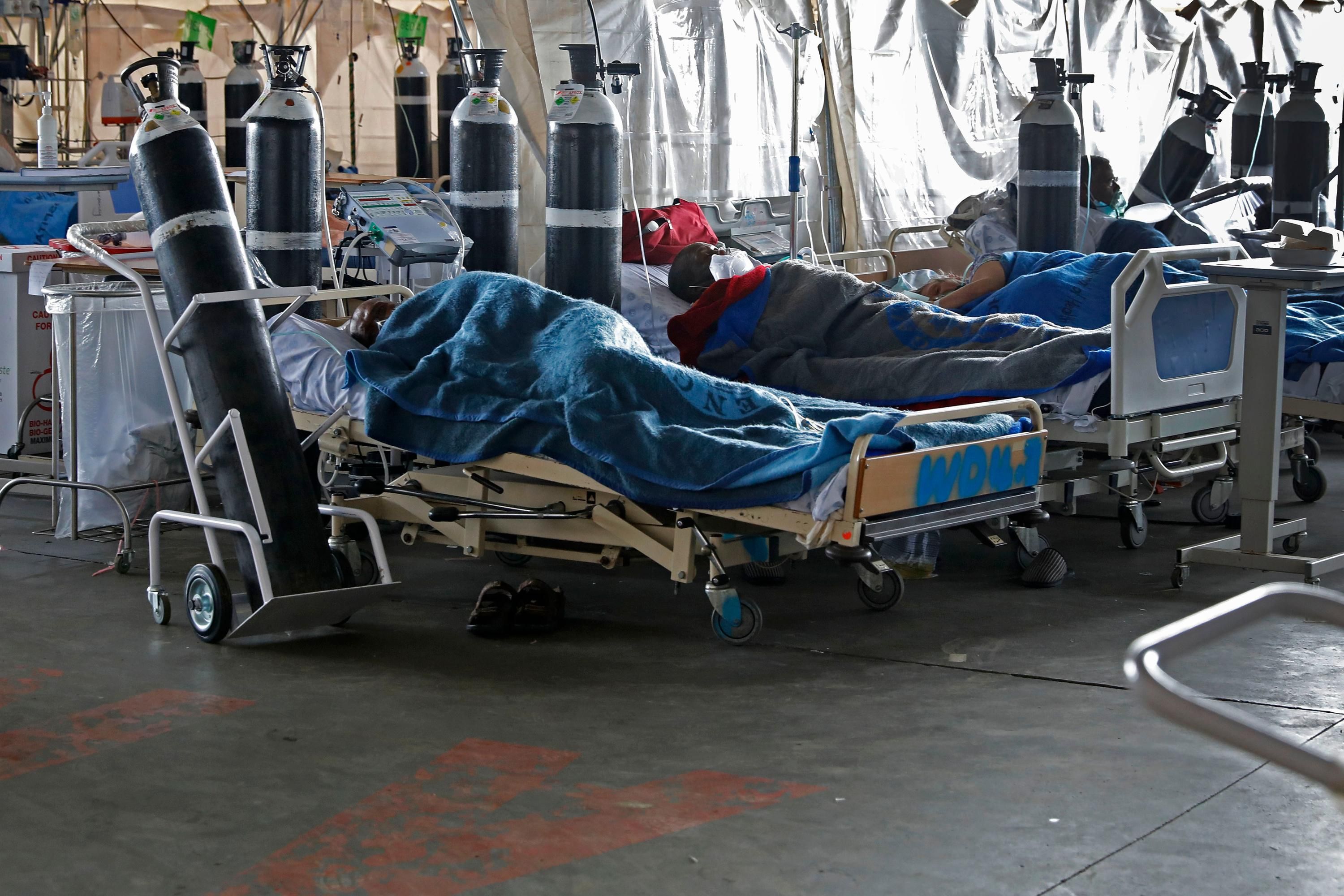
Patients are seen lying on hospital beds inside a temporary ward dedicated to the treatment of possible Covid-19 patients at Steve Biko Academic Hospital in Pretoria, South Africa on January 11, 2021.
(Photo: Phill Magakoe/AFP via Getty Images)

JULIA CONLEY
June 9, 2022

As public health advocates prepared a global day of action to demand an end to Covid-19 vaccine inequity, international campaigners reported that the inaction by the World Trade Organization and several wealthy countries has led to the deaths of nearly 30,000 people per day since talks about widely distributing vaccines began 20 months ago.

"It is incomprehensible that we are still debating whether or not it's a good idea for poorer countries to be able to produce their own vaccines, tests, and treatments for this and any future pandemics."

Since Indian and South African officials first proposed a waiver of intellectual property rights for Covid-19 vaccines, tests, and treatments in October 2020, Oxfam International and the People's Vaccine Alliance reported, 17.5 million people worldwide have died of the disease. The groups based the calculation on The Economist's excess deaths model.

"If the world had acted immediately then many of these people could still be alive today," said Anna Marriott, health policy manager for Oxfam. "Yet, the U.K. and E.U. countries have continually sought to delay and dilute any meaningful outcome at the WTO and have refused to listen to the concerns of poorer countries."

The U.K., E.U., Canada, and Switzerland have refused to back a patent waiver for vaccines, treatments, and tests, blocking low- and middle-income countries from developing their own generic versions of products that are widely available in the U.S. and other wealthy countries.

Oxfam and the People's Vaccine Alliance released their report three days before the WTO Ministerial is set to begin, with global leaders reviewing the functioning of the multilateral trading system.

Officials at the WTO have in recent weeks been discussing an alternative to a patent waiver which would cover vaccines but not tests or treatments, impose new conditions limiting WTO rules that now allow countries to produce medications without patent-holder permission, and exclude entire countries.

The "dangerous and limited alternative" plan being considered, said Oxfam, "will not help producers in lower-income countries as it adds more hurdles preventing poorer countries from producing vaccines."

Allowing tens of thousands of people to die each day represents "outrageous hypocrisy from leaders who said vaccines should be a global public good," said Marriott.

"With the world facing multiple crises on top of Covid, it is incomprehensible that we are still debating whether or not it's a good idea for poorer countries to be able to produce their own vaccines, tests, and treatments for this and any future pandemics," she added.

The People's Vaccine Alliance, which includes Oxfam as a member, is leading several public health and social justice advocacy groups Friday in a global day of action ahead of the ministerial, with the protests titled "Earth to Europe and U.S.: End Covid Monopolies Now!"


While the Biden administration has expressed support for a narrow patent waiver, it has also requested more than $800 billion in Pentagon funding this year, a small percentage of which—just $25 billion—could enable the world to produce eight billion Covid-19 vaccine doses at regional manufacturing hubs in less than a year, according to government watchdog group Public Citizen.

In a letter sent Wednesday to WTO delegates, the People's Vaccine Alliance pointed out that the global trade body drafted the Doha Declaration at the height of the HIV crisis, stating that the WTO Agreement on Trade-Related Aspects of Intellectual Property Rights (TRIPS) "does not and should not prevent members from taking measures to protect public health."

"Without amendments, the current text under negotiation at the WTO is a reversal of the Doha declaration," the coalition wrote.

"We don't want charity; we want solidarity."

Public health officials warn that the failure of wealthy countries to ensure that vaccines are available to all will allow new variants to continue cropping up and causing outbreaks.

"Why should people in lower-income countries be forced to face today's Covid variants with yesterday's vaccines, while rich countries once again monopolize the supply of new vaccines made to protect against new variants?" said Julia Kosgei, policy advisor for the People's Vaccine Alliance.

"We don't want charity; we want solidarity, and we want our rights!" she added. "We call on all governments to finally do the right thing and back the waiving of IP for Covid vaccines, tests, and treatments, for this and any future pandemics."

The deadlock at the WTO has left African officials able to fully vaccinate less than a fifth of the continent's population and has "undermined the trust between the E.U. and countries in Africa," the groups said.

It also "undermines the credibility of the organization," they added, "especially as the global economy is facing the prospect of a recession coupled with rising food and fuel prices."
IMPERIALI$M
Why more European firms are choosing Vietnam over China

A combination of geopolitical tensions and higher costs are pushing large firms to look for alternative production sites. Vietnam's strong economic performance in recent years has drawn the attention of European firms.


While China will remain an essential production site, Vietnam offers an attractive alternative

Vietnam was one of the few Asian countries that did not experience an economic contraction during the coronavirus pandemic in 2020 and 2021. This year,Vietnam's GDP is expected to grow by around 5.5%, according to the World Bank.

Vietnam's economic performance during and after the pandemic has captured the attention of some major European firms.

German automotive supplier Brose, which has 11 factories in China, is currently deciding between Thailand and Vietnam for a new production location.

In December, Denmark's Lego announced it will build a $1 billion (€935 million) factory near the southern business hub Ho Chi Minh City, one of the largest European investment projects in Vietnam to date.

"It currently looks as if, in particular, medium-sized companies are increasingly striving to enter the Vietnam market or are putting their activities out of China on a broader basis," said Daniel Müller, manager at the German Asia-Pacific Business Association.
Why are companies leaving?

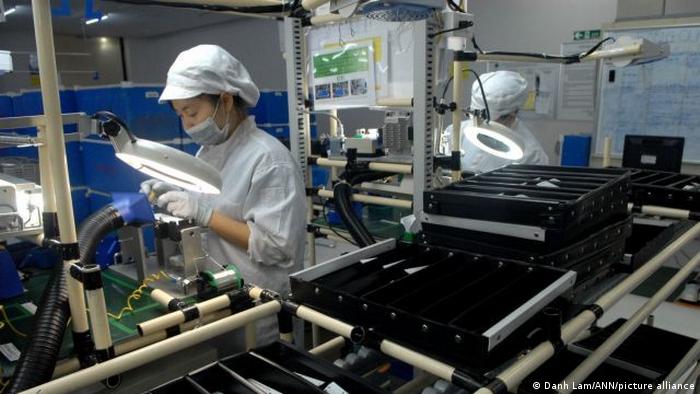
European firms are looking for alternatives to China for several reasons. In recent years, Chinese wages have risen, making China less attractive to low-cost manufacturers.

Average annual wages in China rose from around €5,120 ($5,400) in 2010 to €13,670 in 2020, according to Moody's Analytics.

On the geopolitical front, China's relationship with European governments deteriorated in 2021 when the EU imposed sanctions against China for its treatment of the Uyghur Muslim minority in the Xinjiang region.

Beijing then issued its own sanctions on EU officials and a previously agreed investment pact was put on ice.

In 2022, Beijing's ongoing "zero-COVID" policy has thrown global supply chains into disarray as production sits still in locked-down cities. This has also shaken the confidence of EU firms in China as a reliable production site.

Shanghai has only just recently re-opened after months of intense lockdowns, while parts of Beijing, the capital, have also been closed for months.

All of this has dented the economy and warnings have been raised that China could fall well below its GDP growth targets this year.

In the first three months of 2022, China"s GDP grew by 4.8%, below the official annual target of 5.5%, according to the World Bank.

"Even prior to the pandemic, we have already seen businesses, particularly those in the labor-intensive manufacturing segment, starting to relocate out of mainland China to other lower-cost countries in the region, including Vietnam," Raphael Mok, head of Asia Country Risk at Fitch Solutions, told DW.

At the same time, Vietnam has become a more attractive destination for investors, he added.

Salaries are lower than in China and Vietnam has a fast-growing middle class. The Communist government is also investing heavily in infrastructure.

The EU and Vietnam ratified a free-trade agreement in 2020, which included an investment pact, the EU-Vietnam Investment Protection Agreement (EVIPA). Bilateral trade rose to €49 billion in 2021, up from €20.8 billion in 2012, the year talks began over the EU-Vietnam Free Trade Agreement (EVFTA).

A report by Germany Trade & Invest, a research and advisory platform, points out that these pacts also give European firms easier access to public procurements in Vietnam. This includes public-private partnership projects, a favorite of the local authorities. Under the EVIPA, maximum foreign shareholding in commercial banks increased from 30% to 49%.
Why China is still essential

"Whether Vietnam will 'replace' China as a manufacturing option remains to be seen," said Matthijs van den Broek, of the Dutch Business Association Vietnam (DBAV). "But as an extended or additional investment location, in addition to China, or as part of a wider China-plus-One strategy, is definitely gaining ground," he told DW.

"China is too big and too advanced to not make any part of an Asian strategy," van den Broek added. "Vietnam is not yet on par with China as far as education level, skilled labor and infrastructure, and logistics are concerned."

Muller, of the German Asia-Pacific Business Association, noted that European decoupling from China depends largely on where the business is located.

German companies, for instance, are much more reliant on the Chinese market than most other European countries. German exports to China were worth €99 billion in 2020, compared with €19 billion for France, according to OEC data.

"It is still unclear whether German companies, especially the large corporations, will significantly reduce their activities in China," Muller said. "This would be a prerequisite for countries like Vietnam to be able to count on large-scale new investments."

It will also be dependent on the types of industry in question. In the long-term, businesses in higher value-add manufacturing, such as advanced engineering and smart appliances, will still consider mainland China as a production hub due to its supply chains, said Mok.

But lower-margin manufacturing, which requires a low-cost and less sophisticated ecosystem, "will likely continue to shift out of the country to keep production costs low," he added.

According to Muller, if there is a further intensification of geopolitical tensions in the future, "companies will not be able to avoid looking for alternatives to China. Vietnam, he added, "will play a key role in this."

Edited by: Wesley Rahn