Saturday, February 25, 2023

With Human Metalworkers Hard to Come By, Robotic Blacksmiths Step Up


A startup named Machina Labs is using robots to make the kinds of metal components for manufacturers that have often required significant manual work in the past.
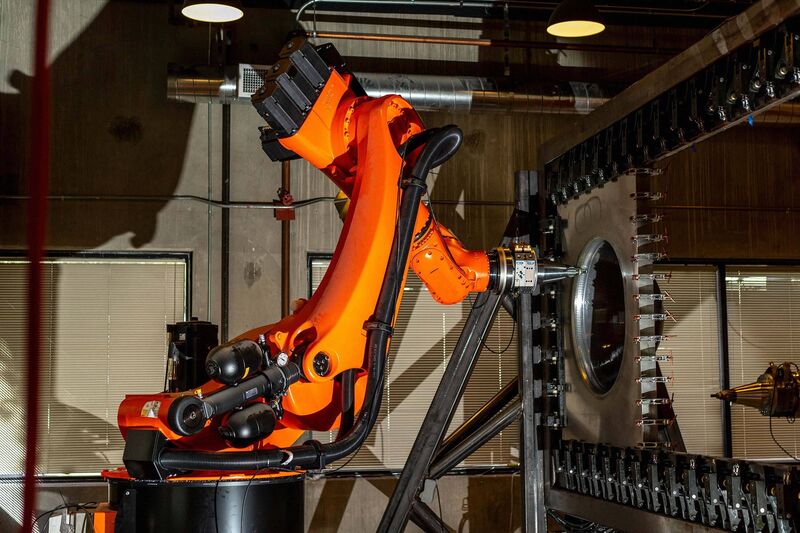

A robot forms metal sheets at Machina Labs in Chatsworth, California.

By Ashlee Vance
February 21, 2023 

A few months ago, I stood in front of a laser scanner that made a digitized file of my head. Using that file as a guide, two gigantic robot arms set to work poking and prodding at a piece of sheet metal until they had replicated every contour of my face in fine detail. While the robots looked large and clumsy, they were able to perform the same type of precision metal shaping that has been done for centuries by skilled craftspeople. In the end, they manufactured a realistic bust I could be proud of, my own genetic limitations notwithstanding.

The bust was the work of Machina Labs, the Chatsworth, California-based startup that made the metalworking system. The company’s ambitions go far beyond doing cute things like reproducing reporters’ faces. Its primary focus is on saving industrial companies time and money by putting a robotic blacksmithing army at their disposal. “I never thought we’d see anything like this,” says Bobby Walden, the owner of Walden Speed Shop, who has spent decades hand-making custom metal parts for cars. Walden has visited the Machina factory and reckons the robots are already good enough to replicate much of what he does, only without the arthritis and back pain. “I’m looking at this robot, and my brain starts going crazy,” he says.
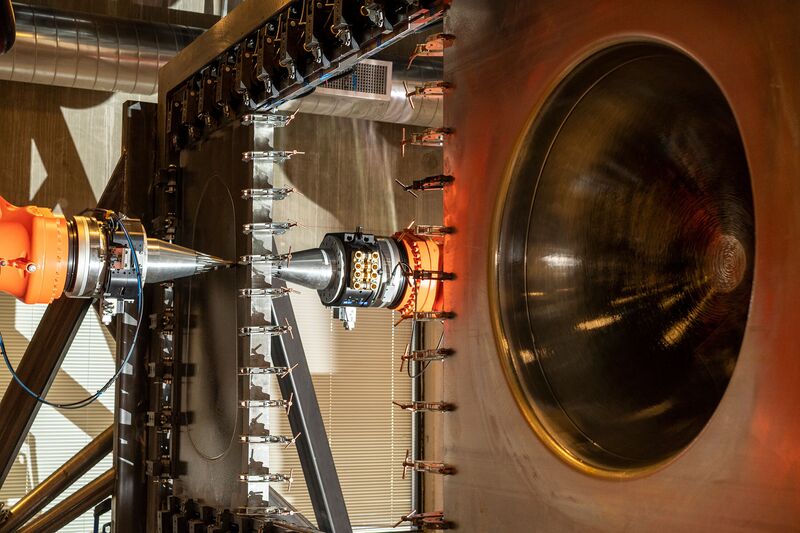

The robots at Machina have single arms that can wield a variety of tools.


Machina founders Edward Mehr and Babak Raeisinia have metalworking experience, both as hobbyists and through careers spent at companies including Space Exploration Technologies Corp. and the aluminum recycler Novelis Inc. They started their current business, which has never publicly discussed its technology in detail, four years ago. The idea was to blend software, sensors and metalworking tools into a system that could make all kinds of metal parts in a matter of hours, serving industries struggling to get parts quickly because of a dearth of skilled craftspeople. Machina has raised $22 million from investors including Innovation Endeavors and Lockheed Martin and counts NASA, the US Air Force and hypersonic airplane startup Hermeus among its customers.

Typically, a maker of planes or cars will spend many millions of dollars and several years creating the molds needed to stamp out metal parts by the thousands. This process often requires multiple prototype molds, each requiring significant investment and time to produce. Machina’s robots are still too slow to replace the mass production portion of this equation. But they’re ideal for the earlier stages of the process, helping companies test their ideas before they commit money to final production.
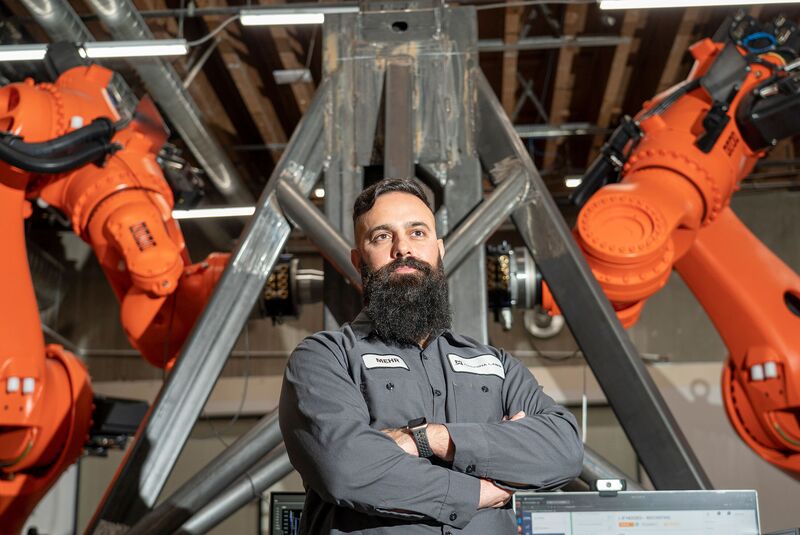

Machina co-founder and CEO Edward Mehr.


Another source of business is companies that need to make a few dozen or a few hundred metal parts—be it for replacement equipment or custom manufacturing—and don’t have the capital to invest in making molds. “I’ve got this line of car brakes, and getting them into production has been a huge pain in the ass,” says Walden, who is not a Machina customer. “It can take a year to get one prototype. Then I have one-off parts, and they can cost $60,000 to $200,000 for the dies and molds. With the robot, I can get the same thing in a couple of weeks and for way less money.”

Iranian-born Mehr, 36, is the company’s chief executive officer. After getting a degree in computer science from the University of Southern California, he worked at rocket makers SpaceX and Relativity Space Inc. and watched them struggle with manufacturing. Both companies were using advanced 3D-printing techniques for some of their most complex hardware, but other parts of manufacturing remained too costly and time-consuming. “I love 3D printing, but the concept here is around having more overarching automation,” Mehr says. “We want to automate things like forging and metal shaping.”

The robots that Machina uses, which have single arms that can wield various tools, are already found on the assembly lines of carmakers and other manufacturers. The company positions two robots on either side of a large sheet of metal. One of them provides support on the back of the metal sheet, while the other applies pressure and twists and turns to form the metal into shapes.
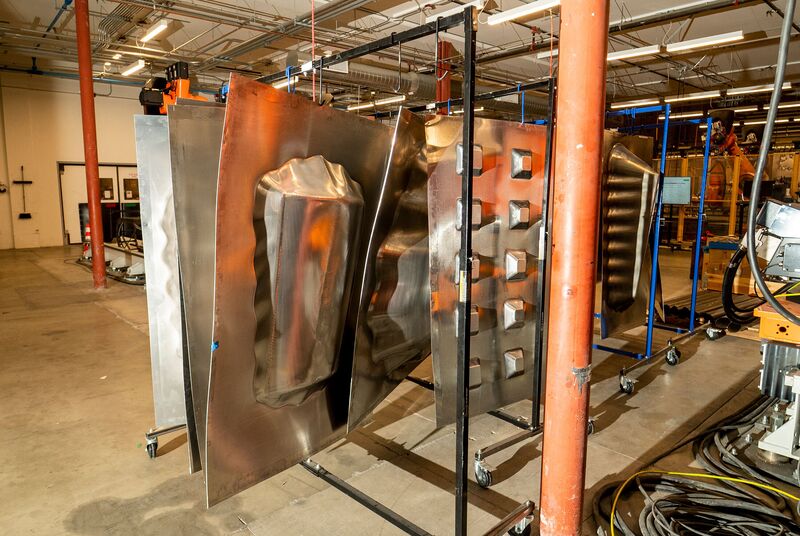

Robotically formed metal shapes at Machina’s facility in Chatsworth.


It takes master craftspeople years to learn how to create strong, polished final products from metal sheets. The difficulty is largely a result of the way atoms inside the metal move around as the material is shaped, causing bulges and other deformations to appear in odd places. Machina’s technology feeds the properties of metal into computer vision and artificial intelligence systems that monitor the shaping process as the robots go to work. Such techniques have been the subject of academic research for decades; Machina has distinguished itself through its ability to refine and commercialize the technology.

It’s still early days for the company, whose offerings start at $2.5 million for two robots, a metal fixture to hold the metal sheets in place, and tools. Mehr and his team also spend a lot of time with customers making sure they’re using the machines right and dealing with any problems that arise.
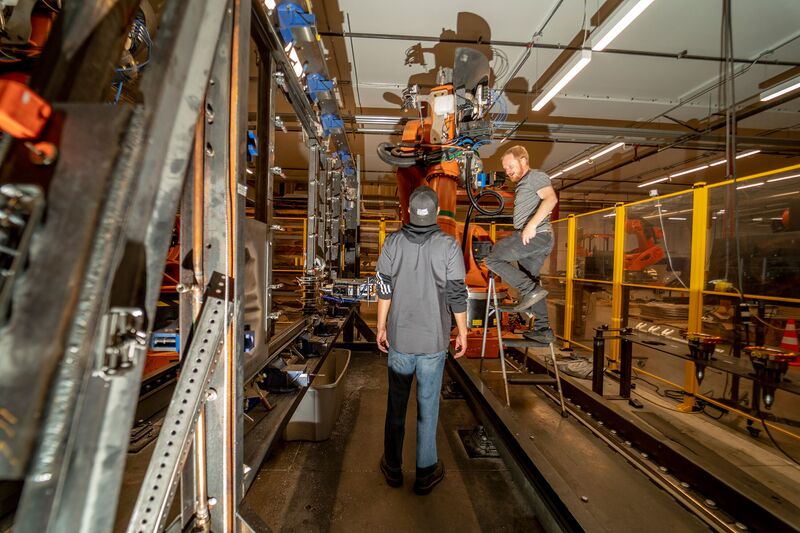

Workers at Machina make adjustments to a robot before it works on a piece of sheet metal.

One customer is Robins Air Force Base in Houston County, Georgia, which has ordered Machina robots to help with the repair of such aircraft as the C-17 Globemaster transport plane and F-15 Eagle fighter jet. Shane Groves, who specializes in robotics and automation for air logistics at the base, has done testing on parts made with the Machina machines. He found that they’re shaped better than what humans can do and that the parts are stronger as a result of the techniques Machina uses to form them.

Groves also says he’s drawn to Machina simply because it can get things done faster. “The main problem we have right now is that companies have plenty of work, and when I ask them for one or two parts, they don’t see the return in tooling everything up for a small order,” he says. “We’re getting quotes for four-year delivery times to get some of the right parts.”

Photographer: Kyle Grillot/Bloomberg


CRIMINAL CAPITALI$M
South Africa: Fallout over power utility CEO's graft claims


Fri, February 24, 2023


JOHANNESBURG (AP) — South Africa’s troubled state-owned power utility Eskom appointed an interim chief executive Friday after a fallout with its outgoing head over a media interview he gave.

Andre de Ruyter alleged ongoing corruption at the company linked to the ruling party, and said there was a lack of will from government to stop the graft and solve the country's electricity crisis.

Africa's most developed economy is experiencing its worst rolling power blackouts in 30 years due to frequent breakdowns at Eskom's aging coal-fired power stations. Those problems are largely blamed on years of corruption and mismanagement at the utility under the ruling African National Congress party.

De Ruyter resigned last year and was scheduled to leave at the end of March. But he was removed from his position immediately after the interview with a private TV station aired on Tuesday night in which he accused the ANC and unnamed government ministers of covering up corruption at Eskom and only being interested in their re-election hopes in 2024.

“They want what will win them the next election, not what will keep the country going for the next two decades,” de Ruyter said of the ANC.

De Ruyter said Eskom, which is deep in debt, was losing $50 million a month to corruption. When asked by his interviewer if Eskom is a “feeding trough” for the ANC, de Ruyter replied: “I would say the evidence suggests that it is.”

The interview led to him being asked to leave immediately and his notice period scrapped. The board appointed its current chief financial officer, Caleb Cassim, to act in the position until a permanent CEO is appointed.

Allegations of corruption and mismanagement have dogged Eskom for years and were recently laid bare during a judicial commission of inquiry, which implicated senior ANC ministers and former President Jacob Zuma.

De Ruyter’s allegations come as South Africa's 60 million people have electricity switched off at their homes and businesses for up to eight hours a day in rolling blackouts. There are warnings the power cuts could be increased to 12 hours a day. Eskom has historically supplied more than 80% of the country's electricity.

Earlier this month, President Cyril Ramaphosa declared a state of disaster to deal with the energy crisis, describing it as an existential threat to the country’s slumping economy.

The measure allows the government to cut red tape in procuring additional electricity capacity on an emergency basis and exempt certain essential services like hospitals from power cuts,. Ramaphosa also announced that he would appoint a minister of electricity.

In his budget speech this week, the country’s finance minister announced the government would guarantee about $13 billion of Eskom’s total debt of $23 billion.

The Democratic Alliance, the largest opposition party, described de Ruyter as a “national hero” for speaking out about corruption at Eskom, which has lost billions to graft over the years.

ANC Secretary General Fikile Mbalula criticized de Ruyter and challenged him to produce proof of his corruption allegations against the party and report it to law enforcement authorities.

De Ruyter claimed last year that he had survived an attempt on his life when someone slipped cyanide into his coffee a day after he had submitted his resignation as Eskom CEO. He has said that Eskom has become a target for organized crime syndicates as well as corrupt politicians because of the massive amounts of money it receives from government and other sources.

Mogomotsi Magome, The Associated Press

South African Minister Gordhan Labels Ex-Eskom CEO a Green Globetrotter

Paul Vecchiatto and Paul Burkhardt
Fri, February 24, 2023


(Bloomberg) -- The South African minister who oversees state power utility Eskom Holdings SOC Ltd. accused its former Chief Executive Officer Andre de Ruyter of spending too much time promoting a transition to green energy and paying inadequate attention to fixing its broken coal-burning plants.

De Ruyter spent three turbulent years at the helm of Eskom, during which he struggled to end rolling blackouts that have crippled the economy or get its shaky finances back on track. He abruptly left the company this week after giving a television interview in which he accused unidentified members of the governing African National Congress of stealing from the utility.

Public Enterprises Minister Pravin Gordhan, who has political oversight of Eskom, stood by De Ruyter’s campaign to fight graft and thanked him for his “sacrifice and resilience” after he first announced in December that he would resign after serving three-months’ notice. But De Ruyter’s disparaging remarks struck a nerve within the ANC, which has called on him to provide proof, and alienated his main political advocate.

“What Mr. De Ruyter effectively said was that all of us in government are idiots and that stirred the backlash,” Gordhan said in an interview. “He did not pay the attention to Eskom’s generation that he should have, and instead swanned around the world looking at renewables.”

De Ruyter attended United Nations climate change conferences and played a key role in helping South Africa secure $8.5 billion in funding from rich nations to help reduce it reliance coal, the dirtiest fossil fuel, which is used to generate more than 80% of South Africa’s electricity.

With outages hitting unprecedented levels, De Ruyter failed to prioritize correctly and “did not sweat Eskom’s assets as he should have,” Gordhan said. “The main focus by government will now be to do just that.”

De Ruyter declined to comment.

Eskom Chairman Mpho Makwana meanwhile also accused De Ruyter of behaving “reprehensibly” by going public with his allegations against the ANC, saying he never raised most of them with the utility”s board.

But lobby groups Business Unity South Africa and Business Leadership South Africa came to the former CEO’s defense, saying his accusations “require an urgent response from our government and appropriate agencies of state to ensure that the truth is uncovered and appropriate action taken.”

Eskom appointed Chief Financial Officer Calib Cassim as interim CEO on Friday. De Ruyter’s comments may make it difficult to attract the caliber of person needed to replace him on a permanent basis, “but that search is continuing,” Gordhan said.

A $14 Billion Bailout For Eskom Leaves South African Power Crisis Unresolved

Paul Burkhardt and S'thembile Cele
Thu, February 23, 2023 


A $14 Billion Bailout For Eskom Leaves South African Power Crisis Unresolved

(Bloomberg) -- A 254 billion-rand ($14 billion) state bailout for South Africa’s cash-strapped power utility will help steady its finances, but won’t immediately improve its operations or alleviate an electricity shortfall that’s crippling the economy.

The three-year debt-relief plan for Eskom Holdings SOC Ltd., announced in Finance Minister Enoch Godongwana’s budget speech on Wednesday, is contingent on the company bringing in private operators to help run its plants and transmission network and meeting other performance criteria. Those measures will take months or even years to bear fruit, with the National Treasury warning that rolling blackouts that began in 2008 will persist until at least the end of 2024.

The extent of the energy crisis was on stark display on Tuesday, with Eskom cutting a record 7,000 megawatts of capacity from the national grid to prevent its collapse — the 115th straight day it has instituted outages. The following evening, the utility said Chief Executive Officer Andre de Ruyter would leave his post immediately, rather than at the end of next month as previously planned. The announcement came shortly after he criticized the government and the ruling African National Congress over corruption.

Power shortages will only gradually ease as Eskom’s near-monopoly dwindles and companies and households install more of their own generation capacity, said Lumkile Mondi, an economics lecturer at Johannesburg’s University of the Witwatersrand.

“South Africa as an investor destination, forget it,” he said. “We’re in this period of slow growth for many, many years to come.”

There are manifold reasons for Eskom’s decline, including delays in securing government go-ahead to add new capacity, massive cost overruns at two new coal-fired plants, continuous management upheaval and political interference in its operations.

A lack of funds and spare capacity also forced the utility to scale back on maintenance, which has exacerbated plant breakdowns and outages. And it has fallen victim to theft and graft, with De Ruyter estimating that 1 billion rand is being stolen from its coffers each month, often by people affiliated with the ANC.

Responding to De Ruyter’s allegations, ANC Secretary-General Fikile Mbalula said the party’s lawyers would write to the former CEO demanding that he prove or retract his allegations. He also accused De Ruyter of failing to get a handle on the nation’s energy crisis.

On Feb. 9, President Cyril Ramaphosa announced plans to name an electricity minister to spearhead the response to the blackouts, but an appointment has yet to be made. The government also hasn’t clarified whether Eskom will continue to answer to the public enterprises ministry or be shifted to the energy ministry — a move the ANC has approved but which Godongwana says will complicate the disbursement of debt relief.

Ramaphosa is still considering those matters, along with making changes to his cabinet, said Mbalula.

“He is not a fanatic of doing things just for the sake of doing it and for populist stances,” Mbalula said. “He doesn’t take quick decisions, he applies his mind and when he takes decisions you can be confident in those decisions.”

While cabinet appointments are the president’s prerogative, Eskom’s board should have moved with greater haste to find a replacement for De Ruyter, who announced his intention to quit in mid-December after three years on the job, according to Godongwana. The board will meanwhile have to ensure the utility meets all its obligations to qualify for the debt relief, and if it doesn’t “heads will have to roll,” he said.

Public Enterprises Minister Pravin Gordhan on Thursday said the appointment of an acting CEO is being finalized, and an announcement will be made in due course to ensure there isn’t a leadership vacuum.

Some Eskom investors are giving the government the benefit of the doubt for now, with the yield on the utility unsecured 2028 notes dropping 90 basis points since Tuesday.

“While there is some execution risk, we believe it seems to be a credible plan that — if executed with ruthless focus and urgency — can provide Eskom with a path to return to financial and operational sustainability,” said Olga Constantatos, head of credit at Cape Town-based Futuregrowth Asset Management, which oversees about $11.3 billion in fixed-income investments. The budget documents indicate there is government recognition that “a different approach is needed, which we view as positive,” she said.

--With assistance from Colleen Goko.

Measuring 6,000 African cities: Double the population means triple the energy costs

Peer-Reviewed Publication

COMPLEXITY SCIENCE HUB VIENNA

Shape of nine African cities of similar size 

IMAGE: THE HORIZONTAL AXIS CORRESPONDS TO THE ELONGATION OF A CITY, AND THE VERTICAL AXIS TO ITS SPRAWL. KADUNA HAS THE MOST COMPACT URBAN FORM, CONTRIBUTING TO HAVING SHORTER COMMUTING DISTANCES. view more 

CREDIT: © COMPLEXITY SCIENCE HUB

Using a new dataset, Rafael Prieto-Curiel of the Complexity Science Hub and colleagues analyzed the coordinates and surface of 183 million buildings in nearly 6,000 cities across all 52 countries in Africa. With their model, they quantify the shape of cities. Thus, they show that if a city's population doubles, the energy demand associated with commuting triples. These results clearly show how important it will be to plan fast-growing cities in a sustainable way.


“Our model allows us to estimate African cities’ transport requirements and energy needs with a never before seen accuracy,” Prieto-Curiel, researcher at the Complexity Science Hub, says. 

Together with Jorge E. Patino from Universidad EAFIT and BrilĂ© Anderson from OECD, he studied a recently published dataset from Google AI. With this unprecedented data the researchers measured the mean distance between buildings in 6.000 African cities and used it as a proxy for energy demand related to mobility. Africa is an exceptional place for this research. By comparison, there are less than 400 metropolitan areas in the US. In addition, African cities will grow faster than ever before.

“Based on the distance between buildings, we calculated the expected distance and time to travel for every single person within a city,” Prieto-Curiel explains. Their result: double the population means triple the energy costs. After all, more people are traveling longer distances.  

LARGE CITIES TEND TO BE ROUND, SMALL CITIES SAUSAGE-SHAPED

This tripling effect is due in part to urban morphology and how cities grow. “Constructing bigger buildings (area and height) near the city center reduces the commuting distance, as well as the energy consumption of the city and helps preserve green spaces,” Prieto-Curiel explains one of their findings. 

The team also learned that big cities tend to be shaped differently than smaller cities. As they grow, larger cities tend to become slightly rounder and more compact. Smaller cities tend to have more of a sausage shape. 

SAUSAGE SHAPE INCREASES POLLUTION

Imagine two cities that both have the same number of inhabitants. If one is round and compact, then objects and people are relatively close to each other. If the other one is shaped like a sausage, then some people must spend more time and energy to get from one side to the other. The problem with this is not only time, but also pollution. So a sausage-like city causes more pollution because of its shape.

"Frequently, cities grow on the periphery as more housing is built in areas where the city is growing. This type of urban growth increases commuting distances and makes it more difficult to provide enough services for the new houses, such as sewage and electricity,” Prieto-Curiel explains.  

A LOOK INTO THE FUTURE OF AFRICA

In many parts of the world extensive urbanization has already taken place. In Africa, the next three decades will bring profound changes, forecasts indicate. Currently, cities like Cairo, Lagos, Luanda, Dar es Salaam, Nairobi and Addis Ababa are home to millions of people, and they are expected to increase their size considerably within the next decades. 

By 2050, Africa will have an additional 950 million people living in cities, up from 574 million people in 2015,” Prieto-Curiel states. More buildings - apartments, schools, hospitals, etc. - will have to be constructed. 

Where and how these new buildings are built matters greatly because today's decisions will be with us for decades to come. And the resulting morphology of cities impacts permanently on a city's energy needs. “We should plan especially those cities that will grow extremely fast in the next twenty years with special consideration. They must be extremely resilient to many challenges,” Prieto-Curiel emphasizes.

COMBINING ENORMOUS AMOUNTS OF DATA

To conduct this study, the research team brought together massive amounts of data: A new dataset of Google AI provided coordinates of every single building in Africa's cities. In combination with data from Africapolis, the German Aerospace Center and OpenStreetMap the researchers measured the shape of nearly 6000 cities across Africa. 

They then constructed a set of indicators. Indicators like the number of buildings, their constructed surface, the amount of space used by the city center, how elongated or compact a city is - to name just a few. These indicators make all cities comparable for the first time - large and small.

"Until now, we only had satellite images, but it was very difficult to manipulate these photos. Especially in smaller cities, it's not so easy to identify what a building is,” Prieto-Curiel explains. Google AI's new open access data set has changed that. Using a machine learning process, it can define the vertices of each building as coordinates. Like a city made of Lego bricks.

NEW DATA, NEW CHANCES

Much of the collective knowledge of urban forms in African cities and future energy needs was based on samples of only a few cities. Advancements like the data used for this study and its findings are critical to the future of cities. Only in this way can we put urbanization on a path of resilience and sustainability in the coming decades.

“Our results show that future energy needs for transport could be incredibly cumbersome if trends continue,” Prieto-Curiel states. Designing compact, dense, and better-connected urban forms will help cities be more sustainable and liveable. Particularly in the case of African cities that will experience rapid growth within the next few decades.


FIND OUT MORE

The study “Scaling of the morphology of African cities” has been published in the journal Proceedings of the National Academy of Sciences (PNAS).


ABOUT THE COMPLEXITY SCIENCE HUB

The mission of the Complexity Science Hub (CSH Vienna) is to host, educate, and inspire complex systems scientists dedicated to making sense of Big Data to boost science and society. Scientists at the Complexity Science Hub develop methods for the scientific, quantitative, and predictive understanding of complex systems.

The CSH Vienna is a joint initiative of AIT Austrian Institute of Technology, Central European University CEU, Danube University Krems, Graz University of Technology, Medical University of Vienna, TU Wien, VetMedUni Vienna, Vienna University of Economics and Business, and Austrian Economic Chambers (WKO). https://www.csh.ac.at

Study finds air pollution exposure linked to Parkinson’s risk, identifies U.S. hot spot

Mississippi-Ohio River Valley has higher rates of disease

Meeting Announcement

AMERICAN ACADEMY OF NEUROLOGY

MINNEAPOLIS – Living in areas of the United States with higher levels of air pollution is associated with an increased risk of Parkinson’s disease, according to a preliminary study released today, February 23, 2023, that will be presented at the American Academy of Neurology’s 75th Annual Meeting being held in person in Boston and live online from April 22-27, 2023.

The study looked at fine particulate matter, PM2.5, which is less than 2.5 microns in diameter. Fine particles come from motor vehicle exhaust, the burning of fuels by power plants and other industries and forest and grass fires.

“We used geographic methods to examine the rates of Parkinson’s disease across the United States and compared those rates to regional levels of air pollution,” said study author Brittany Krzyzanowski, PhD, of the Barrow Neurological Institute in Phoenix, Arizona. “We found a nationwide association between Parkinson’s disease and air pollution exposure, with people exposed to the highest levels of fine particulate matter having an increased risk of Parkinson’s disease compared to people exposed to the lowest levels. We also identified a Parkinson’s disease hot spot in the Mississippi-Ohio River Valley, which is a region that has some of the highest levels of fine particulate matter pollution in the nation.”

The study involved more than 22.5 million people enrolled in Medicare in 2009. Of this group, researchers identified 83,674 people with Parkinson’s disease. Researchers mapped where study participants lived across the U.S. and calculated the rates of Parkinson’s disease for various regions.

Researchers also calculated average air pollution exposure levels for study participants by using the ZIP codes and counties where they lived as well as an air pollution data source on average annual concentrations of fine particulate matter.

Researchers then divided participants into four groups based on average exposure to air pollution. People in the highest exposure group had an average annual exposure of 19 micrograms per cubic meter (µg/m3) of fine particulate matter. People in the lowest exposure group had an average annual exposure of five µg/m3.

In the highest exposure group, 434 new Parkinson’s disease cases developed per every 100,000 people compared to 359 cases in the lowest exposure group.

After adjusting for other factors that could affect the risk of Parkinson’s, such as age, smoking, and use of medical care, researchers found an association between Parkinson’s disease and average annual exposure to fine particulate matter, with people in the highest exposure group having a 25% increased risk of Parkinson’s disease compared to people in the lowest exposure group.

For geographic analysis, researchers divided fine particulate matter exposure into 10 levels.

Researchers found the strongest association between air pollution and Parkinson’s disease in the Rocky Mountain region, which includes Lake County, Colorado, which is southwest of Denver, and its surrounding counties. The risk for Parkinson’s disease in those counties increased by 16% when moving up from one level of fine particulate matter exposure to the next level.

Air pollution was also associated with higher rates of Parkinson’s disease in the Mississippi-Ohio River Valley hot spot, which includes Tennessee and Kentucky, but the association was weaker in these areas, with a 4% increase in risk when moving up one level of fine particulate matter exposure to the next.  

“Finding a relatively weaker association where we have some of the highest Parkinson’s disease risks and fine particulate matter levels in the nation is consistent with the threshold effect we observed in our data,” said Krzyzanowski. “In the Mississippi-Ohio River Valley, for example, Parkinson’s disease risk increases with increasing air pollution exposure until about 15 µg/m3 of fine particulate matter, where Parkinson’s disease risk seems to plateau.”

Krzyzanowski said, “By mapping nationwide levels of Parkinson’s disease and linking them to air pollution, we hope to create a greater understanding of the regional risks and inspire leaders to take steps to lower risk of disease by reducing levels of air pollution.”

A limitation of the study was that it focuses on fine particulate matter, which contains a variety of airborne pollutants, some of which may be more toxic than others. Krzyzanowski noted that air pollution is also associated with a variety of other health risks, including dementia, that might diminish the likelihood of a Parkinson’s diagnosis, and this may explain the relatively weaker association between Parkinson’s disease and particulate matter in the Mississippi-Ohio River Valley.

The study was supported by the U.S. Department of Defense, the National Institutes of Health including the National Institute of Environmental Health Sciences, and The Michael J. Fox Foundation for Parkinson’s Research.

Learn more about Parkinson’s disease at BrainandLife.org, home of the American Academy of Neurology’s free patient and caregiver magazine focused on the intersection of neurologic disease and brain health. Follow Brain & Life® on FacebookTwitter and Instagram.

When posting to social media channels about this research, we encourage you to use the American Academy of Neurology’s Annual Meeting hashtag #AANAM.

The American Academy of Neurology is the world’s largest association of neurologists and neuroscience professionals, with over 38,000 members. The AAN is dedicated to promoting the highest quality patient-centered neurologic care. A neurologist is a doctor with specialized training in diagnosing, treating and managing disorders of the brain and nervous system such as Alzheimer’s disease, stroke, migraine, multiple sclerosis, concussion, Parkinson’s disease and epilepsy.

For more information about the American Academy of Neurology, visit AAN.com or find us on FacebookTwitterInstagramLinkedIn and YouTube.

Prioritise tackling toxic emissions from tyres, urge Imperial experts

Reports and Proceedings

IMPERIAL COLLEGE LONDON

Imperial experts are calling for more to be done to limit the potentially harmful impact of toxic tyre particles on health and the environment. 

The researchers, from Imperial College London’s Transition to Zero Pollution initiative, warn that even though electric vehicles remove the problem of fuel emissions, we will continue to have a problem with particulate matter because of tyre wear.  

Six million tonnes of tyre wear particles are released globally each year, and in London alone, 2.6 million vehicles emit around nine thousand tonnes of tyre wear particles annually.  

Despite this, research on the environmental and health impacts of tyre wear has been neglected in comparison to the research and innovations dedicated to tackling fuel emissions. The Imperial researchers say that the effect of new technologies on the generation and impact of tyre wear should be a priority.  

In a new briefing paper, a multidisciplinary group of Imperial experts including engineers, ecologists, medics, and air quality analysts have called for as much investment into tyre wear research as there is for reducing fuel emissions – and for understanding their interactions. 

Lead author Dr Zhengchu Tan, of Imperial’s Department of Mechanical Engineering, said: “Tyre wear particles pollute the environment, the air we breathe, the water run-off from roads and has compounding effects on waterways and agriculture. Even if all our vehicles eventually become powered by electricity instead of fossil fuels, we will still have harmful pollution from vehicles because of tyre wear. 

“We urge policymakers and scientists to embark on ambitious research into tyre wear pollution to fully understand and reduce their impacts on biodiversity and health, as well as research to reduce the generation of these particles.” 

Transition to Zero Pollution is an Imperial College London initiative which aims to build new partnerships between research, industry, and government to help realise a sustainable zero pollution future. 

Professor Mary Ryan, Vice Provost (Research and Enterprise) at Imperial College London, and a co-author on the briefing paper, said: “Safeguarding our planet and the health of future generations requires us to look not just at a problem from a single perspective, but to take a systems level approach. That’s why we need to look beyond just carbon and to consider human-made pollution in all its forms.  

“Electric vehicles are a crucial step forward to decarbonise transport, but we need to look at the big picture too. Some are concerned that electric vehicles tend to be heavier, which might increase tyre wear.  This is exactly why Imperial College London is driving a holistic, joined-up approach to sustainability challenges. 

“We will continue to leverage the full strength of our research and influence to find meaningful solutions and help realise a sustainable, zero pollution future.” 

In the briefing paper, the researchers discuss how tyre wear leads to these particles, where the particles end up, their potential effects on people and planet, and why we must act now.  

Tyre wear particles 

As tyres break down they release a range of particles, from visible pieces of tyre rubber to nanoparticles. Large particles are carried from the road by rain into rivers, where they may leach toxic chemicals into the environment, whilst smaller particles become airborne and breathed in. They are small enough to reach into the deep lung.  

These particles may contain a range of toxic chemicals including polyaromatic hydrocarbons, benzothiazoles, isoprene, and heavy metals like zinc and lead. 

Environmental effects 

Particulate matter from tyre wear is a significant source of ‘microplastics’ in rivers and oceans, and tyre wear in cities could pose up to a four-fold greater risk to the environment than other microplastics. 

While existing technological interventions, such as filters, and environmental policies could help to control our ecological footprint, there are huge gaps in our knowledge, understanding, and ability to forecast the impacts of tyre wear pollution. 

Co-author Dr Will Pearse, from Imperial’s Department of Life Sciences, said: “Tyre waste does not naturally degrade and instead builds up in the environment, and may interact with other pollutants as well as biological organisms. Our gaps in understanding make further research and development of new solutions vital so we can limit all types of vehicular pollution.” 

Health effects 

The impact of tyre wear particles on human health is an increasing cause for concern, and the full long-term effects on our health urgently require more research. 

There is emerging evidence that tyre wear particles and other particulate matter may contribute to a range of negative health impacts including heart, lung, developmental, reproductive, and cancer outcomes. 

Co-author Professor Terry Tetley of Imperial’s National Heart and Lung Institute said: “We are growing increasingly concerned by the impact of tyre wear on human health. As some of these particles are so small they can be carried in the air, it’s possible that simply walking on the pavement could expose us to this type of pollution. It is essential that we better understand the effect of these particles on our health.” 

Shifting gear 

The researchers argue that reducing tyre pollution should be seen as a critical part of making transport cleaner and more sustainable, alongside reductions in CO2 and other exhaust emissions. In tackling the climate crisis, we should design better systems and technologies to protect the environment; and research funding, government policy and regulatory frameworks should reflect this. 

The report authors call for policymakers and scientists to investigate the complex problems related to tyre-wear pollution, from the basics of wear-particle production, to understanding how these particles affect the health of people and the planet. Potential innovation solutions include particle capture technologies, new advanced materials, and disruptive business models that encourage different transport choices. These need to be coupled to clear policy and regulation and to a broader discussion around urban transport systems.  

The research efforts, they say, should include the following: 

  • Establishing standardised ways of measuring environmental tyre wear levels and their toxicity. 

  • Reducing harm to land and water species and in humans by tightening limits on the use of harmful components in tyre materials. 

  • Launching new trials to better understand the short and long-term effects of different sized particles on the environment and human health. 

  • Efforts to better understand underlying wear mechanisms and to propose wear mitigation strategies such as reducing vehicle weight, using advanced driving techniques, and ensuring tyre materials pass wear resistance regulations. 

ENDS 


Notes to editors: 

  1. To download the  briefing paper see: https://imperialcollegelondon.box.com/s/xep6roua722khctt1q7uhwyez01pfd6b  

  1. This press release uses a labelling system developed by the Academy of Medical Sciences to improve the communication of evidence. For more information, please see: http://www.sciencemediacentre.org/wp-content/uploads/2018/01/AMS-press-release-labelling-system-GUIDANCE.pdf 

  1. About Imperial College London 
    Imperial College London is a global top ten university with a world-class reputation. The College's 22,000 students and 8,000 staff are working to solve the biggest challenges in science, medicine, engineering and business.  

The Research Excellence Framework (REF) 2021 found that it has a greater proportion of world-leading research than any other UK university, it was named University of the Year 2022 according to The Times and Sunday Times Good University Guide, University of the Year for Student Experience 2022 by the Good University Guide, and awarded a Queen’s Anniversary Prize for its COVID-19 response.  

https://www.imperial.ac.uk/  

Association of long-term exposure to particulate air pollution with cardiovascular events

JAMA Network Open

Peer-Reviewed Publication

JAMA NETWORK

About The Study: In this study including 3.7 million adults in California, long-term fine particulate air pollution (PM2.5) exposure at moderate concentrations was associated with increased risks of heart attack, ischemic heart disease mortality and cardiovascular disease mortality. The findings add to the evidence that the current regulatory standard is not sufficiently protective. 

Authors: Stacey E. Alexeeff, Ph.D., of the Kaiser Permanente Division of Research in Oakland, California, is the corresponding author. 

Editor’s Note: Please see the article for additional information, including other authors, author contributions and affiliations, conflict of interest and financial disclosures, and funding and support.

#  #  #

 http://jamanetwork.com/journals/jamanetworkopen/fullarticle/10.1001/jamanetworkopen.2023.0561?utm_source=For_The_Media&utm_medium=referral&utm_campaign=ftm_links&utm_term=022423

About JAMA Network Open: JAMA Network Open is an online-only open access general medical journal from the JAMA Network. On weekdays, the journal publishes peer-reviewed clinical research and commentary in more than 40 medical and health subject areas. Every article is free online from the day of publication.

CTHULHU STUDIES

Scientists record first-ever brain waves from freely moving octopuses

Scientists have figured out how to capture brain activity in octopuses that are awake and moving – a breakthrough step in understanding how the brain controls their behavior.

Peer-Reviewed Publication

OKINAWA INSTITUTE OF SCIENCE AND TECHNOLOGY (OIST) GRADUATE UNIVERSITY

The day octopus, Octopus cyanea, on a coral reef 

IMAGE: THE DAY OCTOPUS, OCTOPUS CYANEA, CAMOUFLAGES ITSELF AGAINST THE CORAL REEF. view more 

CREDIT: KEISHU ASADA

Scientists have successfully recorded brain activity from freely moving octopuses, a feat made possible by implanting electrodes and a data logger directly into the creatures. 

The study, published online in Current Biology on February 23, is a critical step forward in figuring out how octopus’ brains control their behavior, and could provide clues to the common principles needed for intelligence and cognition to occur.  

“If we want to understand how the brain works, octopuses are the perfect animal to study as a comparison to mammals. They have a large brain, an amazingly unique body, and advanced cognitive abilities that have developed completely differently from those of vertebrates,” said Dr. Tamar Gutnick, first author and former postdoctoral researcher in the Physics and Biology Unit at the Okinawa Institute of Science and Technology (OIST).  

But measuring the brainwaves of octopuses has proven a real technical challenge. Unlike vertebrates, octopuses are soft bodied, so they have no skull to anchor the recording equipment onto, to prevent it being removed. 

“Octopuses have eight powerful and ultra-flexible arms, which can reach absolutely anywhere on their body,” said Dr. Gutnick. “If we tried to attach wires to them, they would immediately rip if off, so we needed a way of getting the equipment completely out of their reach, by placing it under their skin.” 

The researchers settled on small and lightweight data loggers as the solution, which were originally designed to track the brain activity of birds during flight. The team adapted the devices to make them waterproof, but still small enough to easily fit inside the octopuses. The batteries, which needed to work in a low-air environment, allowed up to 12 hours of continuous recording. 

The researchers chose Octopus cyanea, more commonly known as the day octopus, as their model animal, due to its larger size. They anesthetized three octopuses and implanted a logger into a cavity in the muscle wall of the mantle. The scientists then implanted the electrodes into an area of the octopus’ brain called the vertical lobe and median superior frontal lobe, which is the most accessible area. This brain region is also believed to be important for visual learning and memory, which are brain processes that Dr. Gutnick is particularly interested in understanding. 

Once the surgery was complete, the octopuses were returned to their home tank and monitored by video. After five minutes, the octopuses had recovered and spent the following 12 hours sleeping, eating and moving around their tank, as their brain activity was recorded. The logger and electrodes were then removed from the octopuses, and the data was synchronized to the video.

The researchers identified several distinct patterns of brain activity, some of which were similar in size and shape to those seen in mammals, whilst others were very long lasting, slow oscillations that have not been described before. 

The researchers were not yet able to link these brain activity patterns to specific behaviors from the videos. However, this is not completely surprising, Dr. Gutnick explained, as they didn’t require the animals to do specific learning tasks. 

“This is an area that’s associated with learning and memory, so in order to explore this circuit, we really need to do repetitive, memory tasks with the octopuses. That’s something we’re hoping to do very soon!” 

The researchers also believe that this method of recording brain activity from freely moving octopuses can be used in other octopus species and could help solve questions in many other areas of octopus cognition, including how they learn, socialize and control the movement of their body and arms. 

“This is a really pivotal study, but it’s just the first step,” said Prof. Michael Kuba, who led the project at the OIST Physics and Biology Unit and now continues at the University of Naples Federico II. “Octopus are so clever, but right now, we know so little about how their brains work. This technique means we now have the ability to peer into their brain while they are doing specific tasks. That’s really exciting and powerful.”   

The study involved an international collaboration between researchers in Japan, Italy, Germany, Ukraine, and Switzerland. 

Octopuses are mollusks, a large evolutionary group to which slugs and snails also belong. Their complex brains, and those of other closely-related cephalopods, like squid and cuttlefish, have evolved separately from vertebrates, and so octopuses are often referred to as alien-like. Here, a day octopus (Octopus cyanea) poses with a Shisa, a creature from Okinawan folklore


A day octopus, Octopus cyanea, sleeps in a tank while its brain activity is recorded. (VIDEO)

OKINAWA INSTITUTE OF SCIENCE AND TECHNOLOGY (OIST) GRADUATE UNIVERSITY

The researchers recorded the brain activity of an octopus for 12 hours. Here, the octopus is in active sleep, a stage in which there are rapid changes in color and texture, as well as fast sucker motion.

https://www.eurekalert.org/multimedia/975264


JOURNAL