Monday, June 05, 2023

NHS staff pay dispute continues following government’s ‘in no way good enough’ pay rise

'Nursing staff are fighting for their patients, and the very future of our NHS – not just for their pay.'
LEFT FOOT FORWARD
Yesterday


The government announced this week that more than a million NHS England staff will receive increased salaries and one-off payments as part of a new pay deal. Employees who are eligible for the Agenda for Change contract, the national pay system for certain NHS staff, including paramedics, nurses, midwives, 999 call handlers, cleaners and safety guards, will receive a 5 percent pay rise. The deal also includes a one-off payment for 2022 and an NHS backlog bonus for 2023, worth between £1,250 and £1,600.

The offer was first announced by health secretary Steve Barclay on May 2. While most unions in England had accepted the offer, Unite and Royal College of Nursing (RCN) members rejected it. When Barclay announced the pay offer last month, Pat Cullen, general secretary of the RCN, called on the health secretary to reopen negotiations, which she said needed to “start off in double figures.”

RCN members who are impacted by the deal are now voting on whether to take further strike action. A ballot on the strike action will close on June 23.

Opposing the deal are members of Unite the Union from the Guy’s and St Thomas’ workforce, including nurses, who commenced a 24-hour walkout on June 2. A separate strike by Unite members working for the Yorkshire Ambulance Service NHS Trust took place on June 2.

RCN executive director for pay Colin Poolman said the pay deal, which was implemented on June 1, was “in no way good enough.”

“Our members have spoken loud and clear – their pay is far from fair and appropriate.

“It in no way matches the value or importance of nursing staff who have experienced a real-terms pay cut for the last decade.

“Nursing staff are fighting for their patients, and the very future of our NHS – not just for their pay,” he added.

Unite national lead officer Onay Kasab shared similar concerns, saying: “The government has nothing to crow about – the pay deal is yet another real-terms pay cut for over a million dedicated and skilled NHS staff.

“The deal does nothing to address the ongoing recruitment and retention crisis which is undermining the NHS and resulting in highly talented staff leaving in droves.

“It is for these reasons that Unite and other NHS unions rejected the deal and why we are escalating industrial action to ensure that the government returns to the negotiating table and makes an offer that meets the needs of NHS staff.”

Gabrielle Pickard-Whitehead is a contributing editor to Left Foot Forward
Image credit – Creative Commons – Tim Dennell
AUSTERITY KILLS
Cameron-Osborne austerity left UK ‘hugely unprepared’ for Covid, says report

NHS left ‘dangerously understaffed’, says TUC – as former PM and chancellor prepare for public hearings

Adam Forrest
Political Correspondent
INDEPENDENT
June 5,2023


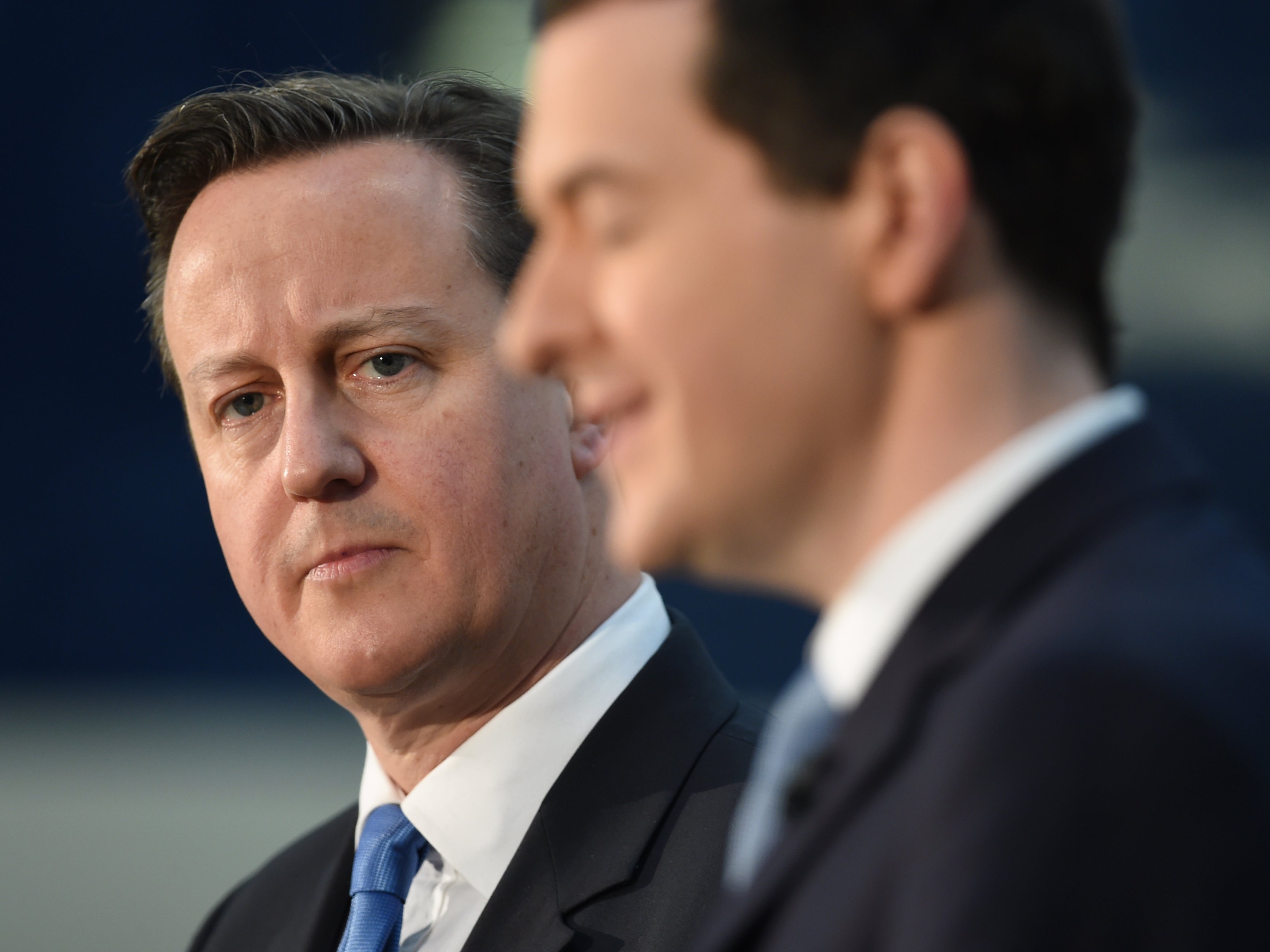
Former PM David Cameron and former chancellor George Osborne
(PA)

The UK was hugely unprepared for the Covid crisis because of years of austerity overseen by David Cameron and George Osborne, according to a new report.

The Trade Union Congress (TUC) said funding cuts reduced the capacity to respond to the crisis, leaving the NHS and social care sector “dangerously understaffed”.

Public services capacity was damaged by “steep cuts” to almost every part of the public sector, the union added.

Safe staffing levels in health and social care were undermined by multiple years of pay caps and pay freezes, which impeded recruitment and increased staff turnover, the report found.

Mr Cameron and Mr Osborne are expected to push back against the claims of the damage done by austerity cut when they appear at the Covid inquiry in the weeks ahead.

Chancellor Jeremy Hunt – who was health secretary under the coalition government – is also set to give evidence at hearings on preparedness that start on 13 June.

The report was published ahead of a joint press conference with the Covid-19 Bereaved Families for Justice group on Monday about the lessons they believe must be learned through the UK Covid-19 Inquiry.

In 2020 when the coronavirus pandemic began, spending per capita was lower than in 2010 in social care, transport, housing, childcare, schools, higher education, police, fire services, and environmental protection, according to the TUC.

It claimed this limited the ability of public services to contribute effectively to civil contingencies and to continue essential activities effectively, such as children’s education.

The report added that during the pandemic, when workplace risks multiplied, workplace inspections and enforcement notices fell to an all-time low. Funding for the Health and Safety Executive was 43 per cent lower in 2021/22 than in 2009/10 in real terms, it claimed.


NHS was left damaged by ‘steep cuts’, says TUC
(Getty)

TUC general secretary Paul Nowak said learning lessons meant taking “an unflinching look at the choices made by our leaders in the years before the pandemic” – saying funding cuts put NHS staff levels “in the danger zone”.


Mr Nowak said: “Cuts to social security pushed many more people below the poverty line, leaving them more vulnerable to infection, and cuts to health and safety left workers exposed to rogue employers who cut corners and put their lives at risk.

He added: “Austerity cost the nation dearly. It left us hugely unprepared for the pandemic, and it left far too many workers unprotected. The consequences were painful and tragic.”

Boris Johnson remains at the centre of an astonishing row as Rishi Sunak’s government launched a High Court bid to challenge the inquiry’s demand for the former PM’s unredacted messages and notebooks.

Bereaved families told The Independent that Mr Sunak should stop trying to “protect himself” and hand over his own WhatsApps so crucial pandemic decisions – including the Eat Out to Help Out scheme – can be scrutinised.

Rivka Gottlieb of the Covid-19 Bereaved Families for Justice UK group said: “It looks like Sunak is protecting himself. It’s indecent to cover things up. I want every relevant person in government to be handing over WhatsApp messages.”

Labour leader Sir Keir Starmer said Labour would “hand over whatever is required” to the Covid inquiry if his party was in power.

“I’ll tell you for why – because many people lost relatives in Covid, many people lost their jobs and their livelihoods and they deserve answers,” he told broadcasters. “So I’ll be very clear – we would hand over whatever is required by the chair and we would do it having a mind for those that lost so much during Covid.”
Colombia accuses Drummond coal mining exec of funding paramilitary group

The current Colombia head of an American coal miner will face trial, accused of giving money to right-wing paramilitaries in the late nineties


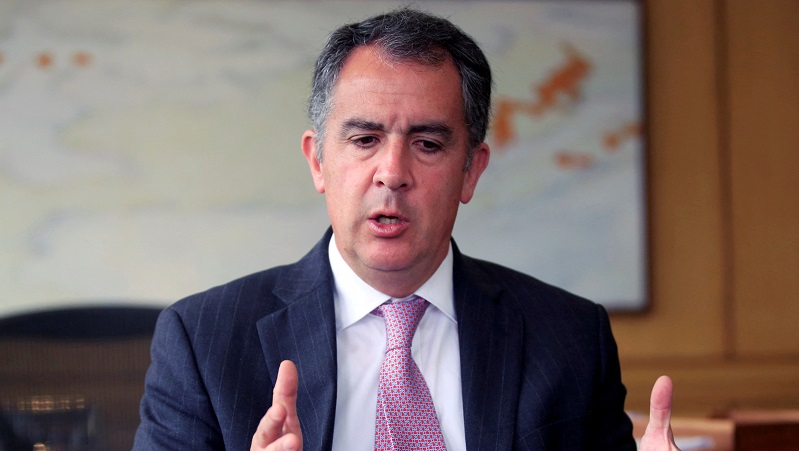
Mining company Drummond President Jose Miguel Linares 
(REUTERS/John Vizcaino/File Photo)

By Reuters
Published on 05/06/2023, 

The current Colombia head of coal miner Drummond Co Inc and his predecessor will be tried for allegedly funding right-wing paramilitaries, the country’s attorney general’s office said on Wednesday, as the U.S.-based company denied any wrongdoing by the executives.

There is “abundant proof” current head Jose Miguel Linares, who took up his post in 2013 after serving as vice-president of legal, and Augusto Jimenez, who headed the company’s Colombia operations between 1990 and 2012, conspired to finance a paramilitary group, the prosecutor said in a statement.

“Linares Martinez and Jimenez Mejia, between 1996 and 2001, increased the value of a food provision contract with a provider company to obtain additional resources and use them to cover previously-agreed illegal obligations with…the United Self-Defense Forces of Colombia (AUC),” the statement said.

The effort was a bid to protect assets and ensure the free operation of Drummond’s mine in Cesar province, the statement added.

“Green” finance bankrolls forest destruction in Indonesia

Drummond rejected the accusations, saying in its own statement that they are the product of “a cartel of false witnesses.”

“These accusations are not backed up with credible proof and are based, principally, on false declarations by convicted criminals, who receive payments for testimony,” the company said, without providing further details.

The company is confident evidence will demonstrate Linares’ and Jimenez’s innocence, it added.

The case is a “moral triumph,” said Joris van de Sandt of Dutch non-governmental organization PAX, which has campaigned to raise awareness over alleged wrongdoings by Drummond, which the company has always denied.

FSC’s rehab scheme for forest destroyers under fire after fresh allegations

Drummond – Colombia’s largest producer of thermal coal – has three mining contracts in the country and also holds a port concession on the Caribbean coast.

It expects to export around 30 million tons of coal this year, Linares said this week.

Paramilitary groups emerged in the 1980s, funded by landowners, merchants and drug traffickers to defend themselves from attacks by leftist guerrillas.

Paramilitary groups – accused of murders, rapes, torture and other crimes – demobilised under a peace deal in the 2000s, though many members later formed crime gangs.

Colombia is one of the most dangerous countries in the world for environmental activists, with at least 33 dying in 2021, according to Global Witness’s research.

Last year, Colombian anti-fracking activist Yuvelis Natalia Morales told Climate Home that unidentifiable armed men had held a gun to her head, resulting in her fleeing abroad.

 Indonesia, RoK cooperate on marine waste management technology development


Indonesia and the Republic of Korea (RoK) have collaborated to set up a centre for cooperation on marine technology to research and develop environment-friendly waste management technology.

VNA Monday, June 05, 2023 
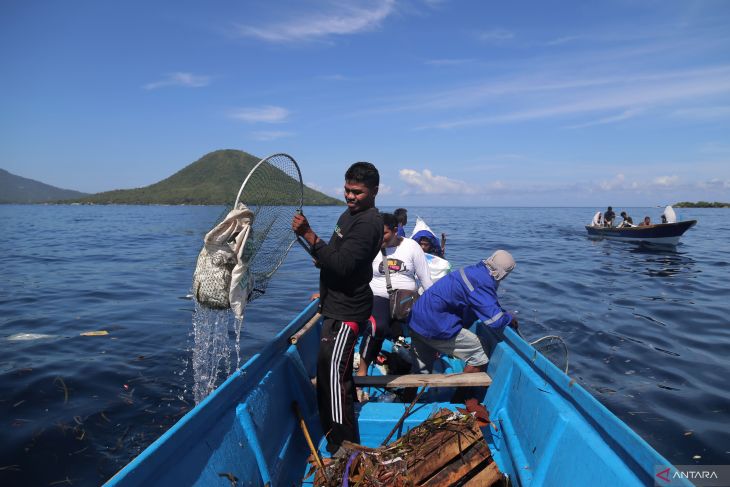
Residents carry garbage during a marine debris clean-up action in the Ternate waters, Ternate city, North Maluku, Indonesia (Photo: antaranews.com)

Jakarta (VNA) – Indonesia and the Republic of Korea (RoK) have collaborated to set up a centre for cooperation on marine technology to research and develop environment-friendly waste management technology.

This is one of the focuses of the cooperation that Indonesia will carry out with the RoK, Victor Gustaaf Manoppo, Director General of Marine Spatial Management under the Indonesian Ministry of Maritime Affairs and Fisheries, said in an official statement on June 5.

Both sides will set up a centre for cooperation on environment-friendly marine technology, which is assigned to the Marine Spatial Management Department and the RoK's Pusan National University to carry out,

He said that reducing marine waste and plastic is relevant to one of the ministry's blue economy policies, including cleaning the oceans through the participation of fishermen. This collaboration is the first step towards creating healthier oceans through the use of technology that can reduce marine waste and plastic.

He added the effort will contribute to the conservation of the marine environment, the sustainable use of marine resources, and the achievement of national targets to handle the volume of plastic waste.

Meanwhile, Pusan University President Jeong In Cha stated that the two countries will maintain partnership that will contribute to the international community, such as by solving the marine debris problem, through future cooperation.

The two sides with also hold student exchanges and cooperation in the development of maritime and environment-friendly policies./.
Village garbage man helped unearth ancient bronze statues in Italy

ON JUNE 5, 2023
By EU Reporter Correspondent


One of Italy's most remarkable archaeological finds in decades goes on show this month - Etruscan and Roman statues pulled from the mud in Tuscany thanks in part to the intuition of a retired garbage man.

About two dozen bronze statues from the third century BC to the first century AD, extracted from the ruins of an ancient spa, will go on display in Rome's Quirinale Palace from June 22, after months of restoration.

When the discovery was announced in November, experts called it the biggest collection of ancient bronze statues ever found in Italy and hailed it as a breakthrough that would "rewrite history".

The statues were found in 2021 and 2022 in the hilltop village of San Casciano dei Bagni, still home to popular thermal baths, where archaeologists had long suspected ancient ruins could be discovered.

Initial attempts to locate them, however, were unsuccessful.

Digging started in 2019 on a small plot of land next to the village's Renaissance-era public baths, but weeks of excavations revealed "only traces of some walls", San Casciano Mayor Agnese Carletti said.

Then former bin man and amateur local historian Stefano Petrini had "a flash" of intuition, remembering that years earlier he had seen bits of ancient Roman columns on a wall on the other side of the public baths.

The columns could only be seen from an abandoned garden that had once belonged to his friend, San Casciano's late greengrocer, who grew fruit and vegetables there to sell in the village shop.

When Petrini took archaeologists there, they knew they had found the right spot.

"It all started from there, from the columns," Petrini said.

'SCRAWNY BOY' PULLED FROM MUD

Emanuele Mariotti, head of the San Casciano archaeological project, said his team was getting "quite desperate" before receiving the tip that led to the discovery of a shrine at the centre of the ancient spa complex.

The statues found there were offerings from Romans and Etruscans who looked to the gods for good health, as were the coins and sculptures of body parts like ears and feet also recovered from the site.

One of the most spectacular finds was the "scrawny boy" bronze, a statue about 90 cms (35 inches) high, of a young Roman with an apparent bone disease. An inscription has his name as "Marcius Grabillo".

"When he appeared from the mud, and was therefore partially covered, it looked like the bronze of an athlete ... but once cleaned up and seen properly it was clear that it was that of a sick person," said Ada Salvi, a Culture Ministry archaeologist for the Tuscan provinces of Siena, Grosseto and Arezzo.

Salvi said traces of more unusual offerings were also recovered, including egg shells, pine cones, kernels from peaches and plums, surgical tools and a 2,000-year-old lock of curly hair.

"It opens a window into how Romans and Etruscans experienced the nexus between health, religion and spirituality," she said. "There's a whole world of meaning that has to be understood and studied."

MORE TREASURES TO BE FOUND


The shrine was sealed at the beginning of the fifth century AD, when the ancient spa complex was abandoned, leaving its statues preserved for centuries by the warm mud of the baths.

Excavation will resume in late June. Mariotti said "it is a certainty" that more will be found in the coming years, possibly even the other six or 12 statues that an inscription says were left behind by Marcius Grabillo.

"We've only just lifted the lid," he said.

After the Rome exhibition, the statues and other artefacts are to find a new home in a museum that authorities hope to open in San Casciano within the next couple of years.

Petrini hopes the treasures will bring "jobs, culture and knowledge" to his 1,500-strong village, which is struggling with depopulation like much of rural Italy.

But he is reluctant to take credit for their discovery.

"Important things always happen thanks to several people, never thanks to only one," he said. "Never."
Colorful Costumes And Celebration Mark Bangkok's Pride Parade

Bangkok came alive with vibrant colors and a jubilant atmosphere as participants from the LGBTQ community took to the streets to celebrate pride and advocate for equality during the city's annual Pride Parade. The event showcased solidarity, diversity, and the unwavering spirit of acceptance and inclusion.


UPDATED: 05 JUN 2023 
Pride Parade in Bangkok | Photos: AP/Sakchai Lalit


Participants take part in the Pride Parade in Bangkok, Thailand.


A participant takes part in the Pride Parade in Bangkok, Thailand.


Participants take part in the Pride Parade in Bangkok, Thailand.


Members of the LGBTQ community hold posters celebrating equality in marriage during the Pride Parade in Bangkok, Thailand.

Thai police pose for picture with participants in the Pride Parade in Bangkok, Thailand.


Participants hold a rainbow flag during the Pride Parade in Bangkok, Thailand.


A participant takes part in the Pride Parade in Bangkok, Thailand.


LGBTQ community hold rainbow flag in the Pride Parade in Bangkok, Thailand.
Participants hold a rainbow flag during the Pride Parade in Bangkok, Thailand.


Indonesia, RoK cooperate on marine waste management technology development

Indonesia and the Republic of Korea (RoK) have collaborated to set up a centre for cooperation on marine technology to research and develop environment-friendly waste management technology.

VNA Monday, June 05, 2023 
Residents carry garbage during a marine debris clean-up action in the Ternate waters, Ternate city, North Maluku, Indonesia (Photo: antaranews.com)

Jakarta (VNA) – Indonesia and the Republic of Korea (RoK) have collaborated to set up a centre for cooperation on marine technology to research and develop environment-friendly waste management technology.

This is one of the focuses of the cooperation that Indonesia will carry out with the RoK, Victor Gustaaf Manoppo, Director General of Marine Spatial Management under the Indonesian Ministry of Maritime Affairs and Fisheries, said in an official statement on June 5.

Both sides will set up a centre for cooperation on environment-friendly marine technology, which is assigned to the Marine Spatial Management Department and the RoK's Pusan National University to carry out,

He said that reducing marine waste and plastic is relevant to one of the ministry's blue economy policies, including cleaning the oceans through the participation of fishermen. This collaboration is the first step towards creating healthier oceans through the use of technology that can reduce marine waste and plastic.

He added the effort will contribute to the conservation of the marine environment, the sustainable use of marine resources, and the achievement of national targets to handle the volume of plastic waste.

Meanwhile, Pusan University President Jeong In Cha stated that the two countries will maintain partnership that will contribute to the international community, such as by solving the marine debris problem, through future cooperation.

The two sides with also hold student exchanges and cooperation in the development of maritime and environment-friendly policies./.
Serbia’s cunning Kosovo deflection

The key to understanding the violent conflicts in northern Kosovo lies not in the capital Pristina, but in Belgrade


DEMOCRACY AND SOCIETY 05.06.2023 | René Schlee
Reuters/ Laura Hasani
NATO Kosovo Force (KFOR) soldiers clash with local Kosovo Serb protesters at the entrance of the municipality office, in the town of Zvecan.

Once again, international attention is focused on violent clashes of the Serbian minority in northern Kosovo. But the key to understanding the current crisis lies not in Kosovo's capital Pristina, but in Belgrade. Faced with domestic political pressure, Serbia’s President Aleksandar Vučić is seeking escalation in the near abroad. This is a recurring pattern that runs counter to Western long-term interests in the region.

Last Monday, at least 30 soldiers were injured, some seriously, in clashes between NATO's KFOR task force and Serbian protesters in Zvecan. In an official press statement, NATO spoke of injuries resulting from homemade explosive devices and firearms. On Tuesday, the alliance then announced that it would send 700 additional soldiers to Kosovo. NATO had to intervene after the mayors of four municipalities in northern Kosovo – where Kosovo Serbs are in the majority – were prevented from accessing the town halls by protesters, and the Kosovo police was forced to use tear gas, among other means, to gain access.

A stricken chord in Serbia’s society

The attack on NATO soldiers is a new low point in the tense relations between Kosovo and Serbia. In Serbia, up to 60,000 people have been protesting repeatedly against President Vučić and his government for about three weeks. These are the largest protests in the country since the fall of former President Slobodan Milosevic. Initially, the protests were triggered by two acts of violence, which resulted in an unusually sudden escalation of the political situation.

In Belgrade, on 3 May, a 13-year-old student at a primary school murdered eight fellow students with a firearm. Several other pupils were injured and two others died from their injuries. The crime was committed with his father's gun. The following night, in the town of Mladenovac, near Belgrade, a 21-year-old man again murdered eight people when he fired from a moving car.

Beyond the parliamentary opposition, the desire for non-violence seems to strike a chord in Serbian society. Not since 2012, when he took office, has Vučić faced as much domestic political pressure as he does now. Since last week, however, the focus has not been on the protests but on what is happening in Kosovo.

Despite minimal voter turnout of less than five per cent, the Kosovar central government clung to the election results and swore in its winners.

The security situation in northern Kosovo has been fragile for months since the Kosovo Serbs – at Belgrade's behest – withdrew from Kosovo's state institutions (including the judiciary, police and government). They had resigned in protest over the dismissal of the Kosovo Serb police commander by the Kosovo central authorities in November 2022. This was preceded by a dispute over reciprocity measures in the recognition of car registration plates last year.

The current protests and riots are a product of the dysfunctional local elections that were supposed to be used to fill those posts. The elections had been boycotted by the Srpska Lista, a Belgrade-controlled party, on the grounds that a Serb municipal association (now a central point of contention in the Kosovo-Serbia dialogue) should be established first. Additionally, massive pressure was put on Kosovo Serbs not to vote in the election.

Despite minimal voter turnout of less than five per cent, the Kosovar central government clung to the election results and swore in its winners. This was followed by the protests and violent riots described above. From this constellation, one can see very clearly how the Serbian regime deliberately generates fragile security situations in nearby foreign countries (in addition to Kosovo, also in Bosnia and Herzegovina) to then – if necessary – activate them.

Barking up the wrong tree

However, if one follows the official statements of the US State Department and German representatives, the Kurti government is to blame for the renewed escalation. But this criticism is disproportionate as it ignores the actual agitator of the renewed crisis. The protests are not the actions of angry citizens gathering in spontaneously erupting, legitimate anger at the central government but a product of the instrumentalisation of the Serb minority by the Vučić regime.

As with the boycott of local elections in April, the full extent of Belgrade's social control in northern Kosovo through the Srpska Lista and other structures is evident. The architect of the fragile security situation in North Kosovo sits in Belgrade, not Pristina. One can certainly criticise the Kurti government for a lack of de-escalation. But to neither clearly name the actor of the escalation nor confront him seems strange.

It is also not entirely clear what Pristina could have done differently. The fact is that the local elections were held – after several postponements in favour of the Kosovo-Serbia dialogue – with the blessing of the international community. However, the boycott in the run-up to the elections, which was ultimately ordered by Belgrade, was not sufficiently criticised by the representatives of the QUINT states. The elections then resulted in the appointment of four mayors of Kosovar Albanian origin, three of whom were going about their official business in their respective town halls under police protection.

If anything, Pristina can be accused of missing an opportunity to let Serbia's provocation go nowhere, thus not giving Vučić an opportunity to set fire to Kosovo for internal political mobilisation.

Certainly, the Kurti government should have coordinated better with KFOR prior to the police operation last Friday. However, pointing out this possibility is all too cheap against the background of the last tensions at the end of last year and the international crisis management. At that time, KFOR – contrary to its mandate – did not intervene and refrained from clearing the roadblocks over a period of several weeks. Failure to intervene again would mean a declaration of bankruptcy on the part of the Kurti government and its own statehood. This is a classic scenario based on the motto: no matter how you do it, you do it wrong.

If anything, Pristina can be accused of missing an opportunity to let Serbia's provocation go nowhere, thus not giving Vučić an opportunity to set fire to Kosovo for internal political mobilisation. A clever sidestep would have helped Pristina to both sharpen the contrast with and keep the focus on the protests in Belgrade.
 
Abandoning naive Western objectives

As frustratingly unconstructive as the Kurti government may appear at times, one must not disregard the source of the conflict and the originator of the current tensions, despite all justified criticism of the crisis management. The timing of the riots, in addition to extensive publicly documented operational links between Belgrade and semi-professional thugs involved in the protests and previous militant actions, should provide sufficient information about the agitator and profiteer of the current situation. The fact that KFOR soldiers have now also been injured in the riots should make people sit up, take notice and call for a change in policy.

The current German and US policy in the Kosovo-Serbia conflict seems to follow the overriding objective of tying Serbia more closely to the Euro-Atlantic camp in view of the conflict with Russia. Given the destabilising role the Vučić regime plays by regularly instrumentalising Serbian minorities throughout the region – against the respective national governments or, in the case of Kosovo, against its statehood – this policy is at the very least short-sighted, if not naïve. The recent increase in the intensity of Belgrade's ’escalate-to-de-escalate’ strategy suggests the need for a change of policy that clearly identifies and more decisively confronts the antagonism in Serbian foreign policy.

The scale of the protests in Serbia shows the extent of the Serbs' dissatisfaction with the government and the de-democratisation of the country. The desire for change and for a re-democratisation of a system that has long since slipped into autocracy is all too clear. The international community should therefore not follow the diversionary tactics in Kosovo but turn its attention to the domestic situation in Serbia. In doing so, it should also seek dialogue with the protesters on their demands.

The UN’s low-ambition plastics plan supports industry at humanity’s expense

BY ALEJANDRA WARREN, 
OPINION CONTRIBUTOR - 
THE HILL
05/27/23 

Pakistani laborers, mostly women, sort through empty bottles at a plastic recycling factory in Hyderabad, Pakistan, Sunday, April 30, 2023. (
AP Photo/Pervez Masih)

As I prepare to join the next round of United Nations Environment Program (UNEP) negotiations for a Global Plastics Treaty in Paris, one thing weighs heavily on my mind: It appears that powerful industry lobbyists and their allies are successfully gaslighting the Intergovernmental Negotiating Committee (INC) process by convincing UNEP to promote their false solutions.

UNEP is an organization entrusted to seek real solutions to one of humanity’s greatest environmental challenges, yet it is now advocating for industry profits over people and the environment.

Their recent report “Turning off the Tap: How the world can end plastic pollution and create a circular economy” attempts to provide a blueprint for a future free of plastic pollution. However, the title couldn’t be more misleading and the report falls short on many fronts. Most concerning is the alarmingly low ambition to reduce plastic pollution by 2040: according to our calculations, only a 3.6 percent reduction per year from 2023 to 2040, while production is expected to double over the same period.

The strategy relies on the expanded use of chemical recycling technologies, along with other forms of incineration and waste disposal to achieve 43 percent of the reduction. These industry “solutions” generate large amounts of toxic pollution and hazardous waste and rely on a steady feedstock of plastic waste, exacerbating environmental injustices, waste colonialism and climate change. Maintaining high levels of annual plastic production and pollution will have catastrophic and irreversible effects on human health and the environment.

This latest UNEP analysis largely ignores the single most effective solution to ending the plastic crisis: investing in systems designed to eliminate the demand for non-essential plastics. This solution threatens the petrochemical industries that produce plastics, and large multinational consumer goods industries that rely on plastic packaging. These industries profit most from the plastic crisis while externalizing all social and environmental costs, estimated to reach $300-$600 billion per year, with some estimates exceeding $1.5 trillion according to the report. Considering the $600-700 billion in annual revenue from plastic production, it is clear almost all industry profits come at the expense of human health and the environment.

Moreover, these social costs are likely to be highly underestimated as the health consequences of plastics proven to be in our blood, digestive systems, lungs, breast milk, male and female reproductive systems and potentially brains, are not yet clear.

Increasing ambition to cap plastic production, and creating a strict time-bound strategy to eliminate single-use plastics are the solutions that environmental justice leaders, fenceline and frontline community leaders, Indigenous leaders, scientists, environmental and public health professionals, non-profits and other community-based organizations are demanding. Yet, all their voices are being drowned out by the plastic industry’s overwhelming influence and power.

As UNEP claims to advocate for a “just and inclusive transition,” I hope the participation of these groups in the INC process doesn’t become tokenism under the guise of “inclusivity.”

The “circular” plastic economy promoted in the UNEP report and backed by industry is an oxymoron at its core and contradicts UNEP’s own definition of a circular economy. It is doubtful that most reusable plastic products will circulate for more than a few months, let alone 25 or 30 years, and almost all recycled plastic is actually downcycled into a lower-quality product. Therefore the plastic reuse/recycle feedback loop is only a temporary delay of the inevitable, and perpetuates the toxic plastic economy that is impacting all of us.

As the world’s largest plastic polluters penetrate the rural economies of developing nations, the current plastic economy and proposed “circular” plastic economy continue to displace traditional systems that are truly sustainable and circular. UNEP’s scenario, according to the report, would result in over 145 million metric tons of plastic per year being converted to fuel, landfilled, chemically recycled, incinerated, openly burned or ending up as terrestrial or ocean pollution by 2040. All of these would continue to poison our air, water, land and bodies. That is not an acceptable measure of success.

Instead, innovative, bottom-up, community-based solutions should be promoted for plastic-free reuse, refill and packaging systems that are non-toxic, creating cleaner, greener, locally-owned businesses and jobs. Supporting small business incubators and microfinance for entrepreneurs and community organizations to develop plastic-free packaging and reuse/refill systems would be more effective to establish zero-waste systems compatible with local traditions, culture, socio-economic conditions and capacity to manage solid waste.

UNEP’s vision includes plans to “reorient and diversify” the market for safe plastic alternatives, and this is where innovation to eliminate non-essential plastics is needed most. Creating opportunities via bottom-up strategies to phase out single-use plastics and prevent their entry into local markets would create systems to provide clean and healthy alternative livelihoods for those working in the informal plastic economy under dangerous conditions.

While UNEP is calling for a transformation of the plastic economy, we are calling for the elimination of the plastic economy for all non-essential plastics. We are proposing real, equitable solutions with large-scale investments and financial models focused on plastic-free reuse/refill and other zero-waste systems. Drastically reducing plastic production and pollution is the first step in the transition to a truly circular economy.

Alejandra Warren is co-founder and executive director of Plastic Free Future, a California-based nonprofit organization dedicated to the reduction and elimination of plastic pollution. Before co-founding Plastic Free Future in 2020, Alejandra co-led efforts to pass the first single-use plastic ban in San Mateo County, California, in 2018.

Delegates working to end global plastics pollution agree to craft a draft treaty

Published:Saturday | June 3, 2023 | 

"Verynile" initiative worker carries compressed plastic bottles which were collected by volunteers and fishermen from the Nile to build a Plastic Pyramid ahead of World Cleanup Day in Cairo, Egypt, Thursday, September 15, 2022
. (AP Photo/Amr Nabil, File)

PARIS (AP) — Global negotiators have agreed to craft a draft treaty to end plastic pollution, a preliminary but crucial step toward tackling one of the most lasting sources of human waste.

Environmental advocates cautiously welcomed the outcome of five days of United Nations talks in Paris on plastic pollution but expressed concern that the petroleum industry and some governments would water down the eventual treaty. Most plastic is made from fossil fuels.

Delegates at the Intergovernmental Negotiating Committee for Plastics agreed Friday evening to produce an initial draft before their next meeting in Kenya in November, participants said.

The committee is charged with developing the first international, legally binding treaty on plastic pollution, on land and at sea.

A coalition of “high-ambition” governments led by Norway and Rwanda, along with environmental groups, want to end plastic pollution altogether by 2040 by slashing production and limiting some chemicals used in making plastics.

“Projections suggest that a child born today will see plastic production double by the time they turn 18, but we know that the consequences of increasing plastic production will be disastrous for our health, the planet, and the climate,” said Dr Tadesse Amera, who led the International Pollutants Elimination Network's delegation at the talks. “

The stakes are high, but we are optimistic by the growing awareness among delegates of the need for global controls.”

Countries with big petroleum industries like the US, China and Saudi Arabia are focusing instead on plastic recycling, and want country-by-country rules instead of across-the-board limits.

 OPINION

World Environment Day – Solutions for Plastic Pollution

Every year, an estimated 19-23 million tons of plastic make its way into lakes, rivers, and seas. Credit: Athar Parvaiz/IPS

Every year, an estimated 19-23 million tons of plastic make its way into lakes, rivers, and seas. 

Credit: Athar Parvaiz/IPS

TEMPE, Arizona, US, Jun 5 2023 (IPS) - It’s time to get together and celebrate the environment! June 5th is the 50th World Environment Day, where each year, the significance of transformative action from across the world is crucial to help people and the planet. This year’s World Environment Day is being hosted by Côte d’Ivoire in partnership with the Netherlands with a theme of ‘Finding Solutions for Plastic Pollution.

We as youth activists and part of the Arizona State University Sustain Earth project see plastic pollution everywhere, but just how big is this problem?

To put it in perspective, more than 400 million tons of plastic are manufactured annually, with over half of it designed for single-use purposes. Shockingly, less than 10% of this plastic is recycled, which creates a colossal issue for our environment and human health.

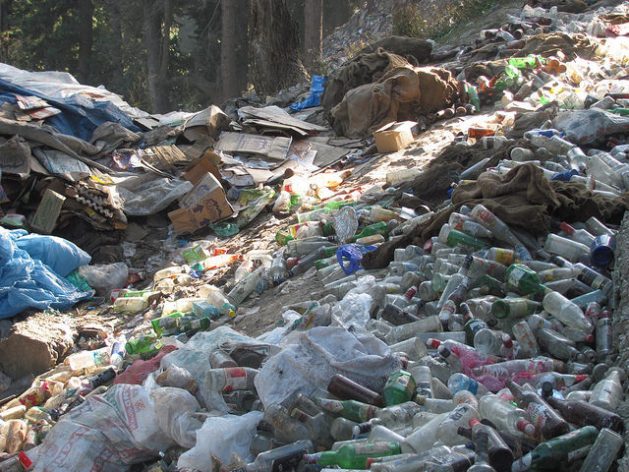
Every year, an estimated 19-23 million tons of plastic make its way into lakes, rivers, and seas. Along with visible plastic waste, microplastics are becoming a bigger issue despite being invisible to the naked eye. Microplastics infiltrate food systems, waterways, and are even found in the air we breathe. According to the UN, each person consumes over 50,000 plastic particles annually. For more information on the life cycle of plastic, check out this Sustainable Explainable.

However, amid these troubling statistics, a glimmer of hope emerges- a shift towards a circular economy holds the key to reducing the volume of plastics entering our natural environment by more than 80% by 2040. The benefits of embracing this circular approach extend beyond preserving our precious ecosystems. By reducing virgin plastic production by 55%, governments stand to save $70 billion by 2040, while simultaneously slashing greenhouse gas emissions by 25%. Additionally, this transition can create 700,000 new jobs, predominately in the global south, fostering economic growth while tackling the plastic crisis head-on.


Microplastics infiltrate food systems, waterways, and are even found in the air we breathe. 

According to the UN, each person consumes over 50,000 plastic particles annually. 

Credit: Credit: Shutterstock.


The Intergovernmental Negotiating Committee on Plastic Pollution

The second session of the UN Intergovernmental Negotiating Committee (INC-2) on plastic pollution convened earlier this month. This fully in-person event, taking place in Paris, France, covers a variety of discussions including marine environments, trade measures, circular economy, microplastics, and human rights. These sessions come as a response to last year’s United Nations Environmental Assembly resolution to create a global treaty to end plastic pollution with negotiations estimated to finalize at the end of 2024.

More than 400 million tons of plastic are manufactured annually, with over half of it designed for single-use purposes. Shockingly, less than 10% of this plastic is recycled, which creates a colossal issue for our environment and human health

The first session (INC-1) took place in Uruguay at the end of 2022 and built the foundation of knowledge for constituents in preparation for the second session and allowed for the start of negotiations, though no policy-based decisions were made then. To ensure that a wide variety of voices were hers, members invited and present included youth groups, Indigenous coalitions, and frontline communities.


PlasticsFuture 2023

Stakeholders are utilizing the move towards a legally negotiated convention to bring their ideas of solutions to the table. In a couple of weeks “Revolution Plastics” (June 20 – June 22) is hosting a conference with the mission to discuss global research in hopes of finding new, innovative solutions to the plastic problem. The conference is taking place at the University of Portsmouth, United Kingdom, and will be split into five sessions covering microplastics, fashion and textiles, the history of plastics, art-based research methods, and the global treaty to end plastic pollution (from discussions at INC-2). Hands-on workshops will also be present, ranging from creating fashion items from plastic waste to verbatim theater. We all need to be part of this solutions driven approach.


So what can we do?

The easiest option is to avoid single-use plastics. If we think about the number of times that single-use plastics are offered to us throughout the day, we may be surprised. On a regular day, an individual may get two plastic bags to carry their groceries home in, a plastic cup from their favorite coffee shop, a plastic fork, knife, and spoon with their take out… multiply this every day and every person who uses single-use plastic daily, and the amount of plastic waste humans are generating is tremendous. Effectively avoiding single-use plastic may take some forethought and planning. Here are some ideas on how we can be part of the solution and can cut out single-use plastic items out of our lives today:

  • Swap out all the single-use plastic. Keep a reusable bottle, reusable cutlery, and reusable grocery bag in your car or bag to make it easier to make the switch. Soon enough, you’ll be shocked by how much plastic you used to use once and throw away!
  • Be a sustainable host. When hosting events, consider using your own plates and silverware rather than plastic versions.
  • Going out to eat? Consider bringing a container if you suspect you’ll have leftovers. It’s a win-win-win situation because you’ll cut down on food waste, avoid using plastic take-out containers from the restaurant, and have some tasty leftovers for tomorrow!

We understand how difficult it is to avoid plastic, so we took a plastic-free for-a-week challenge! See how that went here. We hope this gives you some ideas.

It’s also important to remember each individual action underpins the systemic change required to transition to a less plastic-dependent economy. Here’s what you can do to influence change on a larger scale.

  • Use your voice. If you see a company using unnecessary plastic or lacks a recycling system for customers, call them out! Using social media or contacting the company directly lets them know that consumers care about their plastic footprint and are serious about making changes for the environment.
  • Vote with your wallet. Similarly, to what we highlighted above, it’s important to trade out the usual plastic-covered purchases for more sustainable alternatives. If more people are buying sustainable products that avoid plastic waste, we can use our wallets to vote for a more circular and sustainable market.
  • Share solutions. If you come across a business or product that does a great job of cutting down plastic waste, let your community know! Oftentimes, people want to help in the battle against plastic pollution but don’t know where to start. Help your community of conscious consumers to make a bigger difference.
  • Turn the pressure up! Consumer action will force companies, investors, lawmakers, and government to take real action. Consumers have a huge impact on the economy, so our voices will affect the important decisions they make behind the scenes.

Want to learn more about the plastic problem and how you, your business, your organization, and local community can make a difference? The UN Environment Programme and the Republic of Côte d’Ivoire partnered to create the Beat Plastic Pollution Practical Guide to help scale the problem and give solutions. Do your part this World Environment Day to make a more Sustainable Earth!

Lara Van Lith is a a member of Arizona State University Sustain Earth project. She is also recent Conservation Biology graduate and currently pursuing a Master of Public Administration from Arizona State University. She is passionate about environmental education for people of all ages and sustainability communication.

Akilah Davitt, is Arizona State University Sustain Earth and is a recent Masters of Sustainability Solutions graduate at Arizona State University with interests in corporate sustainability and biodiversity conservation. Her experience includes working with Central Arizona-Phoenix Long-Term Ecological Research to understand peoples’ perceptions towards wildlife and climate-related issues.