Monday, September 25, 2023

Africa's coup epidemic: What's different this time around?

Radwa Saad
22 September 2023

Only through transnational alliances can power be reconfigured at the scale needed to generate meaningful change


Supporters of Niger’s military junta gather in Niamey on 10 September 2023 (AFP)

With eight successful coups in the past three years alone, many have expressed concerns over a recent “coup epidemic” in Africa. But the continent is no stranger to coups, having intermittently grappled with the rise and fall of military regimes since decolonisation. Roughly 44 percent of the 242 successful coups since 1950 have been in Africa.

The recent resurgence of coups undermines the “third wave of democratisation” that swept across much of Africa throughout the 1990s, following the end of the Cold War. It also comes at a time when the international community is concerned with “democratic backsliding”, manifested in the global erosion of democratic institutions, the rise of populism and an increase in anti-democratic attitudes.

Rather than being embraced as a set of principles with normative value, democracy is often marketed as merely a means to an end - one that has yet to deliver on the region’s pressing hopes for stability, economic development or even meaningful participation.

It comes as no surprise that six decades after independence, movements and populations are increasingly frustrated with democracy’s unfulfilled promises. From the streets of Mali to Gabon, citizens disenchanted by the current state of democratic politics have taken to the streets en masse to legitimise and celebrate military takeovers. But what have military regimes achieved in the past, and what possibilities do they hold today?

Scholars have struggled to devise any reliable theory that can predict the causes of coups, but a few broad trends can be extracted. Coups rarely occur in institutionalised democracies above a certain threshold of economic development. Once initiated, coups set a precedent for resolving power struggles between competing factions of the military and society at large.

This explains why the biggest indicator of whether a state is prone to coups is whether it has experienced one in the past. Many also note a regional spillover effect, which explains the African Union (AU)’s adamant anti-coup position, even where coup plotters have popular support. Combined, these factors leave much of the Global South vulnerable to military uprisings.

Corporate interests

While many factors contribute to a military’s decision to intervene politically, the most determinative is whether an existing regime threatens their corporate interests. The 2021 Guinea coup, for instance, occurred within weeks of then-President Alpha Conde's decision to slash the military budget, while Sudan’s military saw a 59 percent reduction ahead of its coup the same year. Military budgets almost inevitably increase following a coup.

A military’s corporate interests, however, go beyond monetary considerations. National armies command respect, and a regime that deploys the military against domestic opposition may threaten its legitimacy and internal cohesion. The uprisings in Tunisia and Egypt during the Arab Spring are prime examples.

Successive defeats in war that officers can link to intrusion in their affairs can also prompt coups. Coup-plotting officers in the Sahel have repeatedly cited their grievances over France’s imprudent counterterrorism military interventions in the region.

Militaries in Africa and the Middle East have expanded their power base through alliances with the working classes against aristocratic and feudal forces

Public opinion polls show that militaries consistently outrank other state institutions in terms of legitimacy, a trend that transcends regime types and geopolitical boundaries. This is partially because militaries tend to be more representative of a society’s demographics, and offer avenues for social mobility that other state institutions foreclose. Whether they will ultimately rule in favour of the working class, however, largely depends on the composition of the military.

The officer corps in most countries is predominantly drawn from middle-class elements of a society. They are thus inclined to preserve the interests of their class through alliances with other strata of society. Latin America, by virtue of its earlier and rapid exposure to modernity, is one region where the degree of politicisation and mobilisation among the lower classes has been high enough to challenge the military’s corporate and middle-class interests.

In some cases, this has led the military to act in alliance with the conservative class to overthrow pro-working-class elected coalitions. In Chile under dictator Augusto Pinochet, for instance, the military feared that a communist takeover would result in the substitution of the regular army with a people’s militia.

By contrast, militaries in Africa and the Middle East have expanded their power base through alliances with the working classes against aristocratic and feudal forces. Low degrees of working-class mobilisation and delayed exposure to modernity weakened the nature of the class struggle, allowing post-colonial military regimes to grant concessions to the working classes in the form of land reforms, subsidies and nationalisation of healthcare and education, without threatening their own position.

Such class alliances also explain the motives and support for subsequent military coups against Islamist elected coalitions in Algeria in the early 1990s and Egypt in 2013. An Islamist takeover threatened both the middle-class way of life and the military’s corporate interests.

Additional challenges

Yet, just because a military is more representative of a population, doesn’t mean it is better equipped to govern. A handful of charismatic military figures in the past - such as Egypt’s Gamal Abdel Nasser, Ghana’s Jerry Rawlings and Burkina Faso’s Thomas Sankara, to name a few - were able to carry out massive social transformations via “revolutions from above”.

These legacies remain deeply ingrained in the public imagination, reinforcing the allure of a military-dominated utopia. But decades of military rule have repeatedly shown that militaries rarely, if ever, perform better than their civilian counterparts in most areas of governance.

Africa coups: As France's influence teeters in the Sahel, can Turkey take advantage?
Read More »

On the contrary, military rule comes with an additional set of challenges: the reliance on coups for transfers of power, more allocation to defence budgets, the weakening of civil society, and a greater reliance on force to rule.

Militaries also tend to overestimate what they can accomplish through political intervention, while underestimating the challenges of governance. As the intractability of the problems they seek to resolve becomes clear, the combination of factionalism within army ranks and the threat of mass revolts compels them to return to the barracks - but only when they can ensure that the succeeding regime will protect their corporate interests.

Celebrations of military takeovers in the Sahel can be explained by people’s frustrations with developmental and political impasses, as well as the proliferation of transnational armed groups threatening state security. But unique to these demonstrations, especially those in the Sahel, is a staunch anti-imperialist undertone.

The connection between imperial processes of extraction, and elite capture of the state through flawed electoral processes and systemic underdevelopment, is becoming increasingly clear to citizenries. France’s neocolonial influence has been singled out as the primary impetus governing these challenges.
Neocolonial powers

These challenges, however, are not new. In the 1960s, Ghanaian politician and political theorist Kwame Nkrumah used the term “neocolonialism” to describe the final, most dangerous stage of imperialism. Neocolonialism is a system of economic domination upheld by western, capitalist powers that strategically reduces former colonies to sites of extraction for raw resources and markets for their manufactured goods.

Three elements sustain this system: uneven trade conditions in the global economy that reinforce the peripheral status of former colonies; the use of military force to re-subjugate or overthrow governments that threaten this order; and political intervention, typically in the form of bribes to public servants who act as agents or stooges of imperial interests.

These problems, Nkrumah warned, are global in nature. They are beyond the capacity of any single national government to confront unilaterally. Only through regional and transnational alliances can power be reconfigured at the scale needed to generate meaningful change and break this deeply entrenched cycle of dependency. Economic and political unity “is the first requisite for destroying neo-colonialism”, Nkrumah noted.
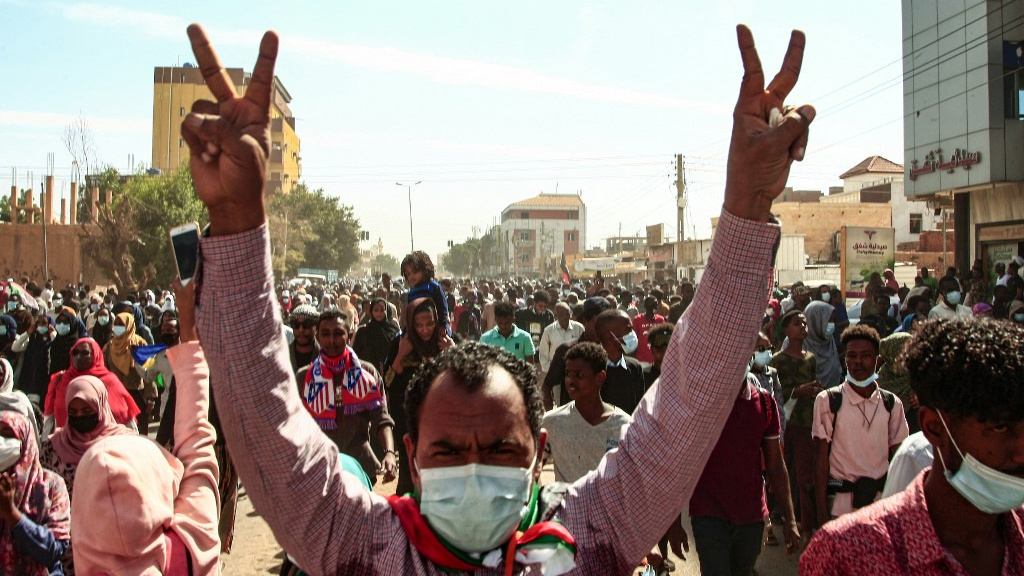
Sudanese protesters hold a demonstration against the October 2021 coup, in the capital Khartoum, on 2 January 2022 (AFP)

One may add that an anti-imperialist consciousness and mass awareness of neocolonial exploitation are a prerequisite for unity. Africa’s population is demonstrating this awareness, but the question remains whether militaries are positioned to reclaim control over countries’ resources and future. There are structural and strategic reasons to believe they are, but not without a cost.

Politics is a game of alliances. Prospects for meaningful change ultimately boil down to how effectively militaries can forge new domestic, regional and international alliances, while severing the previous alliances and pacts that reinforced France’s neocolonial stronghold in the region.

This is not an easy feat, but it remains possible. Militaries typically adhere to a unifying set of ideological values that stress merit, modernisation, rationalisation, and political order and stability. This, along with their rigid chain-of-command hierarchy, allows them to bypass the political stalemates and clientelism associated with electoral politics to foster radical and rapid change.
Strategic alliances

Africa’s military elites also tend to move fluidly between common networks by virtue of their training in similar institutions. All these factors increase the likelihood of transnational cooperation among members of new military regimes, such as the proposed regional partnership between Burkina Faso, Mali and Guinea.

A joint military force could effectively clamp down on the movement and proliferation of armed groups weakening the Sahel’s collective security. These countries are also rich in resources, including diamonds, oil, uranium, gold and phosphates. New economic pacts could boost their bargaining power in the global economy, while putting an end to the privileges afforded to French companies in the extraction of these resources.

This wave of coups is far from over, with analysts predicting more to come

Strategic reasons also exist for military regimes to join forces. Regional and global powers are hostile to such regimes, viewing them as destabilising forces with negative implications for peace, security and democracy.

The Economic Community of West African States (Ecowas), for example, threatened to deploy troops in Niger to restore a democratically elected government. The decision was judiciously rejected by the AU, which is being forced to rethink its adamant anti-coup position.

In response, Mali and Burkina Faso have pledged to defend Niger against Ecowas intervention, deeming it a "declaration of war". In other words, "the enemy of my enemy is my friend".

This wave of coups is far from over, with analysts predicting more to come. Military leaders rarely have a long-term vision for governance, but through strategic alliances with civilian technocrats, they can effectively exploit the transition period to sever the economic and political arrangements undermining their countries’ autonomy, and lay out a new blueprint for transnational integration. Only then does democracy actually stand a chance of flourishing in Africa.

In essence, civil-military relations are most constructive when militaries focus on their role of protecting territorial sovereignty, but what is there to protect when national sovereignty is questionable to begin with?

Only when this fundamental issue is resolved can subordinate, democratic militaries become a reality in Africa.


The views expressed in this article belong to the author and do not necessarily reflect the editorial policy of Middle East Eye.

Radwa Saad is a Ph.D. Candidate at Cornell University. Her research focuses on the politics of military conscription practices in Africa as well as Afro-Arab relations. She holds an MSc in Security Studies from King’s College London and previously served as a peace, security, and development fellow at the African Leadership Centre.
Middle East Eye delivers independent and unrivalled coverage and analysis of the Middle East, North Africa and beyond. To learn more about republishing this content and the associated fees, please fill out this form. More about MEE can be found here.
UK
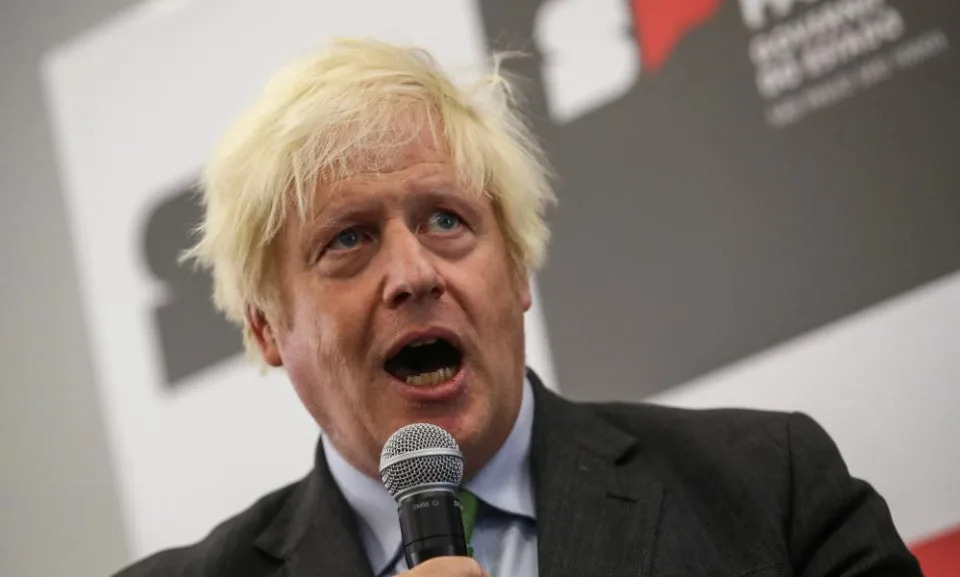
Boris Johnson should pay back his taxpayer-funded legal fees for the Partygate inquiry  Labour has said.

Aubrey Allegretti Senior political correspondent
Sun, 24 September 2023 

Photograph: Carla Carniel/Reuters

Boris Johnson should pay back his taxpayer-funded legal fees for the Partygate inquiry and an investigation into “issues” with the Cabinet Office’s sign-off process should be launched, Labour has said.

Pat McFadden, the shadow chancellor of the Duchy of Lancaster, said the £265,000 bill should be looked into after a critical report was published this week by the National Audit Office.

The public spending watchdog found the proper process was not followed when the Cabinet Office agreed to cover Johnson’s legal bills last August, because the decision was not made by the correct accounting officer. It found the correct official did endorse the decision, but a month after it had already been taken.


The NAO also said the precedents cited by the government for covering the costs during the privileges committee’s inquiry were not “wholly persuasive”.

McFadden wrote to William Wragg, the Conservative MP and chair of the public administration and constitutional affairs committee, calling for him to launch an inquiry into the process.

Highlighting the NAO’s finding that other legal cases where ministers had their legal costs covered were “substantively different” from the Commons probe, McFadden said: “I would very much agree.”

He added there were several “issues with Cabinet Office processes” identified and that there was “legitimate public interest in terms of the sums of money involved, their use and the approval processes for agreeing this”.

McFadden asked the committee, which examines the work of the Cabinet Office, to look at whether the use of taxpayers’ money was appropriate. He also said the committee should examine whether the flawed process was “inconsistent with good government practice” and “whether the funds should be returned, as we have previously called for”.

Johnson declined to comment. Since leaving No 10, he has made millions of pounds through a combination of speeches and books, and been gifted tens of thousands in-kind for hospitality and accommodation.

A Cabinet Office spokesperson said: “There is an established precedent across multiple administrations based on the principle that former ministers, of all political colours, may be supported with legal representation after they have left office – when matters relate to their time and conduct as a minister of the crown.

“The government has been consistently clear that the contract award followed the proper procurement process.”

The cross-party privileges committee concluded in the summer that Johnson had misled parliament. Its findings prompted Johnson to quit as an MP before sanctions could be imposed.


Former ministers paid half a million in severance over past year

Genevieve Holl-Allen
Sun, 24 September 2023 

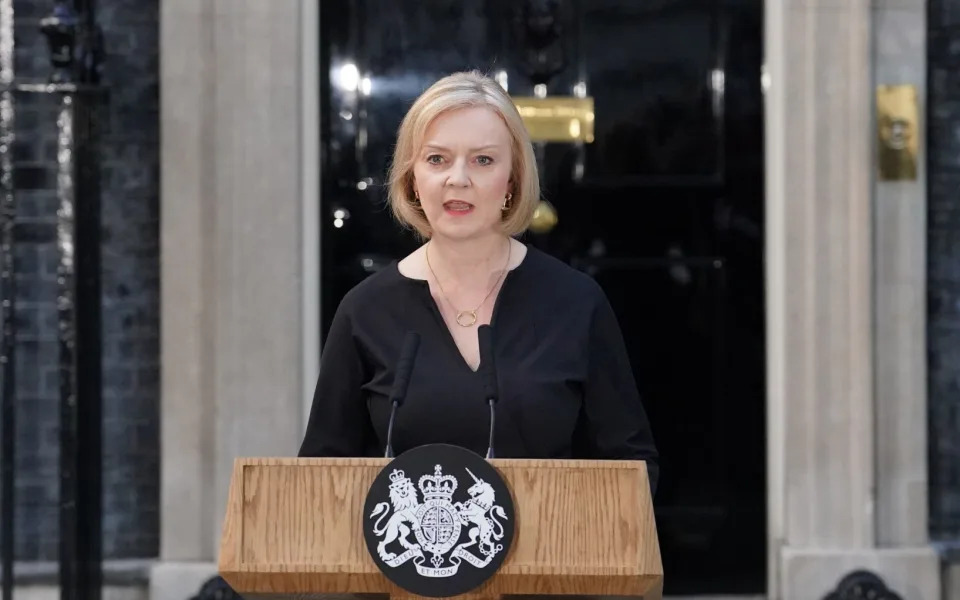
Liz Truss - Dominic Lipinski/PA

Ex-ministers have received more than half a million pounds in severance pay over the past year, new research has revealed.

The Department for Levelling Up paid out the most to former employees in severance of any Whitehall department, at more than £77,000 since 2022.

Ministers leaving the Home Office over the last year received £52,858, and the Department for Education handed out £49,495 in the same period in severance.


It comes as the Liberal Democrats, who conducted the research, call for the rules on severance pay to be changed to prevent disgraced MPs from being able to claim.

Chris Pincher, who resigned from Government after he was accused of drunkenly groping two men, received £7,920 as a so-called golden goodbye.

Chris Pincher - UK Parliament/PA

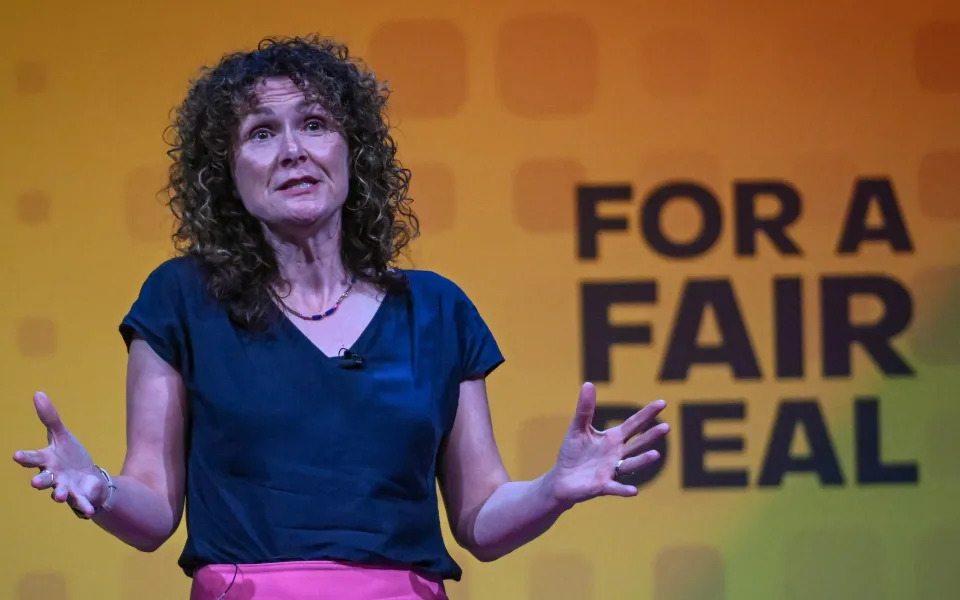
Wendy Chamberlain, Lib Dem whip, will today/MONDAY call for a major overhaul of the system, which would also see ministers having to serve in post for a “reasonable period” before being able to receive severance.

Liz Truss, who served as prime minister for 49 days, received £18,860 in severance, the same amount that Boris Johnson was awarded when he left office.

Her chancellor, Kwasi Kwarteng, was paid £16,876 after just 38 days in office.

Ms Chamberlain described these golden goodbyes as “an outrage”.

“The cost of Conservative chaos is piling up for families across the country.

“The British public will never forgive this shambolic Conservative government.”

“Conservative ministers crashed the economy and then were rewarded for it. It is time to change the rules over ministerial severance pay for good to end these revolving door payouts - enough is enough.”

She will announce the new proposals on the third day of the Liberal Democrat autumn conference, taking place in Bournemouth.

Wendy Chamberlain - Finnbarr Webster/Getty Images

The new proposals would also demand that payouts could not be claimed if they are reappointed to Government within a year.

Under current rules, ministers can claim severance pay of up to almost £17,000, and prime ministers up to £18,660, regardless of the reason for departure and length of time in post.

Whitehall departments gave out £530,000 in taxpayer-funded ministerial severance payments in the last year.

The Cabinet Office paid £75,585 in ministerial severance in the last year, and the Treasury gave out £45,000.

A Government spokesman said: “There are long-standing rules in place to determine what ministers are entitled to receive as severance pay. Under those rules, it is for ministers to decide whether they wish to accept it.”

A Conservative Party spokesman said of the proposals: “This is exactly the kind of ‘do as I say, not as I do’ policy that the nation expects from the Lib Dems.

“Severance payments have been made by successive administrations over several decades – including at the end of the Coalition Government in 2015.

“If their ministers were happy to accept payments then, they should pay them back to British taxpayer before attempting to score political points.”
Immigrant, pop star ... and supreme court judge who will decide fate of Israel’s justice system

Bethan McKernan in Jerusalem
Sat, 23 September 2023 

Photograph: Thomas Coex/AFP/Getty Images

When Esther Hayut, a bespectacled woman with hair always neatly parted down the middle and pinned back with a barrette, was sworn in as the chief justice of Israel’s supreme court in 2017, she pledged to protect the country’s judiciary from politically motivated attempts to weaken it.

“It is the properly applied rule of law that serves as the glue which keeps our nation together … I pray that the justice system will not crack,” she told an audience that included Israel’s prime minister, Benjamin Netanyahu.

The child of Holocaust survivors, and something of a pop star in her youth, Hayut and the attorney general, Gali Baharav-Miara , are perhaps unlikely candidates for the faces of liberal Israel. But eight months into the existential crisis triggered by the Israeli government’s judicial overhaul, that is how they are viewed by supporters and detractors alike.

“I see Hayut as courageous. She knows this is not an ordinary situation and is willing to speak out,” said a former Israeli justice minister who asked to be quoted anonymously in order to speak freely. “She shares the values that defined Israel until now.”

Hayut’s term has dovetailed with mounting attacks on the judicial system. Netanyahu, who faces corruption charges he denies, led the charge. But the campaign accelerated at the instigation of the prime minister’s coalition partners: since last year’s election, his far-right allies have made judicial overhaul their raison d’ĂȘtre.

The government says that the changes are needed to rein in an unelected and biased supreme court. The huge protest movement opposed to the plans says the proposals amount to democratic backsliding.

So far, only one element of the overhaul has been passed into law: the abolition of the “reasonableness clause” that allows the supreme court to override government decisions. The court last week began hearing petitions against scrapping the clause, meaning top judges are now in the extraordinary position of deciding on whether to limit their own powers.

Related: Protests in Israel as supreme court hears challenge to judicial curbs

Hayut’s legacy is on the line ahead of mandatory retirement when she turns 70 next month. The final rulings of supreme court justices are usually weighty, but there has never been more at stake in Israel’s roiling body politic.

Hayut was born in 1953 in a ma’abara, or transit camp for immigrants, in the town of Herzliya. Her parents were Romanians: her mother survived deportation to Transnistria, and her father Auschwitz. They divorced while Hayut was still a toddler. An only child, she was raised by her maternal grandparents.

At 18, during her military service, she became semi-famous as a singer in a band attached to the Israel Defense Forces’ Central Command. In the 1960s and 70s, the army’s musical outfits were popular, serving as a training ground for young people who would go on to become famous musicians and performers, including pop star Dorit Reuveni.

Musicians from the time remember Hayut as charming, disciplined and smart. The group are still friends. “Even then she wanted to be a lawyer and aspired to be a judge,” Reuveni told news website Ynet in 2017. Hayut graduated in law from Tel Aviv University, opened her own practice and by 1990 had become a judge, rising to the supreme court in 2004. The presidency is decided by seniority; in 2017 she was sworn in for a five-year term.

Considered part of the bench’s liberal camp, according to the New York online Tablet magazine, Hayut has “made a career out of walking a fine line … championing the underprivileged but committed to national security”.

She is sympathetic to class actions against large companies and discrimination cases, and strengthened protection laws for foreign workers. In decisions, she often quotes poetry. Yet Palestinians would not agree with the chief justice’s image as progressive: she decided in 2014 that house demolitions of Palestinians who commit terror attacks are justified, although under international law this is considered collective punishment.

Some of Hayut’s landmark rulings have struck down government laws, for which she has been criticised by the right. Hayut was part of the majority opinion invalidating the Tal Law, temporary legislation exempting ultra-Orthodox yeshiva students from military service, and cancelled privatisation plans for prisons. In some cases she approved the appointment of ministers with criminal records, in others struck them down.

For the hearings on the “reasonableness” clause, Hayut convened a panel of all 15 judges – the first time the entire bench has been called. Observers believe she is keen to show that the court’s decision will be as broad as possible.

This month’s marathon 13-hour opening session was watched closely for clues about how the justices will lean, but Hayut’s opinion appears to be clear. In a fiery and unprecedented address in January, she declared that the judicial overhaul “would fatally undermine judicial independence, giving the Knesset a ‘blank cheque’ to pass any legislation it pleases, even in violation of basic civil rights”.

Addressing the government’s legal representatives, Hayut said: “You think the duty to act reasonably applies to the government and ministers … But who makes sure they do?”

Israel’s supreme court has never struck down a quasi-constitutional “basic law” before. What is likely to be Hayut’s final ruling could also plunge the country into uncharted political and legal waters.
How Germany, France and Italy compare on net zero emission targets

Ajit Niranjan European Environment Correspondent
THE GUARDIAN
Sun, 24 September 2023 


Germany, France and Italy have pledged to hit net zero emissions around the middle of the century in a bid to stop weather from growing more extreme.

But the EU’s three biggest economies – and polluters – are all struggling to meet their goals.


Germany

Germany, Europe’s biggest emitter of greenhouse gases, plans to hit net zero emissions by 2045. Every big party bar the far right promised to keep the planet from heating 1.5C.


The coalition government between the Social Democrats, Greens and liberals has nearly torn itself apart fighting over policies to clean up the economy. The liberals and opposition Christian Democrats have framed proposals to phase out combustion engine cars and new gas boilers as an attack on freedom. However, laws to make it easier to build wind turbines and solar panels have been pushed through with little backlash.

Germany strengthened its climate law two years ago after the top court ruled the previous version was “partly unconstitutional”. But sectors like buildings and transport have since failed to meet their yearly targets. The government’s scientific watchdog said the transport minister’s last “immediate action plan” was too weak even to assess. The cabinet has now decided to scrap sectoral targets.

France

Related: EU states must bridge ‘planning gap’ in order to hit climate targets, report warns

France aims to reach net zero emissions by 2050. But while it plans to go slower than Germany, it is already closer to the target. In 2021, it spewed half as much greenhouse gas as Germany, mainly because of a vast fleet of nuclear power plants making low-carbon electricity.

France wants half of its energy to come from nuclear power by 2035 and 40% of its electricity to come from renewable sources by 2030.

But France has struggled to cut emissions from agriculture, which are the highest of any country in Europe, and transport. In 2018 the “yellow vest” protest movement forced French president Emmanuel Macron to ditch a planned hike on fuel taxes.

This May the Conseil d’État, France’s top court, found “no credible guarantee that the trajectory of reducing greenhouse gas emissions shall be effectively respected”.

Italy

Europe’s third biggest polluter has a net zero goal of 2050.

In a draft national energy and climate plan, it said it aims to use renewable sources to make 65% of its electricity by 2030 and cover 40% of its energy demand.

Italy relies heavily on fossil gas for heating and power, mostly from abroad. Its clean energy industries have grown slowly over the last 10 years, though recent reforms are set to pick up the pace of installations. Italy is also offering a “superbonus” tax break to insulate homes.

Yet as heatwaves killed people in July, the environment minister said he did not know “how much [climate change] is due to man or Earth”. The IPCC has shown that global heating is entirely down to humans.
ICYMI
Methuselah arrived in the US in 1938. She’s now the oldest fish in captivity

Katharine Gammon
Sun, 24 September 2023 

Photograph: John G Mabanglo/EPA

She’s super gentle, and doesn’t get overly excited. She enjoys eating earthworms, fruits and vegetables, and slowly moving around her tank. Her favorite food – at least for what is in season now – figs.

If Methuselah sounds like a grand old dame, it’s because she is: the fish is the oldest living specimen in captivity, aged somewhere upwards of 92 and potentially as high as 101 years. She arrived on a steamship from Australia along with 230 other fishes to the Steinhart aquarium in San Francisco in 1938 as a young, small fish. And Methuselah’s story unfolded in a typical way, for a fish in an aquarium: she grew. Humans came to look at her. She peered back through glass at humans.

But 1938 was a different time: bread cost nine cents a loaf. A racehorse named Seabiscuit was winning races. Germany was persecuting Jews, foretelling a coming conflict in Europe.

Then there is Methuselah, who is no ordinary fish. She’s the only fish still living from the steamship. And most importantly, she’s a lungfish – a species more closely related to humans or cows than to ray-finned fish like salmon or cod – which can breathe air using a single lung when streams become stagnant, or when water quality changes. Lungfish are also believed to be an example of the original creatures that crawled out of water and moved to land in evolutionary history. The species was discovered 1870 – and the scientist who first described the fish originally thought it was an amphibian.

Lungfish like Methuselah have long held secrets, but scientists have only recently attempted to understand their evolution and life history. For one thing, the fish’s genome is the largest of any animal, containing 43bn base pairs – roughly 14 times the number in the human genome. The previous record holder, the Mexican axolotl, has a genome made up of 32bn base pairs.

“Genetics is really quite straightforward for normal fish – but for lungfish they’re so unique and so different that all of those techniques didn’t or don’t work,” said David T Roberts, a senior scientist with Seqwater, statutory authority of the government of Queensland in Australia, where the fish still live in a handful of rivers in the wild. “It’s always pushed the envelope on uncovering some of its secrets to be able to manage and conserve it – and age is a really important one.”


Methuselah lives at the Steinhart aquarium at the California Academy of Sciences in Golden Gate park in San Francisco, California. Photograph: John G Mabanglo/EPA

A fish’s age is critical to know because it tells scientists information like growth rates, maturity, longevity and how long they breed – which is vital fundamental knowledge to manage a protected species.

Lungfish – a vulnerable species – have proved especially challenging to age because they grow a lot at the beginning of their lives, but then grow extremely slowly (yet continuously) for the remainder of their lives. Ear bones that are harvested after most fishes’ death can be counted like tree rings, but lungfish, always the outlier, don’t have the same composition to their ear bones.

So scientists started to use radiocarbon to date the fish – relying on a technique that basically imprints living things with a signature of carbon resulting from the atomic bomb tests back in the 1950s. The problem there is that it doesn’t work well in animals born before 1950, when the carbon signature changed.

Now, scientists are using DNA tools that look at methylation – the way that DNA is turned on or off – to age the fish. For younger fish, it can offer an exact number of age, but for older fish it gives a range.

It wasn’t the first time this technique had been used. Last year, scientists estimated a lungfish named Granddad who lived at the Shedd aquarium in Chicago to be 109 years (give or take six years) at the time of his death, confirming that lungfish can live well over 100 years. The analysis also revealed that Granddad started his life in the Burnett River in Queensland, Australia, the location of the species’ original discovery in 1870.

In the study on Methuselah, aquarium workers took samples the size of a peppercorn piece from lungfishes in captivity and extracted the DNA from that in order to estimate the age for the first time ever. They found her to be at least 92 years old. The scientists plan to release their findings of 30 other lungfish later this year, as part of a library of living lungfish across the world.


Knowing how long they potentially live and understanding more about how long they could reproduce could drive how we’re caring for habitat to help keep that species afloat in the wild 
Brenda Melton

“Knowing how long they potentially live and understanding more about how long they could reproduce could drive how we’re caring for habitat to help keep that species afloat in the wild,” says Brenda Melton, director of animal care and welfare at the Steinhart Aquarium. “It just really opens the doors for a lot of other conversations and questions that might be able to be asked about how we can better care for them in the wild and preserve habitat.”

Roberts is inspired to continue to conserve the fish – after all, lungfish were around before dinosaurs became extinct – and their cousins possibly split off into animals with legs and then crawled onto land and then became humans, he says. “They’re a cousin to all land animals, basically.”

Methuselah’s age is now known, but she still holds other mysteries – even her biological sex. The handlers use she/her pronouns, but they actually don’t know if Methuselah is a male or female. Some fish have differences in size or shape – but not lungfish. And behaviorally, they suspect she’s a female, but they will not be able to find out for sure until she passes away.

Another question is if the fish is feeling old – and how do fish change when they’re geriatric? Melton says it varies widely. Most fish live only a few years – so it’s rare to see really old fish in the wild. But there are some hints: some spinal changes, like a curved back, or losing weight, cloudy eyes or looking a little gray in the scales.

Two of the other fish in the new study were aged at 50 and 54 – and Melton says they look a little more similar in coloration, while Methuselah has gotten a little lighter in color over the years. “We don’t know that that’s actually tied to her age, but it’s the only thing that we have seen physically that looks different for this fish.”

Melton says just the existence of something that has lived for so long leaves her in awe. She wonders what Methuselah thinks of all her companions and living situations over the many years she’s spent at the aquarium – as the fish has the longest institutional memory of anything in the building.

“It’s incredible to me that after all of these years of having her in our care,” she says, “we’re still learning and we still have the ability to learn from animals in ways that we can’t even conceive yet.”
SCOTLAND
Juryless rape trials may be unlawful and breach human rights, SNP warned by senior judges

Simon Johnson
Sun, 24 September 2023 

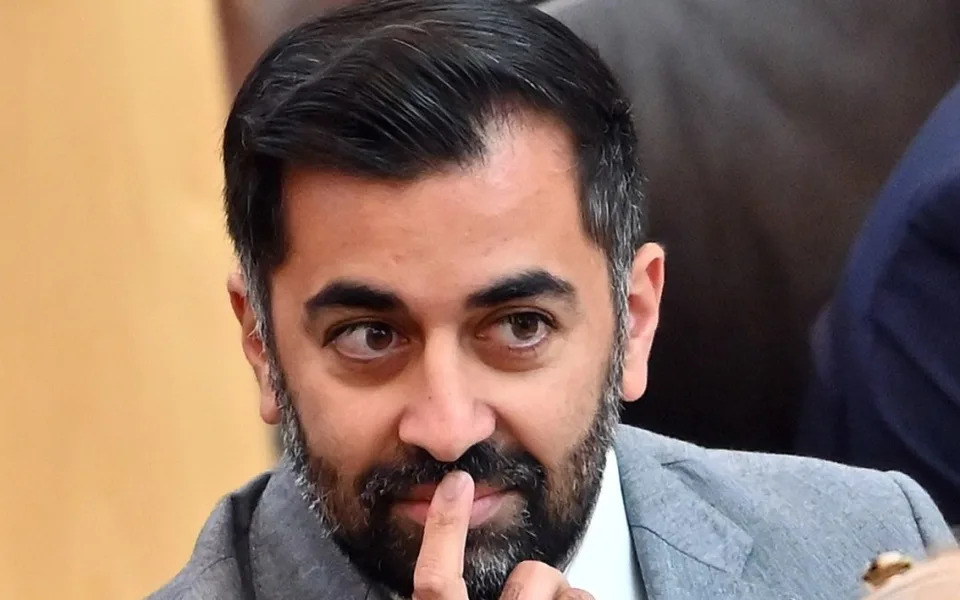
Humza Yousaf backed the pilot scheme citing the 'weight of evidence' - Ken Jack/Getty

Scotland’s most senior judges have warned the SNP plan to pilot juryless rape trials may be unlawful and breach the accused’s human rights.

The Senators of the College of Justice at the Supreme Courts said it could be argued that the pilot scheme was “a court set up by the government with a limited lifespan, and subject to examination and review by the government”.

This could strip the court of its status as an “independent tribunal”, they warned, exceeding the powers of the Scottish Parliament and breaching the right to a fair trial under the European Convention on Human Rights (ECHR).

They also argued that “the combination of such a court with judges who have no security of tenure in that court may not satisfy the requirements of a fair trial”.

Under the current proposals, they said a judge could be removed from the scheme “for any or no reason and with no prior procedure other than consultation”.

Jurors of differing ages

They also argued that it is preferable for a decision to be reached collectively by jurors of differing ages and backgrounds than a single judge, most of whom they said are white, male and in “late middle age”.

The submission by judges who sit in the Court of Session, the High Court and the Court of Criminal Appeal was among almost 250 made to a Holyrood inquiry into the plans.

Although it made clear that some senior judges support juryless rape trials, it followed warnings from the Law Society of Scotland that they pose a “serious” risk to the presumption of innocence and the right to a fair trial.

SNP ministers want to overhaul how sexual offences are tried in Scotland, warning that the “substantially lower” conviction rate risks undermining public confidence in the justice system.

The Scottish Government’s Victims, Witnesses and Justice Reform (Scotland) Bill gives ministers the power to “enable a pilot of single judge rape and attempted rape trials” to be conducted without a jury “for a time limited period”.

The legislation would also establish a specialist sexual offences court, scrap the not proven verdict and reduce the number of jurors from 15 to 12.

Humza Yousaf, the First Minister, has backed the pilot, citing a “weight of evidence” that juries are affected by “rape myths” that lead them to unjustly acquitting the accused.

The latter term refers to stereotyped prejudices in rape cases, such as jurors wrongly believing that the victim “asked for it” by being drunk or seductive.

Holyrood’s criminal justice committee is examining the plans and on Wednesday will hear evidence from Angela Constance, the SNP’s justice secretary.
Security of tenure essential

In their submission to the committee, the Senators said the Bill gives the Lord Justice General, the most senior judge in Scotland, the power to remove a judge sitting presiding over one of the new sexual offence courts.

This may constitute “interference with a judge’s security of tenure”, they warned, and Article 6 of the ECHR “requires an accused person to be tried by an independent and impartial tribunal established by law”.

They cited case law that held that “security of tenure was essential for judicial independence” and said the lack of this in the new courts could be sufficient to render them “neither independent nor impartial”.

The judges opposed to the pilot scheme also questioned the Scottish Government’s claim that rape myths among jurors were partly responsible for low conviction rates.

“Given that the accused is asserting that there was consent, it is not surprising that on some occasions the jury finds that there is reasonable doubt about what happened. That is inevitable,” they concluded.

They added: “The majority of judges are in late middle age, male, from a white Scottish ethnic background and are educated to university level.

“Many would argue that a number of people from differing backgrounds and ages combining to reach a decision is preferable to one person deciding alone.”

A spokesman for the Scottish Government said: “The Senators of the Colleges of Justice response clearly sets out that there was not one view held on the proposal for the pilot with some supportive and some not.

“The proposed pilot is in in response to a recommendation of a review carried out by Lady Dorrian, Scotland’s second most senior judge, to improve how the justice system treats rape victims by piloting judge only rape trials.”

TWO TIERED JUSTICE SYSTEM
Royal Navy: HMS Prince of Wales sailor who shot girlfriend and attacked two women at pub spared jail

Magstirates refused to hand Moore a community service order because it would mean him losing his Royal Navy job.

Freddie Webb
Sun, 24 September 2023
 
Navy serviceman Harley Moore outside Margate Magistrates' Court. Picture: KMG / SWNS.

Magistrates even told Harley Moore, 18, they "wish him the best" with his career as a junior able seaman on HMS Prince of Wales. Moore admitted four counts of assault by beating when he appeared at Margate Magistrates' Court on Thursday, September 21.

The court heard that on May 30 he flew into a jealous rage and shot his girlfriend in her foot at their home in Deal, Kent. Prosecutor Maria Goptareva said: "They were in the bedroom discussing their relationship and he was shooting the BB gun around the room. He then turned around and shot her foot."

The attack left her "shaken up" but they went out drinking with her friend in Deal the next evening where he launched another attack. His girlfriend told police he was "practically foaming at the mouth and spitting at me" so she ran past him into The Sir Norman Wisdom Wetherspoon to get away.


Harley Moore, 18, from Deal, shot his girlfriend with a BB gun on May 30, court heard. Picture: KMG / SWNS.

Court heard Moore followed her into the pub toilets and pushed her against the wall. The victim told police: "He went to hit me and missed - but he caught me with his nails.

"Then he turned around and hit [my friend], causing her to fall backwards." A female Wetherspoons employee intervened and pointed him towards the door, but he pushed her arm away.

Moore's girlfriend suffered a scratch to her face while her friend was left with a bruised back. In a victim impact statement, Moore's girlfriend said: "The whole incident has made me feel very shaken up and upset because I never imagined he could hit me.

"I am shocked that someone I thought I loved could do this to me and my friend." Magstirates refused to hand Moore a community service order because it would mean him losing his Royal Navy job.


The Sir Norman Wisdom Wetherspoon in Queen Street, Deal, Kent. Picture: Google Street View/SWNS.

He was ordered to pay £200 compensation to his girlfriend, £100 each to her friend and the pub worker, as well as court costs of £85 and a £26 victim surcharge. Magistrates also ordered the forfeiture and destruction of the BB gun.

Chair magistrate David Gibbons said: "We in no way wish for Mr Moore to lose his job – we wish him the best with that. But we can't let his job mean that he escapes justice."

He told the defendant: "Mr Moore you're aware our hands have been tied in what we can do to punish you for this. The incident was severe and you were unpleasant to three different people.

"While the offences are deserving of a community order, it has become apparent that this is unworkable, so we will be going down the route of a conditional discharge. This will be for three years.

"Should you commit another offence within that time you can be punished for today's offence and any new offences." Ian Bond, defending, said Moore was on leave from his duties on HMS Prince of Wales, which will act as the nation's flagship, at the time of the attacks.

He said Moore had been upset that his girlfriend had gone on a trip to London with another man. Describing the assault with the BB gun, he said: "It fires very small plastic rounds - about the size of a pea, a petit pois.

"Mr Moore said: 'I'm sorry - I was trying to shoot your shoe.' "But the next day things are still simmering and this young man has behaved as badly as he did because of his frustration and because he'd had too much to drink. He's genuinely remorseful."

Chief Petty Officer Darrell Binner attended court with Moore and said disciplinary action is also being taken by the Navy. He said: "The Navy takes a very seriously dim view of what Mr Moore has done and he will receive appropriate punishments from his commanding officer.

"That could mean a dock in his pay, extra duties or even being discharged. He is returning to Portsmouth while transportation is arranged to get him back on the ship - the vessel is operational and it requires a full crew.

"The Navy would not be able to comply with a court order for him to complete community service."


Hundreds descend on London to protest against Rishi Sunak’s ban on XL bully dogs

IT'S NOT THE BREED ITS THE OWNER


Daniel Keane
Sun, 24 September 2023 


Protesters marching in central London against the ban of the XL bully (PA)

Hundreds of demonstrators gathered in London on Saturday to protest against the Government’s proposed ban on the XL bully.

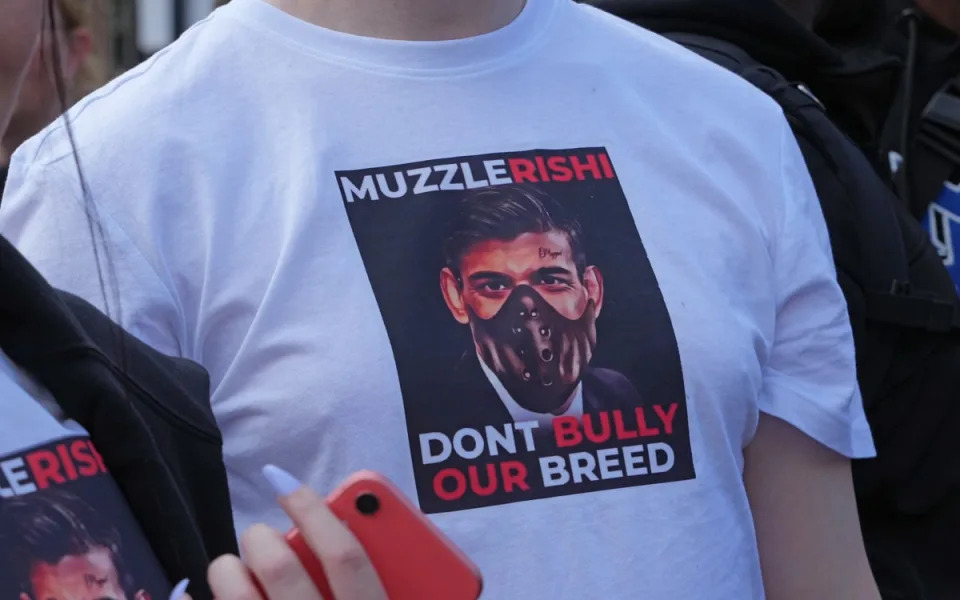
Protesters held signs in Trafalgar Square saying “don’t bully our bullies” and “muzzle Rishi” – just hours after a man was bitten by a dog believed to be an XL bully in a south London park.

The victim, in his 40s, was attacked in Pasley Park, Walworth, shortly after 6pm on Friday and was taken to hospital suffering injuries to his arm, the Metropolitan Police said.


Protesters marched through the capital shouting “save our bullies” and “sit for your dog”, while one was seen wearing a t-shirt with a photoshopped image of Rishi Sunak with a muzzle on.

Demonstrators did not bring their XL bully dogs to the protest. Prior to the demonstration, activists were warned in a message that “police will antagonise and seize your dog”.

Michelle West, of Northfleet, was among those demonstrating at the rally.

She told Kent Online: “People need to take responsibility for their dog. They are blaming the wrong end of the lead.

“I've never known a dog so affectionate and soppy.”


One protester wearing a provocative sign showing Rishi Sunak in a muzzle (PA)

It comes just two weeks after Prime Minister Rishi Sunak said the XL bully would be added to the list of prohibited breeds under the Dangerous Dogs Act following a spate of recent attacks.

Owners of American XL bullies will not face a cull of their pets, but Downing Street said measures would be put in place to cover the “existing population” of the dogs. The ban is expected to come into place by the end of the year.

Writer and lawyer Ness Lyons witnessed the event while walking in her local park.

She wrote on X, formerly known as Twitter: “Earlier this evening an XL bully jumped a fence and attacked a man in my local park. Partially witnessed by my son.

"Man was bitten badly in several places including his abdomen.

"Police and ambulance came, but it took an hour. Horrifying.

"The owner grabbed his dog and legged it."


Demonstrators marched through Trafalgar Square holding placards (PA)

No arrests have been made but inquiries are ongoing, a spokesperson for the Met said.

Ian Price, 52, who was mauled by two dogs thought to be XL bullies in Staffordshire in September.

The XL bully, which is developed from the American pit bull terrier, is not a recognised as a specific breed by the Kennel Club.

On Monday, the Prime Minister’s official spokesman said a “transition period” on a ban would be introduced, with details likely to follow a consultation on the plan.


UK
Tory big beasts turn on Rishi Sunak’s ‘insane’ plan to scrap HS2
HIGH SPEED RAIL


Jon Stone
Sun, 24 September 2023

(Getty/PA)

Rishi Sunak is facing open revolt from the top of his own party, key advisers and business leaders over HS2 after The Independent’s revelations about plans to ditch the multibillion-pound project.

Two former Tory prime ministers, the government’s infrastructure tsar, northern powerhouse groups and mayors both north and south all came out on Saturday to slam Mr Sunak.

Clamour has been building since The Independent broke the story 10 days ago, detailing how sunk costs of £2.3bn could be offset by a £34bn saving if HS2 was scrapped north of Birmingham.

This newspaper outlined how so-called Project Redwood was drawn up to enable the prime minister and chancellor to sit down face to face to discuss the cost and benefits. The nominal price tag for the first phase is expected to increase by another £8 billion thanks to inflation, compared to the most recent June 2022 estimate.

Downing Street has repeatedly refused to say whether the long-running and over-budget scheme will go ahead, despite repeated questioning from the British media.

The Independent understands a decision on the project could be announced as early as Friday, ahead of Tory conference in Manchester to try and quell discontent.

A chorus of objection to scrapping the second phase of the project came from:

• Sir John Armitt, chair of the government’s infrastructure commission, who said it would be a “disaster”

• Boris Johnson called it “Treasury-driven nonsense” which would “mutilate” HS2

• David Cameron is said to be concerned that it would be anti-Conservative

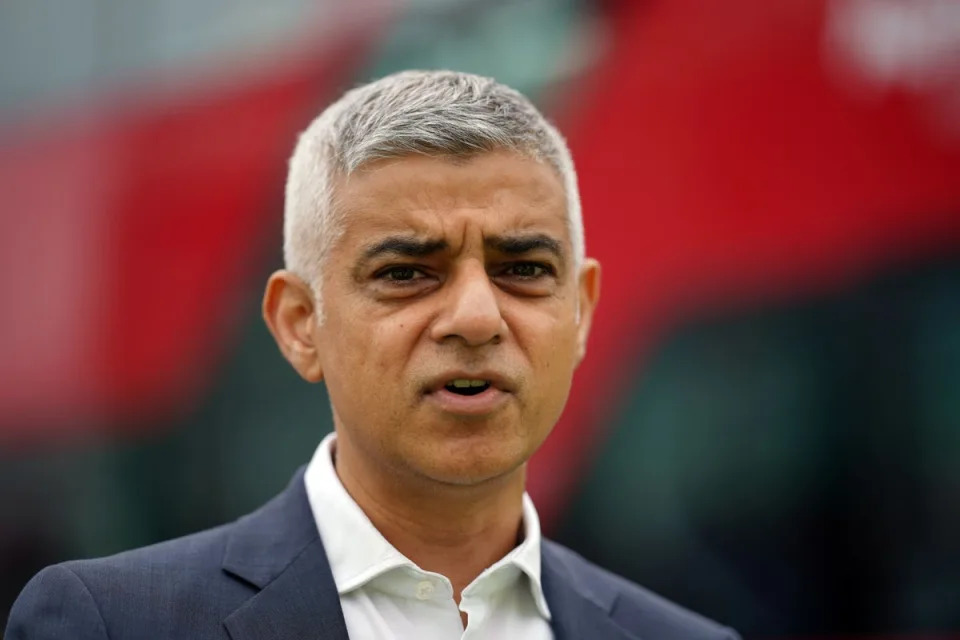
• London mayor Sadiq Khan described ditching the project as a “colossal waste of money”

• West Yorkshire mayor Tracey Brabin warned the move would damage jobs, investment and economy

• Business group the Northern Powerhouse Partnership said cutting back the line would be “wrongheaded”

Among the proposals being considered are stopping the line north of Birmingham, while another section of line into central Manchester, set to also be used by the Northern Powerhouse Rail project, is apparently on the chopping block and could be cut to save costs.

The final stretch of the line into Euston, the most expensive part of the project, could be abandoned in favour of terminating at Old Oak Common, six miles north.

Mr Johnson this weekend branded cost-saving measures “desperate”, urging the prime minister to deliver on the 2019 levelling-up pledge the Conservatives were elected on. He said it would “mutilate” the whole project.

“It is the height of insanity to announce all this just before a party conference in Manchester,” he said. “It is no wonder that Chinese universities teach the constant cancellation of UK infrastructure as an example of what is wrong with democracy.”

Mr Cameron has also privately raised significant concerns about the possibility that the high-speed rail line could be heavily altered, according to The Times.

In a letter to Mr Sunak, mayor of London Mr Khan warned that it would take longer to get from Birmingham to central London on HS2 than existing trains if plans to terminate at Euston station were abandoned.

“The government's approach to HS2 risks squandering the huge economic opportunity that it presents and turning it instead into a colossal waste of public money,” the Labour mayor said in a letter to the PM.


Sadiq Khan warned it may take longer to get from Birmingham to central London on HS2 than on existing trains (PA Wire)

When the railway first opens between London and Birmingham, expected between 2029 and 2033, its terminus in the capital will be Old Oak Common, in the western suburbs.

Mr Khan said: “Terminating the service at Old Oak Common would be a short-sighted decision which will have long-term implications, significantly downgrading the value of HS2 as a high-speed connection and leaving a ridiculous situation where a 'high speed' journey between Birmingham and central London could take as long as the existing route, if not longer.”

He said the “best case” journey time of one hour and 22 minutes from Birmingham to Euston, changing at Old Oak Common onto the Elizabeth line and Northern line, was “already one minute longer than the existing train time”.

Tracy Brabin, mayor of West Yorkshire, added: “Scrapping the project in the north of England will damage jobs, investment and the economy and leave plans to level up in tatters.

“Big infrastructure projects need long-term commitment over successive governments. There must be a better way than this piecemeal stop-start approach that we have seen from this government.”

Henri Murison, chief executive of the Northern Powerhouse Partnership, which represents businesses across the north, told The Independent: “For both the north and for London the government is considering wrongheaded choices.”


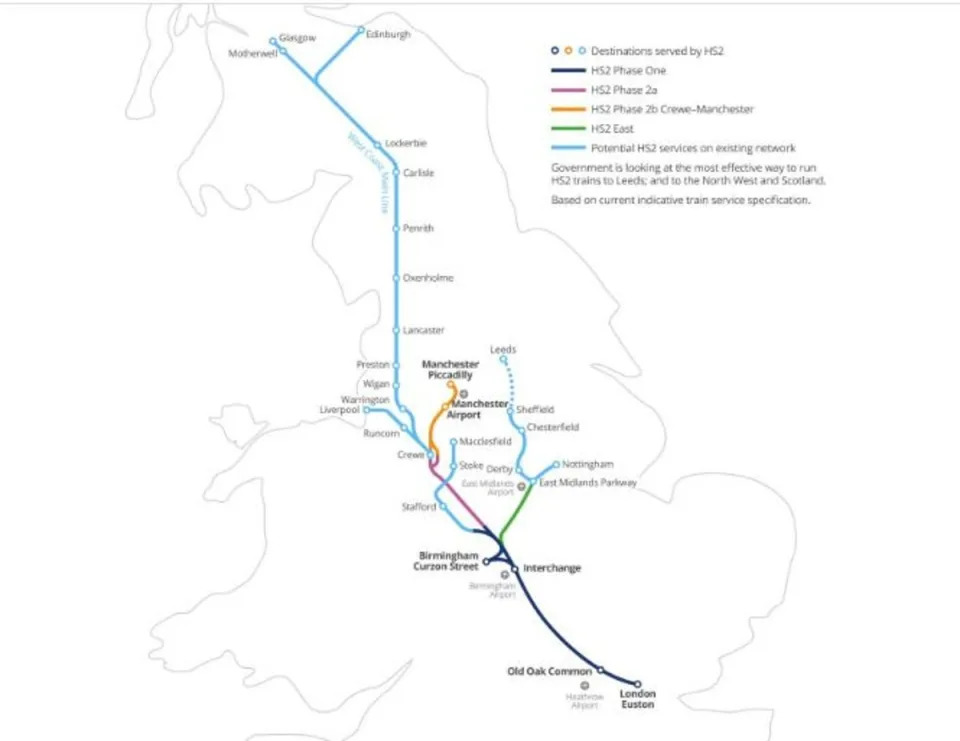
A map of the project’s proposed services (HS2)

“As Boris Johnson rightly argues, this isn’t just the worst of Treasury orthodoxy stopping the most vital sections of HS2 allowing the north to benefit, but losing Northern Powerhouse Rail – or the Charles line as leading northern Tory John Stevenson has christened it.

“It was the current prime minister who convinced Boris to make it central to his domestic policy platform and general election campaign. It is time for him to remember it was in large part down to him – remember he is a northern parliamentarian as well as just respect the mandate of the 2019 election.”

HS2’s original leg to Leeds via Sheffield was already scrapped under Mr Johnson’s premiership, while Mr Sunak was chancellor.

Labour’s official policy is to build HS2 in full, including the previously cancelled spur to Leeds – though spokespersons for the opposition party have at times in the past two weeks appeared reluctant to confirm this.

It is also understood that any move by the government to pull the legislation for the northern phase of the project – which is currently going through parliament – would significantly complicate the process for a new government attempting to complete it.

This week, Mr Hunt said the government was “looking at all the options”, adding: “We do need to find a way of delivering infrastructure projects that doesn’t cost taxpayers billions and billions of pounds.” The Treasury chief said no decisions had yet been taken.

A government spokesperson said: “The HS2 project is already well under way with spades in the ground, and our focus remains on delivering it.”
UK
Government will fail to end rough sleeping by deadline, says expert group


Aine Fox, PA Social Affairs Correspondent
Sun, September 24, 2023 

A target to end rough sleeping by next year will not be met by the Government amid “chronic and unresolved” issues in the housing system, a report by a group of experts has concluded.

The failure will come as the country faces a housing and affordability crisis which is pushing more people onto the streets, and as pressure on public services results in a lack of early support to help prevention, the Kerslake Commission said.

The independent group of 36 experts was formed in 2021 to look at the lessons from the emergency response which supported people sleeping rough during the pandemic, but said the latest official figures show long-term progress has not been made.

In September 2022, the Government published its Ending Rough Sleeping For Good strategy, which re-stated its 2019 manifesto commitment to end rough sleeping by the end of this parliament.

With a general election expected to be called at some point next year, this means the pledge would have to be met by then.

But figures published earlier this year showed that the number of people estimated to be sleeping rough in England had risen for the first time since 2017.

A snapshot of a single night in autumn last year found 3,069 people sleeping rough, up 626 (26%) on the equivalent total for 2021 and nearly three-quarters (74%) above the level in 2010 when the figures began.

Meanwhile, the numbers of households and children in temporary accommodation – considered another form of homelessness – in England are at record highs.

Some 104,510 households were in temporary accommodation by the end of March – a 25-year high, according to Government statistics released in July.

The total number of children in this situation is also at the highest level since records for that measure began in 2004 – with 131,370 children living in temporary accommodation as of the end of March this year.

The number of households who were rough sleeping when they approached their local authority for help was up by almost a fifth (18.2%) from the first quarter last year, to 3,770 households, the statistics showed.

The Kerslake Commission on Homelessness and Rough Sleeping, in a report published on Monday, said: “The Conservative Government committed in its 2019 manifesto to end rough sleeping within the life span of the next parliament.

“During the pandemic, significant progress was made on rough sleeping and the Kerslake Commission was convened to learn the lessons from the emergency response and drive changes that would help end it by 2024.

“It is unfortunately the conclusion of the Kerslake Commission that this goal will not be met by the deadline.”


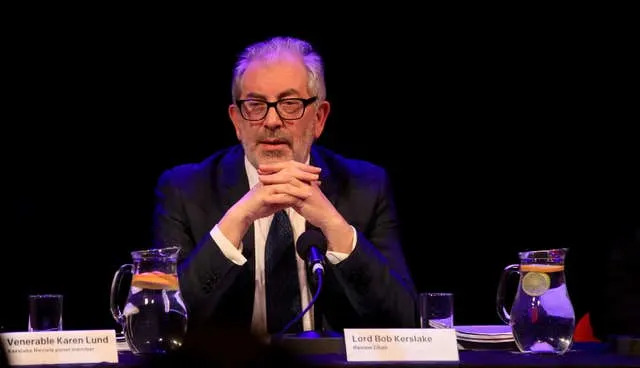
The late Lord Bob Kerslake was dismayed by rising homelessness, his family said (Peter Byrne/PA)

The family of the late Lord Bob Kerslake, who chaired the commission before his death in July, said he would have been “vociferous” in publishing the latest report’s conclusions and recommendations.

In a statement, they said he had been “saddened and dismayed by the rise of homelessness across our country”.

They added: “He was proud to chair the commission and totally committed to its findings. He would have been vociferous in publishing its conclusions and recommendations.

“His main focus would have been persuading those who have the power to make positive changes to read this report in depth, then work together to meet those recommendations.

“As his family, we firmly believe that this would be a fitting tribute to a great man who worked tirelessly for the betterment of others.”

Among its recommendations, the report said a lack of capacity within the system must be prioritised – blaming a severe shortage of social rented housing and supported housing for much of the current situation.

The commission also urged that homelessness and rough sleeping be treated as a priority within all Government departments “with all sectors working together in a trauma-informed way”.

The Illegal Migration Act should be repealed, the report said, highlighting that non-UK nationals “are the group the homelessness sector is most concerned about, as with the passing of (the Act) there could be as many as 190,000 people with an asylum claim deemed inadmissible, leading those with no realistic prospect of return to an indefinite period of extreme hardship and poverty”.

Emma Haddad, commission member and chief executive of St Mungo’s homeless charity, said the report “sets out starkly that we are working against the tide”.

She added: “We made so much progress on rough sleeping during the pandemic, which clearly demonstrated what can be done when we work together with a shared purpose and dedicated funding.

“It’s time we applied the same energy to stop this homelessness and rough sleeping crisis spiralling further.”

A spokesperson for the Department for Levelling up, Housing and Communities paid tribute to Lord Kerslake for his “life’s work” on the issue and said the Government is “focused on ending rough sleeping for good”, spending £2 billion “to tackle homelessness and rough sleeping in the areas that need it most”.

They said “significant progress” had been made “with over 640,000 households prevented from becoming homeless or supported into settled accommodation since 2018”.

Shadow homelessness minister Mike Amesbury said “This report provides a sobering assessment of rising homelessness driven by a chronic shortage of decent, secure and affordable housing after 13 years of Tory failure.

“A toxic mix of rising rents, the cost-of-living crisis and a failure to end no-fault evictions are hitting vulnerable people.”

Separately, homeless charity St Barnabas said its research suggested “worrying insights into the public perceptions and awareness of homelessness”, with 70% of people it surveyed saying they do not consider unsuitable accommodation as a form of homelessness, and 82% admitting they would not know what to do if someone they knew was homeless.

The research, surveying 2,000 UK adults earlier this month, comes as the charity launched a new campaign to improve public understanding of homelessness and a free photographic and educational exhibition in central London featuring artists who have experienced homelessness across the UK.