It’s possible that I shall make an ass of myself. But in that case one can always get out of it with a little dialectic. I have, of course, so worded my proposition as to be right either way (K.Marx, Letter to F.Engels on the Indian Mutiny)
Tuesday, February 20, 2024
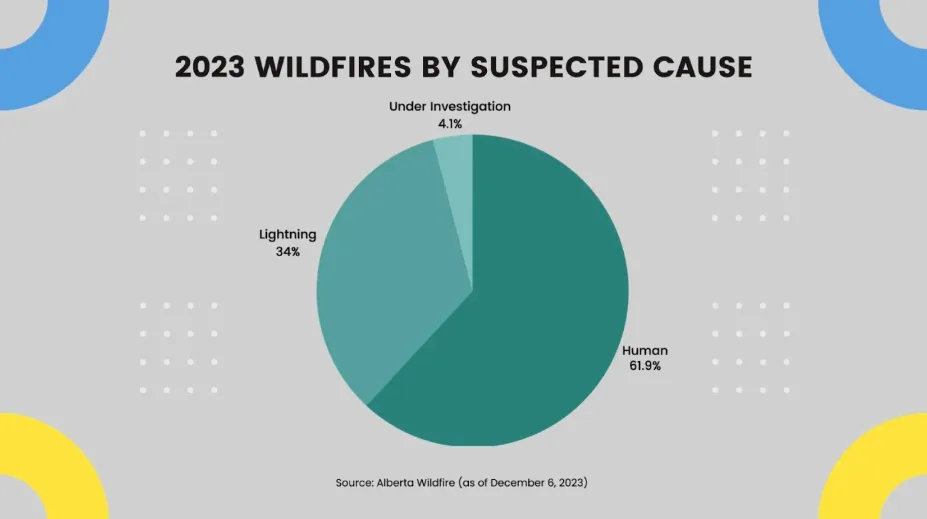
Alberta government declares ‘early start’ to wildfire season
After the destructive wildfires in Canada in 2023, Alberta is getting a head start on preparations this year by declaring an 'early start' to the season
Alberta had a record wildfire year, what 2024 could hold for the province
Alberta’s forestry minister has declared an "early start to wildfire season," announcing a number of new measures aimed at preparing for a potentially severe year.
“We have requested funding for an additional 100 wildland firefighters in budget 2024,” Todd Loewen, forestry minister, said Tuesday afternoon at a warehouse in Whitecourt, Alta.
“As of today, a permit is required for any burning planned in the forest protection area. This will reduce the likelihood of new, human-caused wildfires.” (Alberta government/YouTube)
Alberta Wildfire typically defines the season as March through October. Loewen, though, says prevailing conditions are motivating the province to take a proactive stance, and it asked Albertans to do the same.
“We know we’re in an El Niño right now that’s been causing us to have warmer and drier temperatures overall. We’re hoping that comes to an end,” Loewen said.
“I urge Albertans, especially those who live in or near the forest protection areas, to become familiar with FireSmart principles and prepare their homes, properties and communities accordingly.”
Loewen stated thermal-imaging drones will be used to monitor fires following a pilot project in 2023, and nighttime helicopter operations will be expanded.
The forestry minister noted the 100 new positions would result in 1,000 firefighting personnel working by May 15.
Alberta is scheduled to release its 2024 budget next week.
Researchers are using RNA in a new approach to fight HIV
Society learned about the value of mRNA during the COVID-19 pandemic when we saw scientists and medical professionals harness its power to deliver a vaccine for the virus within a year.
Now, University of Waterloo pharmacy associate professor Emmanuel Ho has developed a novel nanomedicine loaded with genetic material called small interfering RNAs (siRNA) to fight human immunodeficiency virus (HIV) using gene therapy. These siRNAs regulate which genes or proteins are turned on or off in our cells and showed a 73 per cent reduction in HIV replication.
“This opens the door for new therapeutics in the fight against HIV,” said Dr. Ho, who is among Waterloo’s researchers and entrepreneurs leading health innovation in Canada.
Autophagy, also known as the body’s recycling process, plays an important role in our body to eliminate microbes such as viruses and bacteria inside cells. HIV is quite smart and produces a protein, Nef, that prevents cells from activating autophagy.
This is the first research to develop a combination nanomedicine that can reactivate autophagy and prevent HIV entry into cells, allowing our body to re-initiate its defence system.
Additionally, HIV has a gene, CCR5, that allows the virus to enter a cell. The siRNAs target both Nef and CCR5 to reduce HIV infection.
This nanomedicine is intended to be applied vaginally to protect against sexual transmission of HIV. As a result, the nanomedicine is designed to be stable without leakage of siRNAs in the acidic vaginal environment but release the siRNA once inside cells.
“Viruses are smart. They produce Nef proteins to prevent autophagy from occurring,” Ho said. “Our process allows our body to fight the viral infection without needing additional drugs,”
Ho confirms that the next steps include further optimizing the process and improving our understanding of how autophagy plays a role in how our cells protect us from viruses.
“We also hope this will shed some light to develop more alternative approaches to effectively reduce antimicrobial resistance,” Ho said.
OAK BROOK, Ill. – Annual breast cancer screening beginning at age 40 and continuing to at least age 79 results in the highest reduction in mortality with minimal risks, according to a new study published today in Radiology, a journal of the Radiological Society of North America (RSNA).
Breast cancer is the second most common cause of cancer death for women in the U.S. Despite research demonstrating that consistent participation in screening mammography can reduce breast cancer deaths by 40%, only 50% or less of eligible women actually participate in annual screening.
“There is an ongoing debate over the recommendations for breast cancer screening, specifically about when to start and the frequency of screening,” said lead researcher Debra L. Monticciolo, M.D., professor of radiology at Dartmouth Geisel School of Medicine in Hanover, New Hampshire.
Dr. Monticciolo said a recommendation by the U.S. Preventive Services Task Force (USPSTF) in 2009 to screen every other year, or biennially, beginning at age 50 resulted in a nationwide decline in screening participation. The USPSTF drafted new recommendations in 2023, suggesting women participate in biennial screening between 40 and 74. The American College of Radiology, the Society of Breast Imaging and the National Comprehensive Cancer Network recommend annual screening for women at average risk for breast cancer beginning at age 40 and continuing as long as the woman is in good health.
In the study, Dr. Monticciolo and colleagues performed a secondary analysis of Cancer Intervention and Surveillance Modeling Network (CISNET) 2023 median estimates of breast cancer screening outcomes. CISNET modeling data gives researchers the opportunity to estimate the outcomes of screening at various frequencies and starting ages using U.S. data.
The researchers compared the benefits of screening, including mortality reduction, life years gained, breast cancer deaths averted, and its risks—including benign, or unnecessary, biopsies and recall rates—for four different scenarios: biennial screening of women 50-74 (the longstanding USPSTF recommendation), biennial screening of women 40-74 (the task force’s new draft recommendation), annual screening 40-74, and annual screening 40-79. CISNET does not offer modeling past age 79.
The review of CISNET estimates showed that annual screening of women 40-79 with either digital mammography or tomosynthesis showed a mortality reduction of 41.7%. Biennial screening of women 50-74 and 40-74 showed mortality reduction of 25.4% and 30%, respectively. Annual screening of women 40-79 years showed the lowest per mammogram false-positive screens (6.5%) and benign biopsies (0.88%) compared to other screening scenarios.
“The biggest takeaway point of our study is that annual screening beginning at 40 and continuing to at least age 79 gives the highest mortality reduction, the most cancer deaths averted, and the most years of life gained,” Dr. Monticciolo said. “There’s a huge benefit to screening annually until at least 79 and even more benefit if women are screened past 79.”
Dr. Monticciolo said that although the USPSTF uses CISNET modeling to formulate its recommendations, it refers to recall rates and benign biopsies as harms, rather than risks.
“To balance the harms and benefits of screening mammography, they’re willing to give up some mortality benefit to avoid women being recalled for additional imaging and benign biopsies,” she said.
According to the researchers’ analyses, the chance of a woman having a benign biopsy following annual screening is less than 1%, and all recall rates for screening mammography are under 10%. When screening is performed annually with tomosynthesis, the recall rate decreases to 6.5%.
“The risks of screening are non-lethal and manageable for most women,” she said. “But advanced breast cancer is often lethal. Breast cancer is easier to treat if it’s found earlier; we’re able to spare women extra surgeries and chemotherapy. It’s just a better idea to shift to early detection, and that’s what screening does.”
Dr. Monticciolo said she hopes that her study will add to the body of literature that supports annual screening beginning at age 40 as the best way to diagnose cancer early.
“This paper is important because it shows once again that there’s a tremendous increase in mortality benefit by screening annually between the ages of 40-79, and that the chances of experiencing harm are low on a per-exam basis,” she said. “It comes down to valuing women’s lives. I am hoping that primary care physicians see that risks of screening are manageable, and the benefits are tremendous. We need to do this for women.”
###
“Outcomes of Breast Cancer Screening Strategies Based on Cancer Intervention and Surveillance Modeling Network Estimates.” Collaborating with Dr. Monticciolo were R. Edward Hendrick, Ph.D., and Mark A. Helvie, M.D.
Radiology is edited by Linda Moy, M.D., New York University, New York, N.Y., and owned and published by the Radiological Society of North America, Inc. (https://pubs.rsna.org/journal/radiology)
RSNA is an association of radiologists, radiation oncologists, medical physicists and related scientists promoting excellence in patient care and health care delivery through education, research and technologic innovation. The Society is based in Oak Brook, Illinois. (RSNA.org)
For patient-friendly information on breast cancer screening, visit RadiologyInfo.org.
JOURNAL
Radiology
SUBJECT OF RESEARCH
People
ARTICLE TITLE
Outcomes of Breast Cancer Screening Strategies Based on Cancer Intervention and Surveillance Modeling Network Estimates
ARTICLE PUBLICATION DATE
20-Feb-2024
Bar-Ilan University researchers produce “laboratory testicles”
The artificial testicles will contribute to the advancement of research in male fertility and sexual development disorders, and are expected to facilitate the eventual production of sperm in the laboratory
A BRIGHT FIELD IMAGE OF A TESTICULAR ORGANOID CREATED FROM MOUSE EMBRYOS AND INCUBATED IN A DISH FOR 14 DAYS. THE TUBULAR STRUCTURES FORMED IN THE DISH ARE CLEARLY VISIBLE.
The testis is responsible for sperm production and testosterone synthesis. Abnormalities in testis development and function lead to disorders of sex development (DSD) and male infertility. Currently, no in vitro system exists for modeling the testis.
Dr. Nitzan Gonen, a researcher specializing in the process of fetal sex determination, together with research students Aviya Stopel, Cheli Lev and Stav Dahari, has succeeded in creating "laboratory testicles" that may significantly advance understanding of the mechanisms involved in sex determination and provide solutions for male infertility, which affects one in 12 men worldwide.
The artificial testicles produced in Dr. Gonen’s lab at the Goodman Faculty of Life Sciences and the Institute of Nanotechnology and Advanced Materials at Bar-Ilan University, are testis organoids – tiny, artificial organs produced from real mouse testis. Development of organoids has greatly advanced in the last decade with the realization that two-dimensional cellular sample in vitro cannot mimic the behavior of an entire organ. Today, organoids of the brain, kidneys, intestines, and other organs have already been produced. The testicular organoids created by Gonen's group closely simulate a natural testicle.
The artificial testicles were cultured from immature testicular cells sampled from neonatal mice. The research team realized the procedure was a success when they identified tubule-like structures and cellular organization highly resembling that of the in vivo testis. These tubular structures parallel the multiple seminiferous tubules present in the natural testicle, where the sperm is produced.
The organoids were successfully cultured in vitro for nine weeks. This is considered a long period of time and can, theoretically, be enough time to complete the process of sperm production and hormone secretion. In mice this takes 34 days, so the relatively long lifespan of the organoids may allow these processes to occur in vitro. Dr. Gonen doesn’t yet know if the existing model will actually produce sperm cells, but the laboratory team has already noticed signs of the beginning of meiosis, a process in which gametes are produced. Gametes are reproductive cells, in this case sperm cells with half the number of chromosomes as in a normal cell, that "await" for the completion of the other half from another gamete, in this case an egg, upon fertilization.
Organoids usually resemble organs in the embryonic stage. In this case the researchers created conditions that allowed the organoid to mature in the laboratory and showed that even testicles grown from embryonic cells can develop and grow clear sperm tubes. The team was unsuccessful in its attempt to grow organoids from adult mice testis.
“Artificial testicles are a promising model for basic research on testicle development and function, which can be translated into therapeutic applications for disorders of sexual development and infertility,” explains Dr. Gonen. In the future she plans to produce organoids using human samples. A testis produced from human cells, for example, could help children being treated for cancer, which may impair their ability to produce functional sperm. As children are too young to produce their own sperm, these samples can be frozen and used in the future to have children. Gonen’s vision is to grow testes organoids from biopsies of children with cancer and hopefully grow fertile sperm in vitro.
A fluorescent image of a testicular organoid created from mouse embryos and incubated in a dish for 14 days. The tubular structures formed in the dish are clearly visible. Marked in green are Sertoli cells, which are the cells responsible for the formation of the tubules in the testicle and, indeed, create the tubules in the dish.
CREDIT Cheli Lev
Testicular organoids generated from mice pups and incubated in a dish for 21 days. Labelled in red are Sertoli cells, which are the cells responsible for the formation of the tubules in the testicle and, indeed, create the tubules inside the organoid - as in a real testicle.
Testicular organoids generated from mice pups and incubated in a dish for 21 days. Sertoli cells, which are the cells responsible for the formation of the tubules in the testicle, appear in red and germ cells, which will produce the sperm cells, appear in green. Germ cells always stay close proximity to Sertoli cells as they support them during the formation of sperm cells.
Image of real testes of 28-day-old mice. The Sertoli cells, which are the cells responsible for the formation of the tubules in the testicle, are marked in red and the unmarked tubules of the testicle in which the sperm cells are produced are clearly seen
LA JOLLA (February 20, 2024)—Surveys show most men in the United States are interested in using male contraceptives, yet their options remain limited to unreliable condoms or invasive vasectomies. Recent attempts to develop drugs that block sperm production, maturation, or fertilization have had limited success, providing incomplete protection or severe side effects. New approaches to male contraception are needed, but because sperm development is so complex, researchers have struggled to identify parts of the process that can be safely and effectively tinkered with.
Now, scientists at the Salk Institute have found a new method of interrupting sperm production, which is both non-hormonal and reversible. The study, published in Proceedings of the National Academy of Sciences (PNAS)on February 20, 2024, implicates a new protein complex in regulating gene expression during sperm production. The researchers demonstrate that treating male mice with an existing class of drugs, called HDAC (histone deacetylase) inhibitors, can interrupt the function of this protein complex and block fertility without affecting libido.
“Most experimental male birth control drugs use a hammer approach to blocking sperm production, but ours is much more subtle,” says senior author Ronald Evans, professor, director of the Gene Expression Laboratory, and March of Dimes Chair in Molecular and Developmental Biology at Salk. “This makes it a promising therapeutic approach, which we hope to see in development for human clinical trials soon.”
The human body produces several million new sperm per day. To do this, sperm stem cells in the testes continuously make more of themselves, until a signal tells them it’s time to turn into sperm—a process called spermatogenesis. This signal comes in the form of retinoic acid, a product of vitamin A. Pulses of retinoic acid bind to retinoic acid receptors in the cells, and when the system is aligned just right, this initiates a complex genetic program that turns the stem cells into mature sperm.
Salk scientists found that for this to work, retinoic acid receptors must bind with a protein called SMRT (silencing mediator of retinoid and thyroid hormone receptors). SMRT then recruits HDACs, and this complex of proteins goes on to synchronize the expression of genes that produce sperm.
Previous groups have tried to stop sperm production by directly blocking retinoic acid or its receptor. But retinoic acid is important to multiple organ systems, so interrupting it throughout the body can lead to various side effects—a reason many previous studies and trials have failed to produce a viable drug. Evans and his colleagues instead asked whether they could modulate one of the molecules downstream of retinoic acid to produce a more targeted effect.
The researchers first looked at a line of genetically engineered mice that had previously been developed in the lab, in which the SMRT protein was mutated and could no longer bind to retinoic acid receptors. Without this SMRT-retinoic acid receptor interaction, the mice were not able to produce mature sperm. However, they displayed normal testosterone levels and mounting behavior, indicating that their desire to mate was not affected.
To see whether they could replicate these genetic results with pharmacological intervention, the researchers treated normal mice with MS-275, an oral HDAC inhibitor with FDA breakthrough status. By blocking the activity of the SMRT-retinoic acid receptor-HDAC complex, the drug successfully stopped sperm production without producing obvious side effects.
Another remarkable thing also happened once the treatment was stopped: Within 60 days of going off the pill, the animals’ fertility was completely restored, and all subsequent offspring were developmentally healthy.
The authors say their strategy of inhibiting molecules downstream of retinoic acid is key to achieving this reversibility.
Think of retinoic acid and the sperm-producing genes as two dancers in a waltz. Their rhythm and steps need to be coordinated with each other for the dance to work. But if you throw something in that makes the genes miss a step, the two are suddenly out of sync and the dance falls apart. In this case, the HDAC inhibitor causes the genes’ misstep, halting the dance of sperm production.
However, if the dancer can find its footing and get back in step with its partner, the waltz can resume. In the same way, the authors say that removing the HDAC inhibitor allows the sperm-producing genes to get back in sync with the pulses of retinoic acid, turning sperm production back on as desired.
“It’s all about timing,” says co-author Michael Downes, a senior staff scientist in Evans’ lab. “When we add the drug, the stem cells fall out of sync with the pulses of retinoic acid, and sperm production is halted, but as soon as we take the drug away, the stem cells can reestablish their coordination with retinoic acid and sperm production will start up again.”
The authors say the drug doesn’t damage the sperm stem cells or their genomic integrity. While the drug was present, the sperm stem cells simply continued regenerating as stem cells, and when the drug was later removed, the cells could regain their ability to differentiate into mature sperm.
“We weren’t necessarily looking to develop male contraceptives when we discovered SMRT and generated this mouse line, but when we saw that their fertility was interrupted, we were able to follow the science and discover a potential therapeutic,” says first author Suk-Hyun Hong, a staff researcher in Evans’ lab. “It’s a great example of how Salk’s foundational biological research can lead to major translational impact.”
Other authors include Glenda Castro, Dan Wang, Russell Nofsinger, Annette R. Atkins, and Ruth T. Yu of Salk, Maureen Kane, Alexandra Folias, and Joseph L. Napoli of UC Berkeley, Paolo Sassone-Corsiof UC Irvine, Dirk G. de Rooij of Utrecht University, and Christopher Liddle of the University of Sydney.
The work was supported by the National Institutes of Health (grants CA265762 and CA220468) and the Next Generation Sequencing and Flow Cytometry Cores at Salk, funded by the Salk Cancer Center (NCI grant NIH-NCI CCSG: P30 014195).
About the Salk Institute for Biological Studies:
Unlocking the secrets of life itself is the driving force behind the Salk Institute. Our team of world-class, award-winning scientists pushes the boundaries of knowledge in areas such as neuroscience, cancer research, aging, immunobiology, plant biology, computational biology, and more. Founded by Jonas Salk, developer of the first safe and effective polio vaccine, the Institute is an independent, nonprofit research organization and architectural landmark: small by choice, intimate by nature, and fearless in the face of any challenge. Learn more at www.salk.edu.
Targeting nuclear receptor corepressors for reversible male contraception
ARTICLE PUBLICATION DATE
20-Feb-2024
COI STATEMENT
The authors disclose that the reviewer Dr. Yanhong Shi jointly authored a commentary on an unrelated topic with RME in 2022 (PMID: 35344400).
Generating 'buzz' about new products can influence their success
NEWS RELEASE
BINGHAMTON UNIVERSITY
IMAGE:
PREANNOUNCEMENT MARKETING CAN OFTEN INFLUENCE A PRODUCT’S SUCCESS, AS IN THE CASE OF THE FILMS "BARBIE" AND "OPPENHEIMER," RESULTING IN THE BARBENHEIMER PHENOMENON.
CREDIT: BINGHAMTON UNIVERSITY, STATE UNIVERSITY OF NEW YORK; UNIVERSAL; WARNER BROTHERS
BINGHAMTON, N.Y. -- The way companies announce new products or build up hype can often influence their success once those new products hit the market, according to new research from Binghamton University, State University of New York. Whether it's an upcoming blockbuster movie or a new rollout from major companies like Coca-Cola or Apple, the new research shows how companies might use this type of preannouncement marketing to their advantage.
How often have you watched trailers for an upcoming movie and thought, “I can’t wait to see that,” when it hits theaters next year?
It’s no surprise when critically acclaimed movies score well at the box office, but when films like “Barbie” or “Oppenheimer” go above and beyond that, the extra push can often be traced back to the buzz they generated building up to their debut on the big screen.
Preannouncement marketing can often influence a product’s success, whether it’s an upcoming blockbuster movie or a new product rollout from major companies like Coca-Cola or Apple. A research study from Binghamton University’s School of Management Associate Professor Debi Mishra shows how companies might use this type of marketing to their advantage.
What these communications provide is another way to think about shareholder return because shareholders want the money that they’re putting in to appreciate in value, said Mishra, a marketing expert who conducted the study. While that often depends on the actual product performance, he said, how companies manage and communicate the “buzz” plays a big role.
“New products are the heartbeat of a company, especially those products that are more consumer-facing, so how a company communicates with consumers or stakeholders about new products is the key to future growth and survival,” Mishra said. “Do you provide all the information upfront or more toward the preannouncement phase? And depending on how this information is communicated, they create surprise in the marketplace that can prove beneficial.”
Mishra and a fellow researcher gauged the impact by collecting data from 149 product launch events and their preceding preannouncements, as reported in The Wall Street Journal from 2005–2018.
By examining what kind of information came out within one year preceding a product’s announcement, whether it was a costly announcement (the company loses money if it doesn’t introduce the product) or a costless one, the researchers could compare the effect on stock across these scenarios.
They found that costless approaches generally resulted in a positive stock market reaction, and contrary to expectations, losses from not investing as much up-front in building up product hype could be compensated after the release. Alternatively, costly approaches didn’t often result in a significant stock market reaction either way.
Examples included:
The announcement of one new beverage by Coca-Cola didn’t promise when it would be rolled out or how much the company had invested in the new product, meaning it could’ve been easy for the company to reverse that announcement if needed.
An announcement by IBM to use artificial intelligence to draw insights from digital data and create graphics of data that, while positive, stated it was part of the company’s $1 billion investment.
“If companies create all this buzz about a product but never release it, they might benefit from the stock market having gone up initially, but shareholders will suffer down the road,” Mishra said. “It also makes a difference whether the company makes any kind of guarantee, such as purchasing land worth $20 million for a factory to make the new product. That’s a credible commitment because that money could be lost if they never introduce that product. The market is smart enough to figure these types of things out.”
Mishra said the research also showed a “surprise effect” can impact the market’s reaction to new products.
If a company makes a new product announcement and has already put in a lot of visible commitment behind it, that is no longer a surprise to the market because of an implied expectation the company would follow through with the introduction.
Mishra said a company’s new product announcement that doesn’t provide upfront information about how much is being invested into it could potentially make a larger splash on the market once it comes out.
“If you have something really cool to put out – Brad Pitt is starring in some big upcoming movie – you can’t keep it under wraps all the time, but if your intention is truly honest about introducing that product or movie, it still could be a good idea to keep things somewhat secretive,” Mishra said. “All of a sudden, you’re in the position to have your audience or the market react by saying, ‘Oh, we didn’t expect that!”
The study, "Does the economic value of new product announcements depend upon preannouncement signals? An empirical test of information asymmetry theories," was published in the Journal of Product & Brand Management.
Research participants who read propaganda generated by the AI large language model GPT-3 davinci were nearly as persuaded as those who read real propaganda from Iran or Russia, according to a study. Josh Goldstein and colleagues identified six articles, likely originating from Iranian or Russian state-aligned covert propaganda campaigns, according to investigative journalists or researchers. These articles made claims about US foreign relations, such as the false claim that Saudi Arabia committed to help fund the US-Mexico border wall or the false claim that the US fabricated reports showing that the Syrian government had used chemical weapons. For each article, the authors used AI to generate new propaganda by feeding one or two sentences from the original propaganda article to GPT-3, along with three other propaganda articles on unrelated topics to use as templates for style and structure. In December 2021, the authors presented the actual propaganda articles and articles generated by GPT-3 to 8,221 US adults, recruited through the survey company Lucid. On average, 24.4% of participants believed the claims without reading any article. Reading a real propaganda article raised that to 47.4%. But reading an article created by GPT-3 was almost as effective: 43.5% of respondents agreed with the claims after reading the AI-generated articles. Many individual AI-written articles were as persuasive as those written by humans. After the survey, participants were informed that the articles contained false information. According to the authors, propagandists could use AI to mass-produce propaganda with minimal effort.
JOURNAL
PNAS Nexus
ARTICLE TITLE
How persuasive is AI-generated propaganda?
ARTICLE PUBLICATION DATE
20-Feb-2024
SwRI to host second Automotive Corrosion Symposium
Event brings together corrosion experts and automotive industry professionals
SOUTHWEST RESEARCH INSTITUTE WILL HOST THE AUTOMOTIVE CORROSION SYMPOSIUM IN DETROIT APRIL 11-12. THE EVENT IS DESIGNED TO FOSTER COMMUNICATION AMONG CORROSION EXPERTS FROM WITHIN AUTOMOTIVE ORIGINAL EQUIPMENT MANUFACTURERS (OEMS) AS WELL AS MATERIAL, PAINT AND OTHER AUTOMOTIVE SUPPLIERS OVER A WIDE SPECTRUM OF INDUSTRY-IDENTIFIED CORROSION ISSUES. SWRI HAS MORE THAN FOUR DECADES OF EXPERIENCE IN CORROSION AND MATERIALS FAILURE RESEARCH. PICTURED IS THE INSTITUTE’S DEDICATED FACILITY FOR COST-EFFICIENT STANDARD CORROSION TESTING.
SAN ANTONIO — February 20, 2024 —Southwest Research Institute will host its second Automotive Corrosion Symposium in Detroit April 11-12. The event, first held in 2022, is designed to foster communication among corrosion experts from within automotive original equipment manufacturers (OEMs) as well as material, paint and other automotive suppliers over a wide spectrum of industry-identified corrosion issues.
“Corrosion is a concern within the automotive industry, not just for cosmetic reasons, but because it can affect functionality and safety,” said SwRI Staff Engineer James Dante, one of the organizers of the event. “As the industry is driven toward high-strength, lighter-weight materials with significantly different corrosion properties, this concern is heightened.”
The symposium is organized by industry professionals addressing automotive corrosion from a variety of technical perspectives. This year’s theme is “Applied Corrosion Science for Next-Gen Vehicles.” The organizing committee is accepting abstracts for papers, presentations and posters through February 23. Abstracts can be submitted through the link below.
“The automotive industry is working to reduce emissions as it develops next-generation vehicles,” Dante said. “Whether improving fuel efficiency or pivoting toward electric vehicles, the need for lightweight, strong materials is exploding. These materials must be inherently corrosion-resistant or suitable protection systems are needed to prevent corrosion.”
SwRI has more than four decades of experience in corrosion and materials failure research. A multidisciplinary group of engineers and scientists offer a comprehensive approach to solving corrosion problems for government and industry. The Institute is home to corrosion testing laboratories that characterize materials in a wide array of caustic environments and develop corrosion-resistant materials and coatings to withstand the harshest environments.