Thursday, October 31, 2024

UNRWA head says Israel's effort to dismantle the aid agency will be catastrophic for Gaza


 United Nations Work and Relief Agency for Palestine Commissioner General Phillpe Lazzarini said Tuesday that Israeli legislation against UNRWA will have a catastrophic impact on the international response to the humanitarian crisis in Gaza. Palestinians inspect a destroyed UNRWA school following an Israeli air strike in Al Nusairat refugee camp in the central Gaza Strip, 06 June 2024. File photo by Mohammed Saber/EPA-EFE


Oct. 30 (UPI) -- The head of the United Nations Work and Relief Agency for Palestine said in a Tuesday letter to the U.N. General Assembly that Israeli legislation against UNRWA will have a catastrophic impact on the international response to the humanitarian crisis in Gaza.

UNRWA Commissioner-General Philippe Lazzarini said on X that Israeli bills targeting UNRWA are aimed at preventing it from operating to offer aid in the occupied Palestinian territory.
His letter to the U.N. General Assembly sought support to make sure UNRWA can continue delivering aid to Palestinians.

"The adoption today by the Knesset of two laws on UNRWA in effect denies the protections and means essential for UNRWA to operate, forbidding Israeli state officials from contact with UNRWA or its representatives, and prohibiting UNRWA operations within what is referred to as the sovereign territory of the State of Israel," Lazzarini wrote in his letter to the U.N. General Assembly president.

Related
Israel passes bills to ban UNRWA, attracting swift and strong condemnation
Israel bars U.N. Secretary-General Antonio Guterres from country
Israeli airstrikes kill 18 in school, including 6 U.N. workers

Lazzarini said hostages taken by Hamas continue to suffer in captivity and Gaza's surviving civilian population "is trapped, awaiting death by airstrikes or starvation."

"After more than a year of the most intense bombardment of a civilian population since World War II, and the restriction of humanitarian aid far below minimum needs, the lives of Palestinians are shattered," Lazzarini added. "More than 43,000 people are reported killed, the majority women and children. Nearly the entire population is displaced. Schools, universities, hospitals, places of worship, bakeries, water, sewage and electricity systems, roads and farmland have all been destroyed."

UNRWA was formed in 1949 and is the primary aid agency for Palestinians in Israeli-occupied territories, delivering food and other supplies while educating 660,000 Palestinian youth.


Israel's Knesset overwhelmingly passed two bills Tuesday banning the organization within Israel.

"UNRWA has long ceased being a humanitarian aid agency. Beyond being an integral part of encouraging terrorism and hatred, it is an agency for perpetuating poverty and suffering," Yuli Edelstein, chairman of the Knesset's foreign affairs and defense committee, said as it was passed.

Israel accuses a handful of UNRWA's employees of being involved in the Hamas Oct. 7, 2023 attack on Israel that killed 1,200 Israelis.

So far Israel's war in Gaza, launched after the Hamas attack, has killed 43,000 Palestinians, according to the Gaza Ministry of Health.

In his letter to the U.N. General Assembly, Lazzarini said the names of all UNRWA employees have been shared with Israel.

He said UNRWA takes allegations of UNRWA employees' complicity with Hamas very seriously, but asserted Israel has not provided evidence of its allegations requested by the agency.

"No response has been received," Lazzarini wrote. "UNRWA is therefore in the invidious position of being unable to address allegations for which it has no evidence, while these allegations continue to be used to undermine the Agency."

Lazzarini said UNRWA has been under "intense physical attack in Gaza." He said 237 UNRWA personnel have been killed, more than 200 premises have also been damaged or destroyed, killing 560 people seeking U.N. protection.
NOAA: Antarctic ozone hole has shrunk, full recovery predicted


This year's ozone hole over the Antarctic is one of the smallest ever recorded and scientists say the ozone layer should fully recover by 2066. Image courtesy of NOAA Climate.gov

Oct. 30 (UPI) -- A hole in the atmosphere's ozone layer is the seventh-smallest since recovery began in 1992, the National Oceanic and Atmospheric Administration announced Wednesday.

The hole annually opens over the Antarctic at the southern pole and is much smaller than in most prior years, the NOAA announced.


NOAA and NASA scientists estimate the ozone layer could fully recover by 2066 and no longer have a hole opening each year.

"The 2024 Antarctic hole is smaller than ozone holes seen in the early 2000s," NASA ozone research team leader Paul Newman said. "The gradual improvement we've seen in the past two decades shows that international efforts that curbed ozone-destroying chemicals are working."

Related
U.N. panel says ozone layer will recover in about 40 years
NASA, NOAA scientists: Earth's ozone hole slightly smaller
Ozone pollution in Antarctica has risen steadily over last 25 years

The peak time for ozone depletion is from Sept. 7 through Oct. 13, but this year's hole ranked as the seventh-smallest since efforts began tin 1992 to counteract the hole caused by ozone-depleting chemicals.

The ozone hole this year averaged 8 million square miles with a peak size of 8.5 million square miles on Sept. 28, according to the NOAA.

The ozone hole's average size this year was about three times larger than the combined landmass of the United States.

The NOAA and NASA have reported the ozone hole's size every year since 1979, when satellites made it possible to track it.

Areas subject to ozone depletion are subjected to more UV radiation from the sun, which raises the potential for skin cancer, cataracts and reduced agricultural yields.

Ozone depletion also harms animals in important ecosystems and damages aquatic plants.

The Montreal Protocol established international agreement on ceasing the use of chemicals that depleted the ozone layer, which provides the Earth with a natural sunscreen, according to the NOAA.

A decline in the international use of chlorofluorocarbons -- combined with a natural infusion of ozone due to air currents from north of the Antarctic -- helped the ozone hole stay relatively small this year, NOAA scientists said.

While the ozone hole generally is shrinking, relatively large holes have been recorded as recently as last year.

Brain changes in marijuana users might not stem from cannabis

By Dennis Thompson, 
HealthDay News
Oct. 30, 2024 

People who regularly use marijuana experience changes in their brain structure and function, but it's not clear that cannabis is the cause, a new study finds. 
Photo by Adobe Stock/HealthDay News

People who regularly use marijuana experience changes in their brain structure and function, but it's not clear that cannabis is the cause, a new study finds.

Researchers found specific differences in the brains of people who'd ever used weed, particularly in areas densely packed with cannabinoid receptors. However, genetic analysis couldn't pin down any specific association between cannabis use and these brain changes.

This means some other factor besides weed might be causing these brain changes in marijuana users.

"Our results need to be interpreted with careful consideration," concluded the research team led by Saba Ishrat, a doctoral student in psychiatry with the University of Oxford in Britain. Additional research is needed to understand the effects of heavy cannabis use in this population, including considerations of potency and related information, to inform public policy."

For the study, researchers analyzed data on nearly 15,900 weed users participating in the U.K. Biobank research project for whom genetic profiling and MRI brain scans were available.

Looking at the brains of the marijuana users, researchers found that they had poorer integrity of their "white matter," the part of the brain that connects different brain regions.

This was particularly evident in the corpus callosum, which serves as the main route of communication between the left and right sides of the brain.

Weed users also had weaker neural connections in the brain regions which make up the default mode network, which is thought to be active during mind wandering or daydreaming, researchers said.

However, heavy or long-term use was not strongly associated with any of these observed changes, researchers said.

Further, genetic analysis showed no significant association between a person's cannabis use and these brain changes.

The new study was published Tuesday in the journal BMJ Mental Health.

"Cannabis users had significant differences in brain structure and function, most markedly for markers of lower white matter microstructure integrity," the researchers wrote in a journal news release. "Genetic analyses found no support for causal relationships underlying these observed associations."

It could be that some other variable like family history, diet or other medications might have influenced the changes, researchers said.

It's also possible that the genetic analysis didn't include enough people to be able to detect the effects of weed on the brain, they added.

More information

The U.S. Centers for Disease Control and Prevention has more on cannabis and brain development.

Copyright © 2024 HealthDay. All rights reserved.

CDC confirms onions caused McDonald's E. coli outbreak

By Mike Heuer
Health News
Oct. 30, 2024 

The U.S. Centers for Disease Control and Prevention on Wednesday reported there is "very low" risk to the public after an outbreak of E. coli affected 90 people in 13 states after eating McDonald's Quarter Pounders containing yellow slivered onions. Photo by Cristobal Herrera-Ulashkevich/EPA-EFE


Oct. 30 (UPI) -- Slivered onions served on McDonald's Quarter Pounders and other menu items caused a recent E. coli outbreak, the U.S. Centers for Disease Control and Prevention announced Wednesday.

The CDC began investigating the E. coli outbreak on Oct. 22 and identified 90 cases that caused one death and 27 hospitalizations in 13 states.

The CDC says the current risk to the public is "very low" due to the actions take by McDonald's and Taylor Farms to remove fresh yellow slivered onions from McDonald's restaurants and other food services operators that also used the onions from Taylor Farms.

The CDC identified between 16 and 29 cases in Colorado and Montana and between six and 15 cases in Utah, Nebraska and Missouri.

Related
McDonald's Quarter Pounder to return to menu after testing negative for E. coli
CDC: 75 people infected from E. coli outbreak linked to McDonald's burgers
1 dead, dozens sickened in E. coli outbreak linked to McDonald's Quarter Pounders

Michigan, Wisconsin, Iowa, Kansas, New Mexico, Wyoming, Oregon and Washington each had between one and five cases.

No new cases have occurred since McDonald's and supplier Taylor Farms recalled the slivered onions.

The Colorado Department of Agriculture on Oct. 22 received multiple lots of fresh and frozen beef patties from McDonald's locations in the state that were associated with the E. coli outbreak.

The CDA Microbiology Laboratory analyzed the beef, which tested negative for E. coli. The CDA says it does not expect to receive more samples.


The CDA did not test McDonald's onions and said there is no evidence showing Colorado-grown onions are linked to the outbreak.

E. coli is a group of bacteria that can cause infections in people's stomachs, urinary tract and other parts of the body, according to the Cleveland Clinic.

E. coli usually won't cause harm, but some strains can make people ill and experience watery diarrhea, vomiting and fever.

The Shiga toxin-producing E. coli strain is the most likely to cause severe illness.
British nuclear shipyard fire sends two to hospital, police say no nuclear risk


A significant BAE Systems nuclear submarine shipyard fire just after midnight at Britain's Barrow-in-Furness sent two people to the hospital early Wednesday morning. File Photo by Neil Hall/EPA-EFE

Oct. 30 (UPI) -- Two people were transported to a hospital for treatment after a fire at a BAE Systems nuclear submarine shipyard fire just after midnight at Britain's Barrow-in-Furness.

The two people were treated for smoke inhalation and released. The Ministry of Defense, emergency services and BAE were all working together in response and investigation of the cause as police said there was no nuclear risk

"There is no nuclear risk. However, people living nearby are advised to remain indoors and keep doors and windows closed," Cumbria Police said on X.

The main building facility of the nuclear submarine shipyard was evacuated overnight.

Naval sources downplayed the concern the fire may be suspicious and possibly be connected to Russia, but the investigation into the cause is in its early stages.

Cumbria Fire and Rescue's Stuart Hook said firefighters used 15 pieces of equipment to put out the fire.

The facility is huge and images posted to social media revealed flames coming from the Devonshire Dock Hall building. It's the main construction site for Britain's Trident nuclear submarine program.

Four Dreadnaught class submarines are currently being built at the roughly six-acre facility. They are scheduled to replace Vanguard submarines in the early 2030s.

"My son came and got me and said that the BAE alarms were going off, so we went. When I opened the front door, we just saw a lot of black smoke. It was a lot of black smoke, like really thick black smoke, and it was very loud," A woman witness told The Guardian.

David Harris, who lives near the shipyard, told the BBC he saw smoke in the distance as he left a local gym.

"Given the equipment used within the submarines... I only live a few streets back from where I took the footage, so I did feel worried," he said.

Smoke damage could be seen at the affected building, but the full extent of the damage was not yet known.

All non-essential staff at Devonshire Dock Hall were told not to come to work while other staff were told to come in as usual.

LITHIUM BATTERIES FIRE RISK

Missouri battery recycling plant erupts in flames; evacuations ordered


 A fire erupted at Critical Mineral Recovery in Fredericktown, Mo., Wednesday, 
prompting evacuations. Photo courtesy of Madison County 911/Facebook


Oct. 30 (UPI) -- A fire erupted at a Missouri lithium-ion battery recycling plant on Wednesday, prompting authorities in Fredericktown, Mo., to order some residents to evacuate.

Video of the incident at Critical Mineral Recovery shows smoke billowing from the 225,000-square-foot facility. One video shows an eruption piercing through the roof, ejecting a fireball into the sky.

"Per the Madison County Sheriffs Office EVERYONE North and North West of the village creek road and Madison 217 are needs to Evacuate IMMEDIATELY!" Maddison County 911 said on Facebook. "If you can see or smell smoke in this area you need to evacuate!"

Fredericktown Fire Department urged residents online to shelter in place, close windows and turn off air conditioning units.

At least 25 fire departments, along with multiple enforcement agencies, responded to the scene, according to Madison County Sheriff Katy McCutcheon, who told reporters during a brief conference that dispatch received a call about the fire at 1:37 p.m. local time.

She said the fire had been "somewhat contained" and that the evacuations were ordered for Madison County Road 277, where smoke from the plant was wafting. Fire officials are warning winds are expected to continue to push the smoke in a north-northwest direction into Thursday morning.

"We were told by plant operations managers that they're not concerned with the smoke but it's heavy enough that people do need to evacuate," she said.

The cause of the fire was under investigation, and the contents of the smoke were to be tested by the Department of Natural Resources.

McCutcheon said it was unclear what was on fire. Critical Mineral Recovery was "being tight-lipped," she said.

No injuries were reported.

"This could have been completely worse," she said


Who should get paid for nature's sequenced genes?

Agence France-Presse
October 30, 2024 6:36AM ET

Vanilla is grown in tropical regions of the world (Menahem KAHANA/AFP)

Much of the vanilla that flavors our ice cream today is artificial, derived from the genetic signature of a plant that hundreds of years ago was known only to an Indigenous Mexican tribe.

The plant's sequenced genomic information, available on public databases, was used as the basis for a synthetic flavoring that today competes with vanilla grown in several countries, mainly by small-scale farmers.

Few, if any, benefits of the lucrative scientific advance have trickled down to the communities that gave us vanilla in the first place.

"Wild genetic resources and pharmaceuticals ... are a multi-multi-billion dollar businesses. They clearly are profitable... that's not in dispute," Charles Barber of the World Resources Institute think tank told AFP.

"A great deal of really valuable information has fed into the system from research and utilization of wild genetic resources. And there is no mechanism currently to compensate the people where this information is coming from" in the form of digitally sequenced data, he added.

Much of the information comes from poor countries.

Fair sharing of the gains derived from digitally-stored genetic sequencing data has been a headache for negotiators at the COP16 biodiversity summit into its second week in Cali, Colombia.

At the last conference, in Montreal in 2022, 196 country parties to the UN's Convention on Biological Diversity (CBD) agreed to create a benefit-sharing mechanism for the use of digital sequence information (DSI).

Two years later, they still need to resolve such basic questions as who pays, how much, into which fund, and to whom does the money go?

- 'Cheap and very fast' -

The issue is a complex one.

There is little debate that genetic data-sharing on mostly free-access platforms is crucial for human advancement through medicine and vaccine development, for example.


But how to quantify the value of the sequenced information itself? And should the first people to discover a plant's particular usefulness be compensated?

"Sequencing technology has become so advanced that you can go with a... handheld device a little bit bigger than a cell phone and you can literally sequence a genome in an hour or two and upload it as you sequence it," Pierre du Plessis, a DSI expert and former negotiator for African countries at the CBD told AFP.

These gene sequences are then uploaded to databases which artificial intelligence can mine for potential leads for product development.


DSI is worth an estimated hundreds of billions of dollars a year. And there is a lot of it out there.

"Once the sequence is put into a public database, generally, no benefit-sharing obligations apply," Nithin Ramakrishnan, a researcher with the Third World Network, an advocacy NGO for developing countries, told AFP in Cali.

"Like when the sandalwood sequence information is available in the database whether India wants to share its sandalwood... with a cosmetic company or not, doesn't matter.


- Mandatory -

A point of contention in Cali is a demand from developing countries that payment for DSI use be mandatory, perhaps through a one-percent levy on profits from drugs, cosmetics or other products.

They also want guarantees of non-monetary benefits such as access to vaccines produced from genetic information sequenced from viruses and other pathogens.


"We want real understanding, sector-specific understanding of what non-monetary benefits will be shared and we want the system to be obligatory -- the users should have some form of obligation to share benefits," said Ramakrishnan.

Another sticking point is access for Indigenous people and local communities to DSI funds.

Developing countries want the information on genetic databases to be traceable and "answerable to governments" of the countries where it comes from, said Ramakrishnan.


But rich nations and many researchers oppose such a model which they fear will be too onerous, potentially putting the brakes on scientific pursuits that could benefit all humankind.

With such divergent points of view, observers are doubtful the Cali COP will emerge with any firm decisions on the outstanding questions by closing time on Friday.

The World Wildlife Fund has said "many more rounds of negotiations appear necessary" on DSI.


Added Barber: "I think it's not going to all get solved here."
Tuberculosis cases hit record high: WHO

Agence France-Presse
October 30, 2024 

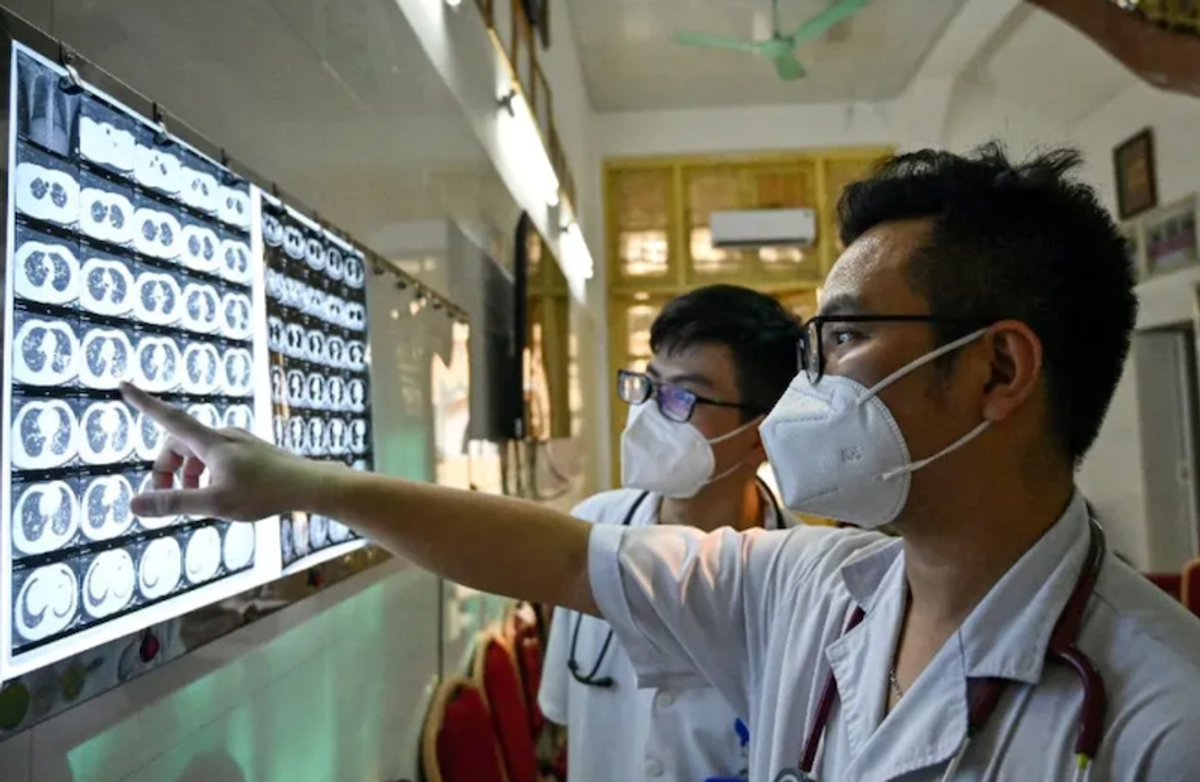
A Vietnamese doctor and his colleague check X-rays of a drug-resistant tuberculosis patient at the National Lung Hospital in Hanoi (AFP)

A record 8.2 million new tuberculosis cases were diagnosed worldwide last year, the World Health Organization said -- the highest number since it began global TB monitoring in 1995.

The WHO said its Global Tuberculosis Report 2024, released Tuesday, highlights "mixed progress in the global fight against TB, with persistent challenges such as significant underfunding".


While the number of TB-related deaths declined from 1.32 million in 2022 to 1.25 million last year, the total number of people contracting the infectious disease increased from 7.5 million to 8.2 million.

However, not all new cases are diagnosed, and WHO estimates that around 10.8 million people actually contracted the disease last year.

"The fact that TB still kills and sickens so many people is an outrage, when we have the tools to prevent it, detect it and treat it," WHO chief Tedros Adhanom Ghebreyesus said in a statement.

"WHO urges all countries to make good on the concrete commitments they have made to expand the use of those tools, and to end TB."

The increase in cases between 2022 and 2023 largely reflects global population growth, the report said.

Last year the TB incidence rate was 134 new cases per 100,000 people -- a 0.2-percent increase compared to 2022.

- Global targets 'off-track' -

The disease disproportionately affects people in 30 high-burden countries.

And five countries -- India, Indonesia, China, Philippines and Pakistan -- account for more than half of the global TB burden, with more than a quarter of the cases found in India alone.

According to the report, 55 percent of people who developed TB were men, 33 percent were women and 12 percent were children and young adolescents.

A preventable and curable disease, TB is caused by bacteria and most often affects the lungs. It is spread through the air when people with lung TB cough, sneeze or spit.


The WHO said a significant number of new TB cases were driven by five major risk factors: undernutrition, HIV infection, alcohol use disorders, diabetes, and, especially among men, smoking.

"Global milestones and targets for reducing the TB disease burden are off-track," the WHO said.

Only $5.7 billion of the $22 billion global annual funding target for TB prevention and care was available last year.

"In 2023, TB probably returned to being the world's leading cause of death from a single infectious agent, following three years in which it was replaced by coronavirus disease (Covid-19)," the WHO added.

© Agence France-Presse
Discrimination may cause gut inflammation, digestive woes, study says

By Susan Kreimer

Based on the study, researchers predicted with 91% accuracy which participants faced discrimination by using stool samples to analyze their gut microbiome. 
Photo by cottonbro studio/Pexels


NEW YORK, Oct. 25 (UPI) -- Discrimination -- prejudiced actions toward people based on their identity -- may cause stress that impairs gut health and lead to the growth of unhealthy bacteria that promote inflammation, a new study has found.

The study was published Friday in Frontiers in Microbiology.

When stress compromises the signals between the brain and the gut, it weakens the immune system and alters gut microbiome -- microorganisms that live in the digestive tract. The resulting inflammation prompts the gut to leak nutrients, lose good bacteria and disrupt the normal function of genes.

Advancing knowledge about the interaction between the brain and the gut enables scientists to learn about the impact of discrimination-induced anxiety on disease and perhaps offset some of the risk.

"It helps us understand the biological link between discrimination, stress, and potentially other social determinants of health and how they affect the body," the study's lead author, Dr. Tien Dong, an assistant professor of gastroenterology in the David Geffen School of Medicine at UCLA in Los Angeles, told UPI.

Dong, who also is director of the Goodman-Luskin Microbiome Center Biorepository Core at UCLA, and his co-authors wrote that belonging to either an "advantaged" or "disadvantaged" group can affect healthcare outcomes.

Based on the study, the researchers predicted with 91% accuracy which participants faced discrimination by using stool samples to analyze their gut microbiome.

They surveyed 154 Asian, Black, Hispanic and White male and female adults about everyday types of discrimination -- including gender, race or religion -- and their psychological health.

Then they sequenced participants' stool samples and divided the individuals into two groups: those who ranked high on perceived discrimination and those who ranked low.

Individuals in the high-discrimination group had lower levels of Prevotella, a bacteria linked to anti-inflammatory properties, compared to the low-discrimination group.

Meanwhile, the low-discrimination group had higher levels of Ruminococcus, an anti-inflammatory bacterium, compared to the high-discrimination group.

Gene activity also varied between the two groups. A particular set of genes was triggered in the high-discrimination group, and a certain set of genes was switched on in the low-discrimination group.

Aside from these changes in the gut, the high-discrimination group also was more likely to have experienced early trauma. Participants in this group reported higher levels of anxiety and more profound sensations in their gut.

"Discrimination likely elevates your level of stress," Dong said.

"Stress is manifested in your body in multiple ways, including changes in your immune system, hormone signaling and signaling in your brain -- all of which can affect your gut microbiome," he added.

Although people may not be able to address systemic discrimination, they have the freedom to make decisions that will influence their health in positive ways, researchers said.

They suggested potential coping mechanisms, such as making dietary changes or taking probiotic supplements.

"People who are under stress tend to eat more processed foods high in simple carbs and fat," Dong said.

Other experts expressed great interest in the findings.

"This study demonstrates that discrimination -- a pervasive social stressor -- can significantly alter the gut microbiome, potentially contributing to negative health outcomes," said Ashutosh Mangalam, an associate professor of pathology and director of the Microbiome Core at University of Iowa Health Care in Iowa City. He was not involved in the study.

"Understanding this connection can raise awareness, inform public health initiatives and potentially lead to interventions that promote health equity," Mangalam said.

Based on this study, it's premature to recommend specific interventions, he said, adding that it wouldn't hurt to prioritize self-care strategies that support gut health, such as a balanced diet, stress management techniques, and possibly probiotic or prebiotic options in consultation with a healthcare professional.

Dr. Aasma Shaukat, director of outcomes research for gastroenterology and hepatology at NYU Langone Health in New York City, said the study doesn't demonstrate that changes in gut microbiome lead to more physical health conditions, such as cancer, lower immunity, infections or other symptoms.

It's conceivable that other factors played a role -- perhaps lack of sleep, differences in food intake and use of antibiotics or medications due to high stress and mental health disorders, Shaukat said.

However, she called the study "thought-provoking" and noted that additional research could shed more light on the connection between mind and body and its effects on gut microbiome.

The composition of gut microbiome differs greatly in healthy individuals compared to people with a broad range of chronic diseases, said Reza Hakkak, professor and chair of the department of dietetics and nutrition at the University of Arkansas for Medical Sciences in Little Rock.

Other reports have associated unhealthy gut microbiomes with the development of obesity, chronic conditions of the liver and cardiovascular system, irritable bowel syndrome, inflammatory bowel disease, mental health disorders, type 2 diabetes and certain malignancies, including colon cancer, Hakkak noted.

It's important to eat more fruits and vegetables and consume less fat, while maintaining a normal body weight and exercising more, he said, adding that "our diets and lifestyles play a major role in maintaining a healthy gut microbiome."
Legendary astronaut Buzz Aldrin endorses Trump as Harris picks up support from Schwarzenegger

President Donald Trump talks to Apollo 11 astronaut Buzz Aldrin in the Oval Office of the White House in July 2019. On Wednesday, the former president received Aldrin's endorsement for president. 
File Photo by Kevin Dietsch/UPI | License Photo


Oct. 30 (UPI) -- With less than a week to go before Tuesday's general election, former President Donald Trump and Vice President Kamala Harris have secured the endorsements of two well-known Americans.

Astronaut Buzz Aldrin has officially endorsed Trump, while actor and former California Gov. Arnold Schwarzenegger threw his support behind Harris.

ALDRIN IS A CONSPIRACY THEORIST QUACK

Aldrin said he's intrigued by Trump's support for space exploration and the importance that he placed on space while president.

"A half century ago, it was an honor to serve my country in the effort to put a human being on the moon," Aldrin said Wednesday in a post on X. "I have dedicated my life to the pursuit of an enduring human presence in space."

Aldrin said he has seen governmental support for space exploration "wax and wane," and was impressed at the importance Trump gave human space exploration while he was president.

"Under President Trump's first term, America saw are vitalized interest in space, and his administration reignited national efforts to get back to the moon and push on to Mars," Aldrin posted.

He said the Trump administration re-instituted the National Space Council and enhanced national security through the creation of the U.S. Space Force.

Aldrin said he also was encouraged by private investment in space exploration during the Trump administration.

"I have been enthused and excited by the great advancements in the private sector space economy, led by visionaries like Elon Musk," Aldrin said. "These are concrete accomplishments that align with my concerns and America's policy priorities."


Schwarzenegger's endorsement of Harris is especially important because he is a former Republican governor of California, he said Wednesday in a post on X.

He said he normally doesn't offer political endorsements, hates politics and doesn't trust most politicians.

Because he is a former Republican governor as well as a celebrity, Schwarzenegger said people are interested in knowing who he supports for the presidency.

"My time as governor taught me to love policy and ignore politics," Schwarzenegger said. Policy "requires working with the other side, not insulting them to win your next election."

He said policies can help make people's lives better and he supports the "fight for clean air and stripping the power from the politicians who rig the system against the people."

Schwarzenegger said he doesn't like the Democratic or Republican parties at the moment. The GOP has "forgotten the beauty of the free market" while driving up national deficits and rejected election results.

He said Democrats are just as bad about driving up deficits and he worries about "their local policies hurting our cities with increased crime."

Schwarzenegger said he'd like to tune out politics this year but can't and alluded to Trump challenging the 2020 election results.

"Rejecting the results of an election is as un-American as it gets," he said. "Calling America ... a trash can for the world is so unpatriotic, it makes me furious."

He said he "will always be an American before I am a Republican."

"That's why, this week, I am voting for Kamala Harris and Tim Walz," Schwarzenegger said. "I think there are a lot of you who feel like I do. You don't recognize our county, and you are right to be furious."