Saturday, November 30, 2024

Storm shows British state can’t cope with climate chaos

Storm Bert has battered Britain. But so much of the devastation could have been avoided


Keep up the fight against climate catastrophe
 (Picture: Climate Justice Coalition)

By Camilla Royle
Monday 25 November 2024   
SOCIALIST WORKER Issue 2933

Storm Bert battered Britain with heavy rains, snowfall and strong winds last week in the latest devastating rendering of climate catastrophe. Several people died, including one person whose car was hit by a tree near Winchester and a man whose car entered flood water.

Britain’s failing rail infrastructure has been gridlocked and unable to cope. Even after the storm, South Western Rail on Monday advised people not to try to travel on any of its routes after stations flooded.

In Pontypridd in South Wales, nearly a month’s worth of rain fell in less than 48 hours and the residents faced flooding after the River Taff overflowed.

Residents are angry that there was only a yellow weather warning put in place and that lessons haven’t been learnt from previous disasters such as Storm Dennis in 2020.

People had to leave their homes in February 2020 and couldn’t go back until Christmas that year.

Wales’s first minister Eluned Morgan said last Sunday that there was some preparation. “But when you get the kind of enormity of rain we’ve had over the past few days—and it’s still coming down—then we’ve got to recognise that it is going to be difficult,” she said.

She added that climate change is “clearly making a difference in the severity and the frequency of these weather events”. The county of Rhondda Cynon Taf contains hundreds of disused coal tips. These piles of discarded mining materials are a safety risk.

For decades, residents have been arguing for more funding and legislation to force private landowners to make them safe. Over the weekend, homes in the former mining village of Cwmtillery in South Wales had to be evacuated after a landslip flooded the streets with mud.

In Llanarmon Dyffryn Ceiriog, near Llangollen, ten people were rescued from a house following a landslide.

That raises the terrifying prospect that a coal tip collapse could lead to tragedy. And people in South Wales will be all too aware of the risks.

Many will remember the Aberfan disaster in 1966 where 116 children and 28 adults were killed by a colliery coal tip collapse after heavy rains. The National Coal Board was found responsible but it didn’t face sanctions or criminal charges.

Delyth Jewell, the climate change spokesperson from the Welsh ­nationalist Plaid Cymru, said, “Coal tips are the legacy of how our communities were exploited—our valleys should never have been ­saddled with them.”

A warmer climate means more moisture in the air and can lead to heavier rain—last winter was the second wettest on record in Britain.

Coal mining still contributes to the ­climate crisis. But while coal bosses profited, mining communities were left facing the deadly consequences.
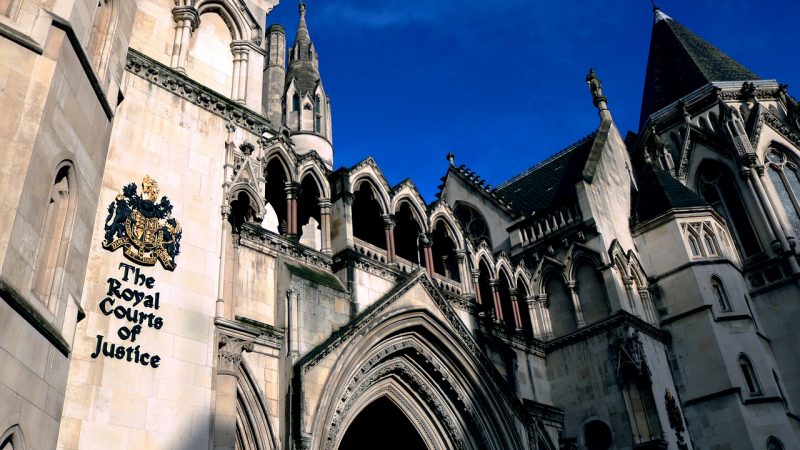
Whatever happened to the ‘rule of law’ in the UK?

Opinion
Yesterday
Left Foot Forward


Even if people can get access to the courts, at best they will get an interpretation of law, not justice

.

Whatever happened to the ‘rule of law’ in the UK? We all value the rule of law. It is the foundation stone of democratic, open and peaceful societies. It helps to protect rights, provides stability, accountability, and enables people to flourish. When applied correctly it can limit the arbitrary powers of the state and wealthy elites.

However, all is not well. It is often claimed that everyone is equal before the law. The assumption is that everyone can access timely legal advice and ultimately go to the courts to adjudicate on disputes. Following the Legal Aid, Sentencing and Punishment of Offenders Act 2012 people can’t get legal-aid for many family, employment, housing and debt problems. The number of legal aid cases to help people get the early advice they needed dropped from almost a million in 2009/10 to just 130,000 in 2021/22. The number of advice agencies and law centres doing this important work has fallen by 59%. It is estimated that the number of people helped by legal aid in that period dropped by 4.5 million. Over the same period the number of people having to go to court without representation trebled.

Even if you beg, borrow and sell your possessions, most people can’t get timely access to the courts. There is a backlog of 370,700 cases for magistrates’ courts. The backlog in crown courts, which try the most serious criminal offences, is 71,000. Of course, the rich and powerful can jump the queue and hire lawyers to lie and prosecute innocent people as vividly shown by the Post Office scandal. In this case a giant corporation, with the aid of compliant lawyers, secured criminal convictions of hundreds of innocent postmasters. There can be no equality before the law unless there is equality in access to the law.

In folklore, laws apply equally to all natural and legal persons, but some are more equal than others. The Duchy of Cornwall, an archaic residue of bygone times, enjoys exemptions from paying inheritance tax. It is also exempt from paying corporation tax and capital gains tax even though it trades. This seriously disadvantages its competitors who are required to pay all such taxes. The Duchy of Lancaster also enjoys similar privileges, which are not available to other businesses or citizens.

Even if people can get access to the courts, at best they will get an interpretation of law, not justice. The ‘rule of law’ and justice are not synonymous. Justice is a higher order concept and is concerned with fairness, equity, and respect for others, freedom, equality, human rights, sanctity of life and more. Such concerns are increasingly missing from law-making.

It is hard to recall any mass street marches, petitions or demonstrations urging the government to inflict social harms, but they have. Laws have been enacted to implement austerity, cuts in real wages, benefits, and public services to hand tax cuts for the rich. The result is that over 16m people, including 5.2m children, 9.2m working-age adults and 1.5m pension-age adults live in poverty. Some 6.34 million people in England are waiting for 7.57m hospital appointments. 2.8m people are chronically ill. Around 300,000 people a year die awaiting hospital appointments. A report published earlier this year noted that in the decade after 2011 more than one million people in England died prematurely due to poverty, austerity, and the impact of the Covid-19 pandemic. A recent study reported that 111,000 Britons died last year in poverty; 128,000 people died in fuel poverty, including 111,000 pensioners; and due to laws increasing the state pension age 15,000 died before accessing the state pension.

Hungry children and shivering pensioners are the product of the contemporary rule of law. The two-child benefit cap is the biggest cause of child poverty. The government has withdrawn winter fuel payments from thousands of pensioners living below the poverty line.

Legislators are silenced by the party machine and parliament cannot be relied upon to enact laws beneficial to the masses. Against a background of political populism the Criminal Justice Act 2003 introduced imprisonment for public protection (IPP) or indeterminate prison sentences for minor offences. A person spent 12 years in prison for stealing a mobile phone. A 20 year-old was given eight-month prison sentence for waving an imitation gun, but 18 years later is still in prison. Between 2005 and 2012, the courts imposed 8,711 IPP sentences. As of 31 March 2024, there were 1,180 unreleased IPP prisoners in custody in England and Wales. In addition to these unreleased IPP prisoners, there were 1,616 recalled IPP prisoners in custody on 31 March 2024, bringing the total number of IPP prisoners to 2,796. Over 700 have served more than 10 years longer than their minimum tariff. Such laws are the outcome of political populism which has little regard for the human consequences, and a political system where legislators are pressurised to follow the diktats of the party machine. The Legal Aid, Sentencing and Punishment of Offenders Act 2012 abolished IPP sentences but the abolition did not apply retrospectively to people who had already received such a sentence.

People expect the rule of law to be impartial and fair, but that is not the case. Thousands of unpaid carers looking after disabled, frail or ill relatives are being forced to repay huge sums to the government and threatened with criminal prosecution after unwittingly breaching earnings rules by just a few pounds a week. The same fervour does not apply to corporations and the rich. Since 2010, HMRC admits that it failed to collect over £500bn in taxes though others say it is closer to around £1,400bn. To soothe public anxieties, the government introduced the Criminal Finance Act 2017 and target corporate tax evasion. To date, there hasn’t even been any prosecution. Big accounting firms are the epicentre of a global tax abuse industry. They receive plenty of government contracts, but despite strong court judgments none have been investigated, fined or prosecuted.

In 2022, P&O Ferries sacked 800 staff without any regard for the employment laws, and replaced them with cheaper agency staff. Its chief executive told a parliamentary committee that the company knowingly broke the law. The then Prime Minister Boris Johnson said: “P&O plainly aren’t going to get away with it.” However, the company faced no sanctions from the government.

Regulators act as judges, juries and quasi-courts but their sympathies are with the industry rather than its victims. Just this week, a 350 page report by the All Party Parliament Group on Investment, Fraud and Fairer Financial Services stated that despite mounting evidence the Financial Conduct Authority (FCA) failed to investigate frauds. And it is not the first time. Frauds by HBOS go back to 2002, but are yet to be investigated. The FCA considers £1bn frauds to be a private matter for Lloyds Bank (it acquired HBOS in 2008). Lloyds promised to publish a report in 2018, but no report has been published. The UK state has a long history of covering up banking frauds. For example, in 2012 HSBC was fined $1.9bn in the US after pleading guilty to “criminal conduct” and laundering money. The then Chancellor George Osborne secretly wrote to the US authorities and urged them not to prosecute HSBC as the bank was somehow too big to fail. To this day, there has been no UK investigation, and no statement has been made to parliament.

The insolvency laws protect finance industry and penalise traders, employees and unsecured creditors. The pecking order for distribution of the assets of a bankrupt business is that secured creditors, usually banks, private equity and hedge funds must be paid first. That leaves almost nothing for the remaining creditors. Employee pension schemes rank as an unsecured creditor and people lose their pension rights. Thousands of SMEs and traders are destroyed by the inability to recover anything from a bankrupt client. There is no equity, equality or justice in insolvency laws, and no political party is inclined to challenge the power of finance capital.

The UK has a particular kind of ‘rule of law’. It denies people access to legal advice and access to the courts. Major political parties rarely, if ever, talk about justice, equity, equality or the human cost of the skewed laws. People look to parliament, but parliament is disconnected from the people as the political system primarily serves corporations and the rich, with few crumbs occasionally thrown to the masses.

Parliament plays a complex dual role. The tendency is first to exclude and silence people. For example, women’s demand for vote was denied. Some had to resort to violence to make their case and eventually parliament relented. People have long highlighted the evils of gender and racial discrimination before parliament could be persuaded to act. Similar patterns can be found in the emergence of employment and environmental laws.

To create possibilities of emancipatory change we need to ask questions about whose rule it is, whose law it is and who actually benefits and suffers from it.


Prem Sikka is an Emeritus Professor of Accounting at the University of Essex and the University of Sheffield, a Labour member of the House of Lords, and Contributing Editor at Left Foot Forward.
UK

Sharon Graham reveals the astonishing amount of money Unite has won for workers in last two years

28 November, 2024
 Left Foot Forward

Absolutely huge sums have been put in workers' pockets


Unite’s general secretary Sharon Graham has revealed how much her union has secured for workers in the last two years.

In a post on X, Graham said that Unite has had over 1,000 disputes covering around 280,000 of its members over that period.

In an illustration of the power of trade unionism, Graham went on to say that these disputes have “put £450 million back in to the pockets of workers”.

Among the significant victories Unite has secured in this time have been substantial pay increases for workers at Network Rail, British Airways and First Bus.


G4S IS A GLOBAL  COMPANY

‘They are exploiting the workers’ says G4S striker

Security guards employed by G4S and outsourced to government departments are continuing to strike over their rotten pay and conditions


G4S workers outside Whitehall (Photo: Alan Kenny)

By Camilla Royle
Friday 29 November 2024 
SOCIALIST WORKERR Issue


Security guards at government departments in the heart of London are on strike over their rotten pay and conditions. There is a defiant mood on the picket lines with speeches, music and support from other trade unionists.

The strikers in the PCS union work at the Cabinet Office, Department for Business and Trade and Department for Science, Innovation and Technology (DSIT).

Speaking to Socialist Worker, one striker said, “Everyone enjoys the picket lines. The music makes a big difference.

“The union has tried to raise the voice of people who aren’t supported by anyone. We have had PCS reps come down to support us from the DSIT department. They understand why we are picketing.”

The strikers work for private company G4S. There were calls for the firm to be banned from bidding for government contracts after it failed to provide enough security staff for the London Olympics in 2012. But G4S is once again winning security contracts and keeping workers in poverty.

The striker said, “It’s a government building, it’s taxpayers’ money they are using and we are there to protect a government building but they outsource the security services to the lowest bidder. I think taxpayers need to understand what is happening in government buildings.”

“We are not asking for everything, just basics such as sick pay and reduced working hours. We are working 72 hours in a week, 12 hours a day and six days a week. We are suffering. We don’t have a family life or a social life.

“They are exploiting the workers when they should work with people.

“It’s the same outsourcing that is happening everywhere, in hospitals and universities.”

The strikes are starting to have an effect. “They are bringing in inexperienced people to cover for us but there has only been the minimum cover needed to keep the building open.”

They plan to be out again on strike again from 9-13 December and are asking for wider support.10 South Colonnade, London, E14 5EA, 10 Victoria Street, London, SW1H 0NB, Old Admiralty Buildings, London, SW1A 2EG, 22-26 Whitehall, London, SW1A 2EG, 70 Whitehall, London, SW1A 2AS (Note this picket line starts at 7am)
Send a solidarity donation to the PCS fighting fund with the reference “GPA FM Disputes”—Account Name: PCS Fighting Fund Levy, Account Number: 20331490, Sort Code: 60-83-01
Send a message of solidarity to outsourcedworkers@pcs.org.uk

Sixth form strikers take fight to Labour

Over 2,000 education workers staged the first of four planned strikes


NEU union strikers at City and Islington sixth form college (Photo: Guy Smallman)


By Thomas Foster
Thursday 28 November 2024 
SOCIALIST WORKER Issue


Over 2,000 teachers at sixth form colleges across England struck on Thursday in the first major dispute against the Labour government.

NEU education union members at 32 sixth form colleges plan further walkouts on Tuesday and Wednesday of next week and Friday 13 December.

The Labour government snubbed workers at 40 sixth form colleges that haven’t been turned into academies. It announced that teachers will receive a fully-funded 5.5 percent pay rise this year, but didn’t include non-academised sixth forms.

Around 35 people joined the picket line at City and Islington College in north London. Mike, a joint NEU rep at the college, thought that Labour had made “a major error”. “There is space for Labour to move and if it doesn’t then we will escalate from January,” he told Socialist Worker.

He feared ministers were “destroying collective bargaining”—when unions can negotiate terms across a whole sector. “We think there is an undermining of collective bargaining,” he said. “Academised and non-academised colleges form one collective bargaining forum.”

There are around 70 NEU members at City and Islington College—and 95 percent voted to strike on an 85 percent turnout. Striker Simona told Socialist Worker, “The government has totally ignored us. We are demanding the same rights as schools and academised colleges.

“Labour didn’t seem to have an interest in a conversation with the union. Is this a Labour government? I have no trust in it. It is great that the Tories left but do you see many changes?”

Simona described her feelings towards Labour as “disappointment”. “We have to fight ourselves. We can’t depend on Labour. We have a right to be heard,” she said.

Daniel Kebede, NEU general secretary, attacked Labour’s decision as “shameful”. “I’m proud to be on this picket line,” he told strikers in north London. “It’s a clear message that we won’t tolerate pay being held back in a cost of living crisis. It’s unacceptable going into the Christmas period without a pay demand met.”

Strikers chanted, “Pay cut, no thanks, take the money from the banks,” and, “Money for health and education, not for war and deportation.”

Jasmine, vice president of the student union at the college, said that the strike was “necessary”. “Teachers are being taken advantage of once more,” she said.

“What is stopping the government from giving our teachers a 5.5 percent pay rise? It needs to do better. It’s an investment into my education and everyone else’s.”

Meanwhile, over 30 people joined the picket line outside St Brendan’s Sixth Form College in Bristol.

The picket lines at Winstanley College in Wigan and Aquinas College in Stockport in the north west of England were solid. And in nearby Bolton, strikers held home-made signs that read, “Fund our 6th form,” and, “We teach, we care, be fair.”

NEU rep Jennifer said, “We’re all out here to strike because the government has given a 5.5 percent pay rise to teachers—but not in sixth forms. We’re all teachers, so why do we not get the pay rise?”

She added, “I know people always think it’s just about pay, it’s all about teachers—but at the end of the day, it’s about the students.

“We want them to have a quality experience which they can only get if the government funds us and that’s what it’s all about.”

And there was a lively picket line at Wyke sixth form college in Hull where pickets held a banner asking, “Where is our 5.5 percent?”

Strikers in London rallied outside the Department for Education in central London. NEU member Nick said, “It’s not just about the pay rise this year and the unfairness of being singled out. It’s about what this means for us in the future.

“When this dispute broke, we went through this process of denial, thinking that this was a mistake. We all wrote to our Labour MPs and got no answers that made any sense. Now it is anger.

“We are angry at the government who came into office with promises of defending collective bargaining and now are attacking it on the first opportunity.

“We are not going to accept this. We are going to remain angry and win this dispute.”For a full list of sixth form colleges on strike go to tinyurl.com/FEStrike


How to transform unequal Britain

On Saturday 23rd November Bryn Griffiths travelled to Lewes to join a discussion about how the Labour Government should transform an unequal Britain. Read on to find out why Bryn chose to travel all the way to Lewes for a Labour Party meeting and why the event left him a worried man.

We all live in a volatile period so, like most Labour Party activists, I yearn for political discussion about how we can respond effectively, as democratic socialists, to the challenging political environment.  I want my views as part of the Labour left to be included in that discussion but I also want to hear my stance challenged by serious arguments put by others who come from the other parts of Labour’s broad church. 

Most people I know joined the Labour Party because they wanted to build a wide coalition for radical change but unfortunately many former Party activists have resigned or failed to renew their membership. I think they’ve done this because they no longer recognise the Labour Party a place where these simple aspirations will be met.

Lewes Labour Party, I am pleased to report, is swimming hard against the tide within our Party.  It holds excellent events that always have an uncanny habit of asking exactly the right questions and inviting great speakers to try and answer them.  One of the reasons that Lewes Labour Party can organise such events is that the principle of radical pluralism seems to be part of their political DNA.  The only requirement for attendance at a Lewes Labour Party festival of ideas event is that you come with an open mind.  The result of this unusual approach to Labour politics is that you find yourself in a room full of left-wing socialists, Labour centrists, Labour loyalists, Green Party members, single issue campaigners, community activists, people of no party at all and even the odd radical liberal.  Open, robust and serious political discussion at a Labour Party-hosted event might sound unusual but believe me it really works!

At its latest event, Lewes Labour Party posed the urgent question ‘How can we transform unequal Britain?’  The key note speakers were Danny Dorling, Polly Toynbee and David Walker.  On the day Danny spoke first but given the nature of David and Polly’s contributions it makes more sense to start with theirs.

Polly Toynbee is a luminary of Labour centrism.  She writes for the Guardian, specialises in social policy and her centrist pedigree stretches all the way back to the Limehouse Declaration on 25th January 1981 which paved the way for the Social Democratic Party which so badly damaged Michael Foot’s Labour Party in the first term of Thatcher’s government.

Polly Toynbee spoke together with David Walker, the co-author of her new book The Only Way is Up – How to take Britain from austerity to prosperity.  The bulk of their presentation was taken up by a rear-view mirror look at the appalling fourteen-year legacy bequeathed to the new Labour Government by the Tories.  Toynbee and Walker’s presentation was ‘forensic’ and captured what they called the “necessary memory” of the appalling Tory record. It was a record that led Britain to decisively reject the Tories and deliver what is coming to be known by many of us as Keir Starmer’s loveless landslide. The book gives us all the latest data and expert analysis across the fields of health, children’s services, the economy, the environment, policing and defence.

To be fair to Toynbee and Walker, they went beyond a diagnosis of what is wrong with Britain to give prescriptions of what they would like to happen in each of their thematic areas. If anything even close to their suggestions were to be delivered, my expectations of Starmer and Reeves would be significantly exceeded. I would be a happy Labour Party member.  The problem was that all the suggestions for action were accompanied by a plea for patience and warnings that seemed to imply that the good stuff might have to wait for a second term.

Perhaps the most important passage of the Toynbee and Walker address was when they turned to the economy.  Toynbee, surveying the appalling state of the country bequeathed to Labour, suggested that our only hope is that Rachel Reeves’s investment to deliver growth does indeed deliver.  It was at this point I started to become a worried man.

Toynbee’s compelling picture of the state of Britain is accurate.  We have an economy already weakened by Trussonomics, Brexit, Covid, the war in Ukraine and frighteningly there are more economic shocks to come if the USA proceeds with Trump’s tariffs. What makes me so worried is if our ‘only hope’ is that some energetic, but low-budget, economic interventionism by Rachel Reeves delivers substantial growth, the picture could rapidly degenerate into a scenario where a Labour Government does not deliver much hope at all!   

At this point, I think I’ll turn to Danny Dorling’s presentation to report what light he shone on the worrying scenario which took a vice-like grip on my thoughts during the course of the event. 

Danny Dorling is a Professor of Geography in the School of Geography and the Environment at Oxford University. Dorling is the author of the Policy-published, Peak Injustice Solving Britain’s Inequality Crisis.  Dorling joined John McDonnell’s big tent of economic advisers when McDonnell was our Labour Shadow Chancellor. I think we can safely describe Dorling as the more radical voice in Lewes Labour’s pluralist debate.

Dorling injected further stark reality into the event, as he focused our minds on the rise of Farage’s Reform UK.  He reminded us that the election night exit poll had suggested that Reform’s seat count could have been as high as 13 seats.  Casting our worried thoughts into the future, he reminded us that Farage represented the biggest right wing electoral threat since Oswald Mosley’s British Union of Fascists in pre-Second World War Britain.  He observed that today’s economic conditions provide fertile ground for the rise of a populist right led by angry middle-class voters.

Dorling invited us to imagine an unequal Britain where Kemi Badenoch formed an informal pact with Nigel Farage which enabled them to deliver two sets of messages to different electorates.  The scenario might be that Farage goes after Labour in dissatisfied working-class seats – the old Red Wall – and Badenoch seeks to recover core Tory votes in her party’s former heartlands.  It’s a potential pincer movement which should trouble every one of us.

My worry is that Rachel Reeves has placed the Labour Government in a fiscal straitjacket which will make it impossible to deliver noticeable improvement through redistribution for the voters who gave us victory in July 2024.  Combine that scenario with a populist right which overcomes its 2024 divisions, in the manner suggested by Dorling, and we have every reason to abandon any Labour complacency brought about by Badenoch becoming the new Tory Leader. Opinion polls are already showing Labour and the Tories running neck and neck with a few outliers showing the Tories already pulling ahead.  We must realise that Starmer’s loveless landslide is far from impregnable. A Badenoch victory is not assured, we can still win, but she certainly has a possible route to office if Labour does not act to deliver for its core voters. 

A glance across the Atlantic shows us both what can go wrong and what we need to do to avoid America’s fate in 2029. On 6th November 2024, Bernie Sanders issued a short statement on the US presidential election results.  Bernie’s social media posting below places us on notice.  If we do not act soon, I am worried that in five years’ time we could find ourselves in exactly the same place and none of us want that.

You can find the whole of Bernie’s statement here.

I think we are in danger of facing Bernie’s dire scenario at home precisely because of the terrible picture of Britain painted for us in Lewes, by Toynbee and Walker.  If we can’t deliver noticeable improvement for our British working-class voters, who feel abandoned, no number of pleas for patience or references to the terrible Tory legacy will help us one jot.  Trump’s victory means that we know exactly where a failure to deliver will lead.  Now is the time to act and that means radical redistribution on behalf of the many at the expense of the few!

At the end of a successful Lewes Labour festival of ideas, Mark Perryman, the event organiser, told us that next summer Lewes Labour plans to be back with another event to look at how we can stem the rise of the populist right.  After last weekend’s event, I can’t think of a better subject to help us continue the conversation.

Bryn Griffiths is an activist in Colchester Labour Party and North Essex World Transformed. He is a member of both Momentum’s National Coordinating Group and the Campaign for Labour Party Democracy’s Executive.

Bryn also hosts Labour Hub’s spin off – the Labour Left Podcast.  You can find all the episodes of the Labour left Podcast here  or if you prefer audio platforms (for example. Amazon, Audible Spotify, Apple etc,) just search for Labour Left Podcast.

 REPUBLIC OF IRELAND

We are out to win this election and change the Government, 

says Mary Lou McDonald,

President of Sinn Féin

Mary Lou McDonald in Liverpool 2024


“If Sinn Féin wins, working people win, families win, communities win. We want to bring the voices of ordinary people directly into the corridors of power. That’s where their voices belong.”
Mary Lou McDonald, President of Sinn Féin

From Sinn Féin ahead of the Irish elections on 29 November.

Mary Lou McDonald has said Sinn Féin is out to win the General Election to change the government. The Sinn Féin Leader was speaking recently at the launch of the party’s campaign for her own constituency of Dublin Central where she is joined on the ticket by Councillor Janice Boylan.

Ms McDonald stated people have a real choice between the repeated failures of Fine Gael and Fine Fáil governments or to back a new Sinn Féin-led government for working people, families and communities. Teachta McDonald said: “We are contesting this General Election to win and change the government. If Sinn Féin wins, working people win, families win, communities win. We want to bring the voices of ordinary people directly into the corridors of power. That’s where their voices belong. And with a Sinn Féin led government that is where their voices will stay. We can do this, we can make history.”

The Sinn Féin President continued, “Simon Harris and Micheál Martin believe that they have it all sewn-up. That they are waltzing back into government after the election. I think the people will have something to say about that. This General Election presents the people with a clear choice. To choose more of the same with another Fine Gael- or Fianna Fáil-led government or to choose a new government for working people led by Sinn Féin.

“Our message is clear. We are asking people to vote to change the government. Not only do we in Sinn Féin have the plans to make people’s lives better ready to implement from day one in government, we have the best people, the strongest team in the field, and we have the political will. We ask for our chance to lead, and we will not let you down.”

Ms McDonald praised her running mate Cllr Janice Boylan and said the party is looking to elect two Sinn Féin TDs for Dublin Central. Teachta McDonald added: “Janice has a decade of experience now on Dublin City Council standing up for the people and for our incredible communities. She will be relentless in fighting your corner in the Dáil. We are out to elect two Sinn Féin TDs for this constituency. That’s the mission. We have a positive vision for Dublin Central, for affordable housing, better public services, safe communities, real opportunities for families and young people. To tackle disadvantage and harness all the talent, energy, creativity that is the beating heat of the place we call home.

“This is a plan to make every community a better place to raise a family and build a future. The people have waited a long time for the chance to make change happen. That moment has now come. It’s time to vote for a new government.”


  • This article was originally published in Sinn Féin’s email bulletin on 8 November 2024.
  • You can follow Sinn Féin President Mary Lou McDonald on FacebookTwitter and Instagram.
Solidarity with Palestine


DAWN
Editorial 
Published November 29, 2024 

THE people of occupied Palestine have been struggling for over seven decades to free their homeland, and have bravely resisted countless blood-soaked Israeli pogroms designed to make them abandon their just cause.

The ongoing genocidal campaign in Gaza is only the latest Zionist project intended to break the Palestinian spirit. Yet their perseverance in the face of unspeakable adversity has won the Palestinian people and their cause supporters the world over. In 1977, the UN General Assembly called for the observance on Nov 29 as the International Day of Solidarity with the Palestinian People.

The date marks the adoption in 1947 by the UNGA of Resolution 181 (II), which paved the way for the partition of Mandatory Palestine. Even though the resolution led to the Nakba, it is noteworthy, nonetheless, that the multilateral body has chosen the day to express solidarity with Palestine.

There are many factors behind global support for Palestine. Primarily, the wretched of the earth see in the Arab struggle against Israel a mirror of themselves: a weakened and dominated people seeking to regain their land and their dignity, in the face of a powerful and merciless enemy. They see what is perhaps the last colonial settler state trying to erase an indigenous population from their native land. They see a resilient people with few resources confronting an adversary that has the support of the greatest military machine — and some of the most powerful economies — on earth.

It is because of these factors that people with no religious, cultural or geographical links to Palestine have been marching in solidarity with the besieged people of Gaza and the West Bank. In fact, all people of conscience across the world recognise the Palestinian struggle as just. In the memorable words of Nelson Mandela, “our freedom is incomplete without the freedom of the Palestinians”.

In the Muslim world, including Pakistan, the ties of faith inspire support for Palestine. While some Muslim governments may be shy about openly supporting the Palestinian struggle, the ‘Muslim street’ stands firmly in Palestine’s corner. Moreover, there is genuine concern that Israeli extremists — including some in government — are trying to harm the Al Aqsa mosque, one of Islam’s most sacred sites, and turning the Palestinian struggle into a religious war.

The people of the world see that the ‘defence of Israel’ cannot justify the mass murder in Gaza, and therefore, are rightly calling it out for what it is: a genocidal campaign of ethnic cleansing. But difficult as it may be to watch the people of Gaza endure unspeakable atrocities, it is hoped their suffering will not be in vain, and that one day, Palestinians of all faiths will be able to return to the land of their ancestors and live in freedom.

Published in Dawn, November 29th, 2024


Israel is hurtling into the political abyss


Published 
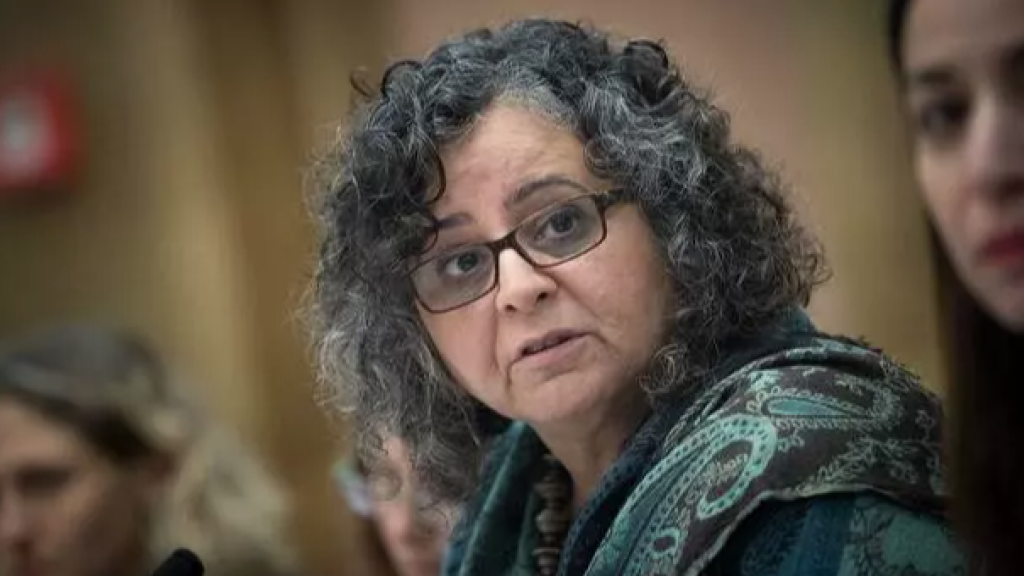
Member of the Knesset Aida Touma-Sliman chairs a Status of Women and Gender Equality Committee meeting, 17 November 2017.

Since 7 October 2023, the lives not only of Israelis and Palestinians, but indeed of everyone living in the region have been radically transformed for the worst. The brutal war in Gaza, now expanding into Lebanon, threatens to mutate into a forever war, as Israeli Prime Minister Benjamin Netanyahu and his far-right government stake their political survival on defeating Israel’s mortal enemies and annexing as much Palestinian territory as they can.

Meanwhile, back in Israel proper, the revanchist mood shows no signs of abating. Israel’s Palestinian population is subjected to blanket suspicion and surveillance, while the marginalized political Left, Jewish and Arab alike, is the target of government repression and right-ring harassment. Hope for a better future is in increasingly short supply.

Nevertheless, the struggle for a peaceful, democratic future for all people living between the river and the sea continues, and one of its leading figures is Aida Touma-Sliman, a Palestinian citizen of Israel and Member of the Knesset (MK) for the socialist coalition, Hadash, founded by the Communist Party of Israel. Last week, while visiting the European Parliament on the invitation of the Portuguese Communist Party, she sat down with Loren Balhorn to discuss the escalating repression against Palestinians in Israel, Netanyahu’s plans for territorial conquest, and the shrinking space for left-wing forces in the country.

As a Palestinian citizen of Israel, you have been very vocal about the discrimination and inequality facing your community in the past, even referring to Israel’s 2018 Nation-State Law as an “apartheid law”. How have things changed since 7 October?

We always knew that we did not enjoy equal rights in Israel, but we had never experienced what we’ve faced in the last year. Harsh persecution of Palestinian citizens began right after 7 October. Many were arrested for things like posting verses from the Quran on Facebook or other social media. I often tell the story of a 70-year-old man from the Negev who wrote “Good morning” at 7:45 on 7 October, and was arrested a few days later. Not even Netanyahu knew what was going on that early in the day, but they arrested someone for waking up and posting “Good morning”!

Many students were expelled from universities, and many artists’ lives were turned into a living hell because they were suspected of supporting the 7 October attacks. The Minister of National Security, Itamar Ben-Gvir, published photos of the arrested blindfolded in front of an Israeli flag, and accused them of being Hamas supporters. Almost none of them were ultimately prosecuted, but it didn’t matter — their reputations were already ruined.

Of course, we were all in a state of shock after the attacks, and we understood that there would be a reaction from the Israeli side. When we began to understand that the reaction would be total war, even a genocidal war, we wanted to demonstrate — not in support of what happened on 7 October, but for peace and a political solution. But the Israeli government used local police forces to practically forbid all protests for two or three weeks. When the leadership of the Palestinian community tried to hold a vigil in Nazareth holding up a banner saying “Stop the war!”, many of them were arrested, including Muhammad Barakeh, the chairman of the High Follow-Up Committee for Arab Citizens of Israel, and some former MKs.

On top all that, public incitement against Palestinians as a community has become normalized. It’s common for MKs to say we are all Hamas supporters, we are all terrorists. The threatening phone calls and harassment on the street has all gotten worse. When you take into consideration that Ben-Gvir, that fascist, distributed over 100,000 firearm licenses and thousands of guns to pro-government Jewish civilians, you can imagine what kind of danger we face.

Before we began the interview, you said that you no longer walk the streets alone?

No, I don’t, and it’s not like I’m hallucinating — there are serious threats to my life. But it’s not only me. In all public spaces, there are now male Jewish civilians carrying guns on them, and as a Palestinian you are always a suspect. This is the atmosphere.

The change is also reflected in legislation. A bill is now being brought before the Knesset that will allow the government to ban individuals and entire lists from competing in elections. I’m pretty sure they aren’t doing this to stop Ben-Gvir from running for re-election — the law is designed to target Palestinians and the Left. The fascist right wing in Israel — which, to me, includes Likud — knows that Arabs and left-wing Jews are the key to changing the balance of forces, and they want to wipe us off the political map.

Surely, none of the things you describe would have been possible without the attack on 7 October. As a Communist who, for decades, had fought for a different outcome to the Israel-Palestine conflict, did the ferocity of Hamas’s actions on that day surprise you? How can there be a “political solution” to that kind of violence?

I would like to tackle your question from a different angle. We are speaking on 13 November 2024, a little over one year and a month since 7 October, and yet we are still asked to go back to that date as if that was the beginning of this conflict. I’m not seeking to diminish what happened on 7 October — it was a horrible, horrible attack and loss of life. But what about the 43,000 Gazans, 70 percent of whom are women and children, killed since? As a Communist, as a human being, I cannot tolerate what happened on that day. I refuse to accept that killing is a solution to anything. But it has to be seen in a context of continuous occupation and oppression.

How can there be a political solution? Well, there was a political solution after World War II, which was much more horrible than what happened on 7 October. I’m not only speaking about the Holocaust — the whole world suffered under Nazism, and yet, the only way for the Russian people, the Jewish people, and the German people to continue on with their lives was to find a political solution. That’s why I continue to believe that war will not solve anything.

The war isn’t defending anything, except for Israel’s right to launch more wars. We are now over one year into the current war, and I’m sitting here in Brussels worrying about my daughters and granddaughters back in Acre, because there are rockets incoming every day. At least they have an alarm system and an air-raid shelter to go to — the children in Lebanon and Palestine have neither of those things.

Prior to the Hamas attack, Netanyahu’s government seemed to have given up on any permanent solution, instead preferring to “manage” the occupation and wear down the Palestinians bit by bit, making an independent Palestinian state impossible. Since the war started, he seems to have decided on his own political solution. namely, ethnic cleansing in Gaza and annexation of the West Bank.

You have to understand that this was the plan from the beginning — 7 October just gave Netanyahu and his far-right government the pretext to implement it. If you look at the coalition agreement establishing the current government, they were already talking about annexation of the West Bank back then. They cancelled the law that authorized the disengagement plan in 2005, which applied to Gaza as well as part of the northern West Bank. This enabled them to intensify efforts on the ground to resettle the evacuated area, which was supposed to be part of the land controlled by the Palestinian Authority, alongside a settlement push throughout the West Bank and East Jerusalem.

If you look at Smotrich’s plan for a Greater Israel, he basically says Israel will expand to encompass the West Bank and Gaza or even further. That’s why he insisted on becoming a Minister in the Ministry of Defence, in charge of civilian life in the West Bank. According to Smotrich’s “Decisive Plan”, the Palestinians have three options: they can stay in the Jewish state and accept their status as second- or even third-class citizens, they can leave, or they can die at the hands of the Israeli army. He calls his ethnic cleansing plans a “voluntary transfer” of the Palestinian population.

It sounds a lot like how the Bush Administration used the 9/11 attacks as a pretext to invade Iraq.

Exactly. The plans already existed, but now they have an excuse, because everyone is saying “Israel has a right to defend itself”, everybody believes that Israel is in existential danger. Netanyahu took his failure to protect the people of Israel, he took all of the fear and agony that came after 7 October, and turned it into an opportunity to boost his own political career.

You were suspended from the Knesset last year for suggesting that Israel was committing war crimes in Gaza. Just a few days ago, your colleague Ofer Cassif, another Hadash MK, was suspended for a social media post in which he described Palestinians resisting settler violence in Jenin as “freedom fighters”. This comes on top of growing restrictions on freedom of the press, expression, etc. To what extent can Israel still be considered a liberal democracy?

Well, I never believed that Israel was a full democracy. Especially after the 2018 Nation-State Law, Israel resembled something more like an “ethno-democracy”: democratic for Jews, but not for Arabs. Now, however, it’s increasingly discriminating against Jews as well. It’s becoming a fascist regime.

That’s a pretty strong statement. What do you mean by that exactly?

Look at what is happening to Jewish leftists in Israel today, Jews who are against the occupation and the war. They are publically vilified and treated in an undemocratic way. Lots of legislation is now being passed very quickly that undermines human rights and restricts civil rights. Far-right politicians and their supporters are restructuring the state and the judiciary, Ben-Gvir is turning the Israeli police into his own political militia.

At the same time, many so-called liberals — people with whom we demonstrated together before 7 October — are, if not supportive, then at least accepting of it. I implore Israeli society to look closer at what this means for the future: they might use these laws against Palestinians and the Left first, but later on, they will come for you, too.

You mentioned the pro-democracy movement prior to 7 October, but we also saw big demonstrations against the war in recent months. Now, particularly after Netanyahu expanded the war into Lebanon, his poll numbers are recovering. What does this tell us about the popular mood in Israel?

First of all, the demonstrations we saw on Israel’s streets weren’t actually against the war. The Israeli public was generally very supportive of the war in Gaza, but many people believed that we needed a ceasefire to free the hostages, because they understood that Netanyahu was never going to sign an agreement with Hamas. A large part of those demonstrating were basically saying, “Agree to a ceasefire, get the hostages back, and then do whatever you want.” It wasn’t a principled anti-war movement in that sense.

The reflex for the majority of Israelis is to support their side in war. Throughout the many wars we have experienced, we [Hadash and the Arab parties] are usually the only ones to oppose it at first. Then, after a few weeks, [left-liberal party] Meretz joins us. But Meretz, of course, doesn’t exist anymore.

Because of what happened on 7 October, support for the war was overwhelming at first. Then people began to get tired, feeling that it hadn’t brought the desired results. Now that Netanyahu has started the war on Lebanon, people think maybe we can eliminate Hezbollah and allow the people from the North to return to their homes. It’s as if they learned nothing from the last twelve months: you cannot eliminate either Hezbollah or Hamas militarily, they will always be there.

But to tell you the truth, Israeli society also needed this war to regain a sense of pride. After 7 October, many Israelis lost their national pride, their feeling that we are a powerful nation, the only real power in the Middle East. The war gives them the feeling that yes, we are able to control the situation, and yes, we are capable of defeating Hamas and Hezbollah.

Do you think Israel is more afraid of Hezbollah than Hamas?

Of course, Hezbollah is much more powerful. Hamas was under siege in Gaza for years, Hezbollah is freer to act, import weaponry, etc. We can see that in the rockets they are using to attack Israel right now — it shows that Hezbollah is still very capable and still has a lot of power.

That said, I reject armed escalation from either side, because that will just push the other side to do the same. Then you get more rockets, more guns, more death. The only way out of this predicament is a political agreement. But any agreement would threaten Netanyahu’s position. He wants a chaotic situation, because that’s the kind of environment he can survive in. Really, it’s a war for Netanyahu’s political survival as much as it is for his vision of a Greater Israel.

What do you make of the collapsed peace talks and Qatar’s announcement that it asked Hamas to leave its territory?

I’m not the person to speak about what Hamas wants, because I hear about what Hamas wants the same way you do: from the news. Qatar has always played this mediating role, because the US wants them to, and because they need someone to do it, of course. That means there is more pressure on Hamas to reach an agreement. But I think Hamas’s people are basically with their backs to the wall. They can’t ask for anything except for an end to the war.

What do the levels of support for the war and the ongoing repression of the Left mean for socialist strategy going forward? As a Palestinian Communist in Israel, do you believe there is still space to build alliances between Jewish and Arab workers, and to unite people on a class basis?

First of all, you have to remember that I am a Member of the Knesset. Therefore, my role is to be in touch with the wider society. I cannot afford to be the most radical person in the movement. That said, the space for building broad-based alliances in Israel is shrinking all the time — there are fewer and fewer people who are willing to cooperate. Many of the people who are demonstrating for democracy in Israel right now refuse to work with us.

Nevertheless, there is still a minority among the Jewish Israeli population that has not changed its position in terms of the occupation and colonization of the Palestinian people, people who truly believe that Israel has to be a state with equal rights for all of its citizens. Those are the people with whom we, as Palestinians in Israel, are fighting side-by-side against the war and against the occupation.

There are many Palestinians with whom I agree on the need to stop the war and end the occupation, but who have lots of right-wing ideas that I do not share at all. If I can maintain relations with them, then I can surely maintain relations with my Jewish comrades who are willing to put themselves in danger to defend Palestinians’ human rights. Still: we are a small group, and we are much smaller than before. We need support from the international Left now more than ever.

What would that international support look like?

You know, in the past, we used to invite people from abroad to come visit us in Israel, to show them the inequality and the oppression. But now, we tell them to stay where they are and struggle there. The best solidarity action the international Left can take is to put more pressure on their own governments to stop supporting the Israeli government, to make them understand that Israel is acting against the best interests not only of its own people, but of everyone in the region.

‘The West has failed every test’—interview with Palestinian in Gaza

Alaa Salamah, a Palestinian journalist in Gaza, spoke to Arthur Townend


Anger over the flooding of tents in Gaza

Arthur Townend
Thursday 28 November 2024
SOCIALIST WORKER Issue 2933


Amid the death, destruction and destitution in Gaza, it’s the buzzing of Israeli drones that keeps Alaa Salamah awake at night. “How can you sleep with such a sound,” she told Socialist Worker.

They hover in the skies to intimidate Palestinians and assassinate civilians, including children, after air strikes.

Alaa, a Palestinian journalist in Gaza, says Israel is “intentionally destroying Gaza to make it unliveable”. “The majority of people live in tents with scarce resources and the whole population is pushed into a tenth of the space we once had,” she explained.

“The tents have become fragile and old now that this war has extended for more than a year.”


Alaa explained that “winter is a real problem” as “there are not enough tents that can bear the changing temperatures”. “Waterproof tents are too limited and if you find them, they are too pricey,” she said.

“And, because there is no space, people have to put their tents near the seashore. So hundreds of tents have become unfit to live in and are unprotected from the rain and strong winds.”

Just this week, rainstorms flooded tents of displaced people on the beach in Khan Yunis, southern Gaza. Children desperately tried to salvage canned food floating in rubbish-filled water.

Alaa added, “People just survive and try to have hope for the future. People want to try to provide food, water and security for their families—the basic necessities that people are deprived of.

“People are now just preoccupied with ending this bloodshed and ending this tragic humanitarian crisis that only deepens as Israel’s war continues.”

Israel agreed to a limited ceasefire in Lebanon, which it invaded on 1 October, on Monday. “People here support the ceasefire agreement to stop Israel’s war and of course people hope that Gaza will be the next,” she said.

“But here, the situation is different—a ceasefire does not fit the plans Israel’s generals have for Gaza’s future.”

Israeli forces have encircled cities in northern Gaza. Sections of prime minister Binyamin Netanyahu’s government want to expel Palestinians from Gaza and seize the land permanently.

The US has opposed Israel “transferring” Palestinians to Arab states such as Egypt, fearing it would destabilise those regimes. The Israeli military and intelligence establishments don’t want to manage a permanent occupation.

But Netanyahu has been emboldened by Donald Trump’s victory in the US presidential election and is under pressure from far right ministers.

The lack of a realisable “end game” drives divisions inside Israel and drives its genocidal logic. And, whatever talk there is of a ceasefire, the West will back its watchdog state in the Middle East.


Why Zionist settler colonialism is in crisis

Joe Biden gave the green light on Wednesday to over £500 million in arms sales, while claiming he was pushing for a ceasefire.

The package includes hundreds of small-diameter bombs and thousands of joint direct attack munition kits (JDAM). JDAMs convert regular “dumb bombs” into precision-guided weapons.

Alaa said, “I think the West has failed—it failed the test when it came to human rights and international law. Many people here are now sure of the hypocrisy of the West’s political systems.

“It could not force Israel to stop the killing nor has it put any sanctions on Israel, but it has in the case of Russia.”

But Alaa added that ordinary people have “shown great support and solidarity with us” and “uncovered the hypocrisy of governments and politicians”.

“We appreciate these communities taking a stand and their endeavours have shed a light on the injustices and atrocious acts against Palestinians. Even through the increasing attacks against activists, people speak out.”

Israel is ramping up its genocide in Gaza with the support of the United States and Britain. It’s vital to keep building pressure, through mass and militant mobilisations, to stop all arms sales to Israel.