British Columbia’s EAB upholds $104k fine against Teck Coal for workplace injury
British Columbia’s Environmental Appeal Board (EAB) upheld last week a C$140,000 (US$97,500) fine against Teck Coal for “severe and life-altering” injuries
By Staff Writer January 8, 2025
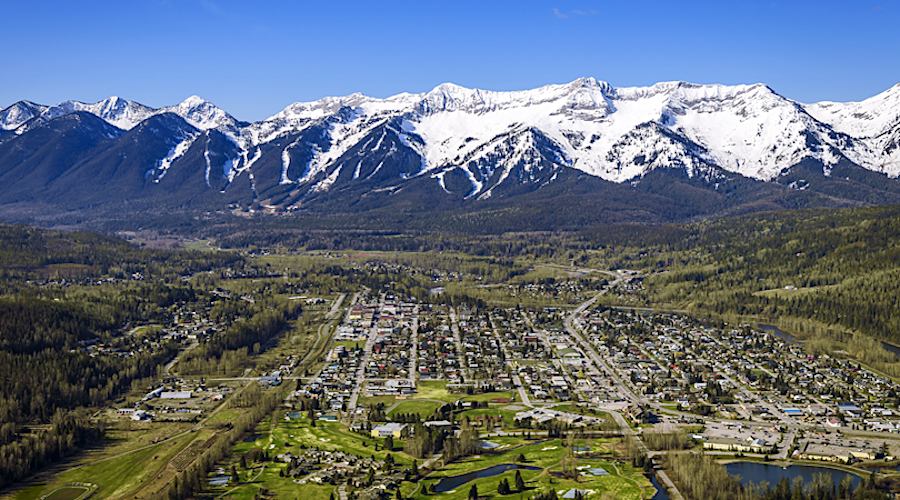
Teck had four steelmaking coal operations in the Elk Valley of British Columbia, Canada. (Image courtesy of Teck.)

British Columbia's Environmental Appeal Board (EAB) upheld last week a C$140,000 (US$97,500) fine against Teck Coal for "severe and life-altering" injuries a contract mechanic suffered working at its Elkford operations in 2019.
The mechanic was installing a wheel on a truck in a workshop at a mine site operated by Teck Coal, which had contracted MAXAM Explosives Inc. for explosives-related services, equipment, and supplies required for blasting at its Greenhills mine, according to the EAB ruling.
In 2022, Teck appealed a determination of administrative penalty, and British Columbia’s chief inspector of mines investigated the incident.
The inspector “concluded that the Appellant (Teck Coal) failed to ensure that the Mechanic was adequately trained in the safe removal and installation of wheels as required to service trucks used in the mixing and delivery of explosives,” court documents read.
As such, Teck Coal was found to have contravened the Health, Safety and Reclamation Code for Mines in BC.
Teck Resources, Canada’s largest diversified miner, last year sold its British Columbia-based steelmaking coal unit to Swiss commodities giant Glencore in one of the biggest deals in the industry.
The deal closed last summer, with Glencore paying nearly US$7 billion for Teck’s 77% stake in the coal business.
India to sign mining pact with Mongolia soon, govt source says
Reuters | January 9, 2025 |
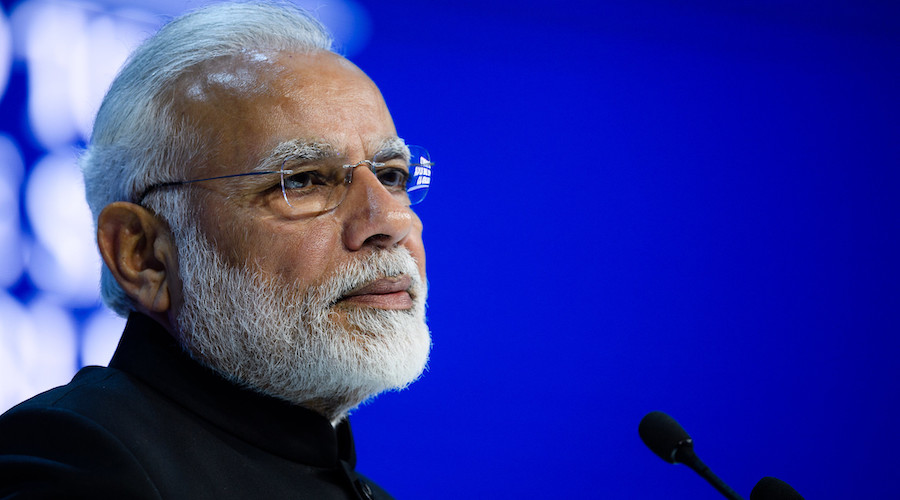
India’s Prime Minister Narendra Modi. (Image by the World Economic Forum, Flickr.)
India is expected to sign a preliminary agreement with Mongolia soon in the area of geology and exploration, a senior Indian government official with direct knowledge of the matter said.
Landlocked Mongolia is rich in deposits of copper and coking coal, and India is mostly dependent on imports to meet rising demand for the red metal used in power, construction and electrical vehicles as well as coking coal for steelmaking.
“India’s cabinet has approved the MoU (memorandum of understanding) and both countries are expected to sign it soon,” the source said, declining to be identified as the deliberations are not yet public.
India’s federal mines ministry did not respond to a Reuters email seeking comment.
Mongolia’s Ministry of Mining and Heavy Industry did not immediately respond to a Reuters email seeking comments.
Companies such as Adani, Hindalco and Vedanta have expressed an interest in sourcing copper from Mongolia, the source said. All three companies did not respond to emails from Reuters seeking comment.
Both Indian and Mongolian officials are working out supply routes for Indian companies to source copper and coking coal, with India preferring the route from Vladivostok in Russia despite the longer distance, the official said.
“China is convenient but we prefer the route from Russia,” the official said.
Relations between Asian giants India and China were strained after a deadly military clash on their disputed border in 2020 but have been on the mend since they reached an agreement in October to pull back troops from their last two stand-off points in the western Himalaya mountains.
Unlike China, India has traditionally maintained close ties with Russia.
Resource-rich Mongolia can offer superior grades of coking coal, industry officials say.
In November, India’s JSW Steel and state-run Steel Authority of India (SAIL) were in talks with Mongolian authorities to import two shipments of coking coal, Reuters reported.
(By Neha Arora; Editing by Christian Schmollinger)
Korea Zinc in talks with US buyers to supply antimony, chairman says
Reuters | January 9, 2025
Computer circuitry. (Reference image from Pxhere).
Korea Zinc chairman Yun B. Choi said on Thursday that it is in preliminary talks with some US entities to supply antimony, after China’s export ban to the US disrupted the market for the mineral used in semiconductors.
Choi told reporters at a briefing that the company was interested in long-term contracts, and was talking with US traders and others, without naming any of the entities.
Antimony prices are set to hit record levels after China banned exports of the mineral to the United States.
Beijing’s curbs have heightened trade tensions and intensified a global race to secure critical minerals and loosen China’s dominance in the market.
Korea Zinc is the world’s largest zinc smelter but also produces about 3,500 tonnes of antimony ingots annually, some of which is shipped to Japan and the Netherlands.
Korea Zinc produces zinc, lead, copper, nickel and other metals with its own technology in South Korea and with supply chains that “do not involve China in any critical way”, Choi said.
That is expected to be an advantage over the next few years even if incoming US President Donald Trump changes the Inflation Reduction Act (IRA), Choi said.
He expects the market for zinc refining to be its “worst” historically in 2025 due to tight ore supply and said Korea Zinc may be the only smelter making money from zinc.
Korea Zinc plans a special shareholders’ meeting on Jan. 23 to discuss the appointment of directors proposed by Young Poong and private equity firm MBK Partners, which hold the largest stake in Korea Zinc, amid an escalating fight for control of the company.
(By Joyce Lee; Editing by Sam Holmes)
Brazil offers $815 million to back strategic minerals projects
ALL CAPITALI$M IS STATE CAPITALI$M
Bloomberg News | January 8, 2025

Chapada Diamantina, Bahia, Brazil. (Stock image)
Brazil is offering about $815 million in financing for projects aimed at boosting development of strategic minerals within the South American nation.
BNDES and government funding agency Finep, earmarked 5 billion reais in financial backing for companies, including credit lines and equity investments. The support can be used to develop supply chains of minerals including lithium, rare earth elements, nickel, graphite and silicon, as well as investments in manufacturing batteries, photo-voltaic cells and magnets used in products such as electric vehicles and wind turbines.
Western nations have been ramping up efforts to bolster critical minerals to reduce reliance on China, the dominant supplier of many metals seen as critical to technology. Brazil, with its significant mineral reserves, is seeking to position itself as a supplier of raw materials while developing a supply chain for value-added metal products.
Such financing could generate 25 billion to 50 billion reais in investments for such projects, according to a Tuesday statement on the announcement. BNDES President Aloizio Mercadante said they’re looking for partnerships between domestic and foreign entities, from miners to technology holders.
“The call is an important step forward in the mineral sector for achieving the Brazilian government’s goals of expanding the industry’s production capacity in the context of sustainable and technological development of the new industrial policy and the ecological transformation plan,” he said in the statement.
(By Mariana Durao)
China becomes world’s second-largest holder of lithium reserves, Xinhua reports
Reuters | January 8, 2025

Salt lake in Qinghai province, China. Stock image.
China’s lithium reserves have risen from 6% to 16.5% of the global total, making it the world’s second-largest holder of lithium reserves, state media reported on Wednesday.
The world’s top consumer of the battery metal relies heavily on lithium imports, and Beijing has pushed for more domestic exploration in recent years.
Lithium is widely used in rechargeable batteries for electronic devices, electric vehicles, and renewable energy storage systems, as well as in ceramics, glass, and pharmaceutical applications.
The newly discovered mines include a 2 800-km-long spodumene mine in the Xikunsong-Pan-Ganzi region in Tibet, and some lithium salt lakes in the Qinghai-Tibet Plateau, Xinhua News Agency said in the report.
With the discovered salt lakes, China now also hosts the world’s third-largest salt lake resources, after the lithium triangle in South America and western America, the report said.
Salt lake is a low-cost lithium source.
The most active lithium carbonate contract on the Guangzhou Futures Exchange in China stood at 77,420 yuan ($10,559.91) per ton on Wednesday, up by 0.4% week-on-week.
Gemfields faces 21% tax as Zambia reinstates export duty
Cecilia Jamasmie | January 8, 2025
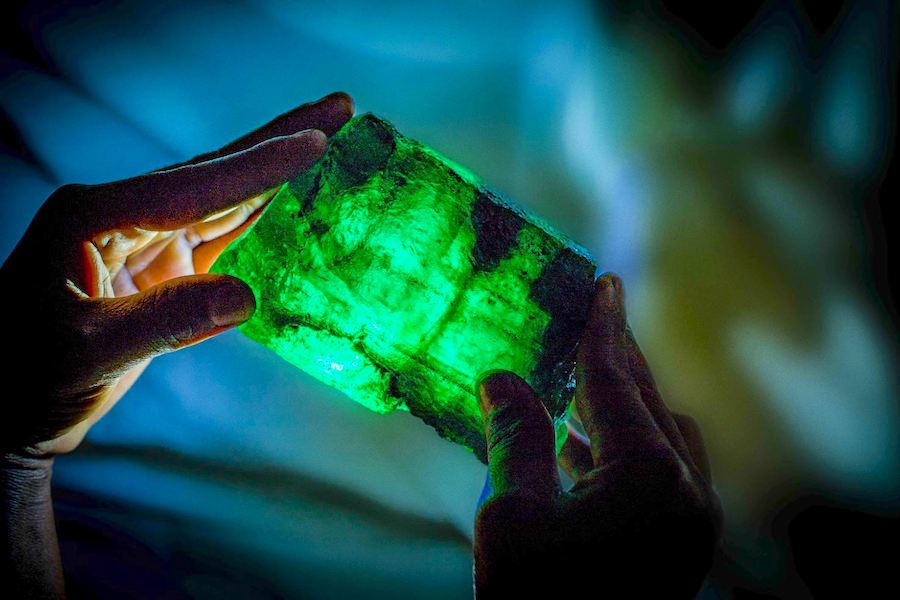
The 5,655-carat emerald, dubbed Inkalamu (the “Lion Emerald”) found at Kagem in 2018. (Image courtesy of Gemfields Group.)
Shares in Gemfields (LON: GEM) (JSE: GML) fell on Wednesday after the coloured gemstones miner said it faces a high tax bill in Zambia following the government’s decision to re-introduce a 15% export duty on emeralds.
The export tax, reinstated on January 1, was suspended in 2019 following months of negotiations between the government and emerald producers. Its return, Gemfields said, has added to an already substantial tax load. The company’s 75%-owned local subsidiary, Kagem Mining, will now shoulder an effective revenue tax of 21%, which includes the existing 6% mineral royalty tax.
Gemfields criticized the move, stating there was no prior consultation or notice regarding the tax’s reintroduction.
“The company will engage with the Zambian government to seek the re-introduction of the suspension of this export duty or to remove it from the legislation given the impact on sector sustainability and investment attractiveness,” Gemfields said in a statement.
The company’s shares were last trading 4.30% lower in London at 6.7p each. They lost 12% of their value in Johannesburg, leaving the miner and marketer with a market capitalization of 2 billion South African rand, or about $106 million.
Zambia, the world’s second largest emerald producer after Colombia, first implemented the 15% export duty in early 2019 and it ceased to apply on January 1, 2020.
In 2023, when no export duty was in place, Kagem Mining paid approximately 31% of its revenues to the Zambian government through mineral royalties, corporate taxes, and dividends, according to Gemfields.
“Gemfields understands that several additional measures have also been introduced in other areas of the Zambian economy to enhance Zambian government revenues in 2025,” the group said.
Zambia’s government is targeting a gross domestic product (GDP) growth rate of 6.6%, an inflation rate between 6% and 8%, and a budget deficit of 3.1% of GDP, according to data from PwC. Revenue projections include a 26% increase in domestic revenues and grants, with tax revenues anticipated to grow by 20%.
Beyond Zambia, Gemfields owns the luxury jewellery brand Fabergé and holds a 75% stake in the Montepuez ruby mine in Mozambique.
Indonesia nickel move may cut global supply by 35%, Macquarie says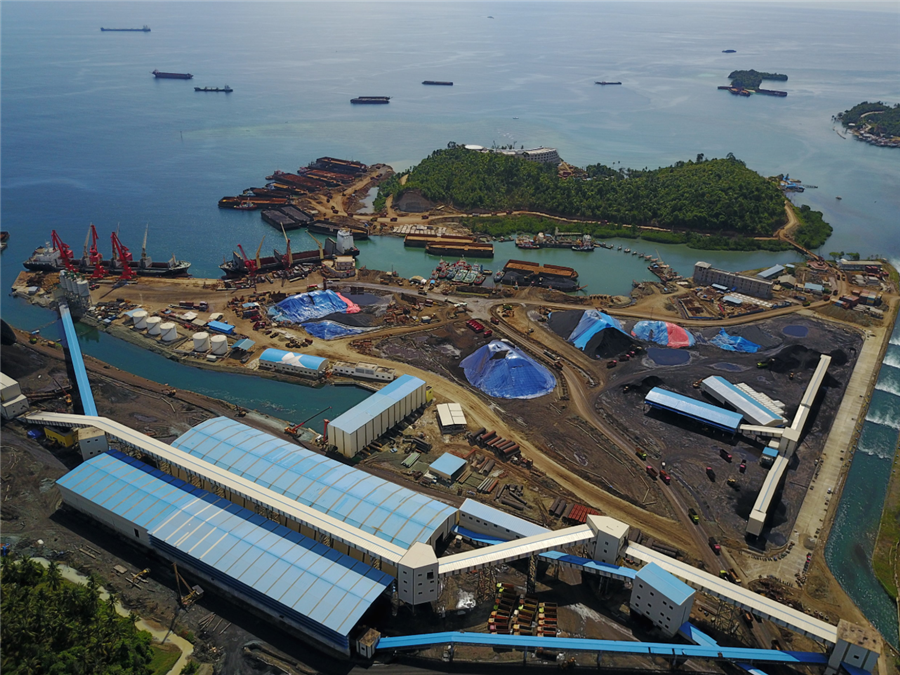
Tsingshan mine at Indonesia’s Morowali Industrial Park (IMIP) – Image courtesy of Nickel Mines Ltd
Potential cuts to Indonesian nickel mine output could remove more than a third of global supply from the market, according to Macquarie Group Ltd., presenting a significant upside risk to prices.
The Indonesian government is weighing deep cuts to nickel mine quotas from 272 million tons in 2024 to as low as 150 million tons this year, Bloomberg reported last month. That would be 40% lower than Macquarie’s base case, leading to a drastic reduction in output of the battery metal.
The bank views cuts of that scale as highly unlikely, but notes lower-than-expected mine output in the world’s largest producer presents another upside risk for prices. It still sees the market in a small oversupply this year, it said in a note on Wednesday.
Nickel slumped to a second straight annual loss in 2024 due to booming Indonesian output and weakening demand from battery-makers and the stainless steel sector. This year, traders are eying China’s efforts to stimulate its economy, as well as the impact of the incoming US administration’s tariff policy.
Indonesian mine output remains the key swing factor for prices, according to Macquarie. Ore supply in the country that accounts for more than half of global nickel production struggled to keep up with demand last year due to government restrictions, leading to record imports from the Philippines.
(By Eddie Spence)
Tariff fears spark disconnect in silver and copper markets
Bloomberg News | January 9, 2025
Stock image.
Copper and silver futures in New York are surging above rival international price benchmarks as traders ramp up bets that Donald Trump will impose hefty import tariffs on the metals as part of a broader escalation of his global trade war.
Front-month Comex silver futures traded at above a $0.90-an-ounce premium over spot bullion prices set in London on Thursday, nearing a peak seen in December as traders reacted to Trump’s pledges to apply universal tariffs on all goods from all countries. That would include key economic adversaries like China and trading partners such as Canada and Mexico.
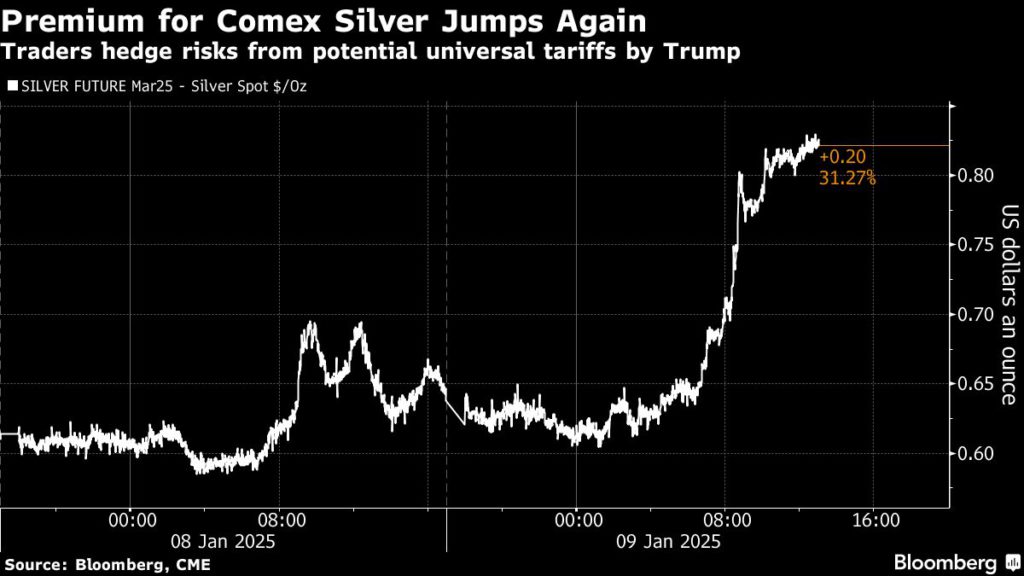
The fresh spike in premiums comes as uncertainty and anxiety over the likely scope of Trump’s trade policies ramps up across financial markets ahead of his Jan. 20 inauguration. The Washington Post reported his team are planning narrower import tariffs on critical goods, potentially including copper, though Trump denied the story. And on Wednesday, CNN said Trump is weighing declaring a national economic emergency to provide legal ground for universal tariffs, citing people familiar with the matter.
“Investors around the world have started the year looking for protection against sticky and potentially rising inflation, fiscal debt worries and the unpredictability of Trump,” said Ole Hansen, head of commodities strategy at Saxo Bank. The blowout in Comex prices is “is definitely part of the Trump unpredictability story.”
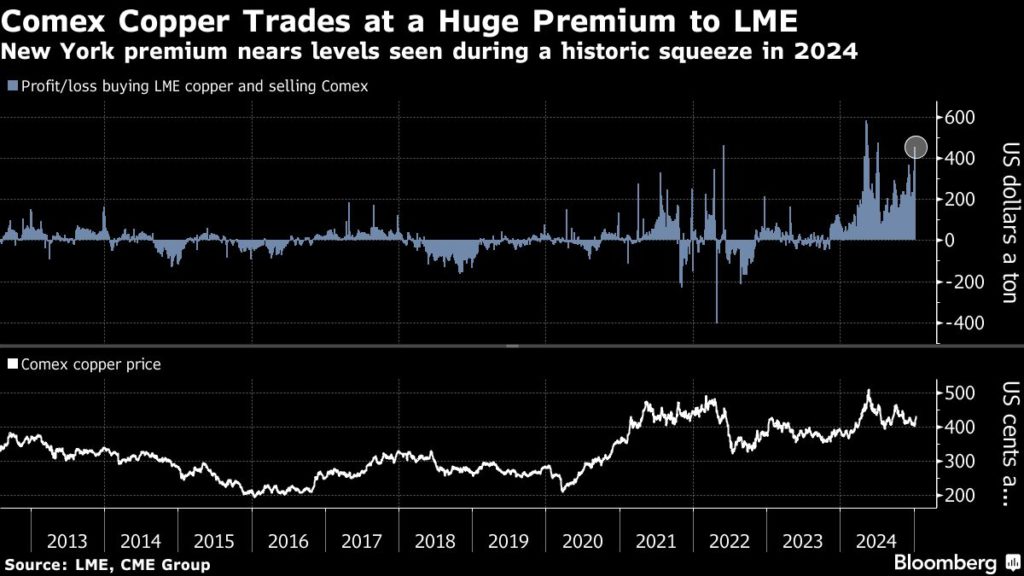
Front-month Comex copper also traded at a $623-a-ton premium over equivalent futures set on the London Metal Exchange, nearing record levels seen during a historic short squeeze that rocked the global copper market last year. Traders have been rushing to ship copper into US warehouses to cash in on the spike in prices since last year, and similar efforts have been underway since New York silver prices started to take off.
But while the price dislocations present big opportunities for traders with metal on hand to deliver into Comex warehouses, they also create huge risks for investors who don’t.
Prices in the New York and London metals markets normally trade in near lockstep, and many algorithmic traders and hedge funds seek to make money with wagers that any pricing gaps that do appear will close up again quickly.
In copper, that could involve buying London copper contracts and simultaneously selling Comex futures, and typically, those so-called arbitrage trades bring prices quickly back into line. Investors can face huge losses if the price gap keeps getting wider.
That dynamic was a key factor behind last year’s copper squeeze, when arbitrage traders faced spiraling losses on their bets that Comex prices would fall relative to LME futures. Now, some traders and analysts say there’s a risk of a redux in the silver market, due to the limited availability of metal that can be readily delivered against Comex futures.
“The market is sleepwalking into a squeeze right now,” Daniel Ghali, senior commodity strategist at TD Securities, said in an interview. “People are completely disregarding this risk.”
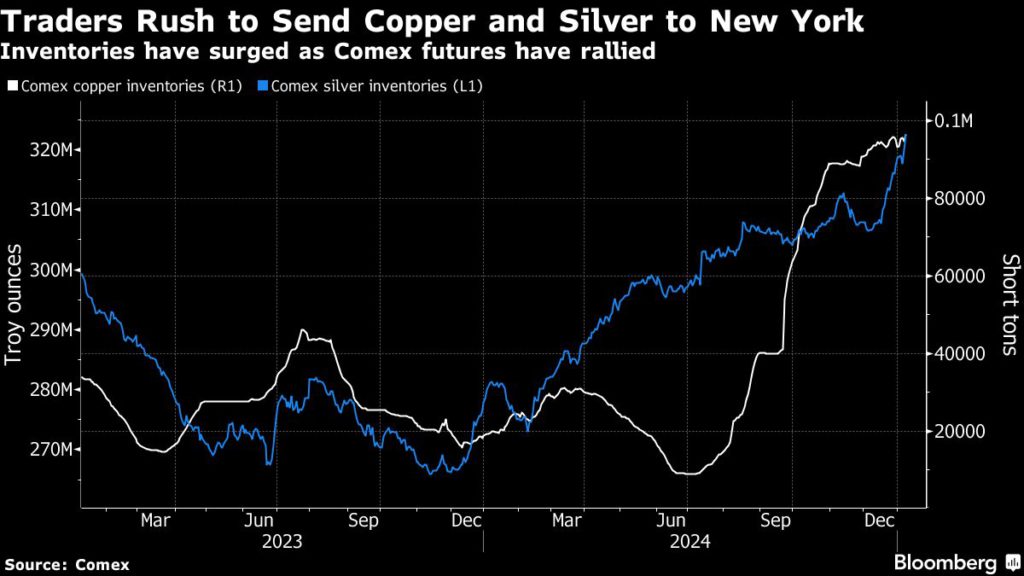
In the silver market, major dealers can ship metal from London to New York warehouses to close out arbitrage trades, and 15 million ounces of silver have been added in Comex silver warehouses during the past five weeks. Typically, silver is transported by ships and the usual lead time is 30 to 45 days.
But stockpiles in the London market have been drained heavily following four years of severe shortfalls in global mined silver production, and further outflows risk creating a knock-on spike in prices, Ghali said.
“We expect the drain to be significant in scale,” he said. “This is the silver squeeze that you can buy into.”
(By Yvonne Yue Li)
Panama opens public consultation on First Quantum mine
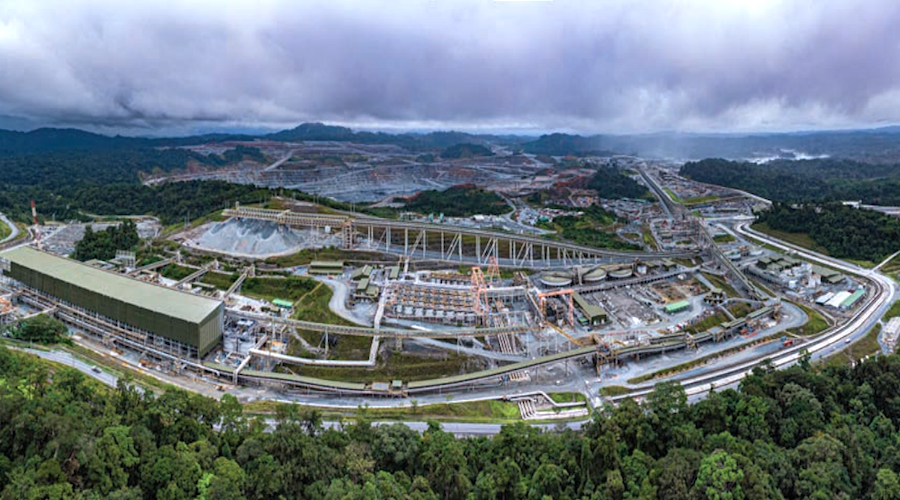
Cobre Panama copper mine contributed almost 5% of Panama’s GDP. (Image courtesy of Franco-Nevada assets handbook.)
Panama’s government has kicked off a public consultation on an environmental audit of First Quantum Minerals’s (TSX: FM) Cobre Panama copper mine, which was announced in mid-2024 by then president-elect José Raúl Mulino.
The Ministry of Environment (MiAmbiente) invited this week environmental organizations, local communities, academia, the private sector, and the general public to participate in the process, which will remain open until February 7.
Mulino announced in July last year he would order a “strict audit” of the $10 billion mine, which was shuttered in 2023 after Panama’s Supreme Court deemed that its operating contract was unconstitutional.
He has criticized his predecessor for failing to resolve the issue and committed to tackling it with what he described as “credibility and national acceptance.”
The closure of Cobre Panama marked a turning point for a mine that once contributed nearly 5% of Panama’s GDP and accounted for 75% of its exports.
Experts estimate the economic impact of the closure could result in losses of $18 billion over the next 10 years. First Quantum also initiated two arbitration cases seeking damages from Panama.
The primary objective of the audit is to evaluate the possibility of a temporary reopening of Cobre Panama while ensuring a safe and environmentally responsible final closure.
Authorities aim to identify and assess current and potential environmental risks and damage, analyze the state of conservation of the originally permitted area, evaluate the interventions carried out, and assess the area’s environmental quality. They will also propose mitigation, remediation, and environmental restoration measures while determining the costs associated with implementing an environmentally responsible closure plan.
“The closure plan must have as its final objective to ensure that the previously intervened area recovers as closely as possible to its state prior to mining activities, thereby restoring its biodiversity and ecological functionality,” the ministry stated.
Penguins and red tape: Chile says ‘no’ to $2.5bn Dominga mine again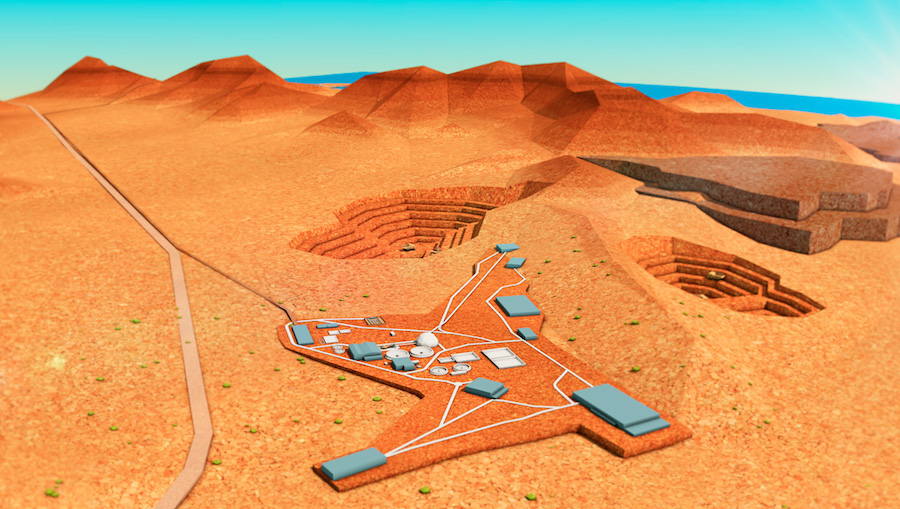
Dominga is located about 65 km (40 miles) north of the central city of La Serena. (Digital rendition of project, courtesy of Andes Iron)
Chile’s government on Wednesday denied an environmental permit for the proposed Dominga iron and copper mine, siding with critics concerned over impacts to penguins and parrots at the $2.5 billion project that has sparked debate for a decade.
Chile’s Committee of Ministers said the plan from privately-owned Andes Iron required special sensitivity due to the area’s “unique characteristics” as a home to penguins and species in conservation categories which reduced the tolerance for risk.
The project highlights Chile’s challenges balancing economic growth with environmental protections and is a reminder of bureaucratic mazes that the mining sector has harshly criticized for stalling projects.
The committee’s decision came after an environmental court ordered it to re-do a January 2023 vote that had struck down environmental approvals for the project.
Chile-based Andes Iron has repeatedly defended the mine as meeting environmental regulations and on Wednesday said it will take legal action.
“The action of the Committee of Ministers sets an unfortunate precedent never seen before in the history of Chile in terms of environmental permits,” it said in a statement.
The company has also accused the government of bias against the project, pointing to the nearby Cruz Grande port that was granted an environmental permit.
The committee’s decision sends a broader message that could discourage investment, said Juan Ignacio Guzman, head of Chilean mining consultancy GEM.
“This decision by the committee means that in reality, abiding by the processes and permits in Chile doesn’t guarantee you can make investments happen,” he said.
The head of Chile’s National Mining Society (Sonami), Jorge Riesco, called the ruling a disappointment.
“We lost the opportunity to send a strong signal of trust to investors,” he said in a statement, adding the project had met all technical requirements.
The committee said it considered various citizen complaints, and agreed with concerns over biodiversity impacts and lack of a mitigation plan for potential spills of fuel or iron concentrate.
Its analysis noted the unique mix of species in the area, including the Humboldt penguin and aquatic mammals such as dolphins, and said Andes Iron had failed to gauge impacts on two plants that are a food source and habitat for the tricahue, an endangered parrot.
“It was not possible to determine or evaluate the real impact on these species,” the committee said.
(By Fabian Cambero, Alexander Villegas and Daina Beth Solomon; Editing by Sonali Paul)
