Thursday, January 09, 2025

Argentine activist sentenced over ‘genocidal Israel’ tweet


Alejandro Bodart, leader of the Socialist Workers’ Movement (MST) in Argentina, speaks about Palestine, 2024. [Alejandro Bodart/X]

by Eman Abusidu
EmAbusidu
January 9, 2025 
MEMO


While Argentina welcomes an Israeli soldier fleeing Brazil on charges of committing genocide in Gaza,

Argentina has given Alejandro Bodart, leader of the Socialist Workers’ Movement (MST), a six-month suspended sentence for a post he made on the social media platform X in which he condemned what he described as the ongoing genocide perpetrated by Israel against the Palestinians.

The Criminal, Juvenile, Contravention, and Misdemeanor Chamber of Buenos Aires overturned the acquittal that Bodart had initially received in a case initiated by a complaint from the Delegation of Argentine Israelite Associations (DAIA). The organisation denounced him for violating Anti-Discrimination Law 23,592 and the definition of anti-Semitism set by the International Holocaust Remembrance Alliance (IHRA), as adopted by the National State.

The case arose from Bodart’s 2022 statements in which he referred to Israel as a “racist and genocidal state” and advocated for the Palestinian cause “from the river to the sea.”

“Zionists = Nazis” and “74 years of the catastrophe that the Palestinian people are experiencing at the hands of the racist and genocidal State of Israel. The key, symbolising their stolen homes and lands, is present in every struggle. For a secular and democratic Palestine, from the river to the sea,” he wrote.

READ: Israel soldier suspected of war crimes faces legal case in Argentina

Judges Jorge Franza and Ignacio Mahiques voted to convict Bodart, asserting that his statements delegitimise the existence of Israel and incite violence, while Judge Patricia Larroca voted to acquit him.

In a statement, Bodart criticised the conviction and announced that he would appeal the decision.

“While the International Tribunal in The Hague, the International Criminal Court, the UN Commission on Human Rights, Pope Francis, countless human rights organisations, democratic sectors, and millions of people around the world condemn such crimes against humanity, and Benjamin Netanyahu is a wanted war criminal, they are trying to silence me for telling the truth in three tweets in solidarity with the just Palestinian cause. They will not succeed, because there are more and more of us who do not remain silent in the face of such barbarity,” Bodart said.


Born on 2 December 1963, in Cordoba, Argentina, Bodart began his journey as a socialist activist in the 1980s. Over the course of his career, he has held various political roles, including serving as a deputy for the Autonomous City of Buenos Aires from 2011 to 2015. During his tenure, he introduced 553 legislative bills, earning recognition for his advocacy of public education and healthcare, as well as economic reforms promoting social justice.


He currently serves as the general secretary and national leader of the Socialist Workers’ Movement (MST). He is also the coordinator of the International Socialist League (LIS), an organisation established in 2019 that unites over 30 revolutionary leftist groups across five continents.

“This is not merely a legal battle. As part of our internationalist support for the Palestinian peoples in the face of the new Nakba imposed by Israel, and as we have done since the start of the complaint over two years ago, we will continue to mobilise for the acquittal of our comrade Bodart and the defence of the right to free political expression,” Bodart’s defence team, Maria del Carmen Verdu and Ismael Jalil, said.

“In reality, the true criminal, the real serial killer, and the perpetrator of crimes against humanity and the genocide against the Palestinians is the Zionist state of Israel, currently led by Netanyahu.”

“Convicting Bodart for three tweets expressing solidarity with the Palestinian cause infringes upon the fundamental, democratic, and constitutional right to freedom of expression, and, in effect, perpetuates impunity for these crimes,” states a petition started by Argentine activists demanding his immediate acquittal. “Denouncing genocide is not a crime,” they added.
'The Hulk' endorses Palestinian journalist's work on Gaza

‘The Hulk’ actor Mark Ruffalo praises Palestinian journalist, Motaz Azaiza, for his courageous reporting from Gaza during the ongoing Israeli war. He called him a 'fellow storyteller,' and highlighted the importance of amplifying voices on the frontlines.

January 9, 2025

China’s Coal Demand and Production Will Continue to Grow in 2025


By Charles Kennedy - Jan 09, 2025

China's coal production is forecast to increase by 1.5% in 2025, marking the ninth consecutive year of growth.

Coal demand is also expected to rise, driven by the power sector and the chemicals industry.

Despite the growth of renewable energy, coal remains a dominant source of energy in China, accounting for about 60% of the country's power generation.


China’s coal demand and production are expected to continue rising this year and the cheap fuel is set to remain the backbone of the country’s energy system, according to China Coal Transportation and Distribution Association.

Chinese coal production is forecast to increase by about 1.5% this year from 2024, for the ninth straight annual rise, the association said at a briefing, as quoted by Bloomberg.

At the same time, coal demand is also set to rise, by around 1%, according to the main coal industry group in the world’s largest coal consumer. The power sector and higher demand from the chemicals industry will push up coal demand this year, the association said.

Coal prices are expected to remain cheaper amid higher domestic production and enough coal inventories.

Robust coal production in China is pushing supply higher than demand and this is likely to make coal even cheaper than it already is, Bloomberg reported last month, citing Chinese coal industry officials.

“An avalanche of inventory is crushing the market,” an analyst from the China Coal Transportation and Distribution Association, told media in December.

“Power plants are dumping stockpiles. There’s just too much supply,” Han Lei also said.

Despite growing renewable energy capacity installations, thermal power generation in China, which comes mostly from coal-fired power plants, rose by 1.9% between January and November from the same period a year earlier, Chinese statistics data showed last month.

The trend points to an increase in coal and overall thermal power generation even as China’s renewables installations have boomed in recent years.

Although the share of coal in China’s electricity generation has been declining in recent years with the renewables boom, Chinese coal power generation and demand remains strong.

Coal still accounts for about 60% of China’s power generation, despite a surge in hydropower earlier this year after abundant rainfall, which reduced the share of coal in the country’s energy mix during the summer.

By Charles Kennedy for Oilprice.com


IRAQI KURDISTAN

The West Regains Ground In Iraq As BP Finalises Terms On Huge Kirkuk Oil Project

By Simon Watkins - Jan 09, 2025


The U.S. and its allies are leveraging energy investments to counteract China's growing influence in Iraq and the Middle East.

BP finalized terms to develop Iraq's massive Kirkuk oil fields.

TotalEnergies’ initiatives, including reducing gas flaring and advancing the CSSP, aim to improve Iraq’s energy self-sufficiency and financial stability.


The U.S. and its allies have long been looking to re-establish their presence in Iraq’s key political and economic institutions. Having arguably peaked when they removed Saddam Hussein from office in April 2003, it dwindled down the longer their military stayed on the ground. During that period, Iran was able to firmly re-establish its longstanding influence over its neighbour through a spider’s web of political, economic, and military proxies, as fully analysed in my latest book on the new global oil market order. After then-President Donald Trump unilaterally pulled the U.S. out of the Joint Comprehensive Plan of Action (JCPOA, or colloquially ‘the nuclear deal’) with Iran in May 2018, China felt able to replace Russia as the pre-dominant big power sponsor or both Iran and Iraq. This new push by Beijing into the heart of the Middle East at the U.S.’s expense was formalised with Iran in the all-encompassing ‘Iran-China 25-Year Comprehensive Cooperation Agreement’, as first revealed anywhere in the world in my 3 September 2019 article on the subject. It was then formalised with Iraq in the September 2019 ‘Oil for Reconstruction and Investment’ agreement, which was later expanded in 2021 into the all-encompassing economic, political, and military ‘Iraq-China Framework Agreement’. In both Iran and Iraq’s cases, these agreements saw China leverage financial investment into cheap oil and gas from both countries, together crucially with a heavy on-the-ground security presence, including the dual-use of Iran and Iraq’s airports and seaports by Beijing. It is little wonder, then, that the U.S. and its allies have been desperate ever since to reverse this geopolitical trend.

China’s use of big financial investment in businesses that also requires a major security presence to safeguard these interests has been at the core of its ‘Belt and Road Initiative’ (BRI) since its inception in 2013. It is perfectly legal under international law for foreign companies to place as many security personnel as they wish on the ground alongside international projects in which they have investments that they want to protect. The U.S. has used the same method to leverage its influence around the world for decades, and both Washington and Beijing have drawn their inspiration for such a simple but effective long-term colonising strategy from the British East India Company established in 1600 that functioned extremely successfully for nearly 300 years. This used trade and investment as the means to gain control over large swathes of Asia, including India and Hong Kong, with all such projects safeguarded by a British security force at one stage as large as 260,000 men. An awareness by China of the unerring similarity in its investment approach to the East India Company’s (and the U.S.’s) may be the reason why at Beijing’s insistence the original name of the BRI – the colonial-sounding ‘One Belt, One Road’ project – was officially re-translated into English in 2016 to the less totalitarian-sounding ‘Belt and Road Initiative’. The basic intention, of course, remains the same.

In seeking to extend its influence in Iraq, the West has two key advantages now that it did not have until recently. The first and most timely development is that the U.S.’s key ally in the Middle East – Israel – has severely degraded the threat from Iran, both to the West and towards its regional neighbours, including Iraq, through devastating attacks on its Hezbollah, Hamas, and Houthi proxies. The second, earlier, development was the US$27 billion four-pronged deal done by one of the companies at the forefront of the West’s move back into key strategic locations in the Middle East and North Africa – France’s oil and gas powerhouse, TotalEnergies, as also detailed in full in my latest book on the new global oil market order. Two of these four projects are especially important in this regard, with the thrust of the first being to reduce the burning off (‘flaring’) of gas released during oil drilling (‘associated gas’). By doing this, the West hopes to reduce and then eliminate the long-running need for Iraq to import up to 40% of its energy needs from Iran in gas and electricity supplies. In 2017, Baghdad committed to the United Nations and World Bank ‘Zero Routine Flaring’ initiative, aimed at ending gas flaring by 2030. At the time, Iraq flared the second largest quantity of gas in the world (after Russia) – some 17.37 billion cubic metres (bcm). Last year, it was still in second place behind Russia and was flaring almost the same amount of gas, so TotalEnergies will have its work cut out in this regards, but it is not beyond its capabilities.

The same is true for the second strategically vital project, which is to finally make progress on Iraq’s long-delayed Common Seawater Supply Project (CSSP). This is critical in enabling Iraq to dramatically increase its crude oil production up to 6 million barrels per day (bpd), or 9 million bpd, or even 13 million bpd, as also analysed in full in my new book on the new global oil market order. Achieving any of these increases will dramatically boost Iraq’s finances, which the West hopes will reduce its reliance on neighbouring Iran. The CSSP project was delayed for over a decade, as the U.S.’s ExxonMobil and the China National Petroleum Corporation (CNPC) battled it out for control until finally the U.S. firm withdrew and CNPC made no substantive progress, allowing TotalEnergies to take the contract. The project involves taking and treating seawater from the Persian Gulf and then transporting it via pipe­lines to oil production facilities to maintain pressure in oil reservoirs to optimise the longevity and output of fields. The initial plan for the CSSP is that it initially supplies around 6 million bpd of water to at least five southern Basra fields and one in Maysan Province and is then expanded for use in other fields.


And now into the scene steps UK oil and gas giant BP, having agreed on 19 December to the final terms to develop Iraq’s huge Kirkuk oil fields, which have an estimated 9 billion barrels of recoverable oil in place. For BP, the site will complement its 50%-stake in Iraq’s giant Rumaila field, which in turn links into TotalEnergies plans for the CSSP. The fields of Kirkuk and Rumaila (the former beginning production in the 1920s and the latter in the 1950s, with both having produced around 80% of Iraq’s cumulative oil production to date) require major ongoing water injection. According to industry figures, the reservoir pressure at the former dropped signifi­cantly after output of only around 5% of the oil in place (OIP). Rumaila, in the meantime, produced more than 25% of its OIP before water injection was required (as its main formation connects to a large source of groundwater). Although the water requirements for most of Iraq’s oilfields fall between these two cases, the needs for oilfield injection are highest in south­ern Iraq, in which water resources are also the least available. To reach and then sustain the higher levels of Iraq’s increased oil production profiles, the country will have total water injection needs equating to around 2% of the combined average flows of the Tigris and Euphrates rivers or 6% of their combined flow during the low season, according to the International Energy Agency. These amounts might not look too onerous, but they will have to be drawn out of the common supply that also needs to keep satisfying the needs of other big users, including agriculture. Again, though, it is not beyond the capabilities of TotalEnergies, or BP.

By Simon Watkins for Oilprice.com

Trump's Re-election May Spark Conflict with China Over Latin American Energy

By Haley Zaremba - Jan 09, 2025

China has established a strong foothold in Latin America's energy sector, controlling critical mineral supply chains and investing heavily in renewable energy projects.

The US is concerned about China's growing influence in the region and its potential to control key resources.

A Trump re-election could escalate tensions with China and lead to a more confrontational approach to its activities in Latin America.


China’s rapidly expanding presence in emerging markets around the globe, and particularly in Latin America, is creating a geopolitical minefield for would-be competitors around the world. Western powers have been growing increasingly wary of China’s control of key supply chains around the world, including a near-chokehold on critical primary materials and rare earth minerals necessary for tech manufacturing and clean energy development.

South America is rich in key materials in renewable energy and electric vehicle manufacturing such as lithium, nickel, and cobalt. China is already the “dominant producer of rare earths and graphite globally,” The South China Morning Post reports based on recent BloombergNEF data. “It also owns around a third of global rare earths, a sixth of graphite and an eighth of lithium reserves.” And expanding its already significant acquisitions of Latin American minerals is a key part of China’s geopolitical strategy. Chinese companies already own major stakes in one of the largest lithium producers in Chile, have purchased a ‘major evaporative lithium project’ in Argentina, and have signed dozens of trade-strengthening agreements with Brazil.

Chinese investing has been particularly pronounced in the energy sector, and especially the clean energy sector. Around 90% of all installed wind and solar technologies in Latin America are produced by Chinese companies. As of 2023, Beijing had active free trade agreements with Chile, Costa Rica, Ecuador, and Peru (and was in active negotiations with Uruguay). To date, 22 Latin American countries have signed on to China’s massive international infrastructure investing scheme, the Belt and Road Initiative (BRI).

On top of the significant BRI inroads, China’s State Grid now controls most of Chile’s regulated energy distribution, and has increasing levels of control in Peru. In February of this year, the government of Peru approved a deal for state-owned China Southern Power Grid International (HK) to purchase Enel Distribución Perú and Enel X Perú, thereby handing over complete and total control of electricity distribution in the capital city of Lima to Beijing. “China wants to be Latin America’s switch, and Peru has become the paradigm of that effort,” political analyst and economic journalist Paolo Benza recently told the regional news outlet Diálogo.

Under the Biden administration, the threat has been treated as a call to action for the United States to ramp up its own supply chains for critical materials as well as domestic capacities for their extraction, manufacturing, and refinement. However, Washington has struggled to make inroads for the import of critical materials such as South American lithium, whereas China has already developed well-established trade relations in these markets.

Under Trump, however, these tensions could transform from policy goals into potential sources of geopolitical and just plain political conflict. As the Council on Foreign Relations recently reported, “the reelection of Donald Trump, who has promised a wide array of trade measures, including tariffs on Mexico, could signal a significantly more confrontational approach to China in the Western Hemisphere.”

While Trump’s approaches are highly contentious and potentially even dangerous according to some experts, they are not without provocation. China’s own approach – rapidly expanding its presence in emerging markets through its mass-scale Belt and Road global infrastructure initiative – is seen by many experts as a flagrant political power-grab more than a mere economic gain. “The United States and its allies [...] fear that Beijing is using these relationships to pursue its geopolitical goals—like the further isolation of Taiwan—and bolster authoritarian regimes such as those in Cuba and Venezuela,” the Council on Foreign Relations report went on to say.

China is currently South America’s largest foreign trading partner, providing massive amounts of direct investment as well as credit. Beijing has also strengthened military ties with several nations including Venezuela, whose authoritarian regime has isolated the country from the Western world by way of heavy economic sanctions. China’s willingness to trade with and even cozy up to Venezuela and China not only allows those governments economic relief but provides considerable leverage and influence to Beijing.

By Haley Zaremba for Oilprice.com


BlackRock Leaves Major Climate Group Amid Wall Street Exodus

By Silla Brush and Saijel Kishan, 
Bloomberg News
January 09, 2025 

(Bloomberg) -- BlackRock Inc. is parting ways with one of the world’s biggest climate-investor groups after being targeted by Republican politicians for its efforts on global warming.

The money manager said Thursday in a letter to clients that it decided to leave the Net-Zero Asset Managers initiative. Membership in the group “caused confusion regarding BlackRock’s practices and subjected us to legal inquiries from various public officials,” the New York-based firm said.

BlackRock, which oversees more than $11 trillion, has been the subject of attacks from GOP lawmakers for embracing what conservatives call “woke” policies. Most recently, BlackRock was among a group of asset managers singled out in a lawsuit led by Texas, alleging breaches of antitrust laws due to the adoption of pro-climate strategies that suppress coal production.

BlackRock also was mentioned, along with firms including State Street Corp. and Vanguard Group Inc., in a report last month from the House Judiciary Committee that said it found “evidence of collusion and anticompetitive behavior” by the financial industry to “impose radical ESG-goals” on US companies.

“Our participation in NZAMi didn’t impact the way we managed client portfolios,” BlackRock said in the letter signed by Vice Chairman Philipp Hildebrand and Helen Lees-Jones, global head of sustainable and transition solutions. “Therefore, our departure doesn’t change the way we develop products and solutions for clients or how we manage their portfolios.”


BlackRock added that it managed more than $1 trillion in sustainable and transition investment strategies as recently as September and “our commitment to helping our clients achieve their investment goals remains unwavering.”

NZAMi is a group of roughly 325 asset managers, overseeing about $50 trillion, that are committed to achieving net zero alignment by 2050. State Street Global Advisors, the world’s third-biggest asset manager, said in an emailed statement on Thursday that it remains a member of NZAMi. Vanguard, the second biggest, left the group in 2022.

Over the past month, an equivalent coalition for lenders, the Net-Zero Banking Alliance, has seen a mass exodus of US members. Since early December, NZBA lost Goldman Sachs Group Inc., Wells Fargo & Co., Citigroup Inc., Bank of America Corp., Morgan Stanley and JPMorgan Chase & Co.

The moves reflect Wall Street’s desire to shield itself from increasing political pressure as Donald Trump returns to the White House. Earlier this week, Texas Attorney General Ken Paxton dropped his threat to cut off the lenders from municipal-bond deals after they quit NZBA.

In its statement, BlackRock said its fund managers “continue to assess material climate-related risks, alongside other investment risks, in delivering for clients.” About two-thirds of the firm’s largest clients, including all of its biggest customers in Europe, have made net zero commitments, the money manager said.

BlackRock Chief Executive Officer Larry Fink had been a champion of environmental, social and governance strategies, devoting large parts of his annual letters to urging corporate bosses to pay attention to climate change and other societal issues. But then he came under attack from Republicans and some states collectively pulled billions of dollars from BlackRock.

In response, Fink has said he no longer uses the ESG label because it’s become too politicized.

“BlackRock is under political pressure to exit climate groups and from shareholders who are unhappy with the loss of business from state investment funds that object to the agendas of climate groups,” said Erik Gordon, a professor at the University of Michigan’s Ross School of Business.

--With assistance from Alastair Marsh.

(Adds more from BlackRock’s statement and quote from academic.)

©2025 Bloomberg L.P.

 GOOD NEWS

Average asking rents declined to 17-month low across Canada at end of year: report


WHY INFLATION FELL


Condo buildings tower above older two and three-storey walk-up apartment buildings, in Burnaby, B.C., on Wednesday, December 18, 2024. 
THE CANADIAN PRESS/Darryl Dyck


TORONTO — Average asking rents fell nationally to $2,109 in December on a year-over-year basis, marking a 17-month low, according to a new report.


A monthly report from Rentals.ca and Urbanation says average asking rents across Canada were down 3.2 per cent from the same month last year, as December marked the fifth consecutive month of declines.


The report says the decline in average asking rent prices last year followed growth of 8.6 per cent in 2023 and 12.1 per cent in 2022, with rents still 16.8 per cent higher than they were five years ago.


Urbanation president Shaun Hildebrand says the rental market softened in 2024 amid multi-decade highs for apartment completions, slowing population inflows, and a weakening economy.


Among Canada's most expensive provinces to be a renter, Ontario recorded a 4.7 per cent year-over-year decrease in apartment rents to an average ask of $2,332, while B.C. saw a 0.5 per cent decrease to an average of $2,487.


Manitoba led all provinces for rent growth in 2024 with a five per cent annual increase in rents to an average of $1,618.


This report by The Canadian Press was first published Jan. 9, 2025.

The Canadian Press

Canada Threatens Trump Tariff Retaliation

By Irina Slav - Jan 09, 2025,

Canadian politicians have not responded well to Trump’s annexation ideas.

Canada's Energy Minister Wilkinson threatened in-kind retaliation against Trump’s tariffs.

Despite the rhetoric, Canada's politicians remain ready to negotiate a peaceful resolution to Trump's trade balance concerns.


Ever since President-elect Donald Trump started talking about tariffs, Canada’s government has gone through a transformation. Overtly not huge fans of oil and gas, the ministers in Ottawa suddenly turned defensive. The latest to do that was resource minister Jonathan Wilkinson, who this week threatened in-kind retaliation against Trump’s tariffs.

Earlier this week, the U.S. president-elect stepped up an argument for making Canada the 51st state of the country. Trump said he would use “economic force” to make that happen, including those 25% tariffs he first floated as a remedy for the U.S. trade deficit last year. “We don’t need anything they have,” the president-elect told media, according to Bloomberg.

The publication then reached out to Wilkinson for a response to these remarks, which also included a claim that the United States was apparently subsidizing Canada at a rate of some $200 billion annually. According to Bloomberg, the reference is actually to the U.S. trade deficit with Canada, which, although much smaller, at some $40 billion for 2023, is likely a thorn in Trump’s side like the deficit with the EU.

Canadian politicians have not responded well to Trump’s annexation ideas, with the Premier of Ontario in December threatening to cut off electricity exports to the northern states in case the President-elect went through with his threat of imposing tariffs on Canadian imports. Now, Wilkinson has pretty much done the same, but on a broader scale. The official also made a point of mentioning that, for the most part, Canada’s exports to the U.S. have no viable alternative.

“If you look at oil, we provide heavy crude,” Wilkinson told Bloomberg. “Most of the crudes that are produced in the United States are light sweet crudes. The refineries in the Midwest are set up for heavy crude, and they have no alternative to the use of Canadian resources — not that’s economic,” the minister explained. “Even the alternative that exists for some of the Gulf refineries for heavy crude, it’s Venezuela. Are you really telling me the Americans are more interested in buying crude oil from Venezuela than from Canada?”

Wilkinson last year declared Canada’s government was not interested in LNG and who has supported a massive emissions cap for the oil and gas industry that the industry has warned would mean a production cap. Now, in the face of a potential threat to the Canadian oil industry he has changed tack, defending the crucial industry.

His point about alternative suppliers is accurate, too. The United States has sanctions on Venezuelan oil, and Venezuela is the other big producer of heavy crude besides Canada. However, Wilkinson did not stop there, going on to point out that Canada is also the chief supplier of uranium and potassium fertilizer to the United States.

“The same thing is true with uranium. The same thing is true with potash, where yes, they do have an alternative: it’s called Russia, which is not the most stable nor dependable source either,” Wilkinson told Bloomberg. In fact, Canada is not among the top suppliers of uranium to U.S. nuclear power generators. It is Russia that is the biggest external supplier of that. Canada, for its part, exports most of its uranium to Europe.

The idea of imposing tariffs on Canadian imports has met with strong criticism both from Canada and the United States. The strongest argument against tariffs is that this would fuel inflation at home, which would go against Trump’s campaign promise of more affordable energy for Americans and lower inflation. The talk about annexing the country has rattled Canadians, who no longer see it as a joke. As signaled by Wilkinson, however, they are ready to negotiate a peaceful resolution to trade balance concerns the U.S. president-elect might be having.


By Irina Slav for Oilprice.com

Canada disputes Trump’s claims of resource independence

BLENDING CANADIAN PRICED CHEAPER OIL 
WITH WTI OIL FOR U$ EXPORT PROFIT

Cecilia Jamasmie | January 9, 2025


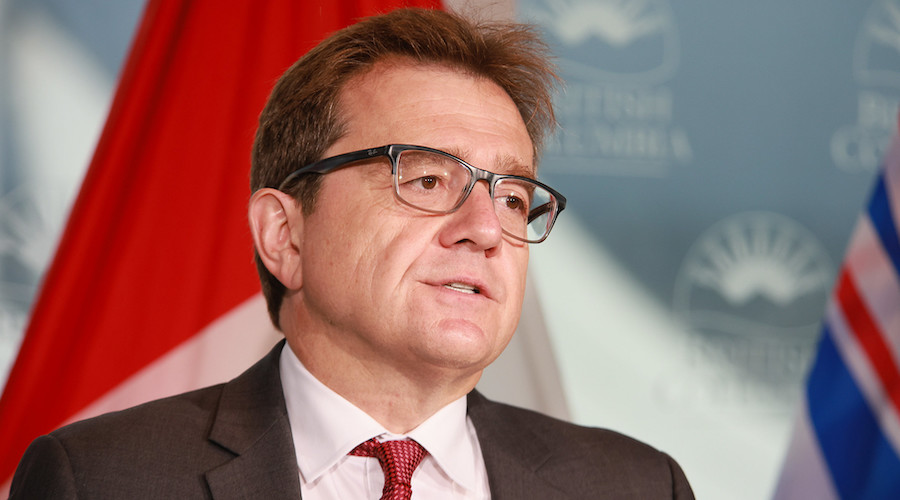
Canada’s minister of energy and natural resources, Jonathan Wilkinson. (Image courtesy of BC government via Flickr.)

Canada’s minister of energy and natural resources, Jonathan Wilkinson, has pushed back against incoming US President Donald Trump’s recent claim that America does not need anything from its northern neighbour as “simply false.”


Wilkinson, who is speculated to be a contender to succeed Justin Trudeau as Prime Minister, highlighted Canada’s critical role as a supplier of resources the US lacks feasible alternatives for, including crude oil, uranium, potash, and critical minerals.

“The United States derives enormous economic value from Canada,” Wilkinson said during a CTV News interview. He noted that US refineries, particularly in the Midwest, rely on Canadian heavy crude oil. Alternatives, like Venezuelan crude, present logistical and geopolitical hurdles, while critical minerals and uranium from Canada fill gaps that would otherwise leave the US dependent on China or Russia.

Canada also supplies potash, a key ingredient for American agriculture, and hydropower to states like New York and Massachusetts. “There is no alternative,” Wilkinson emphasized, describing the deep interdependence of the two nations’ economies.

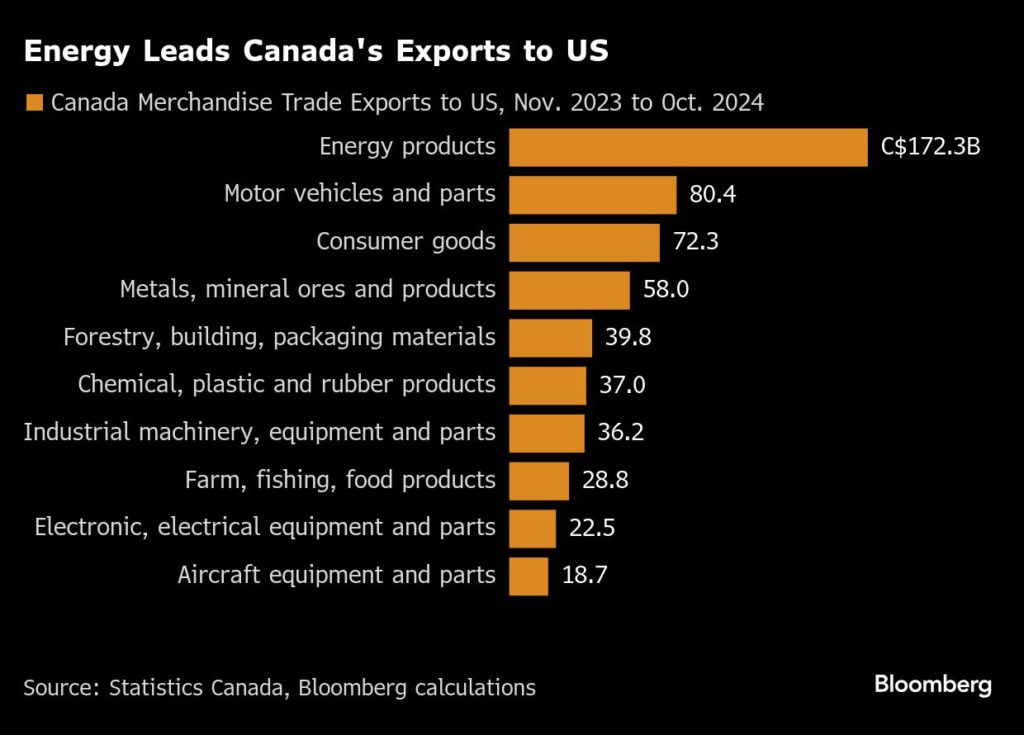
Graphic source: Bloomberg News.

The minister emphasized the critical role of Canada’s resources in supporting the US energy and defence sectors. American nuclear plants rely heavily on Canadian uranium, and the US Department of Defense has invested in Canadian projects to secure alternatives to Chinese supplies of critical minerals, including cobalt and graphite.

Wilkinson also revealed that Canada is prepared to take strong retaliatory measures if the US imposes tariffs, including an export tax on Canadian energy or targeted levies on American goods.

Ready to act

According to reports from CBC News, a list is circulating among Canadian officials that includes America-made goods that could be targeted by retaliatory levies. Items like US steel products, ceramics, and even Florida orange juice are reportedly being considered for these measures.

“That list will certainly be focused on looking to extract the greatest amount of pain in the United States to ensure that there is pressure put on President Trump to withdraw [the tariffs],” Wilkinson said.

Trump has floated the idea of imposing 25% tariffs on goods from Mexico and Canada, citing trade imbalances. Media reports have suggested he may exclude commodities like oil and uranium and target manufacturing industries instead. Sectors such as auto manufacturing, aerospace, and aluminum — concentrated in Ontario and Quebec, where the majority of Canadians live — are seen as more vulnerable to tariffs.

Despite Parliament being suspended until March 24 following Prime Minister Justin Trudeau’s announcement of his impending resignation, the federal government retains the authority to impose retaliatory duties without new legislation. This approach was used during in 2018, during Trump’s fist term in office, in a trade spat over steel and aluminum tariffs.
‘What Are You Complaining About?’: Economists Assail Trump’s Canada Trade Math

By Randy Thanthong-Knight, 
Bloomberg News
January 09, 2025


(Bloomberg) -- President-elect Donald Trump has justified his threat of 25% tariffs on Canada by pointing to the US trade deficit. Top Canadian economists have a response to that: it’s all because your country wants cheap oil.

The US is on track to end 2024 with the largest overall trade deficit in its history. Its imbalance with Canada is about $60 billion over the past 12 months — about one-fifth of the size of US trade deficit with China. Trump has repeatedly claimed the deficit is a subsidy to the Canadian economy, and said Tuesday the US doesn’t need anything from Canada.

Import and export data, however, paint a different picture. Among the US’s top partners, its trade with Canada is the most equally balanced — because Canada buys $85 million from the US for every $100 million it exports. When stripping out oil and gas, the US actually has a significant trade surplus with Canada — its biggest energy supplier and a key buyer of American products from food to machinery.

“The Americans have had the better side of the deal because for more than a decade, they’ve been running surpluses on the non-energy side,” Stéfane Marion, chief economist at National Bank of Canada, said in an interview. “So what are you complaining about? Your deficit is with Canada on energy, but Canada allows you to have access to energy at a discount that you refine or transform to sell at a higher price to the rest of the world.”

The US has been a net total energy exporter since 2019 as increases in domestic production lowered the need for imports. Still, it imports crude oil, petroleum products, natural gas and electricity from Canada. In fact, the US buys more than 4 million barrels a day of Canadian crude oil, and crude imports from Canada also hit a record high last week, partly driven by an expanded pipeline that feeds West Coast refiners.


“For the first time, the US is actually a net beneficiary when energy prices increase because they’re a net exporter,” Marion said. “Americans need to know the reason you have that is partly because of Canada. And from a Canadian perspective, the way out for us is to claim that fantastic endowment that we have on energy.”

While Conservative Party Leader Pierre Poilievre pushed back against Trump’s call to make Canada a US state, he said the country can support US security and supply it with cheap energy. Polls suggest Poilievre is poised to become Canadian prime minister after the upcoming election.

Canada missed opportunities over the past decade to diversify its customer base for oil, despite the expanded pipeline to the Pacific that has opened new markets in Asia, said Lisa Raitt, who served as natural resources minister under former Conservative Prime Minister Stephen Harper from 2008 to 2010.

“We have had the luxury of the past 50 years of having America as our best customer and client, as well as our protector. And we also took the point of view that they would always be there for us,” said Raitt, now vice-chair of global investment banking at Canadian Imperial Bank of Commerce. “That’s why this is so shocking, because it fundamentally is something we weren’t prepared for.”

The government must focus now on fast-tracking projects that would expand buyers for its goods, she said. “If that means giving more approvals on pipelines, if it means getting shovels in the ground, if it means accelerating critical mineral projects, there is no greater sign that we need to do something.”

Over the past 12 months to November, Canada made up about 5% of the total US goods trade deficit with the world of $1.16 trillion.

“The US runs a fairly substantial trade deficit globally, but trade with Canada is actually relatively well balanced,” Doug Porter, chief economist at Bank of Montreal, said by phone. “The only reason why Canada runs a trade surplus is because it exports a lot of oil and gas to the US. If I was an American citizen, I would see that as being a good thing that the US is more dependent on Canada — an ally, a friend — for its energy import.”

Trump, who used tariffs as a tool to redirect trade flows during his first term, has threatened to impose broad tariffs on Canadian goods destined for the US, raising alarm among Canadian government officials and industry groups. Economists expect Trump’s levies to shave off 2% to 4% off Canada’s gross domestic product and potentially plunge the economy into a recession.

“Pointing to Canada-US trade imbalance as a reason for tariffs is a red herring,” Porter said. “Even if Canada-US trade were to miraculously balance in the next day, it would add one tenth of a percent to US GDP. It just is not that meaningful.”

--Wth assistance from Laura Dhillon Kane and Kevin Orland.


©2025 Bloomberg L.P.