Sunday, January 19, 2025

REST IN POWER

Obituary

Film 'legend' David Lynch lives on in French arthouse cinemas


A "legend of cinema" wrote the César Academy on social media in tribute to American director David Lynch, who passed away at the age of 78 on Thursday. France has a soft spot for the enigmatic artist, whose works are regularly shown in the country's cinemas.

Issued on: 18/01/2025 -  RFI

David Lynch at the screening of "Twin Peaks" in Cannes, France, 25 May, 2017. 
© Jean-Paul Pelissier / Reuters


By: Ollia Horton with RFI


"He is one of the great filmmakers who left their mark on their era, and one we will never forget," the post continued.

Lynch was considered one of American cinema's great auteurs, and was adored by fans and the industry alike. Nominated several times for the Oscars, he received an honorary statuette in 2019 for his career.

His family announced his death via a public statement on Facebook on Thursday. The director had announced last year that he was suffering from emphysema.

Steven Spielberg called Lynch "a singular, visionary dreamer" while Ron Howard hailed him as "a gracious man and fearless artist" who "proved that radical experimentation could yield unforgettable cinema".

Lynch was particularly admired in France, where he won the César award for best foreign film for Mullholland Drive in 2002. His film Wild at Heart starring Laura Dern and Nicolas Cage also won the Palme d'Or at the Cannes Film Festival in 1990.

Gilles Jacob, former president of the Cannes Film Festival, called Lynch's death "an immense loss and a very serious blow to the future of modern cinema as he conceived his art".

A distinctive universe

French cinema critic and filmmaker Thierry Jousse told RFI that Lynch had a very distinctive way of making cinema, blending influences including surrealism and the absurdism of novelist Franz Kafka. "He was one of the few artists able to create a world entirely of his own. It's an upside-down universe, a kind of labyrinth where all of his references collided."

Born in small-town Montana in 1946, the son of an agricultural research scientist, Lynch travelled extensively around Middle America as a young man.

He attended fine arts colleges in Boston and Philadelphia before joining the American Film Institute, where he began work on his film Eraserhead.

The 1977 black and white futuristic film about a couple and their grotesque baby was met with mixed reviews from critics, but went on to have success on the underground circuit and become a cult favourite.


'A creative ocean'

This was followed by 1980's tragedy The Elephant Man, also shot in black and white but decidedly more mainstream and accessible, earning him his first best director Oscar nomination.

Based on the diary of Joseph Merrick, born in the United States in 1862 with a condition that gave him a severely deformed physical appearance, it starred Anthony Hopkins and John Hurt.

It also won a French César award for best foreign film in 1982.

French trans gangster musical 'Emilia Perez' wins four Golden Globe awards

In the 1990s, he made the series Twin Peaks, which paved the way for many a prestige television drama. The tale of a tight-knit northwestern town reacting to the rape and murder of a popular but troubled high school girl captivated and shocked Americans.

One of the stars of the series, Kyle MacLachlan, who went on to make several films with Lynch, called him "an enigmatic and intuitive man with a creative ocean bursting forth inside of him".

"I owe my entire career, and life really, to his vision," he wrote on Instagram.

Lynch returned to the red carpet of the Cannes Film Festival with the actor in 2017 to screen the Twin Peaks film.

'He was all about creating texture'

French film writer and director Nicolas Saada said Lynch was a role model for many filmmakers who came after him, in particular due to his use of sound in his films.

"He was all about creating texture in his films," Saada told RFI. "The depth of his photography, the colours he used. He also created an aural texture. From his very first film Eraserhead, he put a lot of work into using sounds, be they from an industrial source or sounds from the street."

Saada said Lynch had la "sixth sense" when it came to sound production, taking real life sounds and distorting them to create abstract sounds. "On top of that, the music used added to the overall texture, creating a very unique result."

In today's world, where everything is "rational and explained", he says Lynch's approach represented "total freedom" from linear storytelling constraints.

Arthouse attraction


Despite only making 10 films in 30 years, Lynch's diverse repertoire is still popular in arthouse cinemas in Paris.

"There's an atmosphere and a universe that continues to attract people," explains Melvine, who works at the Cinema des Écoles in Paris, which is hosting a retrospective of Lynch's films.

"With each screening, it's the same success. We've been showing Blue Velvet for two or three years, for example, and each time it's full," he told Franceinfo.


From 'Twin Peaks' to 'Blue Velvet': Remembering legendary director David Lynch

Culture

From the show
arts24

As the film world mourns the loss of legendary director David Lynch, arts24 looks back at the life and career of a true icon. Known for his surreal and unsettling style in films like "Twin Peaks", "Blue Velvet" and "Mulholland Drive", he redefined cinema and television, leaving behind a legacy of groundbreaking works. Film critic Emma Jones talks to Eve Jackson about his importance to cinema, his love of France and how he even made the weather interesting.


David Lynch unmasked the decay within American culture

By Billy J. Stratton, University of Denver
THE CONVERSATION
JANUARY 17, 2025
UPI

Director David Lynch leaves the Elysee presidential palace after receiving the French Legion of Honor award in Paris in 2007. The filmmaker died this week. File Photo by David Silpa/UPI | License Photo


Jan. 17 (UPI) -- "There's a sort of evil out there," says Sheriff Truman in an episode of David Lynch's iconic TV series, Twin Peaks.

That line gets to the heart of the work of the filmmaker, whose family announced his death Jan. 16, 2025. Lynch's films and TV series reflected the dark, ominous, often bizarre underbelly of American culture- one increasingly out of the shadows today.

As someone who teaches film noir, I often think about the ways American cinema holds up a mirror to society.

Lynch was a master at this.

Related
Kyle MacLachlan, Naomi Watts mourn 'dear friend' David Lynch
'Twin Peaks' filmmaker David Lynch dies at age 78

Many of Lynch's films, like 1986's Blue Velvet and 1997's Lost Highway, can be unsparing and graphic, with imagery that was described by critics as "disturbing" and "all chaos" upon their release.

But beyond those bewildering effects, Lynch was onto something.

His images of corruption, violence and toxic masculinity ring all too familiar in America today.

Take Blue Velvet. The film focuses on a naive college student, Jeffrey Beaumont, whose idyllic suburban life framed with white picket fences is turned inside out when he finds a human ear on the edge of a road. This grisly discovery draws him into the orbit of a violent sociopath, Frank Booth, and an alluring lounge singer named Dorothy Vallens, whom Booth sadistically torments while holding her child and husband -- whose ear, it turns out, was the one Beaumont had found -- hostage.

Beaumont nonetheless finds himself perversely attracted to Vallens and descends deeper into the shadowy world lurking beneath his hometown -- a world of smoke-filled bars and drug dens frequented by Booth and an array of freakish characters, including pimps, addicts and a corrupt detective.

Booth's haunting line, "Now it's dark," serves as a potent refrain.

The corruption, perversion and violence depicted in Blue Velvet are indeed extreme. But the acts Booth perpetrates also recall the stories of sexual abuse that have emerged from organizations including the Catholic Church and the Boy Scouts.

As the exposure of such crimes continue to pile up, they become less an aberration but a dire warning of something that's deeply ingrained in our culture.

These evils are sensational and appalling, and there's an impulse to perceive them as existing outside of our realities, perpetrated by people who aren't like us. What Twin Peaks, Lynch's hit TV series, and Blue Velvet do so effectively is tell viewers that those hidden worlds where venality and cruelty reside can be found just around the corner, in places that we might see but tend to ignore.

And then there are the uncanny and eerie worlds depicted in Lost Highway and Mulholland Drive. The characters in those searing films seem to live in parallel realities governed by good and evil.

Lost Highway begins with a jazz musician, Fred Madison, being convicted of killing his wife. He claims, however, to have no memory of the crime. Exploring the theme of alternate worlds, Lynch thrusts Madison into an illusory realm inhabited by killers, drug dealers and pornographers by merging his identity into that of young mechanic named Pete Dayton. In doing so, Lynch combines the worlds of "normality" and perversity into one.

In the 1990s, artists like Trent Reznor of Nine Inch Nails, whose music is included on the official soundtrack of Lost Highway, also confronted audiences with images of decadence and social decay, which were inspired by his own disturbing experiences in Hollywood and the music industry.

These dark themes have since been personified in rich and powerful men like Sean "Diddy" CombsBill Cosby and Jeffrey Epstein who, for years, skated along the surface of high society with their perversions hidden from the public.

In his 2001 film, Mulholland Drive, Lynch turns his attention to Hollywood and the wretchedness that seems baked into its very nature.

A wide-eyed and innocent aspiring actress named Betty Elms arrives in Los Angeles with visions of stardom. Her struggle to achieve success -- one that ends in depression and death -- is certainly tragic. But it's also not very surprising, given that she was trying to make it in a corrupt system that all too often bestows its rewards on the undeserving or those who are willing to compromise their morals.

As with so many who go to Hollywood with big dreams only to find that fame is beyond their reach, Elms is unprepared for an industry so consumed with exploitation and corruption. Her fate mimics that of the women who, desperate for stardom, ended up falling into the trap set by Harvey Weinstein.

Lynch's death comes at a time when America seems to be hurtling toward an ever-darker future. Perhaps it's one foretold by politicians turning a deaf ear to acts of sexual assault, tolerating the vilification of victims or even bragging that they can get away with murder.

Lynch's vital body of work warns that the cruelty of such people isn't really what we should fear most. It is, instead, those who laugh, cheer or simply turn away - faint responses that enable and empower such behaviors, giving them an acceptable place in the world.

When Lynch's films were first released, they often appeared as bizarre, funhouse mirror reflections of society.

Today they speak of profound and terrible truths we can't ignore.

This is an updated version of an article originally published on Oct. 25, 2019.

Billy J. Stratton is an associate professor of english and literary arts at the University of Denver.

This article is republished from The Conversation under a Creative Commons license. Read the original article. The views and opinions expressed in this commentary are solely those of the author.


'Fix your hearts or die': The unflinching moral compass of David Lynch

(RNS) — With age, Lynch grew more confident that some of his questions had answers.
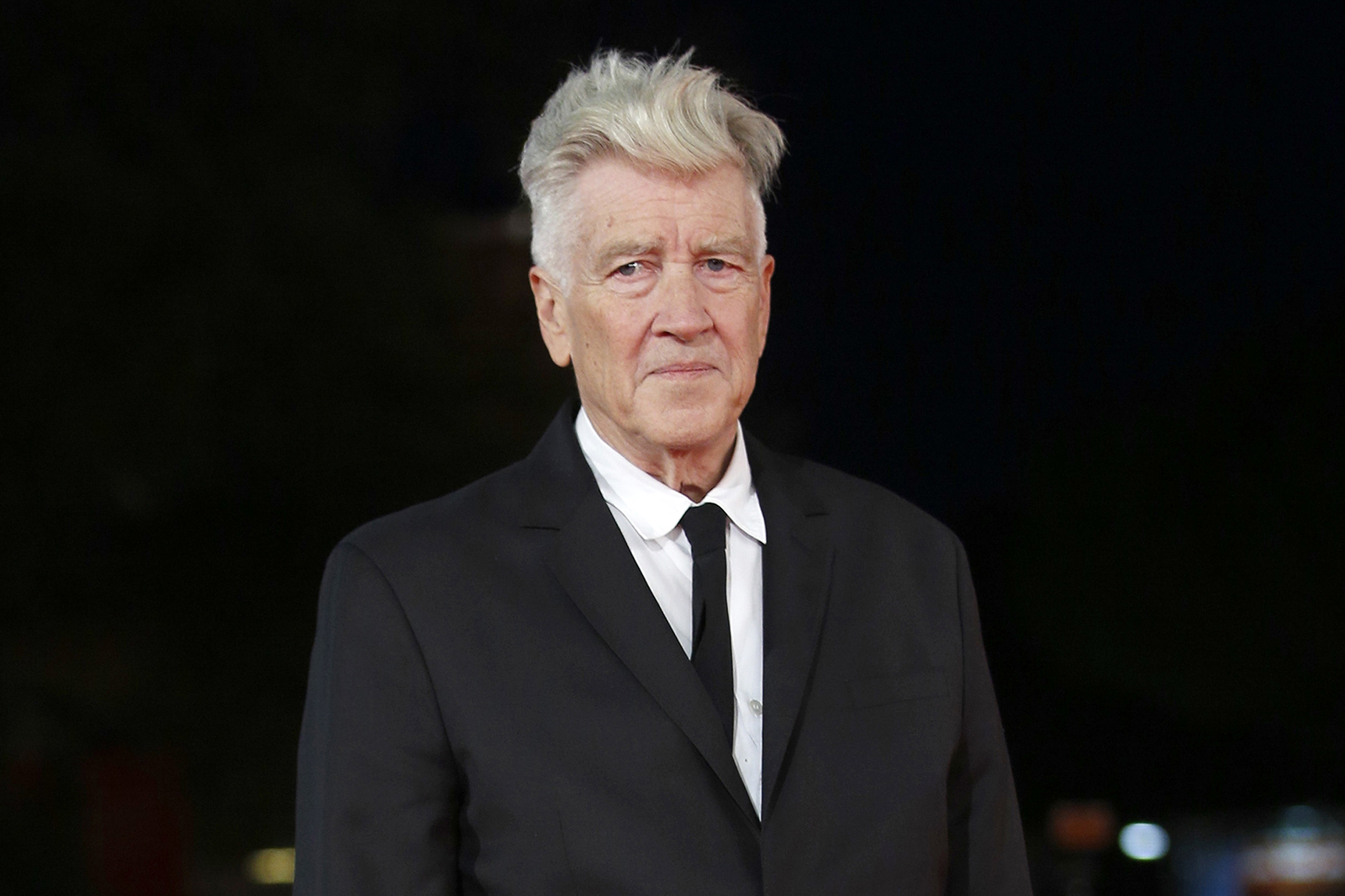

Filmmaker David Lynch appears during the Rome Film Festival in Rome on Nov. 4, 2017. (AP Photo/Domenico Stinellis, File)
Tyler Huckabee
January 16, 2025


(RNS) — In a 2007 BAFTA interview, David Lynch said that “Believe it or not, ‘Eraserhead’ is my most spiritual film.”

“Elaborate on that,” prompted his interviewer.

“No.”


I wish he had. I’ve sifted through “Eraserhead” and have found about as much spiritual content there as in any of Lynch’s other work, which is to say: quite a bit.

Lynch, who died on Thursday (Jan. 16) at the age of 78, was creatively fearless when it came to exploring the world beyond our physical senses. His towering body of work has a logic all to its own, one that is not material or even necessarily legible, but is always comprehensible in some distant, undefinable location in our souls.

He was born to a Presbyterian family in Montana and got his start in animation and painting. That “most spiritual film” would be his debut feature, a dark and uncomfortable slice of black comedy that spread like wildfire in the midnight movie circuit. From there he went to the far more conventionally appealing “Elephant Man,” which earned the sort of box office success and Oscar attention that affords a blank check for future projects. He passed on George Lucas’ offer to helm “Return of the Jedi” and opted instead to adapt Frank Herbert’s “Dune” for the screen. That would be a famous disaster and also, in my opinion, the best thing that could have happened to his career.

Having gotten a taste of blockbuster cinema and thoroughly hated it, Lynch returned to the surreal, uncompromising style of filmmaking he’d cut his teeth on, and never left. He churned out “Blue Velvet” and “Wild at Heart,” honing the dream logic, psychological undertones and oft-imitated but never duplicated idiosyncratic artistry that would come to define his style for four decades. And then came “Twin Peaks.”

The lazy analysis of “Twin Peaks” is that every small American town, no matter how quaint and idyllic on the outside, has evil lurking under the facade. Laura Palmer is simply the unflinching autopsy of Tom Petty’s “American Girl” and Lynch is a cynic who wanted to air out the rot at the heart of the American dream. This is what many Lynch-obsessed filmmakers took from “Twin Peaks” in their own inferior pastiches. It’s far too simple a read.

Lynch was, at his core, a deeply moral artist. He saw good and evil as stark, clearly demarcated things. What fascinated him was not that good things could be secretly bad, but that good and bad could coexist in the same person, the same place. In “Twin Peaks,” good and evil are both cosmic entities we can scarcely understand and twin forces working within us. The secret of Laura Palmer is not that she seemed like a good person but was actually a very damaged victim of unspeakable wickedness. It’s that she is both a good person and a very damaged victim of unspeakable wickedness. The secret of Albert Rosenfield is not that he seems like a rude guy who is actually a very noble guy, but that he is both very rude and heartrendingly noble. And the secret of Twin Peaks at large is not that it seemed like a good town but that it is a good town — and also a bad one. The same is true of so many places; so many of us.

Those of us who’ve spent any amount of time in almost any religious institution will find the questions Lynch spent his career asking very, very familiar.

And Lynch approached all this with almost childlike naiveté, using his television and films to interrogate the very open question of where the lines between good and evil lie. His boundless imagination gave him the freedom to go places where few would dare, utilizing his dreamy aesthetic to chart the strangest corners of the human experience.

“We think we understand the rules when we’re adults,” he would say in the 2016 documentary “David Lynch: The Art Life.” “But what we really experience is a narrowing of the imagination.” Lynch refused to understand the rules and that gave his work an unmatched sincerity.

This sincerity fortified him, even when his work would stare into the perverse, the appalling and the mortifying. Lynch’s work could be terrifying, salacious and often transgressive, but it was never malicious. His moral compass was on straight no matter how ugly his subject. “Fire Walk With Me,” the “Twin Peaks” cinematic sequel that premiered to boos but has since enjoyed a well deserved critical reappraisal, is as horrifying a descent into hell as I’ve ever seen in a movie, but at no point does it lose its way in the darkness. Throughout its formidable run time and daunting subject matter, Lynch leaves a trail of breadcrumbs to redemption for victims, their victimizers and viewers as well.

So, spiritually, Lynch was often doing long algebra on screen and, like long algebra, the whole thing could look like gibberish. But to watch a Lynch movie is to feel the truth of it in your guts, to recognize the melodies if not the exact lyrics. He created from the truest part of himself and, in that creation, found something universal.

As he got older, he got more confident that some of his questions had answers. In “The Return,” his “Twin Peaks” finale, which now stands as his final creative work, Lynch himself plays FBI Director Gordon Cole, who sits down with Denise Bryson, his chief of staff who is transgender (played by David Duchovny). Bryson has experienced some transphobia at the hands of her FBI co-workers, and Lynch savors the knowledge of letting her know that he’d put them in their place.

“When you became Denise, I told all your colleagues, those clown comics, to fix their hearts or die,” Cole says. You have to say it out loud to get the impact of that sentence, but hearing Lynch deliver it is the only way to really savor its poetry, its rhythm and its moral force.

“Fix your hearts or die” is the sort of thing you want to scream at any number of politicians, billionaires and public figures, but if you don’t want to scream it at yourself first, you’ve missed the point.

And if that’s not spiritual, what is?

(Tyler Huckabee is a writer living in Nashville, Tennessee, with his wife and dogs. Read more of his writing at his Substack. The views expressed in this commentary do not necessarily reflect those of RNS.)
GET WOKE

Christian therapist Andrew Bauman quit sexist theology and says you can too

(RNS) — In a Q&A about new book ‘Safe Church,’ Bauman talks Andrew Tate, male headship and whether church can ever really be safe.


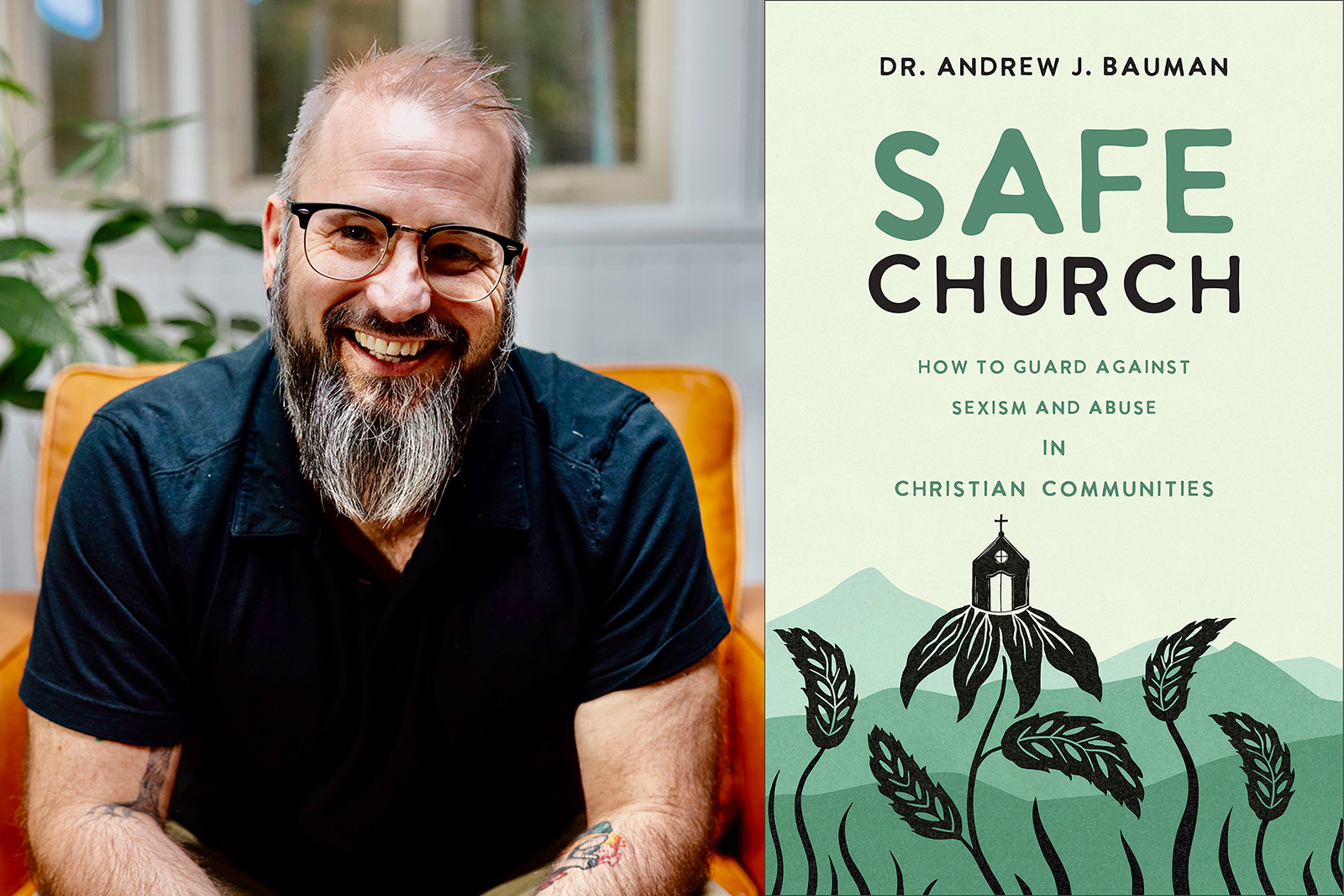
“Safe Church: How to Guard Against Sexism and Abuse in Christian Communities" and author Andrew Bauman. (Courtesy images)
Kathryn Post
January 16, 2025

(RNS) — Twenty years ago, Andrew Bauman was part of the problem.

The son of a pastor in the Southern Baptist Convention, Bauman studied religion in college and became a pastor. But privately, his struggle with pornography had infused his spiritual beliefs.

“My pornography use had mixed in with this misogynistic theology that really made women less-than,” he told RNS in a recent interview. But with that realization came transformation. Bauman traded his pastoral vocation for a career as a licensed mental health counselor and interrogated his religious beliefs until, he said, they were more reflective of Jesus.

“As I look at the way Jesus engages women, the way he subverts the patriarchal culture at the time, my faith only grows,” he said.

These days, Bauman co-leads the Christian Counseling Center, which specializes in sexual health and trauma, with his wife and co-founder, Christy Bauman. And in his latest book, “Safe Church: How to Guard Against Sexism and Abuse in Christian Communities,” he aims to use his position of influence to invite Christians of all stripes to listen to women and to sit with the reality that there’s an epidemic of abuse and sexism in their faith communities.

RNS spoke to Bauman about male headship, the appeal of Andrew Tate and whether church can ever really be safe. This interview has been edited for length and clarity.
What is your faith background, and how does that inform your approach to this topic?

I grew up in the Southern Baptist church, and my father was also a pastor, a lawyer and a prominent evangelical figure in the ’80s. He also had a hidden life. He cheated on my mom for 20-something years, and that blew up my family when I was 8 years old. My mom experienced this horrific trauma of abuse and spiritual bypassing and had the fear of exposing my father. So, this book is so personal to me because I watched it in my mom’s story. I watched how it impacts my own family.
You surveyed 2,800 women and conducted several in-depth interviews about abuse in Protestant churches. How did you connect with these women, and what surprised you about the survey findings?

I reached out on social media platforms, putting out the survey in the world, and it really caught on. Women are so hungry to tell their stories. They’ve been silenced so long, and they desperately wanted to just tell their story to help other people.

This is probably not a surprise to many women, but the survey found that 82%, which ended up being around 981 women, said they believe sexism played a role in their own church. That’s wild to me. And 62% they said they wouldn’t be surprised if they’d heard a sexist joke from the pulpit. Thirty-five percent said that they experienced some type of sexual harassment or sexual misconduct, or they answered it’s complicated, like, you know, there was a larger story. Almost 78% said their opportunity in ministry had been limited due to their gender.
You write that the church’s reliance on male headship strikes you as more emotional than theological. How so?

People think it’s biblical, but I truly believe it’s a misinterpretation of the text. Women being quiet, learning full submission. I have a whole chapter on problematic biblical texts and how we can interpret it more fully. But truly, I believe we have an epidemic of underdeveloped men. A lot of that’s from the socialization of masculinity. We tell men it’s weak to be emotional. We have so many men who don’t understand intimacy. And pornography has infiltrated the minds of churchgoers. It’s showing up in what I call a pornographic style of relating. For example, if you have a pastor who has a secret porn addiction and he has tons of shame, he’s going to project that onto women.

On social media, there’s a debate about why so many young men are being drawn to the notoriously misogynistic influencer Andrew Tate, and whether it’s due to shortcomings in the church. What’s your view on this?

We want a figure that feels strong, right? So if you feel like a little boy inside, you’re going to gravitate to totalitarian leadership, like Donald Trump and Andrew Tate. We’re working out our brokenness on these figures. And one way to feel tough quick is to sexualize, objectify and make women feel small, so I can feel big, rather than doing the hard emotional labor of healing the wounded place within ourselves. I believe the church has helped promote that by promoting really problematic theologies and teachings that make vulnerable women more susceptible to subjugation.

Your book looks at teachings that can exacerbate the harm women experience in the church. Yet churches that ordain women, reject purity culture, use inclusive language for God and have robust abuse policies also have sexism and abuse. Why might that be the case, and what can these churches do to become safer?

It’s easy to make it black and white: Conservatives do this, and progressives do this. And yet, blind spots are in both camps. At one progressive seminary I know of, the students would go around and just go have sex in all the different areas of school. That was their idea of reclaiming purity culture. And I’m thinking, OK, you’re pushing against shame, but entering into shamelessness is no closer to healing. Not honoring the sacredness of sexuality is also toxic. So, I would say it’s the same message for progressive churches. What are you not addressing in your system that’s still perpetuating some of these things that are causing the problems? We have to deal with what’s beneath and not just fix symptoms.


Many church leaders have the impulse to prioritize reconciliation in the context of abuse. Is reconciliation ever an appropriate response to abuse, and if so, how should it be approached?

I call that weaponizing forgiveness. I’ve heard it time and time again. The perpetrator has tears in his eyes and says he’s sorry. Really, he’s just sorry he got caught. It’s a cheap grace. Action is the apology. We can’t believe what people say. We can only believe what they do. I heard it so much from the women I talked to, that the victim of abuse was pressured to forgive quickly without proper grief or repentance from the perpetrator. Misquoting Bible verses on grace and forgiveness can be just a way to manipulate and to spiritually bypass abuse. They end up making the problem the victim’s fault, retraumatizing them. It becomes a problem about forgiveness, rather than about the actual abuse.

In those situations, moving on is the highest priority. They don’t want their church to be exposed. What if the highest priority was being present with the victim?
How do you respond to church leaders who point to dwindling resources, overworked volunteers and burnout as barriers to implementing robust safeguarding and misconduct policies?

If you actually start doing this, and you create safety, people will be drawn to that, and that will create more financial support. Because if you start the conversations that matter, and you actually teach women to trust their intuition and their gut, that’s going to be attractive. Rather, we’re seeing record numbers of people leave the church.
The title of your book is “Safe Church,” but as you acknowledge throughout your book, the church is made up of imperfect people. Can any church really be safe?

I believe it’s not a final destination. It’s an ongoing process. So, can you ever finally reach safety? I don’t think so. But can you begin to implement yearly abuse prevention training? Can you familiarize yourself with policies and reporting procedures? Can you invite open dialogue in your churches? Can you increase diversity in leadership positions? There are always steps churches can take.
Benin’s mecca of spirits and gods draws tourists and followers with famed Voodoo festival

OUIDAH, Benin (AP) — The festival gained popularity over the years from within and outside Africa, organizers say, and attracts thousands of locals and foreigners who flock to the Atlantic coast town to experience one of the world’s oldest religions.


Zangbeto masquerades the traditional Voodoo guardians of the night performing ahead of the annual Voodoo festival in Ouidah, Benin, Thursday, Jan. 9, 2025.
 (AP Photo/Sunday Alamba)

Associated Press
January 16, 2025

OUIDAH, Benin (AP) — As children dance with great speed and energy in colorful robes, guided by the drumbeats and chants from dance troupes, the gods and spirits that are evident all around the arena are beckoned upon by the old and young for peace and prosperity. And on the sidelines, camera clicks from foreigners and locals follow the festivities.

Welcome to the ancient town of Ouidah, in southern Benin, a mecca of gods and spirits where the celebration of the annual Voodoo festival brings a mix of tourism and religion in a clash of cultures and the ability for ancient traditional beliefs to adapt to modern life.

The small West African nation held the annual festival last weekend, with Voodoo day marking the “return to the source for all Africans and Afro-descendants,” said Christian Houetchenou, the mayor of Ouidah.

“It is to come back and live their culture, art and spirituality for those who practice Voodoo,” said Houetchenou.

The festival gained popularity over the years from within and outside Africa, organizers say, and attracts thousands of locals and foreigners who flock to the Atlantic coast town to experience one of the world’s oldest religions.


Officials are now hoping to explore its full tourism potential and showcase Benin’s rich culture and tradition.

“This is a way to show people the pomp, the beauty, and the value of Voodoo and more importantly the value and spirit of the Beninese people…(and) of all African people,” said Suzanne Celeste Delaunay Belleville, the Voodoo priestess, draped in beads and a white robe.

Featuring traditional ceremonies, dance events, and rituals in the form of incantations, adulations and offerings, Voodoo — which has its own pope whose reign dates back to the 1400s — borrows heavily from the mythology and cultural displays of Yoruba people of Nigeria’s southwest and reflects other sides of traditional religion acVross Africa, including from the neighboring Togo and Ghana.

Located in different parts of Ouidah are alters and shrines where everything — from trees to wooden carvings and earthen walls — bears portraits of gods and spirits invoked day and night by devotees and their servants.

Many foreigners attend the annual festival to document memories and experience the thrill of it while others, like Jaimie Lyne, from the French Caribbean island of Guadeloupe, are drawn to it by their curiosity to find out if all they’ve heard is true.

Lyne said her mother’s visit to Benin in 2023 sparked her interest in Voodoo and Benin’s cultural heritage. Before her trip, most of what she heard about Voodoo was that it is “demonized”, and “archaic.”

But she saw a different reality on the ground.

“One thing that I’m going to take home with me to the Caribbean is that Vodun is something to be learned and understood,” said Lyne, a data analyst. “It’s the culture of communion with the land and the elements and it is really more about how everything has an explanation in terms of all of the symptoms, all of the realities of the world and the rain and the sun.”

It is for such reasons — to enable the people to showcase their culture and tell their stories — that the festival has stood the test of time, said Belleville.

“It’s important for us to be able to carry our message ourselves,” she said. “No one can better talk about us than ourselves.”
___

Asadu reported from Abuja, Nigeria.

The Conversation religion coverage receives support through the AP’s collaboration with The Conversation US, with funding from Lilly Endowment Inc. The Conversation is solely responsible for this content.
U$A

King Day and Inauguration Day confluence sparks plans for rallies, prayer, hospitality

(RNS) — ‘We’ll be taking attendance on who’s afraid — of dream busters or who stands with the dreamer — on Martin Luther King federal holiday,’ Sharpton said ahead of a planned rally.


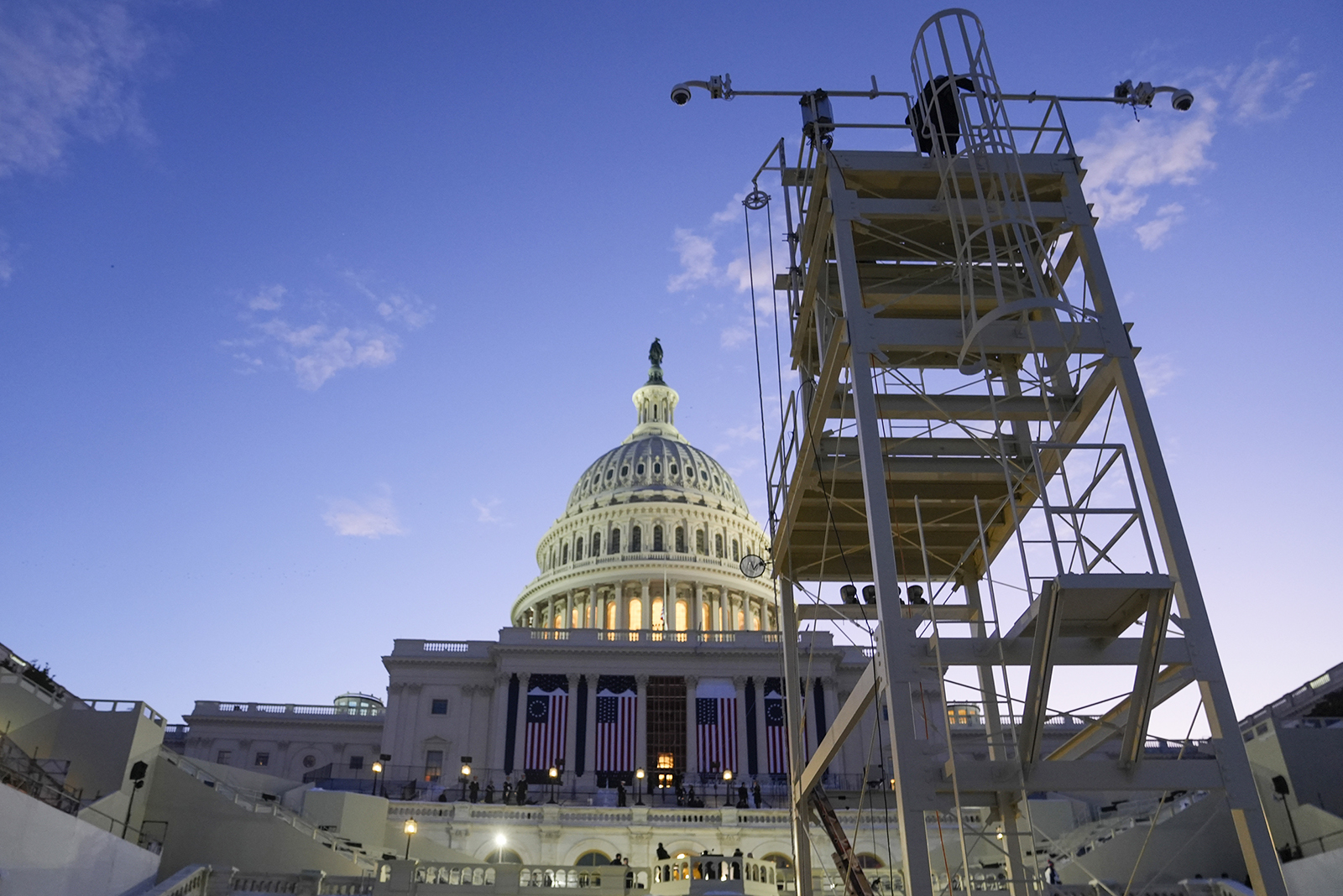
The sun rises behind the U.S. Capitol as a rehearsal takes place Jan. 12, 2025, on the West Front ahead of President-elect Donald Trump’s upcoming inauguration, in Washington. (AP Photo/Jon Elswick)

Adelle M. Banks and Jack Jenkins
January 16, 2025

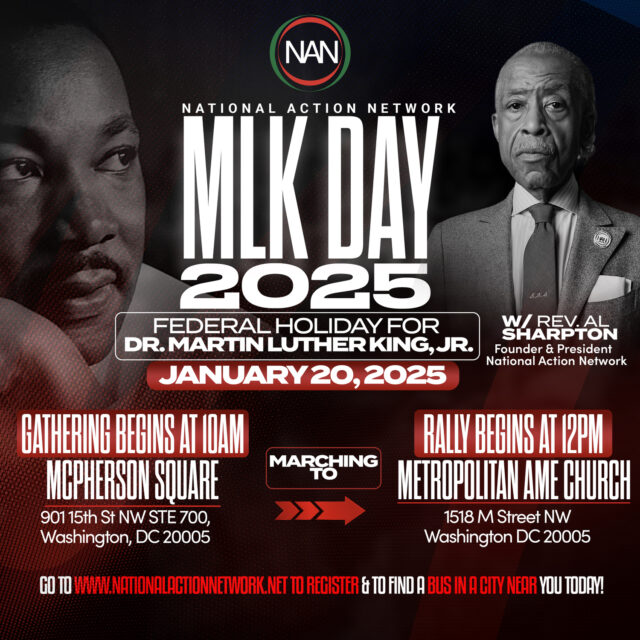
WASHINGTON (RNS) — As President-elect Donald Trump takes his oath of office for a second presidential term, the Rev. Al Sharpton, president of the National Action Network, plans to gather people in another part of Washington, D.C., “taking our oath to keep Martin Luther King’s dream alive and intact.”

The confluence of the two federal holidays on Monday (Jan. 20) has sparked an odd — and sometimes opposing — mix of events over what is expected to be a busy three-day weekend in the nation’s capital and beyond it.

Sharpton announced on the website of his civil rights organization, which describes itself as working “within the spirit and tradition of Dr. Martin Luther King, Jr.,” that he expected busloads of people to come to the District of Columbia Monday and to march to Metropolitan African Methodist Episcopal Church. The historically Black church’s sanctuary has been the site of funerals of abolitionist Frederick Douglass and civil rights icon Rosa Parks.

“We’re going to rally, we’re going to march to uphold the rights and the legacy of fighting for those rights that Dr. King stood for on this federal holiday that we fought and marched and prayed to get,” Sharpton said in a video.

“We’ll be taking attendance on who’s afraid — of dream busters or who stands with the dreamer — on Martin Luther King federal holiday,” Sharpton said ahead of a planned rally.

On Wednesday — which happened to be Jan. 15, King’s actual birthday — Sharpton began spearheading a series of events set to culminate with the gathering at the AME church.


Promotional material for National Action Network’s MLK Day march on Jan. 20, 2025. (Graphic courtesy of NAN)

In Washington and other metropolitan areas, houses of worship planned prayer breakfasts, commemorative speeches and service projects to mark the King holiday. But some, including the Rev. Bernice A. King, CEO of the King Center in Atlanta and a daughter of the civil rights leader, also recognized the timing of the transition in U.S. presidential power.

RELATED: At Trump’s inauguration, religious allies and new faces to offer prayers

“As we prepare for a new presidential administration, or repeat, in some ways, this King holiday I am calling on all people of goodwill and conscience to do more than commemorate and celebrate King for a day,” she said. “I’m calling us to do more than quote King, which we love to do.”

Citing her father’s 1967 book “Where Do We Go From Here: Chaos or Community?” she urged greater dedication to nonviolence and cooperation.

“I’m calling on people to align with a new coalition of conscience that clings to the nonviolent teachings of my father,” she said, “and devote themselves to work consistently in a collaborative, coordinated and concerted fashion to create the beloved community and change this old world of chaos into a glorious new world.”

One of the King Center’s events will be the annual worship service at Atlanta’s Ebenezer Baptist Church, where King once was co-pastor and where the Rev. William J. Barber II is set to be the keynote speaker.


The Rev. William J. Barber II speaks during Yale Divinity School’s first Public Theology and Public Policy Conference, April 7, 2024. (Courtesy photo)

In a December interview with RNS, Barber said his homily, which is referred to as a national sermon, will touch on a moment in 2 Kings, a book of the Bible.

“When the four lepers found themselves in a time of oppression and destruction in the Old Testament, they asked this question: ‘Will we just sit here and die?'” he said. “And they decide ‘no,’ and with their leprosy-hurt bodies, they make their way toward the enemy. God uses them, in that moment of nonviolent marching, to change the nation and change the country.”

After the service, which is set to conclude before the inauguration, Barber said he plans to huddle with fellow ministers and others for “deep, prophetic listening — like God said to Ezekiel: Lay down and listen for a few days.”

“On Inauguration Day, you’re no longer listening to a candidate. You’re listening to a president,” he said. “You’re listening to see: Is that president going to be a president for all people, or are they still going to operate in their isolated partisanship?”

He added: “Their inaugural speech is about them laying out their vision. Is it going to be a nightmare, or a dream?”

Some churches traditionally mark King Day at worship services on the Sunday before the Monday holiday, but a pre-inauguration event has prompted at least one congregation to not gather in its sanctuary.

First Congregational United Church of Christ in Washington is three blocks from Capital One Arena, where Trump is expected to speak at a Make America Great Again Victory Rally on Sunday.

The Rev. Amanda Hendler-Voss emailed her congregation to say church leaders decided not to meet in their building on Sunday because “we do know that security will be tight, raising issues of accessibility and safety.” Instead, she told RNS that the predominantly white congregation “seeking to live into our antiracism calling” will worship with nearby Peoples Congregational UCC, a historically Black congregation.

“I do not recall an instance in which we opted not to meet in person for reasons other than snow/COVID,” Hendler-Voss, who has served the congregation since 2020, told RNS in an email.

Another church, several blocks farther away from the Trump rally site, has no plans to change its worship patterns but instead intends to offer hospitality to all those coming to Washington: Trump’s supporters arriving for Inauguration Day, as well as people on Saturday attending the People’s March — rebranded from the “Women’s March” of earlier occasions — protesting expected policies of the incoming administration.

“We will be offering access to bathrooms, phone charging, water, etc. to help ensure that participants have a place to rest and refresh as they make their way through the day,” the Rev. Sarah Johnson, senior pastor of New York Avenue Presbyterian Church, said via email. “It’s important to us to be a place of radical hospitality for all, and we look forward to welcoming people with warmth and care.”

Barber is also slated to be a part of a separate service Monday evening in Memphis, Tennessee, billed as a “prophetic response to America’s defining moment.”

Other participants include the Rev. Karen Georgia A. Thompson, president of the United Church of Christ; the Rev. Terri Hord Owens, president of the Christian Church (Disciples of Christ); the Rev. Sofía Betancourt, president of the Unitarian Universalist Association; the Rev. Moya Harris, an itinerant elder in the African Methodist Episcopal Church; Bishop Yvette Flunder, senior pastor of the City of Refuge UCC in Oakland, California; and activist Shane Claiborne.
MUTUAL AID IS SOLIDARITY

Opinion

My Gen Z daughter and her Altadena and Pasadena classmates are showing us the way

(RNS) — It should not be surprising that the children of this community would lead in taking care of their own across faiths, ethnicities and languages.


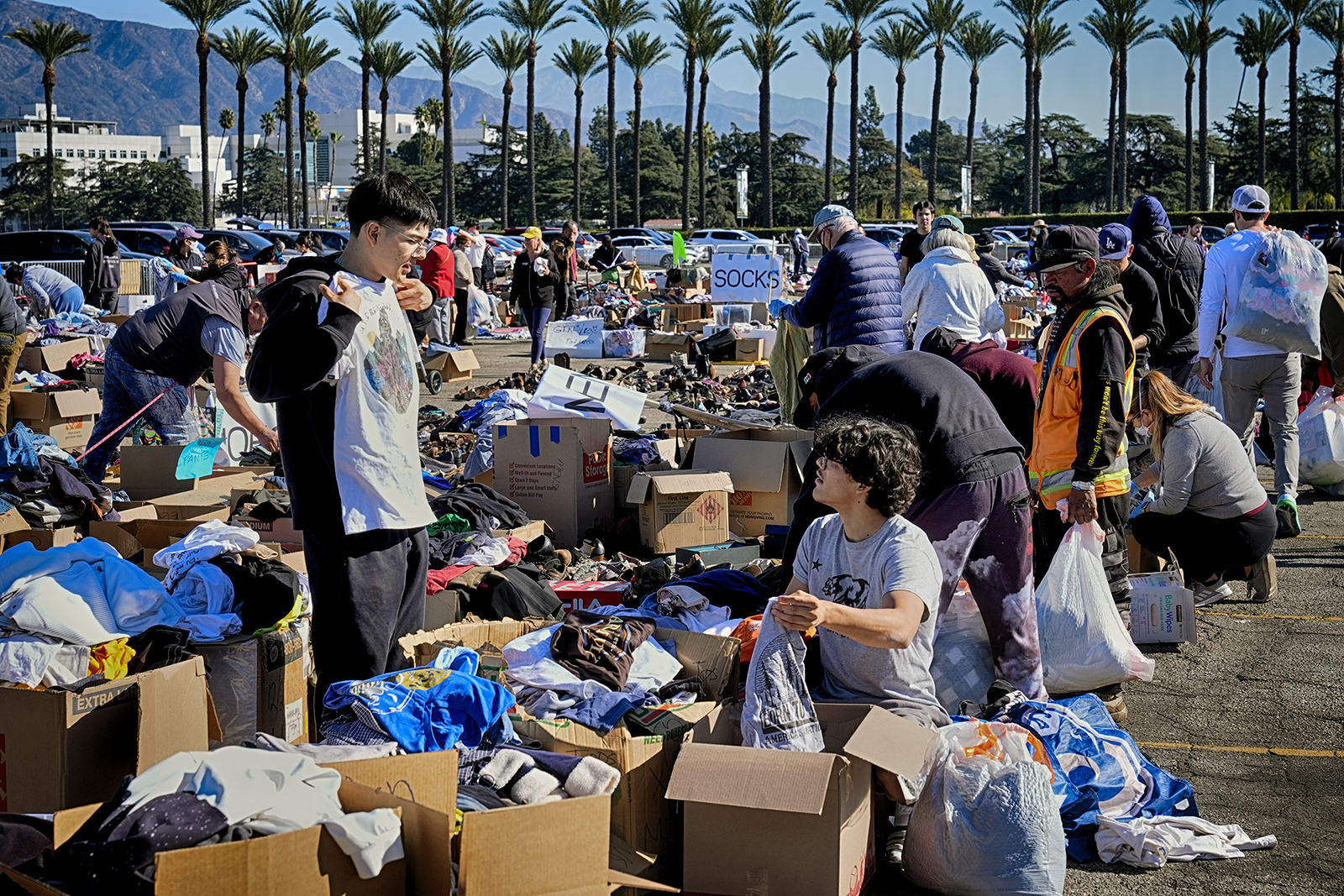
People impacted by recent wildfires search for clothing that might fit at a donation center at Santa Anita Park in Arcadia, Calif. on Jan. 15, 2025. (AP Photo/Richard Vogel)

Najeeba Syeed
January 16, 2025

(RNS) — This column is a love letter to the children of Pasadena and Altadena.

I often write about religion and interfaith cooperation in disaster and conflict. This week, as I write this column in tears, my analysis hits home. My children are products of a public school system in which almost 7,000 students lived in the evacuation zone of the Eaton Canyon Fire, and 2,600 in the core burn zone of the same fire. My children spend half their life in Altadena. The neighborhood as of this moment is still closed off; my children still have a home, though the house next door burned down.

We often worshipped in Altadena and, especially in Ramadan, broke fast in Masjid Al-Taqwa, now only a pile of ash and rubble. In the past, for five years, I ran an organization that served northwest Pasadena and Altadena schools and communities. I lived in the Pasadena area for 15 years. Our connections to these communities are deep and beloved.

My daughter has been active on Instagram trying her best to raise money for the many friends she knows who have lost their homes. She is awe-inspiring to me. Immediately after hearing from her friends and schoolmates, these teenagers moved into action, sharing GoFundMe’s and other sources.

They have been out of school for two weeks and have spent every day volunteering at different sites, naturally folding into it without question. They are not interested in photo opportunities — in fact, many seem allergic to pictures of them doing service. Instead, I see them using their powerful tools of social media not to amplify their efforts but to highlight the donation needs of different communities. They are sharing stories that change the narrative of the fires from one that impacted only celebrities and high-income families. Their volunteerism is concentrated in the notion that service is an ethic of care, that compassion is a way of being. These collective efforts offering immediate support and hope for healing are hallmarks of their generation.

Altadena and northwest Pasadena have historically been home to a diverse array of communities — from Black businesses, homes and historic institutions, to powerful Latino churches, to Armenian and other communities. We are all a part of the fabric of greater Pasadena and Altadena. A Jewish synagogue, a mosque and at least three area churches were lost in the fires.


The remains of the Masjid Al-Taqwa mosque are seen in the aftermath of the Eaton Fire, Jan. 10, 2025, in Altadena, Calif. (AP Photo/Jae C. Hong)
RELATED: California fires have destroyed at least a dozen houses of worship

These are communities rich not in wealth in comparison to some others, but in their celebration of diversity, a place that was open when racism and redlining kept groups from buying property elsewhere.

It should not be surprising that the children of this community would lead in taking care of their own across faiths, ethnicities and languages. And they are also children of the pandemic. Their eighth grade graduations were full of speeches that talked about the trauma of collective isolation. Even then, they sounded like individuals far beyond their years. They have grown up already in the face of global crises, and when it hit home, their huge hearts and ethical orientations responded to the moment without hesitation.

A teen-led clothing drive in Pasadena at Bravo Salon, for instance, and the Altadena Teen Girls Fire Recovery were organized and fueled by teens. Other teens are serving at organizations they already had connections to, like the Flintridge Center, which is in the heart of the community. Faith-based and public schools, as well as churches and other religious sites, have become centers for teens to organize relief efforts. Many family-owned and local businesses have also been sites for teens to organize relief efforts and activities such as feeding first responders.

I was part of an interfaith vigil organized online this week on Zoom because so many of the families had lost their homes. A Muslim, Jewish and Christian team of clergy and leaders prayed and offered words of wisdom for navigating what will be a long-term recovery for the communities impacted by this tragedy. I offered a caution on making sure theology and religion are not used to blame anyone or communities for the cause of this catastrophe — and instead to focus on our overlapping teachings of healing and hope.

Our teens are doing that in the very practical sense. Their continued service and their steady moral compass make me excited to see the world they will run. A world in which we don’t need a litmus test on your beliefs before we offer care, where your story is important to share no matter which income bracket you come from. A world in which the measure of our humanity is how much we show up for each other with an embodied empathy that asks, “What do you need, dear friend, who I may not know? Let me be there for you.”

This vision of humanity in crisis contradicts the tropes of a self-centered generation that is concerned only with its own public personas and presentation. It is evidence of a group of young people who, when faced with the gravity of so much loss, chooses connection over isolation, action over apathy, generosity over a scarcity mindset. When one of us flourishes, we all flourish.

It would be a great way to go into 2025 with this imperative, one that many older generations and, dare I say, policymakers could benefit from in their own work.

(Najeeba Syeed holds the El-Hibri Endowed Chair at Augsburg University in Minneapolis and is executive director of the Interfaith Institute there. She splits her time between Minnesota and Los Angeles. The views expressed in this commentary do not necessarily reflect those of RNS.)


African Christian leaders see common cause with an incoming President Trump

(RNS) — When it comes to defending Christianity and religious freedom and opposing abortion, Christian leaders like what they see in Trump.


Fredrick Nzwili
January 17, 2025

NAIROBI, Kenya (RNS) — President-elect Donald Trump has never visited Africa and is known to have made disparaging remarks about the continent. But as Christian leaders look to his inauguration this Monday (Jan. 20), they see areas of common cause.

Since the November elections, many church leaders have followed Trump’s interactions, public statements and activities. When it comes to defending Christianity, religious freedom and resolving world conflicts, they like what they see.

The Rev. Lambert Mbela, a bishop of the Redeemed Gospel Church, said he plans to watch Trump’s second inauguration and said the Israel-Hamas ceasefire agreement, expected to begin Sunday with the first hostage exchange, is a good sign.


“I believe this (electoral victory) contributed to the peace deal,” he said. “I think he catalyzed it. My greatest expectation is that he is going to do something … that will change many things around the world.”

Nigerian Baptist pastor the Rev. Joseph John Hayab hopes Trump’s administration will support religious freedom and emphasize family values, as well as provide support for counterterrorism efforts against groups such as northern Nigeria’s Boko Haram and al-Shabaab, the Somalia based al-Qaida affiliate in East Africa.

“Many African churches hope that Trump will continue to champion religious freedom and support for Christians, especially in regions where they face persecution … ” said Hayab, a former chairperson of the Christian Association of Nigeria in the northern state of Kaduna.


He said Trump’s advocacy for traditional family values resonates with the view of many conservative communities in Africa.


“There might be hope for continued promotion of these values in U.S. foreign policy,” he said.

Hayab observed that conservative African churches have strong anti-abortion views and may align with Trump’s policies that restrict funding to organizations that provide or promote abortion services.

Backing this view is the Rev. John Gbemboyo Joseph Mbikoyezu, the coordinator of the Sudan Catholic Bishops Conference.

“He frequently spoke about abortion during his campaigns and promised to tackle the rampant killings,” said Mbikoyuzu. “Life is to be preserved and cared for, and these are values we stand for.”

In reality, Trump’s 2024 campaign opposed a federal abortion ban and omitted the explicit basis for a national ban in the Republican Party platform.


Still, how the U.S. addresses the issues of abortion and LGBTQ+ rights is of great concern to African clerics. Many of them reject homosexuality as contrary to Scripture and African cultures.

According to Tumi BB Senokoane, a professor of theological ethics at the University of South Africa, Trump is a conservative Christian; his views are conventional, and he has proven to be consistent as far as religion is concerned.

“His fundamental belief is that God should bless America, and this informs his world view. The blessings are based on American decisions and things such as abortion, homosexuality and domination,” he said.


Constitutions in various African countries ban abortion and homosexuality. In 2024, 30 of the 54 countries in Africa had laws banning homosexuality. Some reports indicate that 20 out of the 54 countries in Africa have recently loosened laws on abortion.

“We hope he will go against it all,” said Mbela, who fears that America has been forcing people to recognize the rights of minority groups, but also advancing “some very ungodly and satanic tendencies.”


At the same time, Christian leaders are also apprehensive that some of Trump’s controversial policies on foreign aid and climate change could hurt the most vulnerable in Africa.

According to Hayab, there are valid reasons to be concerned about Trump’s denial of climate change.

“He has historically expressed skepticism about climate change, calling it a hoax,” said Hayab.

Africa suffers disproportionately from climate change, according to the World Meteorological Organization, harming food security, ecosystems and economies and fueling displacement and migration.


‘Cautiously optimistic,' Palestinian Americans hold their breath at news of ceasefire

(RNS) — After a year and a half of watching their homeland demolished and hearing of loved ones lost, news of the deal was bittersweet and long overdue.


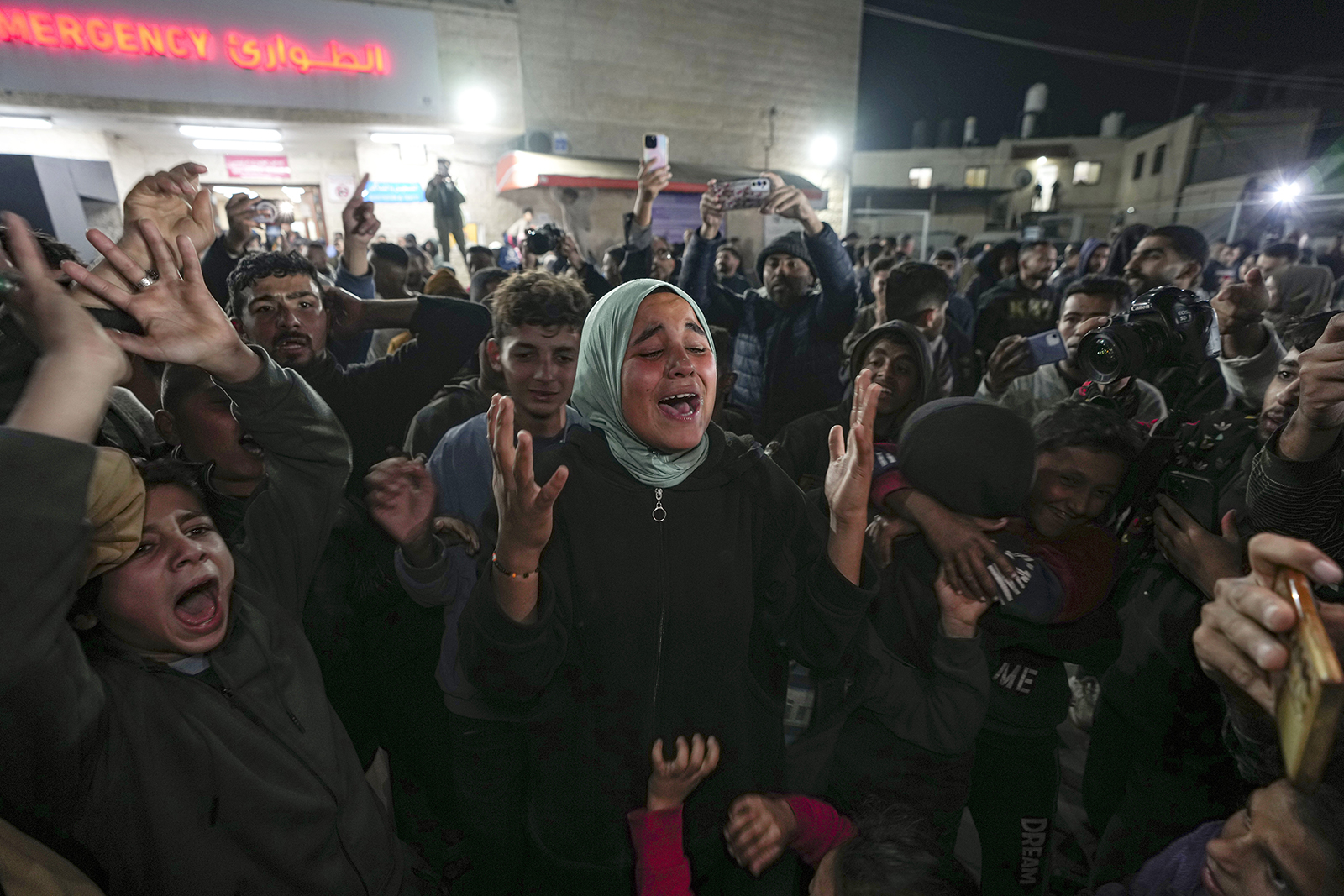
Palestinians celebrate the announcement of a ceasefire deal between Hamas and Israel in Deir al-Balah, central Gaza Strip, Wednesday, Jan. 15, 2025. (AP Photo/Abdel Kareem Hana)

Fiona André
January 17, 2025

(RNS) — When Terry Ahwal, a Palestinian American living near Detroit, Michigan, learned Israel and Hamas had reached a ceasefire deal, a flood of emotions washed over her.

She felt relieved that the 15-month war might end soon but unsure whether the deal would bring long-lasting peace and include solutions to rebuild Gaza.

“I am cautiously optimistic. Any time there is a cessation of violence, it’s a welcome thing, but having lived through too many Israeli ceasefires, I am skeptical, and I’m monitoring with hope,” said Ahwal, who grew up in the West Bank and serves as president of the American Federation of Ramallah Palestine.

Her relatives in Palestine celebrated the news, though they are also waiting to see how the deal will unfold and whether the peace will last. “They are on their edge every step of the way, not knowing what’s going to happen,” she said.

For Palestinian Americans around the country, the news of a ceasefire was bittersweet. After a year and a half of watching their homeland demolished and hearing news of loved ones lost, many consider the deal long overdue. Nationwide, Palestinian communities celebrated the promised truce and release of Palestinians held in Israeli prisons but remain angry that so many Palestinians were killed before an agreement was reached.

The 15-monthlong conflict has claimed the lives of more than 46,000 Palestinians, according to the Gaza Health Ministry and U.N. estimates. Ninety percent of the Gaza population has been displaced, many repeatedly, and faced threats of famine and disease, while the territory’s infrastructure has been decimated.

Announced on Wednesday (Jan. 15), the ceasefire deal supervised by the Biden administration and Qatar is set to come into effect as soon as Sunday. The first phase of the deal will prompt a 42-day pause in the fighting and allow for the release of 33 Israeli hostages held by Hamas, most of them women and children. In exchange, hundreds of Palestinians held in Israeli prisons will be freed. Hundreds of thousands of displaced Gazans will also be allowed to return to what remains of their homes, and humanitarian aid will be re-allowed into the war-ravaged territory. Israel must also pull back its troops closer to the Israel-Gaza border. On Friday, Prime Minister Netanyahu gathered his security cabinet to approve the deal.

RELATED: 2 Israeli American hostages are expected to be among the first 33 released by Hamas

For Ahwal, the agreement is a “small respite” after the nightmarish year. Hearing the news again and again that someone she knew in Gaza had been killed or injured has taken a toll, especially knowing Israel received military and financial support from the American government.

“It’s been a horrific time watching genocide on your screen and watching our country being complicit in sending bombs. It was just unimaginable,” she said, adding, “we used to say we are complicit with genocide. The issue is we’re not complicit. We are the actors of genocide.”

Now, Ahwal said her community is only thinking about rebuilding Gaza. As the fighting stops, she said, residents are holding their breath as they prepare to uncover the scope of devastation brought by the war. “Nobody knows what is under the rubble,” said Ahwal.

She also worries about the long-lasting effects of the war on the territory, the fate of the 1.9 million displaced refugees, and the 85,000 people wounded, including the untold thousands of Gazans who have lost limbs in the conflict. Ahwal also feared the environmental consequences of the war on Gaza’s agriculture, wondering if the large amount of bombs dropped on the territory altered the quality of Gaza’s soil.

Yet, she believes Palestinians will rebuild the strip. “One thing about Gaza and the one thing about the Palestinians, if they have one breath in their life, that breath is going to be focusing on, how are we going to rebuild with or without tools, with or without the international community,” she said.

Anwar Arafat, a Palestinian American Imam in Memphis, Tennessee, said he welcomed the news with great joy but remained skeptical. “We’re happy that something is being done, but I’m not treating it like a victory or a big win. It’s not the win that it seems to be,” said Arafat, who still waits to see whether the deal will materialize and bring long-lasting peace.

He also lamented that so many died before the two sides could reach agreement. “It just tells me that Palestinian lives are very cheap to the people,” he said. “I’m heartbroken for all the people that needlessly have been killed and murdered and the destruction that has happened.”


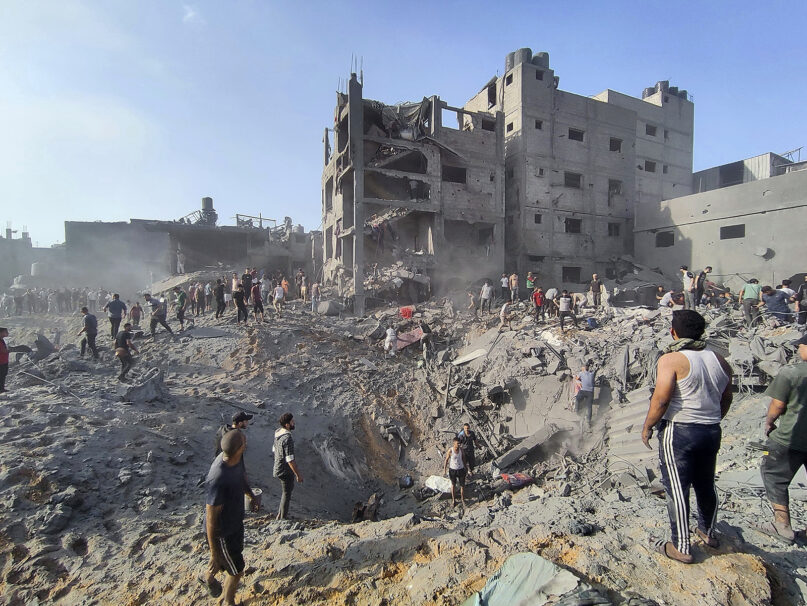
Palestinians inspect the damage of buildings destroyed by Israeli airstrikes on Jabaliya refugee camp on the outskirts of Gaza City, Tuesday, Oct. 31, 2023. 
(AP Photo/Abdul Qader Sabbah, File)

Over the past year, Arafat’s childhood house in Gaza City, the largest city in the strip, was destroyed in Israeli airstrikes. He has been in constant communication with his family, many of whom are still in Gaza. A few family members were able to evacuate to Egypt, he said. “We’ve been living and breathing this war for the past 15 months.”

Munther Isaac, a Lutheran pastor based in Bethlehem in the West Bank, also said the news brought mixed emotions in a statement posted on X on Friday (Jan. 17). Isaac, who is Palestinian, quoted the Bible book of Amos in his statement, referring to a verse celebrating justice and righteousness.

RELATED: In Bethlehem, a Christian pastor says a year of protest for Palestinians shows few gains

“To begin with, I am still cautious: I will believe it when I see it. But, hoping that the ceasefire materializes, we can’t but feel relieved and grateful,” wrote Isaac in the post. “We have been praying and pleading for a ceasefire for months.”

The pastor, who runs Christ at the Checkpoint, an organization dedicated to raising awareness on the Israeli occupation of Palestinian territories, also noted the ceasefire can’t be the end goal.

“At the same time, we can’t help but feel angry and frustrated that it took this long. Gazans have suffered a lot. They deserve to simply live in their homeland. Palestinians deserve to live in dignity and peace in their homeland.”

Since the war broke out on Oct. 7, 2023, after Hamas militants killed 1,200 people and abducted 250 hostages in southern Israel, the Biden administration has come under fire for its support of Israel’s military response to the attack.

Ahwal criticized the Biden administration for presenting the deal as one of their achievements, arguing “what he did, he could have done 15 months ago.”

Over the past year, she reached out to President Biden numerous times to address his handling of the war. Like her, many Muslim and Arab Americans had pledged not to vote for President Biden and Vice-President Harris in the 2024 presidential election to sanction the administration’s handling of the war.

The Abandon Biden campaign, launched in November 2023, rallied many of these disillusioned voters. Farah Khan, co-chair of Michigan’s Abandon Biden campaign, applauded the news but said the deal was long overdue.

“It was long-awaited, and it was a relief that it had happened already. It means it should have happened a long time ago. It took so long for this to happen, but it happened,” she said.

Khan said she believed the Trump administration also played a role in advancing negotiations. She says there will be a lot of eyes on the next administration — who racked up support in the last days of the campaign among Arab American and Muslim voters — to see whether they will deliver on the promise to end the war.

Mahmoud Muheisin, acting president of the Muslim Coalition at the University of Michigan – Dearborn, says he hopes the ceasefire holds.

“Though we are hopeful for the ceasefire, we acknowledge the fact that it’s not, it’s not the end. It is a step in the right direction. And there’s still a lot of work to be done. Only time can see whether you know Trump in office is a good thing for the movement or a bad thing,” he says.

He said he voted for Jill Stein in the presidential election, in frustration over how both major parties were handling the war in Gaza.

A Palestinian American, Muheisin said that after the news broke about the ceasefire, he connected with family and friends in Gaza, who told him they had noticed that some planes withdrew from the skies, but they continued to hear airstrikes. Officials say over 100 people were killed in Gaza after the initial ceasefire deal was announced.

Dr. Hassan Abdel Salam, a founding member of the Abandon Biden Coalition, said even though he’s enthusiastic about the news of the ceasefire and greeted Trump’s contribution to the negotiations, he said the alliance will not give “full-fledged support to Trump” as they wait to see what the president-elect’s solutions to the Israeli-Palestinian conflict are and to the rebuilding of Gaza.

When he learned about the news, Salam instinctively kneeled in prayer to observe the protestation of gratitude, an Islamic prayer expressing gratefulness. On Friday morning, he delivered the Khutbah, the Friday prayer sermon, in a Mosque he had visited during the campaign to celebrate what he saw as a victory. He thanked the faithful for their commitment to hold the Biden administration accountable and for demanding a ceasefire deal.

On Wednesday, hours after news of the deal broke, the U.S. Palestinian Community Network (USCPN), an Illinois-based organization, called out supporters to gather in Bridgeview, a Chicago suburb known as “Little Palestine” for its sizable Palestinian population.

In a statement released on Wednesday, the organization described the ceasefire as a “historic victory for our people and our righteous resistance,” highlighting that the Israeli government had to cede on certain terms of the agreement, like the complete withdrawal from the territory during the second phase of the deal.

As they celebrated the news, the organization also acknowledged the war has raised awareness of the Israeli-Palestinian conflict. They applauded the gains made by the pro-Palestinian movement worldwide.

“We will never forget the millions of people marching in the streets of dozens of countries across six continents,” read the statement that also applauded the student encampment movement that spread across American campuses in spring 2024.

In a statement posted on X on Wednesday, the Council on American-Islamic Relations, the country’s largest Muslim civil rights organization, said it commended President Trump for “pushing for a ceasefire deal and reportedly warning Netanyahu that Israel, too, would face consequences for continuing to refuse to make a deal.”

While it lambasted the Biden administration for its ineffective contribution to the negotiations, saying it deserves “zero credit for this belated deal,” the organization expressed its hopes that President Trump would prioritize lasting peace in Gaza and an end to the occupation of Palestinian territories.

“The Biden administration’s legacy is soaked with the blood of countless Palestinian men, women, and children, as well as an untold number of captives who have also been killed in Israel’s indiscriminate bombing campaign with U.S. support,” wrote the organization in its statement.

CAIR’s statement also pointed out that the subsequent phases of the ceasefire agreement should include steps to hold Israeli and American officials accountable for war crimes committed in Gaza.

Ahwal, who is Catholic, said she prayed for lasting peace and remained hopeful it would come soon. “The moment you start to lose hope and start hating, then not only did you lose your country, but you also lose your soul, and you lose your life, and that is something you do not ever give to the enemy,” she said.

Nargis Rahman, of NPR member station WDET News, contributed to this report from Dearborn, Michigan.

Bitter Harvests: The Gaza Ceasefire


Twinning the terms “ceasefire” and “Gaza” seems not only incongruous but an obscene joke.  This is largely because the ceasefire announced on January 15 between Israel and Hamas could have been reached so much earlier by all the concerned parties.  But will was lacking in Washington to force Israel’s hand, and Israeli Prime Minister Benjamin Netanyahu was repeatedly of the belief that Hamas had to be unconditionally defeated, if not extirpated altogether, for any such arrangements to be reached.

A general outline of the ceasefire terms was released by Qatar, a vital broker in the talks between Hamas and Israel.  According to its Ministry of Foreign Affairs release, there are to be three phases in the agreement.  The first phase will involve the release of 33 Israeli detainees in exchange for a number of Palestinian prisoners held by Israel.  The second and third phase “will be finalized during the implementation of the first phase.”

The first stage will last for six weeks and see, should things pan out, the withdrawal of Israeli troops from all populated areas of Gaza and the return of Palestinians to their neighbourhoods. (To say homes, in this regard, would be monstrously distasteful, seeing that many would have been flattened.)  Humanitarian aid deliveries will also be increased and distributed “on a large scale” through the Strip, while hospitals, health centres, and bakeries will be rehabilitated. Supplies of fuel for civilian use and shelter for displaced persons deprived of their homes will also be facilitated.

The second stage envisages a conclusion to the war, a full withdrawal of Israeli soldiers from the Strip and the return of all remaining living hostages in return for another allotment of Palestinian prisoners.  The third entails reconstructing Gaza and the return of any remaining bodies of the hostages.

Despite his habitual impotence in the face of Netanyahu, US President Joe Biden saw the agreement as a masterstroke.  Oddly enough, he insisted that the plan resembled almost to the letter a plan he had advanced in May 2024.  “I laid out the precise contours of this plan on May 31, 2024, after which it was endorsed unanimously by the UN Security Council.”

He omitted to mention the US vetoing of no fewer than five ceasefire resolutions proposed at that same body, not to mention those foggy “red lines” he insisted Netanyahu never cross when waging war against Hamas and the Palestinian populace.  Such gestures as delaying the shipment of 2,000-pound bombs for fear that they might be used by the IDF in such areas as Rafah were purely symbolic in nature.

As Netanyahu had no interest in being bound by any such lines of engagement, Biden’s national security advisor, Jake Sullivan, could only crankily remark to reporters that it was all a media obsession.  “The whole issue of the red line, as you define it, is something that you guys like; it’s almost become a bit of a national parlour game.”

While Biden clawed and scraped for credit, it was incoming US President Donald Trump claiming the lion’s share.  And why not?  With his inauguration on January 20, the timing of the ceasefire, with Israel finally relenting, was no coincidence.  “This EPIC ceasefire agreement,” Trump stated in a roaring post on his Truth Social platform, “could only have happened as result of our Historic Victory in November, as it signalled to the entire World that my Administration would seek Peace and negotiate deals to ensure the safety of all Americans, and our Allies.”

While Biden and his officials fumed at this claim, it was clear that Trump had a sharp point.  His incoming Middle East envoy Steve Witkoff has had a busy January interposing in the negotiation process, spending time in Doha as part of the discussions on the Israeli hostages, then meeting Netanyahu in a January 11 encounter that was reported to be “tense”.

According to the Times of Israel, Witkoff was most insistent that the Israeli PM accept essential compromises.  Two nights after their meeting, the negotiating teams of both Israel and Hamas notified the mediators that they had accepted the deal on hostages in principle.  In the view of two Arab officials cited in the paper, Trump’s envoy had done “more to sway the premier in a single sit-down than outgoing President Joe Biden did all year”.

Whoever claims credit for these latest developments hardly lessens the bitterness of the harvest.  The prevarications, delays and obstructions have permitted massive destruction and loss of life to take place.  Cowardice and bad faith have been the hallmarks of the process.  It remains unclear how all the relevant parties will behave.  Netanyahu will remain bitter that his goals of eliminating Hamas have not been achieved. It’s a point that his cabinet colleagues on the far right, Bezalel Smotrich and Itamar Ben-Gvir, are all too readily reminding him of.

The question of who controls Gaza after the phases conclude remains a thick encumbrance.  Then comes that big issue after Trump’s inauguration.  How far will his involvement be constructive in achieving a lasting peace, or merely default to the exclusive security goals and interests of Israel?  If history is a reliable guide on this point, the omens are not good.
Reddit

Binoy Kampmark was a Commonwealth Scholar at Selwyn College, Cambridge. He lectures at RMIT University, Melbourne. Email: bkampmark@gmail.comRead other articles by Binoy.
A ceasefire won’t stop Israel’s genocidal agenda

Friday 17 January 2025, by Tariq Kenney-Shawa


The agreement may reduce the intensity of Israel’s killing spree, but it is likely to usher in a grueling new phase of ethnic cleansing with Trump’s full support.


Steven Witkoff, Donald Trump’s incoming Middle East envoy, reportedly didn’t bother with pleasantries when he informed the Israelis that he would be arriving to meet with Prime Minister Benjamin Netanyahu last Saturday. When told his visit coincided with Shabbat, meaning the prime minister would be unavailable until the evening, Witkoff made it clear that the Jewish holiday would not interfere with his schedule. Netanyahu, understanding the stakes, went to his office that afternoon to meet the envoy, who subsequently jetted off to Qatar to press further on a ceasefire deal for Gaza.

Little is known of the details of their conversation, but it is clear that Witkoff managed to move Netanyahu more in a single meeting than the entire Biden administration did in over 15 months. On Jan. 15, Israel and Hamas agreed to a multi-phase ceasefire deal that would see Israeli hostages exchanged for Palestinian prisoners and captives, along with an eventual full Israeli withdrawal from Gaza.

It is too early to tell if this agreement will hold. Israel’s long tradition of violating ceasefires, coupled with the demands of Israeli ministers to continue the genocide, give us reason to be skeptical. But news of the truce has brought indescribable relief to millions in Gaza who have faced a campaign of annihilation for over a year.

If the ceasefire in Gaza does hold, it will be the material result of dynamics introduced by the incoming Trump administration — a reminder of how easily Washington can influence Israel’s actions if it actually wants to. President Joe Biden, blinded by his commitment to a mythic Zionism that exists solely in his imagination, was unwilling to see how the war was not only morally grotesque in its own right, but also detrimental to both American and Israeli interests in the region. In many ways, Israel’s genocide in Gaza and its campaign of regional destabilization also became the Biden administration’s own war.

Trump operates without the same ideological constraints, and he is far more concerned with what he can gain from a given relationship. Trump sought a ceasefire deal not only because it would serve as a massive PR coup — he can brag that he solved a problem Biden never could, and rightly so — but more importantly because it will allow his administration to get on with other priorities, such as brokering a normalization agreement between Israel and Saudi Arabia.

In other words, for the president-elect, a ceasefire isn’t a matter of principle or morality; it is transactional. While Biden was happy to let Israel’s genocide in Gaza impede on a wide range of US and regional interests, Trump was determined to remove any obstacles standing in the way of his broader agenda.

But the president-elect and those he surrounds himself with have also made it clear that they intend to make Netanyahu’s cooperation worth the trouble. If the Israeli prime minister sees the ceasefire through even just its first stage, he will expect a return on his investment — and his price will be further mass displacement of Palestinians from both Gaza and the West Bank.
A ceasefire gift bag

Still, we shouldn’t give Trump too much credit. Little fundamentally changed when it came to the leverage he was willing to use to influence Israel’s conduct. As far as we know, Trump never threatened to condition military aid to Israel. Nor did he indicate that he would reconsider his predecessor’s practice of ignoring international law in order to shield Israel from accountability on the world stage.

Some will argue that Trump’s threats and the collapse of several resistance fronts across the region forced Hamas to make concessions in the negotiation process. But it wasn’t Hamas that needed convincing — they had already agreed to earlier ceasefire proposals that were largely indiscernible from the current deal, going back to May 2024. In the end, it was Israel that needed the push, and Witkoff likely signalled to Netanyahu that despite not sharing Biden’s blind fealty to Israel, Trump would actually do more to reward cooperation.

The fact that Netanyahu has so far decided to refrain from scuttling this ceasefire agreement shows that he is confident he can gain something significant in return. The Israeli media is already reporting that Trump’s ceasefire “gift bag” to Netanyahu could include a long list of treats, from lifting sanctions on Israeli NSO Group’s spyware Pegasus and on violent Israeli settlers, to giving Washington’s blessing to major West Bank land theft or outright annexation, and permitting or even facilitating a direct attack on Iran.

But it’s not just about what Israel is getting in return for a ceasefire. It’s also about what it has already received.

In the eight months since Israel first rejected an almost identical deal, to which Hamas had agreed in principle, its army has slaughtered tens of thousands of Palestinians and decimated large swaths of the Gaza Strip. This was the price of Israel achieving its true objectives: not eliminating Hamas or securing the release of hostages — many of whom were killed while Israel stalled on a ceasefire — but the destruction and “thinning out” of Gaza and the reshaping of the Middle East.

The facts on the ground in Gaza today paint a picture that we cannot yet fully comprehend. Israeli forces have demolished entire neighborhoods in order to widen the buffer zone that encircles the Strip, expand the Netzarim Corridor that bisects the territory, and ultimately carve up the enclave for a future of perpetual control. In doing so, they have seized over 30 percent of Gaza’s pre-genocide territory, while rendering much of the rest of it uninhabitable.

Meanwhile, Israel has largely completed the so-called “General’s Plan” — the ethnic cleansing of the entirety of northern Gaza above Gaza City. Beit HanounBeit Lahiya, and Jabalia, cities that were once collectively home to over 300,000 people, have been reduced to rubble, as part of a campaign to depopulate the area and entrench Israeli control while laying the groundwork for building Jewish settlements.

Elsewhere, Israel closed its front with Hezbollah, and the fall of Assad allowed it to seize more land in the Golan Heights and the eastern slopes of Mount Hermon/Jabal A-Shaykh. Meanwhile, in the West Bank, state-backed settler attacks on Palestinians have increased in frequency and brutality, while the Palestinian Authority serves as a full partner in the Israeli army’s intensifying crackdown on resistance in Jenin, Nablus, and Tulkarem.

Clearly, Netanyahu allowed the ceasefire agreement to move forward knowing that the stage is set for Israel to turn its attention to annexing the West Bank, confronting Iran, and solidifying its future as an embattled fortress state.
Cementing a new reality

Even if the ceasefire agreement does not survive past the initial 42-day period, it will no doubt save countless lives and give Palestinians a chance to breathe, eat, grieve, and receive medical treatment. Yet while the phased approach to the agreement is supposed to make reneging difficult for Israel, that depends on enforcement. Right now, the only thing standing in the way of the resumption of the annihilation once the ceasefire starts to take hold is an international community that has abandoned Palestinians for more than a year.

Key members of Netanyahu’s far-right coalition have already warned that they will not accept anything less than a continuation of Israel’s assault on Gaza after the first phase of the agreement is completed, even at the expense of the remaining hostages. And after taking credit for achieving the ceasefire in the first place, there is no indication that Trump will hold Israel accountable or pressure Netanyahu to follow through with the second and third phases of the agreement.

While the ceasefire may halt the immediate bloodshed, it also cements a new reality: Gaza as a fragmented, uninhabitable prison. The vast majority of Gaza’s population has been forced into highly securitized and surveilable concentration camps in the south and center of the Strip, where their survival is determined by Israel’s whim.

Genocide is not carried out with bombs and bullets alone, and it does not end when the guns fall silent. Disease, malnutrition, and trauma — untreated by a healthcare system turned to rubble — will continue to claim lives for years to come, while making the land liveable again after the devastation and toxification will take decades. And Israel is not finished: it has created the conditions for the complete and permanent ethnic cleansing of Gaza, guided by the century-old Zionist ethos of “maximum land, minimum Arabs.”

This ceasefire will reduce the intensity of Israel’s killing spree, but it is likely to usher in a grueling new phase of this ongoing genocide that we have yet to fully grasp — one that is fully supported by the incoming Trump administration. The ethnic cleansing of Gaza might not be carried out in one go, but rather in a piecemeal process that takes shape as we take stock of the extent of Israel’s systemic destruction of all things that sustain life in the Strip.

Regardless of what the future has in store, we should hold on to the words of the late Refaat Alareer: “As Palestinians, no matter what comes of this, we haven’t failed. We did our best. And we didn’t lose our humanity … We didn’t submit to their barbarity.”

+972, 16 January


Tariq Kenney-Shawa
Tariq Kenney-Shawa is a US Policy Fellow at Al-Shabaka, the Palestinian think tank and policy network. He holds a Master’s degree in International Affairs from Columbia University and a Bachelor’s degree in Political Science and Middle East Studies from Rutgers University. Tariq’s research has focused on topics ranging from the role of narrative in both perpetuating and resisting occupation to analysis of Palestinian liberation strategies. His work has appeared in Foreign Policy, +972 Magazine, Newlines Magazine, and the New Politics Journal, among others. Twitter: @tksshawa.


International Viewpoint is published under the responsibility of the Bureau of the Fourth International. Signed articles do not necessarily reflect editorial policy. Articles can be reprinted with acknowledgement, and a live link if possible.