Tuesday, January 21, 2025

Federalism, New Hampshire, and the USS Liberty

HB 256, if adopted, would establish a legislative committee to investigate whether Washington properly determined Israeli civilian and military officials' culpability.

 Posted on

In 1986, Senator Daniel Patrick Moynihan was awarded the “Seal Medallion of the Central Intelligence Agency ‘In recognition of his outstanding accomplishments as… a leader in establishing the oversight of intelligence…'” By 1995, on the first day of the first session of the 104th United States Congress, Sen. Moynihan informed his colleagues and the nation that “Secrecy is a disease. It causes hardening of the arteries of the mind.”

The occasion for Moynihan’s remarks was the introduction of Senate Bill 126, short titled the “Abolition of the Central Intelligence Agency Act of 1995.” No one would co-sponsor Moynihan’s bill and it died an apparently quiet death in the Senate Select Committee on Intelligence without any companion bill in the House of Representatives.

Since 1995, the disease of secrecy has, arguably, only worsened in the federal government. Personally, I can attest that Secretitis (as I shall call it, for lack of a better term) does, indeed, affect the collective mind of the federal government. In my case it manifested as a type of paranoia.

You see, several years ago I requested a bunch of records from three US intelligence agencies – including the CIA – pertaining to the deadly 1967 Israeli attack on the USS Liberty (AGTR-5). In court, the government responded, in part, by asserting that the release of many of these nearly 60-year-old records was properly denied because the information they contained, if disclosed, “could be expected to result in damage to the national security, which includes defense against transnational terrorism…”

Fortunately, through their state legislature, the people of New Hampshire are poised to potentially administer an admittedly small but significant dose of medication to the federal government. A new bill builds on the work of now-former Rep. Jason Gerhard, the prime sponsor of last year’s Liberty bill. Said Rep. Tom Mannion of that effort, “After hearing the survivors’ stories during my first term, it became clear our federal government had let these men and our country down. I chaired the interim study committee that last year unanimously recommended that the bill be refiled this year.”

This month, Matthew R. Sabourin dit Choiniѐre, a former US Air Force Captain introduced House Bill 256, which as of this writing has five co-sponsors.  HB 256, if adopted, would establish a legislative committee to:

…study the federal government’s response to the 1967 Israeli attack on the USS Liberty (AGTR-5). Specifically, the committee shall investigate, to the best of its ability, whether the United States government properly determined the culpability of Israeli civilian and military officials in the attack.

In my article last month on Antiwar.com – using unclassified and declassified records – I made the case that the US government has never investigated the culpability of Israeli civilian and military officials for the attack. Refusing to conduct a proper investigation is another way of keeping damaging information secret and, thus, concealing it from the American public. Last month, I also demonstrated that the government is still withholding hundreds of pages of records that it has identified as relevant to understanding the attack and/or the government’s response to it.

In this article, drawing upon my written testimony in support of the previous bill introduced last year, I will offer six reasons why New Hampshire legislators and citizens should support HB 256 (and why the legislators and citizens of the forty-nine other states ought to follow New Hampshire’s lead).

First, at perhaps no other time in recent memory, since the 1985 arrest of American-born Israeli spy Jonathan Pollard, has US foreign policy regarding Israel been under such close scrutiny as it is now. As Granite Staters and other Americans, citizens and policy makers alike, reconsider our relationship with Israel they deserve to be fully informed about, among other things, the Israeli attack on the Liberty and, perhaps more importantly, why American officials never properly investigated Israel’s culpability.

It is, perhaps, worth recalling here the 1796 farewell address of President George Washington, who warned that:

a passionate attachment of one nation for another produces a variety of evils. Sympathy for the favorite nation, facilitating the illusion of an imaginary common interest in cases where no real common interest exists, and infusing into one the enmities of the other, betrays the former into a participation in the quarrels and wars of the latter without adequate inducement or justification.

Second, American military personnel, including those from New Hampshire, and their families deserve to know that if they are killed or injured in the line of duty by the forces of a foreign power then the American government will hold the officials of the attacking foreign power to public account. And if the federal government fails in that regard then the states will call the feds to account.

Third, in the specific case of the Liberty, the families of the military and civilian personnel who died in the attack (or since then) and the survivors deserve to have the assurance that the US did everything reasonably within its power to ascertain all the relevant facts of why Israeli forces attacked the Liberty. They also deserve to know why the federal government, so far, has declined to conduct a proper, comprehensive investigation to that end.

This, of course, includes the family members of US Navy CDR David Edwin Lewis, a Liberty survivor, who was born in Colebrook, NH in 1931 and died there in 2021. As Rep. Sabourin dit Choiniѐre put it, “We value our veterans in New Hampshire and we are proud to give the crew of the Liberty a chance to share their story with the public. It’s been a community effort and the family of Commander Lewis is very grateful.”

Fourth, some non-trivial number of New Hampshire citizens certainly support scrutiny of the sort contemplated by HB 256. For instance, two Congressionally chartered US military veterans organizations have repeatedly passed national resolutions in favor of a full and proper Congressional investigation (see American Legion resolutions 508 of 1967 and 40 of 2017 as well as Veterans of Foreign Wars resolutions 470 of 2002, 403 of 2003, 424 of 2006, 420 of 2007, 413 of 2009, and 423 of 2013). New Hampshire veterans are counted among the ranks of both organizations.

Fifth, even some ardent supporters of Israel back an investigation. Historian Michael Oren served on active or reserve duty in the IDF for decades, he also served in the Israeli Knesset and as Israel’s ambassador to the United States. In 2007, Oren told the Chicago Tribune “the case of the assault on the Liberty has never been closed.” The article continues: “If anything, Oren said, ‘the accusations leveled against Israel have grown sharper with time.’ Oren said in an interview that he believed a formal investigation by the U.S., even 40 years later, would be useful if only because it would finally establish Israel’s innocence.” Eighteen years later, nothing has changed with respect to the substance of Oren’s argument.

Finally, New Hampshire (and other states) can and should act as part of a vigorous federalism. As James Madison observed in Federalist No. 45, under the US Constitution, the States “retain… a very extensive portion of active sovereignty” and “State governments may be regarded as constituent and essential parts of the federal government…” As Madison elaborated in Federalist No. 51, the United States is not a “single republic” but a “compound republic” with “the power surrendered by the people… divided between two distinct governments…” This division of power between the federal and state government creates “a double security… to the rights of the people” such that the “different governments will control each other…”

Moreover, the power to investigate federal matters is delegated neither exclusively nor explicitly to Congress; it is an implied power. Thus, under our federal system and also under the Tenth Amendment to the Constitution, New Hampshire retains the authority to launch its own inquiry into federal (mis)conduct. Ideally, the federal government would have properly investigated the attack on the Liberty decades ago. It did not.

When federal officials shirk their duties, the states and their citizens are not left without recourse. They have the ability and, arguably, a duty to conduct their own oversight into significant matters of federal inaction or misconduct. True, New Hampshire can neither compel the federal government to cooperate in any inquiry nor to take any action based upon the findings of a state effort. However, that should not deter the Granite State from the pursuit of truth, the provision of critical information to the public, and holding the federal government accountable in the courts of history and public opinion.

While HB 256, admittedly, does not call upon New Hampshire to investigate the attack on the Liberty it is, potentially, an important step in that direction. A formal state legislative finding that the federal government failed in its responsibilities to the nation and the crew of the USS Liberty can and should be transmitted to the state’s Congressional delegation. It could also spark similar efforts in other states to build the critical momentum to get Congress to investigate and the President to fully declassify the documentary record – to begin the much-needed treatment of Secretitis. Moreover, it would send a powerful message of solidarity to the Liberty families and to the survivors who lived through the horrors of that day.

Michelle J. Kinnucan was one of the “four core carvers” of the John T. Williams memorial totem pole. She is also an independent researcher whose writing has appeared in Common Dreams, Critical Moment, Palestine Chronicle, Arab American News, and elsewhere. Her 2003 investigative report on the Global Intelligence Working Group was featured in Censored 2005: The Top 25 Censored Stories (Seven Stories Pr., 2004) and she contributed a chapter to Finding the Force of the Star Wars Franchise (Peter Lang, 2006). You may contact her at <libertylawsuit@secure.mailbox.org>.

ANTIWAR.COM


The Fatal Effort To Dismantle UNRWA

Over the past 15 months, the international community has failed to prevent genocidal atrocities in Gaza. Dismantling the UN refugee agency would perfect the nightmare.

 Posted on

Early in the year, State Department officials briefed Joel Rayburn from the Trump transition team there could be a humanitarian “catastrophe” in Gaza when a new Israeli law barring contact with the UN refugee agency for Palestinians takes effect at the end of the month.

The UN Relief and Works Agency (UNRWA) is the primary aid agency operating in the Gaza Strip. After more than a year of war, the UN and other aid organizations warn Gaza is close to uninhabitable. Tens of thousands of houses have been destroyed. More than 46,000 Palestinians have been killed and over 107,000 injured. In the future, these numbers are likely to prove three to four times higher. And still worse could be ahead.

During President Trump’s first term, his administration gradually cut all U.S. assistance to UNRWA. The Biden administration later resumed U.S. aid to the agency. Last March, Congress passed a law that bans the U.S. from funding UNRWA until at least 2025.

Why should the horrific policy errors of the past be compounded with monstrous new policy mistakes?

The origins              

The fate of UNRWA is one of the many dilemmas I scrutinized while working on The Fall of Israel (2025). After achieving an initial truce in the 1948 Arab-Israeli War, Count Folke Bernadotte, a Swedish diplomat, used it to lay the groundwork for the UN Relief and Works Agency (UNRWA) for Palestine Refugees in the Near East.

Bernadotte tried to balance the different interests of the Israelis and Palestinians, the major powers in the region and the UN Partition Plan. Having witnessed the horrible outcome of the Jewish Holocaust in Europe and hoping to avert a catastrophe in Palestine, he also proposed that the UN should establish a Palestine conciliation commission and Arab refugees would have a full right to return to their homes in Jewish-controlled territory.

Just hours after his proposal, Bernadotte was assassinated in Jerusalem by the Jewish paramilitary Stern group, while pursuing his official duties. One of those who planned the killing was Yitzhak Shamir, the future prime minister of Israel, and the predecessor and onetime mentor of Benjamin Netanyahu, Israel’s current PM.

Ever since then, UNRWA has been a lifeline to generations of Palestinians in the West Bank, the Gaza Strip and the adjacent Arab countries. Created as a purely temporary measure, UNRWA’s mandate has been subject to renewal every three years ever since.

Historically, the United States has been UNRWA’s largest financial contributor, with more than $7.3 billion since 1950. From the start, these contributions have been subject to a variety of legislative conditions and oversight measures, however.

Funding threats     

Decades of U.S. policy toward Israel and the occupied territories, however ambiguous, was reversed almost overnight, when the Trump administration executed a series of dramatic policy changes in 2018 and canceled nearly all U.S. aid to the West Bank and Gaza, plus $360 million in annual aid previously given to the UNRWA. Subsequently, the Biden administration restored much of the funding, yet provided Israel weapons and financing for the mass atrocities of those the UNRWA funding was supposed to help.

After allegations surfaced connecting a few of the 30,000 UNRWA employees with the October 7, 2023, Hamas-led attacks against Israel, the Agency fired nine staff members following a UN investigation. While it denied allegations that the agency has widespread links to Hamas, Congress enacted a March 2024 prohibition on U.S. funding to UNRWA (P.L. 118-47), which is set to last until late March, 2025.

To put things into context: The Empire State Building is said to have 21,000 employees. Imagine what would happen if six of them would be suspected of terrorism and therefore the entire building would have to be dismantled and all employees fired? It would be an absurd collective punishment for the alleged crimes of a few.

Worse, the Israeli laws passed on October 28, 2024 and scheduled to take effect 90 days later, would endanger the lives of hundreds of thousands of Palestinians in Gaza, the West Bank, and Jerusalem.

Millions of lives threatened                    

The new U.S. and Israeli legal measures emboldened Jewish settlers, particularly the Messianic far-right. In May 2024 they launched several attacks on the UNRWA headquarters, setting fire to the perimeter of the building in East Jerusalem. The attacks against UNRWA came after months of far-right settler protests outside of the building, following Israeli claims of UNRWA-Hamas links; accusations that lacked verification, according to U.S. intelligence.

Among the protesters was Aryeh King, a deputy mayor of Jerusalem and a prominent advocate for settlements, who called Palestinian Gazans “Muslim Nazis,” described them as “sub-human” calling for captured Palestinians to be “buried alive” in December 2023.

By the year-end of 2024, some 265 UNRWA staff had been killed in hostilities since October 7, 2023. Despite a record-high number that suggests intentional targeting, those behind the Israeli strikes have not been prosecuted.

More than 5.9 million Palestinians, including three of four in Gaza, are registered with UNRWA as refugees.

The stakes

In Gaza, nearly two million Palestinians are displaced and dependent on aid for food, water and medical services. U.S. officials say there’s no serious backup plan for providing humanitarian supplies and services to Palestinians. With the new U.S.-Israeli laws, senior UNRWA emergency officers presage social order in the Strip could collapse.

Here are some ways to preempt such disasters:

  • The White House should pressure Israel to suspend and nullify the impending adverse acts against UNRWA
  • S. Congress should lift current prohibition on UNRWA funding through March 2025
  • UNRWA’s funding should be broadened by the U.S. and internationally in light of the devastation and genocidal atrocities caused in Gaza
  • The Agency’s existence should be premised on the implementation of all relevant and existing UN resolutions both the U.S. and the international community have voted for.

How probable are such measures in the conceivable future? Highly unlikely.

What’s the alternative? Far worse, far worse.

The author of The Fall of IsraelDr Dan Steinbock is the founder of Difference Group and has served at the India, China and America Institute (US), Shanghai Institute for International Studies (China) and the EU Center (Singapore). For more, see https://www.differencegroup.net/

The original version of the commentary was published by Informed Comment on January 16, 2025.

ANTIWAR.COM


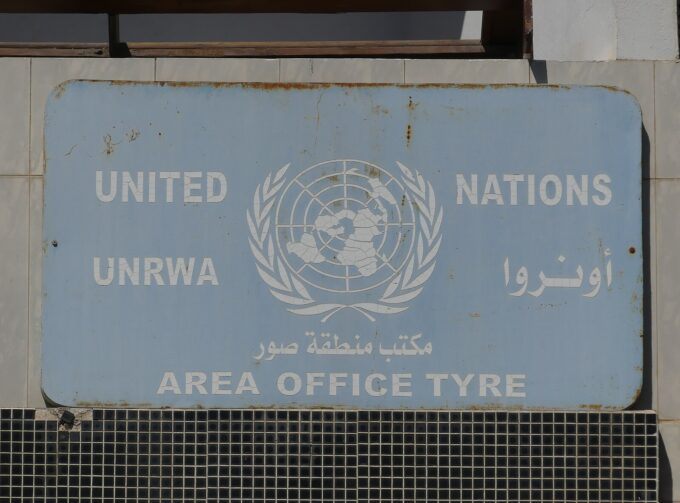
Situation Critical: UNRWA and its Continued 


Operations


January 21, 2025
Facebook

Photograph Source: RomanDeckert – CC BY-SA 4.0

In April last year, UNRWA Commissioner-General Philippe Lazzarini told the United Nations Security Council that “an insidious campaign to end UNRWA’s operations is under way, with serious implications for peace and security”.  Repeatedly, requests by the relief and works agency responsible for providing welfare and aid to Palestinians to continue its work, notably in northern Gaza, had been rebuffed.  Its staff had been barred from coordinating meetings between other humanitarian agents along with Israeli officials.  UNRWA premises and staff had also been targeted.  This, it transpired, was a foretaste of things to come.

Israel’s campaign against the agency has been a matter of faith, a sickening reminder of its necessity in the aftermath of 1948.  Following the Hamas-led attacks of October 7, 2023 on the state, UNRWA was added to-do list of Israeli expectations.  First followed an international campaign of accusation, with the UN body accused of employing Hamas sympathisers, activists and direct participants in the attacks that left 1,200 people dead and saw the capture of over 200 hostages.

Despite scanty evidence to buttress the grave Israeli claims, many donor countries were swift in suspending funding.  The UN was equally swift in sacking several alleged suspects.  A review of the allegations by former French foreign minister Catherine Colonna, instigated at the request of the UN Secretary-General António Guterres, accepted that claims of bias could be addressed in eight areas, including neutrality of education, installations, and staff and better engagement with the relevant donors.  Importantly, it also noted that “Israel has yet to provide supporting evidence” that the agency employees had been “members of terrorist organizations.”  The “irreplaceable and indispensable” role of the agency in the absence of a political solution between Israel and the Palestinians made it a “pivotal” body that provided “life-saving humanitarian aid and essential social services, particularly in health and education, to Palestinian refugees in Gaza, Jordan, Lebanon, Syria and the West Bank.”

The restoration of funding by donor states so irked Israeli officials as to prompt the next phase of the campaign: the passage of legislation in the Knesset legalising the effective crippling of the agency’s mandate and work, both coming into effect at the end of this month.  Two laws, passed on October 28, 2024, are relevant here.  The first prohibits Israeli officials from having any contact with UNRWA or any individual or agency acting on their behalf.  The second attacks the functional presence of UNRWA, barring it from operating any representative office or provide any services, or carry out activities, directly or indirectly, in Israel proper.

The interpretation of sovereignty as outlined in the legislation does not accept the international position on the status of East Jerusalem, which Israel has occupied since 1967.  In treating East Jerusalem as Israeli territory, UNRWA’s presence to aid Palestinians in the West Bank as facilitated by its field office will essentially come to an end.

In addition to the consequences that will arise to a Palestinian populace so heavily reliant on the UN body’s services, there are also logistical matters.  How severely will the laws be read?  Not only will staff no longer be able to engage in any concrete way with the Israeli Defense Forces, UNRWA staff and installations risk being open targets of IDF operations.  On January 8, UN Secretary-General Stéphane Dujarric revealed that the UN had yet to receive “any real clarity on how the laws will be applied” from any official Israeli source.

The moves by Israel did draw the necessary, if somewhat ineffectual condemnation needed, from the UN Secretary-General to the ambassadors representing 123 UN member states, to an impotent Biden administration in its dying days.  “In the midst of an ongoing catastrophic humanitarian situation in Gaza,” warned the Nordic countries in an October 23, 2024 statement, “a halt to any of the organisation’s activities would have devastating consequences for the hundreds of thousands of civilians served by UNRWA.”

This month, Axios reported that officials from the US State Department had also warned the Trump administration transition team about the impending humanitarian catastrophe should the Israeli legislation be implemented to the letter.  “We wanted them to know what is going to happen 10 days into their presidency,” explained one of the officials. “We thought it was the responsible thing to do.  It’s a catastrophe waiting to happen.”

Given the form of President Donald Trump in his first term, this may simply be the wishful utterings of a few troubled souls.  Trump, for his part, delighted in ceasing US funding to the agency in 2018.  “We are not paying until you make a deal,” he told the Palestinians with typical boisterousness, showing his remarkable capacity to treat all matters of money as instruments of bullying and machismo.

On January 17, the Security Council, at Algeria’s prompting, are scheduled to have closed consultations on the issue of UNRWA’s continued operations after the end of this month.  Lazzarini is expected to brief the members, a situation that is bound to be influenced, in part, by the recent announcement of an Israel-Hamas ceasefire.  As part of the agreement, some 600 daily shipments of humanitarian aid will feature.  But any ceasefire, already soured by the killing of over 100 Palestinians since its announcement, does little to address the institutional chasm that will be left were UNRWA to cease operating in any meaningful way.

Binoy Kampmark was a Commonwealth Scholar at Selwyn College, Cambridge. He lectures at RMIT University, Melbourne. Email: bkampmark@gmail.com


From Ground Zero: Stories from Gaza: An Appreciation


 January 20, 2025
Facebook

Still “From Ground Zero,” a collection of short films by Palestinian filmmakers. Credit: Watermelon Pictures.

This extraordinary film, on the 2024 Oscar shortlist for documentaries, consists of 22 episodes stitched together by the noted Palestinian film director, Rashid Masharawi, but without any apparent effort to curate a narrative experience of the Gaza ordeal now in its 15th month. The power of the film taken as a whole derives from the cumulative impact of the utterly helpless and vulnerable Gaza civilian population seeking to survive despite overwhelming challenges to safety and pervasive loss of loved ones, home, neighborhood, schools, and sacred/historical sites in the overcrowded tiny Gaza Strip [25 miles long, 3.7-7.5 miles wide, population estimate of 2.3 million]. The various episodes both express the distinctiveness of Palestinian lived culture, its rich historical heritage, and the universality of a devastating saga of prolonged victimization.

I read through a series of admiring reviews that stressed these features of Palestinian resilience and creativity in the face of this cruel, undeserved collective fate. None of the episodes delves into the history of Palestinian suffering brought on by the Zionist Project for over a century. Nor is there any explicit linkage of the Gaza ordeal to the pathological geopolitics of the US-led supposed bastions of liberal democracy with its constitutional façade of fidelity to the rule of law and the international protection of human rights. From a cinematic perspective this purifies the message of bravery in the face of suffering, the existential variations of such an experience that has the potential to inspire remarkable acts of memorialization and transcendent behavior, as by making artworks from shards of glass or chunks of rubble.

These silences inevitably raise such questions as ‘Was this foreclosure of response a pragmatic adjustment to market realities, well-grounded fears of ideological suppression if the film had dared to examine even glancingly the underlying political impetus, the genocide of the perpetrators, the context of the October 7 attack, and the systemic disregard of law and morality by leading political actors? As it is, the film is being shown widely in American theaters, received accolades from reviewers, and much deserved attention from film festivals, even honored by nominations for coveted cinema dawards. It seems fair to conjecture that this desirable outcome would not have happened had the Palestinians expressed anger directed at the sources of their misery. What we may never know was whether this set of foreclosure were set forth and monitored by the curator to make the film suitable for Western audiences in North America and Europe or whether this represented his aesthetic judgment to keep a steady universalizing focus on a dire humanitarian tragedy, somewhat mitigated by the courage and inner spirit of its victims. In sum, to consider effects of genocide rather than crime and its perpetrators.

At least in my review of mainstream film critics there was no commentary on this question of boundaries, whether consciously or not imposed on these 22 Gaza filmmakers. I left the theater struck by the failure of any of the characters to mention the words ‘genocide,’ ‘Israel,’ ‘Zionism,’ ‘United States,’ ‘United Nations,’ ‘international law,’ and ‘International Court of Justice.’ It should be mentioned that there was also no mention of ‘Hamas,’ ‘terrorism,’ and ‘hostages.’  This raises the question as to whether the absence of such references represented an effort by to adopt a posture of apolitical neutrality either for aesthetic or pragmatic reasons. We may never know, and would the motives of the curator be important beyond its human interest relevance? At the same time, I find it unacceptable to hide the evil of genocide behind a ‘two sides’ political smokescreen that equates the crimes of the oppressor with the criminal excesses of resistance on the part of the oppressed. The film completely avoids even a hint of some kind of implied parity of responsibility for the suffering inflicted on the people of Gaza.

From Ground Zero also steers clear of evoking our pity in frontal ways by showing hospital scenes of amputation or severe injury, which of course abound in Gaza alongside the daily death toll. From my own previous visits to Gaza where I was exposed to such visible torments, I know the power exerted by direct contact with such victims. I shall never forget the imprint left after many years of seeing a distraught father carrying his bleeding and badly wounded young son in his arms while shouting angrily in Arabic. I didn’t understand the words, but the sentiments he was expressing were transparent, and needed no translation. This conscious or unconscious decision to exclude such material from the film may have lessened its immediate impact, but it deepened the longer term understanding of the underlying humanitarian ordeal being endured by the Palestinian people.

The closest the film comes to making political allusions is put in the mouth of an engaging puppet who voices a damning indictment in one of the latter episodes, “everything is gone and the world just watches.’  There are also brief isolated references to the Nakba and the coerced expulsions from their homeland that at least 700,000 Palestinians experienced in 1948, and have ever since lived as refugees being unlawfully denied by Israel any right to return. These references express the deep roots of Palestinian suffering, but without pointing an accusing finger, and will likely be noticed at all except by those non-Palestinian viewers that have followed Palestinian misery through the decades. While for Palestinians those allusions to the past likely serve as grim reminders of familiar realities.

 On balance I applaud the rendering of the Palestinian experience in this authenticating and original manner. It is itself a triumph of the Palestinian imagination over the daily torments that have become a reality of their lives 24/7.

It is not only the unbearable losses of family and home, but the menacing nightly sound of nearby explosions and the constant noise of drones overhead. The episodes are uniform in exposing the total vulnerability of the Palestinians and the disregard of the limits set by international law and morality made far worse by deliberately imposing a desperate struggle for subsistence arising from the obstructing the delivery of humanitarian aid causing death and disease throughout the wretched tent cities in which Gazans have been forced to live since the destruction of their homes. The daily life of searching for food and drinkable water are only available, if at all, at sub-subsistence levels.

Of course, I hope that From Ground Zero receives an Oscar at the Academy Awards night coming soon.

Richard Falk is Albert G. Milbank Professor Emeritus of International Law at Princeton University, Chair of Global law, Queen Mary University London, and Research Associate, Orfalea Center of Global Studies, UCSB.