Thursday, January 23, 2025

Siemens Energy boss warns of skills shortage

BBC
Monty Rakusen/Getty Images

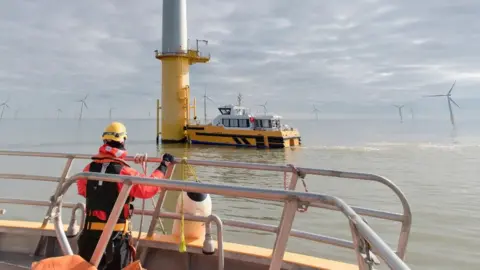
Darren Davidson said the green skills gap was one of the biggest challenges facing the sector


The boss of one of the UK's largest manufacturers of wind turbines has said up to 500,000 more workers were needed in order to meet net zero targets in the coming years.

Darren Davidson, the UK and Ireland boss of Siemens Energy, said the green skills gap was one of the biggest challenges facing the sector as it goes through a period of "unprecedented growth".

He also suggested that focusing too much on wind and solar at the expense of other technologies could undermine plans.

The government said it would work with partners to support British workers and provide the skills necessary for the clean energy jobs of the future.

Siemens Energy owns the country's biggest factory for wind turbine blades, in Hull, which opened in 2016 and now has 1,300 workers.

Mr Davidson said the company was set to play a key role in Labour's plans to decarbonise the power system and quadruple the amount of energy generated by offshore wind farms by the end of the decade.

"There's never been a better time to be in the energy sector. There are so many different technologies and types of jobs.

"We've created an environment in Hull where we've gone from zero to 1,300 jobs. We found the market in Hull and have been able to recruit locally because people there want to be part of those types of jobs."

However, he said it was "getting tough", adding that creating a workforce with the right skills "is probably one of the challenges [Britain] needs to get right as we move forward".

Sarah Sanderson/BBC

Mr Davidson said thousands of additional skilled workers were needed in order to meet net zero targets

The UK has pledged to reduce its greenhouse gas emissions to net zero by 2050, which means a country takes as much planet-warming gases out of the atmosphere as it puts in.

There are also plans to decarbonise the power grid by 2030.

Mr Davidson said in order to achieve this, more action was also needed on other technologies like hydrogen and long-duration energy storage.

Siemens Energy also has a gas turbine factory in Lincoln that employs about 1,500 people. Mr Davidson said he wanted to adapt the plant so it can operate on hydrogen gas.

"If the conditions are correct, that is something that we would look to invest in, but we need to have confidence in the market before we decide to," he added.

In response, a Department for Energy Security and Net Zero spokesperson said: "Our transition to clean, homegrown power will create a new generation of good jobs across the country.

"The Office for Clean Energy Jobs is at the heart of the government's plans to reach clean power by 2030 and will highlight the job opportunities from this transition.

"It will work closely with Skills England, trade unions, experts and industry to support British workers and provide the skills necessary for the clean energy jobs of the future," they added.

UK risks clean power skills shortage, says Siemens Energy UK boss

20 Jan 2025 
NATION CMYRU
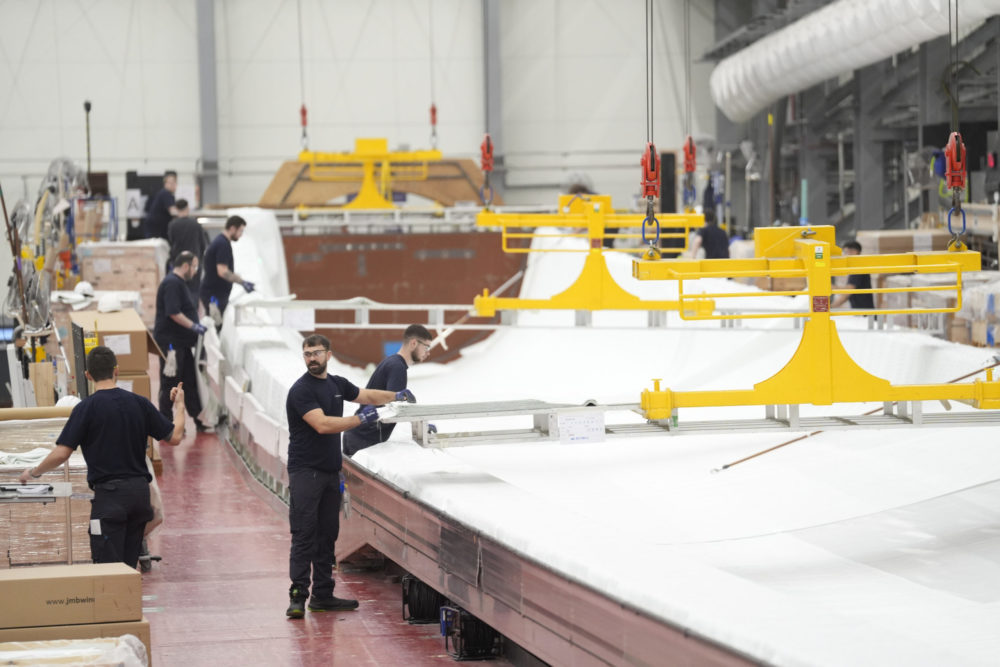
Worker in the Siemens Energy turbine factory in Hull – Photo Danny Lawson/PA Wire

The UK could face a shortage of skilled clean energy workers, according to the UK’s biggest wind turbine blade manufacturer.

Darren Davidson, the UK and Ireland boss of Siemens Energy, said the green skills gap is one of the biggest challenges facing the sector as it goes through a period of “unprecedented growth” as Labour ramps up spending in the sector.

He estimated about 500,000 more workers will be needed for energy jobs over the coming years as the Government tries to decarbonise the power grid by 2030 and reach net zero carbon emissions across the whole country by 2050.


Key part

Siemens Energy owns the country’s biggest factory for wind turbine blades, in Hull, which opened in 2016 and now has 1,300 workers turning out the machinery used in the UK’s offshore wind farms.

The company is set to play a key part in Labour’s plans to decarbonise the power system, which have centred in large part around quadrupling the amount of energy generated by offshore wind farms by the end of the decade.

Mr Davidson told the PA news agency: “There’s never been a better time to be in the energy sector. There are so many different technologies and types of jobs.

“We’ve created an environment in Hull where we’ve gone from zero to 1,300 jobs. We found the market in Hull and have been able to recruit locally because people there want to be part of those types of jobs.

But he added it is “getting tough”, adding that creating a workforce with the right skills “is probably one of the challenges (Britain) needs to get right as we move forward”.

The Government and power companies need to “do more to make sure that people choose a career in energy with apprenticeships and graduate programs,” he added.

Asked if Labour’s push for Clean Power 2030 is achievable, Mr Davidson suggested focusing too much on wind and solar farms at the expense of other technology, like hydrogen gas and batteries, could undermine the plans.

He said: “Certain aspects of that mission are on track and there’s certain parts of that mission which need some focus.”

“I would say it’s a difficult target, but for us to have any chance of achieving it we need to move on not just offshore wind, but other technologies like hydrogen and long-duration energy storage.”


Hydrogen

Siemens Energy has a gas turbine factory in Lincoln that employs about 1,500 people. Mr Davidson said he wants to adapt the plant so that it can operate on hydrogen gas.

“If the conditions are correct, that is something that we would look to invest in, but we need to have confidence in the market before we decide to,” he said.

Experts think green hydrogen will be a critical part of decarbonising heavy industries, although the National Infrastructure Commission advised in 2023 that it was not suitable for heating homes en masse.

Labour has said it plans to double the nation’s green hydrogen production target by 2030.

Long-duration energy storage, meanwhile, is an industry term for various forms of batteries that can store energy for longer than 10 hours.

The Government gave the green light to plans that make it less risky to develop and invest in pumped storage hydropower, a way of storing energy using reservoirs, last year.

Mr Davidson said: “It’s right that they’ve focused on resurrecting offshore wind, it’s right that they’ve invested in in power grids and networks. That was probably a right decision.”

But he added: “It’s not just about offshore wind. It’s about a balance, a mix of energy. I think all technologies have their part to play.”

“To have a chance (of reaching clean power by 2030) we need to move quickly on those other technologies in 2025,” he said.

England: Court system faces crisis as criminal barristers leave for better pay

England: Court system faces crisis as criminal barristers leave for better pay

The court system south of the border is facing a potential crisis as criminal barristers leave the profession for better-paid roles, the chair of the Criminal Bar Association (CBA) has warned.

Mary Prior KC, who leads the CBA, highlighted how young barristers entering criminal law out of a sense of public duty are increasingly being drawn to higher-paying opportunities in corporate law.

Ms Prior said: “The problem is that the enthusiasm and desire for public service wears off within a couple of years. At that stage, our young criminal barristers move into better paying and less traumatic work, which enables them to maintain some form of work-life balance.”

The exodus from the profession is worsening the backlog of cases in the Crown Court. The courts are currently dealing with a backlog of over 73,000 cases, largely stemming from delays due to Covid.

Ms Prior added: “The number of cases which have to be adjourned because we cannot find a barrister to conduct a trial is growing.”

Leading commercial chambers such as Gray’s Inn Tax Chambers and Gough Square Chambers now offer pupillages with salaries of up to £100,000 a year. In stark contrast, criminal barristers often earn the Bar Standards Board minimum of £24,203 in London or £22,019 elsewhere.

Christopher Clark, a recruiter specialising in the legal sector, said: “Criminal barrister pay has continued to decline since legal aid was cut, with swathes of barristers having moved to City law firms for significant increases in compensation.”

CALIFORNIA

the explainer

Prop 6, inmate firefighters and the state of prison labor


The long-standing controversial practice raises questions about exploitation


Inmate firefighter crews have been a fixture in the country for decades
(Image credit: Mario Tama / Staff/ Getty Images)
The Week US
20/1/2025

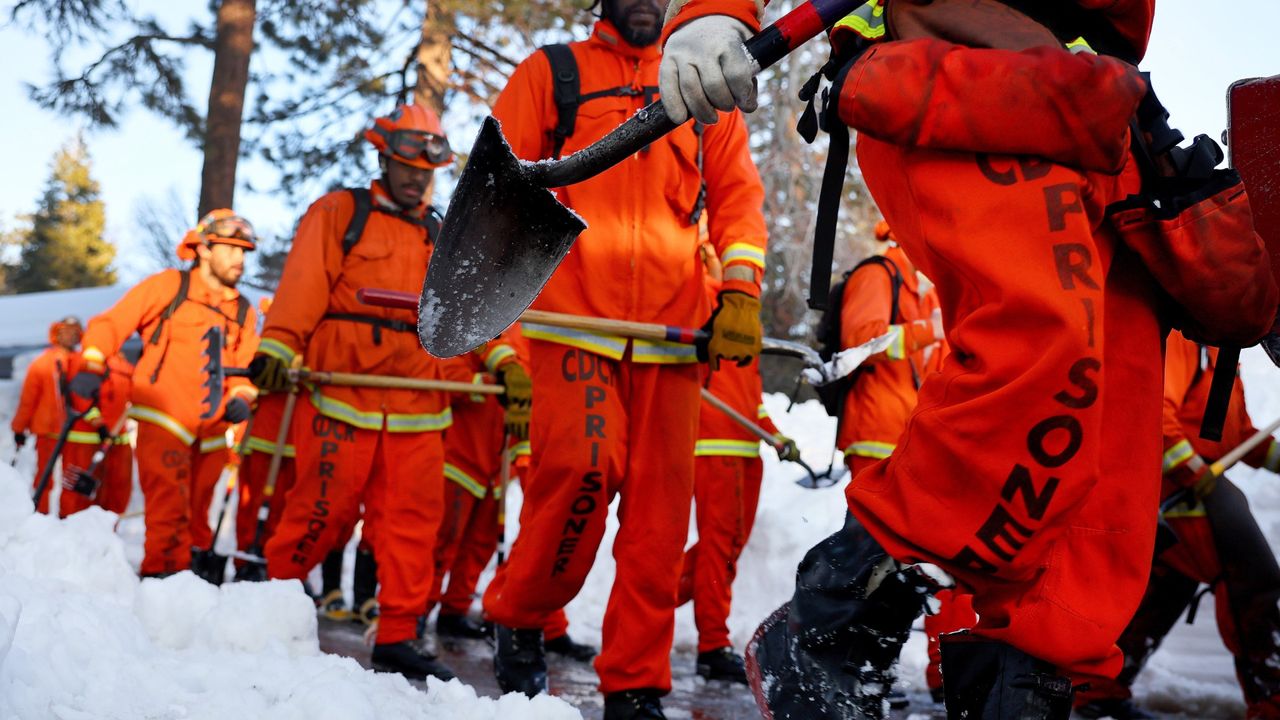
Hundreds of inmates joined the firefighters battling the wildfires in Southern California as part of a long-running controversial labor program. The state often relies on incarcerated firefighting crews to combat wildfires in California, especially as climate change intensifies the problem.

While these crews brought "much-needed manpower to depleted fire crews," their presence also "revived criticism of the practice, including over their low pay for dangerous work," said The New York Times. Some inmates say they value the work they do, but prison rights activists largely oppose the use of prison labor, which they call exploitative.

How do prison labor programs work?


Prison labor programs have links to the passage of the 13th Amendment, which abolished slavery "except as a punishment for crime," a loophole that critics and prison rights advocates say permits exploitative labor and involuntary servitude. While the prisoners make well below minimum wage, they are part of a workforce that produces "more than $2 billion a year in goods and commodities and over $9 billion a year in services for the maintenance of the prisons where they are warehoused," the ACLU and The University of Chicago's Global Human Rights Clinic said in a 2022 joint report. In exchange, the imprisoned are paid an average of 52 cents an hour nationally — or nothing in seven states. Some are left with less than half of what they earn after taxes.

Understand the Changemakers

Profiles of celebrities, politicians, and everyone shaping events in your world. Track the most intriguing stories for less than $2.50 a week.

Why are prison labor programs controversial?

Less than ten states have amended their constitutions to abolish forced prison labor. In many states, prison work programs persist and are sometimes mandatory. "I don't think we have gotten rid of convict leasing," Darrick Hamilton, an economist and director of the Institute on Race, Power and Political Economy at the New School, said to The New York Times. "It's an illusion of choice — there's no real consent that they can offer." The ACLU found that 76% of incarcerated workers said that the prison mandated working or they risked facing additional punishment such as solitary confinement or loss of visitation privileges. "The reality is that once people enter the prison gates, they lose the right to refuse to work," Jennifer Turner, the lead author of the ACLU study, said to NPR. Instead of being paid fairly, the "prisoners' wages are often garnished to pay for things like their own room and board and court fees to appeal their cases," said Forbes

In 2024, voters in both Nevada and California were presented with the opportunity to ban the use of prisoners as unpaid labor. Nevada's ban passed, but California voters rejected Proposition 6, which would have amended the constitution to remove language that allows involuntary servitude as a form of criminal punishment. Some imprisoned firefighters love their work, said Lori Wilson, the California Assembly member who spearheaded Prop. 6. They just wish they were paid more. "They find it truly rewarding and enriching," Wilson told NBC News.

Despite the loss, the prison rights advocates will continue "fighting to have additional wages, and to be fairly compensated." She added that they were interested in fair wages and allowing inmates to "use that service for further employment" after release. "There's an imbalance there that needs to be resolved."

Theara Coleman, The Week US
Theara Coleman has worked as a staff writer at The Week since September 2022. She frequently writes about technology, education, literature and general news. She was previously a contributing writer and assistant editor at Honeysuckle Magazine, where she covered racial politics and cannabis industry news.
Israeli forces kill Palestinian teen during West Bank raid

At least 859 Palestinians have been killed in occupied territory since Oct. 7, 2023, according to Health Ministry

Awad Rjoub |20.01.2025 - TRT/AA


RAMALLAH, Palestine

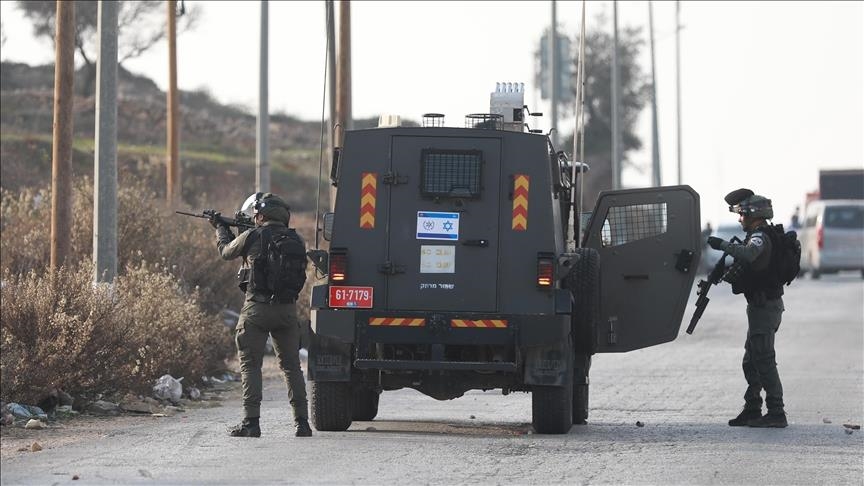
Israeli soldiers killed a Palestinian teenager and wounded two others during a raid late Sunday in the West Bank.

The Palestinian Ministry of Health announced in a brief statement that 14-year-old Ahmad Rashid Rushdi Jazar was shot to death in the town of Sebastia northwest of Nablus.

In the southern West Bank, the Palestine Red Crescent Society said its teams transported two injured people to the hospital. One was a 17-year-old boy with a gunshot wound to the hand and the other was an 11-year-old child injured during clashes in the town of Idhna.

Eyewitnesses told Anadolu that the Israeli army raided the town for about two hours before withdrawing. Clashes erupted during the raid, with the use of live ammunition, rubber bullets and tear gas.

The developments came as hundreds of families of Palestinian prisoners gathered near Israel's Ofer Prison in the West Bank awaiting the release of 90 prisoners, most of them women and children, as part of the first phase of a ceasefire agreement between Israel and the Palestinian group Hamas amid a celebratory atmosphere, according to an Anadolu correspondent.

Over the past few years, the Israeli military has conducted regular raids in the West Bank, which have escalated with the beginning of the war on Gaza on Oct. 7, 2023. Palestinians have also been violently attacked by illegal Israeli settlers.

At least 859 Palestinians have since been killed and over 6,700 injured by Israeli army fire in the occupied territory, according to the Health Ministry.

In July 2024, the International Court of Justice declared Israel's decades-long occupation of Palestinian land illegal and demanded the evacuation of all settlements in the West Bank and East Jerusalem.

*Writing by Rania Abu Shamala
“From the Land of Witches and Wolves”: A Conversation with Francesca Albanese


20.01.25 | 

Israel’s consolidated interpretation of ceasefires: “you cease, I fire” (cit.).Francesca Albanese


Israel recently stopped bombing Gaza, sort of, offering a moment of respite for Palestinians. This is a welcome development, to be sure. Having brutalised the enclave for nearly 18 months, collapsed the delivery of aid, obliterated health, education, and housing infrastructures, slaughtered tens of thousands, maimed tens of thousands more, all while displacing millions, any pause in the violence must be cherished. But this moment is fragile and incomplete—deliberately so—and a wholly inadequate response to the impunity Israel has visited upon the people it traps.

Consistent with the Western media’s anti-Palestinian bias, headlines have described this moment as a ceasefire, signalling a reciprocity that was never there (Israel’s monsoon of bombs has surpassed World War II shellings of Dresden, Hamburg, and London, combined). This was a brutal one-sided devastation, leaving Palestinians scavenging for relatives and shelter, as much as they are for food and water. What kind of livelihood can they unearth from the rubble, the same rubble the World Bank estimates will take a generation to clear? What kind of dignity can they salvage from battered homes and murdered dreams? Even after the ‘ceasefire,’ Gaza remains under a medieval siege. A pause in Israeli violence does not signify peace; it is an interlude in the spectacle of an ongoing settler-colonial project across historic Palestine.

What does this moment mean for international lawyers and readers of Opinio Juris? This pause demands reflection across our discipline. While the march to another genocide may have been scuppered, at least temporarily, the structural violence of occupation and apartheid has accelerated. Israel continues to undertake massive land theft and home demolitions in the West Bank and East Jerusalem; Israel is still operationalising a law that criminalises UNRWA’s aid activities; and Israel persists in its refusal to countenance an end to what is now a two-decade long civilian blockade and a three-generation long occupation. To be sure, the assault was never about Hamas: it was always a manifestation of a wider system of domination and dehumanisation that began in 1947. As the Israeli writer and journalist Gideon Levy explained:


There is no conflict.

Was there an Algerian-French conflict?

There was a brutal French occupation in Algeria, which came to its end.

And there is no Palestinian-Israeli conflict.

There is a brutal Israeli occupation, which must come to its end one way or the other. Gideon Levy

In what way will the Israeli occupation come to an end and will international law play a part? This is a curious question, of course, since the International Court of Justice (ICJ) has already opined that Israel’s neverending occupation and its associated apartheid regime are both unlawful, while also issuing three provisional measures orders concerning Israel’s genocidal behaviour in Gaza. They are not alone. The pre-trial chamber of the International Criminal Court (ICC) has authorised warrants for at least two Israeli genocidaires, and Israeli soldiers are being investigated in the far corners of the world. Still, despite the legal clarity about the illegality of Israeli violence against Palestinians, the cruelty continues, with Blinken and Baerbock, Biden and Macron, Scholz and Starmer “waving the white flag before Israeli fascism” as Max Blumenthal poetically declared when interrupting a depraved self-congratulatory speech by one of them.

In our latest episode of Fresh Squeezed! The Opinio Juris Podcast, we asked Francesca Albanese, the UN Special Rapporteur for the Occupied Palestinian Territories, our seemingly hackneyed question about international law’s capabilities. Will it make a difference?

***

Albanese, known for her unflinching commitment to documenting human rights violations and advocating for the dignity of all people, is inspired by the broader struggle to liberate Palestine. Hailing from Irpinia, a region in southern Italy described as the “land of witches and wolves”—a place steeped in folklore and known for its resilience in the face of adversity—Albanese operates with a clear and courageous moral compass. Her defiance and resolve echo the spirit of her homeland, resonating with the struggle for freedom that defines Palestine.

Albanese was frank about the tensions between political power and legal integrity, acknowledging the complexities of marshalling Eurocentric international law against the very settler-colonial projects that birthed the regime. It is a complex struggle, to be sure, with New York, Geneva, and the Hague proving to be hostile spaces to Third World liberation. We collectively bemoaned the vulgar double-standards at play when issues of Palestine entered the mix, recognising that much of Europe’s self-avowed commitment to human rights depends heavily on whether they see the victims of violations as humans at all or, as boasted a Ukrainian spokesperson, if they have blonde hair and blue eyes. The racism of international law is not lost on Albanese, who displayed both hope and scepticism toward the legal proceedings underway.

To her, the apartheid framework is illustrative of international law’s Janus-faced character. While the regime enabled white violence and against Black populations in (South) Africa, it also provided a language and a framework around which resistance to apartheid could consolidate. Israel appears to have mirrored its system of governance on Jan Smuts’s historic model of racial segregation (and, we note, was a potent ally of apartheid South Africa until its last breath). It also divides populations based on ethnicity, privileging one group with citizenship, housing, and voting rights, while denying the same to others. Like other settler-colonial projects, zionism was always chauvinistic, informed by a belief in Jewish supremacy and indigenous disposability. This is the genocidal nature of settler-colonialism, which demands the erasure of the indigenous population to make way for settler futures. International law as practised in Palestine remains wedded to its predatory penchant. In other words, Palestinian suffering and Palestinian hope are both nurtured by international law, in equal measure.

Echoing Rajagopal, Albanese recognises that one of the most powerful tools at her—and our—disposal is the act of naming. She insists on naming the situation in Palestine as apartheid, occupation, and genocide. She does this not simply to describe facts, but to challenge the moral and legal foundations of a system that dehumanises Palestinians. Many in the West have been brought up hearing about Palestinian terror and Israeli victimhood, a form of subterfuge common to ethno-chauvinist relationships of domination, where the self-proclaimed superior group or chosen people bristle at the idea of equality with the natives. For her part, Albanese thinks not in terms of ethnic supremacy, but of shared humanity. When she heard the phrase “never again” in her high school history lessons, she did not hear never again for fellow Europeans but “never again for anyone.”

Of course, Albanese is keenly aware that international law has rarely practised the universality it professes, finding ways to protect its worst violators and prevent accountability (we wish we had asked her about Judge Sebutinde’s predicted promotion). Even the ICJ, feted today, has a history of adopting positions that derailed the Palestinian struggle for liberation. For example, we discussed the ICJ’s almost impossible standard in genocide cases—as seen in Bosnia v. Serbia (2007) and Croatia v. Serbia (2014)—a position rightly criticised by at least some members of the bench. Yet, Albanese remains optimistic and, in the podcast, explains why she believes a finding of genocide is possible by the ICJ and that the charge could even be added to Netanyahu and Gallant’s current warrants.

***

Ultimately, Albanese reminds us that law is never neutral. In fact, it almost always privileges the side of domination, legitimising the interests of a select few and normalising oppressive relationships. In a fascinating investigation into the anti-Black racism that informed the Genocide Convention, Antony Conwright describes domination as the ugly reality of international law: “[it] is not a transcendent decree made in the image of divine justice. The law is made in the image, desires, and interests of those with power.”

He is right, of course, yet, as TWAIL and other critical movements have documented, law can also be instrumentalised in subversive ways, producing moments where the dominated turn the blade against the blacksmith. This is precisely what happened when South Africa bucked Euro-American opposition and brought a case against Israel, placing both zionism and settler-colonialism on trial for the first time in history. Henceforth and in posterity, South Africa’s opening statement and the evidence it compiled about Israel’s genocidal intent will remain a matter of public record:


In sum Madam president, all of these acts individually and collectively form a calculated pattern of conduct by Israel indicating a genocidal intent.

This intent is evident from Israel’s conduct in specially targeting Palestinians living in Gaza; using weaponry that causes large-scale homicidal destruction, as well as targetted sniping of civilians; designating safe zones for Palestinians to seek refuge, and then bombing these; depriving Palestinians in Gaza of basic needs – food, water, healthcare, fuel, sanitation and communications; destroying social infrastructure, homes, schools, mosques, churches, hospitals; and killing, seriously injuring and leaving large numbers of children orphaned.

Genocides are never declared in advance, but this court has the benefit of the past 13 weeks of evidence that shows incontrovertibly a pattern of conduct and related intention that justifies a plausible claim of genocidal acts.South Africa’s opening statement before the ICJ

Palestinians have long told stories about their children being sniped, about the deprivations of apartheid and the blockade, and about arbitrary violence and killings, only to be gaslit by international law. Today, Israeli impunity is evident for all to see. While this is a product of generations of Palestinian resistance and global solidarity, certain international lawyers have played their part, including Albanese.

Albanese’s steadfastness in the face of relentless smears is a testament to her commitment to justice. She reminds us that international lawyers must aspire to more than preserving the status quo. We must reimagine what is meant by international law and use it to challenge the power structures that sustain violence and oppression. Her reports have proven controversial, precisely for this reason, documenting violations in unabashed precision, eschewing the diplomatic language that many states (and scholars) hide behind. As she explained, the attacks against her are negligible when measured against the violence Israel metes out against Palestinians.

“There is a war for narratives being waged, particularly around the law,” she ended our episode with. Legal battles are not just fought in courtrooms but also in the public sphere, where narratives of resistance must contend with narratives of domination. During her mandate, one of Albanese’s goal was to cultivate a “culture of aversion” toward systemic violence amongst international lawyers. To her credit and to our admiration, she has done so without bombast or self-promotion; she has not used this moment to seek professorships or keynotes (even participating in the podcast during a holiday with her mother). Ultimately, Albanese has shown us how those so motivated can use this moment to work for Palestinian liberation. That is a potent reflection for international lawyers and readers of Opinio Juris and one that can galvanise the kind of mobilisation needed to end Israel’s occupation of Palestine, one way or the other.

You can listen to the podcast here (apple) and here (youtube). You can also view the videocast here (youtube). It will be available on spotify in the days ahead.

Photo of a child standing by a UNRWA shelter by Khalid Kwaik on Unsplash

Many thanks to Omar Kamel for his contributions to the conversation.


ALL SEX ED IS WOKE

Marcos denounces ‘woke’ sex education bill in Philippines

President vows to veto bill, saying it was a ‘ridiculous’ idea


January 20, 2025 | 
AFP

Philippine President Ferdinand Marcos Jr.Gulf News archives


Manila: Philippine President Ferdinand Marcos denounced on Monday a proposed law to make sex education mandatory in schools in the conservative mainly Catholic nation.

Marcos vowed to veto the bill in the event it hurdles Congress, blaming people with a “woke” mentality for what he said was an “abhorrent” and “ridiculous” idea.

Legislators backing the “Prevention of Adolescent Pregnancy” bill said making it a mandatory subject in schools would help address a high rate of teen pregnancies, as well as sexual assault of minors.

“Over the weekend, I finally read in detail Senate Bill 1979. And I was shocked, and I was appalled by some of the - some of the elements of that,” Marcos told reporters.

“That every child has the right to try different sexualities. This is ridiculous,” Marcos said.

“If this bill is passed in that form, I guarantee all parents, teachers, and children: I will immediately veto it.”

The senate bill would mandate the government to promote “age-appropriate” and compulsory “comprehensive sexuality education” in schools that is “medically accurate, culturally sensitive, rights based, and inclusive and non-discriminatory”.

Sex education was incorporated into the public school curriculum for students aged 10-19 in 2012 with the passage of a reproductive health law, though private schools, many of them run by the Catholic Church, are not required to teach it.

Opponents allege it is similar to technical guidance issued by the UN Educational, Scientific and Cultural Organisation and World Health Organisation for sexuality education.

“The two international documents are quite candid about its normalisation,” a group called Project Dalisay, a church-based coalition that opposes the bill, alleged in a statement.

The Philippine House of Representatives passed an adolescent pregnancy prevention bill in 2023, but it did not become law because the Senate did not pass a counterpart bill.

The Senate has yet to schedule the current bill for a floor debate, according to aides of its main sponsor, Senator Risa Hontiveros.

This makes it unlikely it will be passed before the legislature adjourns early next month ahead of the May 12 midterm elections.

The conservative Philippines is the only country in the world apart from the Vatican that bans divorce. It also does not officially recognise same-sex marriages.

Marcos said he believes “sex education in terms of teaching kids the anatomy of the reproductive systems of male and female is extremely important” due to the threat of AIDS and the adverse consequences of early pregnancy.

“But the ‘woke’ absurdities that they included are abhorrent to me.”


Ukraine releases New Year's messages from Kim Jong-un to North Korean troops fighting in Russia: Report

Suspected North Korean soldiers wounded and captured by Ukrainian forces are seen in this photo posted on Ukrainian President Volodymyr Zelensky's Telegram channel on Jan. 11. [SCREEN CAPTURE]

Suspected North Korean soldiers wounded and captured by Ukrainian forces are seen in this photo posted on Ukrainian President Volodymyr Zelensky's Telegram channel on Jan. 11. [SCREEN CAPTURE]


North Korean leader Kim Jong-un reportedly sent New Year’s messages to North Korean soldiers deployed in Russia's war against Ukraine, urging them to "fight with courage" until the end, according to a news report.
 
“You experienced heartbreaking sacrifices and the joys of costly battle victories, many noble combat experiences, the priceless feeling of genuine camaraderie and patriotism, all so far away from the motherland,” read one of the messages attributed to Kim, according to the Washington Post on Sunday.
 
“I don’t even know how I can find the words to properly encourage and express gratitude for your dedication and tireless efforts,” the letter said. 
 
The handwritten letters written in blue ink, revealed by Ukrainian special forces, were dated Dec. 31 and Jan. 1, with Kim's signature at the end.
 
“Comrades! I miss you dearly. Please never forget that I constantly pray and hope for all of you to return safely and in good health,” Kim reportedly wrote. He urged the troops to “fight courageously until the day the assigned military mission is victoriously concluded.”
 
While the exact origins of the messages remain unclear, they may have been sent from Pyongyang or transcribed by North Korean soldiers after commanders read them aloud, according to the Post.
 
In addition to Kim’s messages, a small booklet found on a North Korean soldier contained handwritten lyrics to patriotic songs, including one that read, “My fate is always shared with the motherland.” 
 
The Post interpreted the presence of such messages carried by North Korean soldiers in their pockets while on missions appearing "significantly more ideologically motivated than Russian soldiers, who often fight on contracts for large salaries."
 
A cache of North Korean documents seized by Ukrainian troops revealed that North Korean troops recorded their combat experiences in detail.
 
One document said they faced challenges due to a lack of crucial battlefield information, such as enemy strongholds and drone launch sites, leaving them unprepared. Others highlighted the deadly effectiveness of Ukrainian drones.
 
“In modern warfare, where real-time reconnaissance and drone strikes are conducted, failing to disperse combat teams into smaller units of two to three members could lead to significant casualties from enemy drones and artillery,” one document read.
 
The Post suggested that Pyongyang is using the war as a chance to "gain practical battlefield experience for potential future conflicts with the West."
 
Recently, Ukrainian forces have noted the reduced presence of North Korean troops in Russia's southwestern Kursk region, which has been under Ukrainian control since August. According to the Post, their absence may indicate North Koreans are "regrouping and assessing future moves” or “could be a reflection of widespread injuries and exhaustion after recent attacks" following recent attacks.
 
Ukrainian President Volodymyr Zelensky estimated that approximately 12,000 North Korean troops have been deployed to Russia, with as many as 4,000 killed or wounded in recent weeks.
Zarif departs Tehran to take part in Davos 2025


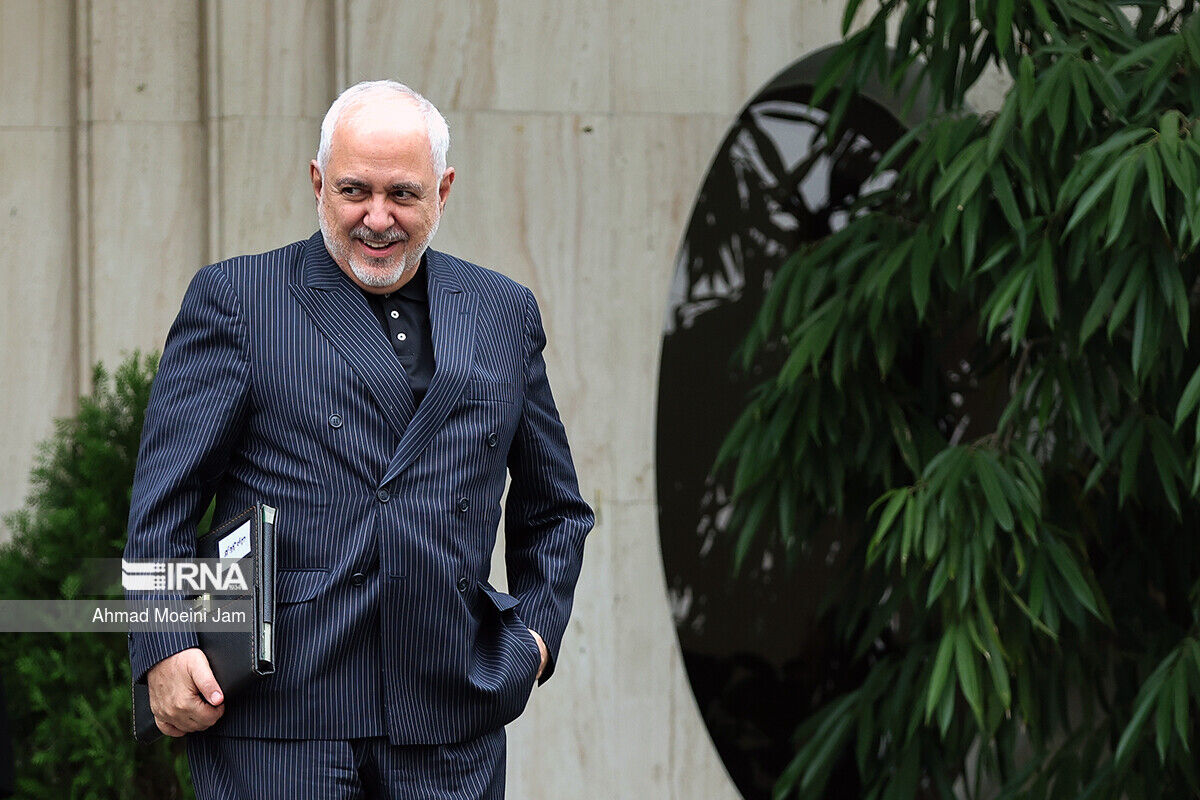
Mohammd  Javad Zarif, Iran’s vice president for strategic affairs  

Jan 20, 2025

Tehran, IRNA - Mohammad Javad Zarif, Iran’s vice president for strategic affairs, has left Tehran for Davos to participate in the 2025 Annual Meeting of the World Economic Forum (WEF).

Zarif departed Tehran on Monday to attend the meeting scheduled for January 20-24 in Davos, Switzerland.

On the sidelines of the event, CNN's Fareed Zakaria will sit down with the senior Iranian official.

Davos 2025 convenes under the theme “Collaboration for the Intelligent Age”, bringing together leaders from across the globe to address key international and regional challenges including geopolitical shocks, stimulating growth to improve living standards, and stewarding a just and inclusive energy transition.

7129**4194

SUFI'S NOT WELCOME!

Taliban sentence four Kunduz musicians to 15 months in prison

Four local musicians, who were arrested by the Taliban intelligence on January 10 in Ali Abad district of the northeastern province of Kunduz, have been sentenced to 15 months in prison, a source from the province said on Monday.

The musicians were reportedly detained for hosting an overnight gathering and playing the dambura, a traditional string instrument, at a guesthouse in Khil-e-Gada village.

The detainees have been identified as Amir Shah, Almas, Feraidoun, and Shamsullah, all residents of Khil-e-Gada and Qasem Ali villages in the district.

Taliban have yet to issue any public statement regarding the case.

Since their return to power in August 2021, Taliban have banned music and musicians, besides other restrictions imposed by them on people’s freedoms.

The UN and other organizations have repeatedly condemned such actions as violations of fundamental human rights.

Myanmar military, minority armed group inked ceasefire deal, says China


The ceasefire agreement halted fighting near the border of China and Myanmar.
PHOTO: REUTERS

UPDATED Jan 20, 2025, 

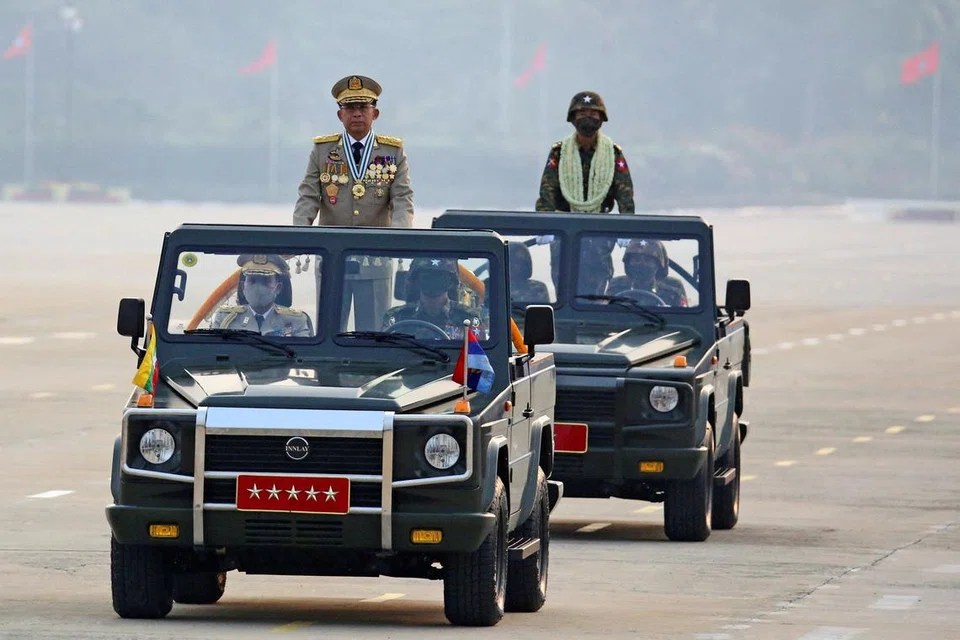
BEIJING - The Myanmar military and the Myanmar National Democratic Alliance Army (MNDAA) signed a formal agreement for a ceasefire that began on Jan 18, China's foreign ministry said, halting fighting near the border of both countries.

The two sides held talks in China’s south-western city of Kunming where they thanked Beijing for its efforts to promote peace, ministry spokesperson Mao Ning said during a regular news briefing on Jan 20.

“Cooling down the situation in the north of Myanmar is in the common interest of all parties in Myanmar and all countries in the region, and contributes to the security, stability and development of the border areas between China and Myanmar,” she said.

China will continue to actively promote peace and dialogue and provide support and assistance to the peace process in northern Myanmar, Ms Mao said.

The MNDAA is one of several ethnic minority armed groups fighting to repel the military from what they consider their territories.

It is part of the so-called Three Brotherhood Alliance, with the Ta'ang National Liberation Army and the Arakan Army, that launched an offensive against the military junta in late October 2023 seizing swathes of territory near the border with China.

The MNDAA, made up of ethnic Chinese, said in July 2024 it had taken control of a major military base near the Chinese border.

Analysts say China is worried about the advance of anti-junta forces which have pushed the military out of vital borderlands and started making inroads towards the central city of Mandalay.

The military seized power from Myanmar's civilian government in February 2021, plunging the country into crisis.

China fears chaos along its more than 2,000km long border with Myanmar would jeopardise investment and trade.

Beijing previously brokered a ceasefire deal in the northern borderlands in January 2024, but the deal broke down a few months later.

 REUTERS

Prioritise peace, not polls, Myanmar junta told


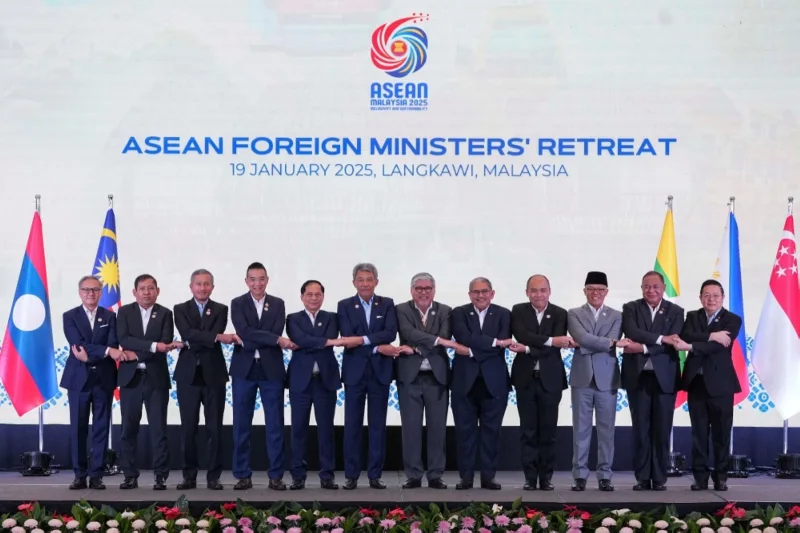
Participants pose for a group photo during the Asean Foreign Ministers' Retreat in Langkawi Island on Sunday. Reuters