Friday, February 21, 2025

U$A

Study shows end-of-life cancer care lacking for Medicare patients


Vanderbilt University Medical Center


Many Medicare patients with advanced cancer receive potentially aggressive treatment at the expense of supportive care, according to a study that analyzed Medicare records. 

The study, published in JAMA Health Forum, examined the quality of end-of-life care among 33,744 Medicare decedents. The study involved patients of diverse ethnic backgrounds, age 66 or older who died from breast, prostate, pancreatic or lung cancers.  

Overall, claims records showed that 45% of the patients experienced potentially aggressive care (such as multiple acute care visits within days of death), while there was a low receipt of supportive care, such as palliative, hospice and advanced care planning in the last six months of life. While hospice care spiked to more than 70% during the month that death occurred, over 16% of patients spent less than 3 days in hospices. Moreover, receipt of advanced care planning and palliative care remained below 25%. 

“Care at end-of-life continues to favor over-treatment despite considerable efforts to raise awareness about the harms of aggressive treatment in the last decade,” said Youngmin Kwon, Ph.D., a research fellow with the Department of Health Policy at Vanderbilt University Medical Center.  

Access to supportive care varied among demographic groups. Patients who were older, non-Hispanic white, had longer survival durations, or lived in rural areas, as well as areas with lower socioeconomic levels, were less likely to receive supportive care. 

“For dying patients and their caregivers, hospice is often considered the gold standard of end-of-life that can holistically manage care needs,” the authors noted. “The fact that a considerable portion did not use hospice care at all or entered into hospice care within 3 days of death suggests the potential benefits of hospice care were not realized for many patients.” 

The findings underscore the need for multi-faceted efforts to optimize the quality of end-of-life care for cancer patients.

“Having clear and honest communication between patients, their caregivers, and providers regarding disease prognosis and advanced planning is crucial,” Kwon said. “At the same time, policies to increase access to supportive care and ensure an adequate workforce of palliative care providers are necessary to address structural barriers to high-quality care.” 

FRACKING BY ANY OTHER NAME

The future of geothermal for reliable clean energy

Electricity generated using natural underground heat could become cost competitive with power from the grid by 2027 using enhanced geothermal systems, although care is still needed to address earthquake risks, researchers found

Stanford University

Historically, access to geothermal energy has hinged on real estate’s famously three most important factors: location, location, and location. Because conventional geothermal power plants require hot, permeable rocks and plenty of underground fluid, use of the technology has been limited mostly to places with recent volcanism, such as Japan, New Zealand, the Philippines, Kenya, El Salvador, Iceland, and the western United States.

Over the past 50 years, however, techniques originally developed for oilfields and adapted for “enhanced geothermal systems” (EGS) have offered the promise of tapping deep reserves of natural heat across a broader swath of the planet.

“There is a lot of excitement about enhanced geothermal energy,” said Roland Horne, a professor of energy science and engineering in the Stanford Doerr School of Sustainability, who convened more than 450 engineers, scientists, and managers from 28 countries earlier this month at the 50th Stanford Geothermal Workshop to exchange ideas and report results from projects around the world. 

To date, nearly all EGS applications have been for research purposes in one-off, small-scale plants, said Horne, who was invited to gather a team of authors to write a review paper for the February 2025 issue of Nature Reviews Clean Technology about EGS and its potential to supply energy at a larger scale. 

Millennia after ancient Romans tapped subterranean heat to warm their buildings, and more than a century after Italy started up the world’s first geothermal power plant, Horne and co-authors note that geothermal today contributes as much as 45% of the electricity supply in some countries, like Kenya. But it still contributes less than half of 1% globally. Solar and wind contribute more than 25 times as much. With EGS, the potential now exists for geothermal to comprise a far greater share of humanity’s energy needs.


Faster drilling reduces costs

Many of the drilling techniques that enabled the shale gas boom of the early 2000s have been adapted to make geothermal work in more regions at lower cost, said Horne. These techniques include horizontal drilling and hydraulic fracturing, or fracking, which involves pumping fluids at high pressure into wells drilled down into and across rock formations thousands of feet underground. The pressure forces open existing fractures in the rock or creates new ones, easing the flow of petroleum or other fluids to the surface. In enhanced geothermal systems, the fluid is just hot water from the natural underground reservoirs. 


Other adapted techniques include drilling multiple wells from a single pad to increase efficiency and reduce costs. Synthetic diamond drill bits, which can effectively chew through hard rock, have also proven critical, making it possible to complete a new geothermal well within a few weeks instead of months. 


“Drilling faster makes an enormous difference to the whole economics of EGS,” said Horne, the Thomas Davies Barrow Professor at Stanford, who also serves on the scientific advisory board of an enhanced geothermal development company co-founded by Stanford alumni Tim Latimer, MS-MBA ’17, and Jack Norbeck, PhD ’16.


Based in part on modeling led by PhD student Mohammad Aljubran, Horne and his co-authors on the review paper estimate the faster drilling rates could make enhanced geothermal systems competitive with average electricity prices across much of the United States by 2027, at approximately $80 per megawatt-hour. 


In California, which currently gets about 5% of its electricity from geothermal, the authors estimate geothermal capacity could increase tenfold with EGS to reach 40 gigawatts by 2045 and replace fossil fuels for baseload power. In this way, EGS would complement the intermittent renewables of wind and solar, adding stability to a decarbonized power grid.


“With EGS, we can meet the load,” said Horne, whose co-authors on the Jan. 31 review paper include Norbeck and former student Mark McClure, MS ’09, PhD ’12, the co-founder and chief executive of a company that markets fracture modeling software to oil, gas, and EGS companies. Additional co-authors include William Ellsworth, an emeritus research professor of geophysics in the Doerr School of Sustainability; Eva Schill, who leads Lawrence Berkeley National Laboratory’s geothermal systems program; and Albert Genter, deputy director general of geothermal at Electricité de Strasbourg, which is involved with commercial development of EGS projects in France. 


Mitigating earthquake risks

As with fracking for oil and gas, fracturing deep rocks to access geothermal reservoirs can trigger earthquakes. 


One obvious way to mitigate risk again hearkens back to location: Simply avoid drilling in places prone to earthquakes. For example, building a site atop the San Andreas Fault that perilously wends through California would be ill advised, Horne said. 


A second approach is monitoring seismicity with a system known as a traffic-light protocol. If a seismic event of a certain magnitude occurs, operators slow down their drilling. Bigger seismic events are treated as red lights that halt all drilling and prompt a review prior to potential restart.


A recently developed strategy for limiting seismicity, Horne said, involves creating many smaller fractures during drilling rather than just one or a few massive fractures. Most earthquakes associated with EGS have occurred when big, human-stimulated fractures are pumped full of fluid and activate faults, which are naturally existing fractures in rock. “A drip-drip-drip instead of a fire hose approach can significantly reduce the risk and size of induced seismicity,” said Horne.

He and his colleagues hope the new study encourages further research and development of EGS as a sustainable and reliable energy source. “EGS could be a game changer for green energy production not just in California but across the U.S. and worldwide,” said Horne. “Safely harnessing Earth’s internal heat could substantially contribute to powering our future.”

Horne is also a senior fellow in the Precourt Institute for Energy and serves on the scientific advisory boards of Utah FORGE and Fervo Energy. Norbeck is the chief technology officer at Fervo Energy. McClure is the chief executive at ResFrac, which markets software to EGS development companies including Utah FORGE and Fervo.

Journal

Nature Reviews Clean Technology


DOI

10.1038/s44359-024-00019-9 


Subject of Research

Not applicable


Article Title

Enhanced geothermal systems for clean firm energy generation

COI Statement

Review paper co-authors Jack Norbeck and Albert Genter work for companies that are involved in the commercial development of EGS projects (Fervo and Electricité de Strasbourg, respectively). Co-author Mark McClure works for a company that markets software for fracture modeling to EGS development companies, including FORGE and Fervo. Lead author Roland Horne serves on the scientific advisory boards of both FORGE and Fervo. Co-authors Eva Schill and William Ellsworth declare no competing interests.


Biobased lignin gels offer sustainable alternative for hair conditioning


Stockholm University
Lignin hair conditioner 

image: 

Lignin hair conditioner Photo: Mika Sipponen

view more 

Credit: Mika Sipponen


Researchers at Stockholm University have developed a fully biobased hair conditioner using lignin gel emulsions, offering a sustainable and environmentally friendly alternative to conventional haircare products.

Hair conditioners typically contain 20–30 ingredients, many derived from petroleum and oleochemicals, raising concerns about sustainability and environmental impact. A new study published in Science Advances, demonstrates that micellar lignin gels can effectively stabilize emulsions with natural oils, reducing the need for synthetic surfactants and complex stabilizers commonly used in commercial formulations. The research team, led by Mika Sipponen at Stockholm University, sought to explore lignin, a common and renewable component in wood biomass, as a multifunctional component for hair conditioning.

“Our findings highlight lignin’s potential as a stabilizer in oil-in-water emulsions, enabling a more natural and sustainable approach to hair conditioning,” says Mika Sipponen. “By using wood-derived lignin directly without any chemical modification, we not only simplify the ingredient list but also eliminate the need for organic solvents, making the process more eco-friendly.”

Comparable to commercial hair conditioners
The lignin gel-based conditioner was tested against a commercial hair conditioner, showing comparable emulsion stability, viscosity, and conditioning performance. A formulation with 6 percent coconut oil effectively lubricated damaged hair, reducing wet combing force by 13 percent, as confirmed by combing force measurements and multiscale microscopy analysis. Importantly, the product was easily rinsed off from paper and skin with cold water despite its dark color, demonstrating practical usability.

New opportunities in cosmetics and food
Ievgen Pylypchuk, who has been instrumental in developing lignin gel as a versatile platform material, highlights its broader potential: “Our lignin gel technology extends beyond personal care applications. Its unique ability to stabilize emulsions and interact with various biomolecules opens opportunities in cosmetics, food, and even biomedical formulations, offering a sustainable alternative to conventional ingredients.”

This innovation paves the way for greener haircare solutions that align with growing consumer demand for sustainable personal care products. The researchers anticipate further exploration of lignin-based formulations for broader applications in the personal care industry.

Read study in Science Advances: 10.1126/sciadv.adr8372

Read more about Mika Sipponen´s research group: https://www.su.se/english/research/research-groups/mika-sipponen-s-group

Read more and watch film about lignin research at Stockholm University: https://www.su.se/english/news/lignin-paves-the-way-for-a-fossil-free-society-1.792368
 

White House posts 'dehumanising' ASMR video mocking migrants in shackles


Issued on: 20/02/2025 -

US President Donald Trump's White House is being blasted online for "ridiculing" and "dehumanising" migrants being deported in shackles in an ASMR-style video posted to its official channels. It comes as Trump declared himself the "King" online, with the White House posting AI-generated images to reiterate his point. Critics say Trump is straddling a fine line between parody and disinformation, with questions around the boundaries of political communication. Vedika Bahl gives the analysis in Truth or Fake.

06:06  TRUTH OR FAKE © FRANCE 24

Kitchenware excluded from French PFAS ban after intensive lobbying

Issued on: 20/02/2025 - 


09:17 min
From the show

France's parliament has voted to ban some PFAS or "forever chemicals", but the law excludes kitchenware after Tefal's parent company led an intensive lobbying campaign. Meanwhile, French aviation giant Airbus flew way ahead of Boeing in 2024. Plus, James Bond's long-serving producers are giving creative control to Amazon.

French hackers show how easy it is to 'jailbreak' Musk's new AI model Grok 3


02:48TECH 24 © FRANCE 24

Issued on: 21/02/2025 - 

02:48 min
From the show


Elon Musk is starting to see the fruits of his AI shopping spree with the release of Grok 3, one of the most capable AI models yet. But according to French startup PRISM Eval, the chatbot's safety filters can easily be bypassed to make requests about dangerous and illegal activities, such as building a bomb or hiding a body.

This week, the tech billionaire's company xAI released an early preview of Grok 3, built at a data centre in Memphis which is expanding at lightning speed and now houses some 200,000 advanced Nvidia computer chips. On some benchmarks, this latest version of Grok is one of the most powerful AI chatbots ever.

Despite claims encouraged by Musk himself that Grok is uncensored and unfiltered, it does in fact try to prevent users from generating dangerous information, and xAI prohibits any "illegal, harmful, or abusive activity" in its terms of use.

French start-up PRISM Eval stress-tests the safety filters of many different AI models. They showed FRANCE 24 how easy it is to bypass these controls using various "jailbreaking" techniques. Grok 3 proved easy to jailbreak, and the startup's research shows that AI models across the board do little to prevent dangerous use.


Sweden launches probe after yet another Baltic Sea cable is damaged

Sweden has launched an investigation into suspected sabotage after yet another underwater cable in the Baltic Sea was found damaged. The cable links Finland and Germany and is the last of a string of telecom cable disruptions in the region in recent months.


Issued on: 21/02/2025 
By: FRANCE 24

NATO has beefed up its presence in the Baltic Sea in a bid to secure critical underwater infrastructure after a number of telecoms cables were damaged there in recent months. Pictured is Swedish patrol ship HMS Carlskrona on February 4, 2025. © Johan Nilsson, AFP


The Baltic Sea region is on alert and the NATO alliance has boosted its presence after a series of power cable, telecom and gas pipeline outages since Russia invaded Ukraine in 2022. Most have been caused by civilian ships dragging their anchors.

Finnish telecom operator Cinia said on Friday that it had detected minor damage on its C-Lion1 undersea fibre-optic link connecting Finland and Germany but that there was no impact on the cable’s functionality.

Swedish police were investigating the matter because the breach had occurred in Sweden’s economic zone, police spokesperson Mathias Rutegard said. “The preliminary investigation relates to suspected sabotage.”

It is the third time in recent months that Cinia’s C-Lion1 cable was damaged, after it was completely severed in November and December last year.

The Swedish coastguard said it had sent a vessel to help investigate the incident off the island of Gotland.

Prime Minister Ulf Kristersson said in a post to X that the government was monitoring the situation.

“We take all reports of possible damage to infrastructure in the Baltic Sea very seriously. As I have said before, they must be seen in the context of the serious security situation,” he said.

Tensions have mounted around the Baltic Sea since Russia’s invasion of Ukraine in February 2022.

A series of underwater blasts ruptured the Nord Stream pipelines that carried Russian gas to Europe in September 2022, the cause of which has yet to be determined.

In October 2023, an undersea gas pipeline between Finland and Estonia was shut down after it was damaged by the anchor of a Chinese cargo ship.

Two telecom cables in Swedish waters were severed on November 17-18 last year.

And weeks later, on December 25, the Estlink 2 electricity cable and four telecom cables linking Finland and Estonia were damaged.

In January, NATO announced the launch of a Baltic Sea patrol mission, Baltic Sentry, to secure critical underwater infrastructure.

(FRANCE 24 with AFP, Reuters)
In a former East German mining town, political extremes entice disenchanted voters


From our special correspondent in Forst – Germany’s Brandenburg is known as a dynamic federal state with a thriving economy. But in the small town of Forst near the Polish border, residents feel they have been left out of the economic success the rest of the state has encountered and many are likely to vote for far-right candidates in Sunday’s national elections.

FRANCE24
Issued on: 21/02/2025 
By:Sébastian SEIBT

The economy in the town of Forst, Brandenburg, has been deeply affected by German reunification and a shift away from coal mining. 
© Studio Graphique France Médias Monde

Entrepreneur Sebastian Kürten moved to Forst, a small town in eastern Germany, just before the Covid-19 pandemic. Unlike the rest of the Brandenburg state, which is experiencing a boom in economic growth, Forst is littered with abandoned buildings.

One of these, an old religious-looking construction a stone’s throw from the town centre, is where Kürten and his partner in 2023 set up a vast creative co-working space.

With its floor full of state-of-the-art computers, sofas and small booths for quiet telephone calls, the Villa Digitalkultur looks slightly out of place in Forst. “In big towns there are plenty of coworking spaces but we did wonder whether we would find an audience here,” says Kürten, who runs his software company Mobanisto from the site.

For the moment, the Villa Digitalkultur has just three regulars. “It’s still a little bit short of our expectations,” Kürten adds.

An economic outlier

The local population in Forst are not the obvious target for a business targeting start-ups. Since German reunification in 1990 there has been a steady decline of inhabitants, particularly among young workers.

Map showing the location of Forst, a small town on Germany's border with Poland. 
© FRANCE 24

The overall population has fallen by 30%, although the trend may be starting to reverse. “In recent years, more people have arrived than left but our main problem remains the significant ageing of the population,” says Simone Taubenek, Forst's independent mayor.

The community in the heart of the Lusatia region had an economy fuelled by fossil fuels until a decision to close all coal-fired power plants in Germany by 2030. Now it lags behind nearby towns of a comparable size. An article in German tabloid Bild in 2017 heaped praise on the neighbouring wealthy town of Schönefeld, home to Berlin airport, while questioning why more empty apartments in Forst weren’t being demolished.

Forst has also hit the headlines for its politics. In 2020 German magazine Spiegel said the town had “broken a political taboo” when its left-wing Die Linke party, which is historically popular in eastern Germany, agreed to form a brief political alliance with the far-right Alternative für Deutschland (AfD) movement to jointly oppose certain local projects.

The rise of the far right

The far-right group are an undeniably strong presence in Forst. In the 2024 European elections the AfD won more than 30% of the vote in the town and up to 50% at some polling stations. All of the locals interviewed by FRANCE 24 knew at least one person who had voted for the group.

“We were slightly apprehensive when we arrived here. We asked ourselves: ‘Have we come to Nazi country?” says Kürten. “I don’t want to minimise the phenomenon of the rise of the AfD but I can’t say I’ve encountered any outright hostility,” he adds, acknowledging he might have received less of a warm welcome if his skin was a different colour.

Sebastian Kürten, who moved to Forst in 2020, opened the Villa Digitalkultur coworking space with his partner in 2023. 
© Sebastian Seibt, FRANCE 24

Mayor Taubenek does not see a link between the rise of the AfD and local economics. “The government’s health policy during the Covid-19 pandemic gave rise to a good deal of discontent, and the government’s stance on Ukraine and its migration policy have all caused a protest vote,” she says.

Outside of the Kaufhof, the town’s main shopping centre, one AfD voter, Karsten, says he supported the party because “the mainstream parties have done nothing for us and offer us no prospects".

“It's about time we put Germans first, not immigrants,” adds his friend, René.

Suzie says that she won’t be voting for AfD on Sunday but she won’t vote for any of the major traditional parties either. “We can’t solve everything only with green energy,” she says of the town’s economic problems.

The government has promised regions like Lusatia, which were largely dependent on coal and a former thriving textile industry, tens of billions of euros to support their “green transition.” But most locals said they were “waiting to see” evidence of green investments in Forst so far.

“A lot of people are very attached to the mining industry which provided a lot of jobs. For them coal is part of a local tradition,” says Kürten. “They feel abandoned by the government, which wants to go all out on renewable energy and there’s a certain hostility towards anything involving wind turbines or solar power plants.

Abandoned fabric workshops along the canal that runs through the town of Forst. 
© Sebastian Seibt, FRANCE 24


A meeting place

Kürten does not regret his decision to “escape the noise and the crowds of the big city” and move to Forst.

“What other people see as disadvantages, I see as opportunities,” he says. “For example, all the empty buildings mean that property prices are low here. My partner and I would never have been able to rent a space of this size in Berlin for a project like Villa Digitalkultur.”

Their project is not just a coworking space. They organise film viewings for young people and “repair” evenings where anyone can bring objects they want to repair and work on them together as a team. Their goal is to “provide a space and an excuse for locals to get together”, Kürten says.

This is something the town needs, says Ralph, a regular at the repair evenings. In Forst, “when people come home from work they go into their houses and don’t step foot outside again”, he says.

“We maybe have a few restaurants here but there’s no bar here anymore where we can get a drink that isn’t too expensive and catch up,” adds Björn, another regular at Villa Digitalkultur.

They agree that the outlook in Forst tends towards “resignation and seeing the worst in everything” – a sense of pessimism that may well fuel the extremist vote in Sunday's parliamentary elections.

Although Mayor Taubenek says this defeatist outlook is mistaken. “If you ask the population, some of them will say that they've been left behind in Brandenburg but there are jobs,” she says. “In fact, there's a lack of communication from local business about the fact that economic activity exists here.”

This article was adapted from the original in French.
Genocide Drove the Yazidi From Their Homeland. A Decade Later, Some Are Returning.

ISIS wrecked 80 percent of public infrastructure and 70 percent of civilian homes in Sinjar City and surrounding areas.
February 17, 2025
Hussein Findi and his wife Ghassal Sado return to their half-destroyed home in Sinjar in January 2025.Jaclynn Ashly


Fadil Murat Shamo, 22, is still struggling to rebuild his life after ISIS (Islamic State of Iraq and Syria, also known as Daesh) militants killed most of his family when they took over the predominantly Yazidi district of Sinjar in northern Iraq more than a decade ago. As a child, he spent five years in ISIS captivity and was indoctrinated to become a soldier.

It was a fate that befell thousands of Yazidi, a long-persecuted group whose faith is rooted in Zoroastrianism and who were declared infidels by ISIS. About a decade after the United States invaded Iraq, sparking a sectarian civil war and creating conditions for what was then al-Qaeda in Iraq to flourish, ISIS invaded Sinjar on August 3, 2014, prompting most Yazidi to flee their homes.

The Yazidi who became trapped in Sinjar endured ineffable horrors. Within days, nearly 10,000 people were killed, with almost half of them executed — either shot, beheaded or burned alive — while the rest died from starvation, dehydration or injuries during the ISIS siege of Mount Sinjar, to where scores of Yazidi fled during the onslaught. Nearly 7,000 Yazidi were kidnapped. Young women and girls taken captive were sold as sex slaves, while boys like Shamo were forced to fight as child soldiers.

Never miss another story

Get the news you want, delivered to your inbox every day.

Email*


Nearly 2,800 of these women and children are still missing today. Some are known to be in ISIS captivity, while the whereabouts of others are uncertain. Some villages in Sinjar are mass graveyards — yet to be exhumed.

More than a decade after what the United Nations declared a genocide, traumatized Yazidi continue to trickle back to their ancestral lands in Sinjar — finding both hope and sorrow waiting for them there.

Related Story
News |
War & Peace
Solidarity Activists Are Raising Alarm Over Impending Turkish Attacks on Rojava
The Kurdish movement in North and East Syria is facing existential threats from Turkey following the fall of Assad.
By Ella Fassler , TruthoutDecember 24, 2024

According to the International Organization for Migration (IOM), more than 100,000 Yazidi have so far returned to Sinjar, but the majority remain displaced. Those returning are battling serious physical and mental trauma — exacerbated by perpetual feelings of insecurity — while infrastructure and job opportunities are still severely lacking. Across the district, buildings and homes remain damaged or destroyed.

“Returning for those of us who lost loved ones is very hard,” Shamo tells Truthout, sitting on the floor of the home he constructed in the northern part of Sinjar after he returned in 2020. “We will never be the same again after ISIS.”

“But it brings me some happiness when I see Yazidi families coming back home. Returning will not heal us, but it is a nice feeling to see Sinjar coming back to life.”
“Wanted to Die”

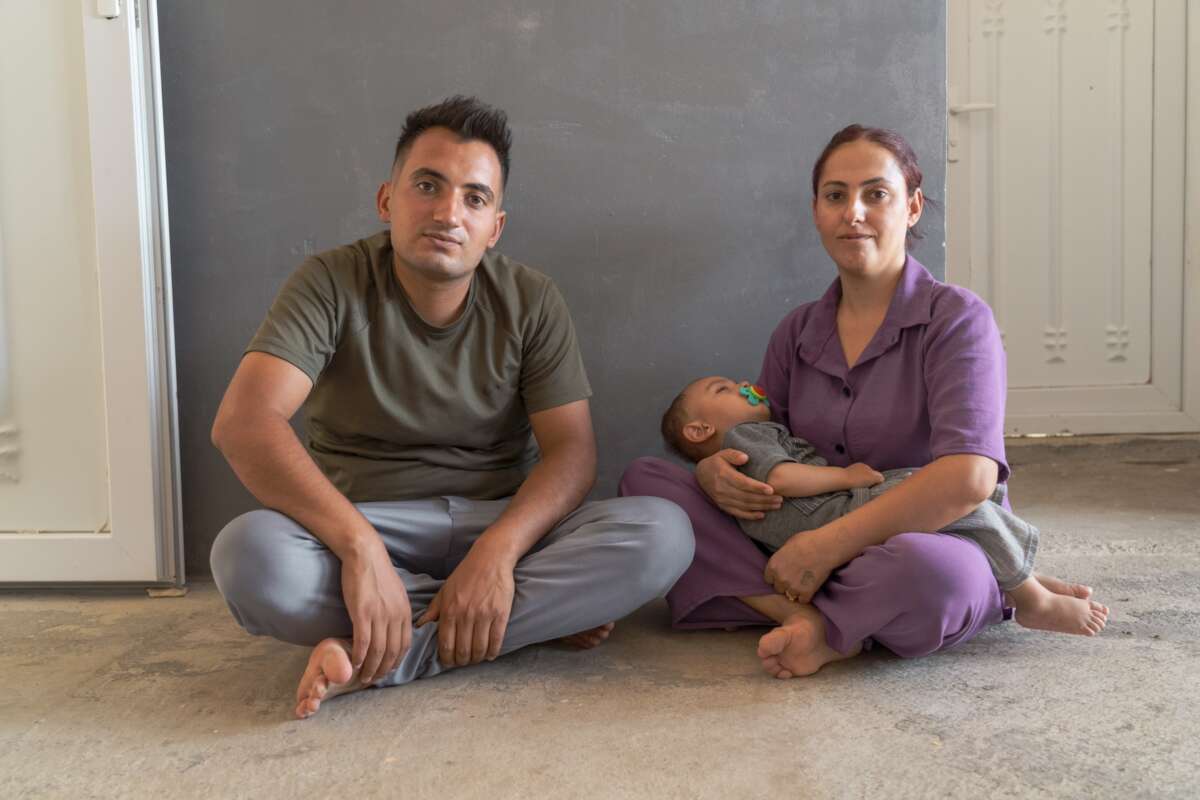
Shamo was 12 years old when he was abducted by ISIS, along with his parents and siblings, including his sisters. First, the militants separated Shamo and his sisters from their parents and elder brother. Then, Shamo says, his small sisters were collected and sold into slavery, while he was transported to Mosul with 33 other boys.Fadil Murat Shamo sits with his wife and small child.Jaclynn Ashly
“They kept us at a private house in Mosul where we were forced to learn the Quran, their ideologies and how to fight,” Shamo remembers. “We stayed there for one year. It was like a prison. We weren’t allowed outside and we never saw the sunlight. There was just one small window in the building.”


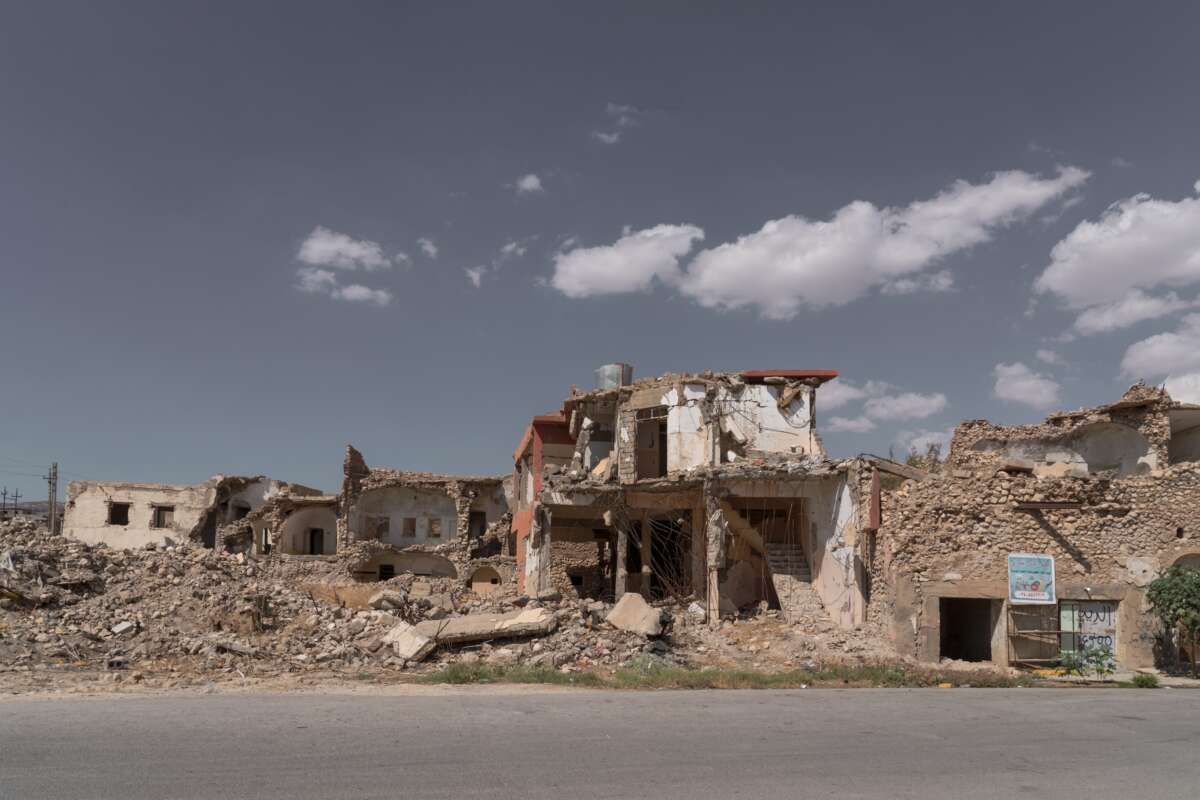
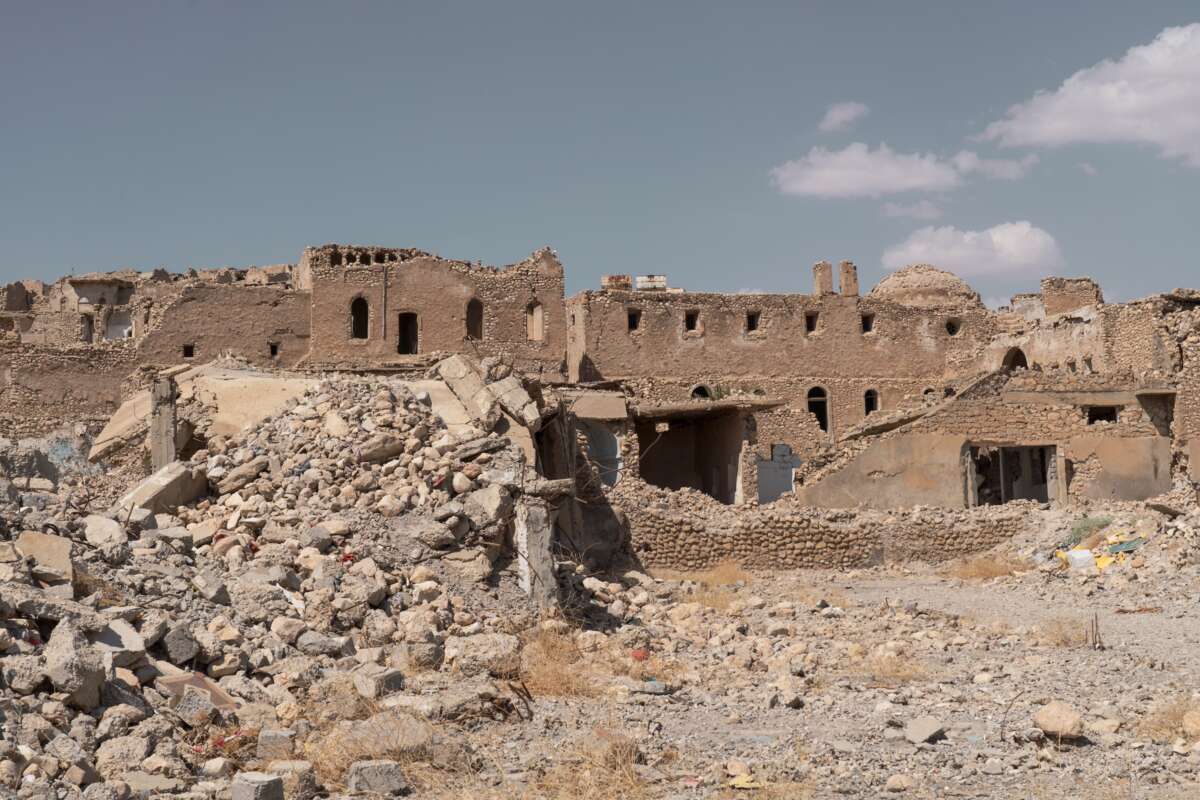
The old city remains in complete ruins — with bullet-riddled buildings and collapsed roofs and walls.

Once the militants thought the boys were ready, they transported them to Raqqa, the capital of the Islamic State in Syria, to join their ranks as ISIS fighters. Only 10 of these boys survived, Shamo says.

“They killed our whole families so all of us just wanted to die,” Shamo recounts, fiddling with his thumbs. “The most unimaginable things became everyday life. We witnessed beheadings so often that they became normal. But we never actually believed that when we died, we would become martyrs and go to heaven. Everyone blew themselves up or died in battle because they hated this life — not because they wanted heaven in the next life.”

After three years of fighting as a soldier, Shamo was able to get smuggled out of ISIS territory, ending up in al-Hol camp (Kempa Holê) in Kurdish-controlled northern Syria, which continues to hold tens of thousands of women and children from former ISIS territory

.
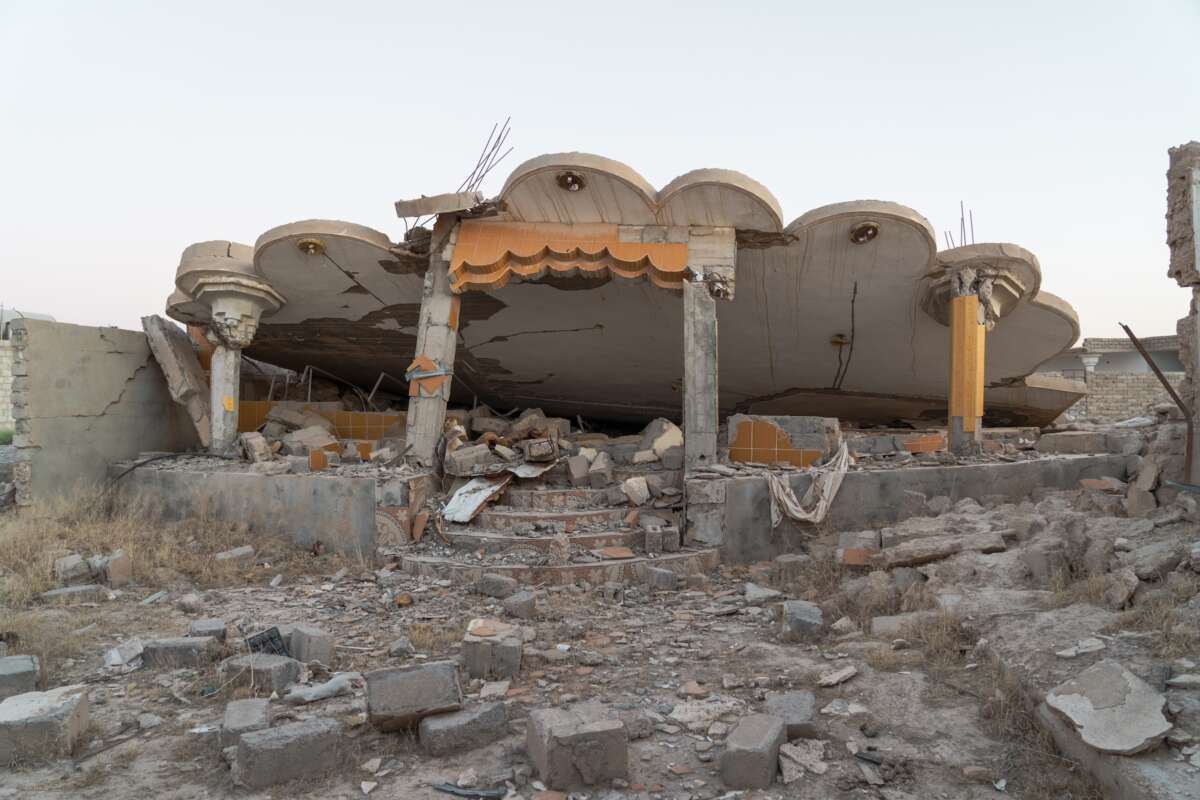
Ruined buildings are shown of a village in northern Sinjar, where Yazidi have recently begun to return. Jaclynn Ashly

He was eventually repatriated to Iraq, where he stayed at one of numerous internally displaced people (IDP) camps in Iraqi Kurdistan. His sisters were also smuggled out of ISIS territory two years prior and are now living in the camps. His parents and brother, however, are still missing — assumed to have been killed.

In 2020, Shamo decided he would return to Sinjar. According to the IOM, which assists Yazidis to voluntarily return to Sinjar, 2020 saw the highest number of returns out of any year since the group began collecting data in 2018.

Despite finding his childhood home destroyed, Shamo saw a glimmer of hope in his return. “After I returned, I focused all my energies on rebuilding my life,” Shamo says. “I got married and had children. Now I have my own family. This has helped me to recover from what happened to me.”
“Sick of the Camps”

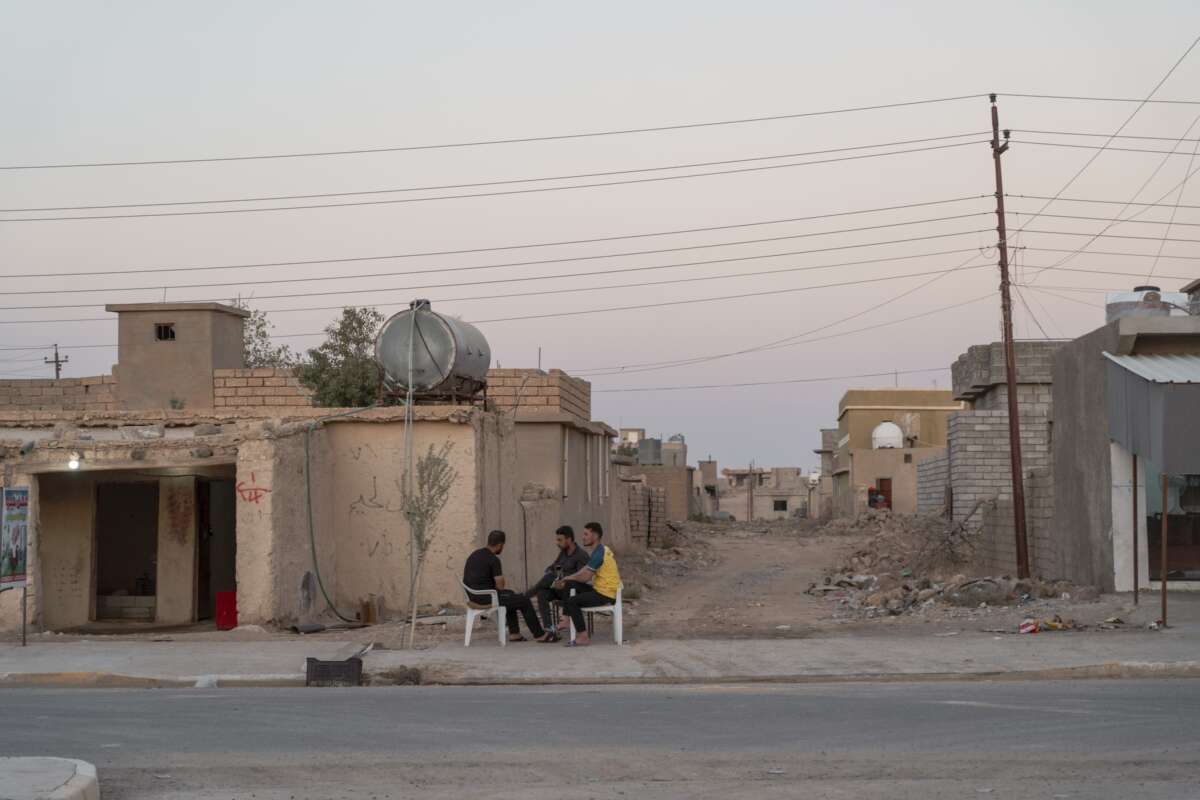
But not everyone returning to Sinjar is as hopeful. Others see no future there — only unresolved wounds and crumbling buildings. Sinjar’s main town still bears the scars of the fighting that raged there in 2014 until a fightback driven by Kurdish forces dislodged ISIS militants from the town the following year. The old city remains in complete ruins — with bullet-riddled buildings and collapsed roofs and walls. In some areas, there are still warning signs of the lethal threat of land mines and war munitions.

Many Yazidi do not have the money to rebuild; some are sleeping on the floors of half-standing houses. Infrastructure is still wrecked, while the federal Iraqi government and the autonomous Kurdistan Region of Iraq tussle for control over the area.People sit among the partly destroyed buildings of a village in northern Sinjar, where Yazidi have recently begun to return.Jaclynn Ashly
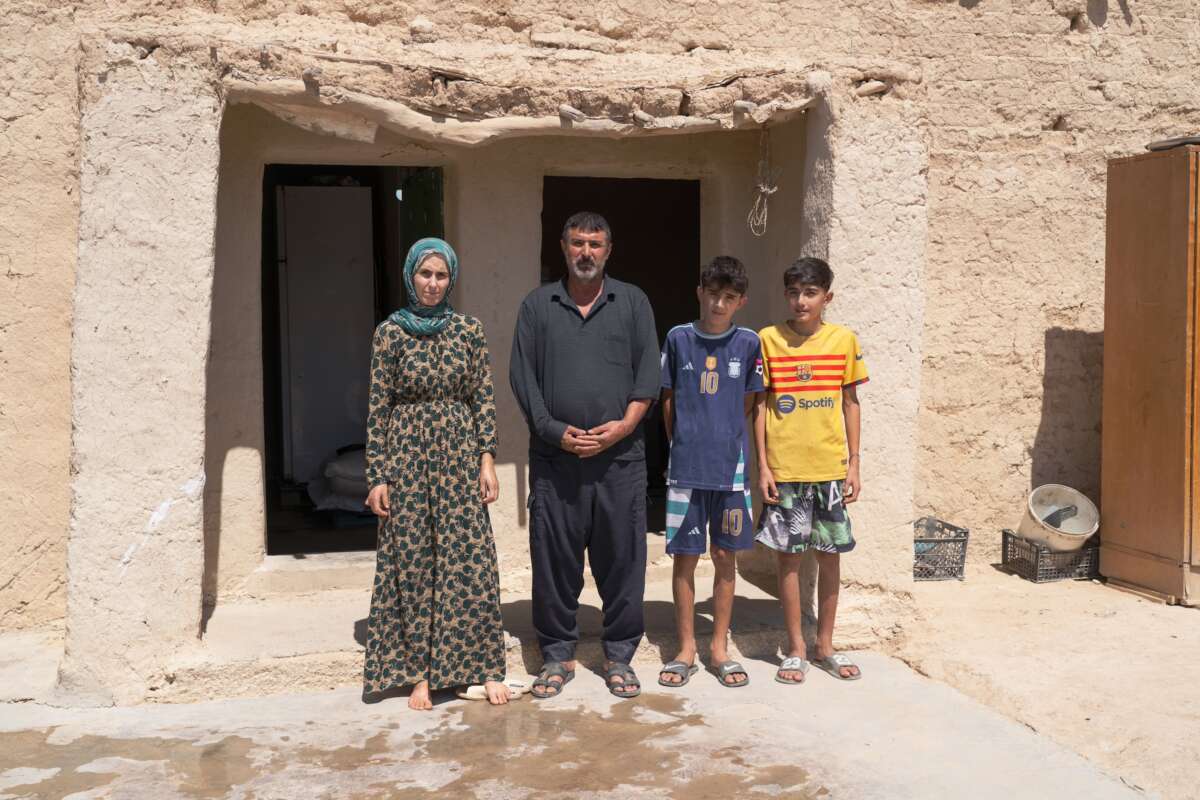
When Amy Hussein, 48, returned to Sinjar last year with his six children, ages 9 to 22, he found his home was reduced to rubble. He is now living in his brother’s home, which he was in the process of constructing before ISIS militants overran the area. His brother is living abroad in Germany, where many Yazidi were granted asylum.

“You see over there,” Hussein says, pointing to one of many abandoned homes in his small village in the northern part of Sinjar. “At this home, about 25 members of the family were taken captive by ISIS. All of them are now either killed, missing or living as refugees in Europe.” He shakes his head and digs his shoe into the dried dirt. “I came back here only because I was so sick of living in the IDP camps,” he adds.

Amy Hussein stands with his wife and two sons. Jaclynn Ashly

“But it’s still hard. For those of us who survived the genocide, we don’t know anything about our fate or our future.”

With ISIS’s destruction of around 80 percent of public infrastructure and 70 percent of civilian homes in Sinjar City and surrounding areas, a lack of basic services and adequate shelter means those returning are in an uphill battle to rebuild their lives. According to the IOM, there are still challenges in accessing running water, electricity, health care and education for families in Sinjar.

Public education is sometimes not readily available, in part due to damage or destruction of schools. Where it is accessible, the quality of education is undermined by overcrowding, with some schools accommodating students from multiple villages, and staffing shortages, as thousands of teachers remain displaced.

Many families here have received financial support from IOM to return and to rebuild their homes, but they say that it is not enough. Hussein, who received about 700,000 Iraqi dinar ($534) from IOM, says it helped him put up some windows and doors in his brother’s half-constructed home, but the funds quickly dried up.

About 2,200 Yazidi are receiving monthly stipends — about $650 — through the Yazidi Survivors Law, which the Iraqi parliament passed in 2021 and which provides a reparations framework for many survivors of ISIS crimes, particularly women and girls subjected to sexual violence, as well as child survivors who were abducted before the age of 18. The law focuses on the Yazidi community, but also includes reparations for survivors from the Christian, Turkmen and Shabak minority groups.

Many Yazidi do not have the money to rebuild; some are sleeping on the floors of half-standing houses.

Shamo, who was abducted by ISIS when he was 12, is a recipient of this monthly stipend, which has helped him rebuild and sustain himself in Sinjar despite widespread unemployment.

The Iraqi government, through the Ministry of Migration and Displaced (MoMD), also provides a return grant of 4 million Iraqi dinar ($3,052) for Yazidi families residing inside the IDP camps and 1.5 million Iraqi dinar ($763) for those outside the camps. Those whose homes and properties were destroyed or damaged can also apply for compensation from the government.

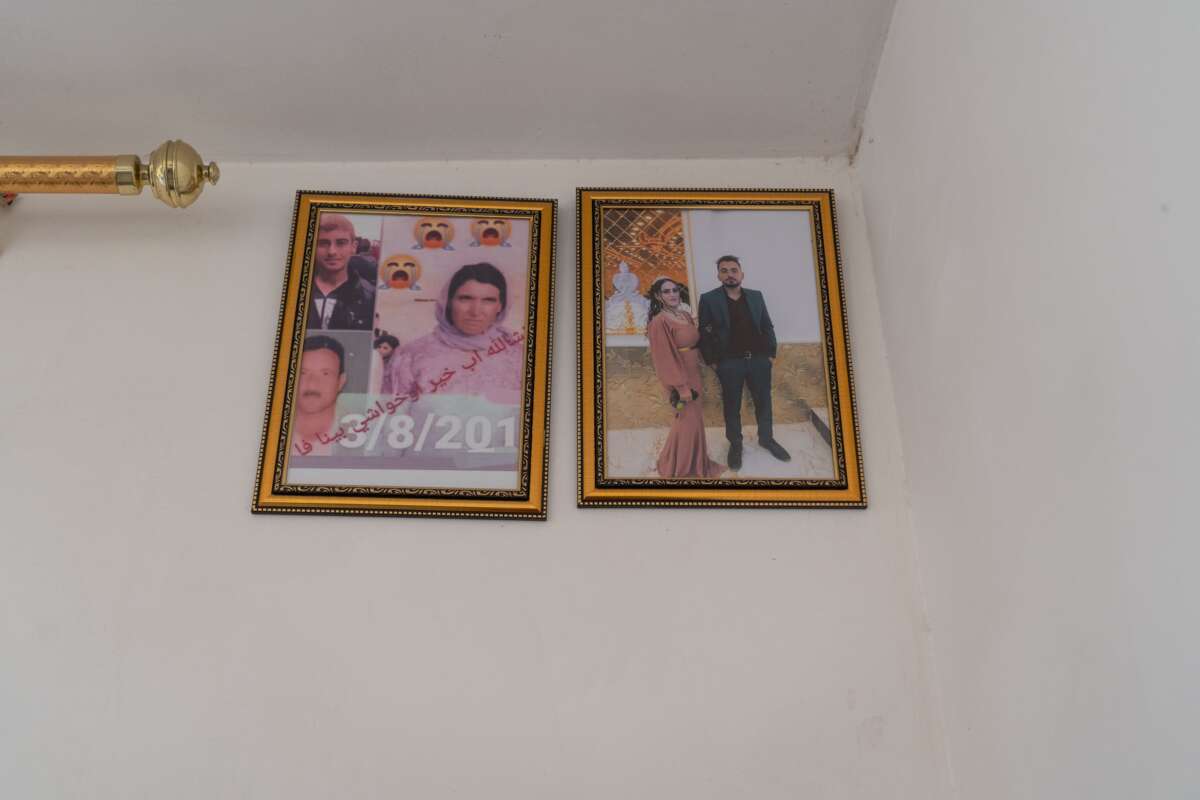
Photos hang on the wall of Shamo’s parents and brothers, who are still missing and believed to have been killed by the Islamic State. Jaclynn Ashly

Yet of all the recently returning Yazidi Truthout spoke to, none had received this government assistance. Jamal Saido, the documentation and protection officer at Nadia’s Initiative, founded by Nobel Peace Prize Laureate and Yazidi survivor Nadia Murad, says this is likely due to the extremely slow pace of the application process, which can often drag on for many months.

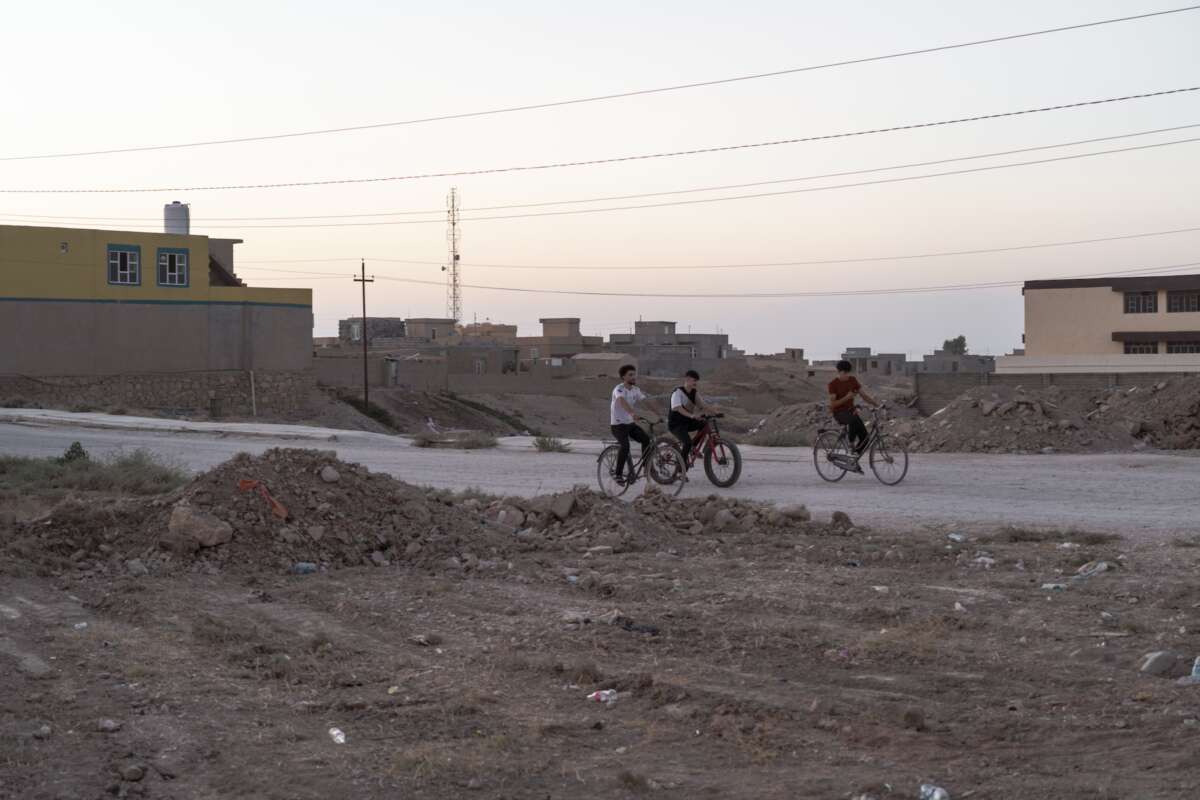
Young people ride bikes through a village in northern Sinjar, where Yazidi have recently begun to return.Jaclynn Ashly
Tired of waiting, many Yazidi families have returned on their own without government or organizational support.


“Because of Fear”

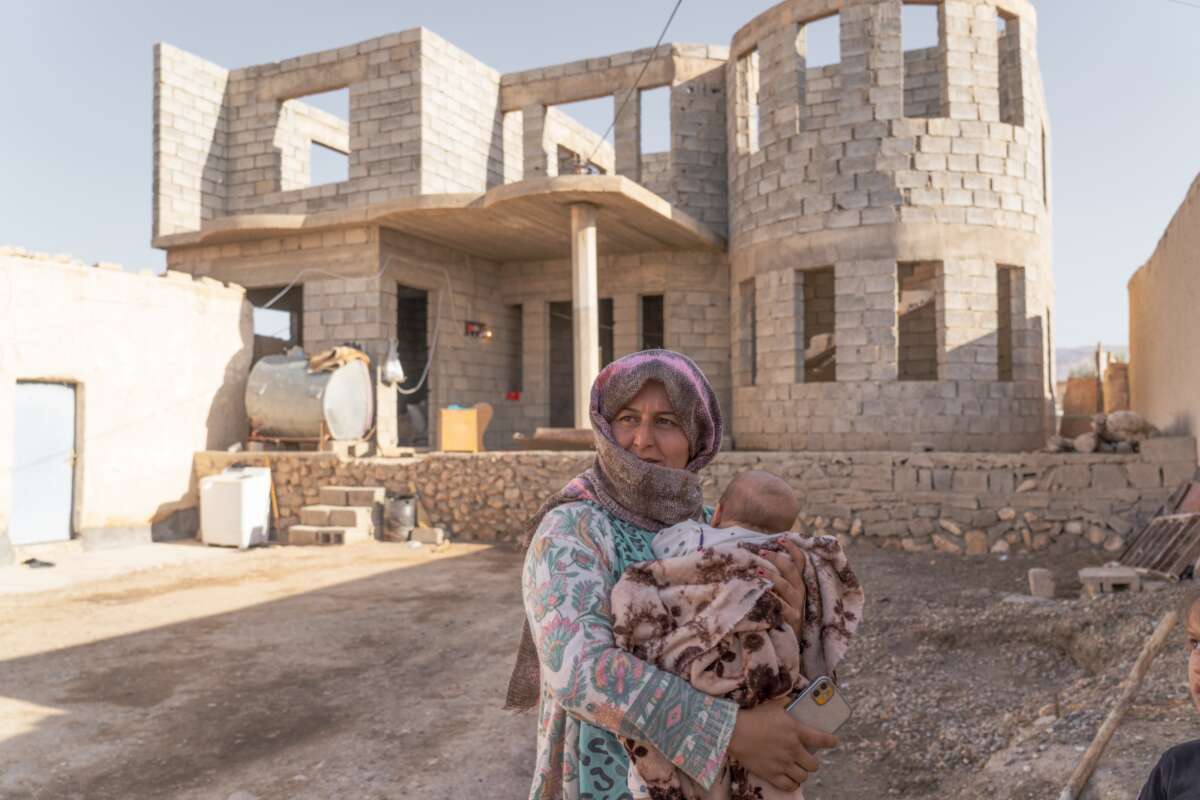
Sahar Hajimalo, 30, just returned to Sinjar a few days ago — after spending more than a decade in Chamishku camp in Zakho. The mother of three children, from ages 10 years to 2 months, returned to the home her family had started constructing before the ISIS invasion.

“Living in the camps, nothing ever belonged to us,” Hajimalo tells Truthout, balancing her 2-month-old on her hip. “We wanted to return to the only things that still belong to us — our home and land.”

Sahar Hajimalo, 30, just returned to Sinjar a few days ago and is sleeping on the floor of a half-constructed home. Jaclynn Ashly

Hajimalo says she has not received any financial assistance, but decided to return on her own. Her husband is also unemployed. With much of the infrastructure and buildings still damaged or destroyed in Sinjar, along with the majority of the Yazidi population still displaced, there is a major lack of employment and business opportunities for those returning.

Hajimalo and her family now sleep on the floor of a small room in her half-constructed home, bundled up in blankets during the nights. “The conditions here are not great,” she says. “But the situation in the camp was becoming unbearable. We didn’t want to be displaced for the rest of our lives.” Some returning Yazidi have erected tents to live in, while others have moved into the homes of those who were killed or displaced because their own homes were destroyed, according to residents.

An IOM survey conducted last year revealed that 85 percent of displaced Yazidi said they were not returning to Sinjar due to issues around accessing housing, employment, making a livelihood or starting a business, along with inadequate access to basic services. According to the IOM, 80 percent of Yazidi households, whether returnees or internally displaced people, do not have a stable income.
Sinjar’s old city is still in ruins. Jaclynn Ashly

About 85 percent of Sinjar’s population was dependent on agriculture for their livelihoods before 2014. But the ISIS militants wiped out Sinjar’s natural resources, sabotaged its irrigation canals and wells, stole or destroyed farming equipment and razed the farmland. Many families also lost their documentation that proves land ownership during the chaos of fleeing their homes, leaving them without access to their properties on which to farm.

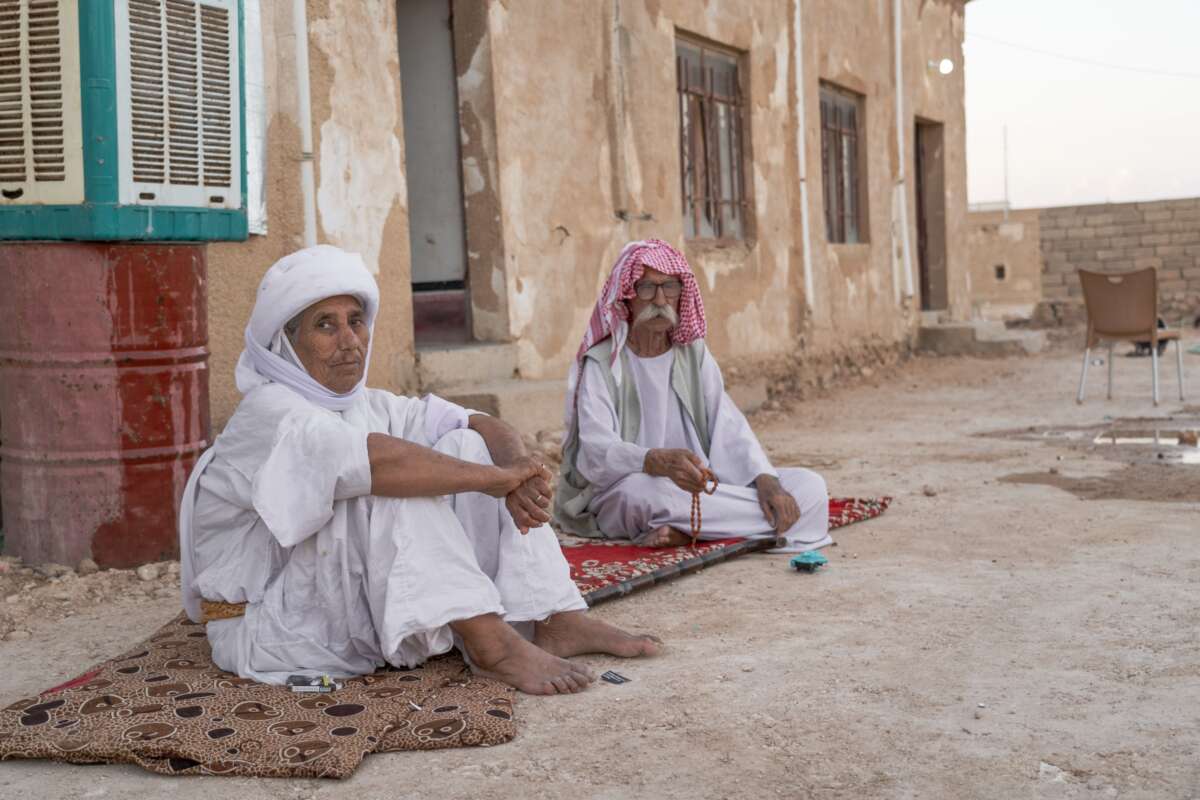
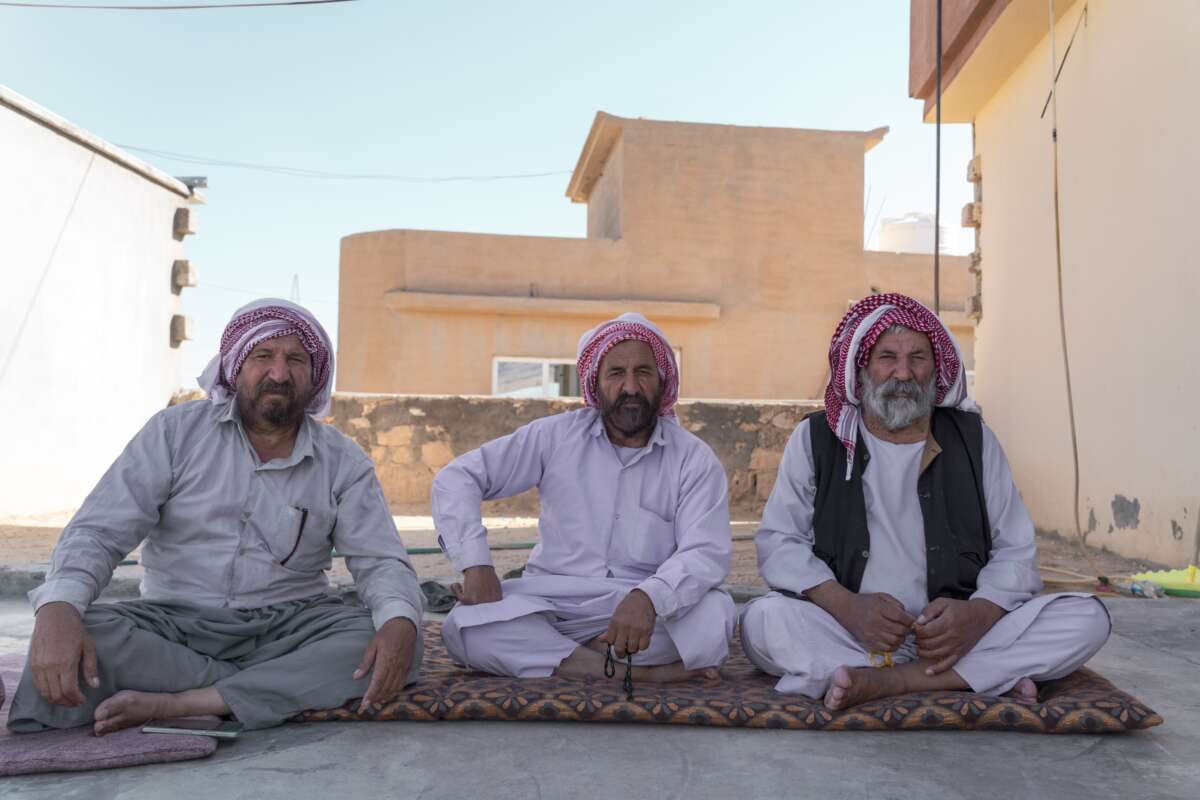
Omar Uso, 74, sits beside his two sons on a mat laid out in front of his home, which he began constructing about a year ago with help from local organizations. The family finally returned a month ago after construction was completed.

“Before ISIS, we had vehicles and a lot of livestock — over 300 sheep, but we left everything behind,” Uso tells Truthout. “ISIS burned down our homes and looted our vehicles, tractors, generators, animals, everything.” According to Uso, 70 people from his village were captured by ISIS and out of them only two elderly women survived.

“It would take a huge investment to get back all that was stolen from us and build up our farm again, and it’s just not possible right now,” Uso explains.

Omar Uso (right) sits beside his two sons at his home in Sinjar. Jaclynn Ashly

Uso says there is also rising hate speech against the Yazidi in Iraqi Kurdistan and this is driving many to return to Sinjar, despite not having proper homes or livelihoods. These tensions followed statements made last year by Qasim Shasho, a Yazidi politician and commander of the Yazidi Peshmerga unit in Sinjar, who declared that the Yazidi would always be under threat as long as “Mohammed and his religion exist”; however, Shasho claimed his words were misinterpreted and were meant only for extremist groups.

Nevertheless, this public comment elicited uproar, with some Sunni clerics making direct threats of violence against the Yazidi living in camps around Duhok in public speeches and social media. At least dozens of Yazidi families, reminded of the terror they endured in 2014, fled their homes in fear of potential attacks.

Uso’s son Barjis tells Truthout that the primary reason for him returning to Sinjar two weeks ago was due to continued feelings of insecurity in the IDP camps. “The camps don’t feel safe anymore,” Barjis says. “I had work and more opportunities in Kurdistan, but I came back here because of fear.”
“Kill Us Again”

This fear is felt throughout the entire Yazidi community in Iraq — among those returning to Sinjar and those still displaced. “Yazidi are living in total uncertainty in different environments,” explains Saido from Nadia’s Initiative. “Some are living in IDP camps and they are scared to return to their lands where they were subjected to genocide with little support to assist them in rebuilding their lives. Others are also scared of staying in the camps.”

“Wherever the Yazidi are in Iraq, they have been living in total uncertainty and insecurity for more than a decade now,” he adds. “They are still living in complete fear that something will happen to them again at any moment. It’s difficult for them to feel safe, regardless of where they are.”

Sinjar’s old city is still in ruins. Jaclynn Ashly

According to Saido, those returning to Sinjar are suffering from PTSD and have experienced flashbacks upon returning to their destroyed villages and homes. Shamo, who was indoctrinated to fight as a child soldier for ISIS, concedes that he is often unable to sleep. “Psychologically, I’m still not normal,” Shamo tells Truthout. “I have hope in my future here in Sinjar. But I can’t help my mind from remembering and thinking too much. It has been more than 10 years that I haven’t heard anything about my parents and brother. Even to just calm my mind down to sleep for one night is very difficult for me.”

Hussein Findi, 107, and his wife, 85-year-old Ghassal Sado, returned to their half-destroyed home in Sinjar about a month ago. They also say it was increased hate speech targeting the Yazidi in Iraqi Kurdistan that prompted them to leave the Kabarto IDP camp and return to Sinjar. “Nowhere in Iraq is safe for the Yazidi, so we might as well return to our homeland,” Findi says, seated cross-legged on the concrete floor of one of the only rooms of his home that was not destroyed by ISIS.

“But this violence is not new to the Yazidi,” Findi tells Truthout, gliding a string of prayer beads between his fingers. “What ISIS did to us is not the first genocide against the Yazidi; they have killed us before and they will kill us again.”

Historians believe that there were at least 74 different genocidal acts that were committed against the Yazidi by various actors through the centuries. The Yazidi refer to these massacres as the 74 Firmans, literally meaning an official decree or order. This word has become synonymous with genocide within the Yazidi community, because most of the episodes were committed in furtherance of Islamic Fatwas calling for violence against the Yazidi.

“The Yazidi will never be safe in this country,” Findi laments. “But if they come for us again, I would much rather be killed in my homeland than in an IDP camp.”

This article is licensed under Creative Commons (CC BY-NC-ND 4.0), and you are free to share and republish under the terms of the license.

Jaclynn Ashly is a multimedia freelance journalist who has worked in more than a dozen countries. She specializes in telling in-depth stories that relate to human rights, migration, culture, climate change and politics.
Intentional Journalism Owes a Debt to the Dead in a Swedish Mass Shooting

The majority of those who died were immigrants to Sweden, and the debt is simple: telling their stories in a way that counters common stereotypes about immigrants and refugees in Sweden, and across Europe.


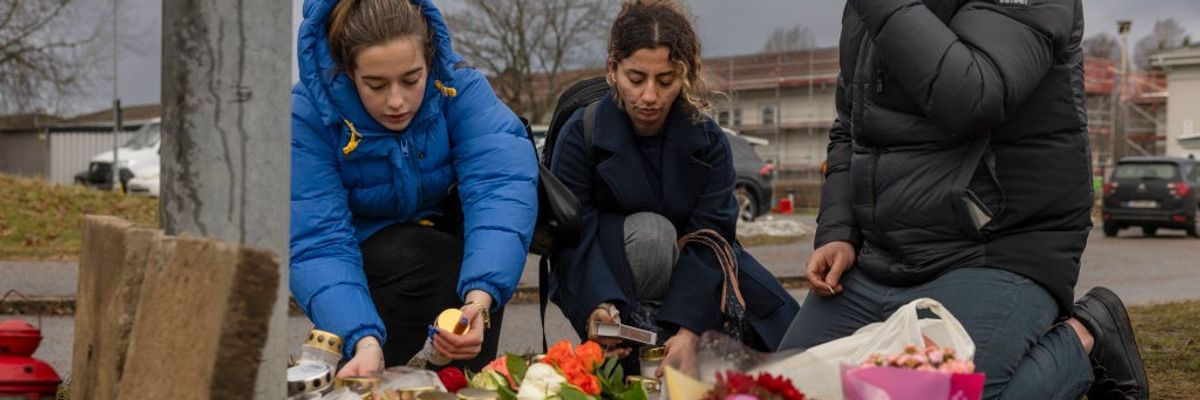
Mourners gather at the site to pay tribute to the victims in a shooting on February 5, 2025 in Orebro, Sweden.
(Photo: Jonas Gratzer/Getty Images)
Common Dreams

As the mass murder that took the lives of 10 innocent people in Sweden disappears from the international news map, there remains a debt to the dead that will likely go unpaid.

The majority of those who died were immigrants to Sweden, and the debt is simple: telling their stories and placing their lives in a context that pushes back against the common stereotypes about immigrants and refugees in Sweden, and across Europe.

Details are now beginning to emerge about the victims in Örebro. Of the 10 who died in Örebro, seven were women and three were men. Eight were born outside the country. But there is so much more. There are details that speak to the mundane, everyday lives of immigrants and refugees—stories that are largely ignored by the media in favor of more sensational topics such as crime, terrorism, and failed integration. Topics that do not reflect the overwhelming majority of people who have immigrated to Sweden and Europe. People who have often fled violence and persecution in search of a quiet, ordinary, and anonymous life.

To not recognize their everyday lives or to refuse to acknowledge their efforts to integrate into their new societies is to subject them to a second form of violence: the symbolic murder of their humanity.

Let’s be honest. The decision to present immigrants and refugees in one way rather than another is both deliberate and conscious. And let’s not deny the cruel irony that immigrants, routinely smeared as “lazy,” “violent,” and “incapable of integrating,” were murdered by an "ethnic Swede" who himself lived an unintegrated life as a “loner.”

Immigrants like Bassam, a father of two who came to Sweden from Syria. He worked making bread and preparing food, and on days when he had Swedish language classes, he would start work at 4:00 or 5:00 am, attend his language class, then return to work and stay late.

Immigrants like Salim, a refugee from Syria who had become a Swedish citizen and was studying to become a healthcare worker. He was engaged and had just bought a house. His last act, as he lay dying after being shot, was to call his mother and ask her to take care of his fiancée.

Immigrants like Elsa, who arrived in Sweden in 2015 from Eritrea and was also studying to become an assistant nurse. She was already employed at a nursing home and worked as a contact person for disabled residents in the municipality. She wanted to have two jobs to earn enough money for her husband to get a residence permit. They had four children.

These were victims of an act of violence that ended their physical presence in this world. To not recognize their everyday lives or to refuse to acknowledge their efforts to integrate into their new societies is to subject them to a second form of violence: the symbolic murder of their humanity. We are regularly told that immigrants to Europe from “other” parts of the world do not share our “values.” Yet, in the case of the mass murder in Sweden, we see victims who worked—often with multiple jobs—to integrate and create a better life. In short, they shattered the stereotype of the isolated, lazy immigrant unwilling to engage with Swedish society.

In the days (and now weeks) after the mass murder in Örebro, media in Sweden have been telling the stories of some of these immigrants and their families. About their lives and their losses. This is important progress in Sweden… while media outside of the country have overwhelmingly ignored the dead. But it also raises the question: Should it really take being killed in a mass murder to have your story told?

There are parts of the world that receive media coverage in Europe and the U.S. almost exclusively when there is war, famine, or natural disasters. This links these regions with crisis in the minds of news consumers, and it is a connection that is hard to break. The very idea that people in these regions have everyday concerns, worries, and joys like we do at home is very rarely addressed. Similarly, in domestic media, there are segments of society that are covered primarily when something negative or terrible happens. This creates a similar mental map for news consumers, overshadowing all other perspectives.

In journalism and media research, the concept of “framing” suggests that how an issue or group is presented (rhetorically or visually) in news affects how that issue or group is perceived and understood. But what is not shown is also part of “framing.” What is omitted in the presentation and analysis of society is also an editorial decision.

This should also be seen as part of the debt owed to many of those killed in Örebro. To recognize the power of media to shape not only what people think about but also how they think about it, and to present the everyday lives of those who come to Sweden and Europe not only when linked to tragedy and violence.


Christian Christensen, American in Sweden, is Professor of Journalism at Stockholm University. Follow him on Twitter: @ChrChristensen
Full Bio >