Thursday, March 06, 2025

What is a charter school, really? Supreme Court ruling on whether Catholic charter is constitutional will hinge on whether they’re public or private


(The Conversation) — The Supreme Court will hear arguments about the Oklahoma school in April.
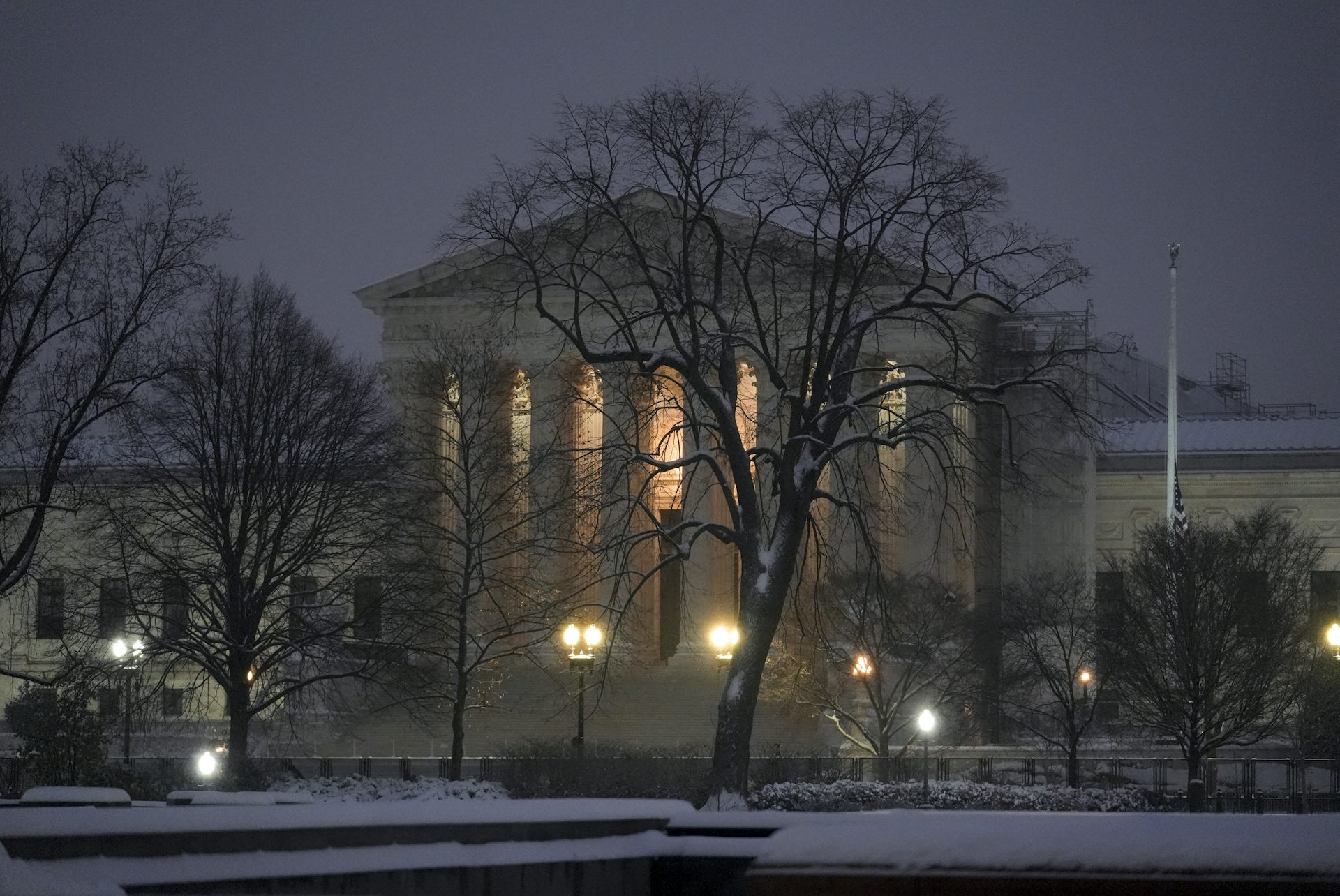

The court's ruling could affect more than religion in schools. 
(AP Photo/J. Scott Applewhite)


Preston Green III and Suzanne Eckes
February 28, 2025


(The Conversation) — In April 2025, the Supreme Court will hear arguments about whether the nation’s first religious charter school can open in Oklahoma. The St. Isidore of Seville Catholic Virtual School would be funded by taxpayer money but run by a local archdiocese and diocese.

The case is often discussed in terms of religion, and a decision in the school’s favor could allow government dollars to directly fund faith-based charter schools nationwide. In part, the justices must decide whether the First Amendment’s prohibition on government establishing religion applies to charter schools. But the answer to that question is part of an even bigger issue: Are charters really public in the first place?

As two professors who study education law, we believe the Supreme Court’s decision will impact issues of religion and state, but could also ripple beyond – determining what basic rights students and teachers do or don’t have at charter schools.

Dueling arguments

In June 2023, the Oklahoma Statewide Virtual Charter School Board approved St. Isidore’s application to open as an online K-12 school. The following year, however, the Oklahoma high court ruled that the proposal was unconstitutional. The justices concluded that charter schools are public under state law, and that the First Amendment’s establishment clause forbids public schools from being religious. The court also found that a religious charter school would violate Oklahoma’s constitution, which specifically forbids public money from benefiting religious organizations.
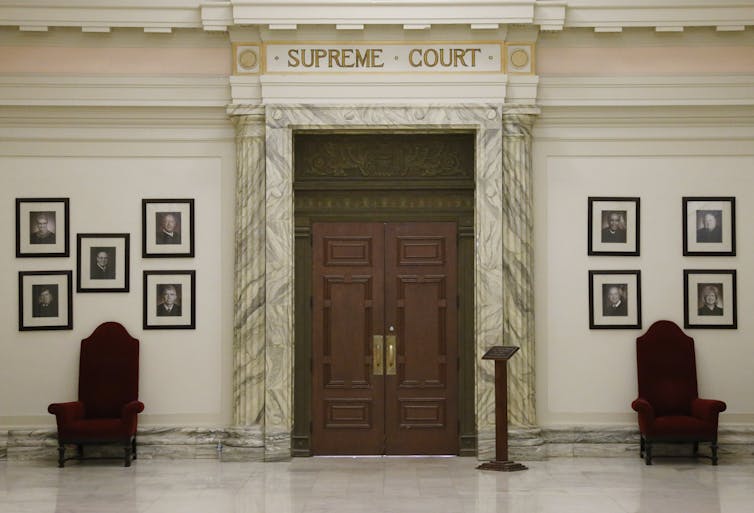
The Oklahoma Supreme Court in the Oklahoma State Capitol in Oklahoma City
AP Photo/Sue Ogrocki, File

On appeal, the charter school is claiming that charter schools are private, and so the U.S. Constitution’s establishment clause does not apply.

Moreover, St. Isidore argues that if charter schools are private, the state’s prohibition on religious charters violates the First Amendment’s free exercise clause, which bars the government from limiting “the free exercise” of religion. Previous Supreme Court cases have found that states cannot prevent private religious entities from participating in generally available government programs solely because they are religious.

In other words, while St. Isidore’s critics argue that opening a religious charter school would violate the First Amendment, its supporters claim the exact opposite: that forbidding religious charter schools would violate the First Amendment.
Are charters public?

The question of whether an institution is public or private turns on a legal concept known as the “state action doctrine.” This principle provides that the government must follow the Constitution, while private entities do not have to. For example, unlike students in public schools, students in private schools do not have the constitutional right to due process for suspensions and expulsions – procedures to ensure fairness before taking disciplinary action.

Charter schools have some characteristics of both public and private institutions. Like traditional public schools, they are government-funded, free and open to all students. However, like private schools, they are free from many laws that apply to public schools, and they are independently run.

Because of charters’ hybrid nature, courts have had a hard time determining whether they should be considered public for legal purposes. Many charter schools are overseen by private corporations with privately appointed boards, and it is unclear whether these private entities are state actors. Two federal circuit courts have reached different conclusions.

In Caviness v. Horizon Learning Center, a case from 2010, the 9th Circuit held that an Arizona charter school corporation was not a state actor for employment purposes. Therefore, the board did not have to provide a teacher due process before firing him. The court reasoned that the corporation was a private actor that contracted with the state to provide educational services.

In contrast, the 4th Circuit ruled in 2022 that a North Carolina charter school board was a state actor under the equal protection clause of the Fourteenth Amendment. In this case, Peltier v. Charter Day School, students challenged the dress code requirement that female students wear skirts because they were considered “fragile vessels.”

The court first reasoned that the board was a state actor because North Carolina had delegated its constitutional duty to provide education. The court observed that the charter school’s dress code was an inappropriate sex-based classification, and that school officials engaged in harmful gender stereotyping, violating the equal protection clause.

If the Supreme Court sides with St. Isidore – as many analysts think is likely – then all private charter corporations might be considered nonstate actors for the purposes of religion.

But the stakes are even greater than that. State action involves more than just religion. Indeed, teachers and students in private schools do not have the constitutional rights related to free speech, search and seizure, due process and equal protection. In other words, if charter schools are not considered “state actors,” charter students and teachers may eventually shed constitutional rights “at the schoolhouse gate.”

Amtrak: An alternate route?


People ride an Amtrak Acela train through Pennsylvania, en route from New York City to Washington, in 2022.
AP Photo/Ted Shaffrey

When courts have held that charter schools are not public in state law, some legislatures have made changes to categorize them as public. For example, California passed a law to clarify that charter school students have the same due process rights as traditional public school students after a court ruled otherwise.

Likewise, we believe states looking to clear up charter schools’ ambiguous state actor status under the Constitution can amend their laws. As we explain in a recent legal article, a 1995 Supreme Court case involving Amtrak illustrates how this can be done.

Lebron v. National Railroad Passenger Corporation arose when Amtrak rejected a billboard ad for being political. The advertiser sued, arguing that the corporation had violated his First Amendment right to free speech. Since private organizations are not required to protect free speech rights, the case hinged on whether Amtrak qualified as a government agency.

The court ruled in the plaintiff’s favor, reasoning that Amtrak was a government actor because it was created by special law, served important governmental objectives, and its board members were appointed by the government.

Courts have applied this ruling in other instances. For example, the 10th Circuit Court ruled in 2016 that the National Center for Missing and Exploited Children was a governmental agency and therefore was required to abide by the Fourth Amendment’s protection from unreasonable search and seizure.

Currently, we believe charter schools fail the test set out in the Amtrak decision. Charter schools do serve the governmental purpose of providing educational choice for students. However, charter school corporations are not created by special law. They also fall short because most have independent boards instead of members who are appointed and removed by government officials.

However, we would argue that states can amend their laws to comply with Lebron’s standard, ensuring that charter schools are public or state actors for constitutional purposes.

Suzanne Eckes does not work for, consult, own shares in or receive funding from any company or organization that would benefit from this article, and has disclosed no relevant affiliations beyond their academic appointment.

(Preston Green III, John and Maria Neag Professor of Urban Education, University of Connecticut. Suzanne Eckes, Susan S. Engeleiter Professor of Education Law, Policy and Practice, University of Wisconsin-Madison. The views expressed in this commentary do not necessarily reflect those of Religion News Service.)


The Conversation religion coverage receives support through the AP’s collaboration with The Conversation US, with funding from Lilly Endowment Inc. The Conversation is solely responsible for this content.
Opinion

A Ramadan of resilience: Faith in a world on fire

(RNS) — Ramadan is not meant to burden us with grief, but to show us what to do with it
.


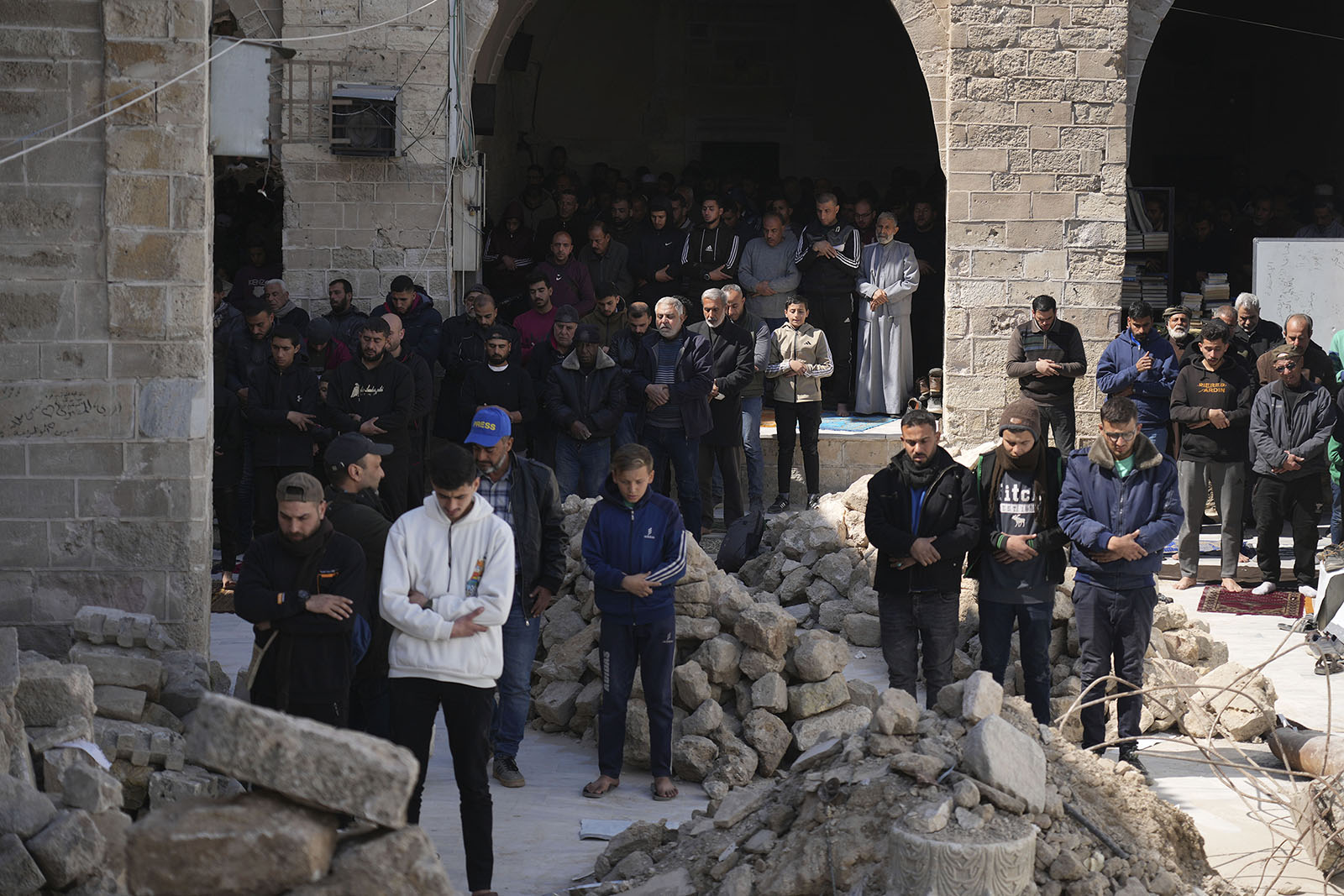
Palestinians take part in Friday prayers in the ruins of the Omari Mosque, which was partially destroyed by Israeli bombardment, ahead of the start of the Muslim holy month of Ramadan in Gaza City, Gaza Strip, Friday, Feb. 28, 2025. (AP Photo/Abdel Kareem Hana)

Omar Suleiman
February 28, 2025

(RNS) — Ramadan, which begins Friday night (Feb. 28) for most people, is the holiest month in the Islamic calendar, a time of fasting, prayer and reflection observed by nearly 2 billion Muslims worldwide. From before sunrise to sunset, we abstain from food, drink and intimacy — not as a test of endurance, but as an exercise in spiritual renewal, discipline and empathy. It is a month that teaches patience in hardship, generosity in abundance and trust in something greater than ourselves.

Muslims around the world will spend these 30 days drawing closer to God, seeking forgiveness and purifying their hearts through prayer, charity and acts of kindness. But Ramadan is also about community and humanity. It reminds us that we do not exist in isolation, that our struggles are interconnected and that faith is meant to be lived not just in devotion, but in service to others.

Ramadan begins this year as Muslims are living in a world seemingly on fire. In Gaza families are still mourning their dead, hunger is being used as a weapon of war and entire neighborhoods have been reduced to rubble. The fragile ceasefire in the war, now in its second phase, is already being violated by Israel, which refuses to relinquish control of the Philadelphia Corridor — a critical border region along Gaza’s southern edge.

Ramadan arrives with cries of hope in the midst of this destruction, and yet past Ramadans have always seemed to see escalations in Israeli aggression. In the few years before war broke out in 2023, the month saw attacks on Palestinian worshippers in Al-Aqsa Mosque and increased violence across the occupied West Bank. Airstrikes on Gaza have intensified during past Ramadans, as have mass arrests and restrictions on Palestinian movement.

RELATED: Why Ramadan is called Ramadan: 6 questions answered

This is not a pattern of coincidence. It is a deliberate attempt to break the spirit of a people, to take a time meant for peace and turn it into a season of grief. And yet, every year, Palestinians endure. They fast through bombings and stand in prayer through raids. They continue to hope, even when the world tells them not to.

This year, as Israel continues to act with impunity and with President Donald Trump signaling a return to the most extreme policies of U.S. support for Israeli expansion, the situation feels more dire than ever. But while Trump openly speaks of ethnic cleansing while posting strange AI videos that seem to posit him as a God of Gaza with a golden statue, Palestinians remember that God controls Trump and everything else at the end of the day.


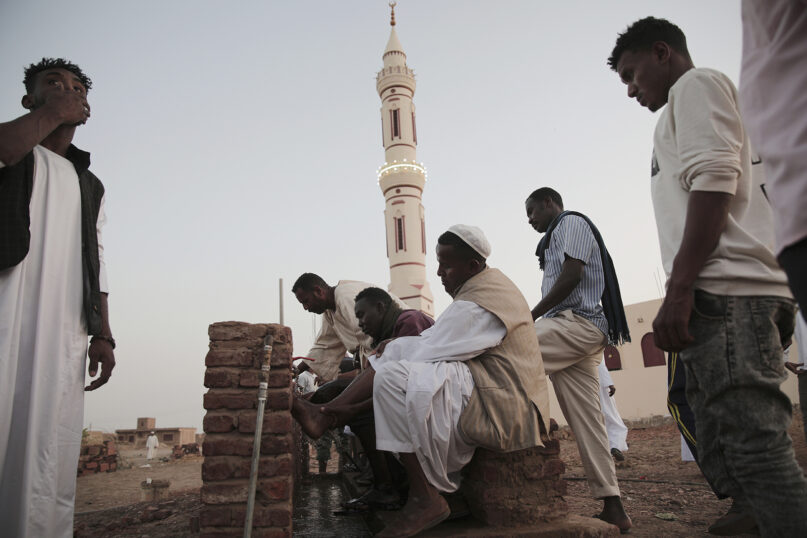
Muslim men use water to perform the ritual ablution before the “Maghreb” (sunset) prayers at the end of the fasting day during the holy month of Ramadan, along the side of the road of the Jazeera State highway in the village of al-Nuba, about 30 miles south of Khartoum, Sudan’s capital, Friday, April 8, 2022. (AP Photo/Marwan Ali)

In Sudan, too, the devastation of war continues, but with little global attention. The conflict has displaced millions, pushing families into famine, cutting off access to aid and forcing an entire generation into survival mode. Unlike Gaza, Sudan never seemed to have its moment of mass solidarity. It was forgotten before it was ever fully recognized. As a result, Sudanese Muslims enter Ramadan in a state of suffering that few outside their own communities even acknowledge.

Muslims in the Western world also begin this month in the shadow of rising hate. Islamophobia is once again on the rise, fueled by far-right politicians, inflammatory media rhetoric and the criminalization of Muslim activism — especially for those who speak out in support of Palestine. Many students, workers and public figures who have called for a ceasefire in Gaza have faced backlash, with some losing their jobs or being blacklisted for simply advocating for human rights.

In Europe, governments have continued a decadeslong push to police Muslim identity, passing laws restricting religious clothing, surveilling mosques and limiting expressions of Islamic faith in public spaces in the name of security, but in a pattern that suggests an attempt to silence and erase people.

Ramadan is not meant to burden us with grief, however, but to show us what to do with it.

The act of fasting is not simply about hunger. It is about solidarity. When a person intentionally refrains from food and drink, they join the reality of those who fast because they have no other option. Every growl of the stomach becomes a reminder that in Gaza, in Sudan, in refugee camps across the world, there are families who will go to bed with the same hunger — not knowing when, or if, it will be relieved.

The long nights of prayer that define Ramadan are not simply a religious ritual. They are an act of surrender in a world that often feels too broken to fix. They are a reminder that even as injustice runs rampant, as war and oppression seem endless, there is a higher power that sees what is hidden, knows every pain and will bring justice in ways beyond human comprehension.

Charity is not simply encouraged in Ramadan; it is required. Giving to those in need is not an act of generosity, but a responsibility. Wealth is never truly our own but a trust given to us by God, meant to be used in the service of others. This is why, in Ramadan, millions of Muslims across the world will donate to humanitarian efforts, sponsor meals for the poor and provide aid to those affected by war and displacement.

And the Quran, the book we hold to be the word of God, is not meant to be read for its recitation alone. It is meant to be lived. It calls on believers to stand for justice, to defend the oppressed, to reject tyranny in every form. In a world where those in power distort truth to justify war and occupation, the Quran reminds us that truth is not something that can be erased by propaganda or silenced by violence. It endures.

Like last year, this Ramadan will not be a particularly easy one. But it will be a meaningful one. This month we are called to witness the suffering of our brothers and sisters and to respond not with despair, but with faith. Not with helplessness, but with action. Not with silence, but with steadfast conviction that no oppression lasts forever.

Ramadan teaches that with hardship comes ease and that the trials of today are not the end of the story. Just as we replenish ourselves at the end of the day when our bodies have been depleted, we know that when the end comes for all we will break our fast together in a feast that exists away from this world.

May this month purify our hearts, strengthen our communities and bring justice to those who need it most. May our fasts remind us of the hungry, our prayers of the oppressed, our charity of the destitute and our recitation of the Quran of the eternal call to truth. And may we emerge from this month renewed — not just in faith, but in our commitment to a world that reflects the justice, mercy and compassion that Ramadan was meant to instill in us all.
Martini Judaism

Why immigration will always be a Jewish issue

(RNS) — What is the most repeated commandment in Judaism? You might be surprised.


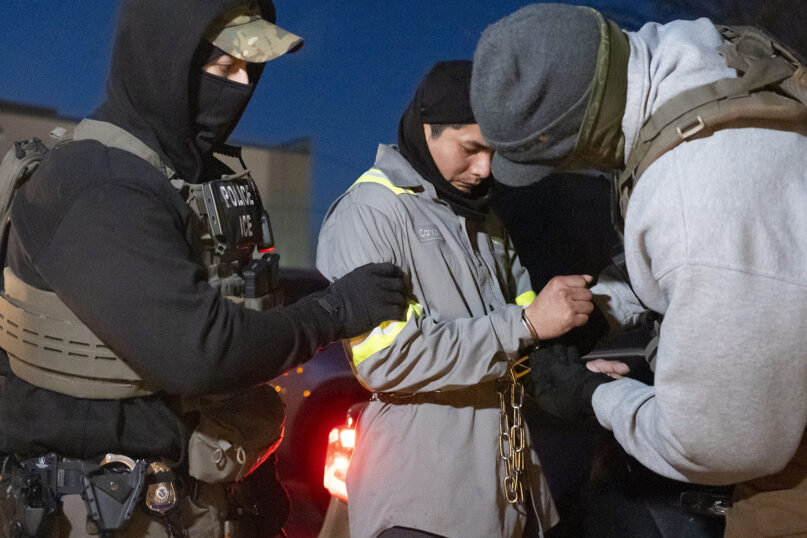
U.S. Immigration and Customs Enforcement officers wait to detain a person, Jan. 27, 2025, in Silver Spring, Md. (AP Photo/Alex Brandon, File)

Jeffrey Salkin
March 4, 2025

(RNS) — This past Shabbat, I delivered a sermon at Temple Israel in Miami, musing about my early days there and tying that experience to the congregation’s support of HIAS, formerly known as Hebrew Immigrant Aid Society.

It is especially appropriate that I was there for HIAS’ seventh annual Refugee Shabbat, observed from Friday, Feb. 28, to Saturday, March 1, to recognize the major impact of the global Jewish movement to assist refugees, asylum-seekers and displaced people.

The events that unfold before us on a daily basis and the conditions in this country have made HIAS eternally relevant. The organization puts it this way: “We used to take refugees because they were Jewish. Now, we take them because we are Jewish.” From Jewish interests to Jewish values, it is clear that our most tender interests are the vigorous pursuit of our values.

Temple Israel holds a special place in my heart. It was where I began my career as a rabbi in 1981. In my sermon, I expressed gratitude to the congregation’s current spiritual leader, Rabbi Barbara Goldman-Wartell, and the congregation’s other leaders. You can watch the whole sermon here, starting at the 45-minute mark.

I find myself smiling, as my first High Holy Days sermon I delivered as an ordained rabbi was on Yom Kippur in 1981. While digging through my files, I found that sermon, and the resonances with today are uncanny, ironic and instructive.

Let me remind those who were not yet born, or who were too young to remember, what Miami was like back then. It was a year after Cuban President Fidel Castro opened his prisons and mental hospitals, flooding this city with refugees during the Mariel boatlift.

At the same time, Haitians were coming to these shores, many drowning in the process. During my time at Temple Israel, I was one of two white clergy — the other was my good friend Rabbi Robert Goldstein, who served at Temple Beth Am — who eulogized the dead Haitians at a church in Miami’s Little Haiti neighborhood.

The influx of immigrants had overtaxed our resources, our patience and our kindness. A magazine published a piece of black humor predicting Voodoo drummers would perform on the roof of Dadeland, a large shopping mall in south Miami. You could buy bumper stickers that plaintively asked the last American in Miami to take the flag with him when he leaves. Too many had responded to the rising tide of immigration in south Florida by engaging in what our prayer book called the sin of xenophobia, the pathological fear of foreigners.

I began my Yom Kippur sermon by interpreting the blasts of the shofar as being, simultaneously, a moan and a cry of warning. I did not speak as a liberal — though I was and am. Rather, I appealed to the only true database I possess: Jewish authenticity as a moral roadmap. I prayed that by holding onto that map, we might steer past the xenophobia abyss.

I invoked the Jewish contribution to the Civil Rights Movement. I placed before us the memory of Rabbi Abraham Joshua Heschel. I thought of Jewish civil rights activism and the plight of immigrants, because of the hereditary liberalism of the Jewish community, because it harked back to our immigrant period and/or the sense that a world in which any group is oppressed is ultimately a world that will oppress Jews as well.

I invoked the words of Torah: “Love the stranger, for you were strangers in the land of Egypt.” It’s the most cited commandment in the Torah, and rumor has it we can find that injunction in one form or another 36 times in the Torah.

These are also these words: V’ahavta ha-ger kamocha — you shall love the stranger as yourself. I suggest we read it as: V’ahavta! Ha-ger kamocha! You shall love! The stranger is like you!

We must stare the stranger in the face and see ourselves.

When I was assistant rabbi at Temple Israel from 1981 to 1983, it was less than 40 years since the Shoah ended. The congregation, and Miami itself, had many survivors within it. An elderly couple in the congregation had been on the St. Louis, the ship that had carried Jewish refugees out of Germany. It was turned away from Havana, sailing within sight of the lights of this city. Some said they had jumped off the ship and swam ashore. I do not know if that is true, and yet, that was the story they told.

In this past week’s Torah portion, we find the description of the cherubim — those angelic creatures who sit upon the ancient ark, their faces turned toward each other. That is who we are with each other, and certainly the stranger in our midst.

The late French Jewish thinker Emmanuel Levinas taught that our societal obligations begin the moment we see someone else’s face. The mere act of living in community constitutes obligation.

Those were my exact words back in 1981. They were true then, and they are true now.
RELATED: Jews cannot remain silent about the murders of Christians in Congo

Reasonable people can reasonably disagree about the challenges immigration poses to this country. But we need wisdom, and wisdom requires nuance — of which there is a serious deficit in this nation today. And we need several measures of compassion.

One month ago, the Trump administration terminated temporary protected status for close to 350,000 Venezuelans who have lawful status to live and work in the United States. The termination of TPS for these individuals will place them at imminent risk of deportation after April. To return to Venezuela is to return to the gates of death. Their lives are at stake.

Many of them are our neighbors.

Some years ago, Jewish organizations were concerned about the ongoing plight of Jewish refugees from the former Soviet Union, many of whom wanted to be resettled in the U.S. A coalition of refugee groups joined Jewish organizations in Washington to support the cause of Jewish refugees. Among those groups was a Mexican refugee group.

Their representatives turned to the Jews who were there and said: “We are here today to support you. We expect that someday, you will return the favor.”

To quote the late Julius Lester: “I must learn to carry my suffering as if it were a long-stemmed rose that I offer to humanity. I do that by living with my suffering so intimately so as to never do something that will intensify the existence of evil in the universe.”
Trump admin cancels grants to refugee aid agencies, despite legal battles

(RNS) — 'Our status as a resettlement agency based on this termination notice is over,' Danilo Zak, director of policy for Church World Service, told Religion News Service.


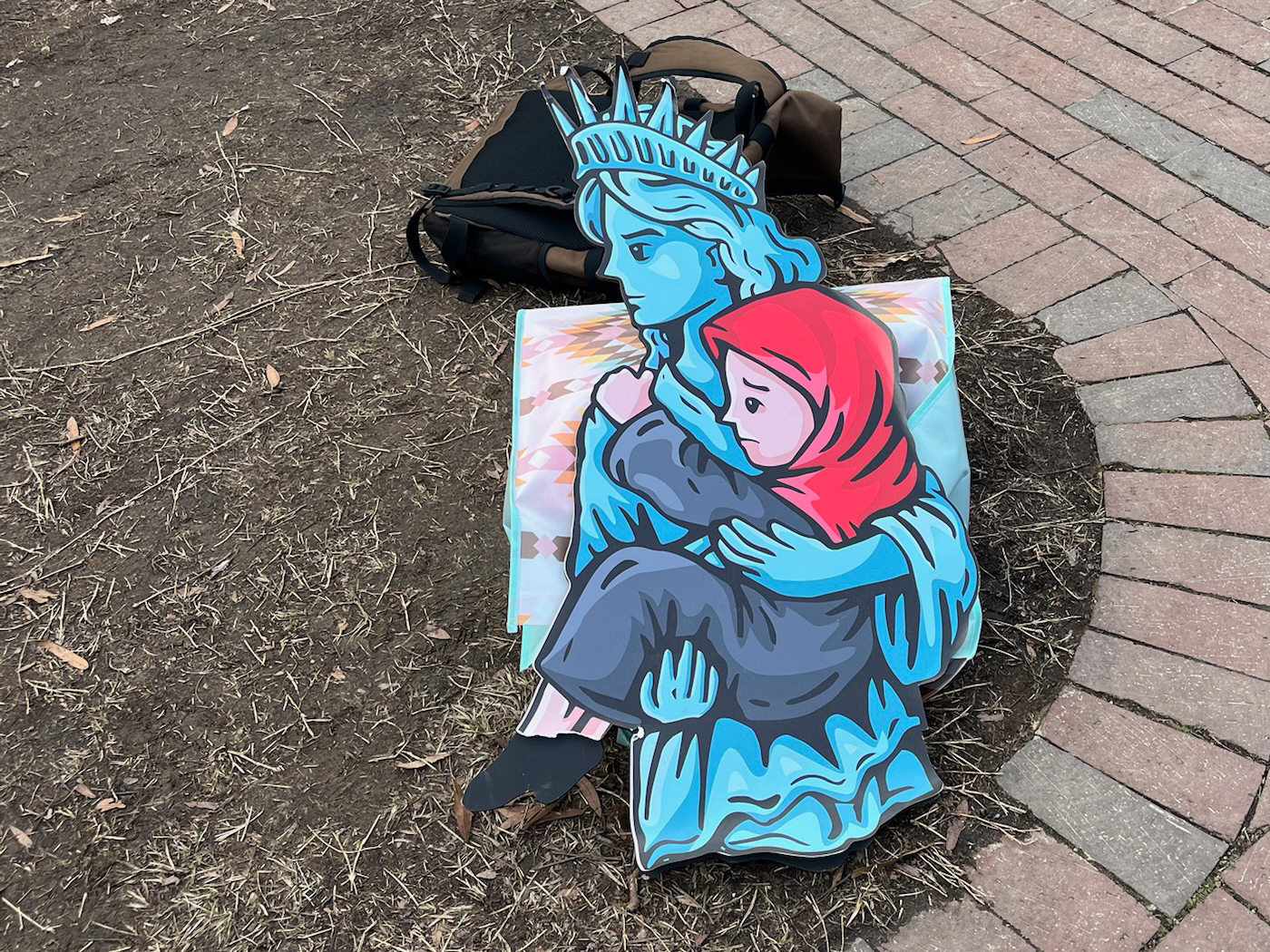
A depiction of a refugee being held by Lady Liberty during a protest in Washington, D.C., Tuesday, Feb. 4, 2025. (RNS photo/Aleja Hertzler-McCain)


Jack Jenkins and Yonat Shimron
February 28, 2025


WASHINGTON (RNS) — President Donald Trump’s administration is making moves to shutter a decades-old partnership between the government and a group of mostly religious organizations to resettle refugees, with the State Department abruptly canceling grant agreements with all the agencies despite ongoing legal battles.

On Wednesday (Feb. 26), refugee resettlement organizations, such as Church World Service, HIAS and the U.S. Conference of Catholic Bishops, say they received “termination notification” letters from the State Department.

“This award is being terminated for the convenience of the U.S. Government pursuant to a directive from U.S. Secretary of State Marco Rubio, for alignment with Agency priorities and national interest,” read one of the letters, addressed to Church World Service, according to a legal filing from Thursday. “The decision to terminate this individual award is a policy determination vested in the Secretary of State.

Leaders of the faith-based refugee resettlement organizations, which constitute seven of the 10 groups that partner with the government to perform the task, condemned the decision.


Danilo Zak. (Photo courtesy Church World Service)

“Our status as a resettlement agency based on this termination notice is over,” Danilo Zak, director of policy for Church World Service, told RNS in an interview. He added that CWS is “still trying to figure out the legality” of the action and whether the administration intended to bring the partnership to such an abrupt end, but said, “I think we have to assume it did.”

He also noted the termination did not include a thorough review, which is the typical protocol for canceling a grant.

“We understand this is the result of an exceedingly cursory review of these programs,” Zak said.

He was echoed by Myal Greene, the president of World Relief, an evangelical Christian group.

“With the cancellation of World Relief and other Resettlement Agency agreements, this is effectively ending a 45 year, bi-partisan, refugee resettlement program with the stroke of a pen,” Greene said in a statement.

“As followers of Jesus, we are called to serve ‘the least of these,’ and cutting off life-saving assistance to vulnerable communities is an abdication of that responsibility,” Greene continued. “The Church has long played a role in alleviating suffering, but we cannot do it alone. Our government must uphold its commitment to protecting human dignity and aiding those in greatest need.”

Timothy Young, spokesperson for Global Refuge, a Lutheran organization that assists with refugee resettlement, told RNS all 10 resettlement orgs received the notices.

“Prior to this, we had received a stop work order from State and were hopeful it might be lifted after the administration’s 90-day review — but before that review could even be completed, our grants were terminated,” Young said in an email.


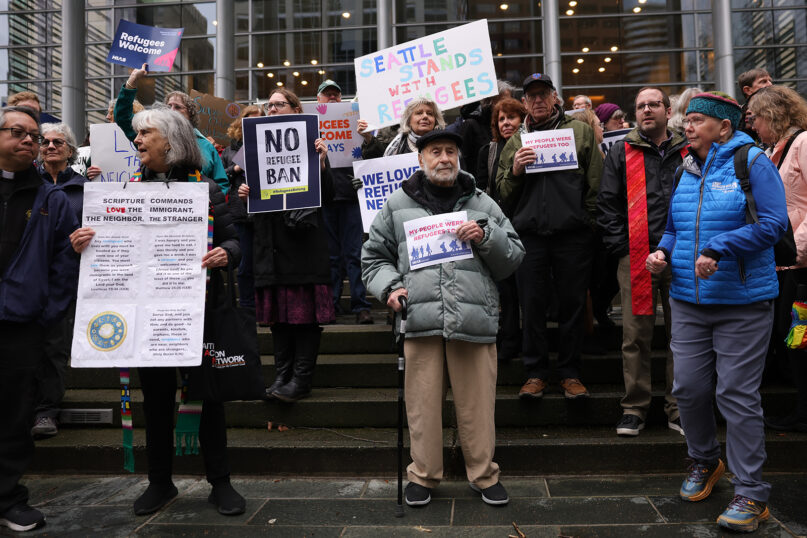
Martin Bernstein, 95, whose parents were refugees, at center, holds a sign as people gather outside the U.S. District Court after a federal judge blocked President Donald Trump’s effort to halt the nation’s refugee admissions system, Feb. 25, 2025, in Seattle. (AP Photo/Ryan Sun)

USCCB spokesperson Chieko Noguchi confirmed to RNS that they also “received notice from the State Department that they are terminating two of the cooperative agreements that fund much of the work we do in our Migration and Refugee Services department.”

The White House did not immediately respond to requests for comment.

The letters come as the government is involved in two separate lawsuits over the president’s decision to freeze the refugee program via an executive order signed his first day in office. On Wednesday, Church World Service, HIAS and Lutheran Community Services Northwest won a victory over the Trump administration in their lawsuit, known as Pacito v. Trump, with a federal judge blocking the president’s order and calling Trump’s actions a “nullification of congressional will.”

According to The Associated Press, the judge argued from the bench that the president does not have “limitless” authority over refugee admissions, noting the law establishing the program was passed by Congress.

Even so, the Trump administration appears to be using the termination notices to their legal advantage. On Thursday, the federal government filed a motion in a separate case brought by the USCCB that cited the termination notices, saying the cancellation of grant agreements “leaves open only a question of unpaid money under the cooperative agreements, and, to the extent Plaintiff disputes any reimbursement, the dispute needs to be brought in the Court of Federal Claims.”

Refugee agencies are not backing down, however. In a Thursday filing, lawyers for the religious groups in Pacito v. Trump referred to the termination notices as “the latest iteration of the Defendants’ unlawful attempt to dismantle the U.S. Refugee Admissions Program.”

The USCCB took a similar tack in its own case.

“The government’s termination only confirms the need for preliminary injunctive relief,” read a Thursday filing from USCCB’s lawyers.

In a statement to RNS, USCCB spokesperson Chieko Noguchi said that during a hearing on Friday, the judge in the case requested additional briefing in response to the State Department letters.

“We are preparing the requested briefing, which will be filed with the court next week,” Noguchi said.

Since Trump froze the refugee program shortly after taking office, faith-based refugee organizations have reported widespread layoffs and furloughs of staff, hoping to use what funds they have left to serve recently arrived refugees who are still under their care. Refugee groups attribute the swift nature of the layoffs to the sudden freezing of funds for their work — including, according to some agencies, a refusal by the Trump administration to reimburse the groups for work done before the president took office.


Rep. Jamie Raskin, D-Md., speaks during a protest against the shuttering of the United States Refugee Admissions Program, Feb. 4, 2025, in Washington. (RNS photo/Aleja Hertzler-McCain)

In addition to filing lawsuits, some of the refugee groups have staged protests, including one convened outside the White House earlier this month featuring clergy and lawmakers such as Rep. Jamie Raskin of Maryland. Meanwhile, refugees have been unable to enter the country, and while the Trump administration has expressed support for accepting Afrikaner South Africans as refugees — a characterization rejected by many in South Africa itself, including by white South African Christian leaders — agencies say they are not sure how members of the group could come to the U.S.

Episcopal Migration Ministries, another faith-based refugee resettlement agency, has already cut 22 positions since January. A spokesperson for the Episcopal Church said that 97% of the ministry’s funding comes from U.S. government grants.

“We understand that work to be discontinued because there’s no new arrivals and no funding,” said Amanda Skofstad, the spokesperson.

Still, the agency’s work will continue for now.

“Our commitment to ministering with and to migrants and refugees is not changed by this,” Skofstad said. “Exactly how we carry that out is a little uncertain for the immediate future. We’re going to have to figure it out.”
Will Musk and Trump go to Hell for defunding the corporal works of mercy?

(RNS) — At the end of February, the US State Department canceled some 10,000 programs that fed, sheltered and cared for people around the world.


President Donald Trump speaks as he is joined by Elon Musk in the Oval Office at the White House, Tuesday, Feb. 11, 2025, in Washington. (AP Photo/Alex Brandon)

Thomas Reese
March 3, 2025


(RNS) — President Donald Trump and his DOGE hitman, Elon Musk, are defunding and destroying programs that support and provide what Christians have traditionally called the seven “corporal works of mercy” (as opposed to “spiritual works of mercy”), which tend to the body: Feed the hungry, give drink to the thirsty, shelter the homeless, visit the sick, visit the prisoners, bury the dead and give alms to the poor.

At the end of February, the U.S. State Department announced the cancellation of some 10,000 programs that fed, sheltered and cared for people around the world, including the sick and children. The impact will be worldwide but especially harsh on refugees fleeing conflicts in Africa, Asia and the Middle East.

“The countries affected by these cuts — including Sudan, Yemen, Syria — are home to millions of innocent civilians who are victims of war and disaster,” explained David Miliband, president and CEO of the International Rescue Committee. Many refugees from these countries have fled to neighbors, such as Chad, that are ill-equipped to take care of them.


RELATED: Trump, the destroyer of worlds

Many of the programs on the chopping block are administered through USAID, which provides food to the hungry, drink to the thirsty, shelter to the homeless and medicine for the sick.

The administration has also targeted refugee assistance programs run by faith-based organizations such as Catholic Relief Service and the U.S. Catholic bishops’ Migration and Refugee Services; evangelical Christian groups such as World Relief and Church World Service; as well as Lutheran, Jewish and Episcopal ministries.

The government has also refused to pay faith-based agencies for the work already done, a tactic Trump has been accused of using against companies contracted to work on his real-estate properties. His response to such complaints has been “sue me.”


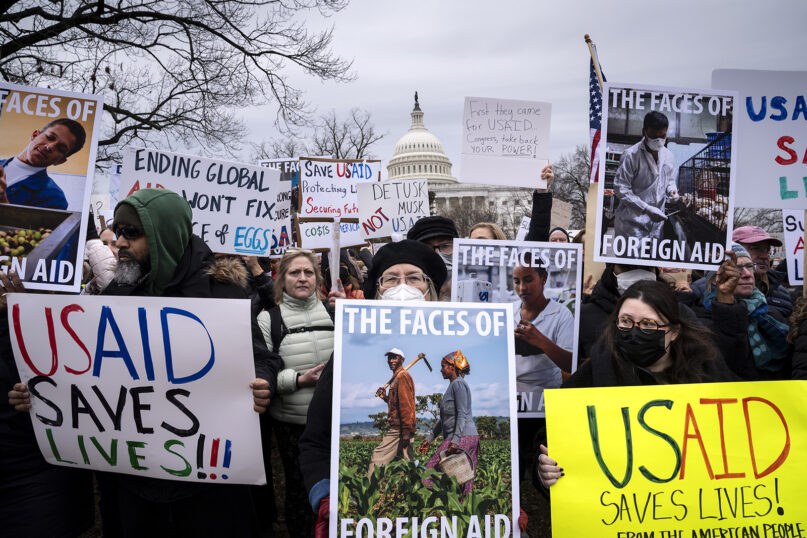
Demonstrators and lawmakers rally Feb. 5, 2025, on Capitol Hill in Washington, D.C., against President Donald Trump and his ally Elon Musk over their disruptions of the federal government, including dismantling the U.S. Agency for International Development, which administers foreign aid approved by Congress. (AP Photo/J. Scott Applewhite)

Faith-based and other NGOs have had to lay off or furlough scores of experienced personnel who dedicated their lives to helping refugees, the sick and the desperate. Even if their funds are eventually restored, the damage will be done, as new, inexperienced staff will have to be hired and trained to replace those who have been lost to other employment.

The cumulative result of these cuts will be the deaths of hundreds of thousands, if not millions, from starvation and disease. Those who survive will suffer from the long-term effects of malnutrition and disease.

“Women and children will go hungry, food will rot in warehouses while families starve, children will be born with HIV — among other tragedies,” said InterAction, an alliance of international non-governmental organizations and their partners in the United States. “This needless suffering will not make America safer, stronger, or more prosperous. Rather, it will breed instability, migration, and desperation.”

The seven corporal works of mercy have been a hallmark from the earliest times of the Christian community of what it means to be a follower of Jesus.

Sadly, Trump and Musk are not the only political players exhibiting disregard for those in need. Many Americans, including some Christians leaders, are arguing that compassion is bad because it fosters weakness. According to a 2024 survey done by the Chicago Council on Global Affairs, 51% of Americans favor cutting economic aid to other countries, only 7% want to expand it and 33% would keep it about the same.

RELATED: Trump administration’s criticism of pope, foreign aid rejects teachings of Jesus

Hard-headed Democratic strategists like James Carville say these numbers demonstrate that Democrats should not defend foreign aid because it will not win votes.

All this contradicts Christ’s command to care for the vulnerable and the marginalized, which Pope Francis constantly reminds us to obey. Christians cannot remain silent.

Jesus condemned the rich man to Hell for ignoring the poor man Lazarus at his door. When Americans and their leaders stand before the throne of God, how will they be received?

At the Last Judgment, according to the Gospel of Matthew, those without compassion will be told, “Depart from me, you accursed, into the eternal fire prepared for the devil and his angels. For I was hungry and you gave me no food, I was thirsty and you gave me no drink, a stranger and you gave me no welcome, naked and you gave me no clothing, ill and in prison, and you did not care for me.”

They will ask, when did we not minister to your needs? And he will answer, “Amen, I say to you, what you did not do for one of these least ones, you did not do for me.”

If you believe the Scripture is the Word of God, the message is clear: Musk and Trump will go to Hell for defunding the corporal works of mercy. Will we?


60 years after 'Bloody Sunday,' faith leaders are still key to the fight against racism


(RNS) — Today’s clergy need to answer the Rev. Martin Luther King’s call six decades ago to step up, organize and take action.


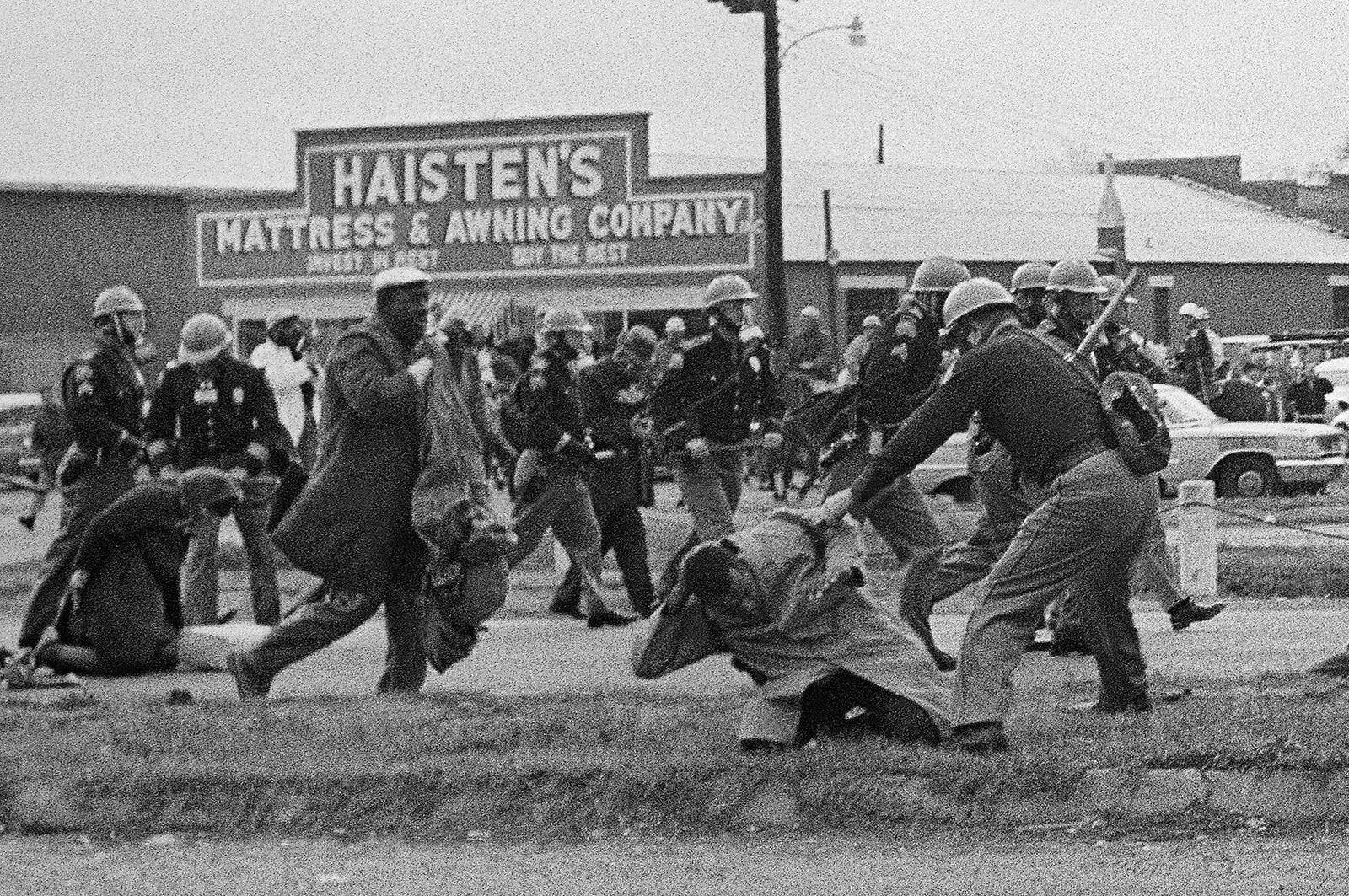
State troopers swing billy clubs to break up a civil rights voting march in Selma, Ala., March 7, 1965, on what became known as Bloody Sunday. (AP Photo, File)


Timothy Adkins-Jones and Serene Jones
March 4, 2025

(RNS) — On March 7, 1965, hundreds of peaceful and determined protesters marched across the Edmund Pettus Bridge to condemn racist voting restrictions and years of unjust treatment. Dozens of faith leaders — including the beloved Baptist minister and civil rights leader John R. Lewis — were part of the committed, courageous and well-organized movement across the bridge.

When the demonstrators reached the apex of the bridge, they looked down to see police officers — some on their feet and some on horseback — poised to attack them with billy clubs, whips and tear gas. When they announced their intent to march, the police pounced on them.

Dozens of activists were hospitalized. This event, which came to be called “Bloody Sunday,” was a pivotal moment for the Civil Rights Movement. The horror of the event inspired people from all over the country to make their way to Selma to join in the fight. Through their careful organizing and courageous protests, and months of work, the revolutionary Voting Rights Act was passed.


Faith leaders were a linchpin of this movement. They heeded the Rev. Martin Luther King Jr.’s call to participate in more marches. They organized troves of people to fight for equality and justice. They spoke powerfully from their pulpits about the connections between faith and the Civil Rights Movement.

Without the profound work of faith leaders during this time, it’s very possible the Voting Rights Act would have stayed only a dream.

While there has been progress over the past six decades, racism and white supremacy are still prevalent in our society. Today, we’re seeing a particularly dramatic and terrifying resurgence of the kind of hate that caused the extreme violence of Bloody Sunday. The Trump administration has unleashed a cascade of policies that will roll back protections for communities of color and fuel unimaginably racist reverberations.

As history has shown, faith leaders will be instrumental to stop this onslaught. King’s words are as relevant today as they were years ago: We must move in the “fierce urgency of now!” We need to step up, organize and take action — and fast.

Make no mistake: While the Trump administration’s actions may not be as visually horrifying as Bloody Sunday, they will have devastating, long-lasting impacts on communities of color.

President Donald Trump has assembled a Cabinet made up of people who have supported white nationalist theories, peddled vaccine conspiracies in Black communities, claimed racism in the military is fake, undermined public education about racism, demonized immigrants and condemned diversity, equity and inclusion policies.

In his first few weeks in office, his administration has also terminated DEI programs in the federal government, attempted to declare all race-conscious student programming and financial aid illegal and rescinded executive orders that were designed to provide equal opportunities in the workplace.

It’s an all-out, multilevel attack on centuries of collective struggles for freedom. There’s no telling the discrimination, bigotry and hatred this will enable.

Faith leaders are among the best-positioned to galvanize and sustain a social movement to fight these reversals. People gain inspiration from all sorts of places, but faith leaders are unique. They have the capacity, if they use it, to speak to people’s deepest, most integral values and offer profound guidance on how people can live their lives in ethical accordance with their faith. They can cultivate powerful bonds between their members, building strong, vibrant communities that can push hard for change.

It’s crucial to equip faith leaders with the tools and skills to use their pulpit to advance justice, and at Union Theological Seminary, we are taking steps to offer our students a course in “Preaching and Protest,” which will provide guidance on how faith leaders can advance the fight for justice. Students will examine how different leaders cultivated and fueled social movements. To commemorate Bloody Sunday, students will also travel to Selma for the annual Jubilee Celebration, where they will experience sermons and speeches firsthand.

For their final assignment, students will craft a sermon or speech that speaks to an issue relevant to our current reality. And they must incorporate a direct reference to a method, issue, person or circumstance related to the movement for voting rights in Selma.

As we reflect on the events of Bloody Sunday and the efforts that followed, we’re reminded of King’s speech “Our God Is Marching On!” after the completion of the Selma to Montgomery march weeks after the attacks on the Pettus Bridge.

He proclaimed: “Let us march on ballot boxes until we send to our city councils, state legislatures, and the United States Congress, men who will not fear to do justly, love mercy, and walk humbly with thy God. Let us march on ballot boxes until brotherhood becomes more than a meaningless word in an opening prayer, but the order of the day on every legislative agenda. Let us march on ballot boxes until all over Alabama God’s children will be able to walk the earth in decency and honor.”

Let’s heed those words, and get to work.

(The Rev. Timothy Adkins-Jones is an assistant professor of homiletics at Union Theological Seminary. The Rev. Serene Jones is president and the Johnston Family Professor for Religion & Democracy at Union. The views expressed in this commentary do not necessarily reflect those of RNS.)
Boycotts accompany prayer as faith leaders prepare for a Lent of protest


(RNS) — The Rev. Jamal Bryant said he hopes 100,000 ‘conscientious Christians’ will have signed up by March 5 to mark the ‘season of denial’ by fasting from shopping at Target.


The Rev. Jamal Bryant, left, is organizing a boycott of retailer Target for the Lenten season. (Image courtesy of New Birth Missionary Baptist Church)


Adelle M. Banks
February 26, 2025


(RNS) — Addressing the congregation at his New Birth Missionary Baptist Church in Stonecrest, Georgia, on Sunday (Feb. 23), the Rev. Jamal Bryant was trying to recruit the thousands listening in the Atlanta-area church and online to join him in his plan for Lent, the Christian season of abstinence and spiritual preparation that begins March 5.

For their Lenten fast, he said, they should refrain from shopping at Target.

“Whatever it is that you was getting from Target, you can get from a Black business – amen?” Bryant said from the pulpit. “Whether it’s paper towels or soap or dishwasher detergent, whatever, a bonnet, whatever you need, you can get it.


Four weeks before, the big-box retailer had announced that it would pull back from its diversity, equity and inclusion programs, including one dedicated to diversifying the suppliers it uses to stock its shelves. The announcement came days after President Donald Trump signed an executive order titled “Ending Radical And Wasteful Government DEI Programs And Preferencing.”

Some 70,000 people have signed onto Bryant’s boycott at targetfast.org, the pastor said, and those supporters would receive an online directory of Black-owned businesses provided by the advocacy group U.S. Black Chambers Inc., as well as a prayer guide to use during the Lenten season.

Bryant is one of several faith leaders who have come up with new Lenten traditions in light of the Trump administration’s assault on DEI — besides the executive order, the president blamed a recent air disaster at Washington’s Ronald Reagan National Airport on DEI hiring — as well as policy changes reducing domestic and international humanitarian aid.


The targetfast.org website. (Screen grab)

In the weeks between Ash Wednesday and Easter, many Christians give up sweets, meat or alcohol, volunteer or increase the frequency of their worship. But this year, faith and grassroots leaders are calling for direct action aimed at corporations or politicians, while others are planning demonstrations and prayer services to protest the White House’s moves. Still others are focused on particular policy concerns directly or indirectly related to the actions of the new administration.

RELATED: At King Day rally, Sharpton leads oath to support DEI as Trump opposes it

The Catholic peace organization Pax Christi USA plans to distribute ashes on Ash Wednesday (March 5) on the grounds of the U.S. Capitol after a brief prayer service that will touch on nuclear weapons, Gaza and immigration, said Judy Coode, the group’s communications director.

The Rev. Adam Russell Taylor, president of Sojourners, the national social justice advocacy organization, is partnering with interfaith leaders from more than 20 denominations and religious groups to pray in the shadow of the Capitol on Wednesdays from Ash Wednesday through the end of March. Besides praying for an end to attempts to freeze federal grants, dismantle agencies and threaten birthright citizenship, the gatherings will be “calling on Congress to protect its powers and to advance the common good,” said Taylor.


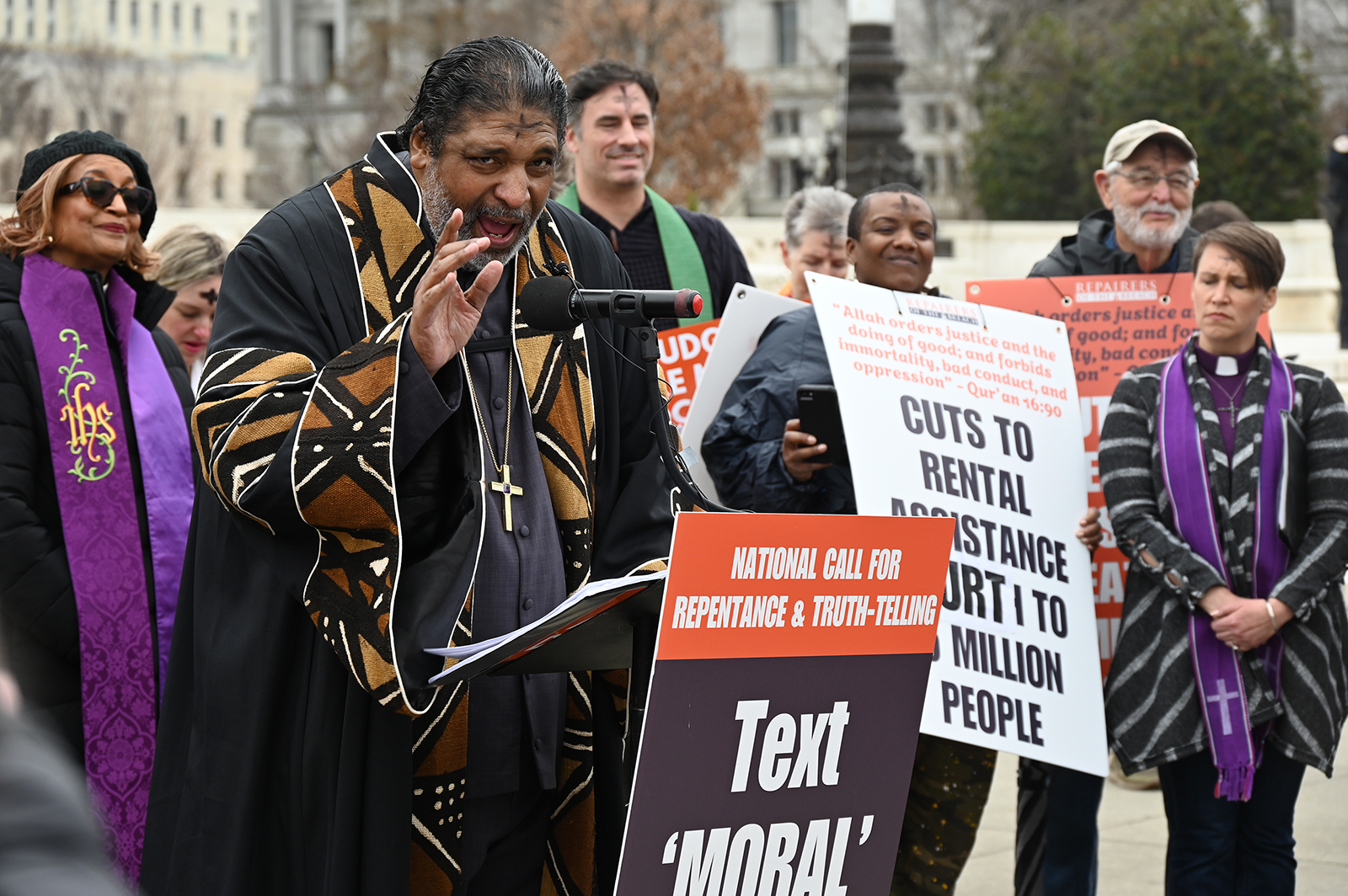
Bishop William J. Barber II, president of Repairers of the Breach, is set to join faith leaders and other activists in an Ash Wednesday procession to the Capitol and Supreme Court to deliver an open letter making a national call “to address the negative effects of the Trump administration’s executive orders, the budget plans in Congress and efforts to obtain personal information of the public, which directly impacts the poor and working people,” his organization said in a statement.

Bishop Vashti McKenzie, president of the National Council of Churches, is among the speakers listed by Repairers of the Breach for the event, but her ecumenical organization has planned its own prayer webinar for Monday to bring people across different backgrounds together to pray as “a powerful witness in a very divisive atmosphere that we find ourselves — and not just as a country, but around the world.”

The NCC also plans to distribute a prayer guide and a toolkit for “anxious congregations.”

“The church must step up to the plate to be able to provide the spiritual structure and discipline to help people navigate through this time,” said McKenzie, a retired bishop in the African Methodist Episcopal Church.

At a news conference at Washington’s Metropolitan AME Church earlier in February, Bishop Reginald Jackson, chair of the denomination’s Social Justice Commission, called for a boycott of Target during Lent.

“There’s got to be some corporate responsibility,” he said in an interview days later, noting he hopes Black churches and “all of those who believe that diversity, equity and inclusion are good for America” will join the boycott. “You can’t say you want people of color to buy your products and yet you don’t think people of color are good enough to work in your establishment.”

Jackson said he views the Lenten boycott as a sign of the importance of improving diversity in all areas of American life, and a spiritual goal.

“It’s part of discipline and sacrifice,” he said. “The Bible really refers to all of us in terms of our diversity. For example, in the Book of Acts, it talks about out of one blood, God made all of us to dwell together.”


Bishop Reginald Jackson speaks at Metropolitan AME Church on Feb. 17, 2025, in Washington. (Video screen gab)

Jackson said he is working with Bryant and is supporting the Rev. Al Sharpton’s National Action Network, which plans to announce in early April boycotts of corporations that have shrunk their DEI commitments after working with other partners to determine which companies will be their focus.

The Rev. Barbara Williams-Skinner, co-convener of the National African American Clergy Network, who spoke at the news conference with Jackson, said later that she is supporting the efforts to counter anti-DEI sentiments — which she called “every white supremacist’s dream” — and won’t be shopping at Target for Easter items.

Bryant, who said he hopes 100,000 “conscientious Christians” will have signed up by March 5 to mark the “season of denial,” said the action is rooted in history as well as faith and economics.


“I think that it’s going to take a spiritual intervention for things to change in this culture,” he said, recalling the 1950s Montgomery bus boycott in Alabama that was led by churches.

The Rev. Jim Wallis, director of the Georgetown University Center on Faith and Justice, said he supports the “powerful and symbolic” boycott efforts led by Black churches and he hopes to encourage a broad participation in them among faith leaders of different racial and ethnic groups.

“Civil resistance is coming back and faith-based civil resistance will be at the core of that, and economic boycotts are central,” Wallis said. “It goes back to what Black churches have done in leading the Civil Rights Movement. There wouldn’t have been a Civil Rights Movement without the Black church.”
Christian groups kick off Lent with letters objecting to Trump moves on budget and immigration

(RNS) — ‘This year we celebrate Lent amidst a growing crisis in America, driven by the political accumulation of wealth, power, and control,’ reads one of the letters from faith groups.


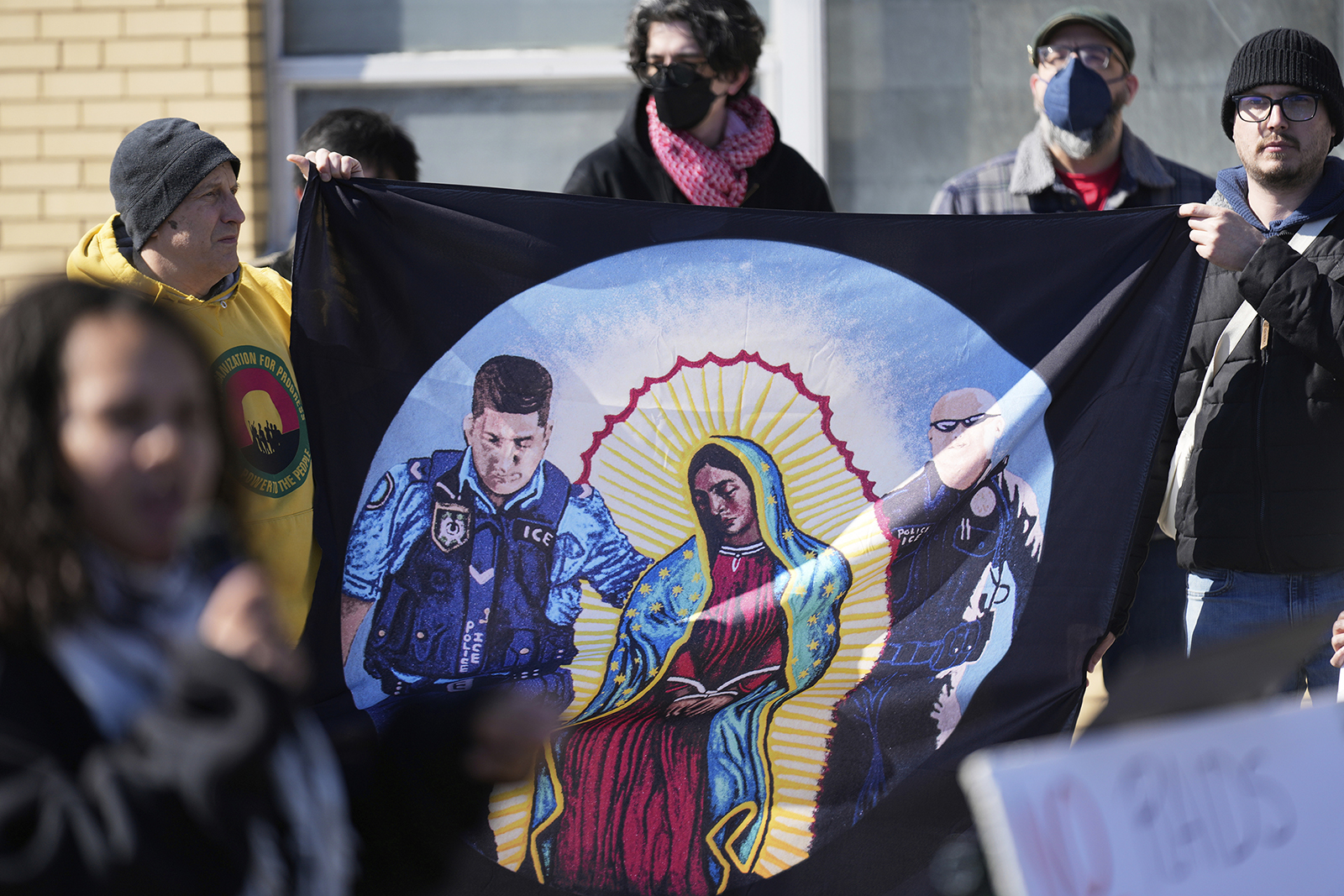
People hold a banner depicting the Virgin of Guadalupe in handcuffs while protesting against U.S. Immigration and Customs Enforcement and migrant detentions at a migrant detention center in Elizabeth, N.J., March 3, 2025. (AP Photo/Seth Wenig)


Jack Jenkins
March 4, 2025


WASHINGTON (RNS) — Prominent Christian leaders, denominations and organizations are beginning the religious season of Lent by condemning actions taken by President Donald Trump, urging fellow faithful to advocate for immigrants and the poor while highlighting concerns that Congress may cut social safety net programs in a forthcoming federal budget package.

The criticism came by way of a pair of public letters, one of which, titled “Returning to Jesus: Practicing Lent in Our Time” and signed by more than 100 denominational leaders and luminaries such as Diana Butler Bass, the Rev. Otis Moss III and the Rev. Jim Wallis, chided the Trump administration for a growing list of executive orders and other decisions that the religious leaders say will harm poor and otherwise disadvantaged people.

“This year we celebrate Lent amidst a growing crisis in America, driven by the political accumulation of wealth, power, and control,” the leaders’ letter read. “This crisis already threatens the rule of law and the checks and balances of our constitutional democracy. In the deluge and whirlwind of this administration’s initial actions we see the brutal abandonment and targeting of the people Jesus commands his followers to serve and protect.”

Dramatic cuts by billionaire Elon Musk and the Trump White House’s Department of Government Efficiency to the U.S. Agency for International Development have led to the winnowing or shuttering of hospitals and clinics for HIV-positive children in Africa and halted efforts to aid persecuted Christians in Sri Lanka and elsewhere.

“The massive cutting of foreign aid to those most in need, and from many faith-based organizations supplying it is a gospel issue for us that we must speak to, despite dishonest, personal, and unprecedented government attacks now coming against faith-based service providers,” the leaders’ letter read. “We must defend lifesaving international aid and humanitarian assistance that prevents hungry people from starving, keeps those in ill health from dying, and defends children and families lives from being destroyed.”


The Rev. Jim Wallis. (Courtesy photo)

In a statement, Wallis, faculty director at Georgetown University’s Center on Faith and Justice, said the letter resonated with the themes of Lent.

“Lent is a time of repentance, reflection, and renewal,” Wallis said. “As Christians, we must resist the temptations of power and greed that seek to divide us and instead return to the radical gospel of love and justice that Jesus calls us to embody. Our faith must be active in defending the most vulnerable among us.”

The faith leaders’ “Returning to Jesus” letter came the same day as an “ecumenical declaration,” focused on immigration issues, was released by a host of Christian denominations, from the African Methodist Episcopal Church to a Quaker group, and including major mainline denominations such as Presbyterians, Lutherans, the United Methodist Church and several Christian aid organizations.

Tying the statement to the upcoming Ash Wednesday (March 5), the celebration that begins Lent, the denominations reasserted their long-standing support for immigrants and refugees.

“Together in faith and rooted in love, we resolve to continue in the centuries-old practice of Christian communities walking alongside refugees and immigrants in their pursuit of safety and dignity,” the letter read. “We pledge to restore and promote hospitality and welcome to those seeking refuge — regardless of where they are from, how they pray or what language they speak.”

The letter listed the Trump’s administration’s actions regarding immigrants thus far, such as shutting down the refugee program, revoking temporary protected status for some immigrant groups, attempting to end birthright citizenship, allowing for immigration raids at churches and dismantling “our national capacity to assist refugees, asylum seekers and immigrants both at home and abroad.”

“Guided by our faith, we stand together against the sweeping measures that are devastating vulnerable families and jeopardizing their futures,” the letter read, noting that signers also pledge to publicly advocate for the cause, both by contacting lawmakers and “honoring the journeys of refugees and immigrants through Sunday services and church activities” at last once during the season of Lent.


U.S. Immigration and Customs Enforcement officers adjust the handcuffs on a detained person, Jan. 27, 2025, in Silver Spring, Md. (AP Photo/Alex Brandon)

Together, the letters speak to growing religious pushback to Trump, in court as well as in public statements. The Cooperative Baptist Fellowship and the Philadelphia Yearly Meeting of the Religious Society of Friends are part of a lawsuit challenging the administration’s decision to rescind an internal memo discouraging immigration raids at churches and other “sensitive locations.” Church World Service is among the plaintiffs in a suit filed over sudden shuttering of the refugee resettlement program, which is primarily run by faith-based groups.

The faith groups involved in both cases won victories in court last week, although litigation is ongoing.

Besides the denominations listed above, the denominations’ letter was signed by representatives of the American Baptist Churches USA; Christian Church (Disciples of Christ) in the United States and Canada; Church of the Brethren; Church World Service; Community of Christ; Evangelical Lutheran Church in America; International Council of Community Churches; Moravian Church in America; Reformed Church in America; and United Church of Christ.

The “Returning to Jesus” letter was a departure from recent pleas by faith leaders in that it took on the Trump White House’s political decisions as well as economic and immigration issues. The letter also blasted Trump’s decision to pardon or commute the sentences of roughly 1,500 defendants charged in connection with the Jan. 6, 2021, attack on the U.S. Capitol, calling it a “blatant act of political corruption.”


President Donald Trump signs an executive order pardoning about 1,500 defendants charged in the Jan. 6, 2021, attack on the U.S. Capitol in the Oval Office of the White House, Jan. 20, 2025, in Washington. (AP Photo/Evan Vucci)

But it made clear that among the Christian leaders’ primary concerns are the lives of low-income Americans should the budget being debated in Congress include cuts to programs such as Medicaid.

“As Christians on both sides of the political aisle, we must call on our local, state, and federal elected officials to oppose massive cuts in funding to programs like Medicaid that provide vital healthcare to the poor, and like SNAP, WIC, and other efforts to sustain food for the hungry,” the letter read.

It later added: “Our Scriptures are clear that we will be judged by how we treat the poor.”

Also among the signers to the leaders’ letter are the Rev. Teresa Hord Owens, general minister and president of the Christian Church (Disciples of Christ) in the U.S. and Canada; the Rev. Leslie Copeland Tune, chief operating officer of the National Council of Churches; Sister Bridget Bearss of the Leadership Conference of Women Religious; the Rev. Jimmie Hawkins, advocacy director of the Presbyterian Church (USA); Colin Watson, director emeritus of the Christian Reformed Church in North America; the Rev. Wesley Granberg-Michaelson, general secretary emeritus of the Reformed Church in America; Paul Baxley, executive coordinator of the Cooperative Baptist Fellowship; the Rev. Adam Russell Taylor, president of Sojourners; and Richard Santos, president and CEO of Church World Service.
Queer Christian groups oppose Trump orders in Ash Wednesday statement

(RNS) — The statement is signed by 11 Christian LGBTQ groups representing tens of thousands of constituents and roughly 5,000 congregations.


(Photo by Cecilie Bomstad/Unsplash/Creative Commons)


Kathryn Post
March 5, 2025


(RNS) — For many Christians, the ashes dispensed on Ash Wednesday are a tactile reminder of their humanity. And in the wake of the Trump administration’s slew of targeted executive actions, a group of queer Christian leaders says that reminder is timelier than ever.

A new statement, signed by 11 Christian LGBTQ groups representing tens of thousands of constituents and roughly 5,000 congregations and released Wednesday (March 5), is timed to correspond with Ash Wednesday and explains the groups’ opposition to President Donald Trump’s policies regarding LGBTQ rights, immigration and disruptions to federal funding for vulnerable populations as they relate to the holy day.

The coalition, called the Collective of Queer Christian Leaders, hopes to contrast the new administration’s policies with the self-giving love of Christ recognized during the Lenten and Easter season, according to the statement.

“We are organizing, advocating and fighting back because no system, no proclamation, no oppressive project can separate you from the love of God, the love of community or the power we hold when we rise together,” the statement reads.

The statement lists five administration actions the groups oppose, including: “attempts to erase or criminalize transgender and nonbinary people”; sending immigrants to “extrajudicial detention facilities” or to countries where they are at risk; “the disintegration of safety nets that protect and uplift our neighbors”; “the illegal and unconstitutional accessing of personal private data by unelected, unvetted and unqualified personnel appointed by the president”; and “the calculated dismantling and disruption to funding that protects the most vulnerable in our society, paid for by taxes such as Social Security and Medicare that keep millions of Americans out of poverty.”

“You have heard your share of politicians, and pundits claim that your existence is in opposition to your faith,” the statement says. “Know that just as you may confound the Empire today, Jesus confounded the Empire of his time and place.”


People wave signs during a pro-transgender rights rally outside of Seattle Children’s Hospital after the institution postponed some gender-affirming surgeries for minors following an executive order by President Donald Trump, Feb. 9, 2025, in Seattle. (AP Photo/Lindsey Wasson)

On Tuesday, a federal judge granted a preliminary injunction pausing Trump’s executive orders that aimed to officially recognize only two sexes, male and female, and to cut federal funding for providers of gender transition care for youths.

Most of the Christian LGBTQ groups that signed on to the statement are independent nonprofits that advocate for queer inclusion within a denomination, and they represent a broad theological spectrum, from Mennonites to Methodists, Baptists and Lutherans. Though many of the groups have collaborated informally for decades, in 2023 the coalition solidified into the Collective of Queer Christian Leaders. This is their first public statement, but the authors said they hope it’s the first of many.

And while coalition members may have different perspectives on church polity or predestination, they agree many of the Trump administration’s policies are the product of white Christian nationalism, an ideology the statement describes as “hijacking” the Christian gospel.

“Those who are operating from the white Christian nationalist viewpoint would like society to believe that they are the face of true Christianity, that they are the face of faith,” said Cameron Van Kooten Laughead, executive director of Room for All, which advocates for LGBTQ folks within the Reformed Church in America and signed onto the statement. “And so, we’re able to name that, no, that’s not Christianity. That’s white Christian nationalism. And we’re over here following a brown savior who was dedicated to disrupting an empire. So, these are not the same thing, and there is a message of hope.”


Cameron Van Kooten Laughead. (Courtesy photo)

The aftershocks of Trump’s executive orders the statement ties to “white Christian nationalism” have been felt by many of its authors, they told RNS. For example, Van Kooten Laughead, who lives in Des Moines, Iowa, pointed to the state’s recent decision to remove gender identity as a protected category under its civil rights laws.

“We are the first state in the country to actively remove civil rights from a category of protected people,” Van Kooten Laughead said. “And that is so clearly linked, both on paper and in the statements that many of those politicians made, with this kind of hall pass that was given to them by the current federal presidential administration.”

Brian Henderson, executive director of the Association of Welcoming and Affirming Baptists, which also signed the statement, said he’s been fielding calls from concerned constituents since Inauguration Day, including from a pastor in a red state fearful about the safety of their nonbinary and trans child.

Jan Lawrence, executive director of the United Methodist Church’s Reconciling Ministries Network, which also signed the statement, said she’s heard from queer people in the military who now feel they have targets on their backs.

Based in Chicago, the Rev. Don Abram, CEO of Pride in the Pews — a nonprofit focused on advocacy and education for Black LGBTQ+ communities — said a recent organizational event was targeted by “right-wing extremists” who directed hundreds of people to sign up on Eventbrite under false names, only to not attend.

And, the statement authors note, LGBTQ Christians are also impacted by legislation and executive orders that don’t explicitly target queerness.

“Every person that seeks out our organizations (is) multidimensional,” said Aiden Nathaniel Diaz, communications director for the big-tent Christian LGBTQ organization Q Christian Fellowship, another statement signer. “They struggle with health care. They struggle with immigration.”


Aiden Nathaniel Diaz. (Photo by Taylor Prinsen)

RELATED: Christian groups kick off Lent with letters objecting to Trump moves on budget and immigration

The coalition also hopes the statement will both remind constituents they aren’t facing the next four years alone and catalyze other Christians who have been silent, particularly on actions targeting LGBTQ communities.

“Look around,” the statement says. “Take stock of what our people need and what you can give. Leave no space for apathy. Let your mercy be an act of rebellion.”

And when the Lenten season nears its end next month, queer Christians and allies will have an opportunity to act, in the form of a rally the group is organizing. On April 14 — the day after Palm Sunday, a Christian day marking Jesus’ triumphant entry into Jerusalem — the Collective of Queer Christian Leaders and allies will gather on Capitol grounds in Washington, D.C., to call attention to political actions they oppose and the subversive gospel they believe is central to Lent and Easter.

“What Lent does, in so many ways, is remind us of humanity. And that’s not the sort of carnal humanity that we should bemoan and want to get rid of. It is the holy humanity. It is the righteous humanity. It is honoring our inherent worthiness and divinity,” Abram said. “So, this Ash Wednesday statement is an affirmation of our humanity, and an invitation.”


Survey: US religious groups support LGBTQ+ rights, divide on medical care for trans minors

(RNS) — Most US religious groups remain broadly supportive of non-discrimination laws and policies toward LGBTQ+ people. Far fewer support gender-transition medical care for minors.

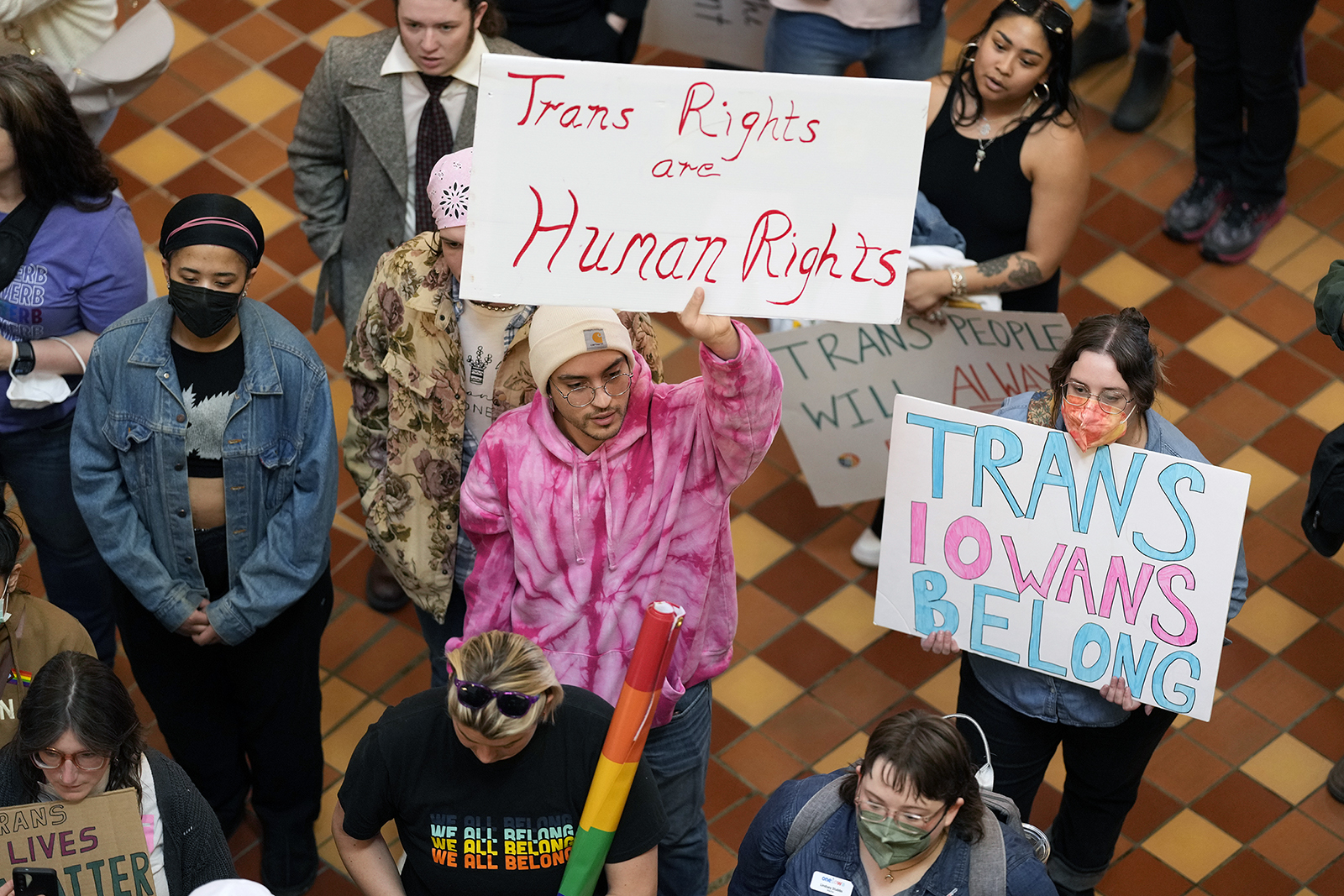
Protesters fill the Iowa state Capitol to denounce a bill that would strip the state civil rights code of protections based on gender identity, Feb. 27, 2025, in Des Moines.
 (AP Photo/Charlie Neibergall)


Yonat Shimron
March 4, 2025


(RNS) — Since coming into office, President Trump has signed a slew of executive orders that attempt to restrict the rights and care available to LGBTQ+ people and particularly transgender people.

Among the president’s directives: excluding transgender people from serving in the military; blocking gender-affirming care for minors; and banning transgender athletes from women’s and girls’ sports.

States are now following his example: Iowa’s Republican governor signed into law last week a measure that ends state civil rights protections for transgender people.

But over the past decade, Americans have remained broadly supportive of non-discrimination laws and policies toward LGBTQ+ people. They are less supportive of gender-transition medical care for minors, a new PRRI survey shows.

The survey, part of the American Values Atlas, which includes 22,000 adults from across the U.S. polled four times over the course of 2024, shows that support for same-sex marriage and non-discrimination protections for LGBTQ+ people remains strong.

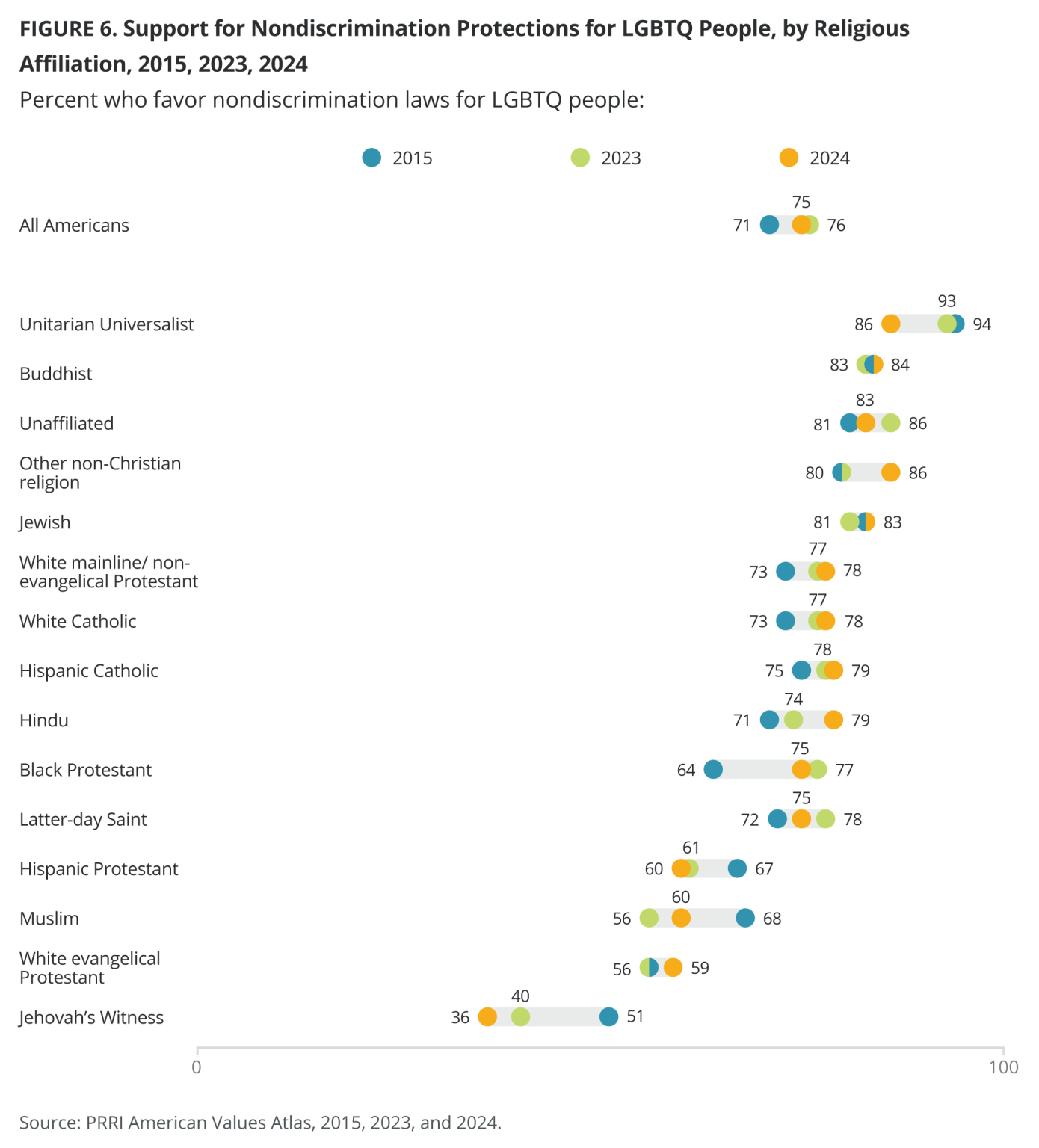
Some 75% of Americans support nondiscrimination protections for LGBTQ+ people in housing, employment and public accommodation, up from 71% in 2015.


“Support for Nondiscrimination Protections by LGBTQ People, by Religious Affiliation, 2015, 2023, 2024” (Graphic courtesy of PRRI)

Religious groups support them, too. Jehovah’s Witnesses were the only religious group where such support has fallen, from 51% in 2015 to 31% in 2024.

“Over time, more Americans are supportive of non-discrimination laws and policies toward LGBTQ Americans than they were about a decade ago, and more Americans support same-sex marriage equality or marriage equality than they did a decade ago,” said Melissa Deckman, PRRI’s CEO.


The survey did, however, record a drop in support for nondiscrimination among one group: Americans ages 18-29. These youngest American adults have shown a gradual decrease in support for LGBTQ+ nondiscrimination laws, from 80% in 2015 to 73% in 2024.

Deckman said that drop is most likely among young Republicans.

“For younger Republicans, there’s been more of an emphasis in the last couple of years on opposition to transgender rights, and I suspect that that’s probably what’s happening,” Deckman said.

RELATED: Speaker Johnson cites Genesis after House passes bill banning trans people from women’s sports

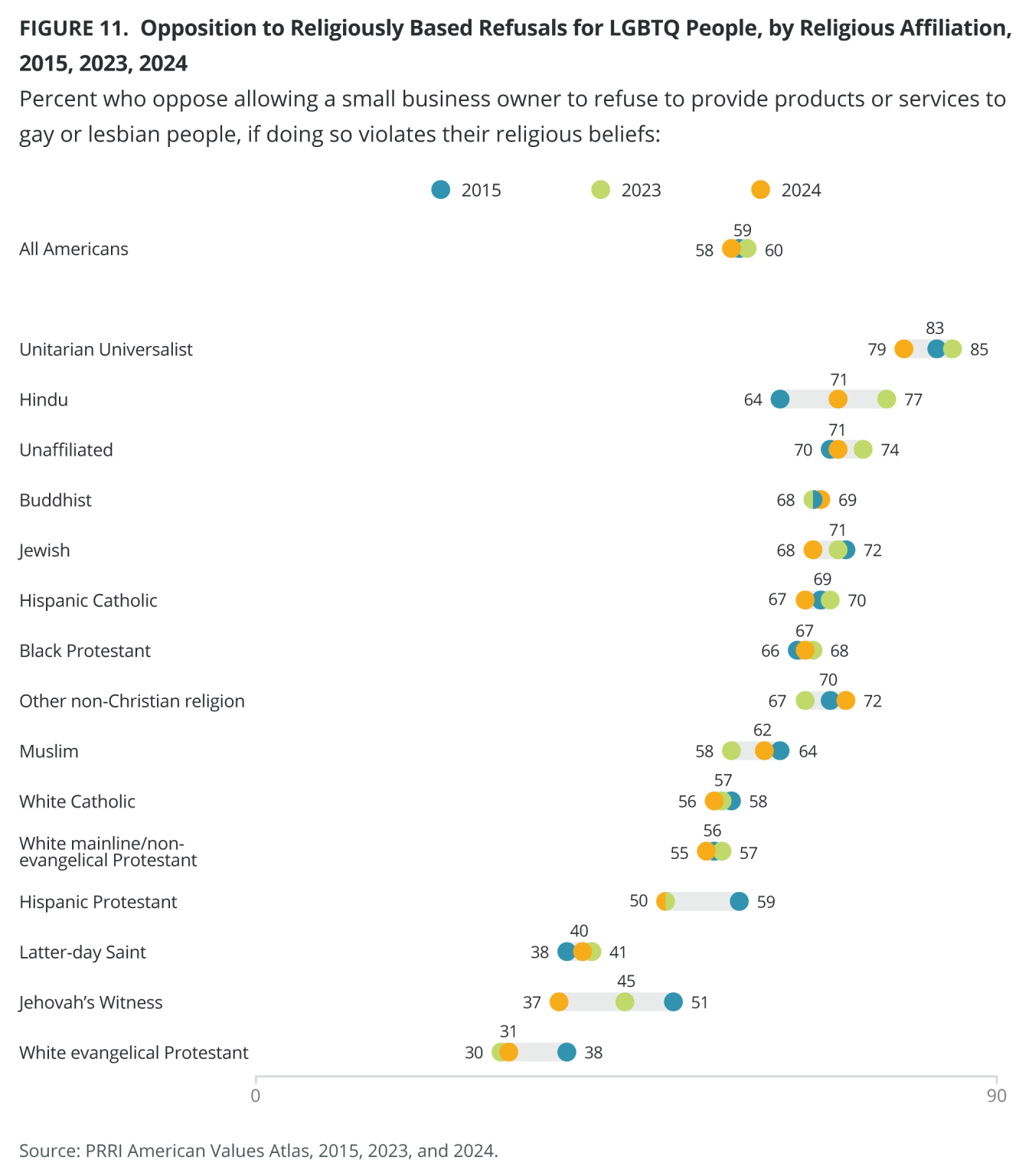
Americans also oppose religious-based service refusals, such as when a small-business owner refuses to provide products or services to LGBTQ+ people if doing so would violate their religious beliefs: 58% of Americans oppose such refusals. Among religious groups, Latter-day Saints (40%), Jehovah’s Witnesses (37%) and white evangelical Protestants (31%) are the only faith groups where majorities support religious-based service refusals to LGBTQ+ people. By contrast, Buddhists, Hindus, Jews, Muslims, Catholics (both white and Hispanic), Black Protestants and mainline Protestants oppose religious service refusals.


“Opposition to Religiously Based Refusals for LGBTQ People, by Religious Affiliation, 2015, 2023, 2024” (Graphic courtesy of PRRI)

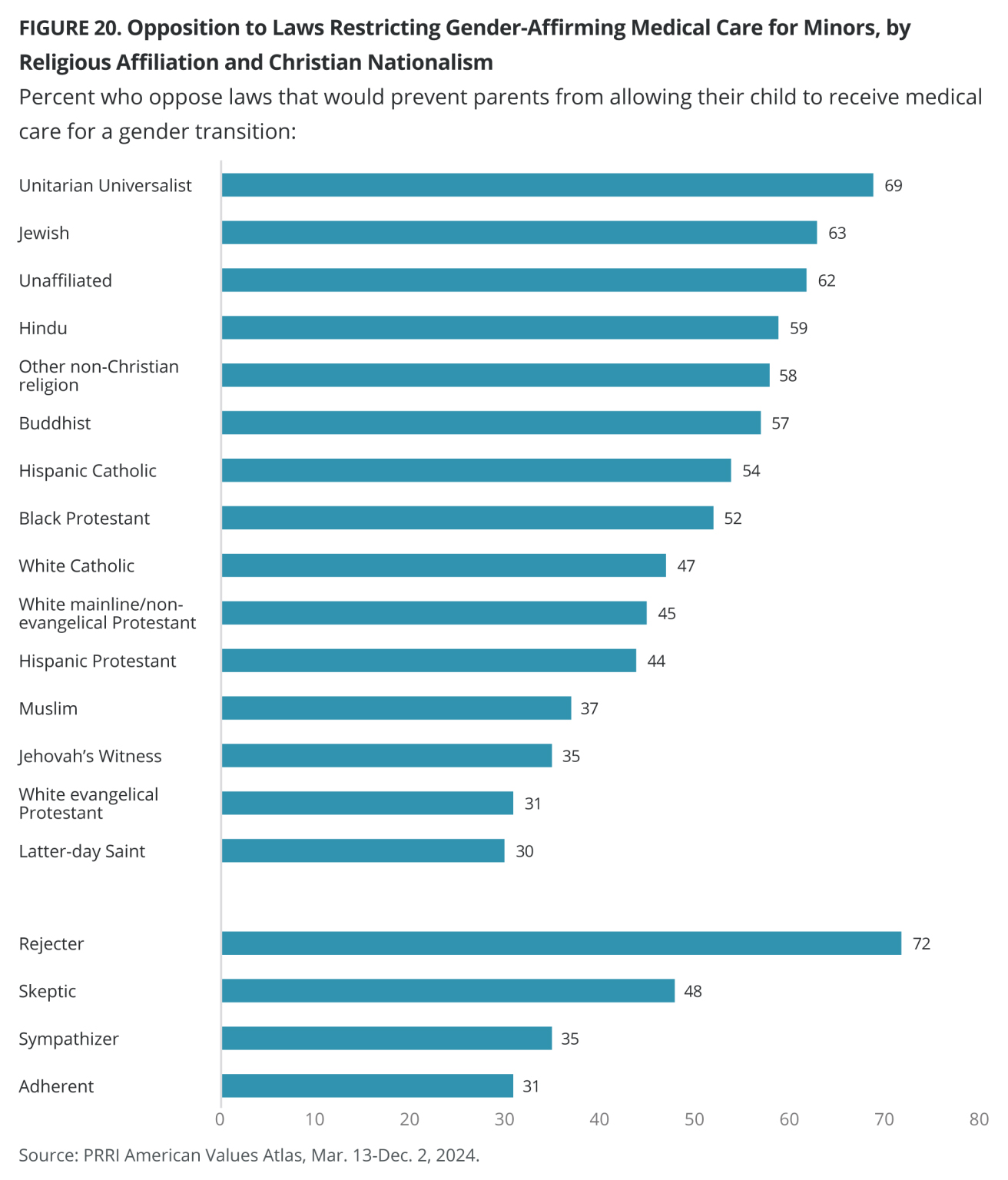
When it comes to gender-affirming medical care for minors, Americans remain almost evenly divided: 49% are opposed to laws that would prevent parents from allowing their child to receive medical care for a gender transition, and 47% favor them. Opposition to transition care for minors was a new question on the survey, so there were no comparisons with past years.

Seventy percent of Democrats oppose laws that would prevent parents from allowing their child to receive medical care for a gender transition, but only 30% of Republicans oppose these laws.

Among religious groups, Christians and Muslims of all denominations do not support gender-transition medical care for minors, the survey suggests.

Support for allowing parents to get transition care for minors drops to 31% among white evangelicals and 30% among Latter-day Saints.


“Opposition to Laws Restricting Gender-Affirming Medical Care for Minors, by Religious Affiliation and Christian Nationalism” (Graphic courtesy of PRRI)

Overall, the survey found, 10% of Americans identified as LGBTQ+ in 2024. Generation Z, Americans born between 1997-2012, had the highest number of people identifying as LGBTQ+ at 24%.

LGBTQ+ Americans are more likely than the general population to identify as Democrats (39% vs. 29%) and less likely to identify as Republicans (10% vs. 29%). They are, however, just as likely to identify as independents (28% vs. 26%).


On Capitol Hill, faith leaders mark Ash Wednesday with criticism of Trump and GOP

(RNS) — The Lenten season that began on Wednesday, normally one of introspection and personal spiritual observances, has become a season of resistance this year
.


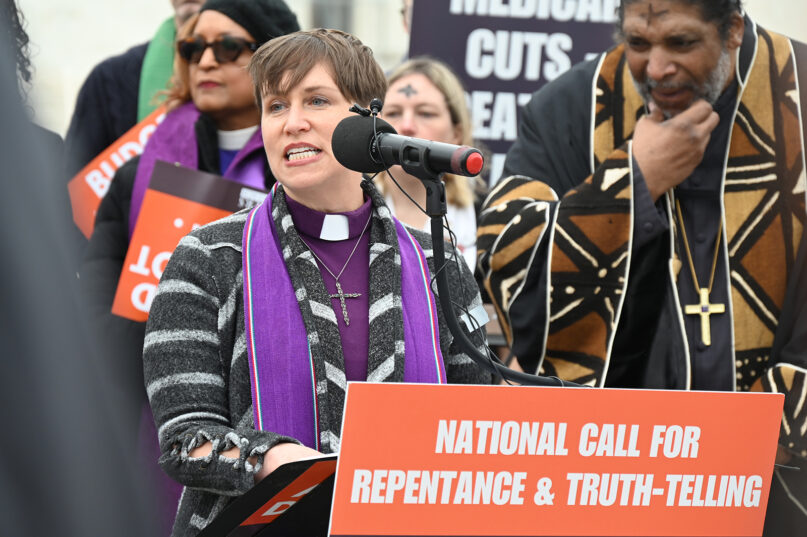
The Rev. William Barber speaks during an Ash Wednesday demonstration against the Trump administration on Capitol Hill, March 5, 2025, in Washington.
 (RNS photo/Jack Jenkins)

Jack Jenkins
March 5, 2025

WASHINGTON (RNS) — In overlapping demonstrations and events on Capitol Hill, faith leaders and Democratic lawmakers gathered on Wednesday (March 5) for a day of advocacy for the poor and the vulnerable, marking Ash Wednesday with prayer and protest against President Donald Trump’s salvo of executive orders and the Republican-led budget proposal making its way through Congress.

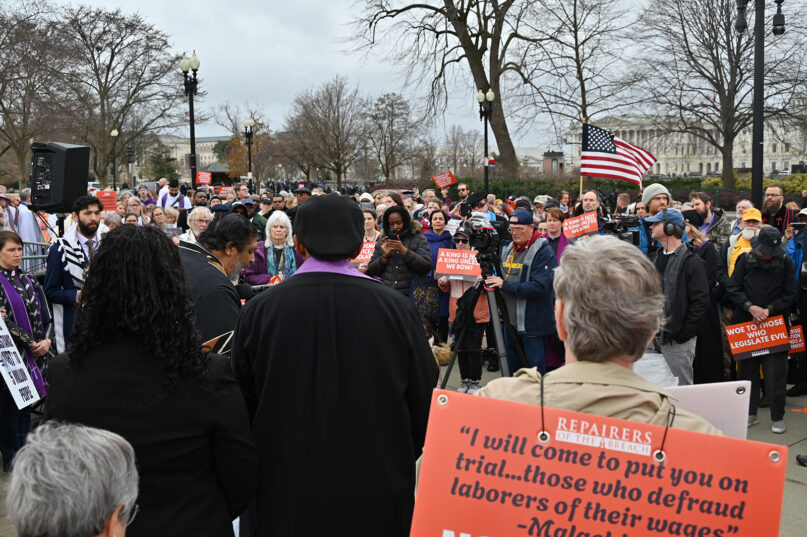
Outside the U.S. Supreme Court, the Rev. William Barber, co-chair of the Poor People’s Campaign, was surrounded by a large crowd of Jewish, mainline Christian and Black Protestant clergy in full vestments carrying an open letter calling for repentance and activism. Barber railed against what he said were the administration’s efforts to undermine the 14th Amendment.

“We write today because we are clear that the only way that wannabe kings can be kings is if we bow,” he told the crowd at the rally, which was organized by Repairers of the Breach. “But bowing is not in our DNA. It is not in our souls, it is not in our spirits, and we will not bow.“

Barber, who heads Yale Divinity School’s Center for Public Theology and Public Policy, stressed the need to defend Americans who are mired in poverty against congressional Republicans’ plans to cut some $2 trillion from the federal budget over the next decade. While the GOP leadership has insisted it won’t cut Medicaid, the health care program that aids the poor, analysts argue the measure adopted by the GOP-led House of Representatives last week would necessitate cutbacks in Medicaid as well as the Supplemental Nutrition Assistance Program, which millions of Americans rely on for food security.

“What they are about to do with the budget is the most dangerous thing that’s going on in this country right now,” Barber said.

In a rarity for a pastor known for his defiant preaching, Barber’s voice broke as he read the from one section of the letter. “We know the people of this country,” Barber said. “We have blessed their babies, listened to their confessions, buried their dead, and celebrated the values they hold dear. Our political leaders have bowed in fear to the tyranny of technology; by doing so, they have ceased to represent us.”


A crowd listens to the Rev. William Barber during an Ash Wednesday demonstration against the Trump administration on Capitol Hill, March 5, 2025, in Washington. (RNS photo/Jack Jenkins)

He summoned faith leaders to take the lead in resisting the cuts. “If there has ever been a time that pastors — particularly preachers — and rabbis and imams must stand up, it is now.”

The Rev. Terri Hord Owens, general minister and president of the Christian Church (Disciples of Christ), followed Barber, noting that her denomination is one of dozens of faith groups that signed on to a recent lawsuit filed against the Trump administration after it overturned a policy discouraging immigration raids at “sensitive locations” such as houses of worship.

“The freedom to worship is on the line,” Owens said.

The Rev. Amanda Hendler Voss, who leads First United Church of Christ in Washington, highlighted the plight of federal workers in her congregation who are facing potential layoffs under Trump. “This administration calls them lazy, but they are the most dedicated, principled people,” she said.

Voss then stirred the crowd with a fierce rebuke of Trump, juxtaposing his actions against passages from Scripture. “This administration says ‘America first,’ but Jesus said, ‘What you do to the least of these, you do unto me,’” she said. “This administration calls migrants criminals, but the Bible says, ‘Love the migrant among you, for you were once strangers.’ This administration says only the strong survive, but the Good Book says God chose what is weak in this world to shame the strong. So don’t get it twisted: The acts of this administration have nothing to do with the way of Jesus.”


The Rev. Amanda Hendler Voss, who leads First UCC in Washington, addresses an Ash Wednesday demonstration against the Trump administration on Capitol Hill, March 5, 2025, in Washington. (RNS photo/Jack Jenkins)

After the speeches, clergy fanned out to different government buildings to present the open letter to lawmakers.

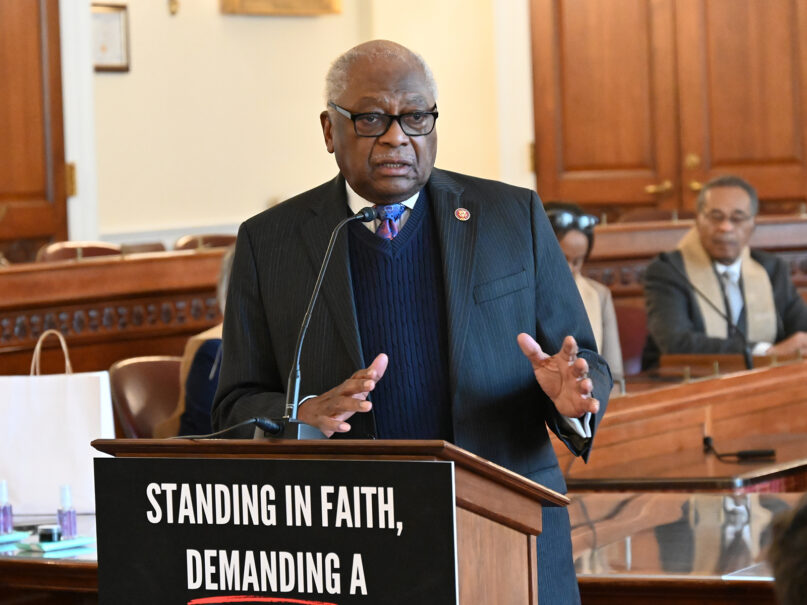
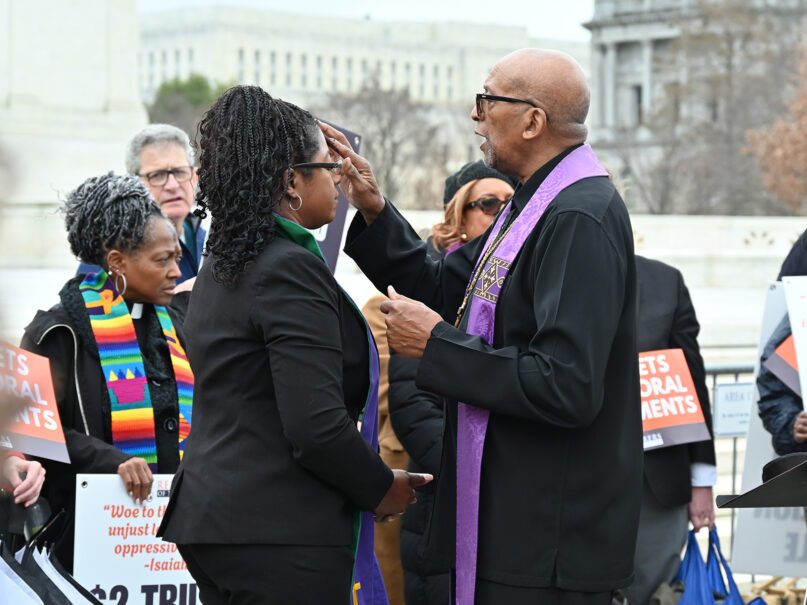
The demonstration followed another Ash Wednesday-themed event convened earlier in the morning in the Longworth House Office Building, where some of the same faith leaders, joined by Catholic and Quaker leaders, railed against the Republican budget proposal alongside Democratic lawmakers.

After the group prayed together and clergy imposed ashes on people’s foreheads according to Ash Wednesday tradition, Rep. James Clyburn of South Carolina, who helped lead the event, recounted the biblical parable of the talents. Noting that the term “talents” referred to money in Scripture but is now more commonly used to describe personal gifts, he criticized Trump’s address to a joint session of Congress the night before.

“Last night we heard Donald Trump’s version of DEI — divide, exclude and insult,” Clyburn said, adding, “So that tells us our talents are needed like they’ve never been needed before.”

Clyburn was followed by lawmakers and religious leaders who addressed what they said was an onslaught aimed at health care, food assistance, immigration, taxes and the stability of American democracy. Many of the speakers held up Jesus’ call in the Gospel of Matthew to care for the hungry, thirsty, sick and others.

Rep. James Clyburn speaks at the Longworth House Office Building on Capitol Hill, March 5, 2025, in Washington. (RNS photo/Jack Jenkins)

“We are lamenting congressional attempts to cut health care, housing and food assistance to pay for tax cuts which will be given to the rich,” said the Rev. Karen Georgia A. Thompson, general minister and president of the United Church of Christ. “We heard it today: We stand with the hungry. We stand with the poor.”

The Lenten season that began on Wednesday, normally one of introspection and personal spiritual observances, has become a season of resistance this year, with Atlanta pastor Jamal Bryant organizing a boycott of Target and other companies that have paused DEI efforts after Trump’s assaults on such programs and Christian leaders and denominations launching a pair of open letters earlier this week tied to the season. On Wednesday, 11 Christian LGBTQ groups also sent a protest letter timed to the start of Lent.

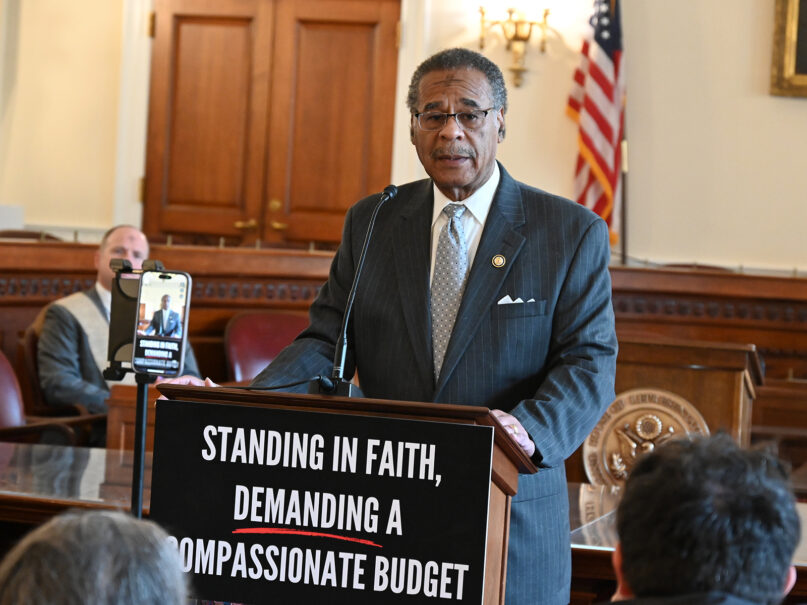
At Wednesday’s event, Rep. Chuy Garcia of Illinois carried the theme forward, urging Republicans to “give up billionaires for Lent.” Meanwhile, Rep. Emanuel Cleaver of Missouri, himself a United Methodist minister, was strident in his condemnation of his conservative colleagues.

“For somebody with a 3,500-square-foot home, two cars, $174,000-a-year job in Congress to talk about cutting money out of Medicaid is a sin,” Cleaver said.


Rep. Emanuel Cleaver speaks at the Longworth House Office Building on Capitol Hill, March 5, 2025, in Washington. (RNS photo/Jack Jenkins)

In her closing prayer at the event, Bishop Vashti Murphy McKenzie, head of the National Council of Churches, said Lent should also be seen as a springboard for action.

“We cannot claim to follow Christ and ignore the cries of the oppressed,” she prayed. “The ashes on our foreheads are not just a symbol of mortality. They are a reminder of our duty to act in love, to stand with the marginalized and work towards a world where justice flows like a mighty river.”

Later in the day near the Capitol, a few dozen faith leaders huddled in the rain for a separate event organized by the advocacy group Sojourners and the Washington Interfaith Staff Community and slated to recur every Wednesday moving forward. As at the other events, speakers, including some who spoke at the earlier demonstrations, urged supporters to reach out to lawmakers.

Amanda Tyler, head of the Baptist Joint Committee for Religious Liberty, said she hoped Congress would take up its mandate to claim “the power of the purse” instead of ceding it to the executive branch.

“We are here to remind members of Congress that they were elected to represent their constituents’ interests and not to serve a king,” she said.


Attendees of an Ash Wednesday demonstration against the Trump administration receive ashes on Capitol Hill, March 5, 2025, in Washington. (RNS photo/Jack Jenkins)