Saturday, March 29, 2025

Mr. Block and Franklin Rosemont


 March 28, 2025

Facebook

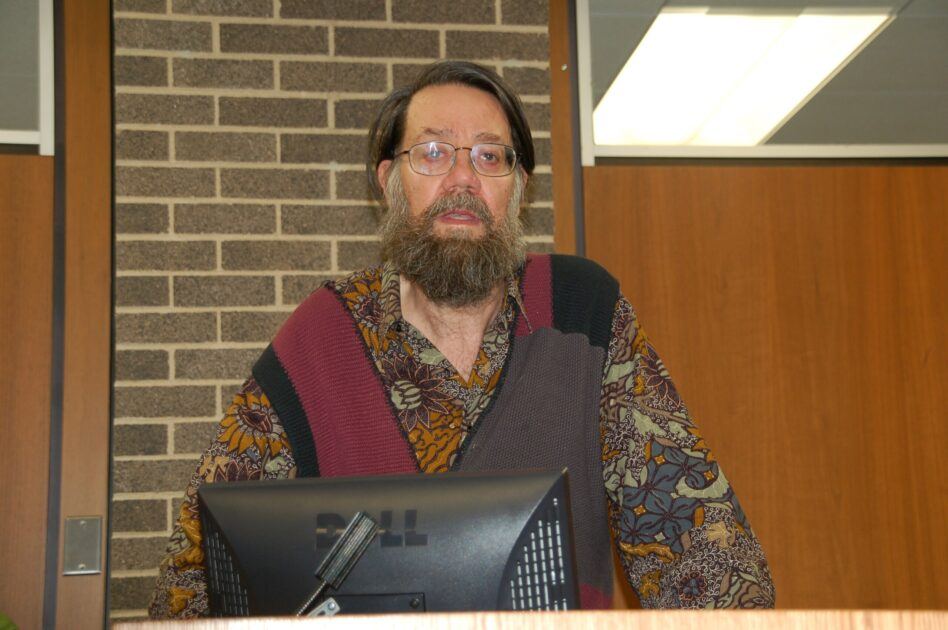
Author, activist and surrealist Franklin Rosemont speaking at a Movement for a Democratic Society (MDS) conference in Chicago in 2007. Photo: Thomas Good / Next Left Notes. CC BY-SA 4.0

Please give me your attention, I’ll introduce to you
A man that is a credit to “Our Red, White, and Blue;”
His head is made of lumber, and solid as a rock;
He is a common worker and his name is Mr. Block.
And Block he thinks he may
Be President some day.
[And so it came to pass
Block changed his name to Trump
And he wasn’t even asked,
Becoming a complete and total ass.]

Oh, Mr. Block, you were born by mistake,
You take the cake,
You make me ache.
Tie a rock to your block and then jump in the lake,
Kindly to that for Liberty’s sake.

There’s a whole lot of false consciousness running around. How to battle against it?  It’s a matter of public health.  It’s as bad as the measles.  The Wobblies, or members of the IWW (Industrial Workers of the World) thought that song was essential, and their greatest songster was Joe Hill, and Joe Hill’s best song against false consciousness was Mr. Bloch who also became the main figure in the cartoons of Ernest Riebe.  Mr. Block thinks that doctors and nurses belong to different economic classes.  Same with professors and students; he thinks they’re not in the same boat.  Yet, we’ll all sink or swim together.  Joe Hill was executed in 1915 by the state of Utah (“murdered by the capitalist class,” says the monument in Salt Lake City).  His songs remain a painless vaccination to what ails us.

Why we need song and history just now.  Everyone’s talking about “story” like what story do we tell each other?  History or herstory?  Dig where you stand, the starting point of history from below.   How deep shall we dig?  Here in the Great Lakes, thanks to David Graeber, it’s easy to go back to Kondiaronk.  Or now, to go back to Franklin Rosemont (1943-2009) because he knew we had to dig deep.  He wrote the great biography of Joe Hill.  We need a Joe Hill to write more verses, Mr Block Goes to Palestine, Mr. Block Goes to the Border, &c.  Otherwise, it’s the measles.

Franklin wrote about tons of other things as well, all just as curious, interesting, funny, and needed.  He didn’t like misery at all and, he loved the marvellous.  We have such a book of Franklin Rosemont’s writing, Surrealism, Bugs Bunny, and the Blues: Selected Writings on Popular Culture, edited by Abigail Susik and Paul Buhle (Oakland, California:  PM Press, 2025).  It’s totally splendid like a jewellery box of pearls, rubies, saphires, and diamonds.  Some for special occasions, ceremonial, intimate, beautiful, and some world-changing providing a great clearing of the air letting us see clearly or a thaw of the ice a releasing forgotten tales from the campfires or kitchen tables.   It has thirty-five chapters divided in seven parts, namely, Americana and Chicagoana, Comics and Animation, Music and Dance, Labor History, Play and Humor, Ecology, and Reminiscence.  Its playful original prose is infectious.

Abigail Susik writes a fine introduction telling how Franklin along with Paul Buhle “sought fresh possibilities for discovery within everyday life.”  She refers to his “highly idiosyncratic confidence in the persistence of moments of vernacular authenticity.”  C.L.R. James and Herbert Marcuse were their mentors, gurus, accompaniers.

Folkloric, homespun, regional, and lowbrow, his blue collar upbringing, teenage encounters with the Beat generation in San Francisco, prepared him for the possibilities of détournement both de-railing and re-routing.  In the Fifties he read Mad magazine.  After dropping out of high school and hitch-hiking to San Francisco, he returned to study for a time at Roosevelt University in Chicago where he studied with St. Clair Drake.  He joined the Wobs in 1962 taking out his red card, and running over to Michigan to help with the blueberry pickers strike.

This book is essential reading for May Day 2025.  The Haymarket riot of 1886, the subsequent hangings, the round-up of organizers and rebels, led to Edward Bellamy’s Looking Backward of the following year and later his book Equality.  Rosemont has a wonderful appreciation of both demanding nothing less than a complete transformation of the human condition to full equality.  The story of American socialism influenced Mark Twain, Frank Baum, Charlotte Perkins Gilman, William Morris, Eugene Debs, and Mme. Blavatsky.  They’re only the beginning of the afterlives of that first May Day of industrial capitalism.

After Haymarket, Franklin explains the terrorist in an essay “A Bomb-Toting, Long-Haired, Wiled-Eyed Fiend: The Image of the Anarchist in Popular Culture.”  When once again this figure, the terrorist, becomes of bogey-man of Mr Block, a lunatic, a communist, dark-skinned villain.  Also a figure of laughter in Buster Keaton, the cartoons, and the comics. Franklin sought out the old timers.  He enjoyed himself.  He lived life and loved well.  He went to Bugs Bunny, Thelonious Monk, André Breton, Paul Garon, and Penelope Rosemont. He was a people’s scholar.

With David Roediger he edited The Haymarket Scrapbook (1986, 2012) which Meridel LeSueur called “a magnificent work of research, memory, and love,” as it is indeed.  As a resource for the annual May Day celebration it should be in easy reach of every student, worker, and immigrant.   In 1983 with his life-long partner and comrade, Penelope, he took over the long-standing Chicago publisher, Charles Kerr.  They continued to synthesize radical political agitation and counter-cultural revolt of the 1960s.

His was the Chicago world of Nelson Algren and Studs Terkel.  His father was a leading typographer and unionist in Chicago, a leader of 1949 newspaper strike, and historian of American labor’s first strike, the Philadelphia typographical strike of 1786.  He named his son, Franklin, after Philadelphia’s most famous printer.  He knew the IWW old-timers, thorough study of IWW documentation.  Thus part of his patrimony included the birth of the republic, and though Franklin would never describe himself in any sense as a republican or as a “citizen” in that bourgeois sense, he drew his authority from the working-class history intrinsic to his surroundings.

He edited a book of the writings and speeches of Isadora Duncan.  He praised Marth Graham.  He wrote another on the Dill Pickle club of Chicago.  His oddest book is surely An Open Entrance to the Shut Palace of Wrong Numbers (2003).  Its “News from Other Nowheres” as he described it referred to that “no place” called from the Greek “utopia.”  Its title points to the central importance that the telephone had in the life of the day.  Instead of an introduction he writes, “’History’ tells us the Black Hawk War ended in 1832.  Why, then, do I see it, hear it, and feel it raging on all sides?”  Why indeed!

Briefly told, the Black Hawk War ended native resistance in the old Northwest.  Black Hawk led the Sauk and Fox indigenous people who had been forced from their homelands back to them in Illinois.  Settlers had to flee to Chicago.  Black Hawk and his allies were defeated at the Battle of Bad Axe.  It is significant for the American history of divide and conquer that fighting for the USA against the native people were both Jefferson Davis, future leader of the confederacy, and Abraham Lincoln, future leader of the Union.  That’s why the Black Hawk War had such a ghostly presence to Franklin Rosemont.

Franklin loved to quote Robin D.G. Kelley, “Now is the time to think like poets, to envision and to make visible a new society, peaceful, cooperative, loving world without poverty and oppression, limited only by our imaginations.”  That’s the problem, namely, how to de-colonize our imaginations?  That’s why writes about Bugs Bunny, the Wobblies, the Blues, and Surrealism.  Painting, song, and music, these have to be the numbers we dial to get an answer from Mr Block.  At first he may say, “wrong number,” but he’ll learn if there are enough of us and we are laughing!  Laughter, that’s the ticket.

“What’s Up, Doc?” asks the ever-friendly Bugs Bunny. He fights the pink-faced pudge named, Elmer Fudd, who plays a greedy gold-digger, greedy for money.  Elmer Fudd’s esemblance to Elon Musk is inescapable if accidental. His main activity is the defense of private property especially his carrot patch. Bugs is a street-wise city kid, a Brooklyn trickster, never at a loss for a flippant remark or legitimate question in an illogical situation.  Bugs Bunny helped form the sardonic attitude of the GIs who went off to fight Hitler, Mussolini, and Hirohito, knowing that they had to watch their backs.  Hence, double V.  Victory over fascists abroad, and racists at home.  Not only did Bugs Bunny out-trick Elmer Fudd in all his capitalist guises, he did so munching a carrot.  This fellow was going to enjoy life even in the midst of disasters.  Rosemont calls him the “veritable symbol of irreducible recalcitrance.”

The brilliant versatility of Mel Blanc’s voice spoke to millions during cartoons on Saturday afternoons at the movies.  The supreme grace of Krazy Kat helped Franklin introduce his “The Short Treatise on Wobbly Cartoons” which was as thorough, brilliant, and very much as comical as the hard-hitting wobbly songs.  They anticipate photomontage; they’re the beginning of the stickerette.  Some said IWW stood for I Won’t Work, and in truth Franklin thought all would become artists in the new society.

Why music?  It is closest to the heart; straight, no chaser.  Africa, its rhythms, its instruments.  In blues lyrics he finds materialism, eroticism, humor, atheism, passion for freedom, sense of adventure, and alertness to the Marvellous.  Blues is black, blues is popular, blues is song, blues is collective, blues is muscular.  The blues people are alchemists of the word incanting against “the shabby confines of detestable reality.”  He takes the words for this music – blues, jazz, swing, bebop, and reggae – as expressing the full measure of African glory: looking ahead to a non-repressive civilization, harking back to Yoruba trickster tales, to the secret lore of slaves, to the underground railroad or the freedom ship (as Marcus Rediker is teaching us to see), to the loa of Haitian voodoo.

Franklin’s teacher at Roosevelt was St. Clair Drake whose father was from Barbados.  Drake became the friend of Padmore and Nkrumah.  He studied black seamen in Cardiff, Wales, in 1947 and 1948.  It was a coal and steel town like Chicago.  He helped make Franklin cosmopolitan and pan African.  He was a significant mentor, and himself a student radical at Hampton Institute in the 1920s.  Franklin, like Langston Hughes, knows rivers, and the rivers (as we know from Aldo Leopold) flow into the ocean, the Atlantic Ocean from Chicago, via the Great Lakes or the Mississippi.

The Atlantic problem or how the modes of doing things (culture, production, ethnology, reproduction) differs and mixes among the people and creatures of the four continents that form the four corners of that ocean.  Black skin and blue blood, white skin and ocher skin, people the color of the earth:  Africa, Europe, Latin America, Turtle Island:  together they form ‘the Atlantic problem.’  Small wonder that Chicago is one of its centers where solutions are sought.

Abigail Susik introduces the collection with a helpful essay on surrealism with its emergence in Chicago in 1966 with links to Mexico, Canada, and the Caribbean.  To find the surreal in nonsurrealist phenomenon, to be able to wander (dérive), to be open to what arrives by chance (disponsibilité).  Drawing on the irrationality of dreams, Franklin propounded the oneiric life.

He learned early to do his own thinking, avoiding the “police-like aspects of literary criticism” and the mature result is original, a marvel, by re-writing it “in service of desire.” He formed his own judgements. Melville makes the cut, thundering “No!” in the land of the dollar.

Franklin loved word-play, puns and palindromes.  The palindrome turns the world of letters forward to back or back to front and the real world upside down or topsy turvy.

Rail at a liar.
Name no one man.
No lemons, no melon.
Rats live on No Evil Star.
Wonders in Italy: Latin is “red’ now.
Deer flee freedom in Oregon?  No, Geronimo, deer feel freed.

If there was one poet who Franklin put up top (well, after Joe Hill of course) that would be T-Bone Slim.  He was a tug-boat captain skilled at tenderly nudging huge ocean liners to their berth.  He does the same with language finding that a shout, a slogan, a koan, or a haiku could nudge continents together.  T-Bone Slim understood the latent content of the age.

“Wherever you find injustice, the proper form of politeness is attack.”  “A stiff without a brother is a ship without a rudder.”  “Half a loaf is better than no loafing at all.”  “Juice is stranger than friction.”  “Civilinsanity.”

Rosemont finds him at the junction between the phonetic cabala and the surrealist image.  T-Bone Slim’s grammar opens up between the lines.  Franklin admires his pamphlets, Power of These Two Hands (1922) or Starving Amidst Too Much (1923).  He was at home on skid row or in the hobo jungle.  Malcontents, dreamers, eccentrics, those ‘touched in the head.’ It is a phrase reminding one of an old attribute of sovereignty, ‘the King’s touch.’  Their disdain for “leaders.”  Their love of nick-names.  Their presence in the harvest drives.

Like Joe Hill, T-Bone Slim was Scandinavian (but Finnish not Swedish) from Ashtabula, Ohio.  His writing radiates slapstick poetic goofiness, vernacular surrealism.  He was a philosopher of the Wobblies, “bringing the sublime and the ridiculous into a compromising proximity.”  “Let us not lose sight of the fact that we are at grips with ‘the noble white man’ that made agony both ingenious and scientific, and relegated life’s possibilities to the select few and life’s ‘garbage’ to the many.”  If his writing seemed scrambled he replied, “so is the capitalist system.  Us great writers must conform with prevailing aggravations.”  “Living in what he termed ‘hoarse and bogey days,’ his confidence in what could be remained boundless: ‘We haven’t seen anything yet.’”

I have thought that experience as a tug-boat captain explains his powerful and gentle way with words.  On second thoughts I think his earliest formation came from his mother, a washerwoman, who took him with her on her rounds, making him used to moving about as well as gaining knowledge of dirty laundry and how folks dress themselves, princes and pauper alike.

In 1966 he went to Paris and met the surrealist, André Breton, hanging out with other surrealists at the café Promenade de Vénus.  “Surrealism” means beyond the real.  “What’s real now once was only imagined,” as Blake said.  “Sur” also means on, as in on top of, or superior to.  “Authentic art goes hand in hand with revolutionary social activity,” the surrealists believed.

He wrote another biography of the French soldier and surrealist Jacques Vaché, Jacques Vaché and the Roots of Surrealism (2008).  He loved their doodles, cartoons, drawings, and stickerettes. Their original, demotic thinking, street-wise, owing something to Studs Terkel as well as Nelson Algren.  He had hitch-hiked from Chicago to San Francisco in 1960 homing in on City Lights book store.  One thinks of Franklin at the tail-end of the Beatniks and the beginnings of the radical hippies.

Franklin’s roots were in the press room.  I think of him with Johannes Gutenberg or Marshal McLuhan because their work on print and page understood the medium preceding the digital era.  He liked to draw.  And what a scholar he was!  Really in the tradition of François Villon, independent of institutions of learning, yet foraging among them, wondering and wandering.

He made an exegesis of Karl Marx’s Ethnological Notebooks that brought the Iroquois League quite out of the distant past such that “it glows brightly with the colors of the future.” Once the Iroquois provided help to the settler colonists at the Albany Congress of 1754 in offering their experience with federalism as a way that several may govern as one – federalism.  Now again more than a hundred years later the Iroquois offered a notion of matriarchy, common property, and the long house.

He did this in the midst of the settlement of Marx into American academia.  Not as political economy but as revolutionary imagination.  He was helped by Raya Dunayevskaya and Thelonius Monk.  Originally published in an occasional journal he edited called Arsenal: Surrealist Subversion.  He generously welcomed E.P. Thompson’s huge screed, Poverty of Theory, to this task of recovering the life-long humanism of Karl Marx.

He was a man of the Movement.  Adept at the cut-and-thrust of sectarian in-fighting he avoided the unfeeling but shiny scars that could result.  He learned some of his Marxism from long-time Fred Thompson who in the midst of sectarian bickering would sing out the classic, “Oh, Karl Marx’s whiskers were eighteen inches long,” which could pretty much calm things down.  Rosemont found that “strange birds continue to build their nests in Karl Marx’s beard” and we could easily, in this same spirit, imagine the birds braiding the whiskers into dreads!

He could be as direct as a nail to the noggin of Mr. Block.  Is there a question about what he stood for?  Here is his credo as concise and comprehensive a definition of woke as you could possibly find outside your sleeping bag.  Faites attention, Mr. Block.

“In poetry as in life I am for freedom and against slavery:  for the Indians against the European invaders and the American explorers; for the black insurrections against the white-power structure; for guerrillas against colonial administrators and imperialist armies; for youth against cops, curfews, school, and conscription; for wildcat strikers against bosses and union bureaucrats; for poetry against literature, philosophy, and religion; for mad love against civilized repression and bourgeois marriage; and for the surrealist revolution against complacency, hypocrisy, cowardice, stupidity, exploitation, and oppression.”

With that we join Franklin Rosemont in saying, “Goodbye, Mr. Block,” and hello to May Day Earth Day combined.

On the 2025 German elections

Sunday 23 March 2025, by Jakob Schaefer, Promise Li


Promise Li, a socialist from Hong Kong now based in Los Angeles, interviews Jakob Schäfer for Borderless. Jacob is a retired steelworker, having served on the steering committee of the Network for Fighting Trade Unions (VKG). He is also a member of the International Sozialistische Organization (ISO) and the editor of the magazine Die Internationale. Promise is is a member of Tempest Collective and Solidarity, and has been active in higher education rank-and-file union work, international solidarity and antiwar campaigns, and Chinatown tenant organizing.. The interview was conducted on 25 February 2025 and appeared in Borderless on February 2025.


What are some of the major issues in the backdrop of the German elections?

In recent years, German society, as in other countries, has been very much dominated by the economic crisis. That is a primary issue in politics. For more than two years, we have had a recession. This is the crucial background for all the parties that want to govern and form a government. Of course, it is a permanent feature of all capitalist parties to find a scapegoat for this crisis. The far-right blames the migrants, claiming that they are responsible for everything wrong. It proclaims that we must stop the migration coming to Germany, and deal with the rest of the problems only after closing the borders. The right has grown over the last ten years on this line, from having around 8-9 percent to now over 20 percent of votes in elections today. The other parties in the center have been pulled further to the right with this development. So, it is not only the extreme right that wants to stop immigration. The liberals merely say they would do it in a ‘better’, more legal, way. They accept most of the proposals of the extreme right, so this issue of immigration dominated the whole election campaign over the last four months.

And so, there is a big coalition of bourgeois parties that will strengthen policies against migration. If you look at the extreme right, besides migration, they want to cut back taxes for the rich and are against trade union rights. They say trade unions disturb our economy. But unfortunately, many German workers believe migration must be stopped and that this would help us. They don’t look at what the extreme right wants in terms of other broader policies, like taxation, trade union rights, etc. The proportion of voters for the far-right is just as high in the working class as in the rest of the population.

So we will have a new government led by the center-right Christian Democratic Union (CDU), with the extreme-right Alternative für Deutschland (AfD) as a key part of the opposition, pushing other parties more to the right. It will take 2-3 months to form a new government. But the social democrats do not want to draw some lessons from defeat. All they want to change is replacing some leading personnel. They refuse to reevaluate their policies. In our view, they are not a workers’ or left party. Today, they are center-left and succumb very much to the anti-migration mood in the majority of bourgeois politicians. These ruling parties refuse to understand Germany’s economic ills as a systemic issue linked to the capitalist system.

Can you say more about the overall state of the German left, and how they are responding to these political and economic developments?

The major force on the German left is still Die Linke. Die Linke is a reformist party with about 3-4 percent in the opinion polls three months ago. They have faced stagnation and internal crises in recent years. But by this election, they were among the only political parties supporting migrants’ rights against repressive migration politics. This helped to build them up again, and they ultimately received more than 8 percent in the election. People voted for them because they supported workers, trade unions, and other humanitarian issues. But Die Linke does not have a program of socialist politics. Some small radical left groups, around or less than 1000 members, are working in that party. However, the radical left would not be able to change the party. Die Linke is deeply rooted in parliamentarianism. It is very institutionalized. They don’t want to think beyond mobilizing social movements beyond the parliament.

The left in Die Linke is very differentiated. Some are in trade unions, and many are in climate justice, or the broader movement against the far right. The left is not very united, except for special events. But there is no dominant organization of the radical left. It is difficult for the left to come together, and most do not understand how to fight in the trade unions, the only social force that can change anything in Germany. However, trade unions in Germany are dominated by a very strong bureaucracy. So you have to build up an oppositional current of rank-and-file workers inside them to put pressure on bureaucratized leadership. We are invested in this work, but we are a very small minority. And so, the radical left in trade unions has been quite marginal and has no real impact on the general direction of the trade unions. This is the main challenge that activists in Die Linke and outside of it will have to meet for the next few years.

There are two main left tendencies in Die Linke. The most important one is the Die Antikapitalistische Linke (AKL). One of our ISO comrades, Thies Gleiss, is in the leadership of this tendency. He is also representing this current in party leadership. He is one of the few left members in party leadership. ISO has some members in Die Linke, but most, like myself, are in trade union and other work outside of the party. A second current, though smaller and less well-organized, is the Bewegungslinke. Outside of Die Linke, there is one Maoist organization in Germany that has over a thousand members, though they are quite sectarian. There are 6-7 organizations from different Trotskyist traditions—less than 1000 members combined. Apart from that, there are various autonomous or anarchist movements, especially those fighting for climate justice, that are less linked to the traditional workers’ movement.

The emergence of groups like AfD and Bündnis Sahra Wagenknecht (BSW) represents an alarming trend in German politics. But these are not formed in the traditional mold of far-right politics. How would you characterize them and explain the rise of AfD in these elections, as well as the rise and decline of BSW?

AfD is not a fascist organization, though I would say around a third of its members are fascist. We should not underestimate the influence of fascism in the party, but the party is a right-populist, not a fascist party (similar to Fratelli d’Italia in Italy and Rassemblement national in France). The AfD does not have fighting groups that attack the left in the streets, partly because they don’t need it. The AfD’s program calls for greater exploitation of the working class, with policies that make the rich even richer and further defund the social security system. Unfortunately, most people don’t understand that; most just look at migration as the main topic deciding their votes.

The Bündnis Sahra Wagenknecht (BSW), which fuses ideas from the left and the far right, has roots in Die Linke. They split partly because of their stance on Palestine. That is almost the only advantage they have over Die Linke. Apart from that, all the rest is quite bad. The BSW hopes to organize the workers’ movement by also opposing immigration, thus aligning with the far-right. Not only is this a dangerous platform, but it is hard to imagine how one would challenge AfD by further conceding to their views. If someone wants to stop migration, they would just vote for AfD—they don’t need another party. This is why the BSW only received under 5 percent in the elections and now with no representatives in parliament. If you are against migration, you will vote for the ‘original’ party that proposed it—for the right. The BSW does not have a winning platform.

In the face of this new government, what should the socialist left do to challenge the growing hegemony of the right in German politics?

We must continue fighting AfD meetings that take place in every town or when the AfD demonstrates against migration. We must always try to block them. This work must continue. But that is only one level. To effectively fight the right, we need a clear program of left politics, not just explaining what fascism is. Explaining the past catastrophes of Nazi fascism would not convince people to not vote for AfD. The left needs a positive alternative for working people. Uniting around this political alternative is the main challenge. We can campaign outside the parties and parliament, but at the same time, we need to build up a left tendency in the unions that would present an alternative. Without the support of the working classes, we don’t have the means to convince people that there is another way to solve the problem of our crisis.

One key demand the left must organize around is supporting auto workers against the decline of their industry, and demanding the transformation of what this industry produces. The most important branch of German industry is the car industry. But the car industry in Germany is in a huge crisis because Chinese cars are cheaper, and the market is full of other commodities from everywhere beyond China. The car industry cannot expand as it sells fewer cars and produces redundancies across workplaces. We cannot be content with policies that compromise with the bosses, including simply extending more time for workers who face redundancy. We must have a solution fighting for conversion of the auto industry to build buses, trams, cycles, and other useful things for society, and not make redundancies and guarantee profits of bosses. To fight for this program of conversion, we need large mass movements, grounded in workers fighting in trade unions. This would only work if workers want to fight for it—this is a crucial task in the coming years to energize the working class to reshape the trajectory of German politics.

How have international politics informed the German elections? More specifically, how has the growing US-China rivalry shaped German politics, and do you anticipate any changes in government response toward the increasingly repressed Palestine solidarity movement in Germany?

German politics is under the influence of US politics. The US wants to make Germany an ally in the fight against China. But the German bourgeoisie is not on that line (yet), because their interests are quite linked to the Chinese economy. They do not want to interrupt this commodity flow between China to Germany. If this is cut, it would be another source of pressure on the German economy, similar to the Nord Stream gas line disruption from Russia to Germany. The exchange of commodities with China is very important for Germany for now, I do not foresee the German bourgeoisie aligning with Trump’s anti-China campaign. But at the same time, they are not strong enough to fight for a different line. Partly, the German government is on the side of the US, especially regarding US military presence around China. However, this is not necessarily the long-term future, though I can’t see that this situation will change much in the next few months. It would be suicidal for German capitalists to cut the links with China. As for everyday people in Germany, the question of China has yet to loom very large in their consciousness.

Regarding Palestine, we have a unique situation because the official German political line is that they will defend Israel no matter how genocidal policies are. This is common to all the bourgeois parties in Germany. They call it the raison d’etre of Germany. They must admit now, after a year of genocide, that not everything done by the Israeli army is correct, but nevertheless, they continue delivering arms. They are the second biggest deliverer of arms to Israel, after the US. They support the Israeli government on the diplomatic level on every issue. In line with this, they say that if you criticize the Israeli government, it is antisemitic. It is a tough fight, as protesting against Israeli politics in Germany is really difficult. There are dozens of protestors, at least, who have lost their jobs or charged because they were for the Palestinian cause. this situation, unfortunately, will continue. I don’t think the politics of the incoming government would change too much on this matter.

Attached documentson-the-2025-german-elections_a8908-2.pdf (PDF - 917.8 KiB)
Extraction PDF [->article8908]

Germany
A capitalism in crisis, predatory and authoritarian
Germany: After the federal elections, resistance not adaptation!
Trump, Putin and the war in Ukraine: Europe’s painful awakening to the rise of global Fascism
Germany: Alstom, staff cuts, closures, relocation
Is Wagenknecht’s nationalism the left’s new compass?

Jakob Schaefer
Jakob Schaefer is an activist of the ISO (International Sozialistische Organization), German section of the Fourth International. He is a retired steelworker, having served on the steering committee of the network for militant unions (VKG). He is the editor of the magazine die Internationale and author of a number of publications, some of which are available at InterSoz.org


Promise Li
Promise Li is a socialist activist from Hong Kong and Los Angeles. He is a member of Lausan 流傘 Collective, Solidarity (U.S.), and the Democratic Socialists of America, and a former tenant organizer in Los Angeles Chinatown.


International Viewpoint is published under the responsibility of the Bureau of the Fourth International. Signed articles do not necessarily reflect editorial policy. Articles can be reprinted with acknowledgement, and a live link if possible.
Left-wing isolationism: a path to political irrelevance in Europe’s defence debate

Sunday 23 March 2025, by Hanna Perekhoda


The European Parliament has voted on the resolution that sets the line on defence and rearmament. The harshest criticism of the European Commission’s resolution on defence and rearmament comes from the Left political group. Among them is Manon Aubry (France Insoumise), who denounces, “You find money for tanks but not for hospitals.” She sarcastically remarked, “It’s as if, all of a sudden, there was no longer any global warming or poverty, and the only priority was armoured vehicles.” Similarly, Benedetta Scuderi of the Greens argues that “this arms race” undermines growth and public finances. Other voices have joined the chorus, including the Left co-chair Martin Schirdewan and Danilo Della Valle of the Five Star Movement. During Della Valle’s speech, a group of representatives of the Five Star Movement held a protest waving placards such as "No more guns" or "More jobs, less guns".

At its core, the position of these politicians boils down to this: let the world around us crumble, let countries be invaded—it’s none of our business. They declare their desire to preserve their social model by increasing the budget for welfare while limiting spending on security – an ideal that any left-wing politician would share. What they conveniently ignore is that the very social model they seek to protect was made possible precisely because security was outsourced to other actors—namely, the United States. But what happens when security is no longer guaranteed by them? This is a question they never address, advancing simple slogans instead. The realities of international power competition—now at one of its most intense moments in decades—are simply dismissed.

While France, Spain, Italy or Germany may not face an immediate military threat, for Poland, the Baltic states, and the Nordic countries, the danger is direct. When your neighbour is one of the world’s largest military powers, a country that has violated every major international agreement in the last decade, bombs Ukrainian cities daily and surpasses all European countries in military expenditures, the ability to defend yourself is not an “arms race”—it is a prerequisite for survival.

At the core of this issue is a refusal to see Europe as a common project. Ironically, this brand of left-wing opposition to European defence is a form of nationalism in disguise. But nationalism, in its historical form, is precisely what fueled centuries of war, destruction, and division on the European continent. The European Union was never just an economic project—it was a political and security project designed to prevent war, a lesson learned from the repeated catastrophes of the past.

What makes this stance particularly self-defeating for the left is that it mirrors the isolationism of sovereignist right-wing parties. This is clearly illustrated in how Alternative for Germany (AfD) voted alongside the Left. However, unlike the left, the right is consistently isolationist. Their position is straightforward: they reject external military engagements and oppose migrants, reinforcing a worldview in which only their nation’s interests matter, and nothing beyond their borders deserves attention. This stance at least has the advantage of consistency—which makes it more appealing to voters who believe in absolute self-interest.

In contrast, the left’s selective isolationism—where security threats are ignored, yet calls for international solidarity on social and environmental issues persist—lacks coherence and fails to resonate with the broader public. By stirring up isolationist and selfish sentiments, the populist left cultivates an emotional terrain that ultimately benefits the right. After all, if the dominant political mood is one of national egocentrism, it is the right—not the left—that offers a clearer vision.

However, it must be acknowledged that left-wing and ecological critics of Europe’s rearmament plans are right to emphasize that neither the ecological crisis nor systemic inequality has disappeared. These are indeed existential threats to humanity. But are they justified in portraying military preparedness and support for Ukraine as being in opposition to tackling these global challenges?

In reality, the fight for security and the fight against climate change are deeply interconnected.

Take fossil fuel consumption as an example. Europe’s—and especially Germany’s—dependence on cheap Russian fossil fuels has not only been an environmental disaster but also a severe geopolitical liability. Energy dependence on Russia gave the Kremlin one of its most effective tools of political leverage over Europe. It financed Russia’s war machine while simultaneously making European nations vulnerable to energy blackmail. Thus, the rapid development of alternative energy sources is not just an environmental imperative—it is a geopolitical necessity. It is precisely what Ukrainians and other states threatened by Russian expansionism are demanding. Democracies that make themselves reliant on authoritarian regimes for something as critical as energy are sabotaging their sovereignty and security. As Li Andersson, also a member of The Left group, rightly said, the EU should set a strategic goal of reducing our dependencies on external actors, including energy and the digital sphere. However, at this very moment, according to iStories German, Russian, and U.S. authorities are discussing the resumption of Russian oil and gas supplies to Germany—a move that directly contradicts Europe’s long-term security and energy independence.

Solving global challenges such as climate change and inequality is undoubtedly a priority, but doing so within an isolationist, sovereignist framework is a contradiction. In a world where the concept of the common good disappears and politics is dictated solely by the maximization of national interests, the forces that benefit are not those advocating for climate justice or social equity. Instead, such a world is precisely what Trump and Putin openly promote—one in which nature and human life are expendable resources in the pursuit of state power, serving the autocrats in control. This is not to say that liberal democracies automatically prioritise nature and human life. The difference, however, is that within democratic systems, there is space for opposition and the possibility of imposing alternative visions. One only needs to ask Russian and Chinese eco-activists and trade unionists about their ability to fight for social and climate justice. And in the United States, the Trump presidency demonstrated how quickly environmental and social projects could be dismantled and their values silenced and criminalized.

Neither human life nor the environment can be protected in a state that falls within the “zone of interest” of autocratic imperial powers. The irony of the isolationist left is that by rejecting security cooperation, they are accelerating their own political irrelevance. In a world dominated by unchecked great-power politics, they and their values will be pushed to the margins—first politically, then physically.

The social contract in our societies is built upon the idea that the state exists to protect the rights and freedoms of its citizens, not to sacrifice them for expansionist ambitions. Authoritarian regimes view human life as an expendable resource to be used in pursuit of geopolitical goals. Democracies are constrained by ethical and political considerations. Authoritarian states possess centralized control over media and effective repression, allowing them to wage wars with little regard for public opinion. Politicians in democracies, focused on electoral cycles, prioritize short-term results over long-term strategies.

Thus, democratic societies face an inherent strategic vulnerability when confronted by aggressive authoritarian states. Still, many people prefer to cling to the belief that diplomacy, economic interdependence, or moral superiority alone will prevent us from eventual military aggression. This wishful thinking leads to inaction and even greater vulnerability that authoritarian regimes effectively exploit, by portraying a resistance to autocratic powers as unwinnable and unnecessary.

Abstract slogans about “abolishing war” reveal not only a lack of practical solutions but also an unwillingness to take responsibility. Instead, they allow one to feel righteous without engaging in the difficult work of governance and strategy. By refusing to confront military realities, these movements become spectators rather than actors, commenting on events rather than shaping them. In doing so, they ultimately surrender the critical tasks of security and defence to those they ideologically oppose.

Instead of retreating into empty rhetoric, the left must proactively shape the solutions. The left must unite in pushing for a defence strategy where security is not funded by cutting social programs but by increasing taxes on the ultra-wealthy. As Li Andersson rightly argues, “It would be a historic mistake to finance this by cutting welfare,” as such a move would only fuel the rise of the far right. The most immediate and effective step would be the confiscation of frozen Russian assets and their swift reinvestment into military aid for Ukraine. Yet, La France Insoumise, the party Manon Aubry represents in the European Parliament, voted against confiscating Russian assets in their national parliament. Additionally, the 5 Star Movement has a history of pro-Kremlin positions, which include opposition to sanctions before the full-scale invasion of Ukraine.

If the left fails to take concrete action in the face of aggression, it will not only lose credibility but also forfeit its role in shaping Europe’s future.

Valigia Blu 18 March 2025


Attached documentsleft-wing-isolationism-a-path-to-political-irrelevance-in_a8913.pdf (PDF - 914.4 KiB)
Extraction PDF [->article8913]


Hanna Perekhoda
Hanna Perekhoda, a native of Donetsk, is a student at the University of Lausanne


International Viewpoint is published under the responsibility of the Bureau of the Fourth International. Signed articles do not necessarily reflect editorial policy. Articles can be reprinted with acknowledgement, and a live link if possible.

Syria’s Economic Transition: From Kleptocracy to Islamic Neoliberalism in a War-Torn Economy


Friday 28 March 2025, by Joseph Daher, Zaki Mehchy


In its first decade in power and before the conflict, Bashar al-Assad’s regime adopted neoliberal-oriented economic policies, such as price liberalisation for many essential goods, market deregulation, and a significant extension of the private sector. This was accompanied by austerity measures without genuine institutional reform, which resulted in greater social injustice, decreased productivity, and widening income disparity.


Since the onset of the conflict in 2011, the economic situation in Syria has sharply deteriorated. More than 90% of the Syrian population 1 is now living below the poverty line. During the conflict, illegal activities surged in relation to the war, including smuggling, extortion, drug production, and human trafficking. Additionally, the war and the policies of the Assad regime compounded pre-conflict dynamics, characterised by a kleptocratic economy dominated by crony capitalists and warlords, low productivity, and high dependency on external markets.

The fall of the Assad regime in late 2024 created a wave of hope for economic improvement in Syria. However, the transitional authority in Damascus, characterised by a profound lack of inclusivity, faces enormous challenges while adopting free-market economy principles and implementing austerity measures. These include market deregulation, a significant reduction in the role of the state, and privatisation of public entities and assets. In the current context of the Syrian economy, and in the absence of a gradual and genuine institutional reform process, the rapid implementation of such measures is strongly discouraged. The measures are expected to deepen the catastrophic economic consequences of the Assad era and pave the way for a distorted economic paradigm characterised by cronyism, dependency on external actors, poor productivity, and continuous socio-economic inequalities.
The Legacy of the Assad-Era Economy

After Bashar al-Assad arrived in power in Syria in 2000, he perpetuated exclusionary economic governance and imposed neoliberal-oriented policies that exacerbated inequality. Among these policies was the liberalisation of prices for several essential goods, such as fuel, which had particularly adverse effects on farmers and manufacturers. Alongside this, the introduction and expansion of the private sector into economic activities such as real estate, banking, and finance, in addition to the growing influence of business figures over sectors like education and healthcare, facilitated the redistribution of wealth to a small group of crony capitalists. This primarily benefited individuals such as Rami Makhlouf, Bashar’s cousin, at the expense of the broader Syrian population.

Between 2001 and 2010, the Assad regime used macroeconomic indicators 2, such as an average GDP growth rate of 4.5% per year and a relatively low unemployment rate of 8%, to promote the illusion of economic reform and effective economic performance. However, beneath these figures, significant economic distortions were apparent. One such distortion was the sharp decline in labour force participation rates – the percentage of the working- age population that is either employed or actively seeking work – which fell from 52% in 2001 to 43% in 2010. This was accompanied by stagnating real wages, suggesting that economic growth was neither inclusive nor equitable, with the benefits disproportionately accruing to a small group of crony capitalists. At the same time, socio-economic and regional inequalities expanded. In 2007, the percentage of Syrians living below the poverty line 3 was 33%, representing approximately seven million people, while 30% of Syrians were only just above this line. Poverty was particularly concentrated in rural areas where 62% of Syria’s impoverished population resided, compared to 38% in urban areas as of 2004.

The conflict in Syria has caused profound and widespread damage to the country’s economic foundations, affecting all economic sectors. This devastation has led to a dramatic decline in Syria’s Gross Domestic Product (GDP), which by 2024 had fallen to approximately 35% of its 2011 level 4. The Assad regime has become unable to maintain even a minimal level of public spending, including paying acceptable salaries to public workers and providing sufficient subsidies. This was evident in the sharp decline in public budgets 5, which fell by nearly 85% from 2012 to 2023, reaching just USD 3.2 billion.

Average public sector salaries in real terms dropped by approximately 75%, falling to around USD 30 per month, and subsidies budgets decreased by 83% over the same period.

The growing deficit in the state budget forced the Assad regime to rely heavily on deficit financing, which, coupled with the sharp decline in local production, the depletion of foreign currency reserves, and increased dependency on external support, resulted in a surge in inflation. By November 2024, average prices for goods and services had skyrocketed 210-fold 6 compared to 2011.

These severe economic conditions, combined with the large-scale destruction of infrastructure, housing, and business assets, have had a catastrophic impact on living conditions in Syria. As of February 20247, an estimated 16.7 million people, approximately 70% of the Syrian population, require humanitarian assistance. Nearly half the population faces food insecurity, and 7.2 million remain displaced. The Assad regime has attempted to mitigate the negative impact of the conflict by relying increasingly on remittances and external support, including oil supplies and credit lines from Iran, and to a lesser extent, from Russia. However, these resources were insufficient to cover the regime’s financial needs, making illicit activities a critical source of income and a tool for controlling Syria’s political economy while securing the loyalty of its supporters and crony capitalists.

These widespread illicit activities – including smuggling, drug production and trafficking, checkpoint extortion, arms trading, human trafficking, and organised looting – have exacerbated the kleptocratic economy. The Captagon trade has become a significant financial lifeline for the Assad regime, further empowering warlords and crony capitalists. Additionally, the regime has relied on revenue from fees and royalties imposed on the business sector, as well as the illegal confiscation of houses, lands and properties. An expanding process of accumulation by dispossessions further diminished legitimate economic activities and redirected what remained of Syria’s wealth to benefit the Assad regime and its network of cronies and loyalists, leaving the broader population in severe living conditions.

The Assad regime has now fallen, leaving Syria’s economy in ruins, characterised by extremely low productivity, high dependency on external actors (mainly Iran), poor human capital, widespread illicit economic activities, and scarce financial resources to fund the state budget. Kleptocracy has dominated with business infrastructure destroyed and state institutions underperforming and corrupt.

Additionally, the Assad regime has managed to redirect most of the negative impact of sanctions, empowering its cronies and exacerbating the suffering of ordinary Syrians. After the regime’s fall, members of the Assad family and their close associates fled the country, taking with them an indeterminate amount of money that had been gathered illegally at the expense of the Syrian people.

More generally, the Assad’s kleptocratic regime took advantage of the war and its destruction to pursue reckless economic liberalization and deepen austerity measures. These policies should not be seen as merely “technocratic”; rather, they were deliberate efforts to restructure and accelerate changes in market dynamics across all economic sectors.
Islamic Neoliberalism: The New Authority’s Vision?

After the fall of the Assad regime, Hay’at Tahrir al-Sham (HTS), led by Ahmed al-Sharaa, also known as Abu Mohammad al-Jolani, emerged as the primary authority in Syria. HTS formed a caretaker government, retaining the same ministers from the Syrian Salvation Government, which had previously governed only the Idlib region. The new authority has issued several declarations and decisions signalling a shift towards a free-market economy and austerity measures. For example, the Minister of Economy and Foreign Trade has repeatedly highlighted the neoliberal economic orientation of the new authority, stating, “We will move from a socialist economy… to a free-market economy respecting Islamic laws.” However, like many Islamic neoliberal powers, their focus is primarily on implementing neoliberal economic principles, while their approach to non-Islamic banking and finance remains vague.

In line with this neoliberal shift, many of Ahmad al-Sharaa’s meetings have centred around engaging Syrian and non-Syrian businesspersons, both domestically and abroad, to promote and explain the new economic vision. These discussions have largely been framed in alignment with the interests of economic elites, as the current authority aims to satisfy their demands. On the other hand, there has been little to no engagement with groups that represent the broader population’s economic interests, such as workers, farmers,
public state employees, or unions and professional associations. This neglect highlights the prioritisation of neoliberal policies over more inclusive economic participation.

Moreover, there are concrete signs of accelerating privatisation and austerity measures in the country. Prior to his visit to the World Economic Forum in Davos, a key advocate for neoliberal policies, Syria’s foreign minister, Asaad al-Shaibani, told the Financial Times 8 that the new authority plans to privatise state-owned ports and factories, including those in oil, cotton, and furniture production, while also inviting foreign investment and
boosting international trade. He added that the government “would explore public-private partnerships to encourage investment into airports, railways, and roads.”

In terms of austerity measures, several decisions have been taken. These include raising the price of bread from SYP 400 (for 1,100 grams) to SYP 4,000 (for 1,500 grams)9 and announcing plans to end bread subsidies entirely within one to two months as part of market liberalisation efforts. This decision was made hastily, with no intention or capacity to introduce protective measures for deprived households, even though bread is a staple food for Syrians – particularly for families suffering from food insecurity, who form almost half of the population. Another measure is the reduction in the number of public sector employees across various ministries through large-scale dismissal campaigns. There are no official estimates of the total number of dismissed employees, but hundreds of thousands of workers are currently on paid leave for three months from February 2025 while their employment status is reviewed based on unclear criteria. This has fuelled widespread belief that these layoffs are driven by subjective and sectarian factors. These actions have sparked protests across the country by workers who were either dismissed or temporarily suspended.

Moreover, the caretaker government has adopted economic decisions without a clear path to fund them. For example, it announced a 400% increase in public workers’ wages in February 2025, raising the minimum salary to SYP 1,123,560. The Minister of Finance stated that the wage increase will cost USD 127 million10. With this amount, the raise would only cover the 400% increase on the basic salary for less than 30% of current public sector employees. The Minister also indicated that a portion of this cost will be funded
by Qatar, raising concerns about the sustainability of such a measure. Additionally, the announcement by the Minister of Economy and Trade to lay off around 300,000 state employees could also be a way to fund segment of this increase. This said, even if the raise were extended to all workers, it would still fall far short of covering basic living expenses, which are estimated at SYP 9 million per month for a five-member Syrian family living in Damascus.

Within the framework of neoliberal economic reforms, the new authority is actively seeking to establish ties with regional and international powers, prioritising the opening of the Syrian market to foreign investment and businesspersons without addressing the potential negative impacts on the national economy. For example, Syrian and Turkish officials have agreed to revive the 2005 Turkey-Syria Free Trade Agreement (FTA) which was suspended in 2011, beginning with a sharp reduction in customs tariffs on 269 Turkish products 11 including eggs, flour, and milk.

In Syria’s poor business environment, such an agreement is having a devastating impact on local production, both in manufacturing and agriculture, as domestic producers cannot compete with Turkish imports. It is worth noting that the 2005 Turkey-Syria FTA and the subsequent influx of Turkish goods played a significant role in the dislocation of productive
resources and the closure of many local manufacturing plants, particularly those located in the suburbs of major cities.

The new authority has promoted price liberalisation policies and austerity measures, many of which were already gradually implemented by the Assad regime. What is unfolding in Syria is an accelerated continuation of the former regime’s economic policies, now coupled with openness to external markets amidst a poor institutional environment and a weak, almost destroyed, local production base.
Current Challenges

The new authority faces various challenges and obstacles in implementing its economic paradigm, which is primarily neoliberalism. One of the main challenges is its legitimacy in shaping the country’s economic future. The current caretaker government lacks inclusivity and has only limited representation of the Syrian population. Its primary role should be to maintain the functioning of state institutions and to facilitate the formation of an elected and representative government. In principle, it does not have the mandate to design and announce the country’s economic and development strategy.

There are also significant challenges related to the current economic governance, including unclear responsibilities among economic entities and the lack of appropriate and clear legislative frameworks. The economic policies and decisions issued so far have often been politicised, subjective, and arbitrary. Examples include reviving preferential trade measures with Turkey, the removal of subsidies on essential goods, and the reintegration of many crony capitalists from the Assad regime into the economy.

Syria faces significant structural economic challenges that hinder prospects for quick recovery. The cost of reconstruction is estimated to range between USD 250 billion and USD 400 billion 12, while local production and productivity have sharply declined and infrastructure, including transport networks, has been severely damaged. Economic recovery is further complicated by high costs of production, shortages of key commodities, weak purchasing power, underdeveloped private businesses, and limited energy resources, particularly fuel, oil and electricity. Syria also suffers from a shortage of qualified human capital, and it remains uncertain whether skilled workers who have left the country will return.

The absence of a secure and stable economic environment remains a major obstacle to attracting both local and foreign investment. Ongoing security incidents, particularly in rural Homs, further exacerbate instability. Additionally, the fragmented governance landscape, with a separate de facto authority controlling northeast Syria in direct rivalry with the Damascus caretaker government, adds another layer of uncertainty and risk for potential investors.

The sanctions on Syria and HTS also continue to deter foreign investors. In early January 2025, the Biden administration in the United States (US) eased restrictions on humanitarian assistance, introducing waivers for aid groups and companies providing essential services such as water, electricity, and other humanitarian supplies. Similarly, the European Union (EU) has lifted 13 or suspended certain sanctions affecting the energy
and transport sectors, as well as financial institutions. However, without the full removal of sanctions, Syria’s economy will continue to struggle with over-compliance risks, and any further easing by the US and EU remains contingent on political developments in the country.

Syria’s fiscal situation remains highly fragile. Public revenue is largely derived from taxes and fees, which have reached minimal levels due to the decline in private sector activity and low levels of production. Additionally, the government relies on customs tariffs, which have been significantly reduced, particularly for imports from Turkey, one of Syria’s main trading partners. At the same time, the caretaker government is expected to spend heavily on imported oil and gas, as the country’s production sharply declined during the conflict and the primary oil resources remain under the control of the Self-Administration in northeast Syria. To address this growing fiscal crisis, the government has implemented various austerity measures, including lifting subsidies, laying off public workers, and attempting to privatise state-owned entities. However, without reactivating local
production and fostering broader economic recovery, these measures are expected to have only a limited and short-term impact on reducing the state budget deficit.

The instability of the Syrian pound (SYP) remains a significant issue. Following the fall of the Assad regime, its value surged dramatically before entering an appreciation trend driven by several factors such as a higher influx of foreign currencies into Syria, expected support from the international community, monetary policies aimed at reducing the supply of SYP in the market, and the informal dollarisation. However, there is still a long way to go before achieving stability due to the political and security uncertainty and dire economic conditions. The continuing volatility of the Syrian pound undermines the attractiveness of potential short- and medium-term investment returns in the country. Furthermore, questions arise regarding the regions in the northwest, which have been using the Turkish lira for several years to stabilise markets affected by the severe depreciation of the SYP, or the increasing use of USD throughout the country. Reintroducing the Syrian pound as the primary currency could prove problematic if SYP stability is not achieved.

Given these challenges, the implementation of neoliberal policies alongside continuous austerity measures is likely to have negative consequences, ranging from failing to attract foreign direct investment (FDI) to reinforcing cronyism, where business elites exploit the country’s wealth at the expense of most Syrians. These impacts will be accompanied by deepening social injustice and economic inequality.
Conclusion: The Economic Development Paradigm Needed for Syria

The mission of the caretaker government should be to maintain and improve the provision of essential services for all Syrians while safeguarding and supporting economic activities to ensure their continuation or reactivation. Additionally, this government should facilitate a platform for dialogue among Syrians, including experts, workers, businesspersons, and government employees, as well as associations and organisations representing these segments of the society, to collaboratively explore the most suitable economic development paradigm for the country.

It is crucial to emphasise that the caretaker government lacks inclusivity and representation, making it unable to impose or advocate its own economic vision as the definitive paradigm for Syria. Any economic development paradigm for Syria must be grounded in guiding principles such as inclusivity, equality, social justice, and respect for democratic, social and environmental rights while actively avoiding cronyism, monopolies, and corruption. Drawing lessons from the experiences of other countries can provide valuable insights; however, these should not be applied wholesale. Instead, Syria’s economic development paradigm must be tailored to its unique resources, objectives, needs, and the aspirations of its people.
Recommendations

Based on these guiding principles, we propose several recommendations that could be implemented simultaneously and in a participatory manner. These recommendations would lay the groundwork for a future economic paradigm through inclusive dialogue until a democratic government and parliament can be elected.

] Conduct an audit of public state expenses and functions. The audit should be conducted by an independent consortium comprising representatives from the government, public employees, a reputable international audit firm, and independent Syrian experts. This consortium should aim to assess the effectiveness, transparency, and accountability of state institutions in managing current expenses, considering factors such as the number of employees, the accuracy and transparency of the financial records of ministries and state-owned enterprises, the socio-economic impact of these entities on society, and the cost of subsidies and their socio-economic benefits and shortcomings. This audit process is essential to:

• Protect the rights of public workers and establish clear, legal, and specific criteria and methodology for laying off or suspending employees if considered
as “ghost employees”, as the current government appears to be implementing the layoff process arbitrarily.

• Avoid potential social unrest, economic inequality and dissatisfaction among significant segments of the population by suspending all austerity measures and reconsider their implementation after the completion of the public audit, ensuring that any such measures, if implemented, are based on fair and justified reasons.

• Maintain the state’s sovereignty, particularly over ports, airports, and key infrastructure by halting the privatisation process until the completion of the audit and the development of a legal and effective framework for public-private partnerships.

• Prepare for an inclusive reconstruction process where state entities have an essential role. Transparent, accountable and more effective state entities will better facilitate and contribute to this process and could also accelerate the lifting of sanctions on Syria.

] Protect and empower micro, small and medium enterprises (MSMEs). MSMEs form the vast majority of enterprises in Syria and are key to reactive national production. Supporting MSMEs 14 in Syria requires:

• Rebuilding trust between state institutions and businesses through a participatory legal framework, tax incentives, transparent public spending, and protective measures to ensure fair competition with imported goods.

• Addressing key challenges for MSMEs, including promoting solar energy and other ecological alternatives to protect against electricity shortages; facilitating financial services to improve limited access to finance; and improving trade opportunities to address restricted market access.

• Providing targeted support by regulating online businesses, fostering social enterprises, and enforcing anti-monopoly laws.

• Promoting sustainable business models by supporting cooperatives to protect small businesses, investing in remote work opportunities for stable incomes, and establishing a trust fund with diaspora contributions to enhance economic stability and governance reforms.

] Ensure foreign investment serves Syria’s national interests and common good. Foreign direct investment in Syria must prioritise national interests and the common good over investor demands, ensuring it serves the needs of Syrians rather than external profiteers. Investment priorities should be determined through a participatory and inclusive process, involving civil society, trade unions, professional associations, economic experts, and private sector stakeholders, rather than being dictated solely by the government or guided only by profits. A clear regulatory framework should guide FDI towards key sectors essential for reconstruction, job creation, productive sectors, and long-term economic stability. Safeguards against corruption, fair profit-sharing mechanisms, and commitments to local economic participation must be enforced to ensure foreign investment benefits Syrians and upholds national sovereignty.

] Revisit the national foreign debt. Syria’s foreign minister, Asaad al-Shaibani, acknowledged that the country holds USD 30 Billion in debt to Iran and Russia. The regime change does not negate Syria’s legal responsibility for this debt. While Iran may claim repayment, such demands should be postponed until a full audit of Syria’s public debt is conducted. A significant portion of this debt was used to sustain the Assad regime militarily and economically, raising concerns about its legitimacy. If confirmed, much of the debt could be classified as odious, meaning it was incurred against the interests of the population and with full awareness from the creditor, Iran. Given Iran’s active involvement in Syria’s repression, this debt may be deemed illegitimate and therefore not subject to repayment.

] Reassess past privatization schemes and reject settlements with Assad’s crony capitalists. Many privatisation processes during the Assad era disproportionately benefited businesspersons linked to the Presidential Palace, diverting significant state revenues. A thorough reassessment should identify any irregularities and direct connections that favoured the regime. Where such findings emerge, the companies involved should be subject to seizure. Furthermore, Assad’s cronies and warlords should face trial, and if found guilty, their companies and assets should likewise be confiscated
References

1 World Food Programme (2024) What’s Happening in Syria? Civil War Worsening Hunger Among Civilians.
Available at: https://www.wfpusa.org/articles/whats-happening-syria-civil-war-worsening-hunger-among-civilians/
2 Syrian Center for Policy Research (2013) Socioeconomic Roots and Impact of the Syrian Crisis. Available at: https://scpr-syria.org/socioeconomic-roots-and-impact-of-the-syrian-crisis2013-/
3 United Nations Development Programme (UNDP) (2011) Poverty and Inequality in Syria. Background paper 15/2011 Available at: https://www.undp.org/sites/g/files/zskgke326/files/migration/arabstates/BG_15_Poverty-and- Inequality-in-Syria_FeB.pdf
4 United Nations Economic and Social Commission for Western Asia (UNESCWA) (2025) Syria at a Crossroads: Towards a Stabilised Transition. Available at: https://www.unescwa.org/news/syria-crossroads-new-escwa-unctad- report-warns-economic-ruin-pointing-potential-pathways
at: Available .موازنة حكومة النظام :2023 تعزيز لمسار ا ألازمة الاقتصادية (2023) Studies Strategic Omran 5 ا إلاصدارات/ا ألابحاث/مقالات-الرأي/موازنة-حكومة-النظام-2023-تعزيز-لمسار-ا ألازمة-الاقتصاديةhttps://www.omrandirasat.org/
6 Central Bank of Syria (2024) Inflation Report for November 2024, Economic Research, General Statistics and Planning Directorate.
7 United Nations Office for the Coordination of Humanitarian Affairs (OCHA) (2024) Syrian Arab Republic: 2024 Humanitarian Needs Overview. Available at: https://www.unocha.org/publications/report/syrian-arab-republic/ syrian-arab-republic-2024-humanitarian-needs-overview-february-2024-enar
8 Financial Times (2025) Syria to dismantle Assad-era socialism, says foreign minister. Available at: https://www.ft.com/content/4-43746784e4-14c-70a6be1-aa849cd66ee
at: Available ٩. ملاي ي �ين ل ييرة..الحد ا ألاد �نى لتكاليف معيشة ا ألاسرة السورية �يفي بداية ٢٠٢٥ (2025) Newspaper Kassioun 9
https://kassioun.org/economic/item/81922025-9-4 At: Available ,وزير المالية السوري: تكلفة زيادة رواتب القطاع العام الشهر المقبل ١٢٧ مليون دولار(2025) Alarabiya 10
العام-الشهر-المقبل-127-مليون-دولار وزير-المالية-السوري-تكلفة-زيادة-رواتب-القطاعhttps://www.alarabiya.net/aswaq/videos/2025/01/06/
at: Available .سورية تخفض الرسوم الجمركية على 269 سلعة تركية (2025) Al-Jadeed Al-Araby 11 سورية-تخفض-الرسوم-الجمركية-على-269-سلعة-تركيةhttps://www.alaraby.co.uk/economy/
12 World Bank (2021) Growth in Syria: Losses from the War and Potential Recovery in the Aftermath. Available at: https://openknowledge.worldbank.org/server/api/core/bitstreams/a9ae34dc-b9b5-8b7b-b9fc120-ad89f0438/ content
13 Euronews (2025) EU Agree on ‘step-by-step’ roadmap to Start Easing Sanctions on Syria. Available at: https://www.euronews.com/my-europe/27/01/2025/eu-countries-agree-to-ease-banking-energy-and-transport- sanctions-on-syria
14 PeaceRep (2023) The Role of MSMEs in Syria: Poverty Reduction and Peacebuilding: Challenges and Opportunities. Available at: https://peacerep.org/publication/role-of-msmes-in-syria-poverty-reduction-and-peacebuilding/

Edinburgh Research Archive February 2025

P.S.


If you like this article or have found it useful, please consider donating towards the work of International Viewpoint. Simply follow this link: Donate then enter an amount of your choice. One-off donations are very welcome. But regular donations by standing order are also vital to our continuing functioning. See the last paragraph of this article for our bank account details and take out a standing order. Thanks.

Attached documentssyria-s-economic-transition-from-kleptocracy-to-islamic_a8914-2.pdf (PDF - 900 KiB)
Extraction PDF [->article8914]

Syria
Against Campism, for International Working-Class Solidarity
Free Syria scares Israel, that’s why it sows hatred and occupies
HTS must reject Assad-era neoliberalism
So-called axis of resistance
The Turkish State and the Kurdish Question: Contradictions and fragilities of a new hope
Economy
A capitalism in crisis, predatory and authoritarian
Toward a Socialist Approach to Crisis
Imperialism as Antagonistic Cooperation
State of the world: economic crisis and geopolitical rivalries
The beginning of the end of China’s rise?

Joseph Daher
Joseph Daher is a Swiss-Syrian academic and activist. He is the author of Syria After the Uprising: The Political Economy of State Resilience (Pluto, 2019) and Hezbollah: The Political Economy of Lebanon’s Party of God (Pluto, 2016), and founder of the blog Syria Freedom Forever. He is also co-founder of the Alliance of Middle Eastern and North African Socialists.

Zaki Mehchy
Zaki Mehchy is a researcher at the London School of Economics


International Viewpoint is published under the responsibility of the Bureau of the Fourth International. Signed articles do not necessarily reflect editorial policy. Articles can be reprinted with acknowledgement, and a live link if possible.
Thousands protest canalisation of the Indus and coporate farming

Saturday 29 March 2025, by Farooq Tariq


Thousands of farmers gathered in Bhit Shah, Sindh, to protest against corporate farming initiatives and the proposed canal projects on river Indus. The conference, organized by the Pakistan Kissan Rabita Committee with the support of three other members of PKRC from Sindh, saw participation from farmers’ leaders across Sindh, Punjab, Khyber Pakhtunkhwa, Balochistan, and the Saraiki region.

The attendees rejected the construction of six new canals and corporate farming projects, demanding an immediate halt to new canals and dams and the restoration of the Indus River’s natural flow.

The conference passed several resolutions, declaring the “Green Pakistan” initiative anti-farmer and opposing agricultural taxes, which were labelled as an attack on farmers. Leaders criticized the government for succumbing to IMF demands, accusing it of selling the country’s resources and compromising national integrity.

The 26th Constitutional Amendment and the PECA Amendment Bill were also rejected terming them as a move to silence dissenting voices. Leaders also rejected ARSA Act describing it as a move to sell Sindh’s water to foreign companies.

Speakers at the conference, including Awami Tehreek President Advocate Wassand Thari and Pakistan Kissan Rabita Committee General Secretary Farooq Tariq, condemned the government’s policies, alleging that the “Green Pakistan” and “Agricultural Revolution” slogans were being used to displace farmers and sell their lands to foreign corporations. They accused the PPP of betraying Sindh by supporting these projects and criticized the current government for turning Sindh into a desert.

The conference also rejected the Cholistan and Greater Thal Canal projects, demanding that Sindh receive its rightful share of water. Leaders called for an international tribunal to investigate water theft from Sindh and compensate the province for its losses. They also demanded the return of lands seized for projects like Bahria Town, DHA City, and others, and the prosecution of those involved in these land grabs.

Cultural groups like the Sindhiyani Cultural Group performed at the conference, and national artists sang protest songs against the exploitation of the Indus River.
Key resolutions and demands:

 1.⁠ ⁠Rejection of Corporate Farming and New Canals:

The conference rejected corporate farming and the construction of six new canals, demanding an immediate halt to these projects.

 2.⁠ ⁠Restoration of Indus River’s Flow:

The conference called for the restoration of the Indus River’s natural flow and an end to the construction of new dams and canals.

 3.⁠ ⁠Land Reforms:

The conference demanded that over 4.8 million acres of land be distributed to landless farmers instead of being given to foreign investors or military-affiliated companies.

 4.⁠ ⁠Abolition of Anti-Farmer Laws:

The conference called for the repeal of the IRSA Act and PECA Act, labeling them as negative laws. [1]

 5.⁠ ⁠Compensation for Flood Victims:

The conference demanded immediate compensation of at least one million rupees for the 2022 flood victims.

 6.⁠ ⁠Environmental Justice:

The conference called for climate finance from wealthy nations to address the damage caused by climate change.

 7.⁠ ⁠Tax Reforms:

The conference demanded the imposition of a super tax on the wealthy and a reduction in direct taxes to 10%.

 8.⁠ ⁠Legal Rights for the Indus River:

Inspired by Canada’s Magpie River, the conference demanded that the Indus River be granted legal rights to flow freely and be protected from exploitation.

 9.⁠ ⁠Agricultural Support:

The conference called for affordable agricultural loans, modern machinery, and fair prices for crops like wheat, sugarcane, and rice.

10.⁠ ⁠Protection of Cultural Sites:

The conference demanded an end to the encroachment on Sindh’s historical and cultural sites, including Keenjhar Lake, Karonjhar Hills, and Manchar Lake.

The conference concluded with a call for unity among farmers across the country to resist corporate exploitation and protect their lands, water, and resources.

[2]

ESSF 17 Feb

Attached documentsthousands-protest-canalisation-of-the-indus-and-coporate_a8920.pdf (PDF - 899.9 KiB)
Extraction PDF [->article8920]

Footnotes


[1] https://pakistancode.gov.pk/pdffiles/administratorddefa532cd235246ebbdb8439d847510.pdf.


[2] Pakistan Kissan Rabita Committee (PKRC)


Farooq Tariq
Farooq Tariq is General Secretary, Pakistan Kissan Rabita Committee.
and President Haqooq Khalq Party. He previously played leading roles Awami Workers’ Party and before that of Labour Party Pakistan.


International Viewpoint is published under the responsibility of the Bureau of the Fourth International. Signed articles do not necessarily reflect editorial policy. Articles can be reprinted with acknowledgement, and a live link if possible.
Democratic Republic of Congo: a conflict with multiple implications

Tuesday 25 March 2025, by Paul Martial


The capture of Goma and Bukavu, the regional capitals of North and South Kivu respectively in the east of the Democratic Republic of Congo (DRC) by the 23 March Movement (M23), strongly supported by the Rwandan Defence Forces (RDF), is certainly a turning point for the DRC.

The reasons for the conflict are many, and cannot be summed up as a desire to control the DRC’s many gold, coltan, tin and tungsten mines. This conflict, which has now lasted for three decades, is still being waged by the same actors, regardless of the changes in the names of the armed groups. Another appalling constant is the suffering inflicted on the civilian population, the vast majority of whom go from refugee camps to humanitarian refuges to escape the wars, looting and massacres. This thirty-year belligerence is the cause of death of several million people, deaths directly linked to the multiple battles or to disease and malnutrition.

These incessant wars can be explained in terms of two competitions. The first is regional, combining economic interests and geostrategic stakes. The second, less talked about, is local and has to do with access to land. This is a central issue that needs to be addressed in the light of Belgium’s colonial policy over the Congo, Rwanda and Burundi.
Regional competition

Félix Tshisekedi, president of the DRC in 2019 following a rightly disputed election, has pursued a policy of diplomatic alliance with Rwanda and Uganda. These two countries, which border the eastern region of the DRC, have in the past supported armed interventions against Kinshasa. Although Tshisekedi had promised Rwanda a strong economic relationship, he favoured Uganda. At the time, Uganda was investing in transport infrastructure with the con-struction of roads on two routes, Kasindi-Beni-Butembo and Bunagana-Goma, enabling it to take advantage of the economic activity in North and South Kivu. This choice was strongly contested by Paul Kagamé, President of Rwanda. He does not accept the marginalisation of his country in favour of Uganda, with which he has difficult relations.
The weakness of the DRC

A few months later, the M23 armed group, which had already been used in 2012, was re-activated and given a political wing, the Alliance du Fleuve Congo (AFC). Backed by elements of the FRD, the M23/AFC conquered most of North and South Kivu with relative ease over the course of the two-year war. The DRC’s armed forces (FARDC) were unable to contain the offensive. This is the result of numerous failures in the chain of command and the corruption of officers. Added to this is the lack of homogeneity in the battalions, due to the difficulties of integrating the armed groups, a counterpart to the various peace agreements signed over the years. The Congolese soldiers, poorly equipped, poorly paid and with inadequate logistics, are totally demotivated. In fact, the FARDC largely subcontracts the war to various militias that have come together under the name of Wazalendo (meaning patriots in Kiswahili).

Marx’s famous quote ‘history repeats itself in two stages, the first time as tragedy, the second time as farce’ is perfectly suited to Tshisekedi’s attempt to repeat the operation that took place in 2013 when joint troops from South Africa, Tanzania and Malawi, under the colours of the UN mission MONUSCO, succeeded in routing the M23. At the same time, Western countries put financial pressure on Rwanda. But since then, political conditions have changed and the various approaches have been in vain.
Rwanda’s rising power

Tshisekedi had repeatedly called for the departure of MONUSCO, which he considered ineffective. He changed his mind and asked to postpone his departure, hoping for help from the UN mission against the M23/AFC.

Rwanda has forged links with the major European capitals. It agreed to be the host country for asylum seekers on behalf of Britain, even though this project did not come to fruition. It is also one of the main contributors to the UN peacekeeping forces and is involved in securing oil installations in the north of Mozambique, in Cabo Delgado. It is a stable market for the sale of minerals, which are vital to the energy transition, and the icing on the cake is that it is the only African leader to approve Trump’s closure of USAID.
DRC seeks military support

Félix Tshisekedi will struggle to find countries willing to lend a hand to the FARDC. He turned to Kenya, taking advantage of the good relations he enjoyed with Kenyatta, who also helped finance his candidacy in 2018. He obtained military intervention from this East African country. The intervention was not unselfish, as Kenyatta has a strong presence in the banking sector and saw it as an opportunity to gain a foothold in an economic area where only 10% of the population has a bank account. But just as Kenyan army troops were beginning to land in the DRC, Kenya changed its president. The newly elected president, William Ruto, was reluctant to take part in the operation and used every means of delay to avoid a military confrontation with the M23/AFC and Rwanda.

The Congolese president then turned to the countries of southern Africa. South Africa re-sponded positively by sending almost 3,000 troops. This was an opportunity for South Africa to participate in the mining operation and to assert its leadership role on the continent. However, these troops had little impact on the course of the war. In South Africa, on the other hand, the death of 14 soldiers sparked debate and opposition within the country. It also led to a diplomatic row between Kagame and South African President Cyril Ramaphosa.

Tanzania preferred to play the role of mediator, organising the last summit bringing together all the protagonists in Dar es Salaam. For Tanzania, the economic stakes are high, as the DRC has become its biggest export market within the East African Community.

Uganda is playing a double game. It publicly defends the sovereignty of the DRC but at the same time assures a benevolent neutrality to the M23/AFC, and even provides support by allowing the armed group to use its territory for logistical operations.

Burundi is the only country to stand shoulder to shoulder with the DRC, providing resources - nearly ten thousand men - but this is still only a small number in the face of the battle-hardened men of the M23/AFC and the well-equipped special forces of the Rwandan army. Burundi is above all concerned by these forces stationed a few hundred metres along the western part of its border with the conquest of South Kivu and its capital Bukavu.

Burundi’s Hutu-led government is the result of a kind of coup d’état that undermined the governmental architecture that provided for collegiality between Tutsis and Hutus in the management of power, following the Arusha Accords in 2000. Evariste Ndayishimiye, the president of Burundi, obtained from the Congolese authorities the possibility of fighting his armed opposition, in particular the Resistance for the Rule of Law in Burundi (RED-Tabara), which operates inside the DRC and was at one time supported by Rwanda. The capture of South Kivu by the M23/AFC, which claims to defend the Tutsis, represents a potential danger for the Burundian dictatorship.
Rwanda’s plans

There is therefore a real geostrategic and economic competition between the countries to gain a leading position in the process of integrating the regional market in the east of the DRC. This process involves mineral exploitation, transport and, above all, processing and sales. Rwanda’s ambition is to be the hub of this economy, but other countries such as Uganda and even Tanzania remain serious competitors.

In addition to the economic aspect, Rwanda has a specificity linked to the genocide of the Tutsis in 1994. Paul Kagamé justifies his support for the M23/AFC by his desire to eradicate the Forces démocratiques de libération du Rwanda (FDLR), a Hutu armed group made up of former genocidaires who were able to form in the shadow of the French army’s Operation Turquoise, presented as a humanitarian intervention. These FDLR carried out armed incursions into Rwanda and could have represented a danger in the immediate period of the genocide. This has long since ceased to be the case. With less than a thousand men, they survive in the east of the DRC and more often than not serve as auxiliaries to the DRC’s armed forces. A situation denounced by Kagamé, though at the same time, it allows him to disseminate internally an ideology of a besieged citadel that favours the dictatorship he has established. After thirty years in power, he won the last elections with a score of 99.15%. Opponents are either treated as genocidaires or executed, even in exile. For Rwanda, the east of the DRC represents not only real economic opportunities but also a need to establish strategic depth for the country.
Local competition

The internal factors of the crisis in the DRC are often ignored, yet they remain essential to understanding the continuity of the armed groups, all supported by Rwanda, that have been in power for three decades now. The Alliance des forces démocratiques pour la libération du Congo (AFDL) in 1996, then the Rassemblement congolais pour la démocratie (RCD) in 1998, the Congrès national pour la défense du peuple (CNDP) in 2006, the M23 in 2012 and now the M23/AFC have all had access to land as their main concern from the outset.
Colonial manipulation

This issue has its roots in Belgium’s colonial policy. Belgium regularly modified the periphery of the administration of chiefdoms in Central Africa. It either grouped them together or created new ones according to the needs of its policy. These chieftaincies play an important role, as it is they who grant plots of land.

During the Second World War, the colonial authorities made up for the shortage of labour on the plantations by bringing almost 100,000 Rwandans, mainly Hutus, to the Congo. To better control this population, the colonial authorities set up a chieftaincy headed by a Tutsi. This chieftaincy, set up right in the middle of Buhunde territory, never ceased to cause tensions. It was abolished by the Belgians in 1957, putting an end to access to land for people from Rwanda.
Access to land

A second wave of immigration took place, made up of Tutsis fleeing persecution by the new Hutu leaders during Rwanda’s independence process. They arrived in a DRC that was in turmoil when it gained independence in 1960. In 1963, this situation gave rise to the Kanyarwanda war, which lasted three years. It pitted the Hunde and Nande communities, who considered themselves indigenous, against the Hutus and Tutsis. With Mobutu’s arrival in power and his Zairianisation policy, the land now belonged to the state. This change opened up opportunities for the Tutsis. This often well-educated population was able to occupy important positions in the administration and thus acquire large landholdings, freeing themselves from the power of the traditional chieftaincies. Since then, the legitimacy of land titles has been contested on an ongoing basis, especially as two types of legislation - state and customary - now coexist. Although the contexts in the DRC have varied, the policy of the various groups supported by Rwanda has always been concerned with and determined to secure the controversial land ownership of the Tutsis.

While the issue of mineral exploitation is undeniably becoming central today in the armed conflict between Rwanda and the DRC, this was not always the case. During their territorial conquest, the leaders of the Rassemblement Congolais pour la Démocratie (RCD) and the Congrès National pour la Défense du Peuple (CNDP) set up an administration in the Kivu region that enabled these leaders and their relatives to acquire land through purchases, even though sometimes the sellers were not necessarily willing to sell their land.
Risk of the conflict spreading

This is exactly what the M23/AFC is doing. It is replacing the Kivu regional authorities with its own men, indicating that its plan is for the long term. Ignoring calls for a ceasefire at the Dar es Salaam summit, Rwandan and M23/AFC troops have taken Bukavu, the capital of South Kivu. In the conquered territories, the new leaders are pursuing a brutal policy of normalisation, giving refugees in the camps around Goma 72 hours to return to their villages, regardless of the security situation. Once again, hundreds of thousands of weakened and sometimes sick people will find themselves on the roads.
Overthrowing the regime

Will Rwanda be content with a strong presence in the east of the DRC, benefiting from the country’s mineral wealth, or will its ultimate goal be to overthrow Tshisekedi by allying itself with the opposition? One element of the answer may lie in the creation of the AFC, a structure that aims to unite at least some of Tshisekedi’s opponents.

The AFC has done this work. It succeeded, for example, in integrating the Coalition des patriotes résistants congolais (PARECO) in North Kivu, the Twiraneho in South Kivu, a self-defence group of the Banyamulenge, Tutsis who have been in the DRC since well before the colonial period, the Forces de résistance patriotique de l’Ituri (FRPI), whose former leaders have been convicted by the International Criminal Court of crimes against humanity, and many others of lesser importance. Political figures such as Adam Chalwe, former leader of former Congolese president Joseph Kabila’s party, and the former spokesman for Jean-Pierre Bemba’s movement, have also joined the AFC.

Félix Tshisekedi is much weakened, not only because of the territorial conquests of the M23/AFC, but also because of his desire to amend the constitution, opening up the possibility that he could run for a third presidential term, which is widely disapproved of in the country. Corneille Nangaa, the leader of the AFC, once again expressed his objective of ‘liberating the whole of Congo’. His intention is to repeat the 1997 seizure of power by the AFDL, supported by Rwanda and Uganda, which overthrew Mobutu, rapidly sparking a regional conflict on Congolese soil. This situation cannot be ruled out, with the possibility of direct clashes between Burundi and Rwanda, and a risk of the war spreading, once again resulting in hundreds of thousands of victims among the civilian population.


Attached documentsdemocratic-republic-of-congo-a-conflict-with-multiple_a8896-2.pdf (PDF - 922.6 KiB)
Extraction PDF [->article8896]


Paul Martial
Paul Martial is a correspondent for International Viewpoint. He is editor of Afriques en Lutte and a member of the Fourth International in France.


International Viewpoint is published under the responsibility of the Bureau of the Fourth International. Signed articles do not necessarily reflect editorial policy. Articles can be reprinted with acknowledgement, and a live link if possible.