Monday, November 24, 2025

US tells EU to rethink tech rules to secure lower steel duties


Brussels (Belgium) (AFP) – The United States on Monday urged the European Union to rethink its approach to digital regulation if it wants a deal to lower painful US tariffs on the bloc's steel exports.


Issued on: 24/11/2025 - RFI


US Commerce Secretary Howard Lutnick and Trade Representative Jamieson Greer met the EU's 27 trade ministers for the first high-level talks in Brussels since the transatlantic allies struck a tariff deal in July.

Aimed at averting all-out trade war, the deal agreed on a 15-percent US levy for most EU exports -- but both sides continue to push for more concessions.

While the EU wants the US to lower its 50-percent duties on steel and aluminium, Washington is demanding Brussels rolls back green and digital rules it says harm US firms.

Lutnick linked the two issues explicitly after the meeting, telling the EU to reconsider its approach on tech regulation in exchange for a deal to cut duties on Europe's steel and aluminium exports.

"Our suggestion is that the European Union and their trade ministers deeply consider trying to analyse their digital rules, try to come away with a balance," he said alongside Greer and EU trade chief Maros Sefcovic.

"If they can come up with that balanced approach, which I think they can, then we will together with them handle the steel and aluminium issues," Lutnick said.

He said such an approach would mean the EU could see "a trillion dollars of investment, and that would add a point and a half to European GDP".

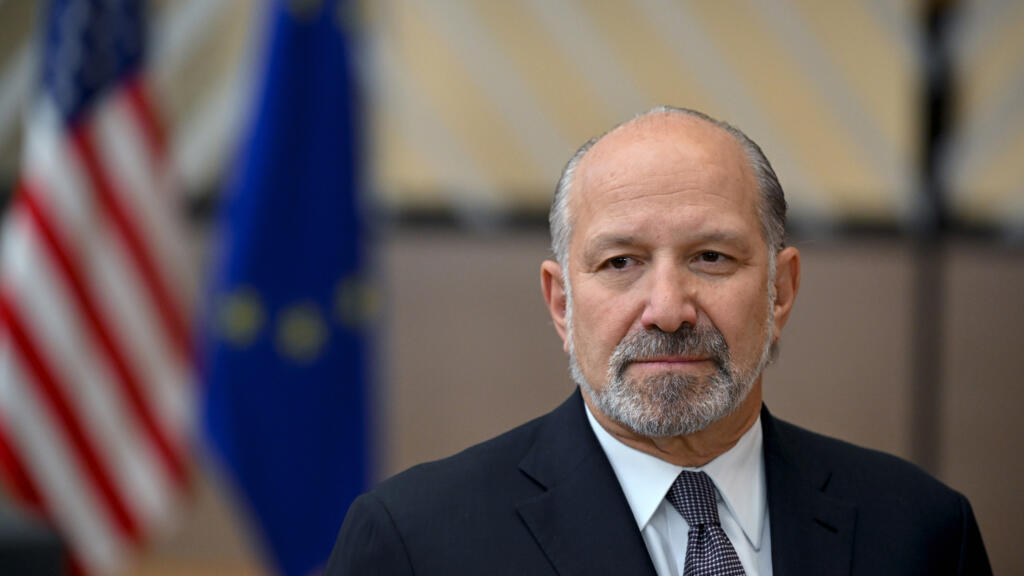
US Commerce Secretary Howard Lutnick told the EU to reconsider its approach to tech rules in exchange for a deal to cut duties on Europe's steel and aluminium exports © Nicolas TUCAT / AFP


EU 'not discriminatory'

US President Donald Trump and his government have pushed back hard at the EU's bolstered legal armoury against Big Tech.

Trump in September threatened retaliatory tariffs in response to a massive 2.95-billion-euro ($3.4 billion) fine imposed on Google.

Pushed afterwards on whether the EU's digital rules are a red line, Sefcovic refused to comment.

"We'll be looking into the ways, how we can launch this process on the digital matters," he told reporters.

Sefcovic insisted the EU's rules were "not discriminatory" or "aimed at American companies".

A spokesperson for the EU executive later stressed Europe's "sovereign right to legislate".

"Our rules apply only within the EU. And they apply equally to all companies, regardless of their country of origin," the European Commission spokesperson said.

EU steels itself

The top EU and US officials also discussed issues they are both facing including access to rare earths and chips -- vital for the tech industry.

"We didn't only discuss bilateral issues, but also some of the challenges we are facing together: the overcapacity... China's role in the global economy and other issues where we have to join forces," said Danish Foreign Minister Lars Lokke Rasmussen, whose country holds the rotating EU presidency.

The EU in October moved to double tariffs on foreign steel to shield the industry from a flood of cheap Chinese exports.

Brussels hoped the proposal would then see the EU team up with Washington to tackle Chinese overcapacity, and Sefcovic had been pushing his US counterparts agree on steel import quotas.

The EU wants a broader "metals alliance" with Washington to ring-fence their respective economies from Chinese overcapacity.

Industry data shows China was responsible for more than half of the world's steel production last year.

The steel sector employs around 300,000 people in Europe, and nearly 100,000 jobs have been lost in the past 15 years, the industry says.

© 2025 AFP
Leaders gather for EU-Africa summit on trade, minerals, in shadow of Ukraine war

European and African leaders are meeting in Angola for a summit focused on trade and renewing the relationship between African and European countries that have been tested by growing influence of Russia, China and the United States.
Issued on: 24/11/2025 - RFI

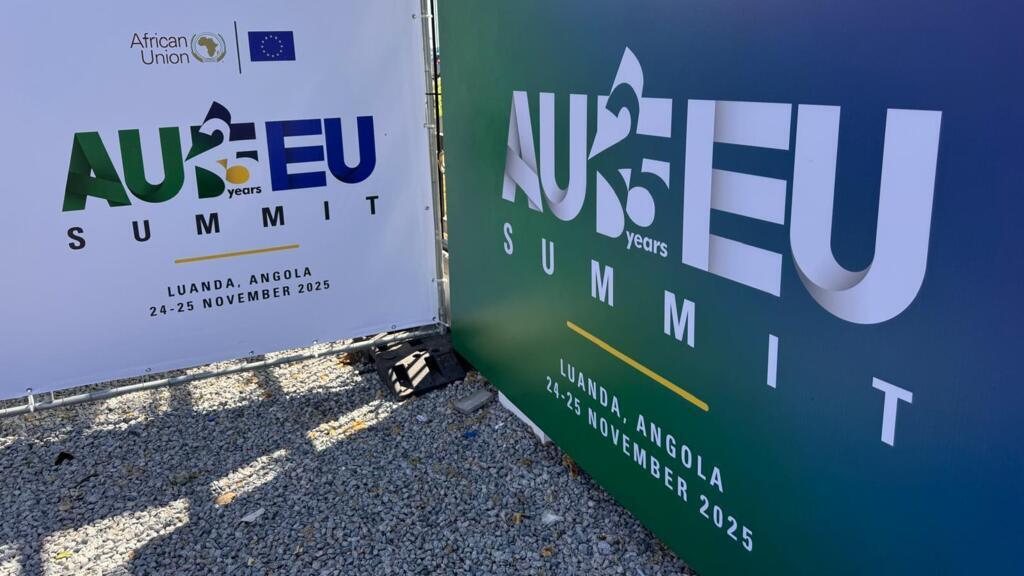
The AU-EU summit is being held in Luanda, Angola, 24-25 November 2025. 
© Paulina Zidi/RFI

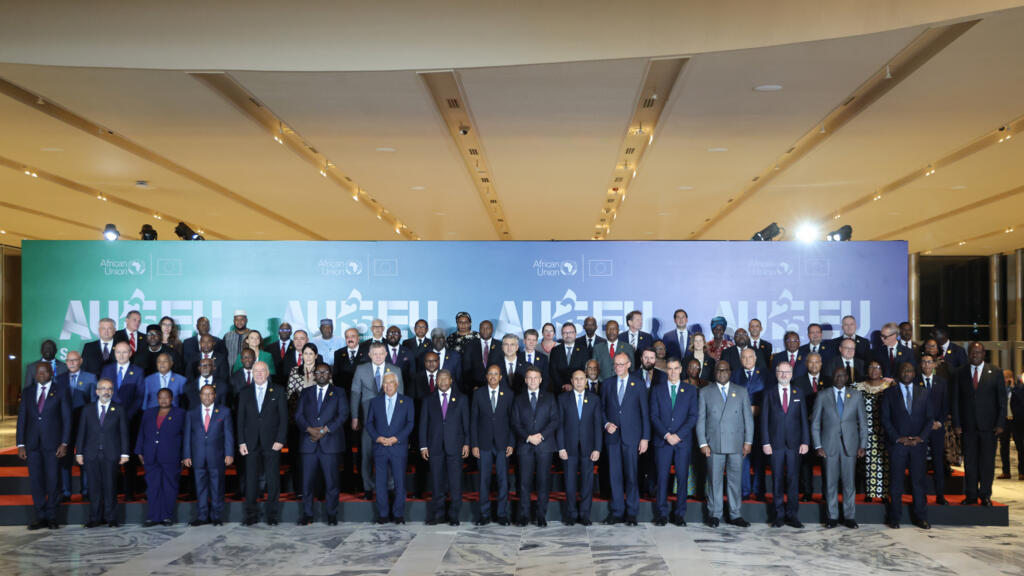
Continuing his African tour, French President Emmanuel Macron is in Luanda to join nearly 80 EU and African leaders at a two-day summit that marks 25 years of EU-African Union relations, which are fraying.

The EU is the leading supplier of direct foreign investment to Africa and its leading trading partner.

Yet China, the US and Russia are gaining influence, as some African countries turn away from their former colonial rulers, notably France.

"Relations between Africa and Europe need to be revisited," Pascal Saint-Amans, a professor at the University of Lausanne in Switzerland who in Luanda, told RFI.

"Economic exchanges for a long time happened in a colonial relationship, but I believe that with the overall shift in global geopolitics, we now have a relationship that is more on an equal footing, less paternalistic, which is a very good thing."

The seventh EU-African Union gathering comes on the heels of a G20 meeting in South Africa where a US boycott underscored geopolitical fractures.

"The challenges we face today – climate change, digital transformation, irregular migration, conflicts and insecurity – know no borders. The response to this multipolar world must be multipolar cooperation," EU chiefs Ursula von der Leyen and Antonio Costa said in a joint statement Monday.

"Together, Africa and Europe can lead the way," they said, adding the two blocs aimed to shape "a fairer, greener, and more secure world based on shared values and mutual respect".

Focus on trade

Tackling illegal migration to Europe and security cooperation are on the summit agenda, as is a push to grant Africa more of a voice in global governance bodies.

But boosting trade is likely the top priority, as the EU seeks to secure critical minerals needed for its green transition and to reduce its dependency on China for minerals used in electronic goods.

In 2021, the EU launched a massive infrastructure project, the Global Gateway, intended to counter China’s growing influence, with half of the €300 billion invested in Africa by 2027.

A key part of the strategy is the Lobito corridor, a railway project in partnership with the US, that passes through Angola, connecting mineral-rich areas of the Democratic Republic of Congo and Zambia to the Atlantic coast.

The EU is the leading supplier of foreign direct investment to the continent and its top commercial counterpart. Trade in goods and services hit €467 billion in 2023, according to Brussels.


Humanitarian aid


Another part of redefining the relationship is the EU’s humanitarian role in conflicts on the African continent.

The EU has sometimes become the main donor, after aid cuts by the US.

“We feel that the EU is also putting more emphasis on economic and security questions, rather than on democracy and human rights,” Danny Singoma, a member of the national consultation framework of Congolese civil society, told RFI.

“When you challenge the EU, they say ‘No, we do not interfere in internal affairs; We only help on the economic and humanitarian level.’ And that is what we want to change.”


Shift to Ukraine

EU leaders may be distracted from African issues by Ukraine and US President Donald Trump's draft plan to stop Russia’s war, that the EU sees as tilted in favour of Moscow.

Some EU leaders will meet to discuss Ukraine on the sidelines of the Luanda summit on Monday, with others dialling in via video conference.

Europeans said they were not involved in crafting the original plan and released a counter-poposal that would ease some of the proposed territorial concessions and include a NATO-style security guarantee from the US for Ukraine if it is attacked.

(with newswires)


EU, Africa leaders talk trade and minerals in Angola summit

Luanda (Angola) (AFP) – European and African leaders gathered in Angola Monday for a summit to deepen economic and security ties that also presented the chance for emergency talks on Ukraine.


Issued on: 24/11/2025 - RFI

© Ludovic MARIN / AFP

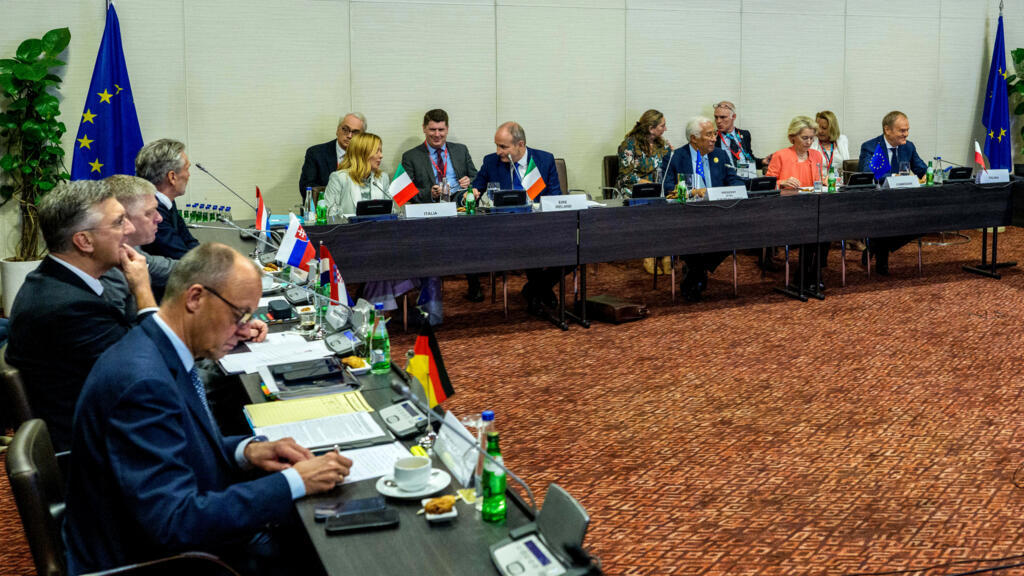
European Union chief Antonio Costa chaired an impromptu EU summit at a Luanda hotel in the morning, as Europe and Kyiv push to review a US proposal to end the Ukraine war seen as heavily favouring Moscow.

"While work remains to be done, there is now a solid basis for moving forward," European Commission President Ursula von der Leyen said after the meeting, which followed Sunday talks between US, Ukrainian and European officials in Geneva.

EU leaders including Germany's Friedrich Merz and Poland's Donald Tusk then headed to a conference centre near the waterfront of the Angolan capital for a summit with their African counterparts.

South Africa's Cyril Ramaphosa and Felix Tshisekedi of the Democratic Republic of Congo were among a stream of heads of state and government welcomed by host Joao Lourenco of Angola.

European leaders at the summit also met separately to discuss the US draft plan to end Russia's war in Ukraine © Michael Kappeler / POOL/AFP

"The Europe-Africa axis must increasingly become the central axis of the international community," said UN chief Antonio Guterres.

Addressing the gathering, which came on the heels of a G20 meeting in South Africa where a US boycott underscored geopolitical fractures, Lourenco decried "deteriorating" global security, citing conflicts in Europe, Africa and the Middle East.

"It is urgent that multilateralism be rescued," he said.

'Implementable commitments'

The summit marks 25 years of EU-African Union relations -- ties that analysts say need revamping if Europe wants to hold on to its role as the continent's top partner.

"Our prosperity is more connected than ever. We both need to build the industries of tomorrow. We both need to make the most of our talent and resources and get rid of dangerous dependencies," European Commission President Ursula von der Leyen said in opening remarks.

The EU is the leading supplier of foreign direct investment to Africa and its leading trade partner © EDUARDO SOTERAS / AFP

Africa has emerged as a battleground for its critical minerals and energy potential, with China, the United States and Russia also seeking to foster stronger ties.

The EU is the leading supplier of foreign direct investment to the continent and its top commercial counterpart. Trade in goods and services hit 467 billion euros ($538 billion) in 2023, according to Brussels.

The Gulf states and Turkey have also made significant inroads, granting African nations bargaining power with the EU, said Geert Laporte of ECDPM, a European think tank.

"We don't have that situation anymore where Europe was the only partner," he said.

Observers say Europe needs to invest in infrastructure, energy and job-creating industrial projects in Africa, and a move away from lofty statements of support.

"Africa is looking not for new declarations but for credible, implementable commitments," said AU spokesman Nuur Mohamud Sheekh.

Minerals and credibility

Boosting trade is a top priority as US tariffs buffet both continents.

The EU is expected to offer expertise to help build up intra-African trade, which currently accounts for a paltry 15 percent of the global total, diplomats said.

The Lobito corridor is a major project to connect mineral rich areas of the Democratic Republic of Congo and Zambia to the Atlantic coast © ANDREW CABALLERO-REYNOLDS / AFP


It will also seek to secure critical minerals needed for its green transition and ease dependency on China for rare earths, essential for tech and electronic goods.

"Europe has the know-how and technology; Africa has the fundamental raw materials for the world's industries," said Lourenco.

The 27-nation bloc will likely showcase new investments under the Global Gateway -- a massive infrastructure plan that Brussels hopes can counter China's growing influence.

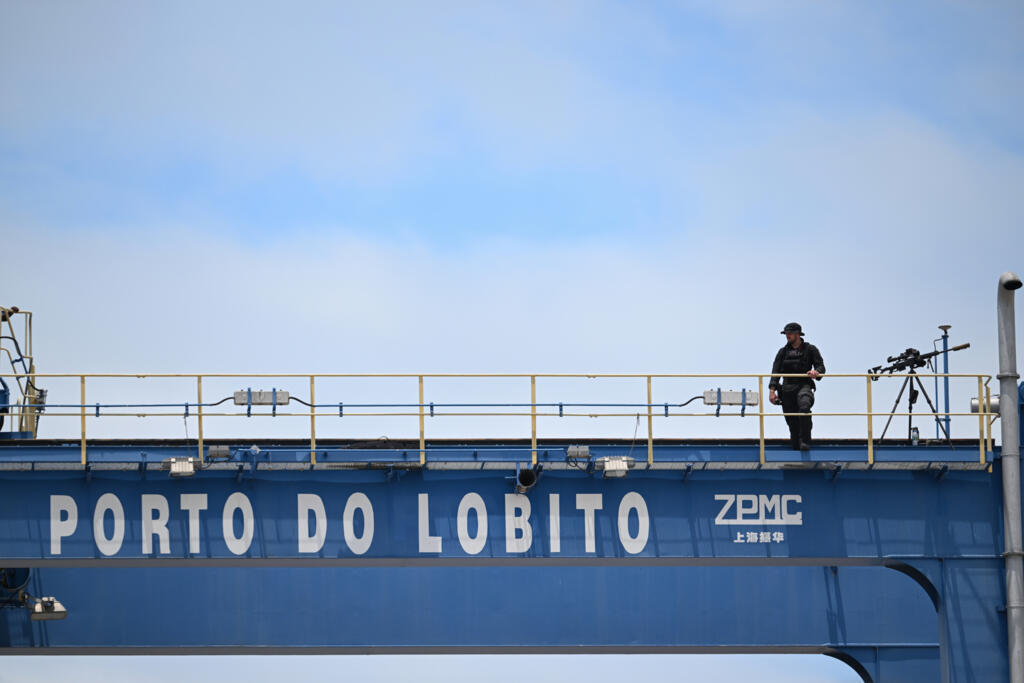
Summit host Angola is home to one of the EU's signature undertakings: the Lobito corridor, a railway project funded in partnership with the United States to connect mineral-rich areas of the Democratic Republic of Congo and Zambia to the Atlantic coast.

"Europe's credibility now depends on whether it can support the delivery of projects that create value in Africa, not just visibility for Brussels," said Ikemesit Effiong of the Nigeria-based consultancy SBM Intelligence.

The summit is to continue on Tuesday, although some leaders including Merz, France's Emmanuel Macron and Italy's Giorgia Meloni are expected to leave Monday night.

© 2025 AFP
China’s Strategic Ambitions, Assertiveness, And Escalation In The South China Sea – Analysis

November 24, 2025 

By Scott N. Romaniuk, Amparo Pamela Fabe, László Csicsmann and Junzhi Song

Introduction

China’s recent military exercises in the South China Sea (SCS, 南海, nanhai) — including live-fire night drills, high-speed naval manoeuvres, and coordinated helicopter operations — reflect a broader, long-term strategic trajectory. Beijing is steadily consolidating its maritime presence, reinforcing territorial and resource claims, and shaping the regional balance of power. These activities are embedded in a dynamic cycle of strategic adaptation: China, the United States (U.S.), allied powers, and regional states continuously adjust deployments, partnerships, and policies in response to perceived maritime security threats.

Southeast Asian states respond in diverse and nuanced ways. Indonesia, and Malaysia largely pursue strategic hedging (战略对冲, zhanlüe duichong), balancing economic engagement with China while maintaining security ties with the U.S. and other partners. The Philippines and Vietnam actively balance through its alliance with Washington, whereas Cambodia, Laos, and Myanmar tend toward bandwagoning (搭便车, dabianche) to maximise economic and diplomatic benefits from

Beijing. This spectrum of strategic postures underscores the Association of Southeast Asian Nation’s (ASEAN) agency: the bloc is not merely reactive, but actively shaping its own approaches to maintain autonomy amid intensifying great-power competition (大国竞争, daguo jingzheng).

The stakes in this maritime contest extend far beyond territorial claims. Control over sea lanes, rare-earth elements (REEs, 稀土元素, xitu yuansu), forward-operating bases, and maritime infrastructure has become central to the broader strategic rivalry. The SCS sits at the nexus of economic, technological, and military influence, linking local maritime disputes to a contest for power, resources, and regional norms. The expansion of China’s ‘ten-dash line’ (十段线, shiduan xian) in 2023 further underscores the symbolic and strategic importance Beijing places on maritime control, embedding national rejuvenation (民族复兴, minzu fuxing) into its maritime strategy.

China’s Strategic Interests and Ambitions


China’s maritime strategy in the SCS is driven by a mix of history, nationalism, and long-term strategic calculation. The old, yet misleading ‘nine dash line’ (九段线, jiuduan xian) — once the symbol of its maritime claims — has evolved in Beijing’s latest cartography: its 2023 official ‘Standard Map’ (标准地图, biaozhun ditu) now shows a ‘ten dash line’. For China’s leadership, this line represents more than just geography — it embodies the broader goal of national rejuvenation (民族复兴, minzu fuxing), a key part of the country’s political identity under Xi Jinping. This narrative reaches deep into China’s collective memory — particularly the ‘century of humiliation’ (百年屈辱, bainian quru), when foreign powers imposed unequal treaties, seized territory, and challenged Chinese sovereignty. Reclaiming control over disputed maritime spaces is seen within this framework as a moral and historical mission — restoring China’s dignity and reasserting its rightful role on the global stage.

For the current Chinese Communist Party (CCP) leadership, ceding ground in the SCS would therefore carry symbolic and political costs far beyond territorial loss. It would be interpreted domestically as a failure to defend national sovereignty and a setback to the vision of restoring China as a strong, respected, and technologically advanced great power. Internationally, such a concession could weaken China’s influence over regional norms and maritime governance, undermining its broader strategic ambitions. In this sense, the SCS is not only a site of material competition over resources and strategic chokepoints, but also a symbolic arena where the narrative of national rejuvenation is actively constructed and defended.

China’s capacity to project power on land is inherently constrained by geography, logistics, and the risk of direct confrontation with well-armed neighbours or entrenched alliances. In contrast, maritime spaces — particularly the SCS — offer Beijing greater leeway to assert influence without triggering large-scale, high-cost conflicts. Unlike a land invasion, maritime assertiveness allows China to leverage a mix of naval patrols, artificial islands, coast guard operations, and maritime militia to gradually shape control over disputed areas. This lower-risk, incremental approach enables Beijing to advance strategic objectives, reinforce sovereignty claims, and gain access to critical sea lanes and resources, all while avoiding the operational and political costs associated with territorial expansion on land. Consequently, China’s strategic focus is likely to remain centred on maritime assertiveness rather than land-based conquest, with the SCS serving as the primary arena for testing, projecting, and consolidating its growing regional influence.

From China’s own vantage point, it is under pressure. Beijing argues that external powers — chiefly the U.S. — are encroaching on its security perimeter, threatening critical sea lines of communication (SLOC, 海上交通线, haishang jiaotongxian), and seeking to contain its rise. In its telling, its maritime buildup is defensive, a way to protect its sovereignty, resources, and growing footprint in the area and the wider Indo-Pacific region (IPR).

The sea is also economically indispensable. Beneath its surface lie believed deposits of all 17 REEs, plus yttrium and scandium — minerals central to modern technology, defence, and green energy. They power everything from smartphones and batteries to precision missiles, radar, jet engines, wind turbines, and electric motors. China’s control of these resources helps sustain its high-tech manufacturing base, its renewable energy ambitions, and the modernisation of its military (军事现代化, junshi xiandaihua) — making the SCS not just politically important, but economically and technologically vital, especially as technological competition between the U.S., China, and other regional and global actors has intensified exponentially in recent years.

These same REEs are also indispensable to China’s rapidly expanding space programme — enabling satellite production, launch vehicle manufacturing, and advanced propulsion systems — thereby reinforcing its broader great-power aspirations and accelerating its rise as a comprehensive space and technology power. China’s space achievements are central to its self-image as a rejuvenated major power, showcasing technological self-reliance and placing it in direct competition with other leading spacefaring states. They also draw on deep cultural and mythological symbolism, with missions named after figures such as Chang’e (嫦娥嫦娥, chang’e), Yutu (玉兔, yutu), Zhurong (祝融, zhyrong), and the Tiangong (天宫, tiangong) ‘Heavenly Palace’, linking modern aerospace mastery with ancient cosmology and civilisational heritage. These mission names are deeply embedded in China’s collective cultural narratives, grounding the space programme in symbols that resonate within cultural memory.

This fusion of technological ambition and mythic narrative strengthens domestic legitimacy, fortifies China’s national pride, and projects an image of China as a civilisation rising once again — not just on Earth, but in space. Yet despite these achievements reaching beyond Earth’s orbit, Beijing’s great-power strategy remains firmly anchored in the maritime domain, where control of the SCS provides the most immediate and tangible foundation for shaping regional order.

Strategically, the SCS — including the Paracel Islands (西沙群岛, xisha qundao) and Spratly Islands (南沙群岛, nansha qundao) — provides China with immense leverage. At the same time, China’s artificial islands and forward bases give it a growing military footprint: airstrips, missile sites, surveillance capabilities, and hardened facilities enable both monitoring and power projection. This is part of a larger coercive effort to shape a new regional security architecture more favourable to Beijing.

Sustained Coercive Tactics


China presses its claims through a layered approach that spans legal, economic, and coercive measures. Legally, it engages in ‘lawfare’ (法律战, falü zhan), selectively accepting, reinterpreting, or rejecting international rulings to suit its strategic objectives. A clear example is Beijing’s rejection of the 2016 Permanent Court of Arbitration (常设仲裁法院, changshe zhongcai fayuan) ruling in favor of the Philippines, which invalidated many of its claims under the United Nations Convention on the Law of the Sea (UNCLOS). At the same time, China continues to emphasise its so-called ‘historic rights’ over vast areas of the SCS, framing these claims as legitimate based on centuries of usage. Beyond formal legal arguments, Beijing uses economic leverage to shape regional positions: bilateral trade agreements, investment projects, and infrastructure financing are often used to divide or temper opposition among Southeast Asian states, discouraging a unified front against Chinese claims.

China’s maritime militia — ostensibly civilian fishing vessels coordinated with the navy and coast guard — serves as a critical tool of sustained coercion. These vessels frequently swarm reefs and shoals, shadow foreign ships, and assert presence near disputed features, creating tension without triggering open conflict. Their dual civilian/military status allows Beijing to maintain plausible deniability while effectively reinforcing its maritime claims. For instance, in 2023 and 2024, these militia boats were documented surrounding Philippine and Vietnamese vessels near the Spratly Islands, limiting access and asserting control in contested waters.

The Chinese coast guard has also taken a more assertive and reckless role, increasingly restricting access to claimed areas, confronting foreign ships, and escorting Chinese construction activities on disputed islands. These operations often operate at the limits of international law, heightening the risk of miscalculation. For example, last August 11, 2025, a maritime incident took place near Scarborough Shoal in the SCS, in which a China Coast Guard vessel and a People’s Liberation Army Navy warship collided while aggressively pursuing a Philippine Coast Guard patrol vessel resulting in possible casualties among Chinese Coast Guard personnel. Administratively, China has further embedded its claims through domestic governance structures. Sansha City (三沙市, sansha shi), established on Woody Island (永兴岛, yongxing dao) and overseeing multiple disputed features, functions as a municipal authority that integrates civilian administration with military oversight, providing a permanent framework to assert control and consolidate Chinese sovereignty over contested areas.

On the narrative front, China actively manages perceptions through coercive cognitive warfare, a persistent campaign of online disinformation and false narratives. State media, academic research, and official mapping projects collectively promote the notion that China’s maritime activities are defensive, stabilising, and legitimate. For example, Chinese government publications routinely portray military exercises as routine patrols to protect fishermen or safeguard trade routes inside the Philippine’s Exclusive Economic Zone, thus, violating the UN Convention on the Law of the Sea.

Chinese state media frames these overtly coercive manoeuvers as both reasonable and necessary. Over time, this messaging seeks to normalise China’s expanded presence in the SCS and shape both domestic and international understanding of its maritime strategy.

Militarisation and Escalation Risk

China’s artificial islands — such as Fiery Cross, Subi, and Mischief Reefs — have been extensively upgraded into fully operational military nodes. These islands now host airstrips capable of handling fighter jets, surface-to-air and anti-ship missile batteries, sophisticated radar arrays, deep-water ports for naval vessels, and hardened shelters designed to protect critical assets from attack. Beyond static infrastructure, these facilities are integrated into the broader maritime strategy through complex exercises that test coordination and readiness. Recent drills have included night-time live-fire exercises, high-speed naval manoeuvres, and helicopter deployments, simulating a full spectrum of combat scenarios. For example, in 2024, the People’s Liberation Army Navy (PLAN, 中国人民解放军海军, zhongguorenmin jiefangjun haijun) conducted a series of combined arms exercises around Subi Reef, involving fast-attack craft, fighter jets, and missile launches, demonstrating its ability to rapidly mobilise and defend these outposts.

Layered on top of these developments is a highly sophisticated anti-access/area-denial (A2/AD) (反介入/区域拒止, fan jieru / quyu juzhi) architecture. Long-range missile systems such as the Dongfeng 21 (DF-21, 东风-21, dongfeng-21) and DF-26 (东风-26, dongfeng-26) ‘carrier-killer’ missiles, advanced coastal radar installations, and integrated command-and-control networks are designed to detect, track, and target potential intruders, effectively deterring other powers from operating freely in contested waters. These systems are increasingly networked with surveillance assets on nearby islands and mainland facilities, creating overlapping coverage zones that extend China’s operational reach across large portions of the SCS. For instance, the combination of radar on Fiery Cross Reef and missile batteries on Subi Reef (渚碧礁, zhubi jiao) allows China to monitor and, if necessary, threaten vessels hundreds of kilometers away, complicating the planning of U.S. and allied naval operations.

These militarisation efforts heighten the risk of miscalculation and accidental escalation. Close encounters have become increasingly frequent, ranging from ship-to-ship confrontations and water-cannon incidents to aggressive aerial intercepts near disputed features. In 2023, U.S. Navy aircraft conducting freedom-of-navigation operations (FONOPs, 航行自由行动, hangxing ziyou xingdong) were shadowed and occasionally challenged by Chinese fighter jets, prompting heightened alert levels. China interprets these U.S. and allied operations — including carrier deployments, increased basing, and multinational naval exercises — as provocations to its sovereignty, fueling a cycle of action and reaction that could escalate rapidly if mismanaged. The dense concentration of military assets, combined with overlapping claims and high-tempo operations, creates a persistent risk that a localised incident could spiral into a broader confrontation.

Escalation Beyond the SCS

China’s maritime assertiveness is not confined to the SCS; it extends into the East China Sea (ECS, 东海, dong hai), the South Pacific, and other strategic maritime corridors. In the ECS, Chinese naval and coast guard operations around the Senkaku/Diaoyu Islands have intensified in recent years, reflecting Beijing’s broader strategy to assert claims over disputed maritime features and airspace. For example, in 2024, Chinese Coast Guard vessels conducted multiple patrols within Japan’s claimed territorial waters, accompanied by PLAN frigates and surveillance aircraft. These manoeuvers coincided with Japan’s own military modernisation and increased aerial patrols, creating an environment of heightened tension and repeated near-miss incidents between Chinese and Japanese forces.

In the South Pacific, China has steadily expanded its presence through both military and dual-use infrastructure, including port access and logistical facilities in nations such as Vanuatu and the Solomon Islands. These deployments suggest Beijing is seeking to extend its strategic reach beyond traditional ‘near seas’, providing forward-operating options for the PLAN and creating potential nodes for surveillance and rapid response. For instance, the 2023 security pact between China and the Solomon Islands opened the door for Chinese personnel and equipment to operate from Honiara, raising concerns in Canberra and Washington about a potential military foothold in a previously U.S.-aligned region.

The broader pattern includes frequent long-range deployments of Chinese naval vessels — including destroyers, frigates, and amphibious transport ships — into the Pacific and Indian Oceans, often shadowing U.S. carrier strike groups or joining joint exercises with regional partners. These actions are accompanied by a robust presence of maritime militia (海上民兵, haishang minbing) and coast guard units, enabling Beijing to signal capability and resolve without crossing conventional warfighting thresholds. For example, in early 2025, a Chinese amphibious landing ship conducted exercises near Papua New Guinea while U.S. and Australian forces monitored the operation from nearby waters.

Collectively, these deployments illustrate a multi-theater approach to maritime competition. They allow China to project power, influence regional calculations, and gather intelligence across strategic chokepoints and trade routes. At the same time, they elevate the potential for miscalculation: close encounters with U.S., Japanese, and Australian vessels, as well as the presence of civilian-military dual-use forces, increase the likelihood of incidents that could escalate beyond the local level. In short, China’s activities beyond the SCS reflect both ambition and reckless behaviour — signaling power, testing responses, and shaping the regional order while implementing grey zone operations against other claimants of the SCS.

U.S.–China Strategic Competition in the Region

U.S. naval strategy in the Indo-Pacific remains focused on deterrence, forward presence, and operational readiness. A clear demonstration of this posture is the continuous U.S. carrier presence in the South China Sea. In November 2025, the USS George Washington entered the SCS just as the USS Nimitz departed, ensuring uninterrupted coverage amid heightened Chinese and allied activity around Scarborough Shoal (Philippines). The Nimitz strike group had just completed trilateral exercises with Japan and the Philippines — including the Japanese destroyer JS Akebono and Philippine Navy ships BRP Jose Rizal and BRP Antonio Luna — designed to enhance interoperability, joint operations, and maritime domain awareness. These drills prompted Chinese protests and bomber overflights, highlighting the ongoing tensions and the symbolic stakes of maritime presence.

The USS Nimitz Carrier Strike Group has conducted high-tempo flight operations in the SCS, including day and night evolutions, maritime strike drills, and coordinated surface-to-air training. Similarly, the USS Carl Vinson, operating alongside other U.S. Navy assets, has conducted joint exercises with regional partners, underscoring the U.S. willingness to actively counter China’s maritime militarisation while reassuring allies and partners of extended deterrence. These deployments are increasingly complemented by aerial reconnaissance, submarine patrols, and joint exercises with Japan, Australia, and the Philippines, illustrating the U.S. integrated approach to managing strategic competition across multiple domains.

The U.S. presence in the Indo-Pacific is not purely military; it also encompasses capacity-building, intelligence-sharing, and multilateral training initiatives aimed at strengthening regional resilience. Programmes such as the annual Rim of the Pacific (RIMPAC) exercises — the world’s largest international maritime exercise — enable U.S. forces and regional partners to conduct joint operations, refine command-and-control procedures, and enhance interoperability across naval, air, and amphibious forces. Beyond RIMPAC, the U.S. engages in maritime domain awareness initiatives, including joint surveillance, information-sharing networks, and coordination on search-and-rescue or anti-piracy operations. These efforts enable smaller regional navies to better monitor contested waters, respond to emergencies, and maintain credible deterrence against coercive actions by China.

At the same time, these activities serve as visible demonstrations of U.S. commitment and strategic resolve, reassuring allies such as Japan, the Philippines, and Australia that Washington is prepared to uphold freedom of navigation, defend regional norms, and respond to potential crises in the Indo-Pacific. By maintaining both a persistent physical presence and extensive capacity-building initiatives, the U.S. positions itself to counter China’s maritime assertiveness while shaping regional security dynamics on multiple fronts, raising the stakes for other Indo-Pacific actors, including Japan, India, Australia, ASEAN member states, and external powers with strategic interests in the region.

The Philippines and Regional Responses

The Philippines remains a frontline state in the maritime contest, adeptly balancing (平衡, pingheng) its geographic proximity to China with its iron-clad security alliance with the U.S., Japan, Australia, India and the European Union (EU). This balancing act reflects Manila’s recognition that it faces both immediate territorial pressures from Beijing and broader regional security dynamics involving major powers. In January 2025, the Philippines and the U.S. conducted their first joint patrol of the year, involving the USS Carl Vinson and Philippine Navy vessels. These operations served multiple purposes: they demonstrate U.S. commitment to regional security, reinforce deterrence against coercive Chinese actions, and allow the Philippines to assert sovereignty over contested areas such as the West Philippine Sea (西菲律宾海, xifeilübin hai). Joint training, coordinated maritime surveillance, and combined naval manoeuvers enhance the operational capabilities of the Philippine Navy, enabling it to better respond to incursions, monitor disputed features, and maintain credible presence in strategically important waters.

Beyond military collaboration, as the ASEAN Chair for 2026, the Philippines will take the lead for the drafting of the Code of Conduct (行为准则, xingwei zhunze) in the SCS. This drafting of the Code of Conduct has been persistently delayed. Thus, the Philippines pursues a multi-layered strategy that blends diplomacy, international law, and regional engagement. Manila has been active in multilateral forums, including ASEAN and the East Asia Summit, leveraging legal mechanisms such as the 2016 Permanent Court of Arbitration ruling to assert its maritime claims. These diplomatic efforts are complemented by enhanced maritime domain awareness through partnerships with the U.S., Japan, and Australia, including satellite surveillance, intelligence-sharing, and joint exercises focused on safeguarding critical sea lanes.

China’s renaming of islands and maritime features has become a central tool in its broader territorial strategy. By systematically assigning Chinese names to reefs and shoals, Beijing embeds its claims symbolically and administratively, reinforcing a narrative of historical legitimacy and permanent control. This ‘naming power’ acts as a low-cost, high-impact method of influence, asserting sovereignty without overt military confrontation. When combined with militarisation of islands, coast guard operations, and the deployment of maritime militia, these symbolic measures create a layered and persistent challenge for the Philippines and other SCS countries. Manila must therefore coordinate diplomacy, alliances, and operational readiness, balancing assertiveness with caution to defend its claims while avoiding escalation in a densely militarised environment.

ASEAN Dynamics and Regional Complexity

ASEAN have responded to China’s maritime assertiveness in diverse ways, reflecting differences in geography, security dependence, and economic interconnection. Middle powers like Indonesia, Malaysia, Singapore, Thailand, and Vietnam often hedge — engaging economically with China while simultaneously maintaining security ties with the U.S. and other partners. Indonesia, for instance, practices ‘flexible hedging’, leveraging Chinese investment opportunities while strengthening its own naval and maritime capabilities to safeguard sovereignty. Vietnam employs a nuanced ‘four Bs’ approach — broadening partnerships, binding institutions, building deterrent capabilities, and blunting Chinese assertiveness — to navigate contested waters in the Spratly Islands (南沙群岛, nansha qundao).

Balancing is particularly evident in the Philippines, which relies on U.S. security guarantees, joint patrols, intelligence-sharing, and training exercises. The long-standing U.S.-Philippines alliance, one of America’s oldest in the Global South, underpins this relationship. This posture supports Manila in countering Chinese pressure without fully decoupling from regional economic engagement. By contrast, Cambodia, Laos, and Myanmar demonstrate bandwagoning behaviour, aligning with China politically and economically to benefit from investment, aid, and diplomatic support while avoiding confrontation.

Beyond individual strategies, ASEAN also engages in institutional hedging. By embedding China within multilateral frameworks such as the ASEAN Regional Forum and ongoing discussions on an ASEAN–China Code of Conduct (COC), the bloc collectively seeks to manage risk, shape regional norms, and preserve its autonomy. The ASEAN–China COC aims to provide clear guidelines for stability in the South China Sea, though progress has been slow. Its origins lie in the 2002 Declaration on the Conduct of Parties (DOC), a non-binding agreement in which ASEAN members and China committed to working toward a formal code. Formal negotiations began in 2018, but strategic uncertainties and regional power disparities have slowed the process. Under the Philippines’ ASEAN chairmanship, there is a plan to finalise the COC by 2026, though some experts question whether this timeline is realistic. This approach allows member states to manage tensions without forcing a binary choice, demonstrating ASEAN’s agency in navigating the complex interplay of coercion, cooperation, and great-power rivalry.

China–Regional Cooperation

Despite its coercive measures, China continues to engage regionally in ways that extend beyond military or territorial pressure. Joint fisheries management with ASEAN states, for instance, provides a platform for regulatory cooperation, dispute resolution, and confidence-building, helping to prevent low-level conflicts in contested waters. Infrastructure investments — including ports such as Gwadar in Pakistan and Piraeus in Greece, transport corridors like the China-Pakistan Economic Corridor (CPEC, 中巴经济走廊, zhongba jingji zoulang) and the Bangladesh–China–India–Myanmar (BCIM) Economic Corridor (中印孟缅经济走廊, zhongyin mengmian jingji zoulang), and energy projects including hydropower plants in Laos — such as the Nam Tha 1 hydropower plant built by China Southern Power Grid, the Nam Ou River Cascade Hydropower Project developed by PowerChina, and the ‘Southern Mekong cascade’ (南欧江流域梯级水电站, nanoujiang liuyu tiji shuidianzhan) multi-staged hydropower development projects — as well as oil and gas pipelines in Central Asia under the Belt and Road Initiative (BRI, 一带一路倡议, yidaiyilu changyi) — deepen economic interdependence, create long-term strategic footholds, and generate domestic political support among recipient states.

Even in humanitarian contexts, such as disaster relief following typhoons or public health emergencies, China demonstrates capacity for soft-power influence, enhancing its regional image and fostering goodwill. For example, after Typhoon Haiyan in the Philippines (2013), China provided emergency aid including food, medical supplies, and reconstruction support. In public health, China has deployed medical teams and donated vaccines to countries in Southeast Asia during the COVID-19 pandemic, including Thailand, Cambodia, and Laos. It has also supported regional disease surveillance and training through initiatives such as the China-ASEAN Public Health Cooperation (中国东盟公共卫生合作, zhongguo dongmeng gonggong weisheng hezuo) framework. Together, these initiatives construct a dual image of China: a coercive actor asserting and consolidating maritime claims, and a cooperative partner delivering economic and humanitarian benefits. This duality complicates regional decision-making, as states must constantly balance the risks of coercion against the tangible incentives of engagement, navigating a landscape where economic opportunity, security concerns, and diplomatic pressures intersect.

Broader Implications for Regional and Global Security

China’s maritime rise presents multi-dimensional challenges that go beyond conventional military competition. Its use of grey-zone tactics (灰色地带战术, huīsè dìdài zhànshù) — including maritime militia operations, coast guard harassment, and coercive economic measures, among others — allows Beijing to assert influence incrementally, often without crossing thresholds that would trigger direct conflict. At the same time, China leverages selective legal interpretation, selectively accepting, rejecting, or reinterpreting international rulings to reinforce claims while avoiding full compliance with international law. This approach, combined with a rapidly modernising military, including advanced missile systems, integrated A2/AD networks, and forward-deployed naval assets, erodes traditional deterrence frameworks and undermines established norms of maritime conduct in contested waters.

China’s control over strategically critical resources — including REEs essential for high-tech industries and green energy technologies — as well as forward-operating bases and key SLOC, provides it with both economic and technological leverage. These capabilities enable Beijing to project power across military and civilian domains, influence regional decision-making, and enhance self-sufficiency in critical industries, from advanced manufacturing to defence systems and renewable energy infrastructure. By controlling both the physical and economic levers of maritime influence, China positions itself to shape regional security dynamics on multiple fronts, raising the stakes for other Indo-Pacific actors, including Japan, India, Australia, ASEAN member states, and external powers with strategic interests in the region.

The U.S. and its regional partners respond with a multifaceted strategy that blends forward presence, alliance reinforcement, and capacity-building programmes. U.S. naval deployments, FONOPs, joint exercises, and intelligence-sharing partnerships signal resolve while enhancing regional preparedness. At the same time, allies and partners invest in technological modernisation, cybersecurity cooperation, and maritime domain awareness initiatives to counterbalance China’s growing capabilities. However, the rivalry is not limited to the military domain; it encompasses economic competition, technological innovation, and normative influence, with multiple states — including Japan, Australia, India, and ASEAN members — navigating overlapping security, trade, and diplomatic considerations.

For regional actors, the strategic calculus is increasingly complex. Countries simultaneously pursue strategic hedging, balancing, and selective engagement to preserve autonomy, safeguard sovereignty, and maximise national interests in a fluid, high-stakes security environment. Hedging may involve strengthening economic ties with China while deepening security cooperation with the U.S.; balancing could include enhancing military capabilities or joining multilateral security frameworks; selective engagement allows states to cooperate on non-contentious issues such as disaster relief, infrastructure, or fisheries management. The ability of regional actors — individually and collectively — to manage competition without escalating conflict will shape the Indo-Pacific’s strategic architecture for decades to come, determining whether the region can sustain stability, preserve freedom of navigation, and maintain a rules-based order amid intensifying great-power rivalry.

Conclusion

China’s maritime assertiveness — from increasingly complex drills in the SCS to expanded operations in the ECS and South Pacific — reflects a multi-dimensional strategy aimed at securing resources, projecting power, and reshaping regional dynamics. Beijing combines coercive operations, administrative consolidation, symbolic measures such as renaming islands, and selective engagement through cooperative initiatives like fisheries management, infrastructure investment, and disaster relief. Together, these actions reinforce control, influence perceptions, and expand strategic reach across military, economic, and technological domains.

Regional states respond with a spectrum of strategies that illustrate the complexity of Indo-Pacific security. Strategic hedging, balancing, and bandwagoning highlight ASEAN’s nuanced approaches to managing China’s rise. The Philippines, as a frontline state, exemplifies balancing through U.S. military cooperation, while other states navigate competing pressures by maintaining autonomy, pursuing selective engagement, or aligning economically and politically with Beijing.

The SCS therefore functions as both a maritime flashpoint and a lens into the broader dynamics of Indo-Pacific rivalry. The key challenge for regional and global actors is managing competition without triggering conflict, while ensuring institutions, alliances, and diplomacy keep pace with rapidly evolving threats and opportunities. How these dynamics are navigated will shape the security architecture of Southeast Asia and influence the strategic equilibrium of the Indo-Pacific for decades to come.

About the authors:

Scott N. Romaniuk: Senior Research Fellow, Centre for Contemporary Asia Studies, Corvinus Institute for Advanced Studies (CIAS), Corvinus University of Budapest, Hungary

Amparo Pamela Fabe: Professor of the National Police College, Philippines. She is a Fellow of the Brute Krulak Center of the US Marine Corps University and a Maritime Security Fellow of the Maritime Research Center in Pune, India where she specialises in Geopolitics, Underwater Domain Awareness and Engagement with Ocean Dependent Communities.

László Csicsmann: Full Professor and Head of the Centre for Contemporary Asia Studies, Corvinus Institute for Advanced Studies (CIAS), Corvinus University of Budapest, Hungary; Senior Research Fellow, Hungarian Institute of International Affairs (HIIA)

Junzhi Song (宋浚枝): Researcher, University of British Columbia, Canada


Tobacco-Free And Nicotine-Free Future Is A Bedrock To Deliver On #EndTB And SDGs – OpEd

Credit: Citizen News Service

By 

According to the latest WHO Global TB Report 2025 released a week ago, tobacco smoking is among the top-5 risk factors for the deadliest of all infectious diseases worldwide – tuberculosis (TB). In countries with alarmingly high tobacco use, like Indonesia, tobacco use is the biggest risk factor for TB. Tobacco is also among the major common risk factors for a range of other non-infectious (or non-communicable) diseases, such as heart diseases and stroke, cancers, diabetes, chronic respiratory diseases, among others.


If we are to protect people from TB or other deadly diseases and avert untimely deaths, the writing on the wall is clear: end all forms of tobacco and nicotine use. If we can protect human beings and our planet from tobacco and nicotine, we will majorly help governments implement lifesaving health policies and address infectious and non-communicable diseases effectively. Holding tobacco and nicotine industry liable for the deadly harm they are causing to human life and our planet remains critical too.

No one should suffer or die of tobacco or nicotine use

“Tobacco use is the single largest preventable cause of death globally. Over 8 million people die of tobacco use every year in the world. We can entirely prevent this manmade (or tobacco industry propelled) epidemic,” said Dr Tara Singh Bam, a noted global health leader and tobacco control advocate. Dr Bam serves as Asia Pacific Director (Tobacco Control) of Vital Strategies and Board Director of Asia Pacific Cities Alliance for Health and Development (APCAT), and till recently led International Union Against Tuberculosis and Lung Disease (The Union) in the Asia Pacific region.

Dr Bam is right: Good news is that all 3: TB, nicotine and tobacco are preventable. We need to support all tobacco and nicotine users and help them quit, become tobacco-free and nicotine-free – and protect others from such deadly products. Also, we have to ensure that we are protecting everyone from TB and ensuring that right and timely diagnosis, correct treatment, care and support is accessible to everyone with TB disease in a person-centred manner, said Dr Bam.

TNT is explosive: Tobacco, Nicotine and TB

Tobacco smoking increases the risk of developing TB and makes TB treatment less effective – and – heightens risk of many other deadly diseases too.

Extensive scientific research underlines tobacco smoking’s substantial role in TB, amplifying the risk of infection, death, treatment relapse, heightened clinical severity, and delays in both: diagnosis and treatment, said Dr Bam. He was chairing an important hybrid session at the world’s largest lung health conference, formally known as Union World Conference on Lung Health in Copenhagen, Denmark.

Delayed diagnosis and treatment also means that the person with TB suffers more, has a higher risk of TB death, while the infection spreads to potentially more people – all of this is so avoidable.

Tobacco use worsens TB outcomes, said Dr Bam while calling upon integrating smoke free policies and tobacco and nicotine cessation efforts into TB programmes.

Agrees Dr Rakesh Gupta, Chairperson of Tobacco Control section of The Union: There is enough robust scientific evidence to effectively integrate tobacco cessation in TB programmes because it will yield very favourable public health outcomes, economic outcomes and social welfare outcomes. Evidence is there. Time is to really transform the science and evidence into policy, and policy into practice.

Nicotine has been proven to be as addictive as cocaine and heroin and could even be more addictive. There is no doubt that if we are to live our lives healthy, we need to stay tobacco-free and nicotine-free.

Dr Rakesh Gupta recommended evidence-based strategy that on every visit, a patient should be asked about tobacco use history along with brief advice on quitting and cessation support as needed. He also recommended that we should record this data (of tobacco use history) in TB treatment cards and registers.

We can prevent 15% TB cases if we help people quit tobacco use

“We can prevent 15% of the new TB cases if we stop tobacco smoking,” said Dr Akihiro Ohkado, Head of the Department of Epidemiology and Clinical Research, Research Institute of TB, Japan Anti-TB Association, Japan. He reemphasised that tobacco smoking significantly contributes to TB diagnostic delays, decreases TB treatment success rates, and also increases the risk of TB release.

Tobacco use steals away the gains made in TB control. Likewise, tobacco and nicotine use are also threatening the gains made in addressing major killers like heart diseases and stroke, cancers, diabetes, chronic respiratory diseases, among others.

Passive tobacco smoking is dangerous too

1 in 10 of tobacco-related deaths are due to passing tobacco smoking every year. Breathing must be smoke-free as a matter of human right.

Dr Tara Singh Bam also reminded the delegates of world conference that despite tobacco being a major risk factor for several lung diseases (like TB, asthma, COPD, among others), it is not a major focus area of world conference on lung health in Copenhagen.

Since TB patients are closely monitored by national TB programmes for the duration of the treatment – 6 months or more – it is an important opportunity to ensure they remain free of tobacco or nicotine use, alcohol use, and do active health promotion.

We cannot dislocate #endTB goal from SDGs

There are a lot of doable science and evidence-based actions that must get implemented locally. Some of these are – raising awareness about “saying no to all forms of tobacco and nicotine use”, screening people for both (tobacco use and TB), early and accurate TB detection and linkage to care, linking those with tobacco use to cessation services, treatment adherence support, ending all forms of TB related stigma, engaging TB survivors meaningfully to make a difference, implementing the full package of evidence-based tobacco control interventions recommended by the WHO (including raising taxes and smoke-free policies), ensuring that effective tobacco cessation services are functional across the healthcare facilities, and, most importantly, protecting public health from tobacco industry interference.

Tobacco industry interference in public health policy is the biggest obstacle in implementing tobacco control policies. That is why the legally binding global tobacco treaty, formally called the WHO Framework Convention on Tobacco Control, has an important Article 5.3 that was adopted by governments in 2008. Preamble of WHO FCTC Article 5.3 clearly states to protect public health policy from tobacco industry interference because there is a direct and irreconcilable conflict of interest between the two. WHO FCTC Article 19 calls to hold tobacco industries liable for the harm they cause.

“Break the chain of TB transmission and protect all people from tobacco use,” emphasises Dr Bam.

Science has proven that it is critically important to screen everyone in high TB burden settings (not just those with symptoms) for TB with WHO recommended tools and offer them upfront molecular testing and linkage to treatment, care and support. Not doing so is among the factors responsible for decades of failure in TB response.

Same goes for tobacco control. No one needs to suffer from diseases caused by tobacco use or die of them. Not implementing tobacco control policies effectively and protecting everyone from tobacco use worldwide is another major failure.


European Union And The Emergence Of A Common Intelligence Architecture: Implications For Romania – Analysis


November 24, 2025 
By IFIMES
By Corneliu Pivariu


Introduction


The accelerated transformations of the international environment in recent years — the prolonged conflict in Ukraine, geopolitical volatility in the Middle East, the intensification of hybrid operations, and the proliferation of external interference in democratic processes — have brought back to the forefront an old structural problem of the European Union: the absence of a coherent capacity for strategic assessment and risk anticipation. Although the EU benefits from complex institutions, diverse analytical tools, and a broad network of specialized agencies, it does not possess integrated intelligence architecture comparable to that of major powers.

In this context, the European Commission has begun exploring the creation of an analytical intelligence cell — a body placed under the authority of the Commission’s Secretariat-General, designed to provide an internal capacity for strategic analysis. The initiative became public through reports from the Financial Times, Reuters, Euronews, and DefenseNews, triggering a complex wave of interpretations, debates, and institutional reactions.

Although the international press has speculated about the emergence of “a European spy agency,” the project has no connection with expanding the EU’s operative competences. It does not seek to collect classified information, conduct surveillance and engage in espionage[2], or run clandestine operations — activities that remain strictly within the remit of the Member States. The real objective is the consolidation of EU capacity to integrate, interpret, and anticipate information in ways that reduce vulnerability and strategic dependence in the field of informational security.

This analysis examines, from a professional and academic perspective, the potential of this initiative to shape how the EU understands threats, manages risks, and develops strategic autonomy. It also explores the implications for Romania — a state located on the Union’s eastern frontier, in a region marked by conflict, hybrid risks, informational competition, and rapid geopolitical developments.
1. Legal and Institutional Framework

The creation of an intelligence cell within the European Commission must be understood within the strict parameters of the EU’s legal framework, which defines the Union’s institutional possibilities and constraints. Article 4(2) of the Treaty on European Union is explicit: “national security remains the sole responsibility of each Member State.”


This provision constitutes the foundation of the entire European security architecture and firmly limits any institutional ambition to expand competences in the field of operative intelligence. Consequently:The European Union cannot obligatorily collect classified information from Member States;
it cannot conduct clandestine operations;
it cannot coordinate espionage activities;
it cannot establish an operative structure similar to national intelligence services.

Within this restrictive framework, the only available room for manoeuvre is the development of analytical, not collection, capacity.

This explains why the project focuses on the least sensitive yet essential segment: the integration and interpretation of available information.

At EU level, the existing analytical structure is EU INTCEN, part of the European External Action Service (EEAS). INTCEN operates under an intergovernmental logic, based on voluntary information exchange — primarily OSINT and limited classified contributions from Member States. Its mandate is predominantly focused on supporting EU foreign policy and crisis management, while also producing assessments of threats that may affect the Union’s internal security. However, it does not hold operative competences nor functions comparable to national intelligence services.

In this context, the idea of a new analytical cell under the Commission has emerged — not as a replica of INTCEN, but as a complementary mechanism focused on strengthening the Union’s internal resilience: monitoring foreign interference, analysing systemic vulnerabilities, supporting cybersecurity policies, and integrating data from the Commission’s numerous directorates-general. The new structure would have a predominantly analytical and coordinative role, without operative competences or functions associated with national intelligence services.
2. Probable Architecture and Functional Logic

The structure taking shape under the concept of an “EU Intelligence Cell” can best be described as an integrated hub for strategic analysis, meant to provide EU political leadership with faster, more coherent, and more in-depth understanding of the risks facing the Union. In the absence of operative competences, the added value of this cell would lie in:its capacity to integrate multiple sources of information, both internal and open-source;
cross-sectoral risk analysis, connecting energy, digital, democratic, and economic security;
anticipation of hybrid risks;
delivery of coherent, data-driven briefings directly to the Commission’s leadership.

This architecture would remain fully dependent on cooperation with Member States, with INTCEN, and with the EU’s technical networks (CERT-EU, Joint Research Centre).

The fundamental difference compared to INTCEN lies in its mandate and institutional positioning: INTCEN primarily supports EU foreign policy and intergovernmental intelligence cooperation, while the new cell would play an analytical role focused on the Union’s internal dimension — namely democratic resilience, protection of digital infrastructure, and integration of information originating from the Commission’s technical structures. This does not imply operative competences, but rather an enhanced analytical and coordinative capacity in emerging domains of internal vulnerability.

Recent developments in Brussels suggest tensions regarding the delineation of competences: the EEAS fears a diminution of its role, while Member States are concerned with maintaining control over sensitive information. At the same time, the Commission benefits from favourable terrain, as the domains of democratic resilience and digital security already fall under its supranational competences.

Extending INTCEN’s mandate is not feasible, not only because of the EEAS’s institutional limitations, but also due to the EU’s political configuration. France wants INTCEN to remain an instrument of foreign policy aligned with its own vision of strategic autonomy, while Germany favours a decentralised architecture and is wary of any centralisation of intelligence at European level. Nordic and Central-Eastern European states are concerned with transparency, institutional balance, and preventing excessive concentration of analytical power within the EEAS. In this context, placing a new analytical cell under the Commission is perceived as the least politically sensitive option and the one most compatible with its existing competences: internal resilience, cybersecurity, combating foreign interference, and analysing systemic vulnerabilities of the EU.

Thus, the future architecture will depend on the institutional balance that will be negotiated in 2025–2026 between the Commission, the Council, the EEAS, and the Member States. Ultimately, it will reflect not only this institutional balance, but also the level of strategic ambition that Member States are willing to allow the Commission in the field of internal resilience.
3. The Strategic Rationale of the Initiative

The creation of an analytical cell within the European Commission is not a spectacular innovation, but rather a response to three major developments:
3.1. Lessons from the War in Ukraine

The EU was profoundly dependent on American and British intelligence. The absence of an internal anticipatory capacity meant that institutional reactions were at times slow, fragmented, or reactive. This dependency triggered broad debates on the Union’s analytical — not operative — autonomy.
3.2. Intensification of Hybrid Risks

Russian and Chinese interference, cyberattacks, information manipulation, the instrumentalization of diaspora communities, and delegitimization campaigns have reached unprecedented levels. The EU has realized that it cannot manage these risks exclusively through dispersed technical structures.
3.3. The Need for a Common Culture of Anticipation

Member States possess different institutional cultures and divergent analytical standards. In the absence of a shared framework, the EU remains vulnerable to fragmentation and delayed reactions.

In essence, the initiative does not aim to create a European intelligence service, but to obtain a minimal degree of analytical autonomy — without which the EU remains dependent on the assessments of major powers.
4. Reactions, Sensitivities, and Risks

Member States view the initiative through the prism of their own interests and concerns. Nordic and Benelux countries are the most open, considering that a common architecture strengthens collective resilience. France and Germany are cautious but inclined to offer support, provided that control over sensitive data is preserved.

Eastern frontier states, including Romania, perceive the initiative as both an opportunity and a potential source of tension with national intelligence services. The most significant risks include:overlap between the Commission and EEAS;
lack of clarity in the mandate;
politicization of analysis;
resistance from national intelligence services;
insufficient definition of information flows and caveats[3].
5. Implications for Romania

For Romania, the project presents a dual opportunity. On one hand, it can actively contribute to shaping the new European analytical architecture, strengthening its profile as an eastern-flank state with meaningful expertise in managing hybrid risks and Russian interference. On the other hand, it must strictly protect the sovereignty of operative information, maintaining a clear distinction between European-level analysis and sensitive national intelligence flows.

Romania can benefit through:seconding experts specialized in hybrid risk analysis;
promoting strategic issues related to the Black Sea;
establishing a national interinstitutional liaison point;
strengthening its own OSINT capacities;
rapid access to integrated European assessments.

At the same time, Bucharest must articulate a clear set of caveats regarding data that may be shared. Any sharing of operative information should be avoided.
6. Conclusions

The Commission’s initiative to develop its own analytical capacity does not represent an attempt to centralize European espionage, but an effort to modernize the Union’s culture of strategic anticipation. In an era of hybrid threats, information manipulation, and cyberattacks, the ability to rapidly understand and integrate data from multiple sources becomes a fundamental component of European resilience.

Europe cannot afford to remain without a common architecture for strategic assessment. Without it, the continent remains dependent, fragmented, and vulnerable to pressures from state and non-state actors.

For Romania, the moment is favourable: it can influence the direction of the project, promote the priorities of the eastern frontier, and strengthen its profile within the European security architecture — provided that it firmly protects its informational sovereignty.
Selective Bibliography
Journalistic and Institutional SourcesFinancial Times. “EU to set up new intelligence unit under Ursula von der Leyen.” 11 Nov. 2025. Financial Times+.
Reuters. “EU to set up new intelligence unit under Ursula von der Leyen – FT reports.” 11 Nov. 2025.
Höller, Linus. “The European Union wants its own intelligence branch.” DefenseNews, 12 Nov. 2025.
Euronews. “Is the EU spy unit about to become reality? Von der Leyen wants her own secret service.” 11 Nov. 2025.
Moutseras, Efthymios. INTCEN’s Strategic Role in a New Security Era. Research Paper No. 109, KEDISA, Nov. 2024.
European External Action Service (EEAS). Annual Progress Report on the Implementation of the Strategic Compass for Security and Defence. July 2024.
European External Action Service (EEAS). A Strategic Compass for Security and Defence. 2022.
European External Action Service (EEAS). “The Diplomatic Service of the European Union.” [Website]. Accessed 2025.
European Union. EU INTCEN Factsheet. 5 Feb. 2015. Statewatch.org.
European Parliament – Research Service (EPRS). The EU’s Intelligence and Situation Centre (INTCEN): State of Play. Briefing Paper, Oct. 2023.
Foundational Theoretical WorksKent, Sherman. Strategic Intelligence for American World Policy. Princeton University Press, 1949.
Heuer, Richards J. Jr. Psychology of Intelligence Analysis. CIA Center for the Study of Intelligence, 1999.
Lowenthal, Mark M. Intelligence: From Secrets to Policy. CQ Press, 2019.
Omand, David. Securing the State. Hurst Publishers, 2010.
Rid, Thomas. Active Measures: The Secret History of Disinformation and Political Warfare. Farrar, Straus and Giroux, 2020.About the author: Corneliu Pivariu is a highly decorated two-star general of the Romanian army (Rtd). He has founded and led one of the most influential magazines on geopolitics and international relations in Eastern Europe, the bilingual journal Geostrategic Pulse, for two decades. General Pivariu is a member of IFIMES Advisory Board.


Source: The article presents the stance of the author and does not necessarily reflect the stance of IFIMES.


IFIMES

IFIMES – International Institute for Middle-East and Balkan studies, based in Ljubljana, Slovenia, has special consultative status with the Economic and Social Council ECOSOC/UN since 2018. IFIMES is also the publisher of the biannual international scientific journal European Perspectives. IFIMES gathers and selects various information and sources on key conflict areas in the world. The Institute analyses mutual relations among parties with an aim to promote the importance of reconciliation, early prevention/preventive diplomacy and disarmament/ confidence building measures in the regional or global conflict resolution of the existing conflicts and the role of preventive actions against new global disputes.