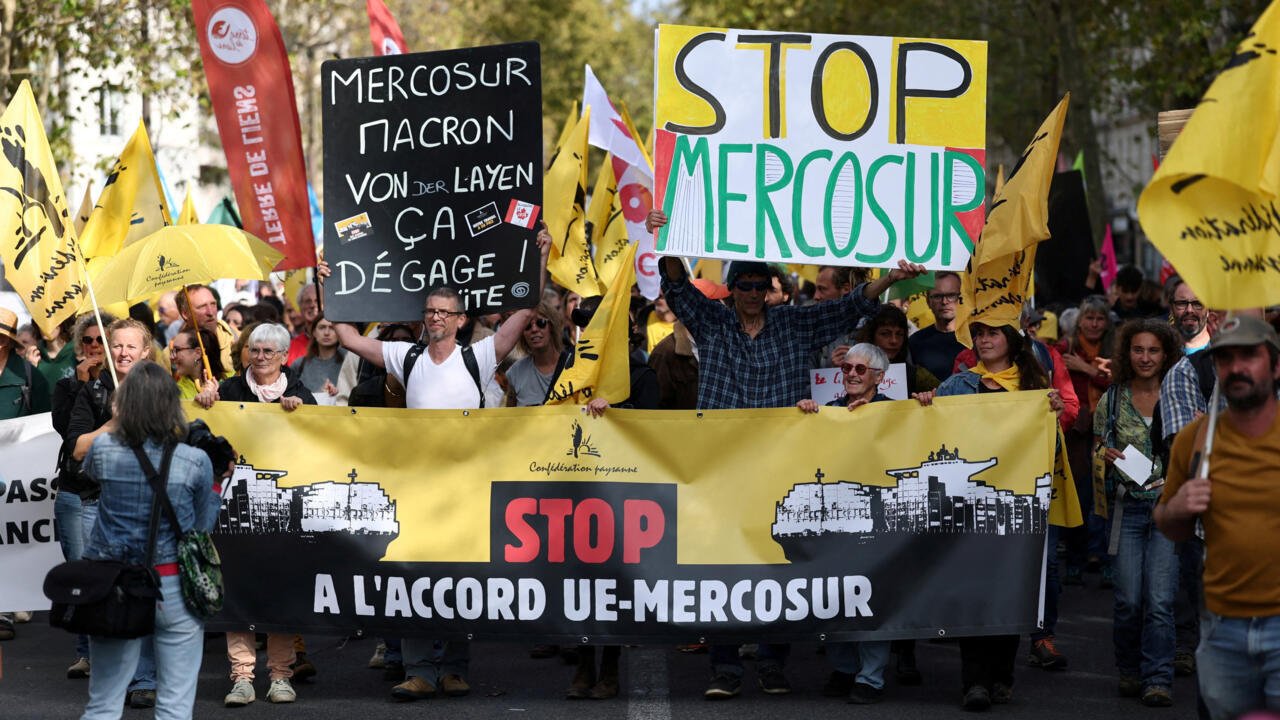
France and Italy said Wednesday they remain opposed to a trade agreement between the European Union and South American trade bloc Mercosur, dashing hopes of the contentious pact being signed soon. Brazil's Luiz Inacio Lula da Silva responded with a threat to ditch the deal altogether if it is not signed this week.
Issued on: 17/12/2025 -
By: FRANCE 24
Video by: Armen GEORGIAN
03:29
France and Italy on Wednesday said they were not ready to back a trade agreement between the European Union and the South American trade bloc Mercosur, dealing a blow to hopes of finalising the deal this week – and sparking dismay in Mercosur heavyweight Brazil.
European Commission President Ursula von der Leyen had been expected to fly to Brazil at the end of this week to sign the accord, reached a year ago after a quarter-century of talks with the bloc of Argentina, Bolivia, Brazil, Paraguay and Uruguay.
Germany, Spain and Nordic countries say the agreement will help exports hit by US tariffs and reduce dependence on China by providing access to minerals.
01:53
"The Italian government has always been clear in saying that the agreement must be beneficial for all sectors and that it is therefore necessary to address, in particular, the concerns of our farmers," Meloni told the lower house of Italy's parliament.
She told lawmakers it would be "premature" to sign the deal before further measures to protect farmers were finalised, adding the deal needed adequate reciprocity guarantees for the agricultural sector.
Paris seeks more safeguards, Lula threatens to quit
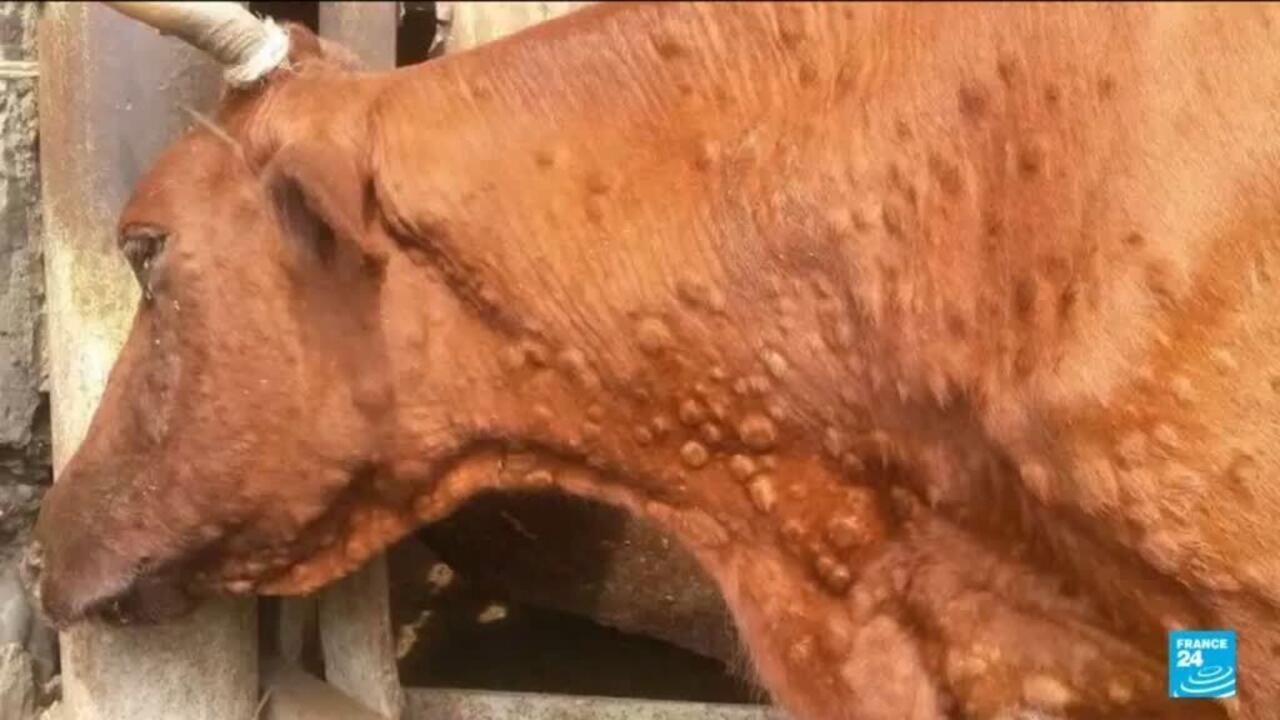
France too wants tougher safeguards, including "mirror clauses" requiring Mercosur products to comply with EU rules on the use of pesticide and chlorine and tighter food safety inspections.
"No one would understand if vegetables, beef and chicken that are chemically treated with products banned in France were to arrive on our soil," French government spokesperson Maud Bregeon told a news briefing. Supporters of the deal say it would not override existing EU regulations on food standards.
Later on Wednesday, the European Parliament, Commission and the Council, the grouping of EU governments, struck a provisional agreement to set controls on imports of agricultural products resulting from the Mercosur bloc, potentially meeting some complaints of critics of the deal.

03:17
Brazilian President Luiz Inacio Lula da Silva reacted to the resistance from France and Italy by threatening not to sign as long as he is president.
"I already told them, if we don't do it now, Brazil won't have an agreement as long as I am president," Lula told a cabinet meeting on Wednesday. "If they say no now, we will be tough with them from now on. We gave in on everything that diplomacy could possibly concede."
The Mercosur bloc is already negotiating deals with other nations such as Japan, United Arab Emirates, India and Canada.
(FRANCE 24 with Reuters)
Italy joins France in blocking EU-Mercosur trade deal ahead of expected signing
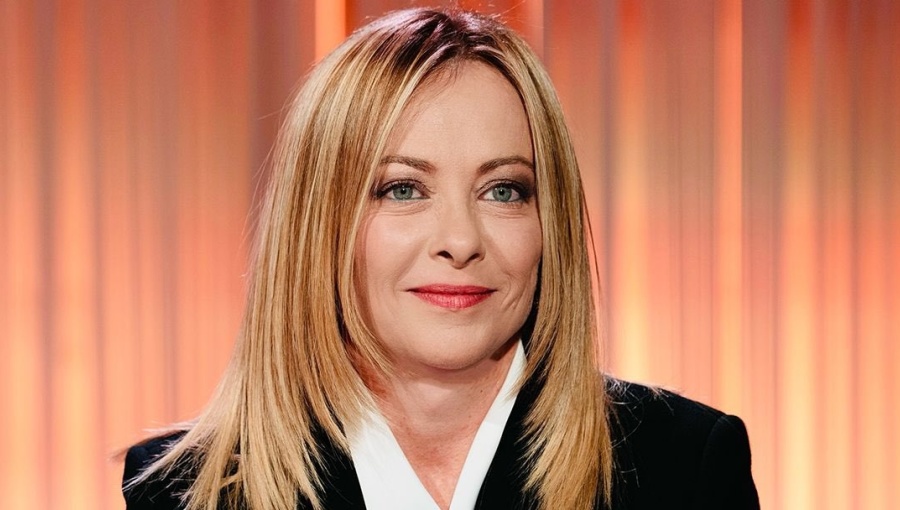
Italy has thrown its weight behind France's opposition to the EU-Mercosur trade agreement, putting at risk this week's planned signing of the long-negotiated pact between Brussels and four South American nations.
Giorgia Meloni, Italy's Prime Minister, told parliament on December 17 it was "still premature" to sign the agreement in the coming days, joining French president Emmanuel Macron in demanding more time to finalise safeguards for European farmers before backing the deal.
The Italian position threatens to deny the European Commission the qualified majority of 15 member states representing 65% of the EU population needed to approve the agreement. That could derail Commission President Ursula von der Leyen's long-touted plan to fly to Brazil on December 20 to sign the deal with Argentina, Brazil, Paraguay and Uruguay.
A decisive round of deliberations on additional farm safeguards is scheduled for before the EU summit in Brussels on December 18. If a compromise can be reached, EU countries could approve the trade deal the next day, clearing the way for von der Leyen's trip to Brazil.
"For us it is necessary to wait that the package of extra measures to protect the farm sector is perfected," Meloni said ahead of the summit. She added that the new guarantees would need to be discussed with Italian farmers before Rome could support the accord.
Italy's stance comes as thousands of European farmers prepare to protest in Brussels on December 18 against Commission policies including cuts to the Common Agricultural Policy budget and the Mercosur agreement, which would open EU markets to South American beef, poultry, sugar and honey without tariffs.
Meloni insisted Italy was not seeking to block the accord entirely. "This doesn't mean that Italy wants to block or oppose the agreement globally," she said. "But, as we always said, we want to approve it only when adequate reciprocity guarantees for our agricultural sector will be added."
The prime minister said she was "very confident that with the beginning of the new year, all these conditions can be fulfilled", suggesting Rome would support the deal in January if additional protections were secured.
Macron has taken a harder line, warning that France would oppose "very firmly" any attempt by Brussels to force through the agreement, according to government spokesperson Maud Bregeon. Paris has been lobbying for a postponement until January, arguing that conditions for approval are not yet satisfied.
Italy finds itself caught between the demands of Coldiretti, the powerful farmers' lobby opposed to the deal, and Confindustria, the main business association that supports the agreement. Emanuele Orsini, president of Confindustria, said the pact had a value of €14bn for Italy and would provide "a good place for our products" amid threats of US tariffs.
Antonio Tajani, Italy's Foreign Minister, said earlier this week that Rome was "favourable to signing the agreement" once issues around safeguards for certain agricultural sectors were resolved. "It will be now or it will be January," he told a conference in Milan.
The opposition from Rome and Paris prompted a stern warning from Brazilian president Luiz Inácio Lula da Silva, who told a cabinet meeting on December 17 that Brazil would abandon negotiations if the deal was not finalised this month. "If we don't do it now, Brazil won't make this deal anymore as long as I'm president," Lula said. "If they say no, we will be tough with them from now on."
The trade agreement, negotiated for more than 25 years, would create one of the world's largest free trade zones covering roughly 800mn people. Germany and Spain strongly back the accord, which was reached in December last year and represents the EU's largest trade deal measured by tariff cuts. It would give European companies access to critical minerals including lithium vital for the bloc's green transition.
Blocking the deal would require four member states representing at least 35% of the EU's population. With Poland already declaring its opposition and Belgium expected to abstain, Italy's position is likely to prove decisive in determining whether opponents can reach that threshold.
The European Commission has proposed stronger safeguards and a farmer compensation fund to win over reluctant member states. On December 15, the European Parliament approved amendments to the Commission's safeguard proposals, including faster investigations and lower thresholds for triggering protective measures against South American imports deemed harmful to EU producers.
Francesco Lollobrigida, Italy's Agriculture Minister, said last week that the Mercosur agreement "can become excellent if after 25 years we succeed in taking a definitive step on reciprocity", echoing concerns that South American exporters should be held to equivalent EU standards on pesticides, antibiotics and labour rights.


No comments:
Post a Comment