Sunday, December 14, 2025


France's Bardella slams 'hypocrisy' over return of brothels

Paris (France) (AFP) – French far-right leader Jordan Bardella has thrown his support behind a proposal to bring back brothels, denouncing what he said was "hypocrisy" over sex work.


Issued on: 14/12/2025 - FRANCE24


Brothels, or "maisons closes", existed in their hundreds in France before they were outlawed in 1946.

A member of Bardella's far-right National Rally party plans to submit a bill that would allow brothels to re-open and be run as cooperatives by sex workers themselves.

"We can set up secure enclosed spaces to prevent this activity, which exists regardless of what we do, from taking place in extremely unsanitary and unsafe conditions," Bardella said in televised remarks Saturday.

"For me, this is a safety issue," said the 30-year-old politician and contender for president in France's 2027 elections.
ADVERTISING


"I think that closed premises are always better than slums in the Bois de Boulogne," a Paris district known as a crime hotspot, he added.

National Rally emerged as the single largest party in French parliament after the 2024 legislative elections, and its leaders believe they have the momentum to come to power in the 2027 presidential election on the back of public concern over immigration and the cost of living.

Prostitution is legal in France, although a law introduced in 2016 made it illegal to pay for sex, shifting the criminal responsibility to clients, who can be fined if caught.

National Rally lawmaker Jean-Philippe Tanguy, who has been working on the legislation to bring back brothels, argues the 2016 law has only worsened the daily lives of sex workers, forcing them to work "even harder" in appalling conditions.

Bardella struck a similar note.

"We cannot say that the results have been extremely positive," he said, denouncing what he said was "hypocrisy on the subject".

Tanguy's bombshell initiative has raised eyebrows and reignited debate about prostitution and sex workers' rights.

The STRASS association, which defends sex workers' rights and has campaigned for the establishment of cooperatives, has said it does not want to work with National Rally.

© 2025 AFP
French minister heads to southwest as farmers block roads over cattle disease

French Agriculture Minister Annie Genevard said on Sunday she will travel to the south-west of France on Monday to attend the start of the vaccination campaign for cattle herds, as angry farmers block key roads in protest at the government’s handling of lumpy skin disease.


Issued on: 14/12/2025 - RFI

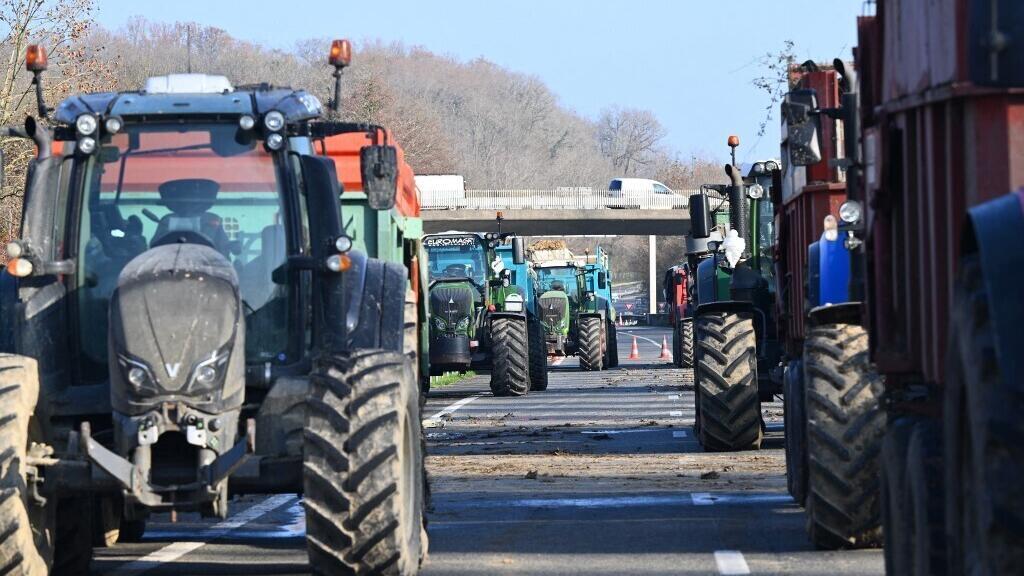
Tractors block the A64 motorway between Bayonne and Pau during a protest called by French farmers unions Coordination Rurale and ELB (Euskal Herriko Laborarien Batasuna) in Urt southwestern France on December 13, 2025. AFP - GAIZKA IROZ


The farm union Coordination Rurale has vowed to maintain the blockades until authorities halt the slaughter of entire herds where cases of the disease have been detected.

“This is a challenge we will take up with farmers: to vaccinate one million head of cattle as quickly as possible because that is the way to fight the disease, and this vaccination is crucial,” Genevard told Europe 1 radio. “I will go there tomorrow, as I did in Savoie, Haute-Savoie and the Jura, to attend the start of the vaccination campaign. It is a path of hope to avoid the culling of herds,” she added.

According to Vinci Autoroutes, traffic in the south-west remains heavily disrupted between Toulouse and Bayonne. The A64 motorway is partially closed, with farmers blocking lanes in the Basque Country and near Carbonne, the birthplace of the January 2024 farmers’ protest. Disruptions have also been reported on the A75 and national roads.

In the Gironde département, a convoy set off on Sunday morning from the south of Bordeaux towards the city. “The blockade is up; the motorway is littered with debris, and trailers are full of anything that can burn,” said Léon Thierry, co-president of Coordination Rurale in the Pyrénées-Atlantiques, speaking to French press agency AFP by phone from the A64 between Briscous and Urt. “There were 400 to 500 people here on Saturday night, tractors are still arriving – we’re not ready to give up.”

Farmers clash with police in southwest France over mass cattle culls and trade fears

In the Rhône Valley, a blockade north of Montélimar was lifted shortly before 1 a.m. on Sunday, according to Louis Petiton Saint Mard, co-president of Coordination Rurale 26.

Since lumpy skin disease appeared in France in June, the government’s containment strategy has included the slaughter of affected herds, movement restrictions, and emergency vaccination within a 50-kilometre radius around outbreak sites.

An additional one million cattle will now be vaccinated across eight south-western départements designated as regulated zones, on top of the million already treated – at a cost of €20 million, according to the agriculture ministry.

(With newswires)
The Fulani women living under the control of JNIM jihadists in the Sahel

What is life like for the women living in the central Sahel, in areas controlled by the jihadist JNIM group? British researchers spoke with women from the Fulani ethnic group, which is strategically targeted for recruitment to the JNIM.


Issued on: 14/12/2025 - RFI

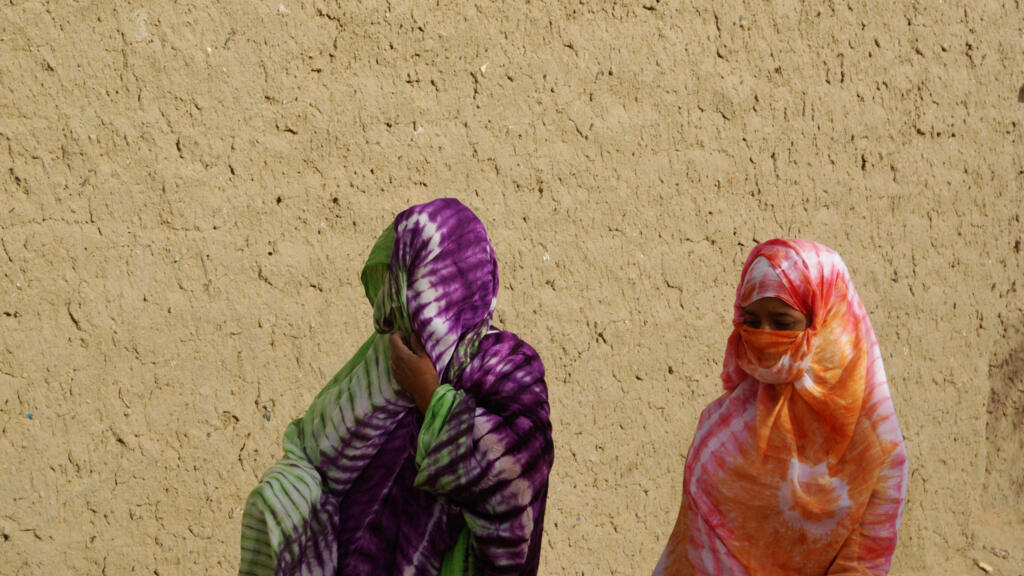
Women living under the control of JNIM jihadists report 'profound and overwhelmingly negative changes’ in a study by the British research programme Xcept. © AP/File photo

In a report published on Monday, the UK research programme Xcept said that while some of the women say they "support" the armed group, they believe such testimonies are "more often a survival strategy than radicalisation".

The al-Qaeda linked armed Group for the Support of Islam and Muslims controls larges parts of Mali and Burkina Faso. The researchers interviewed 77 women from the Fulani ethnic group – who are predominantly Muslim and historically associated with nomadic pastoralism – living in these areas.

Some were the wives, mothers or grandmothers of the jihadists, while others had no direct connection to them. More than half have lived for at least five years “under JNIM’s effective control”.

The researchers found a mixed reaction to the jihadists, with a mix of criticism and support, but said that most of the women have adopted “a survival strategy” rather than a full adherence to the group’s ideology.


State failings


"Women universally characterised JNIM’s ascendance as precipitating profound and overwhelmingly negative changes," the report says.

These changes related to dress codes – an insistence on women wearing the veil and abaya – along with bans on women working and driving, the abolition of traditional ceremonies, and restricted access to healthcare and education, as jihadists have closed state schools and health centres.

“Respondents describe JNIM regulations as economically devastating and deeply detrimental to their physical and mental health,” the study says.

However there was also “longstanding dissatisfaction” with state corruption, in both Mali and Burkina Faso, and the governments’ inability to protect communities.

The researchers highlighted that human rights violations and “real or perceived collective punishment of the [Fulani] community” by soldiers and affiliated militias and foreign military partners – including volunteers for the Defence of the homeland, Dozo hunters or Wagner Russian mercenaries – “weakens state legitimacy”.

Around three-quarters of the women interviewed reported acts of violence committed during counter-terrorism military operations which are “exploited” by JNIM – which presents itself as “more reliable protectors of women”, helping them recruit new members.
Increasing acceptance

The research found that some JNIM policies were popular, such as direct material aid – generally obtained through looting – and access to justice.

The group's Sharia-based justice system was described as “faster, cheaper and more accessible than the state equivalent”.

Overall, the women’s perceptions of the JNIM tended to improve over time in areas where the jihadists are most entrenched and organised. However, the researchers note that “most women who said they appreciated the group’s provision of services did not equate this with support for its vision”.

There are accounts of women being beaten or whipped by jihadists enforcing Sharia law, followed by a gradual acceptance of these corporal punishments over the years.

A few of the women admitted to helping JNIM by providing intelligence and logistical support.

According to the researchers, overall women’s perceptions of JNIM were "primarily negative". Many had simply resigned themselves to the group's presence and control, which, the study says, shows "an adaptation to life under the group’s dictates, rather than genuine radicalisation".

However, researchers highlighted that their children, many of whom are growing up “without having lived under the state", may have a different perspective.

“JNIM governance is altering social, generational, religious, behavioural and governance norms," the authors wrote – presenting a challenge for future generations.

This article was adapted from the original version in French by David Baché.

French research ship Tara sets sail to study secrets of heat-resistant corals

In the waters of the western Pacific lies the Coral Triangle – an area home to a third of the world's corals. While warming seas have bleached swathes of other reefs, scientists say the Southeast Asian hotspot has proven more resilient. Now French research vessel Tara is heading out on an expedition that aims to understand how and why certain corals can resist climate change better than others.


Issued on: 14/12/2025 - RFI

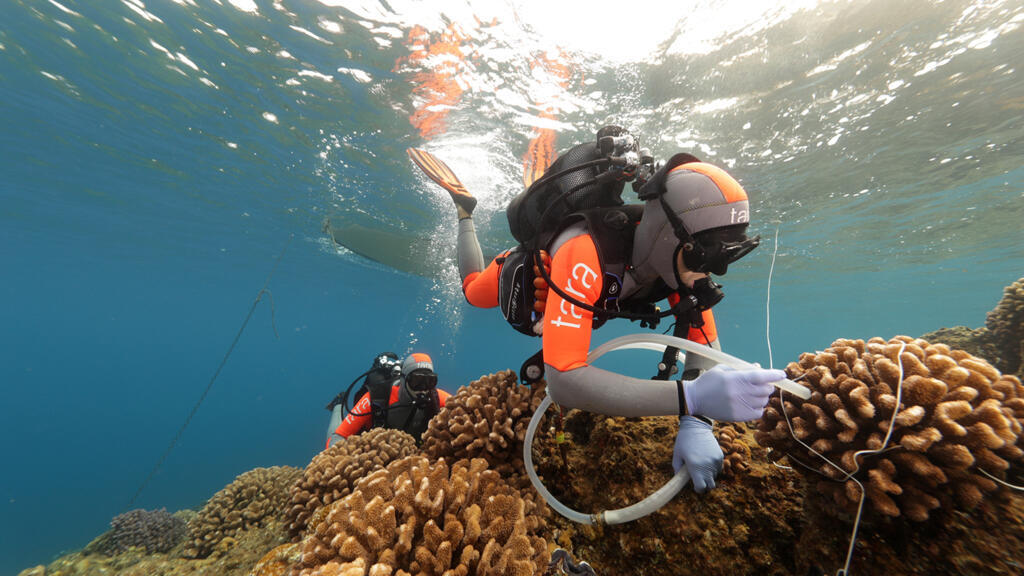
Diving and sampling from corals during the Tara Pacific expedition (2016-2018). © Fondation Tara Ocean
01:23


By: Isabelle Martinetti

The schooner departs from Lorient in Brittany on Sunday on an 18-month mission dubbed Tara Coral.

The expedition will take it to the tropical waters of the Coral Triangle – a region encompassing 5.7 million square kilometres of ocean between Indonesia, Malaysia, Papua New Guinea, the Philippines, Solomon Islands and Timor-Leste.

Nicknamed "the Amazon of the seas", the zone contains some 600 different species of coral and is a hotspot of marine biodiversity.

Coral reefs provide precious habitats for underwater life, supporting an estimated one million other species. Yet as oceans warm, marine scientists have reported coral bleaching and death on a scale never seen before.


Secrets of endurance

"In the Coral Triangle over the last few decades, the decline of these coral reefs is less pronounced than in other parts of the world," Paola Furla, a researcher at Côte d’Azur University and scientific director of Tara Coral, told RFI.

"The idea is to try to understand what kind of factors have influenced this endurance.

"Is it the environment, the quality of the water? Is it the biodiversity found in the reef that is the strength of the corals, or is it their genetics?"

The Coral Triangle contains one-third of the world's coral reefs with about 600 different species. © Veron et al 2009 / Fondation Tara Ocean

The Tara Ocean Foundation and more than 40 scientific partners have gathered a transdisciplinary team to study this "thermotolerance".

From 2026 to 2028, eight scientists, six sailors, one artist and a journalist will compose the crew on board Tara.

Scientists will test several hypotheses as to why corals are surviving, looking into whether it could be down to the wide diversity of species in the area, the presence of more resistant species or individual corals that are pre-adapted to global warming, or the upwelling of cooler waters that limit ocean warming.

The big blue blindspot: why the ocean floor is still an unmapped mystery
Heat test

One of the tests conducted by the researchers will consist of briefly subjecting pieces of coral to acute heat stress and identifying colonies that do not bleach.

"According to how they react, you will have an idea of how far they are resilient," explained Serge Planes, director of research at France's National Centre for Scientific Research (CNRS).
The scientific teams will focus on four coral species: Acropora, Millepora, Porites and Pocillopora. © Vincent Hilaire - Fondation Tara Ocean


The scientists will also use DNA analysis and genetics to try to make corals more resilient.

Genetic engineering is now beginning to be applied to coral reefs, said Planes, giving some examples: "How can you inject different microbiomes, different bacteria or nutrients which would provide the coral with more resilience?"

The aim is for these coral reefs to "be healthy in the future" and "to maintain biodiversity", he said.

After leaving Lorient, Tara will head for Tokyo in early April and then Papua New Guinea in May 2026.

It is the latest environmental expedition for the sailing ship, which has previously been used to study Arctic ice, marine microorganisms and plastic pollution.
Hong Kong's oldest pro-democracy party announces dissolution

Hong Kong (AFP) – Hong Kong's oldest pro-democracy party has decided to disband, the group announced Sunday, after its members formally voted to dissolve the organisation and enter liquidation.

Issued on: 14/12/2025 - RFI

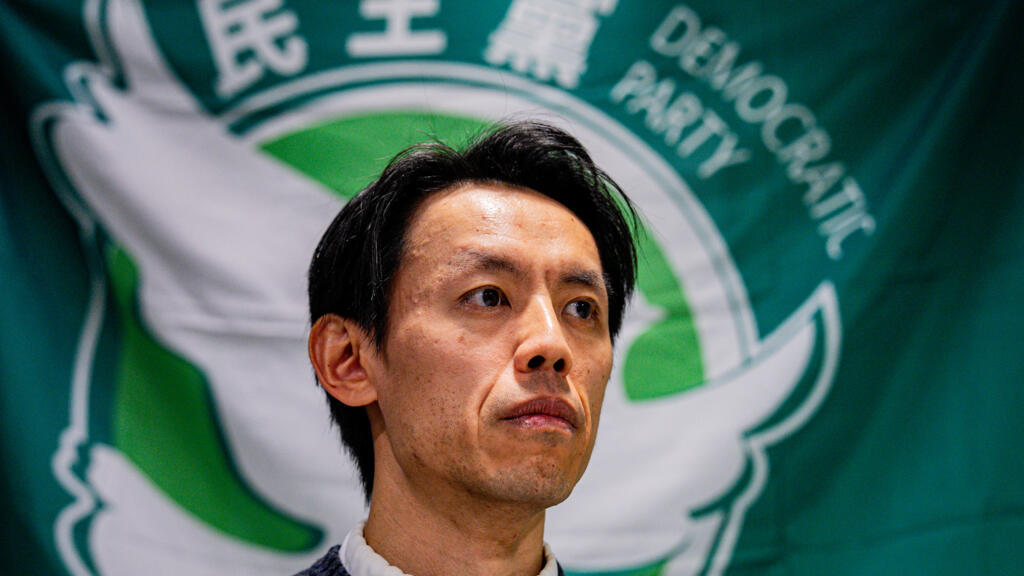
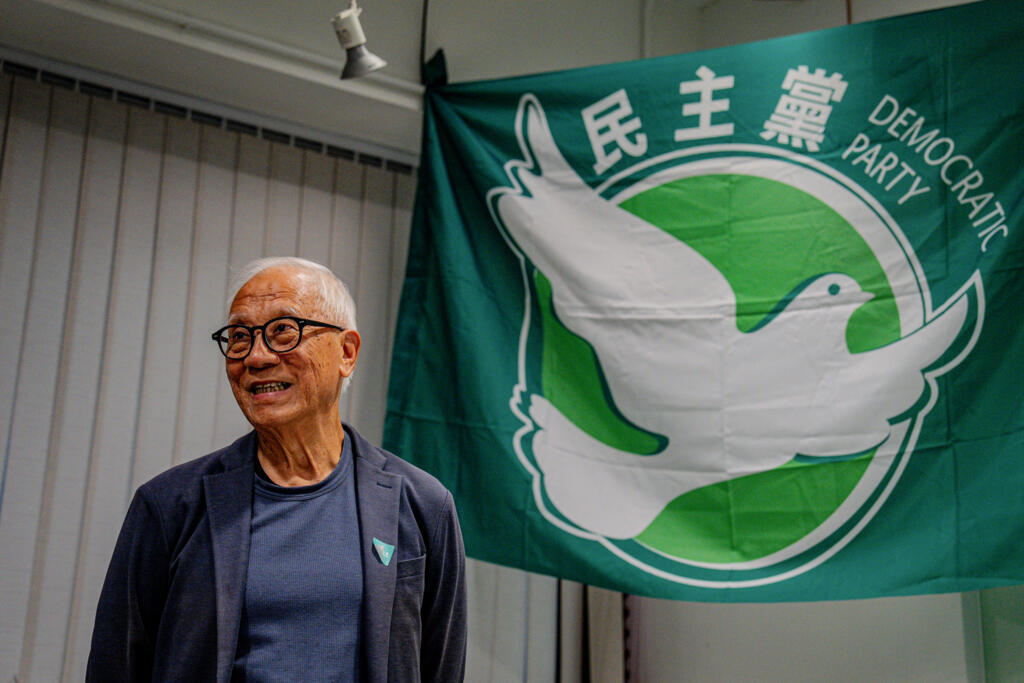
The chairman of Hong Kong's Democratic Party announced the organisation's members had voted for its dissolution © Leung Man Hei / AFP

The Democratic Party was founded in 1994, near the end of British colonial rule, when Hong Kong's leading liberal groups merged.

"Over these thirty years, we have taken part in and borne witness to the development and transformation of Hong Kong society, watching its systems and environment undergo one profound change after another," the party said in a statement.

"Yet as the times have shifted, we now, with deep regret, must bring this chapter to a close," it added.

At Sunday's meeting, 117 out of 121 members voted for the group's liquidation, with the remaining four votes being blank ballots, Lo Kin-hei, the party's chair, told a news conference.

He said that it was a "collective decision" made by party members, adding that it is the best way forward for them.

"We are deeply grateful to all the citizens who have walked with the Democratic Party for the past 30 years," Lo said.

Former party leader Emily Lau reacted to the dissolution with dismay when leaving the meeting Sunday, telling reporters: "I don't understand why the Democratic Party would end up like this."

"I think Beijing needs to provide an explanation," she added.

Lo said the disbandment was due to Hong Kong's "political environment", but declined to provide details of the constraints the party was facing.
'Regression'

The Democratic Party's top concern was determining how the city would eventually elect its own leader and lawmakers through universal suffrage under China's "One Country, Two Systems" model.

It said in its manifesto that "as part of the Chinese citizenry, we have the rights and obligations to participate in and comment on the affairs of China".

Following Hong Kong's handover to China in 1997, the party became the most influential voice of opposition in the city's legislature and led peaceful street demonstrations.

The disbandment decision indicated the regression of Hong Kong from being a liberal society into an "authoritarian society", said Yeung Sum, a former party leader who has served jail time.

With the demise of Hong Kong's top pro-democracy parties, no candidate put forward a pro-democracy platform in the legislature election held this month -- which critics pointed to as another sign of the city's slide towards authoritarianism.

Former party leader Yeung Sum said The 78-year-old added that younger Hong Koners would feel frustrated if the political system went 'backwards' © Leung Man Hei / AFP

Yeung added that younger generations would feel frustrated if the political system went "backwards".

"I think this kind of fighting for democracy will carry on, even though we got ourselves disbanded today," the 78-year-old said. "We won't die away. We won't fade away."

Beijing tightened its grip on the Chinese finance hub after massive and sometimes violent pro-democracy protests in 2019.

After the imposition of the national security law, the city's political opposition dwindled, with most democracy campaigners jailed or overseas.

The party holds no elected seats after its lawmakers resigned en masse from the Legislative Council in 2020.

Four party lawmakers were jailed last year for subversion under a Beijing-imposed national security law.

Former party leader Albert Ho is behind bars pending trial for national security charges that could see him jailed for life.

Hong Kong's second-largest opposition group, the Civic Party, closed its doors in 2023.

Another party, the League of Social Democrats, announced its disbandment in June this year, citing "immense political pressure".

"The Hong Kong government should be more open, they should accept more different kinds of opinions, even though there may be some opposition," Lo said on Sunday.

"But that is how the society works and that is how things progress," he added.

© 2025 AFP
‘We're fighting a daily battle': Iranian women dare to shed hijab in public

Three years after 22-year-old Mahsa Amini died after being arrested for failing to cover her head, more and more women are pushing the boundaries of Iran's strict morality laws and going out in public without a hijab. One Iranian woman tells RFI why she sees dropping her headscarf as an act of resistance.


Issued on: 14/12/2025 - RFI

Iranian women in Tehran without the mandatory headscarf, or hijab, on 5 August 2023. 
© AP - Vahid Salemi


"When I look at old photos of myself wearing the hijab, I find it quite strange," she told RFI, speaking on condition of anonymity. "I no longer recognise myself."

Today, she leads most of her daily life without a headscarf. While she walks in the street or visits cafés bareheaded, she still covers up to visit government offices, where women are denied entry unless they comply with Iran's religious dress code.

She is not alone. A growing number of women are daring to defy the rules since Amini's death in police custody provoked protests across Iran and the wider world.

"At first, it was mainly young people," the woman said. "Now it's more and more women, not all young."


Uneasy freedoms

Wearing a hijab remains the law in Iran, as it has been since the Islamic revolution of 1979. Some police forces are reportedly enforcing this law less rigorously in the aftermath of the protests, although observers say this varies from town to town.

Iran's parliament last year passed a law – drafted some eight months after Amini's death – that increased surveillance and imposed even harsher penalties for women and girls who refuse to entirely cover their hair, forearms or lower legs.

Yet the government postponed its implementation, originally planned for December 2024, and called for the text to be revised. The legislation remains pending.

President Massoud Pezeshkian, elected last July, has publicly expressed reservations about the mandatory hijab, telling American broadcaster NBC News: "Human beings have a right to choose."

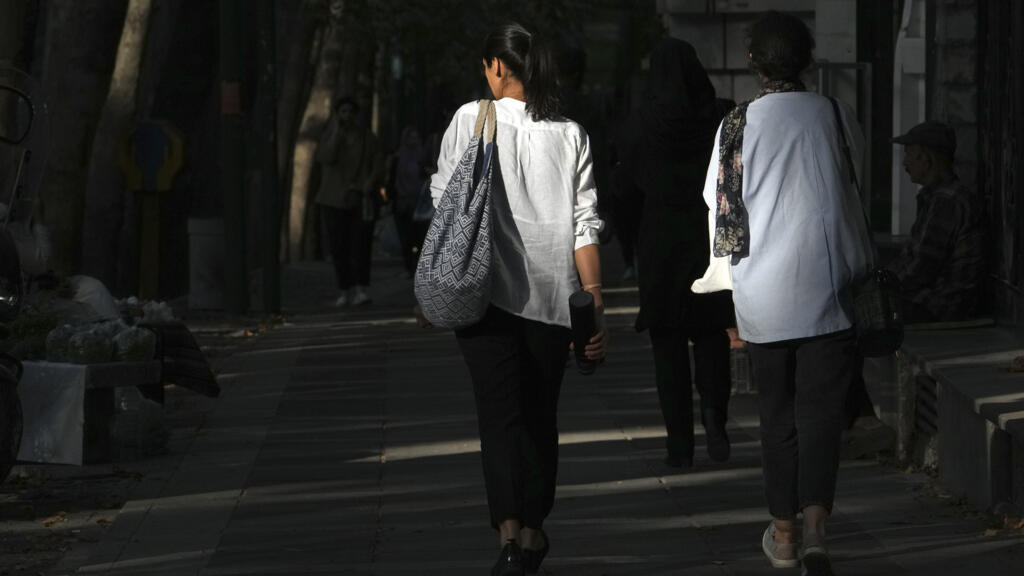
Women in Tehran on 7 December 2025, wearing conservative dress in compliance with Iran's religious laws. © AP - Vahid Salemi

His position is at odds with hardline lawmakers, who earlier this month wrote to Iran's chief justice to complain about lax enforcement of the dress code. Conservative protesters have also turned out repeatedly to call for stricter punishment, including staging a sit-in outside parliament that lasted around six weeks.

Caught between the two are the women who test the rules, a choice that still exposes them to considerable risk.

"I don't feel safe, and I don't think any woman feels safe if she doesn't wear a hijab, because at the moment, there are no rules to fall back on," RFI's interviewee said.

"It's a kind of limbo: you don't know if you're breaking the rules, you don't know if someone will feel entitled to attack you or arrest you."

How a regional reset has left isolated Iran fighting to stay relevant
'More than a piece of cloth'

Women's dress remains a lightning rod in Iran, nearly 50 years into its theocracy.

"The veil is more than a just a piece of cloth," explained Azadeh Kian, professor of sociology and director of the Centre for Gender and Feminist Studies at Paris Cité University. "It is an ideology that has been imposed on women since the beginning of the Islamic Republic."

Supreme Leader Ayatollah Ali Khamenei and other ultra-conservatives want the wearing of the hijab to be respected "at all costs", Kian said.

But she says the public's views are shifting. "Polls conducted by the government itself indicate that 80 percent of Iranian women are in favour of freedom of choice."

At least 1,000 people executed in Iran in 2025, says human rights NGO

Pezeshkian's administration is hardly liberal; it has notably stepped up executions in recent months, including for moral and religious offences. Yet circumstances may force it to be pragmatic.

"The government knows very well that returning to the veil would mean more tension in society at a time when the population is already up in arms against the regime because of an unprecedented economic crisis," said Kian.

The situation will only become more volatile as international sanctions, reinstated in September after Iran suspended inspections of its nuclear facilities, begin to bite, she believes.

While a crackdown on dress would no doubt provoke further criticism from Western countries, the woman who spoke to RFI said it could never be ruled out.

"There is always, always, always a backlash with the Islamic Republic, and it's always something frightening," she said. "We don't know when, we don't know how. But there will be a backlash when it suits them."

For now, she continues to risk going out without a hijab.

"It's everyday resistance we're expressing," she said. "We are fighting a daily battle."

This article was adapted from the original in French by Nicolas Falez.


France’s Flamanville nuclear reactor reaches full power for first time

The Flamanville EPR reactor in north-western France has reached full nuclear power for the first time, state utility EDF announced on Sunday, describing it as “a major milestone” for the long-delayed 
  and over-budget project.


Issued on: 14/12/2025 - RFI

An EDF employee looks at the engine room on the site of the third-generation European Pressurised Water nuclear reactor (EPR) as the Flamanville 3 power plant is ready to start in Flamanville, France, April 25, 2024. © REUTERS - Stephanie Lecocq

“14 December 2025 marks a key step: the Flamanville 3 reactor reached 100% nuclear power at 11:37am and generated 1,669 MW of gross electrical power,” EDF said in a statement, a few days after receiving clearance from the Nuclear Safety and Radiation Protection Authority (ASNR).

Flamanville 3, the first new nuclear reactor to start up in France in 25 years, was connected to the national grid on 21 December 2024 — 12 years later than originally planned. Its costs have soared from an initial estimate of €3.3 billion to as much as €23.7 billion in 2023 prices, according to France’s Court of Auditors.

Nuclear energy, which makes up a major share of France’s electricity production, remains central to the country’s efforts to maintain a low-carbon power mix. But its implementation continues to face technical and political challenges, from waste management to costs.

President Emmanuel Macron announced an ambitious nuclear revival in 2022, including plans to build six new-generation EPR2 reactors, with an option for eight more. However, the government has yet to finalise its long-term energy roadmap, known as the third Multiannual Energy Programme (PPE), amid sharp political divisions over the balance between nuclear and renewables. The far-right National Rally (RN) has opposed further development of renewable energy projects.

Testing phase

EDF said reaching full power would allow operators “to test equipment at maximum output, take measurements and verify proper operation.” In the coming weeks, as part of the reactor’s commissioning programme, power levels will fluctuate to support tests at different stages, with maintenance also planned on an internal electrical substation.

Specifically, teams will “completely replace a 400kV feedthrough connecting overhead lines to underground cables running down the cliff to the auxiliary transformer of Flamanville 3,” an EDF spokeswoman told French press agency AFP. The procedure will be carried out while the reactor remains synchronised to the grid, she added.

The ASNR on Friday authorised EDF to raise the reactor’s power output beyond 80%. EDF said at the time that teams were “mobilised to bring the reactor to 100% power by the end of autumn,” in line with previous commitments.

The gross output cited on Sunday differs from the net power delivered to the national grid, as part of the energy generated is used by the reactor itself.

Built on the Normandy coast next to two older reactors, Flamanville 3 is now the most powerful unit in France’s nuclear fleet, capable of supplying electricity to two million households.

Other EPR reactors are already operating in China (Taishan 1 and 2) and Finland (Olkiluoto 3), while two more are under construction at Hinkley Point in south-west England.

(With newswires)

BALKAN BLOG: Croatia’s left-right divide deepens

BALKAN BLOG: Croatia’s left-right divide deepens
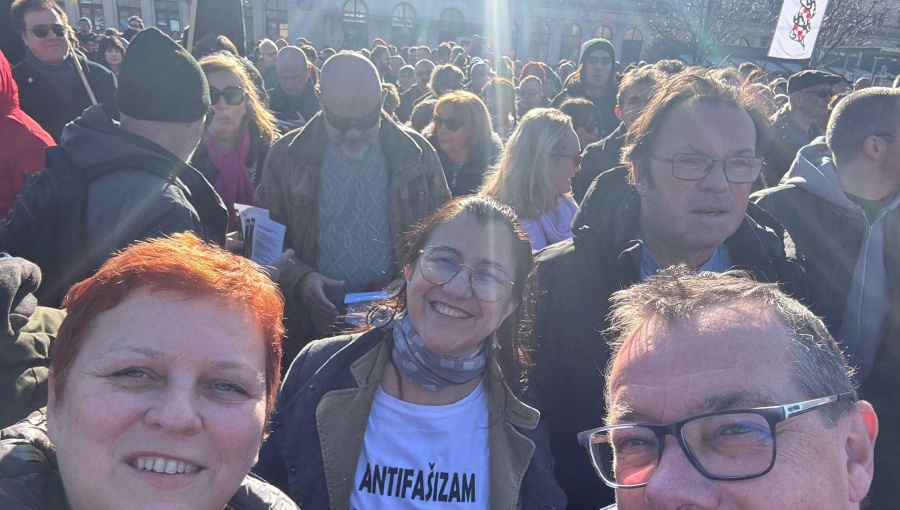
Thousands of people joined marches in Zagreb and other Croatian cities on November 30. / Mozemo via Facebook
By Clare Nuttall in Glasgow December 7, 2025

The largest anti-fascist demonstrations Croatia has seen in years have highlighted a widening rift between the country’s political left and right, as disputes over the wartime legacy of the Ustasha regime intensify. 

Thousands of people marched through central Zagreb on November 30, rallying against what organisers described as an emboldened far-right fringe and the state’s failure to curb nationalist symbolism. Sister protests were held in Rijeka, Pula and Zadar along the Adriatic coast.

Protesters carried banners reading “United Against Fascism” and chanted wartime partisans’ slogans, according to local media reports, as they called for a tougher response to a string of recent incidents — from intimidation at cultural events for the Serb minority to vandalism of memorials marking victims of the Ustasha regime, which ruled Croatia under Nazi auspices during World War Two.

Controversial salute 

The demonstrations followed a series of attacks earlier in the month, in which masked groups used the salute “Za dom spremni” (“For the homeland – ready”), a slogan linked to the Ustasha, to disrupt Serbian cultural events in Split, Zagreb and Rijeka. Police intervened in several cases, but rights groups say the incidents mark an escalation in both organisation and brazenness.

Although Croatia joined the European Union in 2013, rights monitors have warned for years about ambiguous messaging from officials regarding the country’s wartime past. The Council of Europe’s Anti-Racism Commission has repeatedly criticised what it describes as a “glorification” of Ustasha symbols and narratives.

The debate resurfaced forcefully in July when nationalist singer Marko Perković Thompson drew an estimated half-million fans at Zagreb’s Hippodrome, the largest public gathering in Croatia’s post-independence history. Media footage showed sections of the crowd giving the “Za dom spremni” salute. While the chant is illegal under Croatian law, courts have ruled Thompson may use it in a song referencing the 1991-95 independence war.

Human rights groups accused authorities of failing to condemn the displays, arguing the silence created the impression that the salute was tolerated. Opposition parties said the government had missed a rare chance to draw a clear line between remembrance of the 1990s conflict and historical revisionism.

Interior Minister Davor Božinović praised the security arrangements at the July concert but rejected claims the government was turning a blind eye. He also turned on critics, claiming they “labelled half a million Croatian citizens overnight”.

Political tensions harden

Since May 2024, the ruling conservative Croatian Democratic Union (HDZ) has governed in coalition with the nationalist Homeland Movement, which opposes immigration and LGBT rights and has advocated restricting abortion.

Prime Minister Andrej Plenković has repeatedly dismissed accusations that his party enables extremism, saying such claims are exaggerated. But his government has been forced into a series of awkward public interventions as far-right rhetoric bleeds into official ceremonies.

In July this year, Plenković criticised the mayor of Dubrovnik, an HDZ member, for ending a speech at a veterans’ memorial with the “Za dom spremni” salute, calling the gesture unacceptable and not reflective of party policy.

However, when Zagreb Mayor Tomislav Tomašević, a prominent green-left politician, warned in October that Thompson could be barred from performing in city-owned venues if he used the salute during a December concert. Plenković denounced the threat as “a bad joke” and politically motivated. The dispute further polarised the political landscape, with left-leaning parties accusing the prime minister of appeasing nationalist sentiment.

Serb minority fears rising hostility

Relations between Croats and the country’s Serb minority remain shaped by the 1991-95 war, when Serb forces sought to prevent Croatia’s independence. Although minority rights were a central condition of Croatia’s EU accession, anti-Serb sentiment has periodically flared.

In November, masked groups disrupted the Days of Serbian Culture in Split, targeted an exhibition in Zagreb, and attempted to break up a karate tournament in Rijeka involving a Serbian team. The glass frontage of an ethnic Serb community office in Split was smashed, and earlier in the year memorial plaques to wartime victims were defaced.

Serb community leaders say the pattern suggests a coordinated campaign of intimidation. Police have condemned the incidents, with Božinović saying officers “act quickly and professionally” to protect citizens “regardless of who is protesting and against whom”.

The latest protests reflect not only frustration with extremist incidents but also a broader struggle over how Croatia defines itself three decades after its war of independence.

The visibility of nationalist messages at major public events — and the reluctance of senior officials to condemn them unequivocally — has fuelled a perception that fringe ideas are moving closer to the mainstream. Meanwhile, the left-leaning opposition, fragmented in recent years, has seized on the issue as a rallying point.

The November 30 protests, which drew a broad coalition of civil society groups, may signal a more assertive pushback from Croatia’s anti-fascist and liberal constituencies. This is only likely to intensify the political divide, with the governing coalition dependent on nationalist partners and the wartime past still politically potent.

Iraq hit by flash floods, two dead reported in Sulaimaniyah

Iraq hit by flash floods, two dead reported in Sulaimaniyah
Iraqi floods hit after historic drought. / bne IntelliNews
By bna Cairo bureau December 9, 2025

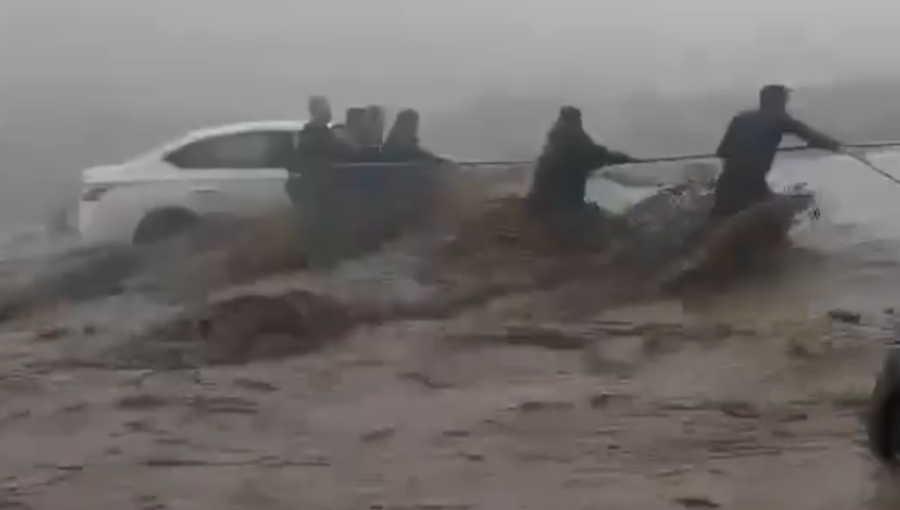
Heavy rains triggered flash floods across several parts of Iraq on December 9, cutting key roads, inundating homes and causing multiple fatalities, Al Arabiya News reported.

The latest storm is one of several to hit the country this season. It shows Iraq’s growing vulnerability to extreme and unpredictable weather patterns, with authorities warning that infrastructure across many provinces is ill-equipped to cope with sudden surges in rainfall.

Regional media reported the collapse of several buildings and schools in the Jamjamal district after torrential rain swept through the area. Authorities in the Kurdistan Region confirmed that at least two people died in Sulaimaniyah, with additional damage reported across nearby towns.

In the Shorash subdistrict, local official Hawta Aziz said a 70-year-old man was killed when a wall at his home collapsed under the pressure of the floodwaters. The Sulaimaniyah Joint Coordination Centre urged.

The water came in extremely fast; families had only a few seconds to move to safety,” Aziz said, warning that further structural damage may still be uncovered as assessments continue.

The Sulaimaniyah Joint Coordination Centre urged residents to contact emergency numbers in the event of further incidents and said rescue teams remain on alert.

Flooding also disrupted major transport routes. Sections of the Kirkuk–Baghdad, Tuz Khurmatu and Daquq roads were cut, while part of the Baghdad–Mosul highway near the village of Makhoul in Salah al-Din province was submerged, severely affecting traffic and slowing the delivery of goods.

An official from the Salah al-Din civil defence department told local outlets: “These highways are lifelines. When they go underwater, entire supply routes are thrown off.”

In Erbil, the heavy rainfall revived the normally dry Khalee Ali Beg waterfall, which began flowing again after a prolonged drought a striking reminder of the extreme swings between water scarcity and sudden flooding that have characterised Iraq’s recent climate patterns.

Iraq’s meteorological authority warned that unstable weather patterns are expected to continue in the coming days, bringing variable conditions and the possibility of light rainfall in scattered areas.

The UN has repeatedly warned that Iraq is among the countries most vulnerable to the impacts of climate change, facing a combination of drought, extreme heat and intensified flooding.

NOT SATIRE

INSTANBUL BLOG: 

Turkish journalist suggests Jailmatic AI system to cut costs of trying and jailing government opponents

ISTANBUL BLOG: Turkish journalist suggests Jailmatic AI system to cut costs of trying and jailing government opponents
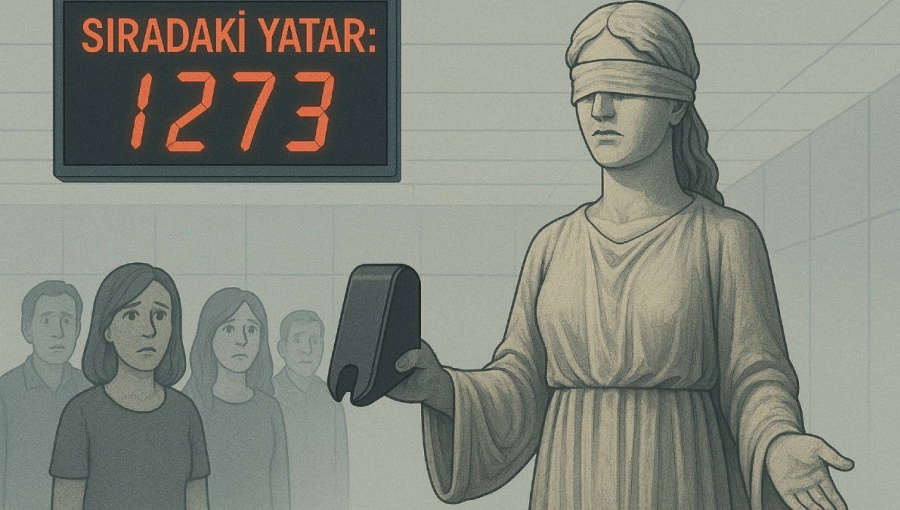
"Next!" bianet illustration of groundbreaking system that would run along the lines of a bank branch queuematic "get in line" service. / bianet
By Akin Nazli in Belgrade December 11, 2025

Turkey’s government should introduce an artificial intelligence-based “Jailmatic” system to automatically imprison opponents rather than squander billions paying for judicial procedures, local journalist Ozgur Erbas (@zgrerbas) wrote on December 6.

Erbas introduces her proposal in an op-ed written for bianet. It sends the message, “No more anxiety! Jailmatic would solve this problem.”

If every opponent of the government in Turkey is going to end up in prison anyway, then let AI assign them their prison queue number, Erbas suggests.

Jailmatic, or yatarmatik as it is in Turkish, would run along the same lines as the queuematic systems used in bank branches.

Erbas also proposes some advertising blurb: “With jailmatic, you can choose your time of the year, prison and instalment plan yourself.”

Dragging the people along

Where does Erbas get her enthusiasm from?

“In our country, as you know, the branches of government don't like to be separated,” Erbas also writes, adding: “They want to be united, to be together, to be powerful.

“This dynamic seen in the branches of government drags individuals along with it. For example, when I see a car parked in the middle of a pedestrian crossing, I immediately start telling myself: ‘When I become president of the republic...’”

Nail that post

Erbas reflects that she has her heart set on obtaining a post, status, and has things she’ll accomplish if she sits in that post.

As an experienced Turkish civilian, she knows what she has been taught: she needs to nail that post, position and status are necessary. “The bushes whisper to me, ‘Grab that seat, and you'll get what you want.’”

Dear judge, dear prosecutor you would still read files, make decisions

But back to the benefits of Jailmatic. “Why,” asks Erbas, “would someone want to become a judge or a prosecutor? To sit on a bench, wear a robe, read files and make decisions? Well, if so, there's no problem, you'll still do exactly this according to my proposal.

“Unless you're one of those who, like in Aristophanes' play The Wasps, go mad saying, ‘I can't stop judging, I can't live without seeing the defendants beg and cry,’ then you’ll just do your job. Of course, it’s known that your job includes elements like ensuring justice and the rule of law, things that aren't always clearly understood by everyone. But you’ll still do your job well, you’ll get your salary without a hitch, and that's it. If anyone asks, you say, ‘I did my job, I applied what the law says.’"

Shaky ground, shifting coalitions

Besides, how to manoeuvre in the job would remain a challenge. You can’t forget the people you haven't greeted in a while, says Erbas. You might need to drop by their office for tea. And there are those who never leave their offices. Some of those, well, you might need to cut them dead.

“If you can't figure all this out instantly and just jump through the hoops, you'll descend the courthouse steps faster than you climbed up. In short, these are difficult tasks; not just anyone can handle them,” advises Erbas.

The lawyers? Their problems are countless

In the system as it stands, there is also, of course, the lawyers. Their problems are countless. Some wanted to become judges or prosecutors, but weren't permitted to do so. It’s gotten to the point where, on joining the student association at law school, you can inwardly bid farewell to the robes of judges and prosecutors. But, adds Erbas, because you studied law, you still believe such discrimination shouldn’t have happened. Ultimately, it's hard to concede to yourself that the education you received, the diploma you obtained, aren’t very useful. But at least you can still recite to yourself, “There can be no trial without defence.” Right?

Pliers and wires

In Turkey, according to the journalist, a campaign to suspend the Constitution has begun. The judiciary has become politicised, reduced to a toolbox of pliers and wires. But those cases. They keep on coming. They are countless. The spending is immense. The strain on the budgets of the justice and interior ministries is hardly bearable. “I wanted to contribute to the solution,” says Erbas.

And the solution is Jailmatic

If every opponent of the government is set to one day eat toast in a prison canteen, then let's design a system where people enter their ID number, choose three prisons near their home, select their preferred time of the year for imprisonment and simply press a button, she proposes.

The system would upload everything, including the person’s social media activity and inactivity, intelligence on their behaviour, baseless accusations, what neighbours and colleagues are saying about them and anything else you can think of. It would go straight into an AI “mind”, which would determine the prison term.

It's green, moreover!

Think about it. Police officers would no longer have to raid addresses in the early hours. All the costs, including motor fuel, winter tyres, vehicle insurance, the officer's allowance and so on, would be avoided.

Moreover, the costs generated by the detention, medical checks, transfers, prison meals... All of this would fall away.

Enormous legal expenses, endless hearings, the paperwork, files, witness fees, expert witness fees… Everything you can think of, that would all vanish too.

The system would inform you of the duration of the intended incarceraton, which prison is available for the desired period and your entry and exit dates. It would provide you with your queue number and a confirmation code. It could all be sent to your mobile phone. And that would be it.

Only the judiciary?

Erbas’ proposal is limited to the judicial system. However, looking at the current political settings of the country, there are many unnecessary institutions that produce carbon emissions.

The parliament, opposition parties and a vast number of media institutions that publish or broadcast identical stories. These three for a start could be listed as leading candidates. Their absence would make no difference to anything,

Let’s widen this green transformation. Cut more emissions, shrink more budget deficits. All in all, what we have here is a formidable proposal.