Wednesday, December 17, 2025

Trumpist Geopolitics in Western Balkans – How a Heritage Ideologue Sells “Third Entity” in Bosni
Source: Originally published by Z. Feel free to share widely.

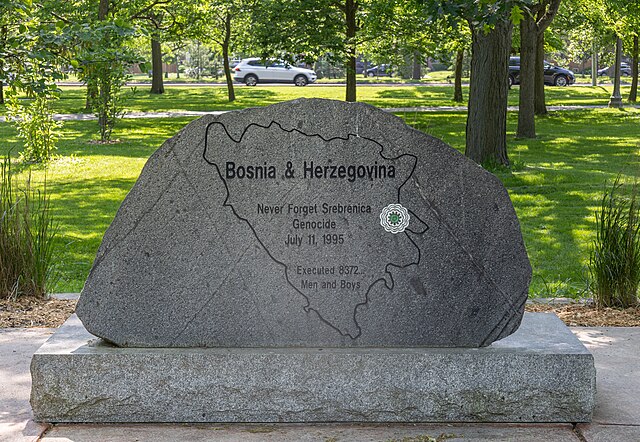
Bosnia and Herzegovina is usually introduced to foreign readers as a “post-war success story” held together by the 1995 Dayton Peace Agreement — a fragile compromise that ended the bloodshed by freezing the country into a constitutional maze. Two entities, three “constituent peoples,” a rotating tripartite Presidency, layers of vetoes and international supervision: Dayton didn’t build a shared political community so much as it administered a ceasefire in legal form, turning everyday life (jobs, schools, hospitals, housing) into collateral damage of permanent ethnic bargaining.

But in recent years, a different vocabulary has been gaining ground — one that reframes BiH not as a society in need of reconstruction, equality, and economic renewal, but as a border problem. In this language, the country is no longer a place where people live; it is a sanitary cordon. Its institutions become a guardhouse for the EU and NATO, and its internal arrangement is treated as something to be “adjusted” to the needs of frontier management. That is how calls for constitutional and territorial “reform” are increasingly sold: not as democratic repair, but as security engineering.

This is where Trumpist ideology enters the picture.

A policy analyst at the conservative U.S. think tank The Heritage Foundation, Max Primorac — the son of Croatian right wing immigrants from Herzegovina and a man well placed within Trumpist circles — has articulated a view that has largely slipped under the radar in Serbia, Montenegro, and Bosnia and Herzegovina, even though it neatly distills the dynamics now unfolding on the ground.

Starting from the familiar narrative of the “sad fate” of Croats in BiH and the demographic decline afflicting both Bosnia and Croatia — a downturn driven, to a significant extent, by prolonged post-Yugoslav social unraveling and economic out-migration — Primorac immediately translates the issue into the language of geopolitics and security borders. In that context, he said the following:

“The last thing Croatia needs right now — or NATO, or the EU, because it’s the same border — is for (the Croatian people in BiH, author’s note) to be left with yet another pro-Kremlin-oriented Serb entity and a radicalized Muslim entity. At this moment, I think the only way to prevent that, and to secure the Croatian and European border, is for there to be a third entity. Otherwise, the Croatian community will disappear.”

What matters most in this statement is neither any real concern for the “Croatian people,” nor the performative anxiety over their alleged endangerment, but the way Bosnia and Herzegovina is coolly reduced to a sanitary cordon and a “border”: as if people, institutions, and an entire political space were nothing more than the EU’s and NATO’s guardhouse. From there, it becomes “logical” to tune the country’s internal architecture to the needs of border patrols, rather than to any idea of coexistence among three indigenous peoples, their equality, or economic renewal.

In that framing, a “third entity” does not appear as a remedy for any concrete, lived problem (wages, schools, hospitals, housing, safety for Croats), but as a geopolitical prosthesis within a new redistribution of power.

The pairing of “a pro-Kremlin entity” with “radicalized Islam” is no accident. It is a textbook example of political racism in the contemporary idiom of the “civilized world”: you don’t need to declare anyone an inferior race to turn them, in public discourse, into a permanent threat — a “security problem” to be handled not through politics and law, but through quarantine and partition. The Serb political space is essentialized as Moscow’s fifth column (even when the reality is that both Belgrade and Banja Luka kneel, as submissively as possible, before Washington and the European Union, offering up territory and resources for next to nothing in exchange for keeping ruling clans in power), while the Muslim political space is cast as naturally prone to extremism — as if the mere existence of a community were itself grounds for suspicion.

The paradox is that both the Serb and Bosniak political establishments actively court precisely that security-racist image of themselves, because in the short term it generates political rent.

The former president of Republika Srpska (the Serb entity in Bosnia) and the self-styled leader of Bosnia’s Serbs Milorad Dodik, has built his power on the nonstop manufacture of an existential threat (“the Islamic danger,” “the Muslim menace”), while simultaneously presenting himself as a geopolitical exception with a “patron” in Moscow — even though this is, in realpolitik terms, largely marketing without backing. Draško Stanivuković, the current mayor of Banja Luka, also stays inside that same frame because he survives on the same electoral market in RS: he criticizes Dodik, yet takes care never to undermine the basic template of “defending the entity” and the supposedly anti-NATO reflex, even though — like Dodik — he ultimately benefits from it.

On the other side, Dino Konaković, as BiH’s pro-Western foreign minister, tries to sell international partners the simplest possible storyline: Republika Srpska as a Russian outpost (“a Russian submarine”). In doing so, he effectively reinforces Primorac’s racist shorthand of a “pro-Kremlin entity,” in which European politics collapses into border security. Konaković’s opposition — the Young Muslim SDA and the ostensibly civic DF — performs essentially the same function: by backing the obscure figure Slaven Kovačević as a candidate for the Croat member of the BiH Presidency in the 2026 elections — a candidate who, if the already familiar pattern of electoral engineering repeats itself, would be elected by Bosniak votes — they produce a new, media-fresh version of the “Željko Komšić case” as proof that the Croatian position can once again be “outvoted.” That, in turn, makes the whole story about imposed changes to the election law by the High Representative — and, ultimately, about a third entity — easier to market as a necessity of self-defense.

The reference is to the recurring controversy around Željko Komšić, who has repeatedly won the seat reserved for the “Croat member” of Bosnia and Herzegovina’s tripartite Presidency thanks largely to votes from Bosniak-majority areas, prompting many Croat parties to argue that the position can be effectively decided by the larger Bosniak electorate rather than by Croat voters themselves; supporters of this arrangement counter that the Presidency is elected on a civic, territory-based ballot and that any candidate who wins under the law has full democratic legitimacy — a dispute that has since become a symbolic shorthand for the broader fight over electoral rules, “legitimate representation,” and demands for a separate Croat political unit (a “third entity”).

It turned out to be the perfect game for mapping out the Trumpist agenda.

When Croatian Prime Minister Andrej Plenković — following right-wing attacks on Serbs in Croatia — came to Banja Luka, the administrative center of Republika Srpska, he was welcomed by virtually the entire political “front row” of Serb politicians. Both Milorad Dodik and Draško Stanivuković were present, and that is symbolically crucial: it shows how internal feuds are instantly suspended the moment it is time for “inter-state” photo ops and for legitimacy brokered through Zagreb. In TV studios they call each other traitors, foreign mercenaries, and grave-diggers of the nation; but when the Croatian prime minister arrives — the financial inspector, not to say the gauleiter of the Balkan tavern — everyone leaps to their feet: “Welcome, please, just tell us where to stand so it shows up on the evening news.”

We witnessed the identical pattern in Zagreb, at the conference marking 30 years since Dayton (“30 Years After Dayton: Seeking Local Solutions”), where the host axis of Plenković and Grlić Radman convened the regional elite, and Konaković appeared as the “constructive partner,” advancing the thesis of the biggest crisis since Dayton and “Russian influence” as the principal obstruction.

In other words: at home, inside the humiliating Dayton protectorate, Bosniaks and Serbs accuse and smear one another, turning the other side into an apocalypse in human form — but when it is time to demonstrate seriousness and “stability” before the external arbiter, they all collectively switch into a mode of theatrical, almost pathetic submission.

What is really unfolding is a slightly revised version of the 1990s script, with the same underlying logic of “using one side to break the whole.” Just as Croatian policy in the early phase of Yugoslavia’s disintegration primarily capitalized on Bosniak interests and energy directed against Yugoslavia — thereby strengthening its own position in the wider process of dismantling and redefining the political space — today, under new circumstances, it is capitalizing on the Serb factor as a lever for reengineering the Dayton protectorate.

The Serb “disruptive” role — whether real or amplified through media framing — becomes a convenient argument for presenting demands for a deeper internal redesign of Bosnia and Herzegovina as a matter of “stability” and “border protection.” And once that redesign is set in motion, it can easily slide into a process that, in practice, undermines the existing order and leads either to its breakdown or to a radical transformation.

How Serbs might fare in such an outcome is hardly a mystery: it is enough to look closely at the fate of Bosniaks who, in 1992–1993, largely counted on Croatian and broader European partnership as protection from the “barbarians from the East,” only to discover later that an alliance lasts precisely as long as its usefulness within the broader strategy of breaking and redrawing the map.

When it comes to Montenegro, the fit into Zagreb’s racist templates works in exactly the same way.

Over the past few years, Croatia has dealt with Podgorica from the position of an EU member state armed with a veto — and willing to wield it as a disciplinary baton. Already during the debate over the Jasenovac resolution, signals from Zagreb warned that this would “certainly slow down” Montenegro’s European integration; and Croatia then did, in fact, block the closing of Chapter 31 (foreign, security and defence policy). Throughout, the handy pretext is the current Serbian president Aleksandar Vučić’s warped Radical-style caricature of aggressive “Serbdom” — which, in reality, is little more than a reality-show paper tiger, perfectly prepared to carry out whatever tasks are demanded: from opening lithium mines to erasing the last traces of Serbian statehood in Kosovo, while Republika Srpska and Serbs in Montenegro are treated as small change.

In that atmosphere, a segment of anti-Serb Montenegrin nationalists and self-declared “anti-fascists” instinctively go looking for an external patron and a stamp of symbolic verification in Zagreb (as the “European address”). They accept a language and a frame in which Montenegro is useful as the antithesis of the “Serb World” and as a bridge to Croatian interests in the region. At times this spills into caricature: Croatian far-right figures (such as Velimir Bujanec) openly call for an alliance of “true Montenegrins” and Croats against the “Serb World” — a reminder of how easily ideological labels (“anti-fascism”) can be converted into geopolitical cheerleading for someone else’s interests.

Paradoxically, this lands them on the same objective side as Dodik. He manufactures and feeds the narrative of a “Russian/Serb disruptive zone” inside Bosnia; they amplify it as a regional “threat”; and Zagreb, in both cases, constructs the same conclusion — that new mechanisms of control and redesign (electoral, constitutional, territorial) are needed in order to “secure the border.” However much they despise one another inside the region, their moves fit perfectly into the same external template of pressure and reengineering.

The way out of this nightmare labyrinth is not another “salvational” Croat entity in Bosnia, nor a fresh round of mutual accusations, but a conscious break with the racist imposition — both external and internal — that reduces Serbs to a “pro-Kremlin zone” they are not, Bosniaks to a “radicalized Islam” that scarcely exists in BiH, and Montenegro to a protectorate disciplined through vetoes and brutal humiliation. In terms of imperial strategies, it is a classic method of managing the periphery: the center produces caricatures, local elites accept them as a currency of legitimacy, and politics is reduced to who can play their assigned role more skillfully in someone else’s script.

As long as Serbian, Bosniak, and Montenegrin politics (whether led by Serbs or by national Montenegrins) accept that language and that borrowed frame — and then quarrel inside it — they work together toward the same outcome: the abdication of real politics and the preparation of terrain for “solutions” that, when needed, will be delivered from outside — in the form of a ‘joint investigation,’ a formulation that functions here as a euphemism for extermination.

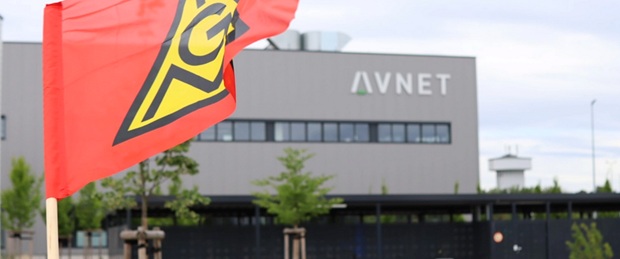
Workers in Germany Strike at Avnet (USA)

Source: Originally published by Z. Feel free to share widely.

It is October 2025, and one room in southern Germany was in a rage. The discontent of workers over the loss of industry-wide collective bargaining had escalated at a local technology company.

Workers at Avnet and Tria had been excluded from Germany’s traditional collective bargaining regime covering the entirety of the metal industry. Avnet’s management sought to justify its attack on workers with “restructuring” – a rather common lame-duck excuse when inflicting harm on workers for the benefit – read: profits – of a company.

Unsurprisingly, Germany’s metalworkers’ union – IG Metall – is resisting management’s assault on workers. The 140-strong workforce at the US-owned Avnet Embedded Freiburg GmbH manufactures electronic components. The company’s Eschbach site offers technology consulting, electronic system design, development and integration, logistics, and repair services.

In a “tense economic situation” – read: the normal crisis of capitalism – collective bargaining, collective agreements, and a strong trade union offer workers at least some degree of security, even in the world’s third-largest economy: Germany.

At Avnet, however, workers at its southern German site have been denied their collective bargaining structure. It began in spring 2025 when management unilaterally cancelled an agreement that is standard in Germany’s metal industry.

Management’s “reason” for acting against workers was framed as “restructuring,” in which the sister companies – Tria Technologies and Avnet Integrated Solutions – were removed from the traditional collective bargaining structure.

This move affected around 140 workers in the 1,100-inhabitant town of Eschbach, situated on the French border near Freiburg (Baden-Württemberg) and Basel (Switzerland).

Immediately, workers were set to lose a “certain” degree of security – already fragile in capitalism and under the whip of often irrational management. Once the current collective agreement expires, workers are likely to be denied entitlements such as leave loading, holiday payments, and even the traditional Christmas “bonuses” – a little extra pay for the festive season – with other benefits are also likely to be cut.

Facing severe wage cuts in the foreseeable future, workers at Avnet in Eschbach did not accept this quietly. This is why the works meeting on 14 October 2025 was extremely well attended.

Workers and the trade union – IG Metall (IGM) – are taking on management. As a first step, IGM called on Avnet/Tria stubborn management to negotiate.

Following the simplistic re-naming of the former Freiburg company MSC Technologies under the Avnet umbrella, the company was divided into four entities. While Tria “Systems” and Avnet Integrated Solutions “IC” continued to maintain industry-wide collective bargaining, management decided that this should no longer apply to Tria “Technologies” and Avnet Integrated Solutions [no “IC”], both located in the Business Park in Eschbach.

In addition, IGM has rightly criticised Avnet’s management for nearly a year for banning the union from accessing the companies for crucial discussions with the works council and workers – a gross violation of German labor law.

In line with Germany’s cherished “social partnership ” ideology, IGM stated: “We urge employers to finally sit down at the negotiating table with us and talk seriously about solutions – under one condition: the interests of workers must remain at the centre of all negotiations.”

While collective bargaining is viewed as a “burden” by management, for workers it promises security, justice, a living wage, and a perspective for the future.

In other words, management that deliberately endangers what German unions call “social peace” should not be surprised if worker protest grows. Discontent among Avnet and Tria workers in the Gewerbepark Breisgau is intensifying. Workers are demanding a return to Germany’s standard collective bargaining practices.

Workers made their position unmistakably clear at the work-stop meeting. There was no doubt about the depth of dissatisfaction with Avnet’s current management. The room was buzzing. There were powerful speeches and a shared goal: fair conditions for all workers.

In a typical yet illogical move, Avnet’s corporate management has failed – to this day – to explain why only half of the four sister companies retained the collective bargaining agreement.

This is an anti-union strategy known as “divide and conquer,” designed to fragment the workforce and weaken the trade union.

For this purpose – and leaving one to wonder where the “H” for “human” (or humane or even humanity) is in HRM – the HR manager prohibited IGM representatives from entering the company. Yet IGM Freiburg remains adamant that Avnet’s management has no legal authority to do so.

Despite this inhuman “HRM” – at times, also camouflaged as business ethics – workers possess fundamental and human rights. These include, under Germany’s Works Constitution Act, the right to speak with their works council and trade union representatives.

As so often in real-existing capitalism, corporate management grossly disregards these rights.

Instead, and in further contradiction to German labour law, management demands that the works council negotiate issues such as remuneration and working hours – matters regulated by collective bargaining law, not works council law. Perhaps the HR manager should revisit “German Labour Law 101.” By law, the works council neither can nor may do this.

Worse still, the not-so “human” HR manager threatened to use force to compel the works council to comply – an act that is itself unlawful. German labour relations strictly separate collective bargaining from works council responsibilities.

At the same time, Avnet’s management has attempted to block workers’ access to information and advice.

Despite enormous pressure put on by Avnet’s management against workers, the works council sought IGM’s support for all talks with management. When the union announced a visit three days in advance and arrived – as permitted by German law – management blocked union officials at the door.

Avent’s HR later claimed that the works council was not allowed to conduct a company tour to speak with workers. This too violates labour law. HR further argued that the works council should not address workers “on such a large scale” – another legal violation.

Even worse, HR wrote to all workers stating that work-stop meetings were not permitted and that participants would not be paid. This too directly contradicts the Works Constitution Act.

All this demonstrates not only repeated violations of German labour law, but also a profound lack of respect for workers and their legitimate representation. In the hallucinations of management studies, this is known as corporate social responsibility – another ideology.

Unsurprisingly, IGM argues that Avnet’s management must urgently reconsider its position. The union is taking legal action. This is not the first time a US company has violated German labour law, only to discover that it must comply.

Meanwhile, the underlying corporate strategy is clear: Avnet wants to pay workers less. This is to be achieved through fragmentation into four companies.

Two – Avnet Integrated Solutions IC and Tria Systems – have returned to collective bargaining. The other two – Avnet Integrated Solutions and Tria Technologies – are excluded, without explanation.

This contradiction violates German labour law and labour relations. Management falsely claims the works council could resolve these matters.

IGM argues that the workforce cannot be divided. Workers want fair participation and secure jobs. They are prepared to strike to regain their collective agreement.

The company’s history stretches back to the late 19th century, when it operated as “Hellige” in Freiburg. It long formed part of Germany’s collective bargaining system.

Renamed MSC in 2001 and acquired by Avnet in 2013, the company changed significantly. Production expanded, the workforce grew, and in 2023 operations moved to Eschbach.

Soon after, management initiated “restructuring,” isolating the works council and presenting faits accomplis.

Four companies emerged: two production entities and two employee entities. Management believes this allows the collective agreement to lapse. After a one-year transition, management moved to cancel it.

Workers responded with industrial action. After a strike ballot on 14 July 2025, 91.5% voted for indefinite strike action.

On 16 July, management attempted to undermine the strike with €200-per-day [$235] strikebreaker bonuses – scab money – and threatening emails. Workers remained resolute, striking for two weeks.

After the summer break, strikes resumed on 22 September. Participation increased. Pressure mounted. As one union official put it: “Sometimes, you need a long breath.”

Management remains opposed to collective bargaining in principle, proposing instead illegal wage negotiations with the works council.

Workers reject this. They will continue to fight – for their families, their dignity, and their right to co-determination.

Despite management’s attempts to divide them, workers stand together and defend their right to strike at Avnet.Email

avatar

Thomas Klikauer has over 800 publications (including 12 books) and writes regularly for BraveNewEurope (Western Europe), the Barricades (Eastern Europe), Buzzflash (USA), Counterpunch (USA), Countercurrents (India), Tikkun (USA), and ZNet (USA). One of his books is on Managerialism (2013).

Belgium

After three days of strike, a vast social movement with no political alternative

Wednesday 17 December 2025, by Mateo Alaluf

Belgium experienced a crescendo of strikes on Monday 24 November in public transport (trains, buses, trams, metros), Tuesday 25 November in all public services (including education and hospitals) and Wednesday 26 November, with the addition of the private sector, a day long interprofessional general strike that was widely followed in Flanders, Wallonia and Brussels.

The success of the common trade union front (General Federation of Labour of Belgium (FGTB), Confederation of Christian Trade Unions (CSC) and General Confederation of Liberal Trade Unions of Belgium (CGSLB)) is all the more significant as it follows 11 months of mobilizations without weakening the determination of the movement. This strike was better supported and longer than the one on 31 March and relays the big national demonstration that brought together some 140,000 workers in Brussels on 24 September.

If the unions’ gamble was successful, so was the government’s. On Monday morning, the first day of the strike, the government reached a budget agreement. It has welded together its coalition, which had previously shown signs of fragility. An agreement, copied and pasted from the demands of the employers’ federations, to implement reform after reform attacking social benefits and public services. Two blocs faced each other.

On the one hand, the Arizona coalition, for which budgetary austerity is the priority of priorities and justifies sacrifices, and on the other hand, a social movement, the largest in Belgium since the “strike of the century” in the winter of 1960-1961, against a set of government measures which, under budgetary pretext, aim to dismantle the welfare state and break solidarity. [1]

The union mobilization, so important in the long term, has been met with silence from the government. Despite their repeated request, the union leaders were not received by the prime minister. Regardless of the strikes and demonstrations, the government is “reforming” as if nothing had happened and the movement seems, despite its strength, powerless in the face of the right’s steamroller. “The unions are paralysing, the government is working,” says prime minister Bart De Wever, promising to go all the way and reassuring his supporters.

“The old tried and tested tactic”

Belgium’s social history is marked by its tradition of general strikes, decided and controlled by the unions to create a balance of power that would allow their demands to be negotiated with the employers and the state under favourable conditions. In the past, this old and tried tactic made it possible to build a social state that responded to popular aspirations in a way that was admittedly always conflictual. But when the contradictions sharpen and conditions deteriorate, the “ritualized strikes,” which previously had ensured a balance of power, have become ineffective. They are no longer levers that can be used when negotiation becomes ineffective and parliamentary action sinks into a vacuum. The government can then foresee the effects of the movement and, despite inevitable losses, turn its back and let the storm pass. The planned strike no longer manages to get the unions and left-wing parties out of the impasse. The strike must then move away from its rituals that make it a cog in the negotiating process, become less predictable in its duration and effects, and manifest itself, in the words of Rosa Luxemburg, as a “political mass strike.” [2]

A successful bet for the trade union movement, which has managed to give impetus to a vast social movement, but the defeat of this same movement which is denied by the government which imposes its budget. A success that is still part of the “old tried and tested tactic”: namely avoiding liberticidal measures, trying to modify one or the other decision at the margins and above all maintaining the pressure of protest without exhausting the troops in order to influence the next elections in 2029. Compared to the scale of the mobilization, the expected effects seem as hypothetical as they are derisory.
Success of the movement and political disarray

As important as the success of the movement and the resolution of the strikers was, the disarray was great and suffered from the lack of political perspectives. Indeed, the turn to the right in the last federal elections in 2024 had traumatized the left.

The government governs but the opposition is not convincing. For the political leaders, the social movement aims to contribute to shifting the political centre of gravity back to the centre-left in 2029. However, Ecolo, which collapsed in the last election, is currently out of the game and the Belgian Workers’ Party (PTB) (radical left) rejects any coalition with right-wing parties. There remains the Socialist Party (PS), which is experiencing a continuous erosion and which lost its first place in the French-speaking part of the country in the last elections to the MR (Reform Movement). The PS has embarked on a refoundation. It puts forward a programme and alternative budgetary proposals, but it remains powerless in the face of two reproaches that it cannot dismiss. First: why didn’t it apply this program when it was in power? The response that the Socialists were in coalition with the MR is not enough, since they chose or at least accepted this partner. Secondly, having entered government after a right-wing coalition, similar to the current one, presided over by Charles Michel (MR), the Socialists did not abolish the unpopular measures they had fought against while in opposition, in particular the postponement of the retirement age to 67 and the tax shift mechanism which structurally de-finances social security. [3]

When the left was still in the majority in Wallonia and Brussels, the FGTB had launched an appeal for a PS, PTB and Ecolo government without having been heard. Now, trade unions, associations and personalities are calling for a left alternative. In Brussels, still without a government, but where a majority for an alternative coalition to Arizona is arithmetically possible, a draft has been made public. For the first time, the PS, PTB, Ecolo, Groen (Flemish ecologists) and Vooruit (former Flemish socialists) have come together to test such a hypothesis. Vooruit withdrew, however, on the injunction of its president, causing the initiative to fail, since in Brussels, the only bilingual region in the country, a double majority, Flemish and French-speaking, is needed.

Belgium is going to suffer from an austerity budget backed by a policy that considers that the sick are not really sick, that the unemployed are not really unemployed and that they must therefore be controlled and if possible deprived of their rights. Budgetary austerity goes hand in hand with a state authoritarianism that pits the “welfare” against those who “work” and in the neighbourhoods, as well as at work, the “legal” against the “illegal.” However, the movement is far from over and could still have many surprises in store for us.

1 December 2025

Translated by International Viewpoint from A l’Encontre.


Attached documentsafter-three-days-of-strike-a-vast-social-movement-with-no_a9315.pdf (PDF - 914.5 KiB)
Extraction PDF [->article9315]

Footnotes


[1] Arizona is the name of the government coalition built around two major right-wing parties, the New Flemish Alliance (NVA - Flemish nationalist) and the Reform Movement MR (French-speaking liberals), four smaller centrist parties, two Flemish, CD&V (Christian Democrats) and Vooruit (ex-Flemish socialists), and a French-speaking party, Les Engagés (ex-Christian Democrats). Prime minister Bart De Wever, NVA, had previously said when he was president of the NVA that his party was the research bureau of the Flemish employers’ association.


[2] Rosa Luxemburg, “The Political Mass Strike,” Vorwaertz, July 24, 1913.


[3] The “tax shift" implies a reduction in social contributions for the employer, social contributions which are part of the deferred salary of employees.

Belgium
Memories of Gilbert Leclercq
Fighting side by side from Kyiv to Panama: A look back at the 2025 International Youth Camp
Fabian, 11-years-old, dead: this was no accident - this is the police
Hendrik “Pips” Patroons, comrade and friend
For an anti-capitalist and internationalist security policy, against the Trump-Musk-Putin axis and neoliberal authoritarian European governments:


Mateo Alaluf, Professor Emeritus of Sociology at the ULB. Author of the book “Le socialisme malade de la social-démocratie”, Editions Page deux and Syllepse, 2021.

Chile: Pinochetism Returns to Power

Source: Originally published by Z. Feel free to share widely.

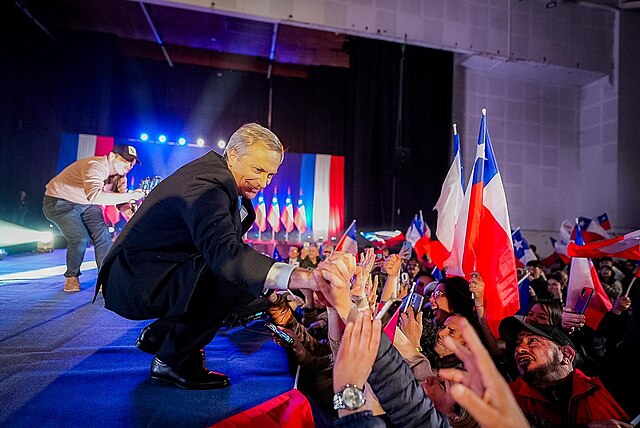
José A. Kast’s resounding victory in the runoff election is bound to have a profound influence on Chile. A solid, neo-fascist, extreme right-wing force consolidated as a result of the convergence of two radical variants of Pinochetism —one led by Kast and the other, even more extreme, by Johannes Kaiser— to which rushed to join the standard-bearer of a political fiction called the “democratic right,” embodied by the former mayor of Providencia, Evelyn Matthei, the supposed heir to Sebastián Piñera’s legacy.

According to Chilean political analyst Jaime Lorca, compulsory voting—previously optional in Chile—channeled social discontent with Gabriel Boric’s government toward Pinochetism and its allies. Keep in mind that Boric’s approval ratings in the second half of his term hovered around a meager 30 percent. Issues such as insecurity, hatred of immigrants Trump style (especially Venezuelans), and inflation —close to 4 percent annually— were stirred up demagogically by Kast, a man as careless with figures and statistics as Javier Milei.

In an attempt to convince voters of the catastrophic dimensions of insecurity, he went so far as to say in his debate with the ruling coalition candidate Jeannete Jara that in Chile “1.200.000 people are murdered every year.” When he realized his mistake, he spoke then of 1.2 billion people murdered in Chile, whose total population is 19 million. The actual figure for 2024 was 1,207 homicides, a rate of 6.0 homicides per 100.000 inhabitants, a figure comparable to that of the United States and slightly higher than that of Argentina.

Despite this, the mainstream media on both sides of the Andes exaggerate insecurity in order to use fear to attract votes to the fascist parties and organizations in both countries. In any case, blunders of this kind were common in Kast’s campaign but, as in Argentina, also in Chile there is a large sector of the electorate that votes because it is an obligation. This is a public which is not interested in politics at all and is not bothered by the nonsense that a candidate may utter. Issues such as those we are analyzing account for the surprising number of votes obtained in the first electoral round by the People’s Party, led by Franco Parisi, which scraped together 20 percent of the votes and was just four percentage points behind Kast. A large part of this electoral turnout —85 percent of the registered voters—  made up mainly of new voters who go to the polls because voting is compulsory, is deeply influenced by the ideology of anti-politics, hyper-individualism, and contempt for anything that smacks of collective action, and in the runoff they leaned in favor of Kast. Some, perhaps, threw aside the deep-rooted anti-communism that prevails in Chile and supported Jara’s candidacy, but not to the extent necessary to prevent a catastrophic defeat.

What can we expect from a government headed by a fascist like Kast? Brutal cuts in social spending, a re-evaluation of the progress made in relation to women’s rights, and a redefinition of Chile’s international alliances. He will surely attempt to deepen the economic model developed during the Pinochet dictatorship, the foundations of which remained untouched by Chile’s long and unfinished democratic transition. Unfinished because the power relations and concentration of wealth that emerged after the fateful September 11, 1973, far from being reversed by the exercise of democracy, were consolidated and reinforced by successive governing coalitions. But in the context of the new US National Security Doctrine, Kast will be pressured by Washington to undertake the arduous task of cooling his country’s warm relations with China. But the Asiatic giant is Chile’s largest trading partner and the one with which a key Free Trade Agreement was signed in 2005.

On the other hand, the composition of the Chilean parliament could be a significant obstacle able to curb Kast’s foreseeable excesses. The Senate is divided equally, in two halves and it would be extremely difficult for Kast to obtain the 4/7 of the votes (57 percent) needed to reform the Constitution in the Chamber of Deputies. In any case, the formation of a government of this type represents an enormous challenge for the ruling -and almost defunct- Frente Amplio (Broad Front) and the extremely heterogenous progressive camp in general. As in Argentina after Milei’s victory, these forces face a fundamental challenge: redefining a global project for the country, devising a new narrative, designing a concrete agenda for government, revitalizing grassroots organizations, mobilizing their members, and resolving the always thorny issue of political direction and leadership.

These are urgent tasks that cannot be postponed, because any delay will result in the creation of a set of historical and structural conditions for the relaunch of a long-lasting neo-fascist political cycle that will cause serious harm to our peoples. Yet, it would be a crucial mistake to give in to pessimism and believe that yesterday’s defeat is definitive. However, such a resounding setback requires an effort of self-criticism that, among other things, realizes that the formula of “light progressivism” that invite our peoples to politically advance along an illusory “wide middle avenue” equidistant from the left and right only serve to produce further frustrations and throw open the doors of the democratic state to the advent of the extreme right or colonial neo-fascism. In times as immoderate as these, marked by a profound capitalist crisis and the imperialist offensive and the brutal Trump Corollary hanging over the heads of our peoples, moderation, far from being a virtue, becomes an unforgivable vice.


This article was produced for Página 12 and Globetrotter.Email

avatar

Atilio A. Borón is an Argentine Marxist, sociologist, political scientist, professor, and writer. He has a PhD in Political Science from Harvard University and was Secretary General of the Latin American Council of Social Sciences (CLACSO). He won UNESCO’s International José Martí Prize in 2009 and the Premio Libertador al Pensamiento Crítico in 2013.