Wednesday, December 17, 2025

Business 'at all costs'

Maximum fine sought for cement maker Lafarge over terror financing

French prosecutors have sought a record fine and prison sentences of up to eight years in the trial of Lafarge, accusing the cement giant of paying armed groups including the Islamic State to keep its Syrian factory operating.


Issued on: 17/12/2025 - RFI
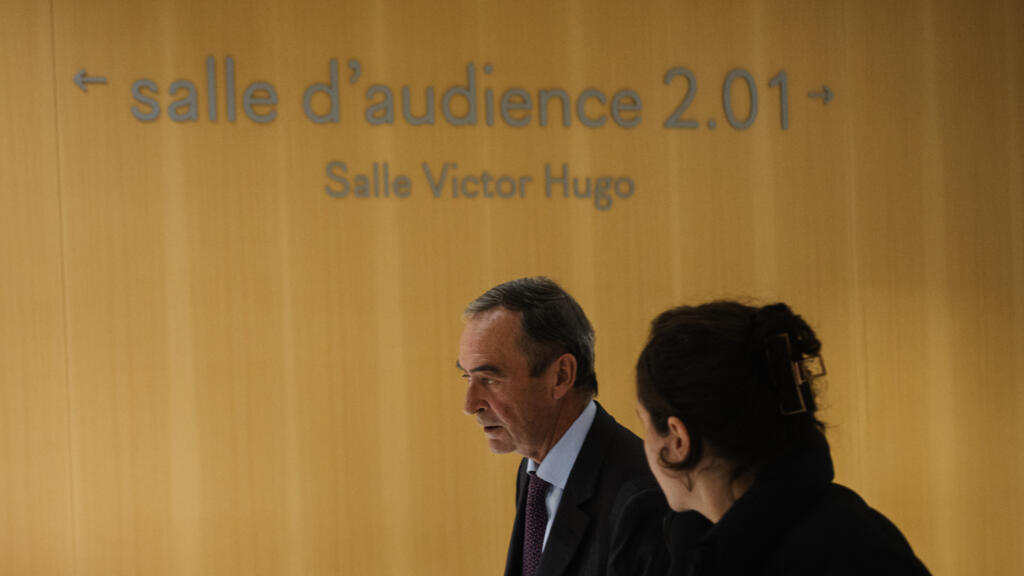
Former Lafarge chief executive Bruno Lafont arrives at a Paris court on 4 November 2025. Prosecutors have requested a six-year prison sentence with a delayed committal order for Lafont in the terrorism financing trial. 
AFP - DIMITAR DILKOFF

Anti-terrorism prosecutors are asking the court to impose the maximum corporate fine of €1.2 million on Lafarge SA and prison terms of up to eight years for several former executives.

The case centres on payments allegedly made between late 2012 and 2014 to armed groups in northern Syria, including the Islamic State group.

After more than six hours of closing arguments, prosecutors said Lafarge deliberately financed terrorist organisations to maintain operations at its Jalabiya cement plant in northern Syria.

They said the company paid “at least” €4.6 million to armed groups. The sum was described as unprecedented and shocking.

“Four million euros represents more than 4,000 Kalashnikovs or the salaries of between 3,500 and 6,600 Islamic State fighters for a year,” one of the prosecutors said, based on known monthly payments of $50 to $100 per fighter.

Lafarge on trial in Paris over alleged payments to Islamic State in Syria


Business 'at all costs'

She described the figure as “dizzying” and said it revealed a system that treated terrorist groups as “economic partners and commercial interlocutors”, rather than as enemies.

Prosecutors firmly rejected the defence claim that the defendants were unaware of who they were dealing with.

“No, there is no doubt,” the prosecutor said. “They knew they were talking to, negotiating with and doing business with three organisations that were clearly terrorist.”

She described the case as “the story of the total failure of individuals who could have chosen to leave” and “the story of the distortion of a flagship of French industry that ended up financing terrorist organisations for a purely mercantile objective”.

The prosecutor said the approach was driven by the pursuit of “business at all costs” and carried out through coordinated actions across the company. Decision-makers, advisers on the ground and intermediaries all played a role.

“Whatever their position in the operational chain, each one contributed to making the alleged offences possible,” she added.

Her colleague said the defendants had shown no remorse and had not questioned their actions during the trial.


Executives on trial


Prosecutors requested a six-year prison sentence, with a delayed committal order, for former Lafarge chief executive Bruno Lafont.

They accused him of making a “purely economic choice, astonishing in its cynicism” by approving payments while fully aware that some of the groups involved were terrorist organisations.

They said Lafarge’s Syrian subsidiary behaved like “a commercial animal” that “voluntarily fed the jihadist beast at the very moment it was seeking forces to structure itself, dominate and attack”.

The subsidiary financed terrorism for more than a year and a half, prosecutors said, following a strategy approved at the group’s Paris headquarters.

Alongside the corporate fine, prosecutors requested the confiscation of €30 million of Lafarge’s assets.

For individual defendants, prison sentences ranging from 18 months to eight years were sought. The heaviest sentence was requested for a Syrian intermediary who is absent from the trial.

Additional penalties, including fines and bans on managing companies, were also sought for some of the accused.

(with newswires)
Anger mounts in Moroccan city of Safi as deadly floods expose decades of neglect

Residents of the Moroccan port city of Safi are accusing authorities of abandoning working-class neighbourhoods, ignoring known flood risks and failing to maintain basic infrastructure, after flash floods killed at least 37 people.


Issued on: 17/12/2025 - RFI

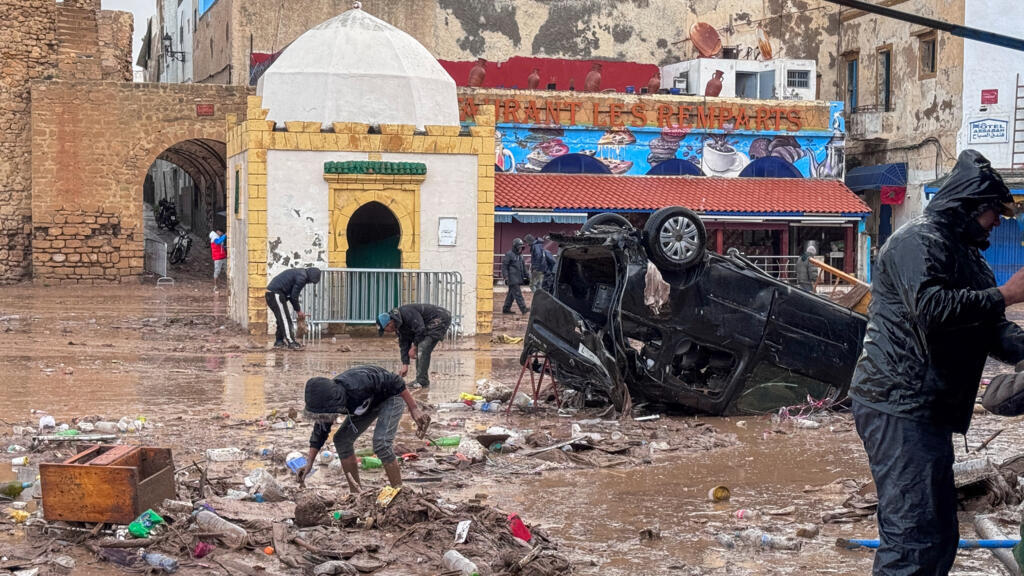
Locals inspect the damage after deadly flash floods in Safi, Morocco, on Monday 15 December 2025, as anger grows among residents over years of neglect. 
AP - Abderrazak Gouach

Four days after torrential rain struck the Atlantic coastal city on Sunday, shock and mourning have given way to fury.

Muddy water continues to resurface in narrow alleyways of the old town, despite repeated efforts to clear it away, reinforcing complaints of long-standing abandonment.

“There is no maintenance of the sewage system where we live. We aren't prepared for the arrival of winter and rain,” Reda, a man in his thirties from the old town, told RFI.

He said the aftermath of the disaster has laid bare deep social inequality.

“The people who live here are working class. Politicians neglect this social class, do nothing for our rights, don’t represent us, and this is what happens,” he said.


The flood risk is well known in Safi. The city’s history is marked by several deadly floods linked to the Chaâba River, which runs through the old town. Dry for most of the year, it becomes dangerous during heavy rainfall.


Videos circulating on social media showed torrents of muddy water rushing through streets and sweeping away cars, rubbish bins and crates of goods.

Years of neglect

The floods are the deadliest of this kind in Morocco in a decade. At least 70 homes and shops were flooded, Moroccan authorities said on Monday. Fourteen people were still receiving medical care, including two in intensive care.

Heavy rain flooded buildings in the old town and cut many roads in and around the city, which lies around 300 kilometres south of the capital Rabat. Schools were closed on Monday as residents assessed the damage and cleaned their homes.

Political parties, local organisations and trade unions on Tuesday announced the creation of a “solidarity commission” – which said the tragedy was “the direct result of years of abandonment” and poor management of infrastructure.

“Safi has experienced a process of marginalisation,” said Abdellah Mzirda, a member of the commission. “There is neither development nor progress in Safi, even though it’s a city that produces phosphate. The resources here are significant.”

Protest planned

The solidarity commission has called for a sit-in on Sunday to “express the collective anger” of residents. Local authorities did not respond to requests for comment.

The national prosecutor’s office has opened an investigation to “determine the causes of this tragic incident and clarify the circumstances”.

Morocco is experiencing heavy rain and snowfall after seven years of drought that had depleted several major reservoirs.

Authorities said on Tuesday they were rolling out nationwide emergency aid – including food supplies and blankets – to help around 73,000 households across 28 provinces affected by freezing temperatures, rain and snow.
Louvre to partially reopen after vote to extend strike over working conditions


The Louvre Museum will partially reopen on Wednesday after staff voted to extend a strike over pay and working conditions, according to union representatives. Frustrations at the world's most visited museum were further sharpened by fallout from the theft of crown jewels during a daylight robbery that exposed serious security lapses.


Issued on: 17/12/2025 
By: FRANCE 24

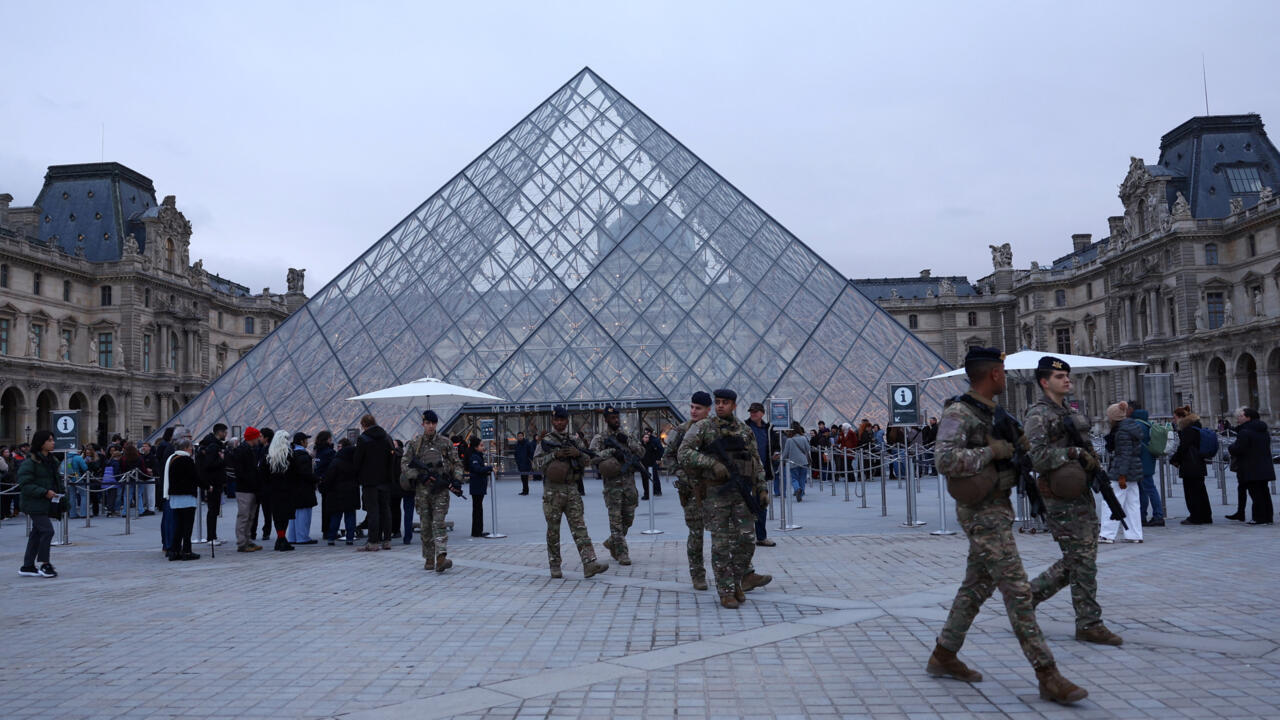
French soldiers from the "Sentinelle" security plan patrol past the glass Pyramid of the Louvre Museum in Paris, on December 17, 2025. © Abdul Saboor, Reuters

The Louvre Museum is set to partially reopen after staff voted Wednesday to extend a strike that has disrupted operations at the world’s most visited museum.

Unions say frustration has mounted over staff shortages, ageing infrastructure and a planned increase in ticket prices for non-European visitors.

Tensions have been further sharpened by fallout from the theft of crown jewels during a daylight robbery that exposed serious security lapses at the museum.

The union decision came during a morning general assembly, after workers had adopted the walkout unanimously earlier this week.


The museum was already closed on Tuesday for its regular weekly shutdown.

WATCH MOREIs the Louvre cursed? Water leak triggers new wave of disinformation

Culture Ministry officials held crisis talks with unions on Monday and proposed to cancel a planned $6.7 million cut in 2026 funding, open new recruitment for gallery guards and visitor services and increase staff compensation. Union officials said the measures fell short

Louvre President Laurence des Cars was scheduled to appear before the Senate’s culture committee later Wednesday as lawmakers continue probing security failures at the museum.

Des Cars has acknowledged an “institutional failure” following the heist, but has come under renewed scrutiny after admitting she only learned of a critical 2019 security audit after the robbery. France’s Court of Auditors and a separate administrative inquiry have since criticised delays in implementing a long-promised security overhaul.

The Culture Ministry announced emergency anti-intrusion measures last month and assigned Philippe Jost, who oversaw the Notre Dame restoration, to help reorganise the museum. The move was widely seen as a sign of mounting pressure on Louvre leadership.

(FRANCE 24 with AP)


Louvre partially reopens despite staff vote to carry on strike


The Louvre partially reopened on Wednesday despite staff voting unanimously to extend a strike over pay and working conditions, union representatives said.


Issued on: 17/12/2025 - RFI

Visitors queue outside the Louvre Museum in Paris on December 17, 2025 as the opening was delayed while unions voted on extending a strike over working conditions. The museum had closed two days earlier after staff walked out. AFP - BLANCA CRUZ


The museum’s management told the French news agency AFP that some areas were open even though not all spaces were accessible.

“The museum is opening and the first visitors are coming in,” the management said.

Staff meeting in a general assembly voted unanimously on Wednesday morning to continue the strike that had already stopped the Louvre opening on Monday. Tuesday is the museum’s weekly closing day.

“The strike notice has been maintained and the strike was voted unanimously,” said Valérie Baud, a representative of the CFDT union, speaking to reporters outside the museum.


Opening delayed

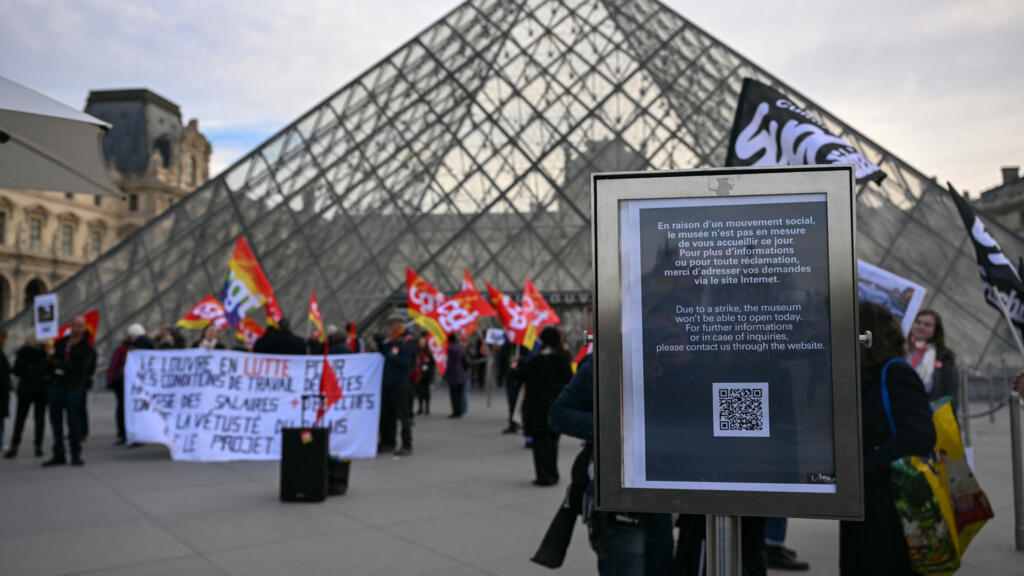
A sign outside the glass pyramid told visitors that “the opening of the museum is currently delayed” and that the Louvre would communicate “the terms of a possible opening as soon as possible”.

Some visitors said they backed the workers.

“I am not angry because I respect the workers and they have to defend their rights,” said Maximilian Cimander, a 23-year-old German student in Paris for the week, speaking to AFP.

Others feared missing their chance to get in.

“We hope the museum will be open because we are going back to Japan on Thursday,” said Chika Nishi, a 29-year-old law student. “It’s now or never to visit it.”

Baud warned against reopening in these conditions, nearly two months after the theft of eight French crown jewels in a daytime robbery.

“The Louvre’s management must not put the safety of the museum at risk,” she said.

Fourth suspected Louvre thief remanded as €88m jewels remain missing
Ministry proposals rejected

Gary Guillaud of the CGT union said culture ministry proposals had been turned down.

“There was a unanimous refusal of the ministry’s proposals,” he said, calling them “undignified”.

Workers are protesting about staff shortages, building damage and higher prices for non-European visitors. The CFDT said at least 300 staff were at the assembly.

A crisis meeting took place on Monday at the culture ministry. “There is great exasperation among staff,” said Christian Galani, a CGT delegate.

The ministry has proposed cancelling a planned €5.7 million cut in funding for 2026, redeploying staff, opening recruitment for visitor services and surveillance roles and paying an exceptional bonus.

The Louvre announced emergency measures in early November, including anti-intrusion devices.

Culture Minister Rachida Dati has also assigned Philippe Jost, in charge of the Notre-Dame restoration site, a two-month mission to reorganise the museum.

(with AFP)


Fake video claiming ‘coup in France’ goes viral – not even Macron could immediately get it removed

EXPLAINER


Sometime in the second week of December, an improbable video began making the rounds on French-language social media. France, it claimed, was subject to a coup d’état, and President Emmanuel Macron had possibly been deposed. The video, an AI-generated fake, racked up millions of views and caused alarm with at least one African leader. At first, not even the French president could get Meta to take it down.


Issued on: 17/12/2025 - 
FRANCE24
By: Louise NORDSTROM
Video by: Antonia KERRIGAN
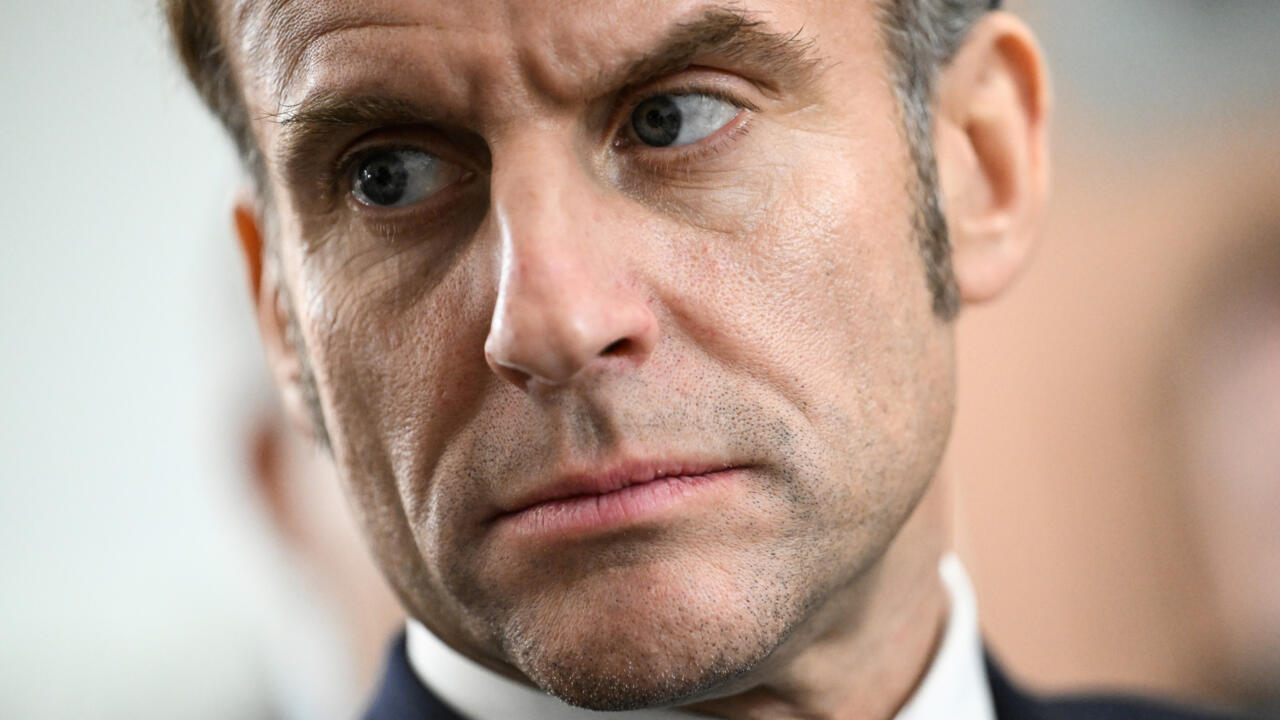
The fake video claimed that France had been subject to a coup and that French President Emmanuel Macron might have been deposed. © AP, pool
01:47


Under the guise of a breaking news story presented in a Facebook reel, a “reporter” from the non-existent French news channel “Live 24” declared that Macron and his government had been overthrown.

“At present moment, unofficial information indeed suggests that a coup is under way in France – led by a colonel whose identity has not been revealed – and French President Emmanuel Macron may have been deposed.”

As the alleged journalist reported her story with a lit-up Eiffel Tower and flashing police lights in the background, a helicopter could be seen flying overhead. Nearby, an armed soldier was keeping watch, and behind her, a sea of stunned citizens appeared to try to get a glimpse of what was going on behind the police cordons.

French President Emmanuel Macron was made aware of the fake video on December 14, but despite his pleas to take it down, Meta left it online for several days, saying it did not violate its platform rules. © Screengrab, Facebook
Text message from Africa

On Sunday, the chaotic – albeit completely fake and AI-generated – scenes from France had grabbed the attention of an unnamed African head of state, prompting them to contact the French leader directly.

“One of my African counterparts sent me a message: ‘Dear president, what is happening in your country?’,” Macron told French regional newspaper "La Provence" during a visit to the southern city of Marseille on Tuesday.

By then, the video, which appeared to have been uploaded by a user under the alias “ISLAM”, had already garnered 13 million views.

Macron said that although the fake news story first amused him, he quickly got his team on the case, reporting the video to Facebook’s parent group Meta to have it taken down.
‘Putting us in danger’

But to the president’s surprise, Meta initially refused, claiming it did not violate its “rules of use on the platform”.

“These people are mocking us. They don’t care about keeping public debates healthy, they mock the sovereignty of democracies and are putting us in danger,” Macron said in Marseille.

“I tend to think that I have more leverage than most […] Well, it doesn’t work. As you can see, we’re not well-enough equipped,” he said in an apparent reference to US tech giants.

In January this year, Meta’s founder and CEO, Mark Zuckerberg, announced that his platforms (which also include Instagram) were doing away with most of their fact-checking policies – a move that was widely seen as buckling under pressure from incoming US President Donald Trump.

“We’re going to get rid of fact-checkers (that) have just been too politically biased and have destroyed more trust than they've created, especially in the US," Zuckerberg said in the post.

READ MORESocial media giant Meta culls US fact-checks ahead of Trump term
Online for days

On Wednesday morning – three days after Macron had first been made aware of the AI-generated fake coup video – the clip was still accessible online, bearing only a minor label warning that “this content may have been digitally created or altered to seem real”. A few hours later it appeared to have been taken down, however.

This is not the first time that France – or Macron, for that matter – is subject to fake news stories.

Earlier in December, another AI-generated France coup video appeared online, falsely claiming to be relayed by FRANCE 24’s sister station RFI. That video, also uploaded by “ISLAM”, topped 3 million views before it disappeared.
European Parliament asks for EU funds to finance abortions abroad

Lawmakers have approved a resolution calling for an EU solidarity mechanism to help women without access to safe and legal abortion in their countries.


Copyright Copyright 2020 The Associated Press. All rights reserved.

By Vincenzo Genovese
Published on 17/12/2025 -

Lawmakers have approved a resolution calling for an EU solidarity mechanism to help women without access to safe and legal abortion in their countries.

The European Parliament has approved a non-binding resolution asking to establish a fund to help women with no access to safe abortions in their home country.

This financial mechanism, which MEPs endorsed in a vote on Wednesday, would enable EU members to provide access to the termination of pregnancies for any woman who is legally barred from doing so in her home country, which is the case in several EU states.

It would be open to all EU countries on a voluntarily basis and supported by European funds. Member states would provide abortion care in accordance with their domestic laws.

The request addresses the fact that many women in Europe lack full access to safe and legal abortion, according to the resolution.

Some EU countries have highly restrictive laws on abortion rights. A total ban is in force in Malta, where abortion is not allowed under any circumstances, while in Poland it is permitted only when conception follows sexual violence or when there is a risk to the woman’s health.

In January 2021, the Polish Constitutional Tribunal banned abortions in cases of fetal malformation, which until then had been the most frequent reason for terminating pregnancies in the country.

Other countries have more relaxed laws, but they lack legal protections that fully decriminalise abortion, wide service availability, national health coverage, or government-led information on the matter.

According to the European Abortion Policies Atlas 2025, several EU countries have taken steps to guarantee the right to safe abortions. France, for instance, made it a constitutional right, while Luxembourg and the Netherlands have removed mandatory waiting periods.

But other member states have recorded new restrictions, increased harassment of abortion providers, and the spread of disinformation on the topic.
Splitting the centre

The European Parliament drafted its resolution as an answer to a European Citizens’ Initiative (ECI), “My voice my choice”, which collected 1,124,513 signatures across all the 27 countries and asked to improve access to safe abortion in Europe.

ECIs are tools that allow common citizens to call on the EU institutions to propose new legislation.

If an initiative gets the support of at least 1 million people across at least seven EU countries, it must be discussed by the European Parliament, while the European Commission has a timeframe to either set out legislative measures or provide justification for not doing so.
RelatedWhat is the state of abortion rights across the EU?
Pro-LGBTQ+ yet anti-abortion: What's behind Malta's differing stances?

The Parliament’s text, which clarifies its position on the matter, was adopted by 358 votes to 202 and with 79 abstentions.

Liberals, Socialists, and leftist groups of the Parliament voted in favour, while right-wing and far right groups were mostly against. The European People’s Party, the largest one in the Parliament, was split between MEPs in favor and against.

In the resolution, the Parliament also reiterated its call to include the right to abortion in the EU Charter of Fundamental Rights, a request that was approved for the first time by the Parliament in April 2024.

Pro-life organisations criticised the resolution. Italian NGO Pro Vita & Famiglia labelled this mechanism an “abortion Erasmus” and condemned it as “an incentive that will push states to compete to attract EU funds by promoting the suppression of innocent lives”.
Time to move on extraction, refining of critical minerals in Canada: Champagne

Story by Craig Lord
CANADIAN PRESS
Dec. 17, 2025.


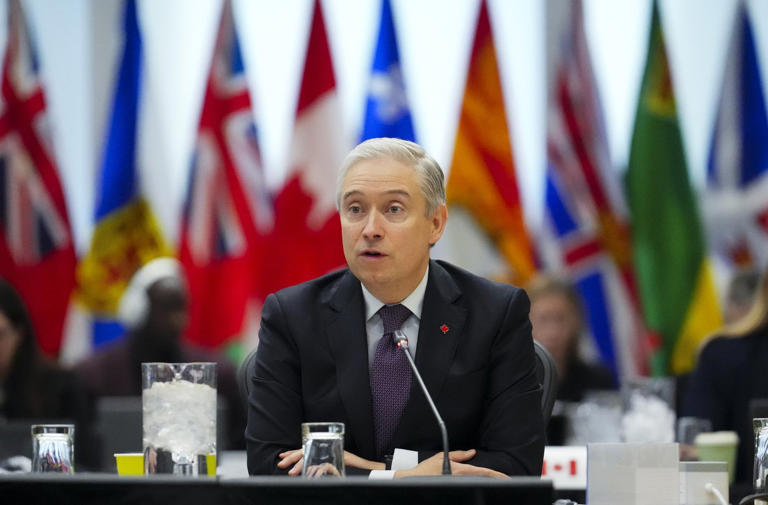
Francois-Philippe Champagne, Minister of Finance and National Revenue, takes part in a meeting with provincial and territorial finance ministers in Ottawa on Thursday, Dec. 11, 2025. THE CANADIAN PRESS/Sean Kilpatrick© The Canadian Press

OTTAWA — Finance Minister François-Philippe Champagne says Canada has enough critical minerals to go around for interested European trading partners but it's time for the country to get moving on extracting the coveted resources.

Champagne is in Berlin wrapping up a European tour that included stops in London and Paris this past week where he was selling Canada as a supplier of choice across the Atlantic Ocean.

In Berlin today he delivered a keynote address to a group of Volkswagen stakeholders and held up the automaker's investment in an Ontario battery plant as a blueprint for future industry collaborations with German firms.

Champagne told reporters in a callback from Germany that Canada can help to move European nations away from dependence on China for critical minerals.

But he says Canada must now move from exploration of critical mineral mines to extraction and refining to keep more of the value chain from Canadian resources in the country.

Prime Minister Mark Carney visited Berlin in August and signed a deal to work with Germany on future critical mineral projects to support the defence and aerospace industries.

This report by The Canadian Press was first published Dec. 17, 2025.

Craig Lord, The Canadian Press
Ranchers in Texas are turning against Trump as price of beef plummets

Story by Joe Sommerlad
• THE INDEPENDENT

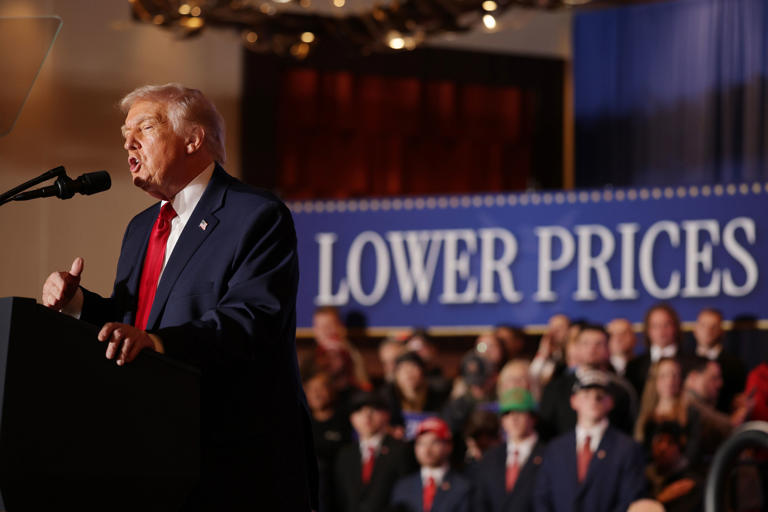
Cattle ranchers in Texas are expressing their frustration with President Donald Trump over his stewardship of the economy and his measures to bring down the price of beef by welcoming South American exports.

Earlier this year, the president introduced sweeping reciprocal tariffs on America’s trading partners, which caused the price of meat and many other goods to increase dramatically.

The cost of ground beef in U.S. supermarkets climbed to more than $6.31 a pound in August, a 13 percent increase year-on-year, according to The Financial Times, while the price of a sirloin steak spiked 24 percent to $14.31 per pound from $11.54 a year earlier.

However, amid growing consumer concern about affordability and the cost of living, Trump has had to change course and encourage increased competition from abroad, risking alienating America’s farmers in the process, many of whom voted for him in the past and whose support he will depend on again, not least come next November’s midterms.

“The Cattle Ranchers, who I love, don’t understand that the only reason they are doing so well, for the first time in decades, is because I put Tariffs on cattle coming into the United States, including a 50 percent Tariff on Brazil,” the president wrote in an angry post on his Truth Social platform in October, attempting to head off dissent.

“If it weren’t for me, they would be doing just as they’ve done for the past 20 years – Terrible! It would be nice if they would understand that, but they also have to get their prices down, because the consumer is a very big factor in my thinking, also!”

Trump subsequently announced a deal with Argentina to quadruple the amount of beef exported to the U.S. at a reduced tariff rate and has since rolled back the 50 percent tariff he placed on Brazilian goods to increase that country’s market access in the interest of bringing prices down for American grocery shoppers.

“I don’t really understand it politically, he has just alienated a bunch of ranchers,” Texas livestock farmer Jerrel Bolton told the FT. “He would turn us against him. And we are his biggest supporters.”

Bolton pledged to remain loyal to the president, for now, commenting: “He is putting downward pressure on the beef price, but it’s not a forever deal. I think he will adjust.”

Fellow rancher Hank Herrmann, based in Caldwell, northwest of Houston, was less forgiving, telling the newspaper, “We feel attacked. People are suddenly looking at ranchers like we’re the bad guys.


Trump has begun touring the nation seeking to allay concerns about the rising cost of living, insisting Americans have nothing to worry about (Getty)

“We’re only just getting a price that makes ranching economical. Very few people make much money ranching, right now we’re at a spot where it’s paying some bills.”

Milton Charanza, another Caldwell rancher, told the FT: “There is nobody that has been taken advantage of more than the American rancher.

“Rural America expects America first in this country. We are not anti-business with other people but we have to take care of farmers and ranchers here.”

The Department of Agriculture has insisted that farmers are doing better under the Trump administration, picking up 53-56 percent of the amount paid for beef in supermarkets this year, compared to 37-50 percent between 2019 and 2024.

But, in addition to finding themselves on the frontline of the president’s volatile trade war, the ranchers are also navigating the same inflationary pressures as the broader economy and have been hit by the rising cost of everything from fertiliser to the heavy machinery they need to run their farms, like tractors, trucks, and trailers.

“What a tractor costs is crazy!” complained Doug Bass, another Texas rancher from Columbus. “The parts, the repair bills. Your feed costs are higher. Your fuel is high. There’s a whole lot that goes into the ranch and into the cow that people don’t realise.”

The Independent has always had a global perspective. Built on a firm foundation of superb international reporting and analysis, The Independent now enjoys a reach that was inconceivable when it was launched as an upstart player in the British news industry. For the first time since the end of the Second World War, and across the world, pluralism, reason, a progressive and humanitarian agenda, and internationalism – Independent values – are under threat. Yet we, The Independent, continue to grow.
Mick Foley parts ways with WWE over its 'close relationship' with Trump

Story by Katie Scott


Mick Foley greets the audience at WWE SummerSlam 2015 at Barclays Center of Brooklyn on Aug. 23, 2015 in New York City.© JP Yim/Getty Images

Wrestling legend Mick Foley says he's cutting ties with World Wrestling Entertainment (WWE) over its "close relationship" with U.S. President Donald Trump.

Foley, 60, made the announcement in a post on Instagram, citing Trump's comments about the murders of director Rob Reiner and his wife Michele Singer Reiner as the "final straw."

Reiner and his wife were found dead in their home on Dec. 14. The couple's 32-year-old son, Nick Reiner, was arrested on a murder charge and is being held without bail.

On Tuesday, the Los Angeles District Attorney's office announced it was filing charges against Nick with two counts of first-degree murder. If convicted, he could face life in prison without parole or the death penalty.

"While I have been concerned about WWE's close relationship with Donald Trump for several months — especially in light of his administration's ongoing cruel and inhumane treatment of immigrants (and pretty much anyone who 'looks like an immigrant') — reading the President's incredibly cruel comments in the wake of Rob Reiner's death is the final straw for me," Foley wrote.

Foley, who wrestled under his name and the personas Cactus Jack, Dude Love and Mankind, said he no longer wishes "to represent a company that coddles a man so seemingly void of compassion as he marches our country towards autocracy."

"Last night, I informed @WWE talent relations that I would not be making any appearances for the company as long as this man remains in office," Foley continued. "Additionally, I will not be signing a new Legends deal when my current one expires in June. I love WWE, will always treasure my time with them, and I am deeply appreciative for all the opportunities they afforded me."

"But, in the words of Popeye the sailor, 'I stands all I can stands, and I can't stands no more,'" Foley concluded his post.


Foley was inducted into the WWE Hall of Fame in 2013, one year after retiring from wrestling. He made his WWE debut in 1996 as Mankind before taking on the ring persona of Dude Love in 1997. Cactus Jack returned to the ring in 1997 as well and Foley fought as all three personas during the 1998 Royal Rumble.

Foley has continued to maintain his affiliation with the WWE following his retirement. He worked as the Raw general manager from 2016 to 2017 and has made numerous appearances on WWE Raw.

WWE has not responded to Foley's announcement as of this writing.

Trump posted on Truth Social about the "very sad" incident in Hollywood while referring to Reiner as "a tortured and struggling, but once very talented movie director and comedy star."

Trump said that Reiner and his wife died "reportedly due to the anger he caused others through his massive, unyielding, and incurable affliction with a mind crippling disease known as TRUMP DERANGEMENT SYNDROME, sometimes referred to as TDS."

"He was known to have driven people CRAZY by his raging obsession of President Donald J. Trump, with his obvious paranoia reaching new heights as the Trump Administration surpassed all goals and expectations of greatness, and with the Golden Age of America upon us, perhaps like never before. May Rob and Michele rest in peace," Trump wrote.

Trump has a long association with professional wrestling and some of its top officials, including the husband and wife duo of Vince and Linda McMahon, the founders of World Wrestling Entertainment. Linda McMahon served Trump in both of his administrations and is currently the education secretary after heading up the Small Business Administration in his first term.

In 2013, Trump was inducted into the celebrity wing of WWE’s Hall of Fame. He has also hosted WrestleMania events at Trump Plaza in Atlantic City, N.J., in 1988 and 1989. And then, most famously, there was a mock "Battle of the Billionaires" in 2007 when he body-slammed and then shaved the head of WWE boss Vince McMahon.

— With files from The Associated Press
US government orders TransAlta coal-fired plant to run 90 days longer than planned

The logo of TransAlta Corp. is shown. THE CANADIAN PRESS/Handout — TransAlta Corp. (Mandatory credit)© The Canadian Press

CALGARY — TransAlta Corp. says the U.S. Department of Energy has ordered it to keep a coal plant in Washington State online for three months longer than planned.

Coal-fired generation had been set to wind down at the Centralia Unit 2 facility by the end of this year before the plant was to be retooled to run on cleaner-burning natural gas.

Calgary-based TransAlta says it's evaluating the order that the unit remain available for operation until March 16 and it will work with state and federal governments.

The utility announced earlier this month that it had signed an agreement to deliver 700 megawatts of gas-fired electricity to Puget Sound Energy Inc. through the end of 2044.

It said the switch from coal to natural gas would cut Centralia's emissions intensity by half.

The conversion is expected to cost US$600 million with an in-service date of late 2028.

This report by The Canadian Press was first published Dec. 17, 2025.

Companies in this story: (TSX:TA)

The Canadian Press
Making lawyers swear oath of allegiance to monarch unconstitutional: Alberta court


Court of Appeal at the Edmonton Law Courts building, in Edmonton on June 28, 2019. THE CANADIAN PRESS/Jason Franson© The Canadian Press

EDMONTON — Alberta's top court has ruled that requiring prospective lawyers to swear the Oath of Allegiance to the reigning monarch is unconstitutional and infringes on religious freedom.

The Court of Appeal of Alberta made the decision Tuesday in Prabjot Wirring's years-long case against the province and Law Society of Alberta.

The court said the legally-required oath forced Wirring to choose between practising law in Alberta and his faith as an amritdhari Sikh.


The decision hinged on whether a judge previously erred in considering whether the law society's requirement to swear Canada's official oath to "bear true allegiance" to the reigning monarch, their heirs and successors infringes the Charter right to religious freedom.

The court said Wirring had sworn an allegiance to Akal Purakh, or the Creator in the Sikh faith, and couldn't make an allegiance or devotion to any other figure or entity, including in the Oath of Allegiance to become a lawyer.

Wirring challenged the oath in June 2022. More than a year after hearing arguments in October 2024, the Appeal Court's three-judge panel declared the oath requirement unconstitutional and of no force or effect, meaning it is no longer required in Alberta.

"This case shows the real possibility that candidates with religious objections to the Oath of Allegiance may choose not to become members of the Alberta bar diminishing the bar’s representativeness," the decision said.

The Alberta government has 60 days to ask the Supreme Court of Canada to hear the case and challenge the appeal court's ruling.

Heather Jenkins, a spokesperson for the Alberta justice minister's office, said in a statement that the government is reviewing the decision and won't comment as it's still before the courts.

The ruling doesn't affect two other oaths required to enrol in the law society, neither of which use the term "allegiance."

The Appeal Court found the previous judge erred in deciding that Wirring could swear the oath, because it was an allegiance to the abstract ideal of the rule of law, not an entity like the queen. (At the time, Elizabeth was the reigning monarch).

However, the Appeal Court ruled Wirring couldn't swear an allegiance to anything other than the Akal Purakh.

Wirring eventually became a member of the Law Society of Alberta in 2023, when he transferred from Saskatchewan through a new interprovincial licensing process, introduced several months after he challenged the Oath of Allegiance.

In essence, the decision has no effect on his ability to practise law and he's actively practising now.

However, the court said it found it relevant to settle the issue as a matter of public importance, because those who are not law society members, including articling students, may not have the money to argue a Charter challenge in court.

"In my case, there's a really narrowly defined specific religious reason why I wasn't able to swear the Oath of Allegiance. But I know for a lot of other folks, there's a lot of strongly held ethical reasons that they were hesitant or had problems with the Oath of Allegiance as well," Wirring said in an interview.

He said he's heard from Sikh lawyers, Indigenous students and others from racialized backgrounds about their negative experiences having to swear the oath.

The Appeal Court says Alberta could remedy the issue by: making the oath optional, as it is in Nova Scotia, New Brunswick, Yukon and Ontario; remove the requirement, as has been done in B.C., Prince Edward Island and Saskatchewan; or revise the oath's phrasing.

This report by The Canadian Press was first published Dec. 17, 2025.

— By Dayne Patterson in Calgary

The Canadian Press