Sunday, December 21, 2025

The New York Times ignores an essential part of the Jeffrey Epstein story — Israel

The New York Times has published a major exposé purporting to explain how Jeffrey Epstein rose to the top of the financial and political world, but it ignores one key topic: Israel.

By Philip Weiss 
 December 19, 2025
MONDOWEISS
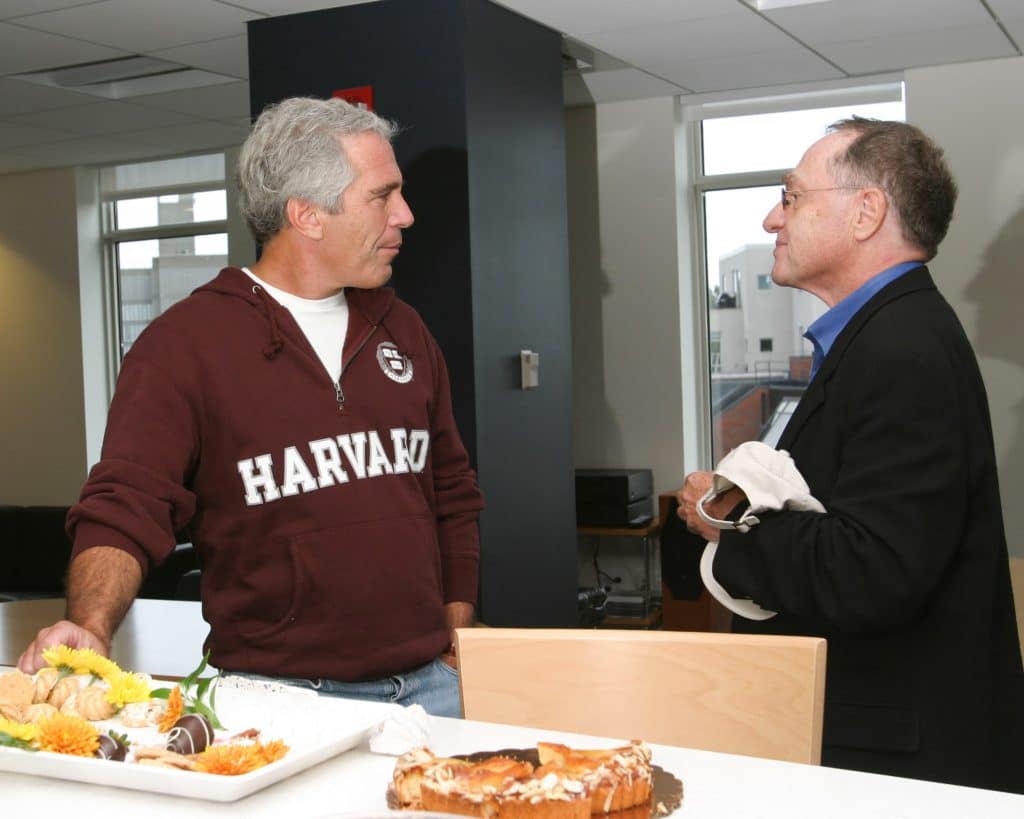
Photo released by House Democrats on the Congressional Oversight Committee on December 12, 2025, showing Jeffrey Epstein and Alan Dershowitz.
 (Photo via House Oversight Democrats)


If you want to understand why conspiracy theories about Jeffrey Epstein flourish, then you must read the interminable investigation the New York Times published, purporting to explain how Jeffrey Epstein clawed himself to the pinnacle of the financial/political/social world. “The Untold Story of How Jeffrey Epstein Got Rich” concludes that Epstein was the greatest conman and swindler that ever lived, and charmed the pants off of every powerful man he met. Some of his marks still curse Epstein for fleecing them. But the paradigm of the article is the execs at Bear Stearns back in the 70s who found out that the former math teacher at Dalton School had invented college degrees from “two California universities” but didn’t fire him because they wanted to give a humble kid from the outer boros a second chance.

“You lied about your education,” [senior exec Michael] Tennenbaum said.

“Yes, I know,” Epstein calmly replied. He had never graduated from college. Tennenbaum recalls being disarmed by the admission. Decades later, he would regard it as an example of Epstein’s ability to manipulate his marks — in this case, him.

“Why did you do it?” Tennenbaum stammered.

Without an impressive degree or two, Epstein said, “I knew nobody would give me a chance.”

This resonated with Tennenbaum.

That’s a great story, and there is great reporting in this article. But the premise of the article is a stupid myth the NYT wants to believe– That Epstein was just the canniest, boldest con man that ever lived, and he left everybody swooning. The talented Mr Ripley.

It’s a myth not because Epstein was not a bold and crafty con man – no doubt he was. But even a conman can have an ethos. Look at Gatsby, a mobster with romance. Look at Trump’s fascistic populism. And Jeffrey Epstein had an ethos that he played on over and over again as his racket grew; and that ethos was the love of Israel in the rising Jewish meritocratic establishment of the 70s.

Almost every player in the Times story is a Jewish success story who lobbied for Israel in prestigious circles, from Dershowitz to Larry Summers, Leon Black, Lynn Forester de Rothschild, and Epstein’s most famous associations, Robert Maxwell and Les Wexner.

Love of Israel was a lead criterion for inclusion in Epstein’s circle. I don’t think Epstein’s “marks” were even fooled by him. They knew he was a conman who played fast and loose. But they also knew that the Israel lobby has a need for charmers who break the rules, so they looked the other way.

Epstein did numerous chores for Israel that investigative sites have documented and the Times does not touch: he helped Israel broker financial deals with neighbors, he had an Israeli spy living in his house for a time, and he had a close relationship with former Israeli PM Ehud Barak that included business ventures and politics in Israel.

“It’s well past time to ask questions about the billionaire pedophile’s links to Israel,” Jacobin says.

Epstein held multiple passports, including one from Austria with a false name and an address in Saudi Arabia.

Some theorize that Epstein was Mossad and running a “honeytrap” for the Israeli government, videotaping pols having sex so they could be blackmailed to support Israel. I don’t see the evidence for this. However, the evidence in plain sight suggests that Epstein was always willing to help Israel whenever possible, and this service ultimately elevated him.

As the Times says, in its one reference to Israel: “In 1989, Epstein accompanied Wayne Owens, a Democratic congressman from Utah, on a trip to the Middle East to explore ways to promote business ties between Israel and its neighbors.” That trip came about because of Epstein’s relationship to the Israel-supporter Les Wexner. But the Times studiously avoids the Israel connection when it comes to the two people Epstein was closest to, businessman Wexner and fellow child sex trafficker Ghislaine Maxwell.

To show you how foolish the Times narrative is, let’s focus on those relationships.

Maxwell says she met Epstein in 1990 or 1991 when she was 30 and had come to New York from England as an ambassador for her beloved father’s growing media empire in the States. A friend introduced her, she says, and she remembers Epstein, then in his late 30s, having a ketchup stain on his tie.

Maxwell’s father then vetted Epstein by calling Bear Stearns execs. Here’s the Times version:

“When the domineering Robert Maxwell learned that his daughter was spending time with Epstein, he contacted Ace Greenberg and Jimmy Cayne, both of whom he was close to, to see what they knew about their former Bear Stearns employee. Greenberg and Cayne apparently vouched for Epstein.”

Ghislaine explained the vetting in her deposition to the Justice Department last summer. Her father was extremely protective of her because he was such a controversial figure that she had been threatened, including a death threat by the Irish Republican Army. So he wanted to get her a bodyguard (she turned him down) and to know who she was dating. And Bear Stearns was “one of our banks.”

Let’s take Ghislaine at her word…

What doesn’t track in the Times story is the idea that Cayne and Greenberg would “vouch” for Epstein. Wait a second. The Times just recounted one incident after another in Epstein’s career in his 20s and 30s where he ripped people off, lied to them, smiles and waves. Cayne and Greenberg knew this well. They’d fired Epstein after an SEC investigation of trading violations 10 years earlier! They knew Epstein to be a charming fraud who invented his degrees.

So when their friend and client Robert Maxwell, who is one of the biggest businessmen in the world, calls them to get their take on Epstein as boyfriend material for his beloved daughter — they “vouch” for him. No red flags??

I think the truth is that everybody knew this guy was a conman, and Ghislaine wasn’t really his girlfriend, but a consort; it was a business relationship from the start (she claims he was actually dating Eva Andersson until 1994). And in fact, the Bear Stearns execs were vouching for Epstein as a Jewish kid on the make who loved what Robert Maxwell loved — Israel.

Robert Maxwell was born in Czechoslovakia and lost much of his family in the Holocaust. As Ghislaine Maxwell stated in her deposition to the Justice Department last summer, her father served as an intelligence officer in World War II and essentially functioned as one throughout his life, passing on secrets to governments, including Israel. There is speculation that Maxwell worked for Mossad. After his death by drowning in 1991, Maxwell was given what the press termed a state funeral in Israel, and then was buried in Jerusalem.

“My father, you know, anything that touches on Israel or the state of Israel, I’m always interested in because my father loved Israel and so I pay attention to it and we have ties to Israel,” Maxwell said.

Jimmy Cayne also loved Israel; he gave to many causes there. Ace Greenberg gave half his philanthropy to Jewish causes and Israel.

The Times also whitewashes the relationship with Les Wexner, the man who truly elevated Epstein. This is how the Times subtitles their association: “A confidence man meets his most significant mark”

So Les Wexner is a mark? But according to the Times, Wexner’s people saw through Epstein from the start. And Wexner just “didn’t listen” again and again.


[Harold] Levin told us that he spent an hour with Epstein in his office and immediately got a bad vibe. He found a pay phone and called Wexner. “I smell a rat,” Levin reported. “I don’t trust him.”

Wexner apparently didn’t listen…

Almost immediately, Wexner’s colleagues grew alarmed by his embrace of Epstein. “I tried to find out how did he get from a high school math teacher to a private investment adviser,” the vice chairman of the Limited told The New York Times in 2019….

Once again, Wexner didn’t listen, and thus became the most important contributor to the staggering growth in Epstein’s fortune. One unsolved mystery of the Epstein era is what exactly Wexner got out of their relationship.

Wexner didn’t listen because he didn’t want to listen. As to what he got out of the relationship—well, Wexner cares deeply about Israel. Wexner is married to an Israeli-American, Abigail Koppel, whose father fought in Israel’s foundational war and later opened El Al Airlines in the U.S. Per the latest emails, Koppel and Epstein were close. When her father died in 2006—“In lieu of flowers, the family requests that contributions be made to ‘Friends of the Israel Defense Forces,’”

Wexner is a pillar of the Israel lobby. Just last month at the Jewish Federations conference, Eric Fingerhut, a former Congress member, hailed Wexner as one of those great Jewish leaders who love Israel and combine communal leadership with the ability to stand next to the governor and the mayor.

Yes, and right after he got in with Wexner, Epstein flew out to Israel with a Utah congressman to promote business deals.

Once you start connecting Israel dots with Epstein, you can’t stop…. Epstein worked with Dershowitz to try to discredit the authors of the bombshell Israel lobby paper in 2006.

Epstein’s close associate Leon Black (who was brought down by their association in 2021) gave $1 million to the Birthright program and a large gift to the Israeli defense forces.

The one time I met Epstein (reporting for this article) he was with Howard Rubenstein, the p.r. guy who was a devoted supporter of Israel.

You simply cannot separate the shared love of Israel from Epstein’s mysterious rise. The Times investigation is naïve and stupid. No wonder people turn to Tucker Carlson.
OPINION

Why Canada’s support for Palestine is just for show


Canada’s public gestures on Palestine signal progress, but the realities beneath them tell a different story, warns Zahra Khozema.


Zahra Khozema
16 Dec, 2025

The New Arab 


People attend the City of Toronto's Palestinian flag raising ceremony commemorating the 37th anniversary of the Palestinian Declaration of Independence at Nathan Philips Square on November 17, 2025 in Toronto, Ontario, Canada. [GETTY]


Last month, Canada’s largest city raised the Palestinian flag over City Hall for the first time. This gesture, that was years in the making, only took place after a last-minute court bid by a pro-Israel group was dismissed by a judge. Videos on social media showed hundreds of people wrapped in keffiyehs gathering in the courtyard in the cold, watching a moment that felt historic and strangely fragile.

News reports chose clips of activists framing the moment as a step toward recognition and human rights, but the political choreography around it told a different story, one shaped by hesitation, legal hoops, and a municipal government unwilling to defend its own decision with confidence.

The high had barely settled when police began raiding the homes of anti-war organisers who helped expose the data behind Canada’s ongoing weapons transfers. Their alleged crime was nonviolent protest at an arms fair in London, Ontario, an event hosted by Elbit, Lockheed Martin, and other weapons manufacturers supplying Israel’s assault on Gaza.

Within a week of raising a Palestinian flag, Canada was criminalising the very people demanding that the practices match the symbolism.

Continued complicity

It's a perfect snapshot of Canada’s contradictions. On the surface, we get insincere gestures of flag raisings, statements about peace, and diplomatic nods toward “two states.” But behind the curtain, the machinery of complicity keeps running. Canada continues sending weapons to Israel. We continue allowing unprecedented amounts of charitable dollars to flow to organisations that support illegal settlements. And we continue punishing people who speak out against Israel’s actions in Gaza.

Consider the weapons. A report released this summer revealed that Canada quietly sent hundreds of shipments of bullets, military equipment, aircraft components, and communication devices to Israel over the past two years. Despite repeated government claims that exports stopped in January 2024, shipping records revealed a steady flow of military goods since October 2023.

A new report that came out more recently showed how this happens. By routing goods through the United States, Canadian companies avoid direct export controls and the political scrutiny that would accompany openly arming an occupying force. The result is simple: Canadian-made components are still reaching Israel’s military, still strengthening its capacity to commit war crimes.

On some bleak level, inaction in the face of genocide is its own kind of violence. But funnelling weapons into that violence, adding fuel to the fire, demands a different level of moral failure. Canada fits squarely into the second category.

Civil society groups, including Amnesty International, Oxfam, and Canadians for Justice and Peace in the Middle East, have urged Canada to impose an arms embargo. Instead, the government denies the claims and maintains the fiction that its hands are clean.

Sustaining settlements

The same pattern appears in the charitable sector. Canada sends most of its foreign charitable dollars to Israeli organisations, including groups connected to illegal settlements, despite Israel and Canada having nearly identical GDP per capita.

A 2023 access-to-information release obtained by Just Peace Advocates showed that over $10.5 billion in tax-subsidised charitable funds went abroad in the past five years. At an approximate 30% tax rate, Canadian taxpayers effectively subsidised more than $3 billion of this.

In an interview for Ricochet Media's podcast, There is a List, researcher Miles Howe pointed out that in the context of occupation, no charitable dollar sent to Israel can be considered neutral. These funds help sustain institutions directly tied to settlement infrastructure, the same system Canada claims to oppose.

Meanwhile, Muslim charitable organisations in Canada face severe scrutiny and broad suspicion. Howe’s message drilled home the fact that one side receives structural support while the other is treated as a threat.

Silencing

That threat narrative is reinforced through surveillance. While reporting on how pro-Israel organisations target people who speak up for Palestinian rights, this institutional silencing has deepened. Anonymous websites doxxing protesters. Students reporting professors discussing Palestine. Newsrooms issuing public statements distancing themselves from journalists who publish basic facts.

The tactic is always the same: make people afraid to speak, then pretend the silence reflects consensus.


When a student encampment organiser was doxxed last year, her university responded with policy jargon rather than protection. When an Ottawa doctor who served in Gaza posted about Palestine on social media, he was suspended after colleagues complained. When a journalist at a major broadcaster interviewed a man wearing a keffiyeh, editors deleted the story. These aren’t isolated incidents. They are examples of institutional pressure designed to ensure that Canada’s national conversation remains safely symbolic, never material.

Yet public opinion has shifted far beyond the inactions institutions. When the conflict began, only 18% of Canadians expressed greater sympathy for Palestinians. That number has now doubled, while sympathy for Israel has declined to 19%.

Furthermore, three-in-five Canadians now support the recognition of a Palestinian state. This is the outcome of two years of people across the country marching and demanding accountability.

Despite this, Canada’s political and institutional leaders offer only symbolic gestures. This is not the behaviour of a country ready to confront its role in the genocide unfolding in Gaza. It is the behaviour of a country performing concern while maintaining practices that enable the violence.

And the impact of that performance is real. It narrows what Canadians are allowed to understand. It restricts the language journalists, academics, and students feel safe using. It creates a climate where naming apartheid or occupation is considered controversial, but materially supporting them is bureaucratically ordinary. It allows the federal government to claim neutrality while contributing to the very conditions it claims to lament.

Canada wants credit for acknowledging Palestine, for raising a flag, for acknowledging a state most of the world already does. These gestures are presented as evidence that Canada is evolving, stepping closer to the right side of history. But it requires no material change, no risk, no accountability.

A country serious about human rights would pause arms exports, regulate its charitable sector, protect workers and students speaking out, and listen to the communities most harmed by its policies. It would let its practices reflect its performances.

Until that happens, the gestures will remain what they are: props on a stage, displayed for an audience that has long stopped applauding.


Zahra Khozema is a Pakistani Canadian journalist based in Toronto.

How the Bondi Beach attack is being weaponized to suppress the Palestine movement in Australia

The Australian government is using the Bondi Beach attack as a pretext to accelerate its repression of the Palestine movement. This response lays bare the state’s true interest: to protect and defend Australia’s complicity in the Gaza genocide.


By Jennine Khalik
December 18, 2025
MONDOWEISS

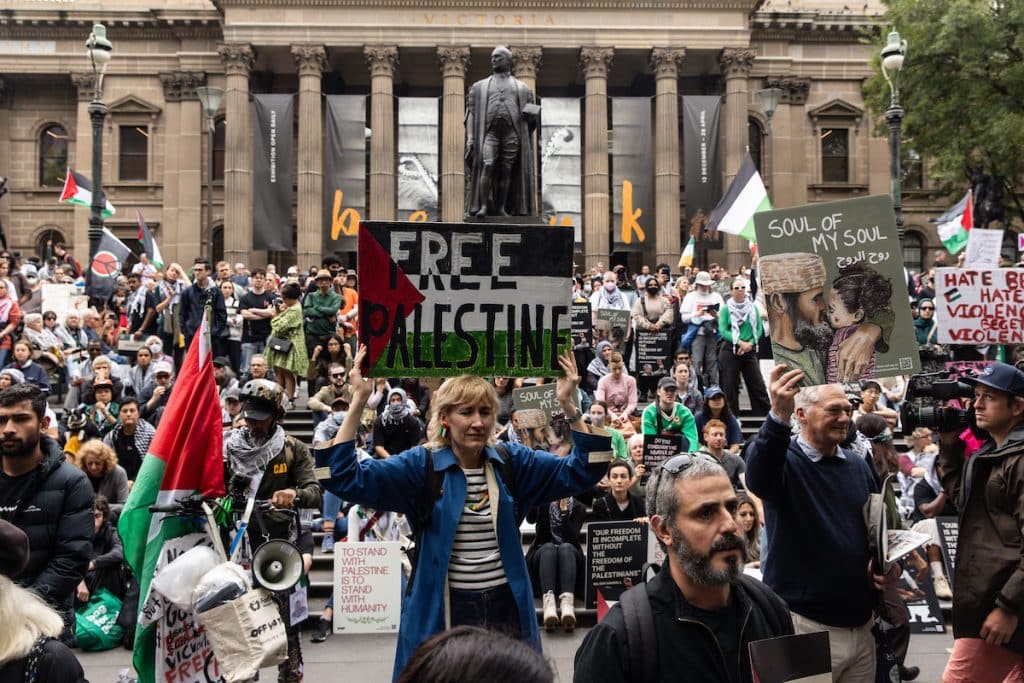
Protesters hold a pro-Palestinian demonstration in Melbourne, Australia, on December 10, 2023.
 (Photo: © Diego Fedele/EFE via ZUMA Press/ APA Images)


When news broke of the Bondi Beach shooting, those of us in the global Palestine solidarity movement knew immediately what was coming. We’ve seen this pattern: when liberation movements challenge state power and when genocide is named and resisted, states seize on any incident, any tragedy, to justify criminalizing that resistance. Since October 2023, as Israel has carried out genocide in Gaza, Australia has built an apparatus to suppress Palestine solidarity: envoys, task forces, and “safety” initiatives that treat anti-genocide organizing as a threat.

We knew the Bondi shooting would be weaponized against us because Zionism – through Israeli state institutions, lobby groups, and complicit governments – has made Jewish safety inseparable from Israeli state interests. It is not because of any connection to Palestine, but because the victims were Jewish. Zionism has constructed a system where any harm to Jews, regardless of context or motive, becomes justification to criminalize Palestine solidarity and crush demands for liberation.

Within hours, despite minimal details and no established motive, Israeli Prime Minister Netanyahu blamed Australia’s recognition of Palestinian statehood, claiming it “pours fuel on the antisemitic fire.” After the shooting, he declared Australia had “let the disease spread and the result is the horrific attacks on Jews we saw today.” Israeli officials claimed “the blood of the victims is on the hands of the Australian government” for not standing “unequivocally” with Israel. The New York Times published Bret Stephens’ op-ed: “Bondi Beach Is What ‘Globalize the Intifada’ Looks Like.” The Atlantic ran “The Intifada Comes to Bondi Beach.”

Australian Prime Minister Anthony Albanese spoke of those who seek to “extinguish light and promote darkness” – echoing Netanyahu’s framing of a “war between children of light and the children of darkness” to justify extermination in Gaza. By deploying the rhetoric of light versus darkness, it lays the foundations for a moral and legal framework where anything deemed threatening to the existing order – which, as we’ve established, includes Palestine solidarity – becomes a legitimate target for state repression.

Jillian Segal – Australia’s Special Envoy to Combat Antisemitism and an executive member of Australia’s peak Zionist lobby group, the Executive Council of Australian Jewry – drew an explicit line between a march across Sydney Harbour Bridge in support of Palestine to mass murder.

“We saw the Opera House, the Harbour Bridge and now Bondi Beach, each a progression,” she said, linking the October 2023 Opera House protest and the August 2025 March for Humanity – where 300,000 people peacefully marched over Sydney Harbour Bridge – directly to the Bondi shooting.

Politicians and media amplified the connection without challenge. No evidence connected the attack to Palestinian movement work, but that didn’t matter. Suddenly, a shooting with no connection to Palestine had become proof that Palestine solidarity leads to mass murder, justifying repression that was already planned.

Within days, the government moved. Prime Minister Albanese adopted Segal’s entire proposed antisemitism plan – recommendations she had released in July 2025.

Her plan proposes defunding schools, universities, media outlets, and cultural institutions that “fail to act against antisemitism,” while monitoring the ABC and SBS, Australia’s public broadcasters, for “fair” reporting. The IHRA definition – which treats criticism of Israel’s policies, comparisons between Israel and apartheid South Africa, or claims that Israel is a racist endeavor as “antisemitic” – is now set to become the framework for cutting funding and terminating employment in Australia’s media.

Albanese announced sweeping new powers targeting “preachers and leaders who promote violence”, as well as organizations engaging in “hate speech promoting violence or racial hatred”. The Home Affairs Minister gained power to cancel visas for those who “spread hate and division,” allowing the government to deny entry to solidarity activists and deport organizers. Federal parliament may yet be recalled to rush through legislation. Under the guise of combating hate speech and violence, these are the tools to defund, deplatform and fire anyone organizing against genocide.

The government announced financial assistance payments for Bondi victims, mirroring the scheme established after October 7 for Australians impacted by Hamas attacks under the Australian Victim of Terrorism Overseas Payment – a scheme never extended to Australian-Palestinians killed in Gaza by Israeli forces.

The Education Minister announced a 12-month antisemitism education taskforce led by the former Chancellor of the University of New South Wales David Gonski, working with the Special Envoy, to reshape curriculums “from early education right through to universities” to address students making Jewish peers “feel unwelcome” – campus organizing for Palestine will be embedded as antisemitism in educational policy from childhood.

NSW Premier Chris Minns recalled parliament to pass laws allowing police to reject protest applications under a “terrorism designation”. He claimed mass demonstrations could “light a flame impossible to extinguish,” effectively designating Palestine protests – which have sustained nearly weekly demonstrations for over two years, making them among the most enduring solidarity movements in Australian history – as potential terrorism, giving police the power to ban them.

Minns also indicated that he is open to arming the Community Security Group – a private organization with documented ties to Israeli intelligence – to operate at public events, with Victoria already allocating $900,000 to the group in the wake of the Bondi attack. (An Australian Defence Force officer recently lost his security clearance for “divided loyalty” after CSG training in Israel). Essentially, a foreign-aligned militia could be deputized to police Australian streets and surveil organizers.

At the memorial for Bondi victims, an Israeli flag flies alongside Australian flags. The conflation is complete: Jewish safety becomes inseparable from Israeli state interests, and therefore solidarity with Palestinians becomes a threat, and criminalizing that solidarity becomes justified as protection. When a Jewish woman wearing a keffiyeh attempted to attend the vigil – wearing it, she said, because of the Israeli flag on display – police escorted her out. She knew people who died. This was her community. But “Jewish safety”, it turns out, means safety only for those who align with Israel, not Jews who stand with Palestine.

Meanwhile, Australia continues manufacturing and shipping weapons components to enable mass death in Gaza – a reality the government continues to deny. A shooting at an iconic national beach becomes terrorism and justifies sweeping powers. But Israel’s systematic destruction of Gaza – mass killing of civilians, deliberate starvation, and erasure of entire families – is deemed self-defense. Palestinian liberation is an existential threat, while Israel’s genocidal violence is a supported policy.

The response to Bondi lays bare what the state has been building since October 2023: infrastructure to protect Australia’s stake in Israeli genocide from challenge. This serves Zionist lobby groups like the Executive Council of Australian Jewry that weaponize Jewish safety to justify Israel’s exterminationist policies. It serves a settler-colonial state defending another settler-colonial project. What’s being defended here is Australia’s complicity.

Ultimately, the response to this shooting accelerates what was already brewing: heightened powers, intensified surveillance, and violence against organizing, now legitimized. State repression doesn’t require a connection between incident and response. It requires opportunity.


OPINION

Netanyahu is exploiting the Bondi Beach massacre to build support for the Gaza genocide and is fueling antisemitism in the process

Benjamin Netanyahu is blaming the attack at Bondi Beach on Australia's support for Palestinian statehood. He conflates Jewish safety with Zionism to garner support for Israel, but in doing so, he enlists all Jews as agents of Palestinian oppression

December 18, 2025 
MONDOWEISS

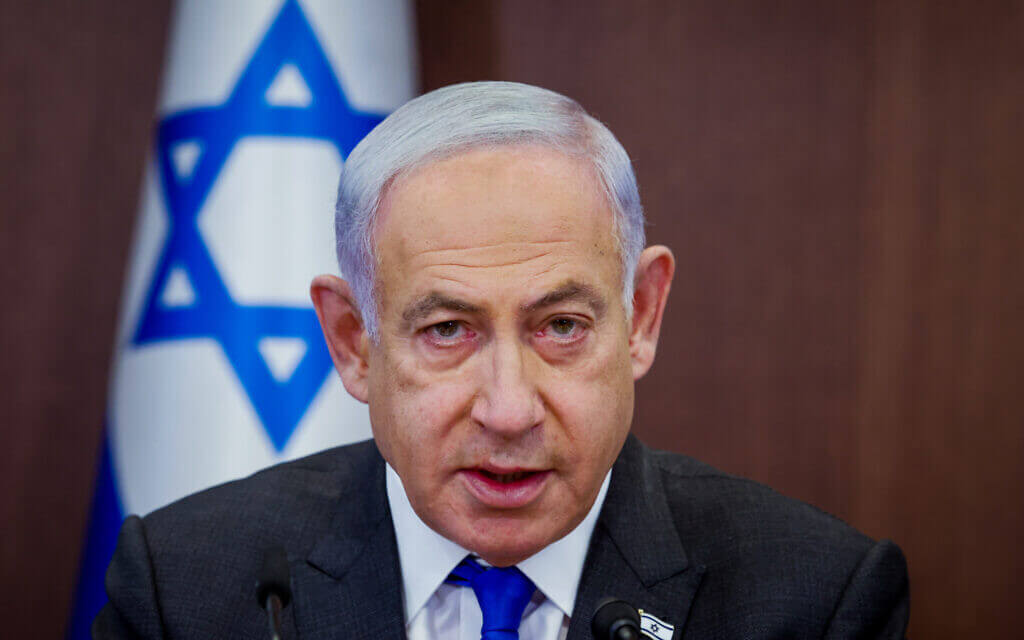
Israeli Prime Minister Benjamin Netanyahu leads a cabinet meeting, at the Prime Minister’s Office in Jerusalem on March 12, 2023. (Photo by Marc Israel Sellem/POOL)

On September 21, Australia officially recognized the State of Palestine. This recognition coincided with that of several other Western countries, including France, Canada, and the United Kingdom. This is, of course, a problem for an Israeli government that “flatly rejects the establishment of a Palestinian Arab state west of the Jordan River.”

So what better than a massacre of Jews on Hanukkah to undermine this effort?

At an Israeli government meeting following the Bondi Beach massacre, Netanyahu admonished the Australian government and its Prime Minister, Anthony Albanese, for its supposed role. This rhetorical attack aimed not only to delegitimize support for Palestinian statehood but also to garner support for the continuing genocide in Gaza. It does not seem to matter that the shooters, a father and a son of Pakistani Muslim background, are reported to have been inspired by ISIS and not a Palestinian cause as such. Israel never misses an opportunity to incite against Palestinians.


This is what Netanyahu said during the three and half minute long rant, in English. He started like this:


“On August 17th, about four months ago, I sent Prime Minister Albanese of Australia a letter, in which I gave him warning, that the Australian government’s policy was promoting and encouraging antisemitism in Australia. I wrote: ‘Your call for a Palestinian state pours fuel on the antisemitic fire. It rewards Hamas terrorists. It emboldens those who menace Australian Jews, and encourages the Jew hatred now stalking your streets. Antisemitism is a cancer. It spreads when leaders stay silent. It retreats when leaders act. I call upon you to replace weakness with action, appeasement with resolve’.

Instead, Prime Minister, you replaced weakness with weakness, and appeasement with more appeasement. Your government did nothing to stop the spread of antisemitism in Australia, you did nothing to curb the cancer cells that were growing inside your country, you took no action, you let the disease spread, and the result is the horrific attacks on Jews we saw today.”

So, following the Bondi Beach attack, Netanyahu is basically saying, “I told you so.”

The “appeasement” narrative is one that Netanyahu likes a lot, because it alludes to the appeasement policy of Britain towards Nazi Germany under PM Neville Chamberlain, who sought at the time to play soft with Hitler. The analogy turns Palestinians into Nazis, and those who seek to ‘appease’ them, weaklings and antisemites. For Netanyahu, antisemitism is a cancer, and who embodies it? Palestinians.

Netanyahu continued to apply pressure on Albanese, and in turn, any other leaders in the West who are considering supporting the Palestinians:


“We saw an action of a brave man, turns out a Muslim brave man [Netanyahu first claimed he was Jewish], that stopped one of these terrorists from killing innocent Jews. But it requires the action of your government, which you’re not taking, and you have to, because history will not forgive hesitation and weakness – it will honor action and strength. That’s what Israel expects of each of your governments in the West, and elsewhere. Because the disease spreads, and it will consume you as well. But we are worrying right now about our people, our safety, and we do not remain silent”.

And he then expanded his analogy to lump the Bondi Beach attack in with recent news from Syria, Gaza, and Lebanon:


“We fight those who try to annihilate us. They’re not only trying to annihilate us, they attack us because they attack the West. In Syria, we saw yesterday two American soldiers killed, and one American interpreter killed as well, killed because they represent our common culture. Now as a result of this, Secretary of War Pete Hegseth said the following. He said ‘let it be known, that if you target Americans anywhere in the world, you will spend the rest of your brief, anxious life, knowing the United States will hunt you, find you, and ruthlessly kill you’. We send our condolences to the people of America, and I want to say that our policy is exactly that policy. That’s why those who target Israelis, target our soldiers, try to kill them, or try to hurt them and wound them, as happened in Gaza yesterday – we take action. They will spend the rest of their brief, anxious lives knowing that Israel will hunt them, find them, and ruthlessly dispose of them. That is American policy, this is Israel’s policy. It’s our policy in Gaza, Lebanon, anywhere around us. We do not sit by and let these killers kill us.”

This is thus also a message to the U.S., we are one in our imperialist alliance. Netanyahu is signaling to Albanese, Australia, and anyone else who is thinking about aligning with the Palestinians in any form or shape, that they will be aligning with those who seek to annihilate Jews.

Netanyahu is playing an all-or-nothing game, and it’s forcing governments that seek to be liberal to choose a side – with Israel, or with the Palestinians, since Israel is so clearly bent on their destruction. Albanese was asked about Netanyahu’s accusations on ABC. Sarah Ferguson asked:


“Let me just talk to you about antisemitism. I want to bring up what Prime Minister Netanyahu said today. He singled you out personally, he said, for ‘pouring fuel on the antisemitism fire by recognising a Palestinian State’. Do you accept any link between that recognition and the massacre in Bondi?”

Albanese: “No, I don’t. And overwhelmingly, most of the world recognises a two-state solution as being the way forward in the Middle East.”

Albanese is clearly trying not to respond with fury to Netanyahu’s demeaning provocations, but Netanyahu is seeking to divide the world, are you with us or against us – and with us is against the Palestinians.

And it is exactly this rhetoric from Israel that arguably fuels antisemitism, or at least anti-Jewish animus.

This is because it seems impossible to protect Palestinians or even offer symbolic support for their national aspirations without being labeled a coward, an appeaser, or an antisemite seeking the destruction of the Jewish people. When these accusations set the terms, many feel that proving their worth against Israel’s claims is pointless. This dynamic also sustains hostility toward the Jewish community.

In 2015, after an attack in France on a Jewish supermarket, Netanyahu said to French Jews: “Israel is your home”. It caused considerable discontent among the Jewish community at the time, which is probably why he didn’t repeat it now. But he’s still posing as the strong leader of all Jews, whom the “weak” leaders should take example from, as it were. When such self-appointed ‘Jewish leaders’ conflate Judaism with Zionism and insist on unquestioning support for Palestinian destruction as proof of solidarity, people will often side with humanity—supporting those facing genocide, not those perpetrating it—and grow resentful of anyone demanding support for such actions.

We are already seeing the Zionist exploitation of the massacre to target Palestine solidarity in Australia, as well as internationally. We will likely also see a further crackdown on Palestinians from the river to the sea.

Following the massacre, mourners descended upon Bondi Beach to remember the victims. Jews waving Israeli flags were permitted, while anti-Zionist Jews wearing a kuffiyeh were distanced by the police. It was a message to all that the lessons drawn from this will likely be the Zionist ones.

Many are now once again listening to Netanyahu’s violent incitement, as if he weren’t wanted by the ICC for crimes against humanity. He has been granted moral authority once again, even if for a fleeting moment, as head of the self-proclaimed Jewish state. He is using it to berate the world about how to be on the right side of history, while actively commanding a genocide.
The Shift: Palestinian asylum seeker challenges ICE detention

By Michael Arria
December 18, 2025 
MONDOWEISS


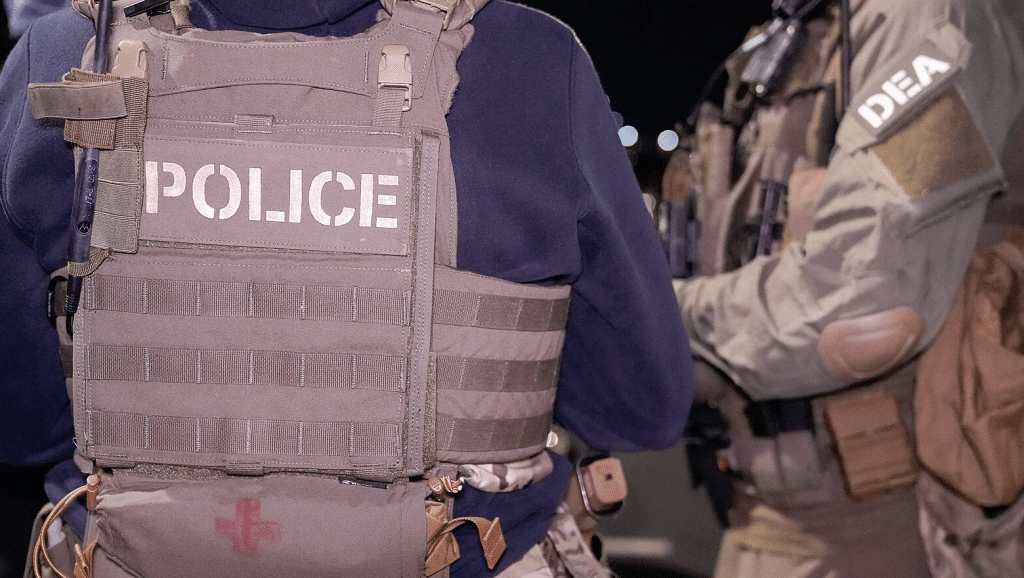
U.S. Immigration and Customs Enforcement (ICE) Enforcement and Removal Operations’ (Wikimedia)


A Palestinian asylum-seeker is challenging his indefinite detention by ICE.

Last month, the Center for Constitutional Rights (CCR) and Texas A&M Legal Clinics filed a habeas petition on behalf of Mohammed Abushanab, a 27-year-old who fled Israeli harassment in the West Bank only to end up detained by ICE in Texas for over 17 months.

In February, a judge granted Abushanab withholding of removal and protection under the Convention Against Torture (CAT) because he could face further mistreatment in the West Bank, but he has been held in post-removal detention since March.

Abushanab’s lawyers say he’s been harassed by prison guards and protested his treatment through a hunger strike before being threatened with solitary confinement.

“Mr. Abushanab should have been released from immigration detention months ago, but because he is Palestinian the government is punishing him and illegally subjecting him to indefinite detention,” said CCR staff attorney Samah Sisay in a statement. “The law requires that Mr. Abushanab have access to due process and is quickly granted his freedom to reunite with his family.”

“I escaped detention and abuse in Palestine only to be treated terribly and detained indefinitely in the U.S.,” said Abushanab in his own statement. “I submitted the habeas petition to secure justice and my freedom, and I hope the judge quickly gives me my freedom.”

There’s a lot of commentary about the economic and military relationship between the U.S. and Israel, but less attention paid to the societal parallels.

Interestingly, Abushanab’s legal challenge comes just days after Muhammad Ibrahim, a 16-year-old Palestinian-American accused of throwing rocks at soldiers in the West Bank, was released from an Israeli prison.

Ibrahim was detained for 10 months, and his 20-year-old cousin was killed by settlers while he sat behind bars. Ibrahim’s relatives say that he was beaten during his detention and held in solitary confinement.

Ayah Ziyadeh, a Palestinian human rights scholar and advocate who worked on Americans for Justice in Palestine Action’s campaign to have Ibrahim released, recently spoke to Mondoweiss about the ordeal.

“He was placed in two different facilities during his arrest, and the conditions were really awful. He was beaten up constantly by soldiers,” said Ziyadeh. “We heard from lawyers that when he would meet with the lawyer, and then they would leave, they would abuse him.”

“There was a moment when he was in court, and he knew that his parents were watching from the camera,” she continued. “So he waved at them. He was beaten up after that. The conditions were so bad that he lost over 30% of his weight. He contracted scabies because of the prison conditions. And so they put him in solitary confinement for that, which also declined his mental health.”
Ya’akub Vijandre gives first interview

Last week, Ya’akub Vijandre, a Muslim photojournalist and Palestine activist, who was detained over social media posts, gave his first interview from Georgia’s Folkston detention center.

Vijandre, a DACA recipient who has legally lived in the United States since 2001, was arrested at gunpoint in October. The Department of Homeland Security said the “Dallas Joint Terrorism Task Force” targeted Vijandre because he allegedly made a social media post that quoted Jordanian militant Abu Musab al-Zarqawi, who was killed in 2006. They also claim that he posted in support of the Holy Land Five and Pakistani neuroscientist Aafia Siddiqui, who is currently serving an 86-year sentence for attempted murder.

Vijandre told The Guardian that the government is “attacking my faith” and expressed concerns about his safety.

He says prisoners are treated “like animals” at the facility and yelled at for not speaking English. When he asked a guard if he could visit the bathroom, he was “just piss on yourself.”

“I never expected anything like that … being accused of ‘glorifying terrorism’; they attacked my religion, my faith,” he said, referencing his detention hearing. “They boxed me in, cornered me. I’ve seen this in movies …but was not expecting my faith to be attacked.”

“This is a rehearsed tactic of Islamophobia,” Vijandre added.
Fetterman lobbies for Netanyahu

Democratic Pennsylvania Senator John Fetterman has consistently celebrated Israel’s destruction of Gaza, but a new revelation shows just how deep that support runs.

In a letter, obtained by TPM, Fetterman asked Israel’s President Isaac Herzog to pardon Prime Minister Benjamin Netanyahu, who was on trial for bribery and fraud.

“In a world this dangerous, I question whether any democracy can afford to have its head of government spending valuable hours, day after day, in a courtroom rather than the situation room,” Fetterman wrote to Herzog.

“It seems that the legal proceedings against the Prime Minister, dragging on year after year, have become a drain on the nation’s spirit and its focus,” he continued. “In a world this dangerous, I question whether any democracy can afford to have its head of government spending valuable hours, day after day, in a courtroom rather than the situation room…I believe there is a strong case to be made for a pardon — not to erase the past, but to secure the future.”

When asked about the request, Fetterman referred to the Netanyahu trial as a “pointless distraction.

“I stand on the letter,” he added.


ZIONIST FEMICIDE

After the Rape: The challenges of monitoring sexual violence in Gaza

Palestinian women in Gaza have faced widespread sexual violence during the Israeli genocide. Despite mountains of evidence, human rights groups face difficulties pursuing justice, as women live in fear of social stigma and reprisal from Israel.


By Majd Jawad 
 December 20, 2025 
MONDOWEISS


Gaza Community Mental Health Program staff providing psychological support to displaced children, women, elderly people, and people with special needs in evacuation camps in Deir Al-Balah and Rafah, in April 2024.
 (Photo: Gaza Community Mental Health Program/Facebook)


The story of N.A., a Palestinian woman detained and allegedly raped by four Israeli soldiers, sent shockwaves through a community already ravaged by war. Detailed in the shocking report by The Palestinian Centre for Human Rights (PCHR) last month, N.A.’s story was one of many, revealing the systematic rape and sexual torture of Palestinian detainees in Israeli captivity.

Her subsequent refusal to seek follow-up medical care after her release, retreating back into a circle of silence, highlights a pervasive and devastating reality in the Gaza Strip. Despite repeated attempts by human rights organizations to document her case and provide support, N.A. declined any further interviews, embodying the fear that paralyzes countless survivors.

“The cases that do speak to us fundamentally do not feel safe disclosing their experiences,” says Yasser Abdel Ghafour, deputy head of the documentation unit at a local human rights center. “They prefer not to expand the circle of people who know about their situation, which would further expose their identity.”

According to Abdel Ghafour, this is not an isolated incident. “We are aware of many cases that have endured similar experiences,” he explains. “We have approached them repeatedly to share their stories, but they have flatly refused, believing it would endanger their lives even more violently. This is especially true for women.”
Sexual violence as a weapon of war

Local and international human rights organizations indicate that the use of sexual violence by occupation forces is not a collection of isolated incidents but part of a repeated pattern of behavior within detention centers. While no international body has yet conducted a full investigation, the recurring patterns in testimonies, especially from female detainees, reflect a systematic practice of sexual humiliation, degradation, and identity destruction.

“What is required is not just documenting violations, but establishing a neutral international mechanism to investigate the use of sexual violence as a weapon of war,” Abdel Ghafour insists. “What is happening to women in detention is part of a widespread and systematic attack, not individual transgressions by soldiers.”

In a statement, the BADIL Resource Center for Palestinian Residency and Refugee Rights asserted that Israeli sexual assault must be treated as a political and societal issue, not an individual one. “As a political-societal issue connected to colonial policies of oppression,” the statement reads, “it is akin to assassinations or the use of extreme force. The victim must not be isolated or degraded; rather, she should be embraced, her struggle honored, and all necessary support provided.”

Persistent threat of retaliation

For released detainees, the psychological and physical devastation is immense. The trauma of their experience lingers long after they return home. One testimony documented by the PCHR captures this despair: “In terms of my mental health, I am not myself anymore. I am talking to you now about my tragedy and I feel unstable, I cry and laugh at the same time. I have become soulless when I look at my children and fear that one day they will go through what I went through.

Another survivor describes her shattered mental state: “They violated our dignity and destroyed our spirits and our hope for life. I had wanted to continue my education; now I am lost after what happened to me”

According to professionals, despite such profound trauma, very few survivors seek medical or psychological care. The constant threat of reprisal from Israeli occupation forces for speaking out prevents them from fully disclosing their experiences.

This fear is corroborated by the May 2025 GBV Trends Analysis: Gaza report from the United Nations Population Fund (UNFPA), which noted that survivors “are often reluctant to name armed perpetrators due to fear of retaliation.”

This climate of fear extends beyond gender-based violence to all forms of documentation. Munir al-Bursh, a director within the Gaza health ministry, confirms this trend to Mondoweiss. He says he has encountered cases where individuals repeatedly insisted that their identity and medical details remain confidential, citing direct threats of revenge from the Israeli occupation if their stories were made public.

The threat is not limited to survivors. Human rights workers, monitors, and local civil society organizations—such as PCHR, Al-Mezan Center for Human Rights, and the Women’s Affairs Center, are also systematically targeted for their work exposing Israeli crimes. These organizations, already struggling to operate, face constant intimidation by Israel.

This includes direct physical attacks, such as the complete destruction of Humanity & Inclusion’s (HI) office in Gaza City in January 2024, despite its coordinates being registered with the UN’s notification system. Human Rights Watch (HRW) has also documented at least eight Israeli strikes on aid worker convoys and premises, even after their locations were provided to Israeli authorities.

Silent hotlines

While reported cases of rape and sexual exploitation and abuse (SEA) remain low, these incidents are severely underreported. GBV case managers on UNFPA in Palestine have shared concerning testimonies in task force meetings and trainings, including cases involving adolescent girls and women with disabilities raped by family members and strangers.

Despite rape appearing as 0% in the data, there has been severe underreporting due to fear of retaliation, stigma, and lack of awareness about available services and the collapse of justice system, with survivors not consenting to the recording of their cases. “Many women prefer silence,” says Zainab Al-Ghunaimi, director of Hayat Center for the protection of battered women, considered the primary safe house in Gaza, “not because their experience is any less real, but because speaking out can mean exposing themselves and their families to renewed violence, social ostracism, and practical ruin.”

This challenge cripples reporting mechanisms. An August 2025 report from the Gender-Based Violence Area of Responsibility (GBV AoR) “reported severe disruption to women’s specialized service centers, with the majority either non-operational or only partially functioning,” while access to what remains of reproductive and mental health services is fraught with danger.

No safe shelters

In the absence of formal systems, some organizations have sought alternative justice and protection methods. Al-Ghunaimi, describes their efforts.

“We tried to find alternative ways to protect abused women during the war,” she says. “We established a tent to shelter women facing first-degree threats, meaning those at risk of being killed. We resorted to temporary solutions like a mediation system instead of the judiciary.” This system, she explains, involves committees of respected community figures, such as displacement center managers and family elders—to resolve conflicts and offer protection.

However, Al-Ghunaimi refuses to call these shelters completely “safe.” In the presence of the occupation, there is no real safe place. Recently, as this report was being written and despite a ceasefire, an Israeli strike hit a house next to the Hayat Center’s camp, destroying more than half of it. While no one in the camp was physically harmed, the bitter trauma of losing shelter was felt once again.

A void of accountability


International investigations into sexual violence in Gaza cannot proceed without witnesses. Yet, those who might testify live under constant fear, persistent threats, displacement, and deep psychological trauma.

The relentless insecurity, compounded by the destruction of homes and essential services, has made it nearly impossible for survivors to safely come forward. This creates a staggering gap between the sheer scale of the violations and the ability of human rights organizations to document and pursue justice for them.

“We have collected numerous testimonies over the years, but we lack witnesses willing to step forward,” says Abdel Ghafour, deputy head of the documentation unit at PCHR. “The silence forced by fear and social stigma means that files on rape and sexual torture remain some of the most challenging, and heartbreaking—to work on. Without witnesses, accountability remains almost entirely out of reach, and survivors continue to bear the weight of these crimes alone.”
Israeli minister proposes keeping Palestinian detainees in facility ’surrounded by crocodiles’

IMITATION IS THE HIGHEST FORM OF FLATTERLY


December 21, 2025 
Middle East Monitor


Israel’s Minister of National Security Itamar Ben-Gvir, gestures during the Parliament session in Jerusalem on October 28, 2024 [DEBBIE HILL/POOL/AFP via Getty Images]

Far-right Israeli National Security Minister Itamar Ben-Gvir has proposed establishing a “detention facility surrounded by crocodiles” to hold Palestinian prisoners, local media reported on Sunday, Anadolu reports.

“The Israel Prison Service is examining an unusual proposal put forward by the National Security Minister (Itamar Ben-Gvir), which calls for setting up a detention facility for security prisoners surrounded by crocodiles in order to prevent escape attempts,” Channel 13 said.

According to the channel, Ben-Gvir, who leads the far-right Jewish Power Party, presented his proposal during a situation assessment meeting he held last week with Israel Prison Service Chief Commissioner Kobi Yaakobi.

It noted that the proposed site is located near the Hamat Gader area in northern Israel, near the occupied Syrian Golan Heights and the border with Jordan, and includes a crocodile farm and a zoo.

The proposal came as the Israeli Knesset is expected to vote in the coming days on a bill proposed by Ben-Gvir to execute Palestinian prisoners accused by Israel of planning or taking part in attacks against it.

The Knesset Plenum, the supreme authoritative body of the parliament, approved the bill in its first reading on Nov. 11. It must pass the second and third readings to become law.

Israel currently holds more than 9,300 Palestinian prisoners, including children and women, amid reports of torture, starvation, and medical neglect that have claimed the lives of many, according to Palestinian and Israeli human rights reports.

Violations against Palestinian prisoners have escalated during Israel’s genocidal war on the Gaza Strip, which killed more than 70,900 people, mostly women and children, and injured nearly 171,200 others since October 2023 in a brutal assault that also left the enclave in ruins.
Palestinian boy injured in hit-and-run amid settler rampage in West Bank

A Palestinian teenager was injured in Nablus after settlers ran him over, as attacks were also reported in Ein Yabrud and clashes broke out in Jerusalem.


The New Arab Staff
19 December, 2025


A Palestinian teenager was injured after being run over by Israeli settlers during a predawn incursion into the area around Joseph’s Tomb in the occupied West Bank city of Nablus on Friday, as separate incidents of settler violence and internal unrest unfolded across the West Bank and Jerusalem.

An Al Jazeera correspondent reported that settlers entered Nablus in the early hours of the morning in an apparent attempt to reach the Joseph’s Tomb shrine, located in an area under Palestinian administrative control.

According to the Palestinian news agency Wafa, settlers drove into the eastern part of the city and struck the boy as he was crossing Amman Street, leaving him with fractures to both legs. He was taken to hospital for treatment.

The Israeli army later said it had arrested settlers who "deliberately entered Nablus without authorisation, ran over a Palestinian, and fled".

Anadolu Agency, citing eyewitnesses, reported that two settler vehicles entered the area, one car overturned as the settlers fled on foot.


Settler incursions into the Joseph’s Tomb site are frequent and typically take place under Israeli military protection, despite the shrine being located within a Palestinian-controlled zone.

While Jewish tradition has regarded the site as religious since Israel’s occupation of the West Bank in 1967, researchers and historians have disputed the claim, saying the shrine is more likely the tomb of a Muslim cleric named Yusuf Dweikat.

The incident in Nablus came amid a series of reported settler attacks elsewhere in the West Bank. Earlier this week, Israeli settlers were reported to have torched a Palestinian vehicle and sprayed graffiti during an overnight attack on the village of Ein Yabrud, northeast of Ramallah.


The war on the West Bank: Israel's deepening spiral of violence
West Bank
Ines Gil

Settlers entered the village, set a vehicle on fire, and vandalised property before fleeing, and while Israeli police said they had opened an investigation, no arrests have been made.

Images circulating online showed damage to the vehicle and graffiti left at the scene.

The Ein Yabrud attack is part of a broader pattern of settler violence targeting Palestinian villages, which has intensified since the start of Israel’s war on Gaza in October 2023.

Palestinian officials and human rights groups have repeatedly accused Israeli authorities of failing to prevent such attacks or hold perpetrators accountable.

Meanwhile, in occupied Jerusalem, clashes erupted on Thursday night between Israeli police and members of the Haredi (ultra-Orthodox) community, leaving at least 13 police officers injured.

The unrest began in a Haredi neighbourhood after a municipal inspector issued a traffic citation to a young Haredi man, according to Israeli media reports. When police arrived, officers reportedly discovered that several of those present were evading compulsory military service and attempted to transfer them to military police custody.

Hundreds of Haredim then gathered at the scene, with Israeli media reporting that alerts were circulated warning that "the kidnappers have arrived", a reference used by some Haredi groups for police officers enforcing conscription-related arrests.


Clashes escalated as protesters overturned a police vehicle, threw stones and rubbish, and damaged additional police cars.

Israeli police said they deployed large forces, including Border Police units, to restore order, using crowd-control measures such as tear gas and water cannons. Four people were arrested.

After police briefly withdrew, protesters reportedly attacked investigators and a bus carrying Israeli soldiers, prompting police to return and use stun grenades to extract them.

The clashes highlight growing internal tensions in Israel following a 2024 Supreme Court ruling that ended long-standing exemptions for Haredi men from military service and barred state funding for religious institutions whose students refuse to enlist.

Haredim, who make up roughly 13 percent of Israel’s population, argue that compulsory service threatens their religious way of life.

Israeli settlers raid Hebron’s Old City under Israeli army protection


December 20, 2025


Israeli soldiers block roads and restrict Palestinian movement as illegal Israeli settlers, under the protection of Israeli forces, carry out a raid in the Old City of Hebron in the southern West Bank on December 20, 2025. [Amer Shallodi – Anadolu Agency]

A group of illegal Israeli settlers stormed the West Bank city of Hebron on Saturday, Anadolu Agency reports.

Israeli soldiers provided protection and escorted the settlers during the raid on the Old City area, imposing heavy security measures.

Such raids are a recurring practice, with Israeli settlers carrying out raids under the protection and escort of Israeli army forces.

The Israeli army has escalated its attacks in the occupied West Bank since the outbreak of the Gaza war in October 2023.

Israeli forces and illegal settlers have killed at least 1,097 Palestinians in the occupied West Bank, including East Jerusalem, injured nearly 11,000, and detained around 21,000 since October 2023, according to Palestinian figures.

In a landmark opinion last July, the International Court of Justice declared Israel’s occupation of Palestinian territory illegal and called for the evacuation of all settlements in the West Bank and East Jerusalem.
Israel has continued its assassination campaign in Gaza despite the ceasefire

Since mid-October, Israel has carried out an assassination campaign in Gaza targeting resistance leaders. Contacts within the resistance say Israel is trying to lure them back into direct confrontation to avoid fulfilling its ceasefire obligations.
 December 18, 2025 
MONDOWEISS

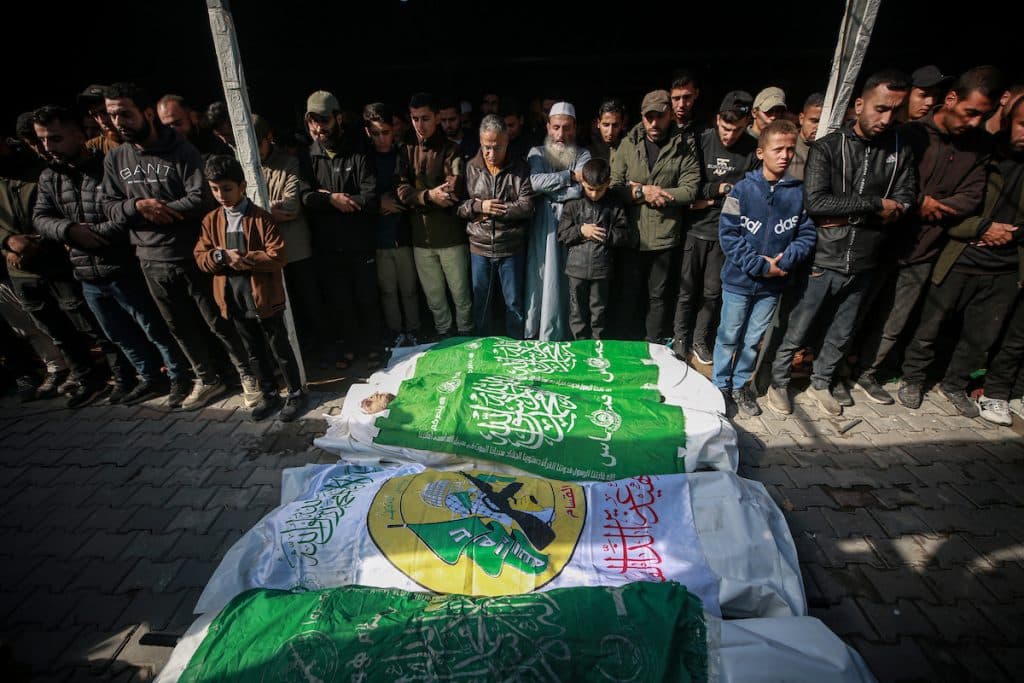
Palestinians participate in the funeral procession for Raed Saad, a prominent commander in the Izz ad-Din al-Qassam Brigades, the military wing of Hamas, and three of his aides, who were killed in an Israeli airstrike in Gaza City, on December 14, 2025. 
(Photo: Omar Ashtawy/APA Images)


On December 13, the Israeli army assassinated Raed Saad, a senior commander in the Qassam Brigades and head of its weapons production. It was not the first strike deep into Hamas’s military wing or that of other resistance factions in Gaza. In fact, it was a continuation of Israel’s policy in Gaza since the ceasefire agreement was signed in October 2025.

Since the first days of the ceasefire, Palestinian civilians have been targeted for crossing the “yellow line,” which demarcates Israeli-controlled areas but is not clearly delineated. Later, beginning in mid-October, a clear pattern of assassinations began to emerge. The assassination of five fighters from the Qassam Brigades’ elite unit on October 17 marked the beginning of Israel’s assassination campaign during the ceasefire, which has not eased since.

On October 19, Yahya Al-Mabhouh, the commander of an elite unit, and Ahmad Abu Mutair, a broadcast engineer, were assassinated. Both were affiliated with the Qassam Brigades.

On October 29, several Qassam commanders were assassinated, including Hatem Al-Qudra, along with other martyrs.

On November 17, a field commander in Gaza City, Wisam Abdelhadi, a commander in the Al-Nasser Salah al-Din Brigades, was assassinated.

On November 20, five senior leaders in Hamas were assassinated, including Ahmed Abu Shammala, head of the naval unit, Nihad Abu Shahla, head of intelligence, Fadi Abu Mustafa, and others.

Likewise, on November 22, the Israeli army announced the assassination of five additional commanders.

And then, on December 13, Raed Saad.

“Sa’ad was one of the last remaining veteran senior militants in the Gaza Strip and a close associate of Marwan Issa, the deputy head of Hamas’ military wing. He held several senior positions and was a central figure within the organization’s military leadership,” the Israeli army said in a statement following the assassination, making no mention of its violation of the ceasefire.

During the ceasefire, the Israeli army has targeted all Palestinians in Gaza engaged in resistance activities, regardless of their political affiliations—whether with Hamas or other factions—just as they had during the war. These assassinations have been in addition to the 386 civilians whom Israel has killed in Gaza during this period as well.
Instigating the resistance

The resistance in Gaza believes that the Israeli army is trying to fabricate pretexts in order to target Palestinians in the Gaza Strip, especially political and military figures. It is also attempting to push the resistance back into direct confrontation to evade the ceasefire, using all available means to achieve its objectives in Gaza.

“The Israeli occupation army is working to create pretexts in the areas under its control classified as yellow zones in order to target our people, particularly political and military leaders, and to drag the resistance into a new confrontation that would lead to the resumption of the war and evasion of the ceasefire agreement, as well as international and U.S. pressure to adhere to the agreement,” a security source in the resistance in Gaza City told Mondoweiss.

“We have monitored new methods for tracking military leaders at both the technological and human levels,” he said. “The occupation is using highly advanced technology and spying devices planted in various areas of the strip, as well as human intelligence through cooperation with armed militias allied to the Israeli army. It also assigns these groups the task of targeting security leaders inside the Gaza Strip.” Investigations taken by the resistance have revealed links between cells inside Gaza and the occupation, whose main mission is to carry out assassinations. As for the assassination of senior leaders, they were carried out directly by the occupation, according to the same source.

The source noted that the pretexts cited by the army are flimsy and unfounded excuses to carry out assassinations, most notably claims that its soldiers were subjected to gunfire and military operations in areas fully under its control.

“The resistance has no contact with those present in these areas, does not carry out any military operations there at the present time, and does not issue any instructions to any of its members to carry out such operations,” the source said.

The source described what is happening as a blatant violation by the occupation of the ceasefire, a disregard for regional and international mediators, and an attempt to evade the obligations of the agreement and delay the start of the second phase of the ceasefire. “For our part,” the source said, “we will not give the occupation any pretext to achieve its objectives.”

The source indicated that the resistance in Gaza will not accept the occupation imposing its equations and rules on Gaza, its population, and its resistance. “The Netanyahu government is seeking to do so, but we have sent several messages to the mediators, from whom we received assurances that such rules would not be imposed under any circumstances, especially from the United States, which confirmed to all parties its determination to implement the ceasefire in all its stages.”

He also pointed out that the political leadership remains in constant communication with the mediators to compel the Israeli occupation to adhere to the ceasefire agreement, and that “we continuously affirm our right to respond in the manner and at the time we deem appropriate to the occupation’s violations and breaches, and that we will not remain silent for long in the face of the occupation’s aggression and violations.”
A strategy to avoid the second phase of the ceasefire

The Israeli pattern of assassinating leaders and turning the Gaza Strip into an open area for Israeli military operations has been clear to any observer of the situation on the ground in Gaza. The assassinations, bombardments, seizure and destruction of large areas inside what are referred to as the “yellow line” zones are all taking place as negotiations over the second phase of the ceasefire agreement are being carried out. These actions appear to be Israel’s attempt to create a new reality on the ground while it can.

Political analyst and writer Ahed Farwana told Mondoweiss that “the occupation is attempting to establish new tactics through clear assassination operations or armed actions, through which it seeks to perpetuate a state of tension in Gaza and make it the prevailing condition.”

Farwana says Israel is periodically increasing the pace of assassinations and trying to normalize the situation, similar to what it has done in Lebanon, but is now carrying out this strategy on a much larger scale in the Gaza Strip.

He says the Israeli government wants to avoid the second phase of the ceasefire agreement because of the obligations it would carry with it.

“These include the withdrawal of the army, the opening of crossings, and reconstruction, and Netanyahu does not want to pay their political cost—especially as the coming year is an election year in Israel. Accordingly, they are doing everything possible to maintain the status quo,” he says. Farwana confirms Israel is expanding the yellow zone and destroying everything east of the yellow line on a daily basis, stressing that “the Israeli government is not prepared at all to move to the second phase.”

Farwana believes that international pressure—particularly from U.S. President Donald Trump—is what could make a difference. He says that if Trump wants to pressure Netanyahu to move to the second phase, he will do so. However, if there is no real pressure on Netanyahu, he will continue to do as he has during the first phase – grabbing land in Gaza, and killing any Palestinian who stands in their way.
‘What is the Christian word in the face of genocide?’: new Kairos Palestine document calls for repudiation of Zionism

“What is happening [in Palestine] today is the true face of Zionist ideology . . . turning Palestinian existence into an unbearable hell,” declares the recently released Kairos Palestine document, "A Moment of Truth: Faith in a Time of Genocide."
 December 20, 2025 
MONDOWEISS

Displaced Palestinians continue their daily lives under difficult conditions inside displacement tents scattered amidst the destruction in the Zeitoun neighborhood, southeast of Gaza City, on December 9, 2025. 
(Photo: Omar Ashtawy/APA Images)


Last month, 300 people—led by the Patriarchs and Heads of Churches in Palestine— gathered in Bethlehem to launch the second Kairos Palestine document: A Moment of Truth: Faith in a Time of Genocide. 140 Palestinians and 160 internationals spent the day unpacking the theological and political descriptions of the conditions that Palestinians face and attending to the indigenous church’s call for Palestinian resistance and Christian solidarity. The conference was hosted by Kairos Palestine, the largest Palestinian Christian ecumenical nonviolent movement for freedom and justice.

Mays Nassar, Kairos Palestine staff, introduced the 14-page document, saying, “With the beginning of the genocidal war on Gaza and the worsening reality of apartheid and ethnic cleansing in the West Bank, we reached a decisive moral and theological turning point. Our hearts were compelled to reflect on the meaning of faith in such a time of horror. We asked ourselves what must we say to our people now? What is the Christian word in the face of genocide?”

In the first part of the document, “The Reality: Genocide, Colonization and Ethnic Cleansing”, the authors lament, “We raise this cry from the heart of the assault on Gaza — a war that has left behind hundreds of thousands of martyrs and wounded, and nearly two million displaced people. Many were buried beneath the rubble, burned alive, tortured to death in prisons or forcibly displaced more than once. Others endured starvation, targeted even as they ran in search of food. Tens of thousands of children were killed in the most horrific ways. Gaza’s health, education, economic, and environmental sectors—indeed, every component of life—have been destroyed.”

“Exposed today,” the document states, “is the true face of Zionist ideology: a system that over decades has entrenched an organized and sophisticated regime of apartheid supported by advanced technologies that exercise total control over every aspect of Palestinian life—fragmenting the land, dividing its people, and turning Palestinian existence into an unbearable hell.”

Genocide is both a cumulative process, according to the document, “one that began in the minds of the settler-colonial powers of Europe when they denied the image of God in others and legitimized death, domination and slavery,” and a “structural sin against God, against humanity, and against creation.”

“We consider the State of Israel, established in 1948,” Kairos II maintains, “to be a continuation of that same colonial enterprise built on racism and the ideology of ethnic or religious superiority.”

Authors of the document charge that “the genocidal war has laid bare the hypocrisy of the Western world, its hollow values and its empty boasts of commitment to human rights and international law. In truth, the Western world has sacrificed us, revealing racism and double standards toward our people.”

Palestinian Christians decorate the Latin Monastery Church in hardships Gaza City ahead of New Year celebrations, continuing their preparations despite the hardships facing the besieged enclave, on December 9, 2025.
(Photo: Omar Ashtawy/APA Images)

Turning to the global reality of Christian Zionism, the document describes the ideology as a “theology of racism, colonialism and ethnic supremacy… a theology that has produced apartheid, ethnic cleansing and genocide of indigenous people.”

“Christian Zionism calls on a tribal, racist god of war and ethnic cleansing, teachings utterly alien to the core of Christian faith and ethics,” Kairos II continues. “Christian Zionism must therefore be named for what it is: a theological distortion and a moral corruption.”

In what some may consider the document’s most controversial call, Kairos II insists that religious conversations and interfaith dialogue with Christian Zionists must be ended.

“After all efforts to invite Christian Zionists to genuine repentance have been exhausted,” Kairos II reads, “moral, ecclesial and theological responsibility requires that they be held accountable and that their ideology be rejected and boycotted. The time has come for the churches of the world to repudiate Zionist theology and to state clearly their position on Palestine: this is a case of settler colonialism and ethnic cleansing of an indigenous people.”

The document goes on to describe the increasingly violent actions of settlers: “Across the occupied West Bank… [t]hey wreak havoc upon the land, destroy crops, poison or seize water resources and attack residents—all under the protection, support and even participation of the Israeli army in acts of violence, killing, home demolitions and forced displacement.”

Regarding the Palestinians living within the state of Israel, the document states, “blatant racism and discrimination persist. Palestinian communities face intimidation, criminalization of free expression, and persecution of any effort to defend Palestinian rights, along with [Israel’s] deliberate neglect of rampant organized crime in Palestinian towns. Those displaced within Israel in 1948, whose lands were confiscated, are still denied the right to return to their villages and rebuild their homes. Bedouin communities remain victims of systematic displacement and ethnic cleansing….”

The document doesn’t hesitate to name challenging internal conditions that have been increasingly exacerbated over Israel’s 77-year-long dispossession and occupation:


Political division, rivalry and exclusion have deepened. The majority of Palestinians have lost confidence in their political leadership. As a result of the Oslo Accords and their aftermath, the Palestinian Authority has been trapped in serving the interests of the occupier….

Signs of disorder have… become part of our reality, largely due to the absence or weak enforcement of the rule of law. This has led to a rise in intimidation, land encroachment, tribalism, favoritism and corruption in its various forms at the expense of the common good, deepening people’s frustration and despair. Amid the vast destruction and genocide in Gaza, acts of violence, revenge, chaos and theft have only added to the suffering of the Palestinian people.

The document also describes a worrying external reality.


In recent years, our region—the Middle East—has undergone major political and regional transformations shaped by a deliberate plan to impose Israeli military dominance over the entire area with the support of Western powers, drawing a new political and demographic map. Backed systematically by its allies, Israel has attacked many countries of the region, violating their sovereignty and that of their peoples, flouting international law and entrenching itself as an aggressive, bullying state as if it stands above all laws and conventions—pushing the region and indeed the world to the brink of catastrophe.

The second part of Kairos II, “A Moment of Truth for Us”, is focused inwardly on Palestinian society. “In the face of this harsh reality and at this decisive moment we raise this cry—first to ourselves, to the sons and daughters of our churches and congregations, and to our entire people in the homeland and the diaspora.”

The document calls “for a comprehensive national reevaluation of our reality to draw lessons and insights leading to a unified, collective vision and a clear strategy for future action… within a legitimate representative framework” and warns “against giving our national struggle a religious character or turning it into a religious issue that pits religions against one another.”

In almost lyrical prose, Kairos II addresses:the Palestinian woman, “the unbending backbone, partner in the struggle, holding together home, land, memory and future all at once… There can be no true liberation without her full participation at every level of decision-making and nation-building.”
the Palestinian Church: “We are the sons and daughters of the first Church… those who cultivated this land, built its cities and villages and drank from its waters. We do not live on the margins of this land. We are woven into its fabric. We carry its history and heritage. Its very soil knows us as its own. Many empires have passed over this land and disappeared, buried in the dust of history, yet the bells of our churches continue to ring—bearing witness to the truth and proclaiming resurrection every day.”“our youth”: “You are the living Church…. We see your anger, your sorrow, your fear. We also see your strength…. We do not call you to naïve optimism, but to hope that is rooted in action…. Express yourselves. Write. Sing. Create. Organize. Resist through your humanity in a world that seeks to strip it from you.
“our people in the diaspora”: “You may be geographically far from Palestine, but Palestine lives within you…. Your voice has the power to shift realities. Share our suffering and our stories of steadfastness and success…. We will not lose our dream of reunification, nor will we abandon our right of return.

In the third part of the document, “A Call to Repentance and Action”, the authors make their appeal to persons around the world.

To Christians: “working together with both religious and secular coalitions… pressure [your] governments to isolate Israel, hold it accountable… press for the prosecution of war criminals whoever they may be… ensure reparations for the Palestinian people… work for the immediate return of the displaced through the reconstruction of Gaza and the strengthening of its people’s steadfastness.

To people of conscience: “believers in God from every faith and persons of conviction… join together in coalitions that safeguard humanity from further descent into the reality of injustice, tyranny and domination.”

“We call for a global theological movement built on the pillars of God’s Kingdom — a movement that arises from the contexts and struggles of peoples suffering from colonialism, racism, apartheid and the structural poverty produced by corrupt economic and political systems that serve the interests of the world’s empires.”

To the Jewish voices that oppose the war and confront Zionism from moral, faith-based and human conviction: “[W]e find [in you] partners in our shared humanity and in the struggle for freedom and human dignity—partners also in religious and political dialogue.

Rejecting the conflation of Jew and Zionist, the document draws a clear distinction. It declares, “Not every Jew is a Zionist and not every Zionist is a Jew.”

At the heart of the document’s plea to all is a clarion call to costly solidarity, the risking of one’s self for the sake of the other. “By its very nature,” the document insists, “true solidarity is costly. It has a price. It is a faith-based stance, a human commitment and a moral responsibility. True solidarity is also the embodiment of our shared humanity and fraternity. Either we live together—or we perish together. Today it is Palestine. Tomorrow it will be other marginalized and oppressed peoples.”

The final section, “Faith in a Time of Genocide”, is the briefest, and offers a reaffirmation of the Palestinian Christians’ steadfast faith and this honest assessment of the possibilities for peace:


To speak of a political solution today is futile unless we first undertake the serious work of acknowledging and rectifying past wrongs—beginning with recognition of the historic injustice done to Palestinians since the rise of the Zionist movement and the Balfour Declaration. Any genuine beginning must involve dismantling settler colonialism and the apartheid system built on Jewish supremacy…. What is required is international action and protection…. Enduring solutions will not rest on the logic of force, but on the foundations of justice, equality and the right to self-determination.

In her address at the conference, Dr. Muna Mushahwer, an ophthalmologist and member of the board of Kairos Palestine, acknowledged, “Yes, we are angry, furious even. Jesus himself got angry at the Temple as we read in Matthew 21:12-13. He got angry because the house of the LORD was to be a house of prayer, but it was turned into a den of thieves. How angry do you think he is now that the land of the LORD has been turned into a place of death and desolation? But from this anguish and pain comes this moment of truth for us. As we write in Kairos II, we raise this cry… a cry of steadfastness.”

“Faith in a Time of Genocide” will stand alongside Chrisian confessions written in other times of crisis, such as the Barmen Declaration during the rise of Nazism (1934), MLK, Jr’s Letter from the Birmingham Jail during the U.S. Civil Rights Movement (1963), and The South Africa Kairos Document during the struggle to end apartheid in South Africa (1985).

Jeff Wright
Jeff Wright is an ordained minister of the Christian Church (Disciples of Christ).