Thursday, March 12, 2026


Italian steel bosses do you think workers can fly!


Wednesday 11 March 2026, by Francesco Maresca
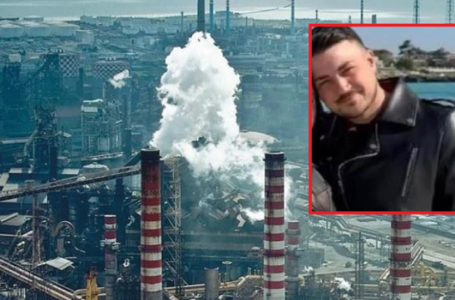


Another workplace death at the former Ilva steel plant in Taranto while production languishes and Minister Urso fails to act. Workers mobilise. Solidarity from Sinistra Anticapitalista

It is shameful to witness a series of fatal accidents that are almost identical. As far as we know, once again a “walkway collapsed”. It seems like bad luck, but obviously it is not. In the decades since the plant was built, other similar cases have occurred. In short, production is languishing, but preventable accidents (not mishaps) can no longer be classified as negligent. When accidents are repeated, then there is intent, because no action is taken to address the causes and it is not enough to issue statements of regret. Because, bosses and managers, you are responsible for the tragedies that occur.

Let us try to understand this latest leap into the void. The worker was ordered to go and remove ore, probably from under the rollers of a conveyor belt, which, incidentally, has been stationary for some time. And why is it stationary? Because production has been reduced to a minimum and two lines, D and E, of the plant are no longer used. So, what do they do? They abandon it; it is not important to maintain it, keep it ready for any eventuality. The line may have a long term defect so it needed fixing. Mineral dust then accumulates on the plant, weighing down the walkways with perforated gratings. Over time, more dust and other material settle on the gratings, which become heavy. Humidity and rain rots them, so that in the long run, they can no longer support even the slightest weight, such as that of a person who has to work on them.

Loris, who was working for an industrial cleaning contractor on the walkway was killed this week. Claudio, an Ilva worker, suffered the same accident and had no chance of escape 50 days earlier in another area of the works

What is infuriating is that just as these dramatic events are unfolding, the potential buyer of the company, Flackas Group (which, I would like to remind you, offered €1 for the purchase), is making the outrageous request for “criminal immunity”. Yes, they would like to protect themselves from any further accidents or the dumping of filth on the city. But the government is also collaborating, through Minister Urso, who is probably concerned that Mr Flacks will not be able to meet the costs of restructuring the plant. So the minister is once again exploring whether Jindal, the international steel giant might be interested in sharing the purchase of the Group. Remember, Jindal has already ruined the Piombino plant in Tuscany. Urso does not want the state to be directly involved in the refurbishment of the Taranto plant. This attitude is responsible for the decline of the plant and is leading to its closure.

The Taranto workers are incensed by yet another inexcusable death in the workplace and have responded immediately. The former ILVA workers mobilised with a 24-hour strike, including in Genoa and Racconigi. The day after the workplace fatality, the workers of the subcontracting companies stopped work. What was moving was the statement made by a worker at the company’s factory gates: “We have launched a collection, of one day’s pay, for those who want to contribute, to be donated to Loris’s family”. The generosity of the working class is immense.

Only state intervention can protect against closure of the Taranto works. Stop the current lines, start the refurbishment and build new electric furnaces and the direct reduced iron processes. Everything else is just prolonging a plant that is no longer viable. In fact, as soon as the existing plant starts operating, it soon stops due to breakdowns.

Sinistra Anticapitalista (Anticapitalist Left) will support all initiatives that trade unions and workers wish to implement in order to seriously address the long-standing problem of safety at work.

4 March 2026

Translated by International Viewpoint from Sinistra Anticapitalista.

Attached documents

Francesco Maresca

In Greece, we do not forget, we do not forgive Tèmbi

Thursday 12 March 2026, by Andreas Sartzekis


Three years after the Tembi train disaster, anger has not subsided in Greece.


Between international solidarity, youth mobilization and mass demonstrations against the Mitsotakis government, hundreds of thousands of people reaffirmed their demand for justice and denounced the policies of privatization and austerity.

A week of mobilization

This week, the streets of Greece were filled with solidarity.

On Wednesday the 25th February, at the call of the Association of Ukrainian Women in Greece—working women who send their meagre savings back home—a procession of 500 to 800 people marched to denounce "Putin, fascist, murderer, give us back our children!" The only presence of the Greek labour movement was a few libertarian flags and some comrades from ENSU Greece…

Thursday: Demonstration by school-aged youth demanding justice for the 57 victims of the Tèmbi train tragedy (February 2023), in which many students died.

Friday: warm-up in front of the Athens court before the verdict in the appeal trial of the killers of the Nazi group Golden Dawn - Chryssi Avgi (March 4).

And on Saturday 28 February hundreds of thousands of demonstrators across Greece denounced the Mitsotakis government’s continued cover-up of responsibility for Tembi . Three years after the tragedy, the scale of the mobilizations proves how much "justice for Tembi " remains a source of anger, mass unity, and awareness.

Unity and radicalism to win

Once again, it was the committee of victims’ parents that called for the demonstration, demonstrating their commitment to moving forward in unity. In Athens, there were at least 100,000 demonstrators , including many young people and numerous unions—it should be noted that this year again, many shops closed in solidarity.

Of course, the speeches focused on the demand for justice—the trial opens on March 23—with a refusal to place the blame on middle managers, stationmasters, or railway workers. It is indeed the policies of this ultraliberal government that are at issue, with the privatization of the trains but also, as the secretary of the railway workers’ union reminded everyone, with the European framework that imposes the lowest common denominator in terms of safety for ever-increasing profits.

"Either their profits or our lives": the slogan is everywhere - there has been much talk about the five female workers killed in the recent explosion at the Violanta factory - and it translates, in the face of the stagnation in which the government maintains the railway network, into the shared demand for public transport services, with, as the group of 6 (Anametrissi, DEA etc.) says, expropriation without compensation of the Italian private group and the necessity of workers’ control.

In Trikala, the town where the Violanta factory was located, the cry of hundreds of protesters shows the way: "We do not forget, we do not forgive."

Athens, 28 February 2026

Translated by International Viewpoint from l’Anticapitaliste.

Why China Crushed Its Own Tech Giants


In late 2020, Beijing did the unthinkable: it attacked its own champions. Trillions in market value vanished, the world’s largest IPO was halted, and entire industries were banned overnight. Western investors called it “economic suicide,” but they were looking at stock prices while China was looking at its society. This episode explains why the “Golden Goose” had to be caged and how China is pivoting from consumer apps to the “Hard Tech” of the future.

The US-China Narrative tells the story of how America and China are reshaping the world. Through books, ideas, and long-form storytelling, we explore how technology, ideology, culture, and power drive their rise — and collide in unexpected ways. Read other articles by The US-China Narrative.

The Global Economic Slowdown And China In The Era Of De-Globalization – Analysis

March 12, 2026 
 Anbound
By Yang Xite


China’s economic growth has transitioned from the double-digit high-speed expansion of the past to a gradual deceleration of around 5%. This shift has sparked significant attention and debate both within the country itself and internationally. The decision to modestly lower the annual GDP growth target during China’s 2026 Two Sessions, its annual plenary sessions of the National People’s Congress and of the National Committee of the Chinese People’s Political Consultative Conference, reflects a policy acknowledgment and adaptation to the new realities of the global economy under the pressures of de-globalization. ANBOUND’s founder Kung Chan suggested that observing this phenomenon requires a more comprehensive perspective. A fundamental evaluation is that the current economic downturn is not unique to China. Instead, it is a challenge shared by the entire world.

Why, then, is the global economy weakening collectively? To understand this, one must clarify the underlying logic to see the true picture. The key lies in “de-globalization”. ANBOUND has conducted research on this topic for nearly a decade, initially approaching it through the “New Space Theory” and observing a “fragmentation” of global space. While globalization seeks a unified market and relies on international agreements, multinational corporations, and organizations to integrate the world, de-globalization does the opposite. It carves the market space from a whole into regional or even national units. This can be viewed as a global-scale “balance sheet contraction”.

Against the backdrop of this global “balance sheet contraction”, the globalization dividends that once fueled high-speed growth are vanishing. In a world where markets are shrinking, vast amounts of assets and production capacity are becoming redundant or even ineffective. In such an environment, increasing production is not necessarily a virtue. Instead, it can lead to further waste and debt accumulation. Moderating production capacity is, in fact, a rational choice to absorb excess and de-leverage. Hence, it should not be labelled simply as “industrial hollowing out”. From the perspective of broader trends, this is an inevitable phase of structural adjustment. As global markets undergo a “balance sheet contraction” and asset values face a fundamental revaluation, such severe overcapacity affects more than a single country. Economic weakness is inherently contagious. At this stage, the true competitive edge lies in the judgment and ability to identify opportunities in the face of adverse environment.

Some of the tactics currently emerging in the international trade and economic arena would have been unimaginable in the past. For example, some countries are using judicial procedures to directly strip Chinese companies of their control. This precisely illustrates that in an increasingly shrinking market, competition is becoming more brutal, and extreme practices are appearing as a result.


Even under the situation where the world is experiencing economic weakness, the United States appears to be something of an exception. The Monroe Doctrine recently advocated by the Trump administration centers on shifting America’s strategic focus back to the Western Hemisphere, essentially aiming to turn the Americas into the United States’ own “backyard market”. In earlier internal reports, ANBOUND had already pointed out that the U.S. would likely pivot toward an “Americas policy”. The underlying logic is likewise rooted in de-globalization. As globalization recedes, the U.S. also needs to consolidate its core economic base. The Americas indeed hold significant potential. The U.S. itself has a market of more than 300 million people, and when combined with populous countries such as Brazil and Mexico, this creates a substantial consumer base. At the same time, the region is rich in resources, and these countries also possess the potential capacity to purchase American goods and services. For these reasons, it is not difficult to understand, from a strategic perspective, why the U.S. might shift its economic focus toward the Americas.

However, having a strategy is one thing; implementing it is another. Truly dominating the Americas market will take time. It is unlikely this goal will be fully achieved within Trump’s likely remaining term. If subsequent Republican administrations continue this policy approach, the probability of success might increase. In the short term, which ANBOUND estimates to be one to two years, however, strategic adjustments are unlikely to be implemented quickly, and the US economy will likely struggle to fully escape the drag of global weakness, and may even decline. This performance will inevitably be reflected in the political games of the upcoming election. While the U.S. stock market has repeatedly reached new highs, this has been mainly driven by a few tech giants, indicating that the situation for most listed companies is not exactly ideal. Recent market volatility, once again relying on Google’s announcement of new AI advancements, further demonstrates that the foundation of U.S. economic growth is not solid. Therefore, the U.S. cannot escape the pressure of economic weakness.


Turning to Europe, its economic condition has long been far from favorable. An article by ANBOUND’s founder Kung Chan, titled The Four Horsemen of Europe’s Decline sparked extensive international debate following its publication in European media. In reality, the European economy has never truly regained its footing since the 2008 financial crisis and the subsequent sovereign debt crisis. To this day, Greece’s economic output has not returned to pre-crisis levels, and Portugal has only just managed to claw its way out of the mire. Growth rates across Europe have remained stagnant for a protracted period. For China, Europe is a vital export market, a role that becomes even more critical amid the uncertainties of U.S.-China relations. However, Europe is not only suffering from the global weakness triggered by de-globalization. It also faces a more vexing “either-or” dilemma of how to choose between its high social welfare costs and its necessary defense expenditures.

European nations generally maintain high levels of social welfare, with public expenditures often exceeding 40% of total fiscal spending, and the burden of healthcare costs is particularly heavy. Given this fiscal structure, significantly increasing defense spending to address geopolitical shifts is an almost impossible task. This is not only Europe’s predicament. The U.S. faces a similar choice to a certain extent. If the U.S. were to reduce its security commitments to Europe, could Europe resolve this dilemma on its own? The answer is very likely no. Consequently, the European economy may not simply face a gradual decline but rather the risk of a drastic drop. Should this occur, the market space that Europe can provide to the rest of the world will contract significantly.

Understanding the European economy requires a perspective of historical realism. Historically, much of Europe’s prosperity has been built on external exploitation, from early colonial plunder to later reliance on cheap labor and markets in Eastern Europe, and then to the global expansion of capital and technology during the era of globalization. While Europe has internal innovative vitality, its technological strength has lagged far behind that of the U.S. and has not become the dominant force.


Today, the trend of de-globalization is cutting off the external channels on which Europe has long relied. This will inevitably trigger intense internal conflicts, political turbulence, and even the possibility of the European Union’s disintegration. All of these changes are inseparable from the broader era-defining framework of de-globalization. Meanwhile, the continuing tensions surrounding Iran are also impacting the stability of global energy markets and supply chains, further increasing the uncertainty surrounding the global economic recovery.

Final analysis conclusion:

The global “balance sheet contraction” of markets triggered by de-globalization is the main thread behind the current economic weakness. Countries around the world are facing pressure for structural adjustment. The United States’ shift toward an “Americas policy” is unlikely to produce quick results, while Europe’s predicament is even more severe. China’s economic slowdown is, in essence, a necessary phase of absorbing excess capacity and adapting to a contracting global environment. This is not unique to China but rather a shared global challenge. The key question is whether countries can seize opportunities for adjustment amid adversity.


Yang Xite is a Research Fellow at ANBOUND, an independent think tank.

Anbound

Anbound Consulting (Anbound) is an independent Think Tank with the headquarter based in Beijing. Established in 1993, Anbound specializes in public policy research, and enjoys a professional reputation in the areas of strategic forecasting, policy solutions and risk analysis. Anbound's research findings are widely recognized and create a deep interest within public media, academics and experts who are also providing consulting service to the State Council of China.


Extreme heat increasingly limiting daily activity for both old and young

Extreme heat increasingly limiting daily activity for both old and young
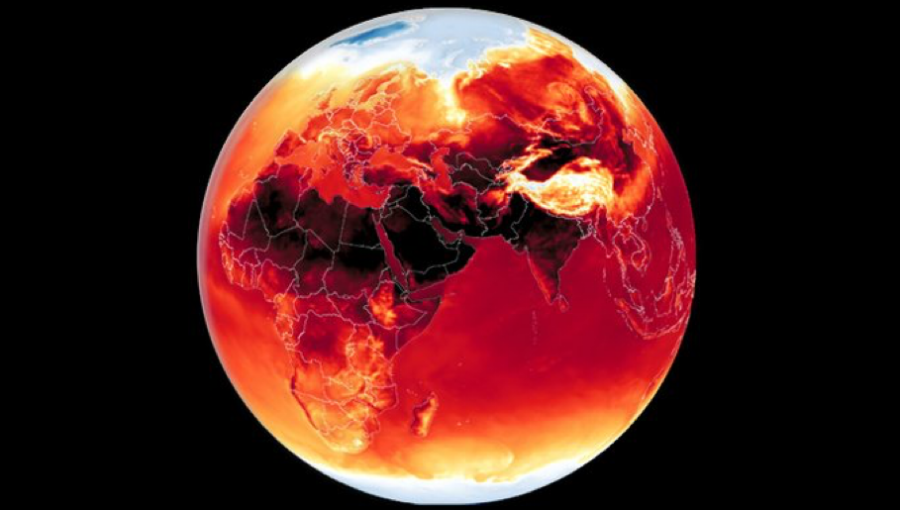
Scientists say rising global temperatures are increasingly making everyday outdoor activities unsafe for both old and young in a growing number of countries. People are losing hundreds of hours a year as they are forced to seek out shade to keep cool. / bne IntelliNews
By Ben Aris in Berlin March 11, 2026

The number of days where extreme heat makes it too dangerously hot to go outside or engage in ordinary activities has doubled over the past 75 years, according to according to a paper published in the journal Environmental Research: HealthBloomberg reports.

The change is not just affecting pensioners who are in danger of dying from heat stress but younger people are also affected, who are losing time as climate-driven heat restricts their lives for 50 hours a year, according to the research that claims to be the first to stydy the impact of the Climate Crisis on everyday life.

The number of days where extreme heat makes it too dangerously hot to go outside or engage in ordinary activities has doubled over the past 75 years, according to according to a paper published in the journal Environmental Research: Health, Bloomberg reports.

Scientists have found that extreme heat is increasingly preventing older adults from carrying out routine activities for significant periods each year, with parts of Asia, Africa, Australia and North America becoming difficult environments for senior citizens. The research indicates that people aged 65 and older now experience, on average, about one month annually when temperatures are too high for normal daily tasks.

The findings come as global temperatures continue to climb. Recent researchers confirmed that the last three years have been the hottest year in documented history, with 2024 the hottest year ever.

Rising temperatures and more frequent heat waves are already affecting daily life in many regions, even though conditions have not yet reached the extreme “wet-bulb” threshold — a combination of 35°C heat and 100% humidity that can kill a human within six hours of exposure.

The study concludes that large swaths of the planet are gradually becoming uninhabitable as the Climate Crisis accelerates faster than scientists predicted. Overall, more than a third of the global population now lives in regions where heat significantly disrupts everyday activities, according to the research paper.

Scientists analysed global records of heat and humidity from 1950 to 2024. They combined those data with the United Nations Human Development Index, which measures national health and living standards, to estimate how vulnerable different populations are to rising temperatures. The team also developed a physiological model to estimate when outdoor temperatures — even in the shade — become too dangerous for people of different age groups to perform routine tasks.

The analysis shows particularly severe impacts in extremely hot regions. In Qatar, for example, temperatures now make it risky for older adults to perform routine activities for roughly a third of the year. Even younger adults aged 18 to 40 must limit daily tasks for more than 800 hours annually, or about 10% of the year.

“Extreme heat isn’t just affecting our ability to survive or work physically demanding jobs, but also just to do simple, light, daily tasks,” said Luke Parsons, a climate scientist at the nonprofit environmental organisation The Nature Conservancy and lead author of the study.

The change is not just affecting pensioners who are in danger of dying from heat stress but younger people are also affected, who are losing time as climate-driven heat restricts their lives for 50 hours a year, according to the research that claims to be the first to study the impact of the Climate Crisis on everyday life.

US pensioners lose 270 hours of normal activities due to the risks of overheating. In Europe, South America, southern Australia and parts of Asia and Africa have seen the largest increases in restrictions on daily life since 1995, according to the paper.

Global temperatures hit a record high in 2024, a year in which warming exceeded 1.5°C on an annual basis for the first time. “This study provides us with a really grim, unfortunate glimpse into what potentially a one-and-a-half degree warmer world looks like,” Parsons said.


CMOC Congo mine pollution damaged local health, report says

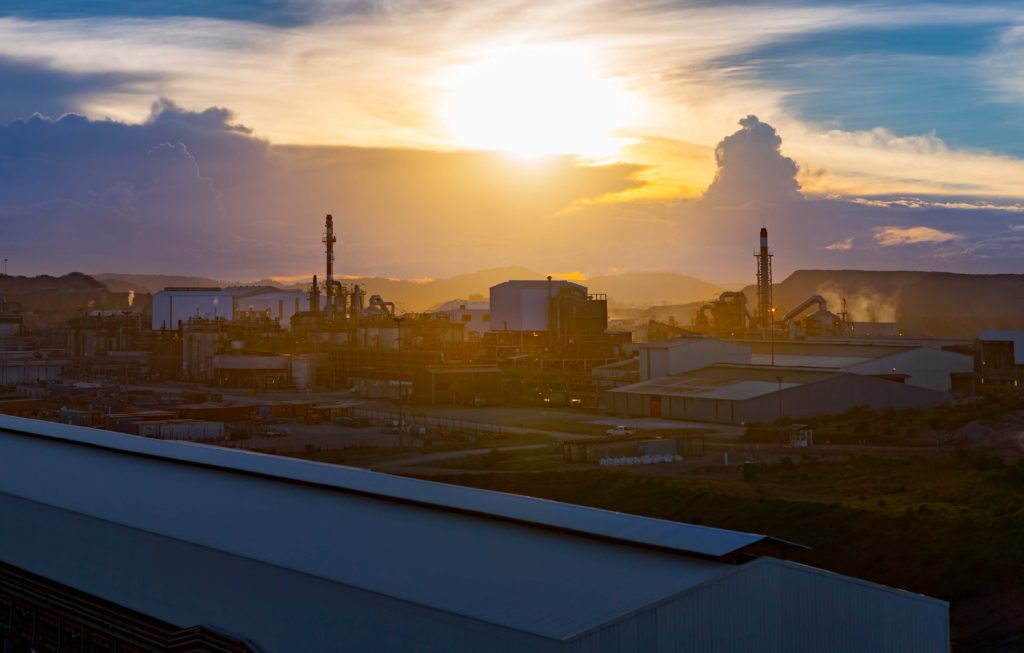
Tenke Fungurume Mine – DRC. Credit: CMOC Group

Air pollution by the world’s biggest cobalt producer appears to have damaged the health of local communities in the Democratic Republic of Congo, according to an investigation by environmental groups.

Emissions from a processing plant run by a unit of CMOC Group Ltd. are “at the heart of the public health crisis that has allegedly harmed nearby communities and the workers who labor in the facility,” according to a report released Tuesday by the nonprofit Environmental Investigation Agency US.

CMOC – which disputes the allegations – owns two large copper-cobalt operations in Congo, which have enabled the Chinese company to become the No. 1 supplier of the metal used in electric-vehicle batteries. The investigation carried out by the EIA and Congolese group PremiCongo centers on the Tenke Fungurume mine, which CMOC acquired in late 2016.

As part of its rapid expansion, CMOC built a vast new processing complex at Tenke in 2023, next to the town of Fungurume, according to the report. Health records analyzed by EIA investigators and independent experts show “a growing flow of patients” treated “for coughing up blood and severe respiratory illnesses like pneumonia and bronchitis” since the plant began operations, the report said.

Air monitoring between September 2024 and January 2025 indicated levels of sulfur dioxide – a toxic gas generated when processing copper and cobalt ores – “well in excess” of international standards, it said. According to the report, the data “reveal how the health crisis has persisted, spread across the populations and likely even worsened.”

The EIA called on CMOC to establish a process to pay reparations to residents and workers harmed by the pollution, and to suspend work at the plant until “neutralization systems” are in place.

“The report contains much exaggerated and even inaccurate content. Since the report has just been published, TFM’s ESG team is currently identifying the inaccuracies and preparing evidence,” a CMOC spokesperson said. The company said its own monitoring of sulfur dioxide levels revealed that concentrations “remained within applicable regulatory limits” under Congolese law and relevant international norms.

Congo is now the world’s second-biggest copper producer after a decade-long boom during which output of the metal that is key to the energy transition has more than tripled. Copper and cobalt are normally extracted together in the central African nation.

Glencore Plc, Ivanhoe Mines Ltd. and Zijin Mining Group Co. Ltd. also own mines in the same region as CMOC.

The EIA said its report involved more than three years of investigations, analyzing more than 1,200 health records and interviews with dozens of affected local residents.

(By William Clowes)


Experts Warn of Catastrophic Environmental Fallout From Iran War

  • The conflict has caused the single biggest oil supply disruption in history, but its most serious impacts are on human and environmental health.

  • Attacks on energy infrastructure have led to widespread environmental disasters, including toxic black rain falling over Tehran and the potential for lasting contamination of soil and groundwater.

  • The war also poses long-term threats to the region's nuclear power infrastructure, freshwater availability, and contributes significantly to global climate change through greenhouse gas emissions.

The war in Iran is sending shockwaves through global energy markets that will be felt for years to come. The conflict is causing the single biggest oil supply disruption in history, as the closure of the Strait of Hormuz has caused a nine-day disruption of 20 percent of the world’s oil transports, more-than doubling the previous record set during the Suez crisis of 1956. But the war and its energy market impacts represent much more than just economic chaos – they are also the harbingers of serious and lasting human and environmental impact across the region and the world. 

The United States and Israel have been targeting Iran’s energy infrastructure in their ongoing attacks, with disastrous results for local lands and people. Monitors have admitted that they are so overwhelmed by the scale and breadth of environmental impacts from the war that they are “struggling to keep track of the environmental disasters arising from the widening war” according to The Guardian. Explosions at oil storage facilities have left fires burning for days as a black rain has fallen over the capital city of Tehran as it chokes on noxious smoke. 

“To me, this black rain indicates toxic pollutants such as hydrocarbons, ultrafine particles known as PM2.5, and carcinogenic compounds called polycyclic aromatic hydrocarbons (PAHs) have made their way into the rain,” Gabriel da Silva, Associate Professor of Chemical Engineering at The University of Melbourne, recently wrote for The Conversation. He added that this rain would also include heavy metals and inorganic compounds from all of the buildings and other materials set ablaze by the strikes. The resulting acid rain could be catastrophic for human, animal, and environmental health, experts warn. 


While this rain alone is cause for massive concern for Iranians, it’s likely just the tip of the iceberg. “Oil raining down on Tehran is likely only the first tell of the environmental damage – and the impact that that has on people’s health – that the US and Israel’s war will cause,” Global Witness cautioned in a recent report

Environmental incidents are already widespread across the country. The Conflict and Environment Observatory has assessed 232 incidents for their level of environmental risk, and has flagged three types of emerging environmental harm: pollution from the destruction of military sites, marine pollution from the destruction of oil infrastructure along the Gulf coast, and the destruction of inland fossil fuel infrastructure.

(Source)

There is also cause for concern about potential damage to Iran’s nuclear power infrastructure, and all of the associated environmental and health risks that would come along with such damage. In last year’s 12 days of war between Iran and Israel, there was considerable concern about lasting impacts of irradiation on the lands and soils near attacked nuclear power plants and nuclear enrichment sites. 

“I want to make it absolutely and completely clear, [in] case of an attack on [a nuclear power plant], a direct hit could result in a very high release of radioactivity to the environment,” Rafael Mariono Grossi, director general of the International Atomic Energy Agency (IAEA), warned in a June 23 statement about the war between Iran and Israel.

But even the missiles that didn’t hit nuclear sites carry serious environmental and public health hazards, as aerial attacks and the fires they create release huge amounts of toxic pollutants that end up in soil and groundwater. “This has been an issue that is concerning in the Middle East, and some of these impacts are even transboundary and trans generational,”  Kaveh Madani, director of the United Nations University Institute for Water, Environment and Health, told the Bulletin of the Atomic Scientists last year. “So, the war might be over, but these impacts would remain there.”

The Conflict and Environment Observatory also warns that there will be new forms of environmental fallout as the war drags on. In addition to the threat of nuclear irradiation, the watchdog warns that Israel and the United States may also target desalination plants, gravely impacting the availability of freshwater and potentially unleashing sodium hypochlorite, ferric chloride and sulfuric acid into the environment. The organization also warns that Iranian environmental governance, already weak, will all but collapse under this new stress.

In addition to the risks imposed by direct attacks on energy infrastructure, the war also poses a major threat to the climate. Wars are huge contributors to climate change. The greenhouse gas emissions associated with Russia’s war in Ukraine, for example, reached levels comparable with the entire annual emissions of France in just the first two years, according to a report from a Ukrainian watchdog organization. 

By Haley Zaremba for Oilprice.com